Tuesday, August 12, 2025

Tonight! A mid-summer 'Phantom,' plus rounding up recent screenings, notes from Lake Wobegon

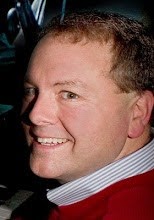
Film preservationist Ed Lorusso and me prior to last Saturday's all-canine program at the Johnson Hall Opera House in Gardiner, Maine.

This evening (Tuesday, Aug. 12) I have the privilege of accompanying 'Phantom of the Opera' (1925) at the Moultonborough (N.H.) Public Library. 

I just read in the local news that Moultonborough, perched on the northern end of Lake Winnipesaukee, is one of New Hampshire's fastest-growing towns. Undoubtedly the reason for this is that the library programs silent films with live music. Other towns, take note!

Lots more info on the film (and the screening) in the press release pasted in below. 

Before I head up to the Lakes Region, here's a look back at two notable screenings from this past weekend.

Sporting my '101 Dalmations' necktie for 'Dog Day Afternoon.'

On Saturday, Aug. 9, I served as accompanist for 'Dog Day Afternoon: A Celebration of Canine Stars in Silent Film' at the Johnson Hall Opera House in Gardiner, Maine. The program was, yes, all films starring dogs!

Organized by film preservationist (and Maine resident) Ed Lorusso, attendees were treated to rarely seen short films starring Jean the Vitagraph Dog (including two shot in Maine), Shep the Dog, Teddy the Wonder Dog, plus the feature-length 'Clash of the Wolves' (1925) starring Rin Tin Tin.

At least one dog, Uncas, attended, and seemed to enjoy the program. In the "You Never Know Who Will Attend a Screening" Department, his owner was a descendant of Laurence Trimble, the man who owned and trained Jean the Vitagraph Dog, the most popular dog star in the movies circa 1910.

Uncas and his owner, a descendant of the owner of Jean the Vitagraph Dog, were among those assembling prior to the show.

We saw why in three short films starring Jean, each of which I'd never seen before but had a great time finding the right music to bring them to life. I kept the textures light and tuneful, with occasional forays into drama when warranted.

I'd never seen the other films, either, with the exception of the Keystone comedy 'Teddy at the Throttle' (1916), which I must have accompanied at some point, and 'Clash of the Wolves' (1925), an audience favorite that I've accompanied many times.

A rare photo of me at the keyboard in which I look like I know what I'm doing. Thank you, Alexander Wall!

For 'Clash,' I switched the synthesizer to full orchestra to reflect the film's outdoorsy sweep and to amp up the drama. You might say I pulled out all the stops, although that's a phrase from the world of pipe organs.

About 80 people turned out for the program, which at four hours was a fairly big gulp, but which actually seemed to rocket right by. Audience reaction was strong throughout. Kudos to Ed Lorusso for not only restoring many of the shorter films, but also curating a program in which every film was a winner.

The show was Lorusso's 3rd Annual Silent Film Festival in support of the Colonial Theater in Augusta, Maine, which is undergoing extensive renovations, hence the use of the Johnson Hall Opera House, an equally worthy venue.

Many thanks to all who made this event something to bark about!

And in a weird coincidence, I found that after the silent film festival, the next act at the Johnson Hall Opera House would be none other than Garrison Keillor. Really! Check out the photo:

Next up at the Johnson Hall Opera House: Garrison Keillor!

I've been a life-long admirer of Keillor's work as a writer and also improviser. Really—the weekly 'News from Lake Wobegon' monologues he did for decades on the 'Prairie Home Companion' radio show were largely improvised on the spot.

I've often felt this was an act of sustained creativity on the same level as Bach churning out entire cantatas for weekly services at St. Thomas in Leipzig. 

I also believe his writing is under-rated. In particular, I think he captured something very special about life in America in 'Lake Wobegon Day,' the 1985 novel in which he stitched together and wrote down much of the material he'd been working out in front of audiences for the radio show.

There's stuff in there that captures life in as it was lived in smaller communities in the United States in the mid-20th century. And it does it with a simplicity and plainness that I've never found in any other writing. 

I think a long time from now, if historians want to know what it was like to grow up in the era that so many of us did (post World War II, pre-Internet), they could do worse than read this book. 

And here's the thing. I didn't grow up in Minnesota, but long stretches of 'Lake Wobegon Days' captures exactly what I remember experiencing as I came of age (in my case, in the mill town of Nashua, N.H.) and began to see the world around me.

So although the book is about a very specific time and place, I consider it an example of how the universal can be found in what's most familiar and all around us.

Maybe that's why I return to 'Lake Wobegon Days' every few years and read through it. Maybe that's why I included a small excerpt as one of the texts read at my wedding, which will be 30 years ago next month.

"Some luck lies in not getting what you thought you wanted but getting what you have, which once you have it you may be smart enough to see is what you would have wanted had you known." 

That gloriously convoluted sentence, but made up entirely of one- and two-syllable words, and in that unmistakable voice and cadence, with the emergence of the realization embedded within it. I imagine a lot of work went into shaping that sentence, which appears at the very end of the book. Wow!

And maybe that's why I got tickets to see Garrison Keillor appear earlier this year in that very same town, Nashua, N.H., and maybe that's why I went up to him afterwards and asked if he'd sign my aging paperback copy of 'Lake Wobegon Days,' which he did:

So from one improviser to another: Garrison, I hope I warmed up the Johnson Hall Opera House audience.

Another kind of warmth was to be found on Sunday, Aug. 10, when I ventured down to the Somerville Theatre in Davis Square, Somerville, Mass., where I accompanied a screening of 'Padlocked' (1926), a newly restored drama that's only recently become available.

What a blast of 1920s everything! Based on a popular story published in Cosmopolitan Magazine (ever hear of it?) 'Padlocked' has intense family drama, laugh-out-loud comedy, incredible dancing, rich men preying on young women, extremely weird theme parties, and much more, all drenched in Jazz Age atmosphere. 

Me outside the Somerville Theatre prior to showtime for 'Padlocked' (1926).

The film—directed by Allan Dwan and photographed by James Wong Howe, and featuring an A-list cast including Noah Beery, Florence Turner, Richard Arlen, Josephine Crowell, and, most interesting of all, Lois Moran, who would go on to have an affair with F. Scott Fitzgerald, who then rewrote the character of Rosemary Hoyt in his novel 'Tender is the Night' to resemble her—was considered lost for nearly a century.

But a print turned up in Czech National Archive in Prague, and we can now see 'Padlocked' again on the big screen. Kudos to the San Francisco Silent Film Festival for pursuing the restoration of this high energy chestnut, and also for making a 35mm print available for screening, which we used, and which looked great on the Somerville's big screen. 

Okay, onward to tonight's screening of 'Phantom' in the fast-growing town of Moultonborough. See you at the library!

*     *     *

An original release poster for 'Phantom of the Opera' (1925).
 
MONDAY, AUG. 4, 2025 / FOR IMMEDIATE RELEASE
Contact Jeff Rapsis • (603) 236-9237 • jeffrapsis@gmail.com

'Phantom of the Opera' starring Lon Chaney at Moultonborough Library on Tuesday, Aug. 12

Free to the public! Pioneer classic silent thriller to be shown with live musical accompaniment

MOULTONBOROUGH, N.H.—It was a film considered so frightening when first released that theaters were advised to have doctors standing by in case moviegoers fainted.

It was the original big screen adaptation of 'The Phantom of the Opera' (1925), starring iconic actor Lon Chaney in the title role.

This classic Universal thriller will be shown on Tuesday, Aug. 12 at 7 p.m. at the Moultonborough Public Library, 4 Holland St., Moultonborough, N.H. 

The screening will feature live musical accompaniment by Jeff Rapsis, a New Hampshire-based composer who specializes in creating music for silent films.

The screening is free and open to the public. Attendees are asked to register in advance at moultonboroughlibrary.org; look under the 'Events' area. 

The film is suitable for all ages, although young children may find some scenes intense and frightening.

The show will enable audience members to experience the original silent 'Phantom' the way it was intended to be seen: on the big screen, with live music, and with an audience.  

'The Phantom of the Opera,' starring legendary actor Lon Chaney in the title role, remains a landmark work of the cinematic horror genre. To modern viewers, the passage of time has made this unusual film seem even more strange and otherworldly.

It's an atmosphere that silent film accompanist Jeff Rapsis will enhance by improvising live music on the spot for the screening.

Lon Chaney in the title role in 'The Phantom of the Opera' (1925).

"The original 'Phantom' is a film that seems to get creepier as more time passes," said Rapsis, who accompanies films at venues around the nation. "It's a great way to experience the power of silent film to transport audiences to strange and unusual places."

'The Phantom of the Opera,' adapted from a 19th century novel by French author Gaston Leroux, featured Chaney as the deformed Phantom who haunts the opera house. The Phantom, seen only in the shadows, causes murder and mayhem in an attempt to force the opera's management to make the woman he loves into a star.

The film is most famous for Lon Chaney's intentionally horrific, self-applied make-up, which was kept a studio secret until the film's premiere.

Chaney transformed his face by painting his eye sockets black, creating a cadaverous skull-like visage. He also pulled the tip of his nose up and pinned it in place with wire, enlarged his nostrils with black paint, and put a set of jagged false teeth into his mouth to complete the ghastly deformed look of the Phantom.

Chaney's disfigured face is kept covered in the film until the now-famous unmasking scene, which prompted gasps of terror from the film's original audiences.

"No one had ever seen anything like this before," Rapsis said. "Chaney, with his portrayal of 'The Phantom,' really pushed the boundaries of what movies could do."

Lon Chaney menaces Mary Philbin in 'The Phantom of the Opera' (1925).

Chaney, known as the "Man of a Thousand Faces" due to his versatility with make-up, also played Quasimodo in the silent 'Hunchback of Notre Dame' (1923) and circus performer 'Alonzo the Armless' in Tod Browning's 'The Unknown' (1927).

The large cast of 'Phantom of the Opera' includes Mary Philbin as Christine DaaƩ, as the Phantom's love interest; character actor Snitz Edwards; and many other stars of the silent period.

'The Phantom of the Opera' proved so popular in its original release and again in a 1930 reissue that it led Universal Studios to launch a series of horror films, many of which are also regarded as true classics of the genre, including 'Dracula' (1931), 'Frankenstein' (1931), and 'The Mummy' (1932).

The silent film version of 'Phantom' also paved the way for numerous other adaptations of the story, up to and including the wildly successful Andrew Lloyd Webber musical from 1986 that continues to run in productions around the world.

"Even with all the different versions of this story, Chaney's performance in the lead role stands the test of time," Rapsis said. "And remember—in silent film, no one can hear you scream!"

‘The Phantom of the Opera’ (1925) will be shown with live music on Tuesday, Aug. 12 at 7 p.m. at the Moultonborough Public Library, 4 Holland St., Moultonborough, N.H. 

The screening is free and open to the public. Attendees are asked to register in advance at moultonboroughlibrary.org; look under the 'Events' area. 

Monday, August 4, 2025

This Saturday in Maine: music for silent films starring canines; this Sunday in Massachusetts: 'Padlocked' (1926) at Somerville Theatre

A fairly evocative trade ad promoting the Paramount drama 'Padlocked' (1926).

My upcoming weekend consists of music for dogs in Maine, then music for people in Massachusetts. 

Ye—on Saturday, Aug. 9, I'll accompany a program of silent films starring canines at the Johnson Opera House in Gardiner, Maine. 

Then on Sunday, Aug. 10, I'll do music for 'Padlocked,' a 1920s morality drama, at the Somerville Theatre in Somerville, Mass.

Lots more about 'Padlocked' in the press release below. It's a film that hasn't been seen since 1926, but is now available after a 2023 restoration by the San Francisco Silent Film Festival.

But about the dog program, which takes place on Saturday, Aug. 9 starting at noon. Officially, it's the Augusta Colonial Theatre's 3rd Annual Silent Film Festival. (It's being held in another venue, the Johnson Opera House in Gardiner, Maine, but don't let that throw you.)

Subtitled 'Dog Day Afternoon,' the program (curated by film restoration guru Ed Lorasso) is being promoted like this:

"Come join us for a paws-itively fun time at Johnson Hall Opera House for our 3rd Annual Silent Film Festival! Watch classic movies starring all the great furry friends of the silent film era: Jean the Vitagraph Dog, Shep the Dog, Teddy the Wonder Dog, and everyone's favorite Rin-Tin-Tin! Enjoy popcorn, drinks, and a tail-wagging good time. Don't miss out on this doggone awesome event!"

Dog puns aside, it promises to be a pretty compelling program.

It's a good variety of early short films, plus the full-length spectacular Warner Brothers feature 'Clash of the Wolves' (1925) starring Rin Tin Tin.

If you'd like to know why Rin Tin Tin was known as the "mortgage lifter" among theater owners, 'Clash of the Wolves' is a good example.  

Canine star Rin Tin Tin on set with 'Clash of the Wolves' costar June Marlow.

I've done many animal-themed silent film programs over the years. It was a popular genre in early cinema, and their charm and excitement still comes through. 

The dogs themselves are as compelling as any human performer. Really—after all, lacking the power of speech is no handicap in silent films. 

See for yourself by attending this off-beat program on Saturday, Aug. 9. For more info, a complete list of films, and to buy tickets, visit the festival's Eventbrite page.

And what about 'Padlocked' (1926), which I'm accompanying on Sunday, Aug. 10 at 2 p.m. at the Somerville Theatre? Lots of info in the press release below. See you there!

*     *     *

A scene from the long-unseen Paramount drama 'Padlocked' (1926).

MONDAY, AUG. 4, 2025 / FOR IMMEDIATE RELEASE

Contact Jeff Rapsis • (603) 236-9237 • jeffrapsis@gmail.com

Somerville Theatre to screen rare silent 'Padlocked' with live music on Sunday, Aug. 10

Restored 1920s morality drama from Paramount Pictures, based on provocative Cosmopolitan story; film unseen since its original 1926 release

SOMERVILLE, Mass. — Released at the height of the Roaring '20s, it played up the clash of Jazz Age temptations with traditional conservative morality.

It was 'Padlocked' (1926), a silent-era drama from Paramount Pictures—a movie unseen since its original release, but now available following a recent restoration.

The rarely screened film will be shown on Sunday, Aug. 10 at 2 p.m. at the Somerville Theatre, 55 Davis Square, Somerville, Mass.

Admission $17 adults; $13 members; $12 seniors/children. Tickets are available at somervilletheatre.com or at the door.

Live musical scoring will be provided by silent film accompanist Jeff Rapsis, a New Hampshire-based performer who specializes in music for silent film screenings.

'Padlocked,' based on a serialized story published in Cosmopolitan magazine, is an urbane 1920s drama that skewers the cruelty and hypocrisy of moral reformers.

The film stars Noah Beery Sr., Florence Turner, Lois Moran, Louise Dresser, Helen Jerome Eddy, Allan Simpson, and Richard Arlen.

A vintage trade ad promoting Paramount's drama 'Padlocked' (1926).
 
Beery plays Henry Gilbert, a wealthy do-gooder and domestic tyrant whose puritanism destroys the lives of his wife and daughter, played by Florence Turner and Lois Moran.

Gilbert's myopia about human character proves his undoing: he sees evil in innocent amusements, but is easily taken in by a gold-digging con artist.

For the film's original release, Paramount's publicity machine played up the story's scandalous nature and contemporary relevance.

"A theme so powerful and so certain of overwhelming popularity," trumpeted ads promoting 'Padlocked.' "What a sweeping revelation of this restless age—and how superbly produced, with every possible box office value!"

'Padlocked' boasted several well-known names among its creative team.

Director Allan Dwan, already a Hollywood veteran, would go on to direct such classics as 'Sands of Iwo Jima' (1949) starring John Wayne.

'Padlocked' was an early example of the work of cinematographer James Wong Howe, who would later be nominated for 10 Academy Awards for cinematography, winning twice for 'The Rose Tattoo' (1955) and 'Hud' (1963).
 
A scene from Paramount's drama 'Padlocked' (1926).
 
The film, part of the Somerville's 'Silents, Please!' series, will be shown via a 35mm print produced by the San Francisco Silent Film Festival, which restored the film in 2023.

'Padlocked' hadn't been screened since its original release in1926; a sole surviving print was found in the Czech National Film Archive. Titles were translated back to English and other work restoration work done so the film could be made available to U.S. theaters.

"This is one reason why we continue to program silent films," said Ian Judge, the Somerville's creative director. "Rediscoveries from the silent era are being made all the time. We aim to give movie-goers the chance to experience these classic films as intended—on the big screen, with live music, with an audience, and shown using 35mm prints whenever possible."

To help bring 'Padlocked' to life at the Somerville, silent film accompanist Jeff Rapsis will create a soundtrack that mixes 1920s-style tunes with elements of contemporary movie scoring.

" 'Padlocked' is a great film for music," Rapsis said. "It has several lively cabaret scenes that I think today's audiences will find highly entertaining."

'Padlocked' (1926), a Paramount drama unseen since its original release, will be shown on Sunday, Aug. 10 at 2 p.m. at the Somerville Theatre, 55 Davis Square, Somerville, Mass.

Admission $17 adults; $13 members; $12 seniors/children. For more information and to purchase tickets, visit www.somervilletheatre.com or call the box office at (617) 625-5700.

Saturday, August 2, 2025

Why you should see Emil Jannings in 'The Last Command' (1928) on Sunday, 8/3 in Natick, Mass.

Original poster art promoting 'The Last Command' (1928).

If a person wants to experience a great example of the story-telling power of silent film, I would point said person to 'The Last Command' (1928).

It has everything: an imaginative story, inventive camera-work, intense drama, and a great cast highlighted by a towering performance by Emil Jannings that helped him win the first-ever Academy Award for Best Actor.

'The Last Command' is not an art film—it was a standard-issue drama on Paramount's 1928 release schedule. 

At the same time, it's an example of silent film technique at its height. As directed by Josef von Sternberg, the movie makes fluent use of the vocabulary of visual story-telling.

What's especially impressive to me is how the film uses its specific dramatic material to explore universal questions such as the nature of power, the value of loyalty, the meaning of patriotism, the role of chance, and many other issues people have grappled with throughout human experience.

In doing so, I think 'The Last Command' transcends mere entertainment and becomes timeless art. It's a great example of how the best silent cinema can stand alongside the best literature, paintings, sculpture, drama, and music. 

You may find this surprising due to silent film's limitations as an art form, such as no dialogue. But I think these limitations are what prompted the best silent filmmakers to produce work that "speaks" to us today.

If can't wait to experience this silent masterwork as intended—on the big screen, with live music, and with an audience—then you're in luck. It's screening on Sunday, Aug. 3 at 4 p.m. at the Center for the Arts in Natick, Mass., with me accompanying.

Press release is below with a lot more info about the film and the screening. Hope to see you there!

*    *    *

Emil Jannings romances Evelyn Brent in 'The Last Command' (1928).

TUESDAY, JULY 1, 2025 / FOR IMMEDIATE RELEASE
Contact Jeff Rapsis • (603) 236-9237 • jeffrapsis@gmail.com

Silent epic 'The Last Command' with live music at Natick Center for Arts on Sunday, Aug. 3

Josef von Sternberg's groundbreaking psychological drama won 'Best Actor' for Emil Jannings at first-ever Academy Awards

NATICK, Mass.—'The Last Command' (1928), a silent film drama that won Emil Jannings 'Best Actor' honors at the first-ever Academy Awards, will be screened with live music on Sunday, Aug. 3 at 4 p.m. at TCAN Center for the Arts, 14 Summer St., Natick, Mass.

The screening, the latest in the Center for the Art's silent film series, will feature live accompaniment by Jeff Rapsis, a New Hampshire-based composer who specializes in creating music for silent films.

Admission is $12 per person for members; $14 for non-members. Tickets are available online at www.natickarts.org or at the door.

'The Last Command,' directed by Josef von Sternberg, tells the sweeping story of a powerful general in Czarist Russia (Jannings) forced to flee his homeland during the Bolshevik Revolution. He emigrates to America, where he is reduced to living in poverty.

Finding work as an extra at a Hollywood studio, the former general lands the part of a commanding officer in a movie about the Revolution, causing flashbacks to his traumatic experiences. The conflict leads to a spectacular climax and a towering performance that earned Jannings 'Best Actor' honors.

The film takes audiences on a journey through big emotions as well as issues of history, time, power, and especially a man's duty to his country and to his fellow citizens—and what happens when the two obligations diverge.

'The Last Command' is also one of early Hollywood's most creative and challenging looks at the global conflicts that contributed to World War I.

The film also stars a young William Powell as a Hollywood movie director who crosses paths with the general during the Revolution, and 1920s starlet Evelyn Brent as a seductive Russian revolutionary.

Rapsis, the accompanist, will create the film's score live as the movie is shown.

"Making up the music on the spot is kind of a high wire act," Rapsis said. "But there's nothing like the energy and excitement that comes with improvised live performance, especially when accompanying a silent film."

Critic Leonard Maltin hailed 'The Last Command' as "a stunning silent drama...a fascinating story laced with keen observations of life and work in Hollywood." Time Out of London called it "the first Sternberg masterpiece, expertly poised between satire and 'absurd' melodrama. The cast are fully equal to it; Jannings, in particular, turns the characteristic role of the general into an indelible portrait of arrogance, fervor and dementia."

Director Sternberg, a master of lighting and black-and-white photography, created 'The Last Command' as a visual tour de force. The film is often cited as a prime example of the emotional range and visual accomplishment of silent films at their height, just prior to the coming of pictures with recorded soundtracks.

Rapsis said great silent film dramas such as 'The Last Command' told stories that concentrate on the "big" emotions such as Love, Despair, Anger, and Joy. Because of this, audiences continue to respond to them in the 21st century, especially if they're presented as intended—in a theater on the big screen, with a live audience and live music.

"Dramas such as 'The Last Command' were created to be consumed as a communal experience," Rapsis said. "With an audience and live music, they come to life as their creators intended them to. This screening at TCAN is a great chance to experience films that first caused people to fall in love with the movies."

'The Last Command' (1928) will be screened with live music on Sunday, Aug. 3 at 4 p.m. at TCAN Center for the Arts, 14 Summer St., Natick, Mass.

Admission is $12 per person for members; $14 for non-members. Tickets available online at www.natickarts.org or at the door. For more info, call (508) 647-0097.