Showing posts with label London. Show all posts

Friday, January 9, 2026

Welcome to 2026 in silent film screenings: being Charlie Chaplin ain't what it used to be


Posing in front of the display wall in the "Charlie Chaplin Room" upstairs at the Bear Pub on Charing Cross Road, London.

Welcome to 2026 and another year of bringing silent films to life with live music.

Right now I'm in London, but not for silent film purposes. The wife and I are on our quasi-annual mid-winter "pig out on theater" trip across the pond. Seven shows in four days.

But you can't get away from silent film that easily, as I discovered when we stopped for a quick dinner last night at "The Bear" a pub on Charing Cross Road.

Turns out the upstairs dining room was named in honor of native Londoner Charlies Chaplin, who it seems was a frequent patron there when performing at a nearby theater before he started his motion picture career.

In honor of that, the proprietors have installed a small display with the requisite bowler hat, cane, and other Chaplin mementos.

Sorry to report that most patrons seemed unconcerned with the Chaplin connection. It was apparent that no one had noticed it until I went over to get a photograph. Once attention was brought to the display, the only interest seemed to be in a vintage martini recipe that was part of it.

I guess being Charlie Chaplin ain't what it used to be. 

But no matter! There's a full calendar of silent film screenings ahead in 2026, and I hope you'll take time to experience this storytelling art form the way it was intended: in a theater with a lot of people, and with live music.

Upcoming highlights include traveling to Cleveland for screenings this month; heading out to the Kansas Silent Film Festival to accompany films in Topeka next month; and a quick trip to Florida for a screening in March.

Closer to home, I'll do music for the world "re-premiere" of two silent film versions of 'The Old Homestead,' an enormously popular play that toured everywhere in the decades around 1900.

 'The Old Homestead' was by Denman Thompson, a native of Swanzey, N.H. who put many of his memories of the town into the play. Two silent versions, one in 1915 and another in 1922, were made, but neither has been available for more than a century.

That is, until Larry Benaquist, a retired film professor at Keene State College in Keene, N.H., was able to track down nearly complete copies of both in European archives. 

Both will be screened for the first time since their original release on Saturday, Feb. 7 at the Colonial Theatre in Keene, N.H. Stay tuned for more details! But it's a real honor to be entrusted with the scoring of these two long-unseen films. 

Looking further ahead: the year brings a plethora of 100th anniversaries of silent films that I'll try to program, and August marks the 100th anniversary of the untimely death of silent screen icon Rudolph Valentino. (And Halloween is the 100th anniversary of Harry Houdini's unexpected death, too!) 

Other screenings include shows at big Boston theaters such as the Somerville or the Coolidge, plus a parade of local theaters, libraries, and community centers around New England. Check the listings (using the 'Upcoming Silent Film Screenings' link at upper right) to see what fits your schedule, and see you at the movies in 2026!

Monday, June 6, 2022

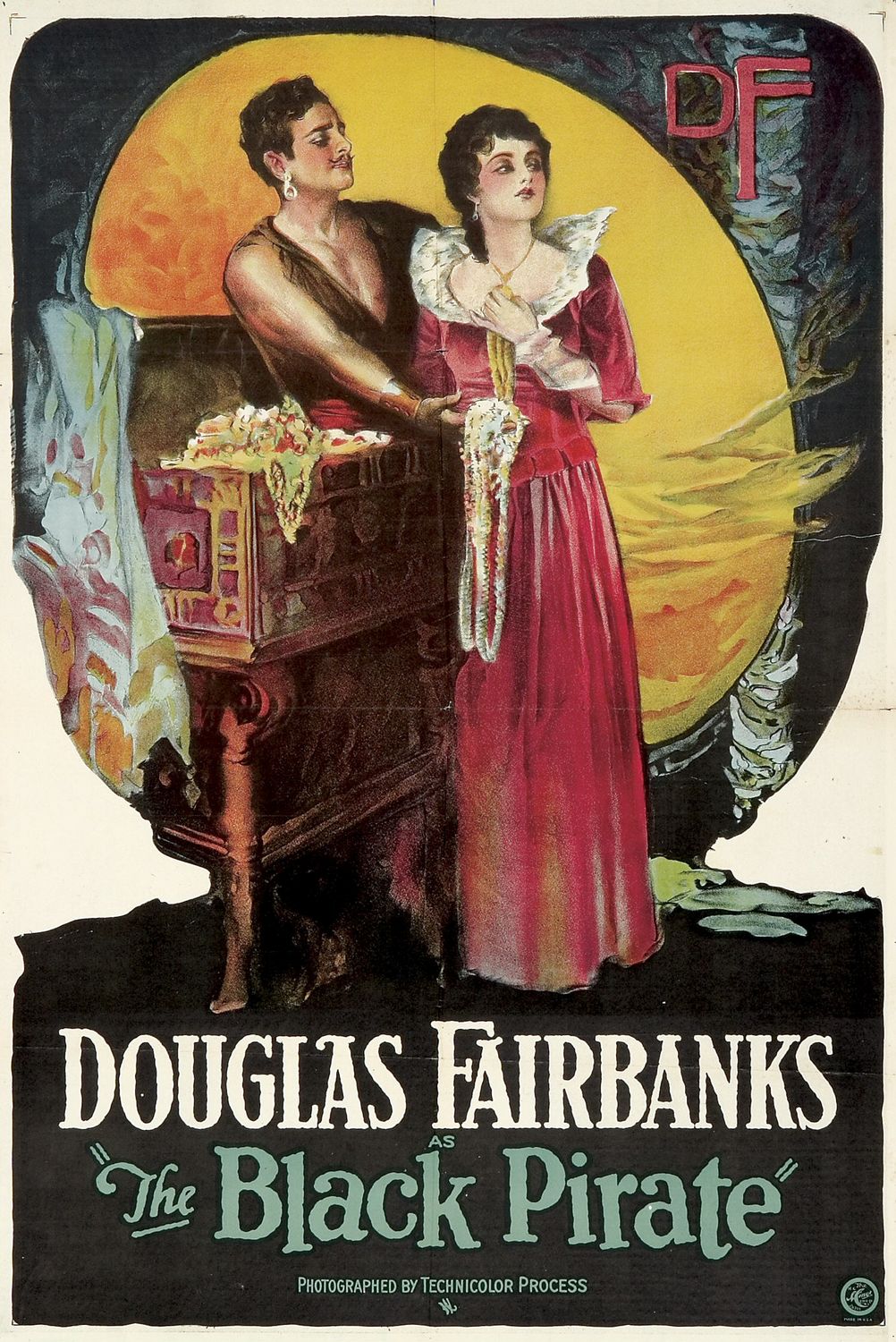
Set sail with Douglas Fairbanks Sr. in 'The Black Pirate' on Wednesday, June 8 in Plymouth, N.H.


I'm back at the keyboard after a twice-postponed visit to London, with a side trip to my old stomping grounds of Glasgow, Scotland.

Next up: music for 'The Black Pirate' (1926) starring Douglas Fairbanks, which is screening on Wednesday, June 8 at 6:30 p.m. at the Flying Monkey Moviehouse and Performance Center in Plymouth, N.H. 

More info and details are in the press release below. First, a few notes from "across the pond," where last week we scored a rare "triple," meaning three West End shows in one day. 

The line-up looked like this: 

- At 2 p.m., a new production of 'My Fair Lady' at the Coliseum on Charing Cross Road.

 - At 5:30 p.m., a cabaret-style revue called 'Six' that features the wives of Henry VIII, and which is playing at the Vaudeville Theatre at the Strand.

 - At 7:30 p.m., the new musical version of 'Back to the Future' that's playing at the Adelphi next door.

We didn't plan on this — it just happened. Tickets were available for all three;  the theaters were close enough for this to work, and there was that unusual 5:30 p.m. matinee of 'Six.'

We even got something to eat between 'Six' (which is just over one hour long) and 'Back to the Future.' 

The last time this happened was way back in the 1990s, when we caught a weird one-man play called 'Anorak of Fire' at an odd time, with a matinee before it and an evening show afterwards. So it's a rare bird indeed.

About 'Back to the Future': what was interesting to me was that even though it was full of new songs, much of the material was drawn from the score that Alan Silvestri composed for the 1985 film. 

There are a couple of really enduring licks in the 'Back to the Future' score, and Silvestri (who also worked on the musical) made the most of them in this stage reinterpretation.

The result was something you don't see very often: a stage musical that heavily relied on strong background music in the same way a movie action sequence might do. (Or, yes, a silent film score!)

This was especially true in the musical's Act 2, when Marty McFly must get the time-traveling DeLorean up to 88 mph just as lightning strikes the town's clock tower.

With no songs, just action and Silvestri's music galloping along, I totally, totally bought into it. And it was the music that did it, I think. 

The time-traveling car may have been powered by plutonium. But the real energy that held everything together and pushed it forward in an edge-of-your-seat frenzy was the score. 

So even though we were watching a stage production in 2022, it reminded me how much the right kind of music can add to a scene or sequence in a movie made in 1922. The challenge (for me, anyway) is to find those moments and make the most of them, and not overdo it at other times.

I'll next get a chance to find the balance this Wednesday, as we set sail with Douglas Fairbanks in 'The Black Pirate' (1926) at the Flying Monkey Moviehouse and Performance Center. 

Press release is below. See you on deck!

 *  *  *

Douglas Fairbanks Sr. buckles some swash in 'The Black Pirate.'
 
TUESDAY, MAY 31, 2022 / FOR IMMEDIATE RELEASE
Contact Jeff Rapsis • (603) 236-9237 • jeffrapsis@gmail.com

Silent film ‘The Black Pirate’ (1926) at Flying Monkey on Wednesday, June 8

Swashbuckling adventure flick stars Douglas Fairbanks, Hollywood’s original action hero; shown with live musical accompaniment

PLYMOUTH, N.H.—He was the Indiana Jones of his day, thrilling early film-goers with amazing stunts and feats of heroic derring-do.

He was Douglas Fairbanks Sr., one of Hollywood’s first megastars, and his timeless charisma can be seen again on Wednesday, June 8 at the Flying Monkey Moviehouse and Performance Center in Plymouth, N.H.

Featured attraction in June for the theater's monthly silent film series is ‘The Black Pirate’ (1926), an epic swashbuckling tale of the high seas that proved one of Fairbanks’ most popular blockbusters. The forerunner of all pirate movies, it was also one of the first Hollywood films to be released in color.

Showtime for 'The Black Pirate' is Wednesday, June 8 at 6:30 p.m. at the Flying Monkey Moviehouse and Performance Center, 39 Main St., Plymouth, N.H. General admission is $10 per person.

The screening, the latest in the Flying Monkey's silent film series, will feature live accompaniment by Jeff Rapsis, a New Hampshire-based composer who specializes in creating scores for silent films.

'The Black Pirate' tells the story of a ship's passenger (Douglas Fairbanks) who survives a pirate raid. Sworn to avenge his dead father, he takes command of the pirates responsible, and secretly strives to free the princess whom they have kidnapped.

Fairbanks, originally a stage actor, broke into films in the industry's early years. By 1920, starring roles in a romantic comedies established Fairbanks as a popular leading man. He then turned to historic adventure films, including ‘The Mark of Zorro’ (1920) and ‘The Three Musketeers’ (1921), which cemented his reputation for on-screen athleticism, heroism, and romance.

In 1920, Fairbanks’ marriage to fellow megastar Mary Pickford was one of the era’s biggest media events and resulted in Hollywood’s first celebrity power couple. They combined their last names to call their estate “Pickfair,” and massive crowds turned out everywhere during the couple’s European honeymoon.

At the peak of his popularity, pictures starring Fairbanks set the standard for Hollywood action adventure films, including such titles as ‘Robin Hood’ (1922), ‘The Thief of Bagdad’ (1924), and ‘The Black Pirate’ (1926), all of which were major box office successes.

When the silent film era ended in 1929, an aging Fairbanks found he was less enthusiastic about the effort required to make movies and retired from the screen. He died in 1939 at age 56 after suffering a heart attack; his now-famous last words were, “I’ve never felt better.”

The Fairbanks feature is the latest in a series of monthly silent film screenings at the Flying Monkey. The series aims to recreate the lost magic of early cinema by assembling the elements needed for silent film to be seen at its best: superior films in best available prints; projection on the big screen; live musical accompaniment; and a live audience.

“These films are still exciting experiences if you show them as they were designed to be screened,” said Rapsis, accompanist for the screenings. “There’s a reason people first fell in love with the movies, and we hope to recreate that spirit.”

For each film, Rapsis improvises a music score using original themes created beforehand. None of the music is written down; instead, the score evolves in real time based on audience reaction and the overall mood as the movie is screened.

‘The Black Pirate’ (1926) starring Douglas Fairbanks Sr. will be shown with live music on Wednesday, June 8 at 6:30 p.m. at the Flying Monkey Moviehouse and Performance Center, 39 Main St., Plymouth, N.H.

Admission is $10 per person. For more info, call (603) 536-2551 or visit www.flyingmonkeynh.com. For more info on the music, visit www.jeffrapsis.com.

Tuesday, March 12, 2019

Dashing across the pond tonight to accompany 'Cat and the Canary' in London tomorrow

What? I have to travel basic economy?!

Tonight I head off to London, where I'll accompany a screening of the great Paul Leni thriller 'The Cat and the Canary' (1927) tomorrow night at the Kennington Bioscope.

It's one of the most visually spectacular silent features ever made, I think. And I hope the music I have in mind will be worthy of what Leni put on screen.

I'll also do some business in London and Amsterdam before heading back to Boston on Thursday afternoon, arriving less than 48 hours after I left. Quick trip!

And I have to think: what an age we live in when it's possible to transfer yourself across the North Atlantic in less time than it takes for me to get through an issue of the Economist.

(That's how I get to sleep by the way. No drugs for me! Just buy the current issue of the Economist, open up any page, and in 10 minutes I'm dozing off. Works every time!)

What a difference from, say, when John Adams set out to win support from France for the then-new United States, and it took weeks, and then they were chased by actual pirates, and wound up landing in Spain, and then had to ride donkeys over the Pyrenees.

What would Adams make of us jetting at high speed seven miles above the ocean, making a journey so quick that there's not enough time for a decent night's sleep? (Unless you buy the Economist.)

Speaking of which: I've done this before, and I now know that the evening after an overnight trans-Atlantic flight is not the best time to be in top form when creating live music for a demanding feature film.

So I've built in a little down time on Wednesday afternoon to help things come together later that evening. Jeffie needs his nap time!

After all, don't want to disappoint those in the audience, which will include film historian Kevin Brownlow, who's scheduled to introduce the picture. (And they're running his 35mm print of the film, which I can't wait to see.)

When I get back, mud season in New Hampshire can only mean comedy!

And so the film calendar heads into a patch of hilarity in small towns throughout the Granite State.

Buster and friend in 'Our Hospitality' (1923).

On deck: Buster Keaton's 'Our Hospitality' (1923) on Saturday, March 23 in Danbury, N.H., and then 'Seven Chances' (1925) on Sunday, March 24 in Wilton, N.H. And then Harold Lloyd in 'Safety Last' (1923) on Friday, March 29 in Richmond, N.H.

And I'm especially excited about an unusual program coming up Sunday, March 31 at the Aeronaut Brewing Co. in Somerville, Mass.

For this one, we're celebrating the 130th birthday of the Eiffel Tower (really!) with a screening of 'The Mystery of the Eiffel Tower' (1927), a comedy/thriller with a climax filmed high up among the struts and girders of the iconic structure.

The Aeronaut has done a splendid job promoting this event, so I'm pasting in the press release below in an attempt to encourage you to attend.

Unless you'd rather spend time with the Economist!

* * *

In Paris, high above it all.

WEDNESDAY, MARCH 6, 2019 / FOR IMMEDIATE RELEASE
Contact Jeff Rapsis • (603) 236-9237 • jeffrapsis@gmail.com

Celebrate 'Eiffel Tower Day' on Sunday, March 31 at Aeronaut Brewing Co.


Vintage silent thriller 'Mystery of the Eiffel Tower’ to be screened with live music on iconic structure's 130th birthday

SOMERVILLE, Mass.—When you turn 130, it's time to party.

That's the thinking behind 'Eiffel Tower Day,' celebrated every year on March 31 in honor of the iconic Paris structure, which was completed on March 31, 1889.

The Aeronaut Brewing Co. will celebrate this year's 'Eiffel Tower Day' on Sunday, March 31 with the screening of a rare silent adventure movie with a thrilling climax actually filmed on the tower.

'The Mystery of the Eiffel Tower' (1927), directed by Julien Duvivier, will be screened on Sunday, March 31 at 7:30 p.m. at the Aeronaut Brewing Co., 14 Tyler St. (near Union Square), Somerville, Mass.

Admission is $10 per person and seating is limited; for tickets and information, visit www.aeronautbrewing.com, or www.eventbrite.com at this address:

www.eventbrite.com/e/aeronaut-silent-film-club-vol-1-well-always-have-paris-tickets-58304749074

The event is also on Facebook: www.facebook.com/events/619207078520181/

The screening will feature live musical accompaniment by Jeff Rapsis, a New Hampshire-based silent film musician.

Duvivier’s late-silent adventure served as an inspiration for the original Tintin comics, and delivers much of the same charm, inventiveness, and visual delight.

Set in France of the 1920s, 'The Mystery of the Eiffel Tower' follows a carnival performer who is half of The Mironton Brothers, a supposed Siamese twin act.

The performer sees a chance to claim a massive inheritance by pretending to be a missing heir.

The scheme makes him fabulously wealthy. He leaves the circus, but also crosses a secretive cabal which has its own plans for the fortune.

Harried by mysterious threats, the imposter uses his identical partner from the old carnival act to suffer in his place.

Lots of laughs and exciting close calls follow as the unsuspecting double is drawn into a struggle with the secret organization.

The climax is a death-defying chase up through the skeleton of the Eiffel Tower that anticipates the later work of director Alfred Hitchcock.

"This is an astounding film with sequences shot high up on the Eiffel Tower and without trick photography," said Rapsis, a silent film accompanist who will improvise a musical score for the movie.

"This vintage film, like a fine champagne, is a great way to celebrate the 130th birthday of this landmark, one of the world's most recognizable structures," Rapsis said.

The Eiffel Tower was constructed in 1889 for the International Exhibition of Paris, during the 100th anniversary of the French Revolution, and was named after the principal engineer, Gustave Eiffel.

‘The Mystery of the Eiffel Tower’ (1927) will be shown on Sunday, March 31 at 7:30 p.m. at the Aeronaut Brewing Co., 14 Tyler St. (near Union Square), Somerville, Mass. Admission is $10 per person and seating is limited; for tickets and information, visit www.aeronautbrewing.com or www.eventbrite.com at this address:

www.eventbrite.com/e/aeronaut-silent-film-club-vol-1-well-always-have-paris-tickets-58304749074

The event is also on Facebook: www.facebook.com/events/619207078520181/


Monday, February 6, 2017

This week: making my London debut
plus Buster Keaton on 2/12 for Valentine's Day
and a story of sheet music and '7th Heaven'

Comrades! Dear Leader requests that you enjoy this screen capture from 'Salt for Svanetia.'

This weekend I hop across the pond to London, where I'll make my U.K. debut as a silent film accompanist.

I'd say "European" debut, but I'm not quite sure if Britain is still included in that category.

Well, Europe or not—the show is Wednesday, Feb. 8 at 7:30 p.m. at the Kennington Bioscope, a venue within London's Cinema Museum where silent films are regularly screened.

Screenings are free and open to the public, but one apparently needs an invitation to attend. For more info, visit www.kenningtonbioscope.com.

And the film I'm accompanying is...'Salt for Svanetia' (1930), a Soviet propaganda film about how a remote mountain village benefits from the wonders of Stalinist socialism!

People laugh when I describe this film, but it's actually an important film in terms of how it uses the then-new medium of cinema to communicate a powerful message.

From 'Salt for Svanetia.'

I'm not sure how much of my usual fan base will make it to London this week, but the Kennington Bioscope screenings are well known in the vintage film community.

No less a figure than Kevin Brownlow often participates in the programming. And now...me!

But I must thank Amran Vance and everyone in London's silent film scene for the invitation to sit in at the Bioscope, which has its own roster of regular accompanists.

In fact, someone else (not sure who) will handle the first half of the evening, which is highlighted by a cut-down three-reel version of 'Tales of 1001 Nights' (1921), a British adaptation of the Scheherazade story.

The edition survives only in the obsolete 9.5mm film gauge, and that's what we'll be seeing.

For me, the only worry is that the screening is in the evening of my first day in London, so I have to be smart about managing the inevitable jet lag after an overnight trans-Atlantic flight.

But if jet lag ultimately claims me before the opening titles of 'Salt for Svanetia,' it's comforting to know there's no shortage of accompaniment talent at the Bioscope.

Speaking of air travel and accompaniment: the same thing happens on the way back to Boston on Sunday, Feb. 12.

We're supposed to arrive mid-afternoon. And that evening at 7 p.m., I'm scheduled to accompany Buster Keaton's 'Seven Chances' (1925) in a Valentine's Day screening at the Aeronaut Brewery in Somerville, Mass. More info about that screening in the press release posted below.

Playing on Sunday, Feb. 12 at 7 p.m. at the Aeronaut Brewing Co., Somerville, Mass.

So after we land and (I hope) clear customs and immigration, I'll stay in Boston (instead of heading to N.H.), where I'll have dinner at my favorite Peruvian restaurant, Macchu Chicken in Union Square. And then I'll head over for the Buster show at the Aeronaut, where my keyboard and sound gear (and suit jacket, too!) are already packed away in a storage area.

I actually went down last night to drop my stuff at the Aeronaut, which was in the midst of a big Super Bowl party. At the time I came through, the Pats were down 21-0 and everyone was looking kinda glum. Would have loved to see the place about two hours later!

I drove down to Somerville following a really nifty screening of '7th Heaven' (1927) at the Town Hall Theatre in Wilton, N.H.

I say 'nifty' no only because the music came together quite effectively, I thought, but also because of some sheet music!

Last fall, a woman approached me after screening in Wilton and gave me sheet music she'd found for 'Diane,' a tune by Ernö Rapée (that's him on the right) released when '7th Heaven' was playing in theaters.

Diane was the name of Janet Gaynor's character in the film, and also this woman's name. (I can't recall if she had been named in connection with the character, but I think that's the case.)

At the time, Diane asked if it was possible to program '7th Heaven' at the Town Hall Theatre, and for me to use the sheet music in accompanying it.

Why? Because, I recall, her parents often spoke of the film when she was a girl. That was a long time ago, and her parents were now long gone, and she'd never had a chance to see it.

Charles Farrell as Chico and Janet Gaynor as Janet in '7th Heaven.'

Well, we aim to please! I put '7th Heaven' on the schedule as our "pre-Valentine's day tear-jerker." I also Rapée's sheet music on my piano, where I started getting it in my head and under my fingers.

So yesterday, in introducing the film to the Super Bowl-reduced audience, I mentioned all this, but didn't see the woman who had given me the music.

That is, until she raised her hand, which was right under my nose: turns out she was sitting in the front, directly behind me!

As I mentioned, I thought the screening went well overall. So did she, evidently—afterwards, she came up and gave me a big, prolonged hug!

Speaking of prolonged hugs, here's the press release for our Valentine's Day screening of Buster Keaton's 'Seven Chances' (1925) on Sunday, Feb. 12 at 7 p.m. at the Aeronaut Brewing Co. in Somerville, Mass. See you there. And XO!

* * *

Buster and his co-stars in 'Seven Chances.'

MONDAY, FEB. 6, 2017 / FOR IMMEDIATE RELEASE
Contact: Jeff Rapsis • (603) 236-9237 • jeffrapsis@gmail.com

Buster Keaton comedy 'Seven Chances' (1925) on Sunday, Feb. 12 at Aeronaut Brewery


Valentine's Day celebration features classic silent film romantic farce with live music

SOMERVILLE, Mass.—When words aren't enough, why not let a silent movie do the talking?

That's the idea behind a Valentine's Day silent film program on Sunday, Feb. 12 at 7 p.m. at the Aeronaut Brewing Co., 14 Tyler St., Somerville.

'Seven Chances' (1925), a classic Buster Keaton romantic comedy, will be shown with live music by silent film accompanist Jeff Rapsis.

The program includes a Keaton comedy short preceding 'Seven Chances,' one of Keaton's classic full-length feature comedies.

Admission is $10 per person. Tickets are available online at www.eventbrite.com; search on "Aeronaut Brewery."

Acclaimed for their originality and clever visual gags, Keaton's films remain popular crowd-pleasers today.

Keaton never smiled on camera, earning him the nickname of "the Great Stone Face." But his comedies rocked Hollywood's silent era with laughter throughout the 1920s.

In 'Seven Chances,' adapted from a stage play, the story finds Buster about to inherit $7 million if he's married by 7 p.m. on his 27th birthday—which is that very day!

Buster's hurried attempts to tie the knot go awry, but then a newspaper story changes the game, creating an avalanche of would-be brides who chase Buster as he searches for his one true love before the deadline.

'Seven Chances' was the first screen adaptation of the now-familiar story, since used in movies ranging from the Three Stooges in 'Brideless Groom' (1947) to Gary Sinyor's 'The Bachelor' (1999) starring Chris O'Donnell and Renee Zellwinger.

The screening is part of the Aeronaut's commitment to give local artists and audiences a chance to connect in the brewery's performance space.

"We envision our pre-Valentine's Day event as a throwback to the days when people celebrated by getting together as a community," said Christine Platzek of Aeronaut, a craft brewery that opened in 2014.

Just as beer aficionados appreciate a good hand-crafted brew, movie-goers are rediscovering the joys of silent cinema presented as it was intended: on a big screen, with live music, and with an audience.

"If you can put all the original elements together, the films of early Hollywood still come to life," said Rapsis, a silent film accompanist who performs frequently at the Aeronaut. "These are the films that caused people to first fall in love with the movies."

Buster Keaton stands today as one of the silent screen's great clowns. Some critics regard Keaton as the best of all; Roger Ebert wrote in 2002 that "in an extraordinary period from 1920 to 1929, (Keaton) worked without interruption on a series of films that make him, arguably, the greatest actor-director in the history of the movies."

As a performer, Keaton was uniquely suited to the demands of silent comedy. Born in 1895, he made his stage debut as a toddler, joining his family's knockabout vaudeville act and learning to take falls and do acrobatic stunts at an early age.

A remarkable pantomime artist, Keaton naturally used his whole body to communicate emotions from sadness to surprise. And in an era with no post-production special effects, Keaton's acrobatic talents enabled him to perform all his own stunts, including some spectacular examples in 'Seven Chances.'

"We felt a vintage silent film program with live music would be a great way to create Valentine's Day memories," Platzek said. "We encourage everyone to join us, whether you're on a date or on your own. We'll all end up laughing together!"

'Seven Chances' (1925) starring Buster Keaton will be shown on Sunday, Feb. 12 at 7 p.m. at the Aeronaut Brewing Co., 14 Tyler St., Somerville, Mass. Admission is $10 per person. Tickets are available online at www.eventbrite.com; search on "Aeronaut Brewery." For more info about Aeronaut Brewing, visit www.aeronautbrewing.com. For more information about the music, visit www.jeffrapsis.com.

Below are the links to the Facebook page and EventBrite page:

https://www.eventbrite.com/e/buster-keaton-silent-film-screen-w-live-music-tickets-31412761415
https://www.facebook.com/events/1205402839513571/

Monday, February 20, 2012

In which I meet Mr. Kevin Brownlow

I'll get straight to the point. I met God! Or, in terms of silent film, I met the godfather.

Yes—on Friday, Feb. 17, I met film preservation icon Kevin Brownlow at the London office of his firm, Photoplay Productions. (The photo above is Take 1. Others are below.) We spoke for only a few minutes, as Mr. Brownlow was on his way to an event in Ireland. But it was thrilling to thank him personally for all his work on behalf of silent film, and also congratulate him on his Academy Award last year.

I'm sure I came off as a lunatic, but I imagine that's nothing that Mr. Brownlow isn't used to, given the passionate nature of much of the silent film community. But really — this man, author of books such as 'The Parade's Gone By' and creator of documentaries such as 'Buster Keaton: A Hard Act to Follow' — has set the gold standard for showing the world the lasting value of the silent film medium.

And then there's 'Napoleon.' Brownlow has spent nearly his entire life recovering and restoring this 1927 masterpiece of French director Abel Gance. (Here's a picture of an elderly Gance and a young Brownlow back in the 1970s.) The reassembled picture now clocks in at something like 5½ hours, recreating Gance's vision and ranking as the silent film equivalent of 'Les Troyens,' the sprawling and impossibly ambitious opera by Hector Berlioz.

With its three-screen "polyvision" effects and projection demands (not to mention the need for 5½ hours of live music), few venues anywhere are equipped to properly present Brownlow's restoration. One of those is the Paramount Theater in Oakland, Calif., where this spring Brownlow and the San Francisco Silent Film Festival will run 'Napoleon' with full orchestra just four times over two weekends: Saturday & Sunday, March 24 & 25 and March 31 & April 1.

These screenings, the first in the U.S. since an earlier (and shorter) version of 'Napoleon' went on tour in the early 1980s, are likely to be the only such events in North America this generation. So we're heading out for the screening on Sunday, April 1, which made the chance to actually meet Mr. Brownlow beforehand an extra special thrill.

What was I doing in London? Just in town to take in some theater and celebrate the anniversary of my proposal to my wife-to-be, which took place in February, 1995 in Hyde Park. (In front of the Peter Pan statue, if you can believe that.) But for awhile now I've been inquiring about renting some of Photoplay's 35mm prints of silents, which in some cases are the best available anywhere. One example: Brownlow's print of his own restoration of 'The Birth of a Nation' (1915), which I'd like to screen (and provide live music for) in Boston on some future Martin Luther King Day.

To do this, last summer I began corresponding via e-mail with Sophie Djian of Photoplay, who looks after the office for Brownlow and his business partner, Patrick Stanbury. We haven't settled on terms just yet, but when making plans to visit London, I figured it couldn't hurt to stop by and say hello in person.

At the time, I had no idea that the entire staff of Photoplay Productions consisted of just Sophie, Patrick, and Kevin. So when Sophie mentioned that "Kevin" would be out of the office on the day I planned to stop by, at first I didn't realize just she whom she was talking about.

Then it dawned on me — of course, it was Kevin Brownlow himself! I replied that I would still like to drop in, and Sophie graciously encouraged me to do so.

So, on Friday, Feb. 17, I found myself in a London taxi (running late for the noon meeting, no time for public transit) threading its way through the Primrose Hill neighborhood north of Regents Park, searching for 21 Princess Road. (Apparently this area is not part of the required "knowledge" for London cabbies.) We finally got as close as we could, given the tricky one-way streets, and then I hoofed the short distance to Photoplay's office — a relatively modest storefront tucked in among shops and other local businesses. Sunset Boulevard this was not.


Sophie, recognizing me from her perch inside the window, let me in the locked front door. The office had the air of an overcrowded library. Piles of cardboard document boxes rose from the floor, with walls hidden behind bookshelves, file cabinets, and vintage film posters. Here's a badly lit photo of the place, with Sophie at her desk.


Despite all there was to look at, my attention went almost immediately to a white-haired gentleman working at a desk tucked away in a back corner.

"Yes, Kevin is here," Sophie said, "but he's leaving for Ireland shortly."

Delighted with the chance to meet Mr. Brownlow, I strode right over to shake his hand and say a few words. Despite the unexpected intrusion, he was courteous and seemed appreciative as I tried (unsuccessfully) not to gush. After thanking him for work that's been a major influence on me, we chatted briefly about getting that 'Birth of a Nation' print to Boston (Mr. Brownlow immediately reminded me it required proper projection, meaning a triple-bladed shutter and variable speeed), we posed for a few quick in-office photos of Brownlow, me, and Napoleon, courtesy a poster hanging behind us. Here's one in which he has an "I've got to get to Ireland this afternoon" look on his face.

This experience produced Mr. Brownlow's most memorable remark of our brief exchange: "That camera sounds like a pigeon!" We talked about how I'm going to the April 1 screening of 'Napoleon' in California. We talked a bit about how he's scheduled to be a guest at the next "Keaton Festival," slated for September in Iola, Kansas, and how he was looking forward to it.

And by then I sensed he was really eager to get back to his work, so I thanked him and then stepped back into Sophie's care. Thus endeth my visit with Mr. Brownlow, but not to his world. I had promised Sophie lunch, and so — after she reminded her boss he was due at the airport in a very short time — we walked a few blocks to "Trojka," a local Russian restaurant and a favorite of Mr. Brownlow, apparently.

Over Ukrainian goulash (I think Sophie went for the "Gypsy Latke"), we talked silent film and Photoplay and so much else, all of it pleasant. Sophie's a lively woman, originally from France, and passionate about cinema of all eras. We then meandered back to Photoplay's office, now minus Mr. Brownlow. Sophie offered to show me around, so I got a tour.

First, here's Kevin's workdesk, where he does a lot of his writing. Notice the electric typewriter still in the position of prominence, though a fairly old model laptop occupies a competing perch.


So this is where so much magic has happened, at least since 1982, when Photoplay took up residence here. Below is a closer view of Kevin's cockpit. By the typewriter, note the boxes of index cards — once a basic organization tool for all writers, but now less commonly used.


The air of pilgrimage to holy cinematic ground intensified as we went down a narrow staircase to the basement, which houses an editing suite and the Photoplay film vaults, which are behind a glass door and climate-controlled. The basement, as in many older retail properties, extends out under the sidewalk, presumably to make it easier for deliveries to be put in storage in bygone days. This area under the sidewalk, a series of brick chambers, is where the Photoplay 35mm prints are stored.


We went through the doors for a closer look. Directly above us was the sidewalk, with light coming through glass tiles set in the pavement. (See the photo below.) While looking at the stacks of film cans of films such as 'Orphans of the Storm' (1921) and 'The Iron Horse' (1924), it was weird to occasionally glimpse the outline of people's feet overhead — I wonder if passersby realize how much film history they're stepping over.


In another space in the back, metal shelves held oversized document boxes that turned out to contain orchestra scores and parts for a large number of silent film scores. This was of special interest to me. At random, we pulled out a box containing music for 'Sunrise' (1927), the great F.W. Murnau film, and gave the conductor's score a cursory glance. It was heavily scored for full orchestra, with the pages resembling a Richard Strauss tone poem.

That's all that was possible, alas, as it was now 2:30 p.m. and I was due at a 3 p.m. performance of the brand-new staging of 'Singin' in the Rain' at the Palace Theatre on Charing Cross Road, back down in the West End.

Even the appeal of pawing over scores used by Carl Davis and other greats couldn't compete with the fear of being late for an expensive musical, so off I went, bidding Sophie goodbye and hailing a cab back into the city for 'Singin' in the Rain.' (Wow, yet another silent film-related activity! Am I in a rut?)

I hope there's at least a chance to see and greet Kevin Brownlow again in San Francisco, but odds are he'll be mobbed the entire time, and by the final showing of 'Napoleon' (the one we're attending) he'll probably be exhausted as well. But he's a link to so many of the personalities that loom so large from the silent era, having met them, interviewed them, helped restore their films, and more. Plus he seems like a genuinely nice person, and it was a pleasure to make his acquaintance. Maybe I'll get to the Keaton Festival in Iola this fall and follow up then — you never know.

If so, I'll try to keep things light. Maybe I'll ask him if he made that plane to Ireland. But if he missed it because of me, maybe that's something I don't want to find out. Perhaps it's best for me to take a cue from Mr. Brownlow's lifelong work, and just remain silent.