June may no longer be busting, but it sure is just about all over.
And what a month! Too much going on these days to find time to keep up with posting basic info about silent film screenings.
But then again, I've started a more methodical approach in sending out press materials, and it seems to be paying off.
Example: getting press materials out well ahead, and resending them at the beginning of each week, resulted in full-page play in some of the local newspapers promoting a screening of 'Metropolis' last Sunday afternoon.
And that paid off with perhaps the biggest turn-out ever for the monthly silent film series at the Town Hall Theater in Wilton, N.H. We had well over 100 people!
But it's time to get the blog back in action, starting with info about this weekend's screenings, which take me from a seaside Maine vacation resort out to the San Francisco Bay area and then back to gritty urban Somerville, Mass.
I feel like a boomerang!
First up: Emil Jannings in 'The Last Command' (1928) on Thursday, June 27 at 7 p.m. at the historic Leavitt Theater in Ogunquit, Maine. (More details below in the press release.)
Then it's out to San Francisco to accompany Chaplin's 'Shoulder Arms' (1918) on Friday, June 28 at 7:30 p.m. It's all part of this year's "Charlie Chaplin Days" celebration at the Niles Essenay Silent Film Museum in Niles, Calif.
How strange to play a full program in Maine on Thursday night, and then another out in northern California. What an age we live in!
And then, it's BACK TO BOSTON, just like Buster Keaton as Willie Canfield, Jr., in 'Steamboat Bill Jr.,' although for me it's to accompany not Buster but Harold Lloyd. Thus: on Sunday, June 30 at 7:30 p.m., it's 'Safety Last' (1923) at the Aeronaut Brewing Co. in Somerville, Mass.
More on that later this week.
For now, here's the press release all about 'The Last Command' (1928), which helped Emil Jannings win the first-ever Best Actor award. Hope to see you Thursday night in Maine!

TUESDAY, JUNE 18, 2019 / FOR IMMEDIATE RELEASE
Contact Jeff Rapsis • (603) 236-9237 • jeffrapsis@gmail.com
Silent epic 'The Last Command' with live music at Leavitt Theatre on Thursday, June 27
Russian Revolution picture from 1928 won 'Best Actor' for Emil Jannings at first-ever Academy Awards
OGUNQUIT, Maine—'The Last Command' (1928), a silent film drama that won Emil Jannings 'Best Actor' honors at the first-ever Academy Awards, will be screened with live music on Thursday, June 27 at 7 p.m. at the historic Leavitt Fine Arts Theatre, 259 Main St., Route 1 in Ogunquit, Maine.
Admission is $10 per person. The Leavitt's in-theatre lounge will be open for drinks and dining at 6 p.m., and will remain open after the movie.
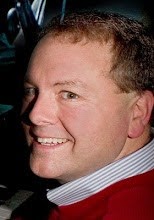
The screening will feature live accompaniment by Jeff Rapsis, a New Hampshire-based silent film musician.
'The Last Command,' directed by Josef von Sternberg, tells the sweeping story of a powerful general in Czarist Russia (Jannings) forced to flee his homeland during the Bolshevik Revolution. He emigrates to America, where he is reduced to living in poverty.
Finding work as an extra at a Hollywood studio, the former general lands the part of a commanding officer in a movie about the Revolution, causing flashbacks to his traumatic experiences. The conflict leads to a spectacular climax and a towering performance that earned Jannings 'Best Actor' honors.
The film takes audiences on a journey through big emotions as well as issues of history, time, power, and especially a man's duty to his country and to his fellow citizens—and what happens when the two obligations diverge.
'The Last Command' is also one of early Hollywood's most creative and challenging looks at the global conflicts that contributed to World War I.
The film also stars a young William Powell as a Hollywood movie director who crosses paths with the general during the Revolution, and 1920s starlet Evelyn Brent as a seductive Russian revolutionary.
Rapsis, the accompanist, will create the film's score live as the movie is shown by improvising music based on original melodies created beforehand.
"Making up the music on the spot is kind of a high wire act," Rapsis said. "But there's nothing like the energy and excitement that comes with improvised live performance, especially when accompanying a silent film."
Rapsis accompanies films using a digital synthesizer to recreate the texture of a full orchestra.
Critic Leonard Maltin hailed 'The Last Command' as "a stunning silent drama...a fascinating story laced with keen observations of life and work in Hollywood." Time Out of London called it "the first Sternberg masterpiece, expertly poised between satire and 'absurd' melodrama. The cast are fully equal to it; Jannings, in particular, turns the characteristic role of the general into an indelible portrait of arrogance, fervour and dementia."
Director Sternberg, a master of lighting and black-and-white photography, created 'The Last Command' as a visual tour de force. The film is often cited as a prime example of the emotional range and visual accomplishment of silent films at their height, just prior to the coming of pictures with recorded soundtracks.
Rapsis said great silent film dramas such as 'The Last Command' told stories that concentrate on the "big" emotions such as Love, Despair, Anger, and Joy. Because of this, audiences continue to respond to them in the 21st century, especially if they're presented as intended—in a theater on the big screen, with a live audience and live music.
"Dramas such as 'The Last Command' were created to be consumed as a communal experience," Rapsis said. "With an audience and live music, they come to life as their creators intended them to. This screening at the Leavitt is a great chance to experience films that first caused people to fall in love with the movies."
After 'The Last Command' on Thursday, June 27 at 7 p.m., other programs in this year's Leavitt silent film series include:
• Wednesday, July 17, 7 p.m.: 'Woman in the Moon' (1929). In honor of the 50th anniversary of Apollo 11, Fritz Lang's epic sci-fi adventure film about mankind's first-ever journey to the moon. See the German space program that never was! (Note Wednesday night screening date.)
• Thursday, Aug. 15, 7 p.m.: 'Paths to Paradise' (1925). Two competing would-be jewel thieves reluctantly team up to pull off a major heist. Starring Raymond Griffith, a leading comedian for Paramount Pictures whose popularity rivaled Chaplin and Keaton in the 1920s,
• Thursday, Aug. 29, 7 p.m.: 'The Beloved Rogue' (1926) starring John Barrymore. Epic costume adventure based on the life of the 15th century French poet, François Villon. Wrongly banished from the Royal Court and sentenced to death, can the patriotic poet save France from an evil plot?
• Saturday, Oct. 26, 7 p.m.: 'The Hunchback of Notre Dame' (1923) starring Lon Chaney. Just in time for Halloween, our annual "Chiller Theatre" presentation! Lon Chaney stars in the original screen adaptation of Victor Hugo's classic novel about a deformed bellringer in medieval Paris.
'The Last Command' (1928) will be screened with live music on Thursday, June 27 at 7 p.m. at the Leavitt Fine Arts Theatre, 259 Main St. Route 1, Ogunquit, Maine; (207) 646-3123; admission is $10 per person, general seating. For more information, visit www.leavittheatre.com. For more info on the music, visit www.jeffrapsis.com.