Showing posts with label Greenfield Garden Cinemas. Show all posts

Monday, February 17, 2025

Next: Valentino in 'The Sheik' (1921) on Monday, March 3 in Greenfield, Mass.; notes from the 50th annual Boston Sci-Fi Marathon

Rudolph Valentino and Agnes Ayres in a scene from 'The Sheik' (1921).

Next local screening is Monday, March 3 at 6:30 p.m., when I'll accompany Rudolph Valentino in 'The Sheik' (1921) at the Garden Cinemas in Greenfield, Mass.

More about Rudy and the film in the press release pasted in below. 

First, a few notes from this past weekend.

On Saturday, I had the privilege of creating music for a screening of F.W. Murnau's 'Sunrise' (1927) at the Jane Pickens Theatre in Newport, R.I.

About 75 people showed up for this day-after-Valentine's Day screening, which was a surprisingly strong turnout given that a messy winter storm was in the process of arriving at show time.

For this, I got to tell my story of how a friend of mine came to a screening of this film, but thought he was seeing the futuristic fantasy 'Metropolis.' (1927).

Because 'Sunrise' starts out in a stylized urban setting that actually does look weirdly futuristic, and because all of silent film looks a bit alien to untrained eyes, I can see how this could happen.

Afterwards, his question to me was: "What kind of a futuristic amusement park has pigs sliding down a chute and getting drunk on wine?" 

Snow was falling by the time I headed back to New Hampshire. The drive usually takes two hours but thanks to the weather it was 3½ hours. Well, at least I got to hear a whole Boston Symphony concert live from Symphony Hall: Herbert Blomstet at age 97 conducting two symphonies: Schubert's No. 6 and the Brahms No. 1.

I wonder what either composer would have thought of someone listening to their music via an FM radio receiver while driving a motor vehicle at night through a snowstorm. It might have seemed like some kind of science fiction to them.

And that brings us to Sunday's performance: a live score for 'Algol: Tragedy of Power' (1920), a German sci-fi drama that was shown as part of this year's annual 24-hour Boston Science Fiction Marathon.

The Marathon, or 'Thon as some call it, will occasionally program a silent title, and for some time now it's been my privilege to be invited to accompany it.

It's quite a lively audience, with attendees shouting things at the screen and generally whooping it up. I had a great time mashing up some tunes to create a score to help bring the film to life. 

A few scenes from this year's Sci-Fi Marathon, which was the 50th annual edition.

Sci Fi Festival Director Garen Daly chats with someone via Facetime...

Lobby of the Somerville Theatre between screenings.

The view from the keyboard, or from one side of the keyboard, anyway.

Me in front of "Some" theatre...

I will say it's a special thrill to finish a film like 'Algol' and to have a theater just erupt, even if the people in it are there to make noise. 

I ran up on stage to take a bow or two, and then took the opportunity to shout back:

"I saw that yesterday there was a symposium to discuss whether or not the Boston Sci-Fi Marathon would ever get to its 100th anniversary," I said.

"I certainly hope so! Because this is a celebration that brings people together, and now more than ever we need things to bring us together. May this marathon live long and prosper!" Or something like that.

Okay, next week I'll be heading out to Topeka, Kansas for this year's Kansas Silent Film Festival (more on that when I get there), and after that it's Rudolph Valentino in 'The Sheik' at the Garden Cinemas in Greenfield, Mass. 

More about that in the press release below. See you there!

*    *    *

Hey where's Rudy? An original poster for 'The Sheik' (1921).

MONDAY, FEB, 17, 2025 / FOR IMMEDIATE RELEASE
Contact Jeff Rapsis • (603) 236-9237 • jeffrapsis@gmail.com

Valentino in 'The Sheik' on Monday, March 3 at Garden Cinemas

Exotic romance starring iconic silent film actor to be show with live musical accompaniment

GREENFIELD, Mass.—He was the cinema’s first sex symbol, causing hordes of female moviegoers to flock to his pictures throughout the 1920s. He starred in films designed to show off his Latin looks, his smoldering eyes, and his dancer’s body.

He was Rudolph Valentino, who remains an icon for on-screen passion long after his untimely death in 1926 at age 31.

See the Hollywood legend for yourself when 'The Sheik' (1921) starring Rudolph Valentino is screened on Monday, March 3 at 6:30 p.m. at the Garden Cinemas, 361 Main St., Greenfield, Mass.

Admission is $10.50 adults, $8:50 for children, seniors, and students. Tickets are available online or at the door.

The screening, the latest in the Garden Cinemas' silent film series, will feature live accompaniment by Jeff Rapsis, a New Hampshire-based composer who specializes in creating scores for silent films. 

Rudolph Valentino in the title role of 'The Sheik' (1921).

In 'The Sheik,' Valentino plays Paris-educated Sheik Ahmed Ben Hassan, who arranges brides for wealthy Arabs. 

The high-spirited Lady Diana Mayo (Agnes Ayres), learning that the sheik will be in the city of Biskra, Algeria, playfully decides to disguise herself as a dancing girl to become one of the prospective brides. 

Hearing that Diana will be touring the Sahara Desert, Ahmed abducts her, intending to make her fall in love with him, with unexpected consequences.

An Italian immigrant who arrived penniless at Ellis Island in 1913, Valentino rose to superstar status in the silent era. But he was more than a pretty face—during his career, critics praised Valentino as a versatile actor capable of playing a variety of roles; his achievements included popularizing the Argentinian tango in the 1921 drama ‘Four Horsemen of the Apocalypse.’

But Valentino's brief stardom was defined by the ‘Sheik’ roles, which brought a new level of exotic sexuality to the movies, causing a sensation at the time. In theaters, women openly swooned over Valentino’s on-screen image, especially in roles such as the ‘Sheik,’ which featured elaborate costumes. 

At its peak, his popularity was so immense that it inspired a backlash among many male movie-goers, who decried Valentino’s elegant image and mannerisms as effeminate.

Valentino’s sudden death in 1926 fueled his status as a legendary romantic icon of the cinema. For years, a mysterious woman dressed in black would visit his grave at the Hollywood Park Cemetery in Los Angeles, leaving only a single red rose.

Valentino was aware of his effect on audiences, saying that “Women are not in love with me but with the picture of me on the screen. I am merely the canvas upon which the women paint their dreams.”

“These films are still exciting experiences if you can show them as they were designed to be screened,” said Rapsis, the accompanist for the screening. “There’s a reason people first fell in love with the movies, and we hope to recreate that spirit. At their best, silent films were communal experiences in which the presence of a large audience intensifies everyone’s reactions.”

Silent films with live music are screened at the Garden Cinemas the first Monday of each month. Upcoming titles include:

• Monday, April 7, 2025, 6:30 p.m.: "The Lost World" (1925) starring Wallace Beery. First-ever movie adaptation of Arthur Conan Doyle's legendary tale of British explorers who discover pre-historic creatures still thriving atop a remote South American plateau. Great entertainment; ground-breaking special effects by the same team that later created 'King Kong' mesmerized early movie audiences and remain impressive today.

‘The Sheik’ (1921) will be shown on Monday, March 3 at 6:30 p.m. at the Garden Cinemas, 361 Main St., Greenfield, Mass. Admission is $10.50 adults, $8:50 for children, seniors, and students. Tickets available at the door; advance tickets are available at www.gardencinemas.net. For more information, call the box office at (413) 774-4881.

Monday, March 4, 2024

Up next: 'Passion of Joan of Arc' (1928) on Monday, 3/4 at Garden Cinemas, Greenfield, Mass.

Maria Falconetti in the title role of 'Joan of Arc' (1928).

From comedy to tragedy!

Yesterday brought howls of laughter at Harold Lloyd's antics in 'Why Worry?' (1923), which I accompanied at the Town Hall Theatre in Wilton, N.H.

Later today, I expect a very different reaction to 'The Passion of Joan of Arc' (1928), which I'll accompany at 6:30 p.m. at the Garden Cinemas in Greenfield, Mass.

It's a case not of Comedy Tonight, but Tragedy Tonight, and Comedy Yesterday Afternoon—with apologies to Stephen Sondheim.

If you're anywhere near Greenfield, Mass., hope you can make it to tonight's screening. 'Passion' is one of those films that really works only on the big screen and with live music.

So if you're in Cleveland, Ohio, Google maps says that's only a 10-hour drive. If you start early enough, there's no excuse!

More information in the press release below. See you there!

*   *   *

An original poster for 'The Passion of Joan of Arc' (1928).

MONDAY, FEB. 26, 2024 / FOR IMMEDIATE RELEASE
Contact Jeff Rapsis • (603) 236-9237 • jeffrapsis@gmail.com

Rediscovered classic 'Joan of Arc' to be shown at Garden Cinemas on Monday, March 4

Groundbreaking drama, long thought lost until a copy was found in Norway, to be screened with live music

GREENFIELD, Mass.—A ground-breaking European feature film—considered lost for decades until a copy surfaced in Oslo, Norway—will return to the big screen in March at the Greenfield Garden Cinemas, 361 Main St., Greenfield, Mass..

'The Passion of Joan of Arc' (1928), a film noted for its innovative camera work and an acclaimed performance by actress Maria Falconetti, will be screened on Monday, March 4 at 6:30 p.m. as part of the Garden Cinemas' Silent Film Series.

The screening will feature live accompaniment by Jeff Rapsis, a New Hampshire-based composer who specializes in creating music for silent films.

Admission is $10.50 adults, $8:50 for children, seniors, and students. Tickets are available online or at the door.

Directed by Denmark's Carl Theodor Dreyer, 'The Passion of Joan of Arc' chronicles the trial of Jeanne d'Arc on charges of heresy, and the efforts of her ecclesiastical jurists to force Jeanne to recant her claims of holy visions.

The film’s courtroom scenes are shot almost exclusively in close-up, situating all the film’s meaning and drama in the slightest movements of its protagonist’s face.

Of Falconetti's performance in the title role, critic Pauline Kael wrote that her portrayal "may be the finest performance ever recorded on film." Her performance was ranked 26th in Premiere Magazine's 100 Greatest Performances of All Time, the highest of any silent performance on the list. Falconetti, a legendary French stage actress, made only two films during her career.

The film has a history of controversy. The premiere of 'The Passion of Joan of Arc' in Paris on Oct. 25, 1928 was delayed because of the longtime efforts of many French nationalists, who objected to the fact that Dreyer was not Catholic and not French and to the then-rumored casting of Lillian Gish as Joan.

Before the premiere, several cuts were made by order of the Archbishop of Paris and by government censors. Dreyer had no say in these cuts and was angry about them. Later that year, a fire at UFA studios in Berlin destroyed the film's original negative and only a few copies of Dreyer's original cut of the film existed. Dreyer was able to patch together a new version of his original cut using alternate takes not initially used. This version was also destroyed in a lab fire in 1929. Over the years it became hard to find copies of Dreyer's second version and even harder to find copies of the original version of the film.

It was banned in Britain for its portrayal of crude English soldiers who mock and torment Joan in scenes that mirror biblical accounts of Christ's mocking at the hands of Roman soldiers. The Archbishop of Paris was also critical, demanding changes be made to the film.

'The Passion of Joan of Arc' was released near the end of the silent film era. About 80 percent of all movies made during that time are now lost due to decomposition, carelessness, fire, or neglect. But copies of "missing" films still occasionally turn up in archives and collections around the world, so researchers and archivists continue to make discoveries.

In the case of 'The Passion of Joan of Arc,' the original version of the film was lost for decades after a fire destroyed the master negative. In 1981, an employee of the Kikemark Sykehus mental institution in Oslo, Norway found several film cans in a janitor's closet that were labeled as being The Passion of Joan of Arc.

The cans were sent to the Norwegian Film Institute where they were first stored for three years until finally being examined. It was then discovered that the prints were of Dreyer's original cut of the film before government or church censorship had taken place. No records exist of the film being shipped to Oslo, but film historians believe that the then-director of the institution may have requested a special copy.

For 'The Passion of Joan of Arc,' Rapsis will improvise a score from original musical material that he creates beforehand, using a digital synthesizer to recreate the sound and texture of a full orchestra.

"What I try to do," Rapsis said, "is create music that bridges the gap between a film that might be 90 or 100 years old, and the musical expectations of today's audiences."

'The Passion of Joan of Arc'  continues another season of silent films presented with live music at the Garden Cinemas. The series provides local audiences the opportunity to experience silent film as it was intended to be shown: on the big screen, in good-looking prints, with live music, and with an audience.

“These films are still exciting experiences if you can show them as they were designed to be screened,” said Rapsis, accompanist for the screenings.

'The Passion of Joan of Arc' will be shown on Monday, March 4 at 6:30 p.m. at the Greenfield Garden Cinemas, 361 Main St., Greenfield, Mass.

Admission is $10.50 adults, $8:50 for children, seniors, and students. Tickets at the door; advance tickets are available at www.gardencinemas.net. For more information, call the box office at (413) 774-4881.

Sunday, February 4, 2024

Warm up for Valentine's Day with Garbo and Gilbert in 'Flesh and the Devil' on Monday, 2/5

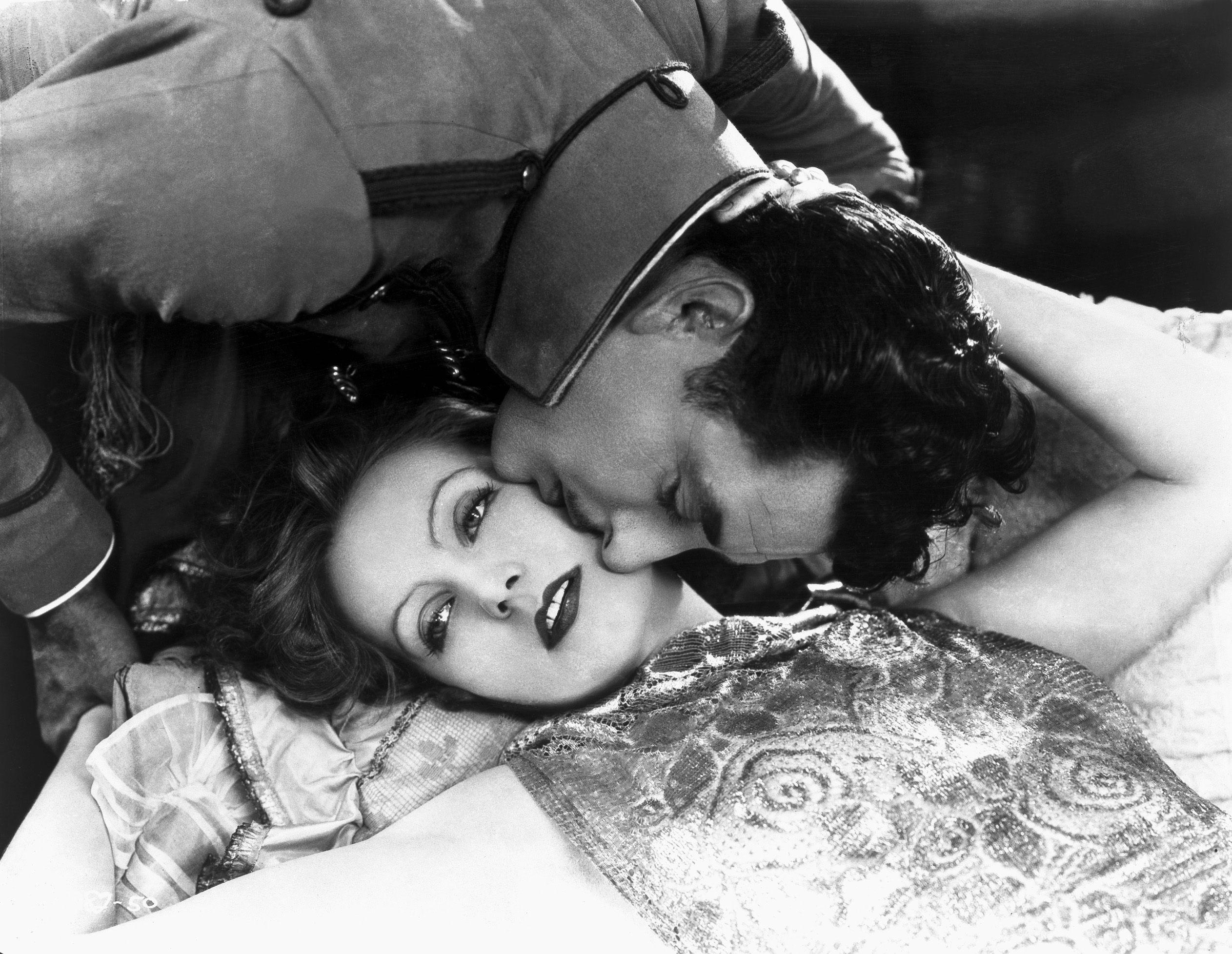
Greta Garbo and John Gilbert in 'Flesh and the Devil' (1926).

Next up: it's 'Flesh and the Devil' (1926), a romantic thriller starring Greta Garbo and John Gilbert. I'm accompanying the film on Monday, Feb. 5 at 6:30 p.m. at the Garden Cinemas in Greenfield, Mass.

 A massive success that cemented Garbo's career, the film features love scenes that were not faked, as the two stars were involved in a heated affair during filming. Director Clarence Brown later said he just had to start the cameras and then stand back!

Lots more info in the press release below. But first, a few notes about last night's screening at the Campton (N.H.) Historical Society, an annual event that includes a pot luck supper and a considerable amount of small-town charm.

For example: announcements prior to my introduction included an upcoming Antique Snowmobile Meet sponsored by the local Chamber of Commerce.  

When I got up to speak, I made the usual lame jokes (including one about the peanut brittle on the dessert table, which I said four out of five dentists recommended because it's so good for business), but then I realized something about the evening.

The scene prior to Saturday night's screening at the Campton Historical Society.

I found myself saying that as a silent film accompanist, it's been my privilege to be invited to perform in such far-flung and glamorous show-biz meccas as Topeka, Kansas, where I'll perform later this month at the Kansas Silent Film Festival, and Cleveland, Ohio, where I get to accompany films in March.

But, I said, despite the romance of these exotic places, it was unlikely that any of them would include announcements about the Chamber of Commerce hosting antique snowmobile meets. 

So the annual Pot Luck Supper / Silent Film Screening at the Campton Historical Society, traditionally held in the dead of winter, was special to me because it was home, or at least the small part of the world that was really familiar to me.

Dig in! The 'Pot Luck Supper' portion of last night's program.

Last night's screening was not without its celebrity guests, however. Prior the the show, when I was warming up at the keyboard, a woman came up to me and began chatting.

Her name was Danielle Freund-Buckman, and turn out she was the granddaughter legendary cinematographer Karl Freund's borther! That made her, let's see...Karl Freund's grand-niece, I think. 

So I introduced her to the audience, members of which of course would have no idea who Karl Freund was. I explained he was not related to Sigmund Freud, whose name was different anyway, but he was a cinematographer for many influential films in the 1920s, including F.W. Murnau's 'The Last Laugh' (1924) and Fritz Lang's 'Metropolis' (1927).

I probably would have made a bigger impression by mentioning that Freund photographed 'Dracula' (1931) starring Bela Lugosi, and also directed Boris Karloff in 'The Mummy' (1932), and also an obscure picture called 'Moonlight and Pretzels' (1933) that is my FAVORITE 1930s musical, based on a single screening I saw at a long-ago Cinefest celebration in Syracuse, N.Y. (Another show biz capital!)

Instead, I mentioned the one thing that I knew would hit home: later in his career Freund developed the three-camera system used to shoot episodes of 'I Love Lucy' in the 1950s, and hundreds of sitcoms in the years since. Everyone perked up at that, and Mrs. Freund-Buckman was duly showered with applause.

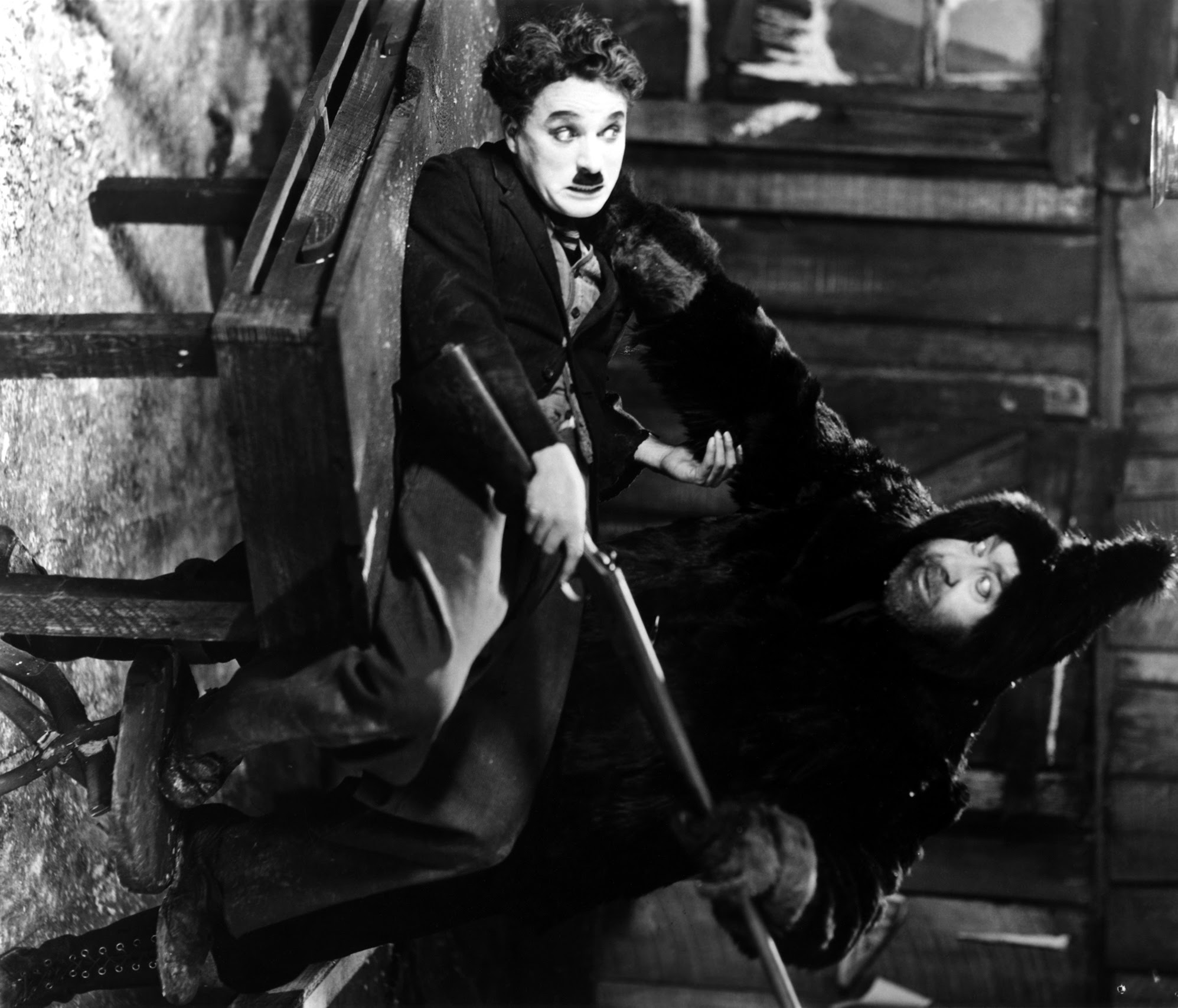
The film was Chaplin's 'The Gold Rush' (1925), in the original version, which I've been played for multiple times in the past year after not accompanying it all for about a decade. 

In recent screenings, I've learned how to do music for the final cliff-hanging sequence (literally!) in a way that I think heightens the tension and the resulting laughs.

Take innocent music and keep it light and airy, with lots of pauses, as Chaplin and Mack Swain slowly discover their predicament. Only when Chaplin swings out the door do and everything becomes clear to the characters (although the audience has known what's going on all along) do you begin to amp up the music—in this case by taking the same music and boosting the tempo a bit, and maybe putting phrases in a minor key, but still keeping the texture as simple as possible.

In due course, you can ramp things up and get really big, but only right at the end, when Swain has escaped and found his mountain of gold, but Charlie is still trapped in the teetering cabin. 

And even then you have to cut out at the moment Swain finally peers back into the cabin, and a still-trapped Chaplin wiggles his finger to indicate he's still awaiting rescue. Why? Because if the big music continued, it would step on the moment. But with near silence, the moment produces an explosive laugh.

I followed this prescription last night. I'm not sure if the music really had anything to do with it, but audience reaction was huge, with people gasping and shrieking as the sequence unfolded, and then topped with a lusty cheer when Chaplin popped out just in the nick of time.

Less is more!

See you at 'Flesh and the Devil' on Monday night in Greenfield, Mass.—yet another showbiz capital! (By virtue of it being the hometown of Penn Gillette of 'Penn & Teller' fame, and who once worked at the Garden Cinema.)

*    *    *

Original poster art for MGM's 'Flesh and the Devil' (1926).

MONDAY, JAN. 22, 2024 / FOR IMMEDIATE RELEASE
Contact Jeff Rapsis • (603) 236-9237 • jeffrapsis@gmail.com

Garbo, Gilbert heat up the big screen in 'Flesh and the Devil' at Garden Cinemas

Celebrity couple fell passionately in love during filming of legendary silent classic, to be shown with live music on Monday, Feb. 5 in Greenfleld, Mass.

GREENFIELD, Mass. - Rediscover the passionate romance between early superstars Greta Garbo and John Gilbert in 'Flesh and the Devil' (1926), the classic MGM silent melodrama that first brought the legendary Hollywood couple together.

'Flesh and the Devil' will be shown on Monday, Feb. 5 at 6:30 p.m. at the Greenfield Garden Cinemas, 361 Main St., Greenfield.

The screening will feature live accompaniment by Jeff Rapsis, a New Hampshire-based composer who specializes in creating music for silent films.

Admission is $10.50 adults, $8:50 for children, seniors, and students. Tickets are available online or at the door.

Set in Germany, 'Flesh and the Devil' tells the story of a love triangle between two boyhood friends (Gilbert and Lars Hansen) and the amoral seductress (Garbo) who comes between them.

The two men are eventually forced into a violent struggle over the woman, who marries one but carries on an affair with the other.

During the shooting, Garbo and Gilbert developed their own highly charged off-screen romantic affair, the passion of which director Clarence Brown delighted in capturing on camera.

Though Garbo and Gilbert eventually went their separate ways, 'Flesh and the Devil' marked the very public beginning of one of the legendary romances of early Hollywood.

 A close-up in more ways than one: Garbo and Gilbert in 'Flesh and the Devil' (1926).
 
'Flesh and the Devil' is the latest installment of a monthly series of silent film screenings at the Garden Cinemas. 

The series aims to recreate the lost magic of early cinema by bringing crucial elements needed for silent film to work: classic films in best available prints; projection on the big screen; live musical accompaniment; and a live audience.

"These films are still moving and intense experiences if you can show them as they were designed to be screened," said Jeff Rapsis, who provides musical accompaniment for the screenings. 

"There's a reason people first fell in love with the movies. At their best, they were communal experiences in which the presence of a large audience intensifies everyone's reactions."


The appeal of 'Flesh and the Devil' has withstood the test of time. In 2006, the film was selected for preservation in the United States National Film Registry by the Library of Congress as being "culturally, historically, or aesthetically significant."

Reviewers have continued to praise the picture's many good qualities, often singling out Garbo's performance as particularly memorable.

"Pulsatingly romantic, beautifully filmed, probably the best Garbo-Gilbert love match," wrote critic Leonard Maltin, while David Parkinson of Empire Magazine wrote that "Garbo is mesmerizing in this wild and heated romance..." Carol Cling of the Las Vegas Review proclaimed 'Flesh and the Devil' as "Garbo & Gilbert at their steamy, sultry silent peak."

Upcoming titles in the Garden Cinema's silent film series include:

• Monday, March 4 at 6:30 p.m.: 'The Passion of Joan of Arc' (1928). Danish director Carl Dreyer's intense recreation of the trial of Joan of Arc set new standards for cinematography and expanded the language of film in new directions.

• Monday, April 1 at 6:30 p.m.: 'Safety Last' (1923). The iconic image of Harold Lloyd dangling from the hands of a downtown clock is just one scene of a remarkable thrill comedy that has lost none of its power over audiences.

'Flesh and the Devil' will be shown with live music  on Monday, Feb. 5 at 6:30 p.m. at the Greenfield Garden Cinemas, 361 Main St., Greenfield.


Admission is $10.50 adults, $8:50 for children, seniors, and students. Tickets at the door; advance tickets are available at www.gardencinemas.net. For more information, call the box office at (413) 774-4881.

Tuesday, December 26, 2023

Chaplin's 'The Gold Rush' on New Year's Day in Greenfield, Mass. plus thanks to everyone!

Charlie Chaplin warms his feet in 'The Gold Rush' (1925).

Happy holidays to everyone!

Next up I'm doing live music for Chaplin's 'The Gold Rush' (1925) on New Year's Day (Jan. 1, 2024) at the Garden Cinemas in Greenfield, Mass.

Showtime is 6:30 p.m. Hope you'll join us for Chaplin's immortal comedy, set in the Klondike Gold Rush era. Lots more info is in the press release pasted in below.

For now in what I assume will be my final post of 2023, I'd like to thank everyone who attended or who otherwise supported my screenings in the past year.

I very much appreciate all the people, many unknown to me, who make it possible to continue to do live music for silent cinema a century after the format was reaching its peak.

They do that by buying tickets and attending screenings that I accompany. This is crucially important because without an audience, the experience doesn't work, either artistically or financially. 

So thank you! Hope to see you all again in the new year—at least until the lights go down.

*    *    *

Chaplin consumes a shoe in a famous sequence from 'The Gold Rush' (1925). 

TUESDAY, DEC. 26, 2023 / FOR IMMEDIATE RELEASE
Contact Jeff Rapsis • (603) 236-9237 • jeffrapsis@gmail.com

Charlie Chaplin's 'The Gold Rush' in Greenfield, Mass. on Monday, Jan. 1

Family fun: Little Tramp's silent film comedy classic set in the frozen Arctic to be screened with live music on New Year's Day

GREENFIELD, Mass. — Classic silent film comedy returns to the big screen on New Year's Day with 'The Gold Rush' (1925), a classic comedy starring Charlie Chaplin.

The screening will take place on Monday, Jan. 1, 2024 at 6:30 p.m. at the Greenfield Garden Cinemas, 361 Main St., Greenfield.

The screening will feature live accompaniment by Jeff Rapsis, a New Hampshire-based composer who specializes in creating music for silent films.

Admission is $10.50 adults, $8:50 for children, seniors, and students. Tickets are available online or at the door.

'The Gold Rush,' a landmark comedy and one of the top-grossing films of the silent era, finds Chaplin's iconic 'Little Tramp' character journeying to the frozen wastelands of the Yukon. There as a prospector, the Tramp's search for gold turns into a pursuit of romance, but with plenty of laughs along the way.

The film contains several famous scenes, both comic and dramatic, including a starving Chaplin forced to eat his shoe for Thanksgiving dinner and a heart-breaking New Year's Eve celebration.

As a comedian, Chaplin emerged as the first superstar in the early days of cinema. From humble beginnings as a musical hall entertainer in England, he came to Hollywood and used his talents to quickly rise to the pinnacle of stardom in the then-new medium of motion pictures. His popularity never waned, and his image remains recognized around the world to this day.

'The Gold Rush,' regarded by many critics as Chaplin's best film, is a prime example of his unique talent for combining slapstick comedy and intense dramatic emotion.

Chaplin in 'The Gold Rush' (1925).

" 'The Gold Rush' is still an effective tear-jerker," wrote critic Eric Kohn of indieWIRE. "In the YouTube era, audiences — myself included — often anoint the latest sneezing panda phenomenon as comedic gold. Unless I’m missing something, however, nothing online has come close to matching the mixture of affectionate fragility and seamless comedic inspiration perfected by the Tramp."

Rapsis, who uses original themes to improvise silent film scores, said the best silent film comedies often used visual humor to create laughter out of simple situations. Because of this, audiences continue to respond to them in the 21st century, especially if they're presented as intended — with an audience and live music.

"These comedies were created to be shown on the big screen as a communal experience," Rapsis said. "With an audience and live music, they still come to life as their creators intended them to. So this screening is a great chance to experience films that first caused people to fall in love with the movies," he said.

Rapsis achieves a traditional movie score sound for silent film screenings by using a digital synthesizer that reproduces the texture of the full orchestra.

Upcoming titles in the Garden Cinema's silent film series include:

• Monday, Feb. 5 at 6:30 p.m.: 'Flesh and the Devil' (1926). Just in time for Valentine's Day! Garbo and Gilbert steam up the camera lens in this torrid romance set in 19th century European high society.

• Monday, March 4 at 6:30 p.m.: 'The Passion of Joan of Arc' (1928). Danish director Carl Dreyer's intense recreation of the trial of Joan of Arc set new standards for cinematography and expanded the language of film in new directions.

• Monday, April 1 at 6:30 p.m.: 'Safety Last' (1923). The iconic image of Harold Lloyd dangling from the hands of a downtown clock is just one scene of a remarkable thrill comedy that has lost none of its power over audiences.

Charlie Chaplin's 'The Gold Rush' will be screened with live music on Monday, Jan. 1, 2024 at 6:30 p.m. at the Greenfield Garden Cinemas, 361 Main St., Greenfield.

Admission is $10.50 adults, $8:50 for children, seniors, and students. Tickets are at the door; advance tickets are available at www.gardencinemas.net. For more information, call the box office at (413) 774-4881.


Friday, September 1, 2023

Cap Labor Day weekend with Buster Keaton's 'Our Hospitality' on Monday, 9/4 in Greenfield, Mass.

Buster Keaton and friend in 'Our Hospitality' (1923).

Well, I see by the calendar we've slid into September, with Labor Day weekend once again upon us.

For many years, the weekend played host to the Jerry Lewis MDA Labor Day Telethon.

Remember that? To a television-obsessed kid growing up in early 1970s, when the telethon was at its peak, the mix of show biz veterans and wee-hours schmaltz was powerful stuff indeed.

Where else could you see Norm Crosby and Julius LaRosa and Sammy Davis Jr. all in one place, with the possibility always looming of a reunion of Jerry with his long-estranged partner, Dean Martin? (This finally took place in 1976, brokered by none other than Frank Sinatra. I remember a lot of hugging.)

Add to that the ever-present toteboard with updates accompanied by drum rolls, and with exhortations from longtime co-host Ed McMahon, and you had a recipe for mesmerizing viewing.

"Jeffrey, it's the first day of school! You wouldn't feel so tired if you hadn't spent the whole night watching the Jerry Lewis Telethon!"

Well, Jerry is no longer with us to sing "You'll Never Walk Alone," the perennial closing number. But Labor Day weekend soldiers on. 

How about a new tradition—one that doesn't last all night?

Come join us for a Labor Day screening of a great silent comedy: Buster Keaton's 'Our Hospitality' (1923), with live music by me. 

The film, celebrating the 100th anniversary of its original release, will be screened on Monday, Sept. 4 at 6:30 p.m. 

It's a terrific movie, and this is a chance to experience the film the way Buster intended: on the big screen, with live music, in a theater with a big audience.

And that's where you come in! Everything you need to know is below in the press release.

So join us. I promise you won't be tired the next day when it's time to go to school or work.

*    *    *

Buster and Natalie try to make some beautiful music together.

TUESDAY, AUG. 22, 2023 / FOR IMMEDIATE RELEASE
Contact Jeff Rapsis • (603) 236-9237 • jeffrapsis@gmail.com

Buster Keaton stars in 'Our Hospitality' on Monday, Sept. 4 at Garden Cinemas

Classic feature-length silent comedy to be screened on the big screen with live music

GREENFIELD, Mass.—He never smiled on camera, earning him the nickname of "the Great Stone Face."

But Buster Keaton's comedies rocked Hollywood's silent era with laughter throughout the 1920s, and remain popular crowd-pleasers today.

See for yourself with a screening of 'Our Hospitality' (1923), one of Keaton's landmark features, on Monday, Sept. 4 at 6:30 p.m. at the Greenfield Garden Cinemas, 361 Main St., Greenfield.

The screening will feature live accompaniment by Jeff Rapsis, a New Hampshire-based composer who specializes in creating music for silent films.

Admission is $10.50 adults, $8:50 for children, seniors, and students. Tickets are available online or at the door.

Set in the 1830s, 'Our Hospitality,' tells the tale of a young man (Keaton) raised in New York City but unknowingly at the center of a long-running backwoods family feud.

Resolving to return and claim his family homestead, he sets in motion a perilous cat-and-mouse game in which every move could be his last.

Highlights of the picture include Keaton's extended journey on a vintage train of the era, as well as a climatic river rescue scene.

The film stars Keaton's then-wife, Natalie Talmadge, as his on-screen love interest; their first child, newborn James Talmadge Keaton, makes a cameo appearance, playing Buster as an infant. Keaton's father also plays a role in the film.

'Our Hospitality' is part of the Garden Cinema's silent film series, which aims to show early movies as they were meant to be seen—in high quality prints, on a large screen, with live music, and with an audience.

"All those elements are important parts of the silent film experience," said Rapsis, who will improvise a musical score for 'Our Hospitality.'

"Recreate those conditions, and the classics of early Hollywood leap back to life," he said.

Keaton entered films in 1917 and was quickly fascinated with the then-new medium. After apprenticing with popular comedian Roscoe "Fatty" Arbuckle, Keaton set up his own studio in 1920, making short comedies that established him as one of the era's leading talents.

A remarkable pantomime artist, Keaton naturally used his entire body to communicate emotions from sadness to surprise. And in an era without special effects, Keaton's acrobatic talents enabled him to perform all his own stunts.

In 1923, Keaton made the leap into full-length films with 'Our Hospitality,' which proved popular enough for him to continue making features for the rest of the silent era.

Although not all of Keaton's films were box office successes, critics later expressed astonishment at the sudden leap Keaton made from short comedies to the complex story and technical demands required for full-length features.

The Garden Theatre's silent film schedule features vintage Hollywood dramas, thrillers, and adventure flicks, all with live music. Upcoming shows include:

• Monday, Oct. 2 at 6:30 p.m.: 'Dr. Jeykll and Mr. Hyde' (1920). John Barrymore plays both title characters in this spooky adaptation of Robert Louis Stevenson's classic tale.

• Monday, Nov. 6 at 6:30 p.m.: 'The Scarlet Letter' (1926). Lillian Gish stars in this early adaptation of the Nathaniel Hawthorne story set in Massachusetts during the Puritan era.

• Monday, Dec. 4 at 6:30 p.m.: 'Robin Hood' (1922). Douglas Fairbanks Sr. stars in the original big screen adaptation of 'Robin Hood,' one of the biggest box office hits of the silent era.

Accompanist Jeff Rapsis will create musical scores for each film live during its screening, in the manner of theater organists during silent cinema's peak years in the 1920s.

"For most silent films, there was never any sheet music and no official score," Rapsis said. "So creating original music on the spot to help the film's impact is all part of the experience."

"That's one of the special qualities of silent cinema," Rapsis said. "Although the films themselves are often over a century old, each screening is a unique experience—a combination of the movie, the music, and the audience reaction."

‘Our Hospitality’ will be shown with live music on Monday, Sept. 4 at 6:30 p.m. at the Greenfield Garden Cinemas, 361 Main St., Greenfield.

Admission is $10.50 adults, $8:50 for children, seniors, and students. Tickets are available online at www.gardencinemas.net or at the door. For more information, call the box office at (413) 774-4881.

Saturday, February 5, 2022

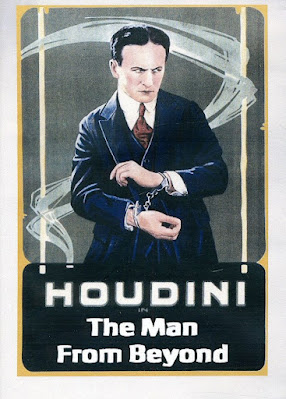
Escape to Houdini's 'The Man From Beyond' in Greenfield, Mass. on Saturday, Feb. 5

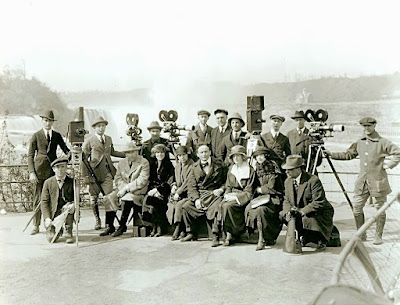
Houdini and crew shooting 'The Man From Beyond' (1922) at Niagara Falls.

Today's riddle: What happens when you program a 100-year-old silent film starring legendary illusionist and escape artist Harry Houdini in a theater that once employed a young man who idolized Houdini and would go on to become one of today's most acclaimed magicians?

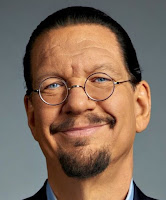
The answer, of course, is that you get a video promo from Penn Jillette, the talking half of "Penn & Teller" and native of Greenfield, Mass., where he once worked at the Garden Cinema, which is showing 'The Man From Beyond' (1922) starring Harry Houdini, with live music by me. 

The screening is tonight: Saturday, Feb. 5 at 6 p.m. at the Garden Cinemas, 361 Main St., Greenfield, Mass. More info and details are in the press release below.

And yes, Penn Gillette, a Greenfield native, did once work at the Garden Cinemas as a teenager, and did have a thing for Harry Houdini even way back then, which led to a long and illustrious career.

The Garden is running 'The Man From Beyond' in honor of the 100th anniversary of the Greenfield Winter Carnival. So yes, it seemed appropriate to run a film featuring a man (Houdini) frozen in ice for 100 years. 

And it just happens to be the film's 100th anniversary. So lots to celebrate!

If you're in the area, I invite you to attend this rare screening of Harry Houdini's 'The Man From Beyond' at the venerable Garden Cinemas in downtown Greenfield, Mass. 

And if you'd like to see it, here's the Penn Jillette promo. Enjoy! 

Although for a silent film, wouldn't it have been more appropriate for it to be pitched by the usually mute partner Teller?

*    *    *

MONDAY, JAN. 17, 2022 / FOR IMMEDIATE RELEASE

Contact Jeff Rapsis • (603) 236-9237 • jeffrapsis@gmail.com

For 100th Winter Carnival: Rare 100-year-old Harry Houdini film with live music at Garden Cinemas on Saturday, Feb. 5

Legendary 'Handcuff King' escape artist plays frozen Arctic explorer in stunt-filled silent adventure movie released 100 years ago

GREENFIELD, Mass.—He reigned for decades as the legendary "Handcuff King," famous for daring escape stunts staged around the world.    

But Harry Houdini also had a brief movie career, starring in a series of silent adventure films that showed off his talent for illusion and escape.

See Houdini back on the big screen in 'The Man From Beyond' (1922) on Saturday, Feb. 5 at 6 p.m. at Greenfield Garden Cinemas, 361 Main St., Greenfield, Mass.  

The century-old film, in which Houdini plays an Arctic explorer frozen for 100 years and then thawed out, is being shown in honor of Greenfield's annual Winter Carnival, which runs Feb. 4-6.  

“This was the perfect film to feature for Greenfield’s 100th Winter Carnival” said Garden Cinemas owner Isaac Mass. “It was the 'Frozen' of 1922.”

The rarely screened film will be shown with live musical accompaniment by Jeff Rapsis, a New Hampshire-based performer regarded as one of the nation's leading silent film musicians.  

It's the third time Rapsis has been to the Garden Cinemas.  

“His performances are quickly becoming a fan favorite.” Mass said. “It turns out silent film is pretty noisy and the crowd just loves to engage.”

Houdini made only a handful of movies in the 1910s and 1920s, and much of his film work is lost.  

But enough escaped oblivion to provide a glimpse of the world-renowned escape artist at the peak of his worldwide fame.  

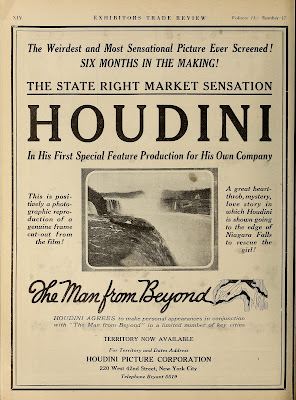
The ‘Man From Beyond’ took six months to produce, unheard-of in 1922, and was the first film made by Houdini’s own production company.

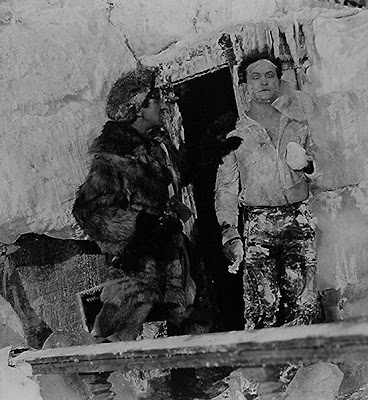
In 'The Man From Beyond' (1922), Houdini plays a man frozen 100 years in the Arctic who returns to civilization to reclaim his reincarnated love.  

Once he's thawed out, Houdini tries to straighten out the lives of the descendants of his old friends and lost loves. The film includes a daring climax filmed at Niagara Falls.  

Although Houdini's films were well-received, he eventually abandoned his movie career, preferring live performance.

Houdini, born Erik Weisz, was a Hungarian-born, American-Jewish illusionist and stunt performer noted for his sensational escape acts.  

He first attracted notice in vaudeville in the U.S. and then as "Harry Handcuff Houdini" on a tour of Europe, where he challenged police forces to keep him locked up.  

Soon he extended his repertoire to include chains, ropes slung from skyscrapers, straitjackets under water, and having to escape from and hold his breath inside a sealed milk can with water in it.

Houdini also built a career debunking spiritualists, psychics and mediums.  

As a member of the Scientific American Committee, he offered a large cash prize to any medium that could demonstrate supernatural abilities. The prize was never collected.

“He truly was one of the original Ghostbusters," Mass explained.  

Inspired by Houdini, Greenfield native magician Penn Gillette also exposed unscrupulous mediums.

Houdini died prematurely in 1926, at age 52, of peritonitis following a burst appendix that may have been caused by blows received to the abdomen by a visitor backstage at a performance in Montreal.  

Following his death, Houdini's reputation as a legendary performer continued to make his name a household world in the decades that followed.

Houdini (right) after being chopped from a century's worth of ice.

Although not well known as a film actor, Houdini's work in motion pictures was not forgotten. In a posthumous ceremony on Oct. 31, 1975, Houdini was given a star on the Hollywood Walk of Fame at 7001 Hollywood Blvd.  

Houdini’s star is near that of Greenfield native magician and movie star Penn Jillette, which was dedicated in 2013.

"These films are audience favorites, and people continue to be surprised at how engrossing and exhilarating they can be when shown as they were intended: in a theater, and with live music," said Rapsis, who accompanies more than 100 screenings each year at venues around the nation.

Rapsis improvises live scores for silent films using a digital synthesizer to recreate the texture of the full orchestra.  

"It's kind of a high wire act," Rapsis said. "But for me, the energy of live performance is an essential part of the silent film experience."

'The Man From Beyond' (1922) will be shown with live music on Saturday, Feb. 5 at 6 p.m. at Greenfield Garden Cinemas, 361 Main St., Greenfield, Mass. Admission is $10 adults; $8.50 seniors, students and veterans. Tickets available online at  www.gardencinemas.net. For more information, call (413) 773-9260 or visit www.gardencinemas.net