Showing posts with label Steamboat Bill Jr.. Show all posts

Tuesday, August 11, 2026

Marking the 100th anniversary of Valentino's untimely death—but first, Buster Keaton's 'Steamboat Bill Jr.' at Flying Monkey in Plymouth, N.H. on Thursday, 8/13

Vilma Banky and Rudolph Valentino in 'The Son of the Sheik' (1926).

This month marks the 100th anniversary of the untimely death of silent screen icon Rudolph Valentino, who passed away on Aug. 23, 1926 at age 31.

This past Sunday, I accompanied the first of several screenings this month of 'The Son of the Sheik' (1926), Valentino's last film. I'm actually be doing it twice this weekend: on Saturday night in Brandon, Vt., and then on Sunday afternoon in Somerville, Mass.

(See the "Upcoming Silent Film Screenings" page for more details.) 

But before that, it's up to Plymouth, N.H. to accompany Buster Keaton's great comedy 'Steamboat Bill, Jr.' (1928), which is being screened on Thursday, Aug. 13 at 7 p.m. at the Flying Monkey Moviehouse and Performance Center.

Yes, this is the one where the side of a two-story house falls onto Buster, but he survive unhurt thanks to a strategically placed upper window.

More details about the screening and the film are in a press release below. See you at the movies!

*     *     *

Original promotional art for Buster Keaton's 'Steamboat Bill Jr.'

WEDNESDAY, JULY 15, 2026 / FOR IMMEDIATE RELEASE
Contact: Jeff Rapsis • (603) 236-9237 • jeffrapsis@gmail.com

Buster Keaton's 'Steamboat Bill Jr.' to screen on Thursday, Aug. 13 at Flying Monkey

Public welcome! Family-friendly classic silent film comedy to be shown with live music at historic venue in downtown Plymouth, N.H.

PLYMOUTH, N.H.— He never smiled on camera, earning him the nickname of "the Great Stone Face." But Buster Keaton's comedies rocked Hollywood's silent era with laughter throughout the 1920s.

See for yourself with a screening of 'Steamboat Bill Jr.' (1928), one of Keaton's landmark movies, on Thursday, Aug. 13 at 7 p.m. at the Flying Monkey Moviehouse and Performance Center, 39 S. Main St., Plymouth, N.H.

The screening, the latest in the Flying Monkey's silent film series, will feature live accompaniment by Jeff Rapsis, a New Hampshire-based composer who specializes in creating music for silent films.

General admission is $15 per person. Tickets may be purchased online at www.flyingmonkeynh.com or at the door.

The show is intended to give area movie-goers the opportunity to experience early cinema as it was intended: on the big screen, with live music, and with an audience.

Buster Keaton and Ernest Torrence as son and father in 'Steamboat Bill, Jr.'

In 'Steamboat Bill Jr.,' Buster plays the bumbling son of a gruff riverboat captain. When a rival brings a newer boat to the river, the family is forced to face competition, just as Buster is forced to ride out a cyclone threatening to destroy the community.

Can Buster save the day and win the hand of his girlfriend, who happens to be the daughter of his father's business rival?

The film includes the famous shot of an entire building front collapsing on Keaton, who is miraculously spared by a conveniently placed second-story window.

Keaton, who grew up performing with the family vaudeville act, was known for never smiling on camera, an important element of his comic identity. A trained acrobat who learned at an early age how to take falls, Keaton did all his own stunts on camera in the era before post-production special effects.

Buster braves the coming storm in 'Steamboat Bill, Jr.' 

Critics continue to hail Keaton’s timeless comedy as well as his intuitive filmmaking genius. In 2002, Roger Ebert wrote of Keaton that “in an extraordinary period from 1920 to 1929, he worked without interruption on a series of films that make him, arguably, the greatest actor-director in the history of the movies.”

Keaton, who never attended school, did not think of himself as an artist but as an entertainer using the new medium of motion pictures to tell stories and create laughter.

The screening of 'Steamboat Bill Jr.' will feature live accompaniment by Jeff Rapsis, a New Hampshire-based composer who specializes in creating music for silent film presentations.

Rapsis will create the accompaniment on the spot, improvising music as the movie unfolds to enhance the action on the screen as well respond to audience reactions. He will perform the music on a digital synthesizer capable of producing a wide range of theatre organ and orchestral textures.

"Live music was an integral part of the silent film experience," Rapsis said. "Because most films at the time weren't released with sheet music or scores, studios depended on local musicians to come up with an effective score that was different in every theater. At its best, this approach created an energy and a connection that added a great deal to a film's impact. That's what I try to recreate," Rapsis said.

Buster Keaton's classic comedy 'Steamboat Bill Jr.' (1928) will be screened with live music on Thursday, Aug. 13 at 7 p.m. at the Flying Monkey Moviehouse and Performance Center, 39 S. Main St., Plymouth, N.H.

General admission is $15 per person. Tickets may be purchased online at www.flyingmonkeynh.com or at the door. For more info, contact the Flying Monkey box office at (603) 536-2551.

Ernest Torrence and Buster Keaton in 'Steamboat Bill, Jr.' (1928) 

Monday, March 17, 2025

How my former life as an opera singer led to this weekend's screening of 'Steamboat Bill Jr.'

Buster Keaton and Ernest Torrence in 'Steamboat Bill, Jr.' (1928).

Before doing live music for silent films, my musical performing outlet was opera.

Yes, opera—the real thing, fully staged, with people singing at the top of their lungs. 

Those people included me. For a time in the 2000s, I was fortunate to perform a wide range of chorus roles in productions staged by Granite State Opera. It was fun!

Let's see. I was a soldier in 'Carmen,' a priest/slave in 'The Magic Flute,' the notary in 'The Barber of Seville' (in which I got to sing in a quartet), a servant in 'The Marriage of Figaro,' an angry villager in 'Rigoletto,' and more. 

The company, led by Phil Lauriat, would perform original productions of two operas each year. Phil would bring in acclaimed professionals for the lead roles. For the chorus, he'd rely on auditioned local people, a group that I became part of after writing a feature story on the troupe.

(Although not professionally trained, I've done a lot of singing since junior high. I peaked early, with my performance as Billy Bigelow in my senior class musical, 'Carousel.' At least I can still carry a tune.)

The opera experience was always intense, as Phil would have the leads for only two weeks prior to a performance. The chorus would rehearse for a few weeks prior, but you were expected to know the music and be "off book" when staging and blocking began, usually just 10 days before curtain.

Perhaps the highlight of my on-stage operatic career was, ironically, a totally silent role: that of the waiter in the Cafe Momus in Act II of 'La Boheme.' 

I played the part like Charlie Chaplin, scurrying around the set, skidding on the turns, and waving my arm towel around. I had to carry and serve on stage a real roast chicken (delivered fresh to the theater prior to each performance), which allowed for a lot of fun pantomime.

Perhaps the highlight came when Musetta smashes a plate as part of the scene. The plates (from a set purchased at Goodwill) were scored to break into just a few pieces, and each time I would have to skitter about with a broom and dustpan to clean up the shards. 

Each time, invariably a piece would wind up beneath Musetta's wide skirt, requiring me to approach her and lift it up to get the remaining chunk. I would time it for maximum comic effect, without interrupting the drama of the scene. 

For that, I earned a bow at the final curtain!

Granite State Opera, alas, folded in 2008, a victim of the financial crisis at the time. (Opera is expensive!) It was about that time that I began accompanying silent films, which would soon leave little time for opera.

But it was a wonderful experience, and allowed me to get very close to major musical works in a way that was impossible to obtain from passive listening. There's no better way to experience the drama of the final act of 'Carmen' than to be standing right next to the principal singers in full voice!

Now, all these years later, the two worlds occasionally intersect. That's the case this weekend, when I accompany 'Steamboat Bill Jr.' (1928) on Sunday, March 23 at St. Paul's Episcopal Church in Concord, N.H. (Showtime is 2 p.m.; a lot more info is in the press release below.)

It just so happens that the church's music director is one of my opera chorus colleagues, John Spring. 

John and I, and all the chorus singers, will always share a foxhole-like bond that comes from the intense way Granite State staged productions. I hadn't seen him in awhile when he stopped by the Aviation Museum of N.H. (site of my day job) earlier this year to catch up.

A longtime mail carrier as well as excellent singer and trumpet player, John's post-retirement gigs include serving as music director at St. Paul's Episcopal Church in Concord, N.H. 

And John had a crazy idea: how about staging a silent film with live music right in the sanctuary?

And so, my former life as an opera singer has now come full circle with a screening of Buster Keaton's 'Steamboat Bill, Jr.' (1928) on Sunday, March 23. 

I want to thank John and everyone at St. Paul's for the opportunity to do live music and present this classic film to everyone this weekend.

And not to worry: although Buster does sing 'The Prisoner's Song' on screen, I'll keep my big yap shut.

Below is more info about the film and screening. See you in church!

*    *    *

Original promotional art for 'Steamboat Bill Jr.' (1928)

MONDAY, MARCH 3, 2025 / FOR IMMEDIATE RELEASE
Contact: Jeff Rapsis • (603) 236-9237 • jeffrapsis@gmail.com

Buster Keaton's 'Steamboat Bill Jr.' to screen on Sunday, March 23 at 2 p.m. in Concord, N.H.

Public welcome! Classic silent film comedy to be shown with live music at St. Paul's Episcopal Church, 21 Center St.

CONCORD, N.H.—He never smiled on camera, earning him the nickname of "the Great Stone Face." But Buster Keaton's comedies rocked Hollywood's silent era with laughter throughout the 1920s.

See for yourself with a screening of 'Steamboat Bill Jr.' (1928), one of Keaton's landmark movies, on Sunday, March 23 at 2 p.m. at St Paul's Episcopal Church, 21 Centre St., in downtown Concord. 

The screening will feature live music for the movie by silent film accompanist Jeff Rapsis. Admission is free; donations are accepted, with $10 per person suggested.

Light refreshments will be served after the screening.

The show is intended to give area movie-goers the opportunity to experience early cinema as it was intended: on the big screen, with live music, and with an audience.

In 'Steamboat Bill Jr.,' Buster plays the bumbling son of a riverboat’s rough captain. When a rival brings a newer boat to the river, the family is forced to face competition, just as Buster is forced to ride out a cyclone threatening to destroy the community.

Can Buster save the day and win the hand of his girlfriend, who happens to be the daughter of his father's business rival?

The film includes the famous shot of an entire building front collapsing on Keaton, who is miraculously spared by a conveniently placed second-story window.

Keaton, who grew up performing with the family vaudeville act, was known for never smiling on camera, an important element of his comic identity. A trained acrobat who learned at an early age how to take falls, Keaton did all his own stunts on camera in the era before post-production special effects.

Critics continue to hail Keaton’s timeless comedy as well as his intuitive filmmaking genius. In 2002, Roger Ebert wrote of Keaton that “in an extraordinary period from 1920 to 1929, he worked without interruption on a series of films that make him, arguably, the greatest actor-director in the history of the movies.”

Keaton, who never attended school, did not think of himself as an artist but as an entertainer using the new medium of motion pictures to tell stories and create laughter.

The screening of 'Steamboat Bill Jr.' will feature live accompaniment by Jeff Rapsis, a New Hampshire-based composer who specializes in creating music for silent film presentations.

Rapsis will create the accompaniment on the spot, improvising music as the movie unfolds to enhance the action on the screen as well respond to audience reactions. He will perform the music on a digital synthesizer capable of producing a wide range of theatre organ and orchestral textures.

"Live music was an integral part of the silent film experience," Rapsis said. "Because most films at the time weren't released with sheet music or scores, studios depended on local musicians to come up with an effective score that was different in every theater. At its best, this approach created an energy and a connection that added a great deal to a film's impact. That's what I try to recreate," Rapsis said.

Buster Keaton's classic comedy 'Steamboat Bill Jr.' (1928) will be screened with live music on Sunday, March 23 at 2 p.m. at St Paul's Episcopal Church, 21 Centre St., in downtown Concord.

Admission is free; donations are accepted, with $10 per person suggested. For more information, call (603) 224-2523 or visit www.stpaulsconcord.org.

Monday, March 11, 2024

On Friday, 3/15: at the Cleveland Cinematheque to do music for 'The Last Command' (1928)

Original promotional art for Emil Jannings in 'The Last Command' (1928).

Just a few notes prior to heading out to Cleveland to do music this Friday for 'The Last Command' (1928), one of the greatest silents (in my opinion) and which, surprisingly, they've never run at the Cinematheque.

I say surprisingly because the guy who's managed the Cinematheque for nearly 40 years, John Ewing, has an encyclopedic knowledgeable about cinema and often includes silent film programs in the venue's schedule.

Somehow, director Josef von Sternberg's most powerful silent, featuring a towering performance by Emil Jannings that helped him win the very first Academy Award for Best Actor, never made it to the Cinematheque's screen.

Well, that omission will be rectified on Friday, March 15—and just in time, too, as John is retiring this spring after almost four decades of service to Cleveland-area cinephiles. 

It's been my pleasure to accompany Cinematheque programs over the years. And I appreciate the opportunity to head out for one last show during John's storied tenure.

Storied? Indeed—his impending retirement made headline news all over Ohio: here, and here, and here.

Happy trails, John! But not until I head out to Cleveland for one last round-up, which starts at 7 p.m. on Friday, March 15, and which includes not only 'The Last Command' but also a French film I've never heard of before: 'Menilmontant' (1926) from director Dimitri Kirsanoff.

Although it's my last screening under John's watch, it won't be my last visit to Cleveland as an accompanist. I'm already booked to do music on Saturday, Jan. 18, 2025 for 'The Lost World' (1925) at the 50th annual 36-hour sci-fi marathon at Case Western Reserve University, which is just a few blocks down Euclid Ave. from the Cinematheque. 

Okay, see you in Cleveland. But before I leave, a quick glance back at recent screenings, which included a seasonally and locationally appropriate showing of 'Way Down East' (1920) on Wednesday, March 6 at the Flying Monkey Moviehouse in Plymouth, N.H.

I saw "seasonally" because the film's climax takes place in New England at this time of year. And "locationally" because the Flying Monkey is not that far from the part of the Connecticut River Valley where the many of the film's exteriors were shot, including the sequence with Lillian Gish adrift on the ice floes.

We showed the 1931 re-release version of the film, which is about 40 minutes shorter than director D.W. Griffith's original cut. People seemed to enjoy it, and cheered when Gish was rescued by Richard Barthelmess just as she was about to go over the falls. 

But somehow, to me it lacked the full-length version's monumental quality. The climax seemed to come too fast. Once again, I'm reminded that Griffith really knew what he was doing.

In other news, a screening of the silent version of 'Peter Pan' (1924) in my hometown on Sunday, March 10 brought familiar faces to the Bedford (N.H.) Public Library. One woman asked me about a weekly column that I used to write for the local paper—which I stopped writing nearly 20 years ago now!

Pre-show remarks at the Blazing Star Grange Hall in Danbury, N.H.

But the real highlight of the past week was my now-annual appearance at the Blazing Star Grange Hall in Danbury, N.H., where a capacity crowd enjoyed Buster Keaton and Ernest Torrence in 'Steamboat Bill, Jr.' (1928).

New Hampshire towns are full of former Grange Hall buildings that no longer house Grange chapters. But not Danbury, where the local Grange still maintains its own hall, which I think looks very much like it might have 100 years ago.

Although the programming includes a silent film program each year at about mud season, that doesn't mean new ideas aren't welcome. In that vein, last Saturday night saw the debut of a new "soup and bread supper" option to go along with movie night.

I was busy setting up, and I'd already eaten, so I didn't get downstairs until most of the soup was gone. Here's the impressive line-up:

This one seemed especially ambitious. Or maybe it was just the high tech crockpot used to serve it.

 And if the soup didn't fill you up, a makeshift concessions counter upstairs was ready for movie-goers.

The paper bags contain popcorn, freshly popped. Alas, Grange members sold only a handful of bags—maybe because everyone was full of soup!

And it was a conversation after the screening that gave me confidence that this was one Grange chapter that hadn't lost touch with its agricultural base.

What would happen to the uneaten and unsold popcorn? "The pigs would love it!"

Tuesday, May 2, 2023

Sunday, May 7 in Somerville, Mass.: Buster Keaton 'Boats and Trains' double feature, 'Steamboat Bill Jr.' (1928) and 'The General' (1926) both in 35mm

Buster perched on a railroad engine's 'cowcatcher' in 'The General' (1926). 

What's better than a Buster Keaton film? How about two Buster Keaton films, both shown on the big screen using 35mm prints?

That's what you'll get at a "Boats and Trains" Buster Keaton double feature on Sunday, May 7 at 2 p.m. at the Somerville Theatre, 55 Davis Square, Somerville, Mass.

Here's the line-up: Keaton's 'Steamboat Bill Jr.' (1928) will screen at 2 p.m., while his masterpiece 'The General' (1926) runs at 3:30 p.m. I'll be doing live musical accompaniment for both films.

You can buy a ticket for one feature at $16 per person, or see both for the bargain price of $20. Lots more information in the press release pasted in below.

For now, a little bit more about the 35mm prints we're using. 

A vintage lobby card promoting 'The General' (1926). 

The Somerville Theatre is among very few first-run moviehouses in our area that maintained their 35mm projectors when the industry converted to digital projection about 10 years ago.

So it has the ability to show 35mm prints, and even augmented its capacity a few years ago to handle 70mm prints, which it occasionally screens.

So when it's time to see a film on actual film (as was done for more than 100 years before the advent of digital projection), the Somerville can still do it. 

Although exhibition of first-run movies is almost exclusively digital now, many cinephiles insist on the authenticity (and in some cases, superiority) of actual film.

In some ways its similar to what's been happening with audio recordings on vinyl records. The format was nearly wiped out by the transition to compact discs in the 1980s, but never quite went away.

And vinyl LP's are now undergoing something of a renaissance, with sales surpassing CDs last year for the first time in decades. (Of course far more music is heard via streaming services these days, but vinyl seems to be winning the battle for physical media.)

Where does one get 35mm prints of films from nearly a century ago? In the case of the Somerville, they often come from the U.S. Library of Congress, which maintains a catalogue of circulating 35mm prints of a wide range of titles.

Booking them for a screening is just like borrowing from your town library: if a print is available, all you do is pay for shipping, and then return it promptly.

So did you recently file your federal income tax return, and are you left wondering what you really get for all that money?

Well, one tangible result is the availability of Buster Keaton's classic comedies in 35mm prints we're showing this weekend. 

Hope you'll be able to join us, as in a small way you already helped make the show possible!

*  *  *

A vintage lobby card promoting 'Steamboat Bill, Jr.' (1928).

MONDAY, APRIL 24, 2023 / FOR IMMEDIATE RELEASE
For more info, contact: Jeff Rapsis • (603) 236-9237 • jeffrapsis@gmail.com

Buster Keaton stars in 'Boats & Trains' comedy double feature at Somerville Theatre

Classic comedies 'Steamboat Bill Jr.' and 'The General' to be shown in 35mm with live music on Sunday, May 7

SOMERVILLE, Mass.— He never smiled on camera, earning him the nickname of 'the Great Stone Face.' But Buster Keaton's comedies rocked Hollywood's silent era with laughter throughout the 1920s.

See for yourself with a 'Boats & Trains' double feature of two of Keaton's best films on Sunday, May 7 at 2 p.m. at the Somerville Theatre, 55 Davis Square, Somerville, Mass.'

First up at 2 p.m. is 'Steamboat Bill, Jr.' (1928), in which Keaton plays the effete college-educated son of a rough-hewn riverboat captain who must help his father fight a domineering businessman.

Then, at 3:30 p.m., it's 'The General' (1926), Buster's Civil War-era masterpiece that tells the story of a Confederate railroad engineer whose train is hijacked by Northern spies.

Tickets for the double feature are $20; tickets for one film only are $16; seniors/children $12.

Both films will be screened with live music by Jeff Rapsis, a New Hampshire-based composer who specializes in accompanying silent films.

Both movies will be shown via 35mm film prints on loan from the Library of Congress.

Buster Keaton plays a Civil War-ear railroad engineer in 'The General' (1926).

'Steamboat Bill Jr.' and 'The General' show Keaton at the peak of his career as a filmmaker and 1920s star. They also highlight his talent for creating large-scale physical comedy with big machines.

"Seeing both these films today, on the big screen and with live music, is a great way to appreciate Keaton's timeless ability to connect with audiences," said Ian Judge, the Somerville Theatre's creative director and general manager.

As a performer, Keaton was uniquely suited to the demands of silent comedy. Born in 1895, he made his stage debut as a toddler, joining his family's knockabout vaudeville act and learning to take falls and do acrobatic stunts at an early age.

A remarkable pantomime artist, Keaton naturally used his whole body to communicate emotions from sadness to surprise. In an era with no post-production special effects, Keaton's acrobatic talents enabled him to perform all his own stunts, including some spectacular examples in both 'Steamboat Bill Jr.' and 'The General.'

'Steamboat Bill Jr.' contains the famous scene in which the front of a two-story building falls directly onto Keaton, who remains unharmed thanks to an open window.

Buster Keaton and Ernest Torrence as son and father in 'Steamboat Bill, Jr.' (1928).

In reviving Keaton's comedies, the Somerville Theatre aims to show silent film as it was meant to be seen—in restored prints, on a large screen, with live music, and with an audience.

"All those elements are important parts of the silent film experience," said Rapsis, who will accompany the film. "Recreate those conditions, and classics of early Hollywood leap back to life in ways that audiences still find entertaining."

Rapsis performs on a digital synthesizer that reproduces the texture of the full orchestra, creating a traditional "movie score" sound. He improvises the complete score in real time during the screening.

"Creating a movie score on the fly is kind of a high-wire act, but it can often make for more excitement than if everything is planned out in advance," Rapsis said.

The Somerville Theatre's ongoing 'Silents, Please!' schedule features a broad range of titles, from well-known classics to obscure films rarely seen since their release, which in some cases was more than a century ago.

Several programs are double bills on a common theme, such as a July program saluting 'Canada Day' with two films set in the Canadian West. All films in the series will be shown using 35mm prints, with most on loan from the U.S. Library of Congress.

A roster of upcoming films in the 'Silents, Please!' series includes:

• Sunday, July 9, 2023, 2 p.m.: 'Salute to Canada' Double Feature! To mark "Canada Day" (July 1), we salute our neighbors with a double helping of vintage cinema set north of the border. In 'Mantrap' (1926), silent-era "It" girl Clara Bow stars in a battle-of-the-sexes comedy about a big city divorce lawyer hoping to get away from it all at a Canadian wilderness retreat. 'The Canadian' (1926) stars Thomas Meighan in the tale of a pioneering couple homesteading in Alberta, where they battle bad weather and financial woes.

• Sunday, Sept. 10, 2023, 2 p.m.: 'The Fire Brigade' (1926). MGM’s blockbuster production stars Charles Ray as the youngest in a long line of fearless Irish American firefighters. Things get complicated when he falls in love with the daughter (May McEvoy) of a crooked building contractor. Spectacular fire sequences with hand-colored effects included in this recent Library of Congress restoration.

• Sunday, Nov. 12, 2023, 2 p.m.: 'The Big Parade' (1925) starring John Gilbert, Renée Adoree. We salute Veterans Day with this sweeping saga about U.S. doughboys signing up and shipping off to France in 1917, where they face experiences that will change their lives forever—if they return. MGM blockbuster directed by King Vidor; one of the biggest box office triumphs of the silent era.

'Steamboat Bill Jr.' (1928), a silent comedy starring Buster Keaton, will be shown on Sunday, May 7 at 2 p.m., followed by Keaton's 'The General' (1926) at 3:30 p.m. at the Somerville Theatre, 55 Davis Square, Somerville, Mass. Both films will be shown in 35mm with live music.

Tickets for the double feature are $20; tickets for one film only are $16; seniors/children $12. For more information and to purchase tickets, visit www.somervilletheatre.com or call the box office at (617) 625-5700.

Thursday, August 11, 2022

Six days, five screenings, three states: a busy stretch of silent film accompaniment beckons

I guess if you're going to show a silent film to open a new festival, 'Sherlock Jr.' (1924) is a better choice than most.

Well, at least I get Monday off. 

Starting tomorrow (Friday, Aug. 12), I embark on a mini-marathon of silent film accompaniment that will take me to five venues in three states, including three former town halls.

All in a week's work of actively practicing the craft of creating live music for silent film screenings. The way I do it—mostly improv and without significant advance preparation—means iteration is most important.

Thus do I traipse about the landscape of my native northern New England, and sometimes farther afield, to maintain the fluency needed to perform at what I consider an acceptable level. 

I'm not a naturally gifted performer. So I have to work at it, which I'm willing to do, when opportunities present themselves.


The next opportunity comes tomorrow afternoon, where I am, improbably, the opening act in the first annual Manchester (N.H.) International Film Festival. I get to say a few words, and then do music for Buster Keaton's 'Sherlock Jr.' (1924) for my home city's most recent attempt to cultivate a cinema culture. 

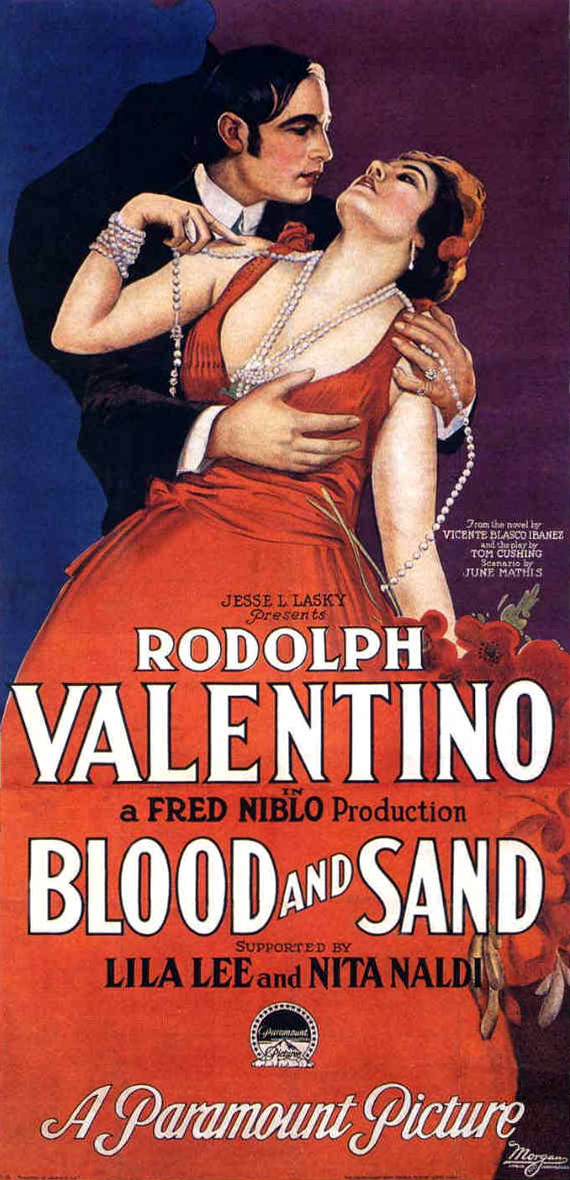
Then it's Valentino's 'Blood and Sand' (1922) on Saturday, Aug. 13 in Brandon, Vt.; Marion Davies in 'Beverly of Graustark' (1926) on Sunday, Aug. 14 in Wilton, N.H.; Buster again in 'Steamboat Bill Jr.' (1928) on Tuesday, Aug. 16 in Alton, N.H.; and then 'Blood and Sand' again on Wednesday, Aug. 17 in Ogunquit, Maine.

If you're Somewhere North of Boston (capitalized because it's the name of another local film festival that is no longer active), please join me for one or two or all. 

I didn't do a separate press release for the Manchester International Film Festival, but here's a link to all the action.

Below, I'm pasting in the release for 'Blood and Sand' on Saturday night up in Brandon, Vt., which also works for the screening on Wednesday, Aug. 17 in Ogunquit, Maine except it's at the Leavitt Theatre and admission is $12 per person.

See you in a darkened theater—at least before the lights go down...

*    *    *


MONDAY, AUG. 8, 2022 / FOR IMMEDIATE RELEASE
Contact Jeff Rapsis • (603) 236-9237 • jeffrapsis@gmail.com

Valentino's bullfighting epic  'Blood and Sand' to screen at Brandon Town Hall

Top-grossing silent film to be shown with live music on Saturday, Aug. 13 to celebrate 100th anniversary of box office hit

BRANDON, Vt.—It's an intense romantic drama that helped catapult actor Rudolph Valentino to worldwide fame.

It's 'Blood and Sand' (1922), a bullfighting epic to be screened on Saturday, Aug. 8 at 7 p.m. at the Brandon Town Hall and Community Center, 1 Conant Square, Route 7 in Brandon, Vt.

Admission is free; donations are welcome to help support ongoing Town Hall renovation efforts.

The classic drama will be shown with live music by silent film accompanist Jeff Rapsis, a New Hampshire-based performer and composer who specializes in scoring and presenting silent films.

The No. 3 box office hit of 1922, 'Blood and Sand' combined exotic Spanish locales with Valentino's iconic performance as a bullfighter.

The film tells the story of Juan Gallardo (Valentino), a village boy born into poverty who grows up to become one of Spain's greatest matadors.

Gallardo marries a friend from his childhood, the beautiful and virtuous Carmen. But after achieving fame and fortune, he finds himself drawn to Doña Sol (Naldi), a wealthy, seductive widow.

They embark on a torrid affair. But then Gallardo, feeling guilty over his betrayal of Carmen, tries to free himself of Doña Sol.

Gallardo's troubles spill over to the bullfighting arena, where he becomes reckless.

Can he cope with the gravest challenges of his young life—both in romance, and in the arena?

The movie's immense popularity helped establish Valentino as one of the megastars of the silent film era.

Directed for Paramount Pictures by Fred Niblo, the cast includes leading ladies Lila Lee as Carmen and Nita Naldi as Doña Sol.

'Blood and Sand' was based on the 1909 Spanish novel "Sangre y arena" (Blood and Sand) by Vicente Blasco Ibáñez and the play version of the book by Thomas Cushing.

Unusual for Hollywood at the time, women played key roles in the production of 'Blood and Sand.'

The story was adapted by June Mathis, the screenwriter credited with first recognizing Valentino's appeal, and edited by future director Dorothy Arzner.

The film inspired the 'Blood and Sand' cocktail, a Prohibition-era mixed drink.

The screening is part of the Brandon Town Hall's ongoing silent film series.

"Putting 'Blood and Sand' back on the big screen is a great way to celebrate this classic movie's 100th anniversary," said Rapsis, the silent film accompanist who creates live music for all screenings.

The screening of 'Blood and Sand' is sponsored by Edward Loedding and Dorothy Leysath, the Hanson Family in memory of Pat Hanson, and Sally Wood.

Other films in this year's Brandon Town Hall silent film series include:

• Saturday, Sept. 10, 7 p.m.: 'The Flying Ace' (1926), rare example of movies produced for black-only theaters in segregated parts of the nation; added to the National Film Registry in 2021. Sponsored by Nancy and Gary Meffe.

• Saturday, Oct. 22, 7 p.m.: 'Nosferatu' (1922) Just in time for Halloween! Celebrate the 100th anniversary of F.W. Murnau's original adaptation of Bram Stoker's 'Dracula' story. Sponsored by Bar Harbor Bank and Trust.

• Saturday, Nov. 19, 7 p.m.: 'Her Sister from Paris' (1925) starring Constance Talmadge, Ronald Colman. The scene: Europe. The cast: Rich people. Effervescent battle-of-the-sexes comedy. Sponsored by Harold & Jean Somerset.

"These are the films that set the standard for Hollywood, and still retain their power to entertain, especially when shown in a theater with live music and an audience," Rapsis said.

'Blood and Sand' starring Rudolph Valentino will be screened with live music on Saturday, Aug. 13 at 7 p.m. at the Brandon Town Hall and Community Center, Route 7, in Brandon, Vt.

All are welcome to this family-friendly event. Admission is free, with free will donations accepted in support of ongoing Town Hall renovations.

Thursday, September 12, 2019

Pawtucket, R.I. 'Steamboat Bill Jr.' screening venue changed on account of...mosquitoes!

Original promotional artwork for 'Steamboat Bill, Jr.' (1928).

No joke!

Our outdoor screening of 'Steamboat Bill Jr.' on Friday, Sept. 13 in Slater Park in Pawtucket, R.I. has been moved inside—due to mosquitoes!

Earlier this week, Rhode Island saw its first death from Eastern Equine Encephalitis since 2007. The virus is borne by infected mosquitoes.

So out of an abundance of caution, organizers of this year's Pawtucket Arts Fest found indoor venues for many of this week's outdoor performances, including Friday night's silent film program.

And I must say, I'm relieved, as one downside to outdoor screenings is that, yes, the keyboard light always seems to attract lots and lots of insects.

Our new location is inside Lyman B. Goff Middle School, 974 Newport Ave. in Pawtucket. Doors open at 6 p.m., there's a presentation at 6:30 p.m., and Buster's adventures start at 7 p.m.

It's still free and open to the public—and I'm sure will be a great show, as Keaton always delivers, indoors or out.

For more info, check out the updated Pawtucket Arts Fest Web site.

And just as a precaution, bring a can of Off.

Just kidding!

Monday, September 9, 2019

Back on the silent film circuit: 'College,' 'Steamboat Bill Jr.,' and a carousel dedication

Close-up of the "Looff Carousel" at Slater Park in Pawtucket, R.I.

Labor Day weekend was a quiet time on the silent film calendar, but things heat up again this week.

On Wednesday night, it's off to 'College' via Buster Keaton's 1927 film of that title. The comedy starts at 6:30 p.m. at the Flying Monkey up in Plymouth, N.H. More details in the press release pasted in below.

And then down to Pawtucket, Rhode Island on Friday for an outdoor screening preceded by the re-dedication of a restored carousel.

Really! The "Looff Carousel" in Slater Park is being honored on Friday, Sept. 13 from 6 to 7 p.m., prior to an outdoor screening of Keaton's 'Steamboat Bill, Jr.' (1928).

The rededication is part of this year's Pawtucket Arts Fest. (And so am I!) Here's a little background:
Built by pioneer craftsman Charles I.D. Looff in 1894 the carousel was relocated to Slater Park in 1910. The carousel features a functioning North Tonawanda Military band organ, as well as 44 standing horses, 6 menagerie animals (1 camel, 3 dogs, 1 giraffe, 1 lion), and 2 chariots. The 125-year-old carousel was restored in 1978 and again in 2019. Please join Mayor Don Grebien and Parks and Rec. Director John Blais as we reopen this incredible historic carousel to the public.
This seems to be some kind of carousel. It even has its own Wikipedia entry!

And with apologies to all the great composers, there's nothing that compares to the sound of an authentic carousel.

Can't wait to hear it, and maybe take a ride or two before settling in at the keyboard for 'Steamboat.' (Hoping to claim the giraffe!)

The screening, a presentation by the Pawtucket Film Festival, starts at 7 p.m. and is free and open to the public. See you there!

And bring a jacket: early forecasts call for evening temps around 60 degrees.

* * *

An original poster promoting Keaton's 'College.'

MONDAY, SEPT. 2, 2019 / FOR IMMEDIATE RELEASE
Contact Jeff Rapsis • (603) 236-9237 • jeffrapsis@gmail.com

Buster Keaton comedy 'College' with live music on Wednesday, 9/11 at Flying Monkey


Celebrate back-to-school season in Plymouth, N.H. with screening of timeless classic send-up of campus life

PLYMOUTH, N.H.—He never smiled on camera, earning him the nickname of "the Great Stone Face." But Buster Keaton's comedies rocked Hollywood's silent era with laughter throughout the 1920s.

Acclaimed for their originality, clever visual gags, and amazing stunts, Keaton's films remain popular crowd-pleasers today.

See for yourself with a graduation-time screening of 'College' (1927), one of Keaton's landmark feature films, on Wednesday, Sept. 11 at 6:30 p.m. at the Flying Monkey Moviehouse and Performance Center, 39 South Main St., Plymouth, N.H.

The program will feature live music for the movie by silent film accompanist Jeff Rapsis. Admission is $10 per person. Tickets are available online at www.flyingmonkeynh.com or at the door.

'College' follows the story of a hopeless university bookworm (Keaton) forced to become a star athlete to win the attention of his dream girl. Can Buster complete the transformation in time to woo her from his rival? And along the way, can he also rescue the campus from sports-related shame?

Keaton the bookworm-turned-athlete in 'College.'

The film was released in 1927, at the crest of a national fascination with college life. In addition to being a great Keaton comedy, 'College' offers vintage glimpses into what higher education was like nearly a century ago.

Keaton, along with Charlie Chaplin and Harold Lloyd, stands today as one of the silent screen's three great clowns. Some critics regard Keaton as the best of all; Roger Ebert wrote in 2002 that "in an extraordinary period from 1920 to 1929, (Keaton) worked without interruption on a series of films that make him, arguably, the greatest actor-director in the history of the movies."

As a performer, Keaton was uniquely suited to the demands of silent comedy. Born in 1895, he made his stage debut as a toddler, joining his family's knockabout vaudeville act and learning to take falls and do acrobatic stunts at an early age.

A remarkable pantomime artist, Keaton naturally used his whole body to communicate emotions from sadness to surprise. And in an era with no post-production special effects, Keaton's acrobatic talents enabled him to perform all his own stunts, including some spectacular examples in 'College.'

Keaton gets roughed up in 'College.'

In reviving Keaton's 'College,' the Flying Monkey aims to show silent film as it was meant to be seen—in restored prints, on a large screen, with live music, and with an audience.

"All those elements are important parts of the silent film experience," said Rapsis, who will accompany the film. "Recreate those conditions, and classics of early Hollywood such as 'College' leap back to life in ways that audiences still find entertaining."

Rapsis performs on a digital synthesizer that reproduces the texture of the full orchestra, creating a traditional "movie score" sound. He improvises the complete score in real time during the screening.

"Creating a movie score on the fly is kind of a high-wire act, but it can often make for more excitement than if everything is planned out in advance," Rapsis said.

Rapsis encouraged people unfamiliar with silent film to give 'College' a try.

"If you haven't seen a silent film the way it was intended to be shown, then you're missing a unique experience," Rapsis said. "At their best, silent films still do connect with cinema-goers. They retain a tremendous power to cast a spell, engage an audience, tap into elemental emotions, and provoke strong reactions."

Upcoming silent film programs at the Flying Monkey include:

• Wednesday, Oct. 16, 2019, 6:30 p.m.: 'The Hunchback of Notre Dame' (1923); Lon Chaney stars in the original screen adaptation of Victor Hugo's classic novel about a deformed bellringer in medieval Paris. A moving and timeless drama filled with classic scenes and capped with a thrilling climax!

• Thursday, Nov. 14, 2019, 6:30 p.m.: 'The Wind' (1928) starring Lillian Gish; a frail young woman from the east moves in with her cousin in the west, where she causes tension within the family and is slowly driven mad. Towering, intense performance by Lillian Gish in one of MGM's last major silent dramas.

Buster Keaton's 'College' (1927) will be screened on Wednesday, Sept. 11 at 6:30 p.m. at the Flying Monkey Moviehouse and Performance Center, 39 S. Main St., Plymouth, N.H. Admission is $10 per person; tickets are available online at www.flyingmonkeynh.com or at the door. For more information, call the theater at (603) 536-2551.

Sunday, June 17, 2018

Attending 'College' with Buster Keaton this afternoon (Sunday, 6/17) in Natick, Mass.

Buster and co-star Anne Cornwall in 'College' (1927).

Celebrate graduation season with 'College' (1927), Buster Keaton's take on higher education.

This silent comedy screens today 4 p.m. at the Natick (Mass.) Center for the Arts, with live music by me.

More details in the press release below.

It's also Father's Day, and so it's interesting that 'College' is one of those films where Buster has only one parent—and in 'College,' it's his mother.

Oops!

Strange: last month on Mother's Day, I did music for Buster's 'Steamboat Bill Jr.' (1928) at the Somerville (Mass.) Theatre, and that film shows Keaton as only having a father.

I need to better synchronize these things!

But it's odd how in both cases, the missing parent isn't referred to in any way.

In 'College,' Buster may or may not have a father. We just don't know.

In 'Steamboat Bill Jr.,' I've always assumed Buster's mother passed away long before the film takes place. But there's really no mention of it. She could be below decks making coffee the whole time, for all I know.

I chalk this up to Buster's instinctive economy as a filmmaker and storyteller. In both cases, the missing parents could have been explained, and it might have been very interesting and absorbing and all that.

But Buster and his team somehow sensed this information wasn't important to the main task, which was setting up a story to focus on Buster's character.

This fits the pattern for what we know about how Buster's films were produced. Buster and his colleagues were known to be ruthless in cutting out material that didn't work.

In 'The Navigator' (1924), an underwater sequence showing Buster directing schools of fish like a traffic cop was shot at great expense.

But when the film was previewed, no one laughed because Buster's girl was in trouble on the ship, and so the timing was all wrong for Buster's antics.

What was once planned to be a highlight of the film was cut prior to release. As Buster explained later, they had no choice.

So one of Keaton's strengths, I think, was what he chose not to put in his films, especially the longer features. They achieve a remarkable balance of story and comedy, in part because they're not weighed down by unnecessary detail.

Also, one thing about 'College' is that it contains the most sister name by a villain in any of Keaton's films: "Jeff."

See what you think this afternoon by attending 'College' at 4 p.m. Details in the press release below.

* * *

A poster for Keaton's 'College' (1927).

FRIDAY, JUNE 1, 2018 / FOR IMMEDIATE RELEASE
Contact Jeff Rapsis • (603) 236-9237 • jeffrapsis@gmail.com

Buster Keaton comedy 'College' with live music on Sunday, 6/17 in Natick, Mass.


Cap off graduation season at Center for the Arts with screening of classic send-up of campus life

NATICK, Mass.—He never smiled on camera, earning him the nickname of "the Great Stone Face." But Buster Keaton's comedies rocked Hollywood's silent era with laughter throughout the 1920s.

Acclaimed for their originality, clever visual gags, and amazing stunts, Keaton's films remain popular crowd-pleasers today.

See for yourself with a graduation-time screening of 'College' (1927), one of Keaton's landmark feature films, on Sunday, June 17 at 4 p.m. at the TCAN Center for the Arts, 14 Summer St., Natick, Mass.

The program will feature live music for the movie by silent film accompanist Jeff Rapsis, and will include a classic Keaton short comedy. Admission is $10 per person for members; $12 for non-members. Tickets are available online at www.natickarts.org or at the door.

'College' follows the story of a hopeless university bookworm (Keaton) forced to become a star athlete to win the attention of his dream girl. Can Buster complete the transformation in time to woo her from his rival? And along the way, can he also rescue the campus from sports-related shame?

The film was released in 1927, at the crest of a national fascination with college life. In addition to being a great Keaton comedy, 'College' offers vintage glimpses into what higher education was like nearly a century ago.

Keaton, along with Charlie Chaplin and Harold Lloyd, stands today as one of the silent screen's three great clowns. Some critics regard Keaton as the best of all; Roger Ebert wrote in 2002 that "in an extraordinary period from 1920 to 1929, (Keaton) worked without interruption on a series of films that make him, arguably, the greatest actor-director in the history of the movies."

As a performer, Keaton was uniquely suited to the demands of silent comedy. Born in 1895, he made his stage debut as a toddler, joining his family's knockabout vaudeville act and learning to take falls and do acrobatic stunts at an early age.

A remarkable pantomime artist, Keaton naturally used his whole body to communicate emotions from sadness to surprise. And in an era with no post-production special effects, Keaton's acrobatic talents enabled him to perform all his own stunts, including some spectacular examples in 'College.'

Buster gets carried away in his campus comedy 'College.'

In reviving Keaton's 'College,' the Center for the Arts aims to show silent film as it was meant to be seen—in restored prints, on a large screen, with live music, and with an audience.

"All those elements are important parts of the silent film experience," said Rapsis, who will accompany the film. "Recreate those conditions, and classics of early Hollywood such as 'College' leap back to life in ways that audiences still find entertaining."

Rapsis performs on a digital synthesizer that reproduces the texture of the full orchestra, creating a traditional "movie score" sound. He improvises the complete score in real time during the screening.

"Creating a movie score on the fly is kind of a high-wire act, but it can often make for more excitement than if everything is planned out in advance," Rapsis said.

Rapsis encouraged people unfamiliar with silent film to give 'College' a try.

"If you haven't seen a silent film the way it was intended to be shown, then you're missing a unique experience," Rapsis said. "At their best, silent films still do connect with cinema-goers. They retain a tremendous power to cast a spell, engage an audience, tap into elemental emotions, and provoke strong reactions."

Upcoming programs include:

• Sunday, Oct. 14 at 4 p.m. 'The Thief of Bagdad' (1924) starring Douglas Fairbanks, Sr. Eye-popping spectacle starring swashbuckling star Douglas Fairbanks Sr. in top form as adventurer in ancient times who must complete a series of epic tasks to save his beloved, all set in a fantastic world of monsters, underwater caves, and flying carpets.

• Sunday, Dec. 9 at 4 p.m. 'Grandma's Boy' (1921) starring Harold Lloyd. A cowardly young man must learn to conquer his fears before dealing with a larger menace to his community. Riotous comedy that helped propel Harold Lloyd into the most popular movie comedian of the 1920s. Plus short comedy, 'There Ain't No Santa Claus' (1926) starring Charley Chase.

Buster Keaton's 'College' (1927) will be screened on Sunday, June 17 at 4 p.m. at the TCAN Center for the Arts, 14 Summer St., Natick, Mass.

The program will feature live music for the movie by silent film accompanist Jeff Rapsis, and will include a classic silent comedy short film. Admission is $10 per person for members; $12 for non-members. Tickets are available online at www.natickarts.org or at the door.

Friday, June 8, 2018

Country accompanist, city accompanist: 'Steamboat Bill Jr.' in the back woods on 6/9, then 'Chicago' at the Somerville Theatre 6/10

Buster Keaton stars in 'Steamboat Bill Jr.' (1928), screening on Saturday, June 9 in Brandon, Vt.

This weekend brings silent film screenings in two rather different settings.

On Saturday, June 9, it's up to Brandon, Vt. (about 20 minutes north of Rutland, ayup) to accompany a silent film program featuring Buster Keaton's 'Steamboat Bill, Jr.' (1928).

And then on Sunday, June 10, it's down to Somerville, Mass. (about 20 minutes south of Woburn, yessir), where I'll do music for a screening of the silent film version of 'Chicago' (1927) at the Somerville Theatre.

The 'Steamboat Bill' screening is part of an annual silent film series at the Brandon Town Hall. I'm looking forward to it, mostly because I enjoy the audience reactions in Brandon, but also because 'Steamboat' is the first full-length silent film for which I'm writing out and orchestrating a score.

So while Saturday's accompaniment will still be improvised, I'll use themes and ideas that are a little more set in place, so to speak.

Hope to get the score finished later this year. But you don't have to wait to attend this weekend's screening, which is on Saturday, June 9 at 7 p.m. at Brandon Town Hall.

More info in the press release. And more info on 'Chicago' in a separate post to come later.

* * *

Weather for Saturday's screening: stormy in the final reels.

TUESDAY, MAY 29, 2018 / FOR IMMEDIATE RELEASE
For more info, contact: Jeff Rapsis • (603) 236-9237 • jeffrapsis@gmail.com

Silent comedy 'Steamboat Bill Jr.' at Brandon Town Hall on Saturday, June 9


Buster Keaton masterpiece to be screened with live music as Town Hall's annual Silent Film series continues

BRANDON, Vt. — Silent film with live music returns to Brandon Town Hall this month with 'Steamboat Bill Jr.' (1928), a classic comedy starring Buster Keaton, one of era's top performers.

'Steamboat Bill Jr.' will be revived for one showing only at Brandon Town Hall on Saturday, June 9 at 7 p.m. Admission is free and the family-friendly program is open to all; free will donations will go to ongoing building renovation and restoration work.

Live music will be provided by silent film accompanist Jeff Rapsis.

The series allows local movie-goers to experience silent film the way its makers originally intended: on the big screen, with live music, and with an audience.

"If you put the experience back together, you can see why movies caused such excitement," said Dennis Marden, president of the Friends of Brandon Town Hall.

In 'Steamboat Bill Jr.,' Buster plays the bumbling son of a riverboat’s rough captain. When a rival brings a newer boat to the river, the family is forced to face competition, just as Buster is forced to ride out a cyclone threatening to destroy the community.

Can Buster save the day and win the hand of his girlfriend, who happens to be daughter of his father's business rival?

The film includes the famous shot of an entire building front collapsing on Keaton, who is miraculously spared by a conveniently placed second-story window.

Buster tries on hats for his on-screen dad, Ernest Torrence, in 'Steamboat Bill, Jr.'

Keaton, who grew up performing with the family vaudeville act, was known for never smiling on camera, an important element of his comic identity. A trained acrobat who learned at an early age how to take falls, Keaton did all his own stunts on camera in the era before post-production special effects.

Critics continue to hail Keaton’s timeless comedy as well as his intuitive filmmaking genius. In 2002, Roger Ebert wrote of Keaton that “in an extraordinary period from 1920 to 1929, he worked without interruption on a series of films that make him, arguably, the greatest actor-director in the history of the movies.”

Keaton, who never attended school, did not think of himself as an artist but as an entertainer using the new medium of motion pictures to tell stories and create laughter.

The screening of 'Steamboat Bill Jr.' will feature live accompaniment by Jeff Rapsis, a New Hampshire-based composer who specializes in creating music for silent film presentations.

Rapsis will create the accompaniment on the spot, improvising music as the movie unfolds to enhance the action on the screen as well respond to audience reactions. He will perform the music on a digital synthesizer capable of producing a wide range of theatre organ and orchestral textures.

"Live music was an integral part of the silent film experience," Rapsis said. "Because most films at the time weren't released with sheet music or scores, studios depended on local musicians to come up with an effective score that was different in every theater. At its best, this approach created an energy and a connection that added a great deal to a film's impact. That's what I try to recreate," Rapsis said.

Also on the bill are two Buster Keaton short comedies. The program is sponsored by Nancy and Gary Meffe.

Other shows in this year's Brandon silent film series include:

• Saturday, June 30: 'The Adventures of Prince Achmed' (1926). Taken from 'The Arabian Nights,' the first full-length animated feature tells the story of a wicked sorcerer who tricks Prince Achmed into mounting a magical flying horse, sending him off to a series of wondrous and romantic adventures. Sponsored by Pam and Steve Douglass.

• Saturday, Aug. 11: 'Laurel & Hardy: A Silent Fine Mess.' The beloved comedy team got their start in silent film, and so celebrate their origins with a selection of their funniest short comedies. Get ready to laugh as Stan and Ollie made fine messes out of everything from a day in the country to a night on the town. Sponsored by the Brandon/Forestdale Lions Club.

• Saturday, Sept. 8: 'Sherlock Holmes' (1916) starring William Gillette. Recently discovered in France after being lost for nearly a century, see this original 1916 adaptation of Sherlock Holmes stories as performed by William Gillette, the actor who created the role on stage and performed it more than 1,000 times. Sponsored by Kathy and Bill Mathis, in memory of Maxine Thurston; also an anonymous donor.

• Saturday, Oct. 20: Chiller Theatre, 'Der Golem' (1920). In 16th-century Prague, a rabbi creates a giant creature from clay, called the Golem. Using sorcery, he brings the creature to life in order to protect the Jews of Prague from persecution, but then complications ensue. Early German fantasy movie anticipates Frankenstein story. Sponsored by Jan Coolidge, Lucy and Dick Rouse, Marc & Arlyn Briere, Dorothy Leyseth and Edward Loedding.

Buster Keaton's classic comedy 'Steamboat Bill Jr.' (1928) will be screened on Saturday, June 9 at 7 p.m. at the Brandon Town Hall and Community Center, Route 7, in Brandon, Vt. All are welcome to this family-friendly event. Admission is free, with free will donations accepted in support of ongoing Town Hall renovations.

For more information, visit www.brandontownhall.org.

Monday, May 14, 2018

Mother's Day and Steamboat Bill Jr; new piece for flute/piano, plus 'The Black Pirate' on 5/17

What about Mom? Buster Keaton and Ernest Torrence in 'Steamboat Bill Jr.' (1928).

Nice turnout yesterday for our Mother's Day screening of 'Steamboat Bill Jr.' (1928), the opening title in this year's "Silents, Please!" series at the Somerville Theatre.

I have to say, it was a curious choice for the occasion: a film about a riverboat captain and his son, with no wife/mother ever mentioned.

And the captain's business rival has a daughter, but there's no wife/mother figure present in that family either.

Maybe it's the absence of a maternal influence that's the point. Everything would have been fine but for the two male dolts and their testosterone-driven rivalry, which caused everyone's problems.

But by showing what can happen when no mother is present, perhaps 'Steamboat Bill Jr.' is actually a more fitting tribute than I first thought.

Bolstering this argument is something I had forgotten: one of the film's early gags involves a special Mother's Day promotion for carnations.


I won't give away the gag, but the promotion must have been hugely successful, as every man arriving on an out-of-town train is wearing one!

And it's interesting: after the screening, comments included several attendees who thought we chose 'Steamboat' specifically because of the Mother's Day reference. Wow!

But now from steamboats to pirate ships: on Thursday, May 17, I'm doing live music for 'The Black Pirate' (1926) starring Douglas Fairbanks.

Showtime is 8 p.m. at the Capitol Theatre in Arlington, Mass., which runs a monthly silent film series. More information in the press release below.

Before that happens, I'll have the privilege of hearing a read-through of a piece for flute and piano I wrote out this weekend.

It's at the Wednesday at the Manchester (N.H.) Community Music School, where flutist Aubrie Dionne and pianist Elizabeth Blood will tackle the six-minute piece.

I want to thank composer Romeo Melloni for asking me to contribute music to his monthly forum at the school.

If you're interested in what it sounds like, here's a link: Flute and Piano Duo

And below is all the info about 'The Black Pirate.' See you there, me 'arties!

* * *


SATURDAY, MAY 5, 2018 / FOR IMMEDIATE RELEASE
Contact Jeff Rapsis • (603) 236-9237 • jeffrapsis@gmail.com

Silent film ‘The Black Pirate’ (1926) at Capitol Theatre on Thursday, May 17

Adventure flick stars Douglas Fairbanks, Hollywood’s original action hero; shown with live musical accompaniment

ARLINGTON, Mass.—He was the Indiana Jones of his day, thrilling early filmgoers with amazing stunts and feats of heroic derring-do. He was Douglas Fairbanks Sr., one of Hollywood’s first megastars, and his timeless charisma can be seen again on Thursday, May 17 at the Capitol Theatre in Arlington, Mass.

Featured attraction for this month's silent film screening is ‘The Black Pirate’ (1926), an epic swashbuckling tale of the high seas that proved one of Fairbanks’ most popular blockbusters. The forerunner of all pirate movies, it was also one of the first Hollywood films to be released in color.

Showtime for 'The Black Pirate' is Thursday, May 17 at 8 p.m. at the Capitol Theatre, 204 Massachusetts Ave., Arlington, Mass. Admission is $12 adults, $10 kids and seniors.

The screening, the latest in the Capitol's silent film series, will feature live accompaniment by Jeff Rapsis, a New Hampshire-based composer who specializes in creating scores for silent films.

Fairbanks, originally a stage actor, broke into films in the industry's early years. By 1920, starring roles in a romantic comedies established Fairbanks as a popular leading man. He then turned to historic adventure films, including ‘The Mark of Zorro’ (1920) and ‘The Three Musketeers’ (1921), which cemented his reputation for on-screen athleticism, heroism, and romance.

In 1920, Fairbanks’ marriage to fellow megastar Mary Pickford was one of the era’s biggest media events and resulted in Hollywood’s first celebrity power couple. They combined their last names to call their estate “Pickfair,” and massive crowds turned out everywhere during the couple’s European honeymoon.

At the peak of his popularity, pictures starring Fairbanks set the standard for Hollywood action adventure films, including such titles as ‘Robin Hood’ (1922), ‘The Thief of Bagdad’ (1924), and ‘The Black Pirate’ (1926), all of which were major box office successes.

When the silent film era ended in 1929, an aging Fairbanks found he was less enthusiastic about the effort required to make movies and retired from the screen. He died in 1939 at age 56 after suffering a heart attack; his now-famous lasts words were, “I’ve never felt better.”

The Fairbanks feature is the latest in a series of monthly silent film screenings at the Capitol Theatre. The series aims to recreate the lost magic of early cinema by assembling the elements needed for silent film to be seen at its best: superior films in best available prints; projection on the big screen; live musical accompaniment; and a live audience.

“These films are still exciting experiences if you show them as they were designed to be screened,” said Rapsis, accompanist for the screenings. “There’s a reason people first fell in love with the movies, and we hope to recreate that spirit.”

For each film, Rapsis improvises a music score using original themes created beforehand. None of the the music is written down; instead, the score evolves in real time based on audience reaction and the overall mood as the movie is screened.

Upcoming titles in the Capitol's silent film series include:

• Thursday, June 14, 8 p.m.: 'The Iron Horse' (1924). Young director John Ford's breakthrough film tells the story of the building of the transcontinental railroad through the untamed West.

• Thursday, July 5, 8 p.m.: 'The Beloved Rogue' (1926) starring John Barrymore. Epic costume adventure based on the life of the 15th century French poet, François Villon

• Thursday, Aug. 16, 8 p.m.: 'Her Sister from Paris' (1925) starring Constance Talmadge, Ronald Colman. Talmadge in top form playing two very different sisters in this effervescent battle-of-the-sexes romantic comedy.

• Thursday, Sept. 13, 8 p.m.: 'The Last Laugh' (1924). In this ground-breaking character study from director F. W. Murnau, Emil Jannings delivers a tour-de-force performance as a doorman in a swanky Berlin hotel.

• Thursday, Oct 18, 8 p.m.: 'The Hunchback of Notre Dame' (1923). Just in time for Halloween: Lon Chaney stars as Quasimodo in this sprawling silent film adaptation of Victor Hugo's classic story.

‘The Black Pirate’ (1926) starring Douglas Fairbanks Sr. will be shown with live music on Thursday, May 17 at 8 p.m. Capitol Theatre, 204 Massachusetts Ave., Arlington, Mass. Admission is $12 adults, $10 kids and seniors. For more info, call (781) 648-6022 or visit www.capitoltheatreusa.com.

Friday, May 11, 2018

'Steamboat Bill' in 35mm Sunday in Somerville,
plus weird pre-show accompanist rituals

Promotional art for 'Steamboat Bill Jr.' featuring a rosy-cheeked Keaton, making me thankful the films weren't made in color.

Just as some athletes have unusual warm-up routines, silent film accompanists often have weird pre-show rituals.

With me, it's when I plug in the sustain pedal into the back of my synthesizer. I then have to lower the pedal down to the floor behind the keyboard, almost like I'm weighing anchor.

And because of the way the pedal unit hangs from its power cord, getting it to land right side up takes a deft shift of the line at the very last minute, when the unit touches the ground.

If it lands correctly, I consider it a good omen. If not, I steel myself for whatever grand joke the Gods are about to play.

For last night's screening of 'The Winning of Barbara Worth' (1926) at Red River Theatres in Concord, N.H., the pedal landed correctly. And so the screening went forward without a hitch, unless you count (SPOILER ALERT) the marriage at the very end. Har!

We'll see how the pedal falls on Sunday, May 13 at the Somerville Theatre, when I'll accompany the screening of a 35mm print of Buster Keaton's 'Steamboat Bill Jr.' (1928) at 2 p.m.

There's a lot of 'Steamboat' around this weekend. I notice fellow accompanist Ben Model is doing music for the iconic film, which he refers to simply as "one where the house falls on him."

It says something about a film when people refer to it with even having to use the title. Nice!

But 'Steamboat' is one of the most popular Keaton's, mostly because it's so good, but also because due to an oversight it's in the public domain.

I've done it so frequently that my material for the film has emerged as not so much improvised but recalled from prior performances.

So it's a good candidate for sitting down this summer and putting the score on paper, which is something I'd like to do more of. We'll see.

For now, there's no sheet music—it's all in my head, and will be at the Somerville Theatre this Sunday when we run 'Steamboat.'

Hope to see you there! And if you'd like more info, I'm pasting in the press release below.

* * *

Buster's burly on-screen father, Ernest Torrence, first encounters his unexpectedly un-masculine grown son in Steamboat Bill, Jr.

SATURDAY, MAY 5, 2018 / FOR IMMEDIATE RELEASE
Contact Jeff Rapsis • (603) 236-9237 • jeffrapsis@gmail.com

Silent comedy 'Steamboat Bill Jr.' at Somerville Theatre on Sunday, May 13


Buster Keaton masterpiece to be screened with live music as venue's 'Silents Please' series returns

SOMERVILLE, Mass.—Silent film with live music returns to the Somerville Theatre this month with 'Steamboat Bill Jr.' (1928), a classic comedy starring Buster Keaton, one of era's top performers. 'Steamboat Bill Jr.' will be revived using a 35mm print for one showing only at the Somerville Theatre, Davis Square, on Sunday, May 13 at 2 p.m.

Live music will be provided by silent film accompanist Jeff Rapsis. General admission is $15 per person; $12 seniors and students.

The Somerville Theatre's 'Silents Please!' allows fans to experience silent film the way its makers originally intended: on the big screen, in 35mm prints, with live music, and with an audience.

"If you put the experience back together, you can see why silent films caused such excitement for early movie-goers," said Ian Judge, the Somerville's manager and director of operations.

In 'Steamboat Bill Jr.,' Buster plays the bumbling son of a riverboat’s rough captain. When a rival brings a newer boat to the river, the family is forced to face competition, just as Buster is forced to ride out a cyclone threatening to destroy the community.

Can Buster save the day and win the hand of his girlfriend, who happens to be daughter of his father's business rival?

The film includes the famous shot of an entire building front collapsing on Keaton, who is miraculously spared by a conveniently placed second-story window.

Keaton, who grew up performing with the family vaudeville act, was known for never smiling on camera, an important element of his comic identity. A trained acrobat who learned at an early age how to take falls, Keaton did all his own stunts on camera in the era before post-production special effects.

Critics continue to hail Keaton’s timeless comedy as well as his intuitive filmmaking genius. In 2002, Roger Ebert wrote of Keaton that “in an extraordinary period from 1920 to 1929, he worked without interruption on a series of films that make him, arguably, the greatest actor-director in the history of the movies.”

Keaton, who never attended school, thought of himself not as an artist but as an entertainer using the new medium of motion pictures to tell stories and create laughter.

The screening of 'Steamboat Bill Jr.' will feature live accompaniment by Jeff Rapsis, a New Hampshire-based composer who specializes in creating music for silent film presentations.

Rapsis will create the accompaniment on the spot, improvising music as the movie unfolds to enhance the action on the screen as well respond to audience reactions. He will perform the music on a digital synthesizer capable of producing a wide range of theatre organ and orchestral textures.

"Live music was an integral part of the silent film experience," Rapsis said. "Because most films at the time weren't released with sheet music or scores, studios depended on local musicians to come up with an effective score that was different in every theater. At its best, this approach created an energy and a connection that added a great deal to a film's impact. That's what I try to recreate," Rapsis said.

Upcoming titles in the Somerville's 'Silents, Please!' series include:

• Sunday, June 10: 'Chicago' (1927). The original big screen adaptation of the notorious Jazz Age tabloid scandal, based on real events. Dancer Roxie Hart is accused of murder! Is she innocent or headed for the slammer? Shown via DCP.

• Sunday, July 8: 'The Docks of New York' (1928). Masterful drama about a ship laborer who rescues a beautiful woman from drowning, but then finds his life changed in unexpected ways. A gem from the late silent years. Shown via 35mm print.

• Sunday, Aug. 12: 'Laurel & Hardy Silent Comedies.' Some of the timeless duo's finest (and funniest) comedy two-reelers, all presented in 35mm, including 'Big Business' (1929), You're Darn Tootin' (1928), and 'The Finishing Touch' (1928).

'Steamboat Bill Jr.' will be screened on Sunday, May 13 at 2 p.m. at the Somerville Theatre, 55 Davis Square, Somerville, Mass. Tickets are $15 adults, $12 students/seniors. For more information, visit www.somervilletheatre.com or call (617) 625-4088. For more info on the music, visit www.jeffrapsis.com.
