Sunday, April 1, 2018

April Fool's Day rewinding, fast forwarding:
Past projects, future possibilities

Recording music last month for videos supporting 'The White Mountain,' a new book by author Dan Szczesny.

Back with a blog post after a long silence.

It's not for lack of material—the month just past has actually been full of projects and performances.

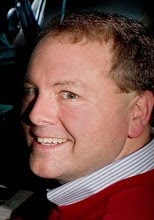
Among the highlights: a last-minute score for 'The Lost World' (1925) at the annual 24-hour Boston Sci-Fi Marathon. (At left is a photo by Tony Joe Stemme of me taking a bow); and music for Nazimova's 'Camille' (1921) at the Kansas Silent Film Festival, for which I channeled my inner Rachmaninoff.

Rather, it's more lack of time. With so much going on, there's rarely a chance to sit down and chronicle it.

But as we finish up the first quarter of 2018, time to look back as well as look at what lies ahead.

In April, highlights include a spate of Buster Keaton performances in mid-month, including 'The General' (1926) at the Capitol Theatre in Arlington, Mass.

And the month ends with a particularly big challenge: doing music for Fritz Lang's two 'Die Nibelungen' films over a single weekend. More on that below.

For now, let me take stock. (Never understood this phrase—what am I, soup?)

Rewinding:

In the first three months of this year, I've reduced the pace of live accompaniment performances.

This slowdown has been deliberate. It's not because I don't enjoy doing music for films, but because my schedule was leaving little time for anything else.

For one thing, as part-owner of a publishing business that's branching in new directions, my "day job" is more than enough to keep anyone hopping.

Music does remain a necessary artistic outlet. But I need to balance it with all the other things going on in my life, plus leave room for eating (no problem there!) and sleeping. (Sometimes more troublesome.)

Also, I'm now making a concerted effort (pun!) to write down music so that it might be performed by others.

I had a great time putting together the unexpectedly large-scale 'Kilimanjaro Suite' for orchestra, which was performed last year by the New Hampshire Philharmonic.

I'd like to do more. And I find I'm now ready to take the musical vocabulary I've developed (in part by more than a decade of improv-based silent film accompaniment) and put it to work in written-down music.

In the past year, however, I've found precious few opportunities to make progress on a number of written-down projects.

The only recent non-silent-film music I've done was background scoring for some video work by filmmaker Bill Millios in support of 'The White Mountain,' a new book by author Dan Szczesny.

Filmmaker Bill Millios shoots footage during the 'White Mountain' recording session at the Unitarian-Universalist Church in Nashua, N.H.

And although I created what I thought was some effective material for this, I never got a chance to sit down and write out exactly what I wanted.

It ended up as usual—going in on the day (or actually night) of the recording session and improvising based on the melodic and harmonic material I'd put together.

And it went okay, I suppose (I never like it when I'm recorded), but it was frustrating because I think the material would make for a good 20-minute or 30-minute written-out score.

Author Dan Szczesny and me.

And I could do it if I had the time, which I still don't, despite reducing my performance schedule. It's been an unusually intense time for our business and that's been taking me away from day-to-day music.

I have been making an effort to get out. This past month, I went to Symphony Hall to hear the Boston Symphony under Andris Nelsons play the rarely heard Shostakovich Symphony No. 4, which I think is one of the great 20th century scores and which I've always wanted to hear live.

The concert (on Saturday, March 24) didn't disappoint—in fact, it was so worthwhile I actually went down again on Tuesday, March 27 for a repeat performance.

Fast-Forwarding:

Although recent weeks haven't been too fruitful regarding music, on this Easter Sunday morning I feel a kind of renewed energy. (Maybe it's no coincidence that it's also April Fool's Day?)

You know how sometimes you encounter something at just the right time? This week, I've had that happen not once but twice.

First encounter: It's a magazine piece from 2010, but I just found it now.

Hopelessly behind the curve as usual, I know—but BOY did I need to hear what author Heather MacDonald had to say: that we actually live in a "golden age" for so-called classical music.


Really! Despite financial troubles, declining attendance, and an ossified playlist dominated by dead white guys, it's an amazing time for anyone who cares about music, performers and listeners alike!

I'll let you read it yourself if you want Heather's full low-down. But one thing I got from her piece was the sense that there really is a need for new new music.

I don't agree with her that concert-goers or music directors will be satisfied with mining the archives for forgotten works instead of finding new music that actually connects with audiences and fully expresses the experience of living in our times, now.

Second encounter: This weekend the New York Times ran a profile of Saul Lipshutz, an astonishing violin prodigy who gave up on music at age 16. Fifty years later, the Times tracked him down.


It's a terrific read. And it was especially interesting to me because of what Lipshutz did. Facing the classical music infrastructure at an early age, rejected almost as if by instinct. He said he didn't want to be "a trained monkey."

I felt a shock of recognition. I'm no prodigy, but even as I was sensing a growing passion for music in my high school years, something about pursuing it at the university level put me off.

For one thing, it was lack of confidence in my own talent. Not to make too much of this, but I once heard a high school music teacher, not knowing I was standing behind him, as "That Jeffrey would light the world on fire—if he only had a match!"

Wow! But more significantly, I sensed that with the academic study of music, something was off. Composition departments at schools like Boston University seemed full of teachers and students devoted to atonalism, serialism, and other 'isms' that left me cold.

So I majored in English and went into journalism and publishing, steering clear of the classical music infrastructure that seemed so daunting to Saul Lipshutz, although for other reasons.

And here it is, three decades later, and I've found my own extremely unorthodox path to where I feel I'm ready to do music that I want to do, and I'm just not hearing from anyone else.

Rather than continue to stay away, I've come back to it having never been put through the process of whatever the classical music infrastructure would have done.

It wasn't like I chose the road less traveled. Instead, I've bushwhacked my way through a ragged landscape with no road at all. And with apologies to Robert Frost, will that make any difference?

Time will tell—and I hope to devote more of it to writing things down in the months to come.

But upcoming silent film shows beckon, including a screening of Keaton's 'The General' (1926) on Thursday, April 12 at the Capitol Theatre in Arlington, Mass.; Keaton's 'Our Hospitality' (1923) on Saturday, April 14 at the Antrim (N.H.) Grange Hall; and then 'Peter Pan' (1924) on Sunday, April 15 at the TCAN Center for the Arts in Natick, Mass.

The 'Peter Pan' screening is the first in a new series of silent films with live music in a terrific arts facility in downtown Natick, Mass. Housed in a former fire station, the Center for the Arts boasts first-class screening facilities plus a terrific grand piano that I hope to make plentiful use of.

But first up is 'The General,' so here's the press release. More about the other screenings as the days roll by.

* * *


MONDAY, APRIL 2, 2018 / FOR IMMEDIATE RELEASE
Contact Jeff Rapsis • (603) 236-9237 • jeffrapsis@gmail.com

Buster Keaton's 'The General' with live music at Capitol Theatre on Thursday, April 12


Civil War railroading adventure film lauded as comic moviemmaker's masterpiece

ARLINGTON, Mass.—He never smiled on camera, earning him the nickname of "the Great Stone Face." But Buster Keaton's comedies rocked Hollywood's silent era with laughter throughout the 1920s.

Acclaimed for their originality and timeless visual humor, Keaton's films remain popular crowd-pleasers today.

See for yourself with a screening of 'The General' (1926), one of Keaton's landmark feature films, on Thursday, April 12 at the Capitol Theatre, 204 Massachusetts Ave., Arlington, Mass.

Showtime is 8 p.m. Admission is $12 adults, $10 kids and seniors.

The screening, the latest in the Capitol's silent film series, will feature live accompaniment by Jeff Rapsis, a New Hampshire-based composer who specializes in creating scores for silent films.

'The General,' set during the U.S. Civil War, tells the story of a southern locomotive engineer (Keaton) whose engine (named 'The General') is hijacked by Northern spies with his girlfriend onboard.

Keaton, commandeering another train, races north in pursuit behind enemy lines. Can he rescue his girl? And can he recapture his locomotive and make it back to warn of a coming Northern attack?


Critics call 'The General' Keaton's masterpiece, praising its authentic period detail, ambitious action and battle sequences, and its overall integration of story, drama, and comedy.

It's also regarded as one of Hollywood's great railroad films, with much of the action occurring on or around moving steam locomotives.

Accompanist Jeff Rapsis will improvise an original musical score for 'The General' live as the film is shown.

"When the score gets made up on the spot, it creates a special energy that's an important part of the silent film experience," said Rapsis, who uses a digital synthesizer to recreate the texture of a full orchestra for the accompaniment.

With the Capitol's screening of 'The General,' audiences will get a chance to experience silent film as it was meant to be seen—in a high quality print, on a large screen, with live music, and with an audience.

"All those elements are important parts of the silent film experience," Rapsis said. "Recreate those conditions, and the classics of early Hollywood leap back to life in ways that can still move audiences today."

Rapsis performs on a digital keyboard that reproduces the texture of the full orchestra and creates a traditional "movie score" sound.

Keaton, along with Charlie Chaplin and Harold Lloyd, stands today as one of the silent screen's three great clowns. Some critics regard Keaton as the best of all; Roger Ebert wrote in 2002 that "in an extraordinary period from 1920 to 1929, (Keaton) worked without interruption on a series of films that make him, arguably, the greatest actor-director in the history of the movies."

As a performer, Keaton was uniquely suited to the demands of silent comedy. Born in 1895, he made his stage debut as a toddler, joining his family's knockabout vaudeville act and learning to take falls and do acrobatic stunts at an early age.

A remarkable pantomime artist, Keaton naturally used his whole body to communicate emotions from sadness to surprise. And in an era with no post-production special effects, Keaton's acrobatic talents enabled him to perform all his own stunts.


Critics review 'The General':

"The most insistently moving picture ever made, its climax is the most stunning visual event ever arranged for a film comedy."
—Walter Kerr

"An almost perfect entertainment!"
—Dave Kehr, Chicago Reader

"What makes the film so special is the way the timing, audacity and elegant choreography of its sight gags, acrobatics, pratfalls and dramatic incidents is matched by Buster's directorial artistry, his acute observational skills working alongside the physical élan and sweet subtlety of his own performance."
—Time Out (London)

Upcoming titles in the Capitol's silent film series include:

• Thursday, May 17, 8 p.m.: 'The Black Pirate' (1926) starring Douglas Fairbanks Sr. The granddaddy of all pirate films, with Fairbanks as an athletic young aristrocrat who seeks revenge by joining the pirate band responsible for his father's death.

• Thursday, June 14, 8 p.m.: 'The Iron Horse' (1924). Young director John Ford's breakthrough film tells the story of the building of the transcontinental railroad through the untamed West.

• Thursday, July 5, 8 p.m.: 'The Beloved Rogue' (1926) starring John Barrymore. Epic costume adventure based on the life of the 15th century French poet, François Villon

• Thursday, Aug. 16, 8 p.m.: 'Her Sister from Paris' (1925) starring Constance Talmadge, Ronald Colman. Talmadge in top form playing two very different sisters in this effervescent battle-of-the-sexes romantic comedy.

• Thursday, Sept. 13, 8 p.m.: 'The Last Laugh' (1924). In this ground-breaking character study from director F. W. Murnau, Emil Jannings delivers a tour-de-force performance as a doorman in a swanky Berlin hotel.

• Thursday, Oct 18, 8 p.m.: 'The Hunchback of Notre Dame' (1923). Just in time for Halloween: Lon Chaney stars as Quasimodo in this sprawling silent film adaptation of Victor Hugo's classic story.

‘The General’ (1926) starring Buster Keaton will be shown with live music on Thursday, April 12 at 8 p.m. Capitol Theatre, 204 Massachusetts Ave., Arlington, Mass. Admission is $12 adults, $10 kids and seniors. For more info, call (781) 648-6022 or visit www.capitoltheatreusa.com. For more information on the music, visit www.jeffrapsis.com.

Monday, February 12, 2018

Swanson and Keaton and Jerry Herman, and 'Metropolis' Thurs., 2/15 at Merrimack College

An iconic scene from 'Metropolis' (1927), which I'm accompanying on Thursday, Feb. 15.

In 'Mack & Mabel,' Jerry Herman's 1974 musical comedy about film pioneer Mack Sennett, there's a lyric that goes like this:
And Swanson and Keaton and Dressler and William S. Hart
No one pretended that what we were doing was art

One of these days, I'll put a "Mack & Mabel" silent film program together that includes all four of those names.

For now, I'll have to be satisfied with this past weekend, when a pair of pre-Valentine's Day screenings brought together the first two stars on Herman's list; Swanson on Saturday, Feb. 10, and Keaton on Sunday, Feb. 11.

Gloria Swanson was the featured star in a program at the Campton (N.H.) Historical Society, which for a few years now has doing its part to fight off cabin fever by running a pot-luck-and-silent-movie-night in the dead of winter.

This year I accompanied 'Zaza' (1923), Gloria's recently re-released drama that I scored last year for Kino-Lorber, preceded by Gloria's early Mack Sennett short 'Teddy at the Throttle' (1916).

With the Sennett comedies, I never know what to expect. They're sometimes so random, and if the mood isn't right, all the frantic goings-on generate nothing more than dead silence.

In this case, however, the reaction was explosive—right from the start, everything on screen was greeted by raucous laughter.

Never mind Jerry Herman—this would have given old Mack something to really sing about. Wonder if it was something they served at the pot luck supper?

More likely it's because some uninhibited soul began laughing early, and it caught on, soon spreading throughout the room. Nice!

Gloria Swanson in 'Zaza.'

Reaction to 'Zaza' was more muted but no less intense. You could tell people bought into Gloria's character and were along for the ride. Really generous ovation at the end!

For the recorded score, I used an acoustic grand piano. But for this screening, I used a piano sound with strings that could be sustained depending on how you struck and held the notes. It added a warmth that I think helped the film seem less over-the-top and allowed people to more naturally buy into Gloria's state of mind.

Sunday actually brought two showings: Keaton's 'The Cameraman' (1928) at the Aeronaut Brewing Co. down in Somerville, Mass., but also a matinee screening of Greta Garbo in 'Wild Orchids' (1929) at the Wilton (N.H.) Town Hall Theatre.

The Garbo film is a stunner. It's one of those late MGMs in which the technique of telling a story visually is so smooth and fluid and second-nature to all involved.

But it's also a tightly coiled drama about a love triangle that spans the globe, but stays focused on the three main characters, and it topped by a climax that's genuinely surprising and thrilling.

Perhaps not the ideal choice for a pre-Valentine's Day program, but what the heck?

Original promotional art for 'Wild Orchids' (1929).

The music came together very well, I felt. Using only a small cell-like signature of three notes, I was able to stitch together a score that I thought kept up with the film's ever-rising temperature.

Highlights included faux Javanese dance music (thanks to the synthesizer's library of "World Music" patches) and, for some reason, part of the melody of Bach's "Little Fugue" in G minor for organ, which for some reason seemed to perfectly capture the squareness of Garbo's much-older businessman-husband.

Later that same day, it was immensely satisfying to do music for Keaton's 'Cameraman' before a modest turnout (school night, anyone?) at the Aeronaut, where the commitment to the performing arts extends to silent film with live accompaniment.

(And where my race from rural New Hampshire to downtown Boston was something out of the Keystone Cops playbook.)

It being the big city, the Aeronaut can draw quite an eclectic turnout. Last night's attendees included familiar faces, curious newbies, and a tourist from Spain.

We all joined Buster for his onscreen adventures behind the newsreel camera, and in front of Marceline Day.

Poster for 'The Cameraman' (1928).

Having done three screenings in the past three days (including the Garbo one that afternoon), the music came fluently and effortlessly. After a big crashing start during the opening titles and then brief montage depicting adventures of newsreel cameramen, I quickly dialed it down to nursery rhyme texture for Keaton and his antics.

It all seemed to fall together, as things sometimes do. Keaton's film was greeted by generous laughter throughout, and sober silence in the moments when things don't go quite his way.

So Swanson and Keaton, but not Dressler nor William S. Hart.

But as usual, I did my very best to live up the follow-up lyric: "No one pretended that what we were doing was art."

Looking ahead: it's an interesting week.

Tomorrow (Tuesday, Feb. 13), I take a break from setting up a wholesale food distribution business (that's currently my day job as our newspaper publishing company expands in new direction) to visit with students at Kingswood Regional High School in Wolfeboro, N.H.

They're rehearsing a home-grown theater production about the silent film era. It goes up in March, and as part of the process of learning about the era, I've been invited to present a program of silent film with live music. My choice: Keaton's 'Seven Chances' (1925), which in my experience seems to go over particularly well with teens and the high school crowd.

Thursday, Feb. 15 brings the big gulp of 'Metropolis' (1927) at the Rogers Center for the Performing Arts in North Andover, Mass. More info is in the press release tacked on at the end of this post; start time is 7 p.m. and admission is free.

On Saturday, Feb. 17, I have the honor of doing music for Buster Keaton's 'The General' (1927), which is being shown as part of a surprise anniversary party for a silent-film-loving couple. As it's a surprise, I can't get into too many details, but will report how it went afterwards.

And then, on Sunday, Feb. 18, I get to make the long strange trip to the annual Boston Sci-Fi Marathon, a 24-hour binge-watching nerd/geek fest held every President's Day weekend at the Somerville (Mass.) Theatre.

Every other year or so, organizer Garen Daly throws a vintage silent sci-fi flick into the line-up, and since 2011 it's been my privilege to be bought in to do live music.

It's always a hoot because the audience of 500 to 700 people do not attend to just sit there passively. They really get into it. And they react.

Prior years have seen the original 1916 '20,000 Leagues Under the Sea'; the Danish trip-to-Mars allegory "Himmelskibit' (1918); and even 'The Cabinet of Dr. Caligari' (1919).

Emil Jannings plots to take over a cardboard world in 'Algol' (1920).

This year it's 'Algol: Tragedy of Power' (1920), a recently rediscovered German sci-fi melodrama starring Emil Jannings, of all people.

'Algol' is slated to screen around dinner time on Sunday night, about six hours into the 24-hour event. Cross your fingers!

For a dose of celebrated silent sci-fi, check out 'Metropolis' (1927) on Thursday, Feb. 15 at the Rogers Center in North Andover, Mass.

Here's the press release:

* * *

Original poster for Fritz Lang's 'Metropolis.'

THURSDAY, FEB. 1, 2018 / FOR IMMEDIATE RELEASE
For more info, contact: Jeff Rapsis • (603) 236-9237 • jeffrapsis@gmail.com

Restored classic film 'Metropolis' to screen at Rogers Center on Thursday, Feb. 15

Landmark early sci-fi fantasy epic, with half-hour of rediscovered footage, to be shown with live music

NORTH ANDOVER, Mass.—A silent film hailed as the grandfather of all science fiction fantasy movies will be screened with live music this month at the Rogers Center for the Performing Arts.

'Metropolis' (1927), an epic adventure set in a futuristic world, will be shown on Thursday, Feb. 15 at 7 p.m. as part of the Rogers Center's Tambakos Film Series.

The screening is open to the public and admission is free.

Original music for 'Metropolis' will be performed live by Jeff Rapsis, a New Hampshire-based composer and silent film accompanist who performs at venues around the nation.

The Rogers Center is located on Walsh Way on the campus of Merrimack College, 315 Turnpike St., North Andover, Mass.

'Metropolis' (1927), regarded as German director Fritz Lang's masterpiece, is set in a society where a privileged elite pursue lives of leisure while the masses toil on vast machines and live in poverty.

The film, with its visions of futuristic factories and underground cities, set new standards for visual design and inspired generations of dystopian fantasies from Ridley Scott's 'Blade Runner' to Terry Gilliam's 'Brazil.'

In reviving 'Metropolis' and other great films of cinema's early years, the Rogers Center aims to show silent movies as they were meant to be seen—in high quality prints, on a large screen, with live music, and with an audience.

"All those elements are important parts of the silent film experience," said Rapsis, who will improvise an original live score for 'Metropolis' on the spot. "Recreate those conditions, and the classics of early cinema leap back to life."

In 'Metropolis,' the story centers on an upper class young man who falls in love with a woman who works with the poor. The tale encompasses mad scientists, human-like robots, underground spiritual movements, and industrial espionage, all set in a society divided between haves and have-nots.

Inventor Rotwang shows off his machine man to industrialist Frederson in 'Metropolis.'

The version of 'Metropolis' to be screened at the Rogers Center is a newly restored edition that includes nearly a half-hour of missing footage cut following the film's premiere in 1927. The lost footage, discovered in 2008 in an archive in Argentina, has since been added to the existing 'Metropolis,' allowing plot threads and characters to be developed more fully.

When first screened in Berlin, Germany on Jan. 10, 1927, the sci-fi epic ran an estimated 153 minutes. After its premiere, the film's distributors (including Paramount in the U.S.) drastically shortened 'Metropolis' to maximize the film's commercial potential. By the time it debuted in the U.S. later that year, the film was only about 90 minutes long.

Even in its shortened form, 'Metropolis' became a cornerstone of science fiction cinema. Due to its enduring popularity, the film has undergone numerous restorations in the intervening decades in attempts to recover Lang's original vision.

In 1984, the film was reissued with additional footage, color tints, and a pop rock score (but with many of its intertitles removed) by music producer Giorgio Moroder. A more archival restoration was completed in 1987, under the direction of Enno Patalas of the Munich Film Archive, in which missing scenes were represented with title cards and still photographs. More recently, a 2001 restoration combined footage from four archives and ran 124 minutes.

It was widely believed that this would be the most complete version of Lang's film that contemporary audiences could ever hope to see. But, in the summer of 2008, the curator of the Buenos Aires Museo del Cine discovered a 16mm dupe negative of 'Metropolis' that was considerably longer than any existing print.

It included not merely a few additional snippets, but 25 minutes of "lost" footage, about a fifth of the film, that had not been seen since its Berlin debut.

The discovery of such a significant amount of material called for yet another restoration, a 2½-hour version that debuted in 2010 to widespread acclaim. It's this fully restored edition that will be screened at the Rogers Center.

" 'Metropolis' stands as an stunning example of the power of silent film to tell a compelling story without words, and reach across the generations to touch movie-goers from the real future, which means us," said accompanist Jeff Rapsis, who provides live music for silent film screenings throughout New England.

To accompany a silent film, Rapsis uses a digital synthesizer to recreate the texture of the full orchestra. The score is created live in real time as the movie is screened. Rather than focus exclusively on authentic music of the period, Rapsis creates new music for silent films that draws from movie scoring techniques that today's audiences expect from the cinema.

The restored 'Metropolis' will be shown on Thursday, Feb. 15 at 7 p.m. at the Rogers Center for the Performing Arts. The Rogers Center is located on Walsh Way on the campus of Merrimack College, 315 Turnpike St., North Andover, Mass. Admission to the program is free. For more information, call the Rogers box office at (978) 837-5355.

For more information on the music, visit www.jeffrapsis.com.

CRITIC'S COMMENTS on ‘METROPOLIS’

“'Metropolis' does what many great films do, creating a time, place and characters so striking that they become part of our arsenal of images for imagining the world.”
—Roger Ebert, 2010, The Chicago Sun-Times

“If it comes anywhere near your town, go see it and thank the movie Gods that it even exists. There’s no star rating high enough.”
—Brian Tallerico, Movieretriever.com

Wednesday, February 7, 2018

Harold, Gloria, Greta and Buster all wish you a very happy Valentine's Day

Harold Lloyd displays one reaction to romance in 'Never Weaken' (1921).

Every year I have such high hopes for Valentine's Day.

As a silent film accompanist, I imagine doing music for great old films while surprised couples find them so beguiling that the deal is sealed right there.

They love each other! Or they love silent film! I'll take either outcome.

So, will my latent Yente find satisfaction this time around?

We'll know soon, as here comes yet another Valentine's Day, and silent film romance is in the air—or at least on selected screens in my corner of the world.

Romantic or not, you're welcome to join us for a stretch of some great classic cinema in some really great venues.

We start off Thursday, Feb. 8 at 7 p.m. with a Harold Lloyd program at Red River Theatres in Concord, N.H.

On the bill are two of what I would call Lloyd's sure-fire romantic comedies—the short 'Never Weaken' (1921) and feature-length 'Girl Shy' (1924).

To call these films "romantic comedies" is to reverse-engineer the label, which wasn't used to describe this genre of movies until much, much later.

Even so, Lloyd, by weaving somewhat plausible romance into his character and stories, pioneered the notion of the sweet boy-meets-girl picture that became a staple of the motion picture industry.

Harold Lloyd and Jobyna Ralston, along with dog and train conductor, in the midst of their "meet-cute" in 'Girl Shy.'

Also, among its other virtues, 'Girl Shy' boasts some of the most exciting and suspenseful sequences of any of the Lloyd features.

And there's nothing like seeing Lloyd films in a theater with an audience, which is how they were meant to be experienced.

So check it out—complete info for the Red River's Harold Lloyd Pre-Valentine's Day Show is found in the press release pasted in below, or visit www.redrivertheatres.org.

Then Saturday, Feb. 10, I haul myself up to the foothills of the White Mountains for what's become an annual tradition: pot luck supper and silent movie night at the Campton (N.H.) Historical Society.

This year our star is Gloria Swanson, who will hold the screen with 'Zaza,' her big 1923 feature for Paramount Pictures.

I created music for a DVD/Blu-Ray reissue of 'Zaza' by Kino-Lorber last year; Saturday night's screening will be a live recreation of the score.

Also on the program: Gloria's early appearance in 'Teddy At the Throttle' (1916), a Mack Sennett Keystone comedy.

Admission is free, but attendees are expected to bring a dish for the pot luck. Also, donations accepted to help support the historical society's programming.

Dinner is at 5 p.m., the movies start at "6-ish." For more info, visit the Campton Historical Society online.

And on Sunday, Feb. 11, it's a double helping of romance.

At 4:30 p.m., we're running Greta Garbo's 'Wild Orchids' (1928) at the Wilton Town Hall Theatre in Wilton, N.H.

When that wraps, I zip down to the Aeronaut Brewing Co. in Somerville, Mass., where at 8 p.m. we're running Buster Keaton's classic comedy 'The Cameraman' (1928).

More info about these screenings is on my online calendar. Hope you can make it!

Okay, here's the press release for our Harold Lloyd program on Thursday, Feb. 8 at 7 p.m.:

Not sure how Harold's approach to women will go over in the midst of the "Me, too" movement—but we'll find out.

WEDNESDAY, JAN. 24, 2018 / FOR IMMEDIATE RELEASE
Contact Jeff Rapsis • (603) 236-9237 • jeffrapsis@gmail.com

No words: Red River salutes Valentine's Day with silent comedy romance


Live music to accompany Harold Lloyd's uproarious feature film 'Girl Shy' on Thursday, Feb. 8

CONCORD, N.H.—When words can't express how you feel, then let a classic silent film do the talking.

That's the sentiment behind an upcoming screening of 'Girl Shy,' a vintage Harold Lloyd silent comedy, to be shown at Red River Theatres, 11 South Main St., Concord, N.H.

'Girl Shy' (1924), along with a Lloyd comedy short 'Never Weaken' from 1921, will be screened on Thursday, Feb. 8 at 7 p.m. in Red River's Stonyfield Farm Theater. The films will be accompanied live by silent film musician Jeff Rapsis.

Admission to this special program is $12 per person.

'Girl Shy' (1924) stars Harold Lloyd as a shy young man from a small town who pens a book about imaginary female conquests. Trouble begins when bashful Harold falls in love for real, and then must rescue his beloved from marrying the wrong man in the big city.

Harold's dilemma prompts a climactic race to the altar that stands as one of the great chase sequences in all of cinema. The sequence was so successful that MGM used it as a model for the famous chariot race in the original 'Ben Hur' (1925).

Co-starring in 'Girl Shy' is actress Jobyna Ralston, who often played Lloyd's leading lady, including in later Lloyd masterpieces 'The Freshman' (1925) and 'The Kid Brother' (1927).

'Girl Shy,' directed by Lloyd's colleagues Fred C. Newmeyer and Sam Taylor, was among the top 10 grossing films of 1924.

The screening of 'Girl Shy' will be preceded by 'Never Weaken,' an earlier short film that features Lloyd's brand of "thrill" comedy. In it, a jilted Lloyd attempts to commit suicide, only to wind up stranded on the girders of an uncompleted skyscraper high over the street of Los Angeles.

Harold Lloyd, along with Charlie Chaplin and Buster Keaton, stands today as one of the three masters of silent comedy. Throughout the 1920s, Lloyd's films enjoyed immense popularity, ranking regularly among the highest-grossing of the era.

Though Lloyd's reputation later faded due to unavailability of his movies, the recent re-release of most of his major films on DVD and other media has spurred a reawakening of interest in his work and has led to more screenings of his work in theaters, where it was designed to be shown.

"Seeing a Harold Lloyd film in a theater with live music and an audience is one of the great experiences of the cinema of any era," said Jeff Rapsis, a New Hampshire-based silent film musician who will accompany both films.

Rapsis emphasized the value of seeing early cinema as it was originally intended to be shown.

"These films were designed for the big screen, live music, and large audiences. If you can put those conditions together again, you get a sense of why people first fell in love with the movies," Rapsis said.

'Girl Shy' and 'Never Weaken,' two comedies starring Harold Lloyd, will be screened with live music on Thursday, Feb. 8 at Red River Theatres, 11 South Main St., Concord, N.H. Admission is $12 per person.

For more info, visit www.redrivertheatres.org. or call (603) 224-4600. For more about the music, visit www.jeffrapsis.com.

Friday, February 2, 2018

Wrapping up January, prepping for February—
silent film music from Toronto to Topeka; also...losing a teacher, gaining a pupil

Me at Phillips Exeter Academy. Photo by Todd Bookman, NHPR.

It's Groundhog Day, so if a silent film accompanist sees his (or her) shadow, we'll have six more screenings of 'Nosferatu' or 'Phantom of the Opera.'

Just kidding! Scary thought, though.

Here we are, in the second month of 2018, and only now am I updating this blog for the very first time this year.

So lots to catch up on, and plenty to look forward to as well. Getting right to it:

• Myanmar and music: The first half of January, I was traveling in Myanmar, the nation formerly known as Burma.

Not much silent film action here, and I didn't expect any. But I got pictures like this:


This was taken in Mandalay at sunset on Jan. 3 at the world's longest teak bridge.

Although I didn't go to Myanmar for music, it was all around me: the chanting of the monks, the rattle of outboard motors, the uneven banging of the hammers used in making gold leaf by hand.

So I wouldn't be surprised if it results in some kind of idiosyncratic score for orchestra. We shall see. I recorded a lot of stuff for future reference.

But while on the road, I did come up with music for a video project being put together by New Hampshire filmmaker Bill Millios.

Bill's doing video work for the publication of 'The White Mountain,' a book about Mount Washington due out later this year and written by my HippoPress business partner Dan Szczesny.

(And get this: Dan's contact at publisher Hobblebush Books is Kirsty Walker, who was a student in one of my classes at UNH-Manchester. It's a very small state indeed!)

For the music, I wanted to try doing it away from the keyboard. Done that way, I understand it can be freer and not limited by where your 10 fingers can go.

In this case, it was done in Myanmar while taking a three-day boat trip from Bagan to Mandalay. Not a piano—just the thrumming of the boat's diesel engine as we pushed upstream in a steady rainstorm.

We'll record the music later this month and Dan will be take the video (with music) on a promotional odyssey around New England starting later this spring.

More info on that as it happens, but for now I'm happy with the music that emerged on that boat ride.


• Chaplin and chance: Back home, it was back to silent film accompaniment. On Thursday, Jan. 18, I did music for a showing of Chaplin's 'The Kid' (1921) at Phillips Church, on the campus of Phillips Exeter Academy in Exeter, N.H.

This was part of the Academy's chamber music series—once a year, they take a flier and bring me in for a silent film/live music program.

I like doing it because the chamber series audience is different from the usual silent film crowd. You can tell from their response that many people are discovering the silent film/live music thing for the first time.

And this time was also special for me because several members of my extended family came out to hear cousin Jeff do his nutty silent film music thing. Thanks, everyone!

Chaplin and Coogan killed, of course. Lots of questions and comments afterwards: apparently I didn't make it clear that I was improvising the score, as people were shocked to hear this!

"It's no different from you and I having this conversation right now," I usually say. "Nobody had to write a script for us to follow."

The concert also reconnected me with Mimi Bravar, long-time string guru and educator in New Hampshire and once chair of the Phillips Exeter music department, who came out for the show.

Mimi and I spent about a half-hour chatting and catching up, and made plans for me to visit her for lunch at her home in Durham.

So it is with great sadness that I report that Mimi, in her 80s and in perfect health, unexpectedly passed away earlier this week.

On Sunday, Jan. 29, she made a veggie lasagna, then went down to Waltham, Mass. to sing in a performance of Bach's B minor Mass.

Afterwards, while having dinner with friends, Mimi suffered a serious stroke. She was brought to a Boston hospital, but cardiac surgeons couldn't save her.

She died peacefully at the hospital, surrounded by her family and friends. I'm already missing her greatly, but I'm so grateful that chance (and Chaplin) brought us together for one more conversation before this happened.

Although I never took string lessons from her, Mimi was a great help with me learning about string technique and playing. She went over parts I wrote and nudged me to make them better and more playable.

She even was one of the players who recorded the soundtrack to 'Dangerous Crosswinds' (2005), another Bill Millios film for which I wrote music.

Here's a link to Mimi's obituary.

That's one of the down sides of New Hampshire being a small place. When someone goes, it leaves an awfully big hole that touches a great number of people.

R.I.P. Mimi!

One interesting sidelight to the Phillips Exeter show was that it formed the centerpiece of a radio story on me produced by Todd Bookman of New Hampshire Public Radio.

Wow, back from Myanmar just a couple of days and already the media is phoning. Must be a real shortage of interesting people just now!

Todd interviewed me in the church prior to the show, and then recorded the performance. From that, he put together a nifty piece that aired last weekend.

I was delighted at the story Todd came up with, even thought he lead with the notion that I'm a "hard man to shut up."

Wow, not the most inspiring recommendation for a silent film musician. :) Those who know me have had some fun with this.

Afterwards, Todd said he meant it with love, and I believe him. It's an excellent piece and I'm grateful for his interest and the story he produced. Nice work!

Original promotional material for Chaplin's 'Shoulder Arms.

• The Perils of Pixelization: Thursday, Jan. 25 saw the first of five screenings in four days in two states and two separate countries: a mini-marathon of the type I enjoy, but which I'm trying to cut back on to leave time for other things.

In this case, it was another Chaplin program: a selection of his shorter comedies at the Rogers Center for the Arts at Merrimack College.

I don't know what was happening on campus that night, but the place was hopping. People were swarming the Rogers Center when I arrived, and sure enough, we had the largest audience for any silent film there that I can recall. Chaplin still packs them in!

Alas, our DVD of 'The Idle Class' (1921) began suffering intermittent pixelization problems about half-way through. The film kept going and could be followed, but it pretty much spoiled the comedy in what is usually one of Chaplin's surefire shorts.

However, even under these adverse conditions people seemed to enjoy 'The Idle Class,' which says something about the enduring and underlying strength of Chaplin's best work.

'The Pilgrim' (1923) and 'Shoulder Arms' (1918) went over very well. I think 'The Pilgrim' contains a lot of underrated scenes that play especially well with an audience.

Perhaps the best is when Chaplin does battle with a bratty child. I got a simple 'nursery rhyme' music going here, and the laughs kept building and building. Nice!

Next up at the Rogers: 'Metropolis' (1927) on Thursday, Feb. 15. Stay tuned!

Experimental selfie: my phone had an air bubble for a while, rendering the selfie lens unusable. But I got it fixed after returning from Myanmar and can now use it again.• I get a pupil: On Friday, Jan. 26, I hauled my gear down to the Regent Theatre in Arlington, Mass. to accompany Larry Semon's 'Wizard of Oz' (1925).

This time I was pleased to share the bill with another musician: Paul Bielatowicz, a young guitarist originally from the U.K.

Paul, who'd played at the Regent before and has quite a resume, was invited by theater manager Leland Stein to round out the venue's silent film/live music offerings.

I arrived at the Regent to find Paul already set up on stage with guitar plugged into an array of tech devices that augmented and filled out the sound.

Paul had taken the music of Debussy and Beethoven, played in his sonic universe, and matched it with a selection of short movies produced by early French filmmaker Georges Méliès.

Although my own approach to silent film accompaniment is fairly conservative and traditional, I'm open to hearing what any musician might bring to the field.

In Paul's case, it was a remarkably effective approach that brought out the dream-like nature in many of the films that Méliès produced.

Best of all was his nifty marriage of Beethoven's "Moonlight" piano sonata with the famous Méliès opus "A Trip To The Moon."

Prior to the show, I had heard Paul playing parts of the slow movement, augmented by a recorded back-up jazz band track, and thought it sounded pretty neat.

But what I hadn't realized that Paul would use all three movements of the Moonlight in his accompaniment: the slow first movement for the pre-launch build-up; the lilting scherzo for the brief and strange lunar voyage; and the manic third movement for adventures on the moon.

Wow! Very effective and quite unlike anything I'd ever experienced before. And Paul's playing on the third movement was nothing short of virtuoso level.

And I'd never considered Beethoven's lines as material for electric guitar, but Paul made these familiar melodies sing anew. Nice!

Then I did my 'Wizard of Oz' thing, in which I think I overdid the music (too much too soon), but the fairly sizeable audience seemed to really enjoy.

I have to remind myself just how strange this film is to most people, especially if they're new to silent film: no Judy Garland, no Munchkins, no 'Over the Rainbow."

Instead, we get enormous people falling into mud puddles, leaps off tall towers, animated bees, and unhealthy doses of questionable racial humor. The Semon 'Wizard' exists in a world quite unto itself.

Although the silent 'Wizard of Oz' has a terrible reputation among film buffs, I've found that when presented in a theater today, it somehow works.

Maybe it's taken a hundred years for Semon's vision to find an audience. Maybe now it's just so strange it can't help but generate a response, even if the prevailing reaction is one of astonishment.

Me and Paul at the Regent. I look like I've just come from the funeral of Lawrence Welk.

Paul and I had a good conversation afterwards. It turned out this was the first time he'd tried to create live music for a silent film being shown in a theater.

He'd like to do more, and so we got talking mand...so I now have a pupil!

Yes, I'll be sharing with Paul my deep and dark and dirty secrets of the world of silent film accompaniment.

When Paul asked if I gave lessons, I was going to say something along the lines of "Are you kidding?", but then I thought more about it.

Having just been described by the local public radio station as "hard to shut up," it might be a good idea to know someone with at least a passing interest in what I yammer on about.

So Paul has already gone out and bought two books, and we'll see how it goes.

And I have to think: how strange that at the same time that I (and the whole musical community) lose a beloved teacher, I gain a pupil.

As Mr. Vonnegut might have put it, so it goes.

Dogs under the drinks table for silent film night at Liberty Ridge Farm.

• The end of a tradition? Saturday, Jan. 27 brought me out to Liberty Ridge Farm in Schagticoke, N.Y. (just north of Albany) for one of my favorite annual gigs: a mid-winter potluck supper and silent film program in the banquet hall of a recreational farm.

Bob and Cynthia Gifford have hosted this community gathering for eight years now. Intended as a get-together for non-snowbirds (those who don't go south for the winter), it's turned into an annual ritual that I look forward to each year.

The set-up at Liberty Ridge Farm.

Comedy is the order of business at these screenings, which are attended by young and old alike, and many household pets as well. This year's featured attraction was Buster Keaton in 'Our Hospitality' (1923), which drew big laughs and afterwards had people saying it was the best we'd ever done.

Alas, this year may be the last for this tradition. Cynthia Gifford told me (and announced to the crowd) that future winters may find the couple in Florida rather than the farm, which would mean an end to the annual silent film get-together.

But when I was packing up my stuff, Bob said that he hoped to keep it going. So will 2019 see another mid-winter silent film event at the farm? We shall see.

After this, I drove west to Syracuse, N.Y., where I crashed on the way to...

Me outside the TIFF Lightbox Theatre in Toronto, holding the bell to be used when cook Snub Pollard summons the crew to chow in the Lloyd short 'The City Slicker' (1918).

• A double-header in Canada: ...Toronto, where I'd accompany not one but two separate silent film screenings.

This was all due to Alicia Fletcher, a Toronto-based film archivist and historian, who programs series for several venues in North America's fourth largest city.

Alicia happened to be in Boston a few years back and visited the Harvard Film Archive on an evening when I plowed my way through Abel Gance's 'J'Accuse' sight unseen.

She's been kind enough to invite me to Toronto several times since, and I often piggy-back the trip with appearances in other venues such as the Cleveland Cinematheque.

This time, however, it was all Toronto: a 1 p.m. screening of Harold Lloyd's 'Grandma's Boy' (1922) at the very modern TIFF Bell Lightbox cinema complex in downtown Toronto, and then a 4:15 p.m. screening of 'The Golden Clown' (1926), a Danish film I'd never heard of until Alicia told me about it.

Part of the Revue Cinema's "Silent Film Circus Series," the film (which Alicia saw in San Francisco a few years back) tells the melodramatic story of a vengeful clown.

'The Golden Clown' sounded great (and I trust Alica's judgment), so I was really looking forward to creating music despite an inability to preview the film beforehand.

But I knew the basic line of the story, and I had what I thought was suitable material ready to go.

And in the case of a movie like 'The Golden Clown,' I often find it preferable NOT to see the film in advance. Somehow that makes the whole experience sharper and more focused and intense, as I have to be watching the movie. And I think it comes through in the music.

I think that certainly happened on Sunday afternoon at the Revue, where it took about 20 minutes to "find" the film, musically. Once that happened, I was able to roll with it pretty successfully, I thought, all the way through to the end

Along the way, there was Gershwin-like dissonant blats to accompany the bustling streets of Paris (with scraps of the Can Can underneath); smooth music for a fashion show which morphed unexpectedly (and very effectively) into the music of the rival who stole the clown's woman; and increasingly complex textures building up to big dramatic moments.

It was all augmented by an audience that Alicia said was three times what she expected for an obscure silent foreign drama. There was a great deal of energy from the crowd, and I could sense that and I think it helped the music as well.

When everything clicks and a screening is going really, really well, I often find myself aware of it only at about the two-thirds or four-fifths mark. It's like I finally allow myself to admit that it's really happening, even as I'm still working the keys.

This occurred during 'The Golden Clown,' but that prompted me to keep my head down and stay in the zone, because I think we still had about a half-hour to go at that point.

When the film concluded, I finally allowed myself a rush of satisfaction and pleasure at thinking I'd come all the out to Toronto and played music for a roomful of strangers for a film I'd never seen before, and it all worked.

The applause was most gratifying, and a lot of people had really kind comments afterwards. Thank you, Alicia, and thank you Toronto. Hope to make it back again soon!

Alicia and me, post Golden Clown.

One reason to return is that each time I go there, my schedule is such that I'm in and out in a single day. Wouldn't it be nice to actually look around a bit?

In this case, I was back on the road by 7:30 p.m., and back in the U.S. by 8:45 p.m., and back in Syracuse by 11 p.m. to get a catnap in before finishing the drive back to New Hampshire, where I was due at work on Monday morning.

Did I mention I'm in the middle of trying to set up a wholesale food distribution operation for our company? That's one reason the blog updates have been non-existent.

But here we go into February, which promises several exciting silent film accompaniment events.

Among them: returning to the annual 24-hour Boston Sci-Fi Marathon, where I'll do music for the early German sci-fi film 'Algol' (1920) on Sunday, Feb. 18 / Monday, Feb. 19. (Not sure where I am in the line-up just yet.)

I'll post more info as screenings come, but for now, here's a quick round-up of the highlights:

• Thursday, Feb. 8, 2018, 7 p.m.: "Girl Shy" (1924) starring Harold Lloyd, Jobyna Ralston; in the Stonyfield Theatre at Red River Theatres, 11 South Main St., Concord, N.H.; (603) 224-4600; http://www.redrivertheatres.org/. Prepare for Valentine's Day with the original rom-com, a Harold Lloyd gem starring one of the masters of silent comedy and featuring an unforgettable race-to-the-church finish. Silent film with live music at this popular venue for independent and arthouse cinema in New Hampshire's state capital. Admission $12 per person.

• Saturday, Feb. 10, 2018, 5 p.m.: "Zaza" (1923) starring Gloria Swanson, H.B. Warner; Campton Historical Society, Campton Town Hall, Route 175, Campton, N.H.; Campton Historical Society. Silent film program preceded by potluck supper beginning at 5 p.m. Film program to start approximately 6:15 p.m. Free and open to the public! Romance set in France in which Swanson plays a hot-tempered provincial actress who gets entangled with a married diplomat. Swanson's ebullience in Zaza was unfeigned; she called it "the fastest, easiest, most enjoyable picture I ever made." Preceded by one of Gloria's earlier efforts, the short comedy "Teddy at the Throttle."

For Valentine's Day: Greta in 'Wild Orchids' (1929).

• Sunday, Feb. 11, 2018, 4:30 p.m.: "Wild Orchids" (1928) starring Greta Garbo; Wilton Town Hall Theatre, Main Street, Wilton, N.H.; (603) 654-3456; www.wiltontownhalltheatre.com. Steamy romantic thriller just in time for Valentine's Day. An older man takes his young wife to Java where he plans to invest in tea plantations. Aboard ship, a young man (and member of the island's royal family) is immediately taken by the beauty of this mysterious woman and resolves to make her acquaintance. Monthly series of silent films with live music at a theater where movies have been shown since 1912! Admission free, donations of $5 per person encouraged.

• Sunday, Feb. 11, 2018, 8 p.m. "The Cameraman" (1928) starring Buster Keaton; Aeronaut Brewing Co., 14 Tyler St., Somerville, Mass. Admission $10 per person, limited seating. Special Valentine's Day silent film screening! Double bill of romance-themed comedies starring Buster Keaton. The early short masterpiece 'Cops' finds Buster trying to impress his girl, but windup up on the run from law. In 'The Cameraman,' portrait photographer Buster exchanges his still camera for a movie camera in an effort to break into the newsreel business and win the attention of a special gal. Spectacular movie-themed Keaton comedy filled with great stunts filmed on a grand scale. Part of the Aeronaut Brewery's commitment to showcase local music, art, and performance. Limited seating so reserve early; for more details on tickets, visit Aeronaut Brewing online.

• Tuesday, Feb. 13, 2018, 11:30 a.m.: "Seven Chances" (1925) starring Buster Keaton; Kingswood Regional Arts Center, 21 McManus Road, Wolfeboro, N.H. Silent film presentation for students at Kingswood Regional High School, some of whom are creating a live "silent film" theatre show to be performed in March. More info as it becomes available!

• Thursday, Feb. 15, 2018, 7 p.m.: "Metropolis" (1927); Rogers Center for the Arts, Merrimack College, 315 North Turnpike St., North Andover, Mass. (978) 837-5355. German director Fritz Lang's amazing epic about a futuristic society where an educated elite enjoys life in a glittering city, all supported by colonies of workers forced to live deep underground. A film that set new standards for visual design and changed movies forever! Silent film with live music on the campus of Merrimack College. Free admission. For more information, visit the Rogers Center online.

• Tuesday, Feb. 20, 2018, 7 p.m.: "Man With A Movie Camera" (1929), directed by Dziga Vertov. Harvard Film Archive, 24 Quincy St., Cambridge, Mass. (617) 496-3211. Classroom screening of landmark cinematic portrait of life in the early Soviet Union at the end of the silent era. For Laura Frahm’s “Art of Film” course. Public welcome, no admission charge.

• Friday, Feb. 23 & Saturday, Feb. 24, 2018, 22nd Annual Kansas Silent Film Festival at Washburn University in Topeka, Kansas. Annual pilgrimage to wonderful two-day celebration of silent film with live music. Check it out at www.kssilentfilmfest.org.

Tuesday, December 12, 2017

Two more screenings for 2017—but first...
accolades from an unexpected source

Two programs this week will finish out the 2017 performance calendar: a Buster Keaton show in Plymouth, N.H. on Wednesday, Dec. 13 and an intense Pola Negri drama (with a Christmas twist!) in North Andover, Mass. on Thursday, Dec. 14.

But first: this morning I was looking over the just-announced Golden Globe nominations, playing my usual game of "How many of these movies have I never even heard of?" Little did I suspect that this same day would bring recognition my way.

Although not on the level of the Golden Globes, I was pleased to receive word today that the Boston Society of Film Critics has included me in a 2017 commendation for efforts at silent film accompaniment in and around Beantown, a.k.a. the Athens of America, a.k.a. The Hub of the Universe. (All three actual nicknames for Boston.)

The honor was presented jointly to me and fellow accompanists Martin Marks and Robert Humphreville:
To Boston-based musicians and silent-film-music scholars Martin Marks, Robert Humphreville and Jeff Rapsis, whose live accompaniment at silent-film screenings have delighted Boston audiences for many years. Their artistry was particularly sublime this year during the silent component of The Harvard Film Archive’s “That Certain Feeling … The Touch of Ernst Lubitsch,” a series requiring music for broad comedies, extravagant adventures and subtle dramas.
Well, thank you, Boston Society of Film Critics! What a nice way to wind up an eventful year.

I understand the Society holds an annual banquet in February. If I attend, I promise an insider's look at this glamorous event. "Sorry Academy Awards—I've already accepted an invite from the Boston Society of Film Critics! Maybe next year!"

But before we get to next year, let's finish this one. What's coming up?

Buster and Ernest Torrence hanging around in 'Steamboat Bill Jr.' (1928).

• On Wednesday, Dec. 13 at 6:30 p.m., take a break from holiday stress with Buster Keaton's 'Steamboat Bill, Jr.' (1928) at the Flying Monkey Moviehouse and Performance Center, 39 South Main St., Plymouth, N.H.

This is the one where Buster stands in a street during a cyclone while the front end of a building comes down around him.

Does he make it? If you haven't seen it, I don't want to spoil it for you. Admission $10 per person.

After something like seven years, this is the final installment of the Flying Monkey's silent film series.

In 2018, we're switching to a schedule of silent film screenings every three months or so.

Original promotional artwork for 'Barbed Wire' (1927).

• On Thursday, Dec. 14 at 7 p.m., it's Pola Negri and Clive Brook in 'Barbed Wire' (1927), a Paramount World War I drama with a big Christmas scene in the middle of it.

It's screening at the Rogers Center for the Arts, on the campus of Merrimack College in North Andover, Mass.

I first saw this flick just last February, at the Kansas Silent Film Festival in Topeka, Kansas.

I had never heard of 'Barbed Wire,' but it turned out to be a powerful drama with a strong story and a lot of great scenes.

So once again, I am struck with now rich the silent era is, or was—that one can explore it for years, and still uncover unknown treasures.

In the case of 'Barbed Wire,' it also has the diminutive Clyde Cook (not to be confused with leading man Clive Brook) in a nice comedy relief role.

And the big Christmas scene? Well, all I'll say is that it takes place in a prisoner-of-war camp for captured German soldiers.

So it may not be the silent era's answer to 'It's a Wonderful Life.'

But it's still a darned good flick, and I look forward to doing music for it for the first time later this week.

Admission is free and the Roger Center silent film series is usually well attended. So it's a good place to experienced the "big audience" part of early cinema.

Hope to see you there!

Sunday, November 19, 2017

Thoughts on 10 years of silent film music

Me in action in 2010 at the Wilton (N.H.) Town Hall Theatre, which I consider home base.

This past Halloween marked my 10th anniversary as a silent film accompanist. Since October 2007, I've been creating live music in the dark to support early motion pictures.

It's been a great ride and I look forward to doing more, and different things as well. That will mean slightly fewer live performances in 2018.

Consider: this year, I'm on track to do live accompaniment for 135 screenings. While I love doing it, that represents a serious time commitment—time that I find I need to work on some long-range projects.

I'll still be on the circuit, probably as much as ever. The improvisational nature of silent film accompaniment has been an ideal place for me to forge elements of my own personal musical language.

So I see it as a crucial element of my working method—a kind of laboratory where I can test things out. So I'll keep at it, just maybe a little less often.

For now, here's a belated "dear diary" round-up of screenings so far this month, with notes and commentary.


• Last night I accompanied a program of Buster Keaton's 'Sherlock Jr.' (1924) and 'The General (1926) for the Wilmot Community Association.

Most of those who attended really got into Buster, greeting both films with constant astonished laughter, to borrow Walter Kerr's phrase.

That most were new to Keaton and to silent film was a special bonus. Always happy when this kind of screening clicks!


• Last Thursday night (Nov. 16) saw a marathon screening of D.W. Griffith's 'Way Down East' (1920) at a new venue for me: the Manchester (N.H.) Historic Association.

I say marathon not due to the film's 2½-hour length, but because a bronchial infection I'm battling made it hard to breath in the last hour!

What was satisfying, though, was that the movie kept a crowd of non-silent-film-goers glued to their seats the entire time.

The music came together nicely, but the narrative pull of 'Way Down East' is so strong that you could play klezmer music and it would still work.


• Wednesday night saw a return to 'Zaza' (1923), the Paramount costume vehicle for Gloria Swanson that I scored for Kino-Lorber earlier this year.

It was fun to revisit the film while accompanying it live at the Flying Monkey Moviehouse in Plymouth, N.H.

It was somewhat less fun to announce to the audience that in 2018, I'll be scaling back my performance schedule at "the Monkey."

Just need to make time for projects that are proving difficult to work on when you're accompanying 130 film programs a year!

But one nice side effect of this news was heavy sales of 'Zaza' discs in DVD and Blu-ray that I got for Kino-Lorber.


• Tuesday night at the Manchester (N.H.) City Library was a bummer of a screening in several ways.

First, while loading in, my digital keyboard slipped from where I had positioned it against my car, with one corner of it landing directly on my foot.

Youch! This happened in a rainy street in downtown Manchester, just before a screening of 'What Price Glory?' (1926), which I was to accompany.

It hurt like hell, but I figured I'd get through the film first (the show must go on!) and deal with it later.

Alas, the copy of 'What Price Glory' (1926) was a disc that I hadn't previewed, and turned out to have significant problems.

About half-way through the movie, the image began to pixellate and freeze up. Finally, it got so bad, I stopped the music and told everyone I'd see what I could do.

One-man-band that I am (at the library, anyway), I went back to the utility room where the library's media equipment lives and looked at the disc.

It didn't seem flawed, at least visually. So I did the only thing I could think of: I wiped it carefully with my shirt sleeve just to see what would happen.

Surprise! It actually worked. So after recuing the film, off we went until about a half-hour later, it started deteriorating again.

I stopped it again and applied the same fix, which got us going through the key battle scenes.

But with 20 minutes to go, it started again. One more attempt at fixing didn't help, so I asked the audience and we all decided to call it day.

So I can still say that in all the screenings I've done, nary a show has been missed. But this is the first time I can recall where I couldn't finish a screening.


• A week ago Sunday saw me at the Wilton (N.H.) Town Hall Theatre with our make-up screening of 'Häxan' (1922), the bizarre pseudo-documentary about witchcraft.

We had a healthy crowd on hand for this, even though it wasn't the usual "last Sunday of the month" on which we run silents with live music at Wilton.

The reason for the make-up screening was that we'd originally scheduled 'Häxan' for the Sunday before Halloween, but at the last minute I discovered I didn't have the film!

So we substituted with Paul Leni's comedy thriller 'The Cat and the Canary' (1927), which I hadn't done in Wilton for a long time. People loved it!

And the first weekend this month, I trekked out to the San Francisco Bay area for a gig at the Niles Essenay Silent Film Museum in Fremont, Calif.

I always seem to pass through when they program obscure Westerns, and this time was no exception: 'The Border Sheriff' (1926) starring Jack Hoxie. Huh?

Well, add another title to the list of silent film features I've accompanied, which is closing in on 300.

It actually turned out pretty well, considering I'd never seen the film, plus what seemed to be some incoherence on the part of the plot.

Still, it came together quite effectively. The audience, a majority of whom were first-time silent film attendees, ate it up, cheering on cue and all that.

While out West I managed to attend a performance of the San Francisco Symphony conducted by Michael Tilson Thomas, who is retiring after next season. Get it while you can!

On the program: Bernstein's 'Age of Anxiety' Symphony No. 2 (some good parts) and 'Ein Heldenleben' by Richard Strauss—a big, heavily orchestrated work that really needs to be heard in a concert hall.

It served to remind me of the excitement of live performance, and also reaffirmed my desire to spend more time putting notes on paper.

Crossing my fingers that 2018 is the year I make progress in that direction.


Friday, November 3, 2017

California, here I come—to do music for a show at the Niles Essanay Silent Film Museum


This Saturday night (Nov. 4) I'm at the Niles Essanay Silent Film Museum in Niles, Calif., just across the bay from San Francisco.

Featured attraction is 'The Border Sheriff' (1926), a Jack Hoxie Western from Universal. It's one of those obscure titles that Niles sometimes programs because, after all, they run a different silent film program every week.

There's also 'Ice Cold Cocos' (1926), a Sennett two-reeler with Billy Bevan hauling ice up the same long flight of steps that would later bedevil piano movers Laurel & Hardy in 'The Music Box' (1932). And a Koko the Clown 'Out of the Inkwell' cartoon as well.

The visit to Niles is a nice change of pace (and scenery) from the recent marathon of Halloween screenings around New England, which saw a dozen programs in 14 days in venues across four states.

By Halloween night, when I accompanied 'Nosferatu' (1922) for an enthusiastic crowd at Red River Theatres in Concord, N.H., I felt just about spooked out.

Things will quiet down now, in part because the pace of screenings slows somewhat as we enter the holiday season.

But it'll also be by design. Things will stay slow in 2018 because I have a number of longer-term projects in the works. So fewer screenings means more time (finally!) for significant progress, I hope.

I'm in Phoenix right now, where I plan to do a longish run first thing Friday morning. Later in the day I'll fly to San Francisco, where I'll attend a San Francisco Symphony concert that night and then make my own music on Saturday night in Niles.

If you're in the Bay area, please drop by! Besides the film screenings, the Niles Essanay museum houses an extensive collection of early movie memorabilia, a store, and many other interesting things. Really worth checking out!

The front door of the Niles museum.

One claim to fame is that Niles is where a certain British-born comedian began experimenting with pathos in his short comedies, especially in one from 1915 called 'The Tramp.'

It's the first one of his that ends with a scene of him ambling off down the road to further adventures:


And if you want to, you can still see the spot where this scene was filmed, not far from the Niles museum.

One of the things about Niles that's a hoot is that because of this connection, the whole town has embraced its inner Charlie Chaplin. You'll see his image all over: on stores, on sidewalks, on murals, and more.

And then on Sunday it's back to New Hampshire, where I'll start hunkering down for the holidays.