Saturday, February 20, 2016

Somerville's "Silents, Please!" restarts with
Keaton's 'Steamboat'' (1928) on Sunday, 2/21

Pay no attention to the weather—come see 'Steamboat Bill' on Sunday, Feb. 21 at 2 p.m. at the Somerville Theatre.

Of all the regular gigs I hold down, the monthly series at the Somerville Theatre ranks as perhaps the most authentic.

Why? Well, for starters, the films are shown in an actual vintage theater that remains largely unchanged from the 1920s.

Also, the series uses only 35mm prints, with projection handled expertly by David Kornfeld.

Also, because the theater is right in the middle of metro Boston, it's not unusual for more than 100 people to turn up for a screening.

So the experience comes pretty close, I think, to what it was like when these films were in original release.

It's also a bit special for me because it's Boston, after all.
Imagine: me doing film accompaniment in a world-class city that's home to some of most highly regarded music schools and institutions—and musicians—anywhere! Yo-Yo Ma, anyone?

I know—I can't believe it either. I keep thinking some mistake must have been made along the way.

Me at the keyboard (lower left) for 'Himmelskibet' (1918) during this year's Boston Sci-Fi 24-Hour Marathon at the Somerville Theatre.

But until I'm told to stop, I'll continue trekking down to the Somerville each month for a silent film program. And the next one is tomorrow!

Yes, the theater's 'Silents, Please!' series, dormant over the holidays, reboots with 'Steamboat Bill, Jr.' (1928), Buster Keaton's legendary riverboat comedy.

'Steamboat' is so well-known, you almost don't have to include the film's title to get people to turn out.

My accompanist colleague Ben Model in New York, who's also playing for 'Steamboat' this weekend, described it this way on Facebook:
The one where the house falls on him. Tomorrow Sat 2/20 at 7pm w/me on pipe organ in Westchester.
Yes, the one where the house falls on him. Of course!

We're running 'Steamboat' on Sunday, Feb. 21 at 2 p.m. More info in the press release pasted in below.

The thing about 'Steamboat' is that it was Keaton's final independent feature—the last film he made on his own, with financing by his brother-in-law, Joseph Schenk.

With Keaton in charge, it was a team that produced a run of titles that no less a critic than Roger Ebert regarded as some of the best and most courageous filmmaking of any era.

After 'Steamboat,' Keaton signed with MGM, becoming just another MGM superstar, with little control over his films.

In hindsight, Keaton called it the worst mistake of his life. And knowing that, I think, colors my perception of 'Steamboat' just a little.

Buster and Ernest Torrence on deck in 'Steamboat.'

No one knew it when the film was being planned, but 'Steamboat' marked the end of an incredibly fertile kind of filmmaking.

It was a world where Buster, supported by Schenk's money, was free to take his time, improvise, experiment, and just keep trying things until he got what he was after.

Did it work? Well, it was a method that produced great one-of-a-kind films such as 'The Navigator' (1924) and 'The General' (1927).

Other filmmakers of the era, including Chaplin and Harold Lloyd, employed a similar system. So I think it was an essential ingredient in how their movies emerged as they did.

I think there's a lot we could gain by studying how filmmakers of the 1920s went about creating new worlds, both on screen but also in the organization of their studio.

Someone should do a study. Whether or not anyone ever does, we can still enjoy 'Steamboat Bill Jr.', so I hope you'll join us tomorrow (Sunday, Feb. 21) at the Somerville to see it in 35mm!

* * *


SUNDAY, FEB. 14, 2016 / FOR IMMEDIATE RELEASE
Contact Jeff Rapsis • (603) 236-9237 • jeffrapsis@gmail.com

Silent comedy 'Steamboat Bill Jr.' to be shown in 35mm at Somerville Theatre on Sunday, Feb. 21

Somerville's 'Silents Please!' series resumes with Buster Keaton masterpiece screened with live music

SOMERVILLE, Mass.—Silent film with live music returns to the Somerville Theatre this month with 'Steamboat Bill Jr.' (1928), a classic comedy starring Buster Keaton, one of the era's top performers.

'Steamboat Bill Jr.' will be revived for one showing only on Sunday, Feb. 21 at 2 p.m. General admission is $15 per person.

With 'Steamboat Bill Jr.,' the Somerville Theatre resumes its popular 'Silents Please!' series, which gives movie-goers the chance to experience silent film in the way its makers originally intended: on the big screen, using 35mm prints, with live music, and with an audience.

In 'Steamboat Bill Jr.,' Buster plays the bumbling son of a riverboat’s rough captain. When a rival brings a newer boat to the river, the family is forced to face competition, just as Buster is forced to ride out a cyclone threatening to destroy the community.

Can Buster save the day and win the hand of his girlfriend? And will it matter that the girl just happens to be daughter of his father's business rival?

The film includes the famous shot of an entire building front collapsing on Keaton, who is miraculously spared by a conveniently placed second-story window.

The screening of 'Steamboat Bill Jr.' will feature live accompaniment by Jeff Rapsis, a New Hampshire-based performer who specializes in creating music for silent film presentations.

Rapsis will create the accompaniment on the spot, making up the music as the movie unfolds to enhance the action on the screen as well respond to audience reactions. He will perform the music on a digital synthesizer, which is capable of producing a wide range of theatre organ and orchestral textures.

"Live music was an integral part of the silent film experience," Rapsis said. "Because most films at the time weren't released with sheet music or scores, studios depended on local musicians to come up with an effective score that would be different in every theater. At its best, this approach created an energy and a connection that added a great deal to a film's impact. That's what I try to recreate," Rapsis said.

Keaton, who grew up performing with the family vaudeville act, was known for never smiling on camera, an important element of his comic identity. A trained acrobat who learned at an early age how to take a fall, Keaton did all his own stunts on camera in the era before post-production special effects.

Critics continue to hail Keaton’s timeless comedy as well as his intuitive filmmaking genius. In 2002, Roger Ebert wrote of Keaton that “in an extraordinary period from 1920 to 1929, he worked without interruption on a series of films that make him, arguably, the greatest actor-director in the history of the movies.”

Keaton, who never attended school, did not think of himself as an artist but as an entertainer using the new medium of motion pictures to tell stories and create laughter.

Upcoming screenings in the Somerville Theatre's 'Silents Please!' series include:


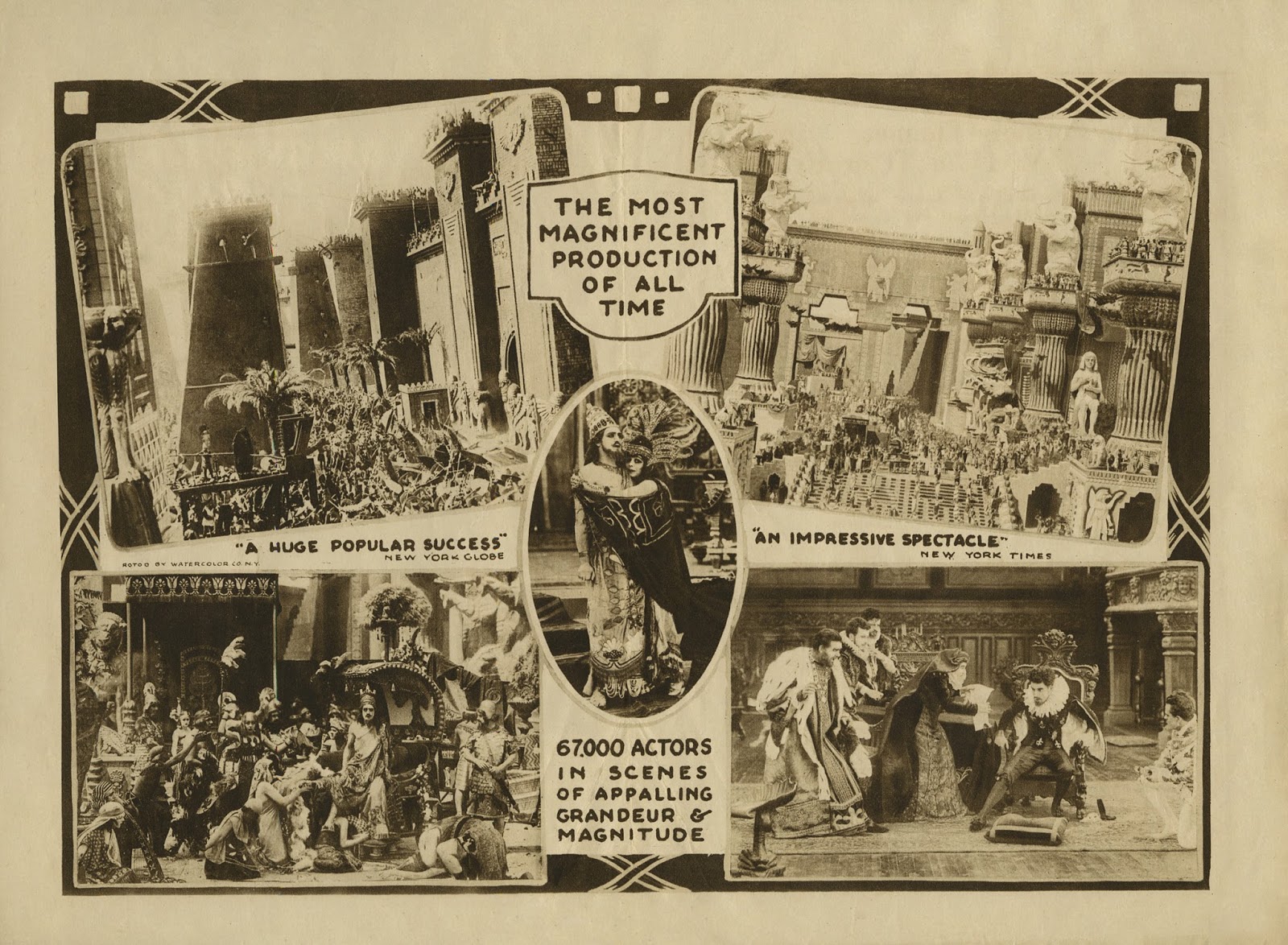
• Sunday, April 3: 'Intolerance' (1916). Nothing succeeds like excess as D.W. Griffith's massive four-stories-in-one spectacle celebrates its centennial.

• Sunday, May 15: 'Paths to Paradise' (1925). Rediscover the beguiling talents of Boston-born silent comic Raymond Griffith, who stars in this jewel-heist caper, one of his best surviving films.

• Sunday, June 5: 'Flesh and the Devil' (1926). The MGM drama that put budding megastars Greta Garbo and John Gilbert on the map as the screen's hottest couple.

• Sunday, July 10: 'So's Your Old Man' (1926) and 'It's the Old Army Game' (1926). A pair of vintage W.C. Fields silent feature comedies; program hosted by the great man's granddaughter, Dr. Harriet Fields.

'Steamboat Bill Jr.' will be screened in 35mm on Sunday, Feb. 21 at 2 p.m. at the Somerville Theatre, 55 Davis Square, Somerville, Mass. Admission to the screening is $15 or $12 seniors/students. For more info, call (617) 625-5700 or visit www.somervilletheatreonline.com. For more info on the music, visit www.jeffrapsis.com.

Thursday, February 18, 2016

Garbo's and MGM's last silent, 'The Kiss' (1929)
on Friday, 2/19 at Red River in Concord, N.H.

Promotional art for 'The Kiss' (1929), the last silent film released by a major U.S. studio.

A freakish warm spell and heavy rain washed away much of our snow pack, but February continues like a toboggan ride out of control.

Coming up on Friday night is Greta Garbo's 'The Kiss' (1929), the last silent film released by MGM. I'm doing music for a screening at Red River Theatres in Concord, N.H.

Showtime is at 7 p.m.; details in the press info pasted in below.

Then on Sunday, Feb. 21 comes another double-header in Boston.

First, a 2 p.m. screening of Buster Keaton's 'Steamboat Bill, Jr.' (1928) at the Somerville Theatre in Davis Square.

Then a 7 p.m. showing of Jean Epstein's 'The Adventures of Robert Macaire' (1925) at the Harvard Film Archive.

More about the Sunday films after I get through the Garbo program, which launches another season of silent film with live music at Red River Theaters in Concord, N.H.

This small non-profit cinema complex screens a wide-ranging program of unusual and hard-to-see movies. (Hard to see in an actual movie theater, anyway.)

And I'm pleased to say they continue to make room for silent film with live music. And for 2016, we've upped the pace to one show per month.

If you're planning ahead, upcoming programs include:

• Friday, March 18: 'The Last Laugh' (1924) starring Emil Jannings, directed by F.W. Murnau. Ground-breaking character study.

• Friday, April 15: 'Underworld' (1928) directed by Josef von Sternberg; started gangster movie craze and paved the way for film noir.

• Friday, May 13: 'The Golem' (1920) In 16th-century Prague, a rabbi brings a statue to life protect the Jews of Prague from persecution.

• Friday, June 10: 'The General' (1927) starring Buster Keaton. Classic tale of locomotives during the U.S. Civil War.

Some great stuff on the schedule!

But first up is Garbo in 'The Kiss,' our slightly tardy salute to Valentines Day—with a slight tough of murder thrown in. (Hey, that can happen, depending on where Cupid's arrow hits.)

From 'The Kiss': No caption really needed.

This one is worth seeing—first, because Garbo is an eternally bankable star and worth watching no matter what the film happens to be. That face!

'The Kiss' is also notable in that it's the last silent film released commercially by a major U.S. studio.

MGM put the film in theaters on Nov. 16, 1929. By this late date, silent film was all but dead, with the public was clamoring for talking pictures as the 1920s ended and the Great Depression took hold.

Knowing this lends 'The Kiss' a kind of wistful quality, at least to me.

Here's the thing: although it's no masterpiece, 'The Kiss' flows naturally and confidently, making seamless use of the techniques used to tell a story visually, which is how silent film worked.

Shooting 'The Kiss': the last days of silent film production.

That it looks so effortless, of course, is the product of several decades of hard-won experience. It took plenty of trial and error for directors and actors and cinematographers to get where they were at the end of the 1920s.

What would happen if silent films had continued to be produced into the 1930s and beyond? They could have been made alongside talking pictures, as many observers at the time predicted would happen.

Well, we'll never know. After 'The Kiss,' the silent film went silent.

But among its other qualities the last silent film, 'The Kiss' conveys a sense of what was still possible in the form.

There's a freshness to it that persists to this day—perhaps even more so, as the disciplined way of telling a story visually in well-made silent film is indeed new again to most audiences today.

So watch 'The Kiss,' and you'll see an art form that wasn't dying. Rather, it was killed outright.

And how appropriate for a "who-dunnit" story. For more info on 'The Kiss' and our screening on Friday night, the press release text is pasted in below.

* * *

Promotional poster for 'The Kiss' (1929).

MONDAY, FEB. 15, 2016 / FOR IMMEDIATE RELEASE
Contact Jeff Rapsis • (603) 236-9237 • jeffrapsis@gmail.com

'The Kiss' (1929), Garbo's final silent film,
to screen at Red River on Friday, Feb. 19


Intense romantic who-dunnit to be show with live music; drama kicks off Red River's 2016 silent film series

CONCORD, N.H.—It was the very last silent film produced by a major studio in the United States.

Starring Greta Garbo, 'The Kiss' (1929) was released by MGM in November 1929, long after all other Hollywood studios had abandoned the silent genre in favor of the popular new "talkies."

'The Kiss,' an intense romantic murder mystery, will be screened with live music on Friday, Feb. 19 at 7 p.m. at Red River Theatres, 11 South Main St., Concord, N.H. Tickets are $10 per person.

In 'The Kiss,' Irene (Greta Garbo) plays a young woman unhappily married to an older gentleman; to add to her woes, she is in love with a young lawyer, André (Conrad Nagel).

Unable to find a solution to continue their romance, they stop seeing each other. Irene starts spending her time with young Pierre (Lew Ayres), the son of her husband's business associate, who is infatuated with her.

When Pierre leaves for college, he begs her for a goodbye kiss. After a chaste kiss, Pierre steals another more passionate one—as Irene's husband takes notice. This sets the stage for a murder mystery, the ensuing trial, and a dramatic conclusion.

Directed by Jacques Feydau, 'The Kiss' also stars actors Conrad Nagel and Lew Ayres.

Courtroom scene in 'The Kiss.'

MGM kept releasing silent films with Garbo in part because the Swedish actress lacked a solid command of English, which she spoke with a very thick accent.

Worried at damaging the appeal of a highly bankable star, MGM continued to feature Garbo in silents for as long as possible, even as the industry otherwise switched over to sound films.

However, following 'The Kiss,' Garbo found continued success in talking pictures beginning with 'Anna Christie' (1930), her husky and distinctive voice proving to be a large part of her enduring appeal.

'The Kiss' will be accompanied by live music by Jeff Rapsis, a New Hampshire-based silent film accompanist who performs at venues across the region and beyond.

"Films such as 'The Kiss' were created to be shown on the big screen and in a theater as a communal experience," Rapsis said. "With an audience and live music, they still come to life in the way their makers intended them to.

"So Red River's silent film screenings are a great chance for people to experience films that caused people to first fall in love with the movies," he said.

Red River Theatres, an independent cinema, is a non-profit 501(c)(3) organization dedicated to screening a diverse program of first-run independent films, cult favorites, classics, local and regional film projects, and foreign films.

The member-supported theater’s mission is to present film and the discussion of film as a way to entertain, broaden horizons and deepen appreciation of life for New Hampshire audiences of all ages.

'The Kiss' (1929) will be shown at Red River Theatres, 11 South Main St., Concord, N.H. on Friday, Feb. 19 at 7 p.m. in the Jaclyn Simchik Screening Room at Red River Theatres, 11 South Main St., Concord, N.H. Admission is $10 per person; for more info, call (603) 224-4600 or visit www.redrivertheatres.org. For more information about the music, visit www.jeffrapsis.com.

—30—

Sunday, February 14, 2016

Celebrate Valentine's Day w/Clara Bow's 'It'—
but first, 'A Trip to Mars' at the Sci-Fi 'Thon

Promotional artwork for the Danish sci-fi epic 'Himmelskibit,' or 'A Trip to Mars.'

It's shaping up to be kind of a schizophrenic Valentine's Day this year.

This evening, I get to do music for Clara Bow's Jazz Age romantic comedy 'It' (1927) at the Aeronaut Brewery in Somerville, Mass.

But before that happens, there's 'A Trip to Mars' (1918), a full-length space travel epic from Denmark that's part of this year's annual 24-hour Boston Sci-Fi Marathon.

So Mars first, then Clara Bow later. There must be some kind of "Men are from Mars" wisecrack to make here, but I just can't think of it.

Actually, the sci-fi "Thon" (as it's called) is one of my favorite gigs of the year. This is mostly due to the audience, which consists of something like 600 hard-core sci-fi fans who gather each year at the Somerville Theatre in Brigadoon-like fashion for a kind of mass binge watch.

Held each year on Presidents Day weekend, the "Thon" (now in its 41st year) is a kind of tribal gathering complete with rituals such as contests for the best tinfoil hat and best alien mating call. So it's very different from the usual silent film crowd.

But that's why I like it. It's a special pleasure (and also a challenge) to create live music that helps vintage sci-fi material from the silent era connect with this crowd. Bore them, and they'll let you know. But get it right, and you won't find a more engaged audience.

I first did it in 2011 for the 1916 version of '20,000 Leagues Under the Sea.' And last year, it was 'The Cabinet of Dr. Caligari' (1920).

This time around, it's for 'A Trip to Mars' (Danish title: 'Himmelskibit') a 1918 film that was beautifully restored in 2006 by the Danish Film Institute, and which is being shown via DCP as part of this year's marathon.

I keep saying this, and I'll say it again: even after scoring literally hundreds of silent features, I continue to be surprised by amazing films I've never heard of before. And 'A Trip to Mars' is yet another.

The inhabitants of Mars welcome visitors from Earth.

I don't want to spoil anything about the movie for those who may see it, other than to say who knew the inhabitants of Mars would turn out to be vegetarian?

But I will say that I'm sensing that this will be a terrific film for the Marathon crowd. So I'm very much looking forward to this afternoon's screening, which is targeted to start at about 4:05 p.m. (As it's a 24-hour marathon, the program always runs a little loose.)

Alas, if you'd like to see it, you'll need to buy a ticket to the entire 24-hour event, which costs $64.50. But for that you'll get an amazing and memorable experience like none other, and a terrific line-up of films too numerous to list here.

For more info, visit www.bostonscifi.com and it's all there.

And now, for something completely different...


Later this evening, it's music for the Jazz Age romantic comedy 'It' (1927) starring Clara Bow in what would be her breakout performance.

'It' is playing at the Aeronaut Brewery (also in Somerville) as part of a Valentine's Day celebration. Showtime is 8 p.m. It's a ticketed event and I'm pleased to say it's almost sold out, according to the Aeronaut's Facebook and Eventbrite posts.

So if you haven't got tickets, go the Aeronaut's EventBrite site and snag yours right away.

Alas, the Aeronaut cannot exceed its occupancy permit and so the seating does have a cap. However, if you're a fan coming into town specifically for this show, please give me a call at (603) 236-9237 and we'll see what we can do.

It should be a fun evening, as the Aeronaut screenings draw many non-traditional silent film fans who seem to have a ball discovering pop culture from another era. And I certainly enjoy helping bring it to life!

If you're unfamiliar with the Aeronaut or 'It,' the text of the press release is pasted in below.

One thing I like to point out about this movie is that it's one of the more prominent early examples of product placement. The whole film is built on Elinor Glyn's writing in Cosmopolitan, and the magazine itself is featured prominently on screen.

And how interesting that Cosmo is still with us, and still concerned about roughly the same issues.

Talk about timeless!

* * *

Clara Bow flirts in unsubtle fashion with business tycoon and dreamboat Antonio Moreno.

MONDAY, JAN. 18, 2016 / FOR IMMEDIATE RELEASE
Contact Jeff Rapsis • (603) 236-9237 • jeffrapsis@gmail.com

Come and get 'It' with Clara Bow
at Aeronaut Brewery on Sunday, Feb. 14


Special Valentine's Day screening will feature 1920s Jazz Age silent romantic comedy with live music

SOMERVILLE, Mass.—A film that helped define an era returns to the big screen in February at the Aeronaut Brewery.

'It' (1927), a romantic comedy that came to epitomize the Jazz Age of the 1920s, will be screened with live music on Sunday, Feb. 14 at 8 p.m. at the Aeronaut Brewery, 14 Tyler St. (near Union Square), Somerville, Mass.

The special Valentine's Day screening is open to the public and is part of the Aeronaut's commitment to showcase local music, art, and performance.

Admission is $10 per person. Tickets are available online at www.eventbrite.com; search on "Aeronaut Brewery."

"We thought a silent film about love and romance would be the perfect way for people to celebrate Valentine's Day in a fun and memorable way," said Aeronaut spokesperson Christine Holmes.

'It' tells the story of a sassy shop girl who sets her sights on the handsome and wealthy boss of the department store where she works. The two are from completely different circles of society, but will attraction be strong enough to bridge the gap in their backgrounds?


The film made actress Clara Bow a major star, earning her the nickname of the 'It' girl. Released at the height of the Jazz Age, the movie was a hit with audiences, breaking box office records.

'It' is based on a novella written by Elinor Glyn and originally serialized in Cosmopolitan magazine. Glyn, whose writings popularized the concept of 'It' as a quality of attractiveness, has a cameo role as herself in the film.

'It' is also an early example of product placement, as Cosmopolitan magazine is featured prominently in a scene where a character reads Glyn's story and introduces it to the audience.

The picture was considered lost for many years, but a copy was found in Prague in the 1960s. In 2001, 'It' was selected for preservation in the U.S. National Film Registry by the Library of Congress as being "culturally, historically, or aesthetically significant."

The special Valentine's Day screening will feature live music by Jeff Rapsis, a New Hampshire-based silent film accompanist and composer.

"Among silent films, 'It' remains an audience favorite," said Rapsis, who accompanies silent film programs at the Somerville Theatre, the Harvard Film Archive, and at venues around the country.

"People continue to be surprised at how engrossing and exhilarating silent films can be when shown as they were intended—in a theater, and with live music," Rapsis said.

To accompany 'It,' Rapsis will use a digital synthesizer to recreate the texture of the full orchestra. The score is created live in real time as the movie is screened.

Rather than focus on authentic music of the period, Rapsis creates new music for silent films that draws from movie scoring techniques that today's audiences expect from the cinema.

A special Valentine's Day screening of 'It’ (1927), a romantic comedy starring Clara Bow, will take place on Sunday, Feb. 14 at 8 p.m. at the Aeronaut Brewery, 14 Tyler St. (near Union Square), Somerville, Mass.

Admission is $10 per person and are available online at www.eventbrite.com (search on "Aeronaut Brewery") or via Facebook at www.facebook.com/events/961744873899654.

For more info, visit www.aeronautbrewing.com or call (617) 987-4236; for more info on the music, visit www.jeffrapsis.com.

Wednesday, February 10, 2016

Thursday, 2/11: Micheaux's 'Within Our Gates'
in Plymouth to celebrate Black History Month

Pioneer filmmaker Oscar Micheaux at the time he made 'Within Our Gates.'

It's been a busy time in the film accompaniment biz! Recent gigs range from a pot luck supper at the Campton (N.H.) Historical Society this weekend to a screening last night at the Harvard Film Archive.

But through it all, I've been looking forward to an unusual and special program we've planned for tomorrow night.

On Thursday, Feb. 11, I'll be accompanying Oscar Micheaux's silent drama 'Within Our Gates' (1920). It's the earliest surviving work by an African-American filmmaker, and it's my privilege to be creating live music for this landmark movie.

The screening is part of our regular monthly series of silent film screenings with live music at the Flying Monkey Moviehouse and Performance Center, 39 South Main St. in Plymouth, N.H.

This program is designed to celebrate Black History Month. It grew out of discussions that took place last month when we ran D.W. Griffith's monumental (and monumentally racist) epic 'The Birth of a Nation' (1915) as a way to mark Martin Luther King Jr. Day.

I suppose you could say that not everyone agreed with my decision to link 'The Birth of a Nation' with MLK. Although our intention was to show the racism and prejudice that Dr. King (and so many others) had to overcome, some people felt strongly that there were better ways to accomplish this goal.

I could see their point, although we still went forward with our planned screening of 'Birth.'

But I'm so pleased to say that as an outgrowth of these discussions, we could put together a silent film program that everyone agrees is appropriate for Black History Month.

It was a great opportunity to revisit the issue of racism (as it pertains to silent film) in a whole different way.

Many thanks to theater owner Alex Ray for facilitating this program, and for all the people whose thoughts and ideas contributed to it coming together so quickly.

I've never done music for 'Within Our Gates' before, and I've learned a lot about Micheaux and the experience of Black filmmakers (and filmgoers) in the early days of cinema.

Showtime is 6:30 p.m., and the program includes speakers who are much better equipped than I am to discuss the film and talk a little bit about the African-American experience in America.

Highlights include remarks from Michael Fischler, an author who will recount his experience of teaching at an all-black segregated high school in Florida on the day Martin Luther King Jr. was assassinated in 1968.

We'll also hear from Prof. Metasebia (Metty) Woldemariam, a faculty member at Plymouth State University who will discuss Micheaux's career and put 'Within Our Gates' in context.

Admission is $10 per person. Hope to see you there! For more information, please check out the press release below. Thanks!

* * *

A scene from Oscar Micheaux's silent drama 'Within Our Gates' (1920).

THURSDAY, JAN. 28, 2016 / FOR IMMEDIATE RELEASE
Contact Jeff Rapsis • (603) 236-9237 • jeffrapsis@gmail.com

Black History Month program to feature earliest surviving film by African-American director


Oscar Micheaux's pioneering drama 'Within Our Gates' to screen with live music at Flying Monkey on Thursday, Feb. 11

PLYMOUTH, N.H.—A movie regarded as the earliest surviving feature film directed by an African-American will be the centerpiece of a salute to Black History Month at the Flying Monkey Moviehouse and Performance Center.

The film, Oscar Micheaux's 'Within Our Gates' (1920), will be shown as part of a special program on Thursday, Feb. 11 at 6:30 p.m.

Live music for the silent drama will be provided by Jeff Rapsis, a New Hampshire-based silent film musician who frequently accompanies programs at the Flying Monkey.

Admission to the program, which is part of the Flying Monkey's monthly silent film series, is $10 per person.

The program also will include remarks by speakers about the film, the legacy of Dr. Martin Luther King Jr., and the Black experience in America.

Featured will be a presentation by Michael Fischler, an author and educator who will reflect on the life and legacy of Dr. Martin Luther King Jr. and the impact of his assassination in 1968.

On the day following King's Death in 1968, Fischler was a Social Studies and English teacher in an all-Black middle school in the Miami, Fla. area. Seizing the moment, Fischler redirected his planned learning experiences for the day to facilitate a powerful lesson in honor of MLK Jr.

Fischler published recollections of the event, as well as excerpts from a letter he composed to Coretta Scott King, widow of the slain Civil Rights leader. The letter, published in "Annual Editions in Multicultural Education," retells the lesson and the influences on the author's life.

Also on the program: An overview of Micheaux's career and the minority movie-going experience by Metasebia Woldemariam, PhD, Associate Professor in the Department of Communication and Media Studies, Plymouth State University.

The Flying Monkey had originally scheduled a Valentine's Day program for its February silent film screening, but recently opted to change the focus to a program honoring Black History Month.

"We felt this was an appropriate way to pay tribute to an important part of America's multi-cultural community," said Alex Ray, the Flying Monkey's owner.

"Showing 'Within Our Gates' for Black History Month is an excellent way for today's audiences to understand how pervasive racism was at the time, and perhaps get us to think how much work we still need to do to achieve Dr. King's vision," Ray said.

"We're especially glad to work with people in the community, including members of the Black Student Union at Plymouth State University, who were among those who suggested this program," Ray said.

Another scene from Oscar Micheaux's silent drama 'Within Our Gates' (1920).

'Within Our Gates' was produced at a time when the mainstream Hollywood film industry was shut off to Black Americans.

Micheaux, however, was able to self-produce 'Within Our Gates' on a shoestring budget and outside the studio system.

'Within Our Gates' portrays the contemporary racial situation in the U.S. during the early 20th century—the years of Jim Crow, the revival of the Ku Klux Klan, and the Great Migration of Blacks to cities of the North and Midwest. It was part of a genre called race films.

The plot features an African-American woman who goes North in an effort to raise money for a rural school in the Deep South for poor Black children. Her romance with a Black doctor eventually leads to revelations about her family's past and her own ancestry. The film portrays racial violence under white supremacy. It was produced, written and directed by Micheaux.

'Within Our Gates' stirred up considerable controversy during its original release because it contained a scene in which a black man is lynched by a white mob.

At first the film, which eventually had its premiere in Chicago, was rejected by the Chicago Board of Movie Censors who were afraid the movie could possibly inspire a race riot. However, a second screening of the film by the press, Chicago politicians, and prominent members of the black community convinced the Censors to grant the film a permit since it addressed horrendous conditions that needed reform.

Not everyone agreed with this assessment, however, and some of the most vigorous protestors against the film were black activists.

Not surprisingly, white theatre owners in the south who catered to black patronage were also offended by 'Within Our Gates' and refused to book it. One theatre owner in Shreveport, La., admitted "it was a very dangerous picture to show in the south" and his comment was typical for the region.

Micheaux, no stranger to controversy, refused to compromise his material despite being locked out of numerous distribution channels and went on to tackle other unpopular but equally topical problems in films like 'God's Stepchildren' (1938), in which a light-skinned African-American tries to pass for Caucasian, and B'irthright' (1939), the story of a black Harvard graduate who encounters opposition from both whites and members of his own race.

While Micheaux was well aware that audiences wanted to be entertained, he also felt it was his duty to confront challenging issues that would, in his words, "leave an impression" on audiences.

Michaeux died in 1951 at age 67, having independently produced a total of 44 films and earned a reputation as the most successful African-American filmmaker of the first half of the 20th century.

for many years, 'Within Our Gates' was regarded as a lost film. However, a single copy turned up in Spain in the 1970s. The version to be screened at the Flying Monkey descends from this single surviving copy.

The precursor to Black History Month was Black History Week, established in 1926 to coincide with the birthday of Abraham Lincoln on Feb. 12 and Frederick Douglass on Feb. 14. Primary emphasis was placed on encouraging the coordinated teaching of the history of American blacks in the nation's public schools.

In 1976, the expansion to Black History Month was officially recognized by the U.S. government. At the time, President Gerald Ford urged Americans to "seize the opportunity to honor the too-often neglected accomplishments of black Americans in every area of endeavor throughout our history."

All movies in Flying Monkey's silent film series are rarely screened in a way that allows them to be seen at their best. To revive them, organizers aim to show the films as they were intended—in top quality restored prints, on a large screen, with live music, and with an audience.

‘Within Our Gates’ (1920) will be shown with live music on Thursday, Feb. 11, at 6:30 p.m. at the Flying Monkey Moviehouse and Performance Center, 39 South Main St., Plymouth, N.H. The film is part of a program to salute Black History Month and honor the legacy of Dr. Martin Luther King, Jr.

Admission is $10 per person. For more info, call the box office at 603-536-2551 or visit www.flyingmonkeynh.com. For more info on the music, visit www.jeffrapsis.com.

Monday, February 1, 2016

This week: Romance in Manchester,
then double-feature dog adventure up north

Nils Asther and Greta Garbo consider their options in 'Wild Orchids' (1929), a late MGM silent.

It's February, and the calendar brings with it two ways to warm up: screenings for Valentine's Day, and screenings at a small town historical society's annual pot luck supper and movie night.

Not that the occasions are mutually exclusive...

On Tuesday, Feb. 2, our monthly feature at the Manchester (N.H.) City Library is 'Wild Orchids' (1929), a torrid late MGM silent starring Greta Garbo.

Showtime is 6 p.m.; admission is free, with donations accepted and oh-so-appreciated.

And then on Saturday, Feb. 6, I haul myself up to the Campton (again N.H.) Historical Society, where we're running a double feature of Rin Tin Tin adventure films.

Showtime is—well, the annual potluck supper is at 5 p.m., and we usually start the movie program sometime after 6 p.m.

Free admission again, although if you're attending the pot luck it's good manners to bring a dish to share.

Of the two programs, the Garbo film is new to me. And after doing two screenings of Griffith's 'Intolerance' in the past week (plus one of 'Metropolis'), I'm really looking forward to taking it slow and letting the romantic tension build.

I don't generally send out press releases for the Manchester City Library series, in part because I'm just lazy, but also because I tend to program obscure or lesser-known titles that are unlikely to draw a big crowd anyway.

We do have our loyal attendees, but anyone is welcome to pop in. Hope to see you there!

I did, however, send out a release for the program up in Campton, which is about an hour north of home base and in the foothills of the White Mountains.

So if you're interested in joining us on Saturday, Feb. 6, lots of detail below.

And one program note: I had also planned a Valentine's Day silent film screening at the Wilton (N.H.) Town Hall Theatre this month, but the schedule has become impossible.

Originally set for Sunday, Feb. 14, we had to move it to Sunday, Feb. 7. And then I had something come up which takes me out of the area that day. And then I'm booked for the rest of the month and into March, so...

So apologies to regular attendees of the monthly series in Wilton. We'll be back on schedule in March with 'Ben Hur' (1925) Sunday, March 27. (Hey, that's Easter!)

* * *


MONDAY, JAN. 18, 2016 / FOR IMMEDIATE RELEASE
Contact Jeff Rapsis • (603) 236-9237 • jeffrapsis@gmail.com

Rin Tin Tin leaps back into action Saturday, Feb. 6 at Campton Historical Society


Legendary dog star races to the rescue in double feature of rare classic silent adventure films presented with live music

CAMPTON, N.H. — He couldn't speak. But that was no handicap for a star during the silent film era.

He was Rin Tin Tin, the legendary German Shepherd dog whose popularity rivaled that of any human performer when the movies were brand new.

See for yourself on Saturday, Feb. 6, when the Campton Historical Society screens a double feature of vintage Rin Tin Tin silent adventure films with live music.

The evening begins with a pot luck supper at 5 p.m. The film program, which is free and open to the public, will start at about 6:15 p.m.

In 'Clash of the Wolves' (1925), Rin Tin Tin plays a wild wolf who befriends a prospector; together they hunt down a criminal intent on jumping the prospector's claim and stealing his girl.

In 'The Night Cry' (1926), Rin Tin Tin is unjustly accused of killing sheep in ranching country; this forces him to flee for his life and hunt down the true killer on his own.

Both melodramas were produced by then-struggling Warner Bros. Studio. Rin Tin Tin films proved immensely popular around the world, with audiences marvelling at the then-new German Shepherd breed's feats of derring-do as he often out-smarted his human co-stars.

At the time, studio executives referred to Rin Tin Tin as "the mortgage lifter" because the dog's pictures helped rescue the ailing studio from bankruptcy.


Rin Tin Tin was so popular, he was named "Best Actor" at the first-ever Academy Awards in 1929 until ceremony officials decided on a re-vote in favor of human performer Emil Jannings.

Both films at the Campton Historical Society will be accompanied live by silent film musician Jeff Rapsis, who uses a digital synthesizer to recreate the texture of a full orchestra.

"The Rin Tin Tin films are great pictures for audience reaction, even today," Rapsis said. "They're full of fast-paced action, great stunts—and above all, they really move!"

"If you're new to the silent film art form, seeing the Rin Tin Tin pictures in a theater with live music is a terrific way to get acquainted with the enduring power of this kind of movie-making," Rapsis said.

Rin Tin Tin remained popular until his death in 1932, which made headlines around the globe. But his progeny went on to star in later films and TV shows, keeping the name before the public for generations.

Rin Tin Tin's descendants are still bred, continuing the bloodline to the present day. The ongoing Rin Tin Tin phenomenon inspired a recent book, "Rin Tin Tin: The Life and the Legend" by New Yorker writer Susan Orlean.

The Rin Tin Tin double feature at the Campton Historical Society aims to recreate the silent film experience as early movie audiences knew it: on the big screen, with live music, and with an audience.

"When you put the silent film experience back together, it's amazing how the movies jump to life," Rapsis said. "You can really get a sense of why people got so excited about movies when they were new."

A double feature of silent-era Rin Tin Tin adventures will be shown with live music on Saturday, Feb. 6 at 6:15 p.m. at the Campton Historical Society, Campton Town Hall, Route 175, Campton, N.H. The program is free and open to the public, and will be preceded by a pot luck supper starting at 5 p.m. For more details, visit www.camptonhistorical.org. For more info on the music, visit www.jeffrapsis.com.

Saturday, January 30, 2016

One more time! Griffith's 'Intolerance'
on Sunday, Jan. 31 at Town Hall Theatre


If you missed this week's screening of 'Intolerance' (1916) at Merrimack College in North Andover, Mass., I'm doing it again this weekend.

The film will run on Sunday, Jan. 31 at 4:30 p.m. at the Wilton (N.H.) Town Hall Theatre.

We've had some good publicity for this screening, so I'm hoping a good-sized crowd will be on hand.

For more info, here's the text of the press release that went out earlier this month. See you there!

* * *


MONDAY, JAN. 18, 2016 / FOR IMMEDIATE RELEASE
Contact Jeff Rapsis • (603) 236-9237 • jeffrapsis@gmail.com

D.W. Griffith's masterpiece 'Intolerance' to screen at Wilton (N.H.) Town Hall Theatre


Rarely shown landmark 1916 silent film epic to be presented on 100th anniversary with live music on Sunday, Jan. 31

WILTON, N.H.—It was a cinematic breakthrough that changed the movies forever: a three-hour epic knitting together four sweeping stories spanning 2,500 years, all designed to show mankind's struggles and the redeeming power of love throughout human history.

The film was D.W. Griffith's 'Intolerance' (1916), which stunned the movie-going public 100 years ago with its vast scope, enormous sets, large cast, and revolutionary editing. Often named to lists of the 100 best films of all times, critics continue to point to 'Intolerance' as one of the most influential and important milestones of early cinema.

See for yourself with a rare screening of a restored version of 'Intolerance' at the Town Hall Theatre, 40 Main St., Wilton, N.H. on Sunday, Jan. 31 at 4:30 p.m.

The program, the latest in the Town Hall Theatre's silent film series, will be accompanied by live music performed by silent film composer Jeff Rapsis. Admission is free, with a suggested donation of $5 per person to help defray expenses.

In reviving 'Intolerance' and other great films of Hollywood's early years, the Town Hall Theatre aims to show silent movies as they were meant to be seen—in high quality prints, on a large screen, with live music, and with an audience.

"All those elements are important parts of the silent film experience," said Rapsis, who will improvise a live score for 'Intolerance' on the spot. "Recreate those conditions, and the classics of early Hollywood leap back to life. They featured great stories with compelling characters and universal appeal, so it's no surprise that they hold up and we still respond to them."

Rapsis performs on a digital synthesizer that reproduces the texture of the full orchestra and creates a traditional "movie score" sound.

Original promotional materials for 'Intolerance.'

'Intolerance,' considered one of the great masterpieces of the silent era, intercuts four parallel story lines, each separated by several centuries: A contemporary melodrama of crime and redemption; a Judean story of Christ’s mission and death; a French story about the events surrounding the St. Bartholomew's Day massacre of 1572; and a story depicting the fall of the Babylonian Empire to Persia in 539 BC.

The scenes are linked by shots of a figure representing Eternal Motherhood, rocking a cradle.

Each of the parallel stories are intercut with increasing frequency as the film builds to a climax. The film sets up moral and psychological connections among the different stories.

'Intolerance' was made partly in response to criticism of Griffith's previous film, 'The Birth of a Nation' (1915), which was criticized by the NAACP and other groups as perpetuating racial stereotypes and glorifying the Ku Klux Klan.

One of the unusual characteristics of 'Intolerance' is that many of the characters don't have names. Griffith wished them to be emblematic of human types. Thus, the central female character in the modern story is called The Dear One. Her young husband is called The Boy, and the leader of the local Mafia is called The Musketeer of the Slums.

Because of its four intertwined stories, 'Intolerance' does not feature any one performer in a leading role. However, the enormous cast includes many great names from the silent era, including Lillian Gish, Mae Marsh, Constance Talmadge, Walter Long (a New Hampshire native), and a young Douglas Fairbanks Sr. in an uncredited cameo as a drunken soldier with a monkey.

"This movie was made for the big screen, and this screening at the Town Hall Theatre is a rare chance to see 'Intolerance' the way it was meant to be seen," Rapsis said.

‘Intolerance' will be shown on Sunday, Jan. 31 at 4:30 p.m. at the Town Hall Theatre, 40 Main St., Wilton, N.H. The program is free and open to the public, with a suggested donation of $5 per person to help defray expenses. For more information, call the theater (603) 654-3456 or visit www.wiltontownhalltheatre.com. For more info on the music, visit www.jeffrapsis.com.

Thursday, January 28, 2016

Not even the N.H. Presidential Primary
can stop 'Metropolis' on Friday, Jan. 29

A scene from 'Metropolis.' (1927)

Up next: I'm doing live music for 'Metropolis' (1927), the futuristic sci-fi thriller from Fritz Lang.

We're running the film on Friday, Jan. 29 at 7 p.m. in Exeter (N.H.) Town Hall, which might seem familiar even if you've never been there.

Why? Because it's often used for political rallies. With New Hampshire's first-in-the-nation Presidential Primary coming up soon, the place winds up on the news a lot.

And why? Because the Town Hall's classic New England architecture makes for great visuals. And with competitive races in both parties, the place is in demand.

(And yes: I just checked with the Exeter Town Manager's office and the place is booked for Donald Trump on Thursday, Feb. 4; Marco Rubio on Friday, Feb. 5; Hillary Clinton on Saturday, Feb. 6; and possibly other dates and candidates that my addled brain can't recall.)

But not this Friday night, as we're doing 'Metropolis.' However, any candidate is welcome to take a break and attend our screening.

Hey, maybe he or she might get some ideas on how to better organize society. So if anyone proposes to improve communication by installing large mechanical gongs in all public spaces, you'll know where the idea came from.


Below is a press release with all the info about the Exeter 'Metropolis' screening: who, what, where, when.

Hope to see you at the show!

* * *

An original poster for 'Metropolis' (1927).

MONDAY, JAN. 18, 2016 / FOR IMMEDIATE RELEASE
For more info, contact: Jeff Rapsis • (603) 236-9237 • jeffrapsis@gmail.com

Restored classic film 'Metropolis' to screen at Exeter Town Hall on Friday, Jan. 29


Landmark early sci-fi fantasy movie, with half-hour of rediscovered footage, to be shown with live music

EXETER, N.H.—A silent film hailed as the grandfather of all science fiction fantasy movies will be screened with live music on Friday, Jan. 29 at 7 p.m. at Exeter Town Hall, 9 Front St., Exeter.

Admission is free and the screening is open to the public. A donation of $5 per person is suggested, with all proceeds to support the Penn Program, a local homeschool co-op for students of high school age.

Music for 'Metropolis' will be performed live by Jeff Rapsis, a New Hampshire-based composer and silent film accompanist who performs at venues around the nation.

'Metropolis' (1927), regarded as German director Fritz Lang's masterpiece, is set in a futuristic city where a privileged elite pursue lives of leisure while the masses toil on vast machines and live deep underground.

The film, with its visions of futuristic factories and flying cars, set new standards for visual design and inspired generations of dystopian fantasies from Ridley Scott's 'Blade Runner' to Terry Gilliam's 'Brazil.'

In reviving 'Metropolis' and other great films of cinema's early years, organizers of the Exeter Town Hall film series aim to show silent movies as they were meant to be seen—in high quality prints, on a large screen, with live music, and with an audience.

"All those elements are important parts of the silent film experience," said Rapsis, who will improvise an original live score for 'Metropolis' on the spot. "Recreate those conditions, and the classics of early cinema leap back to life. They featured great stories with compelling characters and universal appeal, so it's no surprise that they hold up and we still respond to them."

In 'Metropolis,' the story centers on an upper class young man who falls in love with a woman who works with the poor. The tale encompasses mad scientists, human-like robots, underground spiritual movements, and industrial espionage, all set in a society divided between haves and have-nots.

An underground church in 'Metropolis.'

The version of 'Metropolis' to be screened at Exeter Town Hall is a newly restored edition that includes nearly a half-hour of missing footage cut following the film's premiere in 1927. The lost footage, discovered in 2008 in an archive in Argentina, has since been added to the existing 'Metropolis,' allowing plot threads and characters to be developed more fully.

When first screened in Berlin, Germany on Jan. 10, 1927, the sci-fi epic ran an estimated 153 minutes. After its premiere, the film's distributors (including Paramount in the U.S.) drastically shortened 'Metropolis' to maximize the film's commercial potential. By the time it debuted in the U.S. later that year, the film was only about 90 minutes long.

Even in its shortened form, 'Metropolis' became a cornerstone of science fiction cinema. Due to its enduring popularity, the film has undergone numerous restorations in the intervening decades in attempts to recover Lang's original vision.

In 1984, the film was reissued with additional footage, color tints, and a pop rock score (but with many of its intertitles removed) by music producer Giorgio Moroder. A more archival restoration was completed in 1987, under the direction of Enno Patalas of the Munich Film Archive, in which missing scenes were represented with title cards and still photographs. More recently, a 2001 restoration combined footage from four archives and ran at a triumphant 124 minutes.

It was widely believed that this would be the most complete version of Lang's film that contemporary audiences could ever hope to see. But, in the summer of 2008, the curator of the Buenos Aires Museo del Cine discovered a 16mm dupe negative of 'Metropolis' that was considerably longer than any existing print.

It included not merely a few additional snippets, but 25 minutes of "lost" footage, about a fifth of the film, that had not been seen since its Berlin debut.

The discovery of such a significant amount of material called for yet another restoration, a 2½-hour version that debuted in 2010 to widespread acclaim. It's this fully restored edition that will be screened at Exeter Town Hall.

Expressionism on parade in 'Metropolis.'

" 'Metropolis' stands as an stunning example of the power of silent film to tell a compelling story without words, and reach across the generations to touch movie-goers from the real future, which means us," said accompanist Jeff Rapsis, who provides live music for silent film screenings throughout New England.

To accompany a silent film, Rapsis uses a digital synthesizer to recreate the texture of the full orchestra. The score is created live in real time as the movie is screened. Rather than focus exclusively on authentic music of the period, Rapsis creates new music for silent films that draws from movie scoring techniques that today's audiences expect from the cinema.

'Metropolis' is the first in a series of silent film screenings to benefit the Penn Program, a homeschool co-op based in Exeter designed to challenge and engage creative students of high school age.

The program, launched by educator and writer Andrew Lapham Fersch in 2012, seeks to explore new methods of education. The Penn Program emphasizes active involvement in a wide range of artistic and creative activities ranging from video production to stand-up comedy.

Under Fersch's direction, the program operates in downtown Exeter, enrolling students from several area towns.

The Penn Program seeks to create a new model for integrating the arts into education, with the goal of fostering creativity, originality, hard work, dedication, kindness, and a spirit of giving.

"We felt presenting a silent film series was a great way to reach out and introduce ourselves to the community while bringing people together," Fersch said. "We're all eager to celebrate the creativity of early Hollywood in Exeter Town Hall, which is a great space, and we're doubly excited to be able to bring the community together to enjoy such a talented musician and wonderful movie."

Upcoming screenings in the silent series include:

• Friday, March 25, 2016, 7 p.m.: 'Grandma's Boy' (1922) starring Harold Lloyd; Exeter Town Hall, 9 Front St., Exeter, N.H. A cowardly young man must learn to conquer his fears before dealing with a larger menace to his community. Riotous small town comedy that helped propel Harold Lloyd into the most popular movie comedian of the 1920s.

• Friday, May 20, 2016, 7 p.m.: 'The Big Parade' (1925); Exeter Town Hall, 9 Front St, Exeter, N.H. MGM's landmark film, a sweeping drama about U.S. doughboys facing down death in the World War I trenches. Starring John Gilbert and directed by King Vidor, an epic that set the standard for generations of war movies to come.

The restored 'Metropolis' will be shown on Friday, Jan. 29 at 7 p.m. at Exeter Town Hall, 9 Front St., Exeter. Admission is free and the screening is open to the public. A donation of $5 per person is suggested, with all proceeds to support the Penn Program.

For more information on the music, visit www.jeffrapsis.com.

Sunday, January 24, 2016

What Harold Lloyd's 'Safety Last' shares
with Ludwig van Beethoven's Fifth Symphony

On Tuesday, Jan. 26, I'm doing live music for a screening of Harold Lloyd's 'Safety Last' (1923) at a new venue for me.

It's the Portsmouth Music Hall Loft, 131 Congress St. in downtown Portsmouth, N.H. Show time is 7 p.m. and admission is $15 per person.

It's the opening program in a film series hosted by Kent Stephens that aims to explore cinematic comedy as it evolves through the 20th century.

Kind of a last-minute addition to my schedule. But I'm glad to do it because:

1. 'Safety Last' is a great film for live music, which can make a big difference in how an audience experiences Lloyd's blend of comedy and edge-of-your-seat suspense.

2. The Music Hall is where I first heard the Alloy Orchestra, to a screening of Keaton's 'Steamboat Bill, Jr.' (1928) sometime in the 1990s. This pushed me in the direction of taking up the craft myself.

Kent will talk about Lloyd and the comedy of 'Safety Last,' so I'll leave that to him.

With me, when I ponder 'Safety Last,' I often think of Beethoven's Fifth Symphony. You know? Da da da DUUUMMMMMM!

Which prompts the question: What does a Jazz Age romantic comedy have in common with one the sternest, most serious pieces of classical music ever written?

Well, as with so much, it's personal. So forgive me as I briefly succumb to that malaise of middle age: the reminiscence.

I first got interested in silent film as a kid in the 1970s. At the time, if you really wanted to see silent film, you had to get the actual films and run them yourself.

Many were available (in 16mm and 8mm) from the public library, or could be ordered from Blackhawk Films of Davenport, Iowa, which I did.

And so I explored and learned about the silent films of Charlie Chaplin, of Buster Keaton, and so many others. Little by little, I came to understand the world of 1920s cinema.

But the films of one person were missing: Harold Lloyd. You could see some of his early short films, but all the big classic features just weren't available.

Of course I could read about Lloyd's films. In books, he was often labeled a "thrill" comedian in passages that were inevitably accompanied by the famous image at the top of this post.

Here it is again:


And that was that. As far as I knew, Lloyd was rooted in the frentic "anything for a laugh" school of comedy, as epitomized by that one photo, used over and over again.

Why was he hanging from a clock? There couldn't be any possible reason other than he was just trying to get laughs by being outrageous.

And that was my image of Lloyd for quite awhile.

At the same time (junior high school), I was beginning to explore the works of the great composers.

All along, I had known what Beethoven's Fifth Symphony was all about: da da da DUUUMMMMMM, right?

But to my adolescent ears, it came as a a major discovery that 40 minutes of music followed: music that explored a vast emotional landscape ranging from the deepest valleys of despair to the highest summits of ecstacy.

I recall it was an RCA recording of Fritz Reiner leading the Chicago Symphony on an LP that was very "close-miked," meaning the voice of each instrument was clear and distinct, as opposed to the general sonic blur you sometimes get from an orchestra in a concert hall.

It was unlike anything I had ever heard before. And it was big news to find out all of what came after DUUUMMMMMM.

The same thing happened with 'Safety Last.' After years of thinking of the film as just an excuse for Lloyd to go stunting willy-nilly on a tall building, I finally got to see the entire film. (This happened when the Lloyd films were shown on Public Television in the late 1970s.)

Just as with Beethoven, a whole world opened up to me. Turns out Lloyd wasn't just a clock-hanger! His films had plots, character, settings, and finely honed gag sequences that brought the art of visual comedy to places I had never seen before.

And 'Safety Last' wasn't just a flimsy excuse for Lloyd to do stunts on a building. No! It was laid out with a certain inexorable logic that leaves Lloyd's character no choice but to climb the building, floor by increasingly vertiginous floor, while frightened silly the whole way.

And as he does it, the film's story virtually requires us to root for him. And when he finally reaches the clockface—the one I'd seen in that picture so many times—the reaction generated is the result of all that has gone on before it.

I couldn't believe how well done it was. I finally knew how Lloyd came to hanging from that clockface, and it made all the sense in the world.

It also helped me begin to understand why Lloyd was so popular in the 1920s. His films were a lot more than da da da DUUUMMMMMM. They were atually of a very high standard, designed to be experienced by a large audience, and still work like gangbusters when shown as intended.

That's what I'm looking forward to happening on Tuesday night, so hope you can join us!


Wednesday, January 20, 2016

Happy birthday! 'Intolerance' turns 100;
Celebrate with several upcoming screenings

David Wark Griffith, director of 'Intolerance' (1916).

D.W. Griffith has long enjoyed a reputation as the "father of film."

Example: Each year at the Kansas Silent Film Festival, they show at least one short film of Griffith's to acknowledge his crucial role in motion picture history.

This year, it's no different. For their 20th annual festival next month, the Kansas folks are running 'Those Awful Hats' (1909).

It's a half-reel novelty short, part of Griffith's voluminous Biograph output, when he must have been being paid for his work by the foot.

But it's Griffith, and they have to include at least one title from "the father of film." (And guess who's doing the music?)

So for a long time, I just thought of Griffith as a kind of 'George Washington' of cinema: there at the beginning, as someone had to be.

Yeah, he pioneered some new ideas such as close-ups and telling two stories at once and cutting between them. But others did those things, too. What's the big deal?

And the films themselves seemed hopelessly creaky and old-fashioned. Good enough for their time, perhaps, but cinematic technique rapidly moved on, leaving Griffith epics such as 'Way Down East' (1920) and 'Orphans of the Storm' (1922) as quaint relics from an earlier age.

Well—only recently have I come to really understand the crucial role Griffith played in bringing cinema from a novelty to a fully accepted major art form.

And it wasn't about camera angles and fancy editing, although those played a part.

What it was about was story. Griffith, more than anyone else at the time, really know how to put together a narrative that would grab people's attention and hold it for as long as needed—as much as several hours at a time.

And this, I think, played a huge role in convincing the public and the business community about the power of the motion picture.

How did Griffith learn how to do this? The hard way: by directing third-rate casts in fourth-rate melodramas that toured small town theaters. In these places, you had to be entertaining or you'd risk getting tarred and feathered.

So prior to his film career, Griffith had the best possible training for cinema: a couple of decades of putting on stage plays to extremely unforgiving audiences. By necessity, he became an expert at understanding how to hook an audience and keep it hooked.

This is not easy. It involves understanding the at-times unpredictable nature of how crowds behave, which is very different from how an individual may respond to any given situation. It's part mob psychology, part peer pressure, and a fair helping of intuition, I think.

But little by little, Griffith accumulated an expertise in constructing stories that could and would mesmerize a crowd. He probably came to understand it in his bones: how to structure a story so as to capture the crowd's attention and then manipulate it to a fever-pitch of excitement.

And it was this knowledge, more than anything else, that came in handy when it was time to put together films that went beyond the one-reel dramas that were the mainstay of cinema's early years.

An original poster for 'Intolerance' (1916).

Thanks to his background in theater, Griffith instinctively knew how to lay out a story such as that of 'The Birth of a Nation' so as to work in a crowded theater. He knew how to do this so well, he could do it in the new medium of film, without an audience present.

To his collaborators and to studio executives, it must have seemed like magic. Because for awhile, no one's films sold tickets the way D.W. Griffith's films did. Once he started making "blockbusters" (a term from World War II not in use in Griffith's time), he showed once and for all that it was possible for a motion picture to the be main event of an evening at the theater, rather than just a sideshow novelty.

Today, we can see movies on our own in ways that Griffith wouldn't have imagined: online, on our phones, etc. And. most significantly, alone. And Griffith's work, I think, suffers more than most because his films were designed from the ground up to excite crowds: the bigger the better! It's that very quality that helped make him the "father of film."

Take away that part of the experience, and you rob much of the reason for why Griffith put together his films the way he did.

One of the best examples of Griffith's ability to excite an audience is 'Intolerance' (1916), his four-stories-in-one tour de force. The film turns 100 this year, and I'll be doing music for several upcoming screenings, starting on Wednesday, Jan. 27 at Merrimack College, North Andover, Mass. (Details in the press release below. I'm also doing it in Wilton, N.H. on Sunday, Jan. 31.)

For a long time, I shied away from accompanying this film, intimidated by its length (three hours!) and thinking of its narrative complexity as something of an over-the-top gimmick ripe for satire, which Buster Keaton produced in his 'Three Ages' of 1923. I had better things to do.

But I programmed it for the first time last year, and it turned out to be a highlight of my efforts as an accompanist. Run in front of an audience, the film leaped to life! And the final 30 minutes, in which all four stories are intercut faster and faster, was one of the most exhilarating experiences I've ever had in a theater.

As the pace picked up, everything happened at just the right moment for maximum impact. Griffith's instincts were rock solid, then as now, and the sequence retains its power even to this day. It was incredible. It was inexorable. And I couldn't take my eyes off the screen!

So that's why he's known as the 'Father of Film!'

See for yourself by attending one of our upcoming 100th anniversary screenings of 'Intolerance.' More info below on the Jan. 27th screening at Merrimack College.

* * *

Biggest set ever? Ancient Babylon, as reconstructed in southern California for 'Intolerance.'

MONDAY, JAN. 18, 2016 / FOR IMMEDIATE RELEASE
Contact Jeff Rapsis • (603) 236-9237 • jeffrapsis@gmail.com

At the Rogers Center: With 'Intolerance,'
four stories are better than one


Rarely screened landmark 1916 silent film epic to be shown with live music on Wednesday, Jan. 27 at Merrimack College

ANDOVER, Mass.—It was a breakthrough that changed the movies forever: a three-hour epic knitting together four sweeping stories spanning 2,500 years, all designed to show mankind's struggles and the redeeming power of love throughout human history.

The film was D.W. Griffith's 'Intolerance' (1916), which stunned the movie-going public with its vast scope, enormous sets, large cast, and revolutionary editing. Often named to lists of the 100 best films of all times, critics continue to point to 'Intolerance' as one of the most influential and important milestones of early cinema.

See for yourself with a rare screening of a restored version of 'Intolerance' at the Rogers Center for the Performing Arts at Merrimack College on Wednesday, Jan. 27 at 7 p.m.

The program, the latest in the Rogers Center's silent film series, will be accompanied by live music performed by silent film composer Jeff Rapsis. Admission is free.

In reviving 'Intolerance' and other great films of Hollywood's early years, the Rogers Center aims to show silent movies as they were meant to be seen—in high quality prints, on a large screen, with live music, and with an audience.

"All those elements are important parts of the silent film experience," said Rapsis, who will improvise a live score for 'Intolerance' on the spot. "Recreate those conditions, and the classics of early Hollywood leap back to life. They featured great stories with compelling characters and universal appeal, so it's no surprise that they hold up and we still respond to them."

Rapsis performs on a digital synthesizer that reproduces the texture of the full orchestra and creates a traditional "movie score" sound.

A French poster for a revival of 'Intolerance' (1916).

'Intolerance,' considered one of the great masterpieces of the silent era, intercuts four parallel storylines, each separated by several centuries: A contemporary melodrama of crime and redemption; a Judean story of Christ’s mission and death; a French story about the events surrounding the St. Bartholomew's Day massacre of 1572; and a story depicting the fall of the Babylonian Empire to Persia in 539 BC.

The scenes are linked by shots of a figure representing Eternal Motherhood, rocking a cradle.

Each of the parallel stories are intercut with increasing frequency as the film builds to a climax. The film sets up moral and psychological connections among the different stories.

'Intolerance' was made partly in response to criticism of Griffith's previous film, 'The Birth of a Nation' (1915), which was criticized by the NAACP and other groups as perpetuating racial stereotypes and glorifying the Ku Klux Klan.

One of the unusual characteristics of 'Intolerance' is that many of the characters don't have names. Griffith wished them to be emblematic of human types. Thus, the central female character in the modern story is called The Dear One. Her young husband is called The Boy, and the leader of the local Mafia is called The Musketeer of the Slums.

Because of its four intertwined stories, 'Intolerance' does not feature any one performer in a leading role. However, the enormous cast includes many great names from the silent era, including Lillian Gish, Mae Marsh, Constance Talmadge, Walter Long (a New Hampshire native), and a young Douglas Fairbanks Sr. in an uncredited cameo as a drunken soldier with a monkey.

"This movie was made for the big screen, and this screening at the Rogers Center is a rare chance to see 'Intolerance' the way it was meant to be seen," Rapsis said.

Upcoming feature films in the Rogers Center's silent film series include:

• Wednesday, March 23, 2016, 7 p.m.: 'Ben-Hur: A Tale of the Christ' (1925) starring Ramon Novarro, Francis X. Bushman. Just in time for Easter! In the Holy Land, a Jewish prince is enslaved by the occupying Romans; inspired by encounters with Jesus, he lives to seek justice. One of the great religious epics of Hollywood's silent film era, including a legendary chariot race that's lost none of its power to thrill.

‘Intolerance' will be shown on Wednesday, Jan. 27 at 7 p.m. at the Rogers Center for the Arts, Merrimack College, 315 North Turnpike St., North Andover, Mass. The program is free and open to the public. For more information, call the Rogers box office at (978) 837-5355. For more info on the music, visit www.jeffrapsis.com.

Vintage promotional materials for 'Intolerance.'

Saturday, January 16, 2016

Fritz Lang's 'Woman in the Moon' (1929)
on Sunday, Jan. 17 at Aeronaut Brewery

A poster for the original release of 'Woman in the Moon.'

What if J.D. Salinger had written a sequel to 'The Catcher in the Rye?'

And what if it was discovered among his papers after his death here in New Hampshire a few years ago, and was now in bookstores?

Wouldn't that just be flat-out amazing?

I imagine the excitement of discovery would be similar to what I felt when I first encountered Fritz Lang's 'Woman in the Moon' (1929).

Even non-silent-film-fanatics are familiar with 'Metropolis' (1927), Lang's jaw-dropping futuristic silent film epic.

But very few people have heard of 'Woman in the Moon,' a space travel fantasy that Lang made afterwards on an equally grand scale.

Why is 'Woman in the Moon' not better known?

Reasons include its release at very tail end of the silent era, when all people wanted were talkies, causing the 'Woman in the Moon' to tank at the box office.

And after that, Mr. Hitler came to power. He had some very specific ideas for all the German rocketry technology on display in 'Woman in the Moon,' and so suppressed the film, making it very difficult to see.

Later, heavily edited "highlight" editions of the film appeared. These cut-down versions lack coherence, to put it kindly, further causing 'Woman in the Moon' to be regarded as something of a misfire.

Fritz Lang (right) on the set of 'Woman in the Moon.'

And there things stood until about 10 years ago, when a fully restored version of 'Woman in the Moon' was finally compiled from the best surviving material and restored to its original length of nearly three hours.

What the restoration allowed us to see is a film rich with characters, humor, and a story line that pulls viewers along until a series of epic confrontations.

Also, the film accurately depicts realistic moon travel a full four decades before the Apollo program was underway.

Seeing it for the first time, I was thunderstruck. Although not strictly a sequel to 'Metropolis,' it plays like a continuation of the earlier film's vision, imagination, and audacity.

Discover what this feels like by attending our screening of 'Woman in the Moon' at the Aeronaut Brewery in Somerville, Mass. on Sunday, Jan. 17 at 7 p.m.

More information about the film is in the press release below.

And if you come, you'll be ready just in case a 'Catcher' sequel does turn up in J.D.'s papers.

* * *

Exploring the lunar surface in 'Woman in the Moon.'

MONDAY, DEC. 21, 2015 / FOR IMMEDIATE RELEASE
Contact Jeff Rapsis • (603) 236-9237 • jeffrapsis@gmail.com

Silent sci-fi adventure film on Sunday, Jan. 17
at Aeronaut Brewery in Somerville, Mass.


'Woman in the Moon,' Fritz Lang's pioneer space drama about mankind's first lunar voyage, to be screened with live musical accompaniment

SOMERVILLE, Mass.—A sci-fi adventure hailed as the first feature film to depict realistic space travel will be screened in January at the Aeronaut Brewery.

'Woman in the Moon' (1929), directed by German filmmaker Fritz Lang ('Metropolis,' 1927), will be screened with live music on Sunday, Jan. 17 at 7 p.m. at the Aeronaut Brewery, 14 Tyler St. (near Union Square), Somerville, Mass.

The screening is open to the public and is part of the Aeronaut's commitment to showcase local music, art, and performance. Admission is an optional $10 donation per person to be collected during the screening.

The rarely seen full-length version of 'Woman in the Moon' follows an intrepid band of space pioneers as they attempt mankind's first voyage to the lunar surface, where they hope to find large deposits of gold.

The film, made with German rocket experts as technical advisers, anticipated many of the techniques used by NASA for the Apollo moon launch program 40 years later. For example, a multi-stage rocket is employed to escape Earth's gravity, and a separate capsule is used to reach the lunar surface.

The film is also noted for introducing the idea of a dramatic "countdown" prior to launch, which later became standard procedure in actual space flight. Critics regard the film's extended launch sequence as a masterpiece of editing and dramatic tension.

But 'Woman in the Moon,' with its melodramatic plot, also stands as the forerunner of many sci-fi soap opera elements that quickly became clichés: the brilliant but misunderstood professor; a love triangle involving a female scientist and her two male crewmates; a plucky young boy who yearns to join the expedition; fistfights and gunfire and treachery on the lunar surface.

The cast of 'Woman in the Moon' views their destination prior to landing.

Added to the mix is a vision of the moon (created entirely on a massive studio set in Berlin, Germany) that features a breathable atmosphere, giant sand dunes, distant mountain peaks, and bubbling mud pits.

"This is a great and at-times bizarre film, one that must be seen to be believed," said Jeff Rapsis, a New Hampshire-based silent film accompanist who will create live music for the Aeronaut's screening. "It's as entertaining as any spy-thriller. And as a past vision of a future that didn't quite come to be, it really gets you thinking of time and how we perceive it."

Rapsis, a resident of Bedford, N.H., will improvise live musical accompaniment during the screening, using a digital synthesizer to recreate the sound of a full orchestra and other more exotic textures.

'Woman in the Moon,' a full-length feature than runs more than 2½ hours, should not be confused with the much earlier film 'A Trip to Moon,' a primitive "trick" short movie made by French filmmaker George MĂ©liès in 1902 and famous for the image of a space capsule hitting the eye of an imaginary moon man.

"Unlike the Méliès film, there's nothing primitive about 'Woman in the Moon,' " Rapsis said. "It's silent film story-telling at the peak of its eloquence, with lively performances, imaginative camera angles, and superb photography."

In 'Woman in the Moon,' large amounts of beach sand were used to create the lunar surface inside a studio.

Director Fritz Lang, responsible for the groundbreaking sci-fi epic 'Metropolis' (1927), planned 'Woman in the Moon' as another step in his quest to stretch cinema's visual, story-telling, and imaginative capabilities.

Bad timing is one reason that 'Woman in the Moon' (titled 'Frau im Mond' in German) is not as well known today as 'Metropolis,' its legendary predecessor. Lang completed 'Woman in the Moon' just as the silent film era was coming to a close.

As one of the last silent films of German cinema, 'Woman in the Moon' was unable to compete with new talking pictures then in theaters, making it a box office flop at its premiere in October, 1929.

However, German rocket scientist Hermann Oberth worked as an adviser on the movie, and it developed cult status among the rocket scientists in Wernher von Braun's circle starting in the 1930s. During World War II, the first successfully launched V-2 rocket at the German rocket facility in PeenemĂ¼nde had the "Woman in the Moon" logo painted on its base.

During the war, the Nazis tried to recall and destroy all prints of 'Woman in the Moon' due to its detailed depiction of state-of-the-art rocket propulsion technology; in later years, this served to make the film even more hard to find. For many years, the film was available only in cut-down 16mm versions that ran as short as one hour.

But pristine and complete 35mm copies of 'Woman in the Moon' did survive in several European archives. Today, restored prints are amazingly clear and sharp, Rapsis said.

" 'Woman in the Moon' is technically one of the best-looking silent films I've ever seen," he said. "If you think all silent films are grainy and scratchy-looking, 'Woman in the Moon' will change your mind. It's like an Ansel Adams photograph come to life."

"Although 'Woman in the Moon' is available for home viewing, this is a motion picture that should be experienced as intended: on the big screen, with live music, and with an audience," Rapsis said. "There's nothing like it."

‘Woman in the Moon’ will be shown with live music on Sunday, Jan. 17 at 7 p.m. at the Aeronaut Brewery, 14 Tyler St. (near Union Square), Somerville, Mass. Admission is an optional $10 donation per person. For more info, visit www.aeronautbrewing.com or call (617) 987-4236; for more info on the music, visit www.jeffrapsis.com. For more info on the music, visit www.jeffrapsis.com.