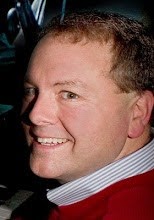
Showing posts with label John Ewing. Show all posts

Monday, March 11, 2024

On Friday, 3/15: at the Cleveland Cinematheque to do music for 'The Last Command' (1928)

Original promotional art for Emil Jannings in 'The Last Command' (1928).

Just a few notes prior to heading out to Cleveland to do music this Friday for 'The Last Command' (1928), one of the greatest silents (in my opinion) and which, surprisingly, they've never run at the Cinematheque.

I say surprisingly because the guy who's managed the Cinematheque for nearly 40 years, John Ewing, has an encyclopedic knowledgeable about cinema and often includes silent film programs in the venue's schedule.

Somehow, director Josef von Sternberg's most powerful silent, featuring a towering performance by Emil Jannings that helped him win the very first Academy Award for Best Actor, never made it to the Cinematheque's screen.

Well, that omission will be rectified on Friday, March 15—and just in time, too, as John is retiring this spring after almost four decades of service to Cleveland-area cinephiles. 

It's been my pleasure to accompany Cinematheque programs over the years. And I appreciate the opportunity to head out for one last show during John's storied tenure.

Storied? Indeed—his impending retirement made headline news all over Ohio: here, and here, and here.

Happy trails, John! But not until I head out to Cleveland for one last round-up, which starts at 7 p.m. on Friday, March 15, and which includes not only 'The Last Command' but also a French film I've never heard of before: 'Menilmontant' (1926) from director Dimitri Kirsanoff.

Although it's my last screening under John's watch, it won't be my last visit to Cleveland as an accompanist. I'm already booked to do music on Saturday, Jan. 18, 2025 for 'The Lost World' (1925) at the 50th annual 36-hour sci-fi marathon at Case Western Reserve University, which is just a few blocks down Euclid Ave. from the Cinematheque. 

Okay, see you in Cleveland. But before I leave, a quick glance back at recent screenings, which included a seasonally and locationally appropriate showing of 'Way Down East' (1920) on Wednesday, March 6 at the Flying Monkey Moviehouse in Plymouth, N.H.

I saw "seasonally" because the film's climax takes place in New England at this time of year. And "locationally" because the Flying Monkey is not that far from the part of the Connecticut River Valley where the many of the film's exteriors were shot, including the sequence with Lillian Gish adrift on the ice floes.

We showed the 1931 re-release version of the film, which is about 40 minutes shorter than director D.W. Griffith's original cut. People seemed to enjoy it, and cheered when Gish was rescued by Richard Barthelmess just as she was about to go over the falls. 

But somehow, to me it lacked the full-length version's monumental quality. The climax seemed to come too fast. Once again, I'm reminded that Griffith really knew what he was doing.

In other news, a screening of the silent version of 'Peter Pan' (1924) in my hometown on Sunday, March 10 brought familiar faces to the Bedford (N.H.) Public Library. One woman asked me about a weekly column that I used to write for the local paper—which I stopped writing nearly 20 years ago now!

Pre-show remarks at the Blazing Star Grange Hall in Danbury, N.H.

But the real highlight of the past week was my now-annual appearance at the Blazing Star Grange Hall in Danbury, N.H., where a capacity crowd enjoyed Buster Keaton and Ernest Torrence in 'Steamboat Bill, Jr.' (1928).

New Hampshire towns are full of former Grange Hall buildings that no longer house Grange chapters. But not Danbury, where the local Grange still maintains its own hall, which I think looks very much like it might have 100 years ago.

Although the programming includes a silent film program each year at about mud season, that doesn't mean new ideas aren't welcome. In that vein, last Saturday night saw the debut of a new "soup and bread supper" option to go along with movie night.

I was busy setting up, and I'd already eaten, so I didn't get downstairs until most of the soup was gone. Here's the impressive line-up:

This one seemed especially ambitious. Or maybe it was just the high tech crockpot used to serve it.

 And if the soup didn't fill you up, a makeshift concessions counter upstairs was ready for movie-goers.

The paper bags contain popcorn, freshly popped. Alas, Grange members sold only a handful of bags—maybe because everyone was full of soup!

And it was a conversation after the screening that gave me confidence that this was one Grange chapter that hadn't lost touch with its agricultural base.

What would happen to the uneaten and unsold popcorn? "The pigs would love it!"

Monday, August 5, 2019

On the road in Detroit, Cleveland and Buffalo: movies, skyscrapers, cheese, and canoes

Up next!

Greetings from Buffalo, where I'm awaiting tonight's screening of Buster Keaton's 'The Cameraman' (1928) at the Western N.Y. Film Expo.

It's my fourth year of handling the accompaniment chores at this multi-day festival, which took the vintage film baton from Syracuse Cinefest after that storied gathering ended its run in 2015.

Chief organizer Alex Bartosh has kept it going, with a dealers' room and no less than three separate venues for screening everything from silents to vintage TV show episodes.

This year, I got here by way of screenings at Cinema Detroit and the Cleveland Cinematheque, which ran silent film programs earlier this week. This allowed me to string together something like a Lake Erie Vintage Cinema Tour 2019. I should have had t-shirts made!

First, thank you to everyone for including silent film and live music in their programming: Paula and Tim Guthat at Cinema Detroit; John Ewing and Genevieve Schwartz at the Cleveland Cinematheque; and Alex Bartosh and Dave Barnes at the Western New York Expo.

Such support for keeping these films on screen gives local audiences access to a rich cinematic world. And it also gives audiences in my home area of New England a break from what I inflict on them.

Here's a brief run-down on the adventure so far:

Warming up while the Fisher Building looms over me.

- At Cinema Detroit, a Buster Keaton double feature took a surprising turn when the theater unexpectedly won a prized booking for the new Quentin Tarantino film.

"Once Upon a Time in Hollywood" had to run continuously. So what to do about the Keaton screenings planned for Wednesday, July 31?

Paula Guthat reached out to folks at New Center Park, an urban oasis in Detroit that happens to run a summertime outdoor movie program.

Could they host an evening of Buster Keaton?

Yes, they could. And so the whole program got moved outdoors to a park directly beneath the amazing Fisher Building, a 30-story 1920s Beaux Arts masterpiece from a much earlier era of prosperity.

This was all done about a week before the show, with Paula displaying improvisation skills worthy of any silent film accompanist.

Set-up was a snap, with me rolling into town that evening with my gear to be met by a park staff that knew exactly what to do. In no time at all, I was set up under a roofed structure with my keyboard hooked into a booming sound system.

The New Center Park Pavilion's custom-made screen, engineered by projectionist Jon Hudson, kneeling at right.

Even the weather cooperated, with evening temps falling into the 60s and a welcome breeze, which seemed to keep the bugs away. (They're always a hazard at outdoor screenings. I've had enormous beetles land on my arm that I'm sure that scientists have yet to catalogue.)

We had to wait until well after 9 p.m. for the show to start, as the sun sets much later here (in the Eastern Time Zone) than back home in New Hampshire.

I played for about an hour before the show, hoping to attract interest from the few passersby. I'm not sure if I actually scared them off, or if everyone was at the Democratic Presidential debate happening elsewhere in town.

Alas, by showtime only a relatively small group had assembled in the lawn chairs set out under the trees.

But we went ahead with what turned out to be a great show: a double bill of 'Our Hospitality' (1923) and 'Steamboat Bill, Jr.' (1928), Buster's first and last independent features.

'Steamboat Bill' was notable because in the film's final reels, as Buster rides out the film's climactic cyclone, a steady and stiff wind began blowing, knocking over my plastic cup of popcorn and causing a noticeable ripple in the park's huge outdoor screen. (An impressive and custom creation by projectionist Jon Hudson, complete with sturdy rigging to tie it down like on a sailboat.)

So it was 'Steamboat Bill' in Sensurround. This actually worked quite well! I recommend installing large fans in any theater that programs this picture.

But what really made it was that our audience included a family blessed with two young girls who greeted all of Buster's adventures with continuous and uproarious laughter. Really! They weren't that far from me and I could hear them clearly, and so could everyone else.

They contributed far more to the soundtrack of Buster than any mere accompanist could. What a joy to hear their joy of discovery. Our show ran almost to midnight, making me wonder what the kids were doing up so late, but no matter: they made my day, or night, and made the screening more compelling than anything I contributed with my keyboard.

John Ewing slices into the Cinematheque's birthday cake.

- The next day (Thursday, Aug. 1) brought me to the Cleveland Cinematheque, where long-time head honcho John Ewing was celebrating the theater's 33rd anniversary in part by screening a 35mm print of 'The Crowd' (1928), a title he'd never run before.

The print, from the Library of Congress, looked great, and a healthy crowd turned out to watch 'The Crowd.' I hadn't accompanied the film in awhile, so previewed it the week earlier to refresh my memory. The parts where protagonist John Sims plays his ukulele are tricky because he keeps starting and stopping, but it all seemed to come together nicely.

I greatly enjoy accompanying films at the Cinematheque because over the years the venue has cultivated a sophisticated audience for a wide range of cinema from all over the globe. Many are passionate silent film fans, and not afraid to let you know it.

With that in mind, it was not unexpected for 'The Crowd' to be followed by an extended Q & A session that covered a wide range of topics. I saw it as good practice for my upcoming seminar at Tanglewood later this month.

I sometimes joke that the main reason I return to the Cleveland Cinematheque is to eat at L'Albatross, a French restaurant not far from the venue.

But it's not entirely a joke. I mean, take a look at their cheese board:


Be honest: wouldn't you come to Cleveland to accompany silent films if this was around the corner?

- It wasn't around the corner, but about three hours up the lake: Buffalo, home of the Western N.Y. Film Expo and Movie Memorabilia Convention, an annual gathering for which I again served as resident accompanist.

You never know what kind of silent titles will be screened at this event, and last-minute schedule changes made that more true than ever this time around.

Originally, the schedule called for something like a half-dozen silent feature films, including Von Stroheim's 'The Wedding March' (1925), Eddie Cantor in 'Special Delivery' (1927), and Louise Brooks in G.W. Pabst's 'Pandora's Box' (1929) from Germany.

When the dust settled, however, the balance had shifted to several blocks of short comedies starring the greats and near-greats. The only features were W.C. Fields in 'The Old Army Game' (1926) and Buster Keaton's 'The Cameraman' (1928).

I didn't mind the free time, as it provided a chance to catch up with other attendees as well as see something of Buffalo, including this outdoor sculpture made entirely from aluminum canoes:


"Stainless Steel, Aluminum, Monochrome I, Built to Live Anywhere, at Home Here," was created in 2011 by artist Nancy Rudin and stands outside Buffalo's Albright-Knox Art Gallery.

This outrageous work spoke to me for a very personal reason: the canoes were the same make and model as my father's old canoe, which my older brother now has: an aluminum canoe made by the Grumman Aircraft Co. in the 1950s.

Inside the gallery I found several works by the American abstract artist Joan Mitchell, including "George Went Swimming in Barnes Hole, But It Got Too Cold" from 1957:


Just as the canoes out front remind me of my Dad, any work by Mitchell reminds me of the late May Gruber, a philanthropist and noted patron of the arts in my home area who purchased 'Cous Cous,' an enormous Mitchell canvas, directly from the artist in Paris, eventually donating it to the Currier Museum of Art in Manchester, where it's on permanent display.

Big paintings! But small world.

Okay, 'The Cameraman' beckons. And then it's back to home base in New Hampshire until the next "Lake Erie" tour. Perhaps next time I'll go by aluminum canoe.

Tuesday, September 4, 2018

Traveling through the centuries: film music at screenings in Detroit, Cleveland, and Buffalo


Just back from a mini-tour that took me silent film screenings to Detroit, Cleveland, and Buffalo.

And in terms of time travel, I created music for movies set in the 1500s, the 1600s, the 1800s, and the 1900s.

(Sorry, 1700s—maybe next time!)

But really, I'm grateful for the chance to do film accompaniment in so many places, and for so many periods, too. Here's a round-up:

Opening title for 'When Knighthood Was In Flower' (1922).

Wednesday, Aug. 29: Cinema Detroit. First time at this nifty independent theater. Local residents Paula and Tim Guthat opened Cinema Detroit five years ago, and have built it into a valuable cultural resource for the city. Housed in the back of a former furniture store, the cinema's two screening rooms offer a wide range of titles seven days a week.

It was a real honor to work with Tim and Paula on Cinema Detroit's first-ever program of silent film with live music. The movie: Marion Davies in 'When Knighthood Was In Flower' (1922), shown via DCP courtesy of Undercrank Productions and Ben Model, who was responsible for the film's recent restoration and re-release. Thanks, Ben!

For a first attempt, no one was sure how it would go, but interest turned out to be surprisingly strong. By showtime, Cinema Detroit's main screening room was about half-filled, which far exceeded expectations for a mid-week experiment. And audience response was strong throughout the film, showing that Marion can still hold the screen.

Paula speaks before the show.

And audience response was strong throughout 'Knighthood,' which is a real treat for an accompanist: many good scenes with characters interacting in ways that light underscoring can help sharpen, and also several well-staged swordfights and chases. And the final climax and chase builds during a storm, so there's a lot for an accompanist to work with.

Although 'Knighthood' is set during the reign of Henry VIII, I didn't play much "Middle Ages"-sounding music. I kept it light and breezy, which I felt help make it more Marion's film—one in which she was being her usual bubbly self, but which happened to be set during the 1500s.

So the keyboard was set for just standard orchestra (rather than something period-sounding like harpsichord), changing to a different texture only for one scene in which a guitar gets played on camera to accompany dancing. Overall, the improvised music was what I would call "classical neutral"—light opera stuff, but flexible enough to respond to the changing needs of the film's narrative.

It all seemed to work really well, with nearly everyone staying afterwards for a prolonged Q & A about the film, the music, and what might be next for silent film at Cinema Detroit. And afterwards I was taken to a great late night place, the Green Dot, that serves in sliders unlike any I've had at, say, White Castle.

Thanks very much to Paula and Tim for taking a chance on silent film and a silent film accompanist. I hope it's possible for Cinema Detroit to run more silent film/live music programs, and for us to work together again soon!

Lillian Gish and 'The Scarlet Letter' on the cover of this summer's Cleveland Cinematheque schedule.

Thursday, Aug. 30: Cleveland Cinematheque. For its ongoing "Second Look" series, the Cinematheque included MGM's 'The Scarlet Letter' (1926) starring Lillian Gish and Lars Hanson, and directed by Victor Seastrom—the same team that would strike cinematic gold in 'The Wind' two years later.

But 'Scarlet Letter' is no slouch. It's filled with strong performances as well as arresting visuals and creative camerawork, so I was thrilled to do music for the Cinematheque's screening of a 35mm print supplied by UCLA Film and Television Archive.

The film is an adaptation, of course, of Nathanial Hawthorne's novel about adultery in Puritanical Boston of the 1600s. Hawthorne's novel is deadly serious, so what's surprising about MGM's 'Scarlet' is how much comedy is in it. As I mentioned to the Cinematheque audience prior to the screening, any film with Karl Dane in the cast is bound to have a quotient of goofball humor from MGM's go-to guy for comedy relief.

I think it's an example of a studio hedging its bets on a big-budget high-profile picture by ensuring it had a little something for everyone, whether or not that fit with the original author's vision. So we get the 'Scarlet Letter' story, yes, but also some yuks at the expense of those Puritans and their wacky ideas about courtship.

For this film, I did go with a harpsichord setting, which I think fit the production's design and feel, and helped convey the period without drawing attention to itself. It just seemed to fit. And I lucked out by having several effective melodic "hooks" (meaning groups of just a few notes) that I felt helped convey the changing emotional temperature of the story as I worked with them.

The 35mm print from UCLA.

I felt the big musical challenge was how the film opens with all the townspeople being called to Sunday service. So the first five or six minutes is interspersed with shots of church bells ringing, implying that they're being heard throughout the sequence.

To evoke that, I used two brass handbells I travel with. Holding them both in my right hand, I rang them continuously from the opening titles all the way through to when the service starts and we see the bellringers stop pulling down on their ropes. It produced a nice "clangy" bell sound—nothing like a big cathedral bell, but close enough to evoke a colonial church service, I felt.

While ringing the bells, I tried to be aware of how the film was cutting between different locations in the town. Sometimes loud, sometimes soft, depending on the action and how far different people seemed to be from the church. As Hester Prynne, Lillian Gish is first seen chasing a songbird out into the woods, so the bells get faint at that point.

So that left my left hand for the keyboard, which was enough to do hymn-like cadences and other music to establish mood and get the film going. I wasn't sure how it came off, but afterwards people told me they didn't realize I was actually ringing actual bells as the movie got started. So it worked. Nice!

John Ewing and pianist George Foley give me a taste of the bells, bells, bells, bells, bells.

Audience response was strong here, too. Despite the comedy, 'The Scarlet Letter' gives Gish and Hanson ample opportunity to amp up the drama. For these moments, although I kept the harpsichord setting, I broke out of period-sounding music and went with more a more intense language that film scoring has developed since the silent era: some dissonance, some repeated notes, some dramatic silences.

Another great Q & A followed, with lots of interesting queries. Long-time Cinematheque director John Ewing was kind enough to comment on how he thought the music effectively tracked and underscored the film, which is high praise indeed! Thanks so much, John, for continuing to include silent film with live music in the Cinematheque's programming, and all you and your team have done to bring great cinema to Cleveland for more than three decades!

John Ewing checks the roster of digital titles in the booth of the Cinematheque as projectionist Mike Glazer looks on.

And afterwards, a late supper at L'Albatross, a nearby French restaurant that's to die for. We joke that the Albatross is the reason I actually visit Cleveland, and the screenings at the Cinematheque merely support my habit.

16mm prints of vintage films ready for their close-up.

Friday, Aug. 31 through Monday, Sept. 3: Western N.Y. Film Expo, Buffalo. My third year as accompanist for this festival found me doing music for silent features that ranged from well-known to unknown.

Among the well-known: Gloria Swanson and Lionel Barrymore in 'Sadie Thompson' (1928); Harold Lloyd in 'The Kid Brother' (1927); Buster Keaton in 'Battling Butler' (1926), and another Keaton, 'Sherlock Jr.' (1924), run as a last-minute substitute when Eddie Cantor's 'Special Delivery' (1927) didn't show. We should have paid for special delivery, har!

As for the unknown: not one but two Rod Larocque features that I'd never heard of before: 1925's 'Braveheart,' which I gathered was not the film with Mel Gibson in it, and 'The Coming of Amos,' also from 1925.

Both were screened via original 16mm Kodascope prints that showed some wear but maintained excellent visual quality, and so were a real treat to see. This, plus the sound of the 16mm projectors clacking away in the back, is one reason that festivals such as this are worth attending. It's a great atmosphere for vintage cinema.

A projectionist's view in the Western N.Y. Film Expo's screening room.

As you might expect, the Larocque films were pure hokum. 'Bravehart' starts out with Our Hero as a member of a Native American tribe battling western settlers over fishing rights.

The tribe's strategy: send him East to attend law school and then fight the White Oppressor on his own turf, in court.

But then for the next 30 minutes, 'Braveheart' becomes a college football film! Really—suddenly it's Harold Lloyd's 'The Freshman,' but without Lloyd. Rah, rah! Go team!

That required the music to shift gears, and it made for an unusual mix: native American modal chord progressions mixed with college fight songs.

'The Coming of Amos' was less mind-bending, but no less loopy. Our Hero starts out in rough-and-tumble Australian sheep country, but then he's brought to the sophisticated French Riviera due to an inheritance, where romance blooms with a mysterious Russian princess.

Noah Beery then shows up as a truly nasty villain whose plot to kidnap the princess includes forcing her to wear an oversized clown head so they can escape unnoticed during the annual carnival.

And the climax takes place on an enormous castle set that I found surprisingly impressive until someone afterwards pointed out the same exact set was used in 'Stand and Deliver,' another Rod Larocque picture we screened last year.

Doing music for so many films in rapid succession has its challenges. But with me, one good thing it does is break down all inhibitions and self-doubt and anything else that holds back the creative energy or blocks the place the music seems to come from.

So after awhile, it gets to the point where the music flows quite fluently and naturally.

At the Western New York Expo, this happened most notably for me when it was time to rattle off music for some short silent comedies I'd never seen before. For each, I hit on a melodic hook right away and stayed with it throughout, transforming it as needed to follow the story, set up the situation, punctuate the comedy, and amp up the excitement when needed.

I have no idea where these tunes came from, and can't recall them even now. But they were there when I needed them, and serve the films well. And for a short comedy, often that's all you need. As accompanist Jon Mirsalis has said, it's not what you play, but it's how you play it.

Of all the films, it's no surprise that Lloyd's 'The Kid Brother' got the strongest reaction, with people cheering and applauding at the climax. Lloyd's films were designed to work with an audience, and they still work: even with diehard film fans who've probably seen it any number of times already. That's pretty impressive!

Speaking of which: once again I was impressed by everyone who works to put this event together: the projectionists, the dealers, the film fans, and especially organizer Alex Bartosh. Thanks to everyone for a weekend well spent in the dark!

Up next: the restored 'Sherlock Holmes' (1916) on Friday, Sept. 7 in Brandon, Vt., and then I go out to Sioux City, Iowa to play the Orpheum Theatre's mighty Wurlitzer to accompany 'Wings' (1927) as part of the Sioux City International Film Festival.

More on those later this week!

Sunday, December 20, 2015

Catching the train that never left: A report
on my excellent on-the-road adventure

The glamorous Alicia Fletcher and yours truly at the Revue Cinema in Toronto.

Okay, I'm back from my "Pre-Holiday Midwest & Canada Silent Film Tour." And here's all the dirt I know you've been waiting for.

First, I want to thank the people who made this excellent adventure possible.

Too many to name every single one, but kudos to:

Maggie Perrino and Bleu Pellman of the Carnegie Center in Covington, Ky.

John Ewing and Tim Harry of the Cleveland Cinemateque.

Alicia Fletcher, Craig Caron and Eric Veillette of the Revue Cinema in Toronto.

I came away impressed by all that they do, and inspired by their support of silent film with live music.

The good news is that each venue put on a first-class show for its patrons, from promotion to presentation.

And the bad news...well, there isn't any bad news. All screenings went off without a hitch.

Even the weather, which in this part of the world is a real roll of the dice in mid-December, was mild and pleasant throughout.

And no car trouble in 2,149 miles of driving. Heck, I even found gas for $1.67 a gallon in Ohio!

So it truly was an excellent adventure. Here's a day-by-day round-up for the record books:

Wednesday, Dec. 9: Sometimes my double life as newspaper publisher and silent film accompanist merges into one. Like with this tour: it starts at noon with me bombing down I-93 for a couple of client visits in the Boston area prior to heading west. I promptly get stuck on the Southeast Expressway. Not a fast start.

Then it's out on the Mass. Pike (argh, now during rush hour!) to I-84, through Connecticut and New York and into Pennsylvania by evening. Dramatic arrival into downtown Pittsburgh at midnight via I-376 and the Squirrel Hill Tunnel. Finally pull into hotel (outside Pittsburgh Airport) sometime before 1 a.m.

Look at those elevation lines. What was I thinking?

Thursday, Dec. 10: An early morning run of 7 miles through the streets for Coraopolis, Penn. allows me to claim Pennsylvania in my quest to run at least 10K in all 50 states.

Then it's onto the Carnegie, via I-70 through a sliver of West Virginia and finally into Ohio, where I find gas that $1.67-a-gallon gas.

I also find lunch at this place:


When in Rome...I had a "Schlepp Burger," which features Thousand Island dressing and costs $4.25. Why not?

Pulled into Cincinnati exactly on time for easy 4:30 p.m. load-in and set-up with Bleu Pellman, a veteran of my prior Carnegie appearance in 2013.

The Carnegie is across across the Ohio River from Cincinnati, so it's in Covington, Ky. Hence my accommodations at the Extended Stay in Covington, where I get to witness police intervene in a family squabble in a White Castle parking lot. Why do people need reality television when plain old reality is more than enough?

Just over 100 people attend the evening's "holiday" program, which includes extremely short early version of seasonal classics ("A Christmas Carol" in nine minutes!) and then the much more substantial 'Tess of the Storm Country' (1922), a Mary Pickford melodrama with a great Yuletide ending.

Introducing the films, I encouraged audience members not to hold back in reacting to the on-screen characters and action. And they sure didn't!

The two Edison holiday shorts (the other was 'Twas the Night Before Christmas') were greeted with a lot of hearty laughter, and cheers for the amazingly low-tech special effects used to bring Santa's sleigh ride to the screen in 1905. All this served to loosen things up for a truly epic response to "Tess."

There was hooting, hollering, cheering, booing, and laughter throughout. And as the film's story intensified, so did the response, to the point where I heard people openly sobbing during the final 20 minutes.

So it was one of those great silent film experiences where an audience gets absorbed by a story and characters, and then gets swept along as the drama deepens and the stakes rise.

All this was enhanced by the Carnegie's first-class presentation: a robust house A/V system, robust acoustics, and just the right size for silent film, I think: just big enough but not too big.

What the set-up at the Carnegie looks like; simple but effective. The keyboard is a little too prominent for my taste, but once the lights go down...

So it was one of those times where I played with an increasing sense that the audience was completely buying the whole experience.

Also, I had chosen some good material to work with, and the score came together in a way that punched up both the humor and the drama, I felt.

And so, after two hours of intense emotion, we all experienced the film's cathartic Christmastime ending with a kind of collective sigh of relief, me included.

Barefoot but not pregnant: Mary Pickford in 'Tess.'

It was one of those times where I think people weren't prepared for how absorbing a silent film can be, and were surprised to find out.

What a treat to do music to help this whole process come about. At the end, I found the big ovation gratifying, and can only hope Mary would have approved.

Afterwards, a nice group of people stayed in the theater to talk shop. Some big silent film fans in the Cincinnati area! So I hope to return again to this wonderful venue.

Covington: blocks and blocks of 19th century charm.

Friday, Dec. 11: I awake to find it's still dark at 7 a.m., as we're in the far west of the Eastern Time Zone.

Still, I go out for a longish two-hour run through the scenic streets of Covington and Newport, Kentucky. It's in the 40s—mild but overcast, perfect for jogging.

While not the wealthiest part of Greater Cincinnati, this region has considerable charm. The area escaped urban renewal in prior generations, meaning it's still full of unique and older structures in various states of repair.

And "downtown" Covington—the area just across the river from Cincinnati's office towers—is funky enough to remind me of funky North Topeka, but about 20 times larger.

After adding Kentucky to my list of states in which I've run at least 10K, I hit the road for the Cleveland Cinematheque, which is on the other side of Ohio and about four hours away.

Along I-71, I get to see my favorite billboard: a huge sign right next to the road with the three words HELL IS REAL. "Yes," I think, "And depending on how people drive, I sometimes think we're in it."

I'm due in Cleveland at 3:30 p.m. My usually trusty GPS guides me there right on time, but it turns out to be the Cinematheque's former home, which it vacated this past summer for new digs.

Fortunately, the new home isn't far away, and long-time director John Ewing is waiting outside for me.

A local legend among cinephiles, Ewing has led the Cinematheque since its founding in 1985. Under his guidance, the Cleveland area has enjoyed three decades of sustained access to a wide range of pictures that aren't likely to play at your local multiplex anytime soon.

We're talking foreign films, documentaries, classics and cult films, and independent features that often struggle to find theatrical venues or an audience. But not in Cleveland, where the eclectic tastes of Ewing and his staff keep the screen lit up year in and year out with compelling cinema.

That includes silent films, and Ewing was kind enough to invite me to accompany two programs over two days: first a holiday program featuring Laurel & Hardy's 'Big Business' (1929) and Harry Langdon's seldom-seen feature 'Three's A Crowd' (1927) on Friday, Dec. 11, followed by 'Passing Fancy' (1933), the final silent film from Japanese director Yasujiro Ozu.

These were packed into a crowded bill of other fare, all shown at the Cinematheque's very spiffy new 300-seat theater at the Cleveland Institute of Art, its parent organization.

The place has its own very nice grand piano (I forget the make), but I had planned synthesizer scores for both programs, so opted for that. There was no way to plug into the house sound, but my pair of trusty Rolands were up to the task of filling the room when necessary.

A rather low-light cell phone pic of the set-up at the Cleveland Cinematheque.

We had a good house on hand for the Langdon program, and reaction was huge for Laurel & Hardy's 'Big Business' (1929), shown from a 16mm print and accompanied by a farrago of variations on "O Christmas Tree," with a little "Take Me Out To The Ballgame" thrown in when Ollie begin hitting hurled crockery with a shovel.

The Langdon film seemed to puzzle the audience, which wasn't a surprise. He was really stretching for Chaplinesque pathos in 'Three's A Crowd,' but in surviving versions (including the 35mm print from the Rohauer collection we were running) there's enough disjointed material to throw people off and keep the movie from jelling.

For instance: near the beginning, what's all the business about that note delivered by a bird? Either something's missing, or Langdon (who directed and supervised this release) missed the mark by a country mile and was content to release the film as is.

Langdon stranded on his metaphorical staircase in 'Three's A Crowd' (1928).

Still, I did what I could with music to keep the film glued together so what really does work had a chance to connect. Once a newborn child enters his life, Langdon does some of his best pantomime ever, and I hoped very deliberate underscoring would help bring it out.

It worked, somewhat. But there's one sequence where Langdon is so caught up in gazing at the child and mother that he absent-mindedly fashions a diaper into a complete fruit pie ready for baking. I set this as the test: if it didn't get a big reaction, I had somehow missed something.

Well, the moment came. And it earned at most a polite chortle, not the belly laugh I was hoping for. Well, maybe that's Langdon after all.

Although not a conventional film, Langdon did amp things up for a final "dream/nightmare" sequence, which allowed me to push the score into big and busy territory. I was pleased with how I was able to keep the different melodic cues under control as I cranked up the pace.

It all came together quite effectively, I think, giving 'Three's A Crowd' at least a fighting chance—an apt metaphor considering the boxing ring that features so prominently in the dream/nightmare.

Lots of thoughtful comments from people afterwards in the lobby, where a giant tin of hard candy encourages patrons to linger.

Afterwards, John was kind enough to join me in strolling over to Cleveland's Little Italy, right behind the Cinematheque along Mayfield Road. I enjoyed my first beer of the trip, a Peroni, at Mamma Santa's (how appropriate with Christmas two weeks away) while John had Piselli, a curious dish made with peas that I'd never heard of before. (But then how many people in Cleveland have had gorton?)

I was staying in the Indigo, a place out by I-271 about a half-hour from the theater. This meant leisurely drives through some of Cleveland's ritziest neighborhoods, with home after home looking more like it belonged in Beverly Hills, not in a city famous for the river once catching fire. (I know, that was long ago.)

L'Albatros Brasserie in the University Circle neighborhood of Cleveland.

Saturday, Dec. 12: Although the weather continued mild, fear of overdoing it plus a strong wireless signal led me to cancel another long run in favor of actually getting some work done while on the road. My other life leads to such situations as an hour-long conference call with the office in New Hampshire while I'm looking for Interstate 70 in Pennsylvania.

And after days of quick meals (including one at the White Castle in Covington, a rare treat), I thought it was time for some serious food. Turns out Cleveland's best French restaurant is L'Albatros Brasserie, located in an old carriage house within easy walking distance of the Cinematheque.

I arrived at 3 p.m., and for the next 90 minutes I just could not believe the food that came out of that kitchen. The main dish was a shoulder of lamb served in a bowl over polenta with about a half-dozen different vegetables mixed in. But I couldn't resist trying the braised leeks with mustard, or the roasted red pepper potage, or...well, you get the idea.

Since this blog is about movies, you might understand how I began thinking of what happened to Mr. Creosote in Monty Python's 'The Meaning of Life' (1983). I dreaded the idea of a server resembling John Cleese offering me one "way-fair thin mint" for dessert.

A picture of me at L'Albatros.

But instead, I had the mixed berries with cream fraiche, and waddled out of there under my own power. I hope John invites me back just so I can eat there again and again!

Prior to the Ozu, the Cinematheque was running 'Tokyo Ga' (1984) a documentary about Ozu's Tokyo that German filmmaker Wim Wenders made in 1984. Little known but recently restored, I thought it proved a terrific lead-in to 'Passing Fancy.' Ewing and his team put together a program with all the finesse at the nearby Albatross. (There I go again.)

Speaking of food: in a sequence worthy of Ozu, Wenders devoted extended footage to visiting a shop where artisans create the astonishingly real fake food shown in glass cases outside virtually all Japanese restaurants. Even after over-eating, I felt like having a bowl of ramen.

But what really caught my eye in his documentary was how it opened with him on the plane to Japan. Wenders admitted he didn't like watching movies on airplanes (I feel the same way), but then he couldn't take his eyes off the film that was playing at the front of the cabin. (This was in the days before seatback video.)

So he filmed a small bit of the film right there in the plane, making it look ridiculous, and pointing out how inferior it was to the magical view out the window. (Without, however, bringing up the point that we all can't get window seats.)

Me, I couldn't help but notice that the in-flight movie we glimpsed only briefly was 'On Golden Pond,' filmed at Squam Lake in New Hampshire. Wow—I drive all the way to Cleveland to see a German documentary from 30 years ago in which there's a glimpse of where I came from.

For the Ozu film, I used the same harp-and-plucked-strings synthesizer setting I employed for another Ozu film, 'I Was Born, But...' at the Harvard Film Archive last year, and also some of the same melodic material, too. I felt it went well with Ozu's world, and this was a chance to develop it further. Plus recycling is good for the environment.

A scene from Yasujiro Ozu's 'Passing Fancy' (1933).

Somewhat like the Langdon, I feel it's really important with Ozu not to overplay. His films are all about character nuance, and about weaving a story into the patterns of daily life: getting up, eating, going to work or school, and so on.

So you can't come in with a Japanese version of the 'Star Wars' main title theme or anything like that.

And for that matter, you really can't come in with something too obviously "Eastern" sounding, either, I think.

Otherwise you risk putting the film in a box (the "old Japanese film that has nothing in common with my life today" box) instead of letting an audience get absorbed by the movie's more timeless qualities, of which there are many if you allow them in.

So I didn't employ the stereotypical pentatonic scale, either, nor did I limit myself to modal Asian-sounding cadences.

Instead, I took a Mozartian approach, using many very simple chord progressions with a slowed-down "Alberti" bass. Melodies were diatonic, though spiced with sharped fourths and flatted sevenths to create a kind of impish quality, I hope.

Long-time Cleveland Cinematheque director John Ewing and I after the Ozu screening and prior to ice cream.

Attendance was less than Langdon, but the room was strongly pro-Ozu, you could tell. So I was really pleased afterwards to receive compliments on the music, including the much-sought-after "I forgot someone was playing the music live" remark. Thank you, Cleveland!

And to top it off, John and wife Kathy brought me across the street for ice cream. Picking out a flavor, I felt like their overgrown teenage kid. Not bad for 51 years old!

"All out for the Revue Cinema of Toronto, Canada!"

Sunday, Dec. 13: To make up for yesterday's massive indulgence at L'Albatross, I began the day with a somewhat shorter run (just an hour) through the suburban office parks of Beachwood, Ohio, which to my surprise have sidewalks!

They also have hermetically sealed glass office buildings set amid enormous parking lots and acres of open grass "landscaping," with eateries such as PIADA attached to them.

Piada is "Italian Street Food," the sign says. I look around the boulevards, deserted on a bleak Sunday morning, and wonder if any street in Italy looks like where I am.

But then it's a mad dash to the Canadian border, as today I'm scheduled to make my INTERNATIONAL DEBUT at 4 p.m. at the Revue Cinema in Toronto.

So I point the Subaru Forester northeast, and prepared to zig-zag my way through the Niagara Falls area and engage in a cross-border raid on Toronto, allowing 90 minutes for the chronically clogged international crossing.

My route takes me through industrial Buffalo and then over the Peace Bridge, which to my surprise is almost as deserted as the office park outside Cleveland.

Here's what I expected at the border, which I found much quieter than expected.

After waiting for just one car ahead of me, I pull up to the Canadian customs kiosk, where a friendly officer seems ready to wave me through.

And he almost does, but then suddenly turns serious and asks in all capital letters, "DO YOU HAVE A HANDGUN IN THE CAR WITH YOU?"

I say no, and he says, "ARE YOU SURE?" with the last word in bold.

I again say no, which prompts him to revert to the person he was and say "Have a nice day, then."

And I am in Canada, where the highway is named for the Queen and the speed limits are much higher than in the states.

(Yes, I know about kilometers. Just practicing my dumb American act in case I get stopped. My wife would tell me I don't really need to practice.)

I cruise into Toronto about three hours early (amazing!), the car radio tuned to all-news 680 AM. Yes, AM radio. Hey, I'm a silent film guy, so I tend to be behind the curve in a lot of things.

The forecaster on duty is soft-spoken Harold Hosein, the most Canadian meteorologist I ever expect to hear. He sounds like a guy who would spend time in a cabin in Labrador checking the temperature every hour and writing it down, which is exactly what I want in a Canadian meteorologist.

I find the Revue Cinema in the midst of a tightly packed neighborhood that wouldn't need to change much to be the setting for a movie in the 1940s. Streetcars already in place and ready for their cue.

A classic moviehouse that first opened in 1911, the Revue has been recently rescued and rehabbed and revitalized by a dedicated crew of cinephiles. They run it as a non-profit and program a little bit of everything.

In addition to contemporary flicks, the current brochure also outlines programs such as the "Drunk Feminist" film series, which I'd like to attend one of these days.

And they're also crazy enough to run silent films with live music, a series curated by local experts/fanatics Alicia Fletcher and Craig Caron.

Alicia happened to be in Boston earlier this year when I accompanied Abel Gance's 'J'Accuse' (1919) at the Harvard Film Archive. We didn't meet then, but it led to her interest in having me stop by Toronto sometime if accompaniment was called for.

Today's program is Fritz Lang's 'Woman in the Moon' (1929), and this is why I'm now cruising for a parking space on a side street and hoping I can use their bathroom even though I'm three hours early.

Strolling on the lunar surface in Fritz Lang's 'Woman in the Moon' (1929).

At the Revue, I meet Eric Veillette, who describes himself as a "recovering journalist" and who manages the place.

About which: with more than a century of movie-going to its credit, the Revue has character. It's all you'd ever want in a movie theater, I think: just imagine the opposite of everything you'd find at a chain-owned multiplex, and you'll probably come up with something close to the Revue.

What the inside of the Revue Cinema looks like, courtesy the theater's Web site.

I don't know what it says about me, but I can somehow sense when a theater has been well-loved. Somehow, there's something about decades of movie screenings that accumulates over time. (And I'm not talking about the sticky floors.) There's a kind of magic that slowly takes hold, and eventually becomes palpable.

I felt that in the lobby of the Revue. Or maybe it was just that I had to use the bathroom. (Which, by the way, also had character.)

Being part of a dense cityscape, the Revue is not blessed with plenty o'free parking. To load in, I had to navigate up a narrow dead-end alley used by restaurants that do a lot of frying, judging from the grease barrels out back. Ah, the glamour of show biz!

But Eric and Alicia helped muscle my gear down the steep concrete slope into the theater, and set-up went quickly. It had to, as there wasn't too much time between films.

I began playing to warm up, and the next thing I knew, Alicia was on stage welcoming everyone. And boom, off we went!

The version of 'Woman in the Moon' was a 16mm print of the abridged version, which runs a little over two hours.

Basically, a great deal of the "conspiracy" plot is missing, and we get right to Lang's impressive launch sequence.

It all seemed to go well. But having played for the longer version many times now, I can see how viewers of the condensed version might not understand what Lang and his collaborator Thea von Harbou were trying to achieve.

Still, you could tell the audience was into it, and things really came together once the cast made their ton-of-bricks landing on the lunar surface, where the air is breathable and gold is there for the taking, of course.

Despite the lack of exposition, it seemed logical (and perhaps helpful) to use distinctive themes for each of the characters. And I was able to layer it all into a grand symphonic texture that held together pretty well in the big moments, I thought.

Great ending, big ovation, thank you very much. And the next thing I knew, we were out among the grease barrels loading out my equipment. And then, after a quick dinner at a place next to the theater, I was walking Alicia to her streetcar stop before hitting the road myself. Bye!

It was 8 p.m. in Toronto, and I was due back at work in New Hampshire first thing Monday morning. Who planned this, anyway? (I know the answer.)

So off I went, crossing back into the U.S. without any problem ("Sure, sure, you're a silent film musician.") and driving as far as Syracuse before stopping for some shuteye at a Super 8 motel one exit away from the long-time home of Cinefest, where I've been fortunate enough to play many times.

Weird to have come so far, and to still have so far to go, but to be so familiar with the area.

As I crashed, I thought about something I mentioned to Alicia after the movie.

In thanking her for the engagement, I wanted her to know that at this point in my life, I never expected to be making music in this way, and for it to be heard and enjoyed (I hope) by so many people.

I once felt that for me, the music train had left the station a long, long time ago.

But it hadn't. The train was there all the time. I had just wandered out of the station for awhile, that's all.

And now that I am making music in places like Covington, Cleveland, and Toronto, and so many other places, I can't help but be grateful for the support and encouragement of everyone who made it possible.

That includes the people who arranged these shows, and the people who read this blog, and all the audiences I've played for.

It's been a great year. And I'm really looking forward to more excellent adventures in 2016 and beyond.