Showing posts with label Fritz Lang. Show all posts

Sunday, January 25, 2026

Let's try that again! 'Annie Laurie' rescheduled to Sunday, Feb. 1, but first 'Metropolis on Thursday, Jan. 29 plus a few others as well

'Annie Laurie' (1927) will be screened on Sunday, Feb. 1 at 2 p.m. at the Town Hall Theatre in Wilton, N.H.

It really doesn't work without an audience.  

So today's snowstorm blew in earlier than expected, which led to not a single person showing up for our planned matinee screening of 'Annie Laurie' (1927) on Sunday, Jan. 25, with live music by me.

Although the show must go on, when no one shows due to snow, there's no show to show. 

So we've rescheduled 'Annie Laurie' for exactly one week later, on Sunday, Feb. 1 at 2 p.m. at the Town Hall Theatre, 40 Main St., Wilton, N.H.  

Join us then for a full dose of Lillian Gish surrounded by men in kilts!

With 'Annie Laurie' moved to next Sunday, I now have a block of four shows in a row to close out January.

• On Thursday, Jan. 29, a mid-winter screening of 'Metropolis' (1927) I'm accompanying at the Jane Pickens Theatre in Newport, R.I. is already selling a lot of tickets. 

• On Friday, Jan. 30, it's Buster Keaton's 'The General' (1926) in a 100th anniversary screening at the Epsilon Spires venue in Brattleboro, Vt. (I get to play their Estey organ to accompany.)

• On Saturday, Jan. 31, it's the annual 'Pot Luck Supper and Silent Movie Night' at the Campton Historical Society up in Campton, N.H., where this year's entertainment is the original silent film version of 'Peter Pan' (1924.)

• And then on Sunday, Feb. 1, we'll try our luck with 'Annie Laurie' again at the Town Hall Theatre in Wilton, N.H., and hope that this time Mother Nature approves.

For 'Metropolis,' the press release below has lot more info about the film and the screening. Hope you'll be able to join us in Newport on Thursday. And if I get there early enough, I invite me in the Boru Noodle House just down the street.

 *     *     *
 
Industrialist Joh Frederson (Alfred Abel) looks on as scientist Rotwang (Rudolf Klein-Rogge) outlines his vision for a human-like robot in 'Metropolis' (1927).

MONDAY, JAN. 12, 2026 / FOR IMMEDIATE RELEASE
Contact Jeff Rapsis • (603) 236-9237 • jeffrapsis@gmail.com

Restored classic sci-fi epic 'Metropolis' to screen in Newport, R. I. on Thursday, Jan. 29

Landmark early futuristic fantasy, with half-hour of rediscovered footage, to be shown with live music at Jane Pickens Theatre

NEWPORT, R.I.— A silent film hailed as the grandfather of all science fiction fantasy movies will soon return to the big screen at the Jane Pickens Theatre.

'Metropolis' (1927), an epic adventure set in a futuristic world, will be shown with live music on Thursday, Jan. 29 at 7 p.m. at the Jane Pickens Theatre, 49 Touro St. in historic downtown Newport.

The screening will feature live accompaniment by Jeff Rapsis, a New Hampshire-based composer who specializes in creating music for silent films.

Admission is $18 per person. Tickets available online at https://janepickens.com or at the door.

'Metropolis' (1927), regarded as German director Fritz Lang's masterpiece, is set in a society where a privileged elite pursue lives of leisure while the masses toil on vast machines and live in poverty.

The film, with its visions of futuristic factories and underground cities, set new standards for visual design and inspired generations of dystopian fantasies from Ridley Scott's 'Blade Runner' to Terry Gilliam's 'Brazil.'

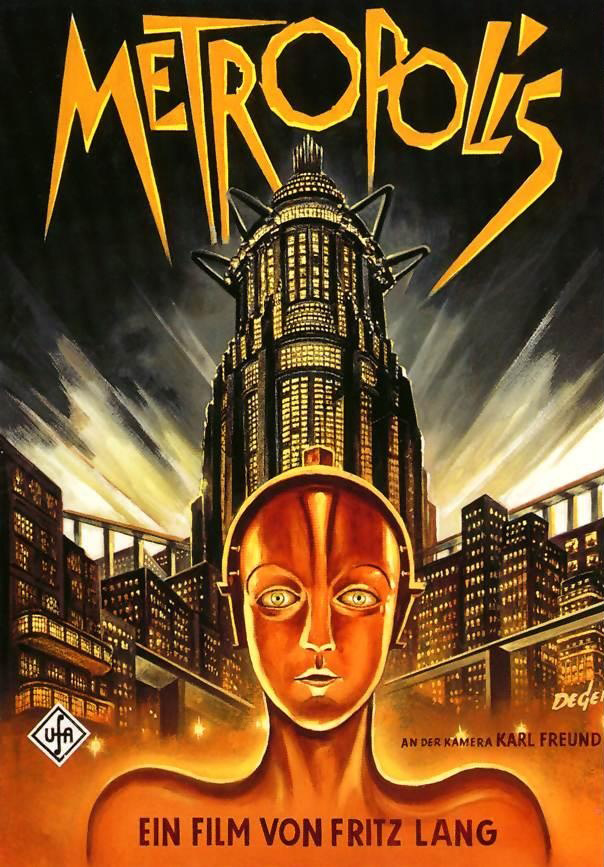
An original poster for the German release of 'Metropolis' (1927).
 
In 'Metropolis,' the story centers on an upper class young man who falls in love with a woman who works with the poor. The tale encompasses mad scientists, human-like robots, underground spiritual movements, and industrial espionage, all set in a society divided between haves and have-nots.

The version of 'Metropolis' to be screened at the Jane Pickens Theatre is a newly restored edition that includes nearly a half-hour of missing footage cut following the film's premiere in 1927. The lost footage, discovered in 2008 in an archive in Argentina, has since been added to the existing 'Metropolis,' allowing plot threads and characters to be developed more fully.

When first screened in Berlin, Germany on Jan. 10, 1927, the sci-fi epic ran an estimated 153 minutes. After its premiere, the film's distributors (including Paramount in the U.S.) drastically shortened 'Metropolis' to maximize the film's commercial potential. By the time it debuted in the U.S. later that year, the film was only about 90 minutes long.

Even in its shortened form, 'Metropolis' became a cornerstone of science fiction cinema. Due to its enduring popularity, the film has undergone numerous restorations in the intervening decades in attempts to recover Lang's original vision.

Restoration work continues to this day. In 2008, the curator of the Buenos Aires Museo del Cine discovered a 16mm dupe negative of 'Metropolis' that was considerably longer than any existing print.

It  contained 25 minutes of "lost" footage, about a fifth of the film, that had not been seen since its Berlin debut.

The discovery of such a significant amount of material called for yet another restoration, a 2½-hour version that debuted in 2010 to widespread acclaim. It's this fully restored edition that will be screened at the Jane Pickens Theatre.
 
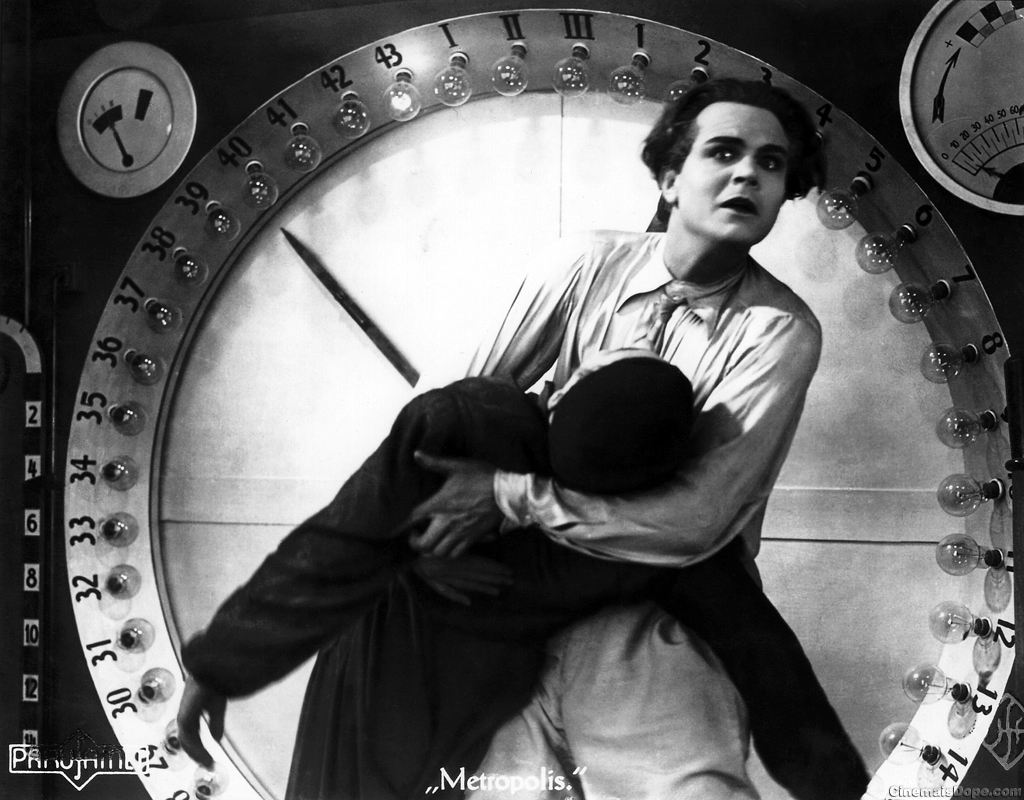
Wealthy heir Freder Frederson (Gustav Fröhlich) aids a collapsed worker in a scene from 'Metropolis' (1927).

" 'Metropolis' stands as an stunning example of the power of silent film to tell a compelling story without words, and reach across the generations to touch movie-goers from the real future, which means us," said accompanist Jeff Rapsis, who provides live music for silent film screenings throughout New England and beyond.

To accompany a silent film, Rapsis uses a digital synthesizer to recreate the texture of the full orchestra. The score is created live in real time as the movie is screened. Rather than focus exclusively on authentic music of the period, Rapsis creates new music for silent films that draws from movie scoring techniques that today's audiences expect from the cinema.

The restored 'Metropolis' will be shown with live music on Thursday, Jan. 29 at 7 p.m. at the Jane Pickens Theatre, 49 Touro St. in historic downtown Newport. 

Admission is $18 per person. Tickets available online at https://janepickens.com or at the door.

For more information on the music, visit www.jeffrapsis.com.

CRITIC'S COMMENTS on ‘METROPOLIS

“'Metropolis' does what many great films do, creating a time, place and characters so striking that they become part of our arsenal of images for imagining the world.”
—Roger Ebert, 2010, The Chicago Sun-Times

“If it comes anywhere near your town, go see it and thank the movie Gods that it even exists. There’s no star rating high enough.”
—Brian Tallerico, Movieretriever.com


Sunday, September 21, 2025

Back to the future with 'Metropolis' (1927) on Friday, Sept. 26 in Derry (N.H.) Opera House

Me under the marquee of the Flying Monkey Moviehouse prior to a screening last week.

Up next, it's 'Metropolis' (1927) at the Derry (N.H.) Opera House on Friday, Sept. 26. Showtime is 7 p.m.; lots more info is in the press release pasted in below.

Recent screenings included 'Risky Business' (1925) on Wednesday, Sept. 17 at the Leavitt Theatre in Ogunquit, Maine; Buster Keaton's comedy 'Seven Chances' (1925) at the Flying Monkey Moviehouse and Performance Center; and Abel Gance's seminal drama 'J'Accuse' (1919) at the Town Hall Theatre in Wilton, N.H.

I had thought it was the first time I'd scored 'J'Accuse,' but in checking my records it turns out I did music for it in 2015 at the Harvard Film Archive. 

Wow! I've been doing this for nearly 20 years, and this is the first time I have absolutely no recollection about a screening or a film that I've scored. 

One thing about 'J'Accuse' was it marked the debut of a new speaker for my digital synthesizer output. The pair of old Roland studio monitors have been great, but they've lately been showing their age. 

Audience response afterward was highly favorable to the sound, so looks I'll be going through with the update.  

Okay, hope you can make it to 'Metropolis' (1927) on Friday. Here's a press release with more info.

*     *     *

A scene from 'Metropolis' (1927).
 
TUESDAY, AUG. 26, 2025 / FOR IMMEDIATE RELEASE
For more info, contact: Jeff Rapsis • (603) 236-9237 • jeffrapsis@gmail.com

Restored classic sci-fi epic 'Metropolis' to screen in Derry on Friday, Sept. 26

Landmark early futuristic fantasy, with half-hour of rediscovered footage, to be shown with live music at Derry Opera House

DERRY, N.H.—A silent film hailed as the grandfather of all science fiction fantasy movies will soon return to the big screen at the Derry Opera House.

'Metropolis' (1927), an epic adventure set in a futuristic world, will be shown with live music on Friday, Sept. 26 at 7 p.m. at the Derry Opera House, 29 West Broadway, Derry, N.H.

The screening will feature live accompaniment by Jeff Rapsis, a New Hampshire-based composer who specializes in creating music for silent films.

The event is organized by the Derry Public Library, the Taylor Library, and the Greater Derry Arts Council.

Admission is free; advance registration is requested. To register, visit the Derry Public Library's website at derrypl.org and click on the online 'Events' calendar.

'Metropolis' (1927), regarded as German director Fritz Lang's masterpiece, is set in a society where a privileged elite pursue lives of leisure while the masses toil on vast machines and live in poverty.

The film, with its visions of futuristic factories and underground cities, set new standards for visual design and inspired generations of dystopian fantasies from Ridley Scott's 'Blade Runner' to Terry Gilliam's 'Brazil.'

In 'Metropolis,' the story centers on an upper class young man who falls in love with a woman who works with the poor. The tale encompasses mad scientists, human-like robots, underground spiritual movements, and industrial espionage, all set in a society divided between haves and have-nots.

The version of 'Metropolis' to be screened at the Derry Opera House is a newly restored edition that includes nearly a half-hour of missing footage cut following the film's premiere in 1927. The lost footage, discovered in 2008 in an archive in Argentina, has since been added to the existing 'Metropolis,' allowing plot threads and characters to be developed more fully.

When first screened in Berlin, Germany on Jan. 10, 1927, the sci-fi epic ran an estimated 153 minutes. After its premiere, the film's distributors (including Paramount in the U.S.) drastically shortened 'Metropolis' to maximize the film's commercial potential. By the time it debuted in the U.S. later that year, the film was only about 90 minutes long.

Even in its shortened form, 'Metropolis' became a cornerstone of science fiction cinema. Due to its enduring popularity, the film has undergone numerous restorations in the intervening decades in attempts to recover Lang's original vision.

Restoration work continues to this day. In 2008, the curator of the Buenos Aires Museo del Cine discovered a 16mm dupe negative of 'Metropolis' that was considerably longer than any existing print.

It  contained 25 minutes of "lost" footage, about a fifth of the film, that had not been seen since its Berlin debut.

The discovery of such a significant amount of material called for yet another restoration, a 2½-hour version that debuted in 2010 to widespread acclaim. It's this fully restored edition that will be screened at the Derry Opera House.

A scene from 'Metropolis' (1927).

" 'Metropolis' stands as an stunning example of the power of silent film to tell a compelling story without words, and reach across the generations to touch movie-goers from the real future, which means us," said accompanist Jeff Rapsis, who provides live music for silent film screenings throughout New England and beyond.

To accompany a silent film, Rapsis uses a digital synthesizer to recreate the texture of the full orchestra. The score is created live in real time as the movie is screened. Rather than focus exclusively on authentic music of the period, Rapsis creates new music for silent films that draws from movie scoring techniques that today's audiences expect from the cinema.

The restored 'Metropolis' will be shown with live music on Friday, Sept. 26 at 7 p.m. at the Derry Opera House, 29 West Broadway, Derry, N.H. Admission is free; advance registration is requested. To register, visit the Derry Public Library's website at derrypl.org and click on the online 'Events' calendar.

For more information on the music, visit www.jeffrapsis.com.

CRITIC'S COMMENTS on ‘METROPOLIS

“'Metropolis' does what many great films do, creating a time, place and characters so striking that they become part of our arsenal of images for imagining the world.”
—Roger Ebert, 2010, The Chicago Sun-Times

“If it comes anywhere near your town, go see it and thank the movie Gods that it even exists. There’s no star rating high enough.”
—Brian Tallerico, Movieretriever.com

Saturday, December 7, 2024

Up next: back to the future with 'Metropolis' on Sunday, Dec. 8 at Natick Center for the Arts

Who has time for holiday shopping when you can take in a screening of 'Metropolis'?

This weekend brings a chance to see the great futuristic fantasy 'Metropolis' (1927) on the big screen and with live music.

The screening takes place on Sunday, Dec. 8 at 4 p.m. at the Natick Center for the Arts, 14 Summer St., in Natick, Mass. 

More information about the film and the screening is in the press release pasted in below. 

Year after year, 'Metropolis' remains one of the most-requested silent film titles, at least in my experience. 

I guess even if an audience isn't into silent film, 'Metropolis' has such a novelty appeal (a silent film about the future!) that people want to experience it, which is great.

If given a chance, I try to explain that the film really needs to be seen in the context of the era that produced it.

Director Fritz Lang and screenwriter Thea von Harbou weren't just spinning a futuristic tale. They were attempting to address big questions faced by Germans in the Wiemar Republic.

What kind of a society did Germans want to create? With Bolshevism and collectivism to the east, and Gilded Age capitalism to the west, what direction should the German people take?

What role should religion and spirituality take? Both are important elements of the German culture. Lang and Harbou knew this—hence the film's final climax takes place on the roof of a cathedral, of all places.

Essentially, their message was specific to the times, but also happens to be timeless: that choices we make today will have important consequences for tomorrow.

We all know now that Germany chose abysmally in the ensuring years. 

In the century since 'Metropolis' was filmed, political systems have come and gone. But the film's power endures and has a lot to say to us today.

See for yourself at our screening on Sunday, Dec. 8 at 4 p.m. at the Natick Center for the Arts in Natick, Mass. More details below!

*     *     *

Mad scientist gesture 101: a scene from 'Metropolis' (1927).

MONDAY, DEC. 2, 2024 / FOR IMMEDIATE RELEASE
For more info, contact: Jeff Rapsis • (603) 236-9237 • jeffrapsis@gmail.com

Restored classic sci-fi epic 'Metropolis' to screen in Natick on Sunday, Dec. 8

Landmark early futuristic fantasy, with half-hour of rediscovered footage, to be shown with live music at Center for the Arts

NATICK, Mass.—A silent film hailed as the grandfather of all science fiction fantasy movies will be screened with live music at the Center for the Arts in Natick, Mass.

'Metropolis' (1927), an epic adventure set in a futuristic world, will be shown on Sunday, Dec. 8 at 4 p.m. at the TCAN Center for the Arts, 14 Summer St., Natick, Mass.

The screening, the latest in the Center for the Art's silent film series, will feature live accompaniment by Jeff Rapsis, a New Hampshire-based composer who specializes in creating music for silent films.

Admission is $12 per person for members; $14 for non-members. Tickets are available online at www.natickarts.org or at the door. Tickets are available online at www.natickarts.org or at the door.

'Metropolis' (1927), regarded as German director Fritz Lang's masterpiece, is set in a society where a privileged elite pursue lives of leisure while the masses toil on vast machines and live in poverty.

The film, with its visions of futuristic factories and underground cities, set new standards for visual design and inspired generations of dystopian fantasies from Ridley Scott's 'Blade Runner' to Terry Gilliam's 'Brazil.'

In reviving 'Metropolis' and other great films of cinema's early years, the Center for the Arts aims to show silent movies as they were meant to be seen—in high quality prints, on a large screen, with live music, and with an audience.

"All those elements are important parts of the silent film experience," said Rapsis, who will improvise an original live score for 'Metropolis' on the spot. "Recreate those conditions, and the classics of early cinema leap back to life."

Oh my god! Did I forget to set my clock back last month?

In 'Metropolis,' the story centers on an upper class young man who falls in love with a woman who works with the poor. The tale encompasses mad scientists, human-like robots, underground spiritual movements, and industrial espionage, all set in a society divided between haves and have-nots.

The version of 'Metropolis' to be screened at the Center for the Arts is a newly restored edition that includes nearly a half-hour of missing footage cut following the film's premiere in 1927. The lost footage, discovered in 2008 in an archive in Argentina, has since been added to the existing 'Metropolis,' allowing plot threads and characters to be developed more fully.

When first screened in Berlin, Germany on Jan. 10, 1927, the sci-fi epic ran an estimated 153 minutes. After its premiere, the film's distributors (including Paramount in the U.S.) drastically shortened 'Metropolis' to maximize the film's commercial potential. By the time it debuted in the U.S. later that year, the film was only about 90 minutes long.

Even in its shortened form, 'Metropolis' became a cornerstone of science fiction cinema. Due to its enduring popularity, the film has undergone numerous restorations in the intervening decades in attempts to recover Lang's original vision.

Restoration work continues to this day. In 2008, the curator of the Buenos Aires Museo del Cine discovered a 16mm dupe negative of 'Metropolis' that was considerably longer than any existing print.

It included not merely a few additional snippets, but 25 minutes of "lost" footage, about a fifth of the film, that had not been seen since its Berlin debut.

The discovery of such a significant amount of material called for yet another restoration, a 2½-hour version that debuted in 2010 to widespread acclaim. It's this fully restored edition that will be screened at the Center for the Arts.

" 'Metropolis' stands as an stunning example of the power of silent film to tell a compelling story without words, and reach across the generations to touch movie-goers from the real future, which means us," said accompanist Jeff Rapsis, who provides live music for silent film screenings throughout New England and beyond.

To accompany a silent film, Rapsis uses a digital synthesizer to recreate the texture of the full orchestra. The score is created live in real time as the movie is screened. Rather than focus exclusively on authentic music of the period, Rapsis creates new music for silent films that draws from movie scoring techniques that today's audiences expect from the cinema.

The restored 'Metropolis' will be shown on Sunday, Dec. 8 at 4 p.m. at the TCAN Center for the Arts, 14 Summer St., Natick, Mass. Admission is $12 per person for members; $14 for non-members. Tickets are available online at www.natickarts.org or at the door.

CRITIC'S COMMENTS on ‘METROPOLIS

“'Metropolis' does what many great films do, creating a time, place and characters so striking that they become part of our arsenal of images for imagining the world.”
—Roger Ebert, 2010, The Chicago Sun-Times

“If it comes anywhere near your town, go see it and thank the movie Gods that it even exists. There’s no star rating high enough.”
—Brian Tallerico, Movieretriever.com

Tuesday, April 4, 2023

The future is now, or actually tomorrow: 'Metropolis' (1927) to screen on Wednesday, April 5 at Rex Theatre in Manchester, N.H.

A scene from Fritz Lang's futuristic classic 'Metropolis' (1927).

Time for some backwards-to-the-future time travel, courtesy a screening of 'Metropolis' (1927) on Wednesday, April 5 at 7 p.m. at the Rex Theatre, 23 Amherst St., Manchester, N.H.

Lots more info in the press release pasted in below. Hope to see everyone in the future, meaning tomorrow night at 7 p.m.

 *    *    *

An original poster for 'Metropolis' (1927).

MONDAY, MARCH 20, 2023 / FOR IMMEDIATE RELEASE
For more info, contact: Jeff Rapsis • (603) 236-9237 • jeffrapsis@gmail.com

Restored classic sci-fi epic 'Metropolis' to screen at Rex Theatre on Wednesday, April 5

Landmark early futuristic fantasy to be shown with live music; includes nearly half-hour of rediscovered footage

MANCHESTER, N.H.—A silent film hailed as the grandfather of all science fiction fantasy movies will be screened with live music in Manchester next month.

'Metropolis' (1927), an epic adventure set in a futuristic world, will be shown on Wednesday, April 5 at 7 p.m. at the Rex Theatre, 23 Amherst St., Manchester, N.H.

The screening will feature live accompaniment by Jeff Rapsis, a New Hampshire-based composer who specializes in creating music for silent films.

Tickets are $10 per person general admission, and are available online at www.palacetheatre.org or at the door.

'Metropolis' (1927), regarded as German director Fritz Lang's masterpiece, is set in a society where a privileged elite pursue lives of leisure while the masses toil on vast machines and live in poverty.

The film, with its visions of futuristic factories and underground cities, set new standards for visual design and inspired generations of dystopian fantasies from Ridley Scott's 'Blade Runner' to Terry Gilliam's 'Brazil.'

In reviving 'Metropolis' and other great films of cinema's early years, the Rex Theatre aims to show silent movies as they were meant to be seen—in high quality prints, on the big screen, with live music, and with an audience.

"All those elements are important parts of the silent film experience," said Rapsis, who will improvise an original live score for 'Metropolis' on the spot. "Recreate those conditions, and the classics of early cinema leap back to life."

From 'Metropolis' (1927).

In 'Metropolis,' the story centers on an upper class young man who falls in love with a woman who works with the poor. The tale encompasses mad scientists, human-like robots, underground spiritual movements, and industrial espionage, all set in a society divided between haves and have-nots.

The version of 'Metropolis' to be screened at the Rex Theatre is a newly restored edition that includes nearly a half-hour of missing footage cut following the film's premiere in 1927.

The lost footage, discovered in 2008 in an archive in Argentina, has since been added to the existing 'Metropolis,' allowing plot threads and characters to be developed more fully.

When first screened in Berlin, Germany on Jan. 10, 1927, the sci-fi epic ran an estimated 153 minutes. After its premiere, the film's distributors (including Paramount in the U.S.) drastically shortened 'Metropolis' to maximize the film's commercial potential.

Even in its shortened form, 'Metropolis' became a cornerstone of science fiction cinema. Due to its enduring popularity, the film has undergone numerous restorations in the intervening decades in attempts to recover Lang's original vision.

The restoration work has continued in recent years. In 2008, the curator of the Buenos Aires Museo del Cine discovered a 16mm dupe negative of 'Metropolis' that was considerably longer than any existing print.

It included 25 minutes of "lost" footage, about a fifth of the film, that had not been seen since its Berlin debut.

The discovery led to a 2½-hour version that debuted in 2010 to widespread acclaim. It's this fully restored edition that will be screened at the Rex Theatre.

" 'Metropolis' stands as an stunning example of the power of silent film to tell a compelling story without words, and reach across the generations to touch movie-goers from the real future, which means us," said accompanist Jeff Rapsis, who provides live music for silent film screenings throughout New England and beyond.

To accompany a silent film, Rapsis uses a digital synthesizer to recreate the texture of the full orchestra. The score is created live in real time as the movie is screened.


The restored 'Metropolis' will be shown on Wednesday, April 5 at 7 p.m. at the Rex Theatre, 23 Amherst St., Manchester, N.H. Tickets are $10 per person general admission. Tickets available online at www.palacetheatre.org or at the door. For more info, call the box office at (603) 668-5588.

CRITIC'S COMMENTS on ‘METROPOLIS’

“'Metropolis' does what many great films do, creating a time, place and characters so striking that they become part of our arsenal of images for imagining the world.”
—Roger Ebert, 2010, The Chicago Sun-Times

“If it comes anywhere near your town, go see it and thank the movie Gods that it even exists. There’s no star rating high enough.”
—Brian Tallerico, Movieretriever.com


Tuesday, January 3, 2023

Coming up next: sci-fi epic 'Metropolis' on Saturday, Jan. 7 at Keene's Colonial Theatre

Let's hear it for the Precision Driving School of Greenfield, Mass. for sponsoring a local theater's silent film series!

What better way to follow a screening of 'Metropolis' than with...another screening of 'Metropolis'?

That's what'll happen this weekend, when Fritz Lang's ground-breaking sci-fi epic hits the big screen yet again: this time on Saturday, Jan. 7 at 4 p.m. at the Colonial Theatre in Keene, N.H.

Lots more detail about this screening is in the press release below.

This will actually be the fourth 'Metropolis' screening I've accompanied in the past three weeks. That's a lot of futuristic fantasy!

The four screenings were booked separately by programmers at different venues, which I take as a sign of the film's enduring popularity. Anywhere you go, it seems people still buy tickets and show up for 'Metropolis.'

So if you're in the Monadnock area of southwestern N.H. this Saturday, please drop on by and experience one of the great achievements of the silent era as it was intended to be seen: on the big screen, with a restored print, with live music, and with an audience!

I usually describe a screening as a "rare chance" to experience early cinema as it was intended. But in the case of 'Metropolis,' I can't really say it's rare, having done music for it so often.

Plus, if you can't make it to Keene this weekend, I'm doing 'Metropolis' again in April at the Rex Theatre in Manchester, N.H. Stay tuned on that one...

*  *  *

From 'Metropolis': A star is born...sort of.

TUESDAY, DEC. 20, 2022 / FOR IMMEDIATE RELEASE
For more info, contact: Jeff Rapsis • (603) 236-9237 • jeffrapsis@gmail.com

Restored classic sci-fi epic 'Metropolis' to screen in Keene on Saturday, Jan. 7

Ring in the New Year with landmark early futuristic fantasy shown with live music at Colonial Theatre

KEENE, N.H.—A silent film hailed as the grandfather of all science fiction fantasy movies will be screened with live music in Keene next month.

'Metropolis' (1927), an epic adventure set in a futuristic world, will be shown on Saturday, Jan. 7 at 4 p.m. at the Colonial Theatre, 95 Main St., Keene, N.H.

The screening will feature live accompaniment by Jeff Rapsis, a New Hampshire-based composer who specializes in creating music for silent films.

Admission is $10.50 adults, $8.50 youth. Tickets are available online at http://thecolonial.org or at the door.

'Metropolis' (1927), regarded as German director Fritz Lang's masterpiece, is set in a society where a privileged elite pursue lives of leisure while the masses toil on vast machines and live in poverty.

The film, with its visions of futuristic factories and underground cities, set new standards for visual design and inspired generations of dystopian fantasies from Ridley Scott's 'Blade Runner' to Terry Gilliam's 'Brazil.'

In 'Metropolis,' the story centers on an upper class young man who falls in love with a woman who works with the poor. The tale encompasses mad scientists, human-like robots, underground spiritual movements, and industrial espionage, all set in a society divided between haves and have-nots.

In reviving 'Metropolis,' the Colonial aims to show silent movies as they were meant to be seen—in high quality prints, on the big screen, with live music, and with an audience.

"All those elements are important parts of the silent film experience," said Rapsis, who will improvise an original live score for 'Metropolis' on the spot. "Recreate those conditions, and the classics of early cinema leap back to life."

The version of 'Metropolis' to be screened at Colonial is a newly restored edition that includes nearly a half-hour of missing footage cut following the film's premiere in 1927.

The lost footage, discovered in 2008 in an archive in Argentina, has since been added to the existing 'Metropolis,' allowing plot threads and characters to be developed more fully.

When first screened in Berlin, Germany on Jan. 10, 1927, the sci-fi epic ran an estimated 153 minutes. After its premiere, the film's distributors (including Paramount in the U.S.) drastically shortened 'Metropolis' to maximize the film's commercial potential. By the time it debuted in the U.S. later that year, the film was only about 90 minutes long.

Even in its shortened form, 'Metropolis' became a cornerstone of science fiction cinema. Due to its enduring popularity, the film has undergone numerous restorations in the intervening decades in attempts to recover Lang's original vision.

From Metropolis': note the sign in the bottom right corner. It doesn't seem to represent anything real in any language I recognize. But it IS an anagram for both 'A Mouth' and 'Uh, Atom.'

The restoration work has continued in recent years. In 2008, the curator of the Buenos Aires Museo del Cine discovered a 16mm dupe negative of 'Metropolis' that was considerably longer than any existing print.

It included not merely a few additional snippets, but 25 minutes of "lost" footage, about a fifth of the film, that had not been seen since its Berlin debut.

The discovery led to a 2½-hour version that debuted in 2010 to widespread acclaim. This fully restored edition will be screened at the Colonial.

" 'Metropolis' stands as an stunning example of the power of silent film to tell a compelling story without words, and reach across the generations to touch movie-goers from the real future, which means us," said accompanist Jeff Rapsis, who provides live music for silent film screenings throughout New England and beyond.

To accompany a silent film, Rapsis uses a digital synthesizer to recreate the texture of the full orchestra. The score is created live in real time as the movie is screened.

Rapsis creates new music for silent films that draws from movie scoring techniques that today's audiences expect from the cinema.

The restored 'Metropolis' will be shown on Saturday, Jan. 7 at 4 p.m. at the Colonial Theatre, 95 Main St., Keene, N.H. Admission is $10.50 for adults; $8.50 for youth. Tickets are available online at http://thecolonial.org or at the door. For more information, call the box office at (603) 352-2033.

CRITIC'S COMMENTS on ‘METROPOLIS’

“'Metropolis' does what many great films do, creating a time, place and characters so striking that they become part of our arsenal of images for imagining the world.”
—Roger Ebert, 2010, The Chicago Sun-Times

“If it comes anywhere near your town, go see it and thank the movie Gods that it even exists. There’s no star rating high enough.”
—Brian Tallerico, Movieretriever.com

Monday, January 2, 2023

First in line for 2023: 'Metropolis' on Monday, Jan. 2 at Greenfield (Mass.) Garden Cinema

A scene from 'Metropolis' (1927).

We start out 2023 by breaking new ground!

Tonight I'm doing live music for 'Metropolis' (1927), and it's the first time in my experience that Fritz Lang's futuristic fantasy will be sponsored by a driving school.

Yes, the Garden Cinema of Greenfield, Mass. will screen 'Metropolis' tonight at 6:30 p.m., and along for the ride will be the Precision Driving School.

And that's not all. The driving school has generously agreed to underwrite a three-film series of silents at the Garden. Alfred Hitchcock's early thriller 'The Lodger' (1927) will screen in February, and then it's the WWI aerial epic 'Wings' (1927) in March.

So a tip of the cap to the folks at the Precision Driving School (Your Driver's License is Just a Click Away!) for doing their part to help a local downtown cinema run unusual and distinctive programming—the kind that can't easily be duplicated at home.

And while we're at it, three cheers to the Greenfield Garden Cinemas, where they've been bringing the magic of the movies to Massachusetts' Pioneer Valley since 1929. It's great that Garden willing to find room in their programming for silent classics with live music, which I'm honored to provide. (And which keeps me off the street.)

So if you're within hailing distance of Greenfield, Mass., then get thee down to the Garden for tonight's screening of 'Metropolis.' And if you don't know how to drive, call our good friends at the Precision Driving School (1-413-773-8600) and they'll set you right up. 

Details and more info in the press release below:

*    *    *

An original promotional poster for 'Metropolis' (1927).

TUESDAY, DEC. 27, 2022 / FOR IMMEDIATE RELEASE
For more info, contact: Jeff Rapsis • (603) 236-9237 • jeffrapsis@gmail.com

Restored classic sci-fi epic 'Metropolis' to screen in Greenfield on Monday, Jan. 2

Ring in the New Year with landmark early futuristic fantasy shown with live music at Garden Cinema

GREENFIELD, Mass.—A silent film hailed as the grandfather of all science fiction fantasy movies will be screened with live music in Greenfield next month.

'Metropolis' (1927), an epic adventure set in a futuristic world, will be shown on Monday, Jan. 2 at 6:30 p.m. at the Greenfield Garden Cinema, 361 Main St., Greenfield.

The screening, which honors "National Science Fiction Day," will feature live accompaniment by Jeff Rapsis, a New Hampshire-based composer who specializes in creating music for silent films.

Admission is $10.50 adults, $8:50 for children, seniors, and veterans. Tickets are available online or at the door. The screening is sponsored by Precision Driving School of Greenfield.

'Metropolis' (1927), regarded as German director Fritz Lang's masterpiece, is set in a society where a privileged elite pursue lives of leisure while the masses toil on vast machines and live in poverty.

The film, with its visions of futuristic factories and underground cities, set new standards for visual design and inspired generations of dystopian fantasies from Ridley Scott's 'Blade Runner' to Terry Gilliam's 'Brazil.' (Notice the similarities in poster design.)

In reviving 'Metropolis' and other great films of cinema's early years, the Garden Cinema aims to show silent movies as they were meant to be seen—in high quality prints, on the big screen, with live music, and with an audience.

"All those elements are important parts of the silent film experience," said Rapsis, who will improvise an original live score for 'Metropolis' during the screening. "Recreate those conditions, and the classics of early cinema leap back to life."

In 'Metropolis,' the story centers on an upper class young man who falls in love with a woman who works with the poor. The tale encompasses mad scientists, human-like robots, underground spiritual movements, and industrial espionage, all set in a society divided between haves and have-nots.

The version of 'Metropolis' to be screened at Greenfield Garden Cinema is a newly restored edition that includes nearly a half-hour of missing footage cut following the film's premiere in 1927.

The lost footage, discovered in 2008 in an archive in Argentina, has since been added to the existing 'Metropolis,' allowing plot threads and characters to be developed more fully.

When first screened in Berlin, Germany on Jan. 10, 1927, the sci-fi epic ran an estimated 153 minutes. After its premiere, the film's distributors (including Paramount in the U.S.) drastically shortened 'Metropolis' to maximize the film's commercial potential. By the time it debuted in the U.S. later that year, the film was only about 90 minutes long.

Futuristic gesturing on display in 'Metropolis' (1927).

Even in its shortened form, 'Metropolis' became a cornerstone of science fiction cinema. Due to its enduring popularity, the film has undergone numerous restorations in the intervening decades in attempts to recover Lang's original vision.

The restoration work has continued in recent years. In 2008, the curator of the Buenos Aires Museo del Cine discovered a 16mm dupe negative of 'Metropolis' that was considerably longer than any existing print.

It included not merely a few additional snippets, but 25 minutes of "lost" footage, about a fifth of the film, that had not been seen since its Berlin debut.

The discovery led to a 2½-hour version that debuted in 2010 to widespread acclaim. It's this fully restored edition that will be screened at the Greenfield Garden Cinema.

" 'Metropolis' stands as an stunning example of the power of silent film to tell a compelling story without words, and reach across the generations to touch movie-goers from the real future, which means us," said accompanist Jeff Rapsis, who provides live music for silent film screenings throughout New England and beyond.

To accompany a silent film, Rapsis uses a digital synthesizer to recreate the texture of the full orchestra. The score is created live in real time as the movie is screened.

Rapsis creates new music for silent films that draws from movie scoring techniques that today's audiences expect from the cinema.

Silent film will return to the Garden on Monday, Feb. 6 with a screening 'The Lodger' (1927), an early effort from director Alfred Hitchcock; and then on Monday, March 6 with 'Wings' (1927), a sweeping drama of U.S. aviators in World War I that won of Best Picture at the very first Academy Awards.

All films will feature live musical accompaniment by Jeff Rapsis.

The Garden Cinema's silent film series is sponsored by Precision Driving School, 91 Main St., Greenfield, Mass.

The restored 'Metropolis' will be shown on Monday, Jan. 2 at 6:30 p.m. at the Greenfield Garden Cinema, 361 Main St., Greenfield, Mass. Admission is $10.50 for adults; $8.50 for children, seniors, and veterans. Tickets are available online at www.gardencinemas.net or at the door. For more information, call the box office at (413) 774-4881.

CRITIC'S COMMENTS on ‘METROPOLIS’

“'Metropolis' does what many great films do, creating a time, place and characters so striking that they become part of our arsenal of images for imagining the world.”
—Roger Ebert, 2010, The Chicago Sun-Times

“If it comes anywhere near your town, go see it and thank the movie Gods that it even exists. There’s no star rating high enough.”
—Brian Tallerico, Movieretriever.com

Saturday, December 17, 2022

Ending 2022 with yesterday's vision of tomorrow: Metropolis in Newport, R.I. on Tuesday, Dec. 27

Original poster art for 'Metropolis.'

One more to go in 2022, and it's a biggie: 'Metropolis' (1927), for which I'll be doing music on Tuesday, Dec. 27 at the Jane Pickens Theatre in Newport, R.I.

Showtime is 7 p.m.; lots more info in the press release below.

Looking ahead, 2023 beckons as another busy post-pandemic year of silent film music. 

Besides a full dance card of local shows, a pair of out-of-town performing trips are already on the calendar.

In January, I'll be playing for film programs at Cinema Detroit in Detroit, Mich., and Case Western Reserve University in Cleveland.

And then in February, it's my annual pilgrimage to the Kansas Silent Film Festival at Washburn University in Topeka, Kansas.

I don't do personal New Year's resolutions as I don't ever seem to change. I'll soon be 60 years old, but I'm still bedeviled by teenage habits and personality trains, with a big helping of the Seven Deadly Sins mixed in.

But in terms of silent film accompaniment, according to my running list of silent feature films that  I've accompanied (maintained elsewhere on this blog), right now the total stands at 373.

So that means if I make an effort, 2023 may be the year the total crosses 400. Well, that's a big round number!

So, in between repeat screenings of popular titles that comprise the bulk of my work, I'll try to salt in a few obscure titles I've never before tackled. If I do an average of one every two weeks, I should make it!

One good sign: in planning its 2023 calendar, the Somerville Theatre has booked no less than four silent features that I've never played for before, including Lillian Gish in 'Annie Laurie'; Mary Pickford's early 'Cinderella;' the recently restored MGM blockbuster 'The Fire Brigade'; and Thomas Meighan in 'The Canadian.'

All are via 35mm prints from the Library of Congress—your tax dollars at work!

In the meantime, 'Metropolis' is up next. Hope you'll join us during that strange in-limbo week between Christmas and New Year's Day.

And a Happy New Year!

*  *  *

A scene from 'Metropolis' (1927).

TUESDAY, DEC. 6, 2022 / FOR IMMEDIATE RELEASE
For more info, contact: Jeff Rapsis • (603) 236-9237 • jeffrapsis@gmail.com

Restored classic sci-fi epic 'Metropolis' to screen in Newport on Tuesday, Dec. 27

Landmark early futuristic fantasy, with half-hour of rediscovered footage, to be shown with live music at Jane Pickens Theatre

NEWPORT, R.I.—A silent film hailed as the grandfather of all science fiction fantasy movies will be screened with live music in Newport during the upcoming holiday vacation week.

'Metropolis' (1927), an epic adventure set in a futuristic world, will be shown on Tuesday, Dec. 27 at 7 p.m. at the Jane Pickens Theatre Film and Event Center, 49 Touro St., Newport, R.I.

The screening, the latest in the venue's silent film series, will feature live accompaniment by Jeff Rapsis, a New Hampshire-based composer who specializes in creating music for silent films.

Admission is $15 per person; members $13. Tickets are available online or at the door.

'Metropolis' (1927), regarded as German director Fritz Lang's masterpiece, is set in a society where a privileged elite pursue lives of leisure while the masses toil on vast machines and live in poverty.

The film, with its visions of futuristic factories and underground cities, set new standards for visual design and inspired generations of dystopian fantasies from Ridley Scott's 'Blade Runner' to Terry Gilliam's 'Brazil.'

In reviving 'Metropolis' and other great films of cinema's early years, the Jane Pickens Theatre aims to show silent movies as they were meant to be seen—in high quality prints, on a large screen, with live music, and with an audience.

"All those elements are important parts of the silent film experience," said Rapsis, who will improvise an original live score for 'Metropolis' on the spot. "Recreate those conditions, and the classics of early cinema leap back to life."

In 'Metropolis,' the story centers on an upper class young man who falls in love with a woman who works with the poor. The tale encompasses mad scientists, human-like robots, underground spiritual movements, and industrial espionage, all set in a society divided between haves and have-nots.

From 'Metropolis' (1927).

The version of 'Metropolis' to be screened at the Jane Pickens Theatre is a newly restored edition that includes nearly a half-hour of missing footage cut following the film's premiere in 1927.

The lost footage, discovered in 2008 in an archive in Argentina, has since been added to the existing 'Metropolis,' allowing plot threads and characters to be developed more fully.

When first screened in Berlin, Germany on Jan. 10, 1927, the sci-fi epic ran an estimated 153 minutes. After its premiere, the film's distributors (including Paramount in the U.S.) drastically shortened 'Metropolis' to maximize the film's commercial potential. By the time it debuted in the U.S. later that year, the film was only about 90 minutes long.

Even in its shortened form, 'Metropolis' became a cornerstone of science fiction cinema. Due to its enduring popularity, the film has undergone numerous restorations in the intervening decades in attempts to recover Lang's original vision.

The restoration work has continued in recent years. In 2008, the curator of the Buenos Aires Museo del Cine discovered a 16mm dupe negative of 'Metropolis' that was considerably longer than any existing print.

It included not merely a few additional snippets, but 25 minutes of "lost" footage, about a fifth of the film, that had not been seen since its Berlin debut.

The discovery led to a 2½-hour version that debuted in 2010 to widespread acclaim. It's this fully restored edition that will be screened at the Jane Pickens Theatre.

" 'Metropolis' stands as an stunning example of the power of silent film to tell a compelling story without words, and reach across the generations to touch movie-goers from the real future, which means us," said accompanist Jeff Rapsis, who provides live music for silent film screenings throughout New England and beyond.

To accompany a silent film, Rapsis uses a digital synthesizer to recreate the texture of the full orchestra. The score is created live in real time as the movie is screened.

Rather than focus exclusively on authentic music of the period, Rapsis creates new music for silent films that draws from movie scoring techniques that today's audiences expect from the cinema.

The restored 'Metropolis' will be shown on Tuesday, Dec. 27 at 7 p.m. at the Jane Pickens Theatre Film and Event Center, 49 Touro St., Newport, R.I. Admission is $15 per person; members $13. Tickets are available online at www.janepickens.com or at the door. For more information, call the box office at (401) 846-5474.

Saturday, October 1, 2022

Silent Movie Day 2022: On the joys of combining silent film music with long-haul trucking

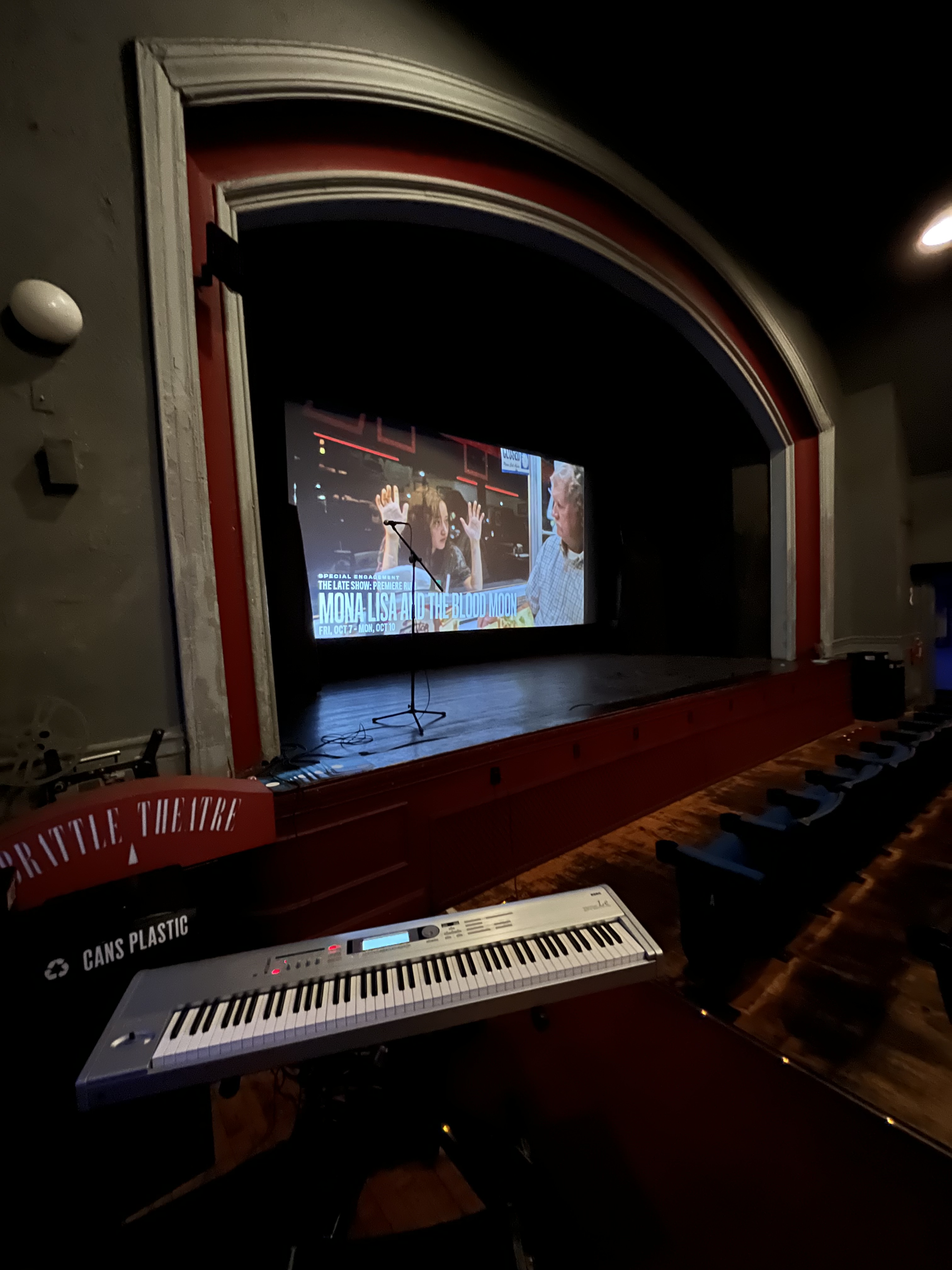
My set-up at the Brattle, just before embarking on a 4½-hour journey with Fritz Lang's 'Dr. Mabuse, Der Spieler.'

Well, that put the "odd" in odyssey!

I'm just back after a silent film swing that took me to screenings in Cambridge, Mass., Detroit and Cleveland, and then back again—all in less than three days.

This was all in support of this year's 'Silent Movie Day' on Thursday, Sept. 29, but which in my case also involved accompanying extra screenings on the days before and after it.

So for me, Silent Movie Day was actually three days in a row, each featuring a BIG (meaning lengthy) title.

First up: On Wednesday, Sept. 28, I left home in New Hampshire at 4 p.m. to make the one hour drive to Cambridge, Mass. 

That evening, the venerable Brattle Cinema (just off Harvard Square) screened Fritz Lang's 'Dr. Mabuse, The Gambler' (1922), the sprawling two-part crime thriller that clocks in at 4½ hours. Yes, I played for it all, starting at 6 p.m. and ending just before 11 p.m.

After that, I loaded my keyboard and sound gear back onto the Forester, then hopped on the Massachusetts Turnpike (a.k.a. I-90) and headed west for Detroit, Mich. Buoyed by a brief catnap at a rest area in Utica, N.Y., I pulled into the Motor City in mid-afternoon.

At Cinema Detroit, where masks are still required out of an abundance of caution.

That night (Thursday, Sept. 29), Cinema Detroit celebrated Silent Movie Day with another sprawling Lang epic, 'Woman in the Moon' (1929), with live accompaniment by me. Clocking in at 2¾ hours, it seemed like a short subject compared to 'Mabuse.'

The next day (Friday, Sept. 30), I backtracked to Cleveland, where that evening I did live music for the the Cleveland Cinematheque's screening of another silent epic: Erich von Stroheim's 'Greed' (1924).

Talk about length! Von Stroheim originally planned an eight-hour running time, and then created a four-our version before the studio finally took it from him and released a version that runs about 2½ hours, which is what we saw at the Cinematheque.

Strangely, at that length, 'Greed' turned out to be the shortest feature of the trip.

Also on the bill at Cleveland: a newly discovered industrial promotion film, 'The Heart of Cleveland' (1924), a half-hour commercial for the wonders of electricity that was filmed and shown in the city. 

What a surprise! Featuring shots of a family touring giant industrial facilities, it anticipated Dziga Vertov's 'Man With The Movie Camera' by several years. More on the film (and a link to the video) is here

The Cinematheque audience just before Friday night's screenings. Taken from the keyboard with the fisheye lens on my new iPhone 13.

Afterwards, I loaded my gear and pointed the Forester east on I-90 to take me back home via the N.Y. State Thruway. After a brief catnap (again in Utica, N.Y.), I arrived home at 10:30 a.m.—exactly 66½ hours and 1,705 miles later.

Out of those 66½ hours, I was at the keyboard improvising music for more than 10 of them. That's a lot of music to spin out in live performance over three days. 

The only concession to the sheer quantity of scoring needed was that I allowed myself to use some common motifs that worked for all three films. Usually I'd try to avoid recycling material,

What motifs? The most common was a simple sequence of three descending notes: D, C#, G, with the last being held. You can build amazing things with this! (Only now do I realize it's a slight twisting of the opening notes of Rachmaninoff's very familiar 'Prelude in C# minor.')

Okay, now for the big question: Why do a stunt like this? Why combine silent film accompaniment with the romance of long-haul trucking?

Well, partly to challenge myself, and to see if I really could do it. Did I have the mental and physical stamina to get through this marathon?

Turns out I did, mostly. Only twice did I catch myself going into a mild "swoon" state on the piano bench: once near the start of Part II of 'Dr. Mabuse' (about three hours into the movie), and then near the end of 'Greed.'

Both times I felt a wave of wooziness wash over me, and so did a mental check to make sure it wasn't the symptom of some larger Fred-Sanford-like attack coming on. ("It's the big one, Weezy, I'm coming to join yez!") 

In both cases, while being so absorbed in creating music, I had apparently stopped breathing. So I began breathing again, and all was well.

Otherwise, everything about this escapade fell into place quite nicely. No giant traffic delays, no car troubles, no unexpected weather.

The main cast of Fritz Lang's lunar voyage epic, 'Woman in the Moon' (1929).

The only concern came at Cinema Detroit, where the heat was cranked up prior to 'Woman in the Moon,' making the house way to warm for me to survive 2¾ hours in live improv mode. 

I was preparing to strategically disrobe if necessary, but they turned off the heat before the show started and all went fine.

Another reason to do this was to take advantage of 'Silent Movie Day' (which only started last year) to engineer something of a deep dive for myself: to do music for a series of longer films to see how that would affect the music-making, if at all.

I find a longer film of any type often affords enough running room to thoroughly explore whatever musical material I'm working with. With films that run two, three or four hours, you do things that just aren't possible with a film that runs an hour and change. 

Counter-intuitively, I find shorter films far more demanding to score effectively, as everything's more tightly wound, especially with comedies. Often there's just no slack to lose yourself and come up with natural and effective scoring, at least the way I do it.

Talk about trances: a scene from 'Dr. Mabuse, Der Spieler.'

So my mini-marathon of 10 hours was a chance to push myself as deeply as one can go into the wide open spaces of improv. And it did just that: near the end of Part 1 of  'Mabuse,' I was so completely absorbed when I realized I had no idea what the actual time was.

The Brattle has a wall clock up above where I was sitting, so I glanced up and saw: 8:35 p.m. So something like half-way through, with hours still to go. And I then dove back into the trance-like state, once again completely absorbed in translating images into music to help the film cast its spell.

I can't speak for other accompanists, but I love those rare times when a movie absorbs you so completely that you lose sight of the beginning and the end. You always know they're there, of course, but the movie is so big that both start and finish lie well beyond the horizon. 

It's those times when I feel free to do what I think is my best work—where all the second-guessing subsides and the music flows naturally, as if in a dream. It's always underpinned by constant calculating and anticipation and so on, but all that becomes second nature in a way that never happens when you're playing, say, a one-reel Snub Pollard comedy. 

So in terms of losing myself, I have to say I got ample doses of that with all three films. But 'Mabuse' stands out as unique, in that the sheer quantity of time to be playing live, and then knowing that I would launch myself westward in the wee hours of the morning, creating a sense of being alive and in the moment that made 'Silent Film Day' worth all the effort. 

A scene from 'Dr. Mabuse, Der Spieler.'

Audiences were generous with their reactions both during the screenings and afterwards. The Brattle Mabuse marathon attracted about 35 people (more than expected) who were welcomed by creative director Ned Hinkle as the "hard core."

Ned mentioned that he'd wanted to program the whole Mabuse saga in one big gulp, and the film's 100th anniversary plus Silent Film Day seemed to be the right occasion for it. 

However, at first he hadn't considered live music because he couldn't imagine anyone wanting to tackle the whole thing in one evening. Little did he know!

As far as I could tell, everyone at the Brattle stayed to the end, at which point they lustily cheered the film. In fact, we seem to have ended with significantly more people than when we started. 

Afterwards, I spoke with several people who had no idea they were in for such a long haul. It's one thing to see "270 minutes" in the listing, but quite another to do math.

I also talked with a young guy who turned out to be a visiting student from China who'd been in the U.S. for all of three weeks. He could not be more enthusiastic about the programming at the Brattle, which he's apparently attended every evening since his arrival.

I was glad to hear this, but couldn't help thinking he's not quite getting a very accurate impression of life in America.

At Cinema Detroit, a good-sized crowd remained engaged and reacted noisily throughout 'Woman in the Moon.' A high point was when the Walter Turner character played by Fritz Rasp does his "quick change" into another character and back again right before our eyes, which produced bursts of astonished laughter.

I think one thing that helped was that for the first time ever, I had a distinct musical signature for this character that I used only when he was on screen, and then never again except for that one moment when he reappears as if by magic. 

With its one-of-a-kind mix of prescient sci-fi and completely erroneous assumptions about space travel, 'Woman in the Moon' produced the "gaping mouths" reaction that only it can do. 

The one thing I forgot to mention beforehand was that although the film is a serious drama, it contains a great deal of comedy that was intended to break the tension. For modern audiences who often don't know what to make of what they're seeing, it helps to give people permission to laugh.

But the Cinema Detroit audience seemed to get this without any prompting. Several big laugh moments stand out in my mind as highlights of the communal experience.

In Cleveland, 'Greed' attracted something like 80 people, which Cinematheque director John Ewing observed was the largest in-person attendance of any screening since the pandemic. 

(That's John at left, at the podium, which renders him invisible where I sit below at the keyboard.)

Fortified by a meal at 'L'Albatross,' my favorite restaurant in all of North America (no kidding!), and knowing I was in the home stretch of my marathon, I pushed myself to rise to the challenge of scoring von Stroheim's legendary lost masterwork. 

And that's all I remember. Well, not really, but kinda sorta. It takes awhile to awaken from that dream state.

The next thing I knew, I was on I-90, heading east through Ashtabula, Ohio, and wondering if it had all been a dream. In other words, success!

Many thanks to the many people who made this Silent Movie Day oddysey possible, especially Ned Hinkle and Ivy Molan of the Brattle Cinema in Cambridge, Mass.; Paula and Tim Guthat at Cinema Detroit; and John Ewing and Genevieve Schwartz at the Cleveland Cinematheque. 

(And a special thanks to Genevieve for joining me on the L'Albatross pilgrimage, which included visiting a side street paved with wood.)

All of these people remain willing to include silent film with live music as part of their programming—not just on Silent Movie Day, but at any time. I think that's something worth celebrating all year long.

Well...after a phenomenally busy September full of challenging live performances, I'll be taking a bit of a break now. As I said earlier this month to the audience after doing live music for Louis Feuillade's 'Les Vampires' (1915), which is 7½ hours long: "I'm going to lie down now."

But look out, as here comes Halloween! This year's schedule is highlighted by numerous screenings of 'Nosferatu' (1922) to mark the 100th anniversary of its release.

There's also a rare three-screenings-in-one-day on Saturday, Oct. 29, when I'll do 'Nosferatu' in the afternoon in Jaffrey, N.H., then 'Der Golem' in the evening in Ogunquit, Maine, and then a midnight screening of the reconstructed 'London After Midnight' at the Coolidge Corner Cinema in Brookline, Mass. 

One day, three screenings, three states. 

Anyone want to book a morning screening in Rhode Island that day to make it four?

If we start at 6 a.m., we can fit in the entire 'Dr. Mabuse' saga, with plenty of time for lunch...

Friday, September 23, 2022

New on the schedule: 'Dr. Mabuse' epic on Wednesday, Sept. 28 at the Brattle Cinema

Rudolf Klein-Rogge stars as the title character in Frtiz Lang's 'Dr. Mabuse, The Gambler' (1922).

Greetings from Iola, Kansas, where I'm looking forward to this weekend's 'Buster Keaton Celebration.' More about that in just a bit.

Right now, I'm super-excited to announce that a last-minute addition turned this year's 'Silent Film Day' (coming up on Thursday, Sept. 29) into something of an event for this accompanist. 

Just yesterday, the venerable Brattle Cinema in Cambridge gave the go-ahead to add live music (by me) to their planned screening of 'Dr. Mabuse, the Gambler' (1922) on Wednesday, Sept. 28.

Yes! I was hoping they would, as Fritz Lang's first 'Mabuse' is rarely programmed (one reason: it's 4½ hours long!) and the chance to do live music for it is a rare opportunity for an accompanist.

But the call has come, and thus I'm spreading the word to one and all: join us on Wednesday, Sept. 28 at 6 p.m. (note the early start time) for a cinematic experience you will not forget. 

The full press release for the 'Dr. Mabuse' screening is pasted in below. There's a lot about this film that I find fascinating, and I hope you'll be on hand at the Brattle to experience it as intended: in a theater, on the big screen, with live music, and (most importantly!) an audience. 

 And 'Dr. Mabuse' is added to a 'Silent Movie Day' performance schedule that finds me at Cinema Detroit the very next day to do live music for another great Lang epic: 'Woman in the Moon' (1929). It's known as 'Frau im Mond' in German, as in the poster at right.

And at just 2¾ hours, it's a relative trifle compared to 'Mabuse.' 

Actually, it's another terrifically ambitious movie that will blow the minds of people who have not yet seen it. And it's full of wonderful opportunities for music to augment the story and add to the experience. The screening starts at 7 p.m.

And after that, on Friday, Sept. 30, I'm at the Cleveland Cinematheque to do music for Erich von Stroheim's legendary epic 'Greed' (1924), which the director planned to run 8 hours before the studio took control and cut it down to a more manageable 2½ hours. 

(Various edits and reconstructions of 'Greed' have been produced over the years. The version being shown in Cleveland runs a tight 109 minutes.)

Gilbert Gowland (center) stars in 'Greed' (1924).

The Cinematheque screening also includes a local curiosity: 'The Heart of Cleveland, a recently rediscovered silent promotional film in which some 1920s farm children living without modern conveniences outside of Cleveland travel to the big city to learn what electricity can do.

The Cleveland "re-premiere" of 'The Heart of Cleveland' starts at 6:30 p.m., with 'Greed' to follow at 7 p.m. 

You know your doing your part to honor Silent Film Day when, over three days, the shortest film you're accompanying is von Stroheim's 'Greed.'

So that's the news from Iola, where tomorrow I'll accompany two Keaton features: 'The Cameraman' (1928) and 'Steamboat Bill, Jr. (1928). If you're in the southeastern Kansas area, stop by! If you're anywhere else, you have a whole day to get here!

Here's the press release for the screening of 'Dr. Mabuse, Der Spieler' (1922) on Wednesday, Sept. 28, at 6 p.m. at the Brattle:

*   *   *

Pick a disguise: the many faces of Dr. Mabuse.

FRIDAY, SEPT. 23, 2022 / FOR IMMEDIATE RELEASE
Contact Jeff Rapsis • (603) 236-9237 • jeffrapsis@gmail.com

Live music added to Brattle Cinema's 9/28 screening of early epic thriller 'Dr. Mabuse'

Pioneering four-hour silent drama about criminal mastermind to run on Wednesday, Sept. 28 in honor of 'Silent Film Day'

CAMBRIDGE, Mass.—It's a story so big, it takes more than four hours to tell.

It's 'Dr. Mabuse, the Gambler,' a landmark crime thriller that pushed the boundaries of cinema and story-telling when it hit theaters in 1922.

The rarely screened early masterpiece from German director Fritz Lang will be presented at the Brattle Cinema on Wednesday, Sept. 28 starting at 6 p.m.

Admission is $14 per person; $12 for members, seniors, children, and students.

An original improvised musical score for 'Dr. Mabuse' will be performed by silent film accompanist Jeff Rapsis of Bedford, N.H.

"Live music makes any screening of a silent film a one-of-a-kind event," said Rapsis, who will play continuously during the four-hour-plus epic.

Rapsis aims to use music to bring out the story's many shifts and turns, and also enhance the dark atmosphere that permeates Lang's sprawling film.

The Brattle has scheduled 'Dr. Mabuse' as part of a three-day observance of this year's Silent Film Day, which falls on Thursday, Sept. 29.

Other screenings include a program of short comedies starring Buster Keaton on Thursday, Sept. 29 and the early horror classic 'Nosferatu' (1922) on Friday, Sept. 30.


'Dr. Mabuse' was a daring project by director Fritz Lang, who would later helm 'Metropolis' (1927) and a host of early screen classics, including two sequels to the Mabuse story.

Based on a contemporary novel by Norbert Jacques, 'Dr. Mabuse' (pronounced "ma-BOO-seh") tells the story of a criminal mastermind who uses disguises and hypnosis to defraud and control his wealthy victims.

Set in Germany after World War I, the movie aimed to capture the chaotic and unreal nature of life in Berlin at the time.

It also became the template for the criminal espionage film genre, with its atmosphere of intrigue, treachery and deceit among sophisticated high society.

'Dr. Mabuse' was created at a time when European cinema was not subject to now-accepted constraints of length or scope.

Lang's completed film runs an extraordinary 4½ hours and is divided into two parts.

The first part, 'The Great Gambler: A Picture of the Time,' introduces Dr. Mabuse and his criminal enterprises, which include extortion, stock market manipulation, and swindling the wealthy elite.

The second part, 'Inferno: A Game for the People of our Age,' continues the story, which includes assassination, a scene of mass hypnosis in a theater, a daring escape through sewers, and a melodramatic climax.

"This is filmmaking on a grand scale," said Rapsis, who will improvise a musical score using new material he's composed for the Brattle screening. .

"For movie fans, the rare chance to see Lang's ground-breaking film on the big screen with live music is not to be missed."

'Dr. Mabuse' stars actor Rudolf Klein-Rogge in the title role. Klein-Rogge frequently collaborated with Lang, playing the iconic role of scientist Rotwang in 'Metropolis' and criminal mastermind Haghi in Lang's 'Spies' (1928).

During production, 'Dr. Mabuse' had its share of behind-the-scenes drama. Lang began an affair with screenwriter Thea von Harbou, who at the time was married to Klein-Rogge. Her separation from Klein-Rogge was amicable, however, and did not interfere with the film. Ultimately, Lang married von Harbou; the three then worked on several subsequent films.

Upon its release, critics hailed 'Dr. Mabuse' as an example of cinema's story-telling and artistic potential.

The Berliner Zeitung called the first part "the attempt to create an image of our chaotic times" and went on to state that it "will give people fifty or one hundred years from now an idea of an age that they could hardly comprehend without such a document."

Film-Kurier praised Klein-Rogge's "brilliant performance" and Lang's "sensitive yet experienced" direction.

'Dr. Mabuse' wasn't released in the United States until 1927, and then only in an edited-down two-hour version that proved unsuccessful.

Today, contemporary critics recognize the original 'Dr. Mabuse' as Lang's earliest masterpiece and a lasting achievement.

"Mabuse remains memorable for the darkly brooding atmosphere that Lang creates, a disturbing compound of hysteria and fatalistic passivity.”
– John Wakeman, World Film Directors Volume 1.

Both parts of 'Dr. Mabuse, The Gambler' (1922) will be shown on Wednesday, Sept. 28 at 6 p.m. at the Brattle Cinema, 40 Brattle St., Cambridge, Mass. (Please note the early start time.)

Admission is $14 per person; $12 for members, seniors, children, and students. To buy tickets online, visit www.brattlefilm.org or contact the box office at (617) 876-6837.