Showing posts with label musical. Show all posts

Monday, June 6, 2022

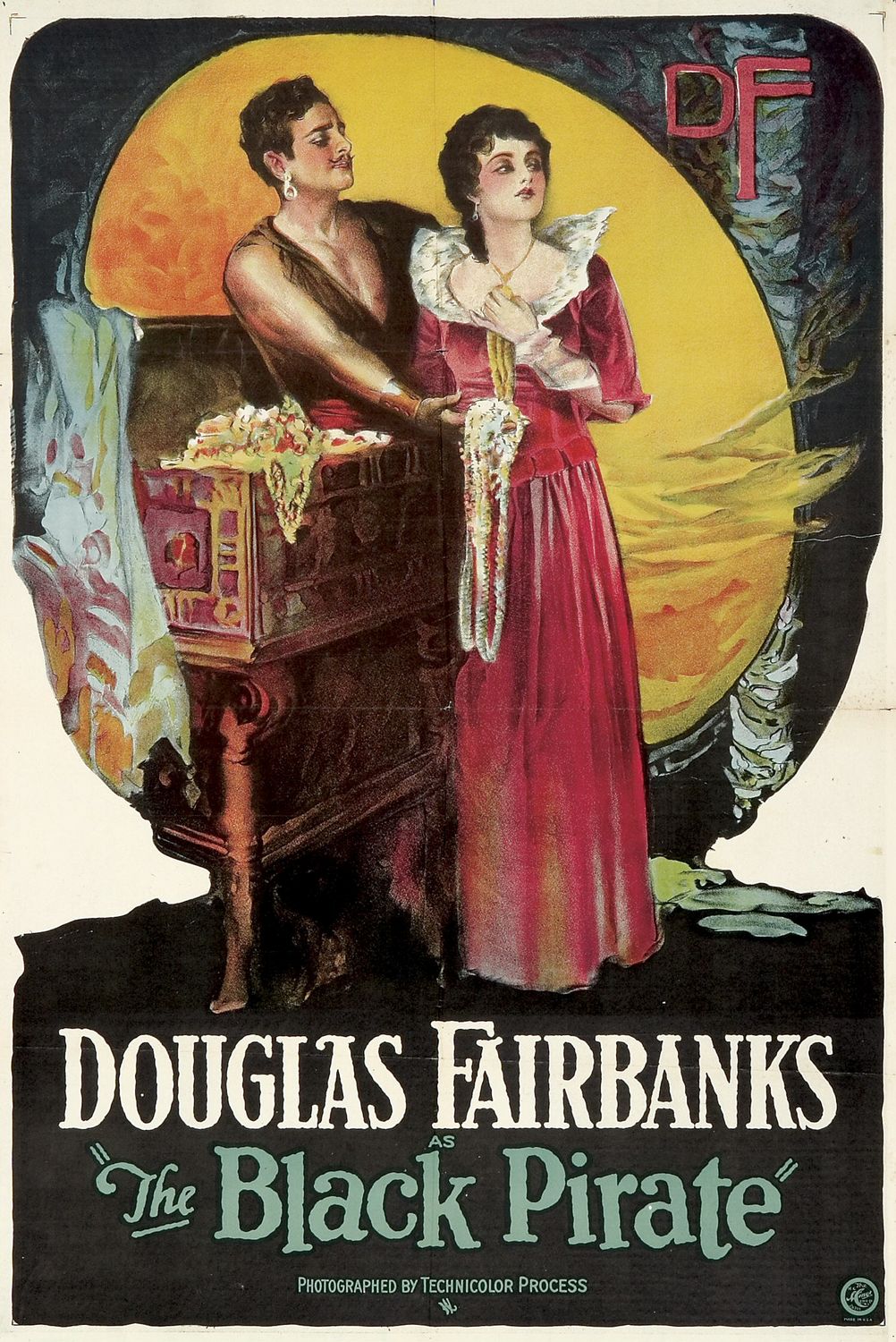
Set sail with Douglas Fairbanks Sr. in 'The Black Pirate' on Wednesday, June 8 in Plymouth, N.H.


I'm back at the keyboard after a twice-postponed visit to London, with a side trip to my old stomping grounds of Glasgow, Scotland.

Next up: music for 'The Black Pirate' (1926) starring Douglas Fairbanks, which is screening on Wednesday, June 8 at 6:30 p.m. at the Flying Monkey Moviehouse and Performance Center in Plymouth, N.H. 

More info and details are in the press release below. First, a few notes from "across the pond," where last week we scored a rare "triple," meaning three West End shows in one day. 

The line-up looked like this: 

- At 2 p.m., a new production of 'My Fair Lady' at the Coliseum on Charing Cross Road.

 - At 5:30 p.m., a cabaret-style revue called 'Six' that features the wives of Henry VIII, and which is playing at the Vaudeville Theatre at the Strand.

 - At 7:30 p.m., the new musical version of 'Back to the Future' that's playing at the Adelphi next door.

We didn't plan on this — it just happened. Tickets were available for all three;  the theaters were close enough for this to work, and there was that unusual 5:30 p.m. matinee of 'Six.'

We even got something to eat between 'Six' (which is just over one hour long) and 'Back to the Future.' 

The last time this happened was way back in the 1990s, when we caught a weird one-man play called 'Anorak of Fire' at an odd time, with a matinee before it and an evening show afterwards. So it's a rare bird indeed.

About 'Back to the Future': what was interesting to me was that even though it was full of new songs, much of the material was drawn from the score that Alan Silvestri composed for the 1985 film. 

There are a couple of really enduring licks in the 'Back to the Future' score, and Silvestri (who also worked on the musical) made the most of them in this stage reinterpretation.

The result was something you don't see very often: a stage musical that heavily relied on strong background music in the same way a movie action sequence might do. (Or, yes, a silent film score!)

This was especially true in the musical's Act 2, when Marty McFly must get the time-traveling DeLorean up to 88 mph just as lightning strikes the town's clock tower.

With no songs, just action and Silvestri's music galloping along, I totally, totally bought into it. And it was the music that did it, I think. 

The time-traveling car may have been powered by plutonium. But the real energy that held everything together and pushed it forward in an edge-of-your-seat frenzy was the score. 

So even though we were watching a stage production in 2022, it reminded me how much the right kind of music can add to a scene or sequence in a movie made in 1922. The challenge (for me, anyway) is to find those moments and make the most of them, and not overdo it at other times.

I'll next get a chance to find the balance this Wednesday, as we set sail with Douglas Fairbanks in 'The Black Pirate' (1926) at the Flying Monkey Moviehouse and Performance Center. 

Press release is below. See you on deck!

 *  *  *

Douglas Fairbanks Sr. buckles some swash in 'The Black Pirate.'
 
TUESDAY, MAY 31, 2022 / FOR IMMEDIATE RELEASE
Contact Jeff Rapsis • (603) 236-9237 • jeffrapsis@gmail.com

Silent film ‘The Black Pirate’ (1926) at Flying Monkey on Wednesday, June 8

Swashbuckling adventure flick stars Douglas Fairbanks, Hollywood’s original action hero; shown with live musical accompaniment

PLYMOUTH, N.H.—He was the Indiana Jones of his day, thrilling early film-goers with amazing stunts and feats of heroic derring-do.

He was Douglas Fairbanks Sr., one of Hollywood’s first megastars, and his timeless charisma can be seen again on Wednesday, June 8 at the Flying Monkey Moviehouse and Performance Center in Plymouth, N.H.

Featured attraction in June for the theater's monthly silent film series is ‘The Black Pirate’ (1926), an epic swashbuckling tale of the high seas that proved one of Fairbanks’ most popular blockbusters. The forerunner of all pirate movies, it was also one of the first Hollywood films to be released in color.

Showtime for 'The Black Pirate' is Wednesday, June 8 at 6:30 p.m. at the Flying Monkey Moviehouse and Performance Center, 39 Main St., Plymouth, N.H. General admission is $10 per person.

The screening, the latest in the Flying Monkey's silent film series, will feature live accompaniment by Jeff Rapsis, a New Hampshire-based composer who specializes in creating scores for silent films.

'The Black Pirate' tells the story of a ship's passenger (Douglas Fairbanks) who survives a pirate raid. Sworn to avenge his dead father, he takes command of the pirates responsible, and secretly strives to free the princess whom they have kidnapped.

Fairbanks, originally a stage actor, broke into films in the industry's early years. By 1920, starring roles in a romantic comedies established Fairbanks as a popular leading man. He then turned to historic adventure films, including ‘The Mark of Zorro’ (1920) and ‘The Three Musketeers’ (1921), which cemented his reputation for on-screen athleticism, heroism, and romance.

In 1920, Fairbanks’ marriage to fellow megastar Mary Pickford was one of the era’s biggest media events and resulted in Hollywood’s first celebrity power couple. They combined their last names to call their estate “Pickfair,” and massive crowds turned out everywhere during the couple’s European honeymoon.

At the peak of his popularity, pictures starring Fairbanks set the standard for Hollywood action adventure films, including such titles as ‘Robin Hood’ (1922), ‘The Thief of Bagdad’ (1924), and ‘The Black Pirate’ (1926), all of which were major box office successes.

When the silent film era ended in 1929, an aging Fairbanks found he was less enthusiastic about the effort required to make movies and retired from the screen. He died in 1939 at age 56 after suffering a heart attack; his now-famous last words were, “I’ve never felt better.”

The Fairbanks feature is the latest in a series of monthly silent film screenings at the Flying Monkey. The series aims to recreate the lost magic of early cinema by assembling the elements needed for silent film to be seen at its best: superior films in best available prints; projection on the big screen; live musical accompaniment; and a live audience.

“These films are still exciting experiences if you show them as they were designed to be screened,” said Rapsis, accompanist for the screenings. “There’s a reason people first fell in love with the movies, and we hope to recreate that spirit.”

For each film, Rapsis improvises a music score using original themes created beforehand. None of the music is written down; instead, the score evolves in real time based on audience reaction and the overall mood as the movie is screened.

‘The Black Pirate’ (1926) starring Douglas Fairbanks Sr. will be shown with live music on Wednesday, June 8 at 6:30 p.m. at the Flying Monkey Moviehouse and Performance Center, 39 Main St., Plymouth, N.H.

Admission is $10 per person. For more info, call (603) 536-2551 or visit www.flyingmonkeynh.com. For more info on the music, visit www.jeffrapsis.com.

Monday, October 6, 2014

'Chicago' (1927) at Flying Monkey
on Thursday, Oct. 9—and not all that jazz

A wild poster that captures the film's flamboyant spirit, I think.

Somewhat ironically, the biggest challenge in accompanying the silent movie version of 'Chicago' (1927) is an on-screen player piano.

But yes. In the film—being screened on Thursday, Oct. 9 at the Flying Monkey Moviehouse in Plymouth, N.H.—several scenes of violence take place in a room where a player piano is clanging away at some up-tempo tune.

So how to handle that in creating music for the film?

It's a tougher question that you might realize, as music in silent film does not merely serve to illustrate what's happening on screen, or even just to set a mood.

The way I do it, anyway, I've found music can help an audience read a silent film more readily. In other words, music can help an audience understand what's significant as it passes by in front of them.

What I mean is that for most people, silent film is not an everyday experience. Today, we're used to movies (and television, and everything else) that come with everything: sound, color, snappy dialogue, the works.

By necessity, silent film emphasized the visual aspect of motion pictures. The spoken word, and particularly tone of voice, wasn't available to help communicate important shifts of mood that signal to an audience that something important has just happened, making it easy to follow a story.

It's kind of like the difference between a phone conversation and an e-mail. As anyone in today's world knows, because e-mail lacks all-important tone of voice, a friendly note or comment can sometimes be interpreted as angry by the receiver. Hence the development of emoticons. :)

And because of that, an audience at a silent film needs to pay attention to the screen closely to keep up. Miss that raised eyebrow of Buster Keaton, and you might miss a shift in attitude that's just been communicated. And then you might not quite get what happens in the next scene.

I've found that music can help a modern audience stay with a film from another era. It can provide signals that help validate what we're experiencing in this now-arcane art form. Did what I just see have any real importance? It must have, because the music changed.

So what does this have to do with a player piano in 'Chicago?'

Well, if I just crank up the old pianola sound while the instrument is playing, I risk trivializing the importance of the on-screen violence or miscue the audience about its significance. And thus I would undercut a lot of the dramatic impact of the movie yet to come. "He's playing old-time piano ragtime, so what I saw can't be that serious."

On the other hand, if I do my job really well with the music, the player piano might somehow be able to communicate the sheer insanity of what's happening on screen. People are literate enough, in terms of film music, I think, to recognize irony when they see it, or hear it.

Because the player piano is featured so prominently in the scenes, including close-ups of the keys going up and down in ghostly fashion—it's clear the filmmakers wanted it to be emphasized. Still, I'm wondering how accompanists of 1927 handled this.

Another problem is audience expectations. With the Kander and Ebb stage musical version of 'Chicago' continuing to take the world by storm, I'm sure some people will expect to hear tunes from that woven into our screening.

Generally, I agree with accompanists who feel that when you insert a recognizable tune into silent film music, it causes the audience to think, "Oh, I know that tune," and thus interrupts the spell that a good silent film creates.

So sorry, but there won't be any "All That Jazz" in Thursday night's screening.

If you'd like to see how it all turns out, please join us for this terrific melodrama. More info on the film and the screening is pasted in below:

* * *

Phyllis Haver has more than one weapon in 'Chicago' (1927), and she's not afraid to use either of them.

WEDNESDAY, SEPT. 17, 2014 / FOR IMMEDIATE RELEASE
Contact Jeff Rapsis • (603) 236-9237 • jeffrapsis@gmail.com

Original silent film version of 'Chicago' to screen Thursday, Oct. 9 at Flying Monkey


Popular jazz-age melodrama, long thought lost but recently rediscovered, to be shown on the big screen with live music

PLYMOUTH, N.H.—Long before it became a long-running Broadway musical and then 2002's Best Picture, the story of 'Chicago' first achieved worldwide fame as hit silent film.

Noted for its cynical humor and adult themes, early movie-goers loved how the original 'Chicago' captured the anything-goes flavor of the jazz age at its height.

See for yourself when the original 1927 screen version of 'Chicago' is screened at the Flying Monkey Moviehouse and Performance Center on Thursday, Oct. 9 at 6:30 p.m.

The program, the latest in the theater's silent film series, will be accompanied by live music performed by silent film composer Jeff Rapsis. Admission is $10 per person.

'Chicago' tells the jazz age story of gold digger Roxie Hart, a young wife who guns down her older lover and is then put on trial for murder.

With Roxie represented by a publicity-hungry lawyer, and with prosecution the hands of an ambitious district attorney, the courtroom drama hits the spotlight and scandalizes the country as the nation awaits an answer to the question: Is she innocent, or headed for the slammer?

The silent film version of 'Chicago,' based on a hit 1926 stage play, was for many years thought to be one of the many silent films that were completely lost, with no copies surviving in any archive. But in 2006, a pristine original print of the film was discovered in the archives of iconic director Cecil B. DeMille, who supervised its production.

DeMille personally supervised the shooting of 'Chicago,' but refused to take directorial credit for the lurid melodrama because its message clashed severely with DeMille's high-minded Biblical epic 'King of Kings,' then playing in theaters.

The film stars veteran actors Phyllis Haver as Roxie Hart; Victor Varconi as her long-suffering husband; Eugene Pallette as her lover; and Robert Edeson as the lawyer who takes on Roxie's case. Directing credit was given to Frank Urson.

The headline says it all. No equivalent to the SCREAMING HEADLINE in today's Internet world, other than people who type in ALL CAPS.

The resurfacing of the original screen version of 'Chicago' after eight decades was regarded as a major cinematic rediscovery.

In reviewing the film, critic Jamie S. Rich of www.dvdtalk.com called it a "melodrama that remains fun to watch even 80 years later. It's more than a historical curio or an antiquated prototype for its more famous descendent; DeMille's production is stylishly ambitious and smartly constructed. This loose-limbed crime story is evidence of just how assured cinema had become prior to the advent of sound."

Other critics singled out the performance of Phyllis Haver as the film's highlight.

"Chicago impresses by its modern sensibility; its no-holds-barred look at love, lust, law, social mores, and the media; and especially by its delightfully amoral heroine, played to perfection by former Mack Sennett Bathing Beauty Phyllis Haver," wrote Andre Soares of the Alternative Film Guide.

"All in all, in spite of the moralistic ending Chicago holds up remarkably well as a jaded (or perhaps just plain lucid) take on sex and power in American society, dealing with issues that are as relevant today as they were yesteryear," Soares wrote.

The story was used again in 'Roxie' (1942), a Hollywood remake starring Ginger Rogers, before being reshaped into 'Chicago,' the hit 1975 musical by John Kander and Fred Ebb. A Broadway revival that opened in 1996 is still running, and was the basis for a film version that won the 2002 Academy Award for Best Picture.

In reviving the original 'Chicago,' the Flying Monkey aims to show silent movies as they were meant to be seen—in high quality prints, on a large screen, with live music, and with an audience.

"All those elements are important parts of the silent film experience," said Jeff Rapsis, who will improvise a musical score during the screening. "Recreate those conditions, and the classics of early cinema leap back to life. They all featured great stories with compelling characters and universal appeal, so it's no surprise that they hold up and we still respond to them."

Rapsis performs on a digital synthesizer that reproduces the texture of the full orchestra and creates a traditional "movie score" sound.

Upcoming feature films in the Flying Monkey's silent film series include:

• Thursday, Oct. 30, 6:30 p.m.: 'The Phantom of the Opera' (1925). Long before Andrew Lloyd Webber created the hit stage musical, this silent film adaptation of the classic French novel starring Lon Chaney helped place 'Phantom' firmly in the pantheon of both horror and romance. Just in time for Halloween—see it if you dare!

• Thursday, Nov. 13, 6:30 p.m.: 'Running Wild' (1927) starring W.C. Fields. Long before he entertained movie audiences with his nasal twang, W.C. Fields was a popular leading man in silent film comedies! This one finds Fields as a hen-pecked husband finally driven to make surprising changes in his life.

‘Chicago' (1927) will be shown on Thursday, Oct. 9 at 6:30 p.m. at the Flying Monkey Moviehouse and Performance Center, 39 South Main St., Plymouth, N.H.; (603) 536-2551. Admission $10. For more information, visit www.flyingmonkeynh.com. For more info on the music, visit www.jeffrapsis.com.