Showing posts with label Conrad Veidt. Show all posts

Tuesday, October 28, 2025

Next up: 'Phantom of the Opera' on Monday, Oct. 27 at Leavitt Theatre in Ogunquit, Maine

A poster for the original silent film version of 'Phantom of the Opera' (1925), which I'm accompanying six times this Halloween season!

It's a show 100 years in the making—in a vintage theater celebrating its 100th season!

It's the silent thriller 'The Phantom of the Opera' (1925), which I'll accompany on Monday, Oct. 27 at the Leavitt Theatre in downtown Ogunquit, Maine. 

It's the last hurrah for this season's schedule of silent films with live music at the Leavitt, which has been celebrating its 100th season in part by screening films released in 1925.

That includes 'Phantom,' with the timing just right for a spooky Halloween experience. Lots more about the movie and the screening are in the press release, which is pasted in below.

I can report a responsive crowd turned out for last night's screening of 'The Man Who Laughs' (1928), which I accompanied at the Flying Monkey Moviehouse and Performance Center in Plymouth, N.H. 

The event was augmented by something new at the Monkey: a promotional chalkboard set out on the sidewalk. Nice!

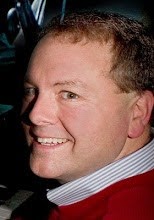
And here's me doing my best Conrad Veidt impersonation underneath the marquee before the show.

 How did I do?

I know, I need to work on the hair. And the wardrobe. And the eyes and face. And the posture. I think other than those minor details, it's dead on!

While I work on my impressions, you can work on making your way to the Leavitt Theatre in Ogunquit, Maine, where they're screening 'The Phantom of the Opera' (1925) on Monday, Oct. 27 at 7 p.m. with music by me. More details in the press release below. 

*     *     *

Lon Chaney menaces Mary Philbin in 'The Phantom of the Opera' (1925).

MONDAY, OCT. 20, 2025 / FOR IMMEDIATE RELEASE
Contact Jeff Rapsis • (603) 236-9237 • jeffrapsis@gmail.com

'Phantom of the Opera' starring Lon Chaney at Leavitt Theatre on Monday, Oct. 27


Just in time for Halloween Pioneer classic silent thriller to be shown with live musical accompaniment—see it if you dare!

OGUNQUIT, Maine—It was a film considered so frightening when first released that theaters were advised to have doctors standing by in case moviegoers fainted.

It was the original big screen adaptation of 'The Phantom of the Opera' (1925), starring iconic actor Lon Chaney in the title role.

This classic Universal thriller will be shown on Monday, Oct. 27 at 7 p.m. at the Leavitt Theatre, 259 Main St., Route 1, Ogunquit.

General admission tickets are $20 per person.

The screening will feature live musical accompaniment by Jeff Rapsis, a New Hampshire-based composer who specializes in creating music for silent films.

The film is suitable for all ages, although young children may find some scenes intense and frightening.

The show will enable audience members to experience the original silent 'Phantom' the way it was intended to be seen: on the big screen, with live music, and with an audience.  

'The Phantom of the Opera,' starring legendary actor Lon Chaney in the title role, remains a landmark work of the cinematic horror genre. To modern viewers, the passage of time has made this unusual film seem even more strange and otherworldly.

It's an atmosphere that silent film accompanist Jeff Rapsis will enhance by improvising live music on the spot for the screening.

"The original 'Phantom' is a film that seems to get creepier as more time passes," said Rapsis, who accompanies films at venues around the nation. "It's a great way to experience the power of silent film to transport audiences to strange and unusual places."

'The Phantom of the Opera,' adapted from a 19th century novel by French author Gaston Leroux, featured Chaney as the deformed Phantom who haunts the opera house. The Phantom, seen only in the shadows, causes murder and mayhem in an attempt to force the opera's management to make the woman he loves into a star.

The film is most famous for Lon Chaney's intentionally horrific, self-applied make-up, which was kept a studio secret until the film's premiere.

Chaney transformed his face by painting his eye sockets black, creating a cadaverous skull-like visage. He also pulled the tip of his nose up and pinned it in place with wire, enlarged his nostrils with black paint, and put a set of jagged false teeth into his mouth to complete the ghastly deformed look of the Phantom.

Chaney's disfigured face is kept covered in the film until the now-famous unmasking scene, which prompted gasps of terror from the film's original audiences.

"No one had ever seen anything like this before," Rapsis said. "Chaney, with his portrayal of 'The Phantom,' really pushed the boundaries of what movies could do."

Chaney, known as the "Man of a Thousand Faces" due to his versatility with make-up, also played Quasimodo in the silent 'Hunchback of Notre Dame' (1923) and circus performer 'Alonzo the Armless' in Tod Browning's 'The Unknown' (1927).

The large cast of 'Phantom of the Opera' includes Mary Philbin as Christine DaaƩ, as the Phantom's love interest; character actor Snitz Edwards; and many other stars of the silent period.

'The Phantom of the Opera' proved so popular in its original release and again in a 1930 reissue that it led Universal Studios to launch a series of horror films, many of which are also regarded as true classics of the genre, including 'Dracula' (1931), 'Frankenstein' (1931), and 'The Mummy' (1932).

The silent film version of 'Phantom' also paved the way for numerous other adaptations of the story, up to and including the wildly successful Andrew Lloyd Webber musical from 1986 that continues to run in productions around the world.

"Even with all the different versions of this story, Chaney's performance in the lead role stands the test of time," Rapsis said. "And remember—in silent film, no one can hear you scream!"

‘The Phantom of the Opera’ (1925) will be shown with live music on Monday, Oct. 27 at 7 p.m. at the Leavitt Theatre, 259 Main St. Route 1, Ogunquit, Maine; (207) 646-3123; admission is $20 per person, general seating. For more information, visit www.leavittheatre.com. 

Thursday, July 28, 2022

Stay up late this Saturday, July 30 for midnight screening of 'Dr. Caligari' at Coolidge Corner

Stay awake to see Cesar the Somnambulist in 'The Cabinet of Dr. Caligari' (1920)

I'm looking forward to this weekend's midnight screening of 'The Cabinet of Dr. Caligari' (1920) at the Coolidge Corner Theater in Brookline, Mass.

For those who've never experienced this very important (and very strange) piece of early cinema, I can't think of a better environment in which to do so.

In a theater? Check! With live music? Check! With an audience? Check! 

And finally, the middle of the night? Check and double check!

Really: semi-drowsiness might be the ideal state to appreciate the dream-like visual world in which 'Caligari' takes place. 

So hope to see you at the Coolidge on Saturday, July 30 when the clock strikes 12! More details in the press release below...

*     *     *

'Caligari' takes place entirely in a dream-like visual world.

MONDAY, JULY 25, 2022 / FOR IMMEDIATE RELEASE
Contact Jeff Rapsis • (603) 236-9237 • jeffrapsis@gmail.com

Coolidge to unleash late night silent film horror classic on Saturday, July 30

Midnight screening of breakthrough thriller 'Cabinet of Dr. Caligari' to feature live musical accompaniment

BROOKLINE, Mass.—A creepy silent film regarded as the forerunner of all horror movies will be shown at a midnight screening at the Coolidge Corner Theatre, 290 Harvard St., Brookline, Mass.

'The Cabinet of Dr. Caligari' (1920) will be shown at midnight on Saturday, July 30 as part of the Coolidge's ongoing 'Carnival of Horror' series.

The screening will feature live music by silent film accompanist Jeff Rapsis. General admission is $15.50 per person.
 
Set in an insane asylum, 'The Cabinet of Dr. Caligari,' is considered a landmark in early cinema. Nearly a century after its release, the film still has the capacity to creep out audiences.

"A case can be made that 'Caligari' was the first true horror film, critic Roger Ebert wrote in 2007.

'Caligari,' made in Germany after World War I and directed in expressionist style by Robert Wiene, stars Werner Krauss and Conrad Veidt.

The film employs stylized sets, with abstract, jagged buildings painted on canvas backdrops and flats.

To add to its strange visual design, the actors used an exaggerated technique that employed jerky and dancelike movements.

The movie is also cited as having introduced the surprise "twist" ending to cinema.
 
Conrad Veidt and Werner Krauss, two big names of early German cinema, star in 'Cabinet.'
 
"Silents such as 'Dr. Caligari' are films that first caused people to fall in love with the movies," Rapsis said. "The aim is to present them as they were originally intended to be shown: in a theater, on a big screen, with live music, and with an audience. If you can put all those elements together, these films leap to life."

In scoring 'The Cabinet of Dr. Caligari,' Rapsis plans to augment the traditional orchestral sound with the vocabulary of film music from later eras.

"Because I improvise the music, it's hard to know what will happen until the film actually starts running," Rapsis said.

'Caligari,' a forerunner of the 'film noir' genre, has influenced generations of movie-makers.

A sequel of sorts was released in the 1980s with the film 'Dr. Caligari,' which dealt with the granddaughter of the original Dr. Caligari and her illegal experiments on her patients in an asylum.

The Coolidge Corner Theatre is an independent, nonprofit cinema and cultural institution. Since 1933, audiences in the greater Boston area have relied on the Coolidge for contemporary independent film, repertory, and educational programming.

'The Cabinet of Dr. Caligari' (1920) will be shown with live music at midnight on Saturday, July 30 as part of an ongoing "Carnival of Horror" series at the Coolidge Corner Theatre, 290 Harvard St., Brookline, Mass. General admission $15.50; for more info and to buy tickets, visit www.coolidge.org or call (617) 734-2500.

Monday, October 23, 2017

Coming up next: 'The Man Who Laughs' on Wednesday, 10/25 at the Regent Theatre

Conrad Veidt and Olga Baklanova in 'The Man Who Laughs.'

Coming up next: live music for 'The Man Who Laughs' (1928), one of the truly great silent films for Halloween.

Nothing wrong with perennial favorites 'Nosferatu' and 'Phantom.' But if I had my way, 'The Man Who Laughs' would screen just as often.

Never seen it? You chance is coming this week: it's playing on Wednesday, Oct. 25 at 7 p.m. at the Regent Theatre in Arlington, Mass.

More details in the press release below.

Actually, I think 'The Man Who Laughs' is a great film for any time of the year. It's a truly skillful adaptation of an underrated Victor Hugo novel.

And the title character seems tailor-made for silent film: a man whose disfigured face forces him to display an insane grin no matter what tragedy befalls him. Talk about visuals!

The film's principle drawing card for today's audiences is that the make-up job for the title character, played by Conrad Veidt, inspired the look of Batman's nemesis, the Joker.


But 'The Man Who Laughs' is not just a make-up job. It's full of strong performances, starting with Veidt, who gives it his all in a role that must have been a challenge to realize.

The supporting cast is equally strong, and generously salted with odd-ball character actors that director Paul Leni often employed.

Even Mary Philbin, as the blind Dea, redeems herself from her 'Phantom' over-acting with a remarkably nuanced performance.

And the story really taps into the big emotions that drive the greatest silent films: love with a capital L, fear, jealousy, joy, greed, and so much more.

So I invite you to join us for 'The Man Who Laughs' at the Regent, a fantastic neighborhood theater and performance space that's an ideal venue for silent film to be seen at its best.

* * *

A few notes from the road.

Lately, if my life were a Dr. Seuss book, it would be "Oh, The Places You'll Go!"

Really: with Halloween coming up fast, the past five days have taken me to silent film screenings in all kinds of venues.

How about a town office complex in Jacksonville, Vermont?


Or the Tuscan Opera House, a ramshackle function hall just down the road from an enormous paper mill complex in Rumford, Maine? (On the program: 'The Man Who Laughs.'


And Brandon Town Hall in Brandon, Vt., where I accompanied the silent version of 'Dr. Jekyll and Mr. Hyde.'


And how about the newly renovated Natick Center for the Arts in Natick, Mass.?


In a break from the Halloween programming, the folks in Natick opted for a Charlie Chaplin comedy program to launch what's hoped to be a regular silent film/live music series.

It's about the right size, and the projection system is top notch.

So I hope a series comes to pass, as it's an excellent venue for silent film. As a bonus, it has a brand spanking new Yamaha concert grand piano right in the hall:


I didn't make use of it as I had already set up my digital synthesizer for the Chaplin program. But I spent some time getting to know the Yamaha, and it's like driving a Porsche. I look forward to working with it for future programs if the opportunity arises.

* * *


TUESDAY, OCT. 10, 2017 / FOR IMMEDIATE RELEASE
Contact Jeff Rapsis • (603) 236-9237 • jeffrapsis@gmail.com

'The Man Who Laughs' (1928) to screen with live music on Wednesday, Oct. 25 at Regent Theatre


Just in time for Halloween: Creepy silent film thriller inspired the look of Batman's nemesis 'The Joker'

ARLINGTON. Mass.—'The Man Who Laughs' (1928), a classic silent film thriller, will be screened with live music on Wednesday, Oct. 25 at 7 p.m. at the Regent Theatre, 7 Medford St., Arlington, Mass.

General seating admission is $12 per person in advance or day of show.

Live music will be provided by Jeff Rapsis, a New Hampshire-based silent film accompanist.

'The Man Who Laughs,' directed by Paul Leni and starring Conrad Veidt, is a silent thriller about a disfigured man forced to wear an insane grin all his life.

The movie was a popular and ground-breaking silent film adaptation of a sprawling Victor Hugo novel set in 17th century England.

Veidt stars as Gwynplaine, a child born of English nobility. After his father is executed, a cruel King James II orders a royal surgeon to hideously disfigure young Gwynplaine's face into a permanent smile, so that he may always laugh at his father's foolishness.

Abandoned and shunned, young Gwynplaine is left to make his way on his own. He learns to conceal his face from strangers, befriending Dea, a blind girl who is not aware of his disfigurement.

The pair are then adopted and put to work by a travelling impresario, who makes use of Gwynplaine's startling face in his theatrical productions.

Gwynplaine and Dea grow to adulthood and eventually fall in love, but complications arise when Gwynplaine's noble lineage is revealed, entitling him to his father's estate—provided he marry another woman of noble birth.

Veidt, who starred earlier in the German expressionist horror classic 'The Cabinet of Dr. Caligari' (1919), played the role of Gwynplaine by using a prosthetic device inside his mouth to force his face into a hideous grin and display outsized teeth.

This striking look was later adapted by Batman creator Bob Kane as a model for the physical appearance of iconic villain 'The Joker.'

Critics have praised 'The Man Who Laughs' for its dark visual style and daring story content.

"'The Man Who Laughs' is a melodrama, at times even a swashbuckler, but so steeped in Expressionist gloom that it plays like a horror film," wrote Roger Ebert in 2004. "The film is more disturbing than it might have been because of Leni's mastery of visual style."

Director Leni, originally trained as an artist, made ample use of shadows and darkness in 'The Man Who Laughs,' which set the stage for many legendary Universal horror classics soon to follow, including 'Dracula' (1931) and 'Frankenstein' (1931).

Upcoming programs of silent film with live music at the Regent include:

• Friday, Jan. 26 at 7 p.m., 'The Wizard of Oz' (1925). Early silent film version of Frank L. Baum's immortal tales features silent comedian Larry Semon in a slapstick romp that also casts Oliver Hardy as the Tin Man and takes extreme liberties with the beloved classic tales and characters. Oz as you've never seen it before!

'The Man Who Laughs' (1928) will be screened on Wednesday, Oct. 25 at 7 p.m. at the Regent Theatre, 7 Medford St., Arlington, Mass.

General seating admission is $12 per person in advance or day of show. Tickets may be booked online at www.regenttheatre.com. For more information, call the theater at (781) 646-4849.

For more information on the music, visit www.jeffrapsis.com.

Saturday, October 15, 2016

Mid-autumn mini-tour: silent film music
in Vermont, New Hampshire, Massachusetts

From today: Good color coming in this year across the road from our house.

Spooky silent film shows in three states this weekend. I'll be haunting old movie theaters and even older town halls with creepy cinema and live (but deadly) music.

And it's peak foliage right now in northern New England: a little late due to lack of rain this summer, but coming in nicely nonetheless.

I had to drive through rural Brookline and Hollis, N.H. on Thursday, and even on a cloudy day the colors are amazing.

So it's a great weekend to go bombing around the New England countryside on a mini-tour that takes me to an evening show in Brandon, Vt. on Saturday; a Sunday afternoon show in Charlestown, N.H., and then an evening performance down in Boston at the Somerville Theatre.

Because of the distance involved, I get to stay overnight in Rutland, Vt. I tell ya, this showbiz thing is just endless glam.

In Brandon, it's 'Chiller Theatre,' so dubbed because when we started showing films as late as October, the Town Hall did not have central heating.

It now does, but they've kept the name. The film is 'The Man Who Laughs' (1928), the amazing Paul Leni film starring Conrad Veidt in the title role.

Original promotional art for 'The Man Who Laughs.'

It's our final screening of the season in Brandon, where turnout has been strong all year. We've had some good publicity in local press, so here's hoping for a really big crowd for our last hurrah.

More details of the screening are in the press release posted below.

Sunday afternoon takes me to Charlestown, N.H., where the local historical society is screening a Lon Chaney double feature: 'The Unknown' (1927) followed by 'The Phantom of the Opera' (1925).

Showtime is 2 p.m. at the "Old Town Hall," a building whose many functions over the years have included a stint as the town movie theatre.

I always enjoy visiting Charlestown, as I covered the town for a time as a reporter for the Eagle-Times daily newspaper, based up the Connecticut River in Claremont, N.H.

To me, it was a sort of Granite State version of Lake Wobegon. The local grocery store was (and still is) actually named Ralph's, just as in Garrison Keillor's fictional town.

And the place was (and yes, still is) filled with memorable characters.

North Charlestown in home to the St. Pierre clan, an enormous family that runs a huge sand and gravel business. I got to know some of the brothers well enough to be invited to the annual family picnic, where one of the traditions was for everyone to gather on a flatbed and then have it hauled onto the truck scale to get the collective family weight!

When I'm done in Charlestown, then I bomb down to the big city, Boston, where I'm accompanying Chaney again in 'The Unknown,' but this time it's a 35mm print.

The 8 p.m. screening is the finale of the theater's annual multi-day "Terrorthon" festival. It's always a highlight to accompany films at this grand old theater, which has been showing movies since 1914 and where they still take the trouble to show vintage film on actual film.

More details about the Sunday screenings can be found by clicking the "Upcoming Silent Film Screenings" link at the top right of this page.

A lull follows Sunday, but things pick up again next weekend and then I have screenings virtually every day through Halloween. Be prepared to get scared!

And of course, if the usual run-up to Halloween isn't scary enough, just turn on the news! Boo!

* * *

Conrad Veidt and Olga Baclanova in 'The Man Who Laughs' (1928).

TUESDAY, OCT. 4, 2016 / FOR IMMEDIATE RELEASE
Contact Jeff Rapsis • (603) 236-9237 • jeffrapsis@gmail.com

'The Man Who Laughs' (1928) to screen with live music on Saturday, Oct. 15 at Brandon Town Hall


Creepy silent film melodrama starring Conrad Veidt inspired appearance of Batman's nemesis 'The Joker'

BRANDON, Vt.—'The Man Who Laughs' (1928), a silent drama featuring a disfigured man forced to wear an insane grin all his life, will be screened with live music on Saturday, Oct. 15 at 7 p.m. at Brandon Town Hall.

The film will be accompanied live by silent film musician Jeff Rapsis.

The screening is free and open to the public. Donations are accepted to help support the town hall's ongoing renovation and restoration. The screening is sponsored by Omya, Inc.

'The Man Who Laughs,' directed by Paul Leni and starring Conrad Veidt, was a popular silent film adaptation of a sprawling Victor Hugo novel set in 17th century England.

Veidt stars as Gwynplaine, a child born of English nobility. After his father is executed, a cruel King James II orders a royal surgeon to hideously disfigure young Gwynplaine's face into a permanent smile, so that he may always laugh at his father's foolishness.

Abandoned and shunned, young Gwynplaine is left to make his way on his own. He learns to conceal his face from strangers, befriending Dea, a blind girl who is not aware of his disfigurement.

The pair are then adopted and put to work by a travelling impresario, who makes use of Gwynplaine's startling face in his theatrical productions.

Gwynplaine and Dea grow to adulthood and eventually fall in love, but complications arise when Gwynplaine's noble lineage is revealed, entitling him to his father's estate—provided he marry another woman of noble birth.

Veidt, who starred earlier in the German expressionist horror classic 'The Cabinet of Dr. Caligari' (1919), played the role of Gwynplaine by using a prosthetic device inside his mouth to force his face into a hideous grin and display outsized teeth.

This striking look was later adapted by Batman creator Bob Kane as a model for the physical appearance of iconic villain 'The Joker.'

Critics have praised 'The Man Who Laughs' for its dark visual style and daring story content.

"'The Man Who Laughs' is a melodrama, at times even a swashbuckler, but so steeped in Expressionist gloom that it plays like a horror film," wrote Roger Ebert in 2004. "The film is more disturbing than it might have been because of Leni's mastery of visual style."

Director Leni, originally trained as an artist, made ample use of shadows and darkness in 'The Man Who Laughs,' which set the stage for many legendary Universal horror classics soon to follow, including 'Dracula' (1931) and 'Frankenstein' (1931).

'The Man Who Laughs' will be be screened with live music on Saturday, Oct. 15 at 7 p.m. at Brandon Town Hall and Community Center, Route 7, in Brandon, Vt.

Admission is free; free will donations are encouraged, with proceeds to support ongoing renovation of the town hall. For more information, visit www.brandontownhall.org. For more about the music, visit www.jeffrapsis.com.

Thursday, November 1, 2012

Postponed: 'The Last Command' (1928)
on Thursday, Nov. 8 at Molloy College


NOTE: Due to continuing recovery efforts following Hurricane Sandy, our screening of 'The Last Command' on Thursday, Nov. 8 at Molloy College in Rockville Center, Long Island has been postponed. I'll update this when we get rescheduling details.

With Halloween over, things quiet down a bit on the silent film music front for the next couple of months. Relatively light duty until we get through the holidays, but still some good gigs coming up.

Of special interest is 'The Last Command' (1928) on Thursday, Nov. 8 at Molloy College in Rockville Center, N.Y. If you're in the area, come by and check it out! (There's more info on the "Upcoming Screenings" page at right.)

One of the great scenes in all silent cinema is in this picture, when Emil Jannings finally goes berserk. (It was enough to get him the "Best Actor" at the first-ever Academy Awards.)

Let's hope the good folks of Molloy College are okay after the recent storm that battered Long Island. For now, let me round up a few thoughts from the recent busy run-up to Halloween, culminating in three films in the past four days.

• 'The Hands of Orlac' (1924) is not one of those films that leaps to life on the big screen. At least that's what we found at a screening in Wilton, N.H. on Sunday, Oct. 28.

Because the main character is a concert pianist losing his mind, it's a fun film to do music for. One of the main themes turned out to be a weirdly harmonized version of the melody of an "easy listening" pop tune from the 1960s—one I can't remember the name of but goes "DAH DAH DAH...da-da-da-da-da, da-da-da-da-da: DAH DAH DAH da-da-da-da-da-, da-da-da-da-da. (I know that's not too effective written out in a blog like this.) It turned out to be versatile figure that lent itself to being stripped down to just its rhythm, or even weirder alternate harmonies as the film progressed.

But overall, 'The Hands of Orlac' moves at too slow a pace to cast any kind of a spell. One comment from a regular: "There was nothing you could have done to save that film." So sorry, Robert Wiene and Conrad Veidt! Probably won't be scheduling that one anytime soon again.

• However, 'The Cabinet of Dr. Caligari' (1920) is one of those films that seems to gain a certain energy and presence on the big screen. At our screening in Manchester, N.H. on Tuesday, Oct. 30, it seemed to move right along, and the audience stayed with it the whole way.

Somehow the music fell together, too, with scraps of the "Dies Irae" mixed in with little cells borrowed from Stravinsky's 'Rite of Spring.' It all contributed to a powerful experience. I'd love do the film again, especially as it's one of the most frequently requested of all silent movie titles.

• Our Halloween screening of 'Phantom of the Opera' at Merrimack College in North Andover, Mass. was a hoot. However, for future screenings, I've got to get there earlier to set things up. It's my own fault, but once again I wound up without enough light on the keyboard, so didn't have the flexibility (or accuracy) that I usually have at my disposal. End result is the folks got a slightly-more-atonal-than-intended score, which was okay for a picture like 'Phantom,' but would have been a problem for, say, Rin Tin Tin in 'Clash of the Wolves.' (also 1925).

• And speaking of 'Phantom,' I've just learned of an excellent blog post describing our screening of that film at the Somerville Theatre in Somerville, Mass. on Sunday, Oct. 21. Raquel Stecher writes about classic film on her blog, "From Out of the Past," and she really did a nice job recounting what the Somerville experience was like in this post. Thanks, Raquel!

• Okay, that's about it. Next local screening will be a program of Chaplin short comedies on Thursday, Nov. 15 at the Flying Monkey Moviehouse in Plymouth, N.H. Hope to see you there!

Friday, October 26, 2012

Sunday, Oct. 28: Getting a grip (har!) on
'The Hands of Orlac' (1924) in Wilton, N.H.

Where have those hands been? Conrad Veidt counts to 10 before losing his cool in 'The Hands of Orlac' (1924).

Things being what they are (messed up and overscheduled), I haven't had a chance to get out much advance material on 'The Hands of Orlac' (1924), which we're screening on Sunday, Oct. 28 at 4:30 p.m. at the Wilton (N.H.) Town Hall Theater.

So here's a quick list of why this one's worth attending. Ready?

It's a great Halloween film. As as rule, any film that involves the swapping of body parts is likely to put you in the right mood for Halloween. But 'The Hands of Orlac' is especially good, as it involves a concert pianist who loses his hands in a train accident. The fun begins when they're replaced with another set ofhands ... transplanted from a just-executed murderer!

It stars Conrad Veidt. From 'The Cabinet of Dr. Caligari' (1920) to 'Casablanca' (1942), Conrad Veidt was one of the great presences of early cinema. His face was instantly recognizable, but he was somehow able to play characters from all ages and epics. He also brought a level of intensity to his roles that few have ever matched.

It's in a real theater with live music. An obscure Austrian film, 'The Hands of Orlac' is almost never screened anywhere, and the commercial DVD that's available has a recorded score that doesn't help the film leap to life, in my opinion. So don't miss a rare chance to see it on the big screen (and to hear what I can do with live music) at the Wilton Town Hall Theater, one of the best places around to take in a movie of any type. And their popcorn is great, too.

Free admission! Through the generosity of the Wilton Town Hall Theatre, the silent films we do there each month are open to all—which is great, because the bigger an audience is for a silent film, the better. Those who wish to support the series (and keep it free to all) are encouraged to make a small donation in the lobby. Thanks in advance for that!

Okay, if you haven't been convinced to come by now, you must be a zombie, which means you're probably all ready for Halloween. And even if you are a zombie, you're still welcome to come—just don't suck out my brains until the picture's over, please.

If there's anything left, that is.

Saturday, April 21, 2012

Oh, that face! 'The Man Who Laughs' (1928) Tuesday, May 1 in Manchester, N.H.

Now here's a silent film you can really sink your teeth into.

It's 'The Man Who Laughs' (1928), director Paul Leni's adaptation of a lesser-known Victor Hugo historical novel. Starring the great Conrad Veidt (that's him above, with the choppers) as Gwynplaine, whose face was permanently disfigured into a hideous grin in childhood, this one has it all: a great story, arresting visuals, and a make-up job that was so memorable it later inspired the look of 'The Joker' in the Batman comic books.

Okay, cue the hyena-like laughter. But never mind Gwynplaine's mouth: In programming silent films for the remainder of 2012, I've tried to stretch myself a bit with films such as 'The Man Who Laughs,' which I've never done before. For one thing, I'm eager to keep exploring the silent era, and there's nothing like doing music for a film to get a sense of how it ticks.

Also, you can't keep doing 'The General' (1927) and 'Phantom of the Opera' (1925) again and again without feeling like you're in a silent film rut. So 'The Man Who Laughs' will help keep things from getting stale, even as I do seem to rely on titles I've done previously, sometimes as a matter of convenience. (Hey, I do have a day job, you know.)

For new or unfamiliar titles, the monthly series at the Manchester (N.H.) Public Library is turning out to be a good place to try them out and see how they play. It's a small auditorium (about 200 seats) and the costs and logistics of staging a screening there are relatively minimal. Turnout seems tilted toward knowledgeable film folks (and some silent film newbies, too) who are eager for something new in old movies, and that's what I'm hoping to provide.

A good example of a film that proved worth reviving was the John Ford drama 'Hangman's House' (1928), which I slotted for this past March just because it's set in Ireland and I wanted something to mark St. Patrick's Day. The movie, which includes an early cameo of a young John Wayne in a crowd scene, proved to be a mesmerizing experience, more so than I expected. So it's a keeper.

And 'The Man Who Laughs?' One good indication is that contemporary film critics are still writing about it. Roger Ebert, for instance, wrote an extensive analysis in 2004 as part of his 'Great Movies' series. We'll see on Tuesday, May 1. If you're up for joining us, here's the press release that went out to local media...

* * *
MONDAY, APRIL 23, 2012 / FOR IMMEDIATE RELEASE
Contact Jeff Rapsis • (603) 236-9237 • jeffrapsis@gmail.com

'The Man Who Laughs' (1928) to screen with live music in Manchester, N.H. on Tuesday, May 1

Creepy silent film melodrama starring Conrad Veidt inspired make-up for Batman's nemesis 'The Joker'

MANCHESTER, N.H.—'The Man Who Laughs' (1928), a silent drama featuring a title character forced to wear an insane grin all his life, will be screened with live music on Tuesday, May 1 at 6 p.m. at the Manchester (N.H.) Public Library, 405 Pine St., Manchester, N.H. The film will be accompanied live by silent film music specialist Jeff Rapsis. Admission is free; donations are encouraged.

'The Man Who Laughs,' directed by Paul Leni and starring Conrad Veidt, is a sprawling adaptation of a Victor Hugo historical novel set in 17th century England. Veidt stars as Gwynplaine, a child born of English nobility. After his father is executed, a cruel King James II orders a royal surgeon to hideously disfigure young Gwynplaine's face into a permanent smile, so that he may always laugh at his father's foolishness.

Abandoned and shunned, young Gwynplaine is left to make his way on his own. He learns to conceal his face from strangers, and befriends Dea, a blind girl who is not aware of his disfigurement. The pair are then adopted and put to work by a travelling impresario, who promotes Gwynplaine's face as a theatrical attraction. Gwynplaine and Dea grow to adulthood and eventually fall in love, but complications arise when Gwynplaine's noble lineage is revealed, entitling him to his father's confiscated estate—provided he marry another woman of noble birth.

Veidt, who starred earlier in the German expressionist horror classic 'The Cabinet of Dr. Caligari' (1919), played the role of Gwynplaine by using a prosthetic device inside his mouth to force his face into a hideous grin and display outsized teeth. This striking look was later adapted by Batman creater Bob Kane as a model for the physical appearance of iconic villain 'The Joker.'

Critics have praised 'The Man Who Laughs' for its dark visual style and daring story content.

"'The Man Who Laughs' is a melodrama, at times even a swashbuckler, but so steeped in Expressionist gloom that it plays like a horror film," wrote Roger Ebert in 2004. "The film is more disturbing than it might have been because of Leni's mastery of visual style."

'The Man Who Laughs' is the latest in a monthly series of silent films presented with live music in the Manchester Public Library's vintage 1913 Carpenter Auditorium. A wide range of rarely seen silent films are shown at the library, with screenings generally taking place on the first Tuesday of each month at 6 p.m.

Upcoming silent film screenings at the Manchester Public Library include:

• Tuesday, June 5, 2012, 6 p.m.: 'Underworld' (1927); director Josef von Sternberg's groundbreaking tale of big city mobsters, widely considered the father of all gangster pictures. Tale follows crime boss "Bull" Weed (George Bancroft) as he battles rival 1920s gangsters. Incredible black-and-white photography; winner of first-ever Oscar for original story by Ben Hecht. Admission free, donations encouraged.

• Tuesday, June 26, 2012, 6 p.m.: 'Spite Marriage' (1929); Buster Keaton's last silent feature finds the poker-faced comic smitten so much by stage actress Trilby Drew (Dorothy Sebastian) that he joins the cast of her production. The fun really starts when she asks Buster to marry her, but only to get even with an old flame. Classic Keaton comedy, underrated and full of great routines. Admission free, donations encouraged.

• Tuesday, Aug. 7, 2012, 6 p.m.: 'Four Sons' (1928); director John Ford's drama about four brothers from Bavaria who become embroiled in World War I — but not on the same side! Interesting period drama set in Europe, carried by great story but with plenty of historical interest as well. Admission free, donations encouraged.

• Tuesday, Aug. 28, 2012, 6 p.m.: 'Chicago' (1927); the original big screen adaptation of the notorious Jazz Age tabloid scandal, based on true events. Dancer Roxie Hart is accused of murder! Is she innocent or headed for the slammer? Later made into the popular Broadway musical. Admission free, donations encouraged.

'The Man Who Laughs' will be shown on Tuesday, May 1 at 6 p.m. at the Manchester (N.H.) Public Library, 405 Pine St., Manchester, N.H. Admission is free, with donations encouraged to defray expenses. For more information, visit www.jeffrapsis.com.

--- 30 ---


For more info, contact: Jeff Rapsis • (603) 236-9237 • jeffrapsis@gmail.com Images and cutlines attached. High-resolution digital images available upon request.