Showing posts with label Grandma's Boy. Show all posts

Sunday, January 2, 2022

A century in the making: Town Hall Theatre to screen 1922's top five box office attractions

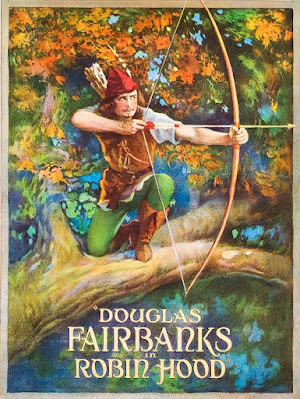
The #1 box office blockbuste of 1922: Douglas Fairbanks in 'Robin Hood.'

Get set for a four-month series exploring the top box office hits of 100 years ago!

It's at the Town Hall Theater in Wilton, N.H., and starts on Sunday, Jan. 9 at 2 p.m. with Harold Lloyd's comedy 'Grandma's Boy.'

More on that in the press release below. First, I'd like to recount my recent adventure with a pipe organ in the neighboring state of Vermont.

New Year's Day brought 2022's first screening: accompaniment for 'The Phantom Carriage' (1921) at Epsilon Spires, the Baptist Church-turned-performing arts venue in Brattleboro, Vt.
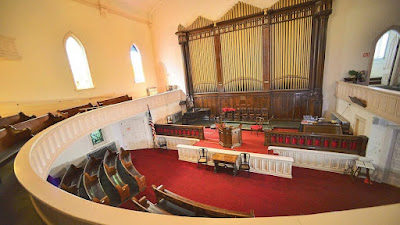
The interior of Epsilon Spires, which until recently was a Baptist Church.

Because it once was a church, it has an organ—in fact, an Estey organ built right there in Brattleboro and installed in 1906. 

 And that's what I used to do music for Victor Sjöström's influential drama. 

I don't get many chances to do live pipe organ accompaniment. So it was a real treat to start the new year working with the "king of instruments." 

The Estey, though technically a church organ rather than one built for movie accompaniment, is nevertheless up to the job of film accompaniment. 

It has a nice variety of stops, making possible a range of textures. And it can really rock the house when called for.

(And I've since learned that among the church's former congregants was Jacob Estey himself, who founded the organ-building company that bore his name.)

I augmented the organ's sound by using my digital synthesizer to add in percussion at key moments: timpani, bass drum, and cymbals. 

Although the organ was in tune with itself, I found it pitched about a half-tone lower than my synthesizer, which is defaulted to A = 440 Hz. So I had to pull the synth pitch down to about 415 Hz to compensate.

I've since read that this lowered pitch is standard practice for some instruments in playing music from the Baroque era. So much to learn!

One other odd thing is the Estey's pedal board—but in this case, it's me that's out of synch. 

The Allen organ I have at home is equipped with what's called a "Princess" pedalboard, meaning it's smaller than a full-sized pedalboard. 

Specifically, it's built to 3/4 size, I guess to make it easier to fit in a living room, which is where it would have been played back in the era of the home organ.

So my instincts regarding pedal location are off by a certain amount. It takes time to adjust to the different proportions of a full-sized pedalboard. Even so, I managed to hit most of the notes I aimed for. 

Accompanying the film on an unfamiliar instrument was a workout. 

But I have to say, from the standpoint of the accompanist, bringing a film to a conclusion with an organ is especially satisfying for some reason.
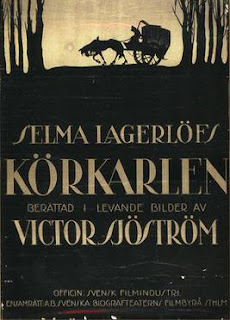
And it's not because I ended big—with 'The Phantom Carriage' (called 'Körkarlen' in Swedish'), I actually pulled a move from the ending of the Brahms Symphony No. 3, drawing up to a quiet close. 

Rather, in silent film accompaniment, there's something about the sound of an organ that helps the sum add up to more than the parts.

I want to thank Jamie Mohr and her colleagues at Epsilon Spires for the chance to work with the Estey and accompany 'The Phantom Carriage.' 

There's talk of follow-up screenings. I'd welcome that because it would mean to chance to really get to know the Estey.

Again, I just don't get a lot of chances to play pipe organ, so I'm excited about a venue with a working organ that's fairly close to home base.

As was once said in a non-silent movie, "This could be the beginning of a beautiful friendship."

Okay, onto the future, which in this case means heading back into the past.

On Sunday, Jan. 9, the Town Hall Theatre will begin a series of 100th anniversary screenings of the top box office hits of 1922.

First up is Harold Lloyd's breakthrough feature comedy 'Grandma's Boy,' which clocks in at No. 5 in the box office records. 

Plenty of other great pictures are lined up, too—but rather than have me prattle on about them here, check out the press release below.

Hope you'll join me in catching up on all the big hits of 1922 that for some reason you missed on their original runs!

*   *   *
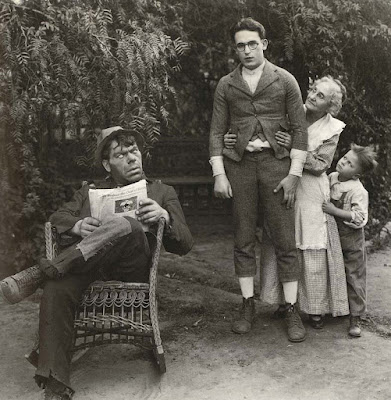
Harold Lloyd in 'Grandma's Boy' (1922).

MONDAY, DEC. 20, 2021 / FOR IMMEDIATE RELEASE
Contact Jeff Rapsis • (603) 236-9237 • jeffrapsis@gmail.com

Start 2022 with Hollywood's top box office hits from a century ago

Town Hall Theatre to embark on 100th anniversary screenings of 1922's most popular big screen attractions

WILTON, N.H. — It's a film series 100 years in the making!

Starting in January, the Town Hall Theatre will reset the clock and celebrate the top box office hits of 1922, when the movies were just coming into their own.

The program includes now-classic blockbusters such as Rudolph Valentino's bullfighting drama 'Blood and Sand' (1922); Marion Davies in the medieval romance 'When Knighthood was in Flower' (1922); and the year's highest-grossing film, 'Robin Hood' (1922) starring Douglas Fairbanks Sr.

First up is Harold Lloyd's uproarious comedy 'Grandma's Boy' (1922), to be screened on Sunday, Jan. 9 at 2 p.m. at the Town Hall Theatre, 40 Main St., Wilton, N.H.

Live music will be provided by silent film accompanist Jeff Rapsis. Admission is free, with a suggested donation of $10 per person to help cover expenses.

Subsequent programs will include all of 1922's five highest-grossing titles, each shown on the big screen with live music, as well as century-old oddities, short films, cartoons, and more.

"Putting these films back on the big screen is a great way to celebrate the 100th anniversaries of some terrific motion pictures," said Rapsis, the silent film accompanist who will create live music for all screenings.

"These are films that set the standard for Hollywood, and still retain their power to entertain, especially when shown in a theater with live music and an audience," Rapsis said.

'Grandma's Boy,' the first feature in the series, tells the story a cowardly young man (Harold Lloyd) who seeks the courage to battle a menacing tramp who terrorizes his small hometown.

Audiences loved 'Grandma's Boy.' The film grossed $1.1 million, making it the year's 4th-highest grossing picture and the year's most popular comedy. 

At the time, a successful feature film typically grossed $100,000. The picture helped establish Lloyd as a major star for the rest of the silent film era, and prompted rival comedians Charlie Chaplin and Buster Keaton to also make feature-length films.

In revival, 'Grandma's Boy' continues to delight movie-goers and serves as a great introduction to the magic of silent film. It also provides a window into small town American life as it was lived a century ago.

The Jan. 9 screening will include a special 100th anniversary cake to be enjoyed to movie-goers on a first-come, first-served basis.

Upcoming programs in the Town Hall's 100th anniversary series include:

• Sunday, Jan. 23, 2022 at 2 p.m.: 'Nanook of the North' Breakthrough 1922 documentary tells the story of Inuit hunter struggling to survive in far-north Canada.

• Sunday, Feb. 6, 2022 at 2 p.m.: Rudolph Valentino in 'Blood and Sand' Film's 'Latin Lover' in his first starring role, as a sexy bullfighter in this 1922 romantic thriller.

• Sunday, Feb. 20, 2022 at 2 p.m.: 'When Knighthood was in Flower' Marion Davies goes medieval in this epic big budget costume picture from 1922 that put her on the map as a top Hollywood star.

• Sunday, March 13, 2022 at 2 p.m.: Norma Talmadge in 'Smilin' Through' In honor of St. Patrick's Day, a 1922 romantic drama set in the Emerald Isle.

• Sunday, March 27, 2022 at 2 p.m.: Douglas Fairbanks in 'Robin Hood' Celebrate the 100th anniversary of this blockbuster adaptation. Massive sets, great action, and Doug Fairbanks in the lead made this the top grossing film of 1922!

• Sunday, April 10, 2022 at 2 p.m.: Chaney/Houdini Double Feature. In 'Flesh and Blood' (1922), escaped convict Lon Chaney hides out in Chinatown and plots revenge. In 'The Man From Beyond' (1922) illusionist Harry Houdini plays an Arctic adventurer frozen for 100 years!

• Sunday, April 24, 2022 at 2 p.m.: Emil Jannings in 'Othello' The Bard's immortal tragedy brought to the screen in this early German version. Silent Shakespeare in honor of the author's 458th birthday.

The 1922 series is made possible in part by the unlikely survival of so many of the year's top titles.

"With 80 percent of all films from the silent era lost or missing, we're fortunate to have all top five films from 1922 available to screen a full century after their release," Rapsis said.

"We invite all silent film fans, and also those who haven't experienced this type of cinema in a theater with an audience and live music, to come see the motion pictures that caused people to first fall in love with the movies," Rapsis said.

'Grandma's Boy' will be screened with live music on Sunday, Jan. 9 at 2 p.m. at the Wilton Town Hall Theatre, 40 Main St., Wilton, N.H. 

Admission is free, with a suggested donation of $10 per person to help defray expenses. For more info, call (603) 654-3456 or visit www.wiltontownhalltheatre.com.
 
P.S.: Check out this flyer promoting the series!

Friday, March 25, 2016

Tonight (Friday, 3/25) at Exeter Town Hall:
Harold Lloyd stars in 'Grandma's Boy' (1922)

'Grandma's Boy' was Lloyd's first venture into feature-length films.

The Presidential candidates may have come and gone from Exeter (N.H.) Town Hall, but the laughter will keep going as we screen a pair of Harold Lloyd comedies this evening.

It's the latest in a series of films at this historic venue, which often hosts political gatherings and was never intended to be a movie theater.

But we've found it works just fine. By "we," I mean the students of the Penn Program and their instructor, Andrew Fersch.

The Penn is a homeschool co-op based in Exeter and designed to challenge and engage creative students of high school age.

The students help run the program, which is in support of their very active activity calendar. What kind of activities?

Well, all kinds of stuff! They even go on multi-day hikes, and a class trip to New York City and Washington, D.C. this spring is in the works.

Without a big public school system to support them, the students and the families of the Penn Program have to be creative to keep all this going.

And so I've been delighted to work with them on this year's silent film series, which in two previous screenings has attracted good-sized audiences.

Andrew and the gang have done some outreach to local schools this time, so we'll see if it brings in some new faces.

Working against us, I suppose, is that show day also happens to be Good Friday, the most solemn day of the Christian calendar.

Let's hope that doesn't preclude families coming out tonight for what should be a very good time.

There's nothing like Harold Lloyd films shown as they were intended: in a theater, with live music, and (most importantly) with an audience!

So do your part and come join us this evening at 7 p.m. for 'Grandma's Boy' (1922) and a warm-up short, 'Never Weaken' (1921).

More details in the press release pasted in below.

* * *

An original poster for 'Grandmas's Boy.'

MONDAY, MARCH 21, 2016 / FOR IMMEDIATE RELEASE
For more info, contact: Jeff Rapsis • (603) 236-9237 • jeffrapsis@gmail.com

Silent comedy 'Grandma's Boy' at Exeter Town Hall on Friday, March 25


Classic Harold Lloyd feature film to be screened with live music accompaniment

EXETER, N.H.—The silent film era returns to the big screen at Exeter Town Hall with the showing of 'Grandma's Boy' (1922), a classic silent comedy accompanied by live music.

Admission is free and the screening is open to the public. A donation of $5 per person is suggested, with all proceeds to support the Penn Program, a local homeschool co-op for students of high school age.

Music for 'Grandma's Boy' will be performed live by Jeff Rapsis, a New Hampshire-based composer and silent film accompanist who performs at venues around the nation.

'Grandma's Boy' tells the story a cowardly young man (Harold Lloyd) who seeks the courage to battle a menacing tramp who terrorizes his small hometown.

Audiences loved 'Grandma's Boy' when it was first released, and the picture helped establish Harold Lloyd as a major star for the rest of the silent film era.

In revival, 'Grandma's Boy' continues to delight movie-goers and serves as a great introduction to the magic of silent film. It also provides a marvelous window into small town American life as it was lived a century ago.

Harold Lloyd confronts tramp Dick Sutherland in 'Grandma's Boy.' I've been asked if Sutherland is any relation to Donald Sutherland. Anyone know?

Despite his mega-star status in the 1920s, Lloyd is largely unknown to today's audiences, mostly because he retained control of his films in later life and refused to let them be shown on television.

"People today remember Charlie Chaplin, but the silent era had many popular stars," Rapsis said. "Harold Lloyd's 'average American' character was immensely popular in the 1920s, not just in the U.S. but around the globe."

With the release of Lloyd's films on DVD, audiences are rediscovering his timeless genius. The reissue sparked a demand for screenings in theaters, where the Lloyd films continue to cast their spell on audiences.

Shown in a theater with live music, Lloyd's features maintain their power to delight movie-goers.

"Times have changed, but people haven't," Rapsis said. "The Lloyd films were designed to be shown in a theater with an audience, and to appeal to a worldwide audience, and their universal themes haven't lost any relevance," said Rapsis, who has performed scores for silent films in venues ranging from the Harvard Film Archive in Cambridge, Mass. to the Kansas Silent Film Festival at Washburn University in Topeka, Kansas.

Using original themes created beforehand, Rapsis improvises the music live as the films are shown.

"When the score gets made up on the spot, it creates a special energy that's an important part of the silent film experience," said Rapsis, who uses a digital synthesizer to recreate the texture of a full orchestra for the accompaniment.

In reviving 'Grandma's Boy' and other great films of cinema's early years, organizers of the Exeter Town Hall film series aim to show silent movies as they were meant to be seen—in high quality prints, on a large screen, with live music, and with an audience.

'Grandma's Boy' is the latest in a series of silent film screenings to benefit the Penn Program, a homeschool co-op based in Exeter designed to challenge and engage creative students of high school age.

The program, launched by educator and writer Andrew Lapham Fersch in 2012, seeks to explore new methods of education. The Penn Program emphasizes active involvement in a wide range of artistic and creative activities ranging from video production to stand-up comedy.

Under Fersch's direction, the program operates in downtown Exeter, enrolling students from several area towns.

The Penn Program seeks to create a new model for integrating the arts into education, with the goal of fostering creativity, originality, hard work, dedication, kindness, and a spirit of giving.

"We felt presenting a silent film series was a great way to reach out and introduce ourselves to the community while bringing people together," Fersch said. "We're all eager to celebrate the creativity of early Hollywood in Exeter Town Hall, which is a great space, and we're doubly excited to be able to bring the community together to enjoy such a talented musician and wonderful movie."

'Grandma's Boy' will be shown on Friday, March 25 at 7 p.m. at Exeter Town Hall, 9 Front St., Exeter. Admission is free and the screening is open to the public. A donation of $5 per person is suggested, with all proceeds to support the Penn Program.

For more information on the music, visit www.jeffrapsis.com.

Saturday, March 19, 2016

A return to Blazing Star Grange—this time
for Harold Lloyd in 'Grandma's Boy' (1922)

The Blazing Star Grange Hall in Danbury, N.H.—in a photo from last year, when we had a bit more snow.

Who needs a time machine to visit the past?

Just come on up to Danbury, N.H., where the entertainment this Saturday night is a Harold Lloyd silent film program shown in a real-life New Hampshire Grange Hall.

Like silent film, the Grange had its heyday in another era. At a time when most people earned their living directly from the land, the Grange was an important institution that encouraged responsible land stewardship, good animal husbandry, sound agricultural practices, and strong communities.

The Grange is still active in communities here and there, including the "Blazing Star" chapter in Danbury, N.H., which continues to operate now well into the 21st century.

But how thing have changed! Instead of encouraging good animal husbandry, they're now doing dissolute activities such as showing Harold Lloyd films on a Saturday night. For shame!

Actually, the Blazing Star Grangers are all wonderful people who are careful stewards of a wonderful vintage hall where meetings still take place.

Last year, a Buster Keaton program we did was a big success. That, coupled with all the effort that went into creating a movie screen to fill the hall's proscenium stage, led to this weekend's follow-up program of Harold Lloyd films.

We're starting with 'Never Weaken,' one of Lloyd's shorter "thrill" comedies. Then the main attraction is 'Grandma's Boy' (1922), the picture that launched Lloyd into feature-length films.

'Grandma's Boy' is a good one for the Grange because it's set in just the kind of community where the group would have flourished at the time.

And think about it: Almost all films from the silent era now carry at least some historical interest, in that they're accidental records of how people dressed, acted, and lived in past times.

Even a low-budget contemporary romance shows life as it was lived about 100 years ago, and is interesting just for that alone, I think.

But 'Grandma's Boy' is especially rich in this respect, in that it's full of scenes that show how everyday life was changing in so many ways in the 1920s. America was moving from the country to the city, and 'Grandma's Boy' captures this transition quite naturally.

It's filled with things that were once a part of daily life, but which we no longer do on a regular basis.

A good example (SPOILER ALERT!) is the film's opening gag: we see Harold working up a sweat turning a crank, and we assume he's starting a stubborn car. But a pullback shot reveals he's actually involved in the much-less manly activity of turning a hand-cranked ice cream machine.

How many audience members today have any real life experience with either activity? And yet people still always laugh at the gag.

Another example is gasoline. If I get a chance to introduce 'Grandma's Boy,' I always remind people that at the time, gasoline was regarded as a cleaning agent or a disinfectant as much as it was a fuel for the new-fangled automobiles.

Absent this knowledge, a sequence involving gasoline would puzzle modern viewers, or at least be enough of a head-scratcher to take viewers out of the moment.

(It's the same with the "goat glands" gag in Buster Keaton's short comedy 'Cops.' But that a whole other story.)

So come take a trip to the past this Saturday night at the Blazing Star Grange. More info in the press release below:

* * *

Harold Lloyd prepares to confront a tramp. Hey, how'd that kid get in there?

MONDAY, MARCH 7, 2016 / FOR IMMEDIATE RELEASE
Contact Jeff Rapsis • (603) 236-9237 • jeffrapsis@gmail.com

Silent comedy 'Grandma's Boy' at Danbury Blazing Star Grange on Saturday, March 19


Classic Harold Lloyd feature film to be screened with live music accompaniment

DANBURY, N.H.—The silent film era returns to the big screen at Danbury's Blazing Star Grange Hall with the showing of 'Grandma's Boy' (1922), a classic silent comedy accompanied by live music.

Showtime is Saturday, March 19 at 7 p.m. at the historic Grange Hall, 15 North Road in Danbury. The show is open to the public with suggested $5 donation.

The screening will feature live accompaniment by Jeff Rapsis, a New Hampshire-based composer who specializes in creating scores for silent films.

'Grandma's Boy,' stars Harold Lloyd, a popular 1920s film star.

'Grandma's Boy' tells the story a cowardly young man (Harold Lloyd) who seeks the courage to battle a menacing tramp who terrorizes his small hometown.

Audiences loved 'Grandma's Boy' when it was first released, and the picture helped establish Lloyd as a major star for the rest of the silent film era.


In revival, 'Grandma's Boy' continues to delight movie-goers and serves as a great introduction to the magic of silent film. It also provides a marvelous window into small town American life as it was lived a century ago.

The Danbury Blazing Star Grange silent film program will open with 'Never Weaken' (1921), a Harold Lloyd short comedy released before he made the jump to feature-length movies.

Despite his mega-star status in the 1920s, Lloyd is largely unknown to today's audiences, mostly because he retained control of his films in later life and refused to let them be shown on television.

"People today remember Charlie Chaplin, but the silent era had many popular stars," Rapsis said. "Harold Lloyd's 'average American' character was immensely popular in the 1920s, not just in the U.S. but around the globe."

With the release of Lloyd's films on DVD, audiences are rediscovering his timeless genius. The reissue sparked a demand for screenings in theaters, where the Lloyd films continue to cast their spell on audiences.

Shown in a theater with live music, Lloyd's features maintain their power to delight movie-goers.

"Times have changed, but people haven't," Rapsis said. "The Lloyd films were designed to be shown in a theater with an audience, and to appeal to a worldwide audience, and their universal themes haven't lost any relevance," said Rapsis, who has performed music for silent films in venues ranging the Donnell Library in New York City to the Kansas Silent Film Festival.

Using original themes, Rapsis improvises the music live as the films are shown.

"When the score gets made up on the spot, it creates a special energy that's an important part of the silent film experience," said Rapsis, who uses a digital synthesizer to recreate the texture of a full orchestra for the accompanimemt.

‘Grandma's Boy’ (1922), a classic silent comedy starring Harold Lloyd, will be shown on Saturday, March 19 at 7 p.m. at the Blazing Star Grange Hall, 15 North Road, Danbury, N.H. The program is open to the public. Suggested donation $5. For more info, visit www.blazingstargrange.org; for more info on the music, visit www.jeffrapsis.com.effrapsis.com.

Monday, August 10, 2015

Coming up: Four films in four days! First:
'Grandma's Boy' 8/13 in Plymouth, N.H.

'Grandma's Boy' (1922) will be screened with live music on Thursday, Aug. 13 at the Flying Monkey Moviehouse, Plymouth, N.H.

Let's start with an injury report:

The left pinkie is pretty much healed, and just in time.

I'll need all 10 fingers for a mini-marathon of four performances in four days in three separate states. Making a list, it's two in New Hampshire, one in Vermont, and one in Massachusetts. (Good thing in New England the states are so small!)

But first up, a quick report on yesterday's unexpected double feature at the Wilton (N.H.) Town Hall Theatre.

I say "unexpected" because I originally had just 'Red Signals' (1927) programmed as part of our summer-long series of silent train melodramas.

But last week, I came across a DVD-R copy of the Eastman restoration of 'Roaring Rails' (1924), which I'd never seen.

I popped it in, and was treated to an immensely entertaining (and great-looking) film starring Harry Carey and a child actor I'd never heard of before: Frankie Darro.

Frankie Darro gives a knowing wink in 'Roaring Rails' (1924).

In 'Roaring Rails,' Darro, as "Little Bill," suffers one calamity after another, to the point where you can't help but wonder if one of the scriptwriters was Job himself.

Let's see: Little Bill starts the film as a French lad who loses his mother in World War I. Then, brought the U.S as an orphan, he causes a huge train crash that costs his adopted railroad engineer father his job.

As 'Roaring Rails' progresses, Little Bill winds up on a bridge that gets blown up, costing him is eyesight. He's then taken custody by a cruel caretaker who at one point flings the blind youngster into the side of a metal bed.

All not so great for Little Bill, but enough to prompt me to add 'Roaring Rails' to yesterday's program, doubling it up with 'Red Signals' (1927), another railroad drama.

Who was this kid? Turns out Frankie Darro (born Frank Johnson in 1917 to parents who performed as "The Flying Johnsons" in a traveling circus) had a Hollywood career that lasted longer than most.

As a child star, he grew up in the movies, although not that much: as an adult, he was 5-foot-3, so wound up playing lots of jockeys, even showing up as one in the Marx Brothers classic 'A Day At the Races' (1937).

He also got into voice work—perhaps most notably as the character "Lampwick" in Disney's 'Pinocchio' (1940).

Darro then served in the U.S. Navy during World War II, and unfortunately caught malaria. The affliction stayed with him for the rest of his life, causing Darro to turn to alcohol to the point where it apparently impaired his health, according to the limited biographical info available.

Still, he kept performing; later big screen roles included uncredited work as Robby the Robot (unseen, in costume) in 'Forbidden Planet' (1956) and as a 'slave' extra in the big remake of 'Ten Commandments' (also 1956).

Darro did some TV work as well. His credits include an appearance as "newsman" in a couple of episodes of the 1960s 'Batman' TV series starring Adam West in the title role. (And with Neil Hamilton, leading man of the silent era, playing Commissioner Gordon.)

So in learning about Darro, I was reminded of Jackie Coogan, the child star that Charlie Chaplin launched to fame by co-starring him in his breakthrough feature, 'The Kid' (1921). Coogan continued to perform throughout his life, but in roles that included Uncle Fester on TV's 'The Addams Family' and Barbara Eden's wacky uncle in 'I Dream of Jeannie.'

I often wonder about the psychological issues that go with being a star in childhood, but then a minor character actor in later life. It can't be easy.

Darro, alas, died in 1976—of a heart attack at age 59, still fairly young.

But I hope he'd be pleased to know his performance as 'Little Bill' way back during the silent era still keeps an audience riveted to the screen.

That was the case yesterday in Wilton, where 'Roaring Rails' turned out to be the clear program favorite. 'Red Signals' (1927) was no slouch, but seemed a little less focused—and didn't benefit from having any child star beset by endless mishaps.

Audience response was strong for the whole program, as it's been throughout this series of obscure railroad melodramas. So I'm further convinced that there are worthy discoveries to be made among the thousands of silent feature films that have survived.

Few ever get a chance to be revived with live music and in front of an audience. But it's the only way to know for sure, so I intend to keep doing it.

Coming up in my four-day mini-marathon are programs featuring more well-known performers—Harold Lloyd and Buster Keaton among them.

First up is Harold Lloyd in 'Grandma's Boy' (1922), his own breakthrough film, which we're screening on Thursday, Aug. 13 at 6:30 p.m. at the Flying Monkey Moviehouse and Performance Center in Plymouth, N.H.

Admission is $10. More info about the screening is in the press release below. There's nothing like a Harold Lloyd film in a theater with an audience, so hope to see you there!

* * *

Harold Lloyd works up the courage to face a tramp in 'Grandma's Boy' (1922).

MONDAY, AUG. 3, 2015 / FOR IMMEDIATE RELEASE
Contact Jeff Rapsis • (603) 236-9237 • jeffrapsis@gmail.com

Silent comedy 'Grandma's Boy' at Flying Monkey on Thursday, Aug. 13


Classic Harold Lloyd feature film to be screened with live music accompaniment

PLYMOUTH, N.H.—The silent film era returns to the big screen at the Flying Monkey Moviehouse and Performance Center with the showing of 'Grandma's Boy' (1922), a classic silent comedy accompanied by live music.

Showtime is Thursday, Aug. 13, at 6:30 p.m. at the Flying Monkey, 39 Main St., Plymouth. All are welcome to this family-friendly event; admission is $10 per person general admission.

The screening, the latest in the Flying Monkey's silent film series, will feature live accompaniment by Jeff Rapsis, a New Hampshire-based composer who specializes in creating scores for silent films.

'Grandma's Boy,' stars Harold Lloyd, a popular 1920s film star.

'Grandma's Boy' tells the story a cowardly young man (Harold Lloyd) who seeks the courage to battle a menacing tramp who terrorizes his small hometown.

Audiences loved 'Grandma's Boy' when it was first released, and the picture helped establish Lloyd as a major star for the rest of the silent film era.

In revival, 'Grandma's Boy' continues to delight movie-goers and serves as a great introduction to the magic of silent film. It also provides a marvelous window into small town American life as it was lived a century ago.

Despite his mega-star status in the 1920s, Lloyd is largely unknown to today's audiences, mostly because he retained control of his films in later life and refused to let them be shown on television.

"People today remember Charlie Chaplin, but the silent era had many popular stars," Rapsis said. "Harold Lloyd's 'average American' character was immensely popular in the 1920s, not just in the U.S. but around the globe."

With the release of Lloyd's films on DVD, audiences are rediscovering his timeless genius. The reissue sparked a demand for screenings in theaters, where the Lloyd films continue to cast their spell on audiences.

Shown in a theater with live music, Lloyd's features maintain their power to delight movie-goers.

"Times have changed, but people haven't," Rapsis said. "The Lloyd films were designed to be shown in a theater with an audience, and to appeal to a worldwide audience, and their universal themes haven't lost any relevance," said Rapsis, who has performed music for silent films in venues ranging the Donnell Library in New York City to the Kansas Silent Film Festival.

Using original themes created beforehand, Rapsis improvises the music live as the films are shown.

"When the score gets made up on the spot, it creates a special energy that's an important part of the silent film experience," said Rapsis, who uses a digital synthesizer to recreate the texture of a full orchestra for the accompanimemt.

The Flying Monkey originally opened as a silent film moviehouse in the 1920s, and showed first-run Hollywood films to generations of area residents until closing several years ago.

The theater has since been renovated by Alex Ray, owner of the Common Man restaurants, who created a performance space that hosts a wide range of music acts.

Movies of all types, however, are still a big part of the Flying Monkey's offerings, and the silent film series is a way for the theater to remain connected to its roots.

‘Grandma's Boy’ (1922), a classic silent comedy starring Harold Lloyd, will be shown on Thursday, Aug. 13 at 6:30 p.m. at the Flying Monkey Moviehouse and Performance Center, 39 Main St., Plymouth. Admission $10 per person. For more info, call (603) 536-2551 or visit www.flyingmonkeynh.com.

Tuesday, August 27, 2013

Thursday, Aug. 29: Harold Lloyd in
'Grandma's Boy' at the Leavitt Theatre


I'm always curious to hear an audience react to the opening scene of 'Grandma's Boy' (1922), Harold Lloyd's first full-fledged feature.

It starts with (spoiler alert!) a deceptive pullback shot in which we are first led to believe Harold is doing the manly act of starting a car using a hand-crank. But with the pullback, we discover he's actually operating a hand-cranked ice cream-making machine.

Funny, yes. But both of these activities are no longer part of everyday life, so I always wonder how much longer it'll be before that scene might need footnotes to explain it.

The rest of the film holds up fine, of course, and I'm looking forward to accompanying it on Thursday, Aug. 29 at the wonderful Leavitt Theater in Ogunquit, Maine.

Because 'Grandma's Boy' runs less than an hour, the program will also include an additional surprise attraction. What is it? Hey, if I tell you here, that would ruin the surprise! :) And I've already spoiled one surprise by giving away the opening to 'Grandma's Boy,' so that's enough for one post.

For more info about the film and the screening, check out our press release below. Hope to see you there! We've been getting good crowds this summer at the Leavitt, and the series seems to be catching on. The more, the merrier!

* * *


TUESDAY, AUG. 20, 2013 / FOR IMMEDIATE RELEASE
Contact Jeff Rapsis • (603) 236-9237 • jeffrapsis@gmail.com

Silent comedy 'Grandma's Boy'
at Leavitt Theatre on Thursday, Aug. 29


Classic Harold Lloyd feature film to be screened with live music accompaniment

OGUNQUIT, Maine—The silent film era returns to the big screen at the Leavitt Theatre in Ogunquit, Maine with the showing of a classic silent comedy accompanied by live music.

Showtime is Thursday, Aug. 29, at 8 p.m. at the historic Leavitt Theatre, 259 Main St., Route 1, Ogunquit, Maine. All are welcome to this family-friendly event; admission is $10 per person general admission.

Featured will be a full-length comedy, 'Grandma's Boy,' starring Harold Lloyd, a popular 1920s film star.

The screening, the latest in the Leavitt Theatre's silent film series, will feature live accompaniment by Jeff Rapsis, a New Hampshire-based composer who specializes in creating scores for silent films.

'Grandma's Boy' tells the story a cowardly young man (Harold Lloyd) who seeks the courage to battle a menacing tramp who terrorizes his small hometown. Audiences loved 'Grandma's Boy' when it was first released, and the picture helped establish Lloyd as a major star for the rest of the silent film era.

In revival, 'Grandma's Boy' continues to delight movie-goers and serves as a great introduction to the magic of silent film. It also provides a marvelous window into small town American life as it was lived a century ago.

Despite his mega-star status in the 1920s, Lloyd is largely unknown to today's audiences, mostly because he retained control of his films in later life and refused to let them be shown on television.

"People today remember Charlie Chaplin, but the silent era had many popular stars," Rapsis said. "Harold Lloyd's 'average American' character was immensely popular in the 1920s, not just in the U.S. but around the globe."

With the release of Lloyd's films on DVD, audiences are rediscovering his timeless genius. The reissue sparked a demand for screenings in theaters, where the Lloyd films continue to cast their spell on audiences. Shown in a theater with live music, Lloyd's features maintain their power to delight movie-goers.

"Times have changed, but people haven't," Rapsis said. "The Lloyd films were designed to be shown in a theater with an audience, and to appeal to a worldwide audience, and their universal themes haven't lost any power," said Rapsis, who has performed music for silent films in venues ranging the Donnell Library in New York City to the Kansas Silent Film Festival.

Using original themes created beforehand, Rapsis improvises the music live as the films are shown.

"When the score gets made up on the spot, it creates a special energy that's an important part of the silent film experience," said Rapsis, who uses a digital synthesizer to recreate the texture of a full orchestra for the accompanimemt.

The Leavitt, opened in 1923 as a summer-only seaside resort silent film house, now offers a wide variety of programming, including first-run films, live comedy, open mic nights, and more.

The Leavitt Theatre's silent film series aims to recreate the full silent film experience, with restored prints projected on the big screen, live music, and the presence of an audience. All these elements are essential to seeing silent films they way they were intended, Rapsis said.

“These films are still exciting experiences if you show them as they were designed to be screened,” said Rapsis, who creates live music for the screenings. “There’s a reason people first fell in love with the movies, and we hope to recreate that experience. At their best, silent films were a communal experience very different from today’s movies—one in which the presence of a large audience intensifies everyone’s reactions.”

Other upcoming features in the Leavitt Theatre's 2013 silent film schedule include:

• Thursday, Sept. 19, 8 p.m.: 'Show People' (1928) starring Marion Davies, William Haines. A silent film about the silent film business! Young Peggy Pepper ventures to Hollywood to make her mark in drama, but finds an unexpected (and unwelcome) flair for slapstick comedy. King Vidor directed this entertaining valentine to a form that would soon be superceded by talking pictures.

• Saturday, Oct. 26, 8 p.m.: 'Nosferatu' (1922). Just in time for Halloween, see the original silent film adaptation of Bram Stoker's famous 'Dracula' story. Still spooky after all these years—in fact, some critics believe this version is not only the best ever done, but has actually become creepier with the passage of time. See for yourself, if you dare!

‘Grandma's Boy’ (1922), a classic silent comedy starring Harold Lloyd, will be shown on Thursday, Aug. 29 at 8 p.m. at the Leavitt Theatre, 259 Main St. Ogunquit, Maine. Admission $10 per person; for more info, call (207) 646-3123 or visit www.leavittheatre.com.