Let's see. Tomorrow it's Frankenstein. Friday it's Houdini. On Saturday, it's Satan. And Sunday, a Hunchback.
With an appointment calendar like that, Halloween can't be far off. And sure enough, the big day itself arrives Wednesday next week, when I have a date with the Phantom of the Opera.
It's the busiest time of the year for silent film accompaniment. The calendar is packed with screenings for boys and ghouls in search of an other-worldly experience.
Hence I'm keeping appointments with everyone from the Vampire Nosferatu to Mephistopheles, a.k.a. Satan.
This variety is a change for me. For previous Halloweens, I've generally picked one film to concentrate on accompanying, and then taken it around to all the various venues looking for a silent film spook fix.
Also, I tried to focus on films that aren't shown as often as the two biggies: Murnau's 'Nosferatu' (1922) and Lon Chaney's 'Phantom of the Opera' (1925).
So one year it was Alfred Hitchcock's early silent thriller 'The Lodger' (1927). Another year it was 'The Cat and the Canary' (1927), Paul Leni's Gothic haunted house picture. And another year it was Barrymore's 'Dr. Jekyll and Mr. Hyde' (1920).
By concentrating on one film for Halloween and taking it on tour, so to speak, I could really get to know the picture, and so burnish the improv-based accompaniment to a high gloss.
Well, not this year. This time around, it's a different title for nearly every screening. The only repeats: two Phantoms and two Hunchbacks. Otherwise, it's one-offs throughout the season.
Which I don't mind. It's a different kind of challenge to create music for a variety of films, one after another. And I've always felt that for me, the key to doing it well was doing it a lot.
That's what happened last week, which included a four-day stretch of shows in three different states. On Thursday in Massachusetts, it was 'Hunchback of Notre Dame,' followed by 'Wings' (a non-Halloween title!) on Friday up in Maine. Then on Saturday, it was the German thriller 'Der Golem' (1921) over in Vermont then on Sunday 'The Phantom of the Opera' down in Massachusetts again.
And I have to say, but by the time I sat down at the keyboard on Sunday night at the Aeronaut Brewing Co. in Somerville, Mass., I felt I was playing with a fluency and ease that simply wasn't present when I started the four-day run.
So doing it a lot, and mixing up the titles to challenge myself, really seems to work for me.
Does it work for you? Find out by attending one of the upcoming Halloween screenings on my calendar:
• Wednesday, Oct. 24, 2018, 7 p.m.: "Frankenstein program" at the Regent Theatre, 7 Medford St., Arlington, Mass.; (781) 646-4849. A triple feature of Frankenstein films, including the early (and short) silent Thomas Edison version. Tickets $8 per person. For more info: www.regenttheatre.com.
• Friday, Oct. 26, 2018, 8 p.m. "Harry Houdini Celebration"; Regent Theatre, 7 Medford St., Arlington, Mass.; (781) 646-4849. Celebrate the birthday of Harry Houdini, legendary illusionist and escape artist, with an evening that combines live performance with a silent film starring Houdini himself as a James Bond-like action/adventure hero. Silent film with live music in a treasured neighborhood theater and performance space. Tickets $15 in advance, $20 at door. For more info: www.regenttheatre.com.
• Saturday, Oct. 27, 2018, 7 p.m.: "Faust" (1926) directed by F.W. Murnau, starring Emil Jannings; Leavitt Theatre, 259 Main St. Route 1, Ogunquit, Maine; (207) 646-3123; http://www.leavittheatre.com. Join us for another season of vintage cinema at the historic Leavitt Theatre. Emil Jannings stars in F.W. Murnau's terrifying version of the classic tale. A visual tour de force, full of creepy characters and frightening images. See great silent films with live music in a summer-only theater opened in 1923 and barely changed since. Admission $10 per person.
• Sunday, Oct. 28, 2018, 4:30 p.m.: "Hunchback of Notre Dame" (1923) starring Lon Chaney; Wilton Town Hall Theatre, Main Street, Wilton, N.H.; (603) 654-3456; www.wiltontownhalltheatre.com. Just in time for Halloween! Lon Chaney stars in the original screen adaptation of Victor Hugo's classic novel about a deformed bellringer in medieval Paris. A moving and timeless drama filled with classic scenes and capped with a thrilling climax! Monthly series of silent films with live music at a theater where movies have been shown since 1912! Admission free, donations of $5 per person encouraged.
• Wednesday, Oct. 31, 2018, 7 p.m.: "The Phantom of the Opera" (1925) starring Lon Chaney; Colonial Theatre, 95 Main Street, Keene, N.H.; (603) 352-2033; www.thecolonial.org. Celebrate Halloween with one of the all-time classics. Long before Andrew Lloyd Webber created the hit stage musical, this silent film adaptation starring Lon Chaney helped place 'Phantom' firmly in the pantheon of both horror and romance. Silent film with live music in a theater that originally opened as a silent movie house in 1924. Tickets: $6.50 per person, general admission.
Showing posts with label accompaniment. Show all posts
Tuesday, October 23, 2018
Sunday, November 19, 2017
Thoughts on 10 years of silent film music
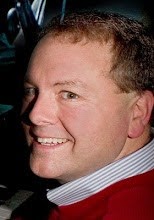
Me in action in 2010 at the Wilton (N.H.) Town Hall Theatre, which I consider home base.
This past Halloween marked my 10th anniversary as a silent film accompanist. Since October 2007, I've been creating live music in the dark to support early motion pictures.
It's been a great ride and I look forward to doing more, and different things as well. That will mean slightly fewer live performances in 2018.
Consider: this year, I'm on track to do live accompaniment for 135 screenings. While I love doing it, that represents a serious time commitment—time that I find I need to work on some long-range projects.
I'll still be on the circuit, probably as much as ever. The improvisational nature of silent film accompaniment has been an ideal place for me to forge elements of my own personal musical language.
So I see it as a crucial element of my working method—a kind of laboratory where I can test things out. So I'll keep at it, just maybe a little less often.
For now, here's a belated "dear diary" round-up of screenings so far this month, with notes and commentary.
• Last night I accompanied a program of Buster Keaton's 'Sherlock Jr.' (1924) and 'The General (1926) for the Wilmot Community Association.
Most of those who attended really got into Buster, greeting both films with constant astonished laughter, to borrow Walter Kerr's phrase.
That most were new to Keaton and to silent film was a special bonus. Always happy when this kind of screening clicks!
• Last Thursday night (Nov. 16) saw a marathon screening of D.W. Griffith's 'Way Down East' (1920) at a new venue for me: the Manchester (N.H.) Historic Association.
I say marathon not due to the film's 2½-hour length, but because a bronchial infection I'm battling made it hard to breath in the last hour!
What was satisfying, though, was that the movie kept a crowd of non-silent-film-goers glued to their seats the entire time.
The music came together nicely, but the narrative pull of 'Way Down East' is so strong that you could play klezmer music and it would still work.
• Wednesday night saw a return to 'Zaza' (1923), the Paramount costume vehicle for Gloria Swanson that I scored for Kino-Lorber earlier this year.
It was fun to revisit the film while accompanying it live at the Flying Monkey Moviehouse in Plymouth, N.H.
It was somewhat less fun to announce to the audience that in 2018, I'll be scaling back my performance schedule at "the Monkey."
Just need to make time for projects that are proving difficult to work on when you're accompanying 130 film programs a year!
But one nice side effect of this news was heavy sales of 'Zaza' discs in DVD and Blu-ray that I got for Kino-Lorber.
• Tuesday night at the Manchester (N.H.) City Library was a bummer of a screening in several ways.
First, while loading in, my digital keyboard slipped from where I had positioned it against my car, with one corner of it landing directly on my foot.
Youch! This happened in a rainy street in downtown Manchester, just before a screening of 'What Price Glory?' (1926), which I was to accompany.
It hurt like hell, but I figured I'd get through the film first (the show must go on!) and deal with it later.
Alas, the copy of 'What Price Glory' (1926) was a disc that I hadn't previewed, and turned out to have significant problems.
About half-way through the movie, the image began to pixellate and freeze up. Finally, it got so bad, I stopped the music and told everyone I'd see what I could do.
One-man-band that I am (at the library, anyway), I went back to the utility room where the library's media equipment lives and looked at the disc.
It didn't seem flawed, at least visually. So I did the only thing I could think of: I wiped it carefully with my shirt sleeve just to see what would happen.
Surprise! It actually worked. So after recuing the film, off we went until about a half-hour later, it started deteriorating again.
I stopped it again and applied the same fix, which got us going through the key battle scenes.
But with 20 minutes to go, it started again. One more attempt at fixing didn't help, so I asked the audience and we all decided to call it day.
So I can still say that in all the screenings I've done, nary a show has been missed. But this is the first time I can recall where I couldn't finish a screening.
• A week ago Sunday saw me at the Wilton (N.H.) Town Hall Theatre with our make-up screening of 'Häxan' (1922), the bizarre pseudo-documentary about witchcraft.
We had a healthy crowd on hand for this, even though it wasn't the usual "last Sunday of the month" on which we run silents with live music at Wilton.
The reason for the make-up screening was that we'd originally scheduled 'Häxan' for the Sunday before Halloween, but at the last minute I discovered I didn't have the film!
So we substituted with Paul Leni's comedy thriller 'The Cat and the Canary' (1927), which I hadn't done in Wilton for a long time. People loved it!
And the first weekend this month, I trekked out to the San Francisco Bay area for a gig at the Niles Essenay Silent Film Museum in Fremont, Calif.
I always seem to pass through when they program obscure Westerns, and this time was no exception: 'The Border Sheriff' (1926) starring Jack Hoxie. Huh?
Well, add another title to the list of silent film features I've accompanied, which is closing in on 300.
It actually turned out pretty well, considering I'd never seen the film, plus what seemed to be some incoherence on the part of the plot.
Still, it came together quite effectively. The audience, a majority of whom were first-time silent film attendees, ate it up, cheering on cue and all that.
While out West I managed to attend a performance of the San Francisco Symphony conducted by Michael Tilson Thomas, who is retiring after next season. Get it while you can!
On the program: Bernstein's 'Age of Anxiety' Symphony No. 2 (some good parts) and 'Ein Heldenleben' by Richard Strauss—a big, heavily orchestrated work that really needs to be heard in a concert hall.
It served to remind me of the excitement of live performance, and also reaffirmed my desire to spend more time putting notes on paper.
Crossing my fingers that 2018 is the year I make progress in that direction.
This past Halloween marked my 10th anniversary as a silent film accompanist. Since October 2007, I've been creating live music in the dark to support early motion pictures.
It's been a great ride and I look forward to doing more, and different things as well. That will mean slightly fewer live performances in 2018.
Consider: this year, I'm on track to do live accompaniment for 135 screenings. While I love doing it, that represents a serious time commitment—time that I find I need to work on some long-range projects.
I'll still be on the circuit, probably as much as ever. The improvisational nature of silent film accompaniment has been an ideal place for me to forge elements of my own personal musical language.
So I see it as a crucial element of my working method—a kind of laboratory where I can test things out. So I'll keep at it, just maybe a little less often.
For now, here's a belated "dear diary" round-up of screenings so far this month, with notes and commentary.
• Last night I accompanied a program of Buster Keaton's 'Sherlock Jr.' (1924) and 'The General (1926) for the Wilmot Community Association.
Most of those who attended really got into Buster, greeting both films with constant astonished laughter, to borrow Walter Kerr's phrase.
That most were new to Keaton and to silent film was a special bonus. Always happy when this kind of screening clicks!
• Last Thursday night (Nov. 16) saw a marathon screening of D.W. Griffith's 'Way Down East' (1920) at a new venue for me: the Manchester (N.H.) Historic Association.
I say marathon not due to the film's 2½-hour length, but because a bronchial infection I'm battling made it hard to breath in the last hour!
What was satisfying, though, was that the movie kept a crowd of non-silent-film-goers glued to their seats the entire time.
The music came together nicely, but the narrative pull of 'Way Down East' is so strong that you could play klezmer music and it would still work.
• Wednesday night saw a return to 'Zaza' (1923), the Paramount costume vehicle for Gloria Swanson that I scored for Kino-Lorber earlier this year.
It was fun to revisit the film while accompanying it live at the Flying Monkey Moviehouse in Plymouth, N.H.
It was somewhat less fun to announce to the audience that in 2018, I'll be scaling back my performance schedule at "the Monkey."
Just need to make time for projects that are proving difficult to work on when you're accompanying 130 film programs a year!
But one nice side effect of this news was heavy sales of 'Zaza' discs in DVD and Blu-ray that I got for Kino-Lorber.
• Tuesday night at the Manchester (N.H.) City Library was a bummer of a screening in several ways.
First, while loading in, my digital keyboard slipped from where I had positioned it against my car, with one corner of it landing directly on my foot.
Youch! This happened in a rainy street in downtown Manchester, just before a screening of 'What Price Glory?' (1926), which I was to accompany.
It hurt like hell, but I figured I'd get through the film first (the show must go on!) and deal with it later.
Alas, the copy of 'What Price Glory' (1926) was a disc that I hadn't previewed, and turned out to have significant problems.
About half-way through the movie, the image began to pixellate and freeze up. Finally, it got so bad, I stopped the music and told everyone I'd see what I could do.
One-man-band that I am (at the library, anyway), I went back to the utility room where the library's media equipment lives and looked at the disc.
It didn't seem flawed, at least visually. So I did the only thing I could think of: I wiped it carefully with my shirt sleeve just to see what would happen.
Surprise! It actually worked. So after recuing the film, off we went until about a half-hour later, it started deteriorating again.
I stopped it again and applied the same fix, which got us going through the key battle scenes.
But with 20 minutes to go, it started again. One more attempt at fixing didn't help, so I asked the audience and we all decided to call it day.
So I can still say that in all the screenings I've done, nary a show has been missed. But this is the first time I can recall where I couldn't finish a screening.
• A week ago Sunday saw me at the Wilton (N.H.) Town Hall Theatre with our make-up screening of 'Häxan' (1922), the bizarre pseudo-documentary about witchcraft.
We had a healthy crowd on hand for this, even though it wasn't the usual "last Sunday of the month" on which we run silents with live music at Wilton.
The reason for the make-up screening was that we'd originally scheduled 'Häxan' for the Sunday before Halloween, but at the last minute I discovered I didn't have the film!
So we substituted with Paul Leni's comedy thriller 'The Cat and the Canary' (1927), which I hadn't done in Wilton for a long time. People loved it!
And the first weekend this month, I trekked out to the San Francisco Bay area for a gig at the Niles Essenay Silent Film Museum in Fremont, Calif.
I always seem to pass through when they program obscure Westerns, and this time was no exception: 'The Border Sheriff' (1926) starring Jack Hoxie. Huh?
Well, add another title to the list of silent film features I've accompanied, which is closing in on 300.
It actually turned out pretty well, considering I'd never seen the film, plus what seemed to be some incoherence on the part of the plot.
Still, it came together quite effectively. The audience, a majority of whom were first-time silent film attendees, ate it up, cheering on cue and all that.
While out West I managed to attend a performance of the San Francisco Symphony conducted by Michael Tilson Thomas, who is retiring after next season. Get it while you can!
On the program: Bernstein's 'Age of Anxiety' Symphony No. 2 (some good parts) and 'Ein Heldenleben' by Richard Strauss—a big, heavily orchestrated work that really needs to be heard in a concert hall.
It served to remind me of the excitement of live performance, and also reaffirmed my desire to spend more time putting notes on paper.
Crossing my fingers that 2018 is the year I make progress in that direction.
Tuesday, October 21, 2014
This Friday, Oct. 24: 'Nosferatu' (1922)
at Red River Theatres in Concord, N.H.
Join us for 'Nosferatu' (1922) on Friday, Oct. 24 at Red River Theatres in Concord, N.H. If you dare...
Forget Christmas!
For a silent film accompanist, Halloween is the most wonderful time of the year.
If nothing else, silent film is other-worldly enough to be a general draw during this macabre part of the calendar. And so the screenings come, one by one...
Usually, just for sanity's sake, I try to pick one of the great favorites each year and focus on it. One year, 'Nosferatu' (1922) another 'Phantom of the Opera' (1925), and so on.
But this cycle that system kinda broke down for various reasons. And so now I'm doing music for a lot of different films one after another. It's scary on a whole new level.
First up is the original silent 'Nosferatu' (1922), being shown on Friday, Oct. 24 at 7 p.m. at Red River Theatres in Concord, N.H.
Alas, we're in the smaller "screening" room, so it might just happen that we sell out.
If that happens, I'll arrange for a repeat as soon as feasible. But if you really really hope to see it this Friday night, I suggest getting tickets beforehand online at www.redrivertheatres.org.
After 'Nosferatu,' it's 'Phantom of the Opera' (1925) on Saturday, Oct. 25 at the Leavitt Theatre in Ogunquit, Maine, and then a Lon Chaney double feature on Sunday, Oct. 26 at the Wilton (N.H.) Town Hall Theatre.
And more after that, but one weekend at a time.
With 'Nosferatu,' I like to remind attendees that vampires were not a cliché with early cinema audiences.
Original audiences had never seen anything like the vampire played by Max Schreck, and it must have been a genuinely unsettling experience.
To make the point of how our frame of reference has changed, I bring along an unusual prop: a box of 'Count Chocula' breakfast cereal.
How terrifying can a vampire be when the figure has been turned into a cartoon breakfast cereal pitchman? (Actually, very much so, if you read the ingredients.)
Today, the vampire legend has been largely detoothed, so to speak, by overexposure, familiarity and commercialism. Heck, kids today learn numbers on Sesame Street from "The Count," a cuddly muppet.
Fortunately, director F.W. Murnau's visual style, and the other-worldly quality of silent film itself, is more than enough to bring audiences back into the spirit of the original 'Nosferatu.'
To see for yourself, I invite you to join us. For more specifics about 'Nosferatu' on Friday, Oct. 24 at Red River Theatres, check out the press release below.
And remember: in silent film, no one can hear you scream!
And P.S.: For yet more provocative thoughts on old vampire films, check out recent posts at www.nitratediva.wordpress.com. Some great stuff about Tod Browning's early talkie 'Dracula' (1931) as well as the lesser-known Spanish language version of the 1931 Universal classic, which Red River will screen on Friday, Oct. 31.
* * *
The shadow of Nosferatu as the creature closes in on a victim.
SATURDAY, OCT. 4, 2014 / FOR IMMEDIATE RELEASE
Contact Jeff Rapsis • (603) 236-9237 • jeffrapsis@gmail.com
Pioneer classic horror movie to be shown on the big screen with live music
CONCORD, N.H.—Get into the Halloween spirit with a classic silent horror film!
'Nosferatu' (1922), the first screen adaptation of Bram Stoker's novel 'Dracula,' will be screened with live music on Friday, Oct. 24 at 7 p.m. at Red River Theatres, 11 South Main St., Concord, N.H.
The film will include live music performed by New Hampshire-based silent film accompanist Jeff Rapsis. Admission is $10 per person.
'Nosferatu' (1922), directed by German filmmaker F.W. Murnau, remains a landmark work of the cinematic horror genre. It was among the first movies to use visual design to contribute to an overall sense of terror. To modern viewers, the passage of time has made this unusual film seem even more strange and otherworldly.
It's an atmosphere that silent film accompanist Jeff Rapsis will try to enhance in improvising live music on the spot for the screenings.
"The original 'Nosferatu' is a film that seems to get creepier as more time goes by," said Rapsis, a resident of Bedford, N.H. who ranks as one of the nation's leading silent film accompanists. "It's a great way to celebrate Halloween and the power of silent film to transport audiences to strange and unusual places."
In 'Nosferatu,' German actor Max Schreck portrays the title character, a mysterious count from Transylvania who travels to the German city of Bremen to take up residence. A rise in deaths from the plague is attributed to the count's arrival. Only when a young woman reads "The Book of Vampires" does it become clear how to rid the town of this frightening menace.
Director F.W. Murnau told the story with strange camera angles, weird lighting, and special effects that include sequences deliberately speeded up.
Although 'Nosferatu' is suitable for all family members, the overall program may be too much for very young children to enjoy.
Modern critics say the original 'Nosferatu' still packs a powerful cinematic punch.
“Early film version of Dracula is brilliantly eerie, full of imaginative touches that none of the later films quite recaptured,” Leonard Maltin wrote recently. Critic Dave Kehr of the Chicago Reader called 'Nosferatu' "...a masterpiece of the German silent cinema and easily the most effective version of Dracula on record.”
Max Schreck as Nosferatu and friend emerge from the hold of a ship in 'Nosferatu' (1922).
Despite the status of 'Nosferatu' as a landmark of early cinema, it was almost lost forever.
The film, shot in 1921 and released in 1922, was an unauthorized adaptation of Stoker's novel, with names and other details changed because the studio could not obtain rights to the novel.
For instance, "vampire" became "Nosferatu" and "Count Dracula" became "Count Orlok." After the film was released, Stoker's widow filed a copyright infringement lawsuit and won; all known prints and negatives were destroyed under the terms of settlement.
However, intact copies of the the film would surface later, allowing 'Nosferatu' to be restored and screened today as audiences originally saw it. The image of actor Max Schreck as the vampire has become so well known that it showed up in a recent episode of 'Sponge Bob Squarepants.'
Red River Theatres, an independent cinema, is a non-profit 501(c)(3) organization dedicated to screening a diverse program of first-run independent films, cult favorites, classics, local and regional film projects, and foreign films.
The member-supported theater’s mission is to present film and the discussion of film as a way to entertain, broaden horizons and deepen appreciation of life for New Hampshire audiences of all ages.
Upcoming events in Red River's silent film programming include:
• Friday, Nov. 28 at 7 p.m.: 'Charlie Chaplin Comedy Night.' Spend part of Thanksgiving weekend with the Little Tramp on the 100th anniversary of his first screen appearances. The whole family will enjoy restored prints of some of Chaplin's most popular comedies shown the way they were intended: on the big screen, with live music, and an audience.
‘Nosferatu’ will be shown on Friday, Oct. 24 at 7 p.m. in the Jaclyn Simchik Screening Room at Red River Theatres, 11 South Main St., Concord, N.H. Admission is $10 per person; for more info, call (603) 224-4600 or visit www.redrivertheatres.org. For more information about the music, visit www.jeffrapsis.com.
Forget Christmas!
For a silent film accompanist, Halloween is the most wonderful time of the year.
If nothing else, silent film is other-worldly enough to be a general draw during this macabre part of the calendar. And so the screenings come, one by one...
Usually, just for sanity's sake, I try to pick one of the great favorites each year and focus on it. One year, 'Nosferatu' (1922) another 'Phantom of the Opera' (1925), and so on.
But this cycle that system kinda broke down for various reasons. And so now I'm doing music for a lot of different films one after another. It's scary on a whole new level.
First up is the original silent 'Nosferatu' (1922), being shown on Friday, Oct. 24 at 7 p.m. at Red River Theatres in Concord, N.H.
Alas, we're in the smaller "screening" room, so it might just happen that we sell out.
If that happens, I'll arrange for a repeat as soon as feasible. But if you really really hope to see it this Friday night, I suggest getting tickets beforehand online at www.redrivertheatres.org.
After 'Nosferatu,' it's 'Phantom of the Opera' (1925) on Saturday, Oct. 25 at the Leavitt Theatre in Ogunquit, Maine, and then a Lon Chaney double feature on Sunday, Oct. 26 at the Wilton (N.H.) Town Hall Theatre.
And more after that, but one weekend at a time.
With 'Nosferatu,' I like to remind attendees that vampires were not a cliché with early cinema audiences.
Original audiences had never seen anything like the vampire played by Max Schreck, and it must have been a genuinely unsettling experience.
To make the point of how our frame of reference has changed, I bring along an unusual prop: a box of 'Count Chocula' breakfast cereal.
How terrifying can a vampire be when the figure has been turned into a cartoon breakfast cereal pitchman? (Actually, very much so, if you read the ingredients.)
Today, the vampire legend has been largely detoothed, so to speak, by overexposure, familiarity and commercialism. Heck, kids today learn numbers on Sesame Street from "The Count," a cuddly muppet.
Fortunately, director F.W. Murnau's visual style, and the other-worldly quality of silent film itself, is more than enough to bring audiences back into the spirit of the original 'Nosferatu.'
To see for yourself, I invite you to join us. For more specifics about 'Nosferatu' on Friday, Oct. 24 at Red River Theatres, check out the press release below.
And remember: in silent film, no one can hear you scream!
And P.S.: For yet more provocative thoughts on old vampire films, check out recent posts at www.nitratediva.wordpress.com. Some great stuff about Tod Browning's early talkie 'Dracula' (1931) as well as the lesser-known Spanish language version of the 1931 Universal classic, which Red River will screen on Friday, Oct. 31.
The shadow of Nosferatu as the creature closes in on a victim.
SATURDAY, OCT. 4, 2014 / FOR IMMEDIATE RELEASE
Contact Jeff Rapsis • (603) 236-9237 • jeffrapsis@gmail.com
'Nosferatu' coming to Red River Theatres on Friday, Oct. 24
Pioneer classic horror movie to be shown on the big screen with live music
CONCORD, N.H.—Get into the Halloween spirit with a classic silent horror film!
'Nosferatu' (1922), the first screen adaptation of Bram Stoker's novel 'Dracula,' will be screened with live music on Friday, Oct. 24 at 7 p.m. at Red River Theatres, 11 South Main St., Concord, N.H.
The film will include live music performed by New Hampshire-based silent film accompanist Jeff Rapsis. Admission is $10 per person.
'Nosferatu' (1922), directed by German filmmaker F.W. Murnau, remains a landmark work of the cinematic horror genre. It was among the first movies to use visual design to contribute to an overall sense of terror. To modern viewers, the passage of time has made this unusual film seem even more strange and otherworldly.
It's an atmosphere that silent film accompanist Jeff Rapsis will try to enhance in improvising live music on the spot for the screenings.
"The original 'Nosferatu' is a film that seems to get creepier as more time goes by," said Rapsis, a resident of Bedford, N.H. who ranks as one of the nation's leading silent film accompanists. "It's a great way to celebrate Halloween and the power of silent film to transport audiences to strange and unusual places."
In 'Nosferatu,' German actor Max Schreck portrays the title character, a mysterious count from Transylvania who travels to the German city of Bremen to take up residence. A rise in deaths from the plague is attributed to the count's arrival. Only when a young woman reads "The Book of Vampires" does it become clear how to rid the town of this frightening menace.
Director F.W. Murnau told the story with strange camera angles, weird lighting, and special effects that include sequences deliberately speeded up.
Although 'Nosferatu' is suitable for all family members, the overall program may be too much for very young children to enjoy.
Modern critics say the original 'Nosferatu' still packs a powerful cinematic punch.
“Early film version of Dracula is brilliantly eerie, full of imaginative touches that none of the later films quite recaptured,” Leonard Maltin wrote recently. Critic Dave Kehr of the Chicago Reader called 'Nosferatu' "...a masterpiece of the German silent cinema and easily the most effective version of Dracula on record.”
Max Schreck as Nosferatu and friend emerge from the hold of a ship in 'Nosferatu' (1922).
Despite the status of 'Nosferatu' as a landmark of early cinema, it was almost lost forever.
The film, shot in 1921 and released in 1922, was an unauthorized adaptation of Stoker's novel, with names and other details changed because the studio could not obtain rights to the novel.
For instance, "vampire" became "Nosferatu" and "Count Dracula" became "Count Orlok." After the film was released, Stoker's widow filed a copyright infringement lawsuit and won; all known prints and negatives were destroyed under the terms of settlement.
However, intact copies of the the film would surface later, allowing 'Nosferatu' to be restored and screened today as audiences originally saw it. The image of actor Max Schreck as the vampire has become so well known that it showed up in a recent episode of 'Sponge Bob Squarepants.'
Red River Theatres, an independent cinema, is a non-profit 501(c)(3) organization dedicated to screening a diverse program of first-run independent films, cult favorites, classics, local and regional film projects, and foreign films.
The member-supported theater’s mission is to present film and the discussion of film as a way to entertain, broaden horizons and deepen appreciation of life for New Hampshire audiences of all ages.
Upcoming events in Red River's silent film programming include:
• Friday, Nov. 28 at 7 p.m.: 'Charlie Chaplin Comedy Night.' Spend part of Thanksgiving weekend with the Little Tramp on the 100th anniversary of his first screen appearances. The whole family will enjoy restored prints of some of Chaplin's most popular comedies shown the way they were intended: on the big screen, with live music, and an audience.
‘Nosferatu’ will be shown on Friday, Oct. 24 at 7 p.m. in the Jaclyn Simchik Screening Room at Red River Theatres, 11 South Main St., Concord, N.H. Admission is $10 per person; for more info, call (603) 224-4600 or visit www.redrivertheatres.org. For more information about the music, visit www.jeffrapsis.com.
Labels:
accompaniment,
Concord,
Jeff Rapsis,
Nosferatu,
Red River Theatres,
silent film
Subscribe to:
Posts (Atom)