Showing posts with label Red River Theatres. Show all posts

Monday, February 21, 2022

Red River Theatres to screen 'The Flying Ace,' silent 'race' drama for Black History Month

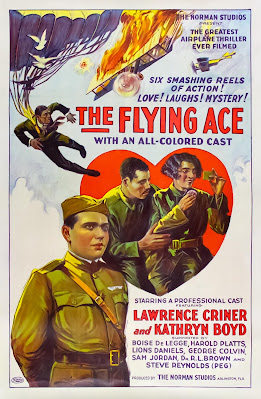
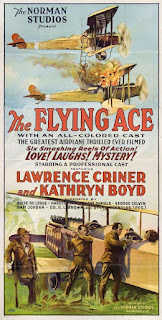
A poster for 'The Flying Ace' (1926), screening with live music at Red River Theatres in Concord, N.H. 

I've just finished a five-shows-in-five-days marathon, and boy are my fingers tired. 

Actually, not really—foe me, silent film accompaniment is more mentally taxing than physically demanding.

So, to borrow a phrase from Monty Python: "Oooh, my brain hurts!"

Yesterday's screening of 'When Knighthood Was in Flower' (1922) at the Town Hall Theater in Wilton, N.H. drew raves from the 40 or so people who attended.

Starring Marion Davies, it's quite the movie and holds up well. You can see why it was the year's second-highest grossing picture, exceeded only by Douglas Fairbanks in 'Robin Hood,' another adventure set in Merrie Old England.

'Knighthood' would not have been available at all if not for Ben Model's rescue project a few years ago, which got the film out of the Library of Congress vaults, transferred to digital media, and then restored for enjoyment and exhibition. 

I was delighted to contribute to the Kickstarter effort that made the film's reissue possible. Thanks to Ben and everyone else who worked on this edition. 

So what's next for me?

On Wednesday, I do music for 'The Flying Ace' (1926), a "race" drama being screened at Red River Theatres in Concord, N.H. 

Then it's off to the three-day Kansas Silent Film Festival, where I'll accompany Oscar Micheaux's 'Within Our Gates' (1921) and a passel of short comedies. 

No rest for the wicked. So I must be very wicked indeed.

For now, here's the press release about the Red River screening of 'The Flying Ace,' with a lot more info about the film, which was recently added to the National Film Registry by the Library of Congress.

It's worth seeing, as it's an artifact from a time not that long ago when it was common for movie theaters in some parts of the U.S. to be segregated by race. 

Water fountains, too. 

What were they thinking? 

See you in Concord on Wednesday night, or in Topeka next weekend!

*  *  *
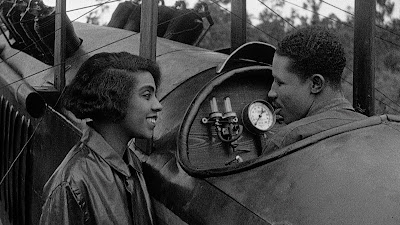
Kathryn Boyd and Laurence Criner in 'The Flying Ace' (1926).

MONDAY, FEB. 14, 2022 / FOR IMMEDIATE RELEASE
Contact Jeff Rapsis • (603) 236-9237 • jeffrapsis@gmail.com

Honoring Black History Month

Red River Theatres to screen rare vintage crime melodrama with all-Black cast

'The Flying Ace' (1926), recently added to U.S. National Film Registry, to be shown with live music on Wednesday, Feb. 23

CONCORD, N.H. — Can discrimination exist in an America where everyone is Black?

That's among the questions posted by 'The Flying Ace' (1926), a rare surviving example of movies produced early in the 20th century for Black audiences in segregated cinemas.

'The Flying Ace,' recently named to the U.S. National Film Registry, will be screened in honor of Black History Month on Wednesday, Feb. 23 at 7 p.m. at Red River Theatres, 11 South Main St., Concord.

General admission is $12 per person, $10 for Red River members.

The screening will feature live music by Jeff Rapsis, a New Hampshire-based silent film accompanist.

'The Flying Ace' was produced by Norman Studios in Jacksonville, Fla., using professionals such as Laurence Criner, a veteran of Harlem’s prestigious all-black theater troupe the Lafayette Players, but also many non-professionals for minor roles.

In 'The Flying Ace,' Criner plays Capt. Billy Stokes, a World War I fighter pilot known as "The Flying Ace" because of his downing of seven enemy aircraft in France.

Returning home to resume his former job as a railroad detective, he's assigned to locate a stationmaster who's gone missing along with the $25,000 company payroll.

While investigating, Stokes begins romancing the stationmaster's daughter Ruth (Kathryn Boyd), causing a rivalry with another suitor which leads to a break in the case.

With Ruth's safety now at risk, Stokes' dogged pursuit of the suspects leads to climax highlighted by a dramatic airborne chase which calls upon his piloting prowess.

Films such as 'The Flying Ace' were shown specifically to African-American audiences in areas of the U.S. where theaters were segregated.

A segregated movie theater in Waco, Texas in 1939.

Norman Studios was among the nation's top film production companies making feature length and short films for this market from the 1920s to the 1940s.

Featuring all-Black casts in stories meant to inspire and uplift, such films were popular with African-American audiences at the time. In Norman Studios films, the stories often took place in a world without the racial barriers that existed at the time.

In 'The Flying Ace,' Capt. Stokes is a pilot returning home from serving honorably in World War I—but Blacks were not allowed to fly aircraft in the U.S. military until 1940.
In an essay for the San Francisco Silent Film Festival, critic Megan Pugh wrote that Capt. Billy Stokes "...is a model for the ideals of racial uplift, fulfilling aspirations that Black Americans were not yet allowed to achieve."

"At a time when Hollywood employed white actors in blackface to play shuffling servants and mammies, the Norman Film Manufacturing Company...hired all-black casts to play dignified roles."

"Instead of tackling discrimination head-on in his films, Norman created a kind of segregated dream world where whites—and consequently, racism—didn’t even exist," Pugh wrote.

"While it’s impossible to measure the influence The Flying Ace had on its viewers, it is reasonable to assume that audiences found its lead character inspirational. Billy Stokes was a black male hero who would have never made it onscreen in a Hollywood movie of the time," Pugh wrote.

Filmed in the Arlington area of Jacksonville, Fla., 'The Flying Ace' is a unique aviation melodrama in that no airplanes actually leave the ground. The mid-air scenes were filmed in a studio in front of neutral backdrops.

Although 'The Flying Ace' may appear crudely made to modern audiences, in 2021 the movie was named to the U.S. National Film Registry by the Library of Congress as being "culturally, historically, or aesthetically significant."

Of films produced for Black-only audiences in segregated theaters, very few survive. 'The Flying Ace' is unusual in that it survives complete, and in pristine condition. The film was included in 'Pioneers of African American Cinema," a DVD collection released in 2016 by Kino-Lorber.

A live musical score for 'The Flying Ace' will be created by accompanist Jeff Rapsis, a New Hampshire-based performer who specializes in music for silent film presentations.

Rapsis said the Red River screening is a rare chance to see the film as it was meant to be experienced—on the big screen, with live music, and with an audience.

'The Flying Ace' (1926), a silent crime melodrama with an all-Black cast, will be shown in honor of Black History Month on Wednesday, Feb. 23 at 7 p.m. at Red River Theatres, 11 South Main St. in Concord.

Tickets are general admission $12; Red River Theatres members $10. For more info and to purchase advance tickets, visit www.redrivertheatres.org or call (603) 224-4600. 


Sunday, July 14, 2019

Tonight Last night in Brandon, Vt.: the first of a quartet of 'Woman in the Moon' screenings

The journey to Brandon, Vt. is not quite as long as the lunar voyage in 'Woman in the Moon.' But sometimes...

This is a little late in posting, but it's been that kind of a month.

It was actually last night that I accompanied 'Woman in the Moon' in Brandon, Vt.

It was the first of four screenings of the Fritz Lang epic that I'm doing in honor of the upcoming 50th anniversary of the Apollo 11 lunar landing.

And I just realized: each of the screenings is in a different state!

Last night was Vermont; next Wednesday it's the Leavitt Theater in Ogunquit, Maine; then on Thursday it's Red River Theatres in Concord, N.H., then next week it's the Regent Theatre in Arlington, Mass.

Last night, the Brandon screening went really well. It was a milestone of sorts, too, as it marked the first performance of a new keyboard I recently acquired.

I say new, but it's actually another Korg Triton LE 88, the same model I've been using since I started accompanying silent films regularly about 15 years ago.

The Korg Triton LE 88. Random pic from online. Right now mine's at home in the garage.

It's actually now regarded as a vintage synthesizer, having not been sold new since the mid-2000s. I've tried others, but nothing matches the Korg's weighted action keyboard. (Or maybe it's just that I'm used to it.)

And they're very durable, but then I really beat on mine. I play it aggressively, and I also drag it all around creation without a case.

So I'm guilty of Korg abuse. After a while, the screws holding the thing together begin to vibrate loose. I try to keep track of this, and tighten them as I go, but occasionally one falls out and I don't notice it.

Just last night, when setting up for Brandon, I found one of the screws on the floor from an earlier performance!

And also, because I don't put it in a case (as I've never had one), the keyboard gradually accumulates a patina of road dirt and pollen and God-knows-what that doesn't help things. (Unless this accumulated grime acts as a protective coating.)

So under my inept and unforgiving stewardship, a Korg has a lifespan of about five years at most. That's about how long I've had my up-until-now current model, and sure enough, in the last month it's been making signs of giving up the ghost.

For one thing, the main panel LCD display is lighting up only intermittently. Also tones are getting "stuck" with increasing frequency. By "stuck," I mean they keep sounding even when the key isn't pressed. The only way to stop is to switch to another sound patch and then back, hopefully without the audience noticing.

But if the LCD panel isn't lit up, I can't see which setting I'm on, and so during a live performance it's hard to make this switcheroo. During a recent 'Safety Last' screening, I tried the "switch out and back" maneuver, and with the display panel not lit, I came back with some kind of bossa nova setting—not what I usually go for when Harold is climbing a skyscraper.

So time for a new Korg. And amazingly, I found a practically brand new example on Craigslist, and with a hard case as well. It was in the Albany, N.Y. area, so I trekked out there last week and it was the real deal, so I bought it.

Thus do I have a "new" vintage Korg Triton LE 88, and a case, that I took with me to Brandon for the first time last night.

All went well: the instrument plays like a dream, with all buttons and dials working. It even has a full-sized "ON/OFF" button, which has been missing from my now-ex road model since I bought it from a guy in Rhode Island, and so it felt weird not putting my finger into the hole and pressing the model prong in there.

So the old Korg will be set aside and be cannibalized for parts as needed.

With the new one, it's great to have a case, but the whole thing is so enormously big and heavy, I'm not sure I'll be using it very often, except for long road trips. We'll see.

'Woman in the Moon' got a big-time reaction from the crowd last night at Brandon Town Hall, and stayed with it despite the lack of air conditioning. It wasn't quite Bikram Yoga-style silent film, but it was pretty warm in there. Credit Fritz Lang's film for holding an audience in less-than-ideal conditions.

If you'd like to see 'Woman in the Moon' (1929), I'm doing it three more times in the next couple of weeks.

Here's the press release for the screening this Wednesday, July 17 at the Leavitt Theatre in Ogunquit, Maine. Hope to see you there, or at the others in Concord, N.H. and Arlington, Mass.


An original poster for 'Frau im Mond,' or 'Woman in the Moon.

* * *
MONDAY, JULY 8, 2019 / FOR IMMEDIATE RELEASE
Contact Jeff Rapsis • (603) 236-9237 • jeffrapsis@gmail.com

Leavitt Theatre to mark Apollo 11 anniversary on 7/17 with vintage lunar voyage masterpiece

'Woman in the Moon,' early sci-fi adventure fantasy about mankind's first space mission, to be screened Wednesday, July 17 with live music

OGUNQUIT, Maine—A sci-fi adventure hailed as the first feature film to depict realistic space travel will be screened at the Leavitt Theatre in honor of the 50th anniversary of Apollo 11.

'Woman in the Moon' (1929), directed by German filmmaker Fritz Lang ('Metropolis,' 1927), will be shown with live music on Wednesday, July 17 at 7 p.m. at the Leavitt Fine Arts Theatre, 259 Main St., Route 1, Ogunquit, Maine.

The screening is open to the public. Tickets are $10 per person, general admission.

The screening, the latest in the Leavitt's silent film series, will feature live accompaniment by Jeff Rapsis, a New Hampshire-based composer who specializes in creating music for silent films.

"We felt it was worth marking this important milestone by sampling visions of space travel before the Apollo program put mankind on the moon," said Max Clayton of the Leavitt Theatre. "And what better way to do that than go back to the silent era and 'Woman in the Moon,' an epic fantasy about the German space program that never happened."

The rarely seen full-length version of 'Woman in the Moon' follows an intrepid band of space pioneers as they attempt mankind's first voyage to the lunar surface, where they hope to find deposits of gold.

The film, made with German rocket experts as technical advisers, anticipated many of the techniques used by NASA for the Apollo moon launch program 40 years later. For example, a multi-stage rocket is employed to escape Earth's gravity, and a separate capsule is used to reach the lunar surface.

The film is also noted for introducing the idea of a dramatic "countdown" prior to launch, which later became standard procedure in actual space flight. Critics regard the film's extended launch sequence as a masterpiece of editing and dramatic tension.

Who needs mission control? Willy Fritsch gets ready to pull the lever.

But 'Woman in the Moon,' with its melodramatic plot, also stands as the forerunner of many sci-fi soap opera elements that quickly became clichés: the brilliant but misunderstood professor; a love triangle involving a female scientist and her two male crewmates; a plucky young boy who yearns to join the expedition; fistfights and gunfire and treachery on the lunar surface.

Added to the mix is a vision of the moon (created entirely on a massive studio set in Berlin, Germany) that features a breathable atmosphere, giant sand dunes, distant mountain peaks, and bubbling mud pits.

The film's showing at the Leavitt coincides with the 50th anniversary of the voyage that took Apollo 11 astronauts Neil Armstrong, Buzz Aldrin, and Michael Collins to the moon in advance of the landing, which occurred on July 20, 1969. It's also the 90th anniversary of the original theatrical release of 'Woman in the Moon.'

"This is a great and at-times bizarre film, one that must be seen to be believed," said Jeff Rapsis, a New Hampshire-based silent film accompanist who will create live music for the Leavitt's screening. "It's as entertaining as any spy-thriller. And as a past vision of a future that didn't quite come to be, it really gets you thinking of time and how we perceive it."

Hey, why didn't NASA include picture windows for the Apollo astronauts?

Rapsis will improvise live musical accompaniment during the screening, using a digital synthesizer to recreate the sound of a full orchestra and other more exotic textures.

'Woman in the Moon,' a full-length feature than runs more than 2½ hours, should not be confused with the much earlier film 'A Trip to Moon,' a primitive "trick" short movie made by French filmmaker George Méliès in 1902 and famous for the image of a space capsule hitting the eye of an imaginary moon man.

"Unlike the Méliès film, there's nothing primitive about 'Woman in the Moon,' " Rapsis said. "It's silent film story-telling at the peak of its eloquence, with lively performances, imaginative camera angles, and superb photography."

Director Fritz Lang, responsible for the groundbreaking sci-fi epic 'Metropolis' (1927), planned 'Woman in the Moon' as another step in his quest to stretch cinema's visual, story-telling, and imaginative capabilities.

Bad timing is one reason that 'Woman in the Moon' (titled 'Frau im Mond' in German) is not as well known today as 'Metropolis,' its legendary predecessor. Lang completed 'Woman in the Moon' just as the silent film era was coming to a close.

As one of the last silent films of German cinema, 'Woman in the Moon' was unable to compete with new talking pictures then in theaters, making it a box office flop at its premiere in October, 1929.

However, German rocket scientist Hermann Oberth worked as an adviser on the movie, and it developed cult status among the rocket scientists in Wernher von Braun's circle starting in the 1930s. During World War II, the first successfully launched V-2 rocket at the German rocket facility in Peenemünde had the "Woman in the Moon" logo painted on its base.

During the war, the Nazis tried to recall and destroy all prints of 'Woman in the Moon' due to its detailed depiction of state-of-the-art rocket propulsion technology; in later years, this served to make the film even more hard to find. For many years, the film was available only in cut-down 16mm versions that ran as short as one hour.

But pristine and complete 35mm copies of 'Woman in the Moon' did survive in several European archives. Today, restored prints are amazingly clear and sharp, Rapsis said.

" 'Woman in the Moon' is technically one of the best-looking silent films I've ever seen," he said. "If you think all silent films are grainy and scratchy-looking, 'Woman in the Moon' will change your mind. It's like an Ansel Adams photograph come to life."

"Although 'Woman in the Moon' is available for home viewing, this is a motion picture that should be experienced as intended: on the big screen, with live music, and with an audience," Rapsis said. "There's nothing like it."

After 'Woman in the Moon,' other programs in this year's Leavitt silent film series include:

• Thursday, Aug. 15, 7 p.m.: 'Paths to Paradise' (1925). Two competing would-be jewel thieves reluctantly team up to pull off a major heist. Starring Raymond Griffith, a leading comedian for Paramount Pictures whose popularity rivaled Chaplin and Keaton in the 1920s,

• Wednesday, Aug. 28, 7 p.m.: 'The Beloved Rogue' (1926) starring John Barrymore. Epic costume adventure based on the life of the 15th century French poet, François Villon. Wrongly banished from the Royal Court and sentenced to death, can the patriotic poet save France from an evil plot?

• Saturday, Oct. 26, 7 p.m.: 'The Hunchback of Notre Dame' (1923) starring Lon Chaney. Just in time for Halloween, our annual "Chiller Theatre" presentation! Lon Chaney stars in the original screen adaptation of Victor Hugo's classic novel about a deformed bellringer in medieval Paris.

‘Woman in the Moon’ will be shown with live music on Wednesday, July 17 at 7 p.m. at the Leavitt Fine Arts Theatre, 259 Main St. Route 1, Ogunquit, Maine; (207) 646-3123; admission is $10 per person, general seating. For more information, visit www.leavittheatre.com.

Sunday, November 4, 2018

'Wings' and other silent films set in WWI:
often the drama is about returning home


The silent film 'Wings' is all about airplanes.

So it's fitting that I'm posting this preview of the film (which I'm accompanying this week in Concord, N.H.) from an eastbound JetBlue Airbus 321 somewhere high above Nebraska.

Actually, the altitude is now exactly 34,793 feet, according the readout on the seatback video screen in front of me.


I'm heading home after accompanying a William S. Hart drama, 'The Cradle of Courage' (1920), last night at the Niles Essanay Silent Film Museum in Fremont, Calif.

Before I get to 'Wings,' a few thoughts about the Hart drama, which was unusual. Unlike so many of his features, it's not a Western. Instead, it's about doughboys returning home to city life (in this case, San Francisco) after World War I.

And with the 100th anniversary of Armistice Day coming up next weekend, I was glad for the chance to see this rarely screened Hart opus, in which our hero gives up his pre-war occupation as a crook to become a policeman instead. And the 16mm print at the Niles Museum was a stunner: sharp, with great tonal values throughout.

'The Cradle of Courage' offers a strong dose of life as it was lived in the nation's cities a century ago. The settings are real and grim, including many exterior shots filmed on location in the city by the Bay. Dialogue in the intertitles is filled with antique argot and colorful tough-guy slang.

A not-so-young soldier William S. Hart (he was over 50 at the time) wanders the streets of old San Francisco after returning home in 'Cradle of Courage.'

But it's especially powerful as a reminder that those who served in what we now call World War I often faced fresh battles upon returning home. And that's worth remembering as we approach the centennial of the day the guns went silent.

You can see that same dynamic in other World War I movies of the silent era. It's in 'Wings' (1927), which I'm accompanying this Wednesday, and also 'The Big Parade' (1925), which I'm doing music for on Sunday, Nov. 11 at the Somerville Theatre. Both have powerful and bittersweet "returning home" scenes.

My own homecoming later today will involve mostly getting licked by two dogs. So as centennial of Armistice Day approaches, it's worth remembering how so many did not have it so easy.

And one way to remember those who served, and to honor their sacrifices, is to take in a movie such as 'Wings.' I think a mainstream film aimed at a general audience captures some of the excitement and also the dread of the war in a manner quite different from any history book or documentary.

Well, this week, you can see for yourself. More info about our screening of 'Wings' at Red River Theatres in Concord, N.H. is in the press release below. Hope to see you there!

* * *


MONDAY, OCT. 15, 2018 / FOR IMMEDIATE RELEASE
Contact Jeff Rapsis • (603) 236-9237 • jeffrapsis@gmail.com

Epic silent film 'Wings' (1927) on Wednesday, Nov. 7 at Red River Theatres

Story of U.S. aviators in World War I won first-ever 'Best Picture'; screening to feature live musical accompaniment

CONCORD, N.H.—It won 'Best Picture' at the very first Academy Awards, with spectacular airborne sequences and a dramatic story that still mesmerizes audiences today.

'Wings' (1927), a drama about U.S. aviators in the skies over Europe during World War I, will be shown on Wednesday, Nov. 7 at Red River Theatres, 11 South Main St., Concord, N.H.

The screening is in honor of the 100th anniversary of the Armistice of Nov. 11, 1918, which ended the "Great War" and which led to our modern observance of Veterans Day.

Showtime is 7 p.m. Tickets are $12 per person, general admission.

The screening, the latest in Red River's silent film series, will feature live accompaniment by Jeff Rapsis, a New Hampshire-based composer who specializes in creating music for silent films.

The show will allow audiences to experience 'Wings' the way its makers originally intended: on the big screen, with live music, and with an audience.

'Wings,' a blockbuster hit in its original release, recounts the adventures of U.S. pilots flying combat missions behind enemy lines at the height of World War I in Europe. 'Wings' stunned audiences with its aerial dogfight footage, vivid and realistic battle scenes, and dramatic love-triangle plot.

'Wings' stars Clara Bow, Charles 'Buddy' Rogers, and Richard Arlen. The rarely-seen film also marked one of the first screen appearances of Gary Cooper, who plays a supporting role. Directed by William Wellman, 'Wings' was lauded by critics for its gripping story, superb photography, and technical innovations.

'Wings' is notable as one of the first Hollywood films to take audiences directly into battlefield trenches and vividly depict combat action. Aviation buffs will also enjoy 'Wings' as the film is filled with scenes of vintage aircraft from the early days of flight.

Seen today, the film also allows contemporary audiences a window into the era of World War I, which was underway in Europe a century ago.

" 'Wings' is not only a terrific movie, but seeing it on the big screen is also a great chance to appreciate what earlier generations of servicemen and women endured," accompanist Jeff Rapsis said. "It's a war that has faded somewhat from our collective consciousness, but it defined life in the United States for a big chunk of the 20th century. This film captures how World War I affected the nation, and also shows in detail what it was like to serve one's country a century ago."

Rapsis, a composer who specializes in film music, will create a score for 'Wings' on the spot, improvising the music as the movie unfolds to enhance the on-screen action as well as respond to audience reactions. Rapsis performs the music on a digital synthesizer, which is capable of producing a wide range of theatre organ and orchestral textures.

"Live music was an integral part of the silent film experience," Rapsis said. "At the time, most films weren't released with sheet music or scores. Studios relied on local musicians to come up with an effective score that was different in every theater. At its best, this approach created an energy and a connection that added a great deal to a film's impact. That's what I try to recreate," Rapsis said.

'Wings' is about 2½ hours long. The film is a family-friendly drama but not suitable for very young children due to its length and intense wartime battle scenes.

‘Wings’ (1927) starring Clara Bow, Buddy Rogers and Richard Arlen will be shown with live music on Wednesday, Nov. 7 at 7 p.m. at Red River Theatres, 11 South Main St., Concord, N.H.

Tickets $12 adults, general admission. For more info, visit www.redrivertheatres.org. or call (603) 224-4600.

Wednesday, August 22, 2018

Thursday, 8/23: 'The General' in Concord, N.H.; Harold Lloyd on Sunday 8/26 in Wilton, N.H., then screenings in Detroit, Cleveland, Buffalo

Buster Keaton co-stars with his locomotive in 'The General' (1926), to be shown with live music on Thursday, Aug. 23 in Concord, N.H.

Very excited about a busy slate of screenings between now and Labor Day! The action includes a road trip that takes me to venues in Detroit, Cleveland, and Buffalo.

But first, we end the local summer season with a pair of spectacular silent comedy screenings close to home.

Here's a run-down on what's coming up.

A somewhat busy, jokey original poster for 'The General.'

Thursday, Aug. 23: Buster Keaton's 'The General' (1926), 7 p.m. at Red River Theatres in Concord, N.H.

Lots of requests for this title, and promises to be a good turn-out due to some last-minute press we expect in the Concord Monitor, the local daily. (Thanks for the interview! You can read the story online here.

Also, some of my relatives from Georgia will be in the area, and plan to attend. So it'll add to the South vs. North atmosphere.

For more details, a press release for the screening is pasted in below.

But first, here's a heads-up about where I'll be doing music for other silent film programs between now and Labor Day.

Harold in 'Never Weaken' (1921), one of the comedies on Sunday's program.

Sunday, Aug. 26: Harold Lloyd Laugh Therapy, 4:30 p.m.; at the Town Hall Theatre, 60 Main St., Wilton, N.H.; (603) 654-3456; www.wiltontownhalltheatre.com. Free admission, donation of $5 per person suggested.

Take it from my personal experience: no one is better at inciting an audience to laugh than Harold Lloyd. There's a reason he was THE most popular performer (by ticket sales) in the 1920s, and it was how he made people laugh: out loud, big, and together.

And he still does, which is good, because these days we need laughter more than ever.

So as a public service, we present a selection of Harold Lloyd's best laugh-getting comedies from when he was establishing his popular "glasses" character.

Throw away that Tylenol, and cure yourself the natural way. As Reader's Digest has been telling us for years; Laughter is the Best Medicine.

A rather flowery lobby card for 'When Knighthood Was In Flower' (1922).

Wednesday, Aug. 29: Marion Davies in 'When Knighthood Was In Flower' (1922), 7:30 p.m. at Cinema Detroit, 4126 3rd Ave., Detroit, Mich.; (313) 482-9028; www.cinemadetroit.com. Admission $12 per person.

Marion Davies stars in this big-budget historical costume drama produced and financed by William Randolph Hearst and recently resurrected for screening by silent film accompanist/historian Ben Model. Thanks, Ben! We'll plug the DVD at the show!)

This is the first time I've appeared at Cinema Detroit, billed as the city's independent movie theater and located downtown in a former furniture store! Many thanks to Paula Guthat and her staff for bringing me in and programming silent film with live music.

A is NOT for Apple: original artwork promoting 'The Scarlet Letter' (1926).

Thursday, Aug. 30: 'The Scarlet Letter' (1926) at 7 p.m.; starring Lillian Gish, at the Cleveland Cinematheque at the Cleveland Institute of Art, 11610 Euclid Ave., Cleveland, Ohio; (216) 421-7450. Online: https://www.cia.edu/cinematheque. Admission $15.

Splashy MGM adaptation of Nathaniel Hawthorne's classic tale of old New England, with Lillian Gish in the leading role as Hester Prynne. After having a child out of wedlock, a young Puritan woman is pressured to reveal the name of her lover. Ah, the good old days!

Silent film with live music (plus a Charley Chase short, 'Mighty Like a Moose') at Cleveland's premier venue for great movies. Many thanks to John Ewing and his staff at the Cinematheque for inviting me back, and continuing to program silent film with live music.

A caricature of Eddie Cantor with alarming eye sockets on this promotional lobby card for 'Special Delivery' (1927), a spritely comedy I'll accompany at the Western N.Y. Film Expo.

Friday, Aug. 31 through Sunday, Sept. 2: 'The Western NY Film Expo,' Adams Mark Hotel in downtown Buffalo, N.Y. Four-day successor to Cinefest, annual vintage film festival in Syracuse, N.Y. that ended in 2015.

Screenings include: Friday, Aug. 31: 'Sunshine Dad' (1916) starring DeWolf Hopper and Fay Tincher. Saturday, Sept. 1: 'Sadie Thompson' starring Gloria Swanson, Lionel Barrymore; 'Special Delivery' (1927) starring Eddie Cantor; 'Braveheart' (1925) starring Rod LaRocque; 'Battling Butler' (1926) starring Buster Keaton; 'The Nickel Hopper' (1926) starring Mabel Normand. Sunday, Sept. 2: 'The Coming of Amos' (1925) starring Rod LaRocque; 'The Kid Brother' (1927) starring Harold Lloyd. Plus plenty of short comedies and curiosities!

For more information, admission charges, and a complete schedule, visit https://wnymovieexpo.wordpress.com.

Okay, now to circle back to the beginning (kinda like Buster's 'The General'), here's the press release for tomorrow night's screening at Red River Theatres in Concord, N.H. Hope to see you there!

* * *

Keaton's insistence on period authenticity for 'The General' extended to growing his hair long, common in the Civil War era.

WEDNESDAY, AUG. 15, 2018 / FOR IMMEDIATE RELEASE
Contact Jeff Rapsis • (603) 236-9237 • jeffrapsis@gmail.com

Buster Keaton's 'The General' with live music at Red River on Thursday, Aug. 23


Civil War railroading adventure film lauded as comic moviemaker's masterpiece

CONCORD, N.H.—He never smiled on camera, earning him the nickname of "the Great Stone Face." But Buster Keaton's comedies rocked Hollywood's silent era with laughter throughout the 1920s.

Acclaimed for their originality and timeless visual humor, Keaton's films remain popular crowd-pleasers today.

See for yourself with a screening of 'The General' (1926), one of Keaton's landmark feature films, on Thursday, Aug. 23 at Red River Theatres, 11 South Main St., Concord, N.H.

Showtime is 7 p.m. Tickets are $12 per person, general admission.

The screening, the latest in Red River's silent film series, will feature live accompaniment by Jeff Rapsis, a New Hampshire-based composer who specializes in creating music for silent films.

'The General,' set during the U.S. Civil War, tells the story of a southern locomotive engineer (Keaton) whose engine (named 'The General') is hijacked by Northern spies with his girlfriend onboard.

Keaton, commandeering another train, races north in pursuit behind enemy lines. Can he rescue his girl? And can he recapture his locomotive and make it back to warn of a coming Northern attack?

Critics call 'The General' Keaton's masterpiece, praising its authentic period detail, ambitious action and battle sequences, and its overall integration of story, drama, and comedy.

It's also regarded as one of Hollywood's great railroad films, with much of the action occurring on or around moving steam locomotives.

Accompanist Jeff Rapsis will improvise an original musical score for 'The General' live as the film is shown.

"When the score gets made up on the spot, it creates a special energy that's an important part of the silent film experience," said Rapsis, who uses a digital synthesizer to recreate the texture of a full orchestra for the accompaniment.

With Red River's screening of 'The General,' audiences will get a chance to experience silent film as it was meant to be seen—in a high quality print, on a large screen, with live music, and with an audience.

"All those elements are important parts of the silent film experience," Rapsis said. "Recreate those conditions, and the classics of early Hollywood leap back to life in ways that can still move audiences today."

Rapsis performs on a digital keyboard that reproduces the texture of the full orchestra and creates a traditional "movie score" sound.

Buster on location in Cottage Grove, Ore., during the summer of 1926.

Keaton, along with Charlie Chaplin and Harold Lloyd, stands today as one of the silent screen's three great clowns. Some critics regard Keaton as the best of all; Roger Ebert wrote in 2002 that "in an extraordinary period from 1920 to 1929, (Keaton) worked without interruption on a series of films that make him, arguably, the greatest actor-director in the history of the movies."

As a performer, Keaton was uniquely suited to the demands of silent comedy. Born in 1895, he made his stage debut as a toddler, joining his family's knockabout vaudeville act and learning to take falls and do acrobatic stunts at an early age.

A remarkable pantomime artist, Keaton naturally used his whole body to communicate emotions from sadness to surprise. And in an era with no post-production special effects, Keaton's acrobatic talents enabled him to perform all his own stunts.

Critics review 'The General':

"The most insistently moving picture ever made, its climax is the most stunning visual event ever arranged for a film comedy."
—Walter Kerr

"An almost perfect entertainment!"
—Dave Kehr, Chicago Reader

"What makes the film so special is the way the timing, audacity and elegant choreography of its sight gags, acrobatics, pratfalls and dramatic incidents is matched by Buster's directorial artistry, his acute observational skills working alongside the physical élan and sweet subtlety of his own performance."
—Time Out (London)

Upcoming titles in Red River's silent film series include:

• Wednesday, Nov. 7: 'Wings' (1927) starring Clara Bow, Buddy Rogers, Richard Arlen. Commemorate the 100th anniversary of Armistice Day with a screening of this epic picture about American pilots in World War I. Winner of 'Best Picture' at the first-ever Academy Awards, 'Wings' remains a stunning and timeless drama.

‘The General’ (1926) starring Buster Keaton will be shown with live music on Thursday, Aug. 23 at 7 p.m. at Red River Theatres, 11 South Main St., Concord, N.H. Tickets $12 adults, general admission. For more info, visit www.redrivertheatres.org. or call (603) 224-4600.


Tuesday, October 31, 2017

'Nosferatu' on Tuesday, Oct. 31 nearing sell-out status at Red River Theatres in Concord, N.H.

A highly stylized poster for 'Nosferatu,' which translates from Greek as "Carrier of Plague."

One more time!

And now for this year's final Halloween silent film screening: the vampire classic 'Nosferatu' (1922) on Halloween night itself (Tuesday, Oct. 31) at Red River Theatres in Concord, N.H.

Showtime is 7:30 p.m.; live music is by yours truly.

More info than you can shake a stake at is in the press release below.

For now, let me say that the Red River folks report strong advance ticket sales, so we're hoping for a full house.

That's terrific because we're running 'Nosferatu' in one of Red River's two larger theaters rather than the smaller screening room.

So, many thanks to the folks at Red River for continuing to include silent film with live music in their diverse offerings.

And while I'm at it, thanks to a local newspaper, The Telegraph of Nashua, N.H., for putting our show on the cover of a recent edition of "Encore," their weekly entertainment guide.

Here's the front page:


Yes, my mother was thrilled to open our hometown newspaper to see her son's picture featured prominently next to the word "CREEPY."

And here's the spread inside:


Wow! Never thought I'd be part of a centerfold, but that's show biz!

'Nosferatu' gets quite a bit of play this time of year, for obvious reasons. And let me confess I'm a bit jealous that Nosferatu himself has been making in-person appearances this year at screenings accompanist by my silent film colleagues in other parts of the country.

In at least one case, the creature summoned his supernatural powers to appear at two separate screenings at the same time. He was everywhere—kind of like Santa Claus on Christmas.

But not at any of my screenings. :)

So as this Halloween draws nigh, I'm starting to feel like a kid before Christmas—the kind who wonders if Santa might be passing me by for some reason.

Although because it's Nosferatu, in this case I have to wonder if I've been bad enough during the past year. Have I somehow not done enough evil?

Please, Mr. Nosferatu—don't forget us on Halloween night at Red River Theatres in Concord. As a musician, surely I've done enough bad things in the past year to warrant an appearance!

And if that's not enough, Concord is our state's capital, so there's a good chance some state legislators and even actual lawyers will be in the audience.

Surely they're your kind of people, no?

And even if he doesn't show in person, we'll have him on the big screen with live music on Halloween night. Details below!

* * *

Max Schreck as Count Orlok in 'Nosferatu.'

TUESDAY, OCT. 10, 2017 / FOR IMMEDIATE RELEASE
Contact Jeff Rapsis • (603) 236-9237 • jeffrapsis@gmail.com

Creepy classic thriller 'Nosferatu' coming to Red River Theatres on Tuesday, Oct. 31

Celebrate Halloween with pioneer silent horror movie on the big screen with live music—see it if you dare

CONCORD, N.H.—Get into the Halloween spirit with a classic silent horror film!

'Nosferatu' (1922), the first screen adaptation of Bram Stoker's novel 'Dracula,' will be screened with live music on Halloween night, Tuesday, Oct. 31 at 7:30 p.m. at Red River Theatres, 11 South Main St., Concord, N.H.

Admission is $12 per person. The film will by accompanied by live music performed by New Hampshire-based silent film musician Jeff Rapsis.

'Nosferatu' (1922), directed by German filmmaker F.W. Murnau, remains a landmark work of the cinematic horror genre. It was among the first movies to use visual design to convey unease and terror.

To modern viewers, the passage of time has made this unusual film seem even more strange and otherworldly.

It's an atmosphere that silent film accompanist Jeff Rapsis will enhance in improvising live music on the spot for the Red River screening.

"The original 'Nosferatu' is a film that seems to get creepier as more time goes by," said Rapsis, a resident of Bedford, N.H. "It's a great way to celebrate Halloween and the power of silent film to transport audiences to strange and unusual places."

In 'Nosferatu,' actor Max Schreck portrays the title character, a mysterious count from Transylvania who travels to the German city of Bremen to take up residence.

In the town, a rise in deaths from the plague is attributed to the count's arrival. Only when a young woman reads "The Book of Vampires" does it become clear how to rid the town of this frightening menace.

Director Murnau told the story with strange camera angles, weird lighting, and special effects that include sequences deliberately speeded up.

Although 'Nosferatu' is suitable for all family members, the overall program may be too intense for very young children to enjoy.

In 'Nosferatu,' director Murnau made use of shadows and other then-unusual visual techniques to create atmosphere and tell the story.

Modern critics say the original 'Nosferatu' still packs a powerful cinematic punch.

“Early film version of Dracula is brilliantly eerie, full of imaginative touches that none of the later films quite recaptured,” Leonard Maltin wrote recently.

Critic Dave Kehr of the Chicago Reader called 'Nosferatu' "...a masterpiece of the German silent cinema and easily the most effective version of Dracula on record.”

Despite the status of 'Nosferatu' as a landmark of early cinema, another scary aspect of the film is that it was almost lost forever.

The film, shot in 1921 and released in 1922, was an unauthorized adaptation of Stoker's novel, with names and other details changed because the studio could not obtain rights to the novel.

Thus "vampire" became "Nosferatu" and "Count Dracula" became "Count Orlok." After the film was released, Stoker's widow filed a copyright infringement lawsuit and won; all known prints and negatives were destroyed under the terms of settlement.

However, intact copies of the the film would surface later, allowing 'Nosferatu' to be restored and screened today as audiences originally saw it. The image of actor Max Schreck as the vampire has become so well known that it appeared in a recent 'Sponge Bob Squarepants' espisode.

‘Nosferatu’ will be shown on Tuesday, Oct. 31 at 7:30 p.m. at Red River Theatres, 11 South Main St., Concord, N.H. Admission is $12 per person.

For more info, visit www.redrivertheatres.org. or call (603) 224-4600. For more about the music, visit www.jeffrapsis.com.

Friday, July 15, 2016

Help restore MGM's 'Bardelys the Magnificent'
at Red River in Concord, N.H. on Friday, 7/15

John Gilbert and Eleanor Boardman in the formerly lost film 'Bardelys the Magnificent' (1926). No, the candle is not part of Boardman's hat.

About 11,000 feature films were produced in the U.S. during the silent era. Of those, about 8,500 are now lost, meaning no copies are known to exist anywhere.

Wow! But the good news is that films thought to be lost are still being found, even at this late date.

We'll be running one of the most prominent "unlost" films, the MGM historical romance 'Bardelys the Magnificent' (1926), on Friday, July 15 at Red River Theatres in Concord, N.H.

Showtime is 7 p.m. and there's more info in the attached press release.

Set in the France of King Louis XIII, it's a big-budget swashbuckling adventure film with an impressive pedigree: directed by King Vidor, and starring John Gilbert (MGM's top star at the time) and Eleanor Boardman, an actress who was Vidor's wife.

And in this case, it really shouldn't have been lost, because MGM generally took care of its back catalog of prints.

While other studios routinely junked release prints to recover the silver content, or just neglected films that had finished their theatrical runs, MGM from the beginning made an effort to maintain its "vault."

So what happened? In the case of 'Bardelys,' the film was based on a novel by Rafael Sabatini. When MGM's licensing deal with Sabatini expired in 1936, the studio opted not to renew.

As part of the deal, it was obligated to destroy the film's negative as well as all positive prints, which it did.

And that was that! Business is business.

Later, when people got interested in silent cinema, no copies of 'Bardelys' could be found anywhere.

So for decades, it was considered a lost film. All we had was the film's 'Coming Attractions' trailer, as well as a brief but tantalizing sequence that was used in a later MGM film directed by Vidor, 'Show People' (1928). And posters like the one at left.

But then, as sometimes happens, a nearly complete copy of the European version of 'Bardelys' was found in France in 2006. It had French intertitles and was missing most of Reel 3, but otherwise was intact and in pretty good shape.

Using MGM records, the original English titles were recreated, and the missing footage of Reel 3 was recreated using material from the trailer as well as still photographs and explanatory titles.

And behold: 'Bardelys the Magnificent' was "unlost," and able to be seen for the first time since its original 1926 release.

I first encountered the film at the Kansas Silent Film Festival a few years ago, with live music by the wonderful Mont Alto Motion Picture Orchestra.

It plays very well, and is an important missing link in the silent film catalog.

And it's also a perfect summertime escapist film, which is why we're running it at Red River—a day after Bastille Day, I might add.

But no lost silent film is truly "unlost" unless it's screened as intended: in a theater, with live music, and with an audience.

And that's where you come in. Hope you can join us and help conjure up the excitement and adventure of early Hollywood as we screen 'Bardelys the Magnificent' at Red River Theatres!

* * *

Before it got lost, it had to get made: shooting 'Bardelys the Magnificent' with Eleanor Boardman, cameraman William Daniels, and director King Vidor.

SATURDAY, JULY 9, 2016 / FOR IMMEDIATE RELEASE
Contact Jeff Rapsis • (603) 236-9237 • jeffrapsis@gmail.com

Rediscovered silent film swashbuckler to 're-premier' in Concord, N.H. on Friday, July 15


'Bardelys the Magnificent' (1926), epic long thought lost until a copy was found in Europe, to be screened with live music

CONCORD, N.H.—A major Hollywood feature—a film lost for decades until a copy surfaced in France in 2006—will soon get its local big screen "re-premier."

'Bardelys the Magnificent' (1926), a big-budget MGM historical romance starring John Gilbert and Eleanor Boardman, will be screened on Friday, July 15 at 7 p.m. at Red River Theatres,, 11 South Main Street in Concord.

Live music for the movie will be provided by silent film accompanist Jeff Rapsis. Admission is $10 per person.

Based on a novel by prolific Italian/English author Rafael Sabatini, 'Bardelys the Magnificent' is an epic tale of love, honor, and derring-do set during the reign of King Louis XIII of France.

The story follows the adventures of French nobleman Bardelys, who assumes the identity of a dead man to be close to the woman he loves. The ruse backfires, however, when it turns out the dead man is wanted for treason against the King.

This propels Bardelys into a series of swashbuckling adventures as he must avoid being caught and executed, all the while pursuing his beloved.

The title role is played by legendary leading man John Gilbert, then at the height of his 1920s stardom. Gilbert was popular for his good looks, magnetic personality, and athletic stunts. Actress Eleanor Boardman plays Roxalanne, his love interest; the huge cast includes many silent film-era stars and supporting players.

'Bardelys the Magnificent' was directed by King Vidor, who was responsible for several well-known silent-era classics, including 'The Big Parade' (1925), 'The Crowd' (1928), and 'Show People' (1928).

The picture was a solid hit in its original release, enhancing the reputations of everyone involved. Later, MGM's rights to the Sabatini novel expired in 1936, and the studio destroyed all copies per the licensing agreement. It was only later that archivists released that no other copies of the film were known to have survived anywhere.

For six decades, the only footage of 'Bardelys the Magnificent' known to exist was a brief clip included in a movie theater scene in 'Show People,' another Vidor picture. 'Bardelys' was regarded as a major lost feature film from the silent era.

Then, in 2006, researchers in France discovered an almost complete copy of 'Bardelys the Magnificent' in a private collection. The print was missing about 10 minutes of footage, but was otherwise intact and in excellent condition.

The missing footage is replaced with still photos taken on the set, written descriptions, and by scenes recovered from a 'Coming attractions' trailer for the film. The story is now easily followed.

Restoration was completed in 2008; the film was subsequently released on DVD, and has since been screened at several festivals around the country—but not not in Concord until now.

"With it being the day after Bastille Day, we thought it would be a great time to screen this historical romance set in France," Rapsis said.

...and before it got made into a "photoplay" (meaning movie), it was a novel by Rafael Sabatini.

Silent films were produced until 1929, when talkies arrived. About 75 percent of all movies made during the silent era are now lost due to decomposition, carelessness, fire, or neglect. But copies of "missing" films still occasionally turn up in archives and collections around the world, so researchers and archivists continue to make discoveries.

For 'Bardelys the Magnificent,' Rapsis will improvise a score using original musical material that he creates beforehand. For a movie score to support 'Bardelys,' Rapsis will use a digital synthesizer to recreate the sound and texture of a full orchestra.

"What I try to do," Rapsis said, "is create music that bridges the gap between a film that might be 80 or 90 years old, and the musical expectations of today's audiences."

'Bardelys the Magnificent' is the latest in a monthly series of silent films presented with live music at Red River Theatres. The series provides local audiences the opportunity to experience silent film as it was intended to be shown: on the big screen, in good-looking prints, with live music, and with an audience.

"If you can put Humpty Dumpty back together again, it's surprising how these films jump back to life," Rapsis said. "By showing the films under the right conditions, you can really get a sense of why people first fell in love with the movies."

Red River Theatres, an independent cinema, is a non-profit 501(c)(3) organization dedicated to screening a diverse program of first-run independent films, cult favorites, classics, local and regional film projects, and foreign films.

The member-supported theater’s mission is to present film and the discussion of film as a way to entertain, broaden horizons and deepen appreciation of life for New Hampshire audiences of all ages.

Upcoming silent film programs at Red River include:

• Friday, Aug. 12: 'The Yankee Clipper' (1927) starring William Boyd. Period drama set in the 19th century; two clipper ships race from China to Boston to compete for a lucrative tea contract.

• Friday, Sept. 16: 'Spies' (1928). Director Fritz Lang followed his futuristic saga 'Metropolis' with this pioneering espionage thriller that created the template for all future James Bond movies.

• Friday, Oct. 14: 'The Cat and the Canary' (1927). Creepy haunted house thriller set the stage for great Universal classics such as 'Dracula' and 'The Mummy.'

'Bardelys the Magnificent' will be shown on Friday, July 15 at 7 p.m. at Red River Theatres, 11 South Main St., Concord, N.H. in the Jaclyn Simchik Screening Room. Admission is $10 per person; for more info, call (603) 224-4600 or visit www.redrivertheatres.org.

Thursday, June 30, 2016

Encore screening of Keaton's 'The General'
on Friday, July 1 at Red River Theatres

What's the most expensive shot of the silent era? Here's a hint.

Coming up this Friday, July 1: an encore presentation of Buster Keaton's 'The General' (1926) at Red River Theatres in Concord, N.H.

A screening of 'The General' earlier in June sold out, prompting this reboot. The show starts at 7 p.m. and admission is $10 per person. See you there!

More details in the press release pasted at the end of this post.

And then Sunday, July 3 brings the next installment of our series of silent boxing films at the Wilton (N.H.) Town Hall Theatre.

The 4:30 p.m. show is a double feature of two obscure dramas: 'Battling Bunyan' (1924) and 'The Shock Punch' (1925). Admission is free!

When I mention we're running a series of boxing films, some people crinkle up their nose in disapproval. It's understandable, I suppose.

The sad state of Muhammad Ali's health prior to his recent death has renewed calls to ban the sport outright as too harmful and dangerous.

Boxing: a sport on the canvas.

But films from the 1920s offer a glimpse into a bygone era—a time when boxing was arguably the nation's most popular sport.

Consider: Just today, I came across a review of a book, “Stars in the Ring: Jewish Champions in the Golden Age of Boxing,” by Mike Silver.

Here's the context the reviewer, Robert Cassidy, used in putting boxing in perspective during the 1920s:
The book also states that in the Roaring Twenties, the most famous Jewish person in America was not a scientist, entertainer, author or Supreme Court justice. It was lightweight champion Benny Leonard.

That breakdown provides the historical backdrop for the book. At the time, only baseball and horse racing rivaled boxing in popularity. Not just world champions, but even main-event fighters were considered national sports heroes.
You can see that popularity throughout films of the silent era—and especially in the boxing-specific films we're running this summer.

It's a sub-genre that was definitely a product of its time. And so I think films about boxing are worth focusing on for a series, in the same way we've run past series on trains, sailing ships, and melodramatic romance.

I'm of two minds about boxing. Of course I dislike the idea of any sport where brain injury is the essential aim.

But I have to admit, the idea of two equally matched men or women facing off against each other in a defined space, and not part of any team, is elemental and fascinating.

I guess it speaks to one of the fundamental human paradoxes: of being intelligent enough to know when something isn't good for us or the people involved, but being depraved enough to still want it.

Death by chocolate, anyone? Or, more topically, Brexit? We're not always such rational creatures, are we?

Okay, here's the press release about 'The General' this Friday, July 1 at 7 p.m. at Red River Theatres in Concord, N.H.

* * *

A vintage poster for 'The General.'

FRIDAY, JUNE 24, 2016 / FOR IMMEDIATE RELEASE
Contact Jeff Rapsis • (603) 236-9237 • jeffrapsis@gmail.com

Encore presentation of silent film classic
'The General' at Red River on Friday, July 1


Repeated due to earlier June sell-out: Buster Keaton's comic Civil War masterpiece screened with live music

CONCORD, N.H.—He never smiled on camera, earning him the nickname of "the Great Stone Face." But Buster Keaton's comedies rocked Hollywood's silent era with laughter throughout the 1920s.

Acclaimed for their originality and timeless visual humor, Keaton's films remain popular crowd-pleasers today.

See for yourself with an encore screening of 'The General' (1926), one of Keaton's landmark feature films, at Red River Theatre, 11 South Main St., Concord, N.H. on Friday, July 1 at 7 p.m. Tickets are $10 per person.

The program will be accompanied by live music performed by silent film composer Jeff Rapsis.

The encore screening was scheduled following a sell-out show earlier in June.

Buster and his locomotive co-star, The General.

'The General,' set during the U.S. Civil War, tells the story of a southern locomotive engineer (Keaton) whose engine (named 'The General') is hijacked by Northern spies with his girlfriend onboard.

Keaton, stealing another train, races north in pursuit behind enemy lines. Can he rescue his girl? And can he steal his locomotive and make it back to warn of a coming Northern attack?

Critics call 'The General' Keaton's masterpiece, praising its authentic period detail, ambitious action and battle sequences, and its overall integration of story, drama, and comedy.

It's also regarded as one of Hollywood's great train films, with much of the action occurring on or around moving steam locomotives.

Rapsis, a New Hampshire-based silent film musician who has accompanied shows at venues across New England, said Keaton's films were not made to be shown on television or viewed at home.

In screening 'The General,' Red River will give the public a chance to experience silent film as it was meant to be seen—in a high quality print, on a large screen, with live music, and with an audience.

"All those elements are important parts of the silent film experience," said Rapsis, who improvises the score on the spot as a film screens. "Recreate those conditions, and the classics of early Hollywood leap back to life in ways that can still move audiences today."

Buster readies for his close-up in 'The General.'

Rapsis performs on a digital keyboard that reproduces the texture of the full orchestra and creates a traditional "movie score" sound.

Keaton, along with Charlie Chaplin and Harold Lloyd, stands today as one of the silent screen's three great clowns. Some critics regard Keaton as the best of all; Roger Ebert wrote in 2002 that "in an extraordinary period from 1920 to 1929, (Keaton) worked without interruption on a series of films that make him, arguably, the greatest actor-director in the history of the movies."

As a performer, Keaton was uniquely suited to the demands of silent comedy. Born in 1895, he made his stage debut as a toddler, joining his family's knockabout vaudeville act and learning to take falls and do acrobatic stunts at an early age.

A remarkable pantomime artist, Keaton naturally used his whole body to communicate emotions from sadness to surprise. And in an era with no post-production special effects, Keaton's acrobatic talents enabled him to perform all his own stunts.

Red River Theatres, an independent cinema, is a non-profit 501(c)(3) organization dedicated to screening a diverse program of first-run independent films, cult favorites, classics, local and regional film projects, and foreign films.

The member-supported theater’s mission is to present film and the discussion of film as a way to entertain, broaden horizons and deepen appreciation of life for New Hampshire audiences of all ages.

'The General' is the latest in an monthly series of great silent films with live music at Red River. Upcoming programs include:

• Friday, July 15: 'Bardelys the Magnificent' (1926) starring John Gilbert in a big MGM historical swashbuckling adventure thought lost for decades until a print was found recently in France.

• Friday, Aug. 12: 'The Yankee Clipper' (1927) starring William Boyd. Period drama set in the 19th century; two clipper ships race from China to Boston to compete for a lucrative tea contract.

• Friday, Sept. 16: 'Spies' (1928). Director Fritz Lang followed his futuristic saga 'Metropolis' with this pioneering espionage thriller that created the template for all future James Bond movies.

Critics review 'The General':

"The most insistently moving picture ever made, its climax is the most stunning visual event ever arranged for a film comedy."
—Walter Kerr

"An almost perfect entertainment!"
—Dave Kehr, Chicago Reader

"What makes the film so special is the way the timing, audacity and elegant choreography of its sight gags, acrobatics, pratfalls and dramatic incidents is matched by Buster's directorial artistry, his acute observational skills working alongside the physical élan and sweet subtlety of his own performance."
—Time Out (London)

'The General' (1926) will be shown at Red River Theatres, 11 South Main St., Concord, N.H. on Friday, July 1 at 7 p.m. in the Jaclyn Simchik Screening Room. Admission is $10 per person; for more info, call (603) 224-4600 or visit www.redrivertheatres.org.

For more information about the music, visit www.jeffrapsis.com.

Friday, June 10, 2016

This weekend, it's Mozart and Beethoven
...I mean, Charlie Chaplin and Buster Keaton

Buster Keaton and his co-star in 'The General' (1926), showing on Friday, June 10 at Red River Theatres in Concord, N.H.

Back to basics this weekend with two well-known classics: Keaton's 'The General' on Friday night in Concord, N.H., and then Chaplin's 'The Kid' (1921) in Somerville, Mass.

More details below in press releases I've attached to this post.

But accompanying these titles reminds me: I have this theory that the silent films that have come down to us will at some point attain the same cultural status as other forms of fine art: sculpture, paintings, theatre, literature.

All of these forms are interesting to us today in part because of their timeless beauty, but also because of what they say about the cultures that produced them.

Motion pictures made during the silent era aren't any different. Presented properly, they maintain their ability to entertain and inspire audiences. And they say tons about the culture that produced them, sometimes intentionally but often by accident.

They're just not old enough to be seen as "fine art" just yet, I think. In time, that will happen—as long as we preserve the films and keep showing them.

Mozart and Beethoven = Chaplin and Keaton?

So in that sense, I sometimes think of how Chaplin is kind of like the Mozart of silent film comedy—a miraculous wunderkind whose 'Tramp' character allowed him to create material in his own distinctive comic language.

Although a lot of hard work went on behind the scenes, what Chaplin brought to the screen always seemed graceful and effortless.

So, much as Mozart took the existing harmonic language and structure of music of his time and vastly enlarged its possibilities, so did Chaplin with cinema.

Keaton, on the other head, is more like Beethoven. Each was an innovator who worked largely on instinct to build large structures. And each pushed their art to new levels of expression.

It's an interesting way to look at silent film comedy. Taking it further, I guess that means Harold Lloyd would be Josef Haydn?

And does that mean an obscure performer such as Johnny Hines would be...say, Friedrich Kalkbrenner?

But the comparison starts to break down, I think, when you consider Mack Sennett, legendary slapstick comedy pioneer and father of Keystone Studios. He'd have to Johann Sebastian Back, and I somehow don't think Sennett and Bach operated on quite the same level.


Chaplin, Keaton, and...Sennett?

And now that I think of it, I've already compared Raymond Griffith's 'Paths to Paradise' (1925) with the Venus de Milo due to its missing final reel.

Well, whatever your tastes in film or music, I hope you'll join us for screenings of Keaton's 'The General' on Friday and Chaplin's 'The Kid' on Sunday. More info below!

* * *


WEDNESDAY, JUNE 1, 2016 / FOR IMMEDIATE RELEASE
Contact Jeff Rapsis • (603) 236-9237 • jeffrapsis@gmail.com

Silent film classic 'The General' at Red River on Friday, June 10


Buster Keaton's comic Civil War masterpiece set to be screened with live music

CONCORD, N.H.—He never smiled on camera, earning him the nickname of "the Great Stone Face." But Buster Keaton's comedies rocked Hollywood's silent era with laughter throughout the 1920s.

Acclaimed for their originality and timeless visual humor, Keaton's films remain popular crowd-pleasers today.

See for yourself with a screening of 'The General' (1926), one of Keaton's landmark feature films, at Red River Theatre, 11 South Main St., Concord, N.H. on Friday, June 10 at 7 p.m. Tickets are $10 per person.

The program will be accompanied by live music performed by silent film composer Jeff Rapsis.

'The General,' set during the U.S. Civil War, tells the story of a southern locomotive engineer (Keaton) whose engine (named 'The General') is hijacked by Northern spies with his girlfriend onboard.

Keaton, stealing another train, races north in pursuit behind enemy lines. Can he rescue his girl? And can he steal his locomotive and make it back to warn of a coming Northern attack?

Critics call 'The General' Keaton's masterpiece, praising its authentic period detail, ambitious action and battle sequences, and its overall integration of story, drama, and comedy.

It's also regarded as one of Hollywood's great train films, with much of the action occurring on or around moving steam locomotives.

Rapsis, a New Hampshire-based silent film musician who has accompanied shows at venues across New England, said Keaton's films were not made to be shown on television or viewed at home.

In screening 'The General,' Red River will give the public a chance to experience silent film as it was meant to be seen—in a high quality print, on a large screen, with live music, and with an audience.

"All those elements are important parts of the silent film experience," said Rapsis, who improvises the score on the spot as a film screens. "Recreate those conditions, and the classics of early Hollywood leap back to life in ways that can still move audiences today."

Rapsis performs on a digital keyboard that reproduces the texture of the full orchestra and creates a traditional "movie score" sound.

Keaton, along with Charlie Chaplin and Harold Lloyd, stands today as one of the silent screen's three great clowns. Some critics regard Keaton as the best of all; Roger Ebert wrote in 2002 that "in an extraordinary period from 1920 to 1929, (Keaton) worked without interruption on a series of films that make him, arguably, the greatest actor-director in the history of the movies."

As a performer, Keaton was uniquely suited to the demands of silent comedy. Born in 1895, he made his stage debut as a toddler, joining his family's knockabout vaudeville act and learning to take falls and do acrobatic stunts at an early age.

A remarkable pantomime artist, Keaton naturally used his whole body to communicate emotions from sadness to surprise. And in an era with no post-production special effects, Keaton's acrobatic talents enabled him to perform all his own stunts.

Red River Theatres, an independent cinema, is a non-profit 501(c)(3) organization dedicated to screening a diverse program of first-run independent films, cult favorites, classics, local and regional film projects, and foreign films.

The member-supported theater’s mission is to present film and the discussion of film as a way to entertain, broaden horizons and deepen appreciation of life for New Hampshire audiences of all ages.

'The General' is the latest in an monthly series of great silent films with live music at Red River. Upcoming programs include:

• Friday, July 15: 'Bardelys the Magnificent' (1926) starring John Gilbert in a big MGM historical swashbuckling adventure thought lost for decades until a print was found recently in France.

• Friday, Aug. 12: 'The Yankee Clipper' (1927) starring William Boyd. Period drama set in the 19th century; two clipper ships race from China to Boston to compete for a lucrative tea contract.

• Friday, Sept. 16: 'Spies' (1928). Director Fritz Lang followed his futuristic saga 'Metropolis' with this pioneering espionage thriller that created the template for all future James Bond movies.

Critics review 'The General':

"The most insistently moving picture ever made, its climax is the most stunning visual event ever arranged for a film comedy."
—Walter Kerr

"An almost perfect entertainment!"
—Dave Kehr, Chicago Reader

"What makes the film so special is the way the timing, audacity and elegant choreography of its sight gags, acrobatics, pratfalls and dramatic incidents is matched by Buster's directorial artistry, his acute observational skills working alongside the physical élan and sweet subtlety of his own performance."
—Time Out (London)

'The General' (1926) will be shown at Red River Theatres, 11 South Main St., Concord, N.H. on Friday, June 10 at 7 p.m. in the Jaclyn Simchik Screening Room. Admission is $10 per person; for more info, call (603) 224-4600 or visit www.redrivertheatres.org.

And....


FRIDAY, MAY 20, 2016 / FOR IMMEDIATE RELEASE
Contact Jeff Rapsis • (603) 236-9237 • jeffrapsis@gmail.com

Chaplin's 'The Kid' (1921) to screen for Father's Day at Aeronaut Brewing Co.


Landmark silent film comedy/drama to be presented with live music on Sunday, June 12

SOMERVILLE, Mass.—Silent film with live music returns to the Aeronaut Brewery with a screening of Charlie Chaplin's classic comedy/drama 'The Kid' (1921) on Sunday, June 12 at 8 p.m.

The special pre-Father's Day program, which also includes several Chaplin short comedies, with be presented with live music by Jeff Rapsis, a composer who specializes in creating live silent film accompaniment.

Admission is $10 per person. Tickets are available online at www.eventbrite.com; search on "Aeronaut Brewery."

The program of silent film with live music is open to the public and is part of the Aeronaut's commitment to showcase local music, art, and performance.

Chaplin was already the world's most popular comedian and filmmaker when he produced 'The Kid,' his first feature-length project.

The movie, with its daring mix of intense drama and slapstick comedy, proved an instant sensation and marked one of the high points of Chaplin's long career.

Chaplin and Coogan in 'The Kid.'

'The Kid' follows the story of a tramp (Chaplin) who attempts to raise an orphaned boy on his own. It includes several classic scenes, and is highlighted by a sequence in which Chaplin battles authorities attempting to return the child to an orphanage.

Co-starring with Chaplin in 'The Kid' was five-year-old Jackie Coogan, who turned in what many critics rank as the best child performance of the entire silent film era. Chaplin himself worked closely with the young Coogan for more than a year to develop the youngster's acting abilities.

Coogan went on to a long career that much later included the role of "Uncle Fester" (left) in the popular 1960s Addams Family television show.

The Chaplin program continues the series of silent films presented with live music at the Aeronaut. The series provides local audiences the opportunity to experience silent film as it was intended to be shown: on the big screen, in restored prints, with live music, and with an audience.

"If you can put pieces of the experience back together again, it's surprising how these films snap back to life," Rapsis said. "By showing the films under the right conditions, you can really get a sense of why people first fell in love with the movies."

In creating music for silent films, Rapsis performs on a digital synthesizer that reproduces the texture of the full orchestra and creates a traditional "movie score" sound.

'The Kid' will be preceded by shorter Chaplin comedies made earlier in his career that helped establish his worldwide popularity.

Upcoming programs of silent film with live music at the Aeronaut include:

• Sunday, July 17 at 8 p.m., 'The Thief of Bagdad' (1924) starring Douglas Fairbanks Sr. Eye-popping fantasy based on stories from 1001 Arabian Nights; a film that brought cinematic story-telling and visual design to new heights.

Charlie Chaplin's 'The Kid' (1921) will be shown on Sunday, June 12 at 8 p.m. at the Aeronaut Brewery, 14 Tyler St. (near Union Square), Somerville, Mass. Admission is $10 per person. Tickets are available online at www.eventbrite.com; search on "Aeronaut Brewery." For more info, visit www.aeronautbrewing.com.

For more information on the music, visit www.jeffrapsis.com.