Showing posts with label Concord. Show all posts

Sunday, November 4, 2018

'Wings' and other silent films set in WWI:
often the drama is about returning home


The silent film 'Wings' is all about airplanes.

So it's fitting that I'm posting this preview of the film (which I'm accompanying this week in Concord, N.H.) from an eastbound JetBlue Airbus 321 somewhere high above Nebraska.

Actually, the altitude is now exactly 34,793 feet, according the readout on the seatback video screen in front of me.


I'm heading home after accompanying a William S. Hart drama, 'The Cradle of Courage' (1920), last night at the Niles Essanay Silent Film Museum in Fremont, Calif.

Before I get to 'Wings,' a few thoughts about the Hart drama, which was unusual. Unlike so many of his features, it's not a Western. Instead, it's about doughboys returning home to city life (in this case, San Francisco) after World War I.

And with the 100th anniversary of Armistice Day coming up next weekend, I was glad for the chance to see this rarely screened Hart opus, in which our hero gives up his pre-war occupation as a crook to become a policeman instead. And the 16mm print at the Niles Museum was a stunner: sharp, with great tonal values throughout.

'The Cradle of Courage' offers a strong dose of life as it was lived in the nation's cities a century ago. The settings are real and grim, including many exterior shots filmed on location in the city by the Bay. Dialogue in the intertitles is filled with antique argot and colorful tough-guy slang.

A not-so-young soldier William S. Hart (he was over 50 at the time) wanders the streets of old San Francisco after returning home in 'Cradle of Courage.'

But it's especially powerful as a reminder that those who served in what we now call World War I often faced fresh battles upon returning home. And that's worth remembering as we approach the centennial of the day the guns went silent.

You can see that same dynamic in other World War I movies of the silent era. It's in 'Wings' (1927), which I'm accompanying this Wednesday, and also 'The Big Parade' (1925), which I'm doing music for on Sunday, Nov. 11 at the Somerville Theatre. Both have powerful and bittersweet "returning home" scenes.

My own homecoming later today will involve mostly getting licked by two dogs. So as centennial of Armistice Day approaches, it's worth remembering how so many did not have it so easy.

And one way to remember those who served, and to honor their sacrifices, is to take in a movie such as 'Wings.' I think a mainstream film aimed at a general audience captures some of the excitement and also the dread of the war in a manner quite different from any history book or documentary.

Well, this week, you can see for yourself. More info about our screening of 'Wings' at Red River Theatres in Concord, N.H. is in the press release below. Hope to see you there!

* * *


MONDAY, OCT. 15, 2018 / FOR IMMEDIATE RELEASE
Contact Jeff Rapsis • (603) 236-9237 • jeffrapsis@gmail.com

Epic silent film 'Wings' (1927) on Wednesday, Nov. 7 at Red River Theatres

Story of U.S. aviators in World War I won first-ever 'Best Picture'; screening to feature live musical accompaniment

CONCORD, N.H.—It won 'Best Picture' at the very first Academy Awards, with spectacular airborne sequences and a dramatic story that still mesmerizes audiences today.

'Wings' (1927), a drama about U.S. aviators in the skies over Europe during World War I, will be shown on Wednesday, Nov. 7 at Red River Theatres, 11 South Main St., Concord, N.H.

The screening is in honor of the 100th anniversary of the Armistice of Nov. 11, 1918, which ended the "Great War" and which led to our modern observance of Veterans Day.

Showtime is 7 p.m. Tickets are $12 per person, general admission.

The screening, the latest in Red River's silent film series, will feature live accompaniment by Jeff Rapsis, a New Hampshire-based composer who specializes in creating music for silent films.

The show will allow audiences to experience 'Wings' the way its makers originally intended: on the big screen, with live music, and with an audience.

'Wings,' a blockbuster hit in its original release, recounts the adventures of U.S. pilots flying combat missions behind enemy lines at the height of World War I in Europe. 'Wings' stunned audiences with its aerial dogfight footage, vivid and realistic battle scenes, and dramatic love-triangle plot.

'Wings' stars Clara Bow, Charles 'Buddy' Rogers, and Richard Arlen. The rarely-seen film also marked one of the first screen appearances of Gary Cooper, who plays a supporting role. Directed by William Wellman, 'Wings' was lauded by critics for its gripping story, superb photography, and technical innovations.

'Wings' is notable as one of the first Hollywood films to take audiences directly into battlefield trenches and vividly depict combat action. Aviation buffs will also enjoy 'Wings' as the film is filled with scenes of vintage aircraft from the early days of flight.

Seen today, the film also allows contemporary audiences a window into the era of World War I, which was underway in Europe a century ago.

" 'Wings' is not only a terrific movie, but seeing it on the big screen is also a great chance to appreciate what earlier generations of servicemen and women endured," accompanist Jeff Rapsis said. "It's a war that has faded somewhat from our collective consciousness, but it defined life in the United States for a big chunk of the 20th century. This film captures how World War I affected the nation, and also shows in detail what it was like to serve one's country a century ago."

Rapsis, a composer who specializes in film music, will create a score for 'Wings' on the spot, improvising the music as the movie unfolds to enhance the on-screen action as well as respond to audience reactions. Rapsis performs the music on a digital synthesizer, which is capable of producing a wide range of theatre organ and orchestral textures.

"Live music was an integral part of the silent film experience," Rapsis said. "At the time, most films weren't released with sheet music or scores. Studios relied on local musicians to come up with an effective score that was different in every theater. At its best, this approach created an energy and a connection that added a great deal to a film's impact. That's what I try to recreate," Rapsis said.

'Wings' is about 2½ hours long. The film is a family-friendly drama but not suitable for very young children due to its length and intense wartime battle scenes.

‘Wings’ (1927) starring Clara Bow, Buddy Rogers and Richard Arlen will be shown with live music on Wednesday, Nov. 7 at 7 p.m. at Red River Theatres, 11 South Main St., Concord, N.H.

Tickets $12 adults, general admission. For more info, visit www.redrivertheatres.org. or call (603) 224-4600.

Tuesday, October 31, 2017

'Nosferatu' on Tuesday, Oct. 31 nearing sell-out status at Red River Theatres in Concord, N.H.

A highly stylized poster for 'Nosferatu,' which translates from Greek as "Carrier of Plague."

One more time!

And now for this year's final Halloween silent film screening: the vampire classic 'Nosferatu' (1922) on Halloween night itself (Tuesday, Oct. 31) at Red River Theatres in Concord, N.H.

Showtime is 7:30 p.m.; live music is by yours truly.

More info than you can shake a stake at is in the press release below.

For now, let me say that the Red River folks report strong advance ticket sales, so we're hoping for a full house.

That's terrific because we're running 'Nosferatu' in one of Red River's two larger theaters rather than the smaller screening room.

So, many thanks to the folks at Red River for continuing to include silent film with live music in their diverse offerings.

And while I'm at it, thanks to a local newspaper, The Telegraph of Nashua, N.H., for putting our show on the cover of a recent edition of "Encore," their weekly entertainment guide.

Here's the front page:


Yes, my mother was thrilled to open our hometown newspaper to see her son's picture featured prominently next to the word "CREEPY."

And here's the spread inside:


Wow! Never thought I'd be part of a centerfold, but that's show biz!

'Nosferatu' gets quite a bit of play this time of year, for obvious reasons. And let me confess I'm a bit jealous that Nosferatu himself has been making in-person appearances this year at screenings accompanist by my silent film colleagues in other parts of the country.

In at least one case, the creature summoned his supernatural powers to appear at two separate screenings at the same time. He was everywhere—kind of like Santa Claus on Christmas.

But not at any of my screenings. :)

So as this Halloween draws nigh, I'm starting to feel like a kid before Christmas—the kind who wonders if Santa might be passing me by for some reason.

Although because it's Nosferatu, in this case I have to wonder if I've been bad enough during the past year. Have I somehow not done enough evil?

Please, Mr. Nosferatu—don't forget us on Halloween night at Red River Theatres in Concord. As a musician, surely I've done enough bad things in the past year to warrant an appearance!

And if that's not enough, Concord is our state's capital, so there's a good chance some state legislators and even actual lawyers will be in the audience.

Surely they're your kind of people, no?

And even if he doesn't show in person, we'll have him on the big screen with live music on Halloween night. Details below!

* * *

Max Schreck as Count Orlok in 'Nosferatu.'

TUESDAY, OCT. 10, 2017 / FOR IMMEDIATE RELEASE
Contact Jeff Rapsis • (603) 236-9237 • jeffrapsis@gmail.com

Creepy classic thriller 'Nosferatu' coming to Red River Theatres on Tuesday, Oct. 31

Celebrate Halloween with pioneer silent horror movie on the big screen with live music—see it if you dare

CONCORD, N.H.—Get into the Halloween spirit with a classic silent horror film!

'Nosferatu' (1922), the first screen adaptation of Bram Stoker's novel 'Dracula,' will be screened with live music on Halloween night, Tuesday, Oct. 31 at 7:30 p.m. at Red River Theatres, 11 South Main St., Concord, N.H.

Admission is $12 per person. The film will by accompanied by live music performed by New Hampshire-based silent film musician Jeff Rapsis.

'Nosferatu' (1922), directed by German filmmaker F.W. Murnau, remains a landmark work of the cinematic horror genre. It was among the first movies to use visual design to convey unease and terror.

To modern viewers, the passage of time has made this unusual film seem even more strange and otherworldly.

It's an atmosphere that silent film accompanist Jeff Rapsis will enhance in improvising live music on the spot for the Red River screening.

"The original 'Nosferatu' is a film that seems to get creepier as more time goes by," said Rapsis, a resident of Bedford, N.H. "It's a great way to celebrate Halloween and the power of silent film to transport audiences to strange and unusual places."

In 'Nosferatu,' actor Max Schreck portrays the title character, a mysterious count from Transylvania who travels to the German city of Bremen to take up residence.

In the town, a rise in deaths from the plague is attributed to the count's arrival. Only when a young woman reads "The Book of Vampires" does it become clear how to rid the town of this frightening menace.

Director Murnau told the story with strange camera angles, weird lighting, and special effects that include sequences deliberately speeded up.

Although 'Nosferatu' is suitable for all family members, the overall program may be too intense for very young children to enjoy.

In 'Nosferatu,' director Murnau made use of shadows and other then-unusual visual techniques to create atmosphere and tell the story.

Modern critics say the original 'Nosferatu' still packs a powerful cinematic punch.

“Early film version of Dracula is brilliantly eerie, full of imaginative touches that none of the later films quite recaptured,” Leonard Maltin wrote recently.

Critic Dave Kehr of the Chicago Reader called 'Nosferatu' "...a masterpiece of the German silent cinema and easily the most effective version of Dracula on record.”

Despite the status of 'Nosferatu' as a landmark of early cinema, another scary aspect of the film is that it was almost lost forever.

The film, shot in 1921 and released in 1922, was an unauthorized adaptation of Stoker's novel, with names and other details changed because the studio could not obtain rights to the novel.

Thus "vampire" became "Nosferatu" and "Count Dracula" became "Count Orlok." After the film was released, Stoker's widow filed a copyright infringement lawsuit and won; all known prints and negatives were destroyed under the terms of settlement.

However, intact copies of the the film would surface later, allowing 'Nosferatu' to be restored and screened today as audiences originally saw it. The image of actor Max Schreck as the vampire has become so well known that it appeared in a recent 'Sponge Bob Squarepants' espisode.

‘Nosferatu’ will be shown on Tuesday, Oct. 31 at 7:30 p.m. at Red River Theatres, 11 South Main St., Concord, N.H. Admission is $12 per person.

For more info, visit www.redrivertheatres.org. or call (603) 224-4600. For more about the music, visit www.jeffrapsis.com.

Thursday, June 30, 2016

Encore screening of Keaton's 'The General'
on Friday, July 1 at Red River Theatres

What's the most expensive shot of the silent era? Here's a hint.

Coming up this Friday, July 1: an encore presentation of Buster Keaton's 'The General' (1926) at Red River Theatres in Concord, N.H.

A screening of 'The General' earlier in June sold out, prompting this reboot. The show starts at 7 p.m. and admission is $10 per person. See you there!

More details in the press release pasted at the end of this post.

And then Sunday, July 3 brings the next installment of our series of silent boxing films at the Wilton (N.H.) Town Hall Theatre.

The 4:30 p.m. show is a double feature of two obscure dramas: 'Battling Bunyan' (1924) and 'The Shock Punch' (1925). Admission is free!

When I mention we're running a series of boxing films, some people crinkle up their nose in disapproval. It's understandable, I suppose.

The sad state of Muhammad Ali's health prior to his recent death has renewed calls to ban the sport outright as too harmful and dangerous.

Boxing: a sport on the canvas.

But films from the 1920s offer a glimpse into a bygone era—a time when boxing was arguably the nation's most popular sport.

Consider: Just today, I came across a review of a book, “Stars in the Ring: Jewish Champions in the Golden Age of Boxing,” by Mike Silver.

Here's the context the reviewer, Robert Cassidy, used in putting boxing in perspective during the 1920s:
The book also states that in the Roaring Twenties, the most famous Jewish person in America was not a scientist, entertainer, author or Supreme Court justice. It was lightweight champion Benny Leonard.

That breakdown provides the historical backdrop for the book. At the time, only baseball and horse racing rivaled boxing in popularity. Not just world champions, but even main-event fighters were considered national sports heroes.
You can see that popularity throughout films of the silent era—and especially in the boxing-specific films we're running this summer.

It's a sub-genre that was definitely a product of its time. And so I think films about boxing are worth focusing on for a series, in the same way we've run past series on trains, sailing ships, and melodramatic romance.

I'm of two minds about boxing. Of course I dislike the idea of any sport where brain injury is the essential aim.

But I have to admit, the idea of two equally matched men or women facing off against each other in a defined space, and not part of any team, is elemental and fascinating.

I guess it speaks to one of the fundamental human paradoxes: of being intelligent enough to know when something isn't good for us or the people involved, but being depraved enough to still want it.

Death by chocolate, anyone? Or, more topically, Brexit? We're not always such rational creatures, are we?

Okay, here's the press release about 'The General' this Friday, July 1 at 7 p.m. at Red River Theatres in Concord, N.H.

* * *

A vintage poster for 'The General.'

FRIDAY, JUNE 24, 2016 / FOR IMMEDIATE RELEASE
Contact Jeff Rapsis • (603) 236-9237 • jeffrapsis@gmail.com

Encore presentation of silent film classic
'The General' at Red River on Friday, July 1


Repeated due to earlier June sell-out: Buster Keaton's comic Civil War masterpiece screened with live music

CONCORD, N.H.—He never smiled on camera, earning him the nickname of "the Great Stone Face." But Buster Keaton's comedies rocked Hollywood's silent era with laughter throughout the 1920s.

Acclaimed for their originality and timeless visual humor, Keaton's films remain popular crowd-pleasers today.

See for yourself with an encore screening of 'The General' (1926), one of Keaton's landmark feature films, at Red River Theatre, 11 South Main St., Concord, N.H. on Friday, July 1 at 7 p.m. Tickets are $10 per person.

The program will be accompanied by live music performed by silent film composer Jeff Rapsis.

The encore screening was scheduled following a sell-out show earlier in June.

Buster and his locomotive co-star, The General.

'The General,' set during the U.S. Civil War, tells the story of a southern locomotive engineer (Keaton) whose engine (named 'The General') is hijacked by Northern spies with his girlfriend onboard.

Keaton, stealing another train, races north in pursuit behind enemy lines. Can he rescue his girl? And can he steal his locomotive and make it back to warn of a coming Northern attack?

Critics call 'The General' Keaton's masterpiece, praising its authentic period detail, ambitious action and battle sequences, and its overall integration of story, drama, and comedy.

It's also regarded as one of Hollywood's great train films, with much of the action occurring on or around moving steam locomotives.

Rapsis, a New Hampshire-based silent film musician who has accompanied shows at venues across New England, said Keaton's films were not made to be shown on television or viewed at home.

In screening 'The General,' Red River will give the public a chance to experience silent film as it was meant to be seen—in a high quality print, on a large screen, with live music, and with an audience.

"All those elements are important parts of the silent film experience," said Rapsis, who improvises the score on the spot as a film screens. "Recreate those conditions, and the classics of early Hollywood leap back to life in ways that can still move audiences today."

Buster readies for his close-up in 'The General.'

Rapsis performs on a digital keyboard that reproduces the texture of the full orchestra and creates a traditional "movie score" sound.

Keaton, along with Charlie Chaplin and Harold Lloyd, stands today as one of the silent screen's three great clowns. Some critics regard Keaton as the best of all; Roger Ebert wrote in 2002 that "in an extraordinary period from 1920 to 1929, (Keaton) worked without interruption on a series of films that make him, arguably, the greatest actor-director in the history of the movies."

As a performer, Keaton was uniquely suited to the demands of silent comedy. Born in 1895, he made his stage debut as a toddler, joining his family's knockabout vaudeville act and learning to take falls and do acrobatic stunts at an early age.

A remarkable pantomime artist, Keaton naturally used his whole body to communicate emotions from sadness to surprise. And in an era with no post-production special effects, Keaton's acrobatic talents enabled him to perform all his own stunts.

Red River Theatres, an independent cinema, is a non-profit 501(c)(3) organization dedicated to screening a diverse program of first-run independent films, cult favorites, classics, local and regional film projects, and foreign films.

The member-supported theater’s mission is to present film and the discussion of film as a way to entertain, broaden horizons and deepen appreciation of life for New Hampshire audiences of all ages.

'The General' is the latest in an monthly series of great silent films with live music at Red River. Upcoming programs include:

• Friday, July 15: 'Bardelys the Magnificent' (1926) starring John Gilbert in a big MGM historical swashbuckling adventure thought lost for decades until a print was found recently in France.

• Friday, Aug. 12: 'The Yankee Clipper' (1927) starring William Boyd. Period drama set in the 19th century; two clipper ships race from China to Boston to compete for a lucrative tea contract.

• Friday, Sept. 16: 'Spies' (1928). Director Fritz Lang followed his futuristic saga 'Metropolis' with this pioneering espionage thriller that created the template for all future James Bond movies.

Critics review 'The General':

"The most insistently moving picture ever made, its climax is the most stunning visual event ever arranged for a film comedy."
—Walter Kerr

"An almost perfect entertainment!"
—Dave Kehr, Chicago Reader

"What makes the film so special is the way the timing, audacity and elegant choreography of its sight gags, acrobatics, pratfalls and dramatic incidents is matched by Buster's directorial artistry, his acute observational skills working alongside the physical élan and sweet subtlety of his own performance."
—Time Out (London)

'The General' (1926) will be shown at Red River Theatres, 11 South Main St., Concord, N.H. on Friday, July 1 at 7 p.m. in the Jaclyn Simchik Screening Room. Admission is $10 per person; for more info, call (603) 224-4600 or visit www.redrivertheatres.org.

For more information about the music, visit www.jeffrapsis.com.

Friday, April 15, 2016

Celebrate Tax Day with gangster movie
'Underworld' at Red River on Friday, 4/15

Clive Brook and Evelyn Brent on a poster for 'Underworld.'

When programming a silent film series, I sometimes look for occasions to celebrate.

If a screening is around July 14 (Bastille Day), then that's a good reason to run 'Orphans of the Storm' (1922), D.W. Griffith's French Revolution epic.

So in putting together this year's schedule for Red River Theatres in Concord, N.H., I saw one of the dates was April 15.

April 15? Well, there's a day that's well-known to all U.S. residents, as it's the deadline for federal income tax filings.

What silent film would be appropriate for that? There's none about IRS agents that I can think of.

So I settled for a picture that would be something of a catharsis: a movie in which people battle government agents.

It's 'Underworld' (1927), a Josef von Sternberg drama set in the world of 1920s urban gangsters.

They're always one step ahead of the law, of course. What's more, the movie has extended shoot-outs with federal agents.

So what better way to blow off some steam after ponying up to the federal government to pay your share for all it does?

Clive Brook and Evelyn Brent in 'Underworld.'

Plus, it's one of those pictures I put in the category of "mature" silent film: the really polished productions that were hitting theaters in the last three or four years before talkies took over.

Well worth a look see. So pull the trigger and come join us this evening at Red River Theatres for 'Underworld.' You're sure to get a bang out of it.

More details? Check out the press release I've included below.

* * *

A color-enhanced still for 'Underworld.'

THURSDAY, APRIL 7, 2016 / FOR IMMEDIATE RELEASE
Contact Jeff Rapsis • (603) 236-9237 • jeffrapsis@gmail.com

'Underworld' to screen with live music at Concord's Red River Theatres on Friday, April 15


Oscar-winning silent crime drama directed by Josef von Sternberg was forerunner of Hollywood 'gangster' movies

CONCORD, N.H.—'Underworld' (1927), a silent drama that spurred a boom in 'gangster' movies, will be screened with live music on Friday, April 15 at 7 p.m. at Red River Theatres, 11 South Main St., Concord, N.H.

The film will be accompanied live by silent film musician Jeff Rapsis. Admission is $10 per person.

'Underworld,' directed by Josef von Sternberg and starring George Bancroft, is notable for being the first major motion picture to portray a criminal in a sympathetic light instead of as a villain. Its popularity touched off a Prohibition-era boom in Hollywood gangster pictures that reached its peak following the stock market crash of 1929.

"We figured a fitting way to mark the date our taxes are due was to screen a picture full of people battling federal agents," Rapsis said.

The story of 'Underworld' follows gangster Bull Weed (George Bancroft), who becomes entangled in a love triangle involving a reformed drunkard, “Rolls Royce” (Clive Brook) whom he takes on as his right-hand man, and Bull’s girlfriend “Feathers” (Evelyn Brent). Bull Weed's imprisonment leads to a dramatic climax.

Bancroft's performance in 'Underworld' set the stage for memorable characterizations of gangster protagonists by Jimmy Cagney ('Public Enemy,' 1931), Paul Muni ('Scarface,' 1932), and Edward G. Robinson ('Little Caesar,' 1930), which all follow directly on from the model created by 'Underworld.'

The film's script, by Chicago newspaperman Ben Hecht, earned an Oscar for Best Screenwriting at the first-ever Academy Awards. The film is also noted for director von Sternberg's innovative use of black-and-white photography, which presaged many film noir techniques in following decades.

Director Von Sternberg was obsessed by light, and developed methods of “painting” his compositions with the arrangements of lamps, scrims, and reflectors on the set. Today he is remembered most for having used that skill in a series of films he made with Marlene Dietrich, starting with 'The Blue Angel' (1930) and continuing in six more star vehicles made in Hollywood, including 'Morocco' (1930) and 'Shanghai Express' (1932).

'Underworld' will be accompanied by live music by Jeff Rapsis, a New Hampshire-based silent film accompanist who performs at venues across the region and beyond.

Using a digital synthesizer to reproduce the texture of the full orchestra, Rapsis will improvise the score on the spot during the screening.

"Films such as 'Underworld' were created to be shown on the big screen and in a theater as a shared experience," Rapsis said. "With an audience and live music, they still come to life in the way their makers intended them to.

"So Red River's silent film screenings are a great chance for people to experience films that caused people to first fall in love with the movies," he said.

'Underworld' is the latest in an monthly series of great silent films with live music at Red River. Upcoming programs include:

• Friday, May 13: 'The Golem' (1920), a pioneering German fantasy in which a rabbi brings a statue to life protect the Jews of 16th century Prague from persecution.

• Friday, June 10: 'The General' (1927), Buster Keaton's classic comic adventure epic of an Southern engineer and his locomotive during the U.S. Civil War.

• Friday, July 15: 'Bardelys the Magnificent' (1926) starring John Gilbert in a big MGM historical swashbuckling adventure thought lost for decades until a print was found recently in France.

Red River Theatres, an independent cinema, is a non-profit 501(c)(3) organization dedicated to screening a diverse program of first-run independent films, cult favorites, classics, local and regional film projects, and foreign films.

The member-supported theater’s mission is to present film and the discussion of film as a way to entertain, broaden horizons and deepen appreciation of life for New Hampshire audiences of all ages.

'Underworld' (1927) will be shown at Red River Theatres, 11 South Main St., Concord, N.H. on Friday, April 15 at 7 p.m. in the Jaclyn Simchik Screening Room at Red River Theatres, 11 South Main St., Concord, N.H. Admission is $10 per person; for more info, call (603) 224-4600 or visit www.redrivertheatres.org. For more information about the music, visit www.jeffrapsis.com.

Friday, March 18, 2016

Next up: Murnau's 'The Last Laugh' (1924)
on Friday, 3/18 at Red River in Concord, N.H.

Emil Jannings in 'The Last Laugh' (1924).

Tonight brings the chance to do music for one of my personal silent film favorites: 'The Last Laugh' (1924).

The screening is tonight (Friday, March 18) at 7 p.m. at Red River Theatres in Concord, N.H. Admission is $10 per person; for more details, see the press release below.

Many reasons for liking it: the overall concept, the way the story is told visually (with almost no intertitles!), the amazing performance of Emil Jannings in the lead role; the quality of the photography; the way director F.W. Murnau used the then-new medium of cinema so creatively.

But to me, the most important thing about this film is the reaction it inspires. I've accompanied it several times, and each screening provokes a very strong response from an audience. There's something about how Murnau presents the plight of his main character that works on a group of people.

So it's another case of silent film needing its natural environment — live music, and a live audience — to really be experienced as it was intended, I think.

I invite you to come join us tonight in Concord, N.H. and see for yourself!

* * *

Emil Jannings in 'The Last Laugh' (1924).

MONDAY, MARCH 14, 2016 / FOR IMMEDIATE RELEASE
Contact Jeff Rapsis • (603) 236-9237 • jeffrapsis@gmail.com

'The Last Laugh' (1924) to screen with live music at Red River on Friday, March 18


Oscar-winning actor Emil Jannings stars in ground-breaking silent drama from German director F.W. Murnau

CONCORD, N.H.—'The Last Laugh' (1924), a German silent film drama about a hotel doorman demoted to washroom attendant, will be screened with live music on Friday, March 18 at 7 p.m. at Red River Theatres, 11 South Main St., Concord, N.H. Tickets are $10 per person.

In 'The Last Laugh,' regarded as one of German director F.W. Murnau's best pictures, the story is told entirely in visual terms, without the use of title cards.

The film, a character study that chronicles the mental breakdown of an aging man who loses his position of authority, is also noted for its revolutionary use of camera movement.

Playing the lead role is Swiss/German actor Emil Jannings, widely recognized as one of the most versatile actors of early cinema.

Jannings would later move to Hollywood, where he earned the first-ever Best Actor Oscar at the inaugural Academy Awards for his towering performances in 'The Last Command' (1928) and 'The Patriot' (1928).

Critics and film writers regard 'The Last Laugh' as a landmark of early cinema.

" 'The Last Laugh' is a masterpiece of psychological study, perhaps the best ever portrayal of what goes through one man's mind under varying situations ... It is absolutely mind-boggling to see Emil Jannings age at least 10 or 15 years right in front of our eyes in the course of a couple of minutes," wrote author Robert K. Klepner in 'Silent Films' (2005).

Critic David Kehr of the Chicago Reader described 'The Last Laugh' as "the 1924 film in which F.W. Murnau freed his camera from its stationary tripod and took it on a flight of imagination and expression that changed the way movies were made."

The film's director of photography, Karl Freund, set new standards of cinematography in 'The Last Laugh,' setting up the camera to move through corridors and "see" action through a character's eye-view.

Freund's long career later included work in television in the 1950s in Hollywood, when he developed the "three camera" system for the "I Love Lucy" show, which became the standard format for shooting situation comedies.

'The Last Laugh' will be accompanied by live music by Jeff Rapsis, a New Hampshire-based silent film accompanist who performs at venues across the region and beyond.

Using a digital synthesizer to reproduce the texture of the full orchestra, Rapsis will improvise the score on the spot during the screening.

"Films such as 'The Last Laugh' were created to be shown on the big screen and in a theater as a communal experience," Rapsis said. "With an audience and live music, they still come to life in the way their makers intended them to.

"So Red River's silent film screenings are a great chance for people to experience films that caused people to first fall in love with the movies," he said.

'The Last Laugh' is the latest in an monthly series of great silent films with live music at Red River. Upcoming programs include:

• Friday, April 15: 'Underworld' (1928); Josef von Sternberg's high-stepping crime drama started the gangster movie craze and paved the way for Film Noir.

• Friday, May 13: 'The Golem' (1920), a pioneering German fantasy in which a rabbi brings a statue to life protect the Jews of 16th century Prague from persecution.

• Friday, June 10: 'The General' (1927), Buster Keaton's classic comic adventure epic of an Southern engineer and his locomotive during the U.S. Civil War.

• Friday, July 15: 'Bardelys the Magnificent' (1926) starring John Gilbert in a big MGM historical swashbuckling adventure thought lost for decades until a print was found recently in France.

Red River Theatres, an independent cinema, is a non-profit 501(c)(3) organization dedicated to screening a diverse program of first-run independent films, cult favorites, classics, local and regional film projects, and foreign films.

The member-supported theater’s mission is to present film and the discussion of film as a way to entertain, broaden horizons and deepen appreciation of life for New Hampshire audiences of all ages.

'The Last Laugh' (1924) will be shown at Red River Theatres, 11 South Main St., Concord, N.H. on Friday, March 18 at 7 p.m. in the Jaclyn Simchik Screening Room at Red River Theatres, 11 South Main St., Concord, N.H. Admission is $10 per person; for more info, call (603) 224-4600 or visit www.redrivertheatres.org. For more information about the music, visit www.jeffrapsis.com.

Monday, April 6, 2015

Needed: Audience members at 4/9 screening
to help out documentary on Buster Keaton

Buster's autograph as obtained by Linda Olmsted in 1956.

First priority: to plug a screening of Keaton's 'Three Ages' (1923) on Thursday, April 9, as a documentary film crew will be on hand to interview attendees about Buster.

So come along. What are you waiting for? The more, the merrier!

But first, a few highlights from a holiday weekend as packed with silent film adventures as a child's egg-filled Easter basket.


Friday, April 3: 'The Lost World' (1925) at Red River Theatres, Concord, N.H. Small turnout but strong reaction to this very entertaining film.

Just before the screening, a Red River staffer brought in an item from the collection of Barry Steelman, a well-known local movie buff and part of the Red River family.

I'll be darned: an original booking contract for 'The Lost World,' framed and perfectly intact, complete with full-color letterhead with artwork derived from the film's promotional materials.

But it was only the start of a weekend filled with unexpected artifacts...


Saturday, April 4: 'The General' (1927) at the hall of Blazing Star #71 Grange in Danbury, N.H. Small theater but packed with locals for what promised to be an unusual night out.

It certainly was for me. First, the Blazing Star's hall appears unchanged since perhaps the McKinley era, with the exception of modern wiring. Stern faces of Grange leaders from the pre-World War I Grange heydays stare down from the hall's wooden walls.

The small proscenium stage, still in working order, is home to an impressive collection of antique theater curtains and scenic backdrops, some of it original to the hall and some of it acquired from other small theaters.

One of many antique scenic backdrops housed at the Blazing Star Grange Hall in Danbury, N.H.

A group of volunteers are working on conserving these rare artifacts. The ones on display are a sight to behold.

For the silent film program, the same people created a very substantial white screen, complete with wooden frame held together by clamps. Amazing!

As for the films: Buster rocked the house. It's always a treat to do a screening for such an appreciative audience.

But a highlight for me was when a woman approached me prior to the show with an old-time autograph book open to a particular page.

On it was written, in classic Palmer method script: Buster Keaton.

(I seem to have heard somewhere that Buster, who attended exactly one day of public school in his entire life, was functionally illiterate. I don't know if the very stilted penmanship of his signature bears this out, but it would be interesting to get it evaluated. Any volunteers?)

The woman, Linda Olmsted, said she was a Girl Scout in Manchester, Conn. on a field trip to New York City in the mid-1950s when she spotted Keaton on the street near what she thought was a TV studio.

So she asked, and Keaton obliged. And she still had the book, and Keaton's signature, after all these years. Again, today's word: Amazing!

Unfortunately, Danbury resident Carl Hultberg could not attend Saturday night's screening due to illness.

Hultberg had contacted me earlier, wanted to let me know his grandfather was Rudi Blesh, Keaton's authorized biographer who was working with him just prior to Keaton's death in early 1966.

He has since sent along a note apologizing for not attending, but saying he's still like to show me something I might find interesting: one of Keaton's hats.

Geez, what is it with Keaton and Danbury, N.H.? After all this, it wouldn't surprise me if the Grange stove was the same one used in Keaton's two-reel comedy 'Hard Luck.'

Thou Shalt Not Miss It: an original poster for Cecil B. DeMille's 'The Ten Commandments.'

Sunday, April 5: 'The Ten Commandments' (1923) in 35mm at the Somerville Theatre in Davis Square, Somerville, Mass. About 100 people made a Biblical epic part of their Easter Sunday, despite my comments that the Archdiocese of Boston would not allow attendance to count as Mass.

Got to use my one sure-fire laugh line on this. To depict the parting of the Red Sea, technicians used large blocks of gelatin sprayed with water. My wife said it had to be strawberry Jell-O because, after all, it's the RED SEA. Har!

The film itself is a great one for music, I think: all broad gestures and a good amount of motion at varying tempos. I had five melodic cells picked out for this and wound up making heavy use of just two of them. Still, it held together and I felt it was one of my better efforts.

Okay, on to Buster Keaton's 'Three Ages' (1923) on Thursday, April 9 at 6:30 p.m. at the Flying Monkey Moviehouse and Performance Center in Plymouth, N.H.

Come one, come all! Because it would be great to have a sizable turnout so the documentary producers will have something to work with.

The filmmakers are Jessica Roseboom and Gavin Rosenberg of Merge Creative Media. Based in New York City, they're assembling material for a documentary on Keaton's silent comedy and how it continues to delight and mesmerize audiences nearly a century after it was produced.

For a good write-up of what they're doing, check out this story that ran on Sunday, April 5 in the Concord (N.H.) Monitor.

Or better yet, come to the screening and be part of the experience. For more info about 'Three Ages' and the program on Thursday, April 9, check out the press release below.

See you there!

* * *

Pre-historic Buster takes a pre-historic bath in 'Three Ages' (1923).

SATURDAY, MARCH 28, 2015 / FOR IMMEDIATE RELEASE
Contact Jeff Rapsis • (603) 236-9237 • jeffrapsis@gmail.com

Documentary film crew to visit Flying Monkey on Thursday, April 9


Local audience for Buster Keaton silent film program to be interviewed for possible inclusion in documentary

PLYMOUTH, N.H.—Audience members who attend next week's silent film screening at the Flying Monkey will have some unusual company.

A documentary film crew will visit Plymouth and the Flying Monkey Moviehouse and Performance Center on Thursday, April 9 for a screening of Buster Keaton's classic silent comedy 'Three Ages' (1923).

Filmmakers Jessica Roseboom, Gavin Rosenberg and Chad "CJ" Gardella, of New York City-based Merge Creative Media, are currently making a feature-length documentary about Keaton's enduring popularity.

Titled "Buster Keaton: To Be Funny," the project has been actively underway for several months. Filming locations so far have included Tucson, Ariz. and New York City.

As part of their work, Roseboom contacted New Hampshire-based silent film accompanist Jeff Rapsis, who provides live music for the Flying Monkey's monthly silent film series.

The Flying Monkey's screening of Keaton's 'Three Ages' prompted the filmmakers to come to Plymouth for the event.

During their visit, they plan to interview audience members and also film audience reactions during the screening.

"It's a real honor to have the Flying Monkey selected for inclusion in this project," Rapsis said. "Buster Keaton's films are always popular, but now there's an another reason for people to attend."

The program, accompanied by live music, will also include several Keaton comedy short films released prior to his jump into full-length feature films.

The Keaton show is on Thursday, April 9 at 6:30 p.m. Admission is $10 per person.

'Three Ages,' a loose send-up of the then-famous drama 'Intolerance' (1916), weaves together similar love stories told in three different epochs: the Stone Age, the Roman Age, and "Modern" (1920s) times.

The three-stories-in-one approach was Keaton's first attempt at a feature-length comedy. If 'Three Ages' showed signs of box office trouble, Keaton planned to split it up into three shorter films to be released separately.

But the picture was a success, due primarily to inspired comic touches that still shine through to audiences today. 'Three Ages' launched Keaton's spectacular run of classic comic features that lasted until the industry's transition to sound pictures in 1929.

Keaton, one of the silent film era's great comics, was known for his ingenuity with gags, acrobatic stunts, and his trademark dead-pan manner.

'Three Ages' is the latest in a series of monthly silent film screenings at the newly renovated Flying Monkey Moviehouse and Performing Arts Center. The series aims to recreate the lost magic of early cinema by assembling the elements needed for silent film to be seen at its best: superior films in best available prints; projection on the big screen; live musical accompaniment; and a live audience.

The Flying Monkey's silent film series will continue in 2015 with these upcoming titles:

• Thursday, May 21, 2015, 6:30 p.m.: 'The Count of Monte Cristo' (1922) starring John Gilbert. The original screen adaptation of the Andre Dumas swashbuckler about a man unjustly imprisoned who later seeks revenge. A film thought lost for decades until a print surfaced in the Czech Republic!

• Thursday, June 11, 2015, 6:30 p.m.: 'Wings' (1927) starring Clara Bow, Buddy Rogers, Richard Arlen. Just in time for Flag Day! Epic saga of American flyboys in World War I took the first-ever Academy Award for Best Picture. One of the all-time great silents, just as moving, thrilling, and exciting as when first released.

• Thursday, July 9, 2015, 6:30 p.m.: 'A Dog Double Feature' spotlighting silent-era canine stars Peter the Great and Rin Tin Tin. In 'The Sign of the Claw,' a police dog helps solve a crime wave. The only surviving film of Peter the Great, a popular German shepherd performer. 'The Night Cry' (1926) finds iconic dog superstar Rin Tin Tin accused of killing sheep. Can he find the real bandit and clear his name?

Buster Keaton's comedy ‘Three Ages’ will be shown on Thursday, April 9 at 6:30 p.m. at the Flying Monkey Moviehouse and Performing Arts Center, 39 Main St., Plymouth, N.H. Admission $10 per person. For more info, call (603) 536-2551 or visit www.flyingmonkeynh.com.

For more information on the documentary "Buster Keaton: To Be Funny," visit www.tobefunnythemovie.com


Tuesday, October 21, 2014

This Friday, Oct. 24: 'Nosferatu' (1922)
at Red River Theatres in Concord, N.H.

Join us for 'Nosferatu' (1922) on Friday, Oct. 24 at Red River Theatres in Concord, N.H. If you dare...

Forget Christmas!

For a silent film accompanist, Halloween is the most wonderful time of the year.

If nothing else, silent film is other-worldly enough to be a general draw during this macabre part of the calendar. And so the screenings come, one by one...

Usually, just for sanity's sake, I try to pick one of the great favorites each year and focus on it. One year, 'Nosferatu' (1922) another 'Phantom of the Opera' (1925), and so on.

But this cycle that system kinda broke down for various reasons. And so now I'm doing music for a lot of different films one after another. It's scary on a whole new level.

First up is the original silent 'Nosferatu' (1922), being shown on Friday, Oct. 24 at 7 p.m. at Red River Theatres in Concord, N.H.

Alas, we're in the smaller "screening" room, so it might just happen that we sell out.

If that happens, I'll arrange for a repeat as soon as feasible. But if you really really hope to see it this Friday night, I suggest getting tickets beforehand online at www.redrivertheatres.org.

After 'Nosferatu,' it's 'Phantom of the Opera' (1925) on Saturday, Oct. 25 at the Leavitt Theatre in Ogunquit, Maine, and then a Lon Chaney double feature on Sunday, Oct. 26 at the Wilton (N.H.) Town Hall Theatre.

And more after that, but one weekend at a time.

With 'Nosferatu,' I like to remind attendees that vampires were not a cliché with early cinema audiences.

Original audiences had never seen anything like the vampire played by Max Schreck, and it must have been a genuinely unsettling experience.

To make the point of how our frame of reference has changed, I bring along an unusual prop: a box of 'Count Chocula' breakfast cereal.

How terrifying can a vampire be when the figure has been turned into a cartoon breakfast cereal pitchman? (Actually, very much so, if you read the ingredients.)

Today, the vampire legend has been largely detoothed, so to speak, by overexposure, familiarity and commercialism. Heck, kids today learn numbers on Sesame Street from "The Count," a cuddly muppet.

Fortunately, director F.W. Murnau's visual style, and the other-worldly quality of silent film itself, is more than enough to bring audiences back into the spirit of the original 'Nosferatu.'

To see for yourself, I invite you to join us. For more specifics about 'Nosferatu' on Friday, Oct. 24 at Red River Theatres, check out the press release below.

And remember: in silent film, no one can hear you scream!

And P.S.: For yet more provocative thoughts on old vampire films, check out recent posts at www.nitratediva.wordpress.com. Some great stuff about Tod Browning's early talkie 'Dracula' (1931) as well as the lesser-known Spanish language version of the 1931 Universal classic, which Red River will screen on Friday, Oct. 31.

* * *

The shadow of Nosferatu as the creature closes in on a victim.

SATURDAY, OCT. 4, 2014 / FOR IMMEDIATE RELEASE
Contact Jeff Rapsis • (603) 236-9237 • jeffrapsis@gmail.com

'Nosferatu' coming to Red River Theatres on Friday, Oct. 24


Pioneer classic horror movie to be shown on the big screen with live music

CONCORD, N.H.—Get into the Halloween spirit with a classic silent horror film!

'Nosferatu' (1922), the first screen adaptation of Bram Stoker's novel 'Dracula,' will be screened with live music on Friday, Oct. 24 at 7 p.m. at Red River Theatres, 11 South Main St., Concord, N.H.

The film will include live music performed by New Hampshire-based silent film accompanist Jeff Rapsis. Admission is $10 per person.

'Nosferatu' (1922), directed by German filmmaker F.W. Murnau, remains a landmark work of the cinematic horror genre. It was among the first movies to use visual design to contribute to an overall sense of terror. To modern viewers, the passage of time has made this unusual film seem even more strange and otherworldly.

It's an atmosphere that silent film accompanist Jeff Rapsis will try to enhance in improvising live music on the spot for the screenings.

"The original 'Nosferatu' is a film that seems to get creepier as more time goes by," said Rapsis, a resident of Bedford, N.H. who ranks as one of the nation's leading silent film accompanists. "It's a great way to celebrate Halloween and the power of silent film to transport audiences to strange and unusual places."

In 'Nosferatu,' German actor Max Schreck portrays the title character, a mysterious count from Transylvania who travels to the German city of Bremen to take up residence. A rise in deaths from the plague is attributed to the count's arrival. Only when a young woman reads "The Book of Vampires" does it become clear how to rid the town of this frightening menace.

Director F.W. Murnau told the story with strange camera angles, weird lighting, and special effects that include sequences deliberately speeded up.

Although 'Nosferatu' is suitable for all family members, the overall program may be too much for very young children to enjoy.

Modern critics say the original 'Nosferatu' still packs a powerful cinematic punch.

“Early film version of Dracula is brilliantly eerie, full of imaginative touches that none of the later films quite recaptured,” Leonard Maltin wrote recently. Critic Dave Kehr of the Chicago Reader called 'Nosferatu' "...a masterpiece of the German silent cinema and easily the most effective version of Dracula on record.”

Max Schreck as Nosferatu and friend emerge from the hold of a ship in 'Nosferatu' (1922).

Despite the status of 'Nosferatu' as a landmark of early cinema, it was almost lost forever.

The film, shot in 1921 and released in 1922, was an unauthorized adaptation of Stoker's novel, with names and other details changed because the studio could not obtain rights to the novel.

For instance, "vampire" became "Nosferatu" and "Count Dracula" became "Count Orlok." After the film was released, Stoker's widow filed a copyright infringement lawsuit and won; all known prints and negatives were destroyed under the terms of settlement.

However, intact copies of the the film would surface later, allowing 'Nosferatu' to be restored and screened today as audiences originally saw it. The image of actor Max Schreck as the vampire has become so well known that it showed up in a recent episode of 'Sponge Bob Squarepants.'

Red River Theatres, an independent cinema, is a non-profit 501(c)(3) organization dedicated to screening a diverse program of first-run independent films, cult favorites, classics, local and regional film projects, and foreign films.

The member-supported theater’s mission is to present film and the discussion of film as a way to entertain, broaden horizons and deepen appreciation of life for New Hampshire audiences of all ages.

Upcoming events in Red River's silent film programming include:

• Friday, Nov. 28 at 7 p.m.: 'Charlie Chaplin Comedy Night.' Spend part of Thanksgiving weekend with the Little Tramp on the 100th anniversary of his first screen appearances. The whole family will enjoy restored prints of some of Chaplin's most popular comedies shown the way they were intended: on the big screen, with live music, and an audience.

‘Nosferatu’ will be shown on Friday, Oct. 24 at 7 p.m. in the Jaclyn Simchik Screening Room at Red River Theatres, 11 South Main St., Concord, N.H. Admission is $10 per person; for more info, call (603) 224-4600 or visit www.redrivertheatres.org. For more information about the music, visit www.jeffrapsis.com.

Tuesday, August 12, 2014

Smoke 'em if you got 'em: 'The Last Command'
on Friday, Aug. 15 at Red River, Concord, N.H.

Evelyn Brent lights up in 'The Last Command' (1928).

Smoking may not be good for you. But it's great for certain silent films.

That's what I'm thinking as I prepare to do music for 'The Last Command' (1928), being screened on Friday, Aug. 15 at Red River Theatres in Concord, N.H.

The story of a Czarist General whose life changes forever during the Russian Revolution, it's an epic picture that won Emil Jannings (that's him below) the first-ever Best Actor Academy Award.

It's also a fitting way to commemorate this summer's 100th anniversary of the events that plunged Europe and then the world into what we now call World War I.

So with all that going for it, why cigarettes?

Because cigarettes, and the various ways they're handled, are an important method of communication in 'The Last Command.' If you join us for this marvelous film (and I hope you do), watch for how cigarettes are used to show the changing relationships between the characters.

That's all I'll say for now. But I point it out because it's something I didn't notice when I first encountered this film, perhaps because (like everyone else these days) I'm not really literate in reading a film visually in the way that the best silent films demand. Or maybe I'm just slow on the uptake.

Either way, it's a great example of how the limitations of silent film (no dialogue) prompted directors to find purely visual ways to tell their stories on the big screen. The fewer intertitles (words on the screen), the better.

Keep in mind that Josef Sternberg, director of 'The Last Command,' had a background in painting and the visual arts. So he was particularly attuned to how on on-screen image was arranged and lit, and how the eye consumed it. And all that is used to great effect in 'The Last Command.'

And then there's that Best Actor award. There are few moments in cinema more electrifying than watching Emil Jannings go berserk at the climax of 'The Last Command.' So come see it!

How about another cigarette reference? No butts about it!

For more info, check out the press release below...

* * *

THURSDAY, AUG. 7, 2014 / FOR IMMEDIATE RELEASE
Contact Jeff Rapsis • (603) 236-9237 • jeffrapsis@gmail.com

Silent epic 'The Last Command' with live music
at Red River on Friday, Aug. 15


War picture from 1928 won 'Best Actor' for Emil Jannings at first-ever Academy Awards

CONCORD, N.H.—'The Last Command' (1928), a silent film drama that won Emil Jannings 'Best Actor' honors at the first-ever Academy Awards, will be screened with live music on Friday, Aug. 15 at 7 p.m. at Red River Theatres, 11 South Main st., Concord, N.H.

Admission is $10 per person.

Live music for the screening will be provided by Jeff Rapsis, a New Hampshire-based musician recognized as one of the nation's leading silent film accompanists.

Rapsis will create the film's score live as the movie is shown by improvising music based on original melodies created beforehand.

"Making up the music on the spot is kind of a high wire act," Rapsis said. "But there's nothing like the energy and excitement that comes with improvised live performance, especially when accompanying a silent film."

Rapsis accompanies films using a digital synthesizer to recreate the texture of a full orchestra. He has performed live film scores at events ranging from the Kansas Silent Film Festival to the Cinefest vintage film convention in Syracuse, N.Y., and last year collaborated with Academy Award-winning film historian Kevin Brownlow on a silent film program at the University of Arkansas at Fayetteville.

'The Last Command,' directed by Josef von Sternberg, tells the sweeping story of a powerful general in Czarist Russia (Jannings) forced to flee his homeland during the Bolshevik revolution. He emigrates to America, where he is reduced to living in poverty.

Finding work as an extra at a Hollywood studio, the former general lands the part of a commanding officer in a movie about the revolution, causing flashbacks to his traumatic experiences. The conflict leads to a spectacular climax and a towering performance that earned Jannings 'Best Actor' honors.

The film takes audiences on a journey through big emotions as well as issues of history, time, power, and especially a man's duty to his country and to his fellow citizens—and what happens when the two obligations diverge. 'The Last Command' is also one of early Hollywood's most creative and challenging looks at the conflicts of World War I, which began 100 years ago this summer.

The film also stars a young William Powell as a Hollywood movie director who crosses paths with the general during the Revolution, and 1920s starlet Evelyn Brent as a seductive Russian revolutionary.

Evelyn Brent and Emil Jannings get to know one another in 'The Last Command' (1928).

Critic Leonard Maltin hailed 'The Last Command' as "a stunning silent drama...a fascinating story laced with keen observations of life and work in Hollywood." Time Out of London called it "the first Sternberg masterpiece, expertly poised between satire and 'absurd' melodrama. The cast are fully equal to it; Jannings, in particular, turns the characteristic role of the general into an indelible portrait of arrogance, fervour and dementia."

Director Sternberg, a master of lighting and black-and-white photography, created 'The Last Command' as a visual tour de force. The film is often cited as a prime example of the emotional range and visual accomplishment of silent films at their height, just prior to the coming of pictures with recorded soundtracks.

Rapsis said great silent film dramas such as 'The Last Command' told stories that concentrate on the "big" emotions such as Love, Despair, Anger, and Joy. Because of this, audiences continue to respond to them in the 21st century, especially if they're presented as intended—in a theater on the big screen, with a live audience and live music.

"Dramas such as 'The Last Command' were created to be consumed as a communal experience," Rapsis said. "With an audience and live music, they still come to life as their creators intended them to. This screening at Molloy College is a great chance to experience films that first caused people to fall in love with the movies."

Red River Theatres, an independent cinema, is a non-profit 501(c)(3) organization dedicated to screening a diverse program of first-run independent films, cult favorites, classics, local and regional film projects, and foreign films.

The member-supported theater’s mission is to present film and the discussion of film as a way to entertain, broaden horizons and deepen appreciation of life for New Hampshire audiences of all ages.

Upcoming events in Red River's silent film programming include:

• Friday, Oct. 24 at 7 p.m.: 'Nosferatu' (1922). Celebrate Halloween by experiencing the original silent film adaptation of Bram Stoker's famous 'Dracula' story. Still scary after all these years—in fact, some critics believe this version is not only the best ever done, but has actually become creepier with the passage of time.

• Friday, Nov. 28 at 7 p.m.: 'Charlie Chaplin Comedy Night.' Spend part of Thanksgiving weekend with the Little Tramp on the 100th anniversary of his first screen appearances. The whole family will enjoy restored prints of some of Chaplin's most popular comedies shown the way they were intended: on the big screen, with live music, and an audience.

'The Last Command' (1928) will be screened with live music on Friday, Aug. 15 at 7 p.m. at Red River Theatres, 11 South Main st., Concord, N.H. Admission is $10 per person; for more info, call (603) 224-4600 or visit www.redrivertheatres.org. For more information about the music, visit www.jeffrapsis.com.

Tuesday, February 11, 2014

Just in time for a unique Valentine's Day:
silent classic 'Sunrise' in two local venues

Janet Gaynor and George O'Brien in 'Sunrise' (1927).

Updated 2/14/14: The screening of 'Sunrise' on Friday, Feb. 14 at 7 p.m. at Red River Theatres in Concord, N.H. will go on as scheduled.

Due to inclement weather, the screening of 'Sunrise' on Thursday, Feb. 13 at the Flying Monkey was postponed until Thursday, March 6.


First, welcome to anyone visiting here who saw a profile of me that ran recently on New Hampshire Chronicle, a local TV news magazine produced in our corner of the world.

The segment was actually filmed last year. At the time, I figured they must be running out of interesting people to talk to if they were interviewing me.

And now I've entered the world of "evergreen" profiles, to be used to fill out a show when there truly is a dearth of original material, or if a segment falls through.

On Monday night, I played second fiddle to a piece on New Hampshire residents still obsessed by the Beatles 50 years after they first appeared on the Ed Sullivan show.

Back up to the Beatles! Well, it could be a lot worse. :)

About the segment: I was thrilled to get the attention! However (and I don't mean to appear less than grateful), I was disappointed that they chose to run many of the film clips at speeds way faster than they're supposed to go. This reinforces the stereotype that silent films are absurd artifacts not to be taken seriously.

Also, they played music that didn't go with what was on the screen, making things seem additionally random.

So it reinforced my conviction that the only way to communicate the greatness of this lost art form is to recreate it as intended: with good prints, in a theater, with live music, and with an audience. Otherwise, it's very difficult to understand.

The next local chance to experience this will be a pair of upcoming screenings of 'Sunrise' (1927), the great romantic drama directed by F.W. Murnau and starring Janet Gaynor and George O'Brien. Our shows are just in time for Valentine's Day, providing an opportunity for you and that special someone to do something, er, special.

Screenings are at the Flying Monkey in Plymouth, N.H. on Thursday, Feb. 13 at 6:30 p.m and at Red River Theatres in Concord, N.H. on Friday, Feb. 14 at 7 p.m. Tickets $10 for either show. More info is below in the press release...

Hope to see you there!

* * *


FRIDAY, FEB. 7, 2014 / FOR IMMEDIATE RELEASE
Contact Jeff Rapsis • (603) 236-9237 • jeffrapsis@gmail.com

Calling all Valentines! Timeless romantic
movie 'Sunrise' to be screened in N.H.
on Thursday, Feb. 13 and Friday, Feb. 14


Silent film won three Oscars at first-ever Academy Awards, including 'Best Actress'; show features live musical accompaniment

CONCORD, N.H.—Silent film on the big screen with live music returns to the Granite State with two Valentine's Day screenings of 'Sunrise,' (1927), an Academy Award-winning romantic drama.

'Sunrise' will be screened on Thursday, Feb. 13 at 6:30 p.m. at the Flying Monkey Moviehouse in Plymouth, N.H., and again on Friday, Feb. 14 at 7 p.m. at Red River Theatres in Concord, N.H. Admission is $10 per person for either show.

The screening of 'Sunrise,' starring Janet Gaynor and George O'Brien, will feature music by New Hampshire silent film composer Jeff Rapsis, who will accompany the film live.

Gaynor, a popular female star of the silent film era, won the first-ever Academy Award for Best Actress for her performance in 'Sunrise.' The movie took top honors in cinematography and was also recognized for "Unique and Artistic Production" at the first-ever awards.

"It's a unique and special way to celebrate Valentine's Day," said Rapsis, who creates live original scores for silent film screenings around New England and beyond.

'Sunrise' tells the story of a young country couple (played by Gaynor and O'Brien) whose marriage is threatened by the presence of a woman from the city (Margaret Livingston) who convinces the man to abandon his wife. Will the young husband go through with a plan to leave his wife? Will true love overcome the obstacles of temptation and the promise of short-term pleasure?

George O'Brien confronts temptation (in the form of Margaret Livingston) in 'Sunrise' (1927).

'Sunrise' was made by F. W. Murnau, a German director and one of the leading figures in German Expressionism, a style that uses distorted art design for symbolic effect. 'Sunrise' was made when Murnau was invited by studio chief William Fox to make an Expressionist film in Hollywood.

The resulting movie features enormous stylized sets that create an exaggerated, fairy-tale world. The city street set alone reportedly cost over $200,000 to build, an huge sum at the time. Much of the exterior shooting was done at Lake Arrowhead, Calif.

Full of cinematic innovations, the groundbreaking cinematography (by Charles Rosher and Karl Struss) featured moving cameras and impressive tracking shots. Titles appear sparingly, with long sequences of pure action and the bulk of the story told in Murnau's signature style. The extensive use of forced perspective is striking, particularly in a shot of the City with normal-sized people and sets in the foreground and smaller figures in the background by much smaller sets.

The story of 'Sunrise' is told as a visual allegory with few specific details. The characters have no names, and the setting is not named in order to make the tale more universal and symbolic.

With a full title of 'Sunrise: A Song of Two Humans,' the film is regarded as one of the high points of the silent cinema. In 1988, it was selected for preservation in the National Film Registry of the U.S. Library of Congress for films that are "culturally, historically, or aesthetically significant." The Sight and Sound poll of 2012 for the British Film Institute named 'Sunrise' the fifth-best film in the history of motion pictures by critics, and 22nd by directors.

Critics continue to hail 'Sunrise' as one of the best films of all time.

"F.W. Murnau's 'Sunrise' conquered time and gravity with a freedom that was startling to its first audiences," wrote Roger Ebert in 2004. "To see it today is to be astonished by the boldness of its visual experimentation."

The Flying Monkey Moviehouse and Red River Theatres include silent film in their programming to give today's audiences a chance to experience the great films of cinema's early years as they were intended: in restored prints, on the big screen, and with live music and an audience.

Rapsis, who uses original themes to improvise silent film scores, said great silent film dramas such as 'Sunrise' used their lack of dialogue to tell stories that concentrated on the "big" emotions such as Love, Despair, Anger, and Joy. Because of this, audiences continue to respond to them in the 21st century, especially if they're presented as intended — with a live auience and live music.

'Sunrise' will be shown on Thursday, Feb. 13 at 6:30 p.m. at the Flying Monkey Moviehouse and Performance Center, 39 South Main St., Plymouth, N.H.; and again on Friday, Feb. 14 at 7 p.m. in the Jaclyn Simchik screening room at Red River Theatres, 11 South Main St., Concord, N.H. Admission is $10 per person for either screening. For more information about the music, visit www.jeffrapsis.com.

Monday, January 27, 2014

Thursday, Jan. 30: Pickford in Concord, N.H.;
then a three-day weekend of silents in Boston

Mary Pickford in 'Sparrows' (1926), showing on Thursday, Jan. 30 at Red River Theatres in Concord, N.H., and then on Friday, Jan. 31 in 35mm at the Somerville Theatre.

Four days in a row of doing music for ambitious silent film programs? Wow, it's almost like I do this for a living!

But yes: on Thursday, Jan. 30, it's a Mary Pickford program hosted by author Christel Schmidt at Red River Theatres in Concord, N.H., and then THREE DAYS of silent film (all in 35mm) at the wonderful Somerville Theatre down in Davis Square, just outside downtown Boston.

We're getting a fair amount of publicity for these screenings, so first priority is getting details posted here for anyone looking for info. As it's coming up first, below is the text of the press release for the Pickford program at Red River in Concord.

For the trio of Somerville screenings this weekend, you'll find details by clicking on the 'Upcoming Screenings' link at upper right. We're showing 'Sparrows' (1926), 'Way Down East' (1920), and 'Wings' (1927). I'll post the full release for these once the Red River program happens.

Here we go!

* * *

MONDAY, JAN. 20, 2014 / FOR IMMEDIATE RELEASE
Contact Jeff Rapsis • (603) 236-9237 • jeffrapsis@gmail.com

'Lost' silent film found in N.H. barn
to highlight Mary Pickford program at Red River


Screening on Thursday, Jan. 30 hosted by noted author;
includes feature film 'Sparrows' (1926) with live music

CONCORD, N.H.—A film thought lost for nearly a century until a copy was discovered in a New Hampshire barn will highlight a program at Concord's Red River Theatres on Thursday, Jan. 30.
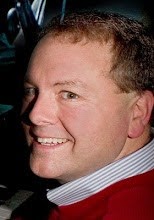
The event, hosted by noted film scholar Christel Schmidt (at left), will feature a screening of 'Their First Misunderstanding,' a short drama starring Mary Pickford and her then-husband Owen Moore that was produced in 1911.

The program, which starts at 7 p.m., will also include a screening of Pickford's full-length feature film 'Sparrows' (1926), regarded as one of the masterpieces of the silent film era. The program will be held in Red River's 'Lincoln' cinema. General admission is $15 per person.

Long thought lost, 'Their First Misunderstanding' is notable because it was the first credited screen appearance of Pickford, who would go on to be one of Hollywood's first superstars and among the most powerful figures in Hollywood.

A 35mm print of the film was discovered in 2007 in a barn in Nelson, N.H. by a contractor who was hired to tear down the structure. The film has since been restored by Keene State College and the Library of Congress; its "re-premiere" at Keene State College last October was hailed by film experts worldwide as a major rediscovery.

The screening at Red River will be only the second time 'Their First Misunderstanding' has been publicly screened since its restoration.

The films will be accompanied by live music created by Jeff Rapsis, a New Hampshire-based silent film musician and Red River's house film accompanist.

Hosting the event is Christel Schmidt, noted Pickford expert and editor of 'Mary Pickford: Queen of the Movies,' a book recently co-published by the Library of Congress and the University Press of Kentucky.

Schmidt will be on hand to sign copies of her book, an anthology of writing about one of the most important — and misunderstood — figures in American film history. Copies will be available for purchase and signing before and after the show.

Also on the program is Larry Benaquist, professor emeritus of film at Keene State, who coordinated the restoration of 'Their First Misunderstanding' and several other films discovered in Nelson, a small town about 10 miles north of Keene.

Only about 20 percent of all silent films produced in the U.S. survive today. Most were lost to decay, neglect, or deliberate destruction after silent film was superceded by talking pictures in the late 1920s. As a result, the rediscovery of any film title thought lost is considered rare and unusual.

Owen Moore and Mary Pickford in 'Their First Misunderstanding' (1911).

Screening 'Their First Misunderstanding' at Red River helps the theater fulfill its mission to bring out-of-the-ordinary cinema to New Hampshire residents.

"We're thrilled to be hosting only the second-ever screening of this early Pickford film that was discovered right here in New Hampshire," said Shelly Hudson, executive director of Red River. "It's amazing that this piece of cinema history has been unearthed in our own backyard, and we're glad to be able to give Granite State residents a chance not only to see it, but also understand more about its importantance."

Perspective on Pickford and her career will be provided by Schmidt, an independent researcher affiliated with the Library of Congress who has specialized in cataloging and tracking down all surviving Pickford films.

Pickford, an early superstar, was a major force in early Hollywood, helping establish the United Artists studio and serving as a founding member of the Academy of Motion Picture Arts and Sciences, which gives out the annual Oscar awards.

However, Pickford's films receive little attention today, in part due to the myth that Pickford often played wholesome and traditional female characters.

In truth, Pickford's movies often required her to take action, challenge authority, and play strong roles uncommon for a woman of the era. In 'Sparrows' (1926), also on the Red River program, Pickford must single-handedly protect a group of orphans from an evil guardian, and then battle a pack of criminals. In a dramatic higlight, she leads the orphans on a perilous journey through a dangerous alligator-infested swamp.

"We hope this program helps people understand what a dynamic woman Mary Pickford was, both on screen and in her career," Hudson said. "If you've never experienced a silent film with live music, I encourage you to join us on Thursday, Jan. 30."

The screening is supported in part by HippoPress, the region's arts and entertainment newspaper, as well as the Concord Monitor, the Capitol Region's daily newspaper.

Red River Theatres, an independent cinema, is a non-profit 501(c)(3) organization dedicated to screening a diverse program of first-run independent films, cult favorites, classics, local and regional film projects, and foreign films. The member-supported theater’s mission is to present film and the discussion of film as a way to entertain, broaden horizons and deepen appreciation of life for New Hampshire audiences of all ages.

Red River Theatres includes silent film in its programming to give today's audiences a chance to experience the great films of cinema's early years as they were intended: in restored prints, on the big screen, and with live music and an audience.

“These films are still exciting experiences if you show them as they were designed to be screened,” said Rapsis, Red River's accompanist. “There’s a reason people first fell in love with the movies, and we hope to recreate that experience with the Pickford program and the other silent films we show at Red River. At their best, silent films were communal experience—one in which the presence of a large audience intensifies everyone’s reactions.”

"Mary Pickford: Queen of the Movies" will be presented on Thursday, Jan. 30 at 7 p.m. at Red River Theatres, 11 South Main St., Concord, N.H. Admission is $15 per person; for more info, call (603) 224-4600 or visit www.redrivertheatres.org. For more information about 'Mary Pickford: Queen of the Movies, visit https://www.facebook.com/MaryPickfordQueenOfTheMovies. For more information about the music, visit www.jeffrapsis.com.