Sunday, September 21, 2025

Back to the future with 'Metropolis' (1927) on Friday, Sept. 26 in Derry (N.H.) Opera House

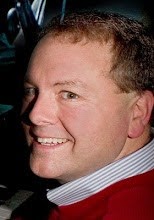
Me under the marquee of the Flying Monkey Moviehouse prior to a screening last week.

Up next, it's 'Metropolis' (1927) at the Derry (N.H.) Opera House on Friday, Sept. 26. Showtime is 7 p.m.; lots more info is in the press release pasted in below.

Recent screenings included 'Risky Business' (1925) on Wednesday, Sept. 17 at the Leavitt Theatre in Ogunquit, Maine; Buster Keaton's comedy 'Seven Chances' (1925) at the Flying Monkey Moviehouse and Performance Center; and Abel Gance's seminal drama 'J'Accuse' (1919) at the Town Hall Theatre in Wilton, N.H.

I had thought it was the first time I'd scored 'J'Accuse,' but in checking my records it turns out I did music for it in 2015 at the Harvard Film Archive. 

Wow! I've been doing this for nearly 20 years, and this is the first time I have absolutely no recollection about a screening or a film that I've scored. 

One thing about 'J'Accuse' was it marked the debut of a new speaker for my digital synthesizer output. The pair of old Roland studio monitors have been great, but they've lately been showing their age. 

Audience response afterward was highly favorable to the sound, so looks I'll be going through with the update.  

Okay, hope you can make it to 'Metropolis' (1927) on Friday. Here's a press release with more info.

*     *     *

A scene from 'Metropolis' (1927).
 
TUESDAY, AUG. 26, 2025 / FOR IMMEDIATE RELEASE
For more info, contact: Jeff Rapsis • (603) 236-9237 • jeffrapsis@gmail.com

Restored classic sci-fi epic 'Metropolis' to screen in Derry on Friday, Sept. 26

Landmark early futuristic fantasy, with half-hour of rediscovered footage, to be shown with live music at Derry Opera House

DERRY, N.H.—A silent film hailed as the grandfather of all science fiction fantasy movies will soon return to the big screen at the Derry Opera House.

'Metropolis' (1927), an epic adventure set in a futuristic world, will be shown with live music on Friday, Sept. 26 at 7 p.m. at the Derry Opera House, 29 West Broadway, Derry, N.H.

The screening will feature live accompaniment by Jeff Rapsis, a New Hampshire-based composer who specializes in creating music for silent films.

The event is organized by the Derry Public Library, the Taylor Library, and the Greater Derry Arts Council.

Admission is free; advance registration is requested. To register, visit the Derry Public Library's website at derrypl.org and click on the online 'Events' calendar.

'Metropolis' (1927), regarded as German director Fritz Lang's masterpiece, is set in a society where a privileged elite pursue lives of leisure while the masses toil on vast machines and live in poverty.

The film, with its visions of futuristic factories and underground cities, set new standards for visual design and inspired generations of dystopian fantasies from Ridley Scott's 'Blade Runner' to Terry Gilliam's 'Brazil.'

In 'Metropolis,' the story centers on an upper class young man who falls in love with a woman who works with the poor. The tale encompasses mad scientists, human-like robots, underground spiritual movements, and industrial espionage, all set in a society divided between haves and have-nots.

The version of 'Metropolis' to be screened at the Derry Opera House is a newly restored edition that includes nearly a half-hour of missing footage cut following the film's premiere in 1927. The lost footage, discovered in 2008 in an archive in Argentina, has since been added to the existing 'Metropolis,' allowing plot threads and characters to be developed more fully.

When first screened in Berlin, Germany on Jan. 10, 1927, the sci-fi epic ran an estimated 153 minutes. After its premiere, the film's distributors (including Paramount in the U.S.) drastically shortened 'Metropolis' to maximize the film's commercial potential. By the time it debuted in the U.S. later that year, the film was only about 90 minutes long.

Even in its shortened form, 'Metropolis' became a cornerstone of science fiction cinema. Due to its enduring popularity, the film has undergone numerous restorations in the intervening decades in attempts to recover Lang's original vision.

Restoration work continues to this day. In 2008, the curator of the Buenos Aires Museo del Cine discovered a 16mm dupe negative of 'Metropolis' that was considerably longer than any existing print.

It  contained 25 minutes of "lost" footage, about a fifth of the film, that had not been seen since its Berlin debut.

The discovery of such a significant amount of material called for yet another restoration, a 2½-hour version that debuted in 2010 to widespread acclaim. It's this fully restored edition that will be screened at the Derry Opera House.

A scene from 'Metropolis' (1927).

" 'Metropolis' stands as an stunning example of the power of silent film to tell a compelling story without words, and reach across the generations to touch movie-goers from the real future, which means us," said accompanist Jeff Rapsis, who provides live music for silent film screenings throughout New England and beyond.

To accompany a silent film, Rapsis uses a digital synthesizer to recreate the texture of the full orchestra. The score is created live in real time as the movie is screened. Rather than focus exclusively on authentic music of the period, Rapsis creates new music for silent films that draws from movie scoring techniques that today's audiences expect from the cinema.

The restored 'Metropolis' will be shown with live music on Friday, Sept. 26 at 7 p.m. at the Derry Opera House, 29 West Broadway, Derry, N.H. Admission is free; advance registration is requested. To register, visit the Derry Public Library's website at derrypl.org and click on the online 'Events' calendar.

For more information on the music, visit www.jeffrapsis.com.

CRITIC'S COMMENTS on ‘METROPOLIS

“'Metropolis' does what many great films do, creating a time, place and characters so striking that they become part of our arsenal of images for imagining the world.”
—Roger Ebert, 2010, The Chicago Sun-Times

“If it comes anywhere near your town, go see it and thank the movie Gods that it even exists. There’s no star rating high enough.”
—Brian Tallerico, Movieretriever.com

Sunday, September 14, 2025

Next up: 'Risky Business' (1925) on Wednesday, Sept. 17 at Leavitt Theatre in Ogunquit, Maine

Outside Brandon Town Hall on Saturday, Sept. 12 prior to accompanying 'Spies' (1928).

This week, I accompany 'Risky Business' (1925) in Ogunquit, Maine, Buster Keaton's 'Seven Chances' (1925) in Plymouth, N.H., and then—a new one for me—Abel Gance's 'J'Accuse!' (1919) in Wilton, N.H.

The press release for 'Risky Business' is below. It's a nifty comedy that holds up well, I think. So if you're anywhere close to Ogunquit, Maine, I hope you'll join us at the Leavitt Theatre, which continues to celebrate its 100th season.

This past weekend's adventures included accompanying 'Spies' (1928), Fritz Lang's sprawling espionage epic, on Friday night in Brandon, Vt. 

It's the 14th season we've been screening silent films with live music in the Brandon Town Hall and Community Center, and the audiences keep on coming!

It's the longevity of the series that prompted me to program 'Spies' this year. I told Friday night's audience that 'Spies' wouldn't work if we hadn't been "training" ourselves for the past 14 years, which got a nice laugh.

The film lends itself to some big musical gestures. Although all went well, it's become increasingly clear that my trusty Roland speakers are no longer up to the task. After dragging them all over creation for nearly 20 years, they've just about had it.  

They can no longer carry bass notes without fluttering, and notes in the treble range don't sound as smooth as they used to. 

So time to get new speakers! Hope to have them in hand prior to hauling out to Pittsburgh next month, when I'll accompany 'The Big Parade' (1925) as part of the Pittsburgh Silent Film Festival.

Speakers weren't a problem this past Saturday at the Harvard Film Archive, where I played the house grand piano for Yasujiro Ozu's 'I Was Born, But...' (1932).

Some of the young cast members in 'I Was Born, But...' (1932).

The piano (I forget the make) had just been tuned that week, and was a dream to play! I hadn't been asked to do music for any HFA programs in quite some time, so it was great to be back.

The screening made use of the archive's own 35mm print, which led to the screening's only mishap.

At the very end of the movie, with maybe less than a minute of footage left, the screen just went dark. 

Just black. No warning, no nothing.

I knew we were very close to the end, and I was already winding up the music so it would come to a stop in a very light and elegant way.

So when the screen went blank, I assumed the print was missing the last few feet, which sometimes happens. I kept the music going for just a bit, but then artfully climbed to the keyboard's upper registers, bringing the score to a halt.

This was followed by a generous ovation from those in attendance. I found myself waiting for house lights to come up so I could acknowledge it.

But the lights stayed off, and the applause was starting to die down—and then the film started up again!

So we got the final minute, and once again I climbed the keyboard to attempt an elegant finish, Take 2.\

Later I was told the print was riddled with splices, but that it had held until the last possible minute, when it jumped the sprockets.

There was another strange mishap right at the start, when something happened that I'd never experienced before.

The HFA's house piano light was attached over the keyboard. Just 15 seconds into the film, the spring-loaded clip let go, causing the lamp to be catapulted into the darkness somewhere off to my right.

Fortunately, I had my junky old brass piano light was standing by on the other side of the keyboard. 

So I just reached over and switched that on,  and away we went.

Shortly after, an audience member brought the errant light back to the keyboard. I was still working, so now it became the back-up.

Final note: I often open up piano benches because you never know what you'll find. At the HFA, the bench was clearly weighed down by something with substantial heft to it.

Inside I found...two copies of the 2007 Greater Boston Yellow Pages, each as big as 

So if you're ever attending a Harvard Film Archive screening and need to look up a good plumber, I know just what you should do.

Okay, onward to 'Risky Business' (1925) at the Leavitt Theatre in Ogunquit, Maine. Press release below. Hope to see you there!

*     *     * 

An original lobby card promoting 'Risky Business' (1925).

TUESDAY, AUG. 26, 2025 / FOR IMMEDIATE RELEASE

Contact: Jeff Rapsis • (603) 236-9237 • jeffrapsis@gmail.com

'Risky Business' to screen in Ogunquit—but NOT the version starring Tom Cruise

Leavitt Theatre celebrates 100th season by screening vintage 1925 silent comedy 'Risky Business' with live music on Wednesday, Sept. 17

OGUNQUIT, Maine—It's not the 1980s version with Tom Cruise, but a 1925 comedy/drama about a rich socialite in love with a poor country doctor.

It's 'Risky Business,' starring 1920s starlets Vera Reynolds and Zasu Pitts, to be screened on Wednesday, Sept. 17 at 7 p.m. at the Leavitt Theatre, 259 Main St., Route 1 in Ogunquit, Maine.

The screening will feature live accompaniment by Jeff Rapsis, a New Hampshire-based composer who specializes in creating scores for silent films.

Tickets are $15 general admission and available at the door.

The Leavitt is celebrating its 100th anniversary, having served the community continuously since 1925. To honor this long record, the venue has programmed a season of vintage silent movie classics from 1925 with live music.

The series gives area film fans a chance to see movies from the pioneering days of cinema as they were intended to be shown—on the big screen, with an audience, and accompanied by live music.

"Put the whole experience back together, and you can see why people first fell in love with the movies," Rapsis said.

In 'Risky Business,' widowed Mrs. Stoughton wants a good match for her only daughter, Cecily, for whom she's chosen the rich and debonair Richard Coults-Browne. 

Cecily, however, only has eyes for the handsome and compassionate country doctor Ted Pyncheon. 

When Cecily announces her engagement to the doctor, her mother still believes she knows best—and decides a taste of country life is just the medicine to bring her little girl back around to her way of thinking.

Vera Reynolds started in movies as a Bathing Beauty for Mack Sennett's Keystone Studios, and starred in a number of short films before appearing in features such as 'Prodigal Daughters' (1923), directed by Sam Wood, and Cecil B. DeMille's 'Feet of Clay' (1924).

Zasu Pitts began her career on the stage; she was a notable comic actress in movies during the silent and talkie eras, and best known for her roles in 'Better Times' (1919) and for an unusual dramatic role in Erich Von Stroheim's epic 'Greed' (1924). She continued to appear in films into the 1960s, with a bit part in 'It's A Mad, Mad, Mad, Mad World.' (1963).

Alan Hale was both a director and a prolific character actor who worked in silents and early talkies. His notable roles include Little John in 'The Adventures of Robin Hood' (1938) and Danger in 'It Happened One Night' (1934). His son, actor Alan Hale Jr., played the Skipper in the 1960s television sitcom 'Gilligan's Island.'

'Risky Business' was released by Cecil B. DeMille's Producers Distributing Corporation.

Following 'Risky Business' on Wednesday, Sept. 17 at 7 p.m., other programs in this year's Leavitt silent film series include:

• Monday, Oct. 27, 2025, 7 p.m.: "Phantom of the Opera" (1925). Long before Andrew Lloyd Webber created the hit stage musical, this silent film adaptation starring Lon Chaney helped place 'Phantom' firmly in the pantheon of both horror and romance. See it if you dare!

See the original silent comedy/drama 'Risky Business' (1925), to be shown with live music by Jeff Rapsis on Wednesday, Sept. 17 at 7 p.m. at the Leavitt Theatre, 259 Main St. Route 1, Ogunquit, Maine; (207) 646-3123; admission is $15 per person, general seating. For more information, visit www.leavittheatre.com


Monday, September 8, 2025

This month: I play at Harvard, make my Pittsburgh debut, and do music for a film made in Maine

I have a few unusual gigs coming up, including a return to accompanying films at the Harvard Film Archive and my debut at this year's Pittsburgh Silent Film Festival. Here's a quick round-up of upcoming screenings. See you at the movies!

A scene from 'Spies' (1928), Fritz Lang's thriller.

• Friday, Sept. 12, 2025, 7 p.m.: "Spies" (1928) directed by Fritz Lang; Brandon Town Hall and Community Center, Main Street/Route 7, Brandon, Vt. Director Fritz Lang's tale of espionage was the forerunner of all movie spy sagas, packed with double agents, hi-tech gadgets, beautiful (and dangerous) women, and an evil genius with a plan to take over the world, mwah-ha-ha-ha! Join us for a series of silent films and live music in a wonderfully restored town hall in Brandon Vt. that features great acoustics. Admission free, donations accepted with proceeds to help support the silent film series. Rescheduled from Saturday, Sept. 20. 

A scene from Yasujiro Ozu's 1932 film 'I Was Born, But...'

• Saturday, Sept. 13, 2025, 2 p.m.: "I Was Born, But..." (1932) directed by Yasujiro Ozu; Harvard Film Archive, 24 Quincy St., Cambridge, Mass. (617) 496-3211. Part of the Harvard Film Archive's, "New Dog, New Tricks: Youth in Cinema" film series. A blithe portrait of the financial and psychological toils of one Japanese family, as told from the rascally point of view of a couple of stubborn little boys. For two brothers, the daily struggles of bullies and mean teachers is nothing next to the mortification they feel when they realize their good-natured father’s low-rung social status. Admission: $10 general public, discounts for students/seniors/members; Harvard students admitted free.

An original lobby card promoting 'Risky Business' (1925).

Wednesday, Sept. 17, 2025, 7 p.m.: "Risky Business" (1925) starring Vera Reynolds, Zazu Pitts; Leavitt Theatre, 259 Main St. Route 1, Ogunquit, Maine; (207) 646-3123. No, not the 1986 film starring Tom Cruise. In this silent-era 'Risky Business,' Zasu Pitts (from Parsons, Kansas) stars with Vera Ralston in a tale of a society girl's love for a country doctor in a film that is by turns harrowing, hilarious, and heart-warming. Join us for a summer season of movies and entertainment at the historic Leavitt Theatre, celebrating its 100th anniversary. See great silent films with live music in a summer-only theater opened in 1925 and barely changed since. 

Buster Keaton and an army of would-be prides in 'Seven Chances' (1925).

• Thursday, Sept. 18, 2025, 7 p.m.: "Seven Chances" (1925) starring Buster Keaton; The Flying Monkey Movie House and Performance Center, 39 South Main St., Plymouth, N.H.; (603) 536-2551. Buster is about to be saved from bankruptcy by an unexpected inheritance of $7 million—but only if he gets married by 7 p.m. that very day. Can Buster somehow find the girl of his dreams while being pursued by an army of women eager to marry a soon-to-be millionaire? One of Buster's best comedies, climaxed by one of the great chase scenes in all silent film comedy. Silent film series at a restored moviehouse in Plymouth, N.H. Tickets $15 per person.

A scene from Abel Gance's World War I film 'J'Accuse' (1919).

 • Sunday, Sept. 21, 2025, 2 p.m.: "J'Accuse" (1919) directed by Abel Gance; Wilton Town Hall Theatre, Main Street, Wilton, N.H.; (603) 654-3456. French silent film directed by Abel Gance that juxtaposes a romantic drama with the background of the horrors of World War I. Work on the film began in 1918, with some scenes filmed on real battlefields. The film's powerful depiction of wartime suffering, particularly its climactic sequence of the "return of the dead," made it an international success and confirmed Gance as one of the most important directors in Europe. Silent film with live music at a theater where movies have been shown since 1912. Admission free, donations of $10 per person encouraged. 

Yesterday's vision of the future is now in Fritz Lang's epic 'Metropolis' (1927)

• Friday, Sept. 26, 2025, 7 p.m.: "Metropolis" (1927) directed by Fritz Lang; Derry Opera House, 29 W. Broadway, Derry; sponsored by Derry Public Library.  The eye-popping silent film sci-fi masterpiece of German filmmaker Fritz Lang is a vintage look at things to come. 'Metropolis' stands as an stunning example of the power of film to tell a compelling story without words, and reach across the generations to touch movie-goers from the real future that came to pass: us! Timeless silent film on the big screen and with live music. Free admission! For more information, contact the Derry Public Library at (603) 432-6140.   

Lillian Gish is up a creek as she heads down the Connecticut River via ice floes.

• Monday, Sept. 29, 2025, 6:30 p.m.: "Way Down East" (1920) directed by D.W. Griffith, starring Lillian Gish; Greenfield Garden Cinemas, 361 Main St., Greenfield, Mass.; call (413) 773-9260 or visit www.gardencinemas.net. Celebrate 'Silent Movie Day' (Sept. 29) with one of the genre's all-time classics. Griffith's enduring box-office smash sees Lillian Gish pitted against small town New England and one very large waterfall. Features Gish as a wronged woman who can't escape her past. Still-thrilling climax on ice floes heading towards the falls was filmed on the Connecticut River! Engrossing melodrama, and the silent era's fifth-highest grossing motion picture; an audience favorite for more than a century. Tickets $10.50 adults; $8.50 students, seniors, and veterans.  

Meet-cute between John Gilbert and Renee Adoree in 'The Big Parade' (1925).

• Friday, Oct. 3, 2025, 7 p.m.: "The Big Parade" (1925) directed by King Vidor, starring John Gilbert, Renee Adoree; Lawrenceville/Row House Cinema, 4115 Butler St., Pittsburgh, Penn. 100th anniversary screening of sweeping World War I saga about U.S. doughboys signing up and shipping off to France, where they face experiences that will change their lives forever—if they return. Shown as part of this year's Pittsburgh Silent Film Festival, organized by the Pittsburgh Silent Film Society and sponsored by the Pittsburgh Classic Movie Club. Tickets $16.


Promotion for a screening of 'In The River,' a silent film by Edgar Jones shot in Maine.

• Saturday, Oct. 4, 2025, 2 p.m.: "In The River" (1920) and other films by Edgar Jones; Colonial Theater, 139 Water St., Augusta, Maine; (207) 209-3525. More than a century ago, Edgar Jones set up a studio in Augusta, Maine. From 1919 to 1921, Jones produced a series of two-reel films shot at the studio and on location in Augusta and the Kennebec River. Most have vanished, but a few have recently been unearthed by film preservation advocate Ed Lorusso, a local resident. Three films produced by Jones will be screened at the Colonial Theater in Augusta, Maine, a moviehouse that was in operation when the films were produced, and which is currently undergoing restoration. Besides the world re-premiere of "In the River" (which Lorusso recently located in a private collection at the U.S. Library of Congress), the program will also include "Cupid, Registered Guide" and "Caught in the Rapids." 

Well, that's enough! Something for everyone—so hope to see you at the movies in the next month before the annual "Halloween Silent Film Screening Staplechase" kicks in with a vengeance!


Tuesday, August 12, 2025

Tonight! A mid-summer 'Phantom,' plus rounding up recent screenings, notes from Lake Wobegon

Film preservationist Ed Lorusso and me prior to last Saturday's all-canine program at the Johnson Hall Opera House in Gardiner, Maine.

This evening (Tuesday, Aug. 12) I have the privilege of accompanying 'Phantom of the Opera' (1925) at the Moultonborough (N.H.) Public Library. 

I just read in the local news that Moultonborough, perched on the northern end of Lake Winnipesaukee, is one of New Hampshire's fastest-growing towns. Undoubtedly the reason for this is that the library programs silent films with live music. Other towns, take note!

Lots more info on the film (and the screening) in the press release pasted in below. 

Before I head up to the Lakes Region, here's a look back at two notable screenings from this past weekend.

Sporting my '101 Dalmations' necktie for 'Dog Day Afternoon.'

On Saturday, Aug. 9, I served as accompanist for 'Dog Day Afternoon: A Celebration of Canine Stars in Silent Film' at the Johnson Hall Opera House in Gardiner, Maine. The program was, yes, all films starring dogs!

Organized by film preservationist (and Maine resident) Ed Lorusso, attendees were treated to rarely seen short films starring Jean the Vitagraph Dog (including two shot in Maine), Shep the Dog, Teddy the Wonder Dog, plus the feature-length 'Clash of the Wolves' (1925) starring Rin Tin Tin.

At least one dog, Uncas, attended, and seemed to enjoy the program. In the "You Never Know Who Will Attend a Screening" Department, his owner was a descendant of Laurence Trimble, the man who owned and trained Jean the Vitagraph Dog, the most popular dog star in the movies circa 1910.

Uncas and his owner, a descendant of the owner of Jean the Vitagraph Dog, were among those assembling prior to the show.

We saw why in three short films starring Jean, each of which I'd never seen before but had a great time finding the right music to bring them to life. I kept the textures light and tuneful, with occasional forays into drama when warranted.

I'd never seen the other films, either, with the exception of the Keystone comedy 'Teddy at the Throttle' (1916), which I must have accompanied at some point, and 'Clash of the Wolves' (1925), an audience favorite that I've accompanied many times.

A rare photo of me at the keyboard in which I look like I know what I'm doing. Thank you, Alexander Wall!

For 'Clash,' I switched the synthesizer to full orchestra to reflect the film's outdoorsy sweep and to amp up the drama. You might say I pulled out all the stops, although that's a phrase from the world of pipe organs.

About 80 people turned out for the program, which at four hours was a fairly big gulp, but which actually seemed to rocket right by. Audience reaction was strong throughout. Kudos to Ed Lorusso for not only restoring many of the shorter films, but also curating a program in which every film was a winner.

The show was Lorusso's 3rd Annual Silent Film Festival in support of the Colonial Theater in Augusta, Maine, which is undergoing extensive renovations, hence the use of the Johnson Hall Opera House, an equally worthy venue.

Many thanks to all who made this event something to bark about!

And in a weird coincidence, I found that after the silent film festival, the next act at the Johnson Hall Opera House would be none other than Garrison Keillor. Really! Check out the photo:

Next up at the Johnson Hall Opera House: Garrison Keillor!

I've been a life-long admirer of Keillor's work as a writer and also improviser. Really—the weekly 'News from Lake Wobegon' monologues he did for decades on the 'Prairie Home Companion' radio show were largely improvised on the spot.

I've often felt this was an act of sustained creativity on the same level as Bach churning out entire cantatas for weekly services at St. Thomas in Leipzig. 

I also believe his writing is under-rated. In particular, I think he captured something very special about life in America in 'Lake Wobegon Day,' the 1985 novel in which he stitched together and wrote down much of the material he'd been working out in front of audiences for the radio show.

There's stuff in there that captures life in as it was lived in smaller communities in the United States in the mid-20th century. And it does it with a simplicity and plainness that I've never found in any other writing. 

I think a long time from now, if historians want to know what it was like to grow up in the era that so many of us did (post World War II, pre-Internet), they could do worse than read this book. 

And here's the thing. I didn't grow up in Minnesota, but long stretches of 'Lake Wobegon Days' captures exactly what I remember experiencing as I came of age (in my case, in the mill town of Nashua, N.H.) and began to see the world around me.

So although the book is about a very specific time and place, I consider it an example of how the universal can be found in what's most familiar and all around us.

Maybe that's why I return to 'Lake Wobegon Days' every few years and read through it. Maybe that's why I included a small excerpt as one of the texts read at my wedding, which will be 30 years ago next month.

"Some luck lies in not getting what you thought you wanted but getting what you have, which once you have it you may be smart enough to see is what you would have wanted had you known." 

That gloriously convoluted sentence, but made up entirely of one- and two-syllable words, and in that unmistakable voice and cadence, with the emergence of the realization embedded within it. I imagine a lot of work went into shaping that sentence, which appears at the very end of the book. Wow!

And maybe that's why I got tickets to see Garrison Keillor appear earlier this year in that very same town, Nashua, N.H., and maybe that's why I went up to him afterwards and asked if he'd sign my aging paperback copy of 'Lake Wobegon Days,' which he did:

So from one improviser to another: Garrison, I hope I warmed up the Johnson Hall Opera House audience.

Another kind of warmth was to be found on Sunday, Aug. 10, when I ventured down to the Somerville Theatre in Davis Square, Somerville, Mass., where I accompanied a screening of 'Padlocked' (1926), a newly restored drama that's only recently become available.

What a blast of 1920s everything! Based on a popular story published in Cosmopolitan Magazine (ever hear of it?) 'Padlocked' has intense family drama, laugh-out-loud comedy, incredible dancing, rich men preying on young women, extremely weird theme parties, and much more, all drenched in Jazz Age atmosphere. 

Me outside the Somerville Theatre prior to showtime for 'Padlocked' (1926).

The film—directed by Allan Dwan and photographed by James Wong Howe, and featuring an A-list cast including Noah Beery, Florence Turner, Richard Arlen, Josephine Crowell, and, most interesting of all, Lois Moran, who would go on to have an affair with F. Scott Fitzgerald, who then rewrote the character of Rosemary Hoyt in his novel 'Tender is the Night' to resemble her—was considered lost for nearly a century.

But a print turned up in Czech National Archive in Prague, and we can now see 'Padlocked' again on the big screen. Kudos to the San Francisco Silent Film Festival for pursuing the restoration of this high energy chestnut, and also for making a 35mm print available for screening, which we used, and which looked great on the Somerville's big screen. 

Okay, onward to tonight's screening of 'Phantom' in the fast-growing town of Moultonborough. See you at the library!

*     *     *

An original release poster for 'Phantom of the Opera' (1925).
 
MONDAY, AUG. 4, 2025 / FOR IMMEDIATE RELEASE
Contact Jeff Rapsis • (603) 236-9237 • jeffrapsis@gmail.com

'Phantom of the Opera' starring Lon Chaney at Moultonborough Library on Tuesday, Aug. 12

Free to the public! Pioneer classic silent thriller to be shown with live musical accompaniment

MOULTONBOROUGH, N.H.—It was a film considered so frightening when first released that theaters were advised to have doctors standing by in case moviegoers fainted.

It was the original big screen adaptation of 'The Phantom of the Opera' (1925), starring iconic actor Lon Chaney in the title role.

This classic Universal thriller will be shown on Tuesday, Aug. 12 at 7 p.m. at the Moultonborough Public Library, 4 Holland St., Moultonborough, N.H. 

The screening will feature live musical accompaniment by Jeff Rapsis, a New Hampshire-based composer who specializes in creating music for silent films.

The screening is free and open to the public. Attendees are asked to register in advance at moultonboroughlibrary.org; look under the 'Events' area. 

The film is suitable for all ages, although young children may find some scenes intense and frightening.

The show will enable audience members to experience the original silent 'Phantom' the way it was intended to be seen: on the big screen, with live music, and with an audience.  

'The Phantom of the Opera,' starring legendary actor Lon Chaney in the title role, remains a landmark work of the cinematic horror genre. To modern viewers, the passage of time has made this unusual film seem even more strange and otherworldly.

It's an atmosphere that silent film accompanist Jeff Rapsis will enhance by improvising live music on the spot for the screening.

Lon Chaney in the title role in 'The Phantom of the Opera' (1925).

"The original 'Phantom' is a film that seems to get creepier as more time passes," said Rapsis, who accompanies films at venues around the nation. "It's a great way to experience the power of silent film to transport audiences to strange and unusual places."

'The Phantom of the Opera,' adapted from a 19th century novel by French author Gaston Leroux, featured Chaney as the deformed Phantom who haunts the opera house. The Phantom, seen only in the shadows, causes murder and mayhem in an attempt to force the opera's management to make the woman he loves into a star.

The film is most famous for Lon Chaney's intentionally horrific, self-applied make-up, which was kept a studio secret until the film's premiere.

Chaney transformed his face by painting his eye sockets black, creating a cadaverous skull-like visage. He also pulled the tip of his nose up and pinned it in place with wire, enlarged his nostrils with black paint, and put a set of jagged false teeth into his mouth to complete the ghastly deformed look of the Phantom.

Chaney's disfigured face is kept covered in the film until the now-famous unmasking scene, which prompted gasps of terror from the film's original audiences.

"No one had ever seen anything like this before," Rapsis said. "Chaney, with his portrayal of 'The Phantom,' really pushed the boundaries of what movies could do."

Lon Chaney menaces Mary Philbin in 'The Phantom of the Opera' (1925).

Chaney, known as the "Man of a Thousand Faces" due to his versatility with make-up, also played Quasimodo in the silent 'Hunchback of Notre Dame' (1923) and circus performer 'Alonzo the Armless' in Tod Browning's 'The Unknown' (1927).

The large cast of 'Phantom of the Opera' includes Mary Philbin as Christine Daaé, as the Phantom's love interest; character actor Snitz Edwards; and many other stars of the silent period.

'The Phantom of the Opera' proved so popular in its original release and again in a 1930 reissue that it led Universal Studios to launch a series of horror films, many of which are also regarded as true classics of the genre, including 'Dracula' (1931), 'Frankenstein' (1931), and 'The Mummy' (1932).

The silent film version of 'Phantom' also paved the way for numerous other adaptations of the story, up to and including the wildly successful Andrew Lloyd Webber musical from 1986 that continues to run in productions around the world.

"Even with all the different versions of this story, Chaney's performance in the lead role stands the test of time," Rapsis said. "And remember—in silent film, no one can hear you scream!"

‘The Phantom of the Opera’ (1925) will be shown with live music on Tuesday, Aug. 12 at 7 p.m. at the Moultonborough Public Library, 4 Holland St., Moultonborough, N.H. 

The screening is free and open to the public. Attendees are asked to register in advance at moultonboroughlibrary.org; look under the 'Events' area. 

Monday, August 4, 2025

This Saturday in Maine: music for silent films starring canines; this Sunday in Massachusetts: 'Padlocked' (1926) at Somerville Theatre

A fairly evocative trade ad promoting the Paramount drama 'Padlocked' (1926).

My upcoming weekend consists of music for dogs in Maine, then music for people in Massachusetts. 

Ye—on Saturday, Aug. 9, I'll accompany a program of silent films starring canines at the Johnson Opera House in Gardiner, Maine. 

Then on Sunday, Aug. 10, I'll do music for 'Padlocked,' a 1920s morality drama, at the Somerville Theatre in Somerville, Mass.

Lots more about 'Padlocked' in the press release below. It's a film that hasn't been seen since 1926, but is now available after a 2023 restoration by the San Francisco Silent Film Festival.

But about the dog program, which takes place on Saturday, Aug. 9 starting at noon. Officially, it's the Augusta Colonial Theatre's 3rd Annual Silent Film Festival. (It's being held in another venue, the Johnson Opera House in Gardiner, Maine, but don't let that throw you.)

Subtitled 'Dog Day Afternoon,' the program (curated by film restoration guru Ed Lorasso) is being promoted like this:

"Come join us for a paws-itively fun time at Johnson Hall Opera House for our 3rd Annual Silent Film Festival! Watch classic movies starring all the great furry friends of the silent film era: Jean the Vitagraph Dog, Shep the Dog, Teddy the Wonder Dog, and everyone's favorite Rin-Tin-Tin! Enjoy popcorn, drinks, and a tail-wagging good time. Don't miss out on this doggone awesome event!"

Dog puns aside, it promises to be a pretty compelling program.

It's a good variety of early short films, plus the full-length spectacular Warner Brothers feature 'Clash of the Wolves' (1925) starring Rin Tin Tin.

If you'd like to know why Rin Tin Tin was known as the "mortgage lifter" among theater owners, 'Clash of the Wolves' is a good example.  

Canine star Rin Tin Tin on set with 'Clash of the Wolves' costar June Marlow.

I've done many animal-themed silent film programs over the years. It was a popular genre in early cinema, and their charm and excitement still comes through. 

The dogs themselves are as compelling as any human performer. Really—after all, lacking the power of speech is no handicap in silent films. 

See for yourself by attending this off-beat program on Saturday, Aug. 9. For more info, a complete list of films, and to buy tickets, visit the festival's Eventbrite page.

And what about 'Padlocked' (1926), which I'm accompanying on Sunday, Aug. 10 at 2 p.m. at the Somerville Theatre? Lots of info in the press release below. See you there!

*     *     *

A scene from the long-unseen Paramount drama 'Padlocked' (1926).

MONDAY, AUG. 4, 2025 / FOR IMMEDIATE RELEASE

Contact Jeff Rapsis • (603) 236-9237 • jeffrapsis@gmail.com

Somerville Theatre to screen rare silent 'Padlocked' with live music on Sunday, Aug. 10

Restored 1920s morality drama from Paramount Pictures, based on provocative Cosmopolitan story; film unseen since its original 1926 release

SOMERVILLE, Mass. — Released at the height of the Roaring '20s, it played up the clash of Jazz Age temptations with traditional conservative morality.

It was 'Padlocked' (1926), a silent-era drama from Paramount Pictures—a movie unseen since its original release, but now available following a recent restoration.

The rarely screened film will be shown on Sunday, Aug. 10 at 2 p.m. at the Somerville Theatre, 55 Davis Square, Somerville, Mass.

Admission $17 adults; $13 members; $12 seniors/children. Tickets are available at somervilletheatre.com or at the door.

Live musical scoring will be provided by silent film accompanist Jeff Rapsis, a New Hampshire-based performer who specializes in music for silent film screenings.

'Padlocked,' based on a serialized story published in Cosmopolitan magazine, is an urbane 1920s drama that skewers the cruelty and hypocrisy of moral reformers.

The film stars Noah Beery Sr., Florence Turner, Lois Moran, Louise Dresser, Helen Jerome Eddy, Allan Simpson, and Richard Arlen.

A vintage trade ad promoting Paramount's drama 'Padlocked' (1926).
 
Beery plays Henry Gilbert, a wealthy do-gooder and domestic tyrant whose puritanism destroys the lives of his wife and daughter, played by Florence Turner and Lois Moran.

Gilbert's myopia about human character proves his undoing: he sees evil in innocent amusements, but is easily taken in by a gold-digging con artist.

For the film's original release, Paramount's publicity machine played up the story's scandalous nature and contemporary relevance.

"A theme so powerful and so certain of overwhelming popularity," trumpeted ads promoting 'Padlocked.' "What a sweeping revelation of this restless age—and how superbly produced, with every possible box office value!"

'Padlocked' boasted several well-known names among its creative team.

Director Allan Dwan, already a Hollywood veteran, would go on to direct such classics as 'Sands of Iwo Jima' (1949) starring John Wayne.

'Padlocked' was an early example of the work of cinematographer James Wong Howe, who would later be nominated for 10 Academy Awards for cinematography, winning twice for 'The Rose Tattoo' (1955) and 'Hud' (1963).
 
A scene from Paramount's drama 'Padlocked' (1926).
 
The film, part of the Somerville's 'Silents, Please!' series, will be shown via a 35mm print produced by the San Francisco Silent Film Festival, which restored the film in 2023.

'Padlocked' hadn't been screened since its original release in1926; a sole surviving print was found in the Czech National Film Archive. Titles were translated back to English and other work restoration work done so the film could be made available to U.S. theaters.

"This is one reason why we continue to program silent films," said Ian Judge, the Somerville's creative director. "Rediscoveries from the silent era are being made all the time. We aim to give movie-goers the chance to experience these classic films as intended—on the big screen, with live music, with an audience, and shown using 35mm prints whenever possible."

To help bring 'Padlocked' to life at the Somerville, silent film accompanist Jeff Rapsis will create a soundtrack that mixes 1920s-style tunes with elements of contemporary movie scoring.

" 'Padlocked' is a great film for music," Rapsis said. "It has several lively cabaret scenes that I think today's audiences will find highly entertaining."

'Padlocked' (1926), a Paramount drama unseen since its original release, will be shown on Sunday, Aug. 10 at 2 p.m. at the Somerville Theatre, 55 Davis Square, Somerville, Mass.

Admission $17 adults; $13 members; $12 seniors/children. For more information and to purchase tickets, visit www.somervilletheatre.com or call the box office at (617) 625-5700.

Saturday, August 2, 2025

Why you should see Emil Jannings in 'The Last Command' (1928) on Sunday, 8/3 in Natick, Mass.

Original poster art promoting 'The Last Command' (1928).

If a person wants to experience a great example of the story-telling power of silent film, I would point said person to 'The Last Command' (1928).

It has everything: an imaginative story, inventive camera-work, intense drama, and a great cast highlighted by a towering performance by Emil Jannings that helped him win the first-ever Academy Award for Best Actor.

'The Last Command' is not an art film—it was a standard-issue drama on Paramount's 1928 release schedule. 

At the same time, it's an example of silent film technique at its height. As directed by Josef von Sternberg, the movie makes fluent use of the vocabulary of visual story-telling.

What's especially impressive to me is how the film uses its specific dramatic material to explore universal questions such as the nature of power, the value of loyalty, the meaning of patriotism, the role of chance, and many other issues people have grappled with throughout human experience.

In doing so, I think 'The Last Command' transcends mere entertainment and becomes timeless art. It's a great example of how the best silent cinema can stand alongside the best literature, paintings, sculpture, drama, and music. 

You may find this surprising due to silent film's limitations as an art form, such as no dialogue. But I think these limitations are what prompted the best silent filmmakers to produce work that "speaks" to us today.

If can't wait to experience this silent masterwork as intended—on the big screen, with live music, and with an audience—then you're in luck. It's screening on Sunday, Aug. 3 at 4 p.m. at the Center for the Arts in Natick, Mass., with me accompanying.

Press release is below with a lot more info about the film and the screening. Hope to see you there!

*    *    *

Emil Jannings romances Evelyn Brent in 'The Last Command' (1928).

TUESDAY, JULY 1, 2025 / FOR IMMEDIATE RELEASE
Contact Jeff Rapsis • (603) 236-9237 • jeffrapsis@gmail.com

Silent epic 'The Last Command' with live music at Natick Center for Arts on Sunday, Aug. 3

Josef von Sternberg's groundbreaking psychological drama won 'Best Actor' for Emil Jannings at first-ever Academy Awards

NATICK, Mass.—'The Last Command' (1928), a silent film drama that won Emil Jannings 'Best Actor' honors at the first-ever Academy Awards, will be screened with live music on Sunday, Aug. 3 at 4 p.m. at TCAN Center for the Arts, 14 Summer St., Natick, Mass.

The screening, the latest in the Center for the Art's silent film series, will feature live accompaniment by Jeff Rapsis, a New Hampshire-based composer who specializes in creating music for silent films.

Admission is $12 per person for members; $14 for non-members. Tickets are available online at www.natickarts.org or at the door.

'The Last Command,' directed by Josef von Sternberg, tells the sweeping story of a powerful general in Czarist Russia (Jannings) forced to flee his homeland during the Bolshevik Revolution. He emigrates to America, where he is reduced to living in poverty.

Finding work as an extra at a Hollywood studio, the former general lands the part of a commanding officer in a movie about the Revolution, causing flashbacks to his traumatic experiences. The conflict leads to a spectacular climax and a towering performance that earned Jannings 'Best Actor' honors.

The film takes audiences on a journey through big emotions as well as issues of history, time, power, and especially a man's duty to his country and to his fellow citizens—and what happens when the two obligations diverge.

'The Last Command' is also one of early Hollywood's most creative and challenging looks at the global conflicts that contributed to World War I.

The film also stars a young William Powell as a Hollywood movie director who crosses paths with the general during the Revolution, and 1920s starlet Evelyn Brent as a seductive Russian revolutionary.

Rapsis, the accompanist, will create the film's score live as the movie is shown.

"Making up the music on the spot is kind of a high wire act," Rapsis said. "But there's nothing like the energy and excitement that comes with improvised live performance, especially when accompanying a silent film."

Critic Leonard Maltin hailed 'The Last Command' as "a stunning silent drama...a fascinating story laced with keen observations of life and work in Hollywood." Time Out of London called it "the first Sternberg masterpiece, expertly poised between satire and 'absurd' melodrama. The cast are fully equal to it; Jannings, in particular, turns the characteristic role of the general into an indelible portrait of arrogance, fervor and dementia."

Director Sternberg, a master of lighting and black-and-white photography, created 'The Last Command' as a visual tour de force. The film is often cited as a prime example of the emotional range and visual accomplishment of silent films at their height, just prior to the coming of pictures with recorded soundtracks.

Rapsis said great silent film dramas such as 'The Last Command' told stories that concentrate on the "big" emotions such as Love, Despair, Anger, and Joy. Because of this, audiences continue to respond to them in the 21st century, especially if they're presented as intended—in a theater on the big screen, with a live audience and live music.

"Dramas such as 'The Last Command' were created to be consumed as a communal experience," Rapsis said. "With an audience and live music, they come to life as their creators intended them to. This screening at TCAN is a great chance to experience films that first caused people to fall in love with the movies."

'The Last Command' (1928) will be screened with live music on Sunday, Aug. 3 at 4 p.m. at TCAN Center for the Arts, 14 Summer St., Natick, Mass.

Admission is $12 per person for members; $14 for non-members. Tickets available online at www.natickarts.org or at the door. For more info, call (508) 647-0097. 

Sunday, July 20, 2025

Hitchcock's 'The Ring' (1927) today at 2 p.m.: thoughts on silent film, boxing, and ballet

A scene from Alfred Hitchcock's boxing drama 'The Ring' (1927). 

Today at 2 p.m., the bell rings for the next installment of our mini-series of silent boxing films at the Town Hall Theatre in Wilton, N.H.

This afternoon, it's Alfred Hitchcock's early film 'The Ring' (1927), a drama in which two men do battle over a woman inside the ring and out.

Late this summer, the series conclude son Sunday, Aug. 24 with 'Battling Butler' (1926), Buster Keaton's boxing comedy.

I'm drawn to silent films that feature boxing because they show the enduring fascination a sport that's so basic and elemental.

Boxing: No teams, just two opponents. No fancy equipment. Everything out in the open for once, with no second-guessing what you're there to do.

Also, talking and words aren't important in the ring. So that's something that silent film and boxing share. Sometimes words aren't enough, or sometimes they're too much.

So there's a certain expressive power shared by boxing and silent film.

You could also make the same connection between boxing and ballet. No words there either: just music and movement—telling stories so elemental that words aren't needed.

Yes, kind of like boxing. 

This reminds me that a friend of mine had a T-shirt that said: "Boxing is like ballet except the dancers hit each other."

There's also the time element of boxing and silent film. When the bell rings, the fighters have no choice to face each other until the contest comes to an end one way or another.

Likewise, when the opening titles of a silent film appear on the screen, the accompanist has no choice to stay in the ring until the story is told—in this case, when 'The End' shows up, which is the cinematic equivalent of going the distance.

There may be other connections with silent film and boxing. So far, no one has thrown a punch at me during a screening, but that could happen at any time. 

If it happens this afternoon, be there to see it by getting a ringside seat at the Town Hall Theatre at 2 p.m. 

Here's the press release with a lot more info  about the film and the screening.

*    *    * 

 
A scene from Alfred Hitchcock's 'The Ring' (1927).
 
MONDAY, JUNE 30, 2025 / FOR IMMEDIATE RELEASE
Contact Jeff Rapsis • (603) 236-9237 • jeffrapsis@gmail.com

Early Hitchcock film highlights Town Hall Theatre summer series of vintage boxing movies

'The Ring' (1927), silent drama of two fighters in love with same woman, to be screened on Sunday, July 20 with live musical accompaniment

WILTON, N.H.—An early film directed by Alfred Hitchcock is next up in a summer series of vintage boxing movies at the Town Hall Theatre.

'The Ring' (1927), an intense tale of two fighters battling over the same woman, will be screened with live music on Sunday, July 20 at 2 p.m.

The boxing series is part of the Wilton Town Hall Theatre's monthly silent film program. Admission to the screenings is free; a donation of $10 per person is suggested.

Live accompaniment will be provided by Jeff Rapsis, a New Hampshire-based silent film musician.

'The Ring,' an early Hitchcock effort, was made when the director was still working in his native Great Britain.

The future "master of suspense" was just 28 years old when he helmed this silent drama set in the colorful world of English carnivals and fairgrounds.

'The Ring' is based on Hitchcock's only original screenplay, although he worked extensively alongside other writers throughout his career.

Silent-era boxing dramas are of interest to fans because they're filled with scenes of the sport at the height of its mainstream popularity.

At the time, boxing rivaled baseball as the nation's most popular sport. Neighborhoods, communities, and ethnic groups all rooted for their favorite fighters, and heavyweight champion Jack Dempsey ranked as an international celebrity.

Boxing stories were popular with early movie audiences as well.

"As an elemental contest between two opponents, boxing inspired some great work by early filmmakers," Rapsis said. "It's a visual sport that doesn't require a lot of dialogue or commentary to understand, and so was perfect for silent movies."

The Wilton Town Hall Theatre has been showing films since 1912. The venue's silent series gives local audiences the chance to experience early cinema as it was intended to be seen: on the big screen, with live music, and with an audience.

The silent film boxing series concludes on Sunday, Aug. 24 with 'Battling Butler' (1926), Buster Keaton's uproarious comedy about a pampered millionaire mistaken for a champion fighter.

The Summer Silent Boxing Film Series continues with a screening of Alfred Hitchcock's 'The Ring' (1927) on Sunday, July 20 at 2 p.m. at the Wilton Town Hall Theatre, 40 Main St., Wilton, N.H. Admission is free; a donation of $10 per person is suggested.


Thursday, July 17, 2025

Tonight at 7 p.m. in Plymouth, N.H.: Milton Sills seeks ocean-going vengeance in 'The Sea Hawk'

An original poster promoting 'The Seahawk' (1924).

I'm back from Bavaria and back at the keyboard!

Last night was a spectacular screening of 'The Lost World' (1925) as part of the 100th anniversary celebration of the Leavitt Theatre in Ogunquit, Maine.

Tonight it's 'The Sea Hawk,' the swashbuckling big screen adaptation of the Rafael Sabatini novel, which I'll accompany at 7 p.m. at the Flying Monkey Moviehouse and Performance Center in Plymouth, N.H.

Lots more info about the screening and the picture are in the press release, which I've pasted in below.

These are the first screenings—and the first time I've been at a keyboard—after about a month layoff for traveling and clearing my head. 

What was I doing in Bavaria? Well, I thought it was high time someone got to the bottom of this "Bavarian Creme" filling used in some U.S. bakery products.

Turns out there's no such equivalent in actual Bavaria. From what I saw in bakeries around Garmish-Partenkirchen, where we were staying, I think they'd laugh at it. 

Actually, we saw some of Munich, and then did some bopping around the Bavarian countryside. I'm now much more familiar with the story of the Bavarian royal family, the Wittelsbachs, and in particular Ludwig II, the 'Mad King' of Bavaria. 

King Ludwig played a major role in financing and encouraging composer Richard Wagner, and so it probably should haven't been a surprise to find that a Broadway-style musical about his life is currently playing in Fussen, the town closest to his two big castles. 

More about that in a later post. Here's the press release about 'The Sea Hawk.' Hope to see you on deck this evening at 7 p.m. at the Flying Monkey!

*     *     *

An original lobby card for 'The Sea Hawk' (1924).

MONDAY, JUNE 30, 2025 / FOR IMMEDIATE RELEASE
Contact Jeff Rapsis • (603) 236-9237 • jeffrapsis@gmail.com

Silent film classic 'The Sea Hawk' to screen on Thursday, July 17 in Plymouth, N.H.

Sea-faring swashbuckler presented with live music at Flying Monkey Moviehouse and Performance Center

PLYMOUTH, N.H.—Travel back to the time of sailing ships and piracy on the high seas as shown in a classic movie released almost a century ago.

'The Sea Hawk' (1924), an epic silent adventure film, will be screened with live music on Thursday, July 17 at 7 p.m. at the Flying Monkey Moviehouse and Performance Center, 39 Main St., Plymouth, N.H.

General admission is $16 per person. Tickets may be purchased online at www.flyingmonkeynh.com or at the door.

Live music for the sea-going tale will be provided by Jeff Rapsis, a New Hampshire-based composer who specializes in creating music for silent films.

'The Sea Hawk' is an American silent adventure film about an English nobleman sold into slavery who escapes and turns himself into a pirate king.

A scene from 'The Sea Hawk' (1924).

Directed by Frank Lloyd, the screen adaptation was written by J. G. Hawks based upon a 1915 novel by Rafael Sabatini.

'The Sea Hawk' boasts an all-star silent era cast that includes Milton Sills, Enid Bennett, Wallace Beery, Lloyd Hughes, and George Bancroft.

The swashbuckler was a big-budget extravaganza produced by First National Studios, a predecessor of Warner Bros.

Director Lloyd recognized that moviegoers of 1924 wouldn't accept miniature models, and so instructed that full-sized ships be created for use in the film at the then-enormous cost of $200,000.

This was done by outfitting the wooden exteriors of existing craft to the design of Fred Gabourie, known for his work in constructing props used in Buster Keaton films.

More action from 'The Seahawk' (1924).

The ocean scenes were filmed off the coast of California's Catalina Island, with 150 tents set up on the island for housing and support of the film's 1,000 extras, 21 technicians, 14 actors, and 64 sailors.

When the film was released, a New York Times critic called it "far and away the best sea story that's yet been done up to that point."

A movie with the same title (but an entirely different plot) was released in 1940 starring Errol Flynn. The studio used some key scenes from battles in the 1924 film. They spliced the scenes into the 1940 film, believing they could not have been done better.

See the sea-faring epic 'The Sea Hawk' (1924) with live music on Thursday, July 17 at 7 p.m. at the Flying Monkey Moviehouse and Performance Center, 39 Main St., Plymouth, N.H.

General admission is $16 per person. Tickets may be purchased online at www.flyingmonkeynh.com or at the door. For more info, visit www.flyingmonkeynh.com or call (603) 536-2551.