Showing posts with label Tramp Tramp Tramp. Show all posts

Tuesday, December 13, 2016

A silent film comedy program on Christmas Day,
plus a Kilimanjaro orchestral score update

Stan and Ollie peddle holiday cheer in tree form.

This Christmas, don't let Santa monopolize all the 'ho ho ho.'

Get in a few chortles yourself by attending a special Christmas Day screening of silent film comedies at the Wilton (N.H.) Town Hall Theatre.

I'll even wear one of my Christmas ties. So if the movies don't make you laugh, maybe my wardrobe choices will.

This all begs the question: how did we end up with a silent film show on Christmas day?

Well, it's all about the timing. For a monthly series, it helps to keep the screenings on the same day of the week and in the same week of each month.

So, as an example: at the Manchester (N.H.) City Library, screenings are always on the first Tuesday of the month.

That way, people get in the habit of knowing when films are running without having to check any listings.

Once in awhile, this backfires. For instance: at the Wilton (N.H.) Town Hall Theatre, shows are the last Sunday afternoon of each month.

So each May, I run into Memorial Day weekend, which leads to low attendance no matter what film we run, as people are out of town, etc.

And this year, the last Sunday of December is Christmas Day itself: Sunday, Dec. 25.

What to do?

Well, we figured enough people will need a break by Christmas afternoon to justify going ahead with the screening as a kind of public service.

And so we are. On Christmas afternoon at 4:30 p.m., I invite you to a program of crackerjack silent comedy accompanied by live music.

Featured attraction is Harry Langdon's breakthrough comedy, 'Tramp Tramp Tramp' (1926).

With a story by a very young Frank Capra, and with a very young Joan Crawford as Harry's love interest (really!), Harry's first-ever feature-length film has a lot to recommend it.

Original promotional material for 'Tramp Tramp Tramp' (1926).

Like any solid silent comedy, it's full of great visual gags that remain funny today, 90 years after 'Tramp Tramp Tramp' was released.

But the film also benefits from the antics and idiosyncrasies of Harry's weird man-child character, and also a narrative that displays the Capra-esque touch in embryonic form.

Best of all, much of the movie takes place outdoors, in the wide open spaces. So 'Tramp Tramp Tramp' has the feel of so much of Buster Keaton's best work: a sense of limitless possibilities being discovered and explored for the first time.

Watching these movies, I sometimes get a sense that filmmakers of the silent era, and especially the comedians, must have gone about their business feeling like what a kid feels like on Christmas morning.

There, tied it together! Now you have no excuse to stay home.

But just to be certain, I'm throwing in a surefire Christmas comedy starring two gentlemen named Mr. Laurel and Mr. Hardy.

Given the immense pressure of the holiday season, it might be refreshing to see how their own dealings with the Yuletide spirit result in anything but peace on earth.

So after all the presents are opened, give yourself the gift of laughter, even if it's directed at my tie.

More details about our holiday program at the Town Hall Theatre are in the press release below.

Don't have my own Kilimanjaro pics handy, so here's one from National Geographic.

Also, I can report that my Kilimanjaro score for orchestra is pretty much complete.

This past weekend I wrapped up the third movement and sent it off. I'll be generating parts now and getting them to the musicians of the New Hampshire Philharmonic for an expected run-through at a rehearsal this Sunday.

I do still need to reshape a couple of things about the first movement, but that should be done soon. If all works out, the group might play all four movements at their upcoming concert on Sunday, Jan. 22.

More details to come. But very exciting to be working with such a talented group and their music director, Mark Latham.

As we get closer, I'll mount a full-court press to get people to attend. For now, save the date: Sunday, Jan. 22 at 2 p.m. at the Stockbridge Theatre in Derry, N.H.

For tickets and more information about the Philharmonic, visit www.nhphil.org.

* * *

Original promotional poster for 'Tramp Tramp Tramp'

TUESDAY, DEC. 13, 2016 / FOR IMMEDIATE RELEASE
Contact Jeff Rapsis • (603) 236-9237 • jeffrapsis@gmail.com

Silent film comedy 'Tramp Tramp Tramp' on Sunday, Dec. 25 at Town Hall Theatre


With live music: Harry Langdon, Joan Crawford star in cross-country comedy created by a young Frank Capra; plus Laurel & Hardy

WILTON, N.H.—This Christmas Day, receive the gift of laughter with a program of vintage silent film comedy screened with live musical accompaniment at the Wilton Town Hall Theatre.

The screening, on Sunday, Dec. 25 at 4:30 p.m., will be highlighted by classic slapstick from Laurel and Hardy, the most popular movie comedy team of all time.

Featured attraction is 'Tramp Tramp Tramp' (1926), a full-length comedy starring Harry Langdon and written by a very young Frank Capra, who would later direct the classic Christmas film 'It's a Wonderful Life.'

Joan Crawford, at the very beginning of her career, co-stars with Langdon, a comedian whose popularity rivaled that of Charlie Chaplin for a brief period in the 1920s.

The family-friendly program will be presented at the Wilton Town Hall Theatre, 40 Main St., in Wilton, N.H. Admission is free; a donation of $5 per person is suggested to help defray expenses.

Live music will be provided by silent film accompanist Jeff Rapsis, a New Hampshire-based silent film accompanist who performs regularly at screenings around the nation.

In 'Tramp Tramp Tramp,' Langdon plays a young man determined to rescue the family shoe business from a much larger manufacturer.

To win money, he enters a cross-country walking race, but things get complicated when be develops a hopeless crash on the daughter of the rival factory's owner, whom he only knows through her picture on billboards.

Can Harry beat the odds, win the race, get the girl, and save the family business?

'Tramp Tramp Tramp,' filmed outdoors and on location, takes viewers on a cross-country journey that pits Harry again convicts, police officers, and even Mother Nature.

Can you spot the clown? Harry's cross-country journey takes some unexpected twists.

Langdon, a vaudeville performer and late-comer to silent film comedy, rocketed to sudden stardom in the late 1920s on the strength of 'Tramp Tramp Tramp' and other popular movies.

His character was that of an innocent child-like man constantly bewildered by the complexity of modern life.

Unlike many comedians of the era, Langdon earned laughs not by overreacting, but instead by his extreme slowness to respond.

"It was a whole different way of doing comedy at the time, and was a breath of fresh air in the frenetic world of film comedy," said Jeff Rapsis, who will perform a live score to the movie during the screening.

Langdon's popularity fizzled as the movie business abruptly switched to talkies in the late 1920s.

As Langdon's career faded, that of Stan Laurel and Oliver Hardy was taking off. Paired in 1927, the duo first became popular in the final years of silent film-making.

The Christmas Day program will feature one of the last silent comedy short subject made by Laurel and Hardy before their successful switchover to sound.

'Big Business ' (1929) finds the pair selling Christmas trees door-to-door in sunny California, where their interaction with potential customers leads to everything but peace on earth and goodwill toward men.

Live music will be provided by Jeff Rapsis, a New Hampshire-based silent film accompanist who performs at screenings around the nation. Rapsis will make his debut as an accompanist in London, England in February, 2017.

Seeing 'Tramp Tramp Tramp' at the Town Hall Theatre will give local audiences a chance to experience silent film as it was meant to be seen—on a large screen, with live music, and with an audience.

"All those elements are important parts of the silent film experience," said Rapsis, who improvises a movie's musical score live during the screening.

"Recreate those conditions, and the classics of early Hollywood leap back to life in ways that can still move audiences today," he said.

Rapsis performs on a digital keyboard that reproduces the texture of the full orchestra and creates a traditional "movie score" sound.

The silent film series honors the Town Hall Theatre's long service as a moviehouse that has entertained generations of movie-goers.

Upcoming shows in the Town Hall Theatre's silent series include:

• Sunday, Jan. 29, 2017, 4:30 p.m.: 'Way Down East' (1920) starring Lillian Gish. One of the most popular stories of the silent era features Lillian Gish as a wronged woman who can't escape her past. Still-thrilling climax on ice floes heading towards the falls was filmed on the Connecticut River!

'Tramp Tramp Tramp' (1926), a silent film comedy starring Harry Langdon and Joan Crawford, will be shown with live music on Sunday, Dec. 25 at 4:30 p.m. at the Wilton Town Hall Theatre, 40 Main St., Wilton, N.H. Free admission, suggested donation of $5 per person. For more info, call (603) 654-3456 or visit www.wiltontownhalltheatre.com.

For more information about the music, visit jeffrapsis.com.

Monday, February 13, 2012

Completing a busy stretch of accompaniment

This past Sunday's screening of 'Sunrise' (1927) in Wilton, N.H. marked the completion of a fairly intense six weeks of silent film accompaniment. Starting with 'Metropolis' (1927) on New Year's Eve in Concord, N.H., I did 14 separate shows at venues that ranged from smalltown theatres to a sci-fi/fantasy convention in Boston, with an educational farm in New York State mixed in for good measure.

For a complete round-up, check out the 'Info on Past Screenings' page on this blog. The numbers don't add up, by the way, because the public list doesn't include two Friday morning screenings I did for a film class at Southern New Hampshire University. Silent film at 9:30 a.m.!

One reason I booked so many screenings during this time was that I'm hoping it helps me get ready for two high-profile public accompaniment gigs that are well beyond my usual orbit. The last weekend of February sees me at the Kansas Silent Film Festival, where I'll do music for Harry Langdon's 'Tramp Tramp Tramp' (1926) and some short films. And then mid-March finds me as one of a trio of accompanists at Cinefest, the large vintage film confab held each year in Syracuse, N.Y.

This last one is a bit daunting because my colleagues are two extremely capable musicians whom I consider absolutely tops in the field of silent film accompaniment: Phil Carli and Andrew Simpson. I've long admired Carli's work, which I've heard live and on many recorded scores. I'm less familiar with Simpson's music, but what I've heard has been top-notch. Still, they both hold doctorates in music and have long lists of accomplishments to their credit.

And then there's me. How do I get into these things? But still, I'm eager to go and contribute what I can, and benefit from the experience. And one way to prepare for this is what I did during the past six weeks: just play a lot of live shows and get the momentum going so there's something to work with when the big gigs arrive.

I find that it really helps. The last couple of screenings produced what I thought were splendid scores with minimal preparation. A double feature of 'The Sheik' (1921) and 'Son of the Sheik' (1926) on Thursday, Feb. 9 in Plymouth, N.H. fell together amazingly well, and 'Sunrise' (1927) on Sunday, Feb. 12 in Wilton, N.H. was a very satisfying effort. (For that one, I even managed to use my grandmother's old brass school bell to lend atmosphere for Murnau's shots of the village in sihouette.)

All of this was prompted, of course, by Valentine's Day, which is tomorrow (Tuesday, Feb. 14) as I write this. Last week's Valentino program at the Flying Monkey Moviehouse up in Plymouth drew about 35 people—not a bad figure, at least when compared to the grand total of five (five!) people who attended the January screening of 'The Birth of a Nation' at the same venue.

I had previewed 'The Sheik' that afternoon but did not prepare any special thematic material, just to see how I did playing the film 'cold.' Right off the bat, I thought I managed to set the atmosphere perfectly with a modal melody played in one of my synthesizer's 'World Music' settings, and things stayed solid from then on. With each change of scene, I shifted between World Music, Traditional Orchestra, and Strings, and each time I hit it right on the money. Created some pretty good stuff in the strings, I thought, when things begin to get hot and heavy between Valentino and Agnes Ayres—one sustained dissonance after another underneath climbing scales all based on the modal melody I started with.

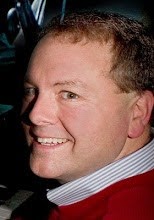
I was less prepared for 'Son of the Shiek' but it still came out very well, I thought. (That's a goofy picture of me at the Flying Monkey, by the way, just to show how I don't prepare my personal appearance, either.) Most miraculously, I came up with a "running figure" for the first scenes of Valentino riding his horse, and this little figure proved to be extremely versatile, gradually becoming the heart of the score. And though as a matter of pride I try to create new material for the second picture of any double feature, because this sequel featured Valentino playing his father (the Sheik in the first film), I could justify reuse of the "sheik" theme from the first movie.

'Son' is a bit harder to score effectively, I think, because it's a richer and more confident film, with more humor embedded in it, and far less mannered than the original. But I stayed with it and tried to keep it all going throughout the program, which amounts to more than 2½ hours of film (and music) without a break.

I prefer no intermission not because I'm a sadist, but because I believe that the best silent film casts a spell, and once that spell is broken (by an intermission), it takes time to recover. So I generally like to play right through any program without a break. In terms of endurance, the Valentino double feature felt like 'The Birth of a Nation' with sand, but actually the time seems to fly. Once I'm 'in the zone' and absorbed in responding to a film musically, time ceases to exist.

This approach does have its drawbacks. Prior to 'The Birth of a Nation' in January, I had drunk maybe a half-dozen cups of tea in an unheated Chinese restaurant (ah, the glamour of New Hampshire in mid-January), and then found myself in, er, extreme discomfort starting about a half-hour into the show. (I remember thinking to myself, "Cripes, the Civil War hasn't even started yet!") So for me, 'The Birth of a Nation' was uncomfortable to watch, but not for the usual reasons.

For the Valentino double feature, I learned my lesson: fluids to a minimum, and visit the men's room just prior. And because we're comparing 'Birth,' let me point out that 'The Sheik' is full of blatant racism that's no less embarrassing than anything D.W. Griffith put before a movie cameras. In 'The Sheik,' not only are "Arabs" portrayed as uncivilized and uneducated savages (oh, but they're happy savages), but the film's love story is resolved only at the end, when Agnes Ayres observes that Valentino has "small hands for a Arab," which prompted the revelation (from Adolph Menjou, of all people)that the Sheik is actually the son of English and Spanish nobility. Oh, such joy in Western Civilization Land! Our audience couldn't help but laugh at this, and I didn't blame them.

'Sunrise' is a film I've wanted to do for a long time, but wanted to wait until I felt I had the technique and equipment and skill to do it justice. So putting it at the end of this run of screenings was kind of like my "final exam" prior to the gigs in Topeka and Syracuse. I'm proud to say that I was very satisfied with how it came out—I felt the music brought out the drama in the film, helped punctuate the big moments, but didn't get in the way. We had about 100 people on hand, and afterwards more than one gave me the ultimate compliment: that the music matched the movie so well that they forgot it was being created live. Nice!

I guess I need to find a way to easily post sound files to this site, as I would love to share the thematic material I used for 'Sunrise.' It was a very symphonic score, if I do say so, with no filled-out tunes but instead a collection of cells that all proved versatile in bringing director Murnau's visions to life for an audience in 2012. There was one especially important meldodic scrap that sounded quite insubstantial at first, but later morphed quite on its own into something menacing and heart-breaking at the same time, and was immensely useful in keeping the emotional tempo of the film going along with Murnau's at-times incredible visions.

Speaking of which: I would love to visit the city portrayed by the City Woman near the start of the film, where dance bands come equipped with a half-dozen Sousaphones all swaying in unison. What is it with Murnau and horn bells? Remember the trumpet in 'The Last Laugh' (1924)? Also, there's defintely a thing in 'Sunrise' for windows: the opening glass train shed, the windows into the dance hall, and so on.

Back to the music: the only actual "tune" in the score was a Peasant Dance that George O'Brien and Janet Gaynor do near the end of the city scenes. This tune, which keeps going through my head this morning, just came to me the morning of the show, and is related to the jingle for "Sunbeam Bread" that I had been hearing on the radio all week long prior to this. Funny how things evolve and cross-pollinate.

One thing I find interesting about 'Sunrise' was how Murnau made it seem timeless. There are very few references to contemporary culture or specific locations. The city is simply a city. The country is simply the country. Is it in Europe? America? Shangri-la? There's a lake and a row boat, and a wedding in a church—simple and basic things that we still accept today as part of the landscape around us. I think that helps lend the film a universal quality that still comes through today, even though clearly many things have changed (barbershops, photographers) in the 85 years since this picture played in theaters.

Probably the funniest reaction was from a colleague of mine, who mistook Murnau's universal urban setting as some kind of science fiction conceit, which prompted this response: "What kind of city of the future has a carnival in which you heave things to make piglets go down a slide?"

Okay, so now it's time to focus on 'Tramp Tramp Tramp' and get ready for Syracuse after that. Better get out the Hanon technical exercises...

Wednesday, September 7, 2011

Harry Langdon — not so fast!

Among Hollywood's great silent clowns of the 1920s, Harry Langdon has the reputation of being an acquired taste. Among some, he's known for not producing laughs with modern audiences. I remember reading part of Walter Kerr's great 1975 book 'Silent Clowns' in which the author recalls audiences greeting Keaton's 'The General' (1927) with "constant, astonished laughter" while a screening of Langdon's 'The Strong Man' (1926) produced bupkiss. And I guess that sealed it with me.

But, after last night's screening of Langdon's rarely seen feature 'Long Pants' (1927), I'm now prepared to say that Langdon should not be sold short at all when it comes to laughter. He does very well, thank you. All that's necessary is to tell people (even those who've never attended a silent film) that Langdon was popular as a reaction to the fast-paced frenetic style of silent comedy, and it seems to do the trick.

Last night, our little-publicized screening of 'Long Pants' at the Manchester (N.H.) Public Library attracted a total of five people. (I was surprised we got any, it being the day after Labor Day weekend.) Never mind Langdon—all of them had never attended a silent film screening of any kind. But right from the start, you could tell that Harry had them. Well, Harry and director Frank Capra, whose sure hand and sense of story-telling could clearly be seen in how the film was laid out.

And rather than the stony silence that Kerr got when he ran 'The Strong Man,' last night Harry received the "constant, astonished laughter" that Kerr concluded was Buster's province. Really. Harry got laughs trying to impress Alma Bennett, the girl of his dreams on his bicycle, and it built steadily from then on. The weirdly dark "trying to kill his bride" sequence got a big reaction. And things really took off in the extended slapstick that follows the jailbreak, which is top-notch silent comedy.

The only moment that didn't get an expected strong laugh was when Harry finally reacts to Alma Bennett's criminal roughhousing ("I'm surprised!"), which I think forms the comic climax of the film, but which was met with silence. Oh well. But on his walk home, through the same woods where he tried to kill Priscilla Bonner earlier in the film, things grew warm very quickly, and I tried to build the music to illustrate the transformation to Harry finally realizing what he had left behind.

And so the ending, which seemed rather perfunctory me in previewing the film, came across in live performance as the perfect finish to a very satisfying comic adventure. I was as surprised as anyone! And the audience, even just five people, really seemed to eat it up. As Harry gets clobbered one last time by the upturned dinner table, somehow it all seemed just exactly right.

Afterwards, we talked, and two young gals who had taken in the picture on a whim, said they probably would not have watched it on television, but that they found 'Long Pants' to be a strangely beguiling and compelling experience in a theater. The three other folks (two sisters and their wheelchair-bound mother) agreed. And we went on talking for about a half-hour about the picture and silent films in general.

And I thought how we've screened 'Tramp Tramp Tramp' and 'The Strong Man' (both 1926) several times, and they always get a good response. And now, with 'Long Pants' joining them in getting a good reaction, I'm prepared to say that maybe Harry shouldn't be put in the "acquired taste" box. In my experience, he does very well for himself. 'The Strong Man' seems to hold its own with audiences especially well, but 'Tramp Tramp Tramp' has a succession of marvelous things, and 'Long Pants' is right up there, too.

Maybe times have changed and all silent comedy (and silent film in general) now seems fresh and new to people in a way that wasn't possible when Walter Kerr was screening flicks in the 1970s.

After all, silent film really is a different art form that seems to surprise people who've never encountered it before (in a theater with live music), which is something I saw again last night at the Manchester Library. For these newcomers, it's pointless to compare the various styles and approaches of Chaplin, Keaton, etc. For them, all the films are stripped bare of context, and so they must stand or fail on their own.

Though Harry does require a little nudge (explaining how his approach was different), the stories in his features are strong enough to carry the day, and the comedy is something that people still respond to. And so more and more I'm convinced his stuff is some of the best and most balanced that was done in the silent era—a little warmer than Lloyd, though not as maudlin as Chaplin, and often as inventive as Keaton.

But there I go comparing.

By the way, one of the more interesting personal connections to the silent film era I've encountered was meeting Harry's nephew, also named Harry Langdon, at the Kansas Silent Film Festival in 2007. (Here's a picture of him on the left.) Harry (the younger) was born around 1940, so never actually met his famous moviestar uncle, but still had a lot to say about the family and was a really nice guy.