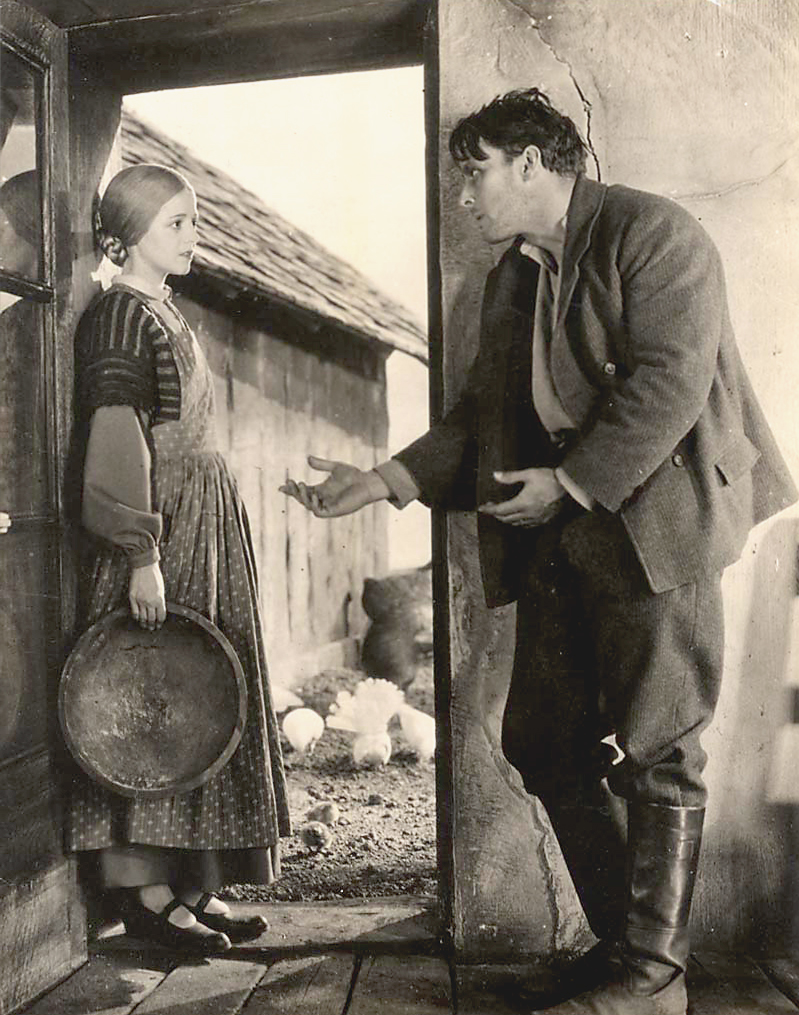
Showing posts with label Sunrise. Show all posts

Monday, February 17, 2025

Next: Valentino in 'The Sheik' (1921) on Monday, March 3 in Greenfield, Mass.; notes from the 50th annual Boston Sci-Fi Marathon

Rudolph Valentino and Agnes Ayres in a scene from 'The Sheik' (1921).

Next local screening is Monday, March 3 at 6:30 p.m., when I'll accompany Rudolph Valentino in 'The Sheik' (1921) at the Garden Cinemas in Greenfield, Mass.

More about Rudy and the film in the press release pasted in below. 

First, a few notes from this past weekend.

On Saturday, I had the privilege of creating music for a screening of F.W. Murnau's 'Sunrise' (1927) at the Jane Pickens Theatre in Newport, R.I.

About 75 people showed up for this day-after-Valentine's Day screening, which was a surprisingly strong turnout given that a messy winter storm was in the process of arriving at show time.

For this, I got to tell my story of how a friend of mine came to a screening of this film, but thought he was seeing the futuristic fantasy 'Metropolis.' (1927).

Because 'Sunrise' starts out in a stylized urban setting that actually does look weirdly futuristic, and because all of silent film looks a bit alien to untrained eyes, I can see how this could happen.

Afterwards, his question to me was: "What kind of a futuristic amusement park has pigs sliding down a chute and getting drunk on wine?" 

Snow was falling by the time I headed back to New Hampshire. The drive usually takes two hours but thanks to the weather it was 3½ hours. Well, at least I got to hear a whole Boston Symphony concert live from Symphony Hall: Herbert Blomstet at age 97 conducting two symphonies: Schubert's No. 6 and the Brahms No. 1.

I wonder what either composer would have thought of someone listening to their music via an FM radio receiver while driving a motor vehicle at night through a snowstorm. It might have seemed like some kind of science fiction to them.

And that brings us to Sunday's performance: a live score for 'Algol: Tragedy of Power' (1920), a German sci-fi drama that was shown as part of this year's annual 24-hour Boston Science Fiction Marathon.

The Marathon, or 'Thon as some call it, will occasionally program a silent title, and for some time now it's been my privilege to be invited to accompany it.

It's quite a lively audience, with attendees shouting things at the screen and generally whooping it up. I had a great time mashing up some tunes to create a score to help bring the film to life. 

A few scenes from this year's Sci-Fi Marathon, which was the 50th annual edition.

Sci Fi Festival Director Garen Daly chats with someone via Facetime...

Lobby of the Somerville Theatre between screenings.

The view from the keyboard, or from one side of the keyboard, anyway.

Me in front of "Some" theatre...

I will say it's a special thrill to finish a film like 'Algol' and to have a theater just erupt, even if the people in it are there to make noise. 

I ran up on stage to take a bow or two, and then took the opportunity to shout back:

"I saw that yesterday there was a symposium to discuss whether or not the Boston Sci-Fi Marathon would ever get to its 100th anniversary," I said.

"I certainly hope so! Because this is a celebration that brings people together, and now more than ever we need things to bring us together. May this marathon live long and prosper!" Or something like that.

Okay, next week I'll be heading out to Topeka, Kansas for this year's Kansas Silent Film Festival (more on that when I get there), and after that it's Rudolph Valentino in 'The Sheik' at the Garden Cinemas in Greenfield, Mass. 

More about that in the press release below. See you there!

*    *    *

Hey where's Rudy? An original poster for 'The Sheik' (1921).

MONDAY, FEB, 17, 2025 / FOR IMMEDIATE RELEASE
Contact Jeff Rapsis • (603) 236-9237 • jeffrapsis@gmail.com

Valentino in 'The Sheik' on Monday, March 3 at Garden Cinemas

Exotic romance starring iconic silent film actor to be show with live musical accompaniment

GREENFIELD, Mass.—He was the cinema’s first sex symbol, causing hordes of female moviegoers to flock to his pictures throughout the 1920s. He starred in films designed to show off his Latin looks, his smoldering eyes, and his dancer’s body.

He was Rudolph Valentino, who remains an icon for on-screen passion long after his untimely death in 1926 at age 31.

See the Hollywood legend for yourself when 'The Sheik' (1921) starring Rudolph Valentino is screened on Monday, March 3 at 6:30 p.m. at the Garden Cinemas, 361 Main St., Greenfield, Mass.

Admission is $10.50 adults, $8:50 for children, seniors, and students. Tickets are available online or at the door.

The screening, the latest in the Garden Cinemas' silent film series, will feature live accompaniment by Jeff Rapsis, a New Hampshire-based composer who specializes in creating scores for silent films. 

Rudolph Valentino in the title role of 'The Sheik' (1921).

In 'The Sheik,' Valentino plays Paris-educated Sheik Ahmed Ben Hassan, who arranges brides for wealthy Arabs. 

The high-spirited Lady Diana Mayo (Agnes Ayres), learning that the sheik will be in the city of Biskra, Algeria, playfully decides to disguise herself as a dancing girl to become one of the prospective brides. 

Hearing that Diana will be touring the Sahara Desert, Ahmed abducts her, intending to make her fall in love with him, with unexpected consequences.

An Italian immigrant who arrived penniless at Ellis Island in 1913, Valentino rose to superstar status in the silent era. But he was more than a pretty face—during his career, critics praised Valentino as a versatile actor capable of playing a variety of roles; his achievements included popularizing the Argentinian tango in the 1921 drama ‘Four Horsemen of the Apocalypse.’

But Valentino's brief stardom was defined by theSheik’ roles, which brought a new level of exotic sexuality to the movies, causing a sensation at the time. In theaters, women openly swooned over Valentino’s on-screen image, especially in roles such as theSheik,’ which featured elaborate costumes. 

At its peak, his popularity was so immense that it inspired a backlash among many male movie-goers, who decried Valentino’s elegant image and mannerisms as effeminate.

Valentino’s sudden death in 1926 fueled his status as a legendary romantic icon of the cinema. For years, a mysterious woman dressed in black would visit his grave at the Hollywood Park Cemetery in Los Angeles, leaving only a single red rose.

Valentino was aware of his effect on audiences, saying that “Women are not in love with me but with the picture of me on the screen. I am merely the canvas upon which the women paint their dreams.”

“These films are still exciting experiences if you can show them as they were designed to be screened,” said Rapsis, the accompanist for the screening. “There’s a reason people first fell in love with the movies, and we hope to recreate that spirit. At their best, silent films were communal experiences in which the presence of a large audience intensifies everyone’s reactions.”

Silent films with live music are screened at the Garden Cinemas the first Monday of each month. Upcoming titles include:

• Monday, April 7, 2025, 6:30 p.m.: "The Lost World" (1925) starring Wallace Beery. First-ever movie adaptation of Arthur Conan Doyle's legendary tale of British explorers who discover pre-historic creatures still thriving atop a remote South American plateau. Great entertainment; ground-breaking special effects by the same team that later created 'King Kong' mesmerized early movie audiences and remain impressive today.

The Sheik’ (1921) will be shown on Monday, March 3 at 6:30 p.m. at the Garden Cinemas, 361 Main St., Greenfield, Mass. Admission is $10.50 adults, $8:50 for children, seniors, and students. Tickets available at the door; advance tickets are available at www.gardencinemas.net. For more information, call the box office at (413) 774-4881.

Saturday, February 8, 2025

This weekend: 'Sunrise' in Newport on Saturday, then 'Algol' at 50th annual Boston Sci-Fi Marathon

Emil Jannings as would-be world ruler Robert Herne in 'Algol' (1920).

It's a rare chance to see 'Sunrise' (1927) in the late afternoon.

That's because I'll accompany the Academy Award-winning silent drama on Saturday, Feb. 15 at 4:30 p.m. at the Jane Pickens Theatre in downtown Newport, R.I. 

More info about the film and the screening is in the press release pasted in below.

And the next day brings one of my most unusual gigs: the annual Boston Sci Fi Marathon, which starts on Sunday, Feb. 16 at noon and runs straight through to Monday, Feb. 17 at noon.

I'll be there to accompany 'Algol: Tragedy of Power' (1920), a bizarre German film thought lost for decades until it was rediscovered in recent years and is now available for viewing.

'Algol' is being shown late Sunday afternoon: not sure of the exact time as that depends on how far behind (or ahead) the marathon is running. 

It's the 50th year of this event, which I've appeared at several times before and it's always a hoot. There's no better audience for silent film that a theater fill of insomniac sci-fi fans.

Alas, tickets aren't available for individual films during the marathon, which is a $100 all-or-nothing proposition. But the line-up includes LOTS of great titles, and there's nothing like seeing them in this kind of communal environment.

Interested? Below are links, although I notice the online ticket portal incorrectly says the marathon starts at Sunday, Feb. 16 at 7 p.m. It really starts at noon—and there's also a pre-show scene of people lining up in front of the Somerville before doors open to get first dibs on favorite seats.

Boston Sci-Fi Marathon line-up

Tickets for Boston Sci-Fi Marathon

*     *     *

An original poster for 'Sunrise: A Song of Two Humans' (1927).
 
MONDAY, JAN. 20, 2025 / FOR IMMEDIATE RELEASE
Contact Jeff Rapsis • (603) 236-9237 • jeffrapsis@gmail.com

Academy Award-winning drama 'Sunrise' to screen on Saturday, Feb. 15 at Newport's Jane Pickens Theatre

Silent film won three honors at first-ever Academy Awards, including 'Best Actress' for Janet Gaynor; show features live musical accompaniment


NEWPORT, R.I.—Silent film on the big screen with live music returns to the Jane Pickens Theatre with the Academy Award-winning romantic drama 'Sunrise' (1927) on Saturday, Feb. 15 at 4:30 p.m.

The screening of 'Sunrise,' starring Janet Gaynor and George O'Brien, will take place at the Jane Pickens Film and Event Center, 49 Touro St. in historic downtown Newport.

Admission is $17 per person. Tickets available online at https://janepickens.com or at the door.

The screening will feature live music by Jeff Rapsis, the Jane Pickens Theatre's silent film accompanist.

Gaynor, a popular female star of the silent film era, won the first-ever Academy Award for Best Actress for her performance in 'Sunrise.' The movie took top honors in cinematography and was also recognized for "Unique and Artistic Production" at the inaugural awards.

'Sunrise' tells the story of a young country couple (played by Gaynor and O'Brien) whose marriage is threatened by the presence of a woman from the city (Margaret Livingston) who convinces the man to abandon his wife. Will the young husband go through with a plan to kill his wife? Will true love overcome the obstacles of temptation and the promise of short-term pleasure?

George O'Brien and Margaret Livingston in a scene from 'Sunrise' (1927).

'Sunrise' was directed by F. W. Murnau, a German filmmaker and one of the leading figures in German Expressionism, a style that uses distorted art design for symbolic effect. 'Sunrise' was made when Murnau was invited by studio chief William Fox to make a film in Hollywood.

The resulting movie features enormous stylized sets that create an exaggerated, fairy-tale world. The city street set alone reportedly cost over $200,000 to build, a huge sum at the time. Much of the exterior shooting was done at Lake Arrowhead, Calif.

Full of cinematic innovations, the groundbreaking cinematography (by Charles Rosher and Karl Struss) featured moving cameras and impressive tracking shots. Titles appear sparingly, with long sequences of pure action and most of the story told in Murnau's signature visual style. The extensive use of forced perspective is striking, particularly in a shot of the city with normal-sized people and sets in the foreground and smaller figures in the background by much smaller sets.

The story of 'Sunrise' is told as a visual allegory with few specific details. The characters have no names, and the setting is not named in order to make the tale more universal and symbolic.

Janet Gaynor and George O'Brien in a scene from 'Sunrise' (1927).

With a full title of 'Sunrise: A Song of Two Humans,' the film is regarded as one of the high points of the silent cinema. In 1988, it was selected for preservation in the National Film Registry of the U.S. Library of Congress for films that are "culturally, historically, or aesthetically significant." The Sight and Sound poll of 2012 for the British Film Institute named 'Sunrise' the fifth-best film in the history of motion pictures by critics, and 22nd by directors.

Critics continue to hail 'Sunrise' as one of the best films of all time.

"F.W. Murnau's 'Sunrise' conquered time and gravity with a freedom that was startling to its first audiences," wrote Roger Ebert in 2004. "To see it today is to be astonished by the boldness of its visual experimentation.

Rapsis, who uses original themes to improvise silent film scores, said great silent film dramas such as 'Sunrise' used their lack of dialogue to create stories that concentrated on the "big" emotions such as Love, Despair, Anger, and Joy. Because of this, audiences continue to respond to them in the 21st century, especially if they're presented as intended — with a live audience and live music.

"Dramas such as 'Sunrise' were created to be shown on the big screen as a communal experience," Rapsis said. "With an audience and live music, they come to life as their creators intended them to. So the screenings at Newport's Jane Pickens Theatre are a great chance to experience films that first caused people to fall in love with the movies," he said.

'Sunrise' will be shown with live music on Saturday, Feb. 15 at 4:30 p.m. at the Jane Pickens Film and Event Center, 49 Touro St. in historic downtown Newport.

Admission is $17 per person. Tickets available online at https://janepickens.com or at the door. 

 Janet Gaynor and George O'Brien in 'Sunrise' (1927).


Monday, May 15, 2023

A busy musical weekend in store: two silent film programs in Vt., then a concert in N.H.

A scene from F.W. Murnau's 'Sunrise' (1927).

This coming weekend, it's two shows in Vermont followed by a concert in N.H. where some of my music is on the program.

First up: F.W. Murnau's acclaimed drama 'Sunrise' (1927) on Friday, May 19 at 8 p.m. at Epsilon Spires in Brattleboro, Vt. 

I'll be playing the venue's original Estey pipe organ to accompany the film. Lots more details in the press release below. 

Then on Saturday, May 20, it's opening night of the 12th season of silent film screenings at Brandon (Vt.) Town Hall. Showtime is at 7 p.m.; featured attraction is Chaplin's 1923 comedy 'The Pilgrim,' his last non-feature-length film and celebrating its 100th anniversary this year.

More on that, and a look at the whole season of silent films that I'll accompany, in a post a bit later this week. For now, you can browse the listings (via the 'Upcoming Silent Film Screenings' link at upper right) and see what's playing.

And then on Sunday, May 21, the N.H. Philharmonic is playing part of my 'Kilimanjaro Suite' for orchestra at its Spring Pops Concert, which is at 2 p.m. at Seifert Performing Arts Center, Salem High School, 44 Geremonty Drive, Salem, N.H.

I've been attending rehearsals during the past couple of weeks, and the orchestra sounds really good. To learn more about the piece, check out the 'Notes for Kilimanjaro Suite' link at upper right. And for tickets and more information, visit www.nhphil.org.

Hope to see you at some or all of these events!

*     *     *

A poster for the original release of 'Sunrise' (1927).

MONDAY, MAY 8, 2023 / FOR IMMEDIATE RELEASE
Contact Jeff Rapsis • (603) 236-9237 • jeffrapsis@gmail.com

Academy Award-winning drama 'Sunrise' to be screened on Friday, May 19 at Epsilon Spires, Brattleboro


Silent film won three honors at first-ever Academy Awards, including 'Best Actress'; show features live musical accompaniment

BRATTLEBORO, Vt.—Silent film on the big screen with live music returns to Epsilon Spires in Brattleboro with the Academy Award-winning romantic drama 'Sunrise' (1927) on Friday, May 19 at 8 p.m.

The screening of 'Sunrise,' starring Janet Gaynor and George O'Brien, will take place at Epsilon Spires, 190 Main St., Brattleboro, Vt.

Admission is $20 per person. Tickets may be purchased in advance at www.epsilonspires.org or at the door.

The screening will feature live accompaniment on the venue's Estey pipe organ by Jeff Rapsis, a New Hampshire-based silent film musician.

Gaynor, a popular female star of the silent film era, won the first-ever Academy Award for Best Actress for her performance in 'Sunrise.' The movie took top honors in cinematography and was also recognized for "Unique and Artistic Production" at the inaugural awards.

'Sunrise' tells the story of a young country couple (played by Gaynor and O'Brien) whose marriage is threatened by the presence of a woman from the city (Margaret Livingston) who convinces the man to abandon his wife. Will the young husband go through with a plan to kill his wife? Will true love overcome the obstacles of temptation and the promise of short-term pleasure?

Janet Gaynor and George O'Brien in 'Sunrise' (1927).

'Sunrise' was directed by F. W. Murnau, a German filmmaker and one of the leading figures in German Expressionism, a style that uses distorted art design for symbolic effect. 'Sunrise' was made when Murnau was invited by studio chief William Fox to make a film in Hollywood.

The resulting movie features enormous stylized sets that create an exaggerated, fairy-tale world. The city street set alone reportedly cost over $200,000 to build, a huge sum at the time. Much of the exterior shooting was done at Lake Arrowhead, Calif.

Full of cinematic innovations, the groundbreaking cinematography (by Charles Rosher and Karl Struss) featured moving cameras and impressive tracking shots. Titles appear sparingly, with long sequences of pure action and most of the story told in Murnau's signature visual style. The extensive use of forced perspective is striking, particularly in a shot of the city with normal-sized people and sets in the foreground and smaller figures in the background by much smaller sets.

The story of 'Sunrise' is told as a visual allegory with few specific details. The characters have no names, and the setting is not named in order to make the tale more universal and symbolic.

With a full title of 'Sunrise: A Song of Two Humans,' the film is regarded as one of the high points of the silent cinema. In 1988, it was selected for preservation in the National Film Registry of the U.S. Library of Congress for films that are "culturally, historically, or aesthetically significant." The Sight and Sound poll of 2012 for the British Film Institute named 'Sunrise' the fifth-best film in the history of motion pictures by critics, and 22nd by directors.

Critics continue to hail 'Sunrise' as one of the best films of all time.

"F.W. Murnau's 'Sunrise' conquered time and gravity with a freedom that was startling to its first audiences," wrote Roger Ebert in 2004. "To see it today is to be astonished by the boldness of its visual experimentation.

Rapsis (at right), who uses original themes to improvise silent film scores, said great silent film dramas such as 'Sunrise' used their lack of dialogue to create stories that concentrated on the "big" emotions such as Love, Despair, Anger, and Joy. 

Because of this, audiences continue to respond to them in the 21st century, especially if they're presented as intended — with a live audience and live music.

"Dramas such as 'Sunrise' were created to be shown on the big screen as a communal experience," Rapsis said. "With an audience and live music, they still come to life as their creators intended them to. So the screenings at Epsilon Spires are a great chance to experience films that first caused people to fall in love with the movies," he said.

'Sunrise' will be shown with live music on Friday, May 19 at 8 p.m. at Epsilon Spires, 190 Main St., Brattleboro, Vt.

Admission is $20 per person. Tickets may be purchased in advance at www.epsilonspires.org or at the door.

Monday, April 26, 2021

At the Center for the Arts in Natick, Mass.: 'Sunrise' in late afternoon on Sunday, May 2; plus, the 'real' mystery of Paul Leni's 'The Last Warning'

George O'Brien and 'The Other Woman' in 'Sunrise' (1927).

Random thoughts as we slowly emerge from the ongoing pandemic. 

- At a screening of 'The Last Warning' (1928) today in Wilton, N.H., I made my usual remarks about how we'll all putting the silent film experience back together: the theater, the big screen, the live music, and the audience. 

But then I added this thought, which only just occurred to me: the last major pandemic we endured was during the silent era, so we've got that going for us, too.

Well, so we do. We also have a booming stock market, so there's that, too. All we have to do now is ban alcohol and the atmosphere will be complete.

Sometimes I talk too much.

- 'The Last Warning' was our choice for the "half-way to Halloween" screening. Hey, they celebrate Christmas in July, so why not Halloween in late April? 

It was the first time I've done music for 'The Last Warning,' which was certainly worth running. The last film of director Paul Leni before his untimely death, it's filled with startling images and memorable sequences.

However...the restoration Universal did in 2016 seems to be missing material that would better explain the plot. 

An actor is murdered during a play and the body disappears. The theater is then closed for five years and considered haunted. Okay, I'm with you so far.

But then suddenly the theater is being opened and the cast members are rounded up for a reenactment. Great, but it's just not clear how this all comes about, why its being done, and what's at stake. 

Carrie Daumery's close encounter with cobwebs makes for a memorable image in 'The Last Warning.'

Why do all the performers return to a theater when they're clearly all terrified to be there? How is it possible for the producer to be someone no one has ever heard of? And how do the detectives force the production to go on when the theater owners would clearly object? And so on.

Running times for 'The Last Warning' are listed as long as 89 minutes. The Universal restoration clocks in at 78 minutes. I know length is subject to variables such as projection speed. But from what we saw on screen this afternoon, clearly there's footage missing that might answer some of the questions.

Where it is? Perhaps that's the real mystery of 'The Last Warning.'

- I'm pleased to announce that starting in July, I'll be accompanying a new series of silent films with live music at the Rex Theatre in Downtown Manchester, N.H. 

And this past week I was invited to accompany films at the recently relaunched 'Buster Keaton Celebration' next September in Iola, Kansas.

And this summer will see reinstated series (all canceled last year) at the Leavitt Theatre in Ogunquit, Maine; at Brandon Town Hall in Brandon, Vt., and other venues.

So maybe this whole pandemic thing really is loosening up. I get my follow-up Moderna shot on Thursday, May 6 but will observe precautions as long as the CDC guidance calls for it. Hope everyone stays healthy.

- Random rant: why, why, WHY does no Web site ever "remember me" despite me always checking the box when I enter my password and type in the authentication code and recite the Hebrew alphabet backwards to prove who I am?

- Next up: 'Sunrise' (1927) at the Natick Center for the Performing Arts, which I'm accompanying on Sunday, May 2 at 4 p.m. More details in the press release below.

I did this film some years ago, and the screening was attended by a friend who had somehow mixed it up with 'Metropolis,' I think. Afterwards, he asked me what kind of futuristic city has an amusement park where pigs slide down a chute?

You can see those same pigs, and a whole lot more, by seeing 'Sunrise' at the somewhat counter-intuitive time of 4 p.m. It's like showing 'London After Midnight' at high noon.

Anyway, hope to see you there!

*  *  *

Janet Gaynor and George O'Brien in 'Sunrise' (1927).

MONDAY, APRIL 19, 2021 / FOR IMMEDIATE RELEASE
Contact Jeff Rapsis • (603) 236-9237 • jeffrapsis@gmail.com

Academy Award-winning drama 'Sunrise' to be screened on Sunday, May 2 at Center for the Arts in Natick

Silent film won three honors at first-ever Academy Awards, including 'Best Actress'; show features live musical accompaniment

NATICK, Mass.—Silent film on the big screen with live music returns to the Center for the Arts in Natick with the Academy Award-winning romantic drama 'Sunrise' (1927) on Sunday, May 2 at 4 p.m.

The screening of 'Sunrise,' starring Janet Gaynor and George O'Brien, will feature music by silent film composer Jeff Rapsis, who will accompany the film live at the venue, which is located at 14 Summer St., Natick.

Tickets are $18; Center for the Arts members $15, with limited seating due to Covid-19 capacity restrictions.

Gaynor, a popular female star of the silent film era, won the first-ever Academy Award for Best Actress for her performance in 'Sunrise.' The movie took top honors in cinematography and was also recognized for "Unique and Artistic Production" at the inaugural awards.

"It's a great way to follow the annual Academy Awards, which take place the week before on Sunday, April 25," said Rapsis, who creates live original scores for TCAN's silent film series. "If you've never experienced silent film with live music in a theater, 'Sunrise' is a good opportunity to check it out."

'Sunrise' tells the story of a young country couple (played by Gaynor and O'Brien) whose marriage is threatened by the presence of a woman from the city (Margaret Livingston) who convinces the man to abandon his wife. Will the young husband go through with a plan to kill his wife? Will true love overcome the obstacles of temptation and the promise of short-term pleasure?

'Sunrise' was made by F. W. Murnau, a German director and one of the leading figures in German Expressionism, a style that uses distorted art design for symbolic effect. 'Sunrise' was made when Murnau was invited by studio chief William Fox to make an Expressionist film in Hollywood.

The resulting movie features enormous stylized sets that create an exaggerated, fairy-tale world. The city street set alone reportedly cost over $200,000 to build, a huge sum at the time. Much of the exterior shooting was done at Lake Arrowhead, Calif.

Full of cinematic innovations, the groundbreaking cinematography (by Charles Rosher and Karl Struss) featured moving cameras and impressive tracking shots. Titles appear sparingly, with long sequences of pure action and most of the story told in Murnau's signature visual style. The extensive use of forced perspective is striking, particularly in a shot of the city with normal-sized people and sets in the foreground and smaller figures in the background by much smaller sets.

The story of 'Sunrise' is told as a visual allegory with few specific details. The characters have no names, and the setting is not named in order to make the tale more universal and symbolic.

With a full title of 'Sunrise: A Song of Two Humans,' the film is regarded as one of the high points of the silent cinema. In 1988, it was selected for preservation in the National Film Registry of the U.S. Library of Congress for films that are "culturally, historically, or aesthetically significant." The Sight and Sound poll of 2012 for the British Film Institute named 'Sunrise' the fifth-best film in the history of motion pictures by critics, and 22nd by directors.

Critics continue to hail 'Sunrise' as one of the best films of all time.

"F.W. Murnau's 'Sunrise' conquered time and gravity with a freedom that was startling to its first audiences," wrote Roger Ebert in 2004. "To see it today is to be astonished by the boldness of its visual experimentation.

Rapsis, who uses original themes to improvise silent film scores, said great silent film dramas such as 'Sunrise' used their lack of dialogue to create stories that concentrated on the "big" emotions such as Love, Despair, Anger, and Joy. Because of this, audiences continue to respond to them in the 21st century, especially if they're presented as intended — with a live audience and live music.

"Dramas such as 'Sunrise' were created to be shown on the big screen as a communal experience," Rapsis said. "With an audience and live music, they still come to life as their creators intended them to. So the screenings at Natick's Center for the Arts are a great chance to experience films that first caused people to fall in love with the movies," he said.

'Sunrise' will be shown on Sunday, May 2 at 4 p.m. at the Natick Center for the Arts, 14 Summer St., Natick, Mass.

Admission is $18, Center for the Arts members $15. Tickets must be purchased in advance online at www.natickarts.org. For more information, call the Center box office at (508) 647-0097 or visit www.natickarts.org.

Wednesday, March 5, 2014

Coming Thursday, March 6 in Plymouth, N.H.:
'Sunrise' (1927) at the Flying Monkey

George O'Brien and Margaret Livingston get to know one another in 'Sunrise' (1927).

I've often said it: there's no better film for Valentine's Day than one in which a husband contemplates killing his wife and running off with another woman.

Alas, our Valentine's Day screening of F.W. Murnau's 'Sunrise' (1927), considered by some to be the finest silent film of all, was postponed last month by a snowstorm.

But you can't kill romance, and so the show got rescheduled to Thursday, March 6. Bring your sweetie down to Flying Monkey Moviehouse and Performance Center and take in a flick that's sure to warm you up at least a little, even as the cold weather overstays its welcome in these parts.

Here's the press release with all the details. See you at the theater!

* * *


MONDAY, MARCH 3, 2014 / FOR IMMEDIATE RELEASE
Contact Jeff Rapsis • (603) 236-9237 • jeffrapsis@gmail.com

Academy Award-winning romantic drama 'Sunrise'
coming on Thursday, March 6 at Flying Monkey


Silent film won three Oscars at first-ever Academy Awards,
including 'Best Actress'; show features live music

PLYMOUTH, N.H.—Silent film on the big screen with live music returns to the Flying Monkey Moviehouse and Performance Center with the Academy Award-winning romantic drama 'Sunrise' (1927) on Thursday, March 6 at 6:30 p.m. Admission is $10 per person.

The screening of 'Sunrise,' starring Janet Gaynor and George O'Brien, will feature music by silent film composer Jeff Rapsis, who will accompany the film live.

The event, previously scheduled for Valentine's Day, was moved to Thursday, March 6 due to inclement weather.

Gaynor, a popular female star of the silent film era, won the first-ever Academy Award for Best Actress for her performance in 'Sunrise.' The movie took top honors in cinematography and was also recognized for "Unique and Artistic Production" at the first-ever awards.

"It's a great way to follow the annual Academy Awards, which take place the Sunday before," said Rapsis, who creates live original scores for the Flying Monkey's monthly silent film series. "If you've never experienced silent film with live music in a theater, this is a good opportunity to check it out."

'Sunrise' tells the story of a young country couple (played by Gaynor and O'Brien) whose marriage is threatened by the presence of a woman from the city (Margaret Livingston) who convinces the man to abandon his wife. Will the young husband go through with a plan to kill his wife? Will true love overcome the obstacles of temptation and the promise of short-term pleasure?

'Sunrise' was made by F. W. Murnau, a German director and one of the leading figures in German Expressionism, a style that uses distorted art design for symbolic effect. 'Sunrise' was made when Murnau was invited by studio chief William Fox to make an Expressionist film in Hollywood.

The resulting movie features enormous stylized sets that create an exaggerated, fairy-tale world. The city street set alone reportedly cost over $200,000 to build, an huge sum at the time. Much of the exterior shooting was done at Lake Arrowhead, Calif.

Full of cinematic innovations, the groundbreaking cinematography (by Charles Rosher and Karl Struss) featured moving cameras and impressive tracking shots. Titles appear sparingly, with long sequences of pure action and the bulk of the story told in Murnau's signature style. The extensive use of forced perspective is striking, particularly in a shot of the City with normal-sized people and sets in the foreground and smaller figures in the background by much smaller sets.

The story of 'Sunrise' is told as a visual allegory with few specific details. The characters have no names, and the setting is not named in order to make the tale more universal and symbolic.

With a full title of 'Sunrise: A Song of Two Humans,' the film is regarded as one of the high points of the silent cinema. In 1988, it was selected for preservation in the National Film Registry of the U.S. Library of Congress for films that are "culturally, historically, or aesthetically significant." The Sight and Sound poll of 2012 for the British Film Institute named 'Sunrise' the fifth-best film in the history of motion pictures by critics, and 22nd by directors.

Critics continue to hail 'Sunrise' as one of the best films of all time.

"F.W. Murnau's 'Sunrise' conquered time and gravity with a freedom that was startling to its first audiences," wrote Roger Ebert in 2004. "To see it today is to be astonished by the boldness of its visual experimentation.

The Flying Monkey originally opened a silent film moviehouse in the 1920s, and showed first-run Hollywood films to generations of area residents until closing several years ago. The theater has since been renovated by Alex Ray, owner of the Common Man restaurants, who created a performance space that hosts a wide variety of music acts.

Movies of all types, however, are still a big part of the Flying Monkey's offerings, and the silent film series is a way for the theater to remain connected to its roots.

Rapsis, who uses original themes to improvise silent film scores, said great silent film dramas such as 'Sunrise' used their lack of dialogue to create stories that concentrated on the "big" emotions such as Love, Despair, Anger, and Joy. Because of this, audiences continue to respond to them in the 21st century, especially if they're presented as intended — with a live auience and live music.

"Dramas such as 'Sunrise' were created to be shown on the big screen as a communal experience," Rapsis said. "With an audience and live music, they still come to life as their creators intended them to. So the Flying Monkey screenings are a great chance to experience films that first caused people to fall in love with the movies," he said.

The Flying Monkey usually shows silent films on the second Thursday of each month. Other upcoming films in the Flying Monkey's silent series include:

• Thursday, March 20, 6:30 p.m.: 'The Lost World' (1925). Long before 'Jurassic Park,' Hollywood discovered the power of dinosaurs on-screen in this ground-breaking adaptation of Sir Arthur Conan Doyle's bizarre tale of prehistoric creatures found living in remote South America.

• Thursday, April 10, 6:30 p.m.: 'Our Hospitality' (1923). Buster Keaton's classic comedy/drama about a long-running family feud in Appalachia of the 1830s. Filled with great gags and a timeless story that culminates in a dramatic river rescue where Buster almost lost his life for real!

• Thursday, May 8, 6:30 p.m.: 'Intolerance' (1916). D.W. Griffith's early blockbuster about man's inhumanity to man weaves together four stories spanning four eras of civilization. Filmed an a vast scale, setting a new standard for Hollywood extravagance.

'Sunrise' will be shown on Thursday, March 6 at 6:30 p.m. at the Flying Monkey Moviehouse and Performance Center, 39 South Main St., Plymouth, N.H. Admission is $10 per person. For more information, visit www.flyingmonkeynh.com or call (603) 536-2551. For more information about the music, visit www.jeffrapsis.com.

Tuesday, February 11, 2014

Just in time for a unique Valentine's Day:
silent classic 'Sunrise' in two local venues

Janet Gaynor and George O'Brien in 'Sunrise' (1927).

Updated 2/14/14: The screening of 'Sunrise' on Friday, Feb. 14 at 7 p.m. at Red River Theatres in Concord, N.H. will go on as scheduled.

Due to inclement weather, the screening of 'Sunrise' on Thursday, Feb. 13 at the Flying Monkey was postponed until Thursday, March 6.


First, welcome to anyone visiting here who saw a profile of me that ran recently on New Hampshire Chronicle, a local TV news magazine produced in our corner of the world.

The segment was actually filmed last year. At the time, I figured they must be running out of interesting people to talk to if they were interviewing me.

And now I've entered the world of "evergreen" profiles, to be used to fill out a show when there truly is a dearth of original material, or if a segment falls through.

On Monday night, I played second fiddle to a piece on New Hampshire residents still obsessed by the Beatles 50 years after they first appeared on the Ed Sullivan show.

Back up to the Beatles! Well, it could be a lot worse. :)

About the segment: I was thrilled to get the attention! However (and I don't mean to appear less than grateful), I was disappointed that they chose to run many of the film clips at speeds way faster than they're supposed to go. This reinforces the stereotype that silent films are absurd artifacts not to be taken seriously.

Also, they played music that didn't go with what was on the screen, making things seem additionally random.

So it reinforced my conviction that the only way to communicate the greatness of this lost art form is to recreate it as intended: with good prints, in a theater, with live music, and with an audience. Otherwise, it's very difficult to understand.

The next local chance to experience this will be a pair of upcoming screenings of 'Sunrise' (1927), the great romantic drama directed by F.W. Murnau and starring Janet Gaynor and George O'Brien. Our shows are just in time for Valentine's Day, providing an opportunity for you and that special someone to do something, er, special.

Screenings are at the Flying Monkey in Plymouth, N.H. on Thursday, Feb. 13 at 6:30 p.m and at Red River Theatres in Concord, N.H. on Friday, Feb. 14 at 7 p.m. Tickets $10 for either show. More info is below in the press release...

Hope to see you there!

* * *


FRIDAY, FEB. 7, 2014 / FOR IMMEDIATE RELEASE
Contact Jeff Rapsis • (603) 236-9237 • jeffrapsis@gmail.com

Calling all Valentines! Timeless romantic
movie 'Sunrise' to be screened in N.H.
on Thursday, Feb. 13 and Friday, Feb. 14


Silent film won three Oscars at first-ever Academy Awards, including 'Best Actress'; show features live musical accompaniment

CONCORD, N.H.—Silent film on the big screen with live music returns to the Granite State with two Valentine's Day screenings of 'Sunrise,' (1927), an Academy Award-winning romantic drama.

'Sunrise' will be screened on Thursday, Feb. 13 at 6:30 p.m. at the Flying Monkey Moviehouse in Plymouth, N.H., and again on Friday, Feb. 14 at 7 p.m. at Red River Theatres in Concord, N.H. Admission is $10 per person for either show.

The screening of 'Sunrise,' starring Janet Gaynor and George O'Brien, will feature music by New Hampshire silent film composer Jeff Rapsis, who will accompany the film live.

Gaynor, a popular female star of the silent film era, won the first-ever Academy Award for Best Actress for her performance in 'Sunrise.' The movie took top honors in cinematography and was also recognized for "Unique and Artistic Production" at the first-ever awards.

"It's a unique and special way to celebrate Valentine's Day," said Rapsis, who creates live original scores for silent film screenings around New England and beyond.

'Sunrise' tells the story of a young country couple (played by Gaynor and O'Brien) whose marriage is threatened by the presence of a woman from the city (Margaret Livingston) who convinces the man to abandon his wife. Will the young husband go through with a plan to leave his wife? Will true love overcome the obstacles of temptation and the promise of short-term pleasure?

George O'Brien confronts temptation (in the form of Margaret Livingston) in 'Sunrise' (1927).

'Sunrise' was made by F. W. Murnau, a German director and one of the leading figures in German Expressionism, a style that uses distorted art design for symbolic effect. 'Sunrise' was made when Murnau was invited by studio chief William Fox to make an Expressionist film in Hollywood.

The resulting movie features enormous stylized sets that create an exaggerated, fairy-tale world. The city street set alone reportedly cost over $200,000 to build, an huge sum at the time. Much of the exterior shooting was done at Lake Arrowhead, Calif.

Full of cinematic innovations, the groundbreaking cinematography (by Charles Rosher and Karl Struss) featured moving cameras and impressive tracking shots. Titles appear sparingly, with long sequences of pure action and the bulk of the story told in Murnau's signature style. The extensive use of forced perspective is striking, particularly in a shot of the City with normal-sized people and sets in the foreground and smaller figures in the background by much smaller sets.

The story of 'Sunrise' is told as a visual allegory with few specific details. The characters have no names, and the setting is not named in order to make the tale more universal and symbolic.

With a full title of 'Sunrise: A Song of Two Humans,' the film is regarded as one of the high points of the silent cinema. In 1988, it was selected for preservation in the National Film Registry of the U.S. Library of Congress for films that are "culturally, historically, or aesthetically significant." The Sight and Sound poll of 2012 for the British Film Institute named 'Sunrise' the fifth-best film in the history of motion pictures by critics, and 22nd by directors.

Critics continue to hail 'Sunrise' as one of the best films of all time.

"F.W. Murnau's 'Sunrise' conquered time and gravity with a freedom that was startling to its first audiences," wrote Roger Ebert in 2004. "To see it today is to be astonished by the boldness of its visual experimentation."

The Flying Monkey Moviehouse and Red River Theatres include silent film in their programming to give today's audiences a chance to experience the great films of cinema's early years as they were intended: in restored prints, on the big screen, and with live music and an audience.

Rapsis, who uses original themes to improvise silent film scores, said great silent film dramas such as 'Sunrise' used their lack of dialogue to tell stories that concentrated on the "big" emotions such as Love, Despair, Anger, and Joy. Because of this, audiences continue to respond to them in the 21st century, especially if they're presented as intended — with a live auience and live music.

'Sunrise' will be shown on Thursday, Feb. 13 at 6:30 p.m. at the Flying Monkey Moviehouse and Performance Center, 39 South Main St., Plymouth, N.H.; and again on Friday, Feb. 14 at 7 p.m. in the Jaclyn Simchik screening room at Red River Theatres, 11 South Main St., Concord, N.H. Admission is $10 per person for either screening. For more information about the music, visit www.jeffrapsis.com.

Thursday, August 22, 2013

Oh, those tubas! 'Sunrise' (1927) coming to
Flying Monkey on Thursday, Aug. 22


Here's one clue that 'Sunrise' (1927) should be regarded as allegorical fantasy: tubas.

They're not visible in the above poster, but yes, there are tubas in the film—or, more precisely, sousaphones. In the idealized city, the house band in a nightspot boasts at least a half-dozen of the big-belled instruments. That's more than most marching bands have!

As a tuba/sousaphone player myself, the only time I've encountered that many instruments in one place has been at various Tuba Christmas celebrations over the years. Otherwise, it just doesn't happen.

So keep that in mind when we screen F.W. Murnau's masterpiece, which will happen on Thursday, Aug. 22 at the Flying Monkey Moviehouse and Performance Center in Plymouth, N.H. It's a fantasy, folks. It has to be because of the tubas.

But before we come together to take in 'Sunrise,' a few notes about shows from this past week.

• Peter Clayton, owner of the Leavitt Theatre in Ogunquit, Maine, did it again. Greeting patrons on Thursday, Aug. 15 was a wonderful sandwich board featuring artwork from 'Sally of the Sawdust' (1925), the evening's silent film attraction.

The show went well, despite intermittent distractions from a couple of large insects attracted to my light down below the screen. I got pretty good at swatting them away with one hand while keeping the music going with the other.

• And then on Saturday night (Aug. 17), it was up to Ludlow, Vt., where the Friends of Ludlow Auditorium were staging their now-annual silent film night. It's a great place to do these programs because the audiences are so enthusiastic, and also I get to hear another guy do accompaniment.

Glenn Brown, a local resident who donated a 1906 upright to the auditorium, handled music for the Buster Keaton short 'My Wife's Relations.' That's Glenn at the piano with Ralph Pace, who organizes all the auditorium's movie screenings.

After that, I chipped in with music for Keaton's feature 'Steamboat Bill Jr.' Things got off to a rocky start as the recorded soundtrack to the print we were using was inadvertently left on as the movie opened, and so at first I didn't know what I was hearing underneath my own playing. I thought it was my cell phone going off!

But then I realized what it was, and so had to actually stop playing and ask for the soundtrack to be turned off. It eventually was, and things went pretty smoothly from there. But sometimes that kind of thing can throw you mentally, and it can take a lot of effort to get back into the groove.

It doesn't help that the opening of 'Steamboat' is actually quite challenging to score, I think, because there needs to be a contrast between music for King's new steamboat and Canfield's old wreck. The music for King can't be too triumphant, and the audience for Canfield can't be too morose, or I think an audience new to the picture might start off rooting for the wrong characters.

And then there's 'Sunrise.' I'm looking forward to doing music for this film, one of the great romantic dramas of the silent era. For details and more info, here's the press release that went out earlier. Hope to see you there!

* * *

Janet Gaynor and George O'Brien in 'Sunrise' (1927). Gaynor won the first-ever Best Actress Oscar in part for her performance.

MONDAY, AUG. 19, 2013 / FOR IMMEDIATE RELEASE
Contact Jeff Rapsis • (603) 236-9237 • jeffrapsis@gmail.com

Classic romantic drama 'Sunrise'
to be screened Thursday, Aug. 22 at Flying Monkey


Silent film won three Oscars at first-ever Academy Awards, including 'Best Actress'; show features live musical accompaniment

PLYMOUTH, N.H.—Silent film on the big screen with live music returns to the Flying Monkey Moviehouse and Performance Center with the Academy Award-winning romantic drama 'Sunrise' (1927) on Thursday, Aug. 22 at 6:30 p.m. Admission is $10 per person.

The screening of 'Sunrise,' starring Janet Gaynor and George O'Brien, will feature music by silent film composer Jeff Rapsis, who will accompany the film live.

Gaynor, a popular female star of the silent film era, won the first-ever Academy Award for Best Actress for her performance in 'Sunrise.' The movie took top honors in cinematography and was also recognized for "Unique and Artistic Production" at the first-ever awards.

'Sunrise' tells the story of a young country couple (played by Gaynor and O'Brien) whose marriage is threatened by the presence of a woman from the city (Margaret Livingston) who convinces the man to abandon his wife. Will the young husband go through with a plan to kill his wife? Will true love overcome the obstacles of temptation and the promise of short-term pleasure?

A visual representation of short-term pleasure: George O'Brien falls under the spell of Margaret Livingston in 'Sunrise.'

'Sunrise' was made by F. W. Murnau, a German director and one of the leading figures in German Expressionism, a style that uses distorted art design for symbolic effect. 'Sunrise' was made when Murnau was invited by studio chief William Fox to make an Expressionist film in Hollywood.

The resulting movie features enormous stylized sets that create an exaggerated, fairy-tale world. The city street set alone reportedly cost over $200,000 to build, an huge sum at the time. Much of the exterior shooting was done at Lake Arrowhead, Calif.

Full of cinematic innovations, the groundbreaking cinematography (by Charles Rosher and Karl Struss) featured moving cameras and impressive tracking shots. Titles appear sparingly, with long sequences of pure action and the bulk of the story told in Murnau's signature style. The extensive use of forced perspective is striking, particularly in a shot of the City with normal-sized people and sets in the foreground and smaller figures in the background by much smaller sets.

The story of 'Sunrise' is told as a visual allegory with few specific details. The characters have no names, and the setting is not named in order to make the tale more universal and symbolic.

With a full title of 'Sunrise: A Song of Two Humans,' the film is regarded as one of the high points of the silent cinema. In 1988, it was selected for preservation in the National Film Registry of the U.S. Library of Congress for films that are "culturally, historically, or aesthetically significant." The Sight and Sound poll of 2012 for the British Film Institute named 'Sunrise' the fifth-best film in the history of motion pictures by critics, and 22nd by directors.

More dramatics in F.W. Murnau's 'Sunrise.'

Critics continue to hail 'Sunrise' as one of the best films of all time.

"F.W. Murnau's 'Sunrise' conquered time and gravity with a freedom that was startling to its first audiences," wrote Roger Ebert in 2004. "To see it today is to be astonished by the boldness of its visual experimentation.

The Flying Monkey originally opened a silent film moviehouse in the 1920s, and showed first-run Hollywood films to generations of area residents until closing several years ago. The theater has since been renovated by Alex Ray, owner of the Common Man restaurants, who created a performance space that hosts a wide variety of music acts.

Movies of all types, however, are still a big part of the Flying Monkey's offerings, and the silent film series is a way for the theater to remain connected to its roots.

Rapsis, who uses original themes to improvise silent film scores, said great silent film dramas such as 'Sunrise' used their lack of dialogue to create stories that concentrated on the "big" emotions such as Love, Despair, Anger, and Joy. Because of this, audiences continue to respond to them in the 21st century, especially if they're presented as intended — with a live auience and live music.

"Dramas such as 'Sunrise' were created to be shown on the big screen as a communal experience," Rapsis said. "With an audience and live music, they still come to life as their creators intended them to. So the Flying Monkey screenings are a great chance to experience films that first caused people to fall in love with the movies," he said.

The Flying Monkey usually shows silent films on the second Thursday of each month. The screening of 'Sunrise' was shifted to Thursday, Aug. 22, because of a musical booking at the venue.

Other upcoming films in the Flying Monkey's silent series include:

• Thursday, Sept. 12, 6:30 p.m.: 'The Last Command' (1928) starring Emil Jannings, William Powell. Jannings snagged the first-ever Best Actor Academy Award for his towering portrayal of a Czarist general and patriot forced to contend with love and the Russian Revolution in this sweeping late silent drama directed by Josef von Sternberg.

• Thursday, Oct. 10, 6:30 p.m.: 'Safety Last' (1923) starring Harold Lloyd, Mildred Davis. The iconic image of Harold Lloyd dangling from the hands of a downtown clock is only one small piece of a remarkable thrill comedy that has lost none of its power over audiences. See for yourself as the film celebrates its 90th anniversary.

• Thursday, Oct. 31, 6:30 p.m.: 'Nosferatu' (1922). Celebrate Halloween by experiencing the original silent film adaptation of Bram Stoker's famous 'Dracula' story. Still scary after all these years—in fact, some critics believe this version is not only the best ever done, but has actually become creepier with the passage of time. See for yourself, if you dare!

'Sunrise' will be shown on Thursday, Aug. 22 at 6:30 p.m. at the Flying Monkey Moviehouse and Performance Center, 39 South Main St., Plymouth, N.H. Admission is $10 per person. For more information, visit www.flyingmonkeynh.com or call (603) 536-2551. For more information about the music, visit www.jeffrapsis.com.


Monday, February 13, 2012

Completing a busy stretch of accompaniment

This past Sunday's screening of 'Sunrise' (1927) in Wilton, N.H. marked the completion of a fairly intense six weeks of silent film accompaniment. Starting with 'Metropolis' (1927) on New Year's Eve in Concord, N.H., I did 14 separate shows at venues that ranged from smalltown theatres to a sci-fi/fantasy convention in Boston, with an educational farm in New York State mixed in for good measure.

For a complete round-up, check out the 'Info on Past Screenings' page on this blog. The numbers don't add up, by the way, because the public list doesn't include two Friday morning screenings I did for a film class at Southern New Hampshire University. Silent film at 9:30 a.m.!

One reason I booked so many screenings during this time was that I'm hoping it helps me get ready for two high-profile public accompaniment gigs that are well beyond my usual orbit. The last weekend of February sees me at the Kansas Silent Film Festival, where I'll do music for Harry Langdon's 'Tramp Tramp Tramp' (1926) and some short films. And then mid-March finds me as one of a trio of accompanists at Cinefest, the large vintage film confab held each year in Syracuse, N.Y.

This last one is a bit daunting because my colleagues are two extremely capable musicians whom I consider absolutely tops in the field of silent film accompaniment: Phil Carli and Andrew Simpson. I've long admired Carli's work, which I've heard live and on many recorded scores. I'm less familiar with Simpson's music, but what I've heard has been top-notch. Still, they both hold doctorates in music and have long lists of accomplishments to their credit.

And then there's me. How do I get into these things? But still, I'm eager to go and contribute what I can, and benefit from the experience. And one way to prepare for this is what I did during the past six weeks: just play a lot of live shows and get the momentum going so there's something to work with when the big gigs arrive.

I find that it really helps. The last couple of screenings produced what I thought were splendid scores with minimal preparation. A double feature of 'The Sheik' (1921) and 'Son of the Sheik' (1926) on Thursday, Feb. 9 in Plymouth, N.H. fell together amazingly well, and 'Sunrise' (1927) on Sunday, Feb. 12 in Wilton, N.H. was a very satisfying effort. (For that one, I even managed to use my grandmother's old brass school bell to lend atmosphere for Murnau's shots of the village in sihouette.)

All of this was prompted, of course, by Valentine's Day, which is tomorrow (Tuesday, Feb. 14) as I write this. Last week's Valentino program at the Flying Monkey Moviehouse up in Plymouth drew about 35 people—not a bad figure, at least when compared to the grand total of five (five!) people who attended the January screening of 'The Birth of a Nation' at the same venue.

I had previewed 'The Sheik' that afternoon but did not prepare any special thematic material, just to see how I did playing the film 'cold.' Right off the bat, I thought I managed to set the atmosphere perfectly with a modal melody played in one of my synthesizer's 'World Music' settings, and things stayed solid from then on. With each change of scene, I shifted between World Music, Traditional Orchestra, and Strings, and each time I hit it right on the money. Created some pretty good stuff in the strings, I thought, when things begin to get hot and heavy between Valentino and Agnes Ayres—one sustained dissonance after another underneath climbing scales all based on the modal melody I started with.

I was less prepared for 'Son of the Shiek' but it still came out very well, I thought. (That's a goofy picture of me at the Flying Monkey, by the way, just to show how I don't prepare my personal appearance, either.) Most miraculously, I came up with a "running figure" for the first scenes of Valentino riding his horse, and this little figure proved to be extremely versatile, gradually becoming the heart of the score. And though as a matter of pride I try to create new material for the second picture of any double feature, because this sequel featured Valentino playing his father (the Sheik in the first film), I could justify reuse of the "sheik" theme from the first movie.

'Son' is a bit harder to score effectively, I think, because it's a richer and more confident film, with more humor embedded in it, and far less mannered than the original. But I stayed with it and tried to keep it all going throughout the program, which amounts to more than 2½ hours of film (and music) without a break.

I prefer no intermission not because I'm a sadist, but because I believe that the best silent film casts a spell, and once that spell is broken (by an intermission), it takes time to recover. So I generally like to play right through any program without a break. In terms of endurance, the Valentino double feature felt like 'The Birth of a Nation' with sand, but actually the time seems to fly. Once I'm 'in the zone' and absorbed in responding to a film musically, time ceases to exist.

This approach does have its drawbacks. Prior to 'The Birth of a Nation' in January, I had drunk maybe a half-dozen cups of tea in an unheated Chinese restaurant (ah, the glamour of New Hampshire in mid-January), and then found myself in, er, extreme discomfort starting about a half-hour into the show. (I remember thinking to myself, "Cripes, the Civil War hasn't even started yet!") So for me, 'The Birth of a Nation' was uncomfortable to watch, but not for the usual reasons.

For the Valentino double feature, I learned my lesson: fluids to a minimum, and visit the men's room just prior. And because we're comparing 'Birth,' let me point out that 'The Sheik' is full of blatant racism that's no less embarrassing than anything D.W. Griffith put before a movie cameras. In 'The Sheik,' not only are "Arabs" portrayed as uncivilized and uneducated savages (oh, but they're happy savages), but the film's love story is resolved only at the end, when Agnes Ayres observes that Valentino has "small hands for a Arab," which prompted the revelation (from Adolph Menjou, of all people)that the Sheik is actually the son of English and Spanish nobility. Oh, such joy in Western Civilization Land! Our audience couldn't help but laugh at this, and I didn't blame them.
'Sunrise' is a film I've wanted to do for a long time, but wanted to wait until I felt I had the technique and equipment and skill to do it justice. So putting it at the end of this run of screenings was kind of like my "final exam" prior to the gigs in Topeka and Syracuse. I'm proud to say that I was very satisfied with how it came out—I felt the music brought out the drama in the film, helped punctuate the big moments, but didn't get in the way. We had about 100 people on hand, and afterwards more than one gave me the ultimate compliment: that the music matched the movie so well that they forgot it was being created live. Nice!

I guess I need to find a way to easily post sound files to this site, as I would love to share the thematic material I used for 'Sunrise.' It was a very symphonic score, if I do say so, with no filled-out tunes but instead a collection of cells that all proved versatile in bringing director Murnau's visions to life for an audience in 2012. There was one especially important meldodic scrap that sounded quite insubstantial at first, but later morphed quite on its own into something menacing and heart-breaking at the same time, and was immensely useful in keeping the emotional tempo of the film going along with Murnau's at-times incredible visions.

Speaking of which: I would love to visit the city portrayed by the City Woman near the start of the film, where dance bands come equipped with a half-dozen Sousaphones all swaying in unison. What is it with Murnau and horn bells? Remember the trumpet in 'The Last Laugh' (1924)? Also, there's defintely a thing in 'Sunrise' for windows: the opening glass train shed, the windows into the dance hall, and so on.

Back to the music: the only actual "tune" in the score was a Peasant Dance that George O'Brien and Janet Gaynor do near the end of the city scenes. This tune, which keeps going through my head this morning, just came to me the morning of the show, and is related to the jingle for "Sunbeam Bread" that I had been hearing on the radio all week long prior to this. Funny how things evolve and cross-pollinate.

One thing I find interesting about 'Sunrise' was how Murnau made it seem timeless. There are very few references to contemporary culture or specific locations. The city is simply a city. The country is simply the country. Is it in Europe? America? Shangri-la? There's a lake and a row boat, and a wedding in a church—simple and basic things that we still accept today as part of the landscape around us. I think that helps lend the film a universal quality that still comes through today, even though clearly many things have changed (barbershops, photographers) in the 85 years since this picture played in theaters.

Probably the funniest reaction was from a colleague of mine, who mistook Murnau's universal urban setting as some kind of science fiction conceit, which prompted this response: "What kind of city of the future has a carnival in which you heave things to make piglets go down a slide?"

Okay, so now it's time to focus on 'Tramp Tramp Tramp' and get ready for Syracuse after that. Better get out the Hanon technical exercises...

Wednesday, February 8, 2012

Last night Garbo, tomorrow Valentino!

A screening of 'The Kiss' (1929) last night (Tuesday, Feb. 7) at the Manchester (N.H.) Public Library drew about 50 folks to check out Garbo's last silent. And tomorrow night, it's a Rudolph Valentino double feature at the Flying Monkey Moviehouse and Performance Center in Plymouth, N.H.

Geez, can you tell Valentine's Day is coming up soon?

And so our mini-festival of silent film romance continues here in the Granite State: up to Plymouth on Thursday, Feb. 9 for 'The Sheik' (1921) and 'Son of the Sheik' (1926) starting at 6 p.m., and then to the Wilton Town Hall Theatre in Wilton, N.H. on Sunday, Feb. 12 for a 4:30 p.m. screening of F.W. Murnau's legendary romance 'Sunrise' (1927).

I have especially high hopes for interest in 'Sunrise,' and not only because it's a good flick for Valentine's Day. What with 'The Artist' (2011) up for a slew of Oscars, and the status of 'Sunrise' as a winner in the very-first Academy Awards, it might just prompt a few curious folks out to the theater to see one of the originals. I saw 'The Artist' recently and enjoyed it, but was bothered by the low quality of the 35mm print that a local theater was running: it was on color stock and done very inconsistently, with some parts having a greenish tinge to them and others looking gold. I've heard a few people advising movie-goers to see it in digital if at all possible, where the black & white looks reasonably good. But of course most silent films weren't truly black & white in their original releases, so...well, let's not get into it here. :)

I was pleasantly surprised at the turnout for 'The Kiss,' which was well above what we've been getting at the monthly Manchester library screenings. We'll typically get about a dozen, maybe 20 people, tops. But with the Garbo film, probably 50 people piled in. As I was warming up, they kept on coming and coming, all adding up to a good crowd.

And they were with the film the whole way, reacting strongly to all parts of it, including the comedy interspersed among the serious sequences. I did the score entirely in strings, without any change in settings on the sythesizer, and I think it worked quite well, given the film's content and mood. As an added bonus, everyone stayed for a Q&A session that lasted a good half-hour, and then more conversation afterwards. All in all, a good night for silent film in 2012.

We'll see how we do with Valentino at the Flying Monkey, where attendance has also lagged this winter. I mean, last month's screening of 'The Birth of a Nation' (1915) drew a total of five people, a new low. A snow squall (one of very few this season) blowing through our area that day didn't help, but still. I don't mind, really, because these screenings are valuable as opportunities to practice the craft.

But at some point, if the audience isn't turning up, you have to decide if all the effort is worthwhile. I still have hope for the monthly silent film series at the Flying Monkey, as we have some blockbusters coming up this spring and titles are scheduled through June. So we'll see.