Showing posts with label Dracula. Show all posts

Tuesday, October 29, 2024

Tonight! Live scoring for 'Dracula' (1931) at the Jane Pickens Theatre, Newport, R.I.

Bela Lugosi plays the title role in 'Dracula' (1931).
 
Live scoring—it's not just for silents anymore!

And that's what I'll be doing tonight in Newport, R.I., where the early talkie version of 'Dracula' (1931) starring Bela Lugosi will fly onto the screen at 7:30 p.m.

More info about the show and venue are in the press release below.

In the past few years, I've done a few live scores for early talkies: 'Dracula' and also 'Frankenstein' (1931) starring Boris Karloff. 

It's possible to do this because in the first few years of synchronized soundtracks, some studios didn't bother with recorded music.

Partly it  was function of economics: no music = no cost. 
 
I think it was also due to uncertainty on the part of some filmmakers and studios of how sound should be used: for dialogue, yes, of course. But background music?

Unless you could SEE the musicians on screen, where was it supposed to be coming from?
 
It was one of those things that took awhile to sort out—similar to the foreign language issue.
 
Now that films talked, what about different languages? 
 
For a time, studios made several versions of films, with the players repeating all dialogue in different tongues, with a pronunciation coach on set when needed and sometimes significant differences in supporting players, story, and so on.
 
Thus we have a German language version of Buster Keaton's early MGM talkie 'Free and Easy' (1930), with the formerly silent comic spouting dialogue in Deutsch.

Which brings us to the Spanish language version of 'Dracula,' filmed concurrently on the same sets with the English version but with a different director as well as a different actor, Carlos Villarius, in the title role!

Well, tonight in Newport, the language will be heavily accented English, with music from me. Details below!

*    *    *
 
An original release poster for Bela Lugosi as 'Dracula' (1931).

MONDAY, OCT. 21, 2024 / FOR IMMEDIATE RELEASE
Contact Jeff Rapsis • (603) 236-9237 • jeffrapsis@gmail.com

Halloween special: Lugosi's 'Dracula' on big screen with new live score

Horror classic to be shown at the Jane Pickens Theatre on Tuesday, Oct. 29 for one screening only

NEWPORT, R.I. — Do you dare prepare for Halloween by braving 'Dracula' on the big screen?

That's the question at the Jane Pickens Theatre, 49 Touro St. in Newport, where the classic 1931 version of 'Dracula' will run for one showing only on Tuesday, Oct. 29.

Showtime is 7:30 p.m. Admission is $17 per person. Tickets available online at https://janepickens.com or at the door.

The screening will feature live music by Jeff Rapsis, the Jane Pickens Theatre's silent film accompanist.

Although 'Dracula' is a talking picture, it was released with virtually no musical score, a common practice during the transition period from silent to sound pictures.

Rapsis will perform original music live during the screening using a digital keyboard to recreate the texture of a full orchestra.

Directed by Tod Browning, 'Dracula' was a sensational box office success and has mesmerized movie audiences ever since with its eerie visuals and Lugosi's iconic performance.

The story opens in far-off Transylvania, where mysterious Count Dracula hypnotizes a British soldier, Renfield (Dwight Frye), into becoming his mindless slave.

Welcome to Transylvania!

Dracula then travels to England and takes up residence in an old castle. Soon the Count begins to wreak havoc, sucking the blood of young women and turning them into vampires.

When he sets his sights on Mina (Helen Chandler), the daughter of a prominent doctor, vampire-hunter Van Helsing (Edward Van Sloan) is enlisted to put a stop to Dracula's never-ending bloodlust.

The Halloween screening of 'Dracula' will include live music by Jeff Rapsis, a composer and performer who specializes in creating accompaniment for silent films.  

'Dracula' was released when Hollywood and movie theatres were still undergoing the transition from the silent era to pictures with synchronized sound and dialogue.

During the silent era, studios did not produce official scores for most films. Instead, accompaniment was left up to local musicians, and could vary greatly from one moviehouse to another.

When studios converted to talking pictures, the tradition of recording a musical score was not well established. In the case of 'Dracula,' Universal omitted music in part to save production costs.

As a result, after the opening credits, the 1931 'Dracula' contains no music except for a brief scene in an opera house.

In recent decades, composers have experimented with creating original music for the movie—most notably Philip Glass, who composed a score in 1998 for the Kronos string quartet.

Another spooky spectacular from director Tod Browning.

Rapsis sees 'Dracula' as closely linked to the silent-era tradition of films shown with live music.

"Tod Browning was a prolific director of silent films, including many thrillers that anticipate 'Dracula,' " Rapsis said. "So even though 'Dracula' is a talking picture, Browning's filmmaking style is strongly rooted in the silent era, when it was assumed that local musicians would be important collaborators in a picture's effect on an audience."

Unlike the Glass score, which plays almost continuously during the movie, Rapsis will use music only in certain places where he feels it will either enhance the mood, heighten tension, or signify a change in the emotional line of the story.

"Although 'Dracula' is not a silent film, there are definitely places where the silence speaks volumes and remains very effective," Rapsis said. "I hope to leave those intact, but enrich other parts of the film in the way that only music can."

Rapsis works largely by improvising as a film plays in the theater, in the tradition of theatre organists of the 1920s.

"There's something very special about the in-the-moment energy of a live improvised performance," Rapsis said. "It's never the same, and at its best it really can help a film connect with an audience and make the whole experience come together."

The original 'Dracula' (1931) starring Bela Lugosi will be shown with live music for one screening only on Tuesday, Oct. 29 at 7:30 p.m. at the Jane Pickens Theatre Film and Event Center, 49 Touro St., Newport, R.I. Admission is $17 per person. Tickets available online at https://janepickens.com or at the door. For more information, call the box office at (401) 846-5474.

Monday, October 30, 2023

Tonight in Jaffrey, N.H.: Classic 'Dracula' (1931) with Bela Lugosi, live musical underscoring

A poster promoting the original release of 'Dracula' (1931).

And now for something completely different!

As the final installment this year's marathon of Halloween screenings, I'll do live music for 'Dracula' (1931) at the Park Theatre tonight (Monday, Oct. 30) at 7 p.m. at the Park Theatre, 19 Main St., in Jaffrey, N.H.

Wait? Isn't 'Dracula' one of them new-fangled talking pictures? 

Yes it is—which is why what I'll be doing is something completely different, at least for me.

Come join us! Lots more info and details in the press release pasted in below. 

For now, let me say that it's been a fun year for Halloween screenings, with a good mix of the big three with lesser known titles.

The big three: ''Phantom of the Opera' (1925); 'Hunchback of Notre Dame' (1923); and 'Nosferatu' (1922). I accompanied each twice in the past three weeks!

As for the lesser known films, this year marked my first encounter with 'The Magician' (1926), directed by Rex Ingram and based on a William Somerset Maugham tale.

I wasn't aware of this film until recently, and accompanied it yesterday afternoon for the first time at the Town Hall Theatre in Wilton, N.H., and wow! 

Starring Paul Wegener (of 'Der Golem' fame) and Alice Terry, the film makes for quite the Halloween creepfest. Elaborate visions of the underworld, plus the sight of Terry tied to a table as Wegener prepares to "operate," are just a few highlights of this disturbing picture.

I look forward to putting it in the rotation for future Halloweens!

Also, last night saw me do music for 'Nosferatu' (1922) at the Leavitt Theatre in Ogunquit, Maine.

The final screening of the Leavitt's 2023 season, it took place while the Leavitt still pretty much set up for the theater's annual 'Haunted House' promotion.

So the seats were filled with "guests" such as this:

My, they make for a handsome couple, don't they?

Well, I hope they (and you) can join us this evening for Tod Browning's 'Dracula' (1931) with live music. Press release is below...

*    *    *

Bela Lugosi stalks a victim in 'Dracula' (1931).
 
TUESDAY, OCT. 17, 2023 / FOR IMMEDIATE RELEASE
Contact Jeff Rapsis • (603) 236-9237 • jeffrapsis@gmail.com

Halloween special: Lugosi's 'Dracula' on big screen with new live score

Horror classic to be shown at Park Theatre in Jaffrey, N.H. on Monday, Oct. 30 for one screening only

JAFFREY, N.H. — Do you dare spend Halloween braving 'Dracula' on the big screen?

That's the question at the Park Theatre, where the classic 1931 version of 'Dracula' starring Bela Lugosi will run for one showing only on Monday, Oct. 30.

Showtime is 7 p.m. at the Park Theatre, located at 19 Main St., Jaffrey, N.H. 

 General admission tickets are $10. Tickets are available online at theparktheatre.org or at the box office.

The screening will feature live music by Jeff Rapsis, a New Hampshire musician who specializes in creating live musical accompaniment for silent film screenings.

Although 'Dracula' is a talking picture, it was released with virtually no musical score, a common practice during the transition period from silent to sound pictures.

Rapsis will perform original music live during the screening using a digital keyboard to recreate the texture of a full orchestra.

Directed by Tod Browning, 'Dracula' was a sensational box office success and has mesmerized movie audiences ever since with its eerie visuals and Lugosi's iconic performance.

The story opens in far-off Transylvania, where mysterious Count Dracula hypnotizes a British soldier, Renfield (Dwight Frye), into becoming his mindless slave.

Dracula then travels to England and takes up residence in an old castle. Soon the Count begins to wreak havoc, sucking the blood of young women and turning them into vampires.

When he sets his sights on Mina (Helen Chandler), the daughter of a prominent doctor, vampire-hunter Van Helsing (Edward Van Sloan) is enlisted to put a stop to Dracula's never-ending bloodlust.

'Dracula' was released when Hollywood and movie theatres were still undergoing the transition from the silent era to pictures with synchronized sound and dialogue.

During the silent era, studios did not produce official scores for most films. Instead, accompaniment was left up to local musicians, and could vary greatly from one moviehouse to another.

When studios converted to talking pictures, the tradition of recording a musical score was not well established. In the case of 'Dracula,' Universal omitted music in part to save production costs.

As a result, after the opening credits, the 1931 'Dracula' contains no music except for a brief scene in an opera house.

In recent decades, composers have experimented with creating original music for the movie—most notably Philip Glass, who composed a score in 1998 for the Kronos string quartet.

Rapsis sees 'Dracula' as closely linked to the silent-era tradition of films shown with live music.

"Tod Browning was a prolific director of silent films, including many thrillers that anticipate 'Dracula,' " Rapsis said. "So even though 'Dracula' is a talking picture, Browning's filmmaking style is strongly rooted in the silent era, when it was assumed that local musicians would be important collaborators in a picture's effect on an audience."

Unlike the Glass score, which plays almost continuously during the movie, Rapsis will use music only in certain places where he feels it will either enhance the mood, heighten tension, or signify a change in the emotional line of the story.

In the catacombs under Carfax Abbey. Hey, maybe we should have gotten the film sponsored by Carfax.

Although 'Dracula' is not a silent film, there are definitely places where the silence speaks volumes and remains very effective," Rapsis said. "I hope to leave those intact, but enrich other parts of the film in the way that only music can."

Rapsis works largely by improvising as a film plays in the theater, in the tradition of theater organists of the 1920s.

"There's something very special about the in-the-moment energy of a live improvised performance," Rapsis said. "It's never the same, and at its best it really can help a film connect with an audience and make the whole experience come together."

The original 'Dracula' (1931) starring Bela Lugosi will be shown with live music for one screening only on Monday, Oct. 30 at 7 p.m. at the Park Theatre, 19 Main St., Jaffrey, N.H.

Tickets are $10 per person. For more info, call the theater at (603) 532-9300 or visit www.theparktheatre.org.

Monday, November 1, 2021

On live scoring 'Dracula' at the Somerville, plus a new way to show 'Nosferatu' to keep it scary


One of the scariest things about 'Dracula' (1931) at the Somerville Theatre: standing in the middle of Holland Street to get the requisite marquee shot.

Doing live music for 'Dracula' (1931) last night at the Somerville Theatre proved an interesting adventure in film underscoring.

After all, this wasn't a silent picture. True, there's no music. But it does have dialogue, sound effects, and a certain eerie quality that comes, in part, from the silence. 

I didn't want to get in the way of any of that. So I knew going in that there were times when I couldn't —and shouldn't—play anything. 

But once in the theater, I found it surprisingly difficult to resist the urge to play music. I accompany more than 100 films each year. And it was just really weird to be sitting there, with a film on the screen and a keyboard in front of me and an audience present, and not play.

As the film unspooled, I felt the character to whom I could most relate was Renfield, with his hunger for spiders representing my hunger to press the keys and make sounds. 

But I didn't need to be restrained, and in the end I felt I had a good sense of when to stay out and when to come in, and when to come in strong. 

Lugosi and victim in the unfinished basement of Carfax Abby. 

Although I improvised the score, I did create a full-fledged 'Dracula' theme in advance, which came in handy and helped the whole thing hold together.

Perhaps the most successful sequence was when Dracula tried to hypnotize Professor Van Helsing. 

On screen, played silent, it seems overlong and drawn out, with the quiet broken only by Bela Lugosi's commands to "Come here!"

But with music, I was told afterward that it turned into a scene of considerable dramatic suspense. Hooray!

And in the end, it all seemed to work, as I was glad to receive a thunderous ovation from the 200+ attendees, and with nothing thrown at me—not even the bag of garlic cloves I had given out as a door prize beforehand.

Well, Halloween may be over, but my ongoing silent film music marathon is not.

We go from Lugosi's 'Dracula' to 'Nosferatu' (1922), which I'm accompanying tonight (Monday, Nov. 1) at the Coolidge Corner Theater in Brookline, Mass.

It's ostensibly in honor of the 'Day of the Dead,' but you don't really need an excuse to screen Murnau's classic film. Just as the sign on the railroad tracks tell us that "Any time is train time," theaters should all have signs saying "Any time is Nosferatu time." 

Any that's actually a concern. I've done music for 'Nosferatu' a half-dozen times this year. At some point, overexposure may diminish this film's special power over audiences.

So, to remedy that, when I'm appointed King, I will issue an edict that all theaters can only screen 'Nosferatu' unannounced, and only in the middle of other films that people would have come to see.

That would a way to make it really frightening. You would just never know. It would boost the film's reputation immensely, and help box office receipts, as people who wish to see it would have to keep buying tickets hoping to see Nosferatu. It would be like winning the lottery!

And people buy lottery tickets all the time. Why not apply the same logic to movie theaters with 'Nosferatu' the unexpected jackpot prize?

Well, until that happens, your best bet is to come to the Coolidge Corner tonight. 

And for now, let me leave you with this unexpectedly amusing marquee shot from the Somerville Theatre: what a way to promote 'Dracula,' who can only come out at night!

*  *  *

MONDAY, OCT. 18, 2021 / FOR IMMEDIATE RELEASE
Contact Jeff Rapsis • (603) 236-9237 • jeffrapsis@gmail.com

Creepy classic thriller 'Nosferatu' to screen at Coolidge Corner on Monday, Nov. 1

'Sounds of Silents' series to be revived with pioneer silent horror movie with live musical accompaniment by Jeff Rapsis

BROOKLINE, Mass.— An iconic local theater will bring its silent movie series back to life with a film about the undead.

'Nosferatu' (1922), the first screen adaptation of Bram Stoker's novel 'Dracula,' will be screened with live music on Monday, Nov. 1 at 7 p.m. at the Coolidge Corner Theatre, 290 Harvard St., Brookline, Mass.

The screening will feature live music for the movie by silent film accompanist Jeff Rapsis. General admission is $23 per person.

The show marks the resumption of the Coolidge's acclaimed 'Sounds of Silents' series, which gives audiences the opportunity to experience early cinema as it was intended: on the big screen, with live music, and with an audience.

The series, like all other Coolidge programming, was paused during the recent pandemic. But with the theater now open, the series is returning.

On deck (almost): 'Nosferatu' at the Coolidge Corner Theatre this evening.

'Nosferatu' (1922), directed by German filmmaker F.W. Murnau, remains a landmark work of the cinematic horror genre.

To modern viewers, the passage of time has made this unusual movie seem even more strange and otherworldly.

It's an atmosphere that silent film accompanist Jeff Rapsis will enhance in improvising live music on the spot for the screening.

"The original 'Nosferatu' is a film that seems to get creepier as more time goes by," said Rapsis, a resident of Bedford, N.H. who accompanies silent film screenings at venues across the nation.

In 'Nosferatu,' actor Max Schreck portrays the title character, a mysterious count from Transylvania who travels to the German city of Bremen to take up residence.

In the town, a rise in deaths from the plague is attributed to the count's arrival. Only when a young woman reads "The Book of Vampires" does it become clear how to rid the town of this frightening menace.

Director Murnau told the story with strange camera angles, weird lighting, and special effects that include sequences deliberately speeded up.

Although 'Nosferatu' is suitable for all family members, the overall program may be too intense for very young children to enjoy.
A shadowy character: Mr. Nosferatu comes a calling.

Modern critics say the original 'Nosferatu' still packs a powerful cinematic punch.

“Early film version of Dracula is brilliantly eerie, full of imaginative touches that none of the later films quite recaptured,” Leonard Maltin wrote recently.

Critic Dave Kehr of the Chicago Reader called 'Nosferatu' "...a masterpiece of German silent cinema and easily the most effective version of Dracula on record.”

Despite the status of 'Nosferatu' as a landmark of early cinema, it was almost lost forever.

The film, shot in 1921 and released in 1922, was an unauthorized adaptation of Stoker's novel, with names and other details changed because the studio could not obtain rights to the novel.

Thus "vampire" became "Nosferatu" and "Count Dracula" became "Count Orlok." After the film was released, Stoker's widow filed a copyright infringement lawsuit and won; all known prints and negatives were destroyed under the terms of settlement.

However, intact copies of the film would surface later, allowing 'Nosferatu' to be restored and screened today as audiences originally saw it.

The image of actor Max Schreck as the vampire has become so iconic that it can be seen in a recent 'Sponge Bob Squarepants' episode.

The Sounds of Silents series is made possible by the generous contributions of Dr. Martin and Becki Norman, Dr. Thomas Gutheil, Susan Stoller, and Elizabeth Driehaus.

‘Nosferatu’ will be shown on Monday, Nov. 1 at 7 p.m. at the Coolidge Corner Theatre, 290 Harvard St., Brookline, Mass. as part of the theater's 'Sounds of Silents' series. Admission is $23 per person. For more info and to buy tickets, visit www.coolidge.org or call (617) 734-2500.

Sunday, October 31, 2021

Going the distance with Lon Chaney, 'Dracula' at Somerville Theatre, and one more 'Nosferatu'

'Where East is East' (1929), screening today at 2 p.m. at the Town Hall Theatre, Wilton, N.H.

It's silent film aerobics. Three more! Two more! One more!

That's the feeling you get when accompanying nine separate feature films in six days.

Physically, it's not that demanding. I'm basically sitting and moving my fingers.

But mentally, it can be taxing. You're concentrating sometimes for hours without a break, again and again.

The trick, I think, is to pace yourself—take the films one a time, do the best you can with each, and always keep something in reserve.

It's like a 10-round boxing match. If you're in Round 7, you don't think about Round 10. You need to stay in the moment, or you'll get in trouble.

One odd effect of accumulated screenings is that the "silent film accompaniment" instinct sometimes keeps going even after a film has ended. 

I find myself opening the car door and thinking "okay, F minor chord here." 

It's like the old gag in which a punch-drunk boxer responds to any bell-like sound by instinctively going into a crouch and coming out swinging.

Well, the bout continues—in fact, it's actually heading toward something of a climax, this being the actual day of Halloween itself. 

Today's action include a round with Lon Chaney in 'Where East is East' (1929), the actor's final collaboration with director Tod Browning. The bell rings at 2 p.m. at the Town Hall Theatre in Wilton, N.H.

Then I head down to Somerville, Mass. this evening to create a live score for a 35mm print of 'Dracula' (1931)—another Browning film, but this one a talkie, with Bela Lugosi in the lead role. 

It's my first time back at the Somerville since accompanying a Rin Tin Tin double feature on March 15, 2020, the day before the venue shut down due to the pandemic.

I've never done music for the talking Dracula, but I think I have some good stuff ready. My aim is to bob and weave with the movie, to find opportunities where music can augment the movie without getting its way. We'll see how it all comes together this evening.

And I'll try to avoid getting too punchy in the process. Once the film starts, it's like the bell rings, and you must stay focused and in the moment to go the distance.

But then maybe boxing is the wrong analogy. Silent film accompaniment is more like ballet: the film and the musician dance together in the hopes of creating something exciting, absorbing, and perhaps even beautiful.

Or maybe it's a little of both.

Either way, see you at 2 p.m. in Wilton for Chaney is 'Where East is East' and then this evening in Somerville for 'Dracula' at 7 p.m. 

More details in the press release below:

*   *   *

Bela Lugosi as Dracula menaces Helen Chandler in the 1931 classic.
 
TUESDAY, OCT. 12, 2021 / FOR IMMEDIATE RELEASE
Contact Jeff Rapsis • (603) 236-9237 • jeffrapsis@gmail.com

Halloween special: Lugosi's 'Dracula' on big screen in 35mm with new live score

Horror classic to be shown at the Somerville Theatre on Sunday, Oct. 31 for one screening only

SOMERVILLE, Mass. — Do you dare spend Halloween braving 'Dracula' on the big screen?

That's the question at the Somerville Theatre, where the classic 1931 version of 'Dracula' will run for one showing only on Sunday, Oct. 31.

The movie, starring Bela Lugosi in the title role, will be shown using a 35mm film print from Universal Studios, which released the early horror classic in 1931.

Showtime is 7:30 p.m. General admission tickets are $15, with senior/student discounts. Tickets are available online at somervilletheatre.com or at the box office.

The screening will feature live music by Jeff Rapsis, the Somerville Theatre's silent film accompanist.

Although 'Dracula' is a talking picture, it was released with virtually no musical score, a common practice during the transition period from silent to sound pictures.

Rapsis will perform original music live during the screening using a digital keyboard to recreate the texture of a full orchestra.


Directed by Tod Browning, 'Dracula' was a sensational box office success and has mesmerized movie audiences ever since with its eerie visuals and Lugosi's iconic performance.

The story opens in far-off Transylvania, where mysterious Count Dracula hypnotizes a British soldier, Renfield (Dwight Frye), into becoming his mindless slave.

Dracula then travels to England and takes up residence in an old castle. Soon the Count begins to wreak havoc, sucking the blood of young women and turning them into vampires.

When he sets his sights on Mina (Helen Chandler), the daughter of a prominent doctor, vampire-hunter Van Helsing (Edward Van Sloan) is enlisted to put a stop to Dracula's never-ending bloodlust.

Located in Davis Square, the Somerville Theatre is one of the few first-run venues in the region committed to preserving the ability to screen movies using 35mm film prints.

"We feel it's important to show films on actual film when possible, the way classic movies were intended to be shown," said Ian Judge, creative director of the Somerville Theatre.

The Somerville recently reopened after a 17-month hiatus for the pandemic, during which significant renovations were made to the 1914 theater.

The Halloween screening of 'Dracula' will include live music by Jeff Rapsis, a local composer and performer who specializes in creating accompaniment for silent films.  

'Dracula' was released when Hollywood and movie theatres were still undergoing the transition from the silent era to pictures with synchronized sound and dialogue.

During the silent era, studios did not produce official scores for most films. Instead, accompaniment was left up to local musicians, and could vary greatly from one moviehouse to another.

When studios converted to talking pictures, the tradition of recording a musical score was not well established. In the case of 'Dracula,' Universal omitted music in part to save production costs.

As a result, after the opening credits, the 1931 'Dracula' contains no music except for a brief scene in an opera house.

In recent decades, composers have experimented with creating original music for the movie—most notably Philip Glass, who composed a score in 1998 for the Kronos string quartet.

Rapsis sees 'Dracula' as closely linked to the silent-era tradition of films shown with live music.

"Tod Browning was a prolific director of silent films, including many thrillers that anticipate 'Dracula,' " Rapsis said. "So even though 'Dracula' is a talking picture, Browning's filmmaking style is strongly rooted in the silent era, when it was assumed that local musicians would be important collaborators in a picture's effect on an audience."

Unlike the Glass score, which plays almost continuously during the movie, Rapsis will use music only in certain places where he feels it will either enhance the mood, heighten tension, or signify a change in the emotional line of the story.

Although 'Dracula' is not a silent film, there are definitely places where the silence speaks volumes and remains very effective," Rapsis said. "I hope to leave those intact, but enrich other parts of the film in the way that only music can."

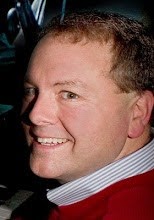
Silent film accompanist Jeff Rapsis. Yes, those are his real teeth!

Rapsis works largely by improvising as a film plays in the theater, in the tradition of theatre organists of the 1920s.

"There's something very special about the in-the-moment energy of a live improvised performance," Rapsis said. "It's never the same, and at its best it really can help a film connect with an audience and make the whole experience come together."

The original 'Dracula' (1931) starring Bela Lugosi will be shown in 35mm and with live music for one screening only on Halloween night, Sunday, Oct. 31 at 7:30 p.m. at the Somerville Theatre, 55 Davis Square, Somerville, Mass.

Tickets are $15 per person, with discounts for students and seniors. For more info, call the theater at (617) 625-5700 or visit www.somervilletheatre.com.


Tuesday, October 12, 2021

For this Halloween, something old AND new: original music to accompany 'Dracula' (1931)

Ready for the downbeat: Bela Lugosi in 'Dracula' (1931), to be shown with live music by me on Sunday, Oct. 31 at 7:30 p.m. at the Somerville Theatre.

Most posts on this blog are about what's coming up next on the silent film docket. 

But today I'm skipping ahead all the way to month's end, to Sunday, Oct. 31. That's when I'm doing live music on Halloween night for the classic thriller 'Dracula' (1931). 

The film will be shown in 35mm at the Somerville Theatre, among the best places to see a movie anywhere. More details in the press release pasted in below.

But wait—isn't 'Dracula' a talking picture? With a soundtrack and everything?

Yes. So what am I doing making live music for it?

Well, the thing is, 'Dracula' was released with virtually no musical score. 

This often happened in the early days of talkies. If a film wasn't an actual musical, with singing and dancing on screen, studios would sometimes just not bother with musical underscoring.

After all, music had been left up to local musicians since movies began. Throughout the silent era, the studios regarded music as no different from popcorn: something best made right in the theater.

There were technical reasons for live music, of course. At the time, it wasn't easy to amplify a recording in a way that would work for a large theater. 


But it was also just good box office for music to be done locally, so it could reflect prevailing styles and tastes depending on the location and the theater's audience. 

During the silent era, if a director did use music, it was mostly to have it played on set, to create a mood or to establish a tempo for the performers. 

Which brings us to 'Dracula' and its almost total lack of music. Other than a snatch of Tchaikovsky's 'Swan Lake' ballet score at the beginning, and a brief scene in an opera house, it's music-less.

Universal released the picture in 1931 without a score, in part because the traditional of a recorded score wasn't fully established at that time, and also to save money on production costs.

This certainly didn't harm the film, which proved a box office hit right from the beginning.

But over the years, various attempts have been made to add music to the film. Most notably, Philip
Glass composed a score for string quartet in 1998, and the Kronos Quartet continues to tour with it to this day.

In my little world, I hadn't considered scoring 'Dracula' until recently, when I programmed a series of Tod Browning silent pictures at the Town Hall Theatre in Wilton, N.H. 

It's currently underway—last Sunday, we screened 'White Tiger' (1923), an entertaining crime drama starring Wallace Beery, Priscilla Dean, and Raymond Griffith.

Browning, who directed 'Dracula,' had a prolific career in the silent era, directing a vast catalog of twisted melodramas, including many of Lon Chaney's greatest titles.

So I had Browning on the brain when the Somerville Theatre proposed a screening of 'Dracula' for Halloween, with me doing live music.

I hadn't considered this before, as I specialize in the unique world of silent cinema. Plus who would dare follow in the musical footsteps of Philip Glass, one of the most remarkable and original musical voices of our time?

But I thought about it: Browning's 'Dracula,' although a talkie, displayed many of Browning's techniques honed over the years in silent cinema. Long stretches unfold with no dialogue at all—sequences where the visuals carried the picture, as they had to in the silent era. 

I decided it would be a worthwhile exercise to take my silent film scoring vocabulary and carry it forward to 'Dracula,' which, after all, was the product of one of the most distinctive silent-era directors.

I understand the Glass score (which I've deliberately avoided listening to since this project) runs pretty much throughout the movie, even during passages with dialogue, and works to create an overall texture.

As much as I admire Glass, my silent film accompaniment methods mean I'll take quite a different approach with 'Dracula.'

For one thing, the music won't be continuous. Instead, it will be broken into sections, and used only when I feel it enhances scenes as only music can. 

Yes, it will at time evoke a general mood. But it will also serve to indicate significant changes in the emotional temperature of the narrative, to add motion to scenes that would benefit from it, and do all the things music can. 

I also hope to preserve those moments where the silence worked so well to create the eerie other-worldly mood that's a big part of the original 'Dracula.'

Will it work? I hope you'll join me on Halloween night at the Somerville, and we'll all find out together! 

 *   *   *

Bela Lugosi as 'Dracula' entertains a friend in the catacombs of Carfax Abbey.

TUESDAY, OCT. 12, 2021 / FOR IMMEDIATE RELEASE

Contact Jeff Rapsis • (603) 236-9237 • jeffrapsis@gmail.com

Halloween special: Lugosi's 'Dracula' on big screen in 35mm with new live score

Horror classic to be shown at the Somerville Theatre on Sunday, Oct. 31 for one screening only

SOMERVILLE, Mass. — Do you dare spend Halloween braving 'Dracula' on the big screen?

That's the question at the Somerville Theatre, where the classic 1931 version of 'Dracula' will run for one showing only on Sunday, Oct. 31.

The movie, starring Bela Lugosi in the title role, will be shown using a 35mm film print from Universal Studios, which released the early horror classic in 1931.

Showtime is 7:30 p.m. General admission tickets are $15, with senior/student discounts. Tickets are available online at somervilletheatre.com or at the box office.

The screening will feature live music by Jeff Rapsis, the Somerville Theatre's silent film accompanist.

Although 'Dracula' is a talking picture, it was released with virtually no musical score, a common practice during the transition period from silent to sound pictures.

Rapsis will perform original music live during the screening using a digital keyboard to recreate the texture of a full orchestra.

Directed by Tod Browning (at right), 'Dracula' was a sensational box office success and has mesmerized movie audiences ever since with its eerie visuals and Lugosi's iconic performance.

The story opens in far-off Transylvania, where mysterious Count Dracula hypnotizes a British soldier, Renfield (Dwight Frye), into becoming his mindless slave.

Dracula then travels to England and takes up residence in an old castle. Soon the Count begins to wreak havoc, sucking the blood of young women and turning them into vampires.

When he sets his sights on Mina (Helen Chandler), the daughter of a prominent doctor, vampire-hunter Van Helsing (Edward Van Sloan) is enlisted to put a stop to Dracula's never-ending bloodlust.

Located in Davis Square, the Somerville Theatre is one of the few first-run venues in the region committed to preserving the ability to screen movies using 35mm film prints.

"We feel it's important to show films on actual film when possible, the way classic movies were intended to be shown," said Ian Judge, creative director of the Somerville Theatre.

The Somerville recently reopened after a 17-month hiatus for the pandemic, during which significant renovations were made to the 1914 theater.

The Halloween screening of 'Dracula' will include live music by Jeff Rapsis, a local composer and performer who specializes in creating accompaniment for silent films.  

'Dracula' was released when Hollywood and movie theatres were still undergoing the transition from the silent era to pictures with synchronized sound and dialogue.

During the silent era, studios did not produce official scores for most films. Instead, accompaniment was left up to local musicians, and could vary greatly from one moviehouse to another.

When studios converted to talking pictures, the tradition of recording a musical score was not well established. In the case of 'Dracula,' Universal omitted music in part to save production costs.

As a result, after the opening credits, the 1931 'Dracula' contains no music except for a brief scene in an opera house.

In recent decades, composers have experimented with creating original music for the movie—most notably Philip Glass, who composed a score in 1998 for the Kronos string quartet.

Rapsis sees 'Dracula' as closely linked to the silent-era tradition of films shown with live music.

"Tod Browning was a prolific director of silent films, including many thrillers that anticipate 'Dracula,' " Rapsis said. "So even though 'Dracula' is a talking picture, Browning's filmmaking style is strongly rooted in the silent era, when it was assumed that local musicians would be important collaborators in a picture's effect on an audience."

Unlike the Glass score, which plays almost continuously during the movie, Rapsis will use music only in certain places where he feels it will either enhance the mood, heighten tension, or signify a change in the emotional line of the story.

Although 'Dracula' is not a silent film, there are definitely places where the silence speaks volumes and remains very effective," Rapsis said. "I hope to leave those intact, but enrich other parts of the film in the way that only music can."

Rapsis works largely by improvising as a film plays in the theater, in the tradition of theatre organists of the 1920s.

"There's something very special about the in-the-moment energy of a live improvised performance," Rapsis said. "It's never the same, and at its best it really can help a film connect with an audience and make the whole experience come together."

The original 'Dracula' (1931) starring Bela Lugosi will be shown in 35mm and with live music for one screening only on Halloween night, Sunday, Oct. 31 at 7:30 p.m. at the Somerville Theatre, 55 Davis Square, Somerville, Mass.

Tickets are $15 per person, with discounts for students and seniors. For more info, call the theater at (617) 625-5700 or visit www.somervilletheatre.com. For more info on the music, visit www.jeffrapsis.com.

Tuesday, October 10, 2017

If it's October, it must be...
time for a 'Nosferatu' screening!

Among other things, needing a good manicure.

With Halloween looming like a harvest moon, the latter half of October is the busiest time of the year for a silent film accompanist.

Why? Because it's prime time for people to seek out the out-of-the-ordinary. And for many, silent film is strange enough to be the medium for the season of spook.

And so I have something like 12 shows in the two weeks leading up the Halloween. Which is great!

The most popular titles are 'Nosferatu' (1922) and 'Phantom of the Opera' (1925)—and yes, I'm doing music for each of them at a handful of screenings.

Every October, however, I try to focus on a relatively neglected film that I think would work well, especially this time of year.

This cycle, it's the John Barrymore version of 'Dr. Jekyll & Mr. Hyde' (1920), which I'm doing in several venues.

There's also a couple of 'Man Who Laughs' (1928) thrown in, and a 'Häxan' (1922) for good measure as well.

But it all kicks off this weekend, on Sunday, Oct. 15 with a screening of 'Nosferatu' at the Aeronaut Brewery in Somerville, Mass.

The fun—and fear—begins at 8 p.m. More info in the press release below. Hope to see you there!

* * *

Nosferatu: poster child for Halloween—literally!

TUESDAY, SEPT. 12, 2017 / FOR IMMEDIATE RELEASE
Contact Jeff Rapsis • (603) 236-9237 • jeffrapsis@gmail.com

Creepy classic thriller 'Nosferatu' coming to Aeronaut Brewing Co. on Sunday, Oct. 15


Just in time for Halloween: Pioneer silent horror movie to be shown on the big screen with live music—see it if you dare

SOMERVILLE, Mass.—Get into the Halloween spirit with a classic silent horror film!

'Nosferatu' (1922), the first screen adaptation of Bram Stoker's novel 'Dracula,' will be screened with live music on Sunday, Oct. 15 at 8 p.m. at the Aeronaut Brewing Co., 14 Tyler St. (near Union Square), Somerville, Mass.

This special screening with live music is open to the public and is part of the Aeronaut's commitment to be a showcase for local music, art, and performance.

Admission is $10 per person; tickets may be purchased in advance on EventBrite.com:

https://www.eventbrite.com/e/film-nosferatu-with-live-music-tickets-37554476450

The Aeronaut has also set up a Facebook event page at: https://www.facebook.com/events/860525604104186

The film will include live music performed by New Hampshire-based silent film accompanist Jeff Rapsis.

'Nosferatu' (1922), directed by German filmmaker F.W. Murnau, remains a landmark work of the cinematic horror genre. It was among the first movies to use visual design to convey unease and terror.

To modern viewers, the passage of time has made this unusual film seem even more strange and otherworldly.

It's an atmosphere that silent film accompanist Jeff Rapsis will enhance in improvising live music on the spot for the screening at the Aeronaut.

"The original 'Nosferatu' is a film that seems to get creepier as more time goes by," said Rapsis, a resident of Bedford, N.H. "It's a great way to celebrate Halloween and the power of silent film to transport audiences to strange and unusual places."

In 'Nosferatu,' actor Max Schreck portrays the title character, a mysterious count from Transylvania who travels to the German city of Bremen to take up residence.

In the town, a rise in deaths from the plague is attributed to the count's arrival. Only when a young woman reads "The Book of Vampires" does it become clear how to rid the town of this frightening menace.

Director Murnau told the story with strange camera angles, weird lighting, and special effects that include sequences deliberately speeded up.

Although 'Nosferatu' is suitable for all family members, the overall program may be too intense for very young children to enjoy.

Modern critics say the original 'Nosferatu' still packs a powerful cinematic punch.

“Early film version of Dracula is brilliantly eerie, full of imaginative touches that none of the later films quite recaptured,” Leonard Maltin wrote recently.

Critic Dave Kehr of the Chicago Reader called 'Nosferatu' "...a masterpiece of the German silent cinema and easily the most effective version of Dracula on record.”

Despite the status of 'Nosferatu' as a landmark of early cinema, another scary aspect of the film is that it was almost lost forever.

The film, shot in 1921 and released in 1922, was an unauthorized adaptation of Stoker's novel, with names and other details changed because the studio could not obtain rights to the novel.

Thus "vampire" became "Nosferatu" and "Count Dracula" became "Count Orlok." After the film was released, Stoker's widow filed a copyright infringement lawsuit and won; all known prints and negatives were destroyed under the terms of settlement.

However, intact copies of the the film would surface later, allowing 'Nosferatu' to be restored and screened today as audiences originally saw it. The image of actor Max Schreck as the vampire has become so well known that it appeared in a recent 'Sponge Bob Squarepants' espisode.

‘Nosferatu’ will be shown on Sunday, Oct. 15 at 8 p.m. at the Aeronaut Brewing Co., 14 Tyler St. (near Union Square), Somerville, Mass. Admission is $10 per person, and seating is limited. Advance tickets are available online at

Admission is $10 per person; tickets may be purchased in advance on EventBrite.com:

https://www.eventbrite.com/e/film-nosferatu-with-live-music-tickets-37554476450

For more info, visit www.aeronautbrewing.com. For more about the music, visit www.jeffrapsis.com.

—30—

Friday, November 14, 2014

Encore screening of 'Nosferatu' (1922) tonight
(Friday, 11/14) at Red River, Concord, N.H.;
Plus, W.C. Fields as an abusive husband?

He knows if you've been sleeping, he knows if you're awake...

If the prospect of Christmas in six weeks isn't enough to terrify the bejesus out of you, then come see this evening's screening of 'Nosferatu' (1922).

It's an encore presentation of the pioneer silent horror film, prompted by a sold-out screening prior to Halloween.

We'll be running 'Nosferatu' tonight (Friday, Nov. 14) at 7 p.m. at Red River Theatres in Concord, N.H. Live music by yours truly.

More info in the press release below.

But first, a few words on last night's screening of 'Running Wild' (1927), a silent comedy starring W.C. Fields as a hen-pecked husband who undergoes a drastic change of personality following an encounter with a vaudeville hypnotist.

This film, screened before a small but enthusiastic audience at the Flying Monkey Moviehouse and Performance Center in Plymouth, N.H., is a perfect example of a silent film not regarded as any kind of classic, but which really comes to life and holds up well when shown in the right environment.

By that, I mean screened in a theater, with live music, and with an audience. Take any of those elements away, and you're likely to rob any silent film of much of its intended impact.

That was certainly true with 'Running Wild.' All it takes is a few people laughing to prompt others to join in. And before you know it, you have that great silent comedy bonfire of laughter going.

In terms of accompaniment, I've found an important element to keep the bonfire going is to not overplay the music. If it's too loud, an audience can't hear itself laughing, and so the spontaneous combustion never sets in. Once it does, however, you can grow the music with it.

I'm especially excited by the audience reaction to 'Running Wild' because the transfer we used last night was from a 16mm print. So the visual quality was okay, but not pristine. Even so, that didn't seem to impede the audience response at all, which was generous throughout.

We're running this same film at the Somerville Theatre next year, but using a 35mm print from the Library of Congress. So I have high hopes that the visual quality will be at a whole other level, which ought to really help this film go over even better. We'll see. It's part of a double bill of W.C. Fields silents on Sunday, March 8 at the Somerville, the other being 'Sally of the Sawdust' (1925).

Either way, 'Running Wild' is also a great example of a film that's perhaps more interesting to us now that when it was first released.

In this case, attitudes toward male and female roles have changed so much that what's presented as normal in a domestic comedy such as 'Running Wild' comes across as utterly astonishing to audiences today.

In the world of 'Running Wild,' a businessman is supposed to be physically intimidating as a matter of course, and also be willing to resort to violence in a moment's notice. Just look at what it takes to collect a disputed bill!

In the case of 'Running Wild,' as in so many other silent films, this alternate view of reality enriches the experience, I think. Not only does it add to the comedy, but it shows a viewer how different things were not that long ago.

And that, to me, serves to underscore the idea that very few things in life remain fixed as we move from generation to generation. Change is constant—in attitudes, in fashion, technology, in the roles we play, in what's acceptable behavior, and so much more.

Family man or abusive husband?

Near the end of 'Running Wild,' look at the way Fields treats his wife and then his stepson. He physically intimidates both, wrecking the house in the process, and actually flogs the kid during an extended beating that doesn't stint on the violence. Wow!

And this action is presented in support of Fields as a good husband and a man worthy of respect! After Fields manhandles and bullies his wife enough to cause her to faint, the first thing she says to him upon awakening is to tell him he's "so wonderful."

Apparently no "anger management" classes at the local community college.

However you feel about Fields' behavior, and even factoring in for comedy, it suggests that domestic violence wasn't just the norm, but it was expected and even necessary in a well-run household. Yes, there's some satire involved (he's 'Running Wild, after all), but underlying it all is a very different vision of what's acceptable under one's roof.

Was it better? Can we learn something from seeing it depicted in a film like this, however exaggerated it might have been for comic effect? Have we lost anything in moving on from this vision?

Interesting questions that make 'Running Wild' an interesting cultural artifact.

But a few things don't change. Most of us still center our lives around family. Most of us struggle with balancing life's priorities. Most of us struggle with temptation, with moral dilemmas, with questions that have vexed humanity for centuries. Most of us, if we're truly alive, will experience the BIG emotions of life from time to time: Love, Hate, Joy, Anger, Despair, and so on.

And as more years pass, even a mild domestic comedy such as 'Running Wild' can provide an increasingly clear window into what about life changes and what remains constant. What's ephemeral, and what's lasting. What will change, and what won't.

Even as it still makes us laugh! Imagine that!

* * *

Actor Max Schreck plays the title role in F. W. Murnau's 'Nosferatu' (1922).

MONDAY, NOV. 3, 2014 / FOR IMMEDIATE RELEASE
Contact Jeff Rapsis • (603) 236-9237 • jeffrapsis@gmail.com

Encore screening of 'Nosferatu' at Red River Theatres on Friday, Nov. 14


Sold-out Halloween show prompts follow-up screening of pioneer classic horror movie on the big screen with live music

CONCORD, N.H.—If you missed out for Halloween, you have another chance to get frightened.

'Nosferatu' (1922), the first screen adaptation of Bram Stoker's novel 'Dracula,' will be screened with live music on Friday, Nov. 14 at 7 p.m. at Red River Theatres, 11 South Main St., Concord, N.H.

The show has been scheduled as an encore presentation following a sold-out pre-Halloween screening at Red River.

The film will include live music performed by New Hampshire-based silent film accompanist Jeff Rapsis. Admission is $10 per person.

"Last month's screening of 'Nosferatu' proved popular enough to sell out," said Shelly Hudson, Red River's executive director. "So we scheduled this encore screening to provide another chance to see this great film presented with live music."

'Nosferatu' (1922), directed by German filmmaker F.W. Murnau, remains a landmark work of the cinematic horror genre. It was among the first movies to use visual design to contribute to an overall sense of terror. To modern viewers, the passage of time has made this unusual film seem even more strange and otherworldly.

It's an atmosphere that silent film accompanist Jeff Rapsis will try to enhance in improvising live music on the spot for the screening.

"The original 'Nosferatu' is a film that seems to get creepier as more time goes by," said Rapsis, a resident of Bedford, N.H. who ranks as one of the nation's leading silent film accompanists.

In 'Nosferatu,' German actor Max Schreck portrays the title character, a mysterious count from Transylvania who travels to the German city of Bremen to take up residence. A rise in deaths from the plague is attributed to the count's arrival. Only when a young woman reads "The Book of Vampires" does it become clear how to rid the town of this frightening menace.

Director F.W. Murnau told the story with strange camera angles, weird lighting, and special effects that include sequences deliberately speeded up.

Although 'Nosferatu' is suitable for all family members, the overall program may be too much for very young children to enjoy.

Modern critics say the original 'Nosferatu' still packs a powerful cinematic punch.

“Early film version of Dracula is brilliantly eerie, full of imaginative touches that none of the later films quite recaptured,” Leonard Maltin wrote recently. Critic Dave Kehr of the Chicago Reader called 'Nosferatu' "...a masterpiece of the German silent cinema and easily the most effective version of Dracula on record.”

Red River Theatres, an independent cinema, is a non-profit 501(c)(3) organization dedicated to screening a diverse program of first-run independent films, cult favorites, classics, local and regional film projects, and foreign films.

The member-supported theater’s mission is to present film and the discussion of film as a way to entertain, broaden horizons and deepen appreciation of life for New Hampshire audiences of all ages.

Upcoming events in Red River's silent film programming include:

• Friday, Nov. 28 at 7 p.m.: 'Charlie Chaplin Comedy Night.' Spend part of Thanksgiving weekend with the Little Tramp on the 100th anniversary of his first screen appearances. The whole family will enjoy restored prints of some of Chaplin's most popular comedies shown the way they were intended: on the big screen, with live music, and an audience.

An encore presentation of ‘Nosferatu’ will take place on Friday, Nov. 14 at 7 p.m. in the Jaclyn Simchik Screening Room at Red River Theatres, 11 South Main St., Concord, N.H. Admission is $10 per person; for more info, call (603) 224-4600 or visit www.redrivertheatres.org. For more information about the music, visit www.jeffrapsis.com.

Monday, October 28, 2013

A 2013 Nosferatu Marathon update:
Sprinting to the finish, in more ways than one

German actor Max Schreck climbs to the top of the back bleachers at Fenway Park.

Last spring, when I worked out a schedule for multiple showings of 'Nosferatu' (1922) leading up to Halloween this year, I didn't expect the Boston Red Sox to be in the World Series. After a disastrous last-place finish in 2012, I don't even think the Red Sox expected to be the World Series.

But they are, and as luck would have it, the game schedule against the St. Louis Cardinals almost exactly matches this latest batch of screenings. Really! Out of five screenings, all five have been (or will be) on game dates. (The first, on Saturday, Oct. 19, was prior to the World Series, but coincided with a Red Sox/Tigers game in the American League Championship Series.)

And yes, as of this writing (Monday, Oct. 28), there will be a Game 6 in Boston, and it'll be Wednesday, Oct. 30—the same night as 'Nosferatu' at Merrimack College in North Andover, Mass. And if there's a Game 7, it's Thursday, Oct. 31—the same night as 'Nosferatu' at the Flying Monkey Theater in Plymouth, N.H.

You'd think that deep in the heart of Red Sox Nation, this would cut into attendance. But I'm pleased to report that so far it's been the opposite! Of the three 'Nosferatu' screenings I've done, each has drawn capacity crowds, or nearly so. The owner of the Leavitt Theatre in Ogunquit, Maine said our screening on Saturday, Oct. 26 was the highest-attended event he'd had this entire season.

To me, it's a testament to the drawing power of this film, which I think grows creepier and more other-worldly as more time passes. Or maybe it's just that after two World Series championships in the past decade, Red Sox fans aren't as worked up about this. (Yeah, right!) If nothing else, it's given me fodder to include dumb jokes in my intros, such as "Hey, isn't there some kind of sporting match tonight?" or "If you really wanted to be scared, just watch the Red Sox," and so on.

Well, I'm delighted at the full houses and doing my best to bring 'Nosferatu' to life. The one special effect in this score has been a little bell I use for the chime on the small clock that is shown striking midnight at two points in the film. It's tricky, because the clock is only shown chiming a couple of times, but clearly the hands are pointing straight up to 12. So the purist in me, which wants the chime to sound exactly 12 times, needs to start them before the visual, and keep them going after (and keep count, too) to get all dozen in.

I haven't messed up too badly with this. But yesterday's screening at the Wilton Town Hall Theatre in Wilton, N.H. marked the second time this year that I've had to do the unthinkable: leave the keyboard in mid-screening to answer the call of nature. It took only a moment, but was very embarrassing and broke the spell that film had cast, at least for a moment.

It's my own fault, of course, for not addressing this inevitability prior to the screening, but I was so caught up in talking with people and then warming up at the keyboard that it just didn't happen. And I thought I could make it, but then the vampire decides to travel by ship, and so we get endless images of waves crashing and water flying and it was all just too much.

So I had to sprint to the theater's employee bathroom. (Either that or borrow someone's popcorn bucket.) It all happened quickly, and I was worried about the effect on the audience. But afterwards, several people told me they were glad I had to go, because the silence pointed out to them how important the music was to the film maintaining their interest. "Without the music, it was like staring at a brick wall," one woman said.

Among the crowds are many "newbies" to silent film, and it's gratifying to hear from a few afterwards who say they the experience was surprising (not just because of my mid-film sprint, presumably) and enjoyable.

For this round of screenings, I decided it was important to point out how fresh and unfamiliar the whole vampire story was to the film's original audience. And I figured the best way to do this was to bring in an example of how the Dracula legend over the years has been cheapened and commercialized.

I first tried to find a hand puppet in the shape of 'The Count,' the Muppet character on Sesame Street who introduced legions of youngsters to the joy of numbers. But when that proved elusive, I got something possibly better: a box of 'Count Chocula' breakfast cereal. It's actually a discontinued product, but I lucked out in that General Mills did a special "retro-run" of the cereal for this Halloween.

So I hold up my box of Count Chocula prior to the screening, and everyone laughs, and I say, "Look what's happened to Dracula! This isn't scary—unless you read the ingredients!"

The point, of course, is to help audiences see 'Nosferatu' as director F.W. Murnau might have expected them to experience it: without a head full of commercialized clutter and images of Bela Lugosi saying "I vant to bite your neck!" and so on. 'Nosferatu' would have been shown without any of the baggage that we bring to the theater today after a lifetime of monster films.

I also point out how director Murnau changed aspects of Bram Stoker's iconic 'Dracula' novel in part to avoid having to get permission from Bram Stoker's widow to use the story. (She sued and won, anyway.) Today, long after the legal issues have been settled, the result of Murnau's decision to disguise the story is a film that does differ enough from Stoker's novel so that it seems seperate and apart from the main run of Dracula kitsch. And that's a good thing, at least in terms of 'Nosferatu' standing as a singular achievement.

Anyway, it's been a fun run so far. One result of yesterday's screening at the Wilton Town Hall Theatre was this very unusual double bill on the main screening room, which we packed for 'Nosferatu.' Really—so many people showed up that owner Dennis Markaverich had to rustle up extra chairs, and about half-way through the show he had to open side doors to balance out the accumulated body heat.

I was particularly pleased to have old friend Ron Duvernay on hand at Sunday's screening. A high school classmate and incredibly gifted pianist, Ron took music a whole lot more seriously than I ever did, and had talent enough to pursue it at Harvard University.

I can't imagine what someone with Ron's background and abilities would make of my musical doodlings, which I've lately taken to describing as "public therapy sessions." But Ron was very generous afterwards, and it was a huge thrill to have him on hand.

Hey, who needs Facebook to track down old friends when I've got silent film screenings?

All this and Count Chocula, too. I'm a blessed man.

Tuesday, October 11, 2011

Thursday, Oct. 13: Notes on scoring 'Nosferatu'

You know Halloween is just around the corner when 'Nosferatu' shows up on the calendar of your local theater. And that's the case at the Flying Monkey Moviehouse in downtown Plymouth, N.H., where we're running F.W. Murnau's creepy adaptation of the 'Dracula' tale on Thursday, Oct. 13 at 6:30 p.m. Admission is $10 per person.

'Nosferatu' is a terrific silent film for music, I think. As a drama, it's easier to score (for me) than a comedy, which requires constant precision timing for the music to augment the laughs while not overwhelming them. But with a drama, and especially an eerie one such as 'Nosferatu,' there's a lot more freedom for music to build atmosphere and tension and whatever else helps bring the film to life for contemporary audiences.

I first did music for 'Nosferatu' by accident. Four years ago, I was booked to do music for a screening of 'The Cabinet of Dr. Caligari,' another landmark of German expressionism. However, on screening day, problems arose with 'Cabinet' and we had to substitute 'Nosferatu' at the last minute. I hadn't prepared anything for this film, but it was one of those times when everything fell together just right. Sometimes it happens! I think one of the reasons was the visual appearance of actor Max Schreck, whom I understand Murnau selected specifically because of his appearance. Something in what Schreck looks like makes creepy music just flow naturally.

For Thursday's screening, I have a few ideas in mind for what I might do, including a helpful forboding chord sequence that I invented for other 'Nosferatu' screenings, and an arpegiatted version of the Dies Irae from the Catholic Death Mass should prove handy. Not sure how much time I'll have to tweak any of the synthesizer settings ahead of showtime, but I'll try to keep remembering how less can be more. It's especially important not to get too creepy too soon, but to let it build naturally during the first half-hour, until we get to Nosferatu's castle.

Because 'Nosferatu' is often tackled by groups who don't do silent film music on a regular basis, the film is occasionally burdened with an ineffective or insensitive score: too loud, too much, too soon, smothering the film under a tsnami of sound. People who do that forget that the music is supposed to support the film, not overwhelm it. I attended a 'Nosferatu' screening about 10 years ago that featured music by a local rock band, and what they played was so loud that it literally made my ears hurt. I don't know about you, but that's not my recipe for effective accompaniment.

Well, that's a taste of what to expect at 'Nosferatu.' Hope you can make it! Below is the text of the press release that went out last month.

TUESDAY, SEPT. 20, 2011 / FOR IMMEDIATE RELEASE
Contact Jeff Rapsis • (603) 236-9237 • jeffrapsis@gmail.com

Silent film frightfest at Flying Monkey on Thursday, Oct. 13


'Nosferatu' (1922), pioneer classic horror flick, to be screened with live music in Plymouth, N.H.

PLYMOUTH, N.H.—Get into the Halloween spirit with a classic silent horror film! 'Nosferatu' (1922), the original screen adaptation of Bram Stoker's novel 'Dracula,' will be screened with live music at the Flying Monkey Moviehouse and Performance Center in Plymouth, N.H. on Thursday, Oct. 13. The show, which starts at 6:30 p.m., will feature live accompaniment by silent film musician Jeff Rapsis. General admission is $10 per person.

'Nosferatu' (1922), directed by German filmmaker F.W. Murnau, remains a landmark work of the cinematic horror genre. It was among the first movies to use visual design to contribute to an overall sense of terror. To modern viewers, the passage of time has made both this unusual film seem even more strange and otherworldly. It's an atmosphere that silent film accompanist Jeff Rapsis will try to enhance in improvising live music on the spot for the screenings.

In 'Nosferatu,' German actor Max Schreck portrays the title character, a mysterious count from Transylvania who travels to the German city of Bremen to take up residence. A rise in deaths from the plague is attributed to the count's arrival. Only when a young woman reads "The Book of Vampires" does it become clear how to rid the town of this frightening menace.

Modern critics say the original 'Nosferatu' still packs a powerful cinematic punch. “Early film version of Dracula is brilliantly eerie, full of imaginative touches that none of the later films quite recaptured,” reviewer Leonard Maltin wrote recently. Critic Dave Kehr of the Chicago Reader called 'Nosferatu' "...a masterpiece of the German silent cinema and easily the most effective version of Dracula on record.”

The film, shot in 1921 and released in 1922, was an unauthorized adaptation of Stoker's novel, with names and other details changed because the studio could not obtain rights to the novel. For instance, "vampire" became "Nosferatu" and "Count Dracula" became "Count Orlok." After the film was released, Stoker's widow filed a copyright infringement lawsuit and won; all known prints and negatives were destroyed under the terms of settlement. However, bootleg copies of the the film would surface later, allowing 'Nosferatu' to be screened today as audiences originally saw it.

The Dracula tale would be remade many times, including a famous version in 1931 starring Bela Lugosi in the title role. The character of Dracula would go on to become a staple of cinematic horror, appearing in more than 200 commercial feature films to date—second only to fictional detective Sherlock Holmes.

All movies in the Flying Monkey's silent film series were popular when first seen by audiences in the 1920s, but are rarely screened today in a way that allows them to be seen at their best. They were not made to be shown on television; to revive them, organizers aim to show the films at the Flying Monkey as they were intended—in top quality restored prints, on a large screen, with live music, and before a live audience.

‘Nosferatu’ will be shown on Thursday, Oct. 13 at 6:30 p.m. at the Flying Monkey Moviehouse and Performing Arts Center, 39 Main St., Plymouth, N.H. Admission is $10 per person. For more info, call (603) 536-2551 or visit www.flyingmonkeynh.com. For more info on the music, visit www.jeffrapsis.com.

Upcoming films in the Flying Monkey's silent film series include:

• Thursday, Nov. 10, 2011, 6:30 p.m.: "The Big Parade" (1925) starring John Gilbert, Renee Adoree; The Flying Monkey Movie House and Performance Center, 39 South Main St., Plymouth, N.H.; (603) 536-2551; http://www.flyingmonkeynh.com/. Director King Vidor broke new cinematic ground with this epic drama that took viewers right into the trenches and showed the ugly side of then-recent World War I. Screened in honor of Veterans Day. Admission $10 per person.

• Thursday, Dec. 8, 2011, 6:30 p.m.: "When The Clouds Roll By" (1919), starring Douglas Fairbanks Sr.; The Flying Monkey Movie House and Performance Center, 39 South Main St., Plymouth, N.H.; (603) 536-2551; http://www.flyingmonkeynh.com/. Fairbanks tangles with a twisted psychiatrist in this unusual romantic comedy. Will love win out? Find out in this contemporary (for 1919) tale, made just prior to Fairbanks launching his series of swashbuckling historical adventures. Admission, $10 per person.

--- 30 ---

For more info, contact:
Jeff Rapsis • (603) 236-9237 • jeffrapsis@gmail.com
Images attached.
More high-resolution digital images available upon request.