Showing posts with label Easter. Show all posts

Wednesday, April 6, 2022

Up next: the original silent 'Ben Hur' (1925) on Sunday, April 10 at the Showroom in Keene, N.H.

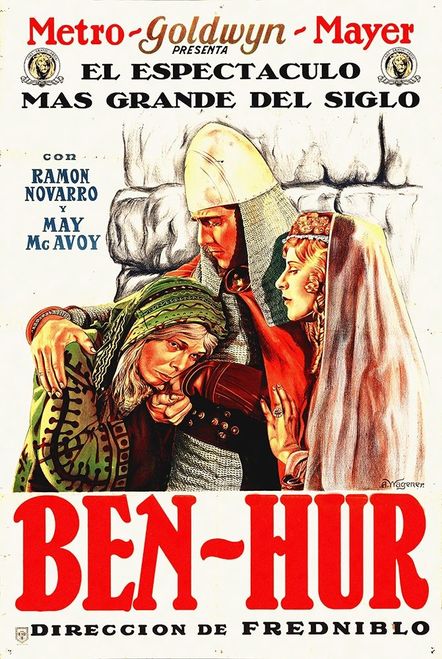
A Spanish language poster for MGM's 'Ben Hur' (1925).

Easter must be on its way, as this month's silent film schedule is thick with Biblical epics.

Coming up next: the original silent version of 'Ben Hur' (1925) on Sunday, April 10 in Keene, N.H. If there's a film you should try to see on the big screen, this is it. More details in the press release below.

For now, let me report that we enjoyed a healthy turnout for last Sunday's unusual double bill: Lon Chaney in 'Flesh and Blood' and Harry Houdini in 'The Man From Beyond,' both films from 1922.

The Chaney film, which I'd never done before, held up pretty well, with an escaped-prisoner-seeking-justice storyline that kept our audience engaged throughout. Large chunks of it are set in Chinatown, but I resisted the temptation to play pentatonic-scale-"Oriental"-sounding music.

Instead, I kept mostly to a piano & strings texture, except for a scene where a harmonium gets played, and then also when Chaney performs a sentimental tune on a solo violin. One wonders how musicians of the 1920s would have matched the on-screen action in this film.

The Houdini picture is a mind-bending affair about reincarnation that left most people scratching their heads. How can a guy become frozen in 1820, then thawed out 100 years later, to the point where he's riding around in automobiles and attending a wedding, and not realize it was a century later?

But the rousing waterfall rescue sequence that concludes the film, which was actually filmed at Niagara Falls, was enough to leave everyone satisfied.

Okay, here's the press release on 'Ben Hur.' Hope to see you this Sunday at 2 p.m. at the Colonial Theatre's new "Showroom" venue in Keene, N.H.!

*    *    *
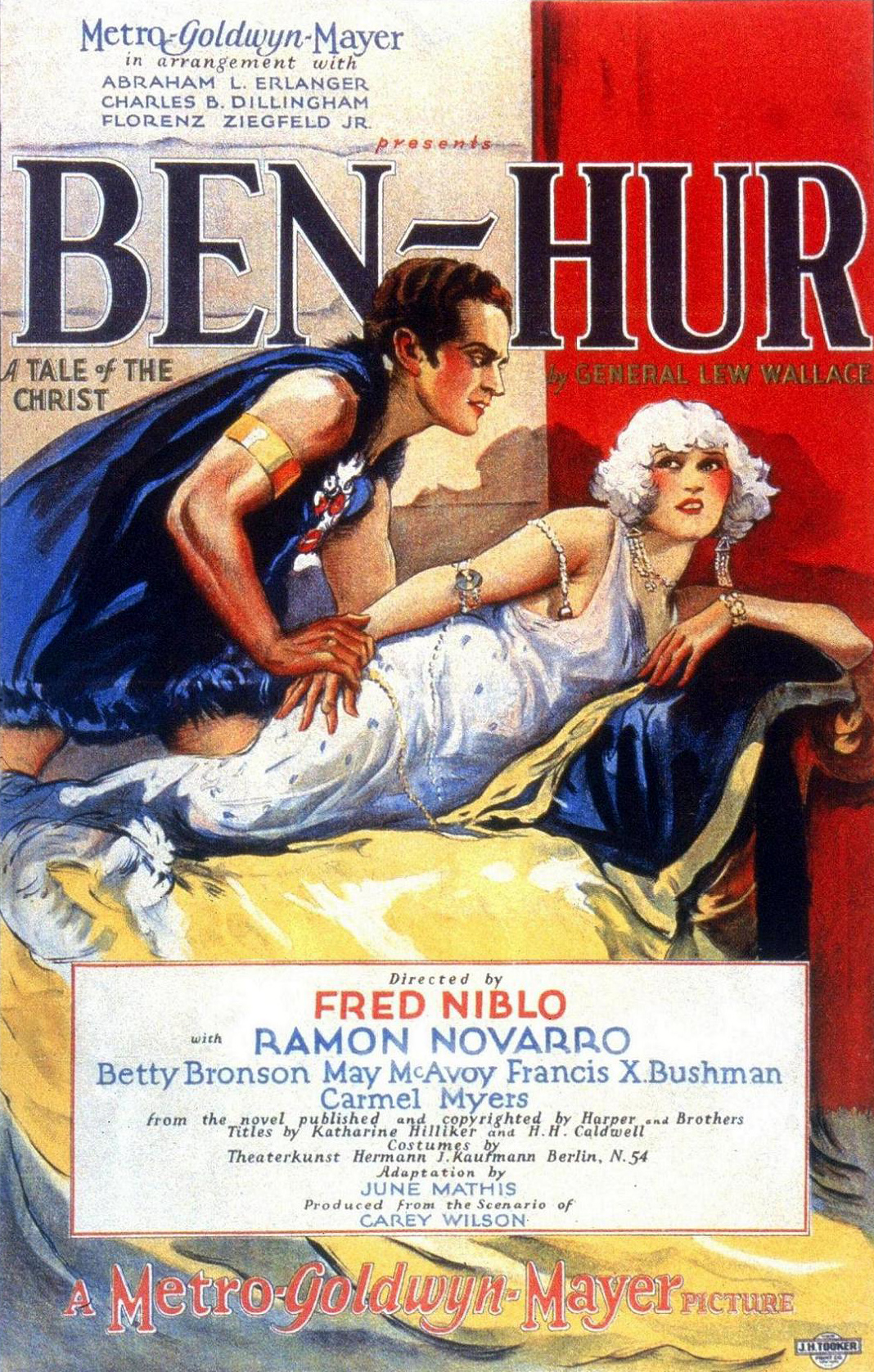
An original release poster for MGM's silent epic 'Ben Hur' (1925).

MONDAY, APRIL 4, 2022 / FOR IMMEDIATE RELEASE
Contact Jeff Rapsis • (603) 236-9237 • jeffrapsis@gmail.com

Silent film epic ‘Ben Hur’ (1925) coming to Showroom in Keene on Sunday, April 10

Prelude to Easter: Hollywood's original Biblical-era blockbuster to be screened with live music at Colonial Theatre's new venue

KEENE, N.H.—One of early Hollywood's greatest epics returns to the big screen with a showing of 'Ben Hur, A Tale of The Christ' (1925) on Sunday, April 10 at 2 p.m. at the Colonial Theatre's Showroom, 20 Commercial St., Keene.

The screening will feature live accompaniment by Jeff Rapsis, a New Hampshire-based composer who specializes in creating music for silent films.

Admission is $15 per person, general admission. Tickets are available online at www.thecolonial.org or at the door.

'Ben Hur,' starring Ramon Novarro and Francis X. Bushman, was among the first Hollywood motion pictures to tell a Biblical-era story on a large scale.

The film, which helped establish MGM as a leading studio, employed a cast of thousands and boasted action sequences including a large-scale sea battle.

The film is highlighted by a spell-binding chariot race that still leaves audiences breathless.

Set in the Holy Land at the time of Christ's birth, 'Ben Hur' tells the story of a Jewish family in Jerusalem whose fortune is confiscated by the Romans and its members jailed.

The enslaved family heir, Judah Ben Hur (played by Novarro, a leading silent-era heartthrob) is inspired by encounters with Christ to pursue justice. This leads him to a series of epic adventures in his quest to find his mother and sister and restore his family fortune.

The film is particularly appropriate for the weeks leading up to Easter, which is celebrated on Sunday, April 17. (Orthodox Easter falls on Sunday, April 24 in 2022.)

'Ben Hur,' directed by Fred Niblo, was among the most expensive films of the silent era, taking two years to make and costing between $4 million and $6 million. When released in 1925, it became a huge hit for the newly formed Metro-Goldwyn-Mayer studio.

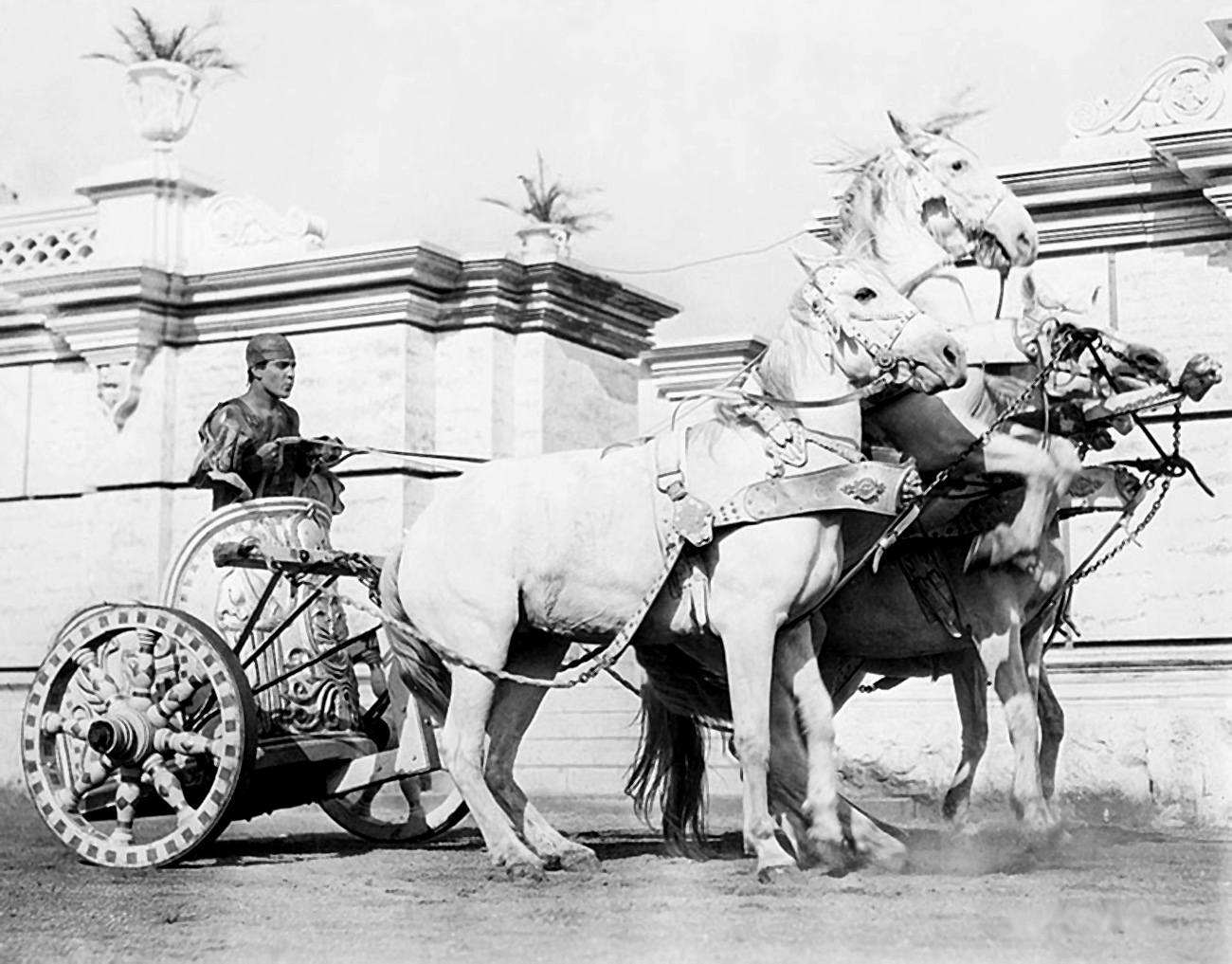
The chariot race scene in 'Ben Hur,' with Novarro and other cast members driving teams of horses at high speed on a mammoth dirt racetrack in a gigantic replica of a Roman stadium, was among the most complicated and dangerous sequences filmed in the silent era. It remains noted for its tight editing, dramatic sweep, and sheer cinematic excitement.

The chariot race was re-created virtually shot for shot in MGM's 1959 remake, and more recently imitated in the pod race scene in 'Star Wars Episode I: The Phantom Menace.'
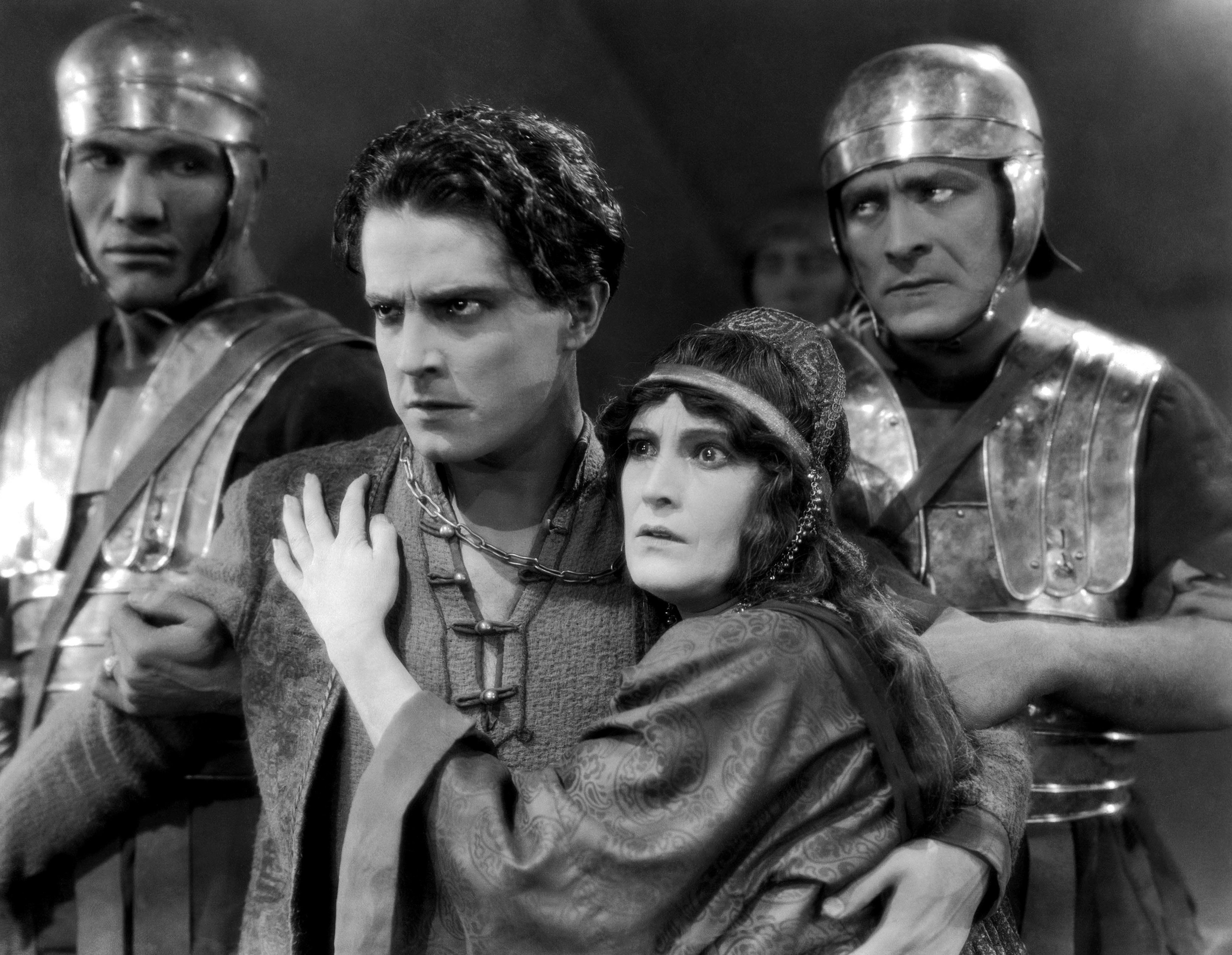

Besides Novarro in the title role, the film stars Francis X. Bushman as Messala, the Roman soldier who imprisons the Hur family; Betty Bronson as Mary, mother of Jesus; May McAvoy as Ben Hur's sister Esther; and Claire McDowell as Ben Hur's mother.

'Ben Hur' was based on the best-selling 1880 novel by General Lew Wallace, which interwove the story of Christ's life with the Ben Hur clan, a fictional Jewish merchant family.

Celebrity "extras" in the chariot race scene included stars such as Douglas Fairbanks, Harold Lloyd, Lionel Barrymore, John Gilbert, Joan Crawford, Lillian Gish, Mary Pickford, and a very young Clark Gable.

The film was remade by MGM in the 1950s in a color and wide-screen version starring Charleton Heston that garnered 11 Academy Awards. Some critics believe the original 1925 version offers superior drama and story-telling.

In creating music for silent films, accompanist Jeff Rapsis performs on a digital synthesizer that reproduces the texture of the full orchestra and creates a traditional "movie score" sound.

For each film, Rapsis improvises accompaniment using original themes created beforehand. No music is written down; instead, the score evolves in real time based on audience reaction and the overall mood as the movie is screened.

'Ben Hur, A Tale of The Christ' (1925) will be shown on Sunday, April 10 at 2 p.m. at the Colonial Theatre's Showroom, 20 Commercial St., Keene.

General admission is $15 per person. Tickets are available online at www.thecolonial.org or at the door. For more information, call the Colonial box office at (603) 352-2033.

Wednesday, April 12, 2017

If you like zebras, you're in luck! DeMille's 'King of Kings' on Thursday, 4/13 in Plymouth, N.H.

From 'King of Kings': the blind child before meeting you-know-who.

Hippity, hoppity, Easter's on it's way. So it's high time to resurrect a big silent Biblical epic for a screening near you.

Near you, that is, if you're near the Flying Monkey Moviehouse in Plymouth, N.H. That's where I'll be doing live music on Thursday, April 13 for a screening of 'The King of Kings,' Cecil B. DeMille's 1927 crucifixion extravaganza.

Just like the Catholic church, Cecil knew what made a good show. So whatever your feelings about Easter or religion, there's nothing quite like this mix of spirituality and showbiz schmaltz.

Plus, if you like zebras, you're in luck!

Hope you can join us in the pews of the Flying Monkey cathedral to worship the silver screen. Details in the press release below.

* * *

The Last Supper, recreated in 'The King of Kings.'

WEDNESDAY, APRIL 5, 2017 / FOR IMMEDIATE RELEASE
Contact Jeff Rapsis • (603) 236-9237 • jeffrapsis@gmail.com

'King of Kings’ to be screened with live music on Thursday, April 13 at Flying Monkey


The perfect prelude to Easter: 1927's silent film Biblical blockbuster about the life of Jesus features cast of thousands, giant earthquake

PLYMOUTH, N.H.—It was the original big-screen blockbuster, an epic movie on a grand scale depicting the greatest story of all: the crucifixion and resurrection of Jesus Christ. Directed by Cecil B. DeMille and featuring a cast of thousands, ‘The King of Kings’ (1927) stands as one of the sensations of Hollywood’s early days.

In honor of this year’s Easter season, a restored print of ‘The King of Kings’ will be screened with live music on Thursday, April 13 at 6:30 p.m. at the Flying Monkey Moviehouse and Performance Center, 39 South Main St., Plymouth, N.H.

The screening is a chance to experience this landmark film as it was intended to be seen: in a high quality print on the big screen, with live music and with an audience. Live music will be performed by Jeff Rapsis, a New Hampshire-based silent film accompanist.

Tickets are $10 per person.

As a movie, ‘The King of Kings’ was designed to push the limits of Hollywood story-telling. Director DeMille, already famous for over-the-top historical epics such as the original ‘Ten Commandments’ (1923), demanded and got a then-astronomical budget of $2 million, which he used to construct massive sets, hire thousands of extras, and stage an enormous earthquake at the film’s climax.

“The monumental devastation unleashed by Christ’s crucifixion dwarfs even the cataclysmic Holy Grail finale of ‘Indiana Jones and the Last Crusade,’ ” wrote film historian Charles Musser in 1992, observing that “raw material and non-union labor gave more bang for the buck in 1927.”

The film was considered daring as the first mainstream Hollywood picture to depict the actions and life of Jesus on-screen in great detail, paving the way for future generations of filmmakers.

Although the movie’s title cards quote directly from scripture, ‘The King of Kings’ was not a scholarly depiction of scenes from the Bible. Rather, it was created to emphasize drama and conflict, prompting DeMille to change many aspects of the story as traditionally related in the New Testament Gospels. DeMille even spiced things up by including teams of zebras and other exotic non-native creatures in the film.

Because of this, 'The King of Kings' was regarded as blasphemous by some, and proved “as controversial in its day as Martin Scorsese’s ‘The Last Temptation of Christ’ was in 1988,” Musser wrote. “Although DeMille made his film under the pious supervision of clergy, he managed to titillate audiences with the same heady mixture of sex and moralism that had made...earlier films so successful.”

In just one example, DeMille opens the film with the character of Mary Magdalene leading an orgy, though she is quickly rescued from debauchery by an encounter with Jesus.

Outrage or not, audiences flocked to the 2½-hour epic, which was released in May 1927 and quickly broke box office records for attendance in the U.S. and around the globe. Audiences regarded it as grand entertainment.

The cast included early Hollywood star H.B. Warner as Jesus Christ, winning plaudits for his portrayal of the lead role. (Warner’s later roles included druggist Mr. Gower in Frank Capra’s 1946 Christmas classic ‘It’s a Wonderful Life.’) Peter is portrayed by character actor Ernest Torrence, famous as Captain Hook in the original version of ‘Peter Pan’ (1924); the role of Judas is acted by Joseph Schildkraut, already a Hollywood veteran who later went on to play Nicodemus in ‘The Greatest Story Ever Told’ (1965), a much-later Hollywood epic on the same topic.

‘The King of Kings’ was also noted for technical breakthroughs. It featured state-of-the-art movie lighting techniques, including a glowing halo that surrounded Christ whenever he appears on screen. ‘The King of Kings’ was also among the first mainstream Hollywood pictures to use color in several sequences.

Cecil B. DeMille, master showman, pioneer director, and image consultant for Jesus Christ of Nazareth.

To enhance the film’s spiritual underpinnings, during production DeMille arranged for a Catholic Mass to be celebrated each morning before shooting started. In a publicity ploy, DeMille also made his stars enter contracts that prevented them from doing anything “unbiblical” for a five-year period; prohibited activities included attending ball games, playing cards, frequenting night clubs, swimming, and riding in convertibles.

The film’s sets ended up being so massive that they simply weren’t torn down, and so wound up appearing in several other pictures. A giant gate built for ‘The King of Kings’ was later used in 1933’s ‘King Kong.’ Some of the original sets were finally lit ablaze in 1939 for the burning of Atlanta in ‘Gone with the Wind.’

Critics remain impressed by the film’s epic sweep, although they often dismiss how DeMille pandered to a mass audience. “It’s a stupendous exhibition by any standard, though you can practically smell the sawdust and greasepaint,” wrote critic Peter Matthews in 2004. “Despite the baloney (or because of it), ‘The King of Kings’ captures the fervor of naïve devotion. On that level, the movie is a genuinely uplifting experience,” Matthews wrote.

'King of Kings' will be screened with live music performed by silent film accompanist Jeff Rapsis.

Rapsis, who uses original themes to improvise silent film scores, said great silent film dramas such as 'King of Kings' used their lack of dialogue to create stories that concentrated on the "big" emotions such as Love, Despair, Anger, and Joy. Because of this, audiences continue to respond to them today, especially if they're presented as intended — with a live audience and live music.

"Dramas such as 'King of Kings' were created to be shown on the big screen as a communal experience," Rapsis said. "With an audience and live music, they still come to life as their creators intended them to," he said.

'King of Kings' is the latest in a monthly series of silent films presented with live music at the Flying Monkey. The series provides local audiences the opportunity to experience silent film as it was intended to be shown: on the big screen, in good-looking prints, with live music, and with an audience.

Upcoming events in the Flying Monkey's silent film program include:

• Thursday, May 18, 2017, 6:30 p.m.: 'Speedway' (1929) starring William Haines, Ernest Torrance. Fasten your seat belts! We mark the traditional Memorial Day running of the Indianapolis 500 with a vintage race car drama filmed right on the famed track—at speeds topping 115 mph!

‘King of Kings’ (1927) will be shown on Thursday, April 13 at 6:30 p.m. at the Flying Monkey Moviehouse and Performance Center, 39 South Main St., Plymouth, N.H. Admission is $10 per person. For more info, call (603) 536-2551 or visit www.flyingmonkeynh.com. For more info on the music, visit www.jeffrapsis.com.

See? I told you there were zebras!

Tuesday, April 3, 2012

'King of Kings' on April 3 at 5:30 p.m.

Okay, just getting a note online here that the 'King of Kings' (1927) screening scheduled for Tuesday, April 3 at the Manchester (N.H.) Public Library starts at 5:30 p.m.. That's a half-hour earlier than our usual starting time of 6 p.m. for these library screenings. We had to move it up because the library closes at 8:30 p.m. and we won't fit the film in if we don't start a bit early.

I'll be doing live music, and anything can happen. An added attraction tonight is that Ryan Liston, a student at the University of New Hampshire, will film the proceedings as part of a project he's doing. I'm not ready for my close-up, but I said it was fine with me.

Here's the press release that went out last month. Hope to see you there tonight as we mark the Easter season with one of the silent film era's big biblical blockbusters!

* * *

MONDAY, MARCH 26, 2012 / FOR IMMEDIATE RELEASE
Contact Jeff Rapsis • (603) 236-9237 • jeffrapsis@gmail.com

Celebrate Easter with 'King of Kings,' silent film epic chronicling life of Jesus Christ

Blockbuster to be screened with live music on Tuesday, April 3 at 5:30 p.m. at Manchester (N.H.) Public Library

MANCHESTER, N.H.—With Easter coming on Sunday, April 8, it's a great time to take in an epic movie depicting the greatest story of all: the crucifixion and resurrection of Jesus Christ. Directed by Cecil B. DeMille and featuring a cast of thousands, ‘The King of Kings’ (1927) stands as one of the sensations of Hollywood’s silent film days. Starring H.B. Warner in the title role, the film broke box office records when first released.

In honor of this year’s Easter season, a restored print of ‘The King of Kings’ will be screened with live music on Tuesday, April 3 at 5:30 p.m. in the Carpenter Auditorium of the Manchester Public Library, 405 Pine St., Manchester, N.H. The screening is a chance to experience this landmark film as it was intended to be seen: in a high quality print on the big screen, with live music and with an audience.

Admission to the screening is free; donations are encouraged to defray expenses. Please note the film's starting time is 5:30 p.m., earlier than the usual starting times for the library's silent film screenings, to accommodate the film's 2½-hour length.

As a movie, ‘The King of Kings’ was designed to push the limits of Hollywood story-telling. Director DeMille, already famous for over-the-top historical epics such as the original ‘Ten Commandments’ (1923), demanded and got a then-astronomical budget of $2 million, which he used to construct massive sets, hire thousands of extras, and stage an enormous earthquake and howling hurricane at the film’s climax.

“The monumental devastation unleashed by Christ’s crucifixion dwarfs even the cataclysmic Holy Grail finale of ‘Indiana Jones and the Last Crusade,’ ” wrote film historian Charles Musser in 1992, observing that “raw material and non-union labor gave more bang for the buck in 1927.”

The cast included early Hollywood star H.B. Warner as Jesus Christ, winning plaudits for his portrayal of the lead role. (Warner’s later roles included that of druggist Mr. Gower in Frank Capra’s 1946 Christmas classic ‘It’s a Wonderful Life.’) Playing Peter is character actor Ernest Torrence, famous as Captain Hook in the original version of ‘Peter Pan’ (1924); the role of Judas is acted by Joseph Schildkraut, already a Hollywood veteran who later went on to play Nicodemus in ‘The Greatest Story Ever Told’ (1965), a much-later Hollywood epic on the same topic.

Critics remain impressed by the film’s epic sweep, although they often dismiss how DeMille pandered to a mass audience. “It’s a stupendous exhibition by any standard, though you can practically smell the sawdust and greasepaint,” wrote critic Peter Matthews in 2004. “Despite the baloney (or because of it), ‘The King of Kings’ captures the fervor of naïve devotion. On that level, the movie is a genuinely uplifting experience,” Matthews wrote.

The film will be accompanied by live music performed by local composer Jeff Rapsis, who specializes in improvising scores to silent films. Rapsis uses a digital synthesizer to recreate the texture of the full orchestra, complete with soaring brass and crashing percussion.

‘The King of Kings’ is the latest in a series of monthly silent film screenings at the Manchester Public Library. The series aims to recreate the lost magic of early cinema by bringing together the elements needed for silent film to be seen at its best.

‘The King of Kings’ will be shown one time only on Tuesday, April 3 at 5:30 p.m. in the Carpenter Auditorium of the Manchester Public Library, 405 Pine St., Manchester, N.H. Free admission; donations encouraged to help defray expenses. For more info, call (603) 624-6550. For more about the music, visit www.jeffrapsis.com.

--- 30 ---