Showing posts with label Ramon Novarro. Show all posts

Sunday, March 15, 2026

Flying to Florida for 'The Flying Fleet,' then back to Boston for 'The Blot' at the Lois Weber Festival

Ramon Novarro poses with a prop in 'The Flying Fleet' (1929).

Heading down to the Sunshine State this morning for an unusual gig: doing live music for a screening of 'The Flying Fleet' (1929) at the Leeward Air Ranch in Ocala, Fla. 

What's going on is that awhile back I was up for auction as part of a fundraising event for the non-profit Aviation Museum of N.H., where I serve as Executive Director.

And the winning bidder, a longtime supporter of the museum, suggested that the best use of her "prize" would be for me to do my silent film accompaniment thing for residents of Leeward, where several Aviation Museum people have second homes. 

The suggestion was contingent on "when you're in Florida," with the only flaw in that being that I'm never in Florida. But a winning bid is a winning bid, and so, thanks to Rapid Rewards points, I'm now sitting at Manchester-Boston Regional Airport waiting for the 5:35 a.m. flight to Baltimore, then connecting to Orlando, where the temperature today is in the mid-80s.

So this evening, 'The Flying Fleet' will screen in the community center of the Leeward Air Ranch, with live accompaniment by me. (Get ready for a lot of 'Anchors Aweigh.') 

An original lobby card promoting 'The Flying Fleet' (1929).

Although no masterpiece, it's actually a great film for aviation buffs because it's filled with scenes of U.S. Navy flying as it was in the late 1920s. Filmed in partnership with the U.S. Navy, it includes scenes filmed on the U.S.S. Langley, the nation's first aircraft carrier—actually a converted coal barge.

And then the next morning, I'll zip back up north and be at my desk at the Aviation Museum before noon. Ah, the glamorous life of a silent film accompanist!

Next up after that is music for 'The Blot' (1921), the opening night attraction of the 4th Annual Lois Weber Film Festival, taking place this year at the West Newton Cinema in West Newton, Mass.

A trade publication ad promoting 'The Blot' (1921).

Conceived in the spirit of pioneering female filmmaker Lois Weber, the festival ... well, here's the official description: "The Lois Weber Film Festival is a female-forward 501(c)3 dedicated to promoting gender equality in the film industry by celebrating the legacy of silent film pioneer Lois Weber and the history of women in film, past, present, and future."

So it's not the usual silent film audience. But you can't have a festival named after Lois Weber and not show one of her films, and so each year I've been invited to accompany her work as part of the "Red Carpet Opening Night" festivities. 

It's my observation that most of those in attendance, although filmmakers themselves, have rarely experienced silent cinema in a theater with live music. So these screenings fall into the category of "so old it's new to us" category. 

And each time I've done this, the reactions have been overwhelmingly positive, with many comments along the lines of "It was so much better than I expected." And something about this inspires me to really bring my A Game, knowing that it's the first time many of those present have experienced silent cinema. 

Not that I don't always try my best at every screening. But it's definitely the case where the presence of an audience that's into the film, reacting to it and discovering something new, can influence the accompaniment just as much as what's on screen.

After that, following a relatively quiet period, things pick up with no less that eight screenings in 11 days leading up to Easter, including a spate of Cecil B. DeMille biblical epics—one silent 'Ten Commandments' (1923) and a couple showings of 'King of Kings' (1927).

Meanwhile, the one-quarter of me that's Irish wishes you all a happy St. Patrick's Day, and also somewhere in there spring arrives—a welcome development after an unusually cold and snowy winter in our part of the world.

Maybe I'll bring some of the Florida weather back with me! 

Monday, August 19, 2024

This week: music for MGM late silent 'The Pagan' (1929), then Murnau's 'The Last Laugh' (1924)

An original lobby card promoting MGM's 'The Pagan' (1929).

This week finds me creating music for a silent film I've never before accompanied, then two well-known favorites: one a drama, the other a comedy.

First up is 'The Pagan' (1929) a late MGM silent starring Ramon Novarro and Renée Adorée, which I'm accompanying on Wednesday, Aug. 21 at 6:30 p.m. at the Flying Monkey Moviehouse and Performance Center, 39 South Main St., Plymouth, N.H.

This is the one I've never done before. (By my count, it'll be #396 on my list of film titles I've accompanied in theatrical screenings.) It's an exotic tale of romance and adventure set in the South Pacific, which means plenty of opportunities for Novarro to go shirtless.

Like many late silents, 'The Pagan' was released with a recorded musical soundtrack (but without dialogue) that could be used by theater that had the ability to handle synchronized sound. 

Interestingly, the recorded soundtrack featured a tune called “Pagan Love Song” composed by Arthur Freed and Nacio Herb Brown, the same team responsible for “Singing in the Rain” and so many other popular songs of the era.

However, for the many theaters not yet "wired for sound," music was provided the same way it had been throughout the silent era: by live musicians playing whatever music they felt would help support what was on the screen.

That's what I'll be doing on Wednesday night for 'The Pagan,' a film I've never seen before. Despite the title, pray it goes well. 

Then, on Saturday, Aug. 24, it's up to Ludlow, Vt. for my annual appearance at 'Silent Film Night' at Ludlow Town Hall. This year's films is F.W. Murnau's 'The Last Laugh' (1924) starring Emil Jannings in a towering performance as a doorman who loses his job at a fancy downtown hotel.

Showtime for 'The Last Laugh' is 7 p.m.; more info in the press release below.

And on Sunday, Aug. 25, we turn to comedy with Buster Keaton's 'Spite Marriage' (1929), which I'm accompanying at the Town Hall Theatre in Wilton, N.H. Showtime there is 2 p.m. Admission is free, with donations welcome to support this independent theater.

All the best and enjoy this last stretch of summer before Labor Day weekend arrives!

*    *    *

Promotional poster for 'The Last Laugh' (1924) starring Emil Jannings.

WEDNESDAY, JULY 31, 2024 / FOR IMMEDIATE RELEASE
Contact Jeff Rapsis • (603) 236-9237 • jeffrapsis@gmail.com

'The Last Laugh' to screen with live music at Ludlow Town Hall on Saturday, Aug. 24

Oscar-winning actor Emil Jannings stars in ground-breaking 1924 silent drama from German director F.W. Murnau

LUDLOW, Vt.—'The Last Laugh' (1924), a German silent film drama about a hotel doorman demoted to washroom attendant, will be screened with live music on Saturday, Aug. 24 at 7 p.m. in Heald Auditorium in Ludlow Town Hall, 37 Depot St., Ludlow.

Presented by the Friends of Ludlow Auditorium, the screening will feature accompaniment by Jeff Rapsis, a New Hampshire-based composer who specializes in creating live music for silent film presentations.

Admission is free and all are welcome to this family-friendly event. Donations are accepted at the door to support the Friends of Ludlow Auditorium.

In 'The Last Laugh,' regarded as one of German director F.W. Murnau's best pictures, the story is told entirely in visual terms, without the use of title cards.

The film, a character study that chronicles the mental breakdown of an aging man who loses his position of authority, is also noted for its revolutionary use of camera movement.

Playing the lead role is Swiss/German actor Emil Jannings, widely recognized as one of the most versatile actors of early cinema.

Jannings would later move to Hollywood, where he earned the first-ever Best Actor Oscar at the inaugural Academy Awards for his towering performances in 'The Last Command' (1928) and 'The Patriot' (1928).

Critics and film writers regard 'The Last Laugh' as a landmark of early cinema.

" 'The Last Laugh' is a masterpiece of psychological study, perhaps the best ever portrayal of what goes through one man's mind under varying situations ... It is absolutely mind-boggling to see Emil Jannings age at least 10 or 15 years right in front of our eyes in the course of a couple of minutes," wrote author Robert K. Klepner in 'Silent Films' (2005).

Critic David Kehr of the Chicago Reader described 'The Last Laugh' as "the 1924 film in which F.W. Murnau freed his camera from its stationary tripod and took it on a flight of imagination and expression that changed the way movies were made."

The film's director of photography, Karl Freund, set new standards of cinematography in 'The Last Laugh,' setting up the camera to move through corridors and "see" action through a character's eye-view.

Freund's long career later included work in television in the 1950s in Hollywood, when he developed the "three camera" system for the "I Love Lucy" show, which became the standard format for shooting situation comedies.

'The Last Laugh' will be accompanied by live music by Jeff Rapsis, a New Hampshire-based silent film accompanist who performs at venues across the region and beyond.

"Films such as 'The Last Laugh' were created to be shown on the big screen and in a theater as a communal experience," Rapsis said. "With an audience and live music, they still come to life in the way their makers intended them to.

'The Last Laugh' (1924) will be screened with live music on Saturday, Aug. 24 at 7 p.m. in Heald Auditorium in Ludlow Town Hall, 37 Depot St., Ludlow.

Admission is free and all are welcome to this family-friendly event. Donations are accepted at the door to support the Friends of Ludlow Auditorium.
 
A scene from F.W. Murnau's 'The Last Laugh' (1924) starring Emil Jannings.

Wednesday, September 13, 2023

Fight the French Revolution tonight in 'Scaramouche' (1923) at the Flying Monkey in Plymouth, N.H.

A scene from 'Scaramouche' (1923).

Tonight: Join me for two hours spent fighting the French Revolution! 

That's what you'll get with 'Scaramouche' (1923), a big Rex Ingram-directed swashbuckler that I've never accompanied before, but will this evening.

The show starts at 6:30 p.m. Lots more detail in the press release pasted in below.

Meanwhile, a report from this past weekend: I had a great time accompanying 'The Freshman' (1925) on Saturday night up in Brandon, Vt. (they cheered at the end!), and then 'The Fire Brigade' (1926) on Sunday at the Somerville Theatre in Somerville, Mass.

Top billing on the Somerville Theatre's marquee! 

'The Fire Brigade' was eventful in that to simulate the sound of a large fire bell being struck by a hammer (seen on-screen multiple times during the film), I borrowed a big mounted boxing bell from fellow silent film musician Ken Winokur, who happens to live not far from the Somerville Theatre.

The bell came with a little hammer for hitting it, which was attached to the base by a length of twine to keep the bell and hammer from ever separating. What could go wrong?

Well, during the film, the first time I went to strike the bell, the hammer's metal head flew off the handle (hey, is that where that expression comes from?) and landed out into the darkness somewhere in front of me.

So there went that plan! For the rest of 'The Fire Brigade,' the bell tolled for no one, for lack of a hammer. The now bell-free score, however, went fine, and afterwards I found the hammer head, reattached it to the handle, and packed the whole thing up to return to Ken via a box on his porch.

Well, the next day, Ken pinged me to ask about the hammer's little metal head, which somehow didn't make it back with the bell after all! 

So I checked and found it still in the back of my car. It had apparently fallen off (and out of the bag) during transit. 

 Well, yesterday I mailed the hammer head to Ken—but not before using it to knock some sense into my own head for this whole sorry escapade.

But that's all in the past. Let's now look ahead to the future, in the form of a 1923 film with a story set during the French Revolution. 

Wait—let me rephrase that...

*     *     *

An original lobby card promoting 'Scaramouche' (1923).

TUESDAY, AUG. 29, 2023 / FOR IMMEDIATE RELEASE
Contact: Jeff Rapsis • (603) 236-9237 • jeffrapsis@gmail.com

Silent swashbuckler 'Scaramouche' with live music at Flying Monkey on Wednesday, Sept. 13

Ramon Novarro stars in big budget adaptation of sprawling novel set during the French Revolution

PLYMOUTH, N.H.— It was a big story filmed on a big scale—a movie with a big budget and featuring a big star.

It was 'Scaramouche' (1923), a swashbuckler set during the French Revolution. Starring heartthrob Ramon Novarro, the picture ran into big problems during production, but went on to be one of the year's box office hits.

See for yourself with a screening of 'Scaramouche' on Wednesday, Sept. 13 at 6:30 p.m. at the Flying Monkey Moviehouse and Performance Center, 39 Main St., Plymouth, N.H.

The screening will feature live music for the movie by silent film accompanist Jeff Rapsis. General admission is $10 per person.

The show is the latest in the Flying Monkey's silent film series, which gives audiences the opportunity to experience early cinema as it was intended: on the big screen, with live music, and with an audience.

Alice Terry and Ramon Novarro in 'Scaramouche' (1923).

Based on a 1921 novel by Rafael Sabatini, 'Scaramouche' tells the story of Andre-Louis Moreau (Novarro), a young lawyer whose close friend is killed by a prominent and powerful aristocrat.

Vowing revenge, Moureau disguises himself and joins a theater troupe, where he plays the title role of Scaramouche while working to avenge his friend's untimely death.

Along the way, there are swordfights, plot twists, and scenes of French Revolution rioting staged on a massive scale. The film co-start Alice Terry and Lewis Stone.

Director Rex Ingram pioneered movie adaptations of large-scale stories, creating some of the first true Hollywood epics in the early 1920s while employed by Metro Studios, which later became part of Metro-Goldwyn-Mayer.

Prior to 'Scaramouche,' Ingram directed megahits 'Four Horsemen of the Apocalypse' (1921) starring Rudolph Valentino and 'The Prisoner of Zenda' (1922) which also featured Novarro and Stone.

'Scaramouche' was an elaborate and unwieldy production that suffered from delays and cost overruns.

Ingram had secured the rights to Sabatini's novel in September 1922, and worked on the project for seven months before the cameras rolled.

Extensive outdoor sets, representing 18th-century Paris, were built both on the Metro lot and at a separate site in the San Fernando Valley, and 1,500 extras were used.

An experimental sequence was shot in Technicolor, with the Technicolor company picking up the tab; the sequence proved unsatisfactory and was ultimately discarded.

Despite production problems and cost overruns, 'Scaramouche' went on to rank as one of the top-grossing films of 1923, earning more than $1 million at the box office—a phenomenal sum for the day.

Modern viewers find much to admire about 'Scaramouche.'

"Scaramouche is easily one of Rex Ingram’s best films," wrote reviewer Fritzi Kramer of 'Movies Silently' in 2013.

"It is big, bold and beautiful yet it never loses sight of its characters. Their hopes, dreams and hatreds work in tandem with history to drive the plot steadily onward.

"And, unlike some of Ingram’s works, it is never slow-moving. This is historical spectacle done right. You owe it to yourself to check this film out."

Accompanist Jeff Rapsis will improvise an original musical score for 'Scaramouche' live as the movie is shown, as was done during the silent film era.

"When the score gets made up on the spot, it creates a special energy that's an important part of the silent film experience," said Rapsis, who uses a digital synthesizer to recreate the texture of a full orchestra for the accompaniment.

With the Flying Monkey's screening of 'Scaramouche,' audiences will get a chance to experience silent film as it was meant to be seen—in a high quality print, on a large screen, with live music, and with an audience.

"All those elements are important parts of the silent film experience," Rapsis said. "Recreate those conditions, and the classics of early Hollywood leap back to life in ways that can still move audiences today."

‘Scaramouche’ (1923) starring Ramon Novarro will be shown with live music on Wednesday, Sept. 13 at 6:30 p.m. at the Flying Monkey Moviehouse and Performance Center, 39 Main St., Plymouth, N.H.

General admission tickets are $10 at door or in advance by calling the box office at (603) 536-2551 or online at www.flyingmonkeynh.com.


Wednesday, April 6, 2022

Up next: the original silent 'Ben Hur' (1925) on Sunday, April 10 at the Showroom in Keene, N.H.

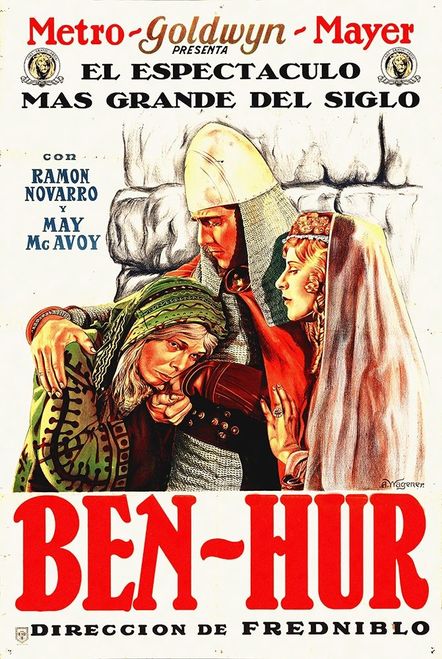
A Spanish language poster for MGM's 'Ben Hur' (1925).

Easter must be on its way, as this month's silent film schedule is thick with Biblical epics.

Coming up next: the original silent version of 'Ben Hur' (1925) on Sunday, April 10 in Keene, N.H. If there's a film you should try to see on the big screen, this is it. More details in the press release below.

For now, let me report that we enjoyed a healthy turnout for last Sunday's unusual double bill: Lon Chaney in 'Flesh and Blood' and Harry Houdini in 'The Man From Beyond,' both films from 1922.

The Chaney film, which I'd never done before, held up pretty well, with an escaped-prisoner-seeking-justice storyline that kept our audience engaged throughout. Large chunks of it are set in Chinatown, but I resisted the temptation to play pentatonic-scale-"Oriental"-sounding music.

Instead, I kept mostly to a piano & strings texture, except for a scene where a harmonium gets played, and then also when Chaney performs a sentimental tune on a solo violin. One wonders how musicians of the 1920s would have matched the on-screen action in this film.

The Houdini picture is a mind-bending affair about reincarnation that left most people scratching their heads. How can a guy become frozen in 1820, then thawed out 100 years later, to the point where he's riding around in automobiles and attending a wedding, and not realize it was a century later?

But the rousing waterfall rescue sequence that concludes the film, which was actually filmed at Niagara Falls, was enough to leave everyone satisfied.

Okay, here's the press release on 'Ben Hur.' Hope to see you this Sunday at 2 p.m. at the Colonial Theatre's new "Showroom" venue in Keene, N.H.!

*    *    *

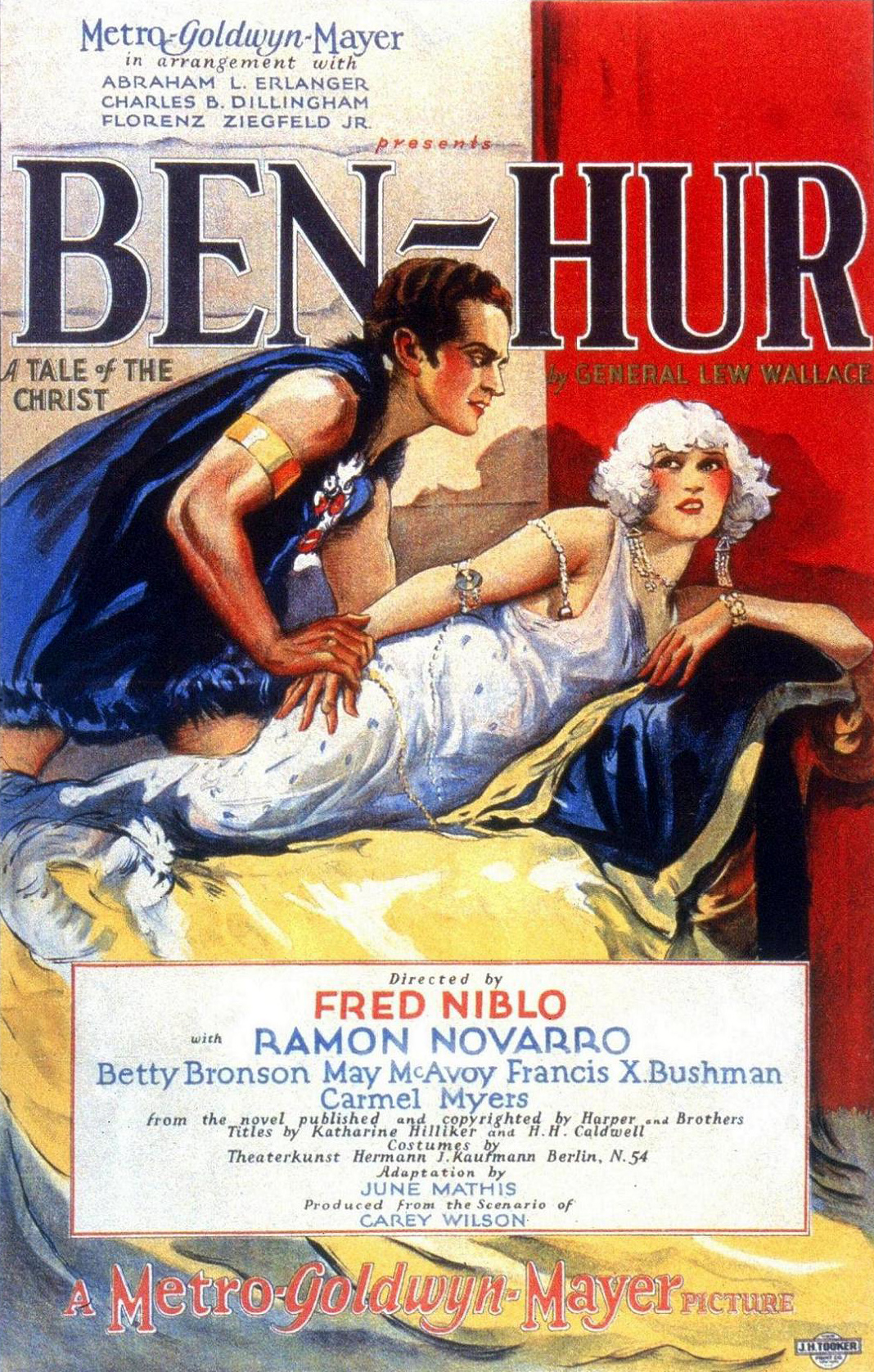
An original release poster for MGM's silent epic 'Ben Hur' (1925).

MONDAY, APRIL 4, 2022 / FOR IMMEDIATE RELEASE
Contact Jeff Rapsis • (603) 236-9237 • jeffrapsis@gmail.com

Silent film epic ‘Ben Hur’ (1925) coming to Showroom in Keene on Sunday, April 10

Prelude to Easter: Hollywood's original Biblical-era blockbuster to be screened with live music at Colonial Theatre's new venue

KEENE, N.H.—One of early Hollywood's greatest epics returns to the big screen with a showing of 'Ben Hur, A Tale of The Christ' (1925) on Sunday, April 10 at 2 p.m. at the Colonial Theatre's Showroom, 20 Commercial St., Keene.

The screening will feature live accompaniment by Jeff Rapsis, a New Hampshire-based composer who specializes in creating music for silent films.

Admission is $15 per person, general admission. Tickets are available online at www.thecolonial.org or at the door.

'Ben Hur,' starring Ramon Novarro and Francis X. Bushman, was among the first Hollywood motion pictures to tell a Biblical-era story on a large scale.

The film, which helped establish MGM as a leading studio, employed a cast of thousands and boasted action sequences including a large-scale sea battle.

The film is highlighted by a spell-binding chariot race that still leaves audiences breathless.

Set in the Holy Land at the time of Christ's birth, 'Ben Hur' tells the story of a Jewish family in Jerusalem whose fortune is confiscated by the Romans and its members jailed.

The enslaved family heir, Judah Ben Hur (played by Novarro, a leading silent-era heartthrob) is inspired by encounters with Christ to pursue justice. This leads him to a series of epic adventures in his quest to find his mother and sister and restore his family fortune.

The film is particularly appropriate for the weeks leading up to Easter, which is celebrated on Sunday, April 17. (Orthodox Easter falls on Sunday, April 24 in 2022.)


'Ben Hur,' directed by Fred Niblo, was among the most expensive films of the silent era, taking two years to make and costing between $4 million and $6 million. When released in 1925, it became a huge hit for the newly formed Metro-Goldwyn-Mayer studio.

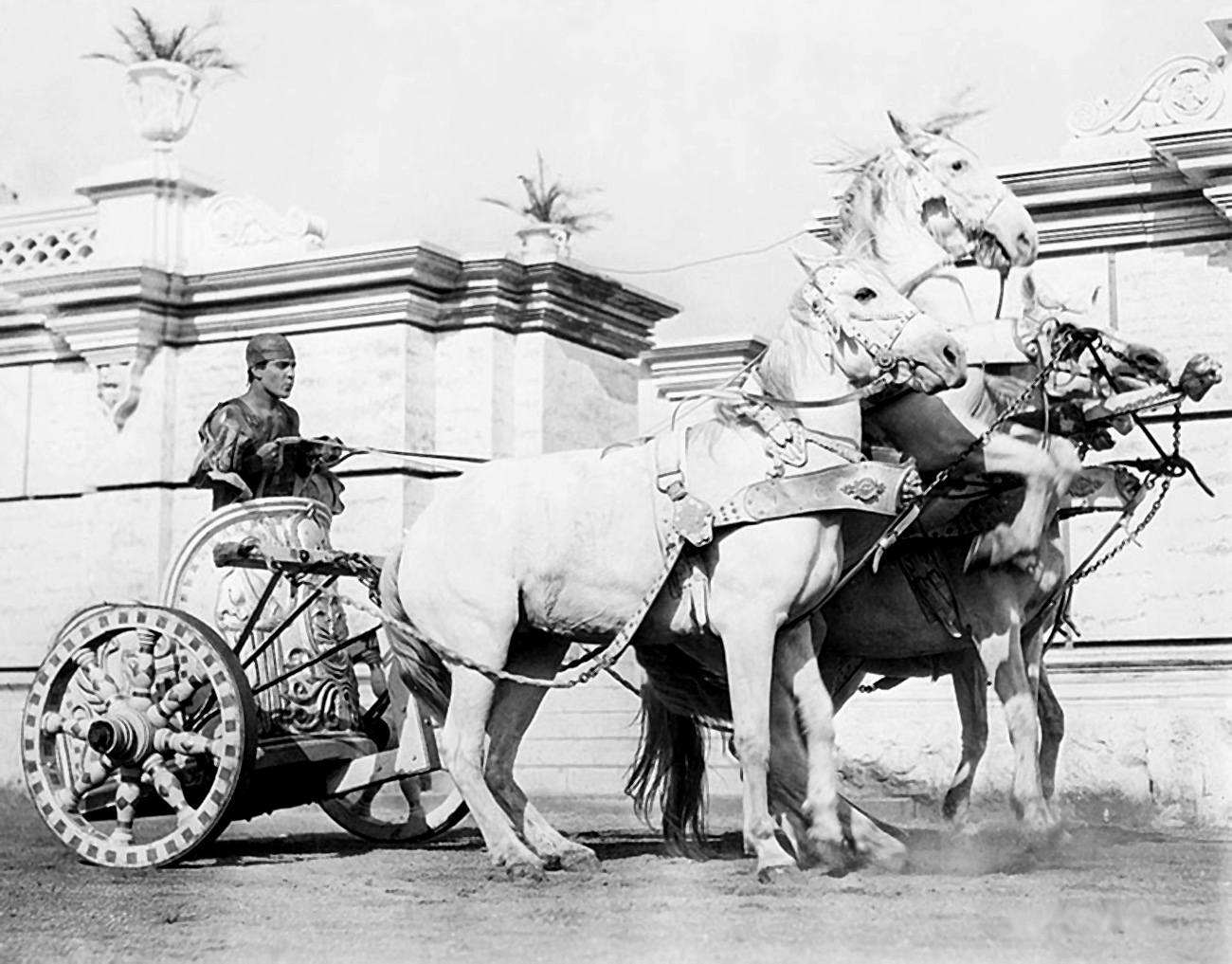
The chariot race scene in 'Ben Hur,' with Novarro and other cast members driving teams of horses at high speed on a mammoth dirt racetrack in a gigantic replica of a Roman stadium, was among the most complicated and dangerous sequences filmed in the silent era. It remains noted for its tight editing, dramatic sweep, and sheer cinematic excitement.

The chariot race was re-created virtually shot for shot in MGM's 1959 remake, and more recently imitated in the pod race scene in 'Star Wars Episode I: The Phantom Menace.'


Besides Novarro in the title role, the film stars Francis X. Bushman as Messala, the Roman soldier who imprisons the Hur family; Betty Bronson as Mary, mother of Jesus; May McAvoy as Ben Hur's sister Esther; and Claire McDowell as Ben Hur's mother.

'Ben Hur' was based on the best-selling 1880 novel by General Lew Wallace, which interwove the story of Christ's life with the Ben Hur clan, a fictional Jewish merchant family.

Celebrity "extras" in the chariot race scene included stars such as Douglas Fairbanks, Harold Lloyd, Lionel Barrymore, John Gilbert, Joan Crawford, Lillian Gish, Mary Pickford, and a very young Clark Gable.

The film was remade by MGM in the 1950s in a color and wide-screen version starring Charleton Heston that garnered 11 Academy Awards. Some critics believe the original 1925 version offers superior drama and story-telling.

In creating music for silent films, accompanist Jeff Rapsis performs on a digital synthesizer that reproduces the texture of the full orchestra and creates a traditional "movie score" sound.

For each film, Rapsis improvises accompaniment using original themes created beforehand. No music is written down; instead, the score evolves in real time based on audience reaction and the overall mood as the movie is screened.

'Ben Hur, A Tale of The Christ' (1925) will be shown on Sunday, April 10 at 2 p.m. at the Colonial Theatre's Showroom, 20 Commercial St., Keene.

General admission is $15 per person. Tickets are available online at www.thecolonial.org or at the door. For more information, call the Colonial box office at (603) 352-2033.

Thursday, August 5, 2021

Tonight: Original silent version of 'Ben Hur' with live music at Flying Monkey in Plymouth, N.H.

It's a world threatened by pandemic, climate change, and pharmaceutical commercials! What we need is a good old-fashioned Hollywood religious epic to give us hope.

And we'll get just that tonight (Thursday, Aug. 5) with the original silent version of 'Ben Hur' (1925) at the Flying Monkey Moviehouse and Performance Center in Plymouth, N.H.

The journey starts at 6:30 p.m. More details in the press release below. See you there!

*   *   *

An original poster for the original silent version of 'Ben Hur' (1925).

MONDAY, JULY 26, 2021 / FOR IMMEDIATE RELEASE
Contact Jeff Rapsis • (603) 236-9237 • jeffrapsis@gmail.com

Silent film epic ‘Ben Hur’ (1925) at Flying Monkey on Thursday, Aug. 5

Hollywood's original Biblical-era blockbuster to be screened with live music at historic venue

PLYMOUTH, N.H.—One of early Hollywood's greatest epics returns to the big screen with a showing of 'Ben Hur, A Tale of The Christ' (1925) on Thursday, Aug. 5 at 6:30 p.m. at the Flying Monkey Moviehouse and Performance Center, 39 South Main St., Plymouth.

The screening, the latest in the Flying Monkey's silent film series, will feature live accompaniment by Jeff Rapsis, a New Hampshire-based composer who specializes in creating music for silent films.

Admission is $10 per person, general admission. Tickets are available online at flyinghmonkeynh.com or at the door.

The silent version of 'Ben Hur' was originally slated for a screening earlier this year at the Flying Monkey, but was postponed to Thursday, Aug. 5.


'Ben Hur,' starring Ramon Novarro and Francis X. Bushman, was among the first motion pictures to tell a Biblical-era story on a large scale.

The film, which helped establish MGM as a leading Hollywood studio, employed a cast of thousands and boasted action sequences including a large-scale sea battle.

The film is highlighted by a spell-binding chariot race that still leaves audiences breathless with excitement.


Set in the Holy Land at the time of Christ's birth, 'Ben Hur' tells the story of a Jewish family in Jerusalem whose fortune is confiscated by the Romans and its members jailed.

The enslaved family heir, Judah Ben Hur (played by Novarro, a leading silent-era heartthrob) is inspired by encounters with Christ to pursue justice. This leads him to a series of epic adventures in his quest to find his mother and sister and restore his family fortune.

'Ben Hur,' directed by Fred Niblo, was among the most expensive films of the silent era, taking two years to make and costing between $4 million and $6 million. When released in 1925, it became a huge hit for the newly formed Metro-Goldwyn-Mayer studio.

The chariot race scene in 'Ben Hur,' with Novarro and other cast members driving teams of horses at high speed on a mammoth dirt racetrack in a gigantic replica of a Roman stadium, was among the most complicated and dangerous sequences filmed in the silent era. It remains noted for its tight editing, dramatic sweep, and sheer cinematic excitement.

The chariot race was re-created virtually shot for shot in MGM's 1959 remake, and more recently imitated in the pod race scene in 'Star Wars Episode I: The Phantom Menace.'

Besides Novarro in the title role, the film stars Francis X. Bushman (at right) as Messala, the Roman soldier who imprisons the Hur family; Betty Bronson as Mary, mother of Jesus; May McAvoy as Ben Hur's sister Esther; and Claire McDowell as Ben Hur's mother.

'Ben Hur' was based on the best-selling 1880 novel by General Lew Wallace, which interwove the story of Christ's life with the Ben Hur clan, a fictional Jewish merchant family.

Celebrity "extras" in the chariot race scene included stars such as Douglas Fairbanks, Harold Lloyd, Lionel Barrymore, John Gilbert, Joan Crawford, Lillian Gish, Mary Pickford, and a very young Clark Gable.

The film was remade by MGM in the 1950s in a color and wide-screen version starring Charleston Heston that garnered 11 Academy Awards. Some critics believe the original 1925 version offers superior drama and story-telling.

In creating music for silent films, accompanist Jeff Rapsis performs on a digital synthesizer that reproduces the texture of the full orchestra and creates a traditional "movie score" sound.

For each film, Rapsis improvises a music score using original themes created beforehand. No music is written down; instead, the score evolves in real time based on audience reaction and the overall mood as the movie is screened.

'Ben Hur, A Tale of The Christ' (1925) will be shown on  Thursday, Aug. 5 at 6:30 p.m. at the Flying Monkey Moviehouse and Performance Center, 39 South Main St., Plymouth, N.H. Admission is $10 per person general admission. Tickets are available online at flyingmonkeynh.com or at the door. For more information, call the Flying Monkey at (603) 536-2551.


Tuesday, March 30, 2021

Easter's on it's way, so is 'Ben Hur': silent epic with live music Thursday, 4/1 at Flying Monkey

I'm accompanying the great silent epic 'Ben Hur' (1925) on April Fool's Day, and that's no joke!

Just look at this poster, put together by graphic artist Lisa Landry:

So get thee up to the Flying Monkey Moviehouse in Plymouth, N.H. for a screening of this major hunk of cinema (and I don't mean just Ramon Novarro) seen the way it was intended — on the big screen, in a theater, with live music, and with a (socially distanced) audience.

Here's the press release with a lot more information. 

And I've corrected the spelling of "Charleton Heston," who was listed as "Charleston Heston" in the original release. 

But I'm sure he was a good dancer...

*  *  *

From the original silent version of 'Ben Hur' (1925).

MONDAY, MARCH 22, 2021 / FOR IMMEDIATE RELEASE
Contact Jeff Rapsis • (603) 236-9237 • jeffrapsis@gmail.com

Silent film epic ‘Ben Hur’ (1925) at Flying Monkey on Thursday, April 1

Prelude to Easter: Hollywood's original Biblical-era blockbuster to be screened with live music at historic venue

PLYMOUTH, N.H.—One of early Hollywood's greatest epics returns to the big screen with a showing of 'Ben Hur, A Tale of The Christ' (1925) on Thursday, April 1 at 6:30 p.m. at the Flying Monkey Moviehouse and Performance Center, 39 South Main St., Plymouth.

The screening, the latest in the Flying Monkey's silent film series, will feature live accompaniment by Jeff Rapsis, a New Hampshire-based composer who specializes in creating music for silent films.

Admission is $10 per person, general admission. Tickets are available online at flyinghmonkeynh.com or at the door.

'Ben Hur,' starring Ramon Novarro and Francis X. Bushman, was among the first motion pictures to tell a Biblical-era story on a large scale.

The film, which helped establish MGM as a leading Hollywood studio, employed a cast of thousands and boasted action sequences including a large-scale sea battle.

The film is highlighted by a spell-binding chariot race that still leaves audiences breathless.

Set in the Holy Land at the time of Christ's birth, 'Ben Hur' tells the story of a Jewish family in Jerusalem whose fortune is confiscated by the Romans and its members jailed.

The enslaved family heir, Judah Ben Hur (played by Novarro, a leading silent-era heartthrob) is inspired by encounters with Christ to pursue justice. This leads him to a series of epic adventures in his quest to find his mother and sister and restore his family fortune.

The film is particularly appropriate for the weeks leading up to Easter, which is celebrated on Sunday, April 4. (Orthodox Easter falls on Sunday, May 2 in 2021.)

'Ben Hur,' directed by Fred Niblo, was among the most expensive films of the silent era, taking two years to make and costing between $4 million and $6 million. When released in 1925, it became a huge hit for the newly formed Metro-Goldwyn-Mayer studio.


The chariot race scene in 'Ben Hur,' with Novarro and other cast members driving teams of horses at high speed on a mammoth dirt racetrack in a gigantic replica of a Roman stadium, was among the most complicated and dangerous sequences filmed in the silent era. It remains noted for its tight editing, dramatic sweep, and sheer cinematic excitement.

The chariot race was re-created virtually shot for shot in MGM's 1959 remake, and more recently imitated in the pod race scene in 'Star Wars Episode I: The Phantom Menace.'

Besides Novarro in the title role, the film stars Francis X. Bushman as Messala, the Roman soldier who imprisons the Hur family; Betty Bronson as Mary, mother of Jesus; May McAvoy as Ben Hur's sister Esther; and Claire McDowell as Ben Hur's mother.

'Ben Hur' was based on the best-selling 1880 novel by General Lew Wallace, which interwove the story of Christ's life with the Ben Hur clan, a fictional Jewish merchant family.

Celebrity "extras" in the chariot race scene included stars such as Douglas Fairbanks, Harold Lloyd, Lionel Barrymore, John Gilbert, Joan Crawford, Lillian Gish, Mary Pickford, and a very young Clark Gable.

The film was remade by MGM in the 1950s in a color and wide-screen version starring Charleton Heston that garnered 11 Academy Awards. Some critics believe the original 1925 version offers superior drama and story-telling.

In creating music for silent films, accompanist Jeff Rapsis performs on a digital synthesizer that reproduces the texture of the full orchestra and creates a traditional "movie score" sound.

For each film, Rapsis improvises a music score using original themes created beforehand. No music is written down; instead, the score evolves in real time based on audience reaction and the overall mood as the movie is screened.

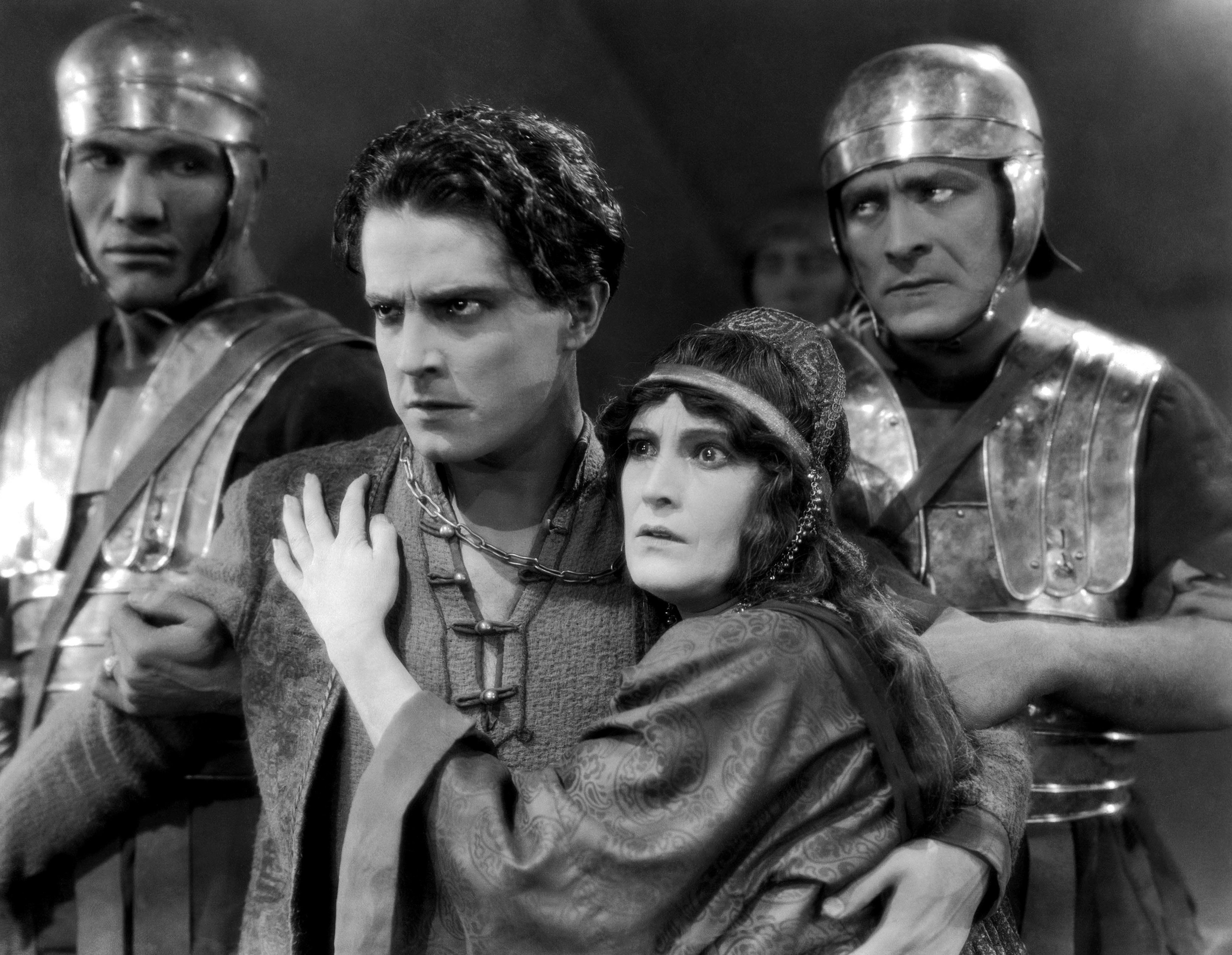
A scene from 'Ben Hur, A Tale of the Christ.'

'Ben Hur, A Tale of The Christ' (1925) will be shown on Thursday, April 1 at 6:30 p.m. at the Flying Monkey Moviehouse and Performance Center, 39 South Main St., Plymouth, N.H. Admission is $10 per person general admission. Tickets are available online at flyingmonkeynh.com or at the door. For more information, call the Flying Monkey at (603) 536-2551.

Tuesday, May 21, 2019

'The Flying Fleet' coming in for a landing at Aviation Museum of N.H. on Thursday, May 23

Ramon Novarro stars in 'The Flying Fleet' (1929), MGM's silent drama about U.S. Navy aviators.

For me, one of the great joys of presenting silent film is showing vintage movies to people with interests outside cinema itself.

People really into cars, for instance, get a kick out out MGM's late silent 'Speedway' (1929), an auto race drama filmed on location at the actual Indy 500 track.

In my adventures accompanying silent film, one of the best examples of this unexpected interest was a program I did up in Vermont some years ago.

A local woman who attended was so taken by the horsemanship displayed on screen that she agreed to financially back a silent film series as long as the films had plenty of horses.

And so it came to pass. And although the benefactress is no longer with us, the series continues to this day, and in her memory I always try to program titles in which horsemanship is on display.

So another great example of this "interest other than cinema" phenomenon is coming up this week, when I'll accompany 'The Flying Fleet' (1929), an MGM drama about U.S. Navy aviators, at the Aviation Museum of New Hampshire.

The screening is Thursday, May 23 at 7 p.m. More information is in the press release below. I encourage you to attend, even if you're not a naval history buff, as it's a well-made but rarely screened late silent drama that holds up pretty well, I think.

For me personally, this promises to be an unusual show because it combines my silent film musical moonlighting with my day job, which happens to be director of the Aviation Museum.

So it's a convergence of sorts. Maybe I won't have to clone myself after all.

Okay, press release below. Hope to see you filling out the ranks at the Aviation Museum of New Hampshire's screening of 'The Flying Fleet'!

* * *

The USS Langley, the nation's first-ever aircraft carrier, makes several appearances in 'The Flying Fleet'(1929).

MONDAY, MAY 13, 2019 / FOR IMMEDIATE RELEASE
Contact Jeff Rapsis • (603) 236-9237 • jrapsis@nhahs.org

Aviation Museum offers vintage Hollywood-style Memorial Day tribute


'The Flying Fleet,' MGM silent drama about U.S. Navy aviators, to screen with live music on Thursday, May 23

LONDONDERRY — Get in the spirit of Memorial Day weekend with a vintage silent film drama about U.S. naval aviators that's a window into what it was like to serve one's country between the World Wars.

'The Flying Fleet' (1929), a star-studded MGM drama filmed on location at key U.S. Naval bases, will be screened on Thursday, May 23 at 7 p.m. at the Aviation Museum of N.H., 27 Navigator Road, Londonderry, N.H.

The movie, made with the full cooperation of the U.S. Navy and filled with scenes of vintage air and seaplanes in action, will be shown with live music provided by silent film accompanist Jeff Rapsis.

Admission for this special event is $20 per person; $15 for Aviation Museum members. The screening is a fund-raiser for the Aviation Museum's partnership with the Manchester School of Technology that will enable students build an actual airplane in the 2019-20 school year.

"As we approach Memorial Day weekend, this is a terrific way to remember those who served by looking back at what it was like for the generation between the two world wars," Rapsis said.

Ramon Navarro (center) and fellow cadets show plenty of 1920s beefcake in 'The Flying Fleet' (1929).

Starring MGM heartthrob Ramon Novarro, 'The Flying Fleet' follows the story of six graduates of the U.S. Naval Academy at Annapolis who make a solemn pact to all become Navy pilots.

The film follows the cadets through training with scenes filmed on location at bases in San Diego, Calif., and Pensacola, Fla. Scenes were also filmed aboard the USS Langley, the nation's first aircraft carrier. The Langley, an aging coal transport ship, was outfitted with an enormous upper-level deck in 1922.

But it's not just airplanes and ships. In 'The Flying Fleet,' two of pilots fall for the same gal (Anita Page) off base, causing a rivalry that plays out in dramatic plot twists and action both on the ground and in the air.

Promotional art for 'The Flying Fleet,' starring Anita Page and Ramon Novarro.

Page, a young MGM starlet who had appeared in Laurel & Hardy comedies, would soon retire from the screen, only to return late in life in several low budget horror films released after 2000. She died in 2008 at age 98.

The teaming of up-and-coming Anita Page and heartthrob Ramon Novarro was considered good box office. In a 2002 interview, Page recalled that Novarro was "... something to dream about. I mean he was so good looking."

A highlight of 'The Flying Fleet' is an appearance of "The Three Sea Hawks," a famous aerobatic team of the era. Drawn from a U.S. Navy squadron at Naval Air Station North Island, San Diego, the team used three Boeing F2B-1 and F2B-2 fighters. Its first demonstration in January 1928 at San Francisco gave rise to a popular nickname: "Suicide Trio" although officially the team was called "Three Sea Hawks."

Look! In the sky! It's a cameo appearance by 'The Three Seahawks.'

'The Flying Fleet' was made with U.S. Navy cooperation, with the note appearing in the opening credits: "Dedicated to the officers and men of NAVAL AVIATION whose splendid co-operation made this production possible." The film was the first major Hollywood production to use Naval Air Station North Island in San Diego.

Popcorn and drinks will be available for purchase, and the screening will mark the debut of the Aviation Museum's vintage candy concession counter.

The Aviation Museum of New Hampshire is a 501(c)(3) organization dedicated to preserving aviation history in the Granite State, providing educational outreach programs that encourage student interest in aeronautics and related fields, and organizing programs that bring together the state's diverse aviation community.

The Museum is located at 27 Navigator Road, Londonderry, N.H. The museum is open Friday & Saturday 10 a.m. to 4 p.m. and Sunday 1 to 4 p.m. For more information, call (603) 669-4820 or visit the www.aviationmuseumofnh.org.

'The Flying Fleet' (1929) starring Ramon Novarro and Anita Page will be screened with live music on Thursday, May 23 at 7 p.m. at the Aviation Museum of N.H., 27 Navigator Way, Londonderry, N.H. Admission $20 per person; $15 for members. The screening is a fund-raiser for the Aviation Museum's partnership with the Manchester School of Technology that will enable students build an actual airplane in the 2019-20 school year.

Ralph Graves and Ramon Novarro undress each other in 'The Flying Fleet' (1929). Want to see more? Attend the screening!

Sunday, March 27, 2016

On scoring 'Ben Hur' (1925) on Easter Sunday
and also why silent film is like coin collecting

A poster for the international release of 'Ben Hur' (1925).

The great silent adaptation of 'Ben Hur' (1925) is in the rotation this year, and I'm playing for it again today (Easter Sunday) at 4:30 p.m.

The screening is at the Wilton (N.H.) Town Hall Theater and is free and open to the public. More details in the press release below.

Tackling 'Ben Hur' this time around was another chance to learn about the story and its author, Lew Wallace, who I find to be an interesting guy.

Wallace, a prominent 19th century American military officer and diplomat, serving in the U.S.-Mexican War and then as a general in Union Army during the Civil War.

Here are some things about Wallace that make him so interesting:

• As a Union commander under General U.S. Grant, Wallace was at the center of controversial troop movements leading up the Battle of Shiloh that led to higher-than-expected casualties.

• Wallace took to writing fiction to provide relief from his official duties. He wrote 'Ben Hur' as a way to more thoroughly educate himself on scripture, and to confirm his own personal commitment to Christianity.

• Having never visited the Holy Land, Wallace embarked on extensive research at the Library of Congress and other centers of learning to be able to write about life during the time of Jesus.

• Wallace served as the Territorial Governor of New Mexico from 1878 to 1881, and finished writing 'Ben Hur' in Santa Fe. While in office, he negotiated a plea bargain with Billy the Kid to testify against other outlaws, but then the Kid later escaped from jail and resumed his own murderous ways. Supporters of Kid continue to lobby New Mexico unsuccessfully for an official pardon stemming from Wallace's plea bargain, most recently in 2012.

• While later serving as U.S. Ambassador to the Ottoman Empire, Wallace did get to visit the Holy Land, and found he didn't have to change anything in 'Ben Hur.'

• When the Spanish-American War broke out in 1898, Wallace volunteered his services as an officer. Refused due to his age, he tried unsuccessfully to volunteer as an enlisted man.

Lots more, but you get the idea. This was one colorful dude who lived an interesting and consequential life, and not only because he wrote the best-selling American novel until 'Gone With the Wind' appeared in the 1930s.

And if it weren't for silent film, I probably wouldn't know much about him at all.

So in that sense, silent film is like coin collecting. Studying the money systems in place in other places and at other times is a window into geography, history, economics, culture, and so many other subjects.

Silent film opens the same doors, I think. As removed from reality as it sometimes can seem, it's a window into so much of human experience that went into making up the world we know today.

See for yourself by attending 'Ben Hur' this afternoon at the Wilton Town Hall Theatre. More info below!

* * *

The chariot race scene: a masterpiece of editing.

MONDAY, MARCH 7, 2016 / FOR IMMEDIATE RELEASE
Contact Jeff Rapsis • (603) 236-9237 • jeffrapsis@gmail.com

Silent film epic ‘Ben Hur’ (1925) at Town Hall Theatre on Easter Sunday, March 27


Hollywood's original Biblical-era blockbuster to be screened with live music

WILTON,N.H.—What better day than Easter Sunday to lose yourself in a big screen Biblical blockbuster from the glory days of early Hollywood?

Movie-worshipers can do just that at the Town Hall Theatre, which will screen the original epic silent film version of 'Ben Hur, A Tale of The Christ' (1925) on Sunday, March 27 at 4:30 p.m.

The program, the latest in the theater's silent film series, will be accompanied by live music performed by silent film composer Jeff Rapsis. Admission is free, with a suggested donation of $5 per person.

'Ben Hur,' starring Ramon Novarro and Francis X. Bushman, was among the first motion pictures to tell a Biblical-era story on an enormous scale.

The film, which helped establish MGM as a leading Hollywood studio, employed a cast of thousands and boasted action sequences including a large-scale sea battle. The film is highlighted by a spell-binding chariot race regarded as a masterpiece of editing and which still leaves audiences breathless.

Set in the Holy Land at the time of Christ's birth, 'Ben Hur' tells the story of a Jewish family in Jerusalem whose fortune is confiscated by the Romans and its members jailed.

The enslaved family heir, Judah Ben Hur (played by Novarro, a leading silent-era heartthrob) is inspired by encounters with Christ to pursue justice, which leads him to a series of epic adventures in his quest to find his mother and sister and restore his family fortune.

A poster for 'Ben Hur.'

The screening is the latest in the Town Hall Theatre's series of silent film screenings. The series aims to showcase the best of early Hollywood the way it was intended to be experienced: on the big screen, with live music, and in a theater with an audience.

"Put together those elements, and it's amazing how much power these films still have. You realize why these films caused people to first fall in love with the movies, said accompanist Jeff Rapsis, who will improvise a full score for the 2½-hour epic.

'Ben Hur,' directed by Fred Niblo, was among the most expensive films of the silent era, taking two years to make and costing between $4 million and $6 million. When released in 1925, it became a huge hit for the newly formed Metro-Goldwyn-Mayer studio.

The chariot race scene in 'Ben Hur,' with Novarro and other cast members driving teams of horses at high speed on a mammoth dirt racetrack in a gigantic replica of a Roman stadium, was among the most complicated and dangerous sequences filmed in the silent era. It remains noted for its tight editing, dramatic sweep, and sheer cinematic excitement.

The chariot race was re-created virtually shot for shot in MGM's 1959 remake, and more recently imitated in the pod race scene in 'Star Wars Episode I: The Phantom Menace.'

Besides Novarro in the title role, the film stars Francis X. Bushman as Messala, the Roman soldier who imprisons the Hur family; Betty Bronson as Mary, mother of Jesus; May McAvoy as Ben Hur's sister Esther; and Claire McDowell as Ben Hur's mother. 'Ben Hur' was based on the best-selling 1880 novel by General Lew Wallace, which interwove the story of Christ's life with the Ben Hur clan, a fictional Jewish merchant family.

Celebrity "extras" in the chariot race scene included stars such as Douglas Fairbanks, Harold Lloyd, Lionel Barrymore, John Gilbert, Joan Crawford, Lillian Gish, Mary Pickford, and a very young Clark Gable.

The film was remade by MGM in the 1950s in a color and wide-screen version starring Charleston Heston that garnered 11 Academy Awards. However, some critics believe the original 1925 version offers superior drama and story-telling.

MGM executives at the time, aware of the quality of the original version, attempted to destroy all prints of the 1925 'Ben Hur,' sending the FBI out to confiscate collector copies in the 1950s. However, the studio did preserve the negative of the 1925 version, so the film remains available today.

In creating music for silent films, Rapsis performs on a digital synthesizer that reproduces the texture of the full orchestra and creates a traditional "movie score" sound.

For each film, Rapsis improvises a music score using original themes created beforehand. None of the the music is written down; instead, the score evolves in real time based on audience reaction and the overall mood as the movie is screened.

'Ben Hur' (1925) will be screened with live music on Easter Sunday, March 27 at 4:30 p.m. at the Town Hall Theatre, 40 Main St., Wilton, N.H. The program is free and open to the public, with a suggested donation of $5 per person to help defray expenses. For more information, call the theater (603) 654-3456 or visit www.wiltontownhalltheatre.com. For more info on the music, visit www.jeffrapsis.com.

Tuesday, March 22, 2016

If it's Easter, it must be 'Ben Hur' (1925):
two screenings, Wednesday & Easter Sunday

It's not Peter Cottontail, but it does have Francis X. Bushman. This Easter, join us for screenings of the silent version 'Ben Hur' (1925) in Massachusetts and New Hampshire.

Peter Cottontail's annual trip down the Bunny Trail brings with it the chance to uncork some of the silent era's Biblical epics, and Easter 2016 is no exception.

This year, I'm doing music for two separate screenings of the original silent 'Ben Hur' (1925): on Wednesday, March 23 at 7 p.m. at Merrimack College at North Andover, Mass.; and then again on Sunday, March 27 (that's Easter Sunday, folks!) at 4:30 p.m. at the Wilton (N.H.) Town Hall Theatre.

Admission to either screening is free, although we actively encourage a donation of $5 per person for the Wilton screenings to help defray expenses. More details about Wednesday night's showing at Merrimack College is below; I'll post Wilton details later in the week.

Before we give ourselves wholly to Holy Week, here's a quick run-down of recent screenings. Some incredible accompaniment experiences filled the past few days, to wit:

Delay of train: 'Conductor 1492' (1924) will now be shown on Thursday, March 24.

Thursday, March 17: I had to postpone a planned St. Patrick's Day silent film program due to a sudden onset of flu that gave me a temperature that looked like today's high in Phoenix on any given day in July.

But the folks at the Flying Monkey in Plymouth, N.H. were kind enough to reschedule the show to one week later, meaning Thursday, March 24 at 6:30 p.m. That's when we'll celebrate the wearing o' the green, instead of my face just being that color.

Highlighting the program is 'Conductor 1492' (1924), an Irish-themed comedy starring Johnny Hines. This is one of those films that surprises everyone, including me, every time it's run.

Why? Because no one today has ever heard of Johnny Hines. And yet this film somehow bonds with audiences, and people end up loving him. He becomes our own little discovery, every time.

I'm sure it'll happen again on Thursday night, so I hope you can join us for the screening. Also on the bill: Buster Keaton's short 'My Wife's Relations.' Admission to the program is $10 per person.

A figure of riducule or sympathy? Emil Jannings in 'The Last Laugh' (1924).

Friday, March 18: In doing music for a screening of 'The Last Laugh' (1924) at Red River Theatres in Concord, N.H., I found our show competing with a 'Phantom of the Opera' sing-along in one of the other rooms.

Can you imagine the confusion that would have ensued if we'd somehow programmed the silent version of 'Phantom' at the same time as the sing-a-long? Now that would have been fun!

A modest turnout of about two dozen people took in the Murnau classic, which I love doing because it's another film no one's ever seen but which always provokes a strong reaction.

That was the case on Friday night, but not quite what I expected. In pre-screening remarks, I often encourage audience members to not be shy about reacting to what happens on screen.

"You'll notice we don't run a notice prior to the film saying No Talking," I say. "I encourage you to react any way you like, as that's all part of the experience."

Well, we had a few people on Friday who took that to mean they could talk among themselves throughout the screening, as if it was taking place in their own living room.

Also, they found Emil Jannings to be absolutely hilarious, which he can be in the lead role of a doorman who unexpectedly loses his job. But not all the time.

So here we were, going through some quite serious footage of Jannings first coming to grips that his life has changed, and these folks are just yukking it up big time, not taking the film seriously and seemingly spoiling it for others.

I kept wanting to say: That's not what I meant! But I kept going with the music, thinking I could quiet them down by playing (or not playing) at the keyboard.

Well, I couldn't. It was one long episode of Mystery Science 3000, more or less, and I really had only myself to blame for encouraging people to react.

Eventually the film asserted itself, starting with the fantasy sequence for the Jannings character. And it really isn't always quite so serious, so on the upside, I've never heard 'The Last Laugh' get as many laughs as it did last Friday night.

And by the time the film's "twist of fate" ending came along, Murnau had everyone eating out of his hand.

Despite the distractions, I pushed through with the music, keeping serious-stuff going where appropriate even if I was being drowned out by guffaws nearby. What else could I do?

Even so, I need to change my pitch: yes, react, but no running commentary, please.

Audience members at the Blazing Star Grange Hall wanted to know if Dick Sutherland (pictured here with Harold Lloyd) was related to Donald Sutherland. Anyone know?

Saturday, March 19 took me to Danbury, N.H., home of the Blazing Star Grange Hall, for a Saturday-night-at-the-movies program that turned out to be one of the highlights of the season so far.

Why? Because somehow word got out, and before we knew what was happening, the relatively small hall was packed to overflowing with kids, parents, grandparents, and everyone's aunt and uncle besides.

They were there for a good time, so there was a tremendous amount of energy to work with. Plus, a packed house always lends an air of excitement to the screening of even the shabbiest film.

But nothing shabby about Saturday night's program: Harold Lloyd in 'Never Weaken' (1921) and 'Grandma's Boy' (1922).

And it was just one of those perfect nights where explosive laughter greeted the first scene, and then never let up.

I kept the intro to a minimum, just introducing Lloyd and explaining how he came by hi place in the 1920s comedy pantheon—by hard work, mostly, which people could relate to.

And off we went. People loved discovering Harold and his world, and I had a blast creating music to help it all come to life and stick to the screen.

It being a Grange Hall, it was a perfect setting for 'Grandma's Boy' in particular, with its rural small-town atmosphere and its depiction of old-time ways.

So it was one of those magic nights where everything comes together, and the sum becomes something greater than the individual parts.

And me? The closest I think I'll ever come to being a rock star is the resounding ovation I got at the Blazing Star Grange Hall. It really took the chill out of the Saturday evening, let me tell you.

Stage actor William Gillette as the title character in 'Sherlock Holmes' (1916).

Sunday, March 20: a four-hour drive to the far side of Maine isn't a bad way to spend a Sunday. That's especially true if the weather's clear (which it was) and your destination is the Alamo Theatre in Bucksport, Maine—which for me, it was.

On the program: a 6 p.m. screening of the recently rediscovered original screen adaptation of 'Sherlock Holmes' (1916), which the Alamo was running to kick off its centennial celebration.

I was thrilled to do music for this restoration, which I first saw last year during the 'Mostly Lost' festival at the Library of Congress Packard Center in Culpeper, Va.

Because it was my first time scoring it, and also because it was heavy with possible sound effect cues, I actually sat down and prepared material in advance.

So after making my way through some of the most starkly beautiful countryside in New England (or anywhere, really), I arrived at the Alamo.

The exterior of the Alamo Theatre in Bucksport, Maine.

The Alamo, turning 100 years old this year, is the exhibition arm of Northeast Historic Film, an archive specializing in motion picture materials and which focuses on film of all types shot in northern New England.

After I set up my keyboard, Amber Bertin of Northeast was kind enough to take me on a tour of the facility, which consists of the vintage building housing the Alamo and a fairly new "archive" wing housing modern vaults, complete with climate control, fire suppression—the works!

The rear of Northeast Historic Film, where the modern storage facility was added a few years ago.

It's a fascinating place that does great work. And I hope to return there again soon, because the Alamo itself is a first-class facility for film of all types, including silent film.

And there seems to be an interest. We had probably 40 or 50 people attend the 'Sherlock' screening. It was the kick-off of a series of screenings designed to celebrate cinema throughout the century that Alamo has been in the picture business.

Musically, I thought things started strong, but then went into overdrive as the film progressed. It was one of those occasions where I had just the right themes and materials to work with as the film progressed, and they flexed and bent just enough in the heat of the moment for everything to fit perfectly, one scene after another.

So another rush, making it three nights in a row. As Sherlock hung up his pipe and the film ended, I was greeted by an ovation even louder and more raucous than that from the Grange the night before.

What a privilege to be able to create music to help this rediscovered piece of cinematic history come to life! In a real theater, with real people!

It's weekends like this that remind me why all the work has been worth it so far—that I have developed instincts that are enough to see me through three very different films with three very difference audiences in three different venues, and have them all come out well.

Four, if I hadn't missed St. Patrick's Day due to my fever.

We'll catch up on that one later this week. For now, the next screening is 'Ben Hur' (1925) tomorrow night at the Rogers Center for the Arts at Merrimack College in North Andover, Mass.

Here's a press release with all the details:

* * *

A still from the famous "chariot race" scene in 'Ben Hur' (1925).

MONDAY, MARCH 7, 2016 / FOR IMMEDIATE RELEASE
Contact Jeff Rapsis • (603) 236-9237 • jeffrapsis@gmail.com

Silent film epic ‘Ben Hur’ (1925) at Merrimack College on Wednesday, March 23


Hollywood's original Biblical-era blockbuster to be screened with live music at Rogers Center for the Arts

NORTH ANDOVER, Mass.—One of early Hollywood's greatest epics returns to the big screen with a showing of 'Ben Hur, A Tale of The Christ' (1925) at the Rogers Center for the Performing Arts at Merrimack College on Wednesday, March 23 at 7 p.m.

The program, the latest in the Rogers Center's silent film series, will be accompanied by live music performed by silent film composer Jeff Rapsis. Admission is free.

'Ben Hur,' starring Ramon Novarro and Francis X. Bushman, was among the first motion pictures to tell a Biblical-era story on an enormous scale.

The film, which helped establish MGM as a leading Hollywood studio, employed a cast of thousands and boasted action sequences including a large-scale sea battle. The film is highlighted by a spell-binding chariot race that still leaves audiences breathless.

Set in the Holy Land at the time of Christ's birth, 'Ben Hur' tells the story of a Jewish family in Jerusalem whose fortune is confiscated by the Romans and its members jailed.

The enslaved family heir, Judah Ben Hur (played by Novarro, a leading silent-era heartthrob) is inspired by encounters with Christ to pursue justice, which leads him to a series of epic adventures in his quest to find his mother and sister and restore his family fortune.

The film is particularly appropriate for the week leading up to Easter.

The screening is the latest in Rogers Center's series of silent film screenings. The series aims to showcase the best of early Hollywood the way it was intended to be experienced: on the big screen, with live music, and in a theater with an audience.

"Put together those elements, and it's amazing how much power these films still have. You realize why these films caused people to first fall in love with the movies, said accompanist Jeff Rapsis, who will improvise a full score for the 2½-hour epic.

'Ben Hur,' directed by Fred Niblo, was among the most expensive films of the silent era, taking two years to make and costing between $4 million and $6 million. When released in 1925, it became a huge hit for the newly formed Metro-Goldwyn-Mayer studio.

The chariot race scene in 'Ben Hur,' with Novarro and other cast members driving teams of horses at high speed on a mammoth dirt racetrack in a gigantic replica of a Roman stadium, was among the most complicated and dangerous sequences filmed in the silent era. It remains noted for its tight editing, dramatic sweep, and sheer cinematic excitement.

The chariot race was re-created virtually shot for shot in MGM's 1959 remake, and more recently imitated in the pod race scene in 'Star Wars Episode I: The Phantom Menace.'

Besides Novarro in the title role, the film stars Francis X. Bushman as Messala, the Roman soldier who imprisons the Hur family; Betty Bronson as Mary, mother of Jesus; May McAvoy as Ben Hur's sister Esther; and Claire McDowell as Ben Hur's mother. 'Ben Hur' was based on the best-selling 1880 novel by General Lew Wallace, which interwove the story of Christ's life with the Ben Hur clan, a fictional Jewish merchant family.

Celebrity "extras" in the chariot race scene included stars such as Douglas Fairbanks, Harold Lloyd, Lionel Barrymore, John Gilbert, Joan Crawford, Lillian Gish, Mary Pickford, and a very young Clark Gable.

The film was remade by MGM in the 1950s in a color and wide-screen version starring Charleston Heston that garnered 11 Academy Awards. Some critics believe the original 1925 version offers superior drama and story-telling.

MGM executives at the time, aware of the quality of the original version, attempted to destroy all prints of the 1925 'Ben Hur,' sending the FBI out to confiscate collector copies in the 1950s. However, the studio did preserve the negative of the 1925 version, so the film remains available today.

In creating music for silent films, Rapsis performs on a digital synthesizer that reproduces the texture of the full orchestra and creates a traditional "movie score" sound.

For each film, Rapsis improvises a music score using original themes created beforehand. None of the the music is written down; instead, the score evolves in real time based on audience reaction and the overall mood as the movie is screened.

Upcoming shows in this year's series include:

'Ben Hur' (1925) will be screened with live music on Wednesday, March 23 at 7 p.m. at the Rogers Center for the Arts, Merrimack College, 315 North Turnpike St., North Andover, Mass. The program is free and open to the public. For more information, call the Rogers box office at (978) 837-5355. For more info on the music, visit www.jeffrapsis.com.

For info on the music, visit www.jeffrapsis.com.