Showing posts with label Colonial Theatre. Show all posts

Tuesday, February 20, 2024

A big audience for a big celebration—plus some embarrassing confessions in a local newspaper

The audience for a screening of 'The Hunchback of Notre Dame' (1923) to celebrate the 100th anniversary of the Colonial Theatre in Keene, N.H. 

Wow! A screening of 'The Hunchback of Notre Dame' on Sunday, Feb. 18 was blessed with a very large and thoroughly engaged audience.

From the reaction to the film, you could tell you were intent on having a good time.

And that shouldn't be a surprise, as the screening was to celebrate the 100th birthday of venue: the Colonial Theatre in downtown Keene, N.H.

Depression, war, television, Tiny Tim, the Internet—nothing in the past century succeeded in darkening the marquee of the Colonial.

This makes it a rare survivor: a single screen downtown movie theater from the silent era that survives in its original configuration, and which is today thriving as the anchor of a performing arts center.

To celebrate, the decision was made to repeat the film that opened the Colonial in January 2024: Lon Chaney in the silent version of 'The Hunchback of Notre Dame.'

And celebrate we did, with a steady stream of booing and cheering coming from the audience as the film screened.

One thing to note: I've never heard an audience cheer so lustily at the sequence where the peasants break into the aristocrat ball. Yaaah! Stick it to the callous oppressors!

Also, in my introductory remarks, I found myself recounting a personal experience I had in this same theater in 1971, when I was seven years old. We were spending our summers in Harrisville, a small nearby town, where our family had a lake cottage with a well but no running water.

So one Saturday my mother drove us all into town, where she dropped me and my older brother off at the Colonial for what she thought was a kiddie matinee while she visited a laundromat.

It WAS a kiddie matinee, except it really wasn't. It was the Gene Wilder version of 'Willy Wonka and the Chocolate Factory' in its original release, and I found it nothing short of terrifying. 

When Augustus Gloop falls into the chocolate river and gets stuck in a clear plastic pipe, it was more than I could stand. I ran up the aisle to escape. My brother found me hiding in a stall in the ladies' bathroom.

August Gloop stuck in the pipe.

Assuring me that it was just a movie, we returned to the theater just in time to see the Violet character turn into a giant human blueberry and get rolled off to "the juicing room."

Once again I ran up the aisle, this time through the lobby and outside into broad daylight, my brother this time in hot pursuit. I recall we spent the rest of the time on a park bench, with me inconsolable and hyperventilating. Thanks, Roald Dahl!

So I related this childhood anecdote to the audience for Hunckback, earned a few chuckles, and then moved on. What I didn't know was that a reporter for the local newspaper, the Keene Sentinel, was in attendance. And so this afternoon I found out that my Willy Wonka story made Page 2 of today's paper.

So my traumatic experience was newsworthy after all!

Next up for me: on Thursday, I head out to the Heartland to attend this year's Kansas Silent Film Festival, which takes place Friday and Saturday.

As I joke: Some people get to go to Aruba in February. I got to Topeka.

But looking forward to seeing old friends and making new ones. If you're in the vicinity of Washburn University (where the festival is held), I encourage you to take in some or all of the films. 

Complete info available at the Kansas Silent Film Festival website. See you there!

Saturday, February 17, 2024

Sunday, Feb. 18: Celebrate a theater's 100th anniversary with 'Hunchback of Notre Dame'

Patsy Ruth Miller and Lon Chaney prepare to party, sort of, in 'The Hunchback of Notre Dame' (1923).

Okay, let's try that again!

Last month's 100th anniversary celebration for the Colonial Theatre in Keene, N.H. was upstaged by snow.

So this weekend brings the rescheduled "Party Like It's 1924," complete with cake and champagne. The fun, which is free and open to all, is on Sunday, Feb. 18 at 2 p.m.

The star of the show this time will not be Old Man Winter, but Lon Chaney playing the title role in 'The Hunchback of Notre Dame' (1923).

It's the film that opened the theater back in January 1924, so they're rerunning the timeless film (with live music by me) to honor the equally timeless theater.

And it IS a rare survivor—a single screen downtown theater built originally as a silent-era moviehouse and vaudeville venue that remains pretty much intact.

Really! Check it out:


 Come join the fun! More details about the film, the theater, and the celebration are in the press release below.

*  *  *

An original poster promoting 'The Hunchback of Notre Dame' (1923).

MONDAY, FEB. 12, 2024 / FOR IMMEDIATE RELEASE
Contact Jeff Rapsis • (603) 236-9237 • jeffrapsis@gmail.com

Chaney as Quasimodo in 'Hunchback of Notre Dame' on Sunday, Feb. 18 in Keene, N.H.

Postponed from January: Celebrate Colonial Theatre's 100th anniversary with free screening of classic film that opened theater in 1924

KEENE, N.H.—It was a spectacular combination: Lon Chaney, the actor known as the "Man of 1,000 Faces," and Universal's big screen adaptation of Victor Hugo's sprawling tale of the tortured Quasimodo.

The result was the classic silent film version of 'The Hunchback of Notre Dame' (1923) — a movie so popular that it was chosen as the opening program at Keene's Colonial Theatre when it first opened to the public on Jan. 29, 1924.

Now, 100 years later, the Colonial will once again screen 'Hunchback' as part of a centennial celebration.

 
'The Hunchback of Notre Dame' starring Lon Chaney will be shown on Sunday, Feb. 18, 2024 at 2 p.m. at the Colonial Theatre, 95 Main St., Keene, N.H. Admission is free, but attendees are asked to RSVP online in advance at www.thecolonial.org.

The program was originally planned for January but was postponed due to inclement weather.

Live music for the movie will be provided by silent film accompanist Jeff Rapsis.

The program includes cake and champagne afterwards.

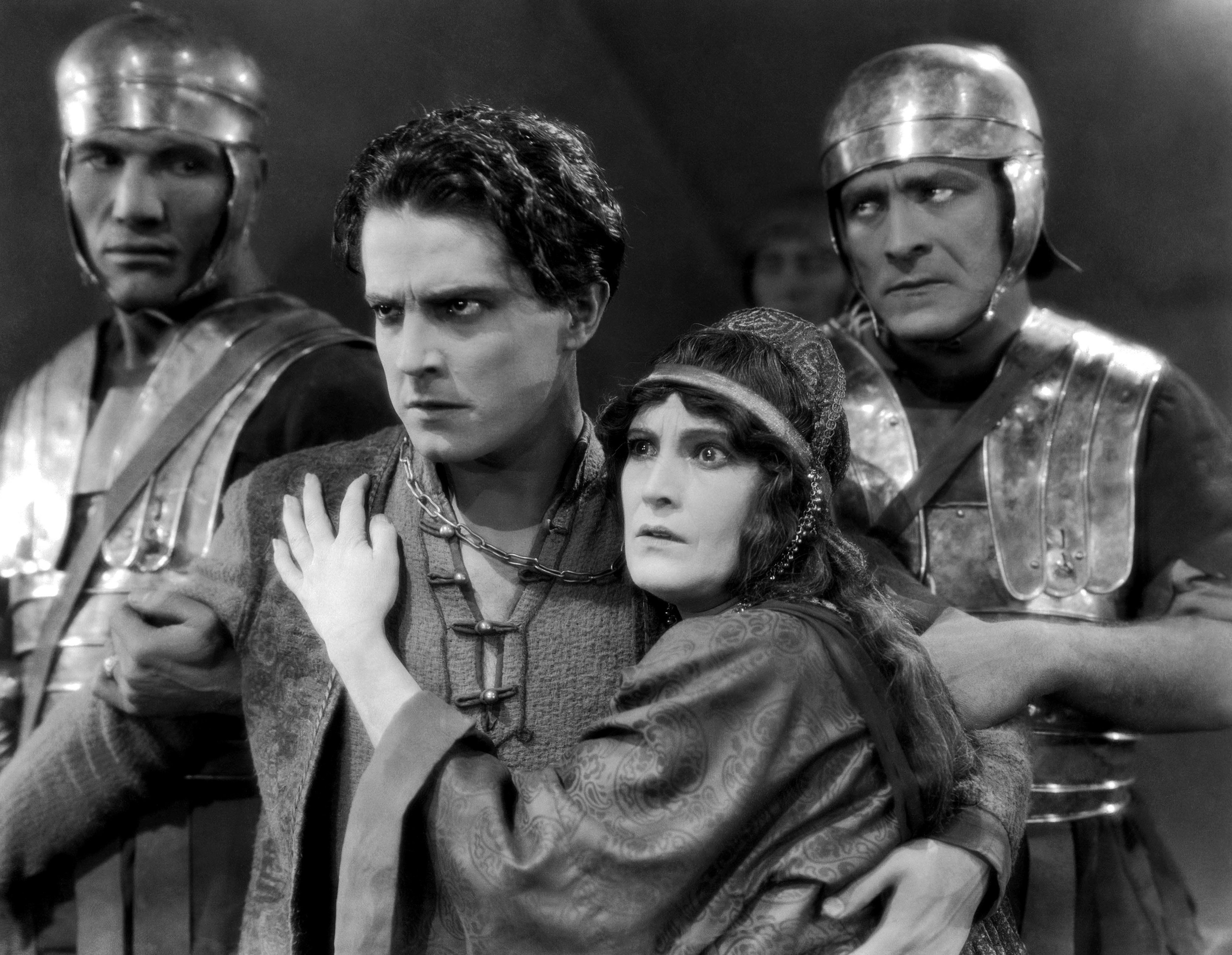
Lon Chaney post-whipping and Patsy Ruth Miller in 'Hunchback.'

'The Hunchback of Notre Dame' is based on Victor Hugo's 1831 novel, and is notable for the grand sets that recall 15th century Paris as well as for Chaney's performance and make-up as the tortured hunchback Quasimodo.

The film elevated Chaney, already a well-known character actor, to full star status in Hollywood, and also helped set a standard for many later horror films, including Chaney's 'The Phantom of the Opera' in 1925.

While Quasimodo is but one of many interconnecting characters in the original Hugo novel, he dominates the narrative of this lavish Universal production.

In the story, Jehan (Brandon Hurst), the evil brother of the archdeacon, lusts after a Gypsy named Esmeralda (Patsy Ruth Miller) and commands the hunchback Quasimodo (Chaney) to capture her.

Military captain Phoebus (Norman Kerry) also loves Esmeralda and rescues her, but the Gypsy is not unsympathetic to Quasimodo's condition, and an unlikely bond forms between them.

After vengeful Jehan frames Esmeralda for the attempted murder of Phoebus, Quasimodo's feelings are put to the test in a spectacular climax set in and around the Cathedral of Notre Dame.

As the hunchbacked bellringer Quasimodo, Chaney adorned himself with a special device that made his cheeks jut out grotesquely; a contact lens that blanked out one of his eyes; and, most painfully, a huge rubber hump covered with coarse animal fur and weighing anywhere from 30 to 50 pounds.

Chaney deeply identified with Quasimodo, the deformed bell-ringer at Notre Dame Cathedral who was deafened by his work. Chaney was raised by deaf parents and did a lot of his communication through pantomime.

“The idea of doing the picture was an old one of mine and I had studied Quasimodo until I knew him like a brother, knew every ghoulish impulse of his heart and all the inarticulate miseries of his soul,” Chaney told an interviewer with Movie Weekly magazine in 1923.

“Quasimodo and I lived together—we became one. At least so it has since seemed to me. When I played him, I forgot my own identity completely and for the time being lived and suffered with the Hunchback of Notre Dame.”

The film was a major box office hit for Universal Studios, and Chaney's performance continues to win accolades.

A scene from 'Hunchback of Notre Dame' (1923).

"An awe-inspiring achievement, featuring magnificent sets (built on the Universal backlot), the proverbial cast of thousands (the crowd scenes are mesmerizing) and an opportunity to catch Lon Chaney at his most commanding," wrote critic Matt Brunson of Creative Loafing in 2014.

The famous cathedral, a symbol of Paris and France, was severely damaged by fire in 2019. After a long period of rebuilding, the Cathedral is scheduled to reopen to the public in December 2024.

Screening this classic version of 'Hunchback' provides local audiences the opportunity to experience silent film as it was intended to be shown: on the big screen, in restored prints, with live music, and with an audience.

"If you can put pieces of the experience back together again, it's surprising how these films snap back to life," said Rapsis, a New Hampshire-based silent film accompanist who creates music for silent film screenings at venues around the country.

"By showing the films as they were intended, you can really get a sense of why people first fell in love with the movies."

In creating music for silent films, Rapsis performs on a digital synthesizer that reproduces the texture of the full orchestra and creates a traditional "movie score" sound.

'The Hunchback of Notre Dame' (1923) starring Lon Chaney, will be screened with live music on Sunday, Feb. 18 at 2 p.m. at the Colonial Theatre, 95 Main St., Keene, N.H. Admission is free, but attendees are asked to RVSP online in advance at www.thecolonial.org.


Monday, January 22, 2024

Sunday, Jan. 28: Chaney's 'Hunchback of Notre Dame' highlights Colonial's centennial celebration

The Colonial's marquee has brightened Keene's Main Street for a full century.

UPDATE! DUE TO INCLEMENT WEATHER, THIS SCREENING IS POSTPONED TO SUNDAY, FEB. 18. 

Talk about milestones!

This month, the Colonial Theatre of Keene, N.H. marks 100 years of service. 

That's a century of movies and popcorn in that rarest of creatures: a downtown one-screen movie theater that was never multiplexed!

And to celebrate, this Sunday, Jan. 28, the Colonial is turning the clocks all the way back to the very first motion picture that opened the place.

It's 'The Hunchback of Notre Dame' (1923) starring Lon Chaney. It's my privilege to create live music for this special screening, which is at 2 p.m. and free to all.

The theater is promoting the event with the tagline "Party Like It's 1924!" along with the movie poster showing Esmerelda dancing with a goat. I assume goats are optional.

It's also a personal honor, as I have a history with the Colonial going back to at least 1971—back when the place hadn't even reached the half-century mark.

At that time, my family would spend summers in Harrisville, a small town outside of Keene. 

My mother would drive us into Keene every other Saturday to do laundry. She'd park us at the Colonial for the children's matinee while she washed and dried.

I can pinpoint the year as 1971 because that was when 'Willy Wonka and the Chocolate Factory' was released. 

And I remember that because to an impressionable 7-year-old, there was no more terrifying film. Things were okay until they entered Wonka's factory, and ghastly things began happening to the children. 

By the time Augustus Gloop got stuck in a clear plastic pipe, I couldn't take it anymore, running up the aisle to get away before anything else could happen.

The Colonial Theatre's interior, pretty much unchanged since it opened in 1924.

My older brother found me in the ladies room hiding in a stall. Coaxing me out, we returned to the darkened theater just in time to see the girl blow up like a giant blueberry and then get rolled off to the "juicing room."

I fled back up the aisle and outside. What happened after that is a blank—we may have ended up on a park bench outside until my mother came to get us.

I've since recovered, but that original version with Gene Wilder in the title role still gives me the creeps. 

Well, Chaney's 'Hunchback' can be creepy, too. But I hope it doesn't compel you to flee the theater!

Lots more info in the press release. Hope you'll join us this Sunday, Jan. 28 at 2 p.m. to celebrate the Colonial's centennial.

There will be cake!

*    *    *

A scene from 'The Hunchback of Notre Dame' (1923). 

MONDAY, JAN. 15, 2024 / FOR IMMEDIATE RELEASE
Contact Jeff Rapsis • (603) 236-9237 • jeffrapsis@gmail.com

Chaney as Quasimodo in 'Hunchback of Notre Dame' on Sunday, Jan. 28 in Keene, N.H.

Celebrate Colonial Theatre's 100th anniversary with free screening of classic film that opened theater in 1924; featuring live music by Jeff Rapsis

KEENE, N.H.—It was a spectacular combination: Lon Chaney, the actor known as the "Man of 1,000 Faces," and Universal's big screen adaptation of Victor Hugo's sprawling tale of the tortured Quasimodo.

The result was the classic silent film version of 'The Hunchback of Notre Dame' (1923) — a movie so popular that it was chosen as the opening program at Keene's Colonial Theatre when it first opened to the public on Jan. 29, 1924.

Now, 100 years later, the Colonial will once again screen 'Hunchback' as part of a centennial celebration.

'The Hunchback of Notre Dame' starring Lon Chaney will be shown on Sunday, Jan. 28, 2024 at 2 p.m. at the Colonial Theatre, 95 Main St., Keene, N.H. Admission is free, but attendees are asked to RSVP online in advance at www.thecolonial.org.

Live music for the movie will be provided by silent film accompanist Jeff Rapsis.

The program includes cake and champagne afterwards.

'The Hunchback of Notre Dame' is based on Victor Hugo's 1831 novel, and is notable for the grand sets that recall 15th century Paris as well as for Chaney's performance and make-up as the tortured hunchback Quasimodo.

The film elevated Chaney, already a well-known character actor, to full star status in Hollywood, and also helped set a standard for many later horror films, including Chaney's 'The Phantom of the Opera' in 1925.

While Quasimodo is but one of many interconnecting characters in the original Hugo novel, he dominates the narrative of this lavish Universal production.

In the story, Jehan (Brandon Hurst), the evil brother of the archdeacon, lusts after a Gypsy named Esmeralda (Patsy Ruth Miller) and commands the hunchback Quasimodo (Chaney) to capture her.

Military captain Phoebus (Norman Kerry) also loves Esmeralda and rescues her, but the Gypsy is not unsympathetic to Quasimodo's condition, and an unlikely bond forms between them.

After vengeful Jehan frames Esmeralda for the attempted murder of Phoebus, Quasimodo's feelings are put to the test in a spectacular climax set in and around the Cathedral of Notre Dame.

A scene from 'The Hunchback of Notre Dame' (1923).

As the hunchbacked bellringer Quasimodo, Chaney adorned himself with a special device that made his cheeks jut out grotesquely; a contact lens that blanked out one of his eyes; and, most painfully, a huge rubber hump covered with coarse animal fur and weighing anywhere from 30 to 50 pounds.

Chaney deeply identified with Quasimodo, the deformed bell-ringer at Notre Dame Cathedral who was deafened by his work. Chaney was raised by deaf parents and did a lot of his communication through pantomime.

“The idea of doing the picture was an old one of mine and I had studied Quasimodo until I knew him like a brother, knew every ghoulish impulse of his heart and all the inarticulate miseries of his soul,” Chaney told an interviewer with Movie Weekly magazine in 1923.

“Quasimodo and I lived together—we became one. At least so it has since seemed to me. When I played him, I forgot my own identity completely and for the time being lived and suffered with the Hunchback of Notre Dame.”

The film was a major box office hit for Universal Studios, and Chaney's performance continues to win accolades.

"An awe-inspiring achievement, featuring magnificent sets (built on the Universal backlot), the proverbial cast of thousands (the crowd scenes are mesmerizing) and an opportunity to catch Lon Chaney at his most commanding," wrote critic Matt Brunson of Creative Loafing in 2014.

The famous cathedral, a symbol of Paris and France, was severely damaged by fire in 2019. After a long period of rebuilding, the Cathedral is scheduled to reopen to the public in December 2024.

Screening this classic version of 'Hunchback' provides local audiences the opportunity to experience silent film as it was intended to be shown: on the big screen, in restored prints, with live music, and with an audience.

"If you can put pieces of the experience back together again, it's surprising how these films snap back to life," said Rapsis, a New Hampshire-based silent film accompanist who creates music for silent film screenings at venues around the country.

"By showing the films as they were intended, you can really get a sense of why people first fell in love with the movies."

In creating music for silent films, Rapsis performs on a digital synthesizer that reproduces the texture of the full orchestra and creates a traditional "movie score" sound.

'The Hunchback of Notre Dame' (1923) starring Lon Chaney, will be screened with live music on Sunday, Jan. 28 at 2 p.m. at the Colonial Theatre, 95 Main St., Keene, N.H. Admission is free, but attendees are asked to RVSP online in advance at www.thecolonial.org.

Tuesday, January 3, 2023

Coming up next: sci-fi epic 'Metropolis' on Saturday, Jan. 7 at Keene's Colonial Theatre

Let's hear it for the Precision Driving School of Greenfield, Mass. for sponsoring a local theater's silent film series!

What better way to follow a screening of 'Metropolis' than with...another screening of 'Metropolis'?

That's what'll happen this weekend, when Fritz Lang's ground-breaking sci-fi epic hits the big screen yet again: this time on Saturday, Jan. 7 at 4 p.m. at the Colonial Theatre in Keene, N.H.

Lots more detail about this screening is in the press release below.

This will actually be the fourth 'Metropolis' screening I've accompanied in the past three weeks. That's a lot of futuristic fantasy!

The four screenings were booked separately by programmers at different venues, which I take as a sign of the film's enduring popularity. Anywhere you go, it seems people still buy tickets and show up for 'Metropolis.'

So if you're in the Monadnock area of southwestern N.H. this Saturday, please drop on by and experience one of the great achievements of the silent era as it was intended to be seen: on the big screen, with a restored print, with live music, and with an audience!

I usually describe a screening as a "rare chance" to experience early cinema as it was intended. But in the case of 'Metropolis,' I can't really say it's rare, having done music for it so often.

Plus, if you can't make it to Keene this weekend, I'm doing 'Metropolis' again in April at the Rex Theatre in Manchester, N.H. Stay tuned on that one...

*  *  *

From 'Metropolis': A star is born...sort of.

TUESDAY, DEC. 20, 2022 / FOR IMMEDIATE RELEASE
For more info, contact: Jeff Rapsis • (603) 236-9237 • jeffrapsis@gmail.com

Restored classic sci-fi epic 'Metropolis' to screen in Keene on Saturday, Jan. 7

Ring in the New Year with landmark early futuristic fantasy shown with live music at Colonial Theatre

KEENE, N.H.—A silent film hailed as the grandfather of all science fiction fantasy movies will be screened with live music in Keene next month.

'Metropolis' (1927), an epic adventure set in a futuristic world, will be shown on Saturday, Jan. 7 at 4 p.m. at the Colonial Theatre, 95 Main St., Keene, N.H.

The screening will feature live accompaniment by Jeff Rapsis, a New Hampshire-based composer who specializes in creating music for silent films.

Admission is $10.50 adults, $8.50 youth. Tickets are available online at http://thecolonial.org or at the door.

'Metropolis' (1927), regarded as German director Fritz Lang's masterpiece, is set in a society where a privileged elite pursue lives of leisure while the masses toil on vast machines and live in poverty.

The film, with its visions of futuristic factories and underground cities, set new standards for visual design and inspired generations of dystopian fantasies from Ridley Scott's 'Blade Runner' to Terry Gilliam's 'Brazil.'

In 'Metropolis,' the story centers on an upper class young man who falls in love with a woman who works with the poor. The tale encompasses mad scientists, human-like robots, underground spiritual movements, and industrial espionage, all set in a society divided between haves and have-nots.

In reviving 'Metropolis,' the Colonial aims to show silent movies as they were meant to be seen—in high quality prints, on the big screen, with live music, and with an audience.

"All those elements are important parts of the silent film experience," said Rapsis, who will improvise an original live score for 'Metropolis' on the spot. "Recreate those conditions, and the classics of early cinema leap back to life."

The version of 'Metropolis' to be screened at Colonial is a newly restored edition that includes nearly a half-hour of missing footage cut following the film's premiere in 1927.

The lost footage, discovered in 2008 in an archive in Argentina, has since been added to the existing 'Metropolis,' allowing plot threads and characters to be developed more fully.

When first screened in Berlin, Germany on Jan. 10, 1927, the sci-fi epic ran an estimated 153 minutes. After its premiere, the film's distributors (including Paramount in the U.S.) drastically shortened 'Metropolis' to maximize the film's commercial potential. By the time it debuted in the U.S. later that year, the film was only about 90 minutes long.

Even in its shortened form, 'Metropolis' became a cornerstone of science fiction cinema. Due to its enduring popularity, the film has undergone numerous restorations in the intervening decades in attempts to recover Lang's original vision.

From Metropolis': note the sign in the bottom right corner. It doesn't seem to represent anything real in any language I recognize. But it IS an anagram for both 'A Mouth' and 'Uh, Atom.'

The restoration work has continued in recent years. In 2008, the curator of the Buenos Aires Museo del Cine discovered a 16mm dupe negative of 'Metropolis' that was considerably longer than any existing print.

It included not merely a few additional snippets, but 25 minutes of "lost" footage, about a fifth of the film, that had not been seen since its Berlin debut.

The discovery led to a 2½-hour version that debuted in 2010 to widespread acclaim. This fully restored edition will be screened at the Colonial.

" 'Metropolis' stands as an stunning example of the power of silent film to tell a compelling story without words, and reach across the generations to touch movie-goers from the real future, which means us," said accompanist Jeff Rapsis, who provides live music for silent film screenings throughout New England and beyond.

To accompany a silent film, Rapsis uses a digital synthesizer to recreate the texture of the full orchestra. The score is created live in real time as the movie is screened.

Rapsis creates new music for silent films that draws from movie scoring techniques that today's audiences expect from the cinema.

The restored 'Metropolis' will be shown on Saturday, Jan. 7 at 4 p.m. at the Colonial Theatre, 95 Main St., Keene, N.H. Admission is $10.50 for adults; $8.50 for youth. Tickets are available online at http://thecolonial.org or at the door. For more information, call the box office at (603) 352-2033.

CRITIC'S COMMENTS on ‘METROPOLIS’

“'Metropolis' does what many great films do, creating a time, place and characters so striking that they become part of our arsenal of images for imagining the world.”
—Roger Ebert, 2010, The Chicago Sun-Times

“If it comes anywhere near your town, go see it and thank the movie Gods that it even exists. There’s no star rating high enough.”
—Brian Tallerico, Movieretriever.com

Monday, April 11, 2022

Keaton's 'The General' at Coolidge Corner on Wednesday, 4/13, plus a question of volume

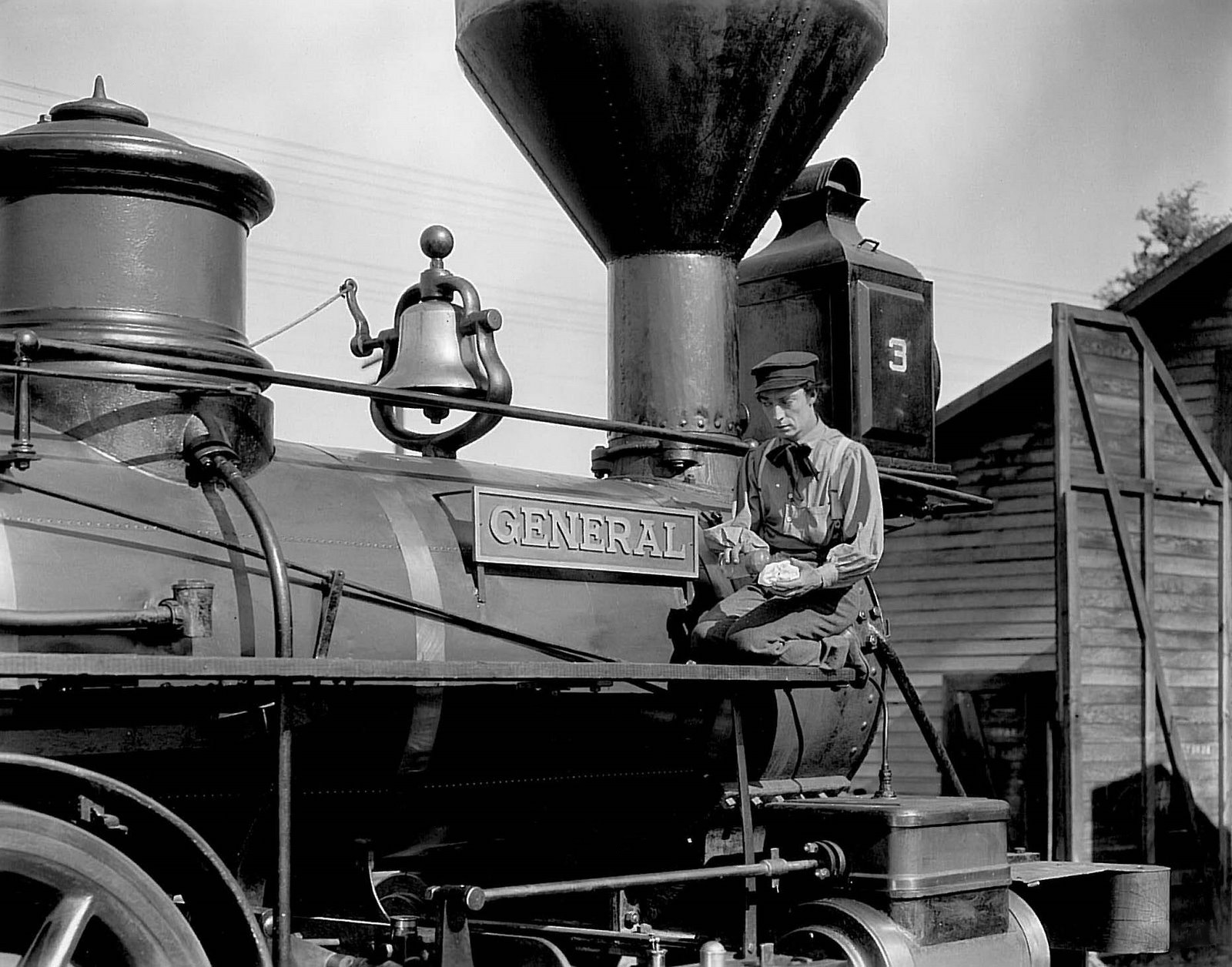
Buster and co-star in 'The General' (1926).

Coming up: I'll be doing live music for a screening of Buster Keaton's 'The General' (1926) at the Coolidge Corner Theatre on Wednesday, April 13. 

It's a special occasion because Slate film critic Dana Stevens, author of a new book on Keaton, will be on hand for a Q & A after the show. It'll be moderated by local film guru Ty Burr.

'Camera Man,' which came out a few months ago, has been rapturously received, and has led to a host of Keaton screenings this year. (I had the privilege of doing an earlier one with Stevens in Newport, R.I. this past February.)

So march on down to the Coolidge Corner to see Keaton's masterpiece on the big screen, and meet the author of a brand new book that puts Keaton's work in the context of his early-20th-century times.

More details in the press release below. 

For now, a few thoughts about volume inspired by yesterday's screening of 'Ben Hur' (1925) at the new Showroom venue of the Colonial Theatre in Keene, N.H.

This is a surprisingly touchy subject, as there's apparently a vast range of perceptions of what's appropriate volume for silent film accompaniment.

Yesterday, I arrived early to set up and work with the house tech to set the sound levels. Each house is different, and the Showroom is a venue I've only played once before, so it's important to take time to set up the audio.

Keeping my keyboard volume output at mid-range, we worked out the levels, checking each of my synth settings to make sure everything was acceptable in the house. I felt it sounded a bit dry, so just a touch of reverb was added to the main orchestral setting I planned to use. Great!

(The reason to keep my synth output at mid-range is because I need that level to make use of the various volume levels the touch-sensitive keyboard is capable of producing. I find I can't do that effectively if the output is below mid-range: level 5 out of 10.)

We also have to account for the fact that in most places with house sound (such as the Showroom), a good amount of sound volume passes over my head (down at front) and so audiences can sometimes receive significantly more volume than I hear.

Okay, fine. Because I work primarily in improv and create the accompaniment live and in the moment, it's my preference to sit at the keyboard for at least a half-hour before a show: warming up, working through material, and just getting into the zone. For me, it's hard to start a film just cold—it's not like pressing a button.

But because people are filing into the theater, during this time I've found it's helpful to temporarily take my volume output down to about 2 out of 10 as a courtesy. That way people can hear each other talking, while I can still do my thing, even though it's not the volume I'll be working with for the film.

The Colonial Theatre's new "Showroom" venue, set up for silent film.

So this is what I was doing yesterday when I noticed it was 10 minutes to showtime, and I hadn't thought to yet use the bathroom. (Very important in advance of a 2½-hour film.) So I switched to some synth-generated pattern music and got up to take care of business.

That's when someone from the theater came up to me with a concerned look on her face. People were complaining, she said, that the music was much too loud and that we needed to take the volume down somewhat.

Really? I've gotta tell you, I like to think I'm easy-going and welcome feedback and would do whatever it takes to accommodate an audience. But right in front of creating live music for a challenging and marathon-length film, this is not the thing to hear. 

(Even worse: a few years ago, someone came down to the keyboard in the middle of a show in progress at the Leavitt Theatre in Ogunquit, Maine and placed a folded-up note on the keyboard, for Pete's sake. Using one hand, I opened it to read "MUSIC TOO LOUD!")

Maybe it's a weakness on my part, but I find this kind of thing really throws me when it comes right before I'm about to commit to an improv accompaniment journey of some length, and which will require some concentration—especially after we've taken time to set levels that everyone agreed were acceptable. 

And it's especially discouraging when I've deliberately been playing at a quiet level as a courtesy, and then to be told it's still too loud

Would people stop a tightrope walker just before he or she steps out on the wire above Niagara Falls to tell them they don't approve of the type of wood being used in the balance pole?

I strive not to be the temperamental artist type, but jeez. This is me, baring my soul in music in hopes of bringing to life a worthy cinematic experience, and I'm being told to keep it down lest it interfere with someone's enjoyment of the film?

Well, why don't I just stop playing altogether? Maybe then everyone will be happy? 

Of course I didn't speak those words. I told the theater woman we'd see what we could do. In introducing the film, I addressed it openly: we'd had some complaints, but here's the situation. This is a BIG film, I said, and at times the music will be BIG as well. 

However, it's still a new venue to me, I said, so I'll do my best to keep things at a level we can all find generally acceptable. But people have to understand: this is not background music. At its best (if I'm doing it effectively) it's a crucial part of the experience.

I think I run into trouble when people new to the experience expect the accompaniment to be background music, or (even worse) something that's optional or just decoration.

Well, no. In silent film, although music generally shouldn't be noticed on its own, it's often a full player in the overall experience. That was true then, and it's still true now. 

So while it shouldn't gratuitously call attention to itself, the music should have a presence. And in some cases, it really should be pretty darned big and bold.

Take 'Ben Hur.' You really can't play quiet stuff during the sea battle scene or the famous chariot race. So if I'm at the keyboard, it's going to be loud, exciting, dramatic, and all that.

In the end, I was able to pull it together yesterday. No one covered their ears or walked out that I'm aware of, anyway. When it was over, we had nice comments and good questions. I made my usual joke about checking with the Diocese of Manchester to confirm that attending a screening of 'Ben Hur' did not count as attending Mass. Thank you and have a good night!

I don't know. Maybe I'm looking at this wrong way. Maybe I should really amp up the volume, and then supplement my income by selling over-priced ear plugs. Or possibly sell stationery so people can write me letters to be delivered in the middle of a performance.

Even if I go ahead with those ideas, they won't be ready in time for Wednesday's screening of 'The General' at the Coolidge Corner. Here's the promised press release with all the details!

*   *   *

Buster Keaton in 'The General.' 

MONDAY, APRIL 4, 2022 / FOR IMMEDIATE RELEASE
Contact Jeff Rapsis • (603) 236-9237 • jeffrapsis@gmail.com

Buster Keaton's 'The General' with live music at Coolidge Corner on Wednesday, April 13

Civil War railroading comedy/adventure film lauded as stone-faced comic moviemaker's masterpiece

Screening includes Q & A with Dana Stevens, author of 'Camera Man,' newly published Keaton book.

BROOKLINE, Mass.— He never smiled on camera, earning him the nickname of "the Great Stone Face." But Buster Keaton's comedies rocked Hollywood's silent era with laughter throughout the 1920s.

See for yourself with a screening of 'The General' (1926), one of Keaton's landmark feature films, on Wednesday, April 13 at 7 p.m. at the Coolidge Corner Theatre, 290 Harvard St., Brookline, Mass.

The screening will feature live music for the movie by silent film accompanist Jeff Rapsis. General admission is $23 per person.

The show is the latest in the Coolidge Corner's acclaimed 'Sounds of Silents' series, which gives audiences the opportunity to experience early cinema as it was intended: on the big screen, with live music, and with an audience.

The screening will be followed by a Q & A with Slate film critic Dana Stevens, author of 'Camera Man,' a newly published book exploring Keaton's work in the context of 20th century history.

Stevens’s book will be for sale after the screening, courtesy of Brookline Booksmith. The Q & A will be moderated by Boston-based critic Ty Burr.

'The General,' set during the U.S. Civil War, tells the story of a southern locomotive engineer (Keaton) whose engine (named 'The General') is hijacked by Northern spies with his girlfriend onboard.

Keaton, commandeering another train, races north in pursuit behind enemy lines. Can he rescue his girl? And can he recapture his locomotive and make it back to warn of a coming Northern attack?

Critics call 'The General' Keaton's masterpiece, praising its authentic period detail, ambitious action and battle sequences, and its overall integration of story, drama, and comedy.

It's also regarded as one of Hollywood's great railroad films, with much of the action occurring on or around moving steam locomotives.

Accompanist Jeff Rapsis will improvise an original musical score for 'The General' live as the film is shown.

"When the score gets made up on the spot, it creates a special energy that's an important part of the silent film experience," said Rapsis, who uses a digital synthesizer to recreate the texture of a full orchestra for the accompaniment.

With Center for the Art's screening of 'The General,' audiences will get a chance to experience silent film as it was meant to be seen—in a high quality print, on a large screen, with live music, and with an audience.

"All those elements are important parts of the silent film experience," Rapsis said. "Recreate those conditions, and the classics of early Hollywood leap back to life in ways that can still move audiences today."

Rapsis performs on a digital keyboard that reproduces the texture of the full orchestra and creates a traditional "movie score" sound.

Keaton, along with Charlie Chaplin and Harold Lloyd, stands today as one of the silent screen's three great clowns. Some critics regard Keaton as the best of all; Roger Ebert wrote in 2002 that "in an extraordinary period from 1920 to 1929, (Keaton) worked without interruption on a series of films that make him, arguably, the greatest actor-director in the history of the movies."

A remarkable pantomime artist, Keaton naturally used his whole body to communicate emotions from sadness to surprise. And in an era with no post-production special effects, Keaton's acrobatic talents enabled him to perform all his own stunts.

Critics review 'The General':

"The most insistently moving picture ever made, its climax is the most stunning visual event ever arranged for a film comedy."
—Walter Kerr, author of 'The Silent Clowns'

"An almost perfect entertainment!"
—Dave Kehr, Chicago Reader

"What makes the film so special is the way the timing, audacity and elegant choreography of its sight gags, acrobatics, pratfalls and dramatic incidents is matched by Buster's directorial artistry, his acute observational skills working alongside the physical élan and sweet subtlety of his own performance."
—Time Out (London)

‘The General’ (1926) starring Buster Keaton will be shown with live music on Wednesday, April 13 at 7 p.m. at the Coolidge Corner Theatre, 290 Harvard St., Brookline, Mass. as part of the theater's 'Sounds of Silents' series. Admission is $23 per person. For more info and to buy tickets, visit www.coolidge.org or call (617) 734-2500. For more about the music, visit www.jeffrapsis.com.

Wednesday, April 6, 2022

Up next: the original silent 'Ben Hur' (1925) on Sunday, April 10 at the Showroom in Keene, N.H.

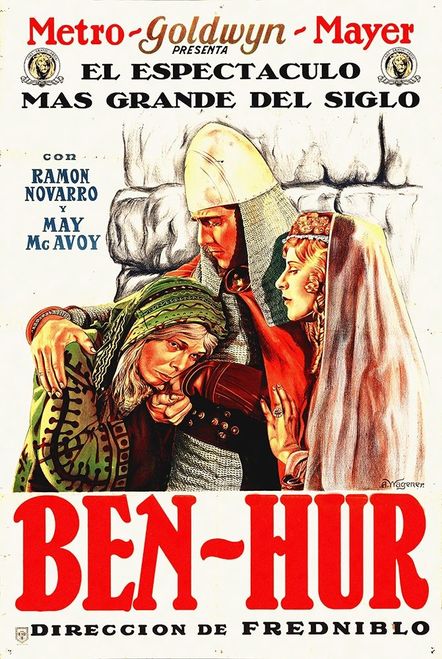
A Spanish language poster for MGM's 'Ben Hur' (1925).

Easter must be on its way, as this month's silent film schedule is thick with Biblical epics.

Coming up next: the original silent version of 'Ben Hur' (1925) on Sunday, April 10 in Keene, N.H. If there's a film you should try to see on the big screen, this is it. More details in the press release below.

For now, let me report that we enjoyed a healthy turnout for last Sunday's unusual double bill: Lon Chaney in 'Flesh and Blood' and Harry Houdini in 'The Man From Beyond,' both films from 1922.

The Chaney film, which I'd never done before, held up pretty well, with an escaped-prisoner-seeking-justice storyline that kept our audience engaged throughout. Large chunks of it are set in Chinatown, but I resisted the temptation to play pentatonic-scale-"Oriental"-sounding music.

Instead, I kept mostly to a piano & strings texture, except for a scene where a harmonium gets played, and then also when Chaney performs a sentimental tune on a solo violin. One wonders how musicians of the 1920s would have matched the on-screen action in this film.

The Houdini picture is a mind-bending affair about reincarnation that left most people scratching their heads. How can a guy become frozen in 1820, then thawed out 100 years later, to the point where he's riding around in automobiles and attending a wedding, and not realize it was a century later?

But the rousing waterfall rescue sequence that concludes the film, which was actually filmed at Niagara Falls, was enough to leave everyone satisfied.

Okay, here's the press release on 'Ben Hur.' Hope to see you this Sunday at 2 p.m. at the Colonial Theatre's new "Showroom" venue in Keene, N.H.!

*    *    *

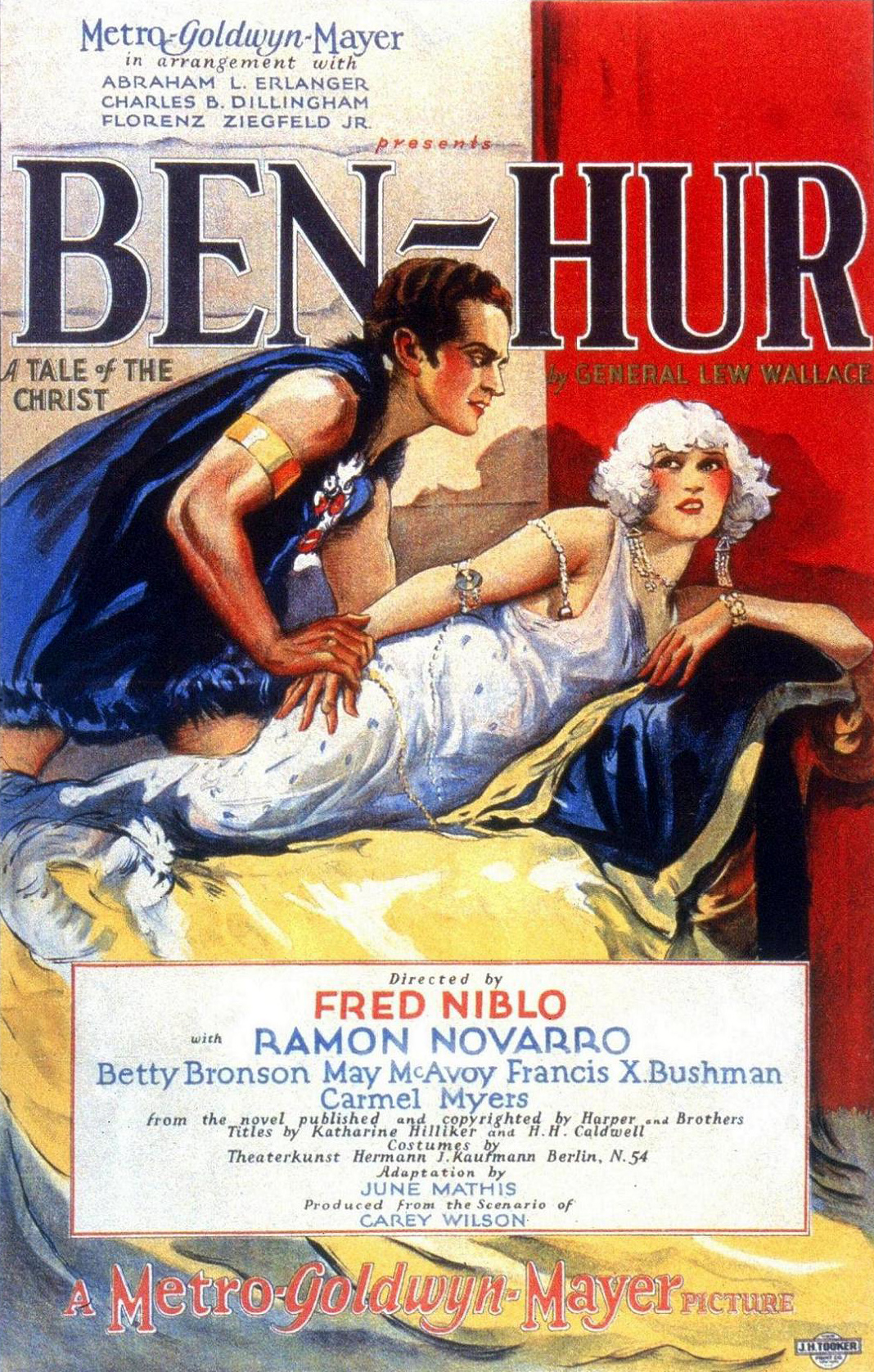
An original release poster for MGM's silent epic 'Ben Hur' (1925).

MONDAY, APRIL 4, 2022 / FOR IMMEDIATE RELEASE
Contact Jeff Rapsis • (603) 236-9237 • jeffrapsis@gmail.com

Silent film epic ‘Ben Hur’ (1925) coming to Showroom in Keene on Sunday, April 10

Prelude to Easter: Hollywood's original Biblical-era blockbuster to be screened with live music at Colonial Theatre's new venue

KEENE, N.H.—One of early Hollywood's greatest epics returns to the big screen with a showing of 'Ben Hur, A Tale of The Christ' (1925) on Sunday, April 10 at 2 p.m. at the Colonial Theatre's Showroom, 20 Commercial St., Keene.

The screening will feature live accompaniment by Jeff Rapsis, a New Hampshire-based composer who specializes in creating music for silent films.

Admission is $15 per person, general admission. Tickets are available online at www.thecolonial.org or at the door.

'Ben Hur,' starring Ramon Novarro and Francis X. Bushman, was among the first Hollywood motion pictures to tell a Biblical-era story on a large scale.

The film, which helped establish MGM as a leading studio, employed a cast of thousands and boasted action sequences including a large-scale sea battle.

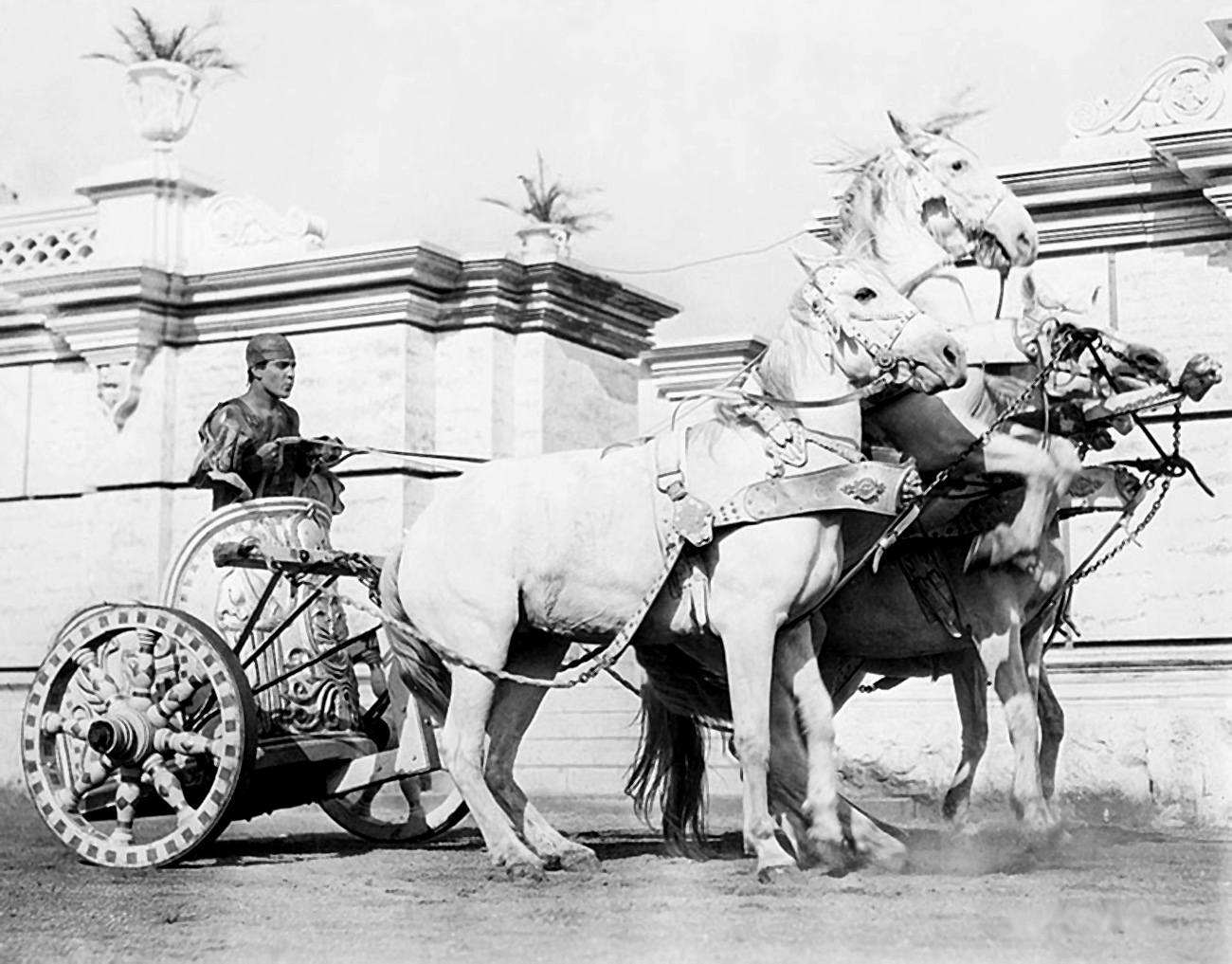
The film is highlighted by a spell-binding chariot race that still leaves audiences breathless.

Set in the Holy Land at the time of Christ's birth, 'Ben Hur' tells the story of a Jewish family in Jerusalem whose fortune is confiscated by the Romans and its members jailed.

The enslaved family heir, Judah Ben Hur (played by Novarro, a leading silent-era heartthrob) is inspired by encounters with Christ to pursue justice. This leads him to a series of epic adventures in his quest to find his mother and sister and restore his family fortune.

The film is particularly appropriate for the weeks leading up to Easter, which is celebrated on Sunday, April 17. (Orthodox Easter falls on Sunday, April 24 in 2022.)


'Ben Hur,' directed by Fred Niblo, was among the most expensive films of the silent era, taking two years to make and costing between $4 million and $6 million. When released in 1925, it became a huge hit for the newly formed Metro-Goldwyn-Mayer studio.

The chariot race scene in 'Ben Hur,' with Novarro and other cast members driving teams of horses at high speed on a mammoth dirt racetrack in a gigantic replica of a Roman stadium, was among the most complicated and dangerous sequences filmed in the silent era. It remains noted for its tight editing, dramatic sweep, and sheer cinematic excitement.

The chariot race was re-created virtually shot for shot in MGM's 1959 remake, and more recently imitated in the pod race scene in 'Star Wars Episode I: The Phantom Menace.'


Besides Novarro in the title role, the film stars Francis X. Bushman as Messala, the Roman soldier who imprisons the Hur family; Betty Bronson as Mary, mother of Jesus; May McAvoy as Ben Hur's sister Esther; and Claire McDowell as Ben Hur's mother.

'Ben Hur' was based on the best-selling 1880 novel by General Lew Wallace, which interwove the story of Christ's life with the Ben Hur clan, a fictional Jewish merchant family.

Celebrity "extras" in the chariot race scene included stars such as Douglas Fairbanks, Harold Lloyd, Lionel Barrymore, John Gilbert, Joan Crawford, Lillian Gish, Mary Pickford, and a very young Clark Gable.

The film was remade by MGM in the 1950s in a color and wide-screen version starring Charleton Heston that garnered 11 Academy Awards. Some critics believe the original 1925 version offers superior drama and story-telling.

In creating music for silent films, accompanist Jeff Rapsis performs on a digital synthesizer that reproduces the texture of the full orchestra and creates a traditional "movie score" sound.

For each film, Rapsis improvises accompaniment using original themes created beforehand. No music is written down; instead, the score evolves in real time based on audience reaction and the overall mood as the movie is screened.

'Ben Hur, A Tale of The Christ' (1925) will be shown on Sunday, April 10 at 2 p.m. at the Colonial Theatre's Showroom, 20 Commercial St., Keene.

General admission is $15 per person. Tickets are available online at www.thecolonial.org or at the door. For more information, call the Colonial box office at (603) 352-2033.

Thursday, November 11, 2021

This means you! All veterans welcome free to 'Four Horsemen of the Apocalypse' tonight

Rudolph Valentino in 'Four Horsemen of the Apocalypse' (1921). He's the one on the right, by the way.

Tonight I'm doing live music for 'Four Horsemen of the Apocalypse' (1921) at a new venue: the "Showroom," a performance space developed during the pandemic and opened recently by the Colonial Theatre in Keene, N.H.

The Colonial itself has been around since 1924, and among its other distinctions is that it's the theater where a 7-year-old me was traumatized by 'Willy Wonka and the Chocolate Factory' when it played there in 1971. 

If reasons are needed to show 'Four Horsemen,' I can name several: it's the 100th anniversary of the film's release; as a World War I epic, it's fitting for Veterans Day; it launched Rudolph Valentino as a megastar and introduced the tango worldwide; it's a terrific motion picture that shows early Hollywood at its most innovative and ambitious.

And for me, there's one personal reason that makes 'Four Horsemen' worth screening. I think the last line delivered by Nigel De Brulier's character is among the most moving in all cinema. It's not spoiling anything when I share it with you now: "I knew them all!" Watch for it, and you'll see.

So if you're in the area, please consider attending. All veterans welcome free of charge as a way to honor your service. Lots more about the film in the press release below. So march yourself on over to Keene and report for duty tonight at 7 p.m. 

That's an order!

*  *  *

From 'Four Horsemen of the Apocalypse' (1921): How's that for an image that fills the screen?
 

TUESDAY, NOV. 2, 2021 / FOR IMMEDIATE RELEASE
Contact Jeff Rapsis • (603) 236-9237 • jeffrapsis@gmail.com

See the epic movie that launched Rudolph Valentino as a megastar

Veterans admitted free to WWI saga 'Four Horsemen of the Apocalypse,' screening with live music on Thursday, Nov. 11 at Colonial Theatre's new 'Showroom' venue

KEENE, N.H.—A movie that launched the career of silent film heartthrob and megastar Rudolph Valentino will be shown on Veterans Day at the Colonial Theatre's new venue in downtown Keene.

'The Four Horsemen of the Apocalypse' (1921), a multi-generational family saga that climaxes during World War I, will be screened with live music on Thursday, Nov. 11 at 7 p.m. the Showroom, 20 Commercial St., Keene, N.H.

Tickets are $13.50 to $15 per person; all veterans will be admitted free to this special Veterans Day screening.

Proof of vaccination or negative results of a COVID-19 PCR test administered within 72 hours are required for admittance to events at Showroom. Also, masks are required to be worn at all times while at the venue.

Based on a novel by Spanish author Vicente Blasco Ibañez, 'Four Horsemen of the Apocalypse' tells the story of an extended Argentine family with mixed ethnic background: one side is German, while the other is French.

The family gets drawn into World War I in far-off Europe, with members ending up on opposing sides. With brothers pitted against one another on the battlefield, the destruction of war changes lives forever.

'The Four Horsemen of the Apocalypse' had a huge cultural impact, becoming the top-grossing film of 1921, beating out Charlie Chaplin's 'The Kid,' and going on to become the sixth-best-grossing film of the silent era.

Also, the film turned then-little-known actor Rudolph Valentino into a superstar, associating him with the image of the Latin Lover. In addition, the film inspired a tango craze and fashion fads such as gaucho pants.

Directed by Rex Ingram for Metro Pictures (a predecessor of MGM studios), 'Four Horsemen' grew into a mammoth production: over $1 million was spent in making it and more than 12,000 people were involved. The film was hugely successful at the box office, grossing nearly $5 million during its initial run, an enormous sum at the time.

The film was notable as one of the first major Hollywood productions to include World War I (then known as the 'Great War') in its storyline, and also in that it did not glorify the recent conflict or look past the tragedy that it brought. It's also among the first U.S. feature films to make full use of the unlimited visual power of the new motion picture medium.

Although Valentino (at left) dominates the film, other actors of note are featured. Alice Terry, the billed star as well as Ingram's wife, was a popular actress of her day. She would be cast in the next Ingram/Valentino flick rushed out in the same year before Rudy's jump to Paramount, The Conquering Power (1921).

Alan Hale Sr. appears in a supporting role; he was perhaps best known as Errol Flynn's sidekick in numerous films, his role of Little John in several Robin Hood flicks, and as the father of Alan Hale, Jr., who played the Skipper on the television series Gilligan's Island.

In 1995, the silent version of 'The Four Horsemen of the Apocalypse' was selected for preservation in the United States National Film Registry by the Library of Congress as being "culturally, historically, or aesthetically significant."

Regarding the title: the Four Horsemen of the Apocalypse are mentioned in the Bible in chapter six of the Book of Revelation, which predicts that they will ride during the Apocalypse. The four horsemen are traditionally named War, Famine, Pestilence, and Death.

"This is a big sprawling drama, and a great chance to see Rudolph Valentino in the picture that launched his celebrity," said Jeff Rapsis, a New Hampshire-based silent film accompanist who will create live music for the screening.

Rapsis will improvise live musical accompaniment during the show, using a digital synthesizer to recreate the sound of a full orchestra and other more exotic textures.

"Creating the music on the spot is a bit of a high-wire act, but it contributes a level of energy that's crucial to the silent film experience," Rapsis said. 
 
'The Four Horsemen of the Apocalypse' (1921) will be screened with live music on Veterans Day, Thursday, Nov. 11 at 7 p.m. at the Colonial Theatre's new Showroom, 20 Commercial St., Keene, N.H. Tickets are $13.50 to $15 and must be purchased online at www.thecolonial.org; veterans admitted free.
 
Veterans may walk up with ID at the door or reserve by calling the box office at (603) 352-2033. Due to limited seating, only the attending veteran can be accommodated at no charge.
For more information, visit www.thecolonial.org.

Monday, December 30, 2019

A big finish for 2019 with 'Four Horsemen,'
now a big start to 2020 with 'Metropolis'

Nigel De Brulier (upper left) gets ready to say his big line at the end of 'Four Horsemen of the Apocalypse.'

One reason I create music for silent films is that the experience allows me to commune with the big emotions of life: Love with a capital L, or Fear, or Joy, or Despair.

I don't get that from any other story-telling art form, with the exception of opera.

So silent film is my way to remind myself I'm still alive, and what the big emotions feel like. It doesn't always happen, but when it does, it makes it all worthwhile.

Well, I'm pleased to say it happened in spades yesterday afternoon at the Town Hall Theatre in Wilton, N.H., where I accompanied "Four Horsemen of the Apocalypse" (1921) before a near-capacity crowd.

There are things in this big, sprawling picture that greatly move me. And it all leads up to one very special moment right at the end, when the Nigel De Brulier character is asked if he knew a man buried in an enormous hillside cemetery.

"I knew them all," he cries in the graveyard, and at that moment I feel like I'm connected to all of humanity, to something great and wonderful and meaningful—something larger than myself.

The crowd seemed to get it as well, judging from the response throughout and the reaction afterward. I even earned a partial "Standing O" from one side of the room.

Thank you to everyone who joined the journey, both for this screening and for more than 100 others during 2019. It's been a great year and I'm looking forward to 2020.

Speaking of which...

My next screening (and first of 2020) is 'Metropolis' (1927), which will be screened on Sunday, Jan. 5 at 2 p.m. at the Colonial Theatre in Keene, N.H.

For complete info, here's the press release. Hope to see you at the movies!

* * *

'Metropolis' (1927) will be shown on Sunday, Jan. 5 at 2 p.m. at the Colonial Theatre in Keene, N.H.

MONDAY, DEC. 9, 2019 / FOR IMMEDIATE RELEASE
Contact Jeff Rapsis • (603) 236-9237 • jeffrapsis@gmail.com

Restored classic film 'Metropolis' to screen at Colonial on Sunday, Jan. 5


Landmark early sci-fi fantasy epic, with half-hour of rediscovered footage, to be shown with live music

KEENE, N.H.—A silent film hailed as the grandfather of all science fiction fantasy movies will be screened with live music at the Colonial Theatre in Keene, N.H.

'Metropolis' (1927), an epic adventure set in a futuristic world, will be shown on Sunday, Jan. 5, 2020 at 2 p.m. at the Colonial Theatre, 95 Main St., Keene, N.H.

The screening, the latest in the Colonial Theatre's silent film series, will feature live accompaniment by Jeff Rapsis, a New Hampshire-based composer who specializes in creating music for silent films.

Admission is $10 per person general admission. Tickets are available online at thecolonial.org or at the door.

'Metropolis' (1927), regarded as German director Fritz Lang's masterpiece, is set in a society where a privileged elite pursue lives of leisure while the masses toil on vast machines and live in poverty.

The film, with its visions of futuristic factories and underground cities, set new standards for visual design and inspired generations of dystopian fantasies from Ridley Scott's 'Blade Runner' to Terry Gilliam's 'Brazil.'

In reviving 'Metropolis' and other great films of cinema's early years, the Colonial aims to show silent movies as they were meant to be seen—in high quality prints, on a large screen, with live music, and with an audience.

"All those elements are important parts of the silent film experience," said Rapsis, who will improvise an original live score for 'Metropolis' on the spot. "Recreate those conditions, and the classics of early cinema leap back to life."

In 'Metropolis,' the story centers on an upper class young man who falls in love with a woman who works with the poor. The tale encompasses mad scientists, human-like robots, underground spiritual movements, and industrial espionage, all set in a society divided between haves and have-nots.

The version of 'Metropolis' to be screened at the Colonial is a newly restored edition that includes nearly a half-hour of missing footage cut following the film's premiere in 1927. The lost footage, discovered in 2008 in an archive in Argentina, has since been added to the existing 'Metropolis,' allowing plot threads and characters to be developed more fully.

When first screened in Berlin, Germany on Jan. 10, 1927, the sci-fi epic ran an estimated 153 minutes. After its premiere, the film's distributors (including Paramount in the U.S.) drastically shortened 'Metropolis' to maximize the film's commercial potential. By the time it debuted in the U.S. later that year, the film was only about 90 minutes long.

Even in its shortened form, 'Metropolis' became a cornerstone of science fiction cinema. Due to its enduring popularity, the film has undergone numerous restorations in the intervening decades in attempts to recover Lang's original vision.

It was widely believed that this would be the most complete version of Lang's film that contemporary audiences could ever hope to see. But, in the summer of 2008, the curator of the Buenos Aires Museo del Cine discovered a 16mm dupe negative of 'Metropolis' that was considerably longer than any existing print.

It included not merely a few additional snippets, but 25 minutes of "lost" footage, about a fifth of the film, that had not been seen since its Berlin debut.

The discovery of such a significant amount of material called for yet another restoration, a 2½-hour version that debuted in 2010 to widespread acclaim. It's this fully restored edition that will be screened at the Center for the Arts.

" 'Metropolis' stands as an stunning example of the power of silent film to tell a compelling story without words, and reach across the generations to touch movie-goers from the real future, which means us," said accompanist Jeff Rapsis, who provides live music for silent film screenings throughout New England and beyond.

To accompany a silent film, Rapsis uses a digital synthesizer to recreate the texture of the full orchestra. The score is created live in real time as the movie is screened. Rather than focus exclusively on authentic music of the period, Rapsis creates new music for silent films that draws from movie scoring techniques that today's audiences expect from the cinema.

The restored 'Metropolis' will be shown on Sunday, Jan. 5 at 2 p.m. at the Colonial Theatre, 95 Main St., Keene, N.H. Admission is $10 per person general admission. Tickets are available online at thecolonial.org or at the door. For more information, call the Colonial at (603) 352-2033.

CRITIC'S COMMENTS on ‘METROPOLIS’

“'Metropolis' does what many great films do, creating a time, place and characters so striking that they become part of our arsenal of images for imagining the world.”
—Roger Ebert, 2010, The Chicago Sun-Times

“If it comes anywhere near your town, go see it and thank the movie Gods that it even exists. There’s no star rating high enough.”
—Brian Tallerico, Movieretriever.com

Thursday, January 31, 2019

Cheap eats and cheap seats in Keene, N.H., plus Keaton, Valentino screenings coming soon

The marquee last Tuesday night at the Colonial Theatre in downtown Keene, N.H.

I can't wait to tell you all about this week's screening of 'The Hunchback of Notre Dame' (1923) at the Colonial Theatre in Keene, N.H.

But it says a lot about my priorities when I have to say first that I was flat-out amazed by the meal I had just before the show down the street at Lindy's Diner.

Really! Two chicken croquettes, mashed potatoes with gravy, a generous helping of carrots—mind you, all served piping—plus two rolls and butter, and coffee with refills, all for...$8.18!

Can you believe it? I actually took a picture:


On a cold night with snow starting to fall, this was just what the doctor ordered. Really—if prescribed, I believe it would mitigate the symptoms of most afflictions, physical or mental.

In any case, it was great show prep for the on-screen visual feast to come at the Colonial.

And, given my inexpensive meal, would it not seem equally amazing that the admission price for our screening of 'Hunchback' was the sum of...35 cents!

Really? 'Hunchback' on a cold Tuesday night in Keene, N.H., and an absurdly low admission price? What's going on here?

What was going on is that the Colonial's grand opening night was exactly 95 years ago: Jan. 29, 1924. And the opening night attraction, yes, was 'Hunchback,' the Universal blockbuster starring Lon Chaney.

And yes, admission that night was 35 cents per person.

So last Tuesday night in Keene, the audience and I all joined in to recreate not just the early movie-going experience, but also opening night at the Colonial, a terrific medium-sized theater which continues to serve Keene and the surrounding Monadnock Region as a first-class (and now non-profit) performing arts center.

And the comedian in me has to observe that a 35-cent ticket price isn't about to endanger their non-profit status. Har! (Rim shot here, please.)

With a snowstorm looming, no one was sure who might show up, despite the bargain entrance fee. But we got a healthy crowd, and it didn't take long for 'Hunchback' to get everyone absorbed. Reaction was gratifyingly strong throughout.

I think it's a great film for music: lots of scenes that lend themselves to the big lines that I like to spin.

I've done the film quite a few times, but not recently. One element with which I've never been satisfied is the music I create for Esmeralda, the gypsy girl, which always ends up sounding too slow and too much like the Habanara from 'Carmen.'

This time, I deliberately used different material: specifically, a 3/4 riff that I created for action scenes in 'Zorro' (1920) starring Douglas Fairbanks. It worked really well as a theme for Esmeralda! Specifically, it has a modal flavor, and so I could use it to shape some of the big scenes so "her" music was referenced, at least harmonically.

Anyway: another reason to support recycling!

The film got a big ovation, and I had some great conversations afterwards with people who couldn't believe the score was improvised live.

I try to illustrate how it's not all that unusual by pointing out that we're doing it right now: we're having a conversation in real time, and we're not following a script.

The folks at the Colonial were excellent to work with, and there's been enough of an audience interest to merit exploring a regular series of screenings to round out the Colonial's offerings.

I would love to work with them on this, as I love how a venue such as the Colonial are perfect places to exhibit films from a century ago in the way they were intended to be shown.

Plus, these films were designed from the ground up to be experienced by a group of people coming together. And a hundred years later, we need that kind of experience more than ever!

And in the theater world, which faces more and more competition from so many other sources of entertainment (most of it consumed at home), it's important to offer experiences that only a theater can do: such as silent film with live music!

So we'll see what the schedule brings for Keene, N.H. Me—I'd be delighted at the chance to eat regularly at Lindy's. :)

Before that happens, two upcoming screenings might warm you up during this cold spell that's now hit New England. (It's 10 below outside as I write.)

On Saturday, Feb. 2, the good folks at the Campton Historical Society (in Campton N.H.) will hold their now-annual pot luck summer/silent movie night. It's free and the public is welcome, especially if you bring a dish to share at the supper, which starts at 5 p.m. (Here we go with food again, but every year some excellent dishes turn up at this event.)

The movie program, highlighted by Buster Keaton's 'Our Hospitality' (1923), begins at whatever time everyone finished eating. Usually that's about 6:15 p.m. or so.

The post-food attraction in Campton, N.H. on Saturday, Feb. 2.

It'll be interesting this year because I've volunteered to play bass tuba (my other instrument) for a youth concert in Manchester, N.H. that afternoon. It's about an hour and some change up to get to Campton, so if you see a green Subaru Forester bombing up Interstate 93 that afternoon, that'll be me trying to make it to Campton before all the vittles is gone.

More details about this show are on the "Upcoming Screenings" page. Hope to see you there, but make sure you leave some dinner for me, willya?

And then the week after that, it's Rudolph Valentino in 'The Eagle' (1925), a pre-Valentine's Day show on Sunday, Feb. 10 at 4:30 p.m. at the Wilton (N.H.) Town Hall Theatre.

At Wilton, we usually run silents the last Sunday of the month, but that weekend I'm making my annual pilgrimage to the Kansas Silent Film Festival, so we moved the Wilton date up to take advantage of Valentino/Valentine's Day synergy.

Hope to see you at that one as well. For more info, check out the press release below.

* * *

Vilma Banky and Rudy Valentino generate heat in 'The Eagle' (1925).

THURSDAY, JAN. 31, 2019 / FOR IMMEDIATE RELEASE
Contact Jeff Rapsis • (603) 236-9237 • jeffrapsis@gmail.com

Warm up for Valentine's Day with Valentino at the Town Hall Theatre


'The Eagle' (1925), starring silent film icon Rudolph Valentino, to screen in Wilton, N.H. on Sunday, Feb. 10 with live music

WILTON, N.H.—He was the cinema’s first sex symbol, causing hordes of female moviegoers to flock to his pictures throughout the 1920s. He starred in films designed to show off his Latin looks, his smoldering eyes, and his dancer’s body. And his untimely death in 1926 prompted mob scenes at his funeral.

He was Rudolph Valentino, who remains an icon for on-screen passion long after he caused a sensation in the 1920s.

To celebrate Valentine’s Day, one of Valentino’s most acclaimed films will be screened with live music on Sunday, Feb. 10 at 4:30 p.m. at the Town Hall Theatre, 40 Main St., Wilton, N.H.

‘The Eagle’ (1925), a racy story set in Czarist Russia, proved one of his most popular features and marked a peak in his brief career.

Based on the novel Dubrovsky by Alexander Pushkin, ‘The Eagle’ casts Valentino as a lieutenant and expert horseman in the Russian army who catches the eye of Czarina Catherine II. After he rejects her advances and flees, she puts out a warrant for his arrest, dead or alive. When he learns that his father has been persecuted and killed in his hometown, he dons a black mask and becomes an outlaw, finding unexpected romance along the way.

The screening of ‘The Eagle’ will be accompanied by live music by local composer Jeff Rapsis. Admission is free, with a suggested donation of $5 per person to defray expenses.

An Italian immigrant who arrived penniless at Ellis Island in 1913, Valentino rose to superstar status in a series of silent pictures that enflamed the passions of female movie-goers from coast to coast and around the world.

But he was more than a pretty face—during his career, critics praised Valentino as a versatile actor capable of playing a variety of roles; his achievements included popularizing the Argentinian tango in the 1921 drama ‘Four Horsemen of the Apocalypse.’

‘The Eagle’ was Valentino’s next-to-last film, released the year before his unexpected death at age 31 from complications from peritonitis. Valentino's death in August 1926 occurred at the height of his career, inspiring mourning across the globe and a day-long mob scene at the actor’s New York City funeral.

But Valentino's brief stardom was defined by roles that brought a new level of exotic sexuality to the movies, causing a sensation at the time. In theaters, women openly swooned over Valentino’s on-screen image, especially in pictures such as ‘The Eagle,’ which featured foreign locales and elaborate costumes.

At its peak, Valentino's popularity was so immense that it inspired a backlash among many male movie-goers, who decried Valentino’s elegant image and mannerisms as effeminate.

Valentino’s sudden death fueled his status as a legendary romantic icon of the cinema. For years, a mysterious woman dressed in black would visit his grave at the Hollywood Park Cemetery in Los Angeles, leaving only a single red rose.

Valentino was aware of his effect on audiences, saying that “Women are not in love with me, but with the picture of me on the screen. I am merely the canvas upon which the women paint their dreams.”

‘The Eagle’ is the latest in the Town Hall Theatre's series of monthly silent film screenings with live music. The series aims to recreate the lost magic of early cinema by bringing together the elements needed for silent film to be seen at its best: superior films in best available prints; projection on the big screen; live musical accompaniment; and an audience.

“These films are still exciting experiences if you can show them as they were designed to be screened,” said Jeff Rapsis, the accompanist for the screenings. “There’s a reason people first fell in love with the movies, and we hope to recreate that spirit. At their best, silent films were communal experiences in which the presence of a large audience intensifies everyone’s reactions.”

Live music is a key element of each silent film screening, Rapsis said. Silent movies were never shown in silence, but were accompanied by live music made right in each theater. Most films were not released with official scores, so it was up to local musicians to provide the soundtrack, which could vary greatly from theater to theater.

"Because there's no set soundtrack for most silent films, musicians are free to create new music as they see fit, even today," Rapsis said. "In bringing a film to life, I try to create original 'movie score' music that sounds like what you might expect in a theater today, which helps bridge the gap between today's audiences and silent films that are in some cases nearly 100 years old."

For each film, Rapsis improvises a music score using original themes he creates beforehand. None of the the music is written down; instead, the score evolves in real time based on audience reaction and the overall mood as the movie is screened.

‘The Eagle’ will be shown on Sunday, Feb. 10 at 4:30 p.m. at the Town Hall Theatre, 40 Main St., Wilton, N.H.

Upcoming features in the Town Hall Theater's silent film series include:

• Sunday, March 24, 2019, 4:30 p.m.: "Seven Chances" (1925) starring Buster Keaton. In this 1925 farce, Buster is about to be saved from bankruptcy by an unexpected inheritance of $7 million—but only if he gets married by 7 p.m. that very day. One of Keaton's best comedies, climaxed by one of the great chase scenes in all film, silent or otherwise.

The next installment in the Town Hall Theatre's silent film series will be ‘The Eagle’ (1925), to be screened with live music by Jeff Rapsis on Sunday, Feb. 10 at 4:30 p.m. at the Town Hall Theatre, 40 Main St., Wilton, N.H. Admission is free; a donation of $5 per person is suggested to help defray expenses. For more info, visit www.wiltontownhalltheatre.com or call (603) 654-3456.