Showing posts with label the Showroom. Show all posts

Tuesday, January 27, 2026

The long journey of 'The Old Homestead' from stage to screen; world 're-premiere' of silent film versions on Saturday, Feb. 7 in Keene, N.H.

An original release poster for the 1922 version of 'The Old Homestead.'

UPDATE ON TICKETS for 'The Old Homestead' screenings. As of Thursday, Feb. 5, I'm told "tickets are gone" for both screenings. However, because the tickets are free, a number of no-shows are expected. So if you're in the area and really want to join us, it's worth stopping by The Showroom, 20 Commercial St., Keene, N.H. just before the screenings (3 p.m. and then 7 p.m.) to see if any tickets are available. Also, organizer Larry Benaquist says they hope to arrange for additional local screenings, so stay tuned. Thank to everyone for your interest in this special project! Okay, now back to our scheduled post. Jeff R.

I've been a fan of 'The Old Homestead' since high school. But I never expected to play a role in it!

The stage play, a phenomenal success as a touring production in the decades around 1900, is based on characters that author Denman Thompson remembered while growing up in Swanzey, N.H.

Thompson, playing the lead role of Uncle Josh, made a fortune from 'The Old Homestead,' eventually return to Swanzey to retire. He died in 1911, with the stage play eventually fading from the national consciousness as the Roaring '20s kicked into high gear.

I wasn't around for any of that, of course. But I was around to attend an annual revival of 'The Old Homestead' in Swanzey, staged by town residents every summer from 1939 all the way up to 2016.  

Swanzey's 'Old Homestead' revival in its early days. Photo courtesy the Historical Society of Cheshire County. 

I first attended the revival as a high school student in the early 1980s with a strong interest in theater. As a kid, I had actually spent summers in a nearby town, but had never heard of 'The Old Homestead.' 

It was my friend Jed Holland's mother who took us there—she'd grown up in the area and still attended the revival as a kind of annual ritual similar in spirit to what drives the many 'Old Home Day' celebrations in this part of the country.

The play's old-fashioned nature, plus the community theater "let's put on a show!" atmosphere, was like catnip to me. 

I responded to it for the same reason I gravitated toward silent films: for the big emotions, the melodrama, the sheer authenticity of the experience. It was so different from, say, 'Dallas' or 'Battle of the Network Stars' or whatever else was on the three channels of network TV back then.

A packed Potash Bowl for Swanzey's annual revival of 'The Old Homestead.' Photo courtesy the Historical Society of Cheshire County.  

At the time, the Potash Bowl—an outdoor amphitheater and the revival's longtime home—would be packed with hundreds of residents and visitors for each performance. 

Like some of the characters in 'The Old Homestead,' I went off to the big city for a time. But after returning to New Hampshire, I resumed attending the revival, bringing new friends (including my future wife) to share in the ritualistic experience. 

For some reason (probably to make time to change the scenery), between acts there was a tradition of singing the Joyce Kilmer's 'Trees' poem as set to music by Oscar Rasch way back in 1922, the Internet tells me.

 "I think that I shall never see..
A poem lovely as a tree..."

Well, in recent years, I thought I'd never see 'The Old Homestead' again. After a 75-year run (take that, 'The Mousetrap' in London!), the revival stopped being revived in 2016.

From what I can tell, the hometown version of 'The Old Homestead' finally succumbed to changing times and tastes. Here's a link to a story in the Keene (N.H.) Sentinel, the local daily paper, about the final performances.

And you'd think that would be it for 'The Old Homestead.' But no. 

Enter Larry Benaquist, a longtime film professor at Keene State College with a knack for rediscovering films from the silent era.

In 2006, Benaquist was instrumental in saving and preserving a collection of 35mm nitrate film prints found in an abandoned barn in a former summer camp in the woods north of Keene.

The movies included the first billed screen appearance by future megastar Mary Pickford, 'The Wishing Seat' (1911), a film that had been thought missing until Benaquist's discovery. 

The world "re-premiere" of 'The Wishing Seat' in 2013 made national headlines, including this report from CBS News. 

The films also included a print of 'When Lincoln Paid' (1913), a half-hour Civil War drama directed by Francis Ford (brother of legendary director John Ford), in which Ford also played Lincoln on scriteen.

The Lincoln film's rescue and restoration made international headlines, such as in this story published in Canada.

But Benaquist, now retired from teaching, wasn't done. 

Aware of the significance of 'The Old Homestead' in local history, he was curious about any early film adaptions. Putting a well-known stage play on screen was a common practice in cinema's early days—it was usually good box office.

A newspaper ad promoting the 1915 version of 'The Old Homestead' released by Paramount Pictures.

It turned out that not one but two versions of 'The Old Homestead' were produced in the silent era, both by Paramount Pictures: the first in 1915, and another in 1922.

But neither were readily available. Since their original release, the films had never been reissued or preserved. No copies had ever circulated, either commercially or in the collector's market. No U.S. archive had copies. 

And, despite Benaquist's earlier good fortune, prints were unlikely to turn up in abandoned area barns.

So Benaquist began looking elsewhere. 

From the earliest days of film, U.S. studios were shipping negatives to Europe, where prints were made in quantity to feed the growing appetite for cinema throughout the silent era.

As will happen, a few prints wound up in collections or repositories—often in state archives, where they were preserved and held as artifacts of cinema's early years.

So a person searching for missing Hollywood films can sometimes find them in foreign archives. That's what Benaquist tried to do, making inquiries—and he hit paydirt, locating not one but both film adaptations of 'The Old Homestead' in Europe.

That was six years ago. It's taken that much time (slowed by the pandemic) to negotiate the repatriation of the films, and to restore them so they can once again be seen as intended: on the big screen, with live music, and with an audience.

And that's what will happen on Saturday, Feb. 7, when both versions will be screened for the first time in more than a century—at the Showroom in Keene, N.H., not far from Denman Thompson's hometown of Swanzey, N.H. 

I have the great honor of creating live music for both adaptations: the 1915 version at 3 p.m., and the 1922 version at 7 p.m. 

Larry has been a generous supporter of my work in film music, giving me the opportunity to accompany his earlier restorations at their first screenings, and then elsewhere.  

So I'm thrilled to be working with him again to provide live music for these "world re-premiere" screenings. 

After being an 'Old Homestead' fan and spectator for all these years, it's a great privilege to get to play a small role in the long history of this American classic.

I hope you'll join us: lots more info about 'The Old Homestead' and the Feb. 7 screenings is in the press release below:

*    *    * 

Sheet music published to go along with a silent film release of 'The Old Homestead' (1922).

MONDAY, JAN. 26, 2026 / FOR IMMEDIATE RELEASE
Contact Jeff Rapsis • (603) 236-9237 • jeffrapsis@gmail.com

Rediscovered 'Old Homestead' films to screen on Saturday, Feb. 7 in Keene, N.H.

Unseen for more than a century, two early Hollywood adaptations of N.H. author's famous play to screen with live music at Colonial's Showroom venue

KEENE, N.H.— It was once one of the most popular stage plays in America. But a pair of early film versions of it haven't been seen for more than a century.

That will change when two recently rediscovered adaptations of 'The Old Homestead' are screened with live music on Saturday, Feb. 7 at the Showroom, 20 Commercial St., Keene, N.H.

An adaptation from 1915 will be screened on Saturday, Feb. 7 at 3 p.m., along with a new documentary by Slate Roof Films about 'The Old Homestead' and its author, Denman Thompson, a native of Swanzey, N.H.

Historians Larry Benaquist and Howard Mansfield will lead a discussion following the screening. 

In a separate program at 7 p.m., a longer 1922 version of 'The Homestead' will be screened. 

Live music for both screenings will be provided by Jeff Rapsis, a New Hampshire-based composer who specializes in accompanying silent films.

Both programs are free and open to the public, but separate advance tickets are required for each screening. For tickets, visit www.showroomkeene.org, click on 'Tickets,' then go to Saturday, Feb. 7 on the online calendar.

Both films were produced by Paramount Pictures; following their initial run, the films were never re-released or reissued. 

Like much of early cinema, copies simply were not available after the silent era ended in the late 1920s; an estimated 75 percent of films made during this time are lost and no longer exist.

But prints of each version of 'The Old Homestead' survived in foreign archives, which led to a six-year effort to have them repatriated to the U.S., restored, and shown once again on the big screen.

"The survival of one of these films would have been unlikely; the survival of both is near-miraculous," said Benaquist, retired Professor of Film Studies at Keene State College, who spearheaded the project.

'The Old Homestead' play was written in 1886 by Denman Thompson (1833-1911), a farmer-turned-actor-turned-playwright who grew up Swanzey, N.H.  

In writing 'The Old Homestead,' Thompson combined the lives of several people that he knew in Swanzey, taking the characteristics of each to make the unique character presented.

The play toured around the country for decades, seen by an estimated 20 million people, and helped to shape the image of the Yankee farmer for an entire nation.  

Thompson himself played the lead character, Uncle Josh, who must search for his son who has fled to New York City after being accused of a crime he did not commit. 

'The Old Homestead,' full of wit, song, and rural humor and pathos, came to the American stage at a time when young people were fleeing the rural life for work in the big cities.

The rural values featured in the play and subsequent filmed versions held a great appeal for the American audiences of the late 19th century. 

Following a fabulously successful career, Thompson returned to Swanzey, N.H. to live in retirement, a beloved native son, where he died in 1911.

Although Thomson's play eventually faded from the nation's conscience, an annual summertime revival of 'The Old Homestead' ran in Swanzey from 1939 to 2016.

The recently rediscovered silent films were both produced by Paramount Pictures—the 1915 version having been found in Paris and the 1922 version in Belgium.  

The 1922 adaptation was directed by James Cruze, who had worked with silent film comic Fatty Arbuckle just prior to 'The Old Homestead.' 

The next year, Cruze would direct Paramount's 'The Covered Wagon' (1923), a large scale Western and one of the defining epics of the silent era.

In collaboration with the Historical Society of Cheshire County, Benaquist raised the funds needed to return 'The Old Homestead' films to the United States and have them restored.

The restoration of the two versions of 'The Old Homestead' was accomplished in partnership with the Academy of Motion Picture Arts and Sciences, the Royal Film Archive of Belgium, and the Library of Congress. 

The world "re-premiere" of two film adaptations of Denman Thompson's play 'The Old Homestead' will take place on Saturday, Feb. 7 at the Showroom, 20 Commercial St., Keene, N.H.

• At 3 p.m., the 1915 version of 'The Old Homestead' will be screened, along with a documentary by Slate Roof Films and a discussion about the project with historians Larry Benaquist and Howard Mansfield.
  
• At 7 p.m., the longer 1922 version of 'The Old Homestead' will be screened.

Live music for both presentations will be provided by Jeff Rapsis, a New Hampshire-based silent film accompanist.

Both programs are free and open to the public, but separate advance tickets are required for each screening. For tickets, visit www.showroomkeene.org, click on 'Tickets,' then go to Saturday, Feb. 7 on the online calendar.

Organized in collaboration with the Historical Society of Cheshire County, this event is generously sponsored by New Hampshire Humanities, Eppes-Jefferson Foundation, NH Charitable Foundation, Kingsbury Fund, Madelaine Von Weber, and the Steadmans. 


Monday, April 11, 2022

Keaton's 'The General' at Coolidge Corner on Wednesday, 4/13, plus a question of volume

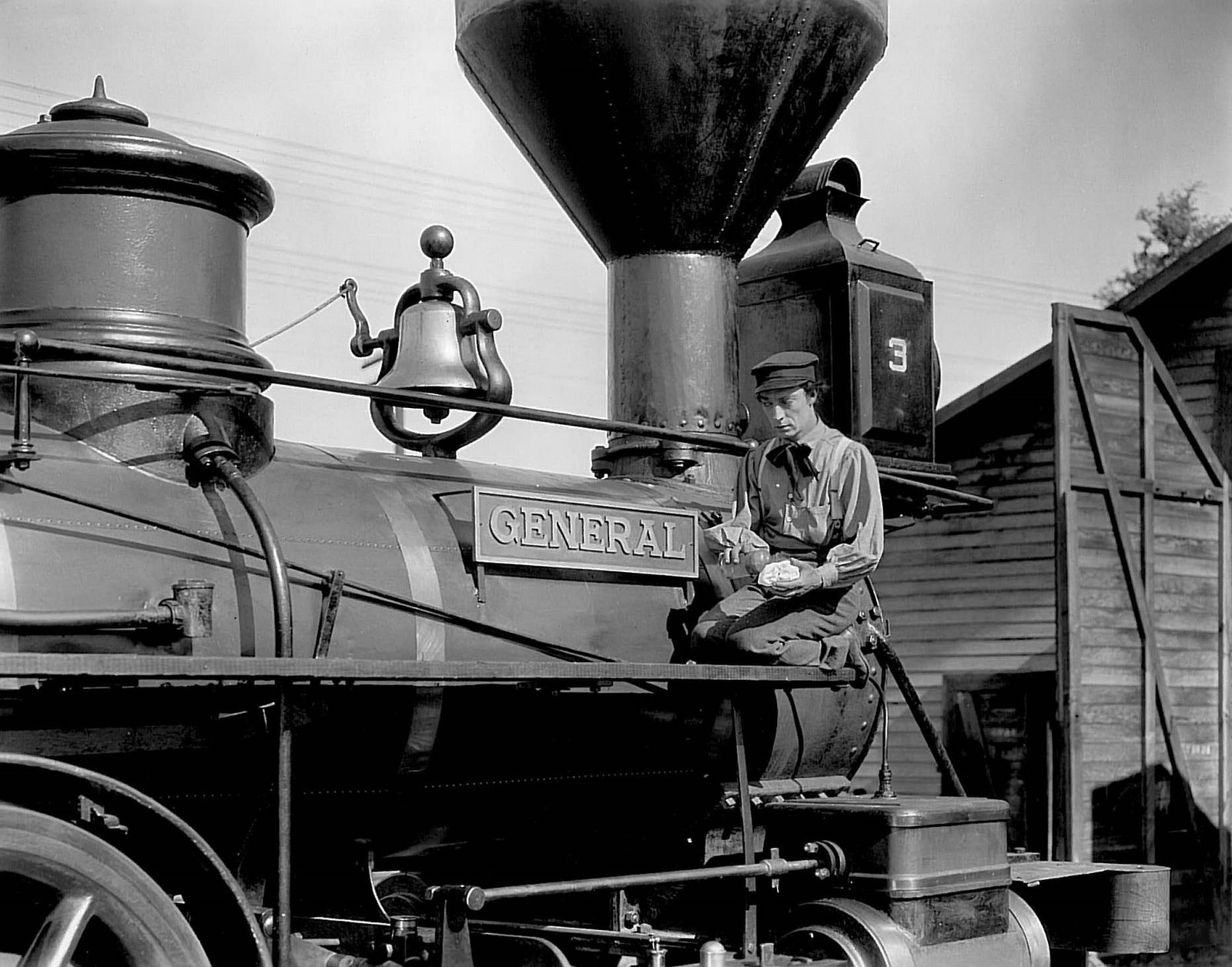
Buster and co-star in 'The General' (1926).

Coming up: I'll be doing live music for a screening of Buster Keaton's 'The General' (1926) at the Coolidge Corner Theatre on Wednesday, April 13. 

It's a special occasion because Slate film critic Dana Stevens, author of a new book on Keaton, will be on hand for a Q & A after the show. It'll be moderated by local film guru Ty Burr.

'Camera Man,' which came out a few months ago, has been rapturously received, and has led to a host of Keaton screenings this year. (I had the privilege of doing an earlier one with Stevens in Newport, R.I. this past February.)

So march on down to the Coolidge Corner to see Keaton's masterpiece on the big screen, and meet the author of a brand new book that puts Keaton's work in the context of his early-20th-century times.

More details in the press release below. 

For now, a few thoughts about volume inspired by yesterday's screening of 'Ben Hur' (1925) at the new Showroom venue of the Colonial Theatre in Keene, N.H.

This is a surprisingly touchy subject, as there's apparently a vast range of perceptions of what's appropriate volume for silent film accompaniment.

Yesterday, I arrived early to set up and work with the house tech to set the sound levels. Each house is different, and the Showroom is a venue I've only played once before, so it's important to take time to set up the audio.

Keeping my keyboard volume output at mid-range, we worked out the levels, checking each of my synth settings to make sure everything was acceptable in the house. I felt it sounded a bit dry, so just a touch of reverb was added to the main orchestral setting I planned to use. Great!

(The reason to keep my synth output at mid-range is because I need that level to make use of the various volume levels the touch-sensitive keyboard is capable of producing. I find I can't do that effectively if the output is below mid-range: level 5 out of 10.)

We also have to account for the fact that in most places with house sound (such as the Showroom), a good amount of sound volume passes over my head (down at front) and so audiences can sometimes receive significantly more volume than I hear.

Okay, fine. Because I work primarily in improv and create the accompaniment live and in the moment, it's my preference to sit at the keyboard for at least a half-hour before a show: warming up, working through material, and just getting into the zone. For me, it's hard to start a film just cold—it's not like pressing a button.

But because people are filing into the theater, during this time I've found it's helpful to temporarily take my volume output down to about 2 out of 10 as a courtesy. That way people can hear each other talking, while I can still do my thing, even though it's not the volume I'll be working with for the film.

The Colonial Theatre's new "Showroom" venue, set up for silent film.

So this is what I was doing yesterday when I noticed it was 10 minutes to showtime, and I hadn't thought to yet use the bathroom. (Very important in advance of a 2½-hour film.) So I switched to some synth-generated pattern music and got up to take care of business.

That's when someone from the theater came up to me with a concerned look on her face. People were complaining, she said, that the music was much too loud and that we needed to take the volume down somewhat.

Really? I've gotta tell you, I like to think I'm easy-going and welcome feedback and would do whatever it takes to accommodate an audience. But right in front of creating live music for a challenging and marathon-length film, this is not the thing to hear. 

(Even worse: a few years ago, someone came down to the keyboard in the middle of a show in progress at the Leavitt Theatre in Ogunquit, Maine and placed a folded-up note on the keyboard, for Pete's sake. Using one hand, I opened it to read "MUSIC TOO LOUD!")

Maybe it's a weakness on my part, but I find this kind of thing really throws me when it comes right before I'm about to commit to an improv accompaniment journey of some length, and which will require some concentration—especially after we've taken time to set levels that everyone agreed were acceptable. 

And it's especially discouraging when I've deliberately been playing at a quiet level as a courtesy, and then to be told it's still too loud? 

Would people stop a tightrope walker just before he or she steps out on the wire above Niagara Falls to tell them they don't approve of the type of wood being used in the balance pole?

I strive not to be the temperamental artist type, but jeez. This is me, baring my soul in music in hopes of bringing to life a worthy cinematic experience, and I'm being told to keep it down lest it interfere with someone's enjoyment of the film?

Well, why don't I just stop playing altogether? Maybe then everyone will be happy? 

Of course I didn't speak those words. I told the theater woman we'd see what we could do. In introducing the film, I addressed it openly: we'd had some complaints, but here's the situation. This is a BIG film, I said, and at times the music will be BIG as well. 

However, it's still a new venue to me, I said, so I'll do my best to keep things at a level we can all find generally acceptable. But people have to understand: this is not background music. At its best (if I'm doing it effectively) it's a crucial part of the experience.

I think I run into trouble when people new to the experience expect the accompaniment to be background music, or (even worse) something that's optional or just decoration.

Well, no. In silent film, although music generally shouldn't be noticed on its own, it's often a full player in the overall experience. That was true then, and it's still true now. 

So while it shouldn't gratuitously call attention to itself, the music should have a presence. And in some cases, it really should be pretty darned big and bold.

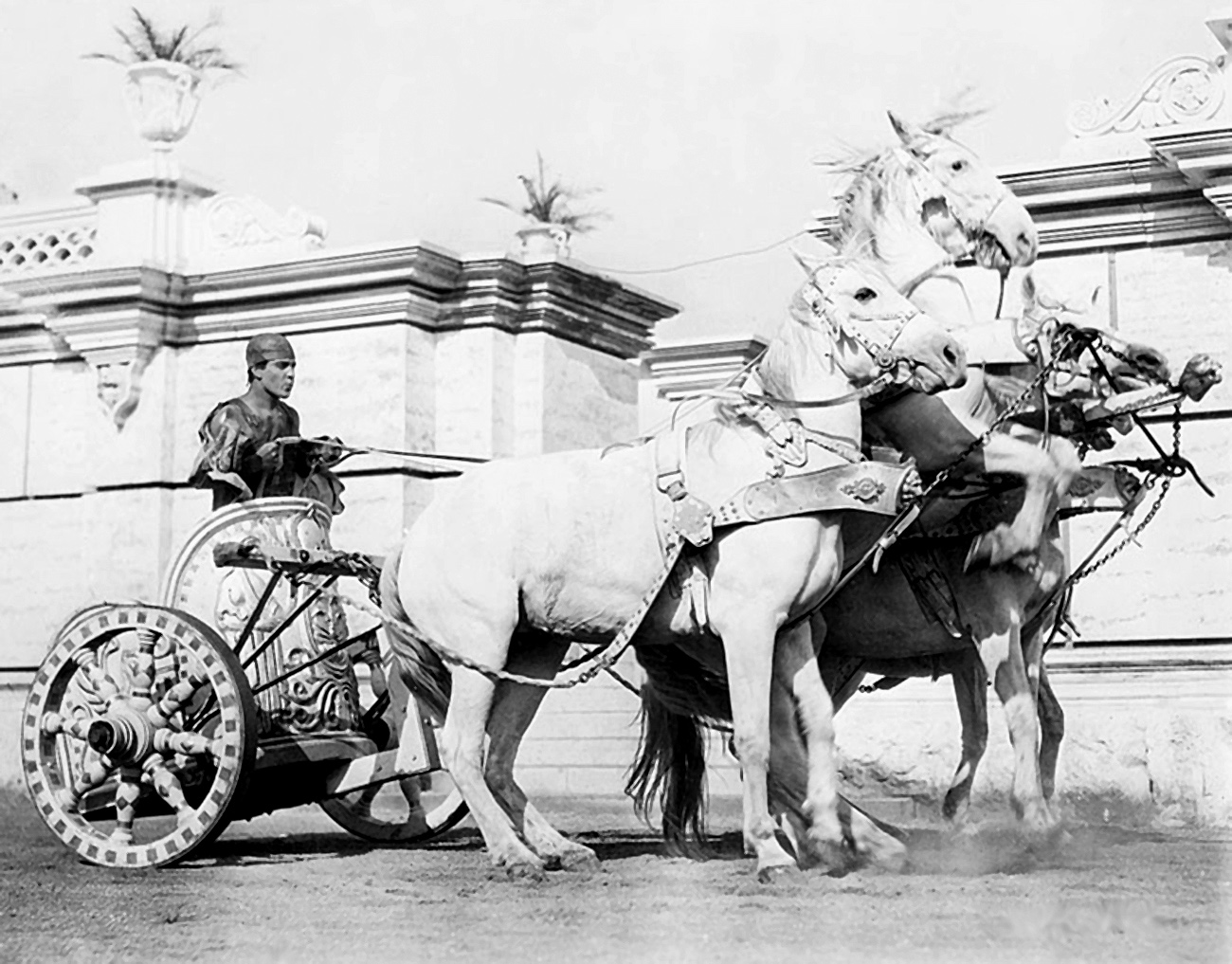
Take 'Ben Hur.' You really can't play quiet stuff during the sea battle scene or the famous chariot race. So if I'm at the keyboard, it's going to be loud, exciting, dramatic, and all that.

In the end, I was able to pull it together yesterday. No one covered their ears or walked out that I'm aware of, anyway. When it was over, we had nice comments and good questions. I made my usual joke about checking with the Diocese of Manchester to confirm that attending a screening of 'Ben Hur' did not count as attending Mass. Thank you and have a good night!

I don't know. Maybe I'm looking at this wrong way. Maybe I should really amp up the volume, and then supplement my income by selling over-priced ear plugs. Or possibly sell stationery so people can write me letters to be delivered in the middle of a performance.

Even if I go ahead with those ideas, they won't be ready in time for Wednesday's screening of 'The General' at the Coolidge Corner. Here's the promised press release with all the details!

*   *   *

Buster Keaton in 'The General.' 

MONDAY, APRIL 4, 2022 / FOR IMMEDIATE RELEASE
Contact Jeff Rapsis • (603) 236-9237 • jeffrapsis@gmail.com

Buster Keaton's 'The General' with live music at Coolidge Corner on Wednesday, April 13

Civil War railroading comedy/adventure film lauded as stone-faced comic moviemaker's masterpiece

Screening includes Q & A with Dana Stevens, author of 'Camera Man,' newly published Keaton book.

BROOKLINE, Mass.— He never smiled on camera, earning him the nickname of "the Great Stone Face." But Buster Keaton's comedies rocked Hollywood's silent era with laughter throughout the 1920s.

See for yourself with a screening of 'The General' (1926), one of Keaton's landmark feature films, on Wednesday, April 13 at 7 p.m. at the Coolidge Corner Theatre, 290 Harvard St., Brookline, Mass.

The screening will feature live music for the movie by silent film accompanist Jeff Rapsis. General admission is $23 per person.

The show is the latest in the Coolidge Corner's acclaimed 'Sounds of Silents' series, which gives audiences the opportunity to experience early cinema as it was intended: on the big screen, with live music, and with an audience.

The screening will be followed by a Q & A with Slate film critic Dana Stevens, author of 'Camera Man,' a newly published book exploring Keaton's work in the context of 20th century history.

Stevens’s book will be for sale after the screening, courtesy of Brookline Booksmith. The Q & A will be moderated by Boston-based critic Ty Burr.

'The General,' set during the U.S. Civil War, tells the story of a southern locomotive engineer (Keaton) whose engine (named 'The General') is hijacked by Northern spies with his girlfriend onboard.

Keaton, commandeering another train, races north in pursuit behind enemy lines. Can he rescue his girl? And can he recapture his locomotive and make it back to warn of a coming Northern attack?

Critics call 'The General' Keaton's masterpiece, praising its authentic period detail, ambitious action and battle sequences, and its overall integration of story, drama, and comedy.

It's also regarded as one of Hollywood's great railroad films, with much of the action occurring on or around moving steam locomotives.

Accompanist Jeff Rapsis will improvise an original musical score for 'The General' live as the film is shown.

"When the score gets made up on the spot, it creates a special energy that's an important part of the silent film experience," said Rapsis, who uses a digital synthesizer to recreate the texture of a full orchestra for the accompaniment.

With Center for the Art's screening of 'The General,' audiences will get a chance to experience silent film as it was meant to be seen—in a high quality print, on a large screen, with live music, and with an audience.

"All those elements are important parts of the silent film experience," Rapsis said. "Recreate those conditions, and the classics of early Hollywood leap back to life in ways that can still move audiences today."

Rapsis performs on a digital keyboard that reproduces the texture of the full orchestra and creates a traditional "movie score" sound.

Keaton, along with Charlie Chaplin and Harold Lloyd, stands today as one of the silent screen's three great clowns. Some critics regard Keaton as the best of all; Roger Ebert wrote in 2002 that "in an extraordinary period from 1920 to 1929, (Keaton) worked without interruption on a series of films that make him, arguably, the greatest actor-director in the history of the movies."

A remarkable pantomime artist, Keaton naturally used his whole body to communicate emotions from sadness to surprise. And in an era with no post-production special effects, Keaton's acrobatic talents enabled him to perform all his own stunts.

Critics review 'The General':

"The most insistently moving picture ever made, its climax is the most stunning visual event ever arranged for a film comedy."
—Walter Kerr, author of 'The Silent Clowns'

"An almost perfect entertainment!"
—Dave Kehr, Chicago Reader

"What makes the film so special is the way the timing, audacity and elegant choreography of its sight gags, acrobatics, pratfalls and dramatic incidents is matched by Buster's directorial artistry, his acute observational skills working alongside the physical élan and sweet subtlety of his own performance."
—Time Out (London)

‘The General’ (1926) starring Buster Keaton will be shown with live music on Wednesday, April 13 at 7 p.m. at the Coolidge Corner Theatre, 290 Harvard St., Brookline, Mass. as part of the theater's 'Sounds of Silents' series. Admission is $23 per person. For more info and to buy tickets, visit www.coolidge.org or call (617) 734-2500. For more about the music, visit www.jeffrapsis.com.

Wednesday, April 6, 2022

Up next: the original silent 'Ben Hur' (1925) on Sunday, April 10 at the Showroom in Keene, N.H.

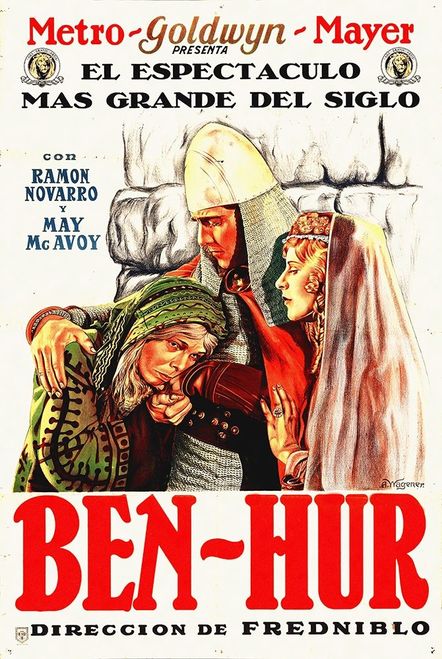
A Spanish language poster for MGM's 'Ben Hur' (1925).

Easter must be on its way, as this month's silent film schedule is thick with Biblical epics.

Coming up next: the original silent version of 'Ben Hur' (1925) on Sunday, April 10 in Keene, N.H. If there's a film you should try to see on the big screen, this is it. More details in the press release below.

For now, let me report that we enjoyed a healthy turnout for last Sunday's unusual double bill: Lon Chaney in 'Flesh and Blood' and Harry Houdini in 'The Man From Beyond,' both films from 1922.

The Chaney film, which I'd never done before, held up pretty well, with an escaped-prisoner-seeking-justice storyline that kept our audience engaged throughout. Large chunks of it are set in Chinatown, but I resisted the temptation to play pentatonic-scale-"Oriental"-sounding music.

Instead, I kept mostly to a piano & strings texture, except for a scene where a harmonium gets played, and then also when Chaney performs a sentimental tune on a solo violin. One wonders how musicians of the 1920s would have matched the on-screen action in this film.

The Houdini picture is a mind-bending affair about reincarnation that left most people scratching their heads. How can a guy become frozen in 1820, then thawed out 100 years later, to the point where he's riding around in automobiles and attending a wedding, and not realize it was a century later?

But the rousing waterfall rescue sequence that concludes the film, which was actually filmed at Niagara Falls, was enough to leave everyone satisfied.

Okay, here's the press release on 'Ben Hur.' Hope to see you this Sunday at 2 p.m. at the Colonial Theatre's new "Showroom" venue in Keene, N.H.!

*    *    *

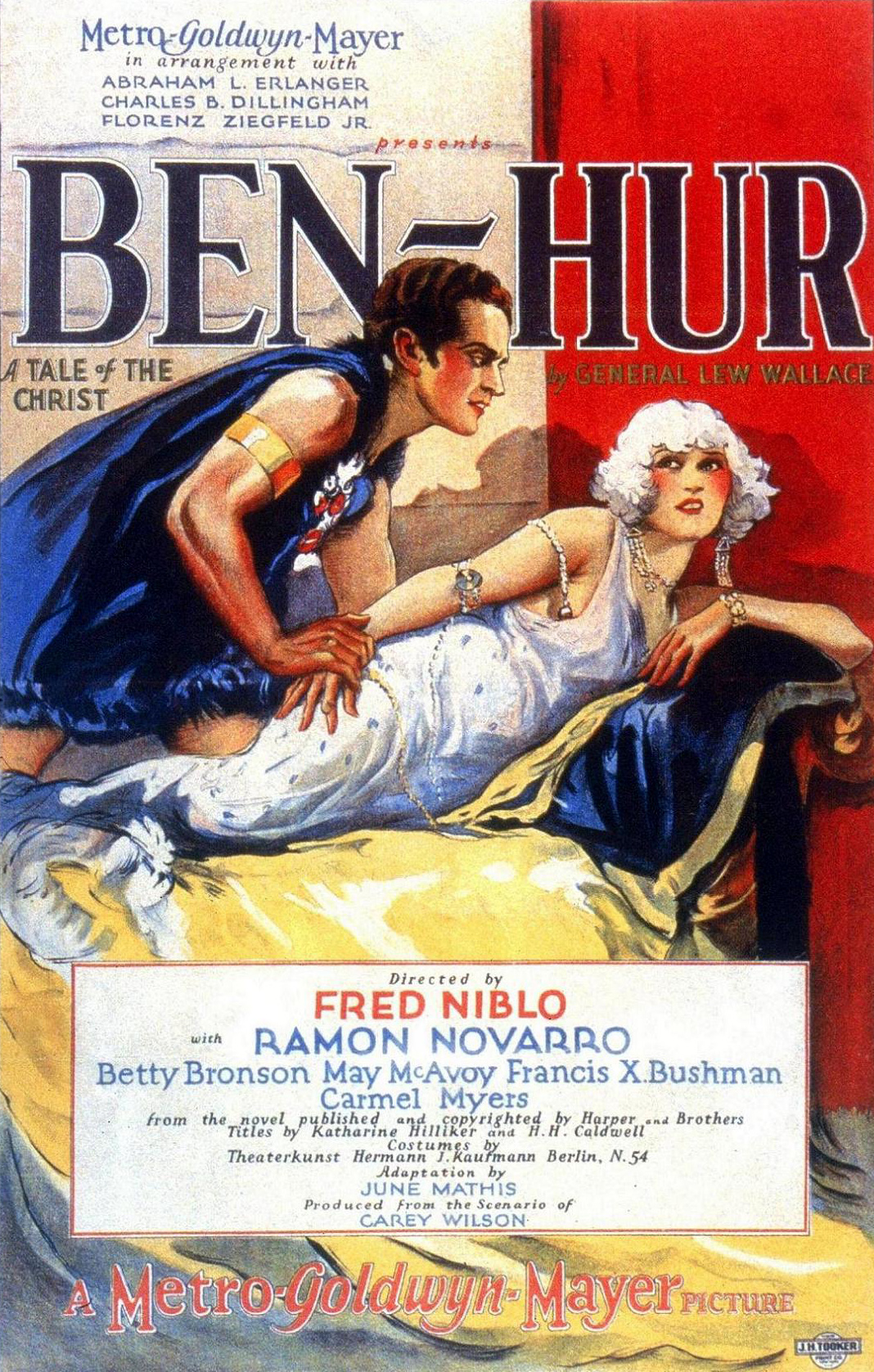
An original release poster for MGM's silent epic 'Ben Hur' (1925).

MONDAY, APRIL 4, 2022 / FOR IMMEDIATE RELEASE
Contact Jeff Rapsis • (603) 236-9237 • jeffrapsis@gmail.com

Silent film epic ‘Ben Hur’ (1925) coming to Showroom in Keene on Sunday, April 10

Prelude to Easter: Hollywood's original Biblical-era blockbuster to be screened with live music at Colonial Theatre's new venue

KEENE, N.H.—One of early Hollywood's greatest epics returns to the big screen with a showing of 'Ben Hur, A Tale of The Christ' (1925) on Sunday, April 10 at 2 p.m. at the Colonial Theatre's Showroom, 20 Commercial St., Keene.

The screening will feature live accompaniment by Jeff Rapsis, a New Hampshire-based composer who specializes in creating music for silent films.

Admission is $15 per person, general admission. Tickets are available online at www.thecolonial.org or at the door.

'Ben Hur,' starring Ramon Novarro and Francis X. Bushman, was among the first Hollywood motion pictures to tell a Biblical-era story on a large scale.

The film, which helped establish MGM as a leading studio, employed a cast of thousands and boasted action sequences including a large-scale sea battle.

The film is highlighted by a spell-binding chariot race that still leaves audiences breathless.

Set in the Holy Land at the time of Christ's birth, 'Ben Hur' tells the story of a Jewish family in Jerusalem whose fortune is confiscated by the Romans and its members jailed.

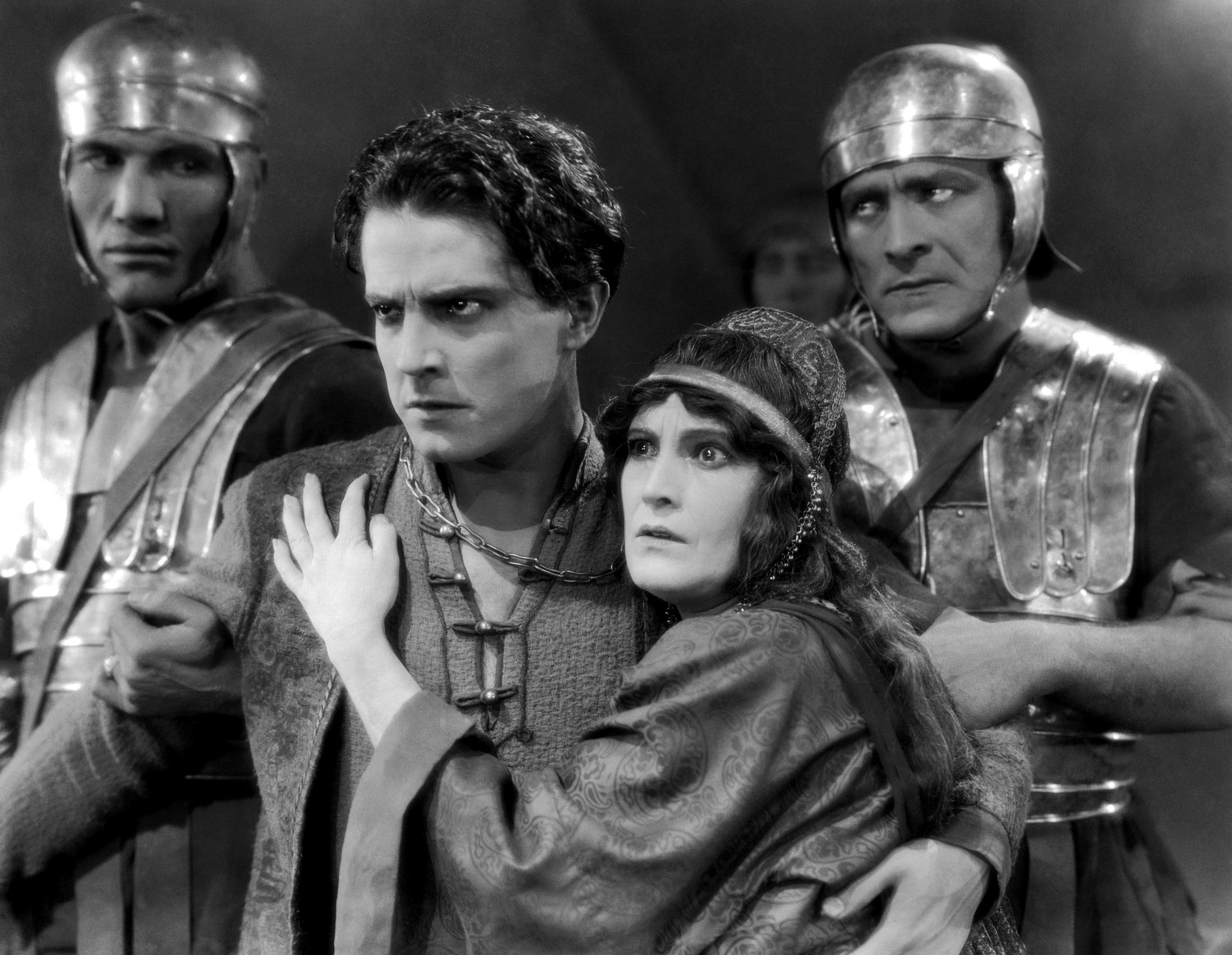
The enslaved family heir, Judah Ben Hur (played by Novarro, a leading silent-era heartthrob) is inspired by encounters with Christ to pursue justice. This leads him to a series of epic adventures in his quest to find his mother and sister and restore his family fortune.

The film is particularly appropriate for the weeks leading up to Easter, which is celebrated on Sunday, April 17. (Orthodox Easter falls on Sunday, April 24 in 2022.)


'Ben Hur,' directed by Fred Niblo, was among the most expensive films of the silent era, taking two years to make and costing between $4 million and $6 million. When released in 1925, it became a huge hit for the newly formed Metro-Goldwyn-Mayer studio.

The chariot race scene in 'Ben Hur,' with Novarro and other cast members driving teams of horses at high speed on a mammoth dirt racetrack in a gigantic replica of a Roman stadium, was among the most complicated and dangerous sequences filmed in the silent era. It remains noted for its tight editing, dramatic sweep, and sheer cinematic excitement.

The chariot race was re-created virtually shot for shot in MGM's 1959 remake, and more recently imitated in the pod race scene in 'Star Wars Episode I: The Phantom Menace.'


Besides Novarro in the title role, the film stars Francis X. Bushman as Messala, the Roman soldier who imprisons the Hur family; Betty Bronson as Mary, mother of Jesus; May McAvoy as Ben Hur's sister Esther; and Claire McDowell as Ben Hur's mother.

'Ben Hur' was based on the best-selling 1880 novel by General Lew Wallace, which interwove the story of Christ's life with the Ben Hur clan, a fictional Jewish merchant family.

Celebrity "extras" in the chariot race scene included stars such as Douglas Fairbanks, Harold Lloyd, Lionel Barrymore, John Gilbert, Joan Crawford, Lillian Gish, Mary Pickford, and a very young Clark Gable.

The film was remade by MGM in the 1950s in a color and wide-screen version starring Charleton Heston that garnered 11 Academy Awards. Some critics believe the original 1925 version offers superior drama and story-telling.

In creating music for silent films, accompanist Jeff Rapsis performs on a digital synthesizer that reproduces the texture of the full orchestra and creates a traditional "movie score" sound.

For each film, Rapsis improvises accompaniment using original themes created beforehand. No music is written down; instead, the score evolves in real time based on audience reaction and the overall mood as the movie is screened.

'Ben Hur, A Tale of The Christ' (1925) will be shown on Sunday, April 10 at 2 p.m. at the Colonial Theatre's Showroom, 20 Commercial St., Keene.

General admission is $15 per person. Tickets are available online at www.thecolonial.org or at the door. For more information, call the Colonial box office at (603) 352-2033.