Showing posts with label Ludlow Town Auditorium. Show all posts

Monday, August 19, 2024

This week: music for MGM late silent 'The Pagan' (1929), then Murnau's 'The Last Laugh' (1924)

An original lobby card promoting MGM's 'The Pagan' (1929).

This week finds me creating music for a silent film I've never before accompanied, then two well-known favorites: one a drama, the other a comedy.

First up is 'The Pagan' (1929) a late MGM silent starring Ramon Novarro and Renée Adorée, which I'm accompanying on Wednesday, Aug. 21 at 6:30 p.m. at the Flying Monkey Moviehouse and Performance Center, 39 South Main St., Plymouth, N.H.

This is the one I've never done before. (By my count, it'll be #396 on my list of film titles I've accompanied in theatrical screenings.) It's an exotic tale of romance and adventure set in the South Pacific, which means plenty of opportunities for Novarro to go shirtless.

Like many late silents, 'The Pagan' was released with a recorded musical soundtrack (but without dialogue) that could be used by theater that had the ability to handle synchronized sound. 

Interestingly, the recorded soundtrack featured a tune called “Pagan Love Song” composed by Arthur Freed and Nacio Herb Brown, the same team responsible for “Singing in the Rain” and so many other popular songs of the era.

However, for the many theaters not yet "wired for sound," music was provided the same way it had been throughout the silent era: by live musicians playing whatever music they felt would help support what was on the screen.

That's what I'll be doing on Wednesday night for 'The Pagan,' a film I've never seen before. Despite the title, pray it goes well. 

Then, on Saturday, Aug. 24, it's up to Ludlow, Vt. for my annual appearance at 'Silent Film Night' at Ludlow Town Hall. This year's films is F.W. Murnau's 'The Last Laugh' (1924) starring Emil Jannings in a towering performance as a doorman who loses his job at a fancy downtown hotel.

Showtime for 'The Last Laugh' is 7 p.m.; more info in the press release below.

And on Sunday, Aug. 25, we turn to comedy with Buster Keaton's 'Spite Marriage' (1929), which I'm accompanying at the Town Hall Theatre in Wilton, N.H. Showtime there is 2 p.m. Admission is free, with donations welcome to support this independent theater.

All the best and enjoy this last stretch of summer before Labor Day weekend arrives!

*    *    *

Promotional poster for 'The Last Laugh' (1924) starring Emil Jannings.

WEDNESDAY, JULY 31, 2024 / FOR IMMEDIATE RELEASE
Contact Jeff Rapsis • (603) 236-9237 • jeffrapsis@gmail.com

'The Last Laugh' to screen with live music at Ludlow Town Hall on Saturday, Aug. 24

Oscar-winning actor Emil Jannings stars in ground-breaking 1924 silent drama from German director F.W. Murnau

LUDLOW, Vt.—'The Last Laugh' (1924), a German silent film drama about a hotel doorman demoted to washroom attendant, will be screened with live music on Saturday, Aug. 24 at 7 p.m. in Heald Auditorium in Ludlow Town Hall, 37 Depot St., Ludlow.

Presented by the Friends of Ludlow Auditorium, the screening will feature accompaniment by Jeff Rapsis, a New Hampshire-based composer who specializes in creating live music for silent film presentations.

Admission is free and all are welcome to this family-friendly event. Donations are accepted at the door to support the Friends of Ludlow Auditorium.

In 'The Last Laugh,' regarded as one of German director F.W. Murnau's best pictures, the story is told entirely in visual terms, without the use of title cards.

The film, a character study that chronicles the mental breakdown of an aging man who loses his position of authority, is also noted for its revolutionary use of camera movement.

Playing the lead role is Swiss/German actor Emil Jannings, widely recognized as one of the most versatile actors of early cinema.

Jannings would later move to Hollywood, where he earned the first-ever Best Actor Oscar at the inaugural Academy Awards for his towering performances in 'The Last Command' (1928) and 'The Patriot' (1928).

Critics and film writers regard 'The Last Laugh' as a landmark of early cinema.

" 'The Last Laugh' is a masterpiece of psychological study, perhaps the best ever portrayal of what goes through one man's mind under varying situations ... It is absolutely mind-boggling to see Emil Jannings age at least 10 or 15 years right in front of our eyes in the course of a couple of minutes," wrote author Robert K. Klepner in 'Silent Films' (2005).

Critic David Kehr of the Chicago Reader described 'The Last Laugh' as "the 1924 film in which F.W. Murnau freed his camera from its stationary tripod and took it on a flight of imagination and expression that changed the way movies were made."

The film's director of photography, Karl Freund, set new standards of cinematography in 'The Last Laugh,' setting up the camera to move through corridors and "see" action through a character's eye-view.

Freund's long career later included work in television in the 1950s in Hollywood, when he developed the "three camera" system for the "I Love Lucy" show, which became the standard format for shooting situation comedies.

'The Last Laugh' will be accompanied by live music by Jeff Rapsis, a New Hampshire-based silent film accompanist who performs at venues across the region and beyond.

"Films such as 'The Last Laugh' were created to be shown on the big screen and in a theater as a communal experience," Rapsis said. "With an audience and live music, they still come to life in the way their makers intended them to.

'The Last Laugh' (1924) will be screened with live music on Saturday, Aug. 24 at 7 p.m. in Heald Auditorium in Ludlow Town Hall, 37 Depot St., Ludlow.

Admission is free and all are welcome to this family-friendly event. Donations are accepted at the door to support the Friends of Ludlow Auditorium.
 
A scene from F.W. Murnau's 'The Last Laugh' (1924) starring Emil Jannings.

Friday, April 21, 2017

Join Charlie Chaplin and Jackie Coogan
for 'The Kid' on Saturday, 4/22 in Ludlow, Vt


This weekend, I bop up to Ludlow, Vt., home of Okemo Mountain.

But the ski season is over, so I'll be creating live accompaniment for a silent film program.

It's kind of similar to being on the slopes, wouldn't you say?

Featured is 'The Kid' (1921) starring Charlie Chaplin and a very young Jackie Coogan. It'll be preceded by Chaplin's short 'A Dog's Life' (1918).

I've often wanted to pair Chaplin's 'The Kid' with Buster Keaton's short comedy 'The Goat,' but once again the opportunity will slip by!

If you're in the area, come check out Chaplin's breakthrough feature—"a story with a smile, and perhaps a tear"—the way it was meant to be seen: on the big screen, with live music, and with an audience.

Showtime is 7 p.m. See you there! For more info, check out the press release below:

* * *


WEDNESDAY, MARCH 29, 2017 / FOR IMMEDIATE RELEASE
Contact Jeff Rapsis • (603) 236-9237 • jeffrapsis@gmail.com

Charlie Chaplin's 'The Kid' to screen on Saturday, April 22 at Ludlow Auditorium


Landmark silent film comedy/drama about Little Tramp raising an orphan to be presented with live music at historic venue

LUDLOW, Vt.—Silent film with live music returns to Ludlow Auditorium with a screening of Charlie Chaplin's classic comedy/drama 'The Kid' (1921) on Saturday, April 22 at 7 p.m.

The special program will be presented with live music by silent film accompanist Jeff Rapsis. The screening is free and open to the public.

Sponsored by FOLA (Friends of the Ludlow Auditorium), the program enables audiences to experience silent film in the way its makers originally intended: on the big screen, with live music, and with an audience.

Chaplin was already the world's most popular comedian and filmmaker when he produced 'The Kid,' his first feature-length project.

The movie, with its daring mix of intense drama and slapstick comedy, proved an instant sensation and marked one of the high points of Chaplin's long career.

'The Kid' follows the story of a tramp (Chaplin) who attempts to raise an orphaned boy on his own. It includes several classic scenes, and is highlighted by a sequence in which Chaplin battles authorities attempting to return the child to an orphanage.

Co-starring with Chaplin in 'The Kid' is five-year-old Jackie Coogan, who turned in what many critics rank as the best child performance of the entire silent film era. Chaplin himself worked closely with the young Coogan for more than a year to develop the youngster's acting abilities.

Coogan went on to a long career that much later included the role of "Uncle Fester" in the popular 1960s Addams Family television show.

The screening of 'The Kid' provides local audiences the opportunity to experience silent film as it was intended to be shown: on the big screen, in restored prints, with live music, and with an audience.

"If you can put pieces of the experience back together again, it's surprising how these films snap back to life," said Rapsis, a New Hampshire-based silent film accompanist who creates music for silent film screenings at venues around the country. "By showing the films under the right conditions, you can really get a sense of why people first fell in love with the movies."

In creating music for silent films, Rapsis performs on a digital synthesizer that reproduces the texture of the full orchestra and creates a traditional "movie score" sound.

'The Kid' will be preceded by 'A Dog's Life' (1918), one of Chaplin's earlier short comedies that helped establish his worldwide popularity.

'The Kid' (1921) starring Charlie Chaplin and Jackie Coogan, will be screened with live music on Saturday, April 22 at 7 p.m. at Ludlow Town Hall Auditorium, 137 Depot St. in Ludlow, Vt.

The screening is sponsored by the Friends of Ludlow Auditorium. Admission is free; donations are encouraged. For more information about the FOLA and its events, visit www.fola.us or call (802) 228-7239.

CRITIC QUOTE

“Chaplin's first real feature mixes slapstick and sentiment in a winning combination, as the Tramp raises a streetwise orphan. Wonderful film launched Coogan as a major child star, and it's easy to see why.”
– Leonard Maltin's Movie Guide

Saturday, August 20, 2016

Tonight: scoring 'Metropolis' in Ludlow, Vt.,
plus thoughts about Valentino's "Sheik" films

Working for the man in 'Metropolis' (1927).

Very excited about the chance to do live music tonight (Saturday, Aug. 20) for a screening of 'Metropolis' in Ludlow, Vt.

Showtime is 7 p.m. at the Ludlow Auditorium, which is upstairs from the town offices. It was never designed to be a movie theater, but it's a great place to experience silent film.

Among the reasons: the people are great, and so are the acoustics.

More info about tonight's screening is in the press release below.

For now, a few notes about Rudolph Valentino. His untimely death occurred on Aug. 23, 1926, which means the 90th anniversary is coming up next week.


He's one of the few stars from the silent era who remain a household name. Today, "Valentino" is still a synonym for exotic romance, even among people who've never seen any of his movies.

To help remedy that, I scheduled a spate of Valentino flicks in various places this month, with a special emphasis on 'Son of the Sheik' (1926), Valentino's final film.

Originally, I had intended to run double bills consisting of the original 1921 'The Sheik' as well as 'Son,' which was its sequel.

But a program featuring both titles runs well over three hours. And too much of anything—even Valentino—is not always wise.

So I've pared back most of the screenings to just 'Son of the Sheik,' generally regarded as the better of the two.

Overall, the original 'Sheik' is slower paced and more old-fashioned. The sequel is much zippier, more fun, and technically superior. Movie-making had advanced a lot in just five years.

However, now I'm not so sure. Last week I did run both back-to-back at the Flying Monkey Moviehouse and Performance Center in Plymouth, N.H.

And 'The Sheik' held up better than I expected, while its sequel seemed flat and less focused.

Vilma Banky and Rudy in 'Son of the Sheik.'

Afterwards, I polled the audience (about 40 people), and reaction was split right down the middle. Half preferred 'The Sheik,' while half preferred the sequel.

So we'll see. Maybe it really was just too much all at once, and 'Son of the Shiek' will come into its own when run on its own.

We'll find out next week, when I accompany the film on Thursday, Aug. 25 at the Leavitt Theater in Ogunquit, Maine, and then again on Saturday, Aug. 27 up in Brandon, Vt.

The one reqret I have about not running both films is that I lose the opportunity to create two intersecting scores.

Example: In 'The Sheik,' throughout the film I used a certain bold melodic signature for Valentino's title character and wove it into the score.

Then, for 'Son of the Sheik,' I used a completely different motif for the title character (the Sheik's son), and otherwise completely different material around it as well.

So THEN, when the Sheik's father shows up in the latter film, I brought back the original motif from the first movie, a move I thought was really effective.

But you can't achieve effects like that when you run only one title. Still, I'll do my best to help 'Son' connect with audiences curious about the Valentino appeal.

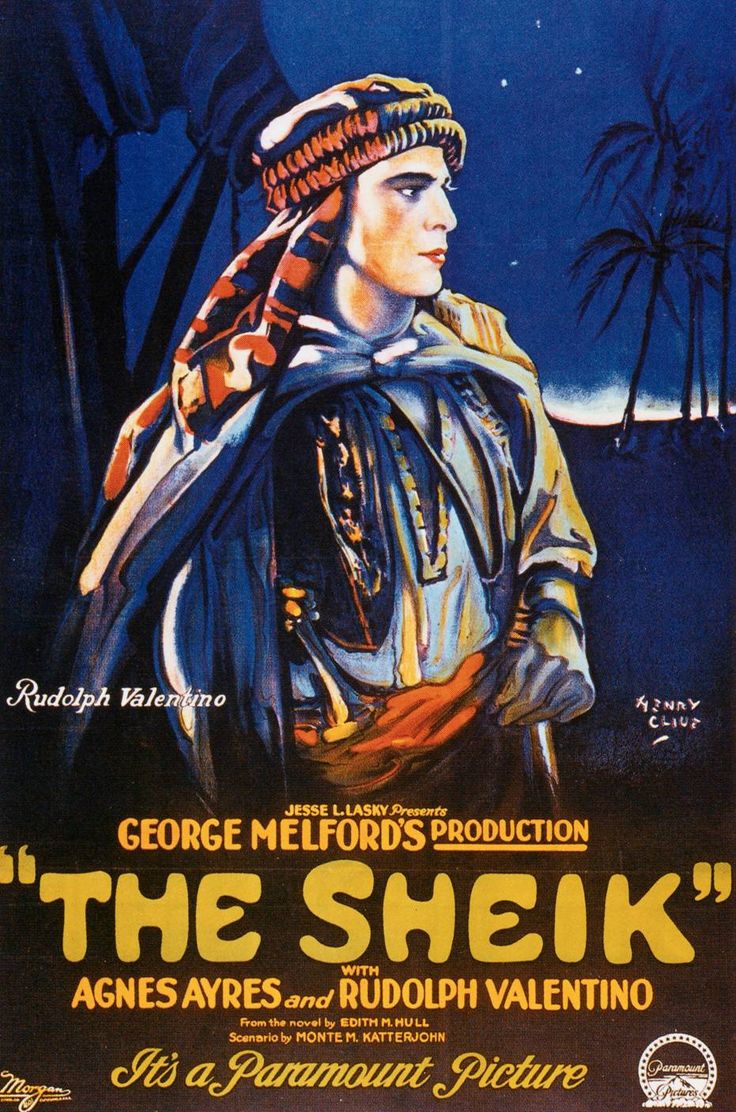
Poster for the original 'Sheik' film in 1921.

Speaking of which: one thing about 'Son' that's necessary to explain is that Valentino was to some extent making fun of his reputation as the screen's greatest lover.

Watch both Sheik films in succession, it's easy to see this. But without context, some of his moves in 'Son' might get taken the wrong way. "Oh, those primitive silent movies!" So it necessary to say a few works about that.

The good news is that both pictures hold up quite well on their own, so I'm looking forward to presenting more Valentino later this month.

But first, the imagined future beckons. Come up to Ludlow, Vt. tonight and see one of the biggies! More info in the press release below.

* * *


WEDNESDAY, JULY 27, 2016 / FOR IMMEDIATE RELEASE
Contact Jeff Rapsis • (603) 236-9237 • jeffrapsis@gmail.com

Futuristic silent film epic 'Metropolis' (1927)
to be shown in Ludlow on Saturday, Aug. 20


Landmark early sci-fi fantasy movie, with half-hour of rediscovered footage, to be shown with live music at Ludlow (Vt.) Town Hall Auditorium

LUDLOW, Vt.—A silent film hailed as the granddaddy of all science fiction fantasy movies will be screened with live music on Saturday, Aug. 20 at 7 p.m. at Ludlow Town Hall Auditorium.

The screening, sponsored by FOLA (Friends of the Ludlow Auditorium), will allow audiences to experience silent film in the way its creators originally intended: on the big screen, with live music, and with an audience.

The show, like all movies at the Ludlow Town Hall Auditorium, is free and open to the public. 'Metropolis' will be preceded by a short silent comedy film starring Buster Keaton.

"'Metropolis' is one of the great all-time classics of cinema, and we're thrilled to present it so fans can experience it with an audience and live music," said Ralph Pace, programmer and organizer of the series.

Original music for 'Metropolis' will be performed live by Jeff Rapsis, a New Hampshire-based composer and silent film accompanist who performs at screenings around the nation.

'Metropolis' (1927), regarded as German director Fritz Lang's masterpiece, is set in a futuristic city where a privileged elite pursue lives of leisure while the masses toil on vast machines and live deep underground.

The film, with its visions of futuristic factories and flying cars, set new standards for visual design and inspired generations of dystopian fantasies from Ridley Scott's 'Blade Runner' to Terry Gilliam's 'Brazil.'

In reviving 'Metropolis' and other great films of cinema's early years, FOLA aims to show silent movies as they were meant to be seen—in high quality prints, on a large screen, with live music, and with an audience.

"All those elements are important parts of the silent film experience," said Rapsis, who will improvise an original live score for 'Metropolis' on the spot. "Recreate those conditions, and the classics of early cinema leap back to life."

Brigitte Helm works her triceps in 'Metropolis.'

In 'Metropolis,' the story centers on an upper class young man who falls in love with a woman who works with the poor. The tale encompasses mad scientists, human-like robots, underground spiritual movements, and industrial espionage, all set in a society divided between haves and have-nots.

The version of 'Metropolis' to be screened in Ludlow a newly restored edition that includes nearly a half-hour of missing footage cut following the film's premiere in 1927. The lost footage, discovered in 2008 in an archive in Argentina, has since been added to the existing 'Metropolis,' allowing plot threads and characters to be developed more fully.

After its premiere, the film's distributors (including Paramount in the U.S.) drastically shortened 'Metropolis' to maximize the film's commercial potential. By the time it debuted in the U.S. later that year, the film was only about 90 minutes long.

Evil Scientist! Boo!

Even in its shortened form, 'Metropolis' became a cornerstone of science fiction cinema. Due to its enduring popularity, the film has undergone numerous restorations in the intervening decades in attempts to recover Lang's original vision.

In 1984, the film was reissued with additional footage, color tints, and a pop rock score (but with many of its intertitles removed) by music producer Giorgio Moroder. A more archival restoration was completed in 1987, under the direction of Enno Patalas of the Munich Film Archive, in which missing scenes were represented with title cards and still photographs.

More recently, a 2001 restoration combined footage from four archives and was widely believed that this would be the most complete version of Lang's film that contemporary audiences could ever hope to see. But in the summer of 2008, the curator of the Buenos Aires Museo del Cine discovered a 16mm dupe negative of 'Metropolis' that was considerably longer than any existing print.

It included not merely a few additional snippets, but 25 minutes of "lost" footage, about a fifth of the film, that had not been seen since its Berlin debut.

The discovery of such a significant amount of material called for yet another restoration, which debuted in 2010 to widespread acclaim. It's this fully restored edition that will be screened in Ludlow.

" 'Metropolis' stands as an stunning example of the power of silent film to tell a compelling story without words, and reach across the generations to touch movie-goers from the real future, which means us," said accompanist Jeff Rapsis, who provides live music for silent film screenings throughout New England.

To accompany a silent film, Rapsis uses a digital synthesizer to recreate the texture of the full orchestra. The score is created live in real time as the movie is screened. Rather than focus exclusively on authentic music of the period, Rapsis creates new music for silent films that draws from movie scoring techniques that today's audiences expect from the cinema.

The restored 'Metropolis' will be shown on Saturday, Aug. 20 at 7 p.m. at Ludlow Town Hall Auditorium, 137 Depot St. in Ludlow, Vt. The screening is sponsored by the Friends of Ludlow Auditorium. Admission is free; donations are encouraged. For more information about the FOLA and its events, visit www.fola.us or call (802) 228-7239.

Thursday, August 22, 2013

Oh, those tubas! 'Sunrise' (1927) coming to
Flying Monkey on Thursday, Aug. 22


Here's one clue that 'Sunrise' (1927) should be regarded as allegorical fantasy: tubas.

They're not visible in the above poster, but yes, there are tubas in the film—or, more precisely, sousaphones. In the idealized city, the house band in a nightspot boasts at least a half-dozen of the big-belled instruments. That's more than most marching bands have!

As a tuba/sousaphone player myself, the only time I've encountered that many instruments in one place has been at various Tuba Christmas celebrations over the years. Otherwise, it just doesn't happen.

So keep that in mind when we screen F.W. Murnau's masterpiece, which will happen on Thursday, Aug. 22 at the Flying Monkey Moviehouse and Performance Center in Plymouth, N.H. It's a fantasy, folks. It has to be because of the tubas.

But before we come together to take in 'Sunrise,' a few notes about shows from this past week.

• Peter Clayton, owner of the Leavitt Theatre in Ogunquit, Maine, did it again. Greeting patrons on Thursday, Aug. 15 was a wonderful sandwich board featuring artwork from 'Sally of the Sawdust' (1925), the evening's silent film attraction.

The show went well, despite intermittent distractions from a couple of large insects attracted to my light down below the screen. I got pretty good at swatting them away with one hand while keeping the music going with the other.

• And then on Saturday night (Aug. 17), it was up to Ludlow, Vt., where the Friends of Ludlow Auditorium were staging their now-annual silent film night. It's a great place to do these programs because the audiences are so enthusiastic, and also I get to hear another guy do accompaniment.

Glenn Brown, a local resident who donated a 1906 upright to the auditorium, handled music for the Buster Keaton short 'My Wife's Relations.' That's Glenn at the piano with Ralph Pace, who organizes all the auditorium's movie screenings.

After that, I chipped in with music for Keaton's feature 'Steamboat Bill Jr.' Things got off to a rocky start as the recorded soundtrack to the print we were using was inadvertently left on as the movie opened, and so at first I didn't know what I was hearing underneath my own playing. I thought it was my cell phone going off!

But then I realized what it was, and so had to actually stop playing and ask for the soundtrack to be turned off. It eventually was, and things went pretty smoothly from there. But sometimes that kind of thing can throw you mentally, and it can take a lot of effort to get back into the groove.

It doesn't help that the opening of 'Steamboat' is actually quite challenging to score, I think, because there needs to be a contrast between music for King's new steamboat and Canfield's old wreck. The music for King can't be too triumphant, and the audience for Canfield can't be too morose, or I think an audience new to the picture might start off rooting for the wrong characters.

And then there's 'Sunrise.' I'm looking forward to doing music for this film, one of the great romantic dramas of the silent era. For details and more info, here's the press release that went out earlier. Hope to see you there!

* * *

Janet Gaynor and George O'Brien in 'Sunrise' (1927). Gaynor won the first-ever Best Actress Oscar in part for her performance.

MONDAY, AUG. 19, 2013 / FOR IMMEDIATE RELEASE
Contact Jeff Rapsis • (603) 236-9237 • jeffrapsis@gmail.com

Classic romantic drama 'Sunrise'
to be screened Thursday, Aug. 22 at Flying Monkey


Silent film won three Oscars at first-ever Academy Awards, including 'Best Actress'; show features live musical accompaniment

PLYMOUTH, N.H.—Silent film on the big screen with live music returns to the Flying Monkey Moviehouse and Performance Center with the Academy Award-winning romantic drama 'Sunrise' (1927) on Thursday, Aug. 22 at 6:30 p.m. Admission is $10 per person.

The screening of 'Sunrise,' starring Janet Gaynor and George O'Brien, will feature music by silent film composer Jeff Rapsis, who will accompany the film live.

Gaynor, a popular female star of the silent film era, won the first-ever Academy Award for Best Actress for her performance in 'Sunrise.' The movie took top honors in cinematography and was also recognized for "Unique and Artistic Production" at the first-ever awards.

'Sunrise' tells the story of a young country couple (played by Gaynor and O'Brien) whose marriage is threatened by the presence of a woman from the city (Margaret Livingston) who convinces the man to abandon his wife. Will the young husband go through with a plan to kill his wife? Will true love overcome the obstacles of temptation and the promise of short-term pleasure?

A visual representation of short-term pleasure: George O'Brien falls under the spell of Margaret Livingston in 'Sunrise.'

'Sunrise' was made by F. W. Murnau, a German director and one of the leading figures in German Expressionism, a style that uses distorted art design for symbolic effect. 'Sunrise' was made when Murnau was invited by studio chief William Fox to make an Expressionist film in Hollywood.

The resulting movie features enormous stylized sets that create an exaggerated, fairy-tale world. The city street set alone reportedly cost over $200,000 to build, an huge sum at the time. Much of the exterior shooting was done at Lake Arrowhead, Calif.

Full of cinematic innovations, the groundbreaking cinematography (by Charles Rosher and Karl Struss) featured moving cameras and impressive tracking shots. Titles appear sparingly, with long sequences of pure action and the bulk of the story told in Murnau's signature style. The extensive use of forced perspective is striking, particularly in a shot of the City with normal-sized people and sets in the foreground and smaller figures in the background by much smaller sets.

The story of 'Sunrise' is told as a visual allegory with few specific details. The characters have no names, and the setting is not named in order to make the tale more universal and symbolic.

With a full title of 'Sunrise: A Song of Two Humans,' the film is regarded as one of the high points of the silent cinema. In 1988, it was selected for preservation in the National Film Registry of the U.S. Library of Congress for films that are "culturally, historically, or aesthetically significant." The Sight and Sound poll of 2012 for the British Film Institute named 'Sunrise' the fifth-best film in the history of motion pictures by critics, and 22nd by directors.

More dramatics in F.W. Murnau's 'Sunrise.'

Critics continue to hail 'Sunrise' as one of the best films of all time.

"F.W. Murnau's 'Sunrise' conquered time and gravity with a freedom that was startling to its first audiences," wrote Roger Ebert in 2004. "To see it today is to be astonished by the boldness of its visual experimentation.

The Flying Monkey originally opened a silent film moviehouse in the 1920s, and showed first-run Hollywood films to generations of area residents until closing several years ago. The theater has since been renovated by Alex Ray, owner of the Common Man restaurants, who created a performance space that hosts a wide variety of music acts.

Movies of all types, however, are still a big part of the Flying Monkey's offerings, and the silent film series is a way for the theater to remain connected to its roots.

Rapsis, who uses original themes to improvise silent film scores, said great silent film dramas such as 'Sunrise' used their lack of dialogue to create stories that concentrated on the "big" emotions such as Love, Despair, Anger, and Joy. Because of this, audiences continue to respond to them in the 21st century, especially if they're presented as intended — with a live auience and live music.

"Dramas such as 'Sunrise' were created to be shown on the big screen as a communal experience," Rapsis said. "With an audience and live music, they still come to life as their creators intended them to. So the Flying Monkey screenings are a great chance to experience films that first caused people to fall in love with the movies," he said.

The Flying Monkey usually shows silent films on the second Thursday of each month. The screening of 'Sunrise' was shifted to Thursday, Aug. 22, because of a musical booking at the venue.

Other upcoming films in the Flying Monkey's silent series include:

• Thursday, Sept. 12, 6:30 p.m.: 'The Last Command' (1928) starring Emil Jannings, William Powell. Jannings snagged the first-ever Best Actor Academy Award for his towering portrayal of a Czarist general and patriot forced to contend with love and the Russian Revolution in this sweeping late silent drama directed by Josef von Sternberg.

• Thursday, Oct. 10, 6:30 p.m.: 'Safety Last' (1923) starring Harold Lloyd, Mildred Davis. The iconic image of Harold Lloyd dangling from the hands of a downtown clock is only one small piece of a remarkable thrill comedy that has lost none of its power over audiences. See for yourself as the film celebrates its 90th anniversary.

• Thursday, Oct. 31, 6:30 p.m.: 'Nosferatu' (1922). Celebrate Halloween by experiencing the original silent film adaptation of Bram Stoker's famous 'Dracula' story. Still scary after all these years—in fact, some critics believe this version is not only the best ever done, but has actually become creepier with the passage of time. See for yourself, if you dare!

'Sunrise' will be shown on Thursday, Aug. 22 at 6:30 p.m. at the Flying Monkey Moviehouse and Performance Center, 39 South Main St., Plymouth, N.H. Admission is $10 per person. For more information, visit www.flyingmonkeynh.com or call (603) 536-2551. For more information about the music, visit www.jeffrapsis.com.


Friday, August 16, 2013

Keaton's 'Steamboat Bill Jr.' (1928)
to storm Ludlow, Vt. on Saturday, Aug. 17


Here's a thought: If silent film were classical music, then Buster Keaton's feature films might be the cinematic equivalent of Ludwig van Beethoven's symphonies.

How so? Well, each film/symphony forms a world unto itself, and each has significant things to say, and each extends the boundaries of form and content in ways that influenced everyone who came after them.

So it's possible to think of Keaton's 'Steamboat Bill Jr.' (1928), which we're screening on Saturday, Aug. 17 at Ludlow Town Auditorium in Ludlow, Vt., as comparable to Beethoven's 'Pastoral' Symphony No. 6. Primarily I'm thinking about the storm that features in both works, but also in the outdoorsy feel that both works radiate. In Keaton's film and Beethoven's music, nature is a main character.

Also, the Keaton/Beethoven parallel might not be limited to their art. For instance: They both were short, and they both had unusual first names.

Okay, back to the movies: along these same lines, Chaplin might be Mozart, one possessed of a freakish gift that broke so much new ground in his chosen field. Mack Sennett and Keystone studios might be like Bach, forging the language itself. Harold Lloyd might be Gluck or Cherubini, composers who were amazingly popular in their day but are now less well-known. Or he might be Haydn, who pumped out symphonies (104 altogether) with a frequency akin to how Lloyd pumped out one-reelers.

And Langdon might be Brahms, the value of each man's art resting in large part in its incorporation and renewal of past traditions.

Wow, too much for one morning. So let me just say that I'm really looking forward to doing music for 'Steamboat Bill Jr.' in Ludlow this weekend. The program, which starts at 7 p.m., also includes a short comedy with music from a local pianist, so it'll be fun and interesting to be on the bill with someone else. Looking forward to it.

If you'd like to join us, there's more info in the press release...

* * *
Ernest Torrence (left) seems less than pleased at Buster's choice of hats in a famous scene from 'Steamboat Bill Jr.' (1928)

MONDAY, AUG. 5, 2013 / FOR IMMEDIATE RELEASE
Contact Jeff Rapsis • (603) 236-9237 • jeffrapsis@gmail.com

Silent comedy 'Steamboat Bill Jr.' (1928) to be shown in Ludlow on Saturday, Aug. 17


Buster Keaton masterpiece to be screened with live music at Ludlow (Vt.) Town Hall Auditorium

LUDLOW, Vt.—Silent film with live music returns to Ludlow Town Hall in August with 'Steamboat Bill Jr.' (1928), a classic comedy starring Buster Keaton, one of era's top performers. 'Steamboat Bill Jr.' will be revived for one showing only at the Ludlow Town Hall Auditorium on Saturday, Aug. 17 at 7 p.m.

The screening, sponsored by FOLA (Friends of the Ludlow Auditorium), will allow audiences to experience silent film in the way its creators originally intended: on the big screen, with live music, and with an audience. The show, like all movies at the Ludlow Town Hall Auditorium, is free and open to the public.

In 'Steamboat Bill Jr.,' Buster plays the bumbling son of a riverboat’s rough captain. When a rival brings a newer boat to the river, the family is forced to face competition, just as Buster is forced to ride out a cyclone threatening to destroy the community. Can Buster save the day and win the hand of his girlfriend, who happens to be daughter of his father's business rival?

The film includes the famous shot of an entire building front collapsing on Keaton, who is miraculously spared by a conveniently placed second-story window.

The Keaton feature will be proceeded by a Buster Keaton comedy short feature. For this opening film short, Ludlow resident Glenn Brown will provide the musical background using the 1906 upright grand piano that he donated to the Ludlow Town Hall Auditorium.

'Silent Film Night' at Ludlow Town Hall Auditorium aimed to recreate the era before movies were made with synchronized soundtracks. From about 1900 to 1929, films had no dialogue, and were accompanied by live music at theaters across the country to around the world. Accompaniment could range from a small ensemble or just a single piano in small towns to full orchestras in big city theaters.

The screening of 'Steamboat Bill Jr.' will feature live accompaniment by Jeff Rapsis, a New Hampshire-based composer who specializes in creating music for silent film presentations.

Rapsis will create a score for 'Steamboat Bill Jr.' on the spot, making up the music as the movie unfolds to enhance the action on the screen as well respond to audience reactions. He will perform the music on a digital synthesizer, which is capable of producing a wide range of theatre organ and orchestral textures.

"Live music was an integral part of the silent film experience," Rapsis said. "Because most films at the time weren't released with sheet music or scores, studios depended on local musicians to come up with an effective score that was different in every theater. At its best, this approach created an energy and a connection that added a great deal to a film's impact. That's what I try to recreate," Rapsis said.

Keaton, who grew up performing with the family vaudeville act, was known for never smiling on camera, an important element of his comic identity. A trained acrobat who learned at an early age how to take a fall, Keaton did all his own stunts on camera in the era before post-production special effects.

Critics continue to hail Keaton’s timeless comedy as well as his intuitive filmmaking genius. In 2002, Roger Ebert wrote of Keaton that “in an extraordinary period from 1920 to 1929, he worked without interruption on a series of films that make him, arguably, the greatest actor-director in the history of the movies.”

Keaton, who never attended school, did not think of himself as an artist but as an entertainer using the new medium of motion pictures to tell stories and create laughter.

'Steamboat Bill Jr.' will be screened as part of Silent Film Night on Saturday, Aug. 17 at 7 p.m. at Ludlow Town Hall Auditorium, 137 Depot St. in Ludlow, Vt. The screening is sponsored by the Friends of Ludlow Auditorium. Admission is free; donations are encouraged. For more information about the FOLA and its events, visit www.fola.us or call (802) 228-7239. For more info on the music, visit www.jeffrapsis.com.

Tuesday, October 9, 2012

"Better than foliage...": Notes on scoring
'Wings' in Ludlow (Vt.) Town Auditorium

Saturday, Oct. 6 brought me to the picturesque village of Ludlow, Vermont, home of Okemo Mountain ski resort, and where the foliage season is currently nearing its peak. I was on hand for what you might call an "apres-leaf peeping" event—to do live music after sundown for a screening of 'Wings' (1927), the great World War I flying drama.

Ludlow is blessed with a vintage municipal building that still houses much of the local government. Like many such buildings, its upper floors are home to a surprisingly large and high-ceiling auditorium, which over the years has done duty as a theater and a basketball arena, among other functions. (The court markings are still painted on the wooden floors.)

In recent years, the space has been restored and put back in use, primarily due to the efforts of the "Friends of the Ludlow Auditorium," a group of local volunteers dedicated to building up the facility's programming. They've been showing classic movies there, one per month, for some time, but this past August they tried something new—a program of short silent films with live music.

I couldn't be on hand to join in due to prior commitments, but the show was well received, and organizer Ralph Pace agreed to give me a slot to do music for a full-length feature. And so I came to town to accompany 'Wings.'

Below are photos of the stage (with movie screen), and also the seating area.


The space is a little unusual in that the seats are arranged on a massive series of risers that cover a good portion of the old wooden gym floor. But the acoustics are great, and it was a thrill to do music for the crowd of about 100 people who showed up.

The only glitch, alas, was that the aspect ratio of the projected image was incorrect, and we couldn't adjust it in time for the 7 p.m. show. So the cast of 'Wings' looked a little taller and thinner than usual. Most people seemed to accept the film as is, and I felt the music came out pretty effectively, so 'Wings' overall made its usual strong impact.

A lively question-and-answer session followed, including some queries about tinting—how appropriate for foliage season! We probably could have continued well into the night if Ralph himself hadn't come down from the projection "booth" (a makeshift area in the balcony) to thank everyone for coming. Even so, some people still stayed to chat further including several who said they forgot the music was live (the ultimate compliment!) and a couple from England who were "on a month's holiday to see your foliage" but said 'Wings' was the highlight of their trip so far. Better than foliage! High praise indeed!

Ralph was pleased enough with the turnout to ask folks if they'd like to see more. Many did, and so we'll see about doing future screening in Ludlow. If you live in the area and have any ideas about silent films to present with live music, please let me know!

In the meantime, if you're eager for more, my next gigi is only about an hour's drive away: a screening of the original 1925 silent version of 'The Phantom of the Opera' starring Lon Chaney, to be shown on Saturday, Oct. 13 at 7 p.m. at Brandon Town Hall on Route 7 in Brandon, Vt. Admission is free. Hope to see you there!