Showing posts with label Sally of the Sawdust. Show all posts

Thursday, March 5, 2015

Sunday, March 8: Rare double feature
of W.C. Fields silent films shown in 35mm!


People are often surprised to learn that W.C. Fields was a popular movie star during the silent film era.

How could that be? Wasn't his voice, that unmistakeable nasal twang, an essential element of his appeal?

But he was popular in silent films. And you can see why by coming to a great double feature of two of his best surviving silents this weekend.

It's on Sunday, March 8 at 2 p.m. at the great Somerville Theatre in Davis Square, Somerville, Mass.

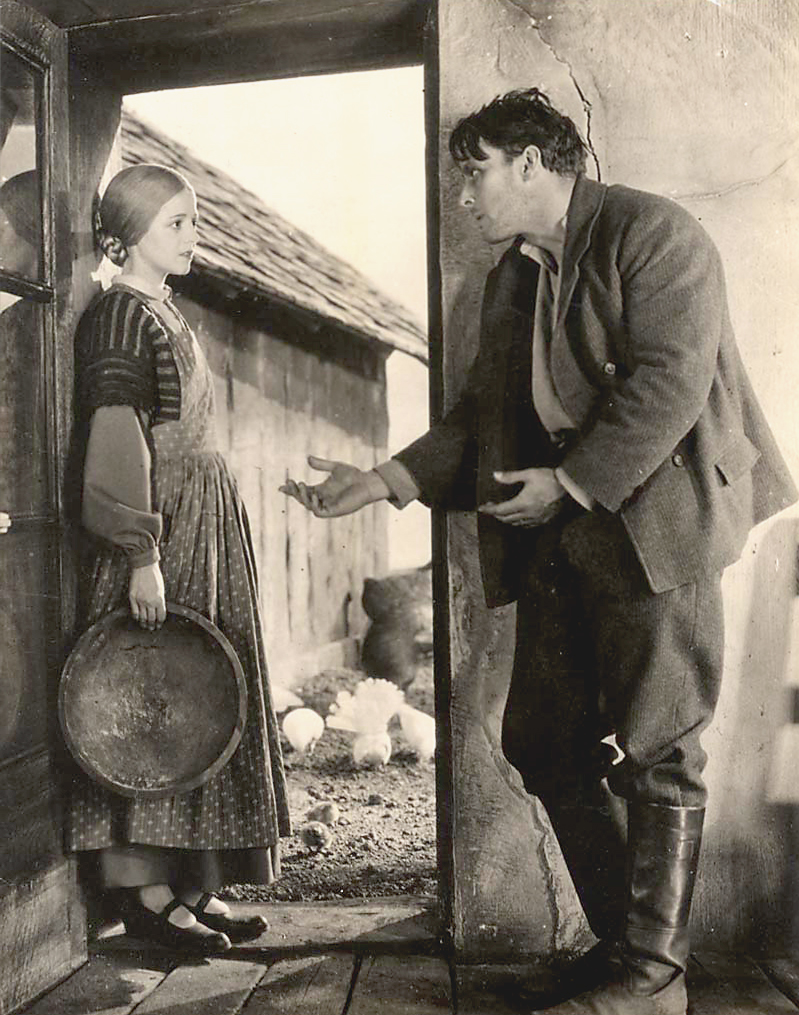
We're showing 'Sally of the Sawdust' (1925), a circus melodrama directed by D.W. Griffith, of all people, in which Fields plays a loveable con artist who adopts a young girl and raises her in the rough-and-tumble world of the big top.

It'll be followed by 'Running Wild' (1927), a classic family farce in which Fields plays a henpecked husband who undergoes a sudden transformation to alpha male.

Both films will be shown in 35mm, their original format, with prints courtesy the U.S. Library of Congress.

I'm told by the Somerville's projectionist extraordinaire David Kornfeld that the print of 'Running Wild' looks terrific. (That's Fields in 'Running Wild' at left.) He hasn't inspected 'Sally' in detail yet, but says at first glance it looks good.

Live music will be provided by yours truly.

It's an interesting pair of films that shows a slightly younger and more agile Fields playing two very different roles in two very different movies.

'Sally' is pure Griffith hokum, but then no one did melodrama better. In the film, Fields is called upon to play a wide range of emotions, and it's interesting to see what he could do with this kind of a role.

But it's light stuff, with plenty of scenes where Fields gets to show off his silent film comedy and pantomime chops.

Also of interest in 'Sally' is that it gives us a chance to see Fields doing his juggling act while still in his prime.

Versions of this film that I've seen often seem to cut out some of the juggling footage, so I'm interested to see if the LOC print has more material. It's possible.

But it's 'Running Wild' that I'm really looking forward to, as it's a great audience picture.

In running this before, I've found it starts strong with an absolutely hilarious depiction of dysfunctional family life, and then only gets better as the plot unfolds.

After being snow-bound for the better part of six weeks, the Boston area needs a laugh. And I can think of no more surefire way to produce that than inviting you to take in 'Running Wild' at the Somerville Theatre this Sunday afternoon.

Hope to see you there! For more info, check out the text of the press release below:

* * *

A mustachioed W.C. Fields and starlet Carol Dempster star in 'Sally of the Sawdust' (1925).

WEDNESDAY, FEB. 25, 2015 / FOR IMMEDIATE RELEASE
Contact Jeff Rapsis • (603) 236-9237 • jeffrapsis@gmail.com

Somerville Theatre to screen rare silent films
starring comic icon W.C. Fields


Double feature shows legendary performer in earlier prime as younger man; program accompanied by live music

SOMERVILLE, Mass.—He was a performer who could be recognized by just the nasal twang of his voice.

But prior to reaching iconic fame in talking pictures, W.C. Fields starred successfully in a popular series of silent feature films for Paramount Pictures and other studios in the 1920s.

Rediscover the non-talking W.C. Fields in 'Sally of the Sawdust' (1925) and 'Running Wild' (1927), two of Fields' best silent pictures, in a double-bill screening on Sunday, March 8 at 2 p.m. at the Somerville Theatre, 55 Davis Square, Somerville, Mass.

Both films will be screened using 35mm prints from the U.S. Library of Congress. General admission to the double feature is $15 per person.

Live musical scoring for the movies will be provided by silent film accompanist Jeff Rapsis.

W.C. Fields remains famous today for his comic persona as a misanthropic and hard-drinking egotist with a snarling contempt for dogs, children and women.

Although Fields achieved lasting fame as a movie star in talking pictures of the 1930s, his long career encompassed decades on the vaudeville stage as well as a series of silent film roles.

"People find it hard to think of W.C. Fields in silent films, but he was actually quite successful," Rapsis said. "As a vaudeville performer and juggler, Fields cultivated a form of visual comedy and pantomime that transferred well to the silent screen. Also, as a middle-aged man during the silent film era, he was able to play a family father figure—the kind of role that wasn't open to younger comic stars such as Charlie Chaplin or Buster Keaton.

In all, Fields starred in 10 silent features in the mid-1920s. Several are lost; in those that survive, Fields sports a thick mustache, part of his vaudeville costume as a "vagabond juggler" which he dropped in later years.

The Fields double feature is the latest installment of the Somerville Theatre's monthly "Silents, Please!" series, designed to showcase the silent era's best feature films the way they were intended to be shown—using actual 35mm film prints projected on the big screen, with live music, and with an audience.

"If you can put all these elements together, the films come to life in a way that's surprising to modern audiences," said Ian Judge, the Somerville's general manager. "Our silent film series has been very successful at attracting an audience, we're thrilled to continue it on a monthly basis."

W.C. Fields and Carol Dempster in 'Sally of the Sawdust.'

In 'Sally of the Sawdust' (1925), Fields plays Professor Eustache McGargle, a good-natured circus juggler and con man who finds himself responsible for Sally (Carol Dempster), an orphaned girl whose mother has died.

Raised by McGargle, Sally grows up to become a popular performer. But when the show arrives in the town where her mother's relatives now live, Sally is forced to choose between the man who raised her and the wealthy family that wants to reclaim her as their own.

'Sally of the Sawdust,' based on the 1923 stage musical 'Poppy,' gives Fields ample opportunity to display his juggling talents, a staple of his vaudeville act. The film was directed by D.W. Griffith, a rare detour into light comedy from a filmmaker known for pioneering epic dramas such as 'The Birth of a Nation' (1915) and 'Orphans of the Storm' (1921).

In 'Running Wild' (1927), Fields plays Elmer Finch, a cowardly and henpecked husband disrespected by his stepson, his co-workers, and even the family dog.

But every dog has his day, and Finch's comes when he undergoes hypnosis, which transforms him into a swaggering take-no-prisoners alpha male.

The result is a timeless domestic farce that foreshadows Fields' later talking films and continues to delight audiences when screened as intended: in a theater, with live music and an audience.

Fields appears as an even younger man in 'Pool Sharks' (1915), a short comedy also on the program. The film marks the first appearance of Fields on screen, and will be included as a bonus extra in the Somerville's program.

Rapsis improvises the music in real time, while the film is running, using a synthesizer that allow him to recreate the "movie score" texture of a full orchestra.

"Improvising a score live is a bit of a high-wire act, but it allows me to follow and support the film a lot more effectively than if I was buried in sheet music," Rapsis said. "Instead, I'm free to follow the film right in the moment. Each time it's different, which lends a certain energy and immediacy and excitement to the experience."

Following the W.C. Fields program, the Somerville has scheduled the following silent films to be shown in 35mm in the venue's main theater. All will be screened with live music by Jeff Rapsis.

• Sunday, April 5, 2 p.m.: 'The Ten Commandments' (1923). Spend Easter Sunday taking in Cecil B. Demille's original silent version of the Biblical blockbuster. A landmark epic that set the stage for scriptural spectacle, but also a film with major differences from DeMille's remake three decades later.

• Sunday, May 3, 2 p.m.: 'The Cameraman' (1928) starring Buster Keaton. In one of his best pictures, silent comedy legend Buster Keaton plays a would-be newsreel cameraman. A great romantic comedy and a remarkable "inside" look at the early movie biz as only Keaton could provide.

• Sunday, June 7, 2 p.m.: 'Play Safe' (1927) and 'Show People' (1928). A double feature of two comedies from the silent era's peak. 'Play Safe' includes one of most hair-raising train chase sequences ever filmed, while 'Show People' is director King Vidor's sly and self-referential Valentine to the era of silent movie-making.

• Sunday, July 5, 2 p.m.: 'The Big Parade' (1925) starring John Gilbert, Renee AdoreĆ©. Director King Vidor's intense drama about U.S. doughboys sent to World War I France, where the horror of trench warfare changes their lives forever. Among the first Hollywood films to depict realistic battlefield action; still maintains its power to shock.

A W.C. Fields double feature, including 'Sally of the Sawdust' (1925) and 'Running Wild' (1927), will be screened in 35mm with live music on Sunday, March 8 at 2 p.m. at the Somerville Theater, 55 Davis Square, Somerville, Mass. Admission is $15 adults, $12 students/seniors; general admission seating. For more information, call (617) 625-5700 or visit http://www.somervilletheatreonline.com.

Thursday, August 22, 2013

Oh, those tubas! 'Sunrise' (1927) coming to
Flying Monkey on Thursday, Aug. 22


Here's one clue that 'Sunrise' (1927) should be regarded as allegorical fantasy: tubas.

They're not visible in the above poster, but yes, there are tubas in the film—or, more precisely, sousaphones. In the idealized city, the house band in a nightspot boasts at least a half-dozen of the big-belled instruments. That's more than most marching bands have!

As a tuba/sousaphone player myself, the only time I've encountered that many instruments in one place has been at various Tuba Christmas celebrations over the years. Otherwise, it just doesn't happen.

So keep that in mind when we screen F.W. Murnau's masterpiece, which will happen on Thursday, Aug. 22 at the Flying Monkey Moviehouse and Performance Center in Plymouth, N.H. It's a fantasy, folks. It has to be because of the tubas.

But before we come together to take in 'Sunrise,' a few notes about shows from this past week.

• Peter Clayton, owner of the Leavitt Theatre in Ogunquit, Maine, did it again. Greeting patrons on Thursday, Aug. 15 was a wonderful sandwich board featuring artwork from 'Sally of the Sawdust' (1925), the evening's silent film attraction.

The show went well, despite intermittent distractions from a couple of large insects attracted to my light down below the screen. I got pretty good at swatting them away with one hand while keeping the music going with the other.

• And then on Saturday night (Aug. 17), it was up to Ludlow, Vt., where the Friends of Ludlow Auditorium were staging their now-annual silent film night. It's a great place to do these programs because the audiences are so enthusiastic, and also I get to hear another guy do accompaniment.

Glenn Brown, a local resident who donated a 1906 upright to the auditorium, handled music for the Buster Keaton short 'My Wife's Relations.' That's Glenn at the piano with Ralph Pace, who organizes all the auditorium's movie screenings.

After that, I chipped in with music for Keaton's feature 'Steamboat Bill Jr.' Things got off to a rocky start as the recorded soundtrack to the print we were using was inadvertently left on as the movie opened, and so at first I didn't know what I was hearing underneath my own playing. I thought it was my cell phone going off!

But then I realized what it was, and so had to actually stop playing and ask for the soundtrack to be turned off. It eventually was, and things went pretty smoothly from there. But sometimes that kind of thing can throw you mentally, and it can take a lot of effort to get back into the groove.

It doesn't help that the opening of 'Steamboat' is actually quite challenging to score, I think, because there needs to be a contrast between music for King's new steamboat and Canfield's old wreck. The music for King can't be too triumphant, and the audience for Canfield can't be too morose, or I think an audience new to the picture might start off rooting for the wrong characters.

And then there's 'Sunrise.' I'm looking forward to doing music for this film, one of the great romantic dramas of the silent era. For details and more info, here's the press release that went out earlier. Hope to see you there!

* * *

Janet Gaynor and George O'Brien in 'Sunrise' (1927). Gaynor won the first-ever Best Actress Oscar in part for her performance.

MONDAY, AUG. 19, 2013 / FOR IMMEDIATE RELEASE
Contact Jeff Rapsis • (603) 236-9237 • jeffrapsis@gmail.com

Classic romantic drama 'Sunrise'
to be screened Thursday, Aug. 22 at Flying Monkey


Silent film won three Oscars at first-ever Academy Awards, including 'Best Actress'; show features live musical accompaniment

PLYMOUTH, N.H.—Silent film on the big screen with live music returns to the Flying Monkey Moviehouse and Performance Center with the Academy Award-winning romantic drama 'Sunrise' (1927) on Thursday, Aug. 22 at 6:30 p.m. Admission is $10 per person.

The screening of 'Sunrise,' starring Janet Gaynor and George O'Brien, will feature music by silent film composer Jeff Rapsis, who will accompany the film live.

Gaynor, a popular female star of the silent film era, won the first-ever Academy Award for Best Actress for her performance in 'Sunrise.' The movie took top honors in cinematography and was also recognized for "Unique and Artistic Production" at the first-ever awards.

'Sunrise' tells the story of a young country couple (played by Gaynor and O'Brien) whose marriage is threatened by the presence of a woman from the city (Margaret Livingston) who convinces the man to abandon his wife. Will the young husband go through with a plan to kill his wife? Will true love overcome the obstacles of temptation and the promise of short-term pleasure?

A visual representation of short-term pleasure: George O'Brien falls under the spell of Margaret Livingston in 'Sunrise.'

'Sunrise' was made by F. W. Murnau, a German director and one of the leading figures in German Expressionism, a style that uses distorted art design for symbolic effect. 'Sunrise' was made when Murnau was invited by studio chief William Fox to make an Expressionist film in Hollywood.

The resulting movie features enormous stylized sets that create an exaggerated, fairy-tale world. The city street set alone reportedly cost over $200,000 to build, an huge sum at the time. Much of the exterior shooting was done at Lake Arrowhead, Calif.

Full of cinematic innovations, the groundbreaking cinematography (by Charles Rosher and Karl Struss) featured moving cameras and impressive tracking shots. Titles appear sparingly, with long sequences of pure action and the bulk of the story told in Murnau's signature style. The extensive use of forced perspective is striking, particularly in a shot of the City with normal-sized people and sets in the foreground and smaller figures in the background by much smaller sets.

The story of 'Sunrise' is told as a visual allegory with few specific details. The characters have no names, and the setting is not named in order to make the tale more universal and symbolic.

With a full title of 'Sunrise: A Song of Two Humans,' the film is regarded as one of the high points of the silent cinema. In 1988, it was selected for preservation in the National Film Registry of the U.S. Library of Congress for films that are "culturally, historically, or aesthetically significant." The Sight and Sound poll of 2012 for the British Film Institute named 'Sunrise' the fifth-best film in the history of motion pictures by critics, and 22nd by directors.

More dramatics in F.W. Murnau's 'Sunrise.'

Critics continue to hail 'Sunrise' as one of the best films of all time.

"F.W. Murnau's 'Sunrise' conquered time and gravity with a freedom that was startling to its first audiences," wrote Roger Ebert in 2004. "To see it today is to be astonished by the boldness of its visual experimentation.

The Flying Monkey originally opened a silent film moviehouse in the 1920s, and showed first-run Hollywood films to generations of area residents until closing several years ago. The theater has since been renovated by Alex Ray, owner of the Common Man restaurants, who created a performance space that hosts a wide variety of music acts.

Movies of all types, however, are still a big part of the Flying Monkey's offerings, and the silent film series is a way for the theater to remain connected to its roots.

Rapsis, who uses original themes to improvise silent film scores, said great silent film dramas such as 'Sunrise' used their lack of dialogue to create stories that concentrated on the "big" emotions such as Love, Despair, Anger, and Joy. Because of this, audiences continue to respond to them in the 21st century, especially if they're presented as intended — with a live auience and live music.

"Dramas such as 'Sunrise' were created to be shown on the big screen as a communal experience," Rapsis said. "With an audience and live music, they still come to life as their creators intended them to. So the Flying Monkey screenings are a great chance to experience films that first caused people to fall in love with the movies," he said.

The Flying Monkey usually shows silent films on the second Thursday of each month. The screening of 'Sunrise' was shifted to Thursday, Aug. 22, because of a musical booking at the venue.

Other upcoming films in the Flying Monkey's silent series include:

• Thursday, Sept. 12, 6:30 p.m.: 'The Last Command' (1928) starring Emil Jannings, William Powell. Jannings snagged the first-ever Best Actor Academy Award for his towering portrayal of a Czarist general and patriot forced to contend with love and the Russian Revolution in this sweeping late silent drama directed by Josef von Sternberg.

• Thursday, Oct. 10, 6:30 p.m.: 'Safety Last' (1923) starring Harold Lloyd, Mildred Davis. The iconic image of Harold Lloyd dangling from the hands of a downtown clock is only one small piece of a remarkable thrill comedy that has lost none of its power over audiences. See for yourself as the film celebrates its 90th anniversary.

• Thursday, Oct. 31, 6:30 p.m.: 'Nosferatu' (1922). Celebrate Halloween by experiencing the original silent film adaptation of Bram Stoker's famous 'Dracula' story. Still scary after all these years—in fact, some critics believe this version is not only the best ever done, but has actually become creepier with the passage of time. See for yourself, if you dare!

'Sunrise' will be shown on Thursday, Aug. 22 at 6:30 p.m. at the Flying Monkey Moviehouse and Performance Center, 39 South Main St., Plymouth, N.H. Admission is $10 per person. For more information, visit www.flyingmonkeynh.com or call (603) 536-2551. For more information about the music, visit www.jeffrapsis.com.


Monday, August 12, 2013

Coming up: 'Sally of the Sawdust' (1925)
on Thursday, Aug. 15 in Ogunquit, Maine

A mustachioed W.C. Fields cavorts with an elephant and starlet Carol Dempster in a poster that captures the atmosphere of 'Sally of the Sawdust' with all the subtlety of—well, the circus.

What happens when you put together a silent film director famous for historical epics with a comedian known primarily for his vocal inflections?

You get 'Sally of the Sawdust' (1925), a silent comedy/drama directed by none other than D.W. Griffith and starring none other than W.C. Fields.

This hybrid production is the next feature in our summer silent film series at the historic Leavitt Theatre in Ogunquit Maine. Showtime is Thursday, Aug. 15 at 8 p.m. By 'historic,' I mean the Leavitt has been showing movies since—well, since before 'Sally of the Sawdust' was released. (Since 1923, to be exact!)

And yes, it's thatW.C. Fields—he of the nasally twang and the racy byplay with Mae West.

Long before he was feuding with Charlie McCarthy on the radio, Fields was a very successful actor in silent films. It's surprising to most people, who would naturally think of W.C. Fields in the same category as, say, Groucho Marx. How could they do their stuff without words on a soundtrack?

But Fields had a long career as a vaudeville performer who specialized in comedy juggling and pantomime, so he had the chops needed to do the job in motion pictures before dialogue carried the day. Plus, he'd been a headliner all over the country for decades. So for most movie audiences, at least in the United States, he would not have been a complete stranger.

So it makes sense in that way, anyway. Besides, at the time, people didn't think of them as silent movies, but simply as the movies. No one would have expected to hear Fields' voice on the screen.

And D.W. Griffith directing a comedy? Well, why not? In some ways, comedy can be even more demanding that large-scale historical epics such as 'The Birth of a Nation' (1915) and 'Orphans of the Storm' (1922). So don't dismiss it as a day off.

But in this case, Griffith brought something to the table that not everyone had—a knack for telling a tale that sweeps the viewer along so you have to see how it ends. And that makes 'Sally of the Sawdust' more than just a typical 1920s comedy. Underneath it is a multi-generational dramatic story that makes the film a very satisfying experience, I think.

And turns out this is related to the stage as well. I read recently how Griffith's own failure as an upscale stage actor led indirectly to his later success in this kind of storytelling. Unable to make a living playing Hamlet, so to speak, Griffith was reduced to playing roles in lurid melodramas craved by small-town audiences.

No pretensions in this theater—if you didn't deliver, you'd be pelted with vegetables or run out of town on a rail. So anyone working in this environment honed an ability to know what satisfies an audience.

This experience gave Griffith an instinct that served him well when it came time for motion pictures to develop a mass audience. In his bones, Griffith knew what most people really expected from a night's entertainment. And he was able to transfer this knowledge to the motion picture screen at exactly the time (the 1910s) that the business was ready to flourish on a large scale.

Griffith's brand of moralistic storytelling went out of fashion as the 1920s progressed. But his melodramatic story-telling instincts never left him, and are on full display in 'Sally of the Sawdust,' carrying the tale along and leaving us helpless to resist.

And it says something about the universality of these skills, and about what audiences want, that a film such as 'Sally of the Sawdust' is constructed in such a way that we still respond to it as Griffith intended, even in this age of iPads and smart phones and hybrid cars.

See for yourself at our screening of 'Sally of the Sawdust' at the Leavitt Theatre on Thursday, Aug. 15 at 8 p.m. Tickets $10. Here's the text of the press release below...

* * *

W.C. Fields performs with Carol Dempster in 'Sally of the Sawdust.'

TUESDAY, JULY 30, 2013 / FOR IMMEDIATE RELEASE
Contact Jeff Rapsis • (603) 236-9237 • jeffrapsis@gmail.com

Leavitt Theatre to screen rare silent film
starring comic icon W.C. Fields


'Sally of the Sawdust' (1925), comedy/drama on tap for Thursday, Aug. 15, shows legendary comedian in earlier prime

OGUNQUIT, Maine—He was a performer who could be recognized just by the sound of his voice. But prior to reaching iconic fame in talking pictures, comedian W.C. Fields starred successfully in silent feature films for Paramount Pictures and other studios in the 1920s.

See the non-talking W.C. Fields for yourself in 'Sally of the Sawdust' (1925), one of Fields' most popular silent pictures, in a screening on Thursday, Aug. 15 at 8 p.m. at the historic Leavitt Theatre, 259 Main St., Route 1, Ogunquit, Maine.

Admission is $10 per person. Live music will be provided by accompanist Jeff Rapsis, a New Hampshire resident and one of the nation's leading silent film musicians.

W.C. Fields remains famous for his comic persona as a misanthropic curmudgeon with snarling contempt for dogs, children and women. Fields achieved lasting fame as a movie star in talking pictures of the 1930s, but his long career encompassed decades on the vaudeville stage as well as a series of silent film roles.

In 1925's 'Sally of the Sawdust,' Fields plays Professor Eustache McGargle, a good-natured circus juggler and con man who finds himself responsible for Sally (Carol Dempster), an orphaned girl whose mother has died. Raised by McGargle, Sally grows up to become a popular performer in the rough-and-tumble world of the circus. But when the show arrives in the town where her mother's relatives now live, Sally is forced to choose between the man who raised her and the wealthy family that wants to reclaim her as their own.

'Sally of the Sawdust,' based on the 1923 stage musical 'Poppy,' gives Fields ample opportunity to display his juggling talents, a staple of his vaudeville act. The film was directed by D.W. Griffith, a rare detour into comedy from a filmmaker known for pioneering epic dramas such as 'The Birth of a Nation' (1915) and 'Orphans of the Storm' (1921).

"People find it hard to think of W.C. Fields as a silent film performer, but he was quite successful," Rapsis said. "As a vaudeville performer and juggler, Fields specialized in visual comedy and pantomime that transferred well to the silent screen. Also, as a middle-aged man, he was able to play a family father figure—the kind of role that wasn't open to younger comic stars such as Charlie Chaplin or Buster Keaton.

In all, Fields starred in 10 silent features in the mid-1920s. Several of these films are lost; in those that survive, Fields sports a thick mustache, part of his vaudeville costume as a "vagabond juggler" which he dropped in later years.

The Leavitt, opened in 1923 as a summer-only seaside resort silent film house, now offers a wide variety of programming, including first-run films, live comedy, open mic nights, and more.

The Leavitt Theatre's silent film series aims to recreate the full silent film experience, with restored prints projected on the big screen, live music, and the presence of an audience. All these elements are essential to seeing silent films they way they were intended, Rapsis said.

"If you can put it all together again, these films still contain a tremendous amount of excitement," Rapsis said. "By staging these screenings of features from Hollywood's early days, you can see why people first fell in love with the movies."

Music is a key element of each silent film screening, Rapsis said. Silent movies were never shown in silence, but were accompanied by live music made right in each theater. Most films, including 'Sally of the Sawdust,' were not released with official scores, so it was up to local musicians to provide the soundtrack, which could vary greatly from theater to theater.

"Because there's no set soundtrack for most silent films, musicians are free to create new music as they see fit, even today," Rapsis said. "In bringing a film to life, I try to create original 'movie score' music that sounds like what you might expect in a theater today, which helps bridge the gap between today's audiences and silent films that are in some cases nearly 100 years old."

Other upcoming features in the Leavitt Theatre's 2013 silent film schedule include:

• Thursday, Aug. 29, 8 p.m.: 'Grandma's Boy' (1922), starring Harold Lloyd. Comedian Harold Lloyd's first starring feature finds him playing a mild-mannered young man forced to confront his chronic cowardice, with a little help from his beloved Grandma, who has a few family secrets up her sleeve. A delightful romp from one of the silent film era's most popular comics.

• Thursday, Sept. 19, 8 p.m.: 'Show People' (1928) starring Marion Davies, William Haines. A silent film about the silent film business! Young Peggy Pepper ventures to Hollywood to make her mark in drama, but finds an unexpected (and unwelcome) flair for slapstick comedy. King Vidor directed this entertaining valentine to a form that would soon be superceded by talking pictures.

• Saturday, Oct. 26, 8 p.m.: 'Nosferatu' (1922). Just in time for Halloween, see the original silent film adaptation of Bram Stoker's famous 'Dracula' story. Still spooky after all these years—in fact, some critics believe this version is not only the best ever done, but has actually become creepier with the passage of time. See for yourself, if you dare!

The next installment in the Leavitt Theatre's silent film series will be 'Sally of the Sawdust' (1925), to be screened with live music by Jeff Rapsis on Thursday, Aug. 15 at 8 p.m. at the Leavitt Theatre, 259 Main St., Route 1 in Ogunquit, Maine. Admission is $10 per person; for more info, call (207) 646-3123 or visit www.leavittheatre.com. For more information on the music, visit www.jeffrapsis.com.


Wednesday, August 7, 2013

'Sunrise' postponed for two weeks
(The movie, not the actual sunrise)

Darling, we'll have to wait two weeks, until Thursday, Aug. 22, for our appearance at the Flying Monkey in Plymouth, N.H.

Yes, sunrise will occur at 6:30 p.m. Nothing's wrong with your almanac—that's when we're showing the great silent film 'Sunrise' (1927) at the Flying Monkey Moviehouse and Performance Center in Plymouth, N.H.

However, we've had to change the date due to a booking conflict at the theater, which caused 'Sunrise' to be eclipsed. (Har!)

Originally set for Thursday, Aug. 8, 'Sunrise' will now take place two weeks later on Thursday, Aug. 22. Same showtime: 6:30 p.m. And same admission price: $10 per person.

Should be a good screening, as it's a chance for folks to see a beautiful film—as well as a performance that helped Janet Gaynor snag the first-ever Academy Award for Best Actress.

I'll post more later. For now, here's a round-up of recent happenings on the road before they fade from my overcrowded noggin.

A scene from 'The Seahawk' (1924), the screening of which nearly got scuttled due to a balky car battery.

• So near, yet so far: A prolonged heat wave in July did a number on my car battery, to the point where it needed to be replaced. That hadn't quite happened when I headed to the Wilton (N.H.) Town Hall Theater on Sunday, July 28 for a matinee screening of 'The Sea Hawk' (1924), the latest in series of silent sea-faring dramas we're running there this summer.

I was early for once, so pulled into a Dunkin Donuts about a mile from the theater for coffee. Instead of the drive-thru, I went in to use the bathroom, then got the coffee at the counter. Came outside to find the car dead as a doornail!

The time: 3:52 p.m.—just 38 minutes to showtime, and me with a Subaru Forester filled with synthesizer and sound gear. I tried calling the theater, which is just up the road, but only got the recorded "movie line" and couldn't leave a message. So I called AAA in hopes that a jumpstart would work. The wait was about 45 minutes!

Just then a guy came out of the store to get back on his motorcycle, which he'd parked next to my deadster. I asked him if he'd do me a favor, but he said no because he was headed to Greenville.

"But it's on the way," I said, begging him to stop at the theater and let them know I was on my way. He said he would, but I had my doubts. (I later found out he didn't follow through.)

After that, an employee came out and said he could give me a jumpstart. Sure, worth a try! And just as he was backing up his pick-up truck, the AAA guy swung off Route 101 and into the parking lot.

It took him all of 90 seconds to jump-start the car, which instantly came back to life. The time: 4:17 p.m. I might make it after all!

Saying thank you, I wasted no time getting out on the highway to drive the last mile to the theater. As I sped up, I heard a noticeable "clunk" on my car's roof, and then noticed brown liquid was coating my rear window. The coffee! I'd left it on the roof.

Think of it! The very thing I'd stopped to get, and which caused my car to die, was now dribbling down the back of my vehicle. Some kind of evil poetic justice going on there.

I had the last laugh, though. During the screening, a violent rainstorm washed away all the coffee residue, so I was back to where I began, minus one cup of coffee.

The music for 'The Sea Hawk' (1924), by the way, came together quite powerfully, I thought. I was able to improvise well in modal mode during the "Moorish" scenes set in Algeria.

Seen in 2013, the original 'Sea Hawk' emerges as quite a politically charged film. The hero, disgusted by the behavior of people who consider themselves Christians, forsakes his religion and instead joins with the armies of Islam to wage war on the West. Sound familiar?

• What? What was that?: On Thursday, Aug. 1, I was thrilled to make my Harvard debut—specifically, at the Harvard Film Archive, which runs a theater that screens a wide variety of esoteric and repertory fare in the Carpenter Center, a big concrete building just off Harvard Yard designed by none other than Le Corbusier.

As an example of Le Corbusier's "brutalism" style, the place has all the ambiance of a parking garage. But the film programming can't be beat. This summer, they're running the slate of nine silent films directed by Alfred Hitchcock and recently restored at by the British Film Institute.

For silents, they work with a regular roster of accompanists, and it can be hard to break into a situation like that. Despite that, I had recently sent in my resume. Still, I was surprised to be contacted about accompanying one of the Hitchcocks.

The reason? No one else was available. Oh well! A young Leonard Bernstein (himself a Harvard man) got his big break as a young conductor when Bruno Walter took ill, so maybe it works the same way with silent film accompaniment. One person's misfortune can be another's gain. :)

So down to Harvard I went, to do music for a rare Hitchcock comedy, Champagne (1928), on the Harvard Film Archive's nice Yamaha baby grand. It had a bright sound, but the action wasn't nearly as heavy as other Yamahas I've played, so off we went.

Before we started, I may have made a faux pas. Before an audience of probably 75 people, programmer David Pendleton was ready to start things off with a few remarks about the film. I had been playing "silent film cocktail music" to warm up, so it seemed only natural to segue to David by means of a modest fanfare.

People laughed somewhat, and then David noted dryly it was the first time he'd ever been preceded by a fanfare.

First time? I had to remember: this was not the Wilton Town Hall Theatre, and I really should be on my best behavior.

But then the film started, and I opened up with a dramatic upwards glissando straight out of Carl Stalling score for a Bugs Bunny cartoon. And I'm afraid from then on, the die was cast.

Because 'Champagne' was a light comedy with a lot of dance scenes, I'd chosen material that was energetic to begin with, and the excitement of the occasion (a new venue, a new film) didn't slow things down, either.

Still, I thought it all came together pretty well, with the music underscoring the comic moments well enough and also adding the right amount of mystery and intrigue that works with any Hitchcock film, even if no bodies are lying around.

Afterwards, people were kind enough to stop and chat. And I was curious: How did I do?

I've learned that you should be careful when asking that question, because you may not like the answer.

So how did I do?

"Well, what you played was very...loud!"

Loud? Loud?!

"Yes. Perhaps in the future you could keep the lid flat on the piano."

Ouch! They found me LOUD at Harvard!

But I also had some kind comments about how the music did support the movie and helped it come to life. David seemed open to the idea of me returning at some point, and that's great!

I just have to remember to bring ear plugs to pass out to anyone who wants them. :)


• Brush with celebrity: Saturday, Aug. 3 brought me up to Brandon Town Hall in Brandon, Vt., where we screened 'Sally of the Sawdust' (1925) to an appreciative crowd of just under 100.

Starring W.C. Fields and Carol Dempster, and directed by D.W. Griffith, I've found this film really does have the Griffith story-telling touch, despite its reputation as a lesser picture. 'Sally of the Sawdust' has that peculiar "inevitable" quality of Griffith films, in which the narrative pull is so strong as to be irresistible.

Afterwards, I got to talking with a few folks, including one gentleman I'd never seen before. A nice guy, maybe 60, kinda big at 6-foot-4, and musically knowledgeable—so much so that I asked about his background.

Oh, he said, his grandfather was the real musician in the family, and had worked as a composer years ago on Broadway and in Hollywood. Who was he? No one I'd know, he said. And then he said the name: Rudolf Friml.

Rudolph Friml? The Rudolf Friml? Composer of music for shows such as "Rose-Marie" (1924), which includes the immortal 'Indian Love Call' made famous by Nelson Eddy and Jeannette McDonald in the 1936 film?

Yes! He himself was Bill Friml, and Rudolf (who lived into his 90s, until 1972) was his grandfather. That's a picture of Rudolf in later life.

I shook Bill's hand and was at a loss for words. What a thrill to think that a grandson of Rudolf Friml had been in the audience for something I had just done. (I'm glad I didn't know beforehand, because it would make me self-conscious.)

I later checked into Friml's life story, and found that in his native Prague he was a student of none other than Antonin Dvorak. Also, in the 1930s he claimed to use a Ouija board to communicate with deceased fellow operetta composer Victor Herbert, and as an older man, he'd start every morning by standing on his head to get blood to the brain. Colorful guy!

I especially like one statement he made: that he had so much music in him that he had to make it or he felt he would burst. I can kinda relate. (Just as the folks at Harvard.)

You just never know who you're going to meet at these screenings. I'm almost tempted to get our the Ouija board and try to chat with Rudolf himself. But grandson Bill was good enough, and I hope to see him at another screening, as the night was getting on and I had to get back on the road to New Hampshire for a show the next day...

• General Approval: I'll keep this short but I need to say that the silent film screenings I'm doing at the Somerville Theater in Somerville, Mass. are turning out to be the highlights of each month.

We've been getting good crowds, and our screening of Keaton's 'The General' (1926) on Sunday, Aug. 4 was no exception: more than 200 people showed up on one of the finest afternoons of the summer to sit in a darkened theater and take in this exciting film on the big screen, as it was intended.

It's gotten to where I feel comfortable at the Somerville, and so I now find it relatively easy to get into the zone where good accompaniment happens. With 'The General,' a film I know well, it happened almost instanteously, and the music came easily and effectively throughout the show.

So it was one good moment after another, and about two-thirds through the film, I began to feel that nice glow that happens when I know I'm nailing a film. Even the ending came together naturally, producing lots of satisfying laughs from the on-screen action as the music pulled things to the end.

And after that, I got one of those amazing ovations that you never expect to get in life, but there it was. It was, of course, for Buster's film, but I stood up anyway and took a bow. Very satisfying to have collaborated with Mr. Keaton in such an endeavor and one of the most satisfying moments of this journey so far.

So I just had to take a picture. It came out blurry, but here it is:


From now on, I'll concentrate on the music and let someone else handle the visuals. :)

Friday, August 2, 2013

This weekend: W.C. Fields in Brandon, Vt.
and Keaton's 'The General' in Somerville, Mass.

Sometimes I feel like I'm in that children's book, "Country Mouse, City Mouse." On Saturday, I go way up to rural Brandon, Vermont to do music for a screening of 'Sally of the Sawdust' (1925), a silent film that stars W.C. Fields. Then, the next day, it's down to big bad Boston for a screening of Buster Keaton's 'The General' in 35mm at the Somerville Theater.

And if I had to choose which one I'm looking forward to more, I really couldn't.

The Vermont screening of 'Sally of the Sawdust' will be in town hall with wonderful acoustics, and we usually get a large and very appreciative audience right from within the small community. I feel very much at home there and find it's a place where I have a pretty high batting average. Plus it's nice to make the drive through rural New England in mid-summer, with the corn coming in and the Red Sox game on AM radio.

The screening of 'The General' in Somerville, Mass. will happen under completely different circumstances: in an actual movie theater with a huge screen, with first class 35mm film projection, and in the middle of one of the most congested urban areas in our part of the world. The audience will come from around the metro area, and will include a high proportion of students of cinema, both young and not-so-young.

Country or city? I guess I'm blessed that I don't have to choose, but get to experience them both. And so can you: W.C. Fields in rural Vermont on Saturday, Aug. 3 and then Buster Keaton in the big city on Sunday, Aug. 4. I'm pasting in the text of the respective press releases below, but they both promise to be excellent silent film programs, so hope to see you there!

* * *


THURSDAY, JULY 18, 2013 / FOR IMMEDIATE RELEASE
Contact Jeff Rapsis • (603) 236-9237 • jeffrapsis@gmail.com

Brandon (Vt.) Town Hall to screen rare silent film starring comic icon W.C. Fields


'Sally of the Sawdust' (1925), comedy/drama on tap for Saturday, Aug. 3, shows legendary comedian in earlier prime

BRANDON, Vt.—He was a performer who could be recognized just by the sound of his voice. But prior to reaching iconic fame in talking pictures, comedian W.C. Fields starred successfully in silent feature films for Paramount Pictures and other studios in the 1920s.

See the non-talking W.C. Fields for yourself in 'Sally of the Sawdust' (1925), one of Fields' most popular silent pictures, in a screening on Saturday, Aug. 3 at 7 p.m. at the Brandon Town Hall and Community Center, Route 7 in Brandon, Vt.

Admission is free; donations are encouraged, with proceeds to support ongoing renovation of Brandon Town Hall.

Live music will be provided by accompanist Jeff Rapsis, a resident of Bedford, N.H. and one of the nation's leading silent film musicians.

W.C. Fields remains famous for his comic persona as a misanthropic curmudgeon who remained a sympathetic character despite his snarling contempt for dogs, children and women. Fields achieved lasting fame as a movie star in talking pictures of the 1930s, but his long career encompassed decades on the vaudeville stage as well as a series of silent film roles.

In 1925's 'Sally of the Sawdust,' Fields plays Professor Eustache McGargle, a good-natured circus juggler and con man who finds himself responsible for Sally (Carol Dempster), an orphaned girl whose mother has died. Raised by McGargle, Sally grows up to become a popular performer in the rough-and-tumble world of the circus. But when the show arrives in the town where her mother's relatives now live, Sally is forced to choose between the man who raised her and the wealthy family that wants to reclaim her as their own.

'Sally of the Sawdust,' based on the 1923 stage musical 'Poppy,' gives Fields ample opportunity to display his juggling talents, a staple of his vaudeville act. The film was directed by D.W. Griffith, a rare detour into light comedy from a filmmaker known for pioneering epic dramas such as 'The Birth of a Nation' (1915) and 'Orphans of the Storm' (1921).

 W.C.Fields and Carol Dempster in 'Sally of the Sawdust' (1925).

"People find it hard to think of W.C. Fields as a silent film performer, but he was quite successful in them," Rapsis said. "As a vaudeville performer and juggler, Fields specialized in visual comedy and pantomime that transferred well to the silent screen. Also, as a middle-aged man, he was able to play a family father figure—the kind of role that wasn't open to younger comic stars such as Charlie Chaplin or Buster Keaton.

In all, Fields starred in 10 silent features in the mid-1920s. Several of these films are lost; in those that survive, Fields sports a thick mustache, part of his vaudeville costume as a "vagabond juggler" which he dropped in later years.

The screening of 'Sally of the Sawdust' is sponsored by by Lorraine and Warren Kimble; Frank and Ettie Spezzaro; and Terry and Dottie Kline.

The Brandon Town Hall's silent film series aims to recreate the full silent film experience, with restored prints projected on the big screen, live music, and the presence of an audience. All these elements are essential to seeing silent films they way they were intended, Rapsis said.

"If you can put it all together again, these films still contain a tremendous amount of excitement," Rapsis said. "By staging these screenings of features from Hollywood's early days, you can see why people first fell in love with the movies."

Music is a key element of each silent film screening, Rapsis said. Silent movies were never shown in silence, but were accompanied by live music made right in each theater. Most films were not released with official scores, so it was up to local musicians to provide the soundtrack, which could vary greatly from theater to theater.

"Because there's no set soundtrack for most silent films, musicians are free to create new music as they see fit, even today," Rapsis said. "In bringing a film to life, I try to create original 'movie score' music that sounds like what you might expect in a theater today, which helps bridge the gap between today's audiences and silent films that are in some cases nearly 100 years old."

Other upcoming features in the Brandon Town Hall's silent film series include:

• Saturday, Sept. 14, 7 p.m.: "Lloyd and Keaton: Silent Comedy Double Feature." In 'Dr. Jack' (1922), Harold Lloyd stars as a country doctor with unorthodox methods that get results! But now comes his toughest case yet: a poor little rich girl (Mildred Davis), bed-ridden with a mysterious condition. Harold's cure is sure to make audiences smile! In 'Seven Chances' (1925), Buster will inherit a fortune provided he's a married man...by 7 p.m. today! Classic Keaton comedy, complete with one of the best silent film comedy endings ever. Screening sponsored by Pam and Steve Douglass.

• Saturday, Oct. 19, 7 p.m.: "Nosferatu" (1922). The annual "Chiller Theater" presentation in the as-yet-unheated Brandon Town Hall. Just in time for Halloween, see the original silent film adaptation of Bram Stoker's famous 'Dracula' story. Still scary after all these years—in fact, some critics believe this version is not only the best ever done, but has actually become creepier with the passage of time. See for yourself, if you dare! Screening sponsored by Heritage Family Credit Union.

The next installment in the Brandon Town Hall's silent film series will be 'Sally of the Sawdust' (1925), to be screened with live music by Jeff Rapsis on Saturday, Aug. 3 at 7 p.m. at the Brandon Town Hall and Community Center, Route 7 in Brandon, Vt. Admission is free; donations are encouraged, with proceeds to support ongoing renovation of the town hall. For more information, visit www.brandontownhall.org. For more info on the music, visit www.jeffrapsis.com.

* * *


THURSDAY, JULY 18, 2013 / FOR IMMEDIATE RELEASE
Contact: Jeff Rapsis • (603) 236-9237 • jeffrapsis@gmail.com

Silent film classic 'The General' in 35mm on Sunday, Aug. 4 in Somerville, Mass.


Buster Keaton's comic masterpiece to be screened with live music at historic Somerville Theatre

SOMERVILLE, Mass.—He never smiled on camera, earning him the nickname of "the Great Stone Face." But Buster Keaton's comedies rocked Hollywood's silent era with laughter throughout the 1920s. Acclaimed for their originality and clever visual gags, and also admired for their realistic stories and authentic location shots, Keaton's films remain popular crowd-pleasers today.

See for yourself with a screening of 'The General' (1926), one of Keaton's landmark features, on Sunday, Aug. 4 at 1 p.m. at the Somerville Theatre, 55 Davis Square, Somerville, Mass.

'The General' will be screened in 35mm film in the Somerville's main house. The program will be accompanied by live music performed by silent film composer Jeff Rapsis. General admission is $15 per person.

'The General,' set during the U.S. Civil War, tells the story of a southern locomotive engineer (Keaton) whose engine (named 'The General') is hijacked by Northern spies with his girlfriend onboard. Keaton, stealing another train, races north in pursuit behind enemy lines. Can he rescue his girl? And can he steal his locomotive and make it back to warn of a coming Northern attack?

Although the film includes vivid and realistic battle scenes, 'The General' is family entertainment suitable for all viewers, with the exception of very young children.

Critics have hailed 'The General' Keaton's masterpiece, praising its authentic period detail, ambitious action and battle sequences, and its overall integration of story, drama, and comedy. It's also regarded as one of Hollywood great train films, with much of the action occurring on or around moving steam locomotives.

The screening is the latest in the Somerville Theatre's monthly silent film screenings. Dubbed 'Silents, Please,' the series aims to showcase the best of early Hollywood the way it was intended to be experienced: in 35mm prints, on the big screen, with live music, and in a theater with an audience.

"All those elements are important parts of the silent film experience," said Rapsis, who improvise the score on the spot as the films screens. "Recreate those conditions, and the classics of early Hollywood leap back to life in surprising ways that can still move audiences today."

Rapsis performs on a digital synthesizer that reproduces the texture of the full orchestra and creates a traditional "movie score" sound.

Buster and his mechanical co-star in 'The General' (1926).

Keaton, along with Charlie Chaplin and Harold Lloyd, stands today as one of the silent screen's three great clowns. Some critics regard Keaton as the best of all; Roger Ebert wrote in 2002 that "in an extraordinary period from 1920 to 1929, (Keaton) worked without interruption on a series of films that make him, arguably, the greatest actor-director in the history of the movies."

While making films, Keaton never thought of himself as an artist, but rather as an entertainer trying to use the then-new art of motion pictures to tell stories and create laughter.

As a performer, Keaton was uniquely suited to the demands of silent comedy. Born in 1895, he made his stage debut as a toddler, joining his family's knockabout vaudeville act and learning to take falls and do stunts at an early age.

A skilled pantomime artist, Keaton naturally used his whole body to communicate emotions from sadness to surprise. And in an era with no post-production special effects, Keaton's acrobatic talents enabled him to perform all his own stunts, including all those in 'The General.'

Critics review 'The General':

"The most insistently moving picture ever made, its climax is the most stunning visual event ever arranged for a film comedy.”
—Walter Kerr

"An almost perfect entertainment!"
—Dave Kehr, Chicago Reader

"What makes the film so special is the way the timing, audacity and elegant choreography of its sight gags, acrobatics, pratfalls and dramatic incidents is matched by Buster’s directorial artistry, his acute observational skills working alongside the physical Ć©lan and sweet subtlety of his own performance."
—Time Out (London)

Upcoming films in the Somerville's 'Silents Please' series include:

• Sunday, Sept. 8, 1 p.m.: 'The Freshman' (1925) starring Harold Lloyd. Get in a back-to-school mood with Lloyd's genre-defining comedy about a young man's climb to social prominence via the college football squad. Great story aided by top-rate silent film comedy.

• Sunday, Oct. 6, 1 p.m.: 'Safety Last' (1923) starring Harold Lloyd. Landmark comic romp that finds go-getter Harold, eager to climb the corporate ladder, instead forced to clamber up the exterior of a towering downtown department store. Hilarious as well as terrifying; one of the great thrill rides of the cinema.

• Sunday, Nov. 17, 1 p.m.: 'Peter Pan' (1924) starring Mary Brian, Betty Bronson, Ernest Torrence. Original silent film adaptation of J.M. Barrie's stage classic, supervised by the author himself, retains its appeal to children of all ages, especially ones who refuse to grow up. Heartfelt acting, imaginative set design, and pioneering special effects combine to create pure visual magic.

Buster Keaton's 'The General' (1926) will be shown in 35mm on Sunday, Aug. 4 at 1 p.m. at the Somerville Theatre, 55 Davis Square, Somerville, Mass. Admission is $15 per person. For more information, call (617) 625-5700 or visit http://www.somervilletheatreonline.com.

Monday, January 21, 2013

Coming up next in Boston:
'Faust' on Wednesday, Jan. 23 at the Brattle

The great Emil Jannings in extreme make-up as Mephisto in 'Faust' (1926).

Although I generally favor good over evil, it's my honor to play a part in the Brattle Theatre's ongoing "Dead of Winter: Satan on Screen" series.

To that end, I'll be providing live music for a screening of the great F.W. Murnau film 'Faust' (1926) on Wednesday, Jan. 23 at 7 p.m. Alas, this was just arranged last week, so there hasn't been time for a lot of advance publicity.

Still, Satan always draws a crowd, so I'm looking forward to helping bring the devil to life this week at the Cambridge revival house, which continues to offer great film of all eras all year round on the big screen in a theater.

I'm coming off a recent spurt of silent film activity -- a 10-day period that saw five separate shows in widely varying venues. Here's a summary of what I learned.

- W.C. Fields remains enough of an iconic figure for today's audiences to respond readily to his silent films. A screening of 'Sally of the Sawdust' (1925) on Thursday, Jan. 10 in Plymouth, N.H. draw a warm response from a crowd of about 50 people. I think D.W. Griffith's ability to structure a story for maximum audience response was a big help, but Fields himself really carried the picture. People really seemed to like Carol Dempster as well. I found the music for this really fell together nicely.

- A screening of 'Battling Butler' (1926) on Tuesday, Jan. 15 showed that even "lesser" Keaton has the power to hold an audience. I hadn't done this one before (it's the last of Keaton's features that I'd yet to tackle) and I was curious what the reaction would be, as it lacks the usual Keaton all-outdoors climax on a grand scale. Our audience of about 40 people at the Manchester (N.H.) City Library enjoyed it thoroughly, although the opening scenes of Buster ineptly hunting did not create nearly the reaction I thought they would. However, the training sequences in the boxing camp (which I've always thought were pretty routine) produced gales of laughter. Go figure. And, surprise again, Keaton's fight-in-close-quarters climax actually works very well in a theater. I liked the music for this, as I was able to invent a "rah rah" sports march that was useful throughout the score.

- Our encore showing of Fritz Lang's forgotten epic 'Woman in the Moon' (1929) on Wednesday, Jan. 16 attracted about 30 people to the screening room of Red River Theatres in Concord, N.H., where a screening on New Year's Eve had been sold out. Musically, I think I had better material on hand this time around, and so it was more satisfying on that score. This film continues to amaze me, and our audience seemed astonished, too. Even after a three-hour movie, we had a lively question-and-answer session.

- On Friday, Jan. 18, I made the trek to one of my favorite events: the annual "Arisia" science fiction and fantasy convention, held at the Westin Hotel in downtown Boston. This four-day event attracts more than 3,000 attendees, many dressed in elaborate costumes, and is diverse enough to include a silent film screening with live music. This year's entry was 'The Lost World' (1925), in the form of a truncated 16mm show-at-home print that still managed to hold the audience of about 50 people in a large conference room that doubled as the convention's film theater. (Four full days of film, much of it in 35mm!) With all the distractions of trying to unload my gear, get it up to the theater, find parking, etc., it was not easy to pull my head together for the score, but I felt it held together well enough. What really made it worthwhile, however, was the crowd reaction: lively from the start, it peaked with applause at the scenes of the dinosaur wreaking havoc on the streets of London. The images are truly iconic, and they've fired my desire to program the fully restored version of this film in future programs.

- Finally, a screening of Paul Leni's 'The Man Who Laughs' (1928) at the Wilton (N.H.) Town Hall Theatre on Sunday, Jan. 20 drew only a lower-than-expected turnout due to football playoffs happening at the same time. I think we had about 40 people (usually we get at least double that) for this picture, which I think has a lot to offer. Alas, I hadn't had much time to prepare for it, and after a week of pushing myself, the score that I came up with was a little random and not very focused, I'm afraid. It was all recycled material, which sometimes happens when I don't have time to ponder a film and let new ideas germinate. I guess given the improvisatory nature of my accompaniment, I need to be careful not to overdo it. Still, people seemed appreciative

One thing I've noticed recently is that if I make time to eat a full and good meal prior to a performance, I seem to do better. I did that for 'Sally' in Plymouth and 'Woman in the Moon' in Concord, and both scores fell together quite well. On the other hand, I was frazzled with a dozen errands and distractions prior to today's screening of 'The Man Who Laughs,' and the music seemed to suffer. So there's definitely a pattern here. Something to keep in mind as I figure out the right balance of too much and not enough to stay in the zone of good silent film scoring.

Alas, on Wednesday, I teach a course in Manchester, N.H. just prior to racing down to Cambridge, Mass for 'Faust,' with just barely enough time to set up before showtime, so I won't have a chance to nourish myself in the big city. Perhaps I'll pack a dinner and eat it in the car on the way down. Ah, the glamour of show biz!