Saturday, February 10, 2024

A weekend of 100th anniversaries with Buster Keaton in Newport, R.I. and Peter Pan in Somerville, Mass.

Buster Keaton cooks up some well-timed comedy in 'The Navigator' (1924).

Never mind the Superbowl—I'm attending a pair of 100th birthday parties this weekend!

This afternoon (Saturday, Feb. 10), it's Buster Keaton's 'The Navigator' (1924), which I'm accompanying at 4:30 p.m. at the Jane Pickens Theatre in Newport, R.I. More info in the press release pasted in below.

Then tomorrow (Sunday, Feb. 11), it's the original big screen adaptation of 'Peter Pan' (1924), for which I'll do music at 2 p.m. at the Somerville Theatre in Somerville, Mass. I've pasted that press release in below as well.

I think the Keaton screening is intended as a warm-up to Valentine's Day, while 'Peter Pan' is clearly family counterpoint to the Superbowl, which takes place later that day. 

Well, whatever reason works for you, hope you can join us and take in one or both screenings this week. Besides being the date of this year's Superbowl, Sunday also happens to be National Guitar Day and also National Autism Day. 

I don't know about you, but I can't think of better reasons to celebrate with a silent film screening!

See you at the movies!

*    *    *

Dressed for diving: Buster Keaton in 'The Navigator' (1924).

MONDAY, JAN. 15, 2024 / FOR IMMEDIATE RELEASE
Contact Jeff Rapsis • (603) 236-9237 • jeffrapsis@gmail.com

Classic silent seafaring farce ‘The Navigator’ (1924) at Jane Pickens Theatre on Saturday, Feb. 10

Buster Keaton's nautical masterpiece to be screened with live music at historic venue in downtown Newport, R.I.

NEWPORT, R.I.—He never smiled on camera, earning him the nickname of "the Great Stone Face." But Buster Keaton's comedies rocked Hollywood's silent era with laughter throughout the 1920s.

Acclaimed for their originality and clever visual gags, and also admired for their authentic location shots and amazing stunts, Keaton's films remain popular crowd-pleasers today.

See for yourself with a screening of 'The Navigator' (1924), one of Keaton's landmark feature films, on Saturday, Feb. 10 at 4:30 p.m. at the Jane Pickens Theatre Film and Event Center, 49 Touro St., Newport, R.I.

The screening, the latest in the venue's silent film series, will feature live accompaniment by Jeff Rapsis, a New Hampshire-based composer who specializes in creating music for silent films.

Admission is $16 per person. Tickets available online at https://janepickens.com or at the door.

'The Navigator' is a comedy that follows the adventures of wealthy nitwit Rollo Treadway (Keaton) and his pampered girlfriend, who find themselves adrift alone on a massive ocean liner. Forced to fend for themselves without servants, the pair attempt to cope with day-to-day life, creating classic comedy in the process.

But when the ship runs aground on a remote island inhabited by cannibals, is Buster's resourcefulness enough to save the day?

Filmed at sea on a real ocean liner that Keaton treated as the largest prop in comedy history, 'The Navigator' has been hailed as one of the most original and distinctive movies to come out of silent film's golden era of comedy.

The film is highlighted by underwater scenes, with Keaton in an oversized antique diving suit, that were revolutionary at the time.

A remarkable pantomime artist, Keaton naturally used his whole body to communicate emotions from sadness to surprise. And in an era with no post-production special effects, Keaton's acrobatic talents enabled him to perform all his own stunts, including some spectacular examples in 'The Navigator.'

Rapsis, a New Hampshire-based silent film musician who accompanies shows at venues across New England, said Keaton's films weren't intended to be shown on television or viewed at home.

In reviving 'The Navigator' at the Jane Pickens Theatre, organizers aim to show silent film as it was meant to be seen—in high quality prints, on a large screen, with live music, and with an audience.

"All those elements are important parts of the silent film experience," said Rapsis. "Recreate those conditions, and classics of early Hollywood such as 'The Navigator' leap back to life in ways that audiences still find entertaining."

Rapsis performs on a digital synthesizer that reproduces the texture of the full orchestra, creating a traditional "movie score" sound. He improvises the complete score in real time during the screening

"Creating a movie score on the fly is kind of a high-wire act, but it can often make for more excitement than if everything is planned out in advance," Rapsis said.

'The Navigator' (1924) starring Buster Keaton will be screened with live music on Saturday, Feb. 10 at 4:30 p.m. at the Jane Pickens Theatre Film and Event Center, 49 Touro St., Newport, R.I.

Admission is $16 per person. Tickets available online at https://janepickens.com or at the door. For more information, call the box office at (401) 846-5474.

Critic comments on 'The Navigator':

"The Navigator looks and feels like it could be one of today's summer mega-blockbusters. It has a great, simple premise that includes the destroying of a huge set. It's endlessly imaginative, funny, inventive, etc. It's one of the greatest movies I have ever seen."
—Jeffrey Anderson, Combustible Celluloid, 2001

"His comic timing is brilliant. He says more in his face than most actors today do with their face and voices. It's a very funny story with dozens of very memorable comic scenes. A true classic."
—James Higgins, Turner Classic Movies, 2011

*    *    *

An original release poster for 'Peter Pan' (1924).

TUESDAY, JAN. 30, 2024 / FOR IMMEDIATE RELEASE
For more info, contact: Jeff Rapsis • (603) 236-9237 • jeffrapsis@gmail.com

Rarely seen silent film version of 'Peter Pan' at Somerville Theatre on Sunday, Feb. 11

Original big-screen adaptation of magical fantasy classic, a major 1924 hit, to be shown in 35mm with live musical score

SOMERVILLE, Mass.—It was the film that introduced movie-goers to visions of flying children, magical fairies, human-like animals and menacing pirates.

It was the original silent film adaptation of 'Peter Pan,' a picture personally supervised by author J.M. Barrie. The film was a major hit when released in 1924, with audiences eager to get their first big-screen look at the wonders of Neverland.

Movie fans can see for themselves when the first 'Peter Pan' (1924) is screened in 35mm on Sunday, Feb. 11 at 2 p.m. at the Somerville Theatre, 55 Davis Square, Somerville.

The program will feature live music for the movie by silent film accompanist Jeff Rapsis. General admission tickets are $16 per person; seniors/children $12; tickets available online at www.somervilletheatre.com or at the door.

Thought lost for many years, and overshadowed by more recent adaptations, the original silent 'Peter Pan' maintains its freshness and charm nearly a century after its original release.

In the story, first presented as a stage play in 1904, three children in London are visited one night by Peter Pan, a youth in search of his shadow. Pan shows his new friends how to fly, and then convinces them to join him in a journey to Neverland.

There they encounter Indians, mermaids, and a band of pirates whose leader, Captain Hook, is Pan's sworn enemy. The children are captured by Hook and taken prisoner aboard his pirate ship, setting the stage for an epic battle, the outcome of which will determine if the children may ever return home.

Though the Peter Pan story is well-known today due to subsequent adaptations (and also merchandising that includes a ubiquitous brand of peanut butter), the tale was virtually new when Hollywood first brought it to film in the early 1920s.

In England, author Barrie gave his blessing to the first-ever screen adaptation, though he retained control over casting and insisted that any written titles in the film be taken directly from his own text.

After a major talent search, Barrie settled on unknown 18-year-old actress Betty Bronson for the title role, and filming began in 1924. The role of Captain Hook was played by noted character actor Ernest Torrence, who invented the now-iconic villainous pirate persona that would become a Hollywood legend.

The film's highlights include special effects that maintain their ability to dazzle even today. The film's memorable images include a group of mermaids entering the sea, a miniature Tinkerbell interacting with full-sized children and adults, and a pirate ship lifting out of the water and taking flight.

'Peter Pan' also includes a cast of animal characters played by humans in costume, including the family dog Nana and an alligator who serves as Hook's nemesis, lending the film a magical quality.

After the film's release, no copies of the original 'Peter Pan' were known to exist, and for many years the film was regarded as lost. However, in the 1950s a single surviving print turned up in the George Eastman Archives in Rochester, N.Y., from which all copies today have descended.

Accompanist Jeff Rapsis specializes in creating live musical scores for films made prior to the introduction of recorded sound. Rapsis creates film scores in real time, as a movie is running, using a digital synthesizer to reproduce the texture of a full orchestra. He averages about 120 performances per year, and has created music for more than 380 different silent feature films.

"Improvising a movie score is a bit of a high wire act, but it can result in music that fits a film's mood and action better than anything that can be written down in advance," Rapsis said. "It also lends a sense of excitement and adventure to the screening, as no two performances are exactly alike."

'Peter Pan' is the latest in the Somerville Theatre's 'Silents, Please' series.

The series gives movie-goers a chance to rediscover the experience of silent cinema presented as it was intended: on the big screen using 35mm prints, with live music, and with an audience.

"If you can put all the original elements together, the films of early Hollywood still come to life," said Rapsis. "These are the films that caused people to first fall in love with the movies."

‘Peter Pan’ (1924) will be shown on Sunday, Feb. 11 at 2 p.m. at the Somerville Theatre, 55 Davis Square, Somerville, Mass. Admission $16 per person; seniors/children $12. For more information and to purchase tickets, visit www.somervilletheatre.com or call the box office at (617) 625-5700.


Tuesday, February 6, 2024

On Thursday, Feb. 8: 'The Flying Ace' (1926) for Black History Month at Aviation Museum of N.H.

Kathryn Boyd and Laurence Criner star in 'The Flying Ace' (1926).

Up next, it's 'The Flying Ace' (1926), an aviation thriller with an all-Black cast that I'm accompanying at the Aviation Museum of N.H. for Black History Month.

Lots more about the film and details about the screening are in the press release pasted in below.

It's an unusual one for me because when I'm not accompanying silent films, I work as executive director of, yes, the Aviation Museum of N.H.!

People sometimes ask how I get booked to accompany screenings. In this case, I know someone on the inside.

Actually, because aviation was an exciting new thing in the 1920s, there are quite a few films that feature pilots and adventure. And newsreels of the time were full of mid-air stunts staged for the cameras.

So once in awhile, I bring my traveling circus/dog-and-pony show/silent film music addiction to the museum. Over the years, we've screened well-known films such as 'Wings' (1927) and not-so-well-known films such as 'The Flying Fleet' (1929) starring Ramon Novarro or the Monty Banks comedy 'Flying Luck' (1927).

I first encountered 'The Flying Ace' when it was included in "Pioneers of African-American Cinema," a collection issued in  2016 by Kino-Lorber.

I've since accompanied it many times, but I've been waiting to program it at the Aviation Museum of N.H. as a way to honor Black History Month.

This year seemed right. So on Thursday, Feb. 8, I hope you'll join us to experience one of the very films that survive from a time when film production was segregated—just like the cinemas themselves. 

*    *    *

An original poster for 'The Flying Ace' (1926).

TUESDAY, JAN. 30, 2024 / FOR IMMEDIATE RELEASE
Contact Jeff Rapsis • (603) 236-9237 • jeffrapsis@gmail.com

Honoring Black History Month
Aviation Museum of N.H. to screen rare vintage aviation thriller with all-Black cast

'The Flying Ace' (1926), recently added to U.S. National Film Registry, to be shown with live music on Thursday, Feb. 8

LONDONDERRY, N.H. — Would discrimination exist in an America where everyone is Black?

That's among the questions posted by 'The Flying Ace' (1926), a rare surviving example of movies produced early in the 20th century for Black audiences in segregated cinemas.

'The Flying Ace,' recently named to the U.S. National Film Registry, will be screened in honor of Black History Month on Thursday, Feb. 8 at 7 p.m. at the Aviation Museum of N.H., 27 Navigator Road, Londonderry, N.H.

General admission is $10 per person. Member discounts do not apply to this event.

The screening will feature live music by Jeff Rapsis, a New Hampshire-based silent film accompanist and the museum's executive director.

'The Flying Ace' was produced by Norman Studios in Jacksonville, Fla., using professionals such as Laurence Criner, a veteran of Harlem’s prestigious all-black theater troupe the Lafayette Players, but also many non-professionals for minor roles.

Kathryn Boyd and Laurence Criner star in 'The Flying Ace.'

In 'The Flying Ace,' Criner plays Capt. Billy Stokes, a World War I fighter pilot known as "The Flying Ace" because of his downing of seven enemy aircraft in France.

Returning home to resume his former job as a railroad detective, he's assigned to locate a stationmaster who's gone missing along with the $25,000 company payroll.

While investigating, Stokes begins romancing the stationmaster's daughter Ruth (Kathryn Boyd), causing a rivalry with another suitor which leads to a break in the case.

With Ruth's safety now at risk, Stokes' dogged pursuit of the suspects leads to climax highlighted by a dramatic airborne chase which calls upon his piloting prowess.

Films such as 'The Flying Ace' were shown specifically to African-American audiences in areas of the U.S. where theaters were segregated.

Norman Studios was among the nation's top film production companies making feature length and short films for this market from the 1920s to the 1940s.

Featuring all-Black casts in stories meant to inspire and uplift, such films were popular with African-American audiences at the time. In Norman Studios films, the stories often took place in a world without the racial barriers that existed at the time.

In 'The Flying Ace,' Capt. Stokes is a pilot returning home from serving honorably in World War I—but Blacks were not allowed to fly aircraft in the U.S. military until 1940.

In an essay for the San Francisco Silent Film Festival, critic Megan Pugh wrote that Capt. Billy Stokes "...is a model for the ideals of racial uplift, fulfilling aspirations that Black Americans were not yet allowed to achieve."

"At a time when Hollywood employed white actors in blackface to play shuffling servants and mammies, the Norman Film Manufacturing Company...hired all-black casts to play dignified roles."

"Instead of tackling discrimination head-on in his films, Norman created a kind of segregated dream world where whites—and consequently, racism—didn’t even exist," Pugh wrote.

"While it’s impossible to measure the influence The Flying Ace had on its viewers, it is reasonable to assume that audiences found its lead character inspirational. Billy Stokes was a black male hero who would have never made it onscreen in a Hollywood movie of the time," Pugh wrote.

Filmed in the Arlington area of Jacksonville, Fla., 'The Flying Ace' is an unusual aviation melodrama in that no airplanes in the movie actually leave the ground. The mid-air scenes were filmed in a studio in front of neutral backdrops.

Although 'The Flying Ace' may appear crudely made to modern audiences, in 2021 the movie was named to the U.S. National Film Registry by the Library of Congress as being "culturally, historically, or aesthetically significant."

Of films produced for Black-only audiences in segregated theaters, very few survive. 'The Flying Ace' is unusual in that it survives complete, and in pristine condition. The film was included in 'Pioneers of African American Cinema," a DVD collection released in 2016 by Kino-Lorber.

A live musical score for 'The Flying Ace' will be created by accompanist Jeff Rapsis, a New Hampshire-based performer who specializes in music for silent film presentations.

Rapsis, who is also executive director of the Aviation Museum, said the screening is a rare chance to see the film as it was meant to be experienced—on the big screen, with live music, and with an audience.

The Aviation Museum is open Fridays and Saturdays 10 a.m. to 4 p.m. and Sundays 1 to 4 p.m. Admission is $10 age 13 and up; $5 age 6-12, seniors 65 and over, and veterans/active military; kids 5 and under free.

The Aviation Museum of N.H., located at 27 Navigator Road, Londonderry, N.H., is a non-profit 501(c)3 tax-exempt organization dedicated to celebrating New Hampshire’s role in aviation history and inspiring tomorrow’s aerospace professionals.

Named “Best Place to Take Kids” in southern New Hampshire in the 2023 HippoPress Readers Poll, the Aviation Museum of N.H. was recently awarded the prestigious ‘Non-Profit Impact Award’ by the Center for N.H. Non-Profits.

'The Flying Ace' (1926), a silent aviation melodrama with an all-Black cast, will be shown with live music in honor of Black History Month on Thursday, Feb. 8 at 7 p.m. at the Aviation Museum of N.H., 27 Navigator Road, Londonderry, N.H.

Tickets are $10 per person at the door. Member discounts do not apply. Advance tickets are available by phone at (603) 669-4877.

For more information, visit www.aviationmuseumofnh.org or call (603) 669-4820. Follow the Aviation Museum on social media at www.facebook.com/nhahs.

Sunday, February 4, 2024

Warm up for Valentine's Day with Garbo and Gilbert in 'Flesh and the Devil' on Monday, 2/5

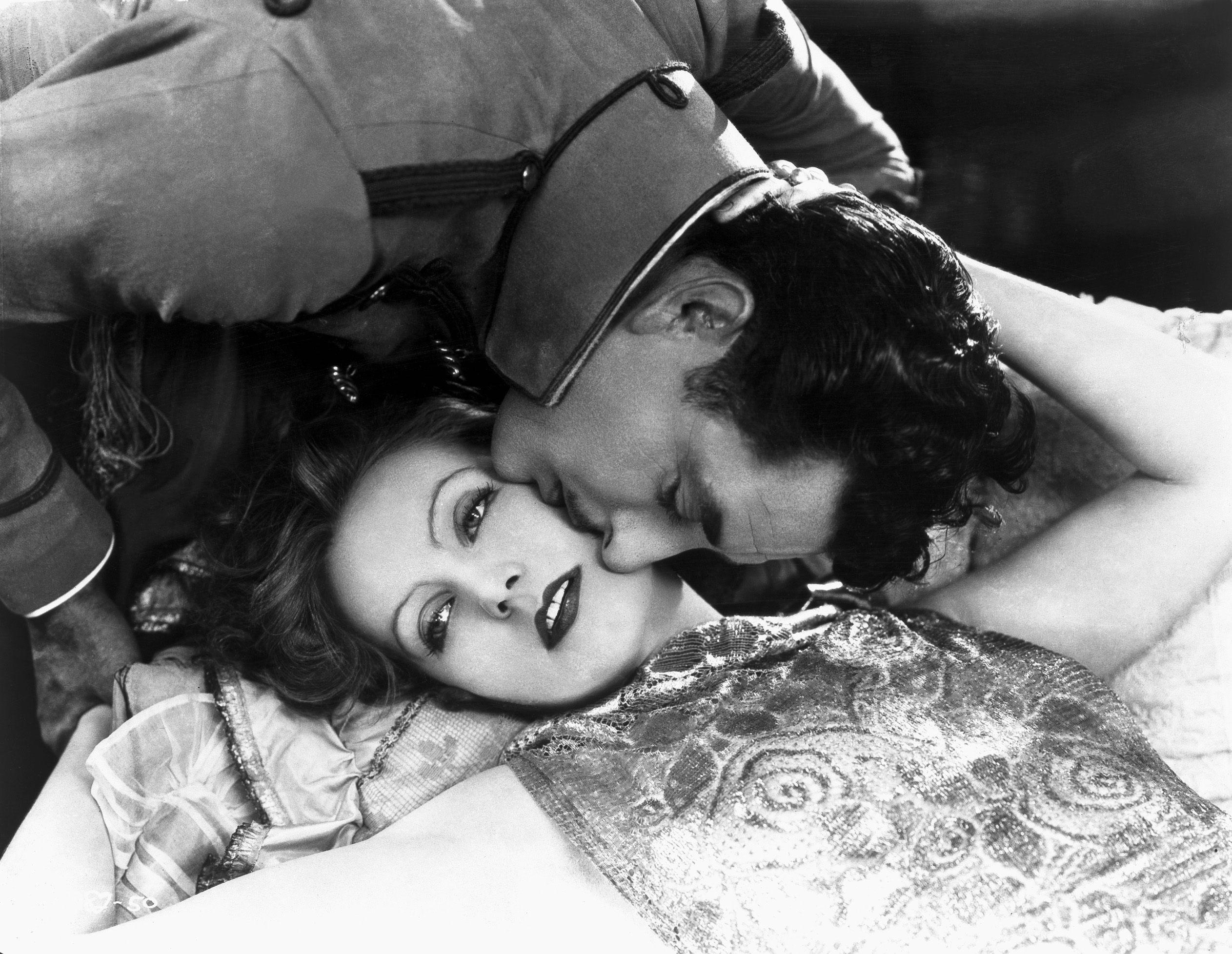
Greta Garbo and John Gilbert in 'Flesh and the Devil' (1926).

Next up: it's 'Flesh and the Devil' (1926), a romantic thriller starring Greta Garbo and John Gilbert. I'm accompanying the film on Monday, Feb. 5 at 6:30 p.m. at the Garden Cinemas in Greenfield, Mass.

 A massive success that cemented Garbo's career, the film features love scenes that were not faked, as the two stars were involved in a heated affair during filming. Director Clarence Brown later said he just had to start the cameras and then stand back!

Lots more info in the press release below. But first, a few notes about last night's screening at the Campton (N.H.) Historical Society, an annual event that includes a pot luck supper and a considerable amount of small-town charm.

For example: announcements prior to my introduction included an upcoming Antique Snowmobile Meet sponsored by the local Chamber of Commerce.  

When I got up to speak, I made the usual lame jokes (including one about the peanut brittle on the dessert table, which I said four out of five dentists recommended because it's so good for business), but then I realized something about the evening.

The scene prior to Saturday night's screening at the Campton Historical Society.

I found myself saying that as a silent film accompanist, it's been my privilege to be invited to perform in such far-flung and glamorous show-biz meccas as Topeka, Kansas, where I'll perform later this month at the Kansas Silent Film Festival, and Cleveland, Ohio, where I get to accompany films in March.

But, I said, despite the romance of these exotic places, it was unlikely that any of them would include announcements about the Chamber of Commerce hosting antique snowmobile meets. 

So the annual Pot Luck Supper / Silent Film Screening at the Campton Historical Society, traditionally held in the dead of winter, was special to me because it was home, or at least the small part of the world that was really familiar to me.

Dig in! The 'Pot Luck Supper' portion of last night's program.

Last night's screening was not without its celebrity guests, however. Prior the the show, when I was warming up at the keyboard, a woman came up to me and began chatting.

Her name was Danielle Freund-Buckman, and turn out she was the granddaughter legendary cinematographer Karl Freund's borther! That made her, let's see...Karl Freund's grand-niece, I think. 

So I introduced her to the audience, members of which of course would have no idea who Karl Freund was. I explained he was not related to Sigmund Freud, whose name was different anyway, but he was a cinematographer for many influential films in the 1920s, including F.W. Murnau's 'The Last Laugh' (1924) and Fritz Lang's 'Metropolis' (1927).

I probably would have made a bigger impression by mentioning that Freund photographed 'Dracula' (1931) starring Bela Lugosi, and also directed Boris Karloff in 'The Mummy' (1932), and also an obscure picture called 'Moonlight and Pretzels' (1933) that is my FAVORITE 1930s musical, based on a single screening I saw at a long-ago Cinefest celebration in Syracuse, N.Y. (Another show biz capital!)

Instead, I mentioned the one thing that I knew would hit home: later in his career Freund developed the three-camera system used to shoot episodes of 'I Love Lucy' in the 1950s, and hundreds of sitcoms in the years since. Everyone perked up at that, and Mrs. Freund-Buckman was duly showered with applause.

The film was Chaplin's 'The Gold Rush' (1925), in the original version, which I've been played for multiple times in the past year after not accompanying it all for about a decade. 

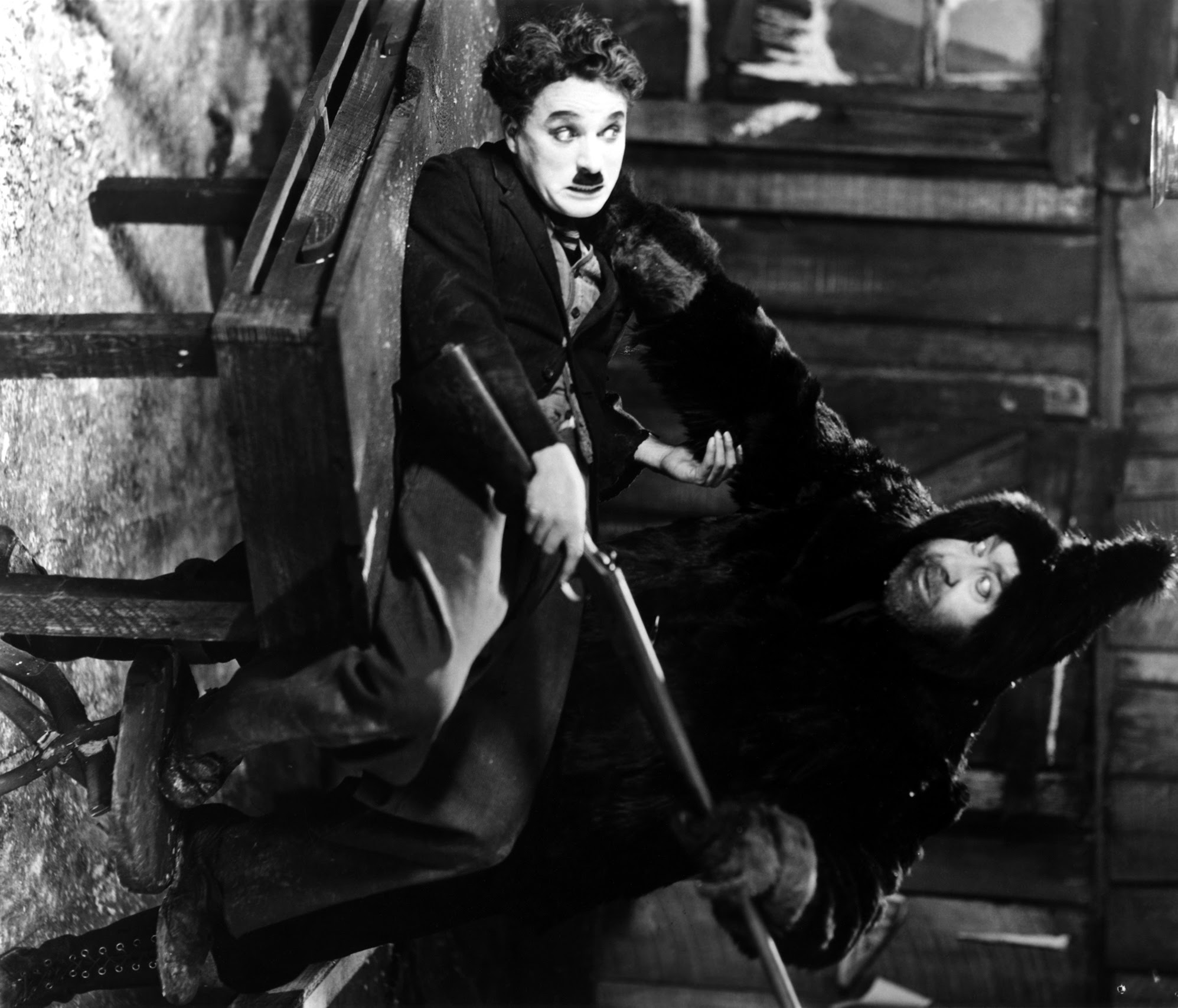
In recent screenings, I've learned how to do music for the final cliff-hanging sequence (literally!) in a way that I think heightens the tension and the resulting laughs.

Take innocent music and keep it light and airy, with lots of pauses, as Chaplin and Mack Swain slowly discover their predicament. Only when Chaplin swings out the door do and everything becomes clear to the characters (although the audience has known what's going on all along) do you begin to amp up the music—in this case by taking the same music and boosting the tempo a bit, and maybe putting phrases in a minor key, but still keeping the texture as simple as possible.

In due course, you can ramp things up and get really big, but only right at the end, when Swain has escaped and found his mountain of gold, but Charlie is still trapped in the teetering cabin. 

And even then you have to cut out at the moment Swain finally peers back into the cabin, and a still-trapped Chaplin wiggles his finger to indicate he's still awaiting rescue. Why? Because if the big music continued, it would step on the moment. But with near silence, the moment produces an explosive laugh.

I followed this prescription last night. I'm not sure if the music really had anything to do with it, but audience reaction was huge, with people gasping and shrieking as the sequence unfolded, and then topped with a lusty cheer when Chaplin popped out just in the nick of time.

Less is more!

See you at 'Flesh and the Devil' on Monday night in Greenfield, Mass.—yet another showbiz capital! (By virtue of it being the hometown of Penn Gillette of 'Penn & Teller' fame, and who once worked at the Garden Cinema.)

*    *    *

Original poster art for MGM's 'Flesh and the Devil' (1926).

MONDAY, JAN. 22, 2024 / FOR IMMEDIATE RELEASE
Contact Jeff Rapsis • (603) 236-9237 • jeffrapsis@gmail.com

Garbo, Gilbert heat up the big screen in 'Flesh and the Devil' at Garden Cinemas

Celebrity couple fell passionately in love during filming of legendary silent classic, to be shown with live music on Monday, Feb. 5 in Greenfleld, Mass.

GREENFIELD, Mass. - Rediscover the passionate romance between early superstars Greta Garbo and John Gilbert in 'Flesh and the Devil' (1926), the classic MGM silent melodrama that first brought the legendary Hollywood couple together.

'Flesh and the Devil' will be shown on Monday, Feb. 5 at 6:30 p.m. at the Greenfield Garden Cinemas, 361 Main St., Greenfield.

The screening will feature live accompaniment by Jeff Rapsis, a New Hampshire-based composer who specializes in creating music for silent films.

Admission is $10.50 adults, $8:50 for children, seniors, and students. Tickets are available online or at the door.

Set in Germany, 'Flesh and the Devil' tells the story of a love triangle between two boyhood friends (Gilbert and Lars Hansen) and the amoral seductress (Garbo) who comes between them.

The two men are eventually forced into a violent struggle over the woman, who marries one but carries on an affair with the other.

During the shooting, Garbo and Gilbert developed their own highly charged off-screen romantic affair, the passion of which director Clarence Brown delighted in capturing on camera.

Though Garbo and Gilbert eventually went their separate ways, 'Flesh and the Devil' marked the very public beginning of one of the legendary romances of early Hollywood.

 A close-up in more ways than one: Garbo and Gilbert in 'Flesh and the Devil' (1926).
 
'Flesh and the Devil' is the latest installment of a monthly series of silent film screenings at the Garden Cinemas. 

The series aims to recreate the lost magic of early cinema by bringing crucial elements needed for silent film to work: classic films in best available prints; projection on the big screen; live musical accompaniment; and a live audience.

"These films are still moving and intense experiences if you can show them as they were designed to be screened," said Jeff Rapsis, who provides musical accompaniment for the screenings. 

"There's a reason people first fell in love with the movies. At their best, they were communal experiences in which the presence of a large audience intensifies everyone's reactions."


The appeal of 'Flesh and the Devil' has withstood the test of time. In 2006, the film was selected for preservation in the United States National Film Registry by the Library of Congress as being "culturally, historically, or aesthetically significant."

Reviewers have continued to praise the picture's many good qualities, often singling out Garbo's performance as particularly memorable.

"Pulsatingly romantic, beautifully filmed, probably the best Garbo-Gilbert love match," wrote critic Leonard Maltin, while David Parkinson of Empire Magazine wrote that "Garbo is mesmerizing in this wild and heated romance..." Carol Cling of the Las Vegas Review proclaimed 'Flesh and the Devil' as "Garbo & Gilbert at their steamy, sultry silent peak."

Upcoming titles in the Garden Cinema's silent film series include:

• Monday, March 4 at 6:30 p.m.: 'The Passion of Joan of Arc' (1928). Danish director Carl Dreyer's intense recreation of the trial of Joan of Arc set new standards for cinematography and expanded the language of film in new directions.

• Monday, April 1 at 6:30 p.m.: 'Safety Last' (1923). The iconic image of Harold Lloyd dangling from the hands of a downtown clock is just one scene of a remarkable thrill comedy that has lost none of its power over audiences.

'Flesh and the Devil' will be shown with live music  on Monday, Feb. 5 at 6:30 p.m. at the Greenfield Garden Cinemas, 361 Main St., Greenfield.


Admission is $10.50 adults, $8:50 for children, seniors, and students. Tickets at the door; advance tickets are available at www.gardencinemas.net. For more information, call the box office at (413) 774-4881.

Wednesday, January 31, 2024

Coming Saturday, Feb. 3: dinner and a movie (Chaplin's 'The Gold Rush') at Campton Historical Society

A German poster for Chaplin's 'The Gold Rush' (1925).

This weekend brings one of my favorite gigs of the year: the annual mid-winter potluck dinner and silent movie program at the Campton (N.H.) Historical Society.

We've been doing this for more than 10 years now. And I've come to believe that there's no better way to experience a silent film than in the dead of winter, surrounded by snowy woods, in a warm meetinghouse filled with people who've just enjoyed a pot luck supper. 

Join us and experience this for yourself. This year's edition, which features Chaplin's epic comedy 'The Gold Rush' (1925) will take place on Saturday, Feb. 3. 

The pot luck supper (be sure to bring a dish!) starts at 5 p.m. The movie comes afterwards—we usually start by 6:15 p.m. or so. 

More information is in the press release below. Hope to see you there!

*    *    *

Chaplin and his improvised foot warmer in 'The Gold Rush' (1925).

MONDAY, JAN. 15, 2024 / FOR IMMEDIATE RELEASE
Contact Jeff Rapsis • (603) 236-9237 • jeffrapsis@gmail.com

Silent comedy masterpiece 'The Gold Rush' to screen with live music in Campton, N.H. on Saturday, Feb. 3

Dinner and a movie: family-friendly Charlie Chaplin film is featured attraction of local historical society's annual pot luck supper; public welcome

CAMPTON, N.H.— He was a comedic icon of the silent era, and 'The Gold Rush' was the movie that he wished to be remembered for.

He was Charlie Chaplin, whose Little Tramp character was beloved by early film audiences and remains a global icon to this day.

See for yourself how it all began when 'The Gold Rush' (1925), a feature-length film regarded as a Chaplin masterpiece, is screened by the Campton Historical Society on Saturday, Feb. 3.

The event, which is free and open to all, takes place at Old Campton Town Hall, 529 Route 175, Campton, N.H.

It starts with a pot luck dinner at 5 p.m., with the film program to begin at 6 p.m.

Those attending the pot luck dinner are asked to bring one of the following: soup, bread, salad, main dish, dessert or beverage.

Live music for the silent film program will be provided by silent film accompanist Jeff Rapsis.

'The Gold Rush,' a landmark comedy and one of the top-grossing films of the silent era, finds Chaplin's iconic 'Little Tramp' character journeying to the frozen wastelands of the Yukon. There as a prospector, the Tramp's search for gold turns into a pursuit of romance, but with plenty of laughs along the way.

The film contains several famous scenes, both comic and dramatic, including a starving Chaplin forced to eat his shoe for Thanksgiving dinner and a heart-breaking New Year's Eve celebration.

As a comedian, Chaplin emerged as the first superstar in the early days of cinema. From humble beginnings as a musical hall entertainer in England, he came to Hollywood and used his talents to quickly rise to the pinnacle of stardom in the then-new medium of motion pictures. His popularity never waned, and his image remains recognized around the world to this day.

Shoe or Thanksgiving dinner? The definition of food changes according to how hungry you are.

'The Gold Rush,' regarded by many critics as Chaplin's best film, is a prime example of his unique talent for combining slapstick comedy and intense dramatic emotion.

" 'The Gold Rush' is still an effective tear-jerker," wrote critic Eric Kohn of indieWIRE. "In the YouTube era, audiences — myself included — often anoint the latest sneezing panda phenomenon as comedic gold. Unless I’m missing something, however, nothing online has come close to matching the mixture of affectionate fragility and seamless comedic inspiration perfected by the Tramp."

Rapsis, who uses original themes to improvise silent film scores, said the best silent film comedies often used visual humor to create laughter out of simple situations. Because of this, audiences continue to respond to them in the 21st century, especially if they're presented as intended — with an audience and live music.

"These comedies were created to be shown on the big screen as a communal experience," Rapsis said. "With an audience and live music, they still come to life as their creators intended them to. So this screening is a great chance to experience films that first caused people to fall in love with the movies," he said.

Rapsis achieves a traditional movie score sound for silent film screenings by using a digital synthesizer that reproduces the texture of the full orchestra.

"Seeing a Charlie Chaplin film with live music and an audience is one of the great experiences of the cinema of any era," said Jeff Rapsis, a New Hampshire-based silent film musician who will accompany the film.

"Films such as 'The Gold Rush' were designed for a specific environment. If you can put those conditions together again, you can get a sense of why people first fell in love with the movies," Rapsis said.

'The Gold Rush' will be screened with live music on Saturday, Feb. 3 at 6 p.m. at Old Campton Town Hall, 529 Route 175, Campton, N.H.

The film will follow a pot luck supper that starts at 5 p.m. Those attending the pot luck dinner are asked to bring one of the following: soup, bread, salad, main dish, dessert or beverage.

The event is free and open to all, with donations accepted to support the Campton Historical Society.

For more information, visit www.camptonhistorical.org.

Monday, January 22, 2024

Sunday, Jan. 28: Chaney's 'Hunchback of Notre Dame' highlights Colonial's centennial celebration

The Colonial's marquee has brightened Keene's Main Street for a full century.

UPDATE! DUE TO INCLEMENT WEATHER, THIS SCREENING IS POSTPONED TO SUNDAY, FEB. 18. 

Talk about milestones!

This month, the Colonial Theatre of Keene, N.H. marks 100 years of service. 

That's a century of movies and popcorn in that rarest of creatures: a downtown one-screen movie theater that was never multiplexed!

And to celebrate, this Sunday, Jan. 28, the Colonial is turning the clocks all the way back to the very first motion picture that opened the place.

It's 'The Hunchback of Notre Dame' (1923) starring Lon Chaney. It's my privilege to create live music for this special screening, which is at 2 p.m. and free to all.

The theater is promoting the event with the tagline "Party Like It's 1924!" along with the movie poster showing Esmerelda dancing with a goat. I assume goats are optional.

It's also a personal honor, as I have a history with the Colonial going back to at least 1971—back when the place hadn't even reached the half-century mark.

At that time, my family would spend summers in Harrisville, a small town outside of Keene. 

My mother would drive us into Keene every other Saturday to do laundry. She'd park us at the Colonial for the children's matinee while she washed and dried.

I can pinpoint the year as 1971 because that was when 'Willy Wonka and the Chocolate Factory' was released. 

And I remember that because to an impressionable 7-year-old, there was no more terrifying film. Things were okay until they entered Wonka's factory, and ghastly things began happening to the children. 

By the time Augustus Gloop got stuck in a clear plastic pipe, I couldn't take it anymore, running up the aisle to get away before anything else could happen.

The Colonial Theatre's interior, pretty much unchanged since it opened in 1924.

My older brother found me in the ladies room hiding in a stall. Coaxing me out, we returned to the darkened theater just in time to see the girl blow up like a giant blueberry and then get rolled off to the "juicing room."

I fled back up the aisle and outside. What happened after that is a blank—we may have ended up on a park bench outside until my mother came to get us.

I've since recovered, but that original version with Gene Wilder in the title role still gives me the creeps. 

Well, Chaney's 'Hunchback' can be creepy, too. But I hope it doesn't compel you to flee the theater!

Lots more info in the press release. Hope you'll join us this Sunday, Jan. 28 at 2 p.m. to celebrate the Colonial's centennial.

There will be cake!

*    *    *

A scene from 'The Hunchback of Notre Dame' (1923). 

MONDAY, JAN. 15, 2024 / FOR IMMEDIATE RELEASE
Contact Jeff Rapsis • (603) 236-9237 • jeffrapsis@gmail.com

Chaney as Quasimodo in 'Hunchback of Notre Dame' on Sunday, Jan. 28 in Keene, N.H.

Celebrate Colonial Theatre's 100th anniversary with free screening of classic film that opened theater in 1924; featuring live music by Jeff Rapsis

KEENE, N.H.—It was a spectacular combination: Lon Chaney, the actor known as the "Man of 1,000 Faces," and Universal's big screen adaptation of Victor Hugo's sprawling tale of the tortured Quasimodo.

The result was the classic silent film version of 'The Hunchback of Notre Dame' (1923) — a movie so popular that it was chosen as the opening program at Keene's Colonial Theatre when it first opened to the public on Jan. 29, 1924.

Now, 100 years later, the Colonial will once again screen 'Hunchback' as part of a centennial celebration.

'The Hunchback of Notre Dame' starring Lon Chaney will be shown on Sunday, Jan. 28, 2024 at 2 p.m. at the Colonial Theatre, 95 Main St., Keene, N.H. Admission is free, but attendees are asked to RSVP online in advance at www.thecolonial.org.

Live music for the movie will be provided by silent film accompanist Jeff Rapsis.

The program includes cake and champagne afterwards.

'The Hunchback of Notre Dame' is based on Victor Hugo's 1831 novel, and is notable for the grand sets that recall 15th century Paris as well as for Chaney's performance and make-up as the tortured hunchback Quasimodo.

The film elevated Chaney, already a well-known character actor, to full star status in Hollywood, and also helped set a standard for many later horror films, including Chaney's 'The Phantom of the Opera' in 1925.

While Quasimodo is but one of many interconnecting characters in the original Hugo novel, he dominates the narrative of this lavish Universal production.

In the story, Jehan (Brandon Hurst), the evil brother of the archdeacon, lusts after a Gypsy named Esmeralda (Patsy Ruth Miller) and commands the hunchback Quasimodo (Chaney) to capture her.

Military captain Phoebus (Norman Kerry) also loves Esmeralda and rescues her, but the Gypsy is not unsympathetic to Quasimodo's condition, and an unlikely bond forms between them.

After vengeful Jehan frames Esmeralda for the attempted murder of Phoebus, Quasimodo's feelings are put to the test in a spectacular climax set in and around the Cathedral of Notre Dame.

A scene from 'The Hunchback of Notre Dame' (1923).

As the hunchbacked bellringer Quasimodo, Chaney adorned himself with a special device that made his cheeks jut out grotesquely; a contact lens that blanked out one of his eyes; and, most painfully, a huge rubber hump covered with coarse animal fur and weighing anywhere from 30 to 50 pounds.

Chaney deeply identified with Quasimodo, the deformed bell-ringer at Notre Dame Cathedral who was deafened by his work. Chaney was raised by deaf parents and did a lot of his communication through pantomime.

“The idea of doing the picture was an old one of mine and I had studied Quasimodo until I knew him like a brother, knew every ghoulish impulse of his heart and all the inarticulate miseries of his soul,” Chaney told an interviewer with Movie Weekly magazine in 1923.

“Quasimodo and I lived together—we became one. At least so it has since seemed to me. When I played him, I forgot my own identity completely and for the time being lived and suffered with the Hunchback of Notre Dame.”

The film was a major box office hit for Universal Studios, and Chaney's performance continues to win accolades.

"An awe-inspiring achievement, featuring magnificent sets (built on the Universal backlot), the proverbial cast of thousands (the crowd scenes are mesmerizing) and an opportunity to catch Lon Chaney at his most commanding," wrote critic Matt Brunson of Creative Loafing in 2014.

The famous cathedral, a symbol of Paris and France, was severely damaged by fire in 2019. After a long period of rebuilding, the Cathedral is scheduled to reopen to the public in December 2024.

Screening this classic version of 'Hunchback' provides local audiences the opportunity to experience silent film as it was intended to be shown: on the big screen, in restored prints, with live music, and with an audience.

"If you can put pieces of the experience back together again, it's surprising how these films snap back to life," said Rapsis, a New Hampshire-based silent film accompanist who creates music for silent film screenings at venues around the country.

"By showing the films as they were intended, you can really get a sense of why people first fell in love with the movies."

In creating music for silent films, Rapsis performs on a digital synthesizer that reproduces the texture of the full orchestra and creates a traditional "movie score" sound.

'The Hunchback of Notre Dame' (1923) starring Lon Chaney, will be screened with live music on Sunday, Jan. 28 at 2 p.m. at the Colonial Theatre, 95 Main St., Keene, N.H. Admission is free, but attendees are asked to RVSP online in advance at www.thecolonial.org.

Tuesday, January 2, 2024

Coming up next: 'The Last Command' on Sunday, Jan. 21 at Town Hall Theatre in Wilton, N.H.

Evelyn Brent and Emil Jannings in 'The Last Command' (1928).

When asked which silent film is my favorite, I'm sometimes tempted to say 'The Last Command' (1928). For sheer story-telling audacity, there's nothing quite like it. 

Plus it's really something to see Emil Jannings go berzerk at the end of this movie. No surprise that he took home the first-ever 'Best Actor' Academy Award that year.

So I'm pleased to say that up next is 'The Last Command' (1928), which I'll be accompanying on Sunday, Jan. 21 at 2 p.m. at the Town Hall Theatre in Wilton, N.H. 

More details are in the press release below. For now, here's a report from the New Year's Day screening of Chaplin's 'The Gold Rush' (1925) that I accompanied at the Garden Cinemas in Greenfield, Mass.

You never know what kind of promotion will be in place for silent film screenings in Greenfield. Here, a sidewalk blackboard is of interest to a passing canine. Too bad it wasn't a Rin Tin Tin film!

We've been doing silent films in Greenfield for a couple of years now—enough to build up an audience to the point where we get 50 to 60 people for each screening. 

I wasn't sure if the pattern would hold for a screening on New Year's Day, but it did. What's more, they were not shy about reacting. Right from the start, at Chaplin's first entrance, the laughs came easily. 

One really cool thing is that after years of fumbling around, I stumbled on a way to effectively accompany the climactic "hanging cabin" sequence. 

To my way of thinking, the music should help support suspense and comedy at the same time, similar to what's called for when Harold Lloyd is climbing around the upper floors of that building in 'Safety Last.' What kind of music can communicate these contradictory moods?

Greenfield Garden Cinemas owner Isaac Mass welcomes audience members to our screening of 'The Gold Rush' (1925).

Last night, it occurred to me: the well-known "Morning Mood" melody from Grieg's Peer Gynt incidental music. As familiar and hackneyed as it is, it really does fit the scene when Chaplin and then Mack Swain awaken.

It could be that although we are aware of their predicament, they aren't. And so the music carries a double layer of meaning: a normal morning to them,anything but normal to us. The music is instantly ironic commentary.

But then, as Chaplin and Swain gradually discover the peril they're in, the "Morning Mood" melody can be transformed in various ways to continue heightening the tension. Sometimes faster, sometimes slower, sometimes in the minor key or other mode, sometimes with off notes in the harmony or punctuated with dissonant chords or ominous pedal tones.

And then there's always our good friend silence to really rivet an audience's attention. After which Grieg's melody can reassert itself in even creepier fashion.

All these elements combined to create a really satisfying accompaniment. I felt it augmented how Chaplin presented the sequence. Audience response to this sequence was the strongest that I can recall—for the first time in my experience, the film elicited shrieks and gasps among the laughs.

And the payoff: a hearty cheer (spoiler alert!) when Chaplin leaps from the cabin and lands on solid ground. Yes!

If you'd like to experience this for yourself, I'll be doing 'The Gold Rush' again on Saturday, Feb. 3 at the Campton (N.H.) Historical Society. For more info, check the listings under the 'Upcoming Silent Film Screenings' link on the upper right corner of this page.

The screening, by the way, is part of a pot luck supper—ironic for a film in which so much of the comedy stems from starvation. 

But for now, here's all you'll need to catch 'The Last Command' (1928) on Sunday, Jan. 21 in Wilton. See you there!

*  *  *  

Poster featuring Emil Jannings in 'The Last Command' (1928).
 
TUESDAY, JAN. 2, 2024 / FOR IMMEDIATE RELEASE
Contact Jeff Rapsis • (603) 236-9237 • jeffrapsis@gmail.com

Silent epic 'The Last Command' with live music at Town Hall Theatre on Sunday, Jan. 21

Josef von Sternberg's groundbreaking psychological drama won 'Best Actor' for Emil Jannings at first-ever Academy Awards

WILTON, N.H.—'The Last Command' (1928), a silent film drama that won Emil Jannings 'Best Actor' honors at the first-ever Academy Awards, will be screened with live music on Sunday, Jan. 21, 2024 at 2 p.m. at the Town Hall Theatre, 40 Main St., Wilton, N.H.

Admission is free; donations are accepted, with $10 per person suggested to defray expenses.

The screening, the latest in the venue's silent film series, will feature live accompaniment by Jeff Rapsis, a New Hampshire-based composer who specializes in creating music for silent films.

'The Last Command,' directed by Josef von Sternberg, tells the sweeping story of a powerful general in Czarist Russia (Jannings) forced to flee his homeland during the Bolshevik Revolution. He emigrates to America, where he is reduced to living in poverty.

Finding work as an extra at a Hollywood studio, the former general lands the part of a commanding officer in a movie about the Revolution, causing flashbacks to his traumatic experiences. The conflict leads to a spectacular climax and a towering performance that earned Jannings 'Best Actor' honors.

Emil Jannings in 'The Last Command' (1928).

The film takes audiences on a journey through big emotions as well as issues of history, time, power, and especially a man's duty to his country and to his fellow citizens—and what happens when the two obligations diverge.

'The Last Command' is also one of early Hollywood's most creative and challenging looks at the global conflicts that contributed to World War I.

The film also stars a young William Powell as a Hollywood movie director who crosses paths with the general during the Revolution, and 1920s starlet Evelyn Brent as a seductive Russian revolutionary.

Rapsis, the accompanist, will create the film's score live as the movie is shown.

"Making up the music on the spot is kind of a high wire act," Rapsis said. "But there's nothing like the energy and excitement that comes with improvised live performance, especially when accompanying a silent film."

Critic Leonard Maltin hailed 'The Last Command' as "a stunning silent drama...a fascinating story laced with keen observations of life and work in Hollywood." Time Out of London called it "the first Sternberg masterpiece, expertly poised between satire and 'absurd' melodrama. The cast are fully equal to it; Jannings, in particular, turns the characteristic role of the general into an indelible portrait of arrogance, fervor and dementia."

Director Sternberg, a master of lighting and black-and-white photography, created 'The Last Command' as a visual tour de force. The film is often cited as a prime example of the emotional range and visual accomplishment of silent films at their height, just prior to the coming of pictures with recorded soundtracks.

Rapsis said great silent film dramas such as 'The Last Command' told stories that concentrate on the "big" emotions such as Love, Despair, Anger, and Joy. Because of this, audiences continue to respond to them in the 21st century, especially if they're presented as intended—in a theater on the big screen, with a live audience and live music.

"Dramas such as 'The Last Command' were created to be consumed as a communal experience," Rapsis said. "With an audience and live music, they come to life as their creators intended them to. This screening at the Town Hall Theatre is a great chance to experience films that first caused people to fall in love with the movies."

'The Last Command' (1928) will be screened with live music on Sunday, Jan. 21, 2024 at 2 p.m. at the Town Hall Theatre, 40 Main St., Wilton, N.H.

Admission is free; donations are accepted, with $10 per person suggested to defray expenses. For more information, call the theater at (603) 654-3456.

Tuesday, December 26, 2023

Chaplin's 'The Gold Rush' on New Year's Day in Greenfield, Mass. plus thanks to everyone!

Charlie Chaplin warms his feet in 'The Gold Rush' (1925).

Happy holidays to everyone!

Next up I'm doing live music for Chaplin's 'The Gold Rush' (1925) on New Year's Day (Jan. 1, 2024) at the Garden Cinemas in Greenfield, Mass.

Showtime is 6:30 p.m. Hope you'll join us for Chaplin's immortal comedy, set in the Klondike Gold Rush era. Lots more info is in the press release pasted in below.

For now in what I assume will be my final post of 2023, I'd like to thank everyone who attended or who otherwise supported my screenings in the past year.

I very much appreciate all the people, many unknown to me, who make it possible to continue to do live music for silent cinema a century after the format was reaching its peak.

They do that by buying tickets and attending screenings that I accompany. This is crucially important because without an audience, the experience doesn't work, either artistically or financially. 

So thank you! Hope to see you all again in the new year—at least until the lights go down.

*    *    *

Chaplin consumes a shoe in a famous sequence from 'The Gold Rush' (1925). 

TUESDAY, DEC. 26, 2023 / FOR IMMEDIATE RELEASE
Contact Jeff Rapsis • (603) 236-9237 • jeffrapsis@gmail.com

Charlie Chaplin's 'The Gold Rush' in Greenfield, Mass. on Monday, Jan. 1

Family fun: Little Tramp's silent film comedy classic set in the frozen Arctic to be screened with live music on New Year's Day

GREENFIELD, Mass. — Classic silent film comedy returns to the big screen on New Year's Day with 'The Gold Rush' (1925), a classic comedy starring Charlie Chaplin.

The screening will take place on Monday, Jan. 1, 2024 at 6:30 p.m. at the Greenfield Garden Cinemas, 361 Main St., Greenfield.

The screening will feature live accompaniment by Jeff Rapsis, a New Hampshire-based composer who specializes in creating music for silent films.

Admission is $10.50 adults, $8:50 for children, seniors, and students. Tickets are available online or at the door.

'The Gold Rush,' a landmark comedy and one of the top-grossing films of the silent era, finds Chaplin's iconic 'Little Tramp' character journeying to the frozen wastelands of the Yukon. There as a prospector, the Tramp's search for gold turns into a pursuit of romance, but with plenty of laughs along the way.

The film contains several famous scenes, both comic and dramatic, including a starving Chaplin forced to eat his shoe for Thanksgiving dinner and a heart-breaking New Year's Eve celebration.

As a comedian, Chaplin emerged as the first superstar in the early days of cinema. From humble beginnings as a musical hall entertainer in England, he came to Hollywood and used his talents to quickly rise to the pinnacle of stardom in the then-new medium of motion pictures. His popularity never waned, and his image remains recognized around the world to this day.

'The Gold Rush,' regarded by many critics as Chaplin's best film, is a prime example of his unique talent for combining slapstick comedy and intense dramatic emotion.

Chaplin in 'The Gold Rush' (1925).

" 'The Gold Rush' is still an effective tear-jerker," wrote critic Eric Kohn of indieWIRE. "In the YouTube era, audiences — myself included — often anoint the latest sneezing panda phenomenon as comedic gold. Unless I’m missing something, however, nothing online has come close to matching the mixture of affectionate fragility and seamless comedic inspiration perfected by the Tramp."

Rapsis, who uses original themes to improvise silent film scores, said the best silent film comedies often used visual humor to create laughter out of simple situations. Because of this, audiences continue to respond to them in the 21st century, especially if they're presented as intended — with an audience and live music.

"These comedies were created to be shown on the big screen as a communal experience," Rapsis said. "With an audience and live music, they still come to life as their creators intended them to. So this screening is a great chance to experience films that first caused people to fall in love with the movies," he said.

Rapsis achieves a traditional movie score sound for silent film screenings by using a digital synthesizer that reproduces the texture of the full orchestra.

Upcoming titles in the Garden Cinema's silent film series include:

• Monday, Feb. 5 at 6:30 p.m.: 'Flesh and the Devil' (1926). Just in time for Valentine's Day! Garbo and Gilbert steam up the camera lens in this torrid romance set in 19th century European high society.

• Monday, March 4 at 6:30 p.m.: 'The Passion of Joan of Arc' (1928). Danish director Carl Dreyer's intense recreation of the trial of Joan of Arc set new standards for cinematography and expanded the language of film in new directions.

• Monday, April 1 at 6:30 p.m.: 'Safety Last' (1923). The iconic image of Harold Lloyd dangling from the hands of a downtown clock is just one scene of a remarkable thrill comedy that has lost none of its power over audiences.

Charlie Chaplin's 'The Gold Rush' will be screened with live music on Monday, Jan. 1, 2024 at 6:30 p.m. at the Greenfield Garden Cinemas, 361 Main St., Greenfield.

Admission is $10.50 adults, $8:50 for children, seniors, and students. Tickets are at the door; advance tickets are available at www.gardencinemas.net. For more information, call the box office at (413) 774-4881.


Sunday, December 10, 2023

Two shows to go: 'My Best Girl' on Sunday, Dec. 10, then 'Why Worry?' on Wednesday, Dec. 13

An original lobby card depicting Mary Pickford and Buddy Rogers in 'My Best Girl' (1927).

Just a couple of shows left in 2023 as the year draws to a close.

Today (Sunday, Dec. 10) it's Mary Pickford and Buddy Rogers in 'My Best Girl' (1927), which I'll accompany at 4 p.m. at the Natick Center for the Arts, 14 Summer St., Natick, Mass.

More about the film and the screening are in the press release pasted in below.

After that, the only show left is Harold Lloyd's comedy 'Why Worry?' (1923), which I'm accompanying on Wednesday, Dec. 13 at the Coolidge Theatre in Brookline, Mass.

And that's it. 

I'll be back at it in 2024, but at a reduced pace.

For 15 years, I've pushed myself to be a better accompanist in the only way I know how—by doing it a lot.

By a lot, I mean an average of 120 shows per year, or about two or three each week. That's more than 1,000 shows in the past decade, even factoring in the pandemic, which slowed things down for a time.

It's been a rewarding experience. Through all this time spent in darkened theaters, playing music that's largely improvised on the spot, I think I've developed a musical vocabulary that otherwise wouldn't have emerged, I think. That's important to me. 

Plus, it's just been fun.

But it's also been a lot of work. Most of these screenings have come about by my own efforts—of reaching out, convincing venue managers to take a chance on something different, and then working hard to help build an audience.

That takes time and effort. And then there's travel time. Some venues I work regularly are a three-hour drive one way. Add that in, and you've got a minimum 10-hour commitment for certain gigs. 

So it adds up. Not that I've minded. Keeping a busy schedule is part of my identity—if anyone remarks on my crowded calendar, I usually say something like I'm "the Jake LaMotta of silent film accompaniment—I just keep on coming."

Well, in the coming year, I plan focus more exclusively on my work as executive director of the Aviation Museum of N.H., a non-profit organization that I've had the privilege of leading for the past five years.

The museum has come a long way in the past five years. We now boast a robust youth education effort that includes a high school student plane-building program, a successful aviation summer camp, and more. 

But there's a long way to go, and I've just agreed to a five-year commitment to continue the work.

I'll still do film music—in fact, one of my upcoming gigs is at the Aviation Museum, where I'll accompany 'The Flying Ace' (1926) in February for Black History Month. 

But I'd also like to take my hard-won musical vocabulary and see what I can do with it in terms of music that gets written down.

So some of my musical energies will go into composing, rather than improvising. I'm creating a piece for a concert of works by New Hampshire composers at the Manchester (N.H.) Community Music School, and I hope other works will follow.

I expect there will be some crossover work related to my film accompaniment efforts. 

For example, for the silent version of 'Peter Pan' (1924), which I've accompanied probably two dozen times, I've developed a suite of material that I think would lend itself to some kind of orchestral suite in the manner of the tone poems of Richard Strauss, say. 

We'll see. But in real terms, it means that going forward I'll have to be more selective in my performing gigs as I take time to start writing stuff down.

Okay, here's more info about 'My Best Girl,' which I'll accompany this afternoon down in Natick, Mass. Hope to see you there!

*   *   *

Vintage print ad for 'My Best Girl' (1927). 

MONDAY, NOV. 20, 2023 / FOR IMMEDIATE RELEASE
Contact Jeff Rapsis • (603) 236-9237 • jeffrapsis@gmail.com

Mary Pickford's 'My Best Girl' with live music at Natick Center for Arts on Sunday, Dec. 10

Sparkling romantic comedy showcases talents of movie industry pioneer known as 'America's Sweetheart'

NATICK, Mass.— She was known as 'America's Sweetheart,' but often played assertive take-charge characters that made her a role model to women and movie-goers around the world.

She was Mary Pickford, who ruled the entertainment industry as the Queen of Hollywood during the silent era.

See for yourself with a screening of 'My Best Girl' (1927), one of Pickford's landmark feature films, on Sunday, Dec. 10 at 4 p.m. at TCAN Center for the Arts, 14 Summer St., Natick, Mass.

The screening, the latest in the Center for the Art's silent film series, will feature live accompaniment by Jeff Rapsis, a New Hampshire-based composer who specializes in creating music for silent films.

Admission is $10 per person for members; $12 for non-members. Tickets are available online at www.natickarts.org or at the door.

The show is the latest in TCAN's silent film series, which gives audiences the opportunity to experience early cinema as it was intended: on the big screen, with live music, and with an audience.

Set in a big city department store, 'My Best Girl' explores what happens when romance blossoms between a humble clerk and the wealthy store owner's son?

The result is a sparkling “rich man, poor girl” romantic comedy from 1927 starring Pickford alongside leading man Charles 'Buddy' Rogers, who would later become Pickford's real-life husband.

An industry pioneer who became Hollywood’s first movie star, Pickford enjoyed a cult-like popularity throughout the silent era that made her a national icon and an international celebrity.

Pickford also possessed a business savvy that gave her nearly total control of her creative output, with her own production company and a partnership in a major film distribution company, all before she was 30 years old.

Dubbed "America's Sweetheart" early in her screen career, the nickname was misleading, as Pickford's popularity was rooted in her portrayal of assertive women often forced to battle for justice in a male-dominated world.

After starring in hundreds of short dramas from 1910 to 1915, Pickford's popularity led to starring roles in feature films starting in the mid-1910s.

In 1919, she joined industry icons D.W. Griffith, Charlie Chaplin, and Douglas Fairbanks Sr. in creating the United Artists studio. In 1920, she married Fairbanks, with the pair reigning as Hollywood's royal couple for the remainder of the silent era.

In the 1920s, Pickford reduced her output to one picture per year. 'My Best Girl' was her last silent feature before the industry switched to talking pictures.

Pickford made several successful talking pictures, winning the Academy Award for Best Actress for the film 'Coquette' in 1929.

Pickford, however, chose to retire in 1933. She lived in semi-seclusion until her death in 1979.

Accompanist Jeff Rapsis will improvise an original musical score for 'My Best Girl' live as the movie is shown, as was done during the silent film era.

"When the score gets made up on the spot, it creates a special energy that's an important part of the silent film experience," said Rapsis, who uses a digital synthesizer to recreate the texture of a full orchestra for the accompaniment.

With TCAN's screening of 'My Best Girl,' audiences will get a chance to experience silent film as it was meant to be seen—in a high quality print, on a large screen, with live music, and with an audience.

"All those elements are important parts of the silent film experience," Rapsis said. "Recreate those conditions, and the classics of early Hollywood leap back to life in ways that can still move audiences today."

‘My Best Girl’ (1927) starring Mary Pickford and Charles 'Buddy' Rogers will be shown with live music on Sunday, Dec. 10 at 4 p.m. at TCAN Center for the Arts, 14 Summer St., Natick, Mass.

Admission is $10 per person for members; $12 for non-members. Tickets are available online at www.natickarts.org or at the door.


Sunday, November 12, 2023

Coming up: Chaplin's 'The Gold Rush' on Thanksgiving weekend, then a reduced performing schedule starting in 2024

A poster for 'The Gold Rush' (1925) starring Charlie Chaplin.

Just finished a busy weekend of accompanying four shows in three days, including two separate screenings of 'The Big Parade' (1925) and also 'Wings' (1927)—both big gulps.

With Halloween and now Veterans Day in the rear-view mirror, the performance schedule quiets down, with just a few screenings between now and New Year's Day.

And it's likely to stay quiet in 2024, as I cut back on my live performance commitments in order to focus on my day job and other creative pursuits. More on that as things take shape.

In the meantime, next up is Charlie Chaplin's 'The Gold Rush' (1925), which I'm accompanying on Thanksgiving weekend (on Sunday, Nov. 26 at 2 p.m.) at the Town Hall Theatre in Wilton, N.H.

More on that screening in the press release below.

And now, a few notes on this past weekend's shows.

'Wings' was screened Friday night at the Epsilon Spires venue in Brattleboro, Vt., where I got to play their Etsey pipe organ. (It's a former Baptist church and the organ came with it.) Small turnout but attentive movie-goers, judging from the reactions throughout.

Afterwards, a couple told me they attended only because the husband likes vintage planes, and didn't expect to stay more than a half-hour because, you know, those "silent movies."

But the experience was nothing like what they expected, and they ended up staying for the whole thing. So, small audience, but at least one small victory for the form.

Saturday found me navigating unexpectedly closed roads over mountain passes to get to the Residences at Otter Creek, a retirement and assisted living community in Middlebury, Vt.

I made it just in time to present a 2 p.m. Veterans Day program of silent film comedies: 'A Sailor-Made Man' (1921) starring Harold Lloyd and Chaplin's 'Shoulder Arms' (1918). 

Alas, another small turnout. Interestingly, although the average age of those in the room was well above 80, nobody had heard of Harold Lloyd. Nobody! 

I guess not everyone has attended Pordenone or the San Francisco Silent Film Festival. (Neither have I, for that matter.)

The screenings were enjoyed by all, it seems, including the gentleman who decided to get up and walk right in front of the keyboard during the Lloyd film, getting his shoes caught up in my cables and nearly falling down before I stopped playing to help untangle him. 

I'm guessing this doesn't happen too often at Pordenone or the San Francisco Silent Film Festival. But it's the world I work in—all part of bringing silent film to life for people outside the big venues.

Speaking of which: I then drove down Route 7 to Brandon (birthplace of Stephen Douglas, the "Little Giant," who debated Abraham Lincoln), where we ended the 2023 Brandon Town Hall Silent Film Series with a Veterans Day screening of 'The Big Parade' (1925).

The screening almost didn't happen because yours truly didn't realize 'The Big Parade' was on a Blu-ray disc, and I hadn't put the Blu-ray player in the traveling crate. Ooops!

But a call to Dennis Marsden of the town hall produced a work-around (using their own disc player and projector) kept me from having to haul ass down to Rutland in hopes of finding a Blu-ray player with RCA connectors to use for the show. 

Knowing that I would accompany a 35mm print of the 'The Big Parade' in Boston the next day, I thought of the Brandon screening as my opportunity to reacquaint myself with the film, which I hadn't accompanied in some time.

A whimsical moment from 'The Big Parade' (1925).

Funny thing, though—despite a complete lack of preparation, music for the Brandon screening fell together just perfectly, I thought. I had good stuff for almost every scene and sequence, and material I used early was enough to hold the score together for the remainder of the movie. 

And the audience (about 60 people) was into it! Laughs at all the right places; open-mouthed silence at other moments. 

By the time we finished our 2½-hour journey together, everyone was spent, including me. The film received a huge ovation. Afterwards, more than one person told me they couldn't believe the movie was 2½ hours long.

Neither could I. When accompanying, once you get into "the zone," time seems to be suspended, or something happens to you perception of it passing.

So that got me ready for 'The Big Parade' on Sunday, Nov. 12 at the Somerville Theatre in Somerville, Mass. Right?

Well, wrong. As sometimes happens, for whatever reason, this time the score didn't fall together naturally. It went okay, yes, but not like the night before, when I felt I was hitting every moment just right.

Maybe it was fatigue. You don't play 10 hours of film in three days and not start to get—well, a little fuzzy sometimes, especially in hours 9 and 10.

And, unlike in Brandon, the audience was very quiet. Of the nearly 100 people who attended, utterly no laughs in places where there should be, and little reaction of any kind evident.

Example: there's that incredible sustained take (about five minutes, I think) in which John Gilbert shows Renée Adorée how to chew gum. In Brandon, it produced an increasing amount of laughter as it progressed. In Somerville, nothing.

Why? Beats me. 

It wasn't because I was overplaying or stepping on the film. In both cases, I kept the underscoring as light as a feather, frequently using actual silence to punctuate moments when either character registered confusion or incomprehension. 

(That's what I hear accompanists do at places like Pordenone or San Francisco. For us folks working the provinces, it's in our tool kit, too.)

Well, that's that. 

And now, details on 'The Gold Rush' (1925), coming on Sunday, Nov. 26 at 2 p.m. to a theater near you, if you happen to live near the Town Hall Theatre in Wilton, N.H....

*   *   *

Thanksgiving Dinner, anyone? Charlie Chaplin in 'The Gold Rush' (1925).

SATURDAY, NOV. 4, 2023 / FOR IMMEDIATE RELEASE
Contact Jeff Rapsis • (603) 236-9237 • jeffrapsis@gmail.com

Charlie Chaplin's 'The Gold Rush' in Wilton, N.H. on Sunday, Nov. 26

Family fun on Thanksgiving weekend: Little Tramp's silent film comedy classic set in the frozen Arctic to be screened with live music

WILTON, N.H. — Classic silent film comedy returns to the big screen this month in Wilton with 'The Gold Rush' (1925), a classic comedy starring Charlie Chaplin.

The screening will take place on Sunday, Nov. 26 at 2 p.m. at the Town Hall Theatre, 40 Main St., Wilton, N.H.

Admission is free; donations are accepted, with $10 per person suggested to defray expenses.

The screening, the latest in the venue's silent film series, will feature live accompaniment by Jeff Rapsis, a New Hampshire-based composer who specializes in creating music for silent films.

'The Gold Rush,' a landmark comedy and one of the top-grossing films of the silent era, finds Chaplin's iconic 'Little Tramp' character journeying to the frozen wastelands of the Yukon. There as a prospector, the Tramp's search for gold turns into a pursuit of romance, but with plenty of laughs along the way.

The film contains several famous scenes, both comic and dramatic, including a starving Chaplin forced to eat his shoe for Thanksgiving dinner and a heart-breaking New Year's Eve celebration.

As a comedian, Chaplin emerged as the first superstar in the early days of cinema. From humble beginnings as a musical hall entertainer in England, he came to Hollywood and used his talents to quickly rise to the pinnacle of stardom in the then-new medium of motion pictures. His popularity never waned, and his image remains recognized around the world to this day.

Chaplin warms up his feet in 'The Gold Rush' (1925).

'The Gold Rush,' regarded by many critics as Chaplin's best film, is a prime example of his unique talent for combining slapstick comedy and intense dramatic emotion.

" 'The Gold Rush' is still an effective tear-jerker," wrote critic Eric Kohn of indieWIRE. "In the YouTube era, audiences — myself included — often anoint the latest sneezing panda phenomenon as comedic gold. Unless I’m missing something, however, nothing online has come close to matching the mixture of affectionate fragility and seamless comedic inspiration perfected by the Tramp."

Rapsis, who uses original themes to improvise silent film scores, said the best silent film comedies often used visual humor to create laughter out of simple situations. Because of this, audiences continue to respond to them in the 21st century, especially if they're presented as intended — with an audience and live music.

"These comedies were created to be shown on the big screen as a communal experience," Rapsis said. "With an audience and live music, they still come to life as their creators intended them to. So this screening is a great chance to experience films that first caused people to fall in love with the movies," he said.

Rapsis achieves a traditional movie score sound for silent film screenings by using a digital synthesizer that reproduces the texture of the full orchestra.

'The Gold Rush' will be screened on Sunday, Nov. 26 at 2 p.m. at the Town Hall Theatre, 40 Main St., Wilton, N.H.

Admission is free; donations are accepted, with $10 per person suggested to defray expenses. For more information, call the theater at (603) 654-3456.