Showing posts with label John Gilbert. Show all posts

Saturday, November 8, 2025

Marching towards Veterans Day with John Gilbert in King Vidor's 'The Big Parade' (1925) on Sunday, Nov. 9 at Somerville Theatre

At the Crandell Theatre in Chatham, N.Y. Hey, that doesn't look like me on the marquee!

Pleased to report I've emerged intact from the annual Halloween silent film steeplechase. 

Yes, the last half of October is the busiest time of the year for this silent film accompanist, with screenings pretty much every night for two weeks straight.

But I'm not complaining! I played for audiences in six states, in venues ranging from a library basement to a genuinely spooky intact 1925 moviehouse. 

Made a lot of friends on the way, too, through which I hope to continue spreading the gospel of silent film with live music. 

And now comes Veterans Day. Next up is 'The Big Parade' (1925), the World War I epic from King Vidor starring John Gilbert and Renée Adorée. 

I'm accompanying it on Sunday, Nov. 9 at 2 p.m. at the Somerville Theatre, 55 Davis Square, Somerville, Mass.

It's a great film for music. Why? Not to give anything away, but I've found the film is divided into two very different parts, and if the music reflects that, it can amplify the overall impact. 

The first half almost plays like a romantic comedy as it follows the adventures of John Gilbert's character in rural France. I try to reflect that in the music: a "light opera" texture seems to fit just right.

But as soon as Gilbert's unit is called to the front, everything changes. And the music can bring that out, making use of the full orchestra to underscore the dramatic intensity.

If you're in the Greater Boston area this weekend, I encourage you to check out 'The Big Parade.' It's not only a great movie, but also a terrific way to get in the zone for Veterans Day on Tuesday, Nov. 11. 

And if you're not in the Greater Boston area—well, there's still time. It only takes six hours to fly in from the West Coast or Europe. You have plenty of time! 

To whet your appetite, check out the press release below.

*    *    * 

An original release poster for 'The Big Parade' (1925).

MONDAY, OCT. 20, 2025 / FOR IMMEDIATE RELEASE
Contact Jeff Rapsis • (603) 236-9237 • jeffrapsis@gmail.com

Veterans Day special: 'The Big Parade' with live music on Sunday, Nov. 9 at Somerville Theatre

MGM's highest grossing film until 'Gone With The Wind'; blockbuster drama changed how Hollywood depicted war 

SOMERVILLE, Mass. — It was the 'Saving Private Ryan' of its time — a movie that showed audiences combat as experienced by a soldier whose life is changed forever by the horrors of war.

It was 'The Big Parade' (1925), a sprawling World War I epic and a box office sensation that made MGM into a powerhouse studio in Hollywood's golden years. It's the latest installment of 'Silents, Please!,' a silent film series with live music at the Somerville Theatre.

'The Big Parade' will be screened one time only at the Somerville Theatre on Sunday, Nov. 9 at 2 p.m. General admission is $17; members $13; seniors/students $12.

The show will feature live accompaniment by silent film musician Jeff Rapsis.

'The Big Parade,' released just a few years after World War I ended, was hailed by critics as the first Hollywood film to depict the harsh reality of combat and its impact of troops in the trenches and foxholes. Its hellish battle scenes were staged on a massive scale and still retain their ability to shock audiences.

Hey, get a room!

The picture, based on the best-selling novel "What Price Glory?", follows the story of a young man (John Gilbert) who rebels against a privileged background by enlisting in the army just before the U.S. enters World War I.

He is shipped out to France, where he falls in love with a local French woman before being transferred to the front. There, he and his squadmates face the German war machine, where they must endure the ultimate tests of duty and honor in a battle they come to see as meaningless.

In addition to vivid war scenes, the film contains a famous dramatic sequence in which the French woman (Renée Adorée) realizes her love for the soldier, and tries to find him to say goodbye as the massive convoy of troops pulls out for the front. Another celebrated sequence depicts the light-hearted first meeting of the soldier and the girl, in which he teaches her how to chew gum.

'The Big Parade' went on to become the top-grossing movie of the entire silent film era, earning $6.4 million domestically and making director King Vidor into the Steven Spielberg of his day. It stood as MGM's biggest single box office hit until the release of 'Gone With the Wind' in 1939.

Rapsis will improvise a musical score to the film in real time. In creating accompaniment for the 'The Big Parade' and other vintage classics, Rapsis tries to bridge the gap between silent film and modern audiences.

"Live music adds an element of energy to a silent film screening that's really crucial to the experience," Rapsis said. " 'The Big Parade' is filled with great scenes that lend themselves well to music. It's a real privilege to create a score to help this great picture come back to life," Rapsis said.

MGM's silent blockbuster ‘The Big Parade’ will be shown with live music on Sunday, Nov. 9 at 2 p.m. at Somerville Theatre, 55 Davis Square, Somerville, Mass.

General admission is $17; members $13; seniors/students $12. For more info, call (617) 625-5700 or visit www.somervilletheatreonline.com.


Monday, September 16, 2024

Don't miss a rare chance to see Tod Browning's rediscovered thriller 'The Show' (1927) on Sunday, Sept. 22 at Wilton, N.H.

An original lobby promoting MGM's lurid backstage thriller 'The Show' (1927)

This weekend! On Saturday, Sept. 21 at 7 p.m. I'll accompany Harold Lloyd's beloved comedy 'Speedy' (1928) in Brandon, Vt. Hope you're able to make it!

If you're here due to coverage in this week's edition of 'Seven Day,' the big Vermont alternative paper, welcome! See you at Brandon Town Hall and Community Center. Admission is free; any donations support on-going upkeep and restoration of the circa 1860 Town Hall building.
 
Then, on Sunday, Sept. 22 at 2 p.m., it's 'The Show' (1927), a twisted backstage drama from director Tod Browning, which I'll accompany at the Town Hall Theatre in Wilton, N.H. Hope you can join us!
 
Below, I'm pasting in a press release about the rare screening of 'The Show,' which I've never done music for. Hope you can join us! Here goes...

*  *  *
 
Silent thriller 'The Show' revived at Town Hall Theatre on Sunday, Sept. 22
 
Twisted backstage drama stars John Gilbert, Lionel Barrymore; to be screened with live musical accompaniment.
 
WILTON, N.H.—A bizarre silent thriller featuring a cast of notables makes a rare return to the silver screen this month at the Town Hall Theatre.
 
'The Show,' (1927), a backstage drama featuring top MGM stars John Gilbert, Renée Adorée, and Lionel Barrymore, will be screened on Sunday, Sept. 22 at 2 p.m. at the Town Hall Theatre, 40 Main St., Wilton, N.H.
 
Admission is free; donations are accepted, with $10 per person suggested to defray expenses.
The screening, the latest in the venue's silent film series, will feature live accompaniment by Jeff Rapsis, a New Hampshire-based composer who specializes in creating music for silent films.
 
Directed by Tod Browning, 'The Show' explores the world of a Budapest carnival sideshow, where performers encounter love, greed, and murder.
 
John Gilbert and Renée Adorée in 'The Show' (1927).
 
Cock Robin (John Gilbert) is a sideshow barker in Budapest. He also participates in one of the acts; his former girlfriend Salome (Renée Adorée) dances before Herod in exchange for the head of "Jokanaan". As Jokanaan, Robin has his head seemingly chopped off and presented to the dancer on a platter, much to the audience's delight.
 
As 'The Show' unfolds, Salome yearns to get back together with Robin, but he has his sights set on Lena (Gertrude Short), the daughter of a well-off sheep merchant. He lets the smitten Lena buy him things.
 
The Greek (Lionel Barrymore), Salome's current boyfriend, becomes angered when he learns of her feelings. The Greek and his henchman, the Ferret, also try to steal Lena's father's money, but things get complicated when murder enters the picture.
 
'The Show' is the latest in a monthly series of silent films presented with live music at the Town Hall Theatre. The series provides local audiences the opportunity to experience silent film as it was intended to be shown: on the big screen, in good-looking prints, with live music, and with an audience.
 
"Put those elements together like we do at the Town Hall Theatre, and films from the silent era spring right back to life in a way that helps you understand why people first fell in love with the movies," Rapsis said.
 
Tod Browning's twisted thriller 'The Show' will be shown on Sunday, Sept. 22 at 2 p.m. at the Town Hall Theatre, 40 Main St., Wilton, N.H.
 
Admission is free; donations are accepted, with $10 per person suggested to defray expenses. For more information, call the theater at (603) 654-3456.

Sunday, February 4, 2024

Warm up for Valentine's Day with Garbo and Gilbert in 'Flesh and the Devil' on Monday, 2/5

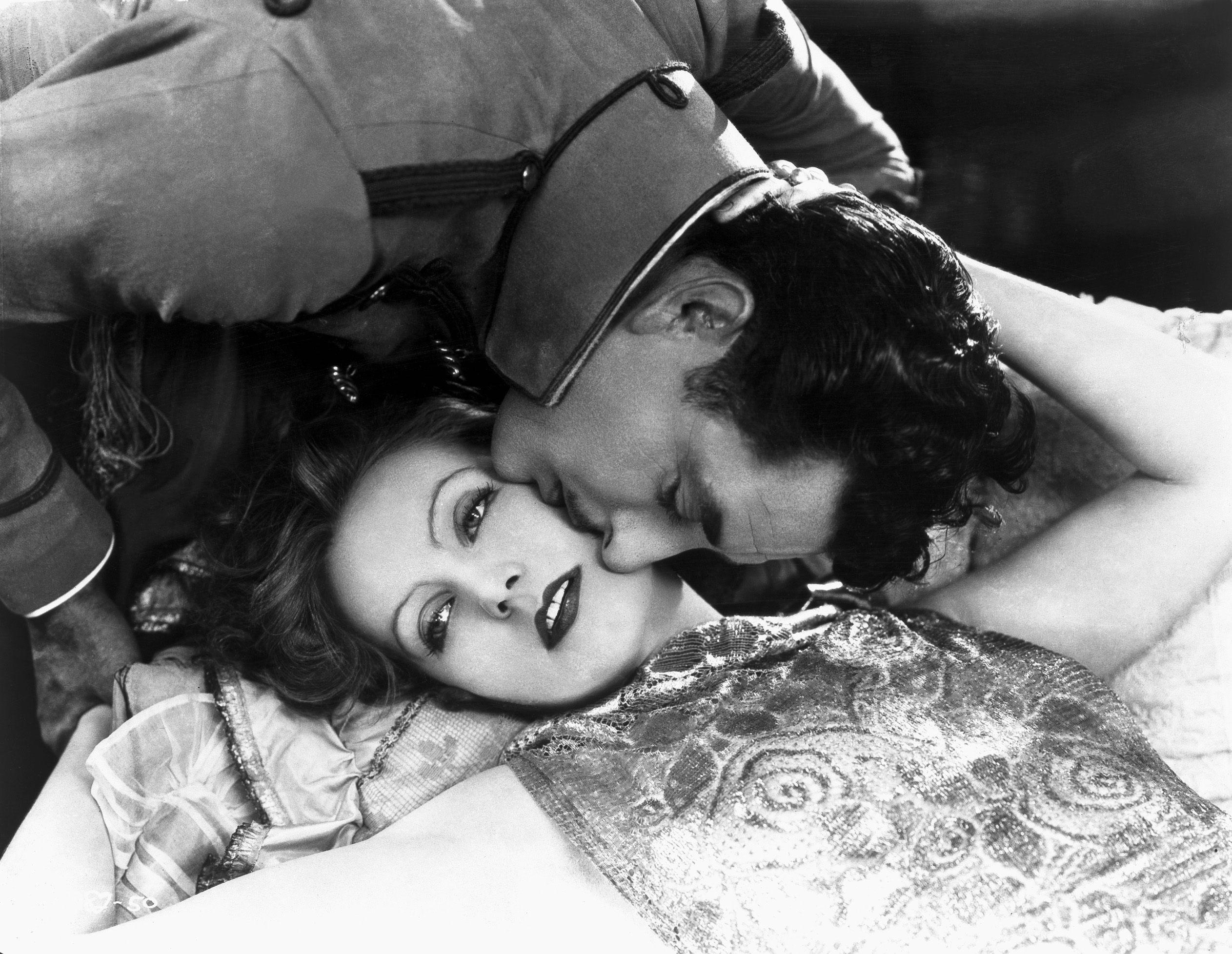
Greta Garbo and John Gilbert in 'Flesh and the Devil' (1926).

Next up: it's 'Flesh and the Devil' (1926), a romantic thriller starring Greta Garbo and John Gilbert. I'm accompanying the film on Monday, Feb. 5 at 6:30 p.m. at the Garden Cinemas in Greenfield, Mass.

 A massive success that cemented Garbo's career, the film features love scenes that were not faked, as the two stars were involved in a heated affair during filming. Director Clarence Brown later said he just had to start the cameras and then stand back!

Lots more info in the press release below. But first, a few notes about last night's screening at the Campton (N.H.) Historical Society, an annual event that includes a pot luck supper and a considerable amount of small-town charm.

For example: announcements prior to my introduction included an upcoming Antique Snowmobile Meet sponsored by the local Chamber of Commerce.  

When I got up to speak, I made the usual lame jokes (including one about the peanut brittle on the dessert table, which I said four out of five dentists recommended because it's so good for business), but then I realized something about the evening.

The scene prior to Saturday night's screening at the Campton Historical Society.

I found myself saying that as a silent film accompanist, it's been my privilege to be invited to perform in such far-flung and glamorous show-biz meccas as Topeka, Kansas, where I'll perform later this month at the Kansas Silent Film Festival, and Cleveland, Ohio, where I get to accompany films in March.

But, I said, despite the romance of these exotic places, it was unlikely that any of them would include announcements about the Chamber of Commerce hosting antique snowmobile meets. 

So the annual Pot Luck Supper / Silent Film Screening at the Campton Historical Society, traditionally held in the dead of winter, was special to me because it was home, or at least the small part of the world that was really familiar to me.

Dig in! The 'Pot Luck Supper' portion of last night's program.

Last night's screening was not without its celebrity guests, however. Prior the the show, when I was warming up at the keyboard, a woman came up to me and began chatting.

Her name was Danielle Freund-Buckman, and turn out she was the granddaughter legendary cinematographer Karl Freund's borther! That made her, let's see...Karl Freund's grand-niece, I think. 

So I introduced her to the audience, members of which of course would have no idea who Karl Freund was. I explained he was not related to Sigmund Freud, whose name was different anyway, but he was a cinematographer for many influential films in the 1920s, including F.W. Murnau's 'The Last Laugh' (1924) and Fritz Lang's 'Metropolis' (1927).

I probably would have made a bigger impression by mentioning that Freund photographed 'Dracula' (1931) starring Bela Lugosi, and also directed Boris Karloff in 'The Mummy' (1932), and also an obscure picture called 'Moonlight and Pretzels' (1933) that is my FAVORITE 1930s musical, based on a single screening I saw at a long-ago Cinefest celebration in Syracuse, N.Y. (Another show biz capital!)

Instead, I mentioned the one thing that I knew would hit home: later in his career Freund developed the three-camera system used to shoot episodes of 'I Love Lucy' in the 1950s, and hundreds of sitcoms in the years since. Everyone perked up at that, and Mrs. Freund-Buckman was duly showered with applause.

The film was Chaplin's 'The Gold Rush' (1925), in the original version, which I've been played for multiple times in the past year after not accompanying it all for about a decade. 

In recent screenings, I've learned how to do music for the final cliff-hanging sequence (literally!) in a way that I think heightens the tension and the resulting laughs.

Take innocent music and keep it light and airy, with lots of pauses, as Chaplin and Mack Swain slowly discover their predicament. Only when Chaplin swings out the door do and everything becomes clear to the characters (although the audience has known what's going on all along) do you begin to amp up the music—in this case by taking the same music and boosting the tempo a bit, and maybe putting phrases in a minor key, but still keeping the texture as simple as possible.

In due course, you can ramp things up and get really big, but only right at the end, when Swain has escaped and found his mountain of gold, but Charlie is still trapped in the teetering cabin. 

And even then you have to cut out at the moment Swain finally peers back into the cabin, and a still-trapped Chaplin wiggles his finger to indicate he's still awaiting rescue. Why? Because if the big music continued, it would step on the moment. But with near silence, the moment produces an explosive laugh.

I followed this prescription last night. I'm not sure if the music really had anything to do with it, but audience reaction was huge, with people gasping and shrieking as the sequence unfolded, and then topped with a lusty cheer when Chaplin popped out just in the nick of time.

Less is more!

See you at 'Flesh and the Devil' on Monday night in Greenfield, Mass.—yet another showbiz capital! (By virtue of it being the hometown of Penn Gillette of 'Penn & Teller' fame, and who once worked at the Garden Cinema.)

*    *    *

Original poster art for MGM's 'Flesh and the Devil' (1926).

MONDAY, JAN. 22, 2024 / FOR IMMEDIATE RELEASE
Contact Jeff Rapsis • (603) 236-9237 • jeffrapsis@gmail.com

Garbo, Gilbert heat up the big screen in 'Flesh and the Devil' at Garden Cinemas

Celebrity couple fell passionately in love during filming of legendary silent classic, to be shown with live music on Monday, Feb. 5 in Greenfleld, Mass.

GREENFIELD, Mass. - Rediscover the passionate romance between early superstars Greta Garbo and John Gilbert in 'Flesh and the Devil' (1926), the classic MGM silent melodrama that first brought the legendary Hollywood couple together.

'Flesh and the Devil' will be shown on Monday, Feb. 5 at 6:30 p.m. at the Greenfield Garden Cinemas, 361 Main St., Greenfield.

The screening will feature live accompaniment by Jeff Rapsis, a New Hampshire-based composer who specializes in creating music for silent films.

Admission is $10.50 adults, $8:50 for children, seniors, and students. Tickets are available online or at the door.

Set in Germany, 'Flesh and the Devil' tells the story of a love triangle between two boyhood friends (Gilbert and Lars Hansen) and the amoral seductress (Garbo) who comes between them.

The two men are eventually forced into a violent struggle over the woman, who marries one but carries on an affair with the other.

During the shooting, Garbo and Gilbert developed their own highly charged off-screen romantic affair, the passion of which director Clarence Brown delighted in capturing on camera.

Though Garbo and Gilbert eventually went their separate ways, 'Flesh and the Devil' marked the very public beginning of one of the legendary romances of early Hollywood.

 A close-up in more ways than one: Garbo and Gilbert in 'Flesh and the Devil' (1926).
 
'Flesh and the Devil' is the latest installment of a monthly series of silent film screenings at the Garden Cinemas. 

The series aims to recreate the lost magic of early cinema by bringing crucial elements needed for silent film to work: classic films in best available prints; projection on the big screen; live musical accompaniment; and a live audience.

"These films are still moving and intense experiences if you can show them as they were designed to be screened," said Jeff Rapsis, who provides musical accompaniment for the screenings. 

"There's a reason people first fell in love with the movies. At their best, they were communal experiences in which the presence of a large audience intensifies everyone's reactions."


The appeal of 'Flesh and the Devil' has withstood the test of time. In 2006, the film was selected for preservation in the United States National Film Registry by the Library of Congress as being "culturally, historically, or aesthetically significant."

Reviewers have continued to praise the picture's many good qualities, often singling out Garbo's performance as particularly memorable.

"Pulsatingly romantic, beautifully filmed, probably the best Garbo-Gilbert love match," wrote critic Leonard Maltin, while David Parkinson of Empire Magazine wrote that "Garbo is mesmerizing in this wild and heated romance..." Carol Cling of the Las Vegas Review proclaimed 'Flesh and the Devil' as "Garbo & Gilbert at their steamy, sultry silent peak."

Upcoming titles in the Garden Cinema's silent film series include:

• Monday, March 4 at 6:30 p.m.: 'The Passion of Joan of Arc' (1928). Danish director Carl Dreyer's intense recreation of the trial of Joan of Arc set new standards for cinematography and expanded the language of film in new directions.

• Monday, April 1 at 6:30 p.m.: 'Safety Last' (1923). The iconic image of Harold Lloyd dangling from the hands of a downtown clock is just one scene of a remarkable thrill comedy that has lost none of its power over audiences.

'Flesh and the Devil' will be shown with live music  on Monday, Feb. 5 at 6:30 p.m. at the Greenfield Garden Cinemas, 361 Main St., Greenfield.


Admission is $10.50 adults, $8:50 for children, seniors, and students. Tickets at the door; advance tickets are available at www.gardencinemas.net. For more information, call the box office at (413) 774-4881.

Wednesday, July 27, 2016

Come visit our "silent film laboratory"
held monthly at Manchester's City Library

John Gilbert's never-screened final silent, 'Desert Nights' (1929). Delight or dud? We'll find out in August.

I've seen it happen again and again: a silent film that I've looked at by myself at home comes across as a real yawner, a tiresome dud.

But the same film, when screened in a theater, with live music and with an audience, snaps back to life and commands the screen!

I've found this occurs not just with well-known classics, but with obscure films that just never get shown.

Exhibit them as intended, and the whole experience comes together. The film somehow works.

This isn't always the case, of course. Truth is, you never know what kind of reaction an older film will inspire.

The only real way to know for sure is to get the film up on a screen and give it a chance with live music and with an audience.

That's what we've been doing at the Manchester (N.H.) City Library once a month for some years now.

Each month, I run an obscure film, usually one I've never accompanied before. Could be a drama, comedy, western, adventure—anything.

And together, we collaborate to find out if the film really has anything going for it.

It's kind of a laboratory for testing how much power remains in the batteries of these old flicks.

And there are a lot of films that survive. For every well-known silent such as 'Metropolis' or 'The General,' there are literally hundreds of other lesser-known flicks.

Overall, it's estimated that about 11,000 feature-length films were produced in the U.S. during the silent era.

Of those about 70 percent have been completely lost due to neglect, decay, and so on.

But that leaves something like 3,000 films out there, each potentially full of great artistic or cultural and entertainment value. Sometimes all three!

Over the years, our efforts have produced some surprise discoveries. Films that never get shown can still spring right back to life if shown as intended.

Among the stand-outs: John Ford's surprisingly intense Irish drama 'Hangman's House' (1928); the unexpectedly hilarious comedy 'Conductor 1492' starring Johnny Hines; and Greta Garbo steaming up the screen in 'Wild Orchids.'

We're on break this month, but we pick things up in August, and I hope you'll join us.

Together, we give forgotten films a chance to do what they were designed to do so long ago: to transport us, to entertain us, to inspire us.

Can they? Will they? Only one way to find out.

Below is a press release announcing the titles from now through the end of the year. See you at the library!

* * *

Yes, I know we misspelled "Desert" in this promotional ad for the silent film series at the Manchester (N.H.) City Library.

TUESDAY, JULY 26, 2016 / FOR IMMEDIATE RELEASE
Contact Jeff Rapsis • (603) 236-9237 • jeffrapsis@gmail.com

Live music means no "Shhh!" at Manchester City Library's silent film series


Monthly program features great films from cinema's early years shown free to the public

MANCHESTER, N.H. — The films may be silent. But the experience of seeing them is anything but.

That's because live music is always part of the show at the Manchester City Library's ongoing silent film series. And so is audience reaction.

The silent film programs are free and take place in the basement auditorium of the Manchester City Library, which is located at 405 Pine St. in downtown Manchester.

The schedule for the rest of 2016, just released, includes a ground-breaking drama from acclaimed German director F.W. Murnau, a rarely-screened Lon Chaney feature, and action flicks featuring firemen, the U.S. Coast Guard, and a woman who transforms herself into a leopard.

Each month, the library runs a classic film from the time before movies came with synchronized sound and dialogue.

Instead, filmmakers told their stories visually, with live music creating a unique atmosphere when the movie is shown in a theater.

"These are the films that caused people to first fall in love with the movies," said Jeff Rapsis, a New Hampshire-based silent film accompanist who creates and performs live music for the library's series.

"At the time they were new, nobody thought of them as silent," Rapsis said. "They were pictures that moved, a brand new art form. And the stories they told had a universal appeal that captured the public's imagination all over the globe."

The films are popular with audiences of all ages, from children to senior citizens.

All screenings in the series take place in Carpenter Auditorium, located on the lower level of the historic Manchester City Library building.

Shows in the series are free and open to the public. Screenings take place on Tuesday nights and begin at 6 p.m.

The complete schedule for the remainder of 2016 includes rarely screened dramas, action adventure flicks, foreign films, and more.

• Tuesday, Aug. 9 at 6 p.m.: "Desert Nights" (1929) starring John Gilbert, Ernest Torrence. A thieving couple victimize a diamond mine and kidnap its manager, but he gains the upper hand (and falls in love with the woman) when they flee into the hostile desert. Superstar Gilbert's final silent film, climaxed by an immense sandstorm.

• Tuesday, Sept. 6 at 6 p.m.: "The Last Laugh" (1924) starring Emil Jannings, directed by F.W. Murnau. Engrossing character study of what happens when the head doorman at a posh Berlin hotel is ordered to give up his uniform due to encroaching old age. German film full of iconic images that stretched the expressive power of cinema.

• Tuesday, Oct. 4 at 6 p.m.: "The Leopard Woman" (1920). Battle-of-wits jungle drama about an British explorer and a female spy from a rival goverment ordered to foil his mission. The fun begins when rather than killing the explorer, she falls in love with him―and then he goes blind!

• Tuesday, Nov. 1 at 6 p.m.: "The Third Alarm" (1922) and "The Coast Patrol" (1925). Fire and water mix in a double bill of classic low-budget melodramas, one about a firefighter forced to retire when the department switches from horses to motorized vehicles, and another about smugglers who threaten a lighthouse keeper's peaceful post.

• Tuesday, Dec. 6 at 6 p.m.: "Mockery" (1927) starring Lon Chaney. During the Russian Revolution, a mentally challenged peasant saves a beautiful countess from invading Cossacks, then obsesses over her. Often overlooked Chaney drama with heavy helping of class warfare.

In addition to telling good stories and having entertainment value, these films are also of interest for what they show about daily life in the time they were made.

"Over the years, films from the silent era have picked up additional interest as a record of a way of life that's quite different from today," Rapsis said.

For each film, Rapsis improvises a music score using original themes created beforehand. None of the the music is written down; instead, the score evolves in real time based on audience reaction and the overall mood as the movie is screened.

"Doing the music live is a bit of a high-wire act," Rapsis said. "But I find it's the best way to create music that reflects what's happening on screen and helps an audience connect and stay with a film."

The next screening in the Manchester City Library's monthly silent film series will take place on Tuesday, Aug. 9 at 6 p.m. Featured attraction is 'Desert Nights' (1929) starring John Gilbert and Ernest Torrance.

The program takes place in the Carpenter Auditorium, lower level of Manchester City Library, 405 Pine St., downtown Manchester. Admission is free and the program is open to the public.

For more information, call the library at (603) 624-6550 or visit online at http://www.manchester.lib.nh.us/

For more about the music, visit www.jeffrapsis.com.

Friday, July 15, 2016

Help restore MGM's 'Bardelys the Magnificent'
at Red River in Concord, N.H. on Friday, 7/15

John Gilbert and Eleanor Boardman in the formerly lost film 'Bardelys the Magnificent' (1926). No, the candle is not part of Boardman's hat.

About 11,000 feature films were produced in the U.S. during the silent era. Of those, about 8,500 are now lost, meaning no copies are known to exist anywhere.

Wow! But the good news is that films thought to be lost are still being found, even at this late date.

We'll be running one of the most prominent "unlost" films, the MGM historical romance 'Bardelys the Magnificent' (1926), on Friday, July 15 at Red River Theatres in Concord, N.H.

Showtime is 7 p.m. and there's more info in the attached press release.

Set in the France of King Louis XIII, it's a big-budget swashbuckling adventure film with an impressive pedigree: directed by King Vidor, and starring John Gilbert (MGM's top star at the time) and Eleanor Boardman, an actress who was Vidor's wife.

And in this case, it really shouldn't have been lost, because MGM generally took care of its back catalog of prints.

While other studios routinely junked release prints to recover the silver content, or just neglected films that had finished their theatrical runs, MGM from the beginning made an effort to maintain its "vault."

So what happened? In the case of 'Bardelys,' the film was based on a novel by Rafael Sabatini. When MGM's licensing deal with Sabatini expired in 1936, the studio opted not to renew.

As part of the deal, it was obligated to destroy the film's negative as well as all positive prints, which it did.

And that was that! Business is business.

Later, when people got interested in silent cinema, no copies of 'Bardelys' could be found anywhere.

So for decades, it was considered a lost film. All we had was the film's 'Coming Attractions' trailer, as well as a brief but tantalizing sequence that was used in a later MGM film directed by Vidor, 'Show People' (1928). And posters like the one at left.

But then, as sometimes happens, a nearly complete copy of the European version of 'Bardelys' was found in France in 2006. It had French intertitles and was missing most of Reel 3, but otherwise was intact and in pretty good shape.

Using MGM records, the original English titles were recreated, and the missing footage of Reel 3 was recreated using material from the trailer as well as still photographs and explanatory titles.

And behold: 'Bardelys the Magnificent' was "unlost," and able to be seen for the first time since its original 1926 release.

I first encountered the film at the Kansas Silent Film Festival a few years ago, with live music by the wonderful Mont Alto Motion Picture Orchestra.

It plays very well, and is an important missing link in the silent film catalog.

And it's also a perfect summertime escapist film, which is why we're running it at Red River—a day after Bastille Day, I might add.

But no lost silent film is truly "unlost" unless it's screened as intended: in a theater, with live music, and with an audience.

And that's where you come in. Hope you can join us and help conjure up the excitement and adventure of early Hollywood as we screen 'Bardelys the Magnificent' at Red River Theatres!

* * *

Before it got lost, it had to get made: shooting 'Bardelys the Magnificent' with Eleanor Boardman, cameraman William Daniels, and director King Vidor.

SATURDAY, JULY 9, 2016 / FOR IMMEDIATE RELEASE
Contact Jeff Rapsis • (603) 236-9237 • jeffrapsis@gmail.com

Rediscovered silent film swashbuckler to 're-premier' in Concord, N.H. on Friday, July 15


'Bardelys the Magnificent' (1926), epic long thought lost until a copy was found in Europe, to be screened with live music

CONCORD, N.H.—A major Hollywood feature—a film lost for decades until a copy surfaced in France in 2006—will soon get its local big screen "re-premier."

'Bardelys the Magnificent' (1926), a big-budget MGM historical romance starring John Gilbert and Eleanor Boardman, will be screened on Friday, July 15 at 7 p.m. at Red River Theatres,, 11 South Main Street in Concord.

Live music for the movie will be provided by silent film accompanist Jeff Rapsis. Admission is $10 per person.

Based on a novel by prolific Italian/English author Rafael Sabatini, 'Bardelys the Magnificent' is an epic tale of love, honor, and derring-do set during the reign of King Louis XIII of France.

The story follows the adventures of French nobleman Bardelys, who assumes the identity of a dead man to be close to the woman he loves. The ruse backfires, however, when it turns out the dead man is wanted for treason against the King.

This propels Bardelys into a series of swashbuckling adventures as he must avoid being caught and executed, all the while pursuing his beloved.

The title role is played by legendary leading man John Gilbert, then at the height of his 1920s stardom. Gilbert was popular for his good looks, magnetic personality, and athletic stunts. Actress Eleanor Boardman plays Roxalanne, his love interest; the huge cast includes many silent film-era stars and supporting players.

'Bardelys the Magnificent' was directed by King Vidor, who was responsible for several well-known silent-era classics, including 'The Big Parade' (1925), 'The Crowd' (1928), and 'Show People' (1928).

The picture was a solid hit in its original release, enhancing the reputations of everyone involved. Later, MGM's rights to the Sabatini novel expired in 1936, and the studio destroyed all copies per the licensing agreement. It was only later that archivists released that no other copies of the film were known to have survived anywhere.

For six decades, the only footage of 'Bardelys the Magnificent' known to exist was a brief clip included in a movie theater scene in 'Show People,' another Vidor picture. 'Bardelys' was regarded as a major lost feature film from the silent era.

Then, in 2006, researchers in France discovered an almost complete copy of 'Bardelys the Magnificent' in a private collection. The print was missing about 10 minutes of footage, but was otherwise intact and in excellent condition.

The missing footage is replaced with still photos taken on the set, written descriptions, and by scenes recovered from a 'Coming attractions' trailer for the film. The story is now easily followed.

Restoration was completed in 2008; the film was subsequently released on DVD, and has since been screened at several festivals around the country—but not not in Concord until now.

"With it being the day after Bastille Day, we thought it would be a great time to screen this historical romance set in France," Rapsis said.

...and before it got made into a "photoplay" (meaning movie), it was a novel by Rafael Sabatini.

Silent films were produced until 1929, when talkies arrived. About 75 percent of all movies made during the silent era are now lost due to decomposition, carelessness, fire, or neglect. But copies of "missing" films still occasionally turn up in archives and collections around the world, so researchers and archivists continue to make discoveries.

For 'Bardelys the Magnificent,' Rapsis will improvise a score using original musical material that he creates beforehand. For a movie score to support 'Bardelys,' Rapsis will use a digital synthesizer to recreate the sound and texture of a full orchestra.

"What I try to do," Rapsis said, "is create music that bridges the gap between a film that might be 80 or 90 years old, and the musical expectations of today's audiences."

'Bardelys the Magnificent' is the latest in a monthly series of silent films presented with live music at Red River Theatres. The series provides local audiences the opportunity to experience silent film as it was intended to be shown: on the big screen, in good-looking prints, with live music, and with an audience.

"If you can put Humpty Dumpty back together again, it's surprising how these films jump back to life," Rapsis said. "By showing the films under the right conditions, you can really get a sense of why people first fell in love with the movies."

Red River Theatres, an independent cinema, is a non-profit 501(c)(3) organization dedicated to screening a diverse program of first-run independent films, cult favorites, classics, local and regional film projects, and foreign films.

The member-supported theater’s mission is to present film and the discussion of film as a way to entertain, broaden horizons and deepen appreciation of life for New Hampshire audiences of all ages.

Upcoming silent film programs at Red River include:

• Friday, Aug. 12: 'The Yankee Clipper' (1927) starring William Boyd. Period drama set in the 19th century; two clipper ships race from China to Boston to compete for a lucrative tea contract.

• Friday, Sept. 16: 'Spies' (1928). Director Fritz Lang followed his futuristic saga 'Metropolis' with this pioneering espionage thriller that created the template for all future James Bond movies.

• Friday, Oct. 14: 'The Cat and the Canary' (1927). Creepy haunted house thriller set the stage for great Universal classics such as 'Dracula' and 'The Mummy.'

'Bardelys the Magnificent' will be shown on Friday, July 15 at 7 p.m. at Red River Theatres, 11 South Main St., Concord, N.H. in the Jaclyn Simchik Screening Room. Admission is $10 per person; for more info, call (603) 224-4600 or visit www.redrivertheatres.org.

Friday, June 3, 2016

Next up: 'Flesh and the Devil' in 35mm
on Sunday, June 5 at Somerville Theatre

Greta Garbo and John Gilbert get close in 'Flesh and the Devil.'

Great screening coming up on Sunday, June 5.

But first: this morning (Friday, June 3) saw one of my favorite events on the calendar.

Each year about this time, I haul myself out to the Antrim (N.H.) Town Hall and do a silent film program for maybe 80 kids from Great Brook Middle School.

It's set up as a "reward" for the good work that students do year round.

So on movie day, they march down the hill from the school and then climb up the bell tower stairs and into the second-floor auditorium.

This morning it was Buster Keaton: the short 'One Week' and then the full-length 'The Cameraman.'

Why Buster? In the five or six years I've been doing this, we've tried other comedians. But for some reason the Great Brook Middle Schoolers have bonded with Buster.

About half the students on hand had attended in earlier years, and Mrs. Cullinan said it was pretty much unanimous: More Buster!

And the good news is that Buster can hold the attention of a room full of middle school students before 9 a.m. on a warm June morning.

Wow! I've taught middle school, and so let me tell you how impressive and amazing that is. Congrats, Buster!

What's more, they always come up with interested comments and questions.

This morning, before the screening I forgot to mention that there's footage of famous aviator Charles Lindbergh in 'The Cameraman,' just in case they didn't recognize him.

So afterwards, we asked: can anyone name who the guy in the parade waving to the crowd?

Hands shot up. First guess: "John F. Kennedy!"

Not a bad guess—after all, it was a younger guy waving from a limo in old film footage.

Thanks to Maryanne Cullinan and the other faculty and staff from Great Brook for keeping this program going. You're the best!

And the kids—always a great audience. Thanks for the opportunity to get together each year and bring Buster's films to life.

Okay, and now for completely different.

No, not Monty Python. It's Greta Garbo and John Gilbert in 'Flesh and the Devil' (1926), which I'm accompanying on Sunday, June 5 at 2 p.m. at the Somerville Theatre.

More details in the press release below.

But I'm told the 35mm print is complete and looks pretty good. Also, in case anyone's wondering, it has the "traditional" ending, not the "happy" ending that MGM allegedly filmed to make the film more commercial.

I've never seen the alternate ending, but I asked to have the print looked at just to be prepared in case it had it.

Well, it doesn't. But it has everything else you'd want in this kind of picture: exotic settings, some light comedy, great atmosphere, and acres and acres of Garbo and Gilbert in close-up.

See you there! Bring tissues!

* * *


FRIDAY, MAY 20, 2016 / FOR IMMEDIATE RELEASE
Contact Jeff Rapsis • (603) 236-9237 • jeffrapsis@gmail.com

Garbo, Gilbert heat up the big screen in 'Flesh and the Devil' at Somerville Theatre


Celebrity couple fell passionately in love during filming of legendary silent classic, to be shown in 35mm and with live music on Sunday, June 5

SOMERVILLE, Mass. - Rediscover the passionate romance between early superstars Greta Garbo and John Gilbert in 'Flesh and the Devil' (1926), the classic MGM silent melodrama that first brought the legendary Hollywood couple together.

'Flesh and the Devil' will be shown on Sunday, June 5 at 2 p.m. at the Somerville Theatre, 55 Davis Square, Somerville, Mass. Admission is $15 per person or $12 seniors/students.

The film will be shown using a 35mm print. Live music will be provided by Jeff Rapsis, a New Hampshire-based silent film accompanist.

Set in Germany, 'Flesh and the Devil' tells the story of a love triangle between two boyhood friends (Gilbert and Lars Hansen) and the amoral seductress (Garbo) who comes between them.

The two men are eventually forced into a violent struggle over the woman, who marries one but carries on an affair with the other.

A kinda scary original poster. Faust, anyone?

During the shooting, Garbo and Gilbert developed their own highly charged off-screen romantic affair, the passion of which director Clarence Brown delighted in capturing on camera.

Though Garbo and Gilbert eventually went their separate ways, 'Flesh and the Devil' marked the very public beginning of of one of the legendary romances of early Hollywood.

He's perfect—but he doesn't speak any Swedish!

'Flesh and the Devil' is the latest installment of 'Silents, Please!'. a monthly series silent film screenings at the Somerville Theatre. The series aims to recreate the lost magic of early cinema by bringing crucial elements needed for silent film to work: classic films in best available 35mm prints; projection on the big screen; live musical accompaniment; and a live audience.

"These films are still moving and intense experiences if you can show them as they were designed to be screened," said Jeff Rapsis, who provides musical accompaniment for the screenings. "There's a reason people first fell in love with the movies. At their best, they were communal experiences in which the presence of a large audience intensifies everyone's reactions."

The appeal of 'Flesh and the Devil' has withstood the test of time. In 2006, the film was selected for preservation in the United States National Film Registry by the Library of Congress as being "culturally, historically, or aesthetically significant."

Reviewers have continued to praise the picture's many good qualities, often singling out Garbo's performance as particularly memorable.

"Pulsatingly romantic, beautifully filmed, probably the best Garbo-Gilbert love match," wrote critic Leonard Maltin, while David Parkinson of Empire Magazine wrote that "Garbo is mesmerizing in this wild and heated romance..." Carol Cling of the Las Vegas Review proclaimed 'Flesh and the Devil' as "Garbo & Gilbert at their steamy, sultry silent peak."

Upcoming screenings in the Somerville Theatre's 'Silents Please!' series include:

• Sunday, July 10: 'So's Your Old Man' (1926) and 'It's the Old Army Game' (1926). A pair of vintage W.C. Fields silent feature comedies; program hosted by the great man's granddaughter, Dr. Harriet Fields.

• Sunday, Aug. 14: 'Stella Maris' (1924) starring Mary Pickford. A beautiful but disabled girl, cared for by a rich family that shields her from the world's harsh realities falls in love with a married man.

'Flesh and the Devil' will be shown in 35mm and with live music on Sunday, June 5 at 2 p.m. at the Somerville Theatre, 55 Davis Square, Somerville, Mass. Admission to the screening is $15 or $12 seniors/students. For more info, call (617) 625-5700 or visit www.somervilletheatreonline.com. For more info on the music, visit www.jeffrapsis.com.

Monday, June 29, 2015

Coming Sunday, 7/5: 'The Big Parade' (1925)
in 35mm at the Somerville Theatre

An original poster for MGM's blockbuster 'The Big Parade' (1925).

Looking for something different to mark Independence Day?

Then march on over to the Somerville Theatre in Somerville, Mass., where I'm doing live music for a screening of 'The Big Parade' (1925) in 35mm on Sunday, July 5 at 2 p.m.

Despite now being 90 years old, this amazing movie—all about American soldiers who ship off to Europe to join in World War I—has lost none of its emotional impact.

Directed by a very young King Vidor, the film set new standards for realism in the then-still-new medium of cinema. It was the 'Saving Private Ryan' of its time, as mentioned in the press release below.

The result was an enormous blockbuster for MGM, which had just been created by a recent merger. 'The Big Parade' caused a sensation, becoming the studio's highest-grossing picture up until 'Gone With the Wind' hit the screen in 1939.

What I like most about 'The Big Parade,' and what I think still works just as intended, is its very simple but powerful structure.

Vidor directed the first half of the film in the style of a light romantic lark. We follow the GIs into the French countryside, where they bunk together in barns and get to know one another—and we get to know them. Plenty of hijinks ensue, including flirting with the local women, with no shortage of humor. It's kind of like a Sad Sack comic book story come to life.

That's John Gilbert under the barrel, getting to know a French village gal played by Renée Adorée.

But then the men get called up to the front, and everything changes. Vidor takes the men we've gotten to know and marches them into the trenches, and we can't help but be pulled along with them. We're suddenly in a world of darkness and mud and giant explosions and shrapnel and death everywhere.

In the trenches: John Gilbert surrounded by comrades Tom O'Brien (left) and Karl Dane.

Who will make it? Who will not?

I've accompanied this film many times now, and the structure never fails. You get to know these characters, and then you're tossed into the trenches with them. Everything is suddenly more intense, more vivid, more urgent, and more real. It's as if you wake from a dream but then get caught up in a nightmare.

Vidor not only brought you visually into places most audiences had never been taken, but his structure helped mimic the emotional landscape of battle. His structure helps us feel at least a little bit of what it's like to be part of a group now facing danger in a strange land for a cause that may or may not be worth fighting for, despite your duty.

With this in mind, it's a great film for music. To help underline the contrast, I've found it works well to score the whole first half as if it's one of those Sigmund Romberg operettas—a fanciful European fairytale.

Then, in the second half, I shift to an entirely different and much more aggressive style of accompaniment to communicate how things have changed. To me, the point where there's no turning back is the scene when the soldiers emerge from a forest and move out onto a blasted battlefield that's under continuous shellfire. No more Romberg from then on, folks.

'The Big Parade' is sometimes called the first "anti-war" film, but I think that's overemphasizing one aspect of it and putting it into a box in which it doesn't fit.

Rather, I think it celebrates the whole complex experience of being an American and serving one's country. And I can't think of a more satisfying way to finish a weekend of fireworks celebrating our nation's birth.

So come see 'The Big Parade.' More info about the screening is in the press release below. Hope to see you there!

P.S. Interesting trivia about 'The Big Parade'...renowned painter Andrew Wyeth first saw the film with his father in 1925, sparking a life-long interest. In a 1975 letter to director King Vidor, Wyeth claimed to have seen the film more than 200 times! For more info, check out info on this lecture at the Farnsworth Museum in Maine, where I've been trying to program 'The Big Parade' for some time now. How about it, guys?

* * *

The classic shot: John Gilbert and Renée Adorée in 'The Big Parade' (1925).

JUNE 24, 2015 / FOR IMMEDIATE RELEASE
Contact Jeff Rapsis at (603) 236-9237 • e-mail jrapsis@gmail.com

Epic war movie 'The Big Parade' to be screened in 35mm on Sunday, 7/5 at Somerville Theatre


To be shown with live music; blockbuster silent film drama
changed the way Hollywood depicted battle on the screen

SOMERVILLE, Mass. — It was the 'Saving Private Ryan' of its time — a movie that showed audiences combat as experienced by a soldier whose life is changed forever by the horrors of war.

It was 'The Big Parade' (1925), a sprawling World War I epic and a box office sensation that made MGM into a powerhouse studio in Hollywood's golden years. It's the latest installment of 'Silents, Please!,' a monthly silent film series with live music at the Somerville Theatre.

'The Big Parade' will be screened in 35mm one time only at the Somerville Theatre on Sunday, July 5 at 2 p.m. General admission is $15; seniors/students $12.

The show will feature live accompaniment by silent film musician Jeff Rapsis.

'The Big Parade,' released just a few years after World War I ended, was hailed by critics as the first Hollywood film to depict the harsh reality of combat and its impact of troops in the trenches and foxholes. Its hellish battle scenes were staged on a massive scale and still retain their ability to shock audiences.

The picture, based on the best-selling novel "What Price Glory?", follows the story of a young man (John Gilbert) who rebels against a privileged background by enlisting in the army just before the U.S. enters World War I.

He is shipped out to France, where he falls in love with a local French woman before being transferred to the front. There, he and his squadmates face the German war machine, where they must endure the ultimate tests of duty and honor in a battle they come to see as meaningless.

In addition to vivid war scenes, the film contains a famous dramatic sequence in which the French woman (Renée Adorée) realizes her love for the soldier, and tries to find him to say goodbye as the massive convoy of troops pulls out for the front. Another celebrated sequence depicts the light-hearted first meeting of the soldier and the girl, in which he teaches her how to chew gum.

'The Big Parade' went on to become the top-grossing movie of the entire silent film era, earning $6.4 million domestically and making director King Vidor into the Steven Spielberg of his day. It stood as MGM's biggest single box office hit until the release of 'Gone With the Wind' in 1939.

Rapsis will improvise a musical score to the film in real time. In creating accompaniment for the 'The Big Parade' and other vintage classics, Rapsis tries to bridge the gap between silent film and modern audiences.

"Live music adds an element of energy to a silent film screening that's really crucial to the experience," Rapsis said. " 'The Big Parade' is filled with great scenes that lend themselves well to music. It's a real privilege to create a score to help this great picture come back to life," Rapsis said.

Other upcoming features in the Somerville's silent film schedule include:

• Sunday, Aug. 2, 2 p.m.: 'Speedy' (1928) starring Harold Lloyd. Can Harold New York City's last horsedrawn streetcar line from the clutches of a greedy transport tycoon? The Big Apple co-stars in one of Harold's great silent comic masterpieces. Plus an extended cameo appearance from none other than Babe Ruth!

• Sunday, Sept. 13, 2 p.m.: 'The Matrimaniac' (1916) starring Douglas Fairbanks Sr. An unusual program that contrasts this early Fairbanks marital farce with another picture released by the same studio after Fairbanks had moved on, but which uses material from the Fairbanks film to support an entirely different story.

• Sunday, Oct. 4, 2 p.m.: 'Tramp Tramp Tramp' (1926) starring Harry Langdon, Joan Crawford. The great silent film comedian Harry Langdon returns to the Somerville's big screen, this time with a very young Joan Crawford playing his love interest! His debut feature finds Harry entering a cross-country walking race to save the family business and impress the girl of his dreams.

All entries in the Somerville's silent film series are shown using 35mm prints, the native film format that few theaters are now equipped to run following Hollywood's transition to digital formats.

MGM's silent blockbuster ‘The Big Parade’ will be shown in 35mm and with live music on Sunday, July 5 at 2 p.m. at Somerville Theatre, 55 Davis Square, Somerville, Mass.

Admission to the screening is $15 or $12 seniors/students; general admission seating. For more info, call (617) 625-5700 or visit www.somervilletheatreonline.com. For more info on the music, visit www.jeffrapsis.com.

Tuesday, February 17, 2015

A little snow can't slow down
the silent film juggernaut of romance

Not even snowpiles like these in the Boston area could stop silent film!

Pleased to report that we went three for three this weekend.

Despite the latest in a series of snowstorms that are collectively burying New England, all three silent film screenings went on as scheduled.

The Aeronaut on a crowded night. We staged the silent film in the area way in the back.

• A Valentine's Day program at the Aeronaut Brewery in Somerville, Mass. attracted a hardy band of the curious (average age maybe half that of mine) who reacted explosively to Buster Keaton in 'Seven Chances' (1925).

We were set up in an unimproved industrial space off to one side of the brewery/bar, and the choice for screen was a large bedsheet or a blank white wall. (I went with the wall.)

Alas, the Saturday night brewery crowd was noticeably thinner compared to my first visit. Blizzard conditions had taken their toll.

But still, there was a good vibe in the place, which features an eclectic line-up of live entertainment. When I arrived, a small combo (I think it included a sousaphone) was playing an arrangement of one of the Gershwin piano preludes while a young woman did interpretive dance on the brewery floor.

And this was followed by some silent film thing!

But come showtime, people began moving over to where I'd set up the keyboard, speakers, and projector, packing in around it in chairs and tables.

By the time we started, it was a good-sized audience. And, as I soon found out, a very responsive one!

You know it's going to be a fun ride when even the opening sequence (in which Keaton repeatedly fails to propose to his beloved) produces gales of laughter.

And after that, it just never let up. People were really into it. And I didn't ask, but I have to think that most people there had never experienced a silent film that way: with live music, and as part of an audience.

So, as we all discovered, what's old can be new again. And it was very gratifying to see it all come together so successfully.

I have to say, it ranked as one of the best silent film experiences I've had in all the years I've been doing this.

My thanks to Christine Platzek, Ben Holmes, and everyone at the Aeronaut Brewery for taking a chance on silent film. Even in the midst of a blizzard, it worked out great!


• Alas, only about a dozen people showed up for a matinee screening of MGM's 'Love' (1927) on Sunday, Feb. 15 at the Wilton Town Hall Theatre.

And that wasn't surprising, as the region was still digging out from another foot of snow, plus contending with Arctic temperatures and winds of 50 mph.

Theatre owner Dennis Markaverich didn't run his usual Sunday shows at 2 p.m., as no one showed up and he was too busy unburying the theater.

But we went ahead with 'Love' at 4:30 p.m., and it seemed especially fitting that the film starts in a howling blizzard!

This isn't one of the immortal silent classics, which I confided in the small group on hand.

MGM basically took a steamroller to Tolstoy's sprawling novel 'Anna Karenina,' boiling it down to a series of scenes that would give maximum face time to Greta Garbo and John Gilbert.

The fact that they threw out just about all of the novel, and then also changed the conclusion to a happy ending, wasn't a concern to the studio. It was designed with one aim: to sell tickets, which it did.

However, 'Love' was produced at the very height of the silent film era. Also, it was made by MGM, at the time the most technically slick studio in Hollywood.

So despite some shortcomings, it contains a lot of interest—sequences that show silent film at the peak of its eloquence.

In previewing the film, I was struck how several intense "dialogue" scenes (where Garbo and Gilbert speak passionately to each other, at some length) are presented utterly without any intertitles.

It's not like 'Love' avoids intertitles. They're used frequently elsewhere.

But in some places, we're left to just watch the faces and the expressions, even as quite a lot is being said, sometimes quite passionately.

I think this is one key to the unique power of silent film. By not getting the details, we're left to imagine what's being said. And that leaves us free to imagine something more intense and personal, perhaps, than could be concocted by any title writer.

By letting us do the work, if we care to, the film absorbs us and draws us in more closely to the characters and the story.

That this is done in a fairly routine (if high profile) release such as 'Love; shows how pervasive this method of presenting a story had become. As the motion picture matured, filmmakers were pushing the technique of visual story-telling in surprisingly abstract directions.

We followed 'Love' with this. Seems fitting, somehow.

• After 'Love,' I raced down snow-covered highways to the Somerville Theatre (just outside Boston, Mass.) to do live music for 'The Cabinet of Dr. Caligari' (1920).

This screening was part of the annual Boston Sci-Fi Marathon, held every President's Day weekend and now in its 40th year. For 24 hours (yes, straight without a break), about 500 hard-core fans take in a continuous diet of big screen sci-fi flicks of all types—the good, the bad, the very bad, with sometimes even a silent thrown in.

I'd been here before, in 2011, when I did live music for the 1916 version of '20,000 Leagues Under the Sea.' Not sure how 'Caligari' qualifies as sci-fi, but I was thrilled at a chance to do live music for it at the "'Thon," as attendees call it.

One reason is that it's a chance to bring a silent film to life for a large audience that's quite separate from the usual silent film crowd.

Somerville was absolutely buried in snow. But despite a parking ban and no public transit, the "Thon" went on as planned, although the start was pushed back from noon to 4 p.m.

Attendance was strong: I arrived just as the main theater's doors burst open at the intermission of '2001: A Space Odyssey,' and was surprised that the place was packed!

Set-up required me to gingerly step around people who'd camped out (sleeping bags and all) in the area below the stage, but everyone was really nice about it.

'Caligari' was preceded by a Thon tradition: the alien tinfoil hat contest.

And after that, we went right into Caligari, shown in DCP. Projectionist David Kornfeld thought the transfer was too slow, but it seems to flow all right in terms of the music.

By this time, I had been sitting at a keyboard so much in the past couple of days that I carried over a certain fluency I had accumulated. So things went well, even though I had nothing specific prepared for 'Caligari.'

The only special effect was that I brought my grandmother's old brass school bell to ring during the three times that Caligari is seen ringing a bell to get attention for his carnival act.

Great ovation at the end! Hope to do it again in years to come.

And then I went out in the cold to start my car, and the Thon moved on without me.


• Last-minute addition to the schedule: I'm doing music for Abel Gance's 'J'Accuse' (1919) on Sunday, Feb. 22 at 7 p.m. at the Harvard Film Archive, 24 Quincy St., Cambridge, Mass. For more info, please click the link.

I just was asked to do this, so haven't had a chance to prepare much. And I'm leaving for London tonight, returning to Boston the afternoon of the screening.

Cutting it close, I suppose, but I'm game.

And then after that, it's off to the Kansas Silent Film Festival on Feb. 27 & 28 in Topeka, Kansas.

More to come on that!

Friday, February 13, 2015

An unusual Valentine's Day weekend
...complete with impending blizzard

Not even Greta Garbo and John Gilbert in 'Love' (1927), to be screened on Sunday, Feb. 15 in Wilton, N.H., will create enough heat to rescue us from yet another impending snowstorm.

What better day than Friday the 13th to ponder the fate of three separate screenings this Valentine's Day weekend, what with a severe blizzard expected to blow through our part of the world.

Sounds like Old Man Winter and Mother Nature are having a little tiff.

Well, as of now, all three screenings are still a go. I'll post updates if anything changes.

The three screenings are:

• Saturday, Feb. 14, 2015, 9 p.m. 'Seven Chances' (1925) starring Buster Keaton; Aeronaut Brewing Co., 14 Tyler St., Somerville, Mass. Special Valentine's Day program at popular brew-pub in Somerville, Mass. Admission $10 per person. For details, check out their Facebook page at: https://www.facebook.com/events/845007065561871. Please note you have to be logged into Facebook to see this page.

• Sunday, Feb. 15, 2015, 4:30 p.m.: 'Love' (1927) starring Greta Garbo, John Gilbert; Wilton Town Hall Theatre, Main Street, Wilton, N.H.; (603) 654-3456; www.wiltontownhalltheatre.com. Silent-era mega-stars (and off-screen lovers) Greta Garbo and John Gilbert heat up the screen in this 1927 adaptation of Tolstoy's novel 'Anna Karenina.' (Great if you forgot to do anything special on Valentine's Day.) Admission free, donations of $5 per person encouraged.

• Sunday, Feb. 15, 2015, 10 p.m. or thereabouts, 'The Cabinet of Dr. Caligari' (1920); Somerville Theatre, 55 Davis Square, Somerville, Mass.; (617) 625-5700; Somerville Theatre. Nearly a century after its release, the German expressionist film widely regarded as the world's first horror movie still has capacity to creep out audiences. Screened as part of the 40th Annual Boston Sci-Fi Film Festival's annual 24-hour science fiction film marathon, which runs noon on Sunday, Feb. 15 to noon on Monday, Feb. 16. Admission charged. For more info, visit the festival's Facebook page at https://www.facebook.com/BostonSciFi.

So, about the blizzard: it's expected to roar into New England starting Saturday night, and then peak during the day Sunday before departing that evening.

Hardest hit will be coastal areas, which includes the Boston area, where two of the three screenings are. Winds of 70 mph are expected, and maybe a foot to 18 inches of blowing, drifting snow.

But of the two in Beantown, the Feb. 14 show at the Aeronaut Brewery takes place before the brunt of the storm moves through.

And the screening of 'Caligari' at the Sci-Fi Marathon isn't until late at night on Sunday, when the storm will be outta here. (I understand the Marathon is still a go no matter what, even though it starts on Sunday morning, when the storm will be at its worst.)

As for 'Love' on Sunday at the Wilton Town Hall Theatre, I'd be surprised if that one doesn't happen, as interior New Hampshire will see a little less of the snow. And you can't stop love, right?

Still, this could change. And that leaves us all in as much suspense as if we're watching a frozen Lillian Gish stranded on an ice floe heading for the falls.

Will Old Man Winter or Mother Nature (or whoever is in charge of the weather) cause any of this weekend's screenings to be cancelled?

I'll keep you posted. For now, here's the press release on the Valentine's Day screening of 'Seven Chances' (1925) at the Aeronaut Brewery in Somerville, Mass. I'll include info about 'Love' and 'Caligari' in separate posts.

* * *

Buster checks the time, but he should also check the weather prior to a Valentine's Day screening of 'Seven Chances' (1925) on Saturday, Feb. 14 at 9 p.m. at the Aeronaut Brewery in Somerville, Mass.

MONDAY, FEB. 2, 2015 / FOR IMMEDIATE RELEASE
Contact: Jeff Rapsis • (603) 236-9237 • jeffrapsis@gmail.com

Silent film comedy 'Seven Chances' (1925) on Saturday, Feb. 14 at Aeronaut Brewery


Buster Keaton's classic romantic farce to be screened on Valentine's Day with live music

SOMERVILLE, Mass.—When words aren't enough to express those romantic feelings, why not let a silent movie do the talking?

That's the thinking behind a Valentine's Day silent film program to be presented on Saturday, Feb. 14 at 9 p.m. at the Aeronaut Brewery, 14 Tyler St., Somerville.

'Seven Chances' (1925), a classic Buster Keaton romantic comedy, will be shown at the brewery with live music by silent film accompanist Jeff Rapsis.

Admission to the screening is $15 per person. The program includes two shorter Keaton comedies in addition to 'Seven Chances,' one of Keaton's classic full-length feature comedies.

"We envision our Valentine's Day event as a throwback to marvelous days of wonderment celebrating times together with friends and community," said Christine Platzek of Aeronaut, a craft brewery that opened in 2014.

Just as beer aficionados appreciate a good hand-crafted brew, movie-goers are rediscovering the joys of silent cinema presented as it was intended: on a big screen, with live music, and with an audience.

"If you can put all the original elements together, the films of early Hollywood still come to life," said Rapsis. "These are the films that caused people to first fall in love with the movies."

Acclaimed for their originality and clever visual gags, Keaton's films remain popular crowd-pleasers even today.

Keaton never smiled on camera, earning him the nickname of "the Great Stone Face." But his comedies rocked Hollywood's silent era with laughter throughout the 1920s.

In 'Seven Chances,' adapted from a stage play, the story finds Buster learning that he'll inherit $7 million if he's married by 7 p.m. on his 27th birthday—that very day!

Buster's hurried attempts to tie the knot on his own go awry, but then a newspaper story changes the game, creating an avalanche of would-be brides who relentlessly pursue Buster as he searches for his one true love before the deadline.

Buster and his would-be brides in 'Seven Chances' (1925).

'Seven Chances' was the first screen adaptation of the now-familiar story, since used in movies ranging from the Three Stooges in 'Brideless Groom' (1947) to Gary Sinyor's 'The Bachelor' (1999), a romantic comedy starring Chris O'Donnell and Renee Zellwinger.

Keaton, along with Charlie Chaplin and Harold Lloyd, stands today as one of the silent screen's three great clowns. Some critics regard Keaton as the best of all; Roger Ebert wrote in 2002 that "in an extraordinary period from 1920 to 1929, (Keaton) worked without interruption on a series of films that make him, arguably, the greatest actor-director in the history of the movies."

As a performer, Keaton was uniquely suited to the demands of silent comedy. Born in 1895, he made his stage debut as a toddler, joining his family's knockabout vaudeville act and learning to take falls and do acrobatic stunts at an early age.
A remarkable pantomime artist, Keaton naturally used his whole body to communicate emotions from sadness to surprise. And in an era with no post-production special effects, Keaton's acrobatic talents enabled him to perform all his own stunts, including some spectacular examples in 'Seven Chances.'

"We felt a vintage silent film program with live music would be a great way to create Valentine's Day memories that last a lifetime," Platzek said. "We encourage everyone to join us, whether you're on a date or on your own. We'll all end up laughing together!"

The Aeronaut is also hosting a beer and cheese tasting event on Saturday, Feb. 14 at 5 p.m.

'Seven Chances' (1925) starring Buster Keaton will be shown on Saturday, Feb. 14 at 9 p.m. at the Aeronaut Brewing Co., 14 Tyler St., Somerville, Mass. Admission $15 per person. For more information, call (617) 987-4236 or visit the Aeronaut Brewing Co.'s Facebook page at https://www.facebook.com/aeronautbrewing/events. For more information about the music, visit www.jeffrapsis.com.