Showing posts with label Greta Garbo. Show all posts

Sunday, January 26, 2025

Up next: Greta Garbo in 'Wild Orchids' on Wednesday, Jan. 29 in Manchester, N.H.

A photo showing the Alton Bay Ice Runway in 2015.

It's so cold in New Hampshire that for the first time in three years, the Alton Bay Ice Runway has opened!

That's right: the only FAA-approved ice runway in the lower 48 states—in an inlet of New Hampshire's Lake Winnipesaukee—was declared open last week when the ice reached the requisite 12 inches of thickness.

So it's been perfect weather for a screening 'Way Down East' (1920), the D.W. Griffith melodrama in which Lillian Gish winds up on ice floes in the Connecticut River—not that far from the Alton Bay Ice Runway, as the crow flies.

If the story was set a little later in the development of aviation, Richard Barthelmess could have rescued Ms. Gish by taking off from the ice runway in his trusty Sopwith Camel and swooping down to whisk her to safety.

Well, it's a thought.

At our screening on Sunday afternoon at the Town Hall Theatre in Wilton, N.H., 'Way Down East' proved once again Griffith's ability to lay out a story that pulls an audience along the same way the on-screen ice floes carry Lillian Gish to the edge of the mighty waterfall.

It's a fun film to accompany. It's such a hokey story, and yet the audience reaction in far-off 2025 was every bit as lively, I imagine, as audiences when the film was brand new. People of course cheered at the waterfall rescue, and the triple wedding that ends of the film produced genuine gales of laughter.

Looking ahead: a chance to warm up comes in the form of a screening of 'Wild Orchids' (1929), a steamy romantic thriller starring Greta Garbo that I'll accompany on Wednesday, Jan. 29 at 7 p.m. at the Rex Theatre, 23 Amherst St. in downtown Manchester, N.H. 

It's one of the last MGM silents, made long after the studio had otherwise converted to talkies. But execs were worried that Garbo's heavily accented voice would ruin her box office appeal, and so kept her silent for as long as possible. 

Well, surprise! Turns out Garbo's husky delivery actually added to her mystique, and her career sailed on uninterrupted. Until, that is, she started turning up in places like a David Letterman Top 10 List.

But the good thing about this was that we got a whole additional year's worth of silent pictures out of Garbo, made at a time when silent filmmaking was at its peak, technically speaking. 

See for yourself—and warm yourself up while you're at it— with a screening of 'Wild Orchids' this Wednesday night. More details in the press release below.

*    *    *

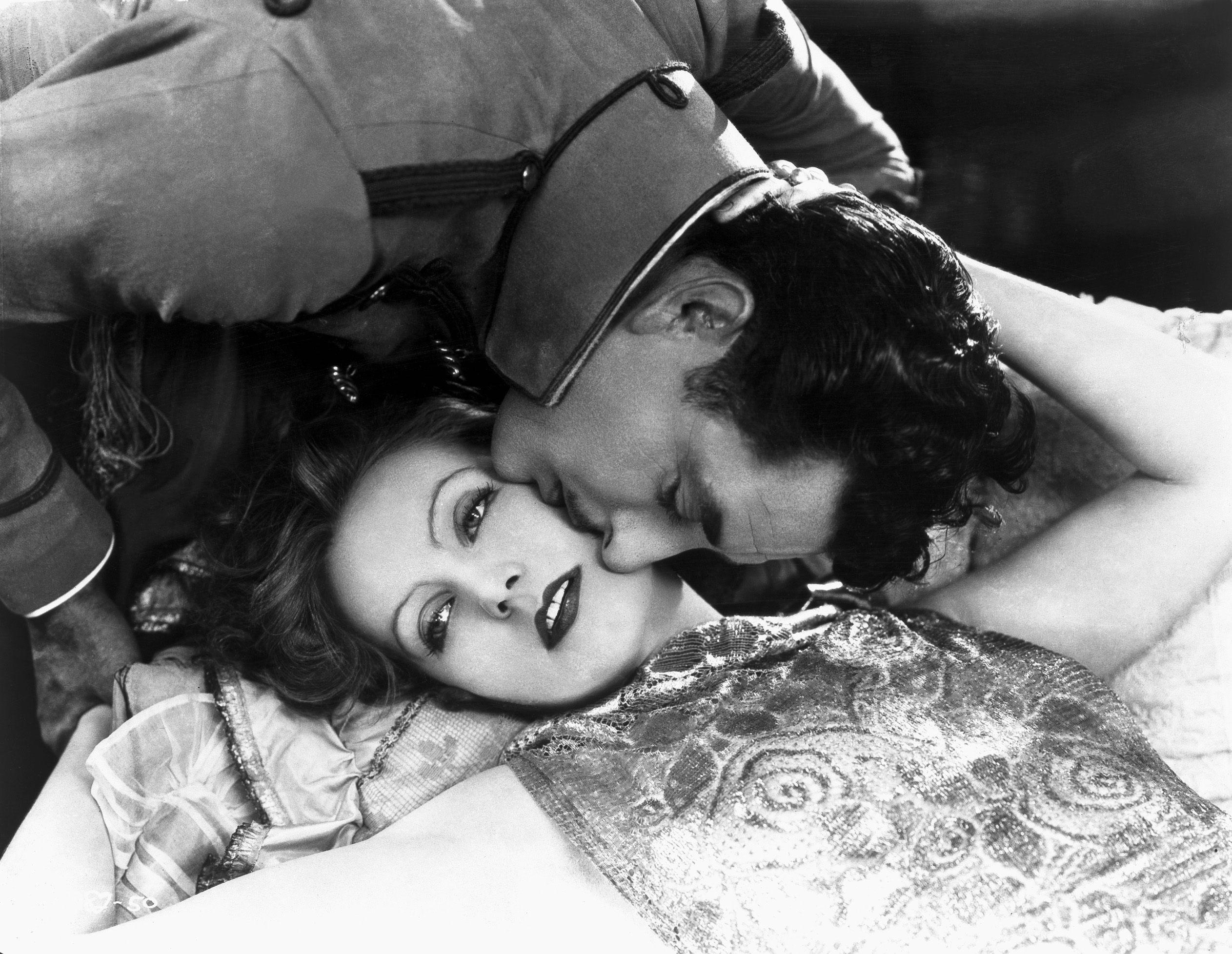
Greta Garbo and Nils Asther star in 'Wild Orchids' (1929).

MONDAY, JAN. 20, 2025 / FOR IMMEDIATE RELEASE
Contact Jeff Rapsis • (603) 236-9237 • jeffrapsis@gmail.com

Greta Garbo stars in steamy silent film thriller on Wednesday, Jan. 29 at Rex Theatre

'Wild Orchids' (1929), one of MGM's final silent film releases, to be screened with live music at downtown Manchester, N.H. venue

MANCHESTER, N.H.—Chase away the mid-winter chill with a steamy movie featuring early Hollywood icon Greta Garbo.

Warm up with 'Wild Orchids' (1929), an intense romantic thriller starring Garbo, to be screened with live music at the Rex Theatre, 23 Amherst St., Manchester, N.H.

'Wild Orchids,' one of the last silent films of MGM studios, will be shown on Wednesday, Jan. 29, 2025 at 7 p.m.

General admission is $10 per person; tickets are available at the door or online at www.palacetheatre.org.
 
Live music will be provided by silent film accompanist Jeff Rapsis.

A tale of forbidden romance, 'Wild Orchids' opens with an older businessman (John Lewis) taking his young wife (Greta Garbo) on a business trip to the South Pacific.

Aboard ship, she witnesses a wealthy passenger (Nils Asther) brutally whipping a servant. The violent man notices Garbo and resolves to meet her.

Things get complicated, however, when the man turns out to be a royal heir crucially important to the business affairs of Garbo's husband.

Emotions boil over in the tropical heat, leading to a dramatic showdown in the jungle over Garbo's ultimate fate.

An original trade publication ad promoting 'Wild Orchids' (1929).

Released during the movie industry's chaotic transition from silent film to synchronized dialogue, 'Wild Orchids' proved a hit.

The silent film earned $1.1 million, making it one of the year's top 10 box office attractions.

Although MGM was already releasing talking pictures, the studio kept starring Garbo in silent pictures due to concerns about her heavy accent.

Originally from Sweden, in Hollywood Garbo quickly rose to silent film stardom based on her acting ability and her unique look.

Garbo spoke English, but with a Scandinavian accent, causing concerns that the public would reject her in talking pictures.

When she finally spoke on-screen, Garbo's distinctive delivery and husky accent added to her popularity, to the great relief of studio bosses.

Nils Asther and Greta Garbo in a scene from 'Wild Orchids' (1929).

A live musical score for 'Wild Orchids' will be performed by silent film accompanist Jeff Rapsis.

Rapsis specializes in creating music to help silent films connect with modern-day audiences.

"As one of the last commercial silent films produced, 'Wild Orchids' shows how fluent Hollywood had become at telling stories visually, rather than through dialogue," Rapsis said.

"These films were intended to be seen on the big screen, with live music, and—most importantly—with an audience. Put it all back together, and films like 'Wild Orchids' really leap back to life."

'Wild Orchids' (1929) will be shown on Wednesday, Jan. 29 at 7 p.m. at the Rex Theatre, 23 Amherst St., Manchester, N.H.

General admission is $10 per person; tickets are available at the door or online at www.palacetheatre.org

For more information, call (603) 668-5588.

Sunday, February 4, 2024

Warm up for Valentine's Day with Garbo and Gilbert in 'Flesh and the Devil' on Monday, 2/5

Greta Garbo and John Gilbert in 'Flesh and the Devil' (1926).

Next up: it's 'Flesh and the Devil' (1926), a romantic thriller starring Greta Garbo and John Gilbert. I'm accompanying the film on Monday, Feb. 5 at 6:30 p.m. at the Garden Cinemas in Greenfield, Mass.

 A massive success that cemented Garbo's career, the film features love scenes that were not faked, as the two stars were involved in a heated affair during filming. Director Clarence Brown later said he just had to start the cameras and then stand back!

Lots more info in the press release below. But first, a few notes about last night's screening at the Campton (N.H.) Historical Society, an annual event that includes a pot luck supper and a considerable amount of small-town charm.

For example: announcements prior to my introduction included an upcoming Antique Snowmobile Meet sponsored by the local Chamber of Commerce.  

When I got up to speak, I made the usual lame jokes (including one about the peanut brittle on the dessert table, which I said four out of five dentists recommended because it's so good for business), but then I realized something about the evening.

The scene prior to Saturday night's screening at the Campton Historical Society.

I found myself saying that as a silent film accompanist, it's been my privilege to be invited to perform in such far-flung and glamorous show-biz meccas as Topeka, Kansas, where I'll perform later this month at the Kansas Silent Film Festival, and Cleveland, Ohio, where I get to accompany films in March.

But, I said, despite the romance of these exotic places, it was unlikely that any of them would include announcements about the Chamber of Commerce hosting antique snowmobile meets. 

So the annual Pot Luck Supper / Silent Film Screening at the Campton Historical Society, traditionally held in the dead of winter, was special to me because it was home, or at least the small part of the world that was really familiar to me.

Dig in! The 'Pot Luck Supper' portion of last night's program.

Last night's screening was not without its celebrity guests, however. Prior the the show, when I was warming up at the keyboard, a woman came up to me and began chatting.

Her name was Danielle Freund-Buckman, and turn out she was the granddaughter legendary cinematographer Karl Freund's borther! That made her, let's see...Karl Freund's grand-niece, I think. 

So I introduced her to the audience, members of which of course would have no idea who Karl Freund was. I explained he was not related to Sigmund Freud, whose name was different anyway, but he was a cinematographer for many influential films in the 1920s, including F.W. Murnau's 'The Last Laugh' (1924) and Fritz Lang's 'Metropolis' (1927).

I probably would have made a bigger impression by mentioning that Freund photographed 'Dracula' (1931) starring Bela Lugosi, and also directed Boris Karloff in 'The Mummy' (1932), and also an obscure picture called 'Moonlight and Pretzels' (1933) that is my FAVORITE 1930s musical, based on a single screening I saw at a long-ago Cinefest celebration in Syracuse, N.Y. (Another show biz capital!)

Instead, I mentioned the one thing that I knew would hit home: later in his career Freund developed the three-camera system used to shoot episodes of 'I Love Lucy' in the 1950s, and hundreds of sitcoms in the years since. Everyone perked up at that, and Mrs. Freund-Buckman was duly showered with applause.

The film was Chaplin's 'The Gold Rush' (1925), in the original version, which I've been played for multiple times in the past year after not accompanying it all for about a decade. 

In recent screenings, I've learned how to do music for the final cliff-hanging sequence (literally!) in a way that I think heightens the tension and the resulting laughs.

Take innocent music and keep it light and airy, with lots of pauses, as Chaplin and Mack Swain slowly discover their predicament. Only when Chaplin swings out the door do and everything becomes clear to the characters (although the audience has known what's going on all along) do you begin to amp up the music—in this case by taking the same music and boosting the tempo a bit, and maybe putting phrases in a minor key, but still keeping the texture as simple as possible.

In due course, you can ramp things up and get really big, but only right at the end, when Swain has escaped and found his mountain of gold, but Charlie is still trapped in the teetering cabin. 

And even then you have to cut out at the moment Swain finally peers back into the cabin, and a still-trapped Chaplin wiggles his finger to indicate he's still awaiting rescue. Why? Because if the big music continued, it would step on the moment. But with near silence, the moment produces an explosive laugh.

I followed this prescription last night. I'm not sure if the music really had anything to do with it, but audience reaction was huge, with people gasping and shrieking as the sequence unfolded, and then topped with a lusty cheer when Chaplin popped out just in the nick of time.

Less is more!

See you at 'Flesh and the Devil' on Monday night in Greenfield, Mass.—yet another showbiz capital! (By virtue of it being the hometown of Penn Gillette of 'Penn & Teller' fame, and who once worked at the Garden Cinema.)

*    *    *

Original poster art for MGM's 'Flesh and the Devil' (1926).

MONDAY, JAN. 22, 2024 / FOR IMMEDIATE RELEASE
Contact Jeff Rapsis • (603) 236-9237 • jeffrapsis@gmail.com

Garbo, Gilbert heat up the big screen in 'Flesh and the Devil' at Garden Cinemas

Celebrity couple fell passionately in love during filming of legendary silent classic, to be shown with live music on Monday, Feb. 5 in Greenfleld, Mass.

GREENFIELD, Mass. - Rediscover the passionate romance between early superstars Greta Garbo and John Gilbert in 'Flesh and the Devil' (1926), the classic MGM silent melodrama that first brought the legendary Hollywood couple together.

'Flesh and the Devil' will be shown on Monday, Feb. 5 at 6:30 p.m. at the Greenfield Garden Cinemas, 361 Main St., Greenfield.

The screening will feature live accompaniment by Jeff Rapsis, a New Hampshire-based composer who specializes in creating music for silent films.

Admission is $10.50 adults, $8:50 for children, seniors, and students. Tickets are available online or at the door.

Set in Germany, 'Flesh and the Devil' tells the story of a love triangle between two boyhood friends (Gilbert and Lars Hansen) and the amoral seductress (Garbo) who comes between them.

The two men are eventually forced into a violent struggle over the woman, who marries one but carries on an affair with the other.

During the shooting, Garbo and Gilbert developed their own highly charged off-screen romantic affair, the passion of which director Clarence Brown delighted in capturing on camera.

Though Garbo and Gilbert eventually went their separate ways, 'Flesh and the Devil' marked the very public beginning of one of the legendary romances of early Hollywood.

 A close-up in more ways than one: Garbo and Gilbert in 'Flesh and the Devil' (1926).
 
'Flesh and the Devil' is the latest installment of a monthly series of silent film screenings at the Garden Cinemas. 

The series aims to recreate the lost magic of early cinema by bringing crucial elements needed for silent film to work: classic films in best available prints; projection on the big screen; live musical accompaniment; and a live audience.

"These films are still moving and intense experiences if you can show them as they were designed to be screened," said Jeff Rapsis, who provides musical accompaniment for the screenings. 

"There's a reason people first fell in love with the movies. At their best, they were communal experiences in which the presence of a large audience intensifies everyone's reactions."


The appeal of 'Flesh and the Devil' has withstood the test of time. In 2006, the film was selected for preservation in the United States National Film Registry by the Library of Congress as being "culturally, historically, or aesthetically significant."

Reviewers have continued to praise the picture's many good qualities, often singling out Garbo's performance as particularly memorable.

"Pulsatingly romantic, beautifully filmed, probably the best Garbo-Gilbert love match," wrote critic Leonard Maltin, while David Parkinson of Empire Magazine wrote that "Garbo is mesmerizing in this wild and heated romance..." Carol Cling of the Las Vegas Review proclaimed 'Flesh and the Devil' as "Garbo & Gilbert at their steamy, sultry silent peak."

Upcoming titles in the Garden Cinema's silent film series include:

• Monday, March 4 at 6:30 p.m.: 'The Passion of Joan of Arc' (1928). Danish director Carl Dreyer's intense recreation of the trial of Joan of Arc set new standards for cinematography and expanded the language of film in new directions.

• Monday, April 1 at 6:30 p.m.: 'Safety Last' (1923). The iconic image of Harold Lloyd dangling from the hands of a downtown clock is just one scene of a remarkable thrill comedy that has lost none of its power over audiences.

'Flesh and the Devil' will be shown with live music  on Monday, Feb. 5 at 6:30 p.m. at the Greenfield Garden Cinemas, 361 Main St., Greenfield.


Admission is $10.50 adults, $8:50 for children, seniors, and students. Tickets at the door; advance tickets are available at www.gardencinemas.net. For more information, call the box office at (413) 774-4881.

Friday, June 9, 2023

Lillian Gish and 'The Wind' blowing into Wilton, N.H. on Sunday, June 11 with live music

An original release poster for 'The Wind' (1928).

The weekend forecast calls for 'The Wind' (1928) to be felt on Sunday, June 11 in Wilton, N.H.

There, at the Town Hall Theatre, at 2 p.m., the MGM classic silent drama starring Lillian Gish will be screened with live music by me. 

Lots more info on the press release pasted in below. For now, a few thoughts on recent screenings—and then a confession.

Last Wednesday, I had the privilege of accompanying the original silent version '20,000 Leagues Under the Sea' (1916) at the Flying Monkey Moviehouse and Performance Center in Plymouth, N.H.

The screening attracted a lively crowd of nearly 100 people—quite large by the standards of the monthly screenings I've done there for more than 10 years now.

Pre-show at the Flying Monkey Moviehouse and Performance Center.

By "lively," I mean very reactive to what was on the screen. Because of the somewhat primitive nature of the movie-making to today's eyes, people were prone to laugh at some of the drama—at scenes and sequences that weren't going for laughs, but were getting them.

I remember early on in this adventure of creating music for silent film screenings, it bothered me when accompanying a film intended to be serious, but which audiences treated as hilarious.

Was I doing something wrong?

I specifically remember a screening of 'Phantom of the Opera' around Halloween one year, at which Mary Philbin's broad gestures produced belly laughs worthy of Mack Swain. 

It seemed to spin the whole experience away from the deeply felt communion with big emotions that's one of the great things about silent cinema, I think. And it helped spoil it for everyone else.

What to do? Well, over the years, in speaking before film screenings, I've learned to try to set expectations by not over emphasizing the "audience participation" element of the experience. Feel free to react. But try to let the film in and do what its makers wanted it to do.

Yes, the audience is a crucial element of the silent film experience. However, the show should really be mostly on the screen, and not among your fellow theater-goers. 

But for '20,000 Leagues'—well, it's such a trippy film to modern eyes, I bowed to the inevitable. After making sure everyone know this was NOT the Disney version from the 1950s with James Mason as Captain Nemo, I said it was okay to treat it as a kind of "Mystery Science Theater 3000" experience.

And many did! And in this case, it seemed to be okay. Yes, there was a lot of hooting and hollering at the film's more implausible elements, all the way up to the bizarre flashback ending, described as a story "Jules Verne never told."

But there was also genuine emotion present throughout the film. There was wonder at the primitive underwater photography. (Because the undersea scenes were viewed behind a big glass window in Nemo's 'Nautilus,' I felt justified in playing Philip Glass music during these sequences.)

There was also heartbreak at Nemo's own backstory. It was still there, not washed away by the laughter but somehow still present to be savored. Maybe the laughter helped unlock the way to more tender emotions. Anyway, it worked.

Another interesting experience occurred last week, when I played the same film to two very different audiences. It was Buster Keaton's 'Our Hospitality' (1923), first to a gymnasium filled with 400 middle schoolers, then two days later to an audience of about 40 senior citizens.

The audience at Great Brook Middle School in Antrim, N.H.

In both cases, Keaton killed. The young kids were into it, and the older folks, too. How amazing that a 100-year-old entertainment can still have such broad appeal and speak to such a wide range of people after so much time.

Finally, there was Greta Garbo in 'The Temptress' (1926), a little-regarded drama that I've found has a mesmerizing effect on modern audiences. 

We screened it last Saturday in Brandon, Vt., and it literally stunned the audience into silence. The film ended with mouths agape. Applause seemed to be an afterthought, or somehow inappropriate. 

This might have been because people were waiting for the second "happy" ending, which we showed after a pause to change digital reels, so to speak. After that, applause came forth.

However, a quick post-film poll indicated that virtually everyone present preferred the original "tragic" ending. So much for Louis B. Mayer's faith in Hollywood-style happy endings!

And now, the confession. As a former journalist and editor, I take pride in composing press releases that I think reflect a fairly high standard within the profession. I take time to research and synthesize and write. I put them together to be easy-to-use by harried editors. It's the one useful skill I have!

So it's with some trepidation that I reveal that the press release below was actually composed by generative AI—specifically, the ChatGPT application that's been in the news so much lately.

Not long ago I scoffed at this, vowing to never make use of AI in this fashion. But after experimenting with it for innocuous purposes, such as writing celebratory limericks for co-worker and colleagues, I got curious about what AI could do in the press release department.

The result is below. What it produced is definitely not what I would have written, but it wasn't bad. There was some unnecessary hyperbole that I edited out, but it did a pretty good job capturing the film's importance and why people might want to see it.

It also got the who-what-when correct, prompting me to fill in any missing but necessary information.

So I sent it out, and yes—it was picked up by some of the few remaining local news outlets we have in this part of the country. 

I don't think I'll make a habit out this. But I'm here to say the future is now, even in the arcane field of silent film press releases.

Sounds like another story Jules Verne never wrote!

*   *   *

Classic still of Lillian Gish losing her grip in 'The Wind' (1928).

TUESDAY, MAY 30, 2023 / FOR IMMEDIATE RELEASE
Contact Jeff Rapsis • (603) 236-9237 • jeffrapsis@gmail.com

Lillian Gish stars in silent classic 'The Wind' on Sunday, June 11 at Town Hall Theatre

Screening features live music; rare chance to see renowned MGM drama on big screen

WILTON, N.H.—The Town Hall Theatre is delighted to announce a special screening of the timeless classic silent film, 'The Wind,' starring the legendary Lillian Gish. This remarkable cinematic experience will take place on Sunday, June 11, at 2 p.m. at the Town Hall Theatre, 40 Main St., Wilton, N.H.

Admission is free, with a suggested donation of $10. Attendees will also have the pleasure of enjoying live music accompaniment by Jeff Rapsis.

Directed by Victor Sjöström and released in 1928, 'The Wind' has long been regarded as a masterpiece of early silent cinema.

The film tells the gripping story of a young woman named Letty Mason (Lillian Gish) who moves to a desolate Texas prairie, where she battles against the relentless forces of nature and confronts her own internal demons.

Gish's exceptional performance, coupled with Sjöström's visionary direction, has secured 'The Wind' a place in film history as one of the most significant and haunting films of its time.

Lillian Gish and suitor Montagu Love in 'The Wind' (1928).

The screening of 'The Wind' at the Town Hall Theatre presents a rare opportunity for cinephiles and film enthusiasts to experience the magic of silent cinema in its purest form.

The film's powerful narrative, combined with Gish's mesmerizing acting, will transport the audience to the stark landscapes of the Texas prairie, allowing attendees to feel the turmoil and struggle faced by the characters.

In 1993, the film was selected for preservation in the U.S. National Film Registry by the Library of Congress as being "culturally, historically, or aesthetically significant."

Adding to the enchantment of the event, acclaimed silent film accompanist Jeff Rapsis will provide a live musical score, enriching the viewing experience with his talent for capturing the mood and emotion of each scene.

The Town Hall Theatre invites the community to join them on Sunday, June 11, at 2 p.m., for this unique cinematic event.

While admission is free, a suggested donation of $10 will support the preservation and restoration of classic films and the continuation of such captivating screenings in the future. Don't miss this extraordinary opportunity to witness a silent film masterpiece with live music accompaniment!

For more information contact the theater at (603) 654-3456. 

 Hey! That thing may be loaded!

Thursday, June 1, 2023

Garbo in 'The Temptress' (1926) on Saturday, 6/3 in Brandon, Vt.: one film, two different endings

Greta Garbo and Antonio Moreno star in the steamy romantic thriller 'The Temptress' (1926).

Road trip! This weekend it's two shows in northern Vermont, both far enough away to prompt an overnight stay in beautiful downtown Rutland.

On Saturday, June 3, I'll accompany Greta Garbo in 'The Temptress' (1926), an intense MGM drama that's come down to us with two very different endings. We'll show them both in a screening scheduled to start at 7 p.m. 

Lots more info in the press release below.

The next day, it's Buster Keaton in 'Our Hospitality' (1923), which I'll accompany on Sunday, June 4 at 2 p.m. at The Residence at Otter Creek, 350 Lodge Road, Middlebury, Vt. 

It's free and open to the public, so hope to see you there!

And now a couple of words about last night's screening of 'Peter Pan (1924), shown at the Rex Theatre in downtown Manchester, N.H.

With live music, it sometimes it just happens. Everything falls together. You have the right stuff at the right time. Each scene flows smoothly into the next, and you catch all the moments where music can make a difference.

That's what happened last night with 'Peter Pan.' And it's a really good feeling.

I think it's not completely a matter of luck. 'Peter Pan' is one of those titles that I accompany often enough to have developed a suite of material that gives me a head start. 

So there's a theme for Peter Pan, and also for Captain Hook, and Tinkerbell. And there's "at home" music, which turns out to be made out of pieces of the familiar "No Place Like Home" melody, which is handy because that very tune shows up near the film's conclusion. 

So with that as a starting point, and more than an hour of warm-up time, plus adequate sleep, I was able to turn in what I felt was a polished and effective score. 

I don't know what it says about my musical abilities, but I guess you'd have to call it the "slot machine school of live performance." 

Just like the one-armed bandit, if you pull the lever enough times, you're bound to hit the jackpot once in a while!

See you in Vermont this weekend, or back in N.H. next week for a screening of the silent film version of '20,000 Leagues Under the Sea.' More on that later...

*   *    *

Greta Garbo and Antonio Moreno star in the steamy romantic thriller 'The Temptress' (1926).

MONDAY, MAY 22, 2023 / FOR IMMEDIATE RELEASE
Contact: Jeff Rapsis • (603) 236-9237 • jeffrapsis@gmail.com

Greta Garbo stars in 'The Temptress' (1926), a film with two endings, on Saturday, June 3 in Brandon, Vt.

Both conclusions to be shown when steamy silent romantic drama is screened with live music at Brandon Town Hall and Community Center

BRANDON, Vt.—It's a film with two completely different endings: one sad and tragic, and the other uplifting and positive.

It's 'The Temptress' (1926), an MGM romantic drama starring Greta Garbo, then just starting a legendary Hollywood career.

Studio boss Louis B. Mayer found the original ending to 'The Temptress' so depressing, he ordered a second—and much happier—conclusion.

See both endings when 'The Temptress' is screened with live music on Saturday, June 3 at 7 p.m. at the Brandon Town Hall and Community Center, Route 7, in Brandon, Vt.

All are welcome to this family-friendly event. Admission is free, with free will donations accepted in support of ongoing Town Hall renovations.

The screening, the latest in the venue's silent film series, will feature live accompaniment by Jeff Rapsis, a New Hampshire-based composer who specializes in creating music for silent films.

Live music for each silent film program will be provided by Jeff Rapsis, a New Hampshire-based performer and composer who specializes in scoring and presenting silent films.

In 'The Temptress,' Garbo plays Elena, the wife of Monsieur Canterac (Lionel Barrymore) and the mistress of rich Parisian banker Monsieur Fontenoy (Marc MacDermott).

When the banker's friend Robledo (Antonio Moreno), a dynamic young engineer building a massive dam in Argentina, visits Paris, the fickle Elena immediately falls in love with him.

Elena follows Robledo to Argentina, where her presence leads to a whip duel between Robledo and his rival, Manos Duros (Roy D'Arcy).

She then indirectly causes the collapse of Robledo's dam, which is where the two versions of the film diverge.

In the original version, Elena returns to Paris and the movie concludes tragically.

The revised version sees the film end in Argentina on a much happier note.

Both endings will be screened in Brandon: first the original "tragic" conclusion, then the more optimistic ending.

Garbo, who first won notice in her native Sweden, came to Hollywood at age 19. 'The Temptress,' her second film for MGM, helped establish her as a major star.

Initially, the director of 'The Temptress' was Garbo's mentor-lover, the brilliant Mauritz Stiller. But he was replaced halfway through by Fred Niblo, giving 'The Temptress' two different styles.

The screening is sponsored by local residents Gary and Nancy Meffe.

Silent film accompanist Jeff Rapsis will improvise a musical score to 'The Temptress' in real time as the movie is screened.

In creating music for 'The Temptress' and other vintage classics, Rapsis tries to bridge the gap between silent film and modern audiences.

"Live music adds an element of energy to a silent film screening that's really crucial to the experience," Rapsis said.

It's the 13th year of Brandon's popular silent film series, which gives residents and visitors a chance to see great movies from the pioneering days of cinema as they were meant to be shown—on the big screen, with an audience, and accompanied by live music.

Screenings are held once a month, generally on Saturday nights and running through November. Admission is free; donations are encouraged, with proceeds to benefit the Town Hall's ongoing restoration.

Over the years, silent film donations have helped support projects including handicapped access to the 19th century building; renovating the bathrooms; and restoring the structure's original slate roof.

Other films in this year's Brandon Town Hall silent film series include:

• Saturday, July 15, 7 p.m.: 'The General' (1926) starring Buster Keaton. Buster's Civil War-era masterpiece tells the story of a Confederate railroad engineer whose train is hijacked by Northern spies. One of the great movies of any era! Sponsored by Gary and Nancy Meffe; Ben and Claudette Lawton; Bertram D. Coolidge; Frank and Ettie Spezzano; Ronald, Carolyn and Rickly Hayes; and Hayes Pallets.

• Friday, Aug. 18, 7 p.m.: 'The Ten Commandments' (1923) directed by Cecil B. DeMille. Long before Charlton Heston played Moses in Technicolor, director Cecil B. DeMille filmed this silent blockbuster on a grand scale. Many say it surpasses the remake—see for yourself as we celebrate the 100th anniversary of the film's original release. Sponsored by Bruce Ness and Nancy Spaulding-Ness

• Saturday, Sept. 9, 7 p.m.: 'The Freshman' (1925) starring Harold Lloyd, Jobyna Ralston. We welcome football season with Harold Lloyd's blockbuster hit about a college boy who dreams of gridiron greatness. One of Lloyd's all-time best! Sponsored by Frank Mazza and Linda Zaragoza; Kathy and Wayne Rausenberger; Edward Loedding and Dorothy Leysath.

• Saturday, Oct. 7, 7 p.m.: 'My Best Girl' (1926) starring Mary Pickford, Charles 'Buddy' Rogers. In a big city department store, romance blossoms between a humble stockroom clerk and the store owner's son—who is already engaged! A sparkling “rich man, poor girl” romantic comedy from 1927 starring screen icon Mary Pickford and Charles 'Buddy Rogers,' her future real-life husband. Sponsored by Harold and Jean Somerset; Fyles Brothers, Inc.; and Jeanette Devino.

• Friday, Oct. 27, 7 p.m.: 'The Cat and the Canary' (1927). Can a group of distant relatives survive the night in a haunted house to learn the secret of a madman's will? Find out in the original Gothic thriller from silent film director Paul Leni. Just in time for Halloween, a movie filled with deep shadows, dark secrets, and a surprisingly timeless mix of humor and horror that will keep you guessing. Sponsored by Pam and Steve Douglass.

• Saturday, Nov. 11, 7 p.m.: 'The Big Parade' (1925) starring John Gilbert. We salute Veterans Day with this sweeping saga about U.S. doughboys signing up and shipping off to France in 1917, where they face experiences that will change their lives forever—if they return. MGM blockbuster directed by King Vidor; one of the biggest box office triumphs of the silent era. Sponsored by Donald and Dolores Furnari; Jeanette Devino; and Lorrie Byrom.

The romantic drama ‘The Temptress’ starring Greta Garbo will be shown with live music on Saturday, June 3 at 7 p.m. at the Brandon Town Hall and Community Center, Route 7, in Brandon, Vt. All are welcome to this family-friendly event.

Admission is free, with free will donations accepted in support of ongoing Town Hall renovations. For more info, visit www.brandontownhall.com.

Saturday, February 11, 2023

One film, two endings: Greta Garbo in 'The Temptress' (1926) this afternoon in Newport, R.I.

An original lobby card for MGM's 'The Temptress' (1926) starring Greta Garbo.

What better way to get in the mood for Valentine's Day than watching Greta Garbo lure men to their doom?

That's what you'll get with 'The Temptress' (1926), a relatively unknown MGM drama that I've found plays surprisingly well with contemporary audiences.

I'm doing live music for 'The Temptress' today (Saturday, Feb. 11) at 4:30 p.m. at the Jane Pickens Theatre in Newport, R.I. More info about the screening is in the press release pasted in below.

For one thing, 'The Temptress' does what all the best movies do, I think: it transports us to places we would almost never visit on our own. (In this case, it's the rough Argentinian back country, with some Parisian high society thrown in for contrast.)

Plus, it has a great cast, a strong story, and a series of dramatic encounters that sizzle with intensity but don't cross the line into parody. It still works.

And, like some pictures from that era, it has two very different endings. As the story goes, MGM studio boss Louis B. Mayer wasn't happy with the story's original tragic ending, and so ordered a new one.

Both survive, with the "happy" ending used for release prints in the U.S., while the "tragic" denouement was used in Europe. 

We'll show them both this afternoon so you can decide for yourself. More details below. Hope to see you in Newport!

*   *   *

Greta Garbo and Antonio Moreno in 'The Temptress' (1926).

WEDNESDAY, JAN. 25, 2023 / FOR IMMEDIATE RELEASE
For more info, contact: Jeff Rapsis • (603) 236-9237 • jeffrapsis@gmail.com

Greta Garbo stars in 'The Temptress' (1926), a film with two endings, on Saturday, Feb. 11 in Newport

Both conclusions to be shown when steamy silent romantic drama is screened with live music at Jane Pickens Theatre; perfect for Valentine's Day

NEWPORT, R.I. — It's a film with two completely different endings: one sad and tragic, and the other uplifting and positive.

It's 'The Temptress' (1926), an MGM romantic drama starring Greta Garbo, then just starting a legendary Hollywood career.

Studio boss Louis B. Mayer found the original ending to 'The Temptress' so depressing, he ordered a second—and much happier—conclusion.

See both endings when 'The Temptress' is screened with live music on Saturday, Feb. 11 at 4:30 p.m. at the Jane Pickens Theatre Film and Event Center, 49 Touro St., Newport, R.I.

The screening, the latest in the venue's silent film series, will feature live accompaniment by Jeff Rapsis, a New Hampshire-based composer who specializes in creating music for silent films.

Admission is $15 per person; members $13. Tickets are available online or at the door.

"A silent romantic drama is a great way to celebrate Valentine's Day," Rapsis said. "At their best, these movies celebrated the big emotions, including love, and they still speak to us today."

In 'The Temptress,' Garbo plays Elena, the wife of Monsieur Canterac (Lionel Barrymore) and the mistress of rich Parisian banker Monsieur Fontenoy (Marc MacDermott).

When the banker's friend Robledo (Antonio Moreno), a dynamic young engineer building a massive dam in Argentina, visits Paris, the fickle Elena immediately falls in love with him.

Elena follows Robledo to Argentina, where her presence leads to a whip duel between Robledo and his rival, Manos Duros (Roy D'Arcy).

She then indirectly causes the collapse of Robledo's dam, which is where the two versions of the film diverge.

In the original version, Elena returns to Paris and the movie concludes tragically.

The revised version sees the film end in Argentina on a much happier note.

Both endings will be screened at the Jane Pickens Theatre: first the original "tragic" conclusion, then the more optimistic ending.

Garbo, who first won notice in her native Sweden, came to Hollywood at age 19. 'The Temptress,' her second film for MGM, helped establish her as a major star.

Initially, the director of 'The Temptress' was Garbo's mentor-lover, the brilliant Mauritz Stiller. But he was replaced halfway through by Fred Niblo, giving 'The Temptress' two different styles.

Silent film accompanist Jeff Rapsis will improvise a musical score to 'The Temptress' in real time as the movie is screened.

In creating music for 'The Temptress' and other vintage classics, Rapsis tries to bridge the gap between silent film and modern audiences.

"Live music adds an element of energy to a silent film screening that's really crucial to the experience," Rapsis said.

The romantic drama ‘The Temptress’ starring Greta Garbo will be shown with live music on Saturday, Feb. 11 at 4:30 p.m. at the Jane Pickens Theatre Film and Event Center, 49 Touro St., Newport, R.I.

Admission is $15 per person; members $13. Tickets are available online at www.janepickens.com or at the door. For more information, call the box office at (401) 846-5474.

Sunday, July 24, 2022

A single film, but two very different endings: Greta Garbo in 'The Temptress' (1926) on Wednesday, July 27 in Ogunquit, Maine

Greta Garbo and Antonio Moreno in 'The Temptress' (1926).

It's a film with one great star—but with two different endings!

The star: Greta Garbo. The endings: one is happy, the other sad.

It's 'The Temptress' (1926), one of Garbo's first pictures after coming to Hollywood from her native Sweden at the height of the silent era.

The film, with live music by me, will be shown on Wednesday, July 27 at 7 p.m. at the Leavitt Theatre in Ogunquit, Maine.

Which ending work better? Decide for yourself, as we plan to show them both.

Details in the press release below. See you at the Leavitt on Wednesday night.

Whether you're in the mood for happy or sad, hey—we've got you covered.

*   *   *

Greta Garbo stars in 'The Temptress' (1926).

MONDAY, JULY 25, 2022 / FOR IMMEDIATE RELEASE
Contact Jeff Rapsis at (603) 236-9237 • e-mail jeffrapsis@gmail.com

Greta Garbo stars in 'The Temptress' (1926), a film with two endings, on Wednesday, July 27 at Leavitt Theatre

Both conclusions to be shown when steamy silent romantic drama is screened with live musical accompaniment

OGUNQUIT, Me. — It's a film with two completely different endings: one sad and tragic, and the other uplifting and positive.

It's 'The Temptress' (1926), an MGM romantic drama starring Greta Garbo, then just starting a legendary Hollywood career.

Studio boss Louis B. Mayer found the original ending to 'The Temptress' so depressing, he ordered a second—and much happier—conclusion.

Theaters were then allowed to choose which ending to show to audiences.

See both conclusions when 'The Temptress' is screened with live music on Wednesday, July 27 at 7 p.m. at the historic Leavitt Theatre, 259 Main St, Route 1 in Ogunquit, Maine.

Admission is $12 per person. Live music will be provided by accompanist Jeff Rapsis, a New Hampshire-based performer who specializes in creating music for silent film presentations.

In 'The Temptress,' Garbo plays Elena, the wife of Monsieur Canterac (Lionel Barrymore) and the mistress of rich Parisian banker Monsieur Fontenoy (Marc MacDermott).

When the banker's friend Robledo (Antonio Moreno), a dynamic young engineer building a massive dam in Argentina, pays a visit to Paris, the fickle Elena immediately falls in love with him.

Elena follows Robledo to Argentina, where her presence leads to a whip duel between Robledo and his rival, Manos Duros (Roy D'Arcy).

She then indirectly causes the collapse of Robledo's dam, which is where the two versions of the film diverge.

In the original version, Elena returns to Paris and the movie concludes tragically.

The revised version sees the film end in Argentina on a much happier note.

Both endings will be screened at the Leavitt Theatre: first the original "tragic" conclusion, then the more optimistic ending.

Garbo, who first won notice in her native Sweden, came to Hollywood at age 19. 'The Temptress,' her second film for MGM, helped establish her as a major star.

Initially, the director of 'The Temptress' was Garbo's mentor-lover, the brilliant Mauritz Stiller. But he was replaced halfway through by Fred Niblo, giving 'The Temptress' two different styles.

Silent film accompanist Jeff Rapsis will improvise a musical score to 'The Temptress' in real time as the movie is screened.

In creating music for 'The Temptress' and other vintage classics, Rapsis tries to bridge the gap between silent film and modern audiences.

"Live music adds an element of energy to a silent film screening that's really crucial to the experience," Rapsis said.

The Leavitt Theatre's silent film screenings provide local audiences the opportunity to experience silent film as it was intended to be shown: on the big screen, in restored prints, with live music, and with an audience.

“These films are still exciting experiences if you can watch them as they were designed to be shown,” said Rapsis, accompanist for the screenings.

“There’s a reason people first fell in love with the movies, and we hope to recreate that spirit. At their best, silent films were communal experiences in which the presence of a large audience intensifies everyone’s reactions.”

The Leavitt, a summer-only moviehouse, opened in 1923 at the height of the silent film era, and has been showing movies to summertime visitors for nearly a century.

The silent film series honors the theater's long service as a moviehouse that has entertained generations of Seacoast residents and visitors, in good times and in bad.

Following 'The Temptress' on Wednesday, July 27 at 7 p.m., other programs in this year's Leavitt silent film series include:

• Wednesday, Aug. 10 at 7 p.m.: Clara Bow stars in 'Mantrap' (1926). Battle-of-the-sexes comedy; city boy Richard Dix tries to win his girlfriend by taking up the rugged cowboy life, only to find it not so rugged. Rarely screened comedic gem from the height of the silent era.

• Wednesday, Aug. 17 at 7 p.m.: 'Blood and Sand' (1922). Rudolph Valentino in his first starring role, as a sexy bullfighter in this romantic thriller. Will Rudy choose the pure love of Carmen, or the sinister charms of the exotic Doña Sol? And will he survive the choice?

• Wednesday, Sept. 14 at 7 p.m.: Rare race drama: 'The Flying Ace' (1926). All-Black motion picture added to the National Film Registry last year. Rare example of 'race' cinema, produced for audiences in Black-only theaters commonly found in segregated parts of the nation.

• Wednesday, Sept. 28 at 7 p.m.: F.W. Murnau's 'The Last Laugh' (1924). Towering performance by Emil Jannings as aging doorman at posh city hotel whose unexpected change of jobs robs him of self-respect and identity. Directed by Murnau as a purely visual tale, no dialogue intertitles.

• Saturday, Oct. 29 at 7 p.m.: 'Der Golem' (1920). Prepare for Halloween with one very weird flick! In 16th-century Prague, a rabbi creates a giant creature from clay, called the Golem. Using sorcery, he brings the creature to life in order to protect the Jews of Prague from persecution.

The romantic drama ‘The Temptress’ starring Greta Garbo will be shown with live music on Wednesday, July 27 at 7 p.m. at the historic Leavitt Theatre, 259 Main St, Route 1 in Ogunquit, Maine.

Admission is $12 per person, general seating. For more info, call (207) 646-3123 or visit www.leavittheatre.com.

Thursday, July 14, 2022

Up next: Garbo and Moore double feature, but first: my annual fried seafood pilgrimage

I can think of two ways I don't mind my federal tax dollars being spent. 

One is film preservation efforts by the Library of Congress. More of that, please.

The other is coastal fishing subsidies, which enable we citizens to enjoy a reliable supply of fried clams and scallops.

(Okay, with maybe some allowances for national defense and a transportation network. But not too much.)

Anyway, with the second priority in mind, yesterday I made my once-a-year pilgrimage to Ceal's Clam Stand in Seabrook, N.H.

The result is seen above; a combo plate of clams and scallops, served on french fries and with coleslaw on the side. Eaten at a peeling red picnic table 100 yards from the Atlantic Ocean, there's nothing like it.

I really can't indulge in a jumbo-sized plate of fried seafood but once a year. More often, and I'd probably end up in the hospital, and also go broke. (This year's combo plate "market" price: $40.28.)  

But if you do it once a season, Ceal's is the place to go. It's a well-worn shack along Route 1A that's been in the same family since 1948. Open only from Memorial Day to Labor Day, they do something with the batter that makes it unlike any other. 

Also, they fry the seafood separately from the potatoes or chicken tenders, and I think that makes a HUGE difference.

The fried seafood feast preceded a screening of Buster Keaton's 'Battling Butler' (1926), which I accompanied that evening up the coast at the Leavitt Theatre in Ogunqit, Maine.

July and August being the two business months of the year for New England's coastal resorts, so the Leavitt was blessed with a solid turnout of 83 people.

And although 'Butler' has a reputation as one of the lesser Keatons, last night's screening produced consistent laughs right from the opening scene, where an effete Buster is told to rough it outdoors and make a man of himself.

People really got the comedy right away, cracking up at the sight of valet Snitz Edwards straightening Buster's hair as he sits passively on a divan. 

It was that way throughout the film. During the final climactic fight in the dressing room, Buster's sudden transformation into a silent film Canelo Álvarez even earned him a spontaneous ovation — something I've never seen happen with this film.

So a good time was had by all, except the boxing champ whom Buster beat senseless. Then again, maybe he enjoyed the change of pace. 

As for the music: well, I found that more than ever, less is more. 'Butler' in particular seems to benefit from a very light touch throughout, which I was able to maintain. 

For contrast, there are a few times where a loud, blaring march came in handy. It's especially effective to play "Here Comes the Bride" as performed by a local town marching band on-screen.

Next up is a double feature in the ongoing 'Women of the Silent Screen' series at the Town Hall Theatre in Wilton, N.H.

It's Greta Garbo vs. Colleen Moore in a two-for-one program that pairs drama with comedy. Showtime is Sunday, July 17 at 2 p.m.; for more details, check out the press release below.

*  *  *

A poster for 'The Single Standard' (1929), a late MGM silent starring Greta Garbo.

MONDAY, JULY 11, 2022 / FOR IMMEDIATE RELEASE
Contact Jeff Rapsis • (603) 236-9237 • jeffrapsis@gmail.com

Greta Garbo, Colleen Moore silent films with live music in Wilton, N.H. on Sunday, July 17

Screenings continues Town Hall Theatre's summer series spotlighting female stars of the silent cinema

WILTON, N.H.—A double feature of two very different films is next up the Town Hall Theatre's summer-long salute to female stars of the silent screen.

'The Single Standard' (1929) starring Greta Garbo and 'Ella Cinders' (1926) starring Colleen Moore will be screened with live music on Sunday, July 17 at 2 p.m. at the Town Hall Theatre, 40 Main St., Wilton, N.H.

Admission is free; a donation of $10 per person is suggested to help defray expenses.

In the late MGM silent drama 'The Single Standard,' screen icon Garbo plays a socialite determined to treat men the way they treat women.

Weary of the "good old boy" mentality which dictates that men can flit from girl to girl while women are expected to remain faithful, San Francisco socialite Arden Stuart (Garbo) decides to adopt the "single standard" and play the field herself.

A poster for 'Ella Cinders' (1926) starring Colleen Moore.

In the comedy 'Ella Cinders,' Colleen Moore reinvents the Cinderella fairy tale with a modern (1920s) comedic twist.

More plays a moviestruck small-town girl who wins a talent contest purportedly sponsored by a film studio.

First prize is a trip to Hollywood and a screen test, but when Ella arrives in Tinseltown, she discovers that the contest was a fraud.

Momentarily disheartened, Ella vows to get into pictures by any means possible.

The double feature continues a Town Hall Theatre summer series featuring female stars of the silent screen, all with live music by accompanist Jeff Rapsis.

Here's the line-up of upcoming screenings:

• Sunday, July 24 at 2 p.m.: Norma Talmadge in 'Within the Law.' Silent screen dramatic star Norma Talmadge plays a shopgirl wrongly imprisoned, and bent on revenge against the man who wronged her in this vintage 1923 release. Filmed on location in New York City.

• Sunday, Aug. 14 at 2 p.m.: Marion Davies in 'Beverly of Graustark.' Gender-bending 1926 comedy in which Davies stars as an American cousin of a European prince—and with whom she must switch places to keep the kingdom from unraveling. Newly released title!

• Sunday, Aug. 28 at 2 p.m.: Double feature with Gloria Swanson, Mae Marsh. Silent screen icon Gloria Swanson stars in 'Fine Manners' (1926), a comedy about a chorus girl trying to keep up with high society beau. In 'Daddies' (1924), Mae Marsh plays an unlikely orphan adopted by the head of the local Bachelor's Club. Hilarity ensues!

All titles in the series have never been shown as part of the Town Hall Theatre's long-running silent film programming.

"We specifically chose films that we haven't run before in Wilton, in part to explore the incredible range and surprising diversity of roles women played in Hollywood's silent era," said Jeff Rapsis, the Town Hall Theatre's silent film accompanist.

‘The Single Standard’ (1929) starring Greta Garbo and 'Ella Cinders' (1926) starring Colleen Moore will be shown with live music on Sunday, July 17 at 2 p.m. at the Town Hall Theatre, 40 Main St., Wilton, N.H.

Admission is free; a donation of $10 per person is suggested to help defray expenses.

For more info, visit www.wiltontownhalltheatre.com or call (603) 654-3456.

Thursday, February 17, 2022

Tonight! 'Girl Shy' in Manchester, N.H. But first, Mayer to Shakespeare: 'Lose all that death at the end'

If the shoe hits...Harold Lloyd and anonymous flapper in 'Girl Shy' (1924).

I'm looking forward to doing music tonight for Harold Lloyd's 'Girl Shy' (1924), which is screening tonight (Thursday, Feb. 17) at 7:30 p.m. at the Rex Theater in downtown Manchester, N.H.

Complete info is below in the press release. Hope to see you there for one of the great audience-pleasing comedies of the 1920s. 

And now, a report on last night's screening of 'The Temptress' (1926) starring Greta Garbo and Antonio Moreno, which I accompanied at the Flying Monkey Moviehouse and Performance Center in Plymouth, N.H.

Here's something you don't get to announce every day: DOUBLE SPOILER ALERT!

It's one of those films with two endings—an original tragic denouement, and also an upbeat and completely different boy-gets-girl happy ending ordered by studio boss Louis B. Mayer, who found the original finish unacceptable. 

(You can hear Mayer advising new screenwriter Billy Shakespeare: "Forbidden romance—great story, kid! But lose all the death at the end. Have them settle in a bungalow in the suburbs, and show at least one infant in the closing scenes. Then you got yourself a picture!")

Well, Mr. Mayer. I'm here to report that posterity, at least in the form of last night's audience, vastly prefers the original ending, in which Garbo abandons lead Antonio Moreno, descends into a boozy haze, and supports herself apparently by prostitution.

As much of a downer as that seems, it's far more fitting to this dark and edgy drama than what Mayer cooked up: an ending in which Garbo and Moreno join forces to build a giant dam in South America, and then publicly celebrate their love at the opening ceremonies in front of what seems to be the entire Argentine army. 

I have to say, this is a challenging film to accompany, as it veers from sophisticated Paris to back country Argentina. The fact that it had two directors makes it seem a little schizophrenic, too, similar to how the first Christopher Reeve 'Superman' (1978) had two directors, and shifts completely in tone and mood once Clark Kent starts working at the Daily Planet.

And never mind Greta Garbo—how about that Antonio Moreno? I'd only ever seen him before alongside Clara Bow in 'It' (1927), his one well-known role. But in 'The Temptress,' he gives a whale of a performance, both emotionally and physically. 

Antonio Moreno with Greta Garbo in 'The Temptress.'

Consider: He dances, he throws knives, he shoots things, he gets whipped and does some whipping himself, gets washed away in a flood, and nearly goes berzerk. MGM certainly got their money's worth from Moreno in this picture. 

I looked, and Moreno appeared in dozens upon dozens of lesser-known pictures, both in the silent and sound era. Of the few titles I recognized, he has a small role in Laurel & Hardy's 'The Bohemian Girl' (1936), but that's about it. (Apologies to Clara.) 

Besides the story itself, another tragedy associated with last night's screening of 'The Temptress' (not to be confused with 'The Tempest' (1928) starring John Barrymore) was yours truly requesting an ill-advised adjustment to the aspect ratio prior to the show.

With older films on oldish discs being run on much newer players and digital projectors or even off laptops, aspect ratio is always a "hold your breath" issue. You just never know what's going to appear on screen until you hit 'Play.'

Sometimes it's dead on, and hallelujah when that happens. But most often, modern projection systems want to play everything at 16:9 or some other wide-screen ratio. And as you may know, films a century ago were shot almost exclusively using a 4:3 ratio.

So when that happens, everyone gets wider. Buster Keaton looks fat. Fatty Arbuckle looks morbidly obese!

Last night at the Flying Monkey, the aspect ratio was clearly being stretched horizontally, so changes were in order. We narrowed the horizontal by 10 percent, and it seemed better. (I usually can tell right away if there's an FBI anti-piracy slide, as the FBI logo should be perfectly round. Same with tires on cars, etc.)

But after playing it a bit longer, I felt the typeface for the titles looked off. With many discs, we need to narrow the horizontal by 20 percent to make it look right, but in this case, the most we could go was 16 percent before the disc/player/projector/whatever halted. That's as far as it would go!

So that's what we kept, which was unfortunate, because once the picture started for real, it was apparent that we had gone too far. Really! Greta Garbo, who should look pretty svelte, looked positively anorexic! 

Well, it wasn't so bad as to prompt me to stop and get it adjusted yet again. And there's always another screening—in this case, Harold Lloyd's 'Girl Shy' tonight at the Rex Theatre in downtown Manchester. We'll see if we can get the ratio right this evening. 

And at the Rex, they have a new all-digital LED projection system that adds yet another layer of complexity to the whole equation. Cross your fingers!

*  *  *

The original "meet cute": Jobyna Ralston, Harold Lloyd and exasperated railroad conductor in 'Girl Shy' (1924).

MONDAY, FEB. 7, 2022 / FOR IMMEDIATE RELEASE

Contact Jeff Rapsis • (603) 236-9237 • jeffrapsis@gmail.com

First-ever rom-com! Harold Lloyd comedy 'Girl Shy' at Rex Theatre on Thursday, Feb. 17

Live music to accompany uproarious silent film classic; to be shown on big screen using restored edition

MANCHESTER, N.H.—It's a candidate for Hollywood's first-ever "rom-com": a silent film comedy that pioneered an enduring cinematic genre.

It's 'Girl Shy,' a frenetic, kinetic, get-me-to-the-church-on-time Harold Lloyd silent comedy classic, to be screened on Thursday, Feb. 17 at 7:30 p.m. at the Rex Theatre, 23 Amherst St., Manchester, N.H.

Admission is $10 per person. Tickets are available at the door or online at www.palacetheatre.com in advance.

A live musical score for the movie will be performed by Jeff Rapsis, a New Hampshire-based silent film accompanist.

'Girl Shy' (1924) stars Harold Lloyd as a timid young man from a small town who pens a book about imaginary female conquests.

Trouble begins when bashful Harold falls in love for real, and then must rescue his beloved from marrying the wrong man in the big city.

" 'Girl Shy' is a great film to show around Valentine's Day, because it's all about the ageless human experience of love," Rapsis said.

Harold's dilemma prompts a climactic race to the altar that stands as one of the great chases in all of cinema. The sequence was so successful that MGM used it as a model for the famous chariot race in the original silent film version of 'Ben Hur' (1925).

The film is bursting with visual comedy typical of the silent era, but the romantic storyline was strong enough to act as a counterweight, creating a new hybrid genre now known as the romantic comedy, or "rom-com."

Co-starring in 'Girl Shy' is actress Jobyna Ralston, who often played Lloyd's leading lady, including in later Lloyd masterpieces 'The Freshman' (1925) and 'The Kid Brother' (1927).

'Girl Shy,' directed by Lloyd's colleagues Fred C. Newmeyer and Sam Taylor, was among the 10 top-grossing films of 1924.

Harold Lloyd, along with Charlie Chaplin and Buster Keaton, stands today as one of the three masters of silent comedy. Throughout the 1920s, Lloyd's films enjoyed immense popularity, ranking regularly among the highest-grossing of the era.

Though Lloyd's reputation later faded due to unavailability of his movies, the recent re-release of most of his major films on DVD and other media has spurred a reawakening of interest in his work and has led to more screenings of his work in moviehouses, where it was designed to be shown.

"Seeing a Harold Lloyd film in a theater with live music and an audience is one of the great experiences of the cinema of any era," said Jeff Rapsis, the Rex Theatre's resident silent film accompanist.

The Rex Theatre's silent film series is intended to give local audiences a chance to experience the best of early Hollywood the way it was meant to be seen—on the big screen, with live music, and with an audience.

"These films weren't intended to be shown on a laptop," Rapsis said. "It's worth putting the whole experience together, because you can still see why audiences first fell in love with the movies," Rapsis said.

Upcoming screenings include:

• Thursday, April 21, 2022, 7:30 p.m.: 'Ben Hur' (1925) starring Ramon Novarro and a cast of thousands. In the Holy Land, a Jewish prince is enslaved by the occupying Romans; inspired by encounters with Jesus, he lives to seek justice. One of the great religious epics of Hollywood's silent film era, including a legendary chariot race that's lost none of its power to thrill.

‘Girl Shy’ will be shown on Thursday, Feb. 17 at 7:30 p.m. at the Rex Theatre, 23 Amherst St., Manchester, N.H. Admission is $10 per person. For more info and to buy tickets, visit www.palacetheatre.org or call (603) 668-5588.

Monday, February 14, 2022

Two endings better than one? Find out with 'The Temptress' (1926) at Flying Monkey 2/16

An original lobby card promoting 'The Temptress'

With MGM's 'The Temptress' (1926), the ending is just the beginning. 

What I mean by that is the film has two endings, and that's the one thing that seems to capture people's imaginations.

Also, the endings are completely different. One concludes the tale as a tragedy, while the other finishes in triumph. Huh? How did this happen?

The story goes that MGM studio boss Louis B. Mayer found the ending of the original version so depressing, he ordered a different (and happier) ending on the spot.

What Louis wants, Louis gets. And so director Fred Niblo reshot the past five minutes in order to create a completely different (and much more upbeat) finished to 'The Temptress.'

Which is better? Judge for yourself when we show both endings as part of a screening of 'The Temptress' on Wednesday, Feb. 16 at the Flying Monkey Moviehouse in Plymouth, N.H.

Showtime is 6:30 p.m. and more details are in the press release below. 

I understand the "tragic" ending was used for European prints, while the "happy" ending was shown mostly in the United States, where tragic endings have always been box office poison.

We'll show the original sad ending first. Then we'll run the second more upbeat ending, and then the second more upbeat conclusion to finish things out. 

And we'll try to answer the question: if two heads are better than one, is the same true for two endings?

And here's the press release:

*   *   *

Greta Garbo and Antonio Moreno in 'The Temptress' (1926).

TUESDAY, FEB. 1, 2022 / FOR IMMEDIATE RELEASE
Contact Jeff Rapsis at (603) 236-9237 • e-mail jeffrapsis@gmail.com


Greta Garbo stars in 'The Temptress' (1926), a film with two endings, on Wednesday, Feb. 16 at Flying Monkey

Both conclusions to be shown when steamy silent romantic drama is screened with live musical accompaniment

PLYMOUTH, N.H. — It's a film with two completely different endings: one sad and tragic, and the other uplifting and positive.

It's 'The Temptress' (1926), an MGM romantic drama starring Greta Garbo, then just starting a legendary Hollywood career.

Studio boss Louis B. Mayer found the original ending to 'The Temptress' so depressing, he ordered a second—and much happier—conclusion.

Theaters were then allowed to choose which ending to show to audiences.

See both conclusions when 'The Temptress' is screened with live music on Wednesday, Feb. 16 at the Flying Monkey Moviehouse and Performance Center, 39 South Main St., Plymouth, N.H.

Showtime is 6:30 p.m. General admission is $10. The screening will feature live accompaniment by silent film musician Jeff Rapsis.

In 'The Temptress,' Garbo plays Elena, the wife of Monsieur Canterac (Lionel Barrymore) and the mistress of rich Parisian banker Monsieur Fontenoy (Marc MacDermott).

When the banker's friend Robledo (Antonio Moreno), a dynamic young engineer building a massive dam in Argentina, pays a visit to Paris, the fickle Elena immediately falls in love with him.

Elena follows Robledo to Argentina, where her presence leads to a whip duel between Robledo and his rival, Manos Duros (Roy D'Arcy).

She then indirectly causes the collapse of Robledo's dam, which is where the two versions of the film diverge.

In the original version, Elena returns to Paris and the movie concludes tragically.

The revised version sees the film end in Argentina on a much happier note.

Both endings will be screened at the Flying Monkey: first the original "tragic" conclusion, then the more optimistic ending.

Garbo in 'The Temptress.'

Garbo, who first won notice in her native Sweden, came to Hollywood at age 19. 'The Temptress,' her second film for MGM, helped establish her as a major star.

Initially, the director of 'The Temptress' was Garbo's mentor-lover, the brilliant Mauritz Stiller. But he was replaced halfway through by Fred Niblo, giving 'The Temptress' two different styles.

Silent film accompanist Jeff Rapsis will improvise a musical score to 'The Temptress' in real time as the movie is screened.

In creating music for 'The Temptress' and other vintage classics, Rapsis tries to bridge the gap between silent film and modern audiences.

"Live music adds an element of energy to a silent film screening that's really crucial to the experience," Rapsis said.

The screening is the latest in the Flying Monkey's series celebrating films that recently entered the public domain.

Copyright protection for all U.S. films released in 1926 expired on Jan. 1, 2022.

To mark the occasion, the Flying Monkey is showcasing vintage comedies, dramas, and adventure films, all with live music, and all now in the public domain.

Upcoming screenings in the Flying Monkey's "Public Domain Extravaganza" include:

• Wednesday, March 9, 2022, 6:30 p.m.: "The Winning of Barbara Worth" (1926) starring Ronald Colman, Vilma Banky, and Gary Cooper. Epic Western drama about the settling and irrigation of California's Imperial Valley, once a wasteland but now an agricultural paradise. Shot on location by director Henry King in Nevada's Black Rock desert, one of the first films to take audiences to the wide open spaces of the great American West. With a young Gary Cooper playing a key role.

• Wednesday, April 27, 2022, 6:30 p.m.: "Battling Butler" (1926) starring Buster Keaton. In an uproarious boxing comedy, Keaton plays Alfred Butler, a pampered rich idler with the same name as a feared boxing champion. When a girl he's pursuing thinks he's the fighter, Keaton has no choice but to start training.

• Wednesday, May 11, 2022, 6:30 p.m.: "Bardelys the Magnificent" (1926) starring John Gilbert. Gilbert tries his hand at swashbuckling in this big-budget MGM historical extravaganza about exploits of an unjustly disgraced French nobleman. A major film long thought lost until a single print was recently discovered in France.

• Wednesday, June 8, 2022, 6:30 p.m.: "The Black Pirate" (1926) starring Douglas Fairbanks, Sr. The original pirate film, with Fairbanks sword-fighting his way through a period adventure tale set during the age of sailing ships.

"By 1926, the movies had matured enough to offer a wide range of great entertainment that still holds up today," Rapsis said. "Come see for yourself as we screen some of the year's best flicks, all of which recently entered the public domain and now belong to us all."

The romantic drama ‘The Temptress’ starring Greta Garbo will be shown with live music on Wednesday, Feb. 16 at 6:30 p.m. at the Flying Monkey Moviehouse and Performance Center, 39 South Main St., Plymouth, N.H.

Admission to the screening is $10, general admission seating. For more info, call (603) 536-2551 or visit www.flyingmonkeynh.com.