Saturday, April 11, 2015

Saying goodbye to Mischa Serykh:
a good friend taken much too soon


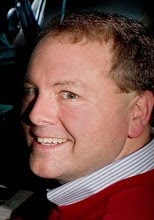
This is a post not about silent film, but about a Russian guy named Mikhail Serykh. (That's him above.) Mikhail, called "Mischa" by everyone, died unexpectedly this week.

I'm posting this here because Mischa often used this blog in teaching English. He did this because he lived with us in the United States for a good part of 1993. So all this time, my silent film musings have been a sort of "show and tell" for an audience of English students in Russia.

To all his students, and to everyone else who knew Mischa: we've lost a great man.

Sad to say, I hadn't been in touch with Mischa very much in recent years. But like everyone, he was on Facebook, and we had vague plans to visit him again in his home town of Belgorod, an industrial city of 400,000 people where I traveled to twice in the early 1990s as the Soviet Union was disintegrating.

And so it came as a complete shock earlier this week to have my own Facebook page suddenly flooded with tributes and pictures of Mischa. What happened? My heart sank and my face flushed as I realized from the tone of the messages what had happened.

Yes, he indeed had died: on Tuesday, April 7 at 7 a.m., according to a post by his brother. I don't know the cause. Mischa was only in his late 40s. I've gone through all the posts and the only info I can glean comes from vague references to doctors. I'll learn eventually, I suppose.

But whatever the cause and whatever the reason, Mischa is now no longer among us. And so I wanted to let his students and anyone else who comes across this post to know that he will always be remembered as a great friend and companion.

Whether it was searching the parched summer streets of Belgorod for beer (when was then brought in from the country in wagons) or driving him to Goffstown High School in America to be guest lecturer (he could earn $50 a day doing this, at the time a small fortune in rubles), Mischa was always fun to be around.

This friendly easy-going nature is what what compelled me to make use of his services as translator when I first went to Russia and my command of the language wasn't sufficient to interview the Mayor of Belgorod in his native tongue. (Little did I know the interview would consist entirely of drinking Azerbaijani cognac at 9 a.m., rendering translation services unnecessary.)

So Mischa came with me as I made my way from one appointment to the next, doing interviews for a feature story I was writing about life in Belgorod, which had become a sister city with Keene, N.H., where I worked as a reporter for the daily newspaper. When we weren't interviewing, we hung out together. Several afternoons were spent under a tree drinking the aforementioned country beer from an enormous glass jar as big as an aquarium.

It was a wild time, and so Mischa was there at moments that I'm sure will always be highlights of my own life. I came to Belgorod as one of the first Americans to visit the city since the end of World War II. Even after decades of communist propaganda, many ordinary Russians still looked at Americans as their brothers in breaking the back of the Nazi war machine. That was certainly true in Belgorod, which was destroyed by the Germans and was not far from the monumental Kursk tank battle that helped turn the tide against Hitler's advances.

And so I was met by people who made solemn promises on their father's deathbed that if they ever met an American, they would drink to his health. (Thus I found out how serious Russians can be about drinking.) Belgorod families vied to have me as their honored guest; children would band together and decide to offer me their most prized possession, which in one case was an adorable six-week-old puppy!

And Mischa was there for all of it. He was amazed and overwhelmed as much as I was, and so we became good friends. He spoke English well, and was eager to practice because there were few people in his orbit he could do this with. He had us over to his apartment to watch "Fawlty Towers" episodes with him, as there were some phrases he couldn't quite understand.

It was at Mischa's apartment that we entertained a middle-aged gentleman named Vladimir Babin, editor of Nash Belgorod ("Our Belgorod"), a brand new local newspaper, born in the spirit of glasnost. Babin wanted me to write a column about life in America for Nash Belgorod, and so for a couple of years I was a regular contributor to his pages, with Mischa translating.

Among the American gifts we brought were several Slinky spring toys, which our new Russian friends had never seen before. They found it amazing as it walked down stairs and did all the other things a slinky does. We even taught them the Slinky jingle: "...for fun it's a wonderful toy!"

We gave one to Babin's young son, who got it hopelessly tangled, which inevitably happens. Turned out dad had quite a temper, and blew up at what he considered a major faux pas. I'll never forget him shouting in Russian that "millions of American children play with this toy, and it only takes this idiotic child one moment to break it!" Thankfully, things were quickly smoothed over.

Despite his command of English, Mischa had never been outside of Russia, other than the time he served in the army and was sent to Cuba, which he described as "like Russia with palm trees."

So, to thank Mischa for all his help, we arranged for his airfare and officially invited him (necessary at the time for a travel visa) to come live with us for a few months in Milford, N.H. as a sort of do-it-yourself one-on-one exchange.

This was pre-Internet, when the only ways to communicate were by mail (very slow) or by tenuous long distance phone connection. (Belgorod is about 400 miles south of Moscow, near the Ukrainian border; calls into that part of Russia seemingly had to go through three different operators.) We would arrange for me to try calling on a certain day and time, and maybe one in three attempts I'd get through.

It was truly thrilling to reach him, hear his voice, and make plans. Often we'd spend most of the phone call (which inevitably would be cut off before we were done) making plans for the timing of the next phone call. I wonder how much of that magic has been lost in today's era of social media, instant communications, and so on.

Mischa arrived at Kennedy Airport in New York City in January of 1993, and thus began a great adventure for all of us. On the way back to New Hampshire, we stopped at a Grand Union supermarket in Connecticut, and Mischa became fascinated by how the doors would automatically open when someone stepped on a rubber mat, which he'd never seen before.

Being with Mischa once again produced encounters that I will always remember: Mischa at the Milford town meeting; Mischa discovering candlepin bowling; Mischa insisting that the United States had seven original colonies because of the "seven stripes on your flag." (He didn't realize we count the white ones.)

One really important side of Mischa was his devotion to the music of 'Queen' and Freddie Mercury, who was Mischa's own personal musical hero.

When I first met Mischa in the early 1990s, 'Queen' was about as dated as you could get in terms of pop music. So I chalked up Mischa's enthusiasm to a sort of Soviet cultural time lag.

But Mischa was serious: Freddie Mercury was not some passing fad. He was the best, all the world loved Freddie Mercury, no one was as popular as Freddie Mercury in every part of the globe, and no one could disagree with that.

Okay, okay!

But then later, Mischa's stay with us in America coincided with the release of the "Wayne's World" movie, which of course featured Queen's 'Bohemian Rhapsody,' which briefly propelled the group back into the commercial limelight.

So there's Mischa, newly arrived in the United States, visiting a Barnes & Noble bookstore with a gigantic Queen display dominating the front entrance.

"You see this!" he said, smiling contentedly. "I told you Queen was the most popular group in all the world!"

Our contact tapered off after his visit, as things will. I got a demanding newspaper management job, and ceased trying to actively learn Russian. Mischa went back to teaching English, and at one time was involved in a joint venture to export or import sausages, I think. (I can't remember.)

All along, I had the intention of returning to Belgorod someday to reconnect with Mischa and see how things have changed. It might even have been next year: 2016, the 25th anniversary of my first visit.

But now, if I go, there's one change I won't look forward to: Mischa's absence.

I hadn't seen him in a long time, and I don't know when I would have seen him next. But now he's gone, and I find I miss him terribly. He's one of these people that you assume will always be around. But now he's not.

To his students and friends and family: we have all lost a special person. He will always be remembered by those who knew him, but I know that's not much comfort when someone is taken from us so suddenly, and when so young.

Let us use the memory of Mischa to ensure we don't take for granted all the others who have touched our lives. Keep in touch. Make time. That's what I'll do.

And Mischa? Alas, not even a crackly tenuous phone connection could reach him now. But wherever he is, I'm sure he and Freddie Mercury are having one helluva great time together.

До свидания, Mishka!

Monday, April 6, 2015

Needed: Audience members at 4/9 screening
to help out documentary on Buster Keaton

Buster's autograph as obtained by Linda Olmsted in 1956.

First priority: to plug a screening of Keaton's 'Three Ages' (1923) on Thursday, April 9, as a documentary film crew will be on hand to interview attendees about Buster.

So come along. What are you waiting for? The more, the merrier!

But first, a few highlights from a holiday weekend as packed with silent film adventures as a child's egg-filled Easter basket.


• Friday, April 3: 'The Lost World' (1925) at Red River Theatres, Concord, N.H. Small turnout but strong reaction to this very entertaining film.

Just before the screening, a Red River staffer brought in an item from the collection of Barry Steelman, a well-known local movie buff and part of the Red River family.

I'll be darned: an original booking contract for 'The Lost World,' framed and perfectly intact, complete with full-color letterhead with artwork derived from the film's promotional materials.

But it was only the start of a weekend filled with unexpected artifacts...


• Saturday, April 4: 'The General' (1927) at the hall of Blazing Star #71 Grange in Danbury, N.H. Small theater but packed with locals for what promised to be an unusual night out.

It certainly was for me. First, the Blazing Star's hall appears unchanged since perhaps the McKinley era, with the exception of modern wiring. Stern faces of Grange leaders from the pre-World War I Grange heydays stare down from the hall's wooden walls.

The small proscenium stage, still in working order, is home to an impressive collection of antique theater curtains and scenic backdrops, some of it original to the hall and some of it acquired from other small theaters.

One of many antique scenic backdrops housed at the Blazing Star Grange Hall in Danbury, N.H.

A group of volunteers are working on conserving these rare artifacts. The ones on display are a sight to behold.

For the silent film program, the same people created a very substantial white screen, complete with wooden frame held together by clamps. Amazing!

As for the films: Buster rocked the house. It's always a treat to do a screening for such an appreciative audience.

But a highlight for me was when a woman approached me prior to the show with an old-time autograph book open to a particular page.

On it was written, in classic Palmer method script: Buster Keaton.

(I seem to have heard somewhere that Buster, who attended exactly one day of public school in his entire life, was functionally illiterate. I don't know if the very stilted penmanship of his signature bears this out, but it would be interesting to get it evaluated. Any volunteers?)

The woman, Linda Olmsted, said she was a Girl Scout in Manchester, Conn. on a field trip to New York City in the mid-1950s when she spotted Keaton on the street near what she thought was a TV studio.

So she asked, and Keaton obliged. And she still had the book, and Keaton's signature, after all these years. Again, today's word: Amazing!

Unfortunately, Danbury resident Carl Hultberg could not attend Saturday night's screening due to illness.

Hultberg had contacted me earlier, wanted to let me know his grandfather was Rudi Blesh, Keaton's authorized biographer who was working with him just prior to Keaton's death in early 1966.

He has since sent along a note apologizing for not attending, but saying he's still like to show me something I might find interesting: one of Keaton's hats.

Geez, what is it with Keaton and Danbury, N.H.? After all this, it wouldn't surprise me if the Grange stove was the same one used in Keaton's two-reel comedy 'Hard Luck.'

Thou Shalt Not Miss It: an original poster for Cecil B. DeMille's 'The Ten Commandments.'

• Sunday, April 5: 'The Ten Commandments' (1923) in 35mm at the Somerville Theatre in Davis Square, Somerville, Mass. About 100 people made a Biblical epic part of their Easter Sunday, despite my comments that the Archdiocese of Boston would not allow attendance to count as Mass.

Got to use my one sure-fire laugh line on this. To depict the parting of the Red Sea, technicians used large blocks of gelatin sprayed with water. My wife said it had to be strawberry Jell-O because, after all, it's the RED SEA. Har!

The film itself is a great one for music, I think: all broad gestures and a good amount of motion at varying tempos. I had five melodic cells picked out for this and wound up making heavy use of just two of them. Still, it held together and I felt it was one of my better efforts.

Okay, on to Buster Keaton's 'Three Ages' (1923) on Thursday, April 9 at 6:30 p.m. at the Flying Monkey Moviehouse and Performance Center in Plymouth, N.H.

Come one, come all! Because it would be great to have a sizable turnout so the documentary producers will have something to work with.

The filmmakers are Jessica Roseboom and Gavin Rosenberg of Merge Creative Media. Based in New York City, they're assembling material for a documentary on Keaton's silent comedy and how it continues to delight and mesmerize audiences nearly a century after it was produced.

For a good write-up of what they're doing, check out this story that ran on Sunday, April 5 in the Concord (N.H.) Monitor.

Or better yet, come to the screening and be part of the experience. For more info about 'Three Ages' and the program on Thursday, April 9, check out the press release below.

See you there!

* * *

Pre-historic Buster takes a pre-historic bath in 'Three Ages' (1923).

SATURDAY, MARCH 28, 2015 / FOR IMMEDIATE RELEASE
Contact Jeff Rapsis • (603) 236-9237 • jeffrapsis@gmail.com

Documentary film crew to visit Flying Monkey on Thursday, April 9


Local audience for Buster Keaton silent film program to be interviewed for possible inclusion in documentary

PLYMOUTH, N.H.—Audience members who attend next week's silent film screening at the Flying Monkey will have some unusual company.

A documentary film crew will visit Plymouth and the Flying Monkey Moviehouse and Performance Center on Thursday, April 9 for a screening of Buster Keaton's classic silent comedy 'Three Ages' (1923).

Filmmakers Jessica Roseboom, Gavin Rosenberg and Chad "CJ" Gardella, of New York City-based Merge Creative Media, are currently making a feature-length documentary about Keaton's enduring popularity.

Titled "Buster Keaton: To Be Funny," the project has been actively underway for several months. Filming locations so far have included Tucson, Ariz. and New York City.

As part of their work, Roseboom contacted New Hampshire-based silent film accompanist Jeff Rapsis, who provides live music for the Flying Monkey's monthly silent film series.

The Flying Monkey's screening of Keaton's 'Three Ages' prompted the filmmakers to come to Plymouth for the event.

During their visit, they plan to interview audience members and also film audience reactions during the screening.

"It's a real honor to have the Flying Monkey selected for inclusion in this project," Rapsis said. "Buster Keaton's films are always popular, but now there's an another reason for people to attend."

The program, accompanied by live music, will also include several Keaton comedy short films released prior to his jump into full-length feature films.

The Keaton show is on Thursday, April 9 at 6:30 p.m. Admission is $10 per person.

'Three Ages,' a loose send-up of the then-famous drama 'Intolerance' (1916), weaves together similar love stories told in three different epochs: the Stone Age, the Roman Age, and "Modern" (1920s) times.

The three-stories-in-one approach was Keaton's first attempt at a feature-length comedy. If 'Three Ages' showed signs of box office trouble, Keaton planned to split it up into three shorter films to be released separately.

But the picture was a success, due primarily to inspired comic touches that still shine through to audiences today. 'Three Ages' launched Keaton's spectacular run of classic comic features that lasted until the industry's transition to sound pictures in 1929.

Keaton, one of the silent film era's great comics, was known for his ingenuity with gags, acrobatic stunts, and his trademark dead-pan manner.

'Three Ages' is the latest in a series of monthly silent film screenings at the newly renovated Flying Monkey Moviehouse and Performing Arts Center. The series aims to recreate the lost magic of early cinema by assembling the elements needed for silent film to be seen at its best: superior films in best available prints; projection on the big screen; live musical accompaniment; and a live audience.

The Flying Monkey's silent film series will continue in 2015 with these upcoming titles:

• Thursday, May 21, 2015, 6:30 p.m.: 'The Count of Monte Cristo' (1922) starring John Gilbert. The original screen adaptation of the Andre Dumas swashbuckler about a man unjustly imprisoned who later seeks revenge. A film thought lost for decades until a print surfaced in the Czech Republic!

• Thursday, June 11, 2015, 6:30 p.m.: 'Wings' (1927) starring Clara Bow, Buddy Rogers, Richard Arlen. Just in time for Flag Day! Epic saga of American flyboys in World War I took the first-ever Academy Award for Best Picture. One of the all-time great silents, just as moving, thrilling, and exciting as when first released.

• Thursday, July 9, 2015, 6:30 p.m.: 'A Dog Double Feature' spotlighting silent-era canine stars Peter the Great and Rin Tin Tin. In 'The Sign of the Claw,' a police dog helps solve a crime wave. The only surviving film of Peter the Great, a popular German shepherd performer. 'The Night Cry' (1926) finds iconic dog superstar Rin Tin Tin accused of killing sheep. Can he find the real bandit and clear his name?

Buster Keaton's comedy ‘Three Ages’ will be shown on Thursday, April 9 at 6:30 p.m. at the Flying Monkey Moviehouse and Performing Arts Center, 39 Main St., Plymouth, N.H. Admission $10 per person. For more info, call (603) 536-2551 or visit www.flyingmonkeynh.com.

For more information on the documentary "Buster Keaton: To Be Funny," visit www.tobefunnythemovie.com


Saturday, April 4, 2015

Saturday, April 4: Bringing Buster Keaton
to the Blazing Star Grange Hall in Danbury, N.H.

Buster examines his world in 'Sherlock Jr.' (1924), on the program tonight with 'The General' (1927) at the Blazing Star Grange #71 Hall in Danbury, N.H.

Check out this e-mail I received today:
Hey Jeff:

Don't know if you know this, but my name is Carl Hultberg and my grandfather, Rudi Blesh was Buster's authorized biographer.

I live in Danbury and work at the transfer station. I have a biography of my grandfather out now about my grandfather, Rudi (and me).

http://www.amazon.com/Rudi-Blesh-Story-told-grandson/dp/0615901948

I'm going to try to make the show tonight. So I hope to see you there.

-Carl Hultberg
Danbury NH 03230
Wow! You never know who's out there!

The Blesh biography, written with Buster's cooperation, was one of the earliest books about silent film I encountered.

In the early 1970s, the Nashua (N.H.) Public Library had a copy, and I must have renewed it more than a dozen times, keeping it home as part of an impromptu reference library I accumulated at the time.

And now, all these years later, to hear from the biographer's grandson, who lives in rural New Hampshire about an hour's drive north of here. Fantastic!

The "show" tonight he refers to, by the way, is a program of Buster Keaton films I'm presenting at an usual venue—the Blazing Star Grange #71 Hall in, yes, Danbury, N.H.

If Danbury sounds like a small New Hampshire town, then you heard right.

And like many small towns in rural parts of our start, the local Grange chapter is still active.

A seasonal view of tonight's venue. Yeah, we still have a lot of snow up here.

The Grange? It's kind of an agri-centric community education and fellowship society that emerged as a national movement in the 19th century.

Many local Grange groups fell by the wayside long ago—ironically, in part because of competing pastimes such as movie-going.

But a few continue to soldier on, including the "Blazing Star" chapter in Danbury, which has evolved into an advocate for locally grown food.

Members also hold a series of winter markets, support sustainable development, and also curate a unique collection of vintage stage curtains that have been in use at the local Grange Hall for nearly a century.

On example from the collection of antique painted stage scenery and curtains cared for by the Blazing Star Grange #71 of Danbury, N.H.

Find out more about the Blazing Star Grange #71 at http://www.danburygrange.org/. And you can also see online photos of the vintage stage curtain collection.

Tonight's program is a double bill of two Keaton features, plus possibly a chat with the grandson of Keaton's biographer. Really looking forward to it, as well as possibly meeting the grandson of Keaton's official biographer. (Hey—when you're this far removed from Hollywood, you take what you can get.)

For more info about tonight's screening, check out the press release below. See you there!

* * *


MONDAY, MARCH 16, 2015 / FOR IMMEDIATE RELEASE
Contact Jeff Rapsis • (603) 236-9237 • jeffrapsis@gmail.com

Silent film classic 'The General' with live music at Blazing Star Grange on Saturday, April 4


Buster Keaton's comic masterpiece set during U.S. Civil War to be screened at historic Grange Hall in Danbury, N.H.

DANBURY, N.H.—He never smiled on camera, earning him the nickname of "the Great Stone Face." But Buster Keaton's comedies rocked Hollywood's silent era with laughter throughout the 1920s.

Acclaimed for their originality and clever visual gags, and also admired for their realistic stories and authentic location shots, Keaton's films remain popular crowd-pleasers today.

See for yourself with a screening of 'The General' (1926), one of Keaton's landmark feature films, at the Blazing Star Grange Hall in Danbury, N.H. on Saturday, April 4 at 7:30 p.m. The show is open to the public with suggested $5 donation.

The program, which also includes Keaton's feature 'Sherlock, Jr.' (1924), will be accompanied by live music performed by silent film composer Jeff Rapsis.

'The General,' set during the U.S. Civil War, tells the story of a southern locomotive engineer (Keaton) whose engine (named 'The General') is hijacked by Northern spies with his girlfriend onboard. Keaton, stealing another train, races north in pursuit behind enemy lines. Can he rescue his girl? And can he steal his locomotive and make it back to warn of a coming Northern attack?

Critics have called 'The General' Keaton's masterpiece, praising its authentic period detail, ambitious action and battle sequences, and its overall integration of story, drama, and comedy. It's also regarded as one of Hollywood's great train films, with much of the action occurring on or around moving steam locomotives.

Civil War-era railroad engineer Buster on the film's namesake locomotive, 'The General'

Rapsis, a New Hampshire-based silent film musician who has accompanied shows at venues across New England, said Keaton's films were not made to be shown on television or viewed at home. In reviving them, the Blazing Star Grange will give the public a chance to experience silent film as it was meant to be seen—in high quality prints, on a large screen, with live music, and with an audience.

"All those elements are important parts of the silent film experience," said Rapsis, who improvises the score on the spot as the films screens. "Recreate those conditions, and the classics of early Hollywood leap back to life in ways that can still move audiences today."

Rapsis performs on a digital synthesizer that reproduces the texture of the full orchestra and creates a traditional "movie score" sound.

Keaton, along with Charlie Chaplin and Harold Lloyd, stands today as one of the silent screen's three great clowns. Some critics regard Keaton as the best of all; Roger Ebert wrote in 2002 that "in an extraordinary period from 1920 to 1929, (Keaton) worked without interruption on a series of films that make him, arguably, the greatest actor-director in the history of the movies."

While making films, Keaton never thought of himself as an artist, but merely as an entertainer trying to use the then-new art of motion pictures to tell stories and create laughter.

As a performer, Keaton was uniquely suited to the demands of silent comedy. Born in 1895, he made his stage debut as a toddler, joining his family's knockabout vaudeville act and learning to take falls and do acrobatic stunts at an early age.

A remarkable pantomime artist, Keaton naturally used his whole body to communicate emotions from sadness to surprise. And in an era with no post-production special effects, Keaton's acrobatic talents enabled him to perform all his own stunts.

Critics review 'The General':

"The most insistently moving picture ever made, its climax is the most stunning visual event ever arranged for a film comedy."
—Walter Kerr

"An almost perfect entertainment!"
—Dave Kehr, Chicago Reader

"What makes the film so special is the way the timing, audacity and elegant choreography of its sight gags, acrobatics, pratfalls and dramatic incidents is matched by Buster's directorial artistry, his acute observational skills working alongside the physical élan and sweet subtlety of his own performance."
—Time Out (London)

Buster Keaton's 'The General' (1926) will be shown on Saturday, April 4 at 7:30 p.m. at the Blazing Star Grange Hall, 15 North Road, Danbury, N.H. The program is open to the public. Suggested donation $5. For more info, visit danburygrange.org; for more info on the music, visit www.jeffrapsis.com.

— 30 —
For more info, contact:
Jeff Rapsis • (603) 236-9237 • jeffrapsis@gmail.com
Images attached.
More high-resolution digital images available upon request.


Tuesday, March 31, 2015

Rediscover magic in 'The Lost World' (1925)
on Friday, April 3 at Red River Theatres


It's the original dinosaur movie!

And when released in 1925, 'The Lost World' was one of those pictures that really must have blown people's minds. One reason is, of course, that it's a really entertaining movie, as well as a really visual one. There's a lot to see. Just look at that poster!

But it also blew people's minds, I think, by coming out at just the right time for people to go crazy over seeing dinosaurs up on the big screen.

And in doing so, I think it has something to teach us about balance between reality and fantasy, even all these years later.

What can we learn? Well, to borrow a turn of phrase from the late great Rod Serling, consider the notion of dinosaurs in the 1920s...

Yes, there had been stories about prehistoric creatures, including the very tale by Sir Arthur Conan Doyle on which 'The Lost World' was based.

And yes, there had been drawings and paintings and images of pre-historic beasts that once roamed the Earth's surface. Amazing, right?

But never had anyone seen dinosaurs in action, being dinosaurs, right before their eyes. (Not counting Windsor McKay's early 'Gertie the Dinosaur' animated cartoons.)

Not until 'The Lost World' (1925)—a motion picture filled with not only dinosaurs, but a veritable field guide of prehistoric creatures brought to life through the then-new magic of the movies.

Yes, 'The Lost World' was a big commercial hit. But more than most pictures, it must have given audiences a sense of the limitless ability of the motion picture to transport us to places we could never visit on our own.

And not just places, but different epochs in history, and also to induce intense states of mind and emotion: fear, joy, panic, awe, and so many other big emotions.

Part of what fueled this magic, I think, was that early audiences were drawn to the cinema in part due to a basic and innate belief in the fidelity of the camera. What they saw on the screen had to be photographed by a camera, so the underlying assumption was that it had to have really happened.

Yes, films were edited and put together to tell a story, and everyone understood that. But the camera itself did not lie.

It could be fooled, as when Buster Keaton would mask one side of the lens, then rewind the film and mask the other side, allowing two Buster Keatons to dance alongside each other in 'The Playhouse,' a 1921 comedy short. But what it photographed was understood to be real.

Hence the reports from screenings of 'The Lost World' of people really believing explorers had actually discovered dinosaurs still alive somewhere. How else could they have been photographed? How else could they be in a movie, seen marauding through the streets of London, right before our eyes?

Well, of course there were no dinosaurs, so they could not be photographed or filmed. This made their appearance in 'The Lost World' all the more magical, especially at a time when the fidelity of film was a firmly entrenched idea.

At the dawn of special effects, the effects were truly "special" because they were so unusual and so startling, especially to audiences whose basic understood belief was that the camera was an impartial witness to reality.

Bessie Love shares the screen with a pre-historic scene-stealer in 'The Lost World.'

Movies, of course, have come a long way since 1925. Nowadays, filmmakers can create entire worlds on a hard drive, without exposing one frame of film to a living thing or inanimate object. What can be done is simply amazing. But is it magical in the same way a movie such as 'The Lost World' must have been?

Maybe it's possible to have too much of a good thing. Maybe today's abundance of creative possibilities—the ability to digitally conjure worlds where superheros effortlessly ignore the law of gravity as the "camera" swirls all around them from impossible angles—has diluted the basic bond of believability that helped mesmerize people back at the beginning.

This bond, I think, is what made the movies seem so compelling to early audiences. And I think that somewhere deep down, it's what draws us to them still: we want to see ourselves.

Yes, we love having our mind blown by the infinite possibilities of cinema. But that happens at the most intense levels only when the two desires are in balance—the desire to see ourselves as well as the limitless and mind-boggling nature of cinema to take us anywhere in time and space.

Maybe it's like Beethoven. One reason for the lasting and intense power of his music, as I see (or hear) it, is that Beethoven balanced the classical restraint and form of Mozart and Haydn (in the near past) with the unrestrained freedom of 19th century romanticism to come, as typified by Lizst and Wagner.

Beethoven, by virtue of his time and gifts, got the balance just right—and in many works, triggered infinity in the process.

I think 'The Lost World,' for all its seemingly primitive special effects, gets the balance just right. Consider: the film runs for a good half-hour with just humans (photographed in their natural habitat by the ever-honest camera) before we embark on a journey to exotic South America.

And even then, it takes its sweet time before we finally get our first glimpse of a dinosaur. And then, for the remainder of the film, nearly every time we see a dinosaur or similar primitive creature, it's nearly always in the context of interacting with the people that we've gotten to know already.

Part of this is the solid nature of Conan Doyle's original story. The guy knew how to structure a tale.

But a big part of it is that the special effects, as primitive as they are, are all done in service to the story. The whole strange plateau that they inhabit is only there so that humans we have come to know a bit can discover it and be awed by it and get scared by it and run away from it.

That, when underpinned by the essential belief that the camera did not lie, must have made for a really powerful combination for movie audiences of the time.

And you know what? In doing music for repeated screenings of this film, I've found it still can produce that effect. The balance is so well calculated that even now, almost a century later, it can conjure a sense of why people first fell hard for the movies.

See for yourself by joining us on Friday, April 3 for a screening with live music (by me) at Red River Theatres in Concord, N.H.

More info about the show is in the press release below, which also includes info about the whole year's schedule of silent film screenings at Red River. Hope to see you there!

* * *

One of my favorite pieces of movie promotional material of all time.

TUESDAY, MARCH 17, 2015 / FOR IMMEDIATE RELEASE
Contact Jeff Rapsis • (603) 236-9237 • jeffrapsis@gmail.com

Adventure, comedy, romance, suspense
— but no dialogue!


Red River Theatres in Concord, N.H. announces 2015 silent film series; all shows to feature live musical accompaniment

CONCORD, N.H.—Clara Bow, Buster Keaton, and Lillian Gish are among the stars returning to the silver screen this year as part of Red River's 2015 silent film line-up.

The series opens in April with the restored classic silent film version of 'The Lost World' (1925), hailed as Hollywood's first-ever dinosaur movie.

The schedule includes Clara Bow in the era-defining romantic comedy 'It' (1927) in May; D.W. Griffith's French Revolution epic 'Orphans of the Storm' (1921) in July; and Buster Keaton's uproarious comedy 'The Cameraman' (1928) in September.

Halloween will bring a visit from 'The Lodger' (1927), a creepy early British thriller directed by a very young Alfred Hitchcock.

All films in Red River's silent movie series will feature live music by Jeff Rapsis, a New Hampshire-based silent film accompanist and composer.

"We're thrilled to once again include silent film with live music in this year's programming," said Shelly Hudson, executive director of Red River Theatres.

"These films are audience favorites, and people continue to be surprised at how engrossing and exhilarating they can be when shown as they were intended: in a theater, and with live music."

Red River Theatres, an independent cinema, is a non-profit 501(c)(3) organization dedicated to screening a diverse program of first-run independent films, cult favorites, classics, local and regional film projects, and foreign films.

The member-supported theater’s mission is to present film and the discussion of film as a way to entertain, broaden horizons and deepen appreciation of life for New Hampshire audiences of all ages.

Our pre-historic hero shakes up modern London in 'The Lost World.'

First up in this year's line-up is a screening of 'The Lost World' (1925) on Friday, April 3 at 7 p.m. Admission is $10 per person.

'The Lost World' is a silent fantasy adventure film and an adaptation of Arthur Conan Doyle's 1912 novel of the same name. The movie was produced by First National Pictures, a precursor to Warner Brothers, and stars Wallace Beery as Professor Challenger.

The movie, a blockbuster hit when released in 1925, paved the way for Hollywood's enduring fascination with stories pitting mankind against larger-than-life creatures in films such as 'King Kong' and 'Jurassic Park.'

'The Lost World' is a silent fantasy adventure film and an adaptation of Arthur Conan Doyle's 1912 novel of the same name. The movie was produced by First National Pictures, a precursor to Warner Brothers, and stars Wallace Beery as Professor Challenger.

The film was directed by Harry O. Hoyt and featured pioneering stop motion special effects by Willis O'Brien, who would go on to create the effects used to bring 'King Kong' to the screen in 1933.

'The Lost World' tells the tale of a British exploration team that journeys to South America to confirm reports of long-extinct creatures still roaming a remote high plateau deep in the jungle.

The landscape they discover, filled with a wide range of dinosaurs and other fantastic creatures, was enough to astonish movie-goers when 'The Lost World' first hit movie screens in February 1925. Scenes of a brontosaurus on the loose in central London broke new ground in terms of cinema's visual story-telling possibilities.

Early viewers of the film were especially impressed by special effects breakthroughs that allowed live actors to appear simultaneously on-screen with stop motion models of prehistoric creatures. This led to rumors that the filmmakers had actually discovered living prehistoric creatures.

Despite the film's popularity, only incomplete copies of 'The Lost World' survived from its initial run in the silent era. In recent years, historians have been piecing together 'The Lost World' from fragments found scattered among the world's film archives.

The version to be shown at Red River includes footage from eight different prints. At 93 minutes in length, it's the most complete version of 'The Lost World' available. The edition includes rare footage of Arthur Conan Doyle that has been missing from most prints since the film's original release.

To accompany 'The Lost World,' Rapsis will use a digital synthesizer to recreate the texture of the full orchestra. The score is created live in real time as the movie is screened. Rather than focus on authentic music of the period, Rapsis creates new music for silent films that draws from movie scoring techniques that today's audiences expect from the cinema.

Other dates and titles in the Red River silent film series include:

• Friday, May 15, 2015, 7 p.m.: 'It' (1927) starring Clara Bow. The hugely popular romantic comedy about a shopgirl who falls in love with the owner of a huge department store. The film that made Clara Bow a major star and came to epitomize the Jazz age.

• Friday, July 10, 2015, 7 p.m.: 'Orphans of the Storm' (1921). Just in time for Bastille Day, D.W. Griffith's sweeping story of two sisters (Lillian and Dorothy Gish) caught up in the throes of the French revolution. Griffith's last major box office success fills the screen with a succession of iconic images.

• Friday, Sept. 11, 2015, 7 p.m.: 'The Cameraman' (1928) starring Buster Keaton. To impress the girl of his dreams, mild-mannered portrait photographer Buster takes up the glamorous profession of newsreel cameraman. One of the best comedies of the silent era.

• Friday, Oct. 30, 2015, 7 p.m.: 'The Lodger' (1927). A serial killer is on the loose in fog-bound London. Will the murderer be caught before yet another victim is claimed? Just in time for Halloween, suspenseful British thriller directed by a very young Alfred Hitchcock.

Red River Theatres' 2015 Silent Film Series will start with a screening of 'The Lost World’ on Friday, April 3 at 7 p.m. in the Jaclyn Simchik Screening Room at Red River Theatres, 11 South Main St., Concord, N.H. Admission is $10 per person; for more info, call (603) 224-4600 or visit www.redrivertheatres.org. For more information about the music, visit www.jeffrapsis.com.

Thursday, March 26, 2015

Sunday, March 29: Cecile B. DeMille's silent
version of 'The Ten Commandments' (1923)


To paraphrase the Commandments themselves:

THOU SHALT NOT MISS IT!

And your chance to see it on the big screen is Sunday, March 29, when we run Cecil B. DeMille's original silent film version of 'The Ten Commandments' (1923) at the Wilton (N.H.) Town Hall Theatre.

The service (on Palm Sunday, no less) begins at 4:30 p.m. Minister of Music is me. Admission is free, but anything you can put into the collection plate (i.e. donation jar) would be appreciated.

This is the film where Cecil B. DeMille really started becoming the Cecil B. DeMille worthy of his name: demanding, dismissive of budgets, super-confident, dealing with scripture and New York money men with equal imperiousness. (That's him at at left, about the time of 'The Ten Commandments.')

Really. I've been reading a 'Empire of Dreams: The Life of Cecil B. DeMille' (2010) by Scott Eyeman, and the off-screen drama connected with the original 'Ten Commandments' was equal to anything that made it into the picture.

The film, by the way, is quite different from the more-familiar 1956 remake starring Charlton Heston as Moses. For one thing, a big chunk of the silent version takes place in "modern" times, meaning 1920s California. So be prepared for some time travel.

But, yes, there's still the parting of the Red Sea, a special effect that was accomplished largely with Jell-O. It's pretty cutting edge for 1923.

It's also a film with a weird connection to the present. To film the Biblical scenes, DeMille used the remote Guadalupe-Nipomo Dunes in northern Santa Barbara County. Afterwards, the massive sets were not taken down. DeMille, worried that rival filmmakers might poach his massive set pieces, instead had them buried right there in the desert sands.

Fast forward to 2012, and archaeologists found large components of the sets still in place under the surface of the desert where DeMille filmed. Since then, there's been an ongoing effort to excavate the site for its unique link to early Hollywood history.

Excavating a silent-era sphinx, courtesy livescience.com.

For recent developments, check out this Los Angeles Times story about the unearthing of an intact Sphinx.

But you don't have to do any digging to see the original 'Ten Commandments' on the big screen. Below is the text of a press release with all the info you'll need to join us.

P.S. I'll be doing the same film on Easter Sunday, April 5 at 2 p.m. at the Somerville Theatre, Davis Square, Somerville, Mass., where we'll be screening a 35mm print from the U.S. Library of Congress. More on that next week!

* * *


MONDAY, MARCH 16, 2015 / FOR IMMEDIATE RELEASE
Contact Jeff Rapsis • (603) 236-9237 • jeffrapsis@gmail.com

Original 'Ten Commandments' movie to screen at Wilton (N.H.) Town Hall Theatre


Silent film Biblical blockbuster to be shown with live music on Palm Sunday, March 29

WILTON, N.H.—Decades before he directed Charlton Heston as Moses, filmmaker Cecil B. DeMille's original silent version of 'The Ten Commandments' (1923) wowed audiences the world over during the early years of cinema.

To celebrate the coming Easter season, DeMille's pioneering Biblical blockbuster will be screened on Sunday, March 29 at 4:30 p.m. at the Wilton Town Hall Theatre, 40 Main St., Wilton, N.H.

The silent ‘The Ten Commandments’ will be shown with live music played in the theater by silent film accompanist Jeff Rapsis. Admission is free, with a $5 donation suggested per person.

DeMille's original 'Ten Commandments' was among the first Hollywood films to tackle stories from scripture on a grand scale. The picture was a popular hit in original release, and served as a blueprint for DeMille's later remake in 1956.

Despite the silent original's epic scale, the Moses story takes up only about the first third of the film. After that, the tale changes to a modern-day melodrama about living by the lessons of the Commandments. In the McTavish family, two brothers make opposite decisions: one, John, to follow his mother's teaching of the Ten Commandments and become a poor carpenter, and the other, Danny, to break every one of them and rise to the top. The film shows his unchecked immorality to be momentarily gainful, but ultimately disastrous.

A contrast is made between the carpenter brother and his mother. The mother reads the story of Moses and emphasizes strict obedience and fear of God. The carpenter, however, reads from the New Testament story of Jesus' healing of lepers. His emphasis is on a loving and forgiving God. The film also shows the mother's strict lawful morality to be flawed in comparison to her son's version.

The other brother becomes a corrupt contractor who builds a church with shoddy concrete, pocketing the money saved and becoming very rich. One day, his mother comes to visit him at his work site, but the walls are becoming unstable due to the shaking of heavy trucks on nearby roads. One of the walls collapses, with tragic results. This sends the brother on a downward spiral as he attempts to right his wrongs and clear his conscience.

Throughout the film, the visual motif of the tablets of the Commandments appears in the sets, with a particular Commandment appearing on them when it is relevant to the story.

That's not Charlton Heston, but silent-era actor Theodore Roberts as Moses.

'The Ten Commandments' boasts an all-star cast of 1920s performers, including Theodore Roberts as Moses; Charles de Rochefort as Rameses; Estelle Taylor as Miriam, the Sister of Moses; Edythe Chapman as Mrs. Martha McTavish; Richard Dix as John McTavish, her son; Rod La Rocque as Dan McTavish, her other son; and Leatrice Joy as Mary Leigh.

The Exodus scenes were filmed at Nipomo Dunes, near Pismo Beach, California, in San Luis Obispo County, which is now an archaeological site. The film location was originally chosen because its immense sand dunes provided a superficial resemblance to the Egyptian desert. After the filming was complete, the massive sets — which included four 35-foot-tall Pharaoh statues, 21 sphinxes, and gates reaching a height of 110 feet, which were built by an army of 1,600 workers — were dynamited and buried in the sand. However, the burial location at Nipomo Dunes is exposed to relentless northwesterly gales year-round, and much of what was buried is now exposed to the elements, as the covering sand has been blown away.

The visual effect of keeping the walls of water apart while Moses and the Israelites walked through the Red Sea was accomplished with a slab of gelatin that was sliced in two and filmed close up as it jiggled. This shot was then combined with live-action footage of actors walking across the dry seabed, creating a vivid illusion.

‘The Ten Commandments’ is the latest in a series of monthly silent film screenings at the Town Hall Theatre. The series aims to recreate the lost magic of early cinema by bringing together the elements needed for silent film to be seen at its best: superior films in best available prints; projection on the big screen; live musical accompaniment; and a live audience.

“These films remain exciting experiences if you can show them as they were designed to be screened,” said Rapsis, the accompanist. “There’s a reason people first fell in love with the movies, and we hope to recreate that spirit. At their best, silent films were communal experiences in which the presence of a large audience intensifies everyone’s reactions.”

The Wilton Town Hall Theatre originally opened as a silent film moviehouse in 1912, and has shown first-run Hollywood films to generations of area residents. Classic movies of all types, however, are still a big part of the Town Hall Theatre's offerings, and the silent film series is a way for the theater to remain connected to its roots.

Live music is a key element of each silent film screening, Rapsis said. Silent movies were never shown in silence, but were accompanied by live music made right in each theater. Most films were not released with official scores, so it was up to local musicians to provide the soundtrack, which could vary greatly from theater to theater.

"Because there's no set soundtrack for most silent films, musicians are free to create new music as they see fit, even today," Rapsis said. "In bringing a film to life, I try to create original 'movie score' music that sounds like what you might expect in a theater today, which helps bridge the gap between today's audiences and silent films that are in some cases nearly 100 years old."

For each film, Rapsis improvises a music score using original themes he creates beforehand. None of the the music is written down; instead, the score evolves in real time based on audience reaction and the overall mood as the movie is screened.

Other upcoming features in the Wilton Town Hall's silent film series include:

• Sunday, April 26, 2015, 4:30 p.m.: 'Silent Comedy and the Civil War' with Raymond Griffith, Buster Keaton. Confederate spy Raymond Griffith outwits Northern foes in 'Hands Up!' (1926), while Buster Keaton plays a Confederate train engineer in his masterpiece, 'The General' (1926).

• Sunday, May 24, 2015, 4:30 p.m.: 'The Birth of a Nation' (1915) starring Lillian Gish. Director D.W. Griffith's controversial Civil War epic reaches a major milestone. Flawed by overt racism that many find offensive even today, the picture nonetheless showed the world the potential of the then-new medium of film.

‘The Ten Commandments’ (1923) will be shown with live music by Jeff Rapsis on Sunday, March 29 at 4:30 p.m. at the Wilton Town Hall Theatre in Wilton, N.H. Admission is free, with a $5 donation suggested per person. For more info, visit www.wiltontownhalltheatre.com or call (603) 654-3456. For more information about the music, visit www.jeffrapsis.com.

Tuesday, March 17, 2015

'Four Horsemen of the Apocalypse' (1921)
on Wednesday, March 25 at Merrimack College

How many of the Four Horsemen can you name? Let's see—there's Pestilence, Death, War, and...Irving?

What film introduced silent-era megastar Rudolph Valentino and launched a prolonged tango craze?

Answer: 'The Four Horsemen of the Apocalypse,' a sprawling multi-generational family drama set in the years leading up and then during World War I.

And we're screening it, tangos and all, on Wednesday, March 25 at 7 p.m. at the Rogers Center for the Performing Arts at Merrimack College in North Andover, Mass.

I've only done this film once, and it's quite a workout. Not only is it loooong (with some versions running somewhere between 2½ and 3 hours) but it's also full of big dramatic scenes, including Rudy's steamy 'tango' sequence with its legions of on-screen guitar players.

And then there's the war, which is a menacing presence during most of the film. Somehow the music has to evoke that without growing tiresome. We'll see how I do.

So overall, it's a big film, and a fitting conclusion to our 2014-15 schedule of silent films at the Rogers Center.

I like doing films there and audience attendance has been growing—typically we get 80 to 100 people at these screening, sometimes more.

So I hope to be back with some silent film programs for the 2015-16 season. Please let me know what films you'd like to see run at the Rogers Center.

And in the meantime, I hope you can make it to the Rogers Center for a rare screening of this important and dramatic film.

And I encourage anyone to come down and sit with me on the bench. After all, it takes two to tango!

Okay—if you'd like more info about the picture or the screening, the press release (below) covers all the bases.

* * *

Rudolph Valentino shows off his dancing skills in 'Four Horsemen.'

TUESDAY, MARCH 17, 2015 / FOR IMMEDIATE RELEASE
Contact Jeff Rapsis • (603) 236-9237 • jeffrapsis@gmail.com

Ground-breaking WWI silent film drama on Wednesday, March 25 at Merrimack College


'Four Horsemen of the Apocalypse' introduced Rudolph Valentino, started tango dance craze; to be screened with live musical accompaniment

NORTH ANDOVER, Mass.—A drama that helped launch the career of silent film heartthrob and megastar Rudolph Valentino will be shown in January at Merrimack College.

'The Four Horsemen of the Apocalypse' (1921), a multi-generational family drama that climaxes during World War I, will be screened with live music on Wednesday, March 25 at 7 p.m. at the Rogers Center for the Arts, Merrimack College, 315 North Turnpike St., North Andover, Mass.

The screening is part of the Rogers Center's silent film series. Admission is free and the screening is open to the public.

'Four Horsemen' was originally scheduled to be shown in February at the Rogers Center, but the screening was moved to a March date due to a scheduling conflict.

Based on a novel by Spanish author Vicente Blasco Ibáñez, 'Four Horsemen of the Apocalypse' tells the story of an extended Argentine family with mixed ethnic background: one side is German, while the other is French.

The family get drawn into World War I in far-off Europe, with members ending up on opposing sides. With brothers pitted against one other on the battlefield, the destruction of war changes lives and fortunes forever.

'The Four Horsemen of the Apocalypse' had a huge cultural impact, becoming the top-grossing film of 1921, beating out Charlie Chaplin's 'The Kid,' and going on to become the sixth-best-grossing silent film of all time.

Also, the film turned then-little-known actor Rudolph Valentino into a superstar and associated him with the image of the Latin Lover. In addition, the film inspired a tango craze and such fashion fads as gaucho pants.

In 1995, 'The Four Horsemen of the Apocalypse' was selected for preservation in the United States National Film Registry by the Library of Congress as being "culturally, historically, or aesthetically significant."

Regarding the title: the Four Horsemen of the Apocalypse are mentioned in the Bible in chapter six of the Book of Revelation, which predicts that they will ride during the Apocalypse. The four horsemen are traditionally named War, Famine, Pestilence, and Death.

"This is a big sprawling drama, and a great chance to see the legendary Rudolph Valentino in the picture that launched his celebrity," said Jeff Rapsis, a New Hampshire-based silent film accompanist who will create live music for the screening.

Rapsis, a resident of Bedford, N.H., will improvise live musical accompaniment during the screening, using a digital synthesizer to recreate the sound of a full orchestra and other more exotic textures.

All movies in the Rogers Centers’ silent film series were popular when first released, but are rarely screened today in a way that allows them to be seen at their best.

They were not made to be shown on television; to revive them, organizers aim to show the films at the Rogers Center as they were intended—in top quality restored prints, on a large screen, with live music, and with an audience.

‘The Four Horsemen of the Apocalypse’ will be shown with live music on Wednesday, March 25 at 7 p.m. at the the Rogers Center for the Arts, Merrimack College, 315 North Turnpike St., North Andover, Mass. Admission is free. For more information, call the Rogers box office at (978) 837-5355. For more info on the music, visit www.jeffrapsis.com

Preparing for the last Cinefest in Syracuse, N.Y.
and other thoughts about creativity

A lifetime of inspiration from a single box of crayons. See below.

This week I'm driving out to Syracuse, N.Y. for the last-ever Cinefest, a four-day gathering of vintage film buffs and collectors.

A fair amount of silent film is run at this event, for which three pianists are usually brought in to provide accompaniment.

I've had the privilege of being in the mix for the past three years, during which I've played alongside phenomenal musicians such as Phil Carli, Jon Mirsalis, and many others. It's been quite an education for me.

Now, for the final year, they're bringing in no less than eight accompanists as a kind of last hurrah.

The roster includes Phil and Jon, but also Ben Model, Andrew Simpson, Makia Matsumura, Judy Rosenberg, Gabriel Thibaudeau—and me.


We'll get together on Wednesday night and decide who plays what. Simple math says each of us will play no more than two features at most, rather than the usual five or six.

I'm really looking forward it, and not because of the lighter workload. For me, it's a great chance to hear how other accompanists bring films to life. I always come away inspired and eager to push myself in new directions. (Instead of just the refrigerator.)

Why is this the last Cinefest? After 35 years, organizers felt it was time to pack up shop in the face of looming changes in the vintage film field: an aging fan base, the shift to digital, the easy availability of once-rare titles.

I'm heading to Syracuse in a pretty good state of mind, I think.

This past Sunday, on the way to accompany a screening of 'Grandma's Boy' (1922) at the public library in Townsend, Mass., I got to reflecting on how music still can really move me.

As someone caring for an elderly parent in poor health, I can't help but sometimes wonder what the aging process will be like for me.

I wonder if and when music will someday cease to inspire or excite me, or prompt me to feel anything.

Will it fade? Will it falter? Will it happen gradually? Or will the music just one day stop?

Well, the good news is that in recent days I've experienced several waves of affirmation that have me believing that music will continue to be an important part of my life no matter what.

On the way to Townsend, Mass., I was planning to listen to a CD with a series of lectures on the historical origins of Christianity, believe it or not. Hey, I try to keep up.

But when leaving the house, I couldn't find the CD. So instead, I just grabbed another disc at random. It turned out to be a recording of music by John Adams—not the president, but the California-based composer who grew up right here in New Hampshire. (That's him below, on the left.)

By a total coincidence, the disc had a performance of Adams' 'Chamber Symphony' from 1993. It's a work that I'll hear played live next month by the San Francisco Symphony when I go out there to do a program at the Niles Essanay Silent Film Museum on Saturday, April 11.

But here it was now, in my car. And I found myself carried away by the energetic lines and the propulsive rhythms. I find the music of Adams tremendously exciting, not just because of the music itself, but because of the possibilities it represents.

Think of it! After more than a half-century of dead-end atonalism, Adams (and other composers) developed a tonal language all his own that was unlike past music, and in fact sounded like it belonged to my age. And his music, in all its variety, shows how much untapped potential exists with the materials of music.

And it made me think of crayons, of all things. When I was young, the classic box of 64 Crayola crayons was the gold standard for creativity.

I remember starting with the basic eight, and then graduating to 16—a set that included combos such as "red orange" and "blue green."

But it was the big box of 64, with all the basics but also exotic shades such as Periwinkle and Burnt Sienna, that really fired my imagination. To me, the box of 64 represented unending possibilities. It was the symphony orchestra of crayons!

I eventually grafted some of the excitement about 64 crayons to the 12 notes of music. And I think I've maintained that sense of excitement, even now, far into adulthood. To me, the notes also represent endless possibilities.

And as I let the music of John Adams' 'Grand Pianola Music' (next on the disc) wash over me, I felt confident that music must remain a lifelong passion. There's still a lot of life left in that box of crayons, for me and anyone else who wants to use them.

After that, I turned on the radio, and heard different music. I recognized it immediately: the end of the first movement of the great Symphony No. 3 (the "organ" symphony) by Camille Saint-Saëns. (That's him at right.)

This was music I discovered while in junior high school, by means of a library LP of Eugene Ormandy leading the Philadelphia Orchestra. I found it thrilling and exhilarating stuff—so much so that I wore out the library's recording.

And now here I was, nearly four decades later, and the music was having the same effect on me. The tunes, the harmonies, the rhythmic energy—and all of it suffused with a sense of fresh and unending possibilities.

So I head to Syracuse, and my own musical future, feeling confident that music will continue to offer as much to me as it always has. Familiar music will continue to move me, and new discoveries will continue to inspire me.

I guess what I'm saying is that I don't think I'm ready to put away the crayons anytime soon.


Monday, March 9, 2015

Bring your own roar: Silent Tarzan flick
on Thursday, March 12 at Flying Monkey

James H. Pierce plays Tarzan in 'Tarzan and the Golden Lion' (1927), showing on Thursday, March 12 at 6:30 p.m. at the Flying Monkey.

When George Lucas and Steven Spielberg made 'Raiders of the Lost Ark' (1981), it was films like 'Tarzan and the Golden Lion' (1927) that they were paying homage to.

That's all I can think every time I've played music for this film, an entry in the Tarzan catalog that was lost for decades until a print turned up a few years ago.

It starts off fast, and then really keeps moving. It has wily villains, damsels in distress, exotic locations, heroic rescues, and exciting stunts galore.

But a silent Tarzan? You have to remind audiences today that when these movies were made, no one thought of them as silent. They were simply the movies, and people fell in love with them without expecting to hear talk or dialogue.

It was only later that synchronized sound brought Tarzan's iconic yell to your local theater as part of the movie-going experience.

Yes, you can see Tarzan do his yell in 'Tarzan and the Golden Lion' as well as other silent Tarzan flicks. He beats his chest and opens his mouth and makes the jungle resound with his cry.

So I tell people: if you really really miss it, feel free to channel Carol Burnett and do your best Tarzan yell to fill in for him.

And some actually do!

Your next chance to be a vocal stand-in for Tarzan comes on Thursday, March 12, when I accompany a screening of 'Tarzan and the Golden Lion' at the Flying Monkey Moviehouse and Performance Center in Plymouth, N.H.

Showtime is 6:30 p.m. Tickets are $10 each.

Hope to see you there. For more information, please check out the press release below.

* * *

An original lobby card for 'Tarzan and the Golden Lion.'

WEDNESDAY, FEB. 25, 2015 / FOR IMMEDIATE RELEASE
For more info, contact: Jeff Rapsis • (603) 236-9237 • jeffrapsis@gmail.com

Silent film 'Tarzan and The Golden Lion' at Flying Monkey on Thursday, March 12


Screening of long-lost movie classic in downtown Plymouth venue to feature live musical accompaniment

PLYMOUTH, N.H.—You won't get to hear his famous jungle yell. But everything else that made Tarzan a vine-swinging movie legend will fill the big screen at an upcoming one-night-only silent film program at the Flying Monkey Moviehouse and Performance Center.

The silent program, set for Thursday, March 12 at 6:30 p.m., features 'Tarzan and the Golden Lion' (1927), an early Tarzan feature that helped popularize the character created by author Edgar Rice Burroughs.

'Tarzan and the Golden' was considered a lost film for many decades; its recent rediscovery has made it available for viewing for the first time since its original release.

The movie will be accompanied by live music performed by silent film composer Jeff Rapsis. General admission for the event is $10 per person.

'Tarzan and the Golden Lion' (1927) was an adaptation of a 1923 Burroughs novel of the same title. It was financed in part by Joseph P. Kennedy, patriarch of the Kennedy clan, whose 1920s business interests extended to movie production.

The film finds Tarzan forced to journey through the African jungle to the legendary City of Diamonds, where he and his pet lion Jadbal-ja must save an Englishwoman from being sacrificed to the Gods.

Playing Tarzan in this film is James H. Pierce, the fourth actor to portray the role on-screen. Pierce was a part-time actor who coached high school football in Glendale, Calif., where his squad included future actor John Wayne.

After landing the Tarzan role, Pierce married Burroughs' daughter Joan in 1928. Although other actors took over the Tarzan role in motion pictures, Pierce and his wife continued to voice the roles of Tarzan and Jane in a popular 1930s radio show.

Pierce later ran a real estate agency in southern California. He died in 1984; he and his wife are buried in Indiana with tombstones marked "Tarzan" and "Jane."

The film also includes a brief cameo of legendary actor Boris Karloff in heavy makeup playing a witch doctor.

For decades, no copy of 'Tarzan and the Golden Lion' was thought to exist until a nearly complete print was recently discovered in a foreign archive.

The film has been restored and transferred to digital media so that audiences can enjoy it once again.

The Flying Monkey's silent film series aims to recreate the full silent film experience, with restored prints projected on the big screen, live music, and the presence of an audience. All these elements are essential to seeing silent films they way they were intended, Rapsis said.

"If you can put it all together again, these films still contain a lot of great stuff," Rapsis said. "By staging these screenings of features from Hollywood's early days, you can see why people first fell in love with the movies."

Upcoming movies include a classic Buster Keaton comedy and an adaptation of 'The Count of Monte Cristo' that was thought lost for decades.

The Flying Monkey originally opened a silent film moviehouse in the 1920s, and showed first-run Hollywood films to generations of area residents until closing several years ago. The theater has since been renovated by Alex Ray, owner of the Common Man restaurants, who created a performance space that hosts a wide range of music acts.

Movies of all types, however, are still a big part of the Flying Monkey's offerings, and the silent film series is a way for the theater to remain connected to its roots.

Live music is a key element of each silent film screening, Rapsis said. Silent movies were never shown in silence, but were accompanied by live music made right in each theater. Most films were not released with official scores, so it was up to local musicians to provide the soundtrack, which could vary greatly from theater to theater.

"Because there's no set soundtrack for most silent films, musicians are free to create new music as they see fit, even today," Rapsis said. "In bringing a film to life, I try to create original 'movie score' music that sounds like what you might expect in a theater today, which helps bridge the gap between today's audiences and silent films that are in some cases nearly 100 years old."

The Flying Monkey's silent film series will continue in 2015 with these upcoming titles:

• Thursday, April 9, 2015, 6:30 p.m.: 'The Three Ages' (1923) starring Buster Keaton. Keaton's first feature-length comedy interweaves tales of romance from three epochs: the Stone Age, the Roman Empire, and "Modern Times," meaning 1920s California. See why Buster is regarded as one of the great clowns of the silent era.

• Thursday, May 14, 2015, 6:30 p.m.: 'The Count of Monte Cristo' (1922) starring John Gilbert. The original screen adaptation of the Andre Dumas swashbuckler about a man unjustly imprisoned who later seeks revenge. A film thought lost for decades until a print surfaced in the Czech Republic!

The next installment in the Flying Monkey's silent film series will be 'Tarzan and the Golden Lion' (1927), to be screened with live music by Jeff Rapsis on Thursday, March 12 at 6:30 p.m. at the Flying Monkey Moviehouse and Performance Center, 39 South Main St., Plymouth, N.H. Tickets are $10 per person. For more information, call (603) 536-2551 or visit www.flyingmonkeynh.com. For more information about the music, visit www.jeffrapsis.com.

Brush with silent film fame: a few thoughts
on meeting Ken Winokur of Alloy Orchestra

Alloy in action: that's Ken Winokur back behind the bedpan, playing percussion, with colleagues Terry Donahue on accordion and Roger Miller on keyboard.

Just prior to yesterday's screening of two silent W.C. Fields features, I was introduced to one of the big names in silent film music: Ken Winokur of the Alloy Orchestra!
The night before, Ken's group had done their new score for 'Son of the Sheik' (1926) at the Somerville Theatre, where I was doing my program the next afternoon.

Imagine that—a commercial movie theater running separate and big silent film programs on Saturday night and Sunday afternoon! Geez, we're fortunate to have the Somerville Theatre in our area.

I was thrilled to meet Ken, who with colleagues Terry Donahue and Roger Miller has been attracting big audiences to silent films for many years now.

(How big? I understand they had 600 people at the Somerville on Saturday night, way more than what we get for the Sunday afternoon shows. And at a higher ticket price, too!)

He was there to take in the Fields films, which he said he hadn't seen before. Turns out he lives not far from the Somerville, so I guess it was only a matter of time before our paths crossed.

Ken was a pleasure to talk to. We shared a few thoughts about synthesizers and how much gear Alloy has to move in and out of theaters. But that's about all we had time for before the lights went down.

And yes, knowing that a silent film music guy of Ken's stature is in the audience is enough to make me a little self-conscious when sitting down at the keyboard.

But I think of it as good experience in pushing myself into that "silent film accompaniment" zone, where the film takes over and I find I stop being nervous no matter who's in the room.

Luckily, that happened pretty quickly yesterday afternoon with 'Sally of the Sawdust.' And Ken sent me a note this morning with some nice comments about the music. Thanks, Ken!

I first heard Alloy back in the mid-1990s when they did music for Keaton's 'Steamboat Bill Jr.' (1928) at the Portsmouth (N.H.) Music Hall.

This was before I was doing accompaniment. But at the time, it made a huge impression, and it helped steer me back into the field. (I had collected vintage film way back as a teenager, but had moved on to other interests after college. Besides the opposite sex, that is.)

Later, I went to a couple of programs Alloy did in Northhampton, Mass. One of my best memories from that time was taking a retired (and recently widowed) newspaper colleague in his 80s down there for a screening of Harold Lloyd's 'Speedy' (1928), which he remembered seeing as a boy. Alloy did a magnificent job, and it was a great night!

Over the years, Winokur's group has drawn criticism from some film buffs who don't favor Alloy's approach to scoring silents.

That's unfortunate, as I feel there's room for a lot of different approaches. And in many cases, new music is what brings many first-timers to a silent film screening.

In my case, I like to think Winokur and his colleagues helped "loosen my ears" regarding silent film music. They helped me understand the value of coming up with new (and not necessarily period authentic) music to help bring these timeless works of art alive for contemporary audiences.

Yes, there are some very talented musicians who specialize in recreating the musical cues played when the films were first released. And there's tremendous value in that, too.

But there's also a lot to be said for creating new music that connects with people and, again, helps bring other audiences into the silent film tent.

That's what Alloy has been doing for the past quarter century, and I hope they continue for a long time to come.

After all, the chance for each era to create new music for these movies is one of the great glories of the silent film art—one that will help keep interest strong, and these films before the public, as years and decades continue to pass, I think.

If you're interested in learning more about the Alloy Orchestra, check out their Web site. They tour all over the country, and even internationally, so at some point there should be a show near you.

Next up for me is a presentation to the New Hampshire Creative Club this Wednesday, and then a screening of 'Tarzan and the Golden Lion' (1927), one of the best surviving Tarzan silents, on Thursday, March 12 at the Flying Monkey Moviehouse and Performance Center in Plymouth, N.H. More on that in a separate post.

A Sunday afternoon screening of 'Grandma's Boy' (1922) follows at the Townsend (Mass.) Public Library, and then it's off to the last-ever Cinefest gathering in Syracuse, N.Y., where I'll be one of eight accompanists on hand for this four-day event.

Having that many accompanists in one place has gotta be some kind of a record. Perhaps we'll play musical chairs!