Friday, December 30, 2011

Encore screening of 'Metropolis' on Jan. 21 in Concord!

I'm both pleased and sorry to report that as of today (Friday, Dec. 30), our New Year's Eve screening of 'Metropolis' (1927) at Red River Theatres in Concord, N.H. is sold out. Great to see such interest, but I regret we're not going to be able to accommodate everyone who might want to see it that night.

But I've just now spoken to the folks at Red River Theatres and we've scheduled an encore screening for Saturday, Jan. 21 at 7 p.m. Same deal, admission $15. So if you couldn't get in (or couldn't get to) the New Year's Eve screening, there's another chance coming up on the calendar.

In the meantime, if you're itching to welcome in 2012 with some early cinema, we have two other screenings of great silent film coming up in our corner of the world:

• Sunday, Jan. 1, 4:30 p.m.: 'The Circus' (1928) starring Charlie Chaplin, with comedy short films starring Buster Keaton and Laurel & Hardy. Wilton Town Hall Theatre, Main Street, Wilton, N.H.; (603) 654-3456. www.wiltontownhalltheatre.com. Free admission, donations accepted. See one of Chaplin's great silent features (with music by him) and two classic comedies acccompanied by Jeff Rapsis. Fun for the whole family and a great way to ring in 2012.

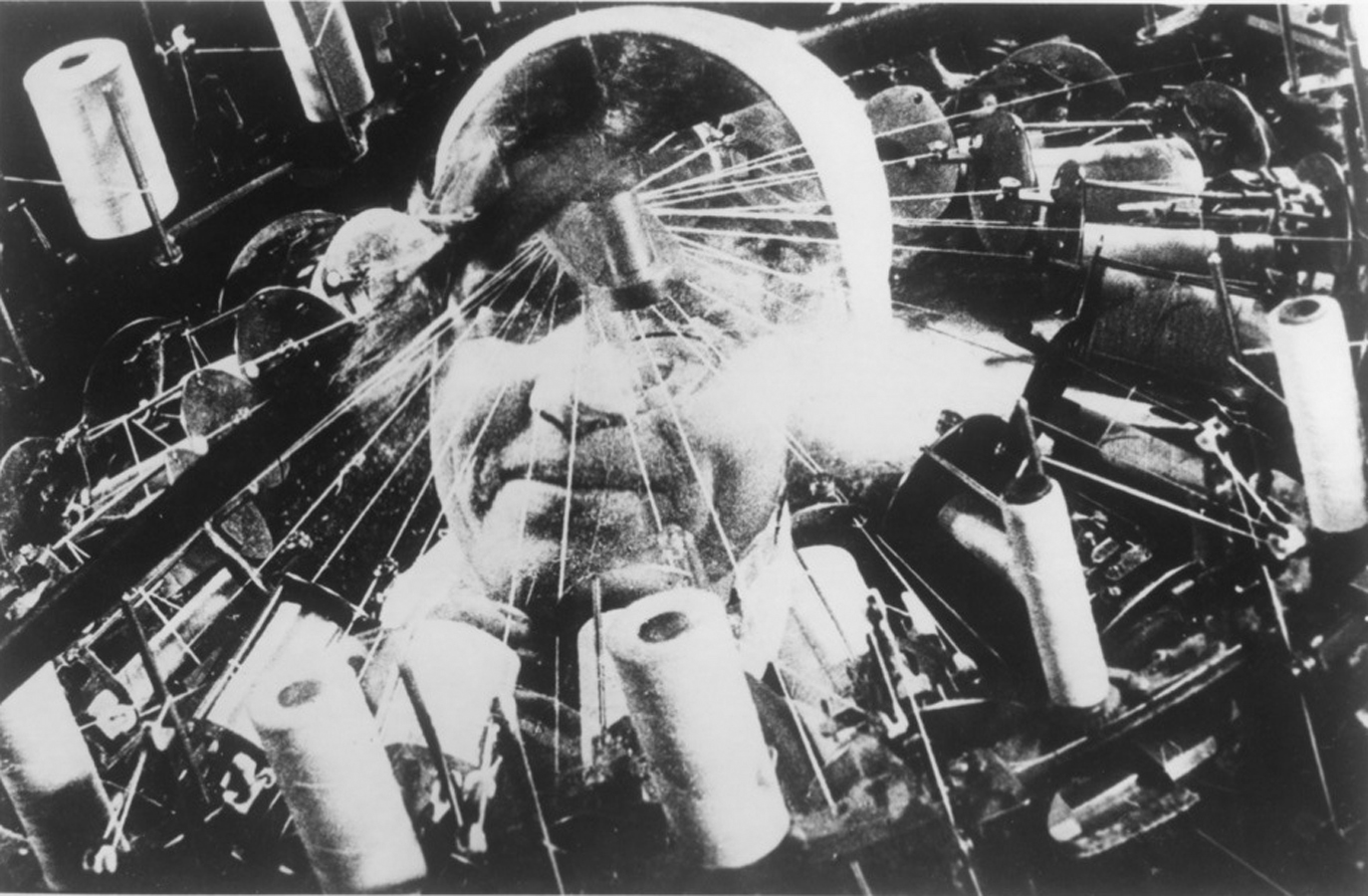
• Tuesday, Jan. 3, 6 p.m.: 'Man With A Movie Camera' (1929), Carpenter Memorial Auditorium, Manchester Public Library, 405 Pine St., Manchester, N.H.; (603) 624-6550. Soviet director Dziga Vertov's homage to Leningrad, an experimental documentary with no story and no actors, just images. Pure cinema. Monthly series of rarely screened silent films presented with live music in 1913 auditorium. Admission free, donations encouraged.

Friday, December 23, 2011

'Metropolis' on Saturday, Dec. 31 in Concord, N.H.

A few further thoughts on 'Metropolis' (1927) as we get closer to the screening, which will take place on Saturday, Dec. 31 (New Year's Eve!) at 7 p.m. in Concord, N.H. (A lot more basic info is found further down in this blog.)

• First, thanks very much to New Hampshire Public Radio and the crew at 'Word of Mouth' for the chance to talk about 'Metropolis' and silent film music. Host Virginia Prescott and several very nice behind-the-scenes people were most welcoming, and everyone seemed pleased with the segment, which featured a few musical sequences played live.

The piece aired this past Wednesday, Dec. 21, but I understand will be re-broadcast as part of a show on Saturday, Dec. 24 at noon. However, this being the age of everything-when-you-want-it, you can also hear it right now.

I was especially glad for the chance to play some of my futuristic Broadway show music, which will be used in 'Metropolis' to accompany the "Bad Maria" in her wild nightclub act. It's a tune that I've found to be catchy enough to actually blot out Christmas carols, which is no small feat this time of year.

• Next, if you're interested in attending, please get in touch with Red River Theatres early and reserve your tickets. We're showing 'Metropolis' in the theater's screening room, which has a limit of only about 60 seats, so if you really do want to attend, it's worth reserving the tickets in advance. Also, if the screening books up early, there's a chance we might get to do a repeat, and the sooner we know that, the better.

• Behind the scenes: Below is an interesting production still from 'Metropolis' showing Brigette Helm wearing the "machine man" costume during a break in filming. At least I think that's Helm, if you can believe www.imdb.com, but to my eye it doesn't look very much like her. Anyway: I've heard stories about how Lang would demand a lot from his performers, and this shows something of the reality of what that meant. Whoever it is in the costume, the woman looks like nothing so much as a prize-fighter between rounds of a tough bout. And if it is Helm, my regard for her contribution to 'Metropolis' film goes up another notch, because the robot costume completely conceals whoever is wearing it, so it could have been anyone under there. And yet it was her!


• Finally, the more I look at 'Metropolis,' the more impressed I am with how it's all put together, especially with the missing 25 minutes of footage discovered in 2008. Yes, the visual design is hard to miss. But what's equally amazing, I think, is how director Fritz Lang created a multi-layered story that leads to an exciting and dramatic multi-stage climax—one that really moves and is full of powerful visuals in its own right. As a result, it's a very satisfying film. Hope you can join us!

P.S. And if seeing 'Metropolis' isn't enough, the evening also includes a champagne toast to welcome in 2012!

Tuesday, December 20, 2011

'Metropolis' on 'Word of Mouth' Wednesday, Dec. 21

Quick note: on Wednesday, Dec. 21, the ongoing silent film carnival is scheduled to make an appearance on "Word of Mouth,' a noontime program on New Hampshire Public Radio. The host is Virginia Prescott, a very smart and nice person.

With 'Metropolis' (1927) scheduled for Saturday, Dec. 31 in Concord, N.H., we'll talk about the film and creating the score. The interview is slated for the last segment of the hour-long show. For more information on the station (or to listen online), visit www.nhpr.org.

Sunday, December 18, 2011

'The Circus' (1928) on New Year's Day in Wilton, N.H.

Chaplin's great silent comedy 'The Circus' presents an interesting musical conundrum.

When released in 1928, the film (like most other silents) did not have a soundtrack. And so during its initial run, audiences around the world would have heard accompaniment provided on the spot by local theater musicians. That's how cinema-goers experienced the film, which was a solid success for Chaplin and went on to be the seventh-highest grossing film of the silent era.

And then, four decades after the film's original run, Chaplin (then approaching 80 years of age) worked with late-in-life collaborator Eric James to put together music for a re-release. The resulting soundtrack, including a song that gets sung over the opening titles by Chaplin himself, accompanied the 1968 release. And since that time, it's the only score authorized by the Chaplin estate to accompany 'The Circus.'

Yes, Chaplin's score is quite effective, and there's a unique value in knowing what kind of music he preferred to go with certain types of scenes. (It's quite spartan in some places, but that makes sense for a comedy, I think.) However, keep in mind that the music is from a completely different time in his life—four decades distant! And while there's nothing wrong with Chaplin's score, I think an argument can be made for 'The Circus' to be open to other scoring approaches, too.

After all, audiences saw its original release without Chaplin's music. And I've come to think that one of the things that helps make silent film timeless is that the films themselves are open to fresh scoring approaches, both today and in the future. A good score can help bridge the gap between this now-unfamiliar visual form and today's audiences, I think.

Well, the folks who control the Chaplin films feel differently, and they really have no choice. Acting on the wishes of Chaplin (who died in 1977), they insist to this day that whenever 'The Circus' is screened, the recorded score from 1968 be used for accompaniment. No others can be used.

I'm conveying all this to let folks know why we're not doing live music for this film, to be screened on Sunday, Jan. 1 at 4:30 p.m. at the Wilton Town Hall Theatre. (Free admission!)

I do feel that live music is an important part of the silent film experience. But if we're going to show 'The Circus,' we need to follow Chaplin's wishes, at least as his estate interprets them. The good news is, yes, it's a fine score, and does provide a unique point of reference not available for most other silent film artists. What kind of music would Chaplin have preferred for this film? With the score he created, we don't have to guess.

However, how different would the music be if he'd done it in 1928, at the time of the film's initial release? That's something we'll never know. However, just a few years later, he did create a score for 'City Lights' (1931) for its initial release, and it's clearly the work of the same person behind the 'Circus' music much much later.

Well, back to our New Year's Day screening. We're leading off with two silent comedy shorts for which we will have live music: 'Big Business' (1929), starring Laurel & Hardy, is the perfect film for people tired of Christmas cheer, while Buster Keaton's 'One Week' (1920) is another timeless (but time-oriented) comedy to start 2012 off with some laughs.

Hope to see you there! Press release follows below...


MONDAY, DEC. 19, 2011 / FOR IMMEDIATE RELEASE
For more info, contact: Jeff Rapsis • (603) 236-9237 • jeffrapsis@gmail.com

Chaplin's classic comedy 'The Circus' to be screened on New Year's Day in Wilton, N.H.

Holiday weekend family-friendly screening includes silent Laurel & Hardy, Buster Keaton films with live music

WILTON, N.H.—Laugh your way into 2012 with Charlie Chaplin's classic comedy 'The Circus' (1928), to be screened on New Year's Day at the Wilton (N.H.) Town Hall Theatre. The program, part of the theater's monthly silent film series, will also include short silent comedies starring Laurel & Hardy and Buster Keaton, with live music by Jeff Rapsis.

'The Circus' will be shown on Sunday, Jan. 1 at 4:30 p.m. Admission to the family-friendly screening is free, with donations accepted to help defray costs.

Chaplin made 'The Circus' at the height of worldwide fame for his "Little Tramp" character. Set in an impoverished travelling circus, the film is noted for its mix of uproarious comedy and a dramatic story line. 'The Circus' features several classic sequences, including a high wire scene for which Chaplin actually learned to walk on a tight-rope.

In 'The Circus,' Chaplin's tramp plays an incompetent prop man who unwittingly becomes the show's comedy sensation. Offstage, he befriends a young lady horsetrainer (Merna Kennedy) who suffers mistreatment from her abusive father, the owner of the circus. Can the Little Tramp help her escape without losing his own job or ruining the show? And will she return the feelings that he's developing for her?

'The Circus' is a light-hearted romp, but the film was a behind-the-scenes nightmare for Chaplin. During production, he endured the death of his mother, a contentious divorce from his second wife, IRS allegations of unpaid taxes, and a disastrous studio fire that set shooting back months. Despite these obstacles, 'The Circus' went on to become one of Chaplin's most popular successes. It also earned Chaplin a special Academy Award for acting and directing at the very first Oscars in 1929.

Four decades after the original release of 'The Circus,' Chaplin at age 80 composed his own musical score for the picture and rereleased it in 1968 with a recorded soundtrack. The version with Chaplin's score is the only one licensed by the Chaplin Estate for exhibition, so the Wilton Town Hall Theatre's screening of 'The Circus' will feature recorded music rather than the usual live music.

A restored version of 'The Circus' was released again to arthouses in 2010 as part of a worldwide Chaplin retrospective, with contemporary critics praising the film's timeless qualities.

"It's a brilliant combination of light and darkness, tenderness and violence and, yes, laughter and tears," wrote Andrew O'Hehir for salon.com, while Keith Ulrich of Time Out New York wrote "There's an edge to 'The Circus' that suggests a man gazing deep into the void, laughing at the darkness and urging us to do the same."

In the Internet age, 'The Circus' gained notoriety when footage taken at the film's 1928 premiere seemed to show a woman talking on a cell phone. The footage, filmed outside Graumann's Chinese Theater in Los Angeles and included as an extra in a DVD release of 'The Circus,' quickly went viral and become a YouTube sensation. Explanations for the scene included the theory that the woman had traveled through time from the present day, although most observers believe she was using some kind of hearing aid.

At the Wilton screening, accompanist Jeff Rapsis will provide live music for two comedy short films on the program: 'Big Business' (1929) starring Stan Laurel and Oliver Hardy, and Buster Keaton's 'One Week' (1920).


'Big Business' finds Stan Laurel and Oliver Hardy as unsuccessful door-to-door Christmas tree salesmen. An encounter with one particularly unsympathetic customer (Jimmy Finlayson) escalates into a destructive battle sure to please anyone who's had enough of this year's holiday season. Made just before the comedy duo transitioned into sound films later in 1929, 'Big Business' stands as one of Laurel & Hardy's most popular comedies.

In 'One Week,' Buster Keaton and his new bride (Sybil Seeley) attempt to construct a do-it-yourself home, unaware than Buster's former rival for the girl has switched the numbers on the crates. The resulting home is just the beginning of Buster's misfortunes, which all lead to one of the all-time best comedy endings of any silent film.

'The Circus' and other short comedies will be screened on Sunday, Jan. 1 at 4:30 p.m. at the Wilton Town Hall Theatre, 40 Main St., Wilton, N.H. For more information, visit www.wiltontownhalltheatre.com or call (603) 654-3456. The Wilton Town Hall Theatre runs silent film programs with live music the last Sunday of every month. For more information about the music, visit www.jeffrapsis.com.

--- 30 ---


For more info, contact:
Jeff Rapsis • (603) 236-9237 • jeffrapsis@gmail.com
Images attached. More high-resolution digital images available upon request.

Monday, December 12, 2011

It's about time: 'Metropolis' (1927) on NYE

What better way to ring in the new year than with yesterday's view of tomorrow? That's the thinking behind our upcoming screening of 'Metropolis' (1927), the great German silent sci-fi epic from director Fritz Lang, on New Year's Eve at Red River Theatres in Concord, N.H.

As I quoted myself in the press release below (and I love doing that), "'Metropolis' stands as an stunning example of the power of silent film to tell a compelling story without words, and reach across the generations to touch movie-goers from the real future that came to pass, which means us."

The screening, with live music, is on Saturday, Dec. 31 at 7 p.m. at Red River Theatres, 11 South Main St. in Concord, N.H. Admission is $15 per person and seats are limited, so call the theater at (603) 224-4600 or visit www.redrivertheatres.org right away to reserve right now.

The press release is below, but one thing I love about this film is the sheer athleticism of the performers, especially Brigette Helm. If you see this, watch the way she throws herself around the screen, putting her whole body into everything she does! Silent film never came as close to ballet as it did with her performance in 'Metropolis.' It's graceful and seemingly effortless, but not outrageous or over-the-top, and fits the character of the film perfectly, I think. Even her small gestures, such as an eye-blink that assumes much significance, are somehow big.

As for the music, this is a kickass film to score live, with just the right kind of pacing for things to build and develop nicely, and the kind of dramatic scenes that music can add a lot to if it all comes together. I've got several themes I've used in the past ready to go, and I'm developing a couple more to round things out. I might try to push the digital synthesizer a little beyond the traditional orchestral sound I go for, given the film's unusual setting. One of the major challenges is to hold back. The film is just one amazing visual after another, and there's a temptation to go too far too fast. Things do build, however, and you've got to have somewhere to go for the climax.

And finally, though 'Metropolis' is billed as a science fiction flick, the newly restored version we're showing (all 2½ hours of it!) reveals it to be heavy on the Christian spiritual allegory. Don't let that scare you, but any film that includes major scenes in underground churches and on cathedral rooftops has more than technology on its mind.


Still, the movie is jammed with enough proto-televisions and futuristic elevators and 10-hour clocks and massive machinery halls to delight any steampunk geek.

But it's more than that. So come see it!

And if all that's not enough, I'm told that the good folk at Red River have arranged for 'Metropolis' to be followed by a champagne toast to welcome in 2012. (Better brush up on the words to 'Auld Lang Syne,' too.)

* * *

MONDAY, DEC. 12, 2011 / FOR IMMEDIATE RELEASE
For more info, contact: Jeff Rapsis • (603) 236-9237 • jeffrapsis@gmail.com

Red River Theaters to screen restored 'Metropolis' on New Year's Eve


Landmark sci-fi fantasy movie to be shown with live music at Concord, N.H. cinema on Saturday, Dec. 31

CONCORD, N.H.—A silent film hailed as the grandfather of all science fiction fantasy movies will be screened with live music on Saturday, Dec. 31, 2011 at Red River Theatres in Concord, N.H. The show starts at 7 p.m. and tickets are $15 general admission.

'Metropolis' (1927), regarded as German director Fritz Lang's masterpiece, is set in a futuristic city where a privileged elite pursue lives of leisure while the masses toil on vast machines and live deep underground. The film, with its visions of futuristic factories and flying cars, set new standards for visual design and inspired generations of dystopian fantasies from Ridley Scott's 'Blade Runner' to Terry Gilliam's 'Brazil.' The story centers on an upper class young man who falls in love with a woman who works with the poor, and encompasses mad scientists, human-like robots, and industrial espionage, all set in a society divided between haves and have-nots.

The version of 'Metropolis' to be screened at Red River is a newly restored edition that includes nearly a half-hour of missing footage cut following the film's premiere in 1927. The footage, discovered in 2008 in an archive in Argentina, has since been added to the existing 'Metropolis,' allowing plot threads and characters to be developed more fully.

The restored 'Metropolis,' now 2½ hours in length, will be accompanied by a score created live by New Hampshire-based silent film musician and composer Jeff Rapsis.

When 'Metropolis' was first screened in Berlin, Germany on Jan. 10, 1927, the sci-fi epic ran an estimated 153 minutes. After its premiere engagement, the film's distributors (including Paramount in the U.S.) drastically shortened 'Metropolis' to maximize the film's commercial potential. By the time it debuted in the U.S. later that year, the film ran about 90 minutes.

Even in its shortened form, 'Metropolis' went on to become one of the cornerstones of science fiction cinema. Due to its enduring popularity, the film has undergone numerous restorations in the intervening decades in attempts to recover Lang's original vision.

In 1984, the film was reissued with additional footage, color tints, and a pop rock score (but with many of its intertitles removed) by music producer Giorgio Moroder. A more archival restoration was completed in 1987, under the direction of Enno Patalas of the Munich Film Archive, in which missing scenes were represented with title cards and still photographs. More recently, a 2001 restoration combined footage from four archives and ran at a triumphant 124 minutes.

It was widely believed that this would be the most complete version of Lang's film that contemporary audiences could ever hope to see. But, in the summer of 2008, the curator of the Buenos Aires Museo del Cine discovered a 16mm dupe negative of 'Metropolis' that was considerably longer than any existing print. It included not merely a few additional snippets, but 25 minutes of "lost" footage, about a fifth of the film, that had not been seen since its Berlin debut.

The discovery of such a significant amount of material called for yet another restoration, which debuted in 2010 to widespread acclaim. It's this fully restored version that will be screened at Red River Theatres.

"We felt New Year's Eve was a great occasion to screen the restored 'Metropolis,' as it's a film all about the future and things to come," said Jeff Rapsis, who provides live musical accompaniment to silent film screenings throughout New England. "'Metropolis' stands as an stunning example of the power of silent film to tell a compelling story without words, and reach across the generations to touch movie-goers from the real future that came to pass, which means us."


To accompany a silent film, Rapsis uses a digital synthesizer to recreate the texture of the full orchestra. The score is created live in real time as the movie is screened. Rather than focus exclusively on authentic music of the period, Rapsis creates new music for silent films that draws from movie scoring techniques that today's audiences expect from the cinema.

"Silent film is a timeless art form that still has a unique emotional power to move audiences, as the recent success of 'The Artist' has shown," Rapsis said. "With original silent films, which were made in another era, my goal is to help them come to life by using music to bridge the gap between the film and today's audiences. If you can show them as they were originally intended—on the big screen, in a restored print, with live music and an audience—they create the same kind of excitement that made people first fall in love with the movies."

The restored 'Metropolis' will be shown on Saturday, Dec. 31 at 7 p.m. at Red River Theatres, 11 South Main St., Concord, N.H. General admission tickets are $15 per person. For more information, call (603) 224-4600 or visit www.redrivertheatres.org. For more information on the music, visit www.jeffrapsis.com.

CRITIC COMMENTS on ‘METROPOLIS’

“'Metropolis' does what many great films do, creating a time, place and characters so striking that they become part of our arsenal of images for imagining the world.”
—Roger Ebert, 2010, The Chicago Sun-Times

“If it comes anywhere near your town, go see it and thank the movie Gods that it even exists. There’s no star rating high enough.”
—Brian Tallerico, Movieretriever.com

Thursday, December 8, 2011

Ring in the New Year with 'Metropolis,' 'The Circus'

The silent film calendar is now clear until after Christmas, but then things come back to life in a big way with three screenings in four days. Let's take attendance...

Saturday, Dec. 31, 2011: Doing music for a New Year's Eve screening of 'Metropolis' (1927) at Red River Theatres, an independent cinema at 11 South Main St. in Concord, N.H. Welcome in 2012 with German director Fritz Lang's eye-popping futuristic fantasy, now augmented with a half-hour of additional footage discovered in Argentina in 2008. One of the great cinematic experiences of any era, and featuring an astonishingly athletic performance by actress Brigitte Helm. (That's her above.) Showtime is 7 p.m.; tickets are $15 each and seating is very limited. Call the box office at (603) 224-4600 and reserve your tickets today. Many thanks to Jason Greenleaf at Kino/Lorber for arranging clearance to screen the restored version.

Sunday, Jan. 1, 2011: We're screening 'The Circus' (1928), Chaplin's gag-filled feature, as part of our monthly silent film series at the Wilton Town Hall Theatre at 60 Main St. in Wilton, N.H. Admission is free; the program starts at 4:30 p.m. This film is packed with great routines and set pieces, including the scene where Chaplin walks the tightrope with some friends (see above) along for the ride. I'm always amazed to think that Chaplin actually learned to tightrope walk for this sequence! Also included will be a Buster Keaton silent comedy short (title to be announced) and, just when we've all had quite enough of the Christmas season, our friends Stan Laurel and Oliver Hardy will be on hand to wreak holiday havoc in 'Big Business,' a classic comedy short from 1929. Please note that the Chaplin film will be screened with Chaplin's own recorded score (per the wishes of the Chaplin estate), but I'll do live music for the comedy shorts. And many thanks to Sarah Finklea of Janus Films for arranging permission for us to screen the Chaplin feature!

Tuesday, Jan. 3, 2011: And now for something completely Soviet: 'The Man With A Movie Camera' (1929), an experimental Russian silent film, will be screened at the Manchester (N.H.) Public Library, 405 Pine St., at 6 p.m. Looking forward to doing music for this, a new one for me. It's the latest installment of a monthly silent film series we run in the library's vintage 1913 Carpenter Auditorium; admission is free.

Friday, December 2, 2011

Up next: 'When The Clouds Roll By' (1919)

Things quiet down in December, when the holiday season seems to crowd out silent film from many calendars, including my own. But there is a good one coming up on Thursday, Dec. 8: the Douglas Fairbanks romantic comedy 'When The Clouds Roll By' (1919), which we're screening on Thursday, Dec. 8 at 6:30 p.m. at the Flying Monkey Moviehouse and Performance Center in Plymouth, N.H.

This one has Doug in top leading-man form, romping through a contemporary boy-meets-girl story just prior to embarking on the series of historical adventure roles that would cement his reputation as one of the great stars of the 1920s. (That later Fairbanks, complete with trademark pencil-thin mustache, is one of the models for the male lead character in the new silent film 'The Artist,' which still hasn't reached us here in the sticks yet.)

But 'When the Clouds Roll By' stands on its own as a fun film, one that pokes fun at the then-new profession of psychiatry. As such, it features some unusual scenes of Fairbanks hallucinating. At one point, after eating a dinner that doesn't agree with him, Doug dreams of being chased by his meal (in the form of actors dressed as food) through the countryside. There's another sequence in which he miraculously walks up a wall and then across the ceiling, anticipating Fred Astaire in 'Royal Wedding' by a generation.

It's not all weirdness and stunts, though. 'When The Clouds Roll By' features a strong romantic story, a wonderfully rousing climax, and boasts a great pedigree on the technical side, too—for instance, the cinematographer was none other than Victor Fleming, who would later go on to direct 'Gone With the Wind' and 'The Wizard of Oz.'

I first saw this picture at the Kansas Silent Film Festival in 2005, and at the time it came as a revelation. If film that I'd never heard of could be this good and display such raw creativity, just how much additional gold was buried in so many other silent pictures that were out there? More than many "classics," 'When The Clouds Roll By' whetted my appetite to explore the genre much further and deeper than I had previously.

See if it has the same effect on you! The screening is Thursday, Dec. 8 at 6:30 p.m. at The Flying Monkey Moviehouse and Performance Center, 39 South Main St., Plymouth, N.H. Tickets are $10 per person. For more info on the theater, visit www.flyingmonkeynh.com.

Friday, November 11, 2011

Thanksgiving? Time for 'Peter Pan' again!

Hard to believe, but we'll soon be presenting our 4th annual screening of 'Peter Pan' (1924) on Thanksgiving weekend at the Wilton (N.H.) Town Hall Theatre. It's Sunday, Nov. 27 at 4:30 p.m. -- a perfect way to round out the long holiday weekend of eating and shopping with a vintage movie for kids of all ages. The screening is free, but donations are accepted...

...And once again, all proceeds of this screening will be turned over the Dana-Farber Cancer Institute in Boston, Mass. At the suggestion of Dave and Ali Stevenson, we've done this each year in the spirit of Peter Pan author J.M. Barrie, who wanted all royalties from his play to go to a London children's hospital.

Dana-Farber is the benificiary of the Jimmy Fund, well known in our corner of the world as a leader in the fight against cancer in children and adults. So please join us for a wonderful family afternoon at the movies, and I hope you contribute generously to help those who will not stop working to find a way to beat cancer.

Since we started this tradition in 2008, we've raised well over $1,000 for Dana-Farber, and I do hope we can push that amount much higher with this year's charity screening. Hope to see you and the whole family at 'Peter Pan!' If nothing else, the "audience participation" element of the film works best with a full house, so please do your part and be there!

And, as a bonus, to help everyone get into the holiday spirit, we'll also screen a selection of very odd early Christmas films, some more than a century old.

Monday, November 7, 2011

Up next: 'The Big Parade' (1925) in Plymouth, N.H.

Here comes Veterans Day (Friday, Nov. 11 in the USA) and with it comes my annual attempt to honor those who've served in the armed forces by screening a silent film with live music. Hey, somebody's gotta keep the memory of World War I alive!

This year, it's a screening of 'The Big Parade' (1925) at the Flying Monkey Moviehouse and Performance Center in Plymouth, N.H. on Thursday, Nov. 10 at 6:30 p.m. I've done this picture several times and it's a great film for music.

For me, the big thing about this film is that it divides into two very different segments. The first, when the doughboys go to France, engage in various hijinks, fall in love, and so on, is essentially a romantic comedy. With music, it's very important to hold back throughout this section. Why? The payoff is when the troops are called up to the front, and the film throws its characters (and us along with them) right into the midst of deadly battle.

I think it comes across as terrifically effective if the music can then (and only then) take on a decidedly different character. The effect I'd like to achieve is that of waking from a dream and realizing you're in a situation that is real and something that you can'twake up from.

So please join us on Thursday, Nov. 10 for one of the great war films of all time, 'The Big Parade,' with live accompaniment by me. Here's the press release below...

P.S.: In the latest installment of "brush with greatness," the performer appearing next at the Flying Monkey after me is the great Leon Redbone, who's there on Saturday, Nov. 12. For more info, visit www.flyingmonkeynh.com!

NOV. 3, 2011 / FOR IMMEDIATE RELEASE
Contact Jeff Rapsis at (603) 236-9237 • e-mail jrapsis@gmail.com

Flying Monkey to mark Veterans Day with classic World War I epic film


Silent masterpiece 'The Big Parade' to be screened with live music on Thursday, Nov. 10

PLYMOUTH, N.H. — In honor of Veterans Day, the silent film classic 'The Big Parade' (1925) will be screened one time only on Thursday, Nov. 10 at the Flying Monkey Moviehouse and Performance Center in Plymouth, N.H. General admission is $10 per person.

The show, which starts at 6:30 p.m., will feature live accompaniment by silent film musician Jeff Rapsis. Rapsis provides music for the Flying Monkey's monthly silent film series, which aims to honor the recently renovated venue's historic roots as a local moviehouse.

'The Big Parade,' a landmark war film, was chosen as a way for the Flying Monkey to salute all local servicemen and women on the occasion of Veterans Day on Friday, Nov. 11. The date of Veterans Day descends from the declaration of Armistice that ended World War I in 1918.

'The Big Parade,' a sprawling World War I epic and a box office sensation, made MGM into a powerhouse studio in Hollywood's golden years. The movie, released just a few years after World War I ended, was hailed by critics as the first Hollywood film to depict the harsh reality of combat and its impact of troops in the trenches and foxholes. Its hellish battle scenes were staged on a massive scale and still retain their ability to shock audiences.

The picture, based on the novel "What Price Glory?", follows the story of a young man (John Gilbert) who rebels against a privileged background by enlisting in the army just before the U.S. enters World War I.

He is shipped out to France, where he falls in love with a local French woman before being transferred to the front. There, he and his squadmates come face to face with the German war machine, where they must face the ultimate tests of duty and honor in a battle they come to see as meaningless.

In addition to vivid battle scenes, the film contains a famous dramatic sequence in which the French woman (Renée Adorée) realizes her love for the soldier, and tries to find him to say goodbye as the massive convoy of troops pulls out for the front. Another celebrated sequence depicts the light-hearted first meeting of the soldier and the girl, in which he teaches her how to chew gum.

'The Big Parade' went on to become the top-grossing movie of the entire silent film era, earning $6.4 million domestically and making director King Vidor into the Steven Spielberg of his day. It stood as MGM's biggest single box office hit until the release of 'Gone With the Wind' in 1939.

Music for 'The Big Parade' will be provided by local composer Jeff Rapsis, who is preparing original material for the Flying Monkey screening. In improvising live movie scores, Rapsis tries to bridge the gap between modern audiences and silent film.

"Live music adds an element of energy to a silent film screening that's really something special," Rapsis said. " 'The Big Parade' clocks in at well over two hours, but it's filled with great scenes that lend themselves well to music. It's a real privilege to create a score to help this great picture come back to life," Rapsis said.

All movies in the Flying Monkey's silent film series were popular when first seen by audiences in the 1920s, but are rarely screened today in a way that allows them to be seen at their best. They were not made to be shown on television; to revive them, organizers aim to show the films at the Flying Monkey as they were intended—in top quality restored prints, on a large screen, with live music on a robust sound system, and before a live audience.

‘The Big Parade’ will be shown on Thursday, Nov. 10 at 6:30 p.m. at the Flying Monkey Moviehouse and Performing Arts Center, 39 Main St., Plymouth, N.H. Admission is $10 per person. For more info, call (603) 536-2551 or visit www.flyingmonkeynh.com. For more info on the music, visit www.jeffrapsis.com.

Sunday, November 6, 2011

Notes on scoring 'Faust' (1926)

We screened Murnau's 'Faust' (1926) today at the Wilton (N.H.) Town Hall Theater the score fell together exceptionally well, I thought. So here are a few notes while it's still all fresh in my head.

First, something I didn't use: the Dies Irae, the traditional melody from the Catholic Death Mass. I had prepared an arrangement of it, and used it in a screening of 'Nosferatu' (1922) last month. And I was all set to make it one of the building blocks for Faust -- in fact, it was supposed to open the film. But in the end, I didn't use it, partly because it didn't seem to fit the other material I developed, and also because I didn't want to repeat myself.

Most of what I would have done with the Dies Irae, however, was accomplished with a simple melody in 3/4 time that wound up being very effective, I thought, as accompaniment for scenes in which Mephisto (played by Emil Jannings) makes mischief, and also for the film in general. I don't know what it was about this melody, but it was enough to carry quite a lot of the film.

One fairly basic device was to equate "good" with music in major keys, while evil was accompanied by music in "minor" keys. Nothing too daring about that, I know, but what was neat was that the 3/4 time melody starts in a minor key, then shifts to a major key in the middle, and then back to minor for the finish.

And many times, I found some emotional shift happening in a scene when the major part of the melody kicked in. So it often seemed like I was in synch with the rhythms that director F.W. Murnau baked into the film, which helps it all in terms of audience acceptance and effect.

The film is bracketed by similar scenes at the very beginning and end, so that helps provide a framework for the music. Not only does the film's conclusion merit some dramatic accompaniment, but the return to the opening setting (and shifting back to what we heard at the beginning, but transformed) also gives music a chance to reinforce the journey and the distance we've all come.

Probably the toughest scenes to score are those that make up the semi-comic sequence in which Mephisto interacts with Gretchen's aunt. After more than an hour of building up Mephisto as all-powerful, suddenly the film confronts him with the unwanted attentions of an older woman. What kind of music goes with that? And to make things worse, the film cuts back and forth to Faust and Gretchen, who are seriously in love. I ended up keeping Mephisto's 'devil music' in 3/4 time, but more bumptious, for his scenes with the Aunt, and then keeping the 3/4 beat going for Faust and Gretchen but laying over it some softer chords that sounded a bit more aspirational at first, then grew as the emotional temperature of the scenes rose.

Most of the score ended up being built out of elements taken from the 3/4 time melody. The only other material was a 6/8 march first heard at the beginning of the film during the village celebration, and later morphed into many different shapes for different purposes. I also had a "religious chord sequence" that I first developed for a screening of 'King of Kings' last year, and which came in handy here in many places, especially as material for the big ending.

Audience response was strong. Found out later than the screening was extra credit for an English class from a nearby high school, which explains the group of teenagers all sitting close to one another on one side of the theater.