Sunday, February 17, 2013

Adventures in silent film accompaniment:
snowbanks, orgies, and missing sustain pedals

Coming off a busy stretch of accompaniment leading up to the Kansas Silent Film Festival later this week. Here's a few snapshots from the life of a silent film accompanist based in northern New England.


• Today's screening of 'Bardelys the Magnificent' (1926) at the Wilton (N.H.) Town Hall Theatre went well, except the side entrance that I use to load my equipment in and out was blocked by a large snowbank that had been pushed up against the building, covering the stairs and partially blocking the door. The perils of performing in mid-winter New Hampshire! Seriously, it looked like that scene in 'The Gold Rush' where Chaplin shovels a huge pile snow from one business to another.

A stiff wind and temps in the 20s didn't make things any more pleasant. Fortunately, I wore my sensible winter shoes, so it didn't matter that much when my feet plunged down to mid-thigh while struggling to muscle in my synthesizer. It takes three trips for me to carry everything in, and each time the stiff wind banged shut the outside door, forcing me to go all the way around to the theater's main entrance. Ah, the glamour of the movies!

About 40 people were on hand for my first attempt at 'Bardelys.' I can tell when I'm overscheduled because I start to show up at screenings with nothing really prepared. That, alas, was the case with Bardelys, which offers a lot of potential for music, but I just wasn't in the zone through most of the film. I lucked out with one good melody that came to me on the way in, and that carried most of the picture. A harpsichord setting I used seemed to stomp on any on-screen subtleties, and about two-thirds of the way through I switched over to my fallback orchestral setting.

The music all seemed pretty sloppy to my taste, and I was concerned that audience reaction seemed to die down quite a bit after John Gilbert met Eleanor Boardman. So, near the end, I was pleasantly surprised (and a bit relieved) when the room erupted in cheers during Gilbert's exuberant escape from the gallows. Even theater owner Dennis Markaverich said afterwards he "laughed my ass off" at Gilbert grabbing a curtain and using it as a parachute, something Douglas Fairbanks hadn't thought to do just yet.


• A much more satisfying screening took place on Valentine's Day (Thursday, Feb. 14), when we screened Harold Lloyd's 'Girl Shy' (1924) in 35mm at the Somerville Theatre in Somerville, Mass. About 100 people turned out for this show, which had Lloyd's short 'Never Weaken' (1921) as an opener. I knew we had them when, in 'Never Weaken,' they laughed uproariously at Lloyd consulting the dictionary to make sure his suicide note is spelled correctly. (It is a very funny scene.) Lloyd's subsequent antics on the steel skeleton of a skyscraper under construction produced shrieks and gasps just as he intended.

For the music, I used just a traditional organ setting for the short, in part to make the full orchestral settings for the feature seem that much more grand by comparison. For 'Never Weaken,' a jaunty tune I've used here and there proved all I needed to carry all the action up until the suicide sequence, which I punched up by turning serious (minor key, repeated notes) and then going silent to underscore his thinking and reactions, which made room for the laughs. And for the skyscraper sequence, I reverted back to the jaunty tune for the rooftop jazz band that gives Harold a rude awakening, but then kept it low for much of his mid-air antics, again to make sure the audience could hear itself react.

It all came together wonderfully, I thought, especially with me plugged into the Somerville's house sound system. I switched to the full orchestra for 'Girl Shy,' but muffed the beginning because it just came up so fast. But it came together nicely, with scene after scene falling into place. A few rough spots happened in the train sequence and when Jobyna Ralston's car breaks down, but by then the film had them and it didn't matter so much.

Things really got fun when Harold returns to the publisher and all the female office staff go crazy over him. What laughter! For underscoring, I just used the main rhythm and melody from the Habanara of Bizet's Carmen, which lent just the right touch of mockery to the scene, I thought. And the reaction was again strong when Harold receives an envelope in the mail that he thinks is a rejection letter, but which we know contains a check. As Harold motions to rip it, people behind me shouted "NO! DON'T DO IT!" When he actually did rip it, he was accompanied not by music, but by groans of anguish that filled the theater.

At this point, the energy never let up. Next thing you know, Harold and his uncle are piecing together the check. $3,000! Hooray! Then Harold looks at the newspaper and sees his sweetheart is getting married that day. Oh no! Then the man's "other wife" wanders in, sees the wedding announcement, and exclaims, "Someone should stop it for the girl's sake!" Guess who that someone is? Hooray again, as Harold dashes from the tailor shop, this time vowing to make it to the church on time.

I just can't describe the excitement in the theater by this time. It had built up to a point where I think it actually worked against some of Harold's gags early on in the chase, because we want him to be making progress. Example: the guy teaching his girl to drive, which causes frustration for Harold as they repeatedly stop and start and go in circles. The audience stopped laughing during this, and I think it's because everyone wanted him to just get going. It's the same reason Keaton cut the "underwater traffic cop" gag from 'The Navigator'—by that part of the story, the audience couldn't tolerate comedy just for comedy's sake, because the gal is in danger.

Harold quickly recovered, and so did the audience. And by the time he was whipping a horse-drawn wagon through downtown, everyone was totally into it. Scoring this was a ball—I was able to keep things relatively light for most of the time, which allowed audience members to hear each other and really helped the overall reaction, I think. For the last few minutes, people were spontaneously shouting at Harold to 'HURRY UP!' It just doesn't get any better than that, folks.

One challenge of 'Girl Shy' is the intercutting between Harold's mad dash and the placid pre-wedding scenes at the church. These happen at various intervals, and I did my best to "feel" them coming and change the music on the fly. (There's one particularly tough place where Harold is on a motorcycle and has gone through a grocery store, and we swap back and forth several times quite rapidly.) But once Harold is on the horse-drawn wagon, the cuts come so frequently that it wouldn't make sense to change the music, so instead I just kept pounding away, working my way up the keyboard with repeated notes in the left hand and Harold's driving melody in the bass. I think it makes for really effective cinema.

I'm pleased to say that after 'Girl Shy' finished, I got a bona fide standing ovation, and in Boston, too! It was totally thrilled and rewarding and gratifying, and I very much appreciated all the folks who came up afterwards to get my card, ask questions, and offer congratulations. One woman even asked if I would consider being part of a burlesque show! (To play music in, not dance.)

Afterwards, I dashed off a note to a friend that made me realize some things about the experience of doing live music like that. Get a load of this:
Wow, about last night. Wish you could have somehow been there. Things really fell into place, with a large audience that really reacted to the experience, and the music seemed to flow out of me so naturally and easily.

So to me, it was like this great communal orgy in which everyone kept their clothes on (as far as I know), but was in the dark and filled with intense physical releases such as laughing and shrieking.

At 'The End,' I finished with a bang as the lights came up, and then got a prolonged standing ovation! Wow, who doesn't want to receive a standing O after such an intimate experience? :)

Afterwards, I had a lot of people come up to say hi, including one woman who asked if I wanted to be in a burlesque show! She meant it in terms of playing music, but you can imagine what this whole conversation did to my already sexed-up imagination.
The only wrong note in the melody was that shortly after the start of 'Girl Shy,' I kicked my sustain pedal into the Somerville's cavernous orchestra pit. I was still attached to the synthesizer, but I had not way to retrieve it, other than ceasing to play and then hoisting it up. I decided I could do without it, and I did, but that's the first time it ever got away from me like that.

• Lots of other things. Our local television station, WMUR-TV Channel 9, is doing a piece on me for their half-hour feature program "New Hampshire Chronicle." This required me to spend four hours in the Wilton Town Hall Theatre on Tuesday, Feb. 12 to be interviewed, and for them to get scenes of me in action. I think they shot enough footage so that even Eric von Stroheim would be satisfied! But seriously, I'm looking forward to the segment, which I'm told will air sometime near the end of the month. We'll see how I feel after I said it. We'll see if what veteran CBS News reporter George Herman said about me is true: that I have "a good head for television."


• On Monday, Feb. 11, I had the pleasure of doing 'Metropolis' (1927) for students in a film history course at Southern New Hampshire University taught by my friend and colleague Bill Millios. This took place in a computer lab (all the school's theater-type classrooms were booked) but something about it clicked and it turned into one of the most satsifying scores I've produced in awhile. The students stayed with it from start to finish; one of them said in a note to Bill:
"And thank you for inviting Jeff Rapsis to come in and play live music for "Metropolis"; I've been interested in learning about the history of silent films, but this was the first time I've ever seen a feature-length silent film and I was completely blown away!

I think I was more wrapped up in "Metropolis" than I have ever been with any movie I've seen before; I think the live music really pulled me into the movie and helped draw me into the film's world. Thanks again!"
Wow, I'll have to tell Bill to give that gal an A.


• I had a ball doing music for 'Aelita, Queen of Mars' (1924) at Wellesley College, which was still digging itself out from under the Blizzard of 2013 at the time of our screening on Sunday, Feb. 10. What a crazy film! I would have to say that the last 20 minutes rank as some of the most bizarre filmmaking of the entire silent film era. Best intertitle: "Follow our example, comrades! Form the Federal Socialist Republic of Mars!"

One interesting thing at that screening was that a film print of the newly restored 'A Trip to the Moon' had not arrived due to the storm, so we showed an earlier restoration on the Flicker Alley DVD with recorded music, and then a 16mm print from Blackhawk (missing the full ending) with me doing live music. Never had to accompany the same film after recorded music, but there's a first time for everything, I guess.


• And then prior to that, I did Rudolph Valentino in 'The Eagle' at the Flying Monkey in Plymouth, N.H., and Gilbert and Garbo in 'Love' at the Manchester (N.H.) City Library, which was more than enough for Valentine's Day. Next year I think I'll counterprogram with a film like Keaton's 'Spite Marriage' (1929). And before that, there was a Keaton program for which the wife and I drove 300 miles to New York state and back. All that in February, and it's only the 17th. Sheesh!

Friday, February 8, 2013

'Bardelys the Magnificent' returns
to the big screen in Wilton, N.H.

I have a Kansas Silent Film Festival t-shirt that features this very image!

A film thought lost for decades will once again flicker across the silver screen when 'Bardelys the Magnificent' (1926) is shown on Sunday, Feb. 17 at the Wilton (N.H.) Town Hall Theatre.

I first saw the newly restored picture a few years ago when it was shown at the Kansas Silent Film Festival, accompanied live by the Mont Alto Motion Picture Orchestra.

I had never heard of the novel or the film, but what I saw in Kansas was great cinema.

The print, discovered in a private collection in France and missing Reel 3, was good enough to support a wonderful restoration effort, which was then making the festival rounds.

But it never made it to New England, at least that I know of. So we're screening it in Wilton on Sunday, Feb. 17 to give 'Bardelys' another shot on the big screen.

One interesting thing about 'Bardelys' is that it marked early screen appearances of a young bit player named John Wayne and also future comedian Lou Costello, then working as a stunt double.

I don't know if I could spot them in the picture, but here are some frame captures that supposedly have Wayne in them as one of the soldiers. Can you pick him out?


Well, neither can I. But perhaps we'll have better luck on Sunday, Feb. 17, when we put 'Bardelys the Magnificent' back up on the Wilton Town Hall Theatre's big screen, where it belongs!

See you there. And for more information, check out the text of the press release below...

* * *

Two's company, but three's a crowd, especially when one of them has his head covered by a dark pointy hood thing.

FRIDAY, FEB. 8, 2013 / FOR IMMEDIATE RELEASE
Contact Jeff Rapsis • (603) 236-9237 • jeffrapsis@gmail.com

Newly rediscovered silent film swashbuckler
to 're-premier' in Wilton, N.H. on Sunday, Feb. 17


'Bardelys the Magnificent' (1926), long thought lost until a copy was found in Europe, to be screened with live music

WILTON, N.H.—A major Hollywood feature—oonsidered lost for decades until a copy surfaced in France in 2006—will soon get its New England big screen "re-premier."

'Bardelys the Magnificent' (1926), a big budget MGM release starring John Gilbert and Eleanor Boardman, will be screened on Sunday, Feb. 17 at 4:30 p.m. at the Wilton (N.H.) Town Hall Theatre.

Live music for the movie will be provided by silent film accompanist Jeff Rapsis. Admission to the screening is free, with donations accepted.

Based on a novel by prolific Italian/English author Rafael Sabatini, 'Bardelys the Magnificent' is a tale of romance, honor, and derring-do set during the reign of King Louis XIII of France.

The story follows the adventures of French nobleman Bardelys, who assumes the identity of a dead man to be close to the woman he loves. The ruse backfires, however, when it turns out the dead man is wanted for treason against the King. This propels Bardelys into a series of swashbuckling adventures as he must avoid being caught and executed, all the while pursuing his beloved.

The title role is played by legendary leading man John Gilbert, then at the height of his 1920s stardom. Gilbert was popular for his good looks, magnetic personality, and athletic stunts. Actress Eleanor Boardman plays Roxalanne, his love interest; the huge cast includes many silent film-era stars and supporting players.

'Bardelys the Magnificent' was directed by King Vidor, who was responsible for several well-known silent-era classics, including 'The Big Parade' (1925), 'The Crowd' (1928), and 'Show People' (1928).

The picture was a solid hit in its original release, making money and enhancing the reputations of everyone involved. Later, MGM's rights to the Sabatini novel expired in 1936, and the studio destroyed all copies per the licensing agreement. It was only later that archivists released that no other copies of the film were known to have survived anywhere. For six decades, the only footage of 'Bardelys the Magnificent' known to exist was in the form of a brief clip included in a movie theater scene in 'Show People,' another Vidor picture. 'Bardelys' was regarded as a major lost feature film from the silent era.

Then, in 2006, researchers in France discovered an almost complete copy of 'Bardelys the Magnificent' in a private collection. The print was missing about 10 minutes of footage, but was otherwise intact and in excellent condition. The missing footage is replaced with still photos taken on the set, written descriptions, and by footage recovered from a 'Coming attractions' trailer for the film. The story is now easily followed.

Restoration was completed in 2008; the film was subsequently released on DVD, and has since been screened at several festivals around the country, but not not in New England until now.

"With it being the weekend after Valentine's Day, we thought it would be a great time to screen a historical romance," Rapsis said.

Silent films were produced until 1929, when talkies arrived. About 80 percent of all movies made during the silent era are now lost due to decomposition, carelessness, fire, or neglect. But copies of "missing" films still occasionally turn up in archives and collections around the world, so researchers and archivists continue to make discoveries.

For 'Bardelys the Magnificent,' Rapsis will improvise a score using original musical material that he creates beforehand. For a movie score to support 'Bardelys,' Rapsis will use a digital synthesizer to recreate the sound and texture of a full orchestra.

"What I try to do," Rapsis said, "is create music that bridges the gap between a film that might be 80 or 90 years old, and the musical expectations of today's audiences."

'Bardelys the Magnificent' is the latest in a monthly series of silent films presented with live music at the Wilton Town Hall Theatre. The series provides local audiences the opportunity to experience silent film as it was intended to be shown: on the big screen, in good-looking prints, with live music, and with an audience.

"If you can put Humpty Dumpty back together again, it's surprising how these films just back to life," Rapsis said. "By showing the films under the right conditions, you can really get a sense of why people first fell in love with the movies."

Upcoming silent film screenings at the Wilton Town Hall Theatre include:

• Sunday, March 31, 2013, 4:30 p.m.: 'The Passion of Joan of Arc' (1928). Landmark drama that chronicles the trial of Jeanne d'Arc on charges of heresy, and the efforts of her ecclesiastical jurists to force Jeanne to recant her claims of holy visions. A film regarded as lost until a pristine compete print was discovered in a closet in Oslo, Norway in 1981.

• Sunday, April 28, 2013, 4:30 p.m.: 'The Winning of Barbara Worth' (1926). Epic Western starring Ronald Coleman, Vilma Banky about the settling and irrigation of California's Imperial Valley, once a wasteland but now an agricultural paradise. With a young Gary Cooper playing a key role. Visually spectacular story filmed largely on location in Nevada's Black Rock desert.

• Sunday, May 26, 2013, 4:30 p.m.: 'Tell It To The Marines' (1926). In honor of Memorial Day: U.S. Marine Sergeant O'Hara (Lon Chaney) has his hands full training raw recruits, one of whom, 'Skeets' Burns, is a particular thorn in his side...especially when it comes to romancing nurse Nora Dale.

'Bardelys the Magnificent' will be shown on Sunday, Feb. 17 at 4:30 p.m. at the Wilton Town Hall Theatre, 40 Main St., Wilton, N.H. Admission is free, with donations encouraged to defray expenses. For more information, visit www.wiltontownhalltheatre.com; for more information on the music, visit www.jeffrapsis.com.

Monday, February 4, 2013

Warm up for Valentine's Day
with Valentino at the Flying Monkey

Rudolph Valentino and his amazing hat in 'The Eagle,' screening on Thursday, Feb. 7 in Plymouth, N.H.

Wow! February! How'd that happen?

Some very cool screenings coming up in the next few weeks, including three first-time films for me: 'Love' (1927) at the Manchester (N.H.) City Library on Tuesday, Feb. 5 at 6 p.m.; 'The Eagle' (1925) at the Flying Monkey in Plymouth (N.H.) on Thursday, Feb. 7 at 6:30 p.m., and then (and now for something completely different), 'Aelita, Queen of Mars' (1924) at Wellesley College on Sunday, Feb. 10 at 3 p.m.

Not really much time to get into detail about these, but all the crucial info (where, when, how much) can be found by clicking 'Upcoming Silent Film Screenings' to the right.

In the meantime, here's the press release for 'The Eagle' at the Flying Monkey later this week. It's a great picture and an excellent way to begin warming things up for Valentine's Day, hence the suggested headline.

* * *

Vilma Banky and Rudolph Valentino get to know one another a little better.

MONDAY, FEB. 4, 2013 / FOR IMMEDIATE RELEASE
Contact Jeff Rapsis • (603) 236-9237 • jeffrapsis@gmail.com

Warm up for Valentine's Day with Valentino at the Flying Monkey

'The Eagle' (1925), starring silent film icon Rudolph Valentino, to screen on Thursday, Feb. 7 with live music

PLYMOUTH, N.H.—He was the cinema’s first sex symbol, causing hordes of female moviegoers to flock to his pictures throughout the 1920s. He starred in films designed to show off his Latin looks, his smoldering eyes, and his dancer’s body. And his untimely death in 1926 prompted mob scenes at his funeral.

He was Rudolph Valentino, who remains an icon for on-screen passion long after he caused a sensation in the 1920s.

To celebrate Valentine’s Day, one of Valentino’s most acclaimed films will be screened with live music on Thursday, Feb. 7 at 6:30 p.m. at the Flying Monkey Moviehouse and Performance Center, 39 South Main St., Plymouth, N.H. ‘The Eagle’ (1925), a racy story set in Czarist Russia, proved one of his most popular features and marked a peak in his brief career.

Based on the novel Dubrovsky by Alexander Pushkin, ‘The Eagle’ casts Valentino as a lieutenant and expert horseman in the Russian army who catches the eye of Czarina Catherine II. After he rejects her advances and flees, she puts out a warrant for his arrest, dead or alive. When he learns that his father has been persecuted and killed in his hometown, he dons a black mask and becomes an outlaw, finding unexpected romance along the way.

The screening of ‘The Eagle’ will be accompanied by live music by local composer Jeff Rapsis. Admission is $10 per person.

An Italian immigrant who arrived penniless at Ellis Island in 1913, Valentino rose to superstar status in a series of silent pictures that enflamed the passions of female movie-goers from coast to coast and around the world. But he was more than a pretty face—during his career, critics praised Valentino as a versatile actor capable of playing a variety of roles; his achievements included popularizing the Argentinian tango in the 1921 drama ‘Four Horsemen of the Apocalypse.’

‘The Eagle’ was Valentino’s next-to-last film, released the year before his unexpected death at age 31 from complications from peritonitis. Valentino's death in August 1926 occurred at the height of his career, inspiring mourning across the globe and a day-long mob scene at the actor’s New York City funeral.

But Valentino's brief stardom was defined by roles that brought a new level of exotic sexuality to the movies, causing a sensation at the time. In theaters, women openly swooned over Valentino’s on-screen image, especially in pictures such as ‘The Eagle,’ which featured foreign locales and elaborate costumes. At its peak, Valentino's popularity was so immense that it inspired a backlash among many male movie-goers, who decried Valentino’s elegant image and mannerisms as effeminate.

Valentino’s sudden death fueled his status as a legendary romantic icon of the cinema. For years, a mysterious woman dressed in black would visit his grave at the Hollywood Park Cemetery in Los Angeles, leaving only a single red rose.

Valentino was aware of his effect on audiences, saying that “Women are not in love with me, but with the picture of me on the screen. I am merely the canvas upon which the women paint their dreams.”

‘The Eagle’ is the latest in a series of monthly silent film screenings at the Flying Monkey Moviehouse and Performance Center. The series aims to recreate the lost magic of early cinema by bringing together the elements needed for silent film to be seen at its best: superior films in best available prints; projection on the big screen; live musical accompaniment; and a live audience.

“These films are still exciting experiences if you can show them as they were designed to be screened,” said Rapsis, the accompanist for the screenings. “There’s a reason people first fell in love with the movies, and we hope to recreate that spirit. At their best, silent films were communal experiences in which the presence of a large audience intensifies everyone’s reactions.”

Vilma Banky and Valentino in another variation on the theme...

The Flying Monkey originally opened a silent film moviehouse in the 1920s, and showed first-run Hollywood films to generations of area residents until closing several years ago. The theater has since been renovated by Alex Ray, owner of the Common Man restaurants, who created a performance space that hosts a wide variety of music acts.

Movies of all types, however, are still a big part of the Flying Monkey's offerings, and the silent film series is a way for the theater to remain connected to its roots.

Live music is a key element of each silent film screening, Rapsis said. Silent movies were never shown in silence, but were accompanied by live music made right in each theater. Most films were not released with official scores, so it was up to local musicians to provide the soundtrack, which could vary greatly from theater to theater.

"Because there's no set soundtrack for most silent films, musicians are free to create new music as they see fit, even today," Rapsis said. "In bringing a film to life, I try to create original 'movie score' music that sounds like what you might expect in a theater today, which helps bridge the gap between today's audiences and silent films that are in some cases nearly 100 years old."

For each film, Rapsis improvises a music score using original themes he creates beforehand. None of the the music is written down; instead, the score evolves in real time based on audience reaction and the overall mood as the movie is screened.

‘The Eagle’ will be shown on Thursday, Feb. 7 at 6:30 p.m. at the Flying Monkey Moviehouse and Performance Center, 39 South Main St., Plymouth, N.H. General admission $10 per person. For more info, visit www.flyingmonkeynh.com or call (603) 536-2551.

Other upcoming features in the Flying Monkey's silent film series include:

• Thursday, March 21, 2013, 6:30 p.m.: 'The Ten Commandments' (1923). Long before he directed Charlton Heston as Moses, filmmaker Cecil B. DeMille's original silent version wowed audiences the world over. The film that showed Hollywood how to tell stories from scripture on a grand scale, and a great way to celebrate Easter!

• Thursday, April 11, 2013, 6:30 p.m.: 'Dr. Jack' (1922), starring Harold Lloyd. A sparkling comedy starring Harold Lloyd as a country doctor with unorthodox methods that get results! But now comes his toughest case yet: a poor little rich girl (Mildred Davis), bed-ridden with a mysterious condition. Harold's cure is sure to make you smile!

• Thursday, May 9, 2013, 6:30 p.m.: 'Spies' (1928). Director Fritz Lang's tale of espionage was the forerunner of all movie spy sagas, packed with double agents, hi-tech gadgets, beautiful (and dangerous) women, and an evil genius with a plan to take over the world, mwah-ha-ha-ha! A terrificly paced film that set the stage for James Bond and beyond.

• Thursday, June 13, 2013, 6:30 p.m.: 'The Gaucho' (1927) starring Douglas Fairbanks Sr. The leader of a band of outlaws in Argentina must help save a religious shrine from being taken over and closed by a corrupt general. Entertaining action-adventure film widely regarded as Fairbanks' darkest role; made at the height of his 1920s stardom.

The next installment in the Flying Monkey's silent film series will be ‘The Eagle’ (1925), to be screened with live music by Jeff Rapsis on Thursday, Feb. 7 at 6:30 p.m. at the Flying Monkey Moviehouse and Performance Center, 39 South Main St., Plymouth, N.H. Tickets are $10 per person. For more information, call (603) 536-2551 or visit www.flyingmonkeynh.com. For more information about the music, visit www.jeffrapsis.com.

Monday, January 21, 2013

Coming up next in Boston:
'Faust' on Wednesday, Jan. 23 at the Brattle

The great Emil Jannings in extreme make-up as Mephisto in 'Faust' (1926).

Although I generally favor good over evil, it's my honor to play a part in the Brattle Theatre's ongoing "Dead of Winter: Satan on Screen" series.

To that end, I'll be providing live music for a screening of the great F.W. Murnau film 'Faust' (1926) on Wednesday, Jan. 23 at 7 p.m. Alas, this was just arranged last week, so there hasn't been time for a lot of advance publicity.

Still, Satan always draws a crowd, so I'm looking forward to helping bring the devil to life this week at the Cambridge revival house, which continues to offer great film of all eras all year round on the big screen in a theater.

I'm coming off a recent spurt of silent film activity -- a 10-day period that saw five separate shows in widely varying venues. Here's a summary of what I learned.

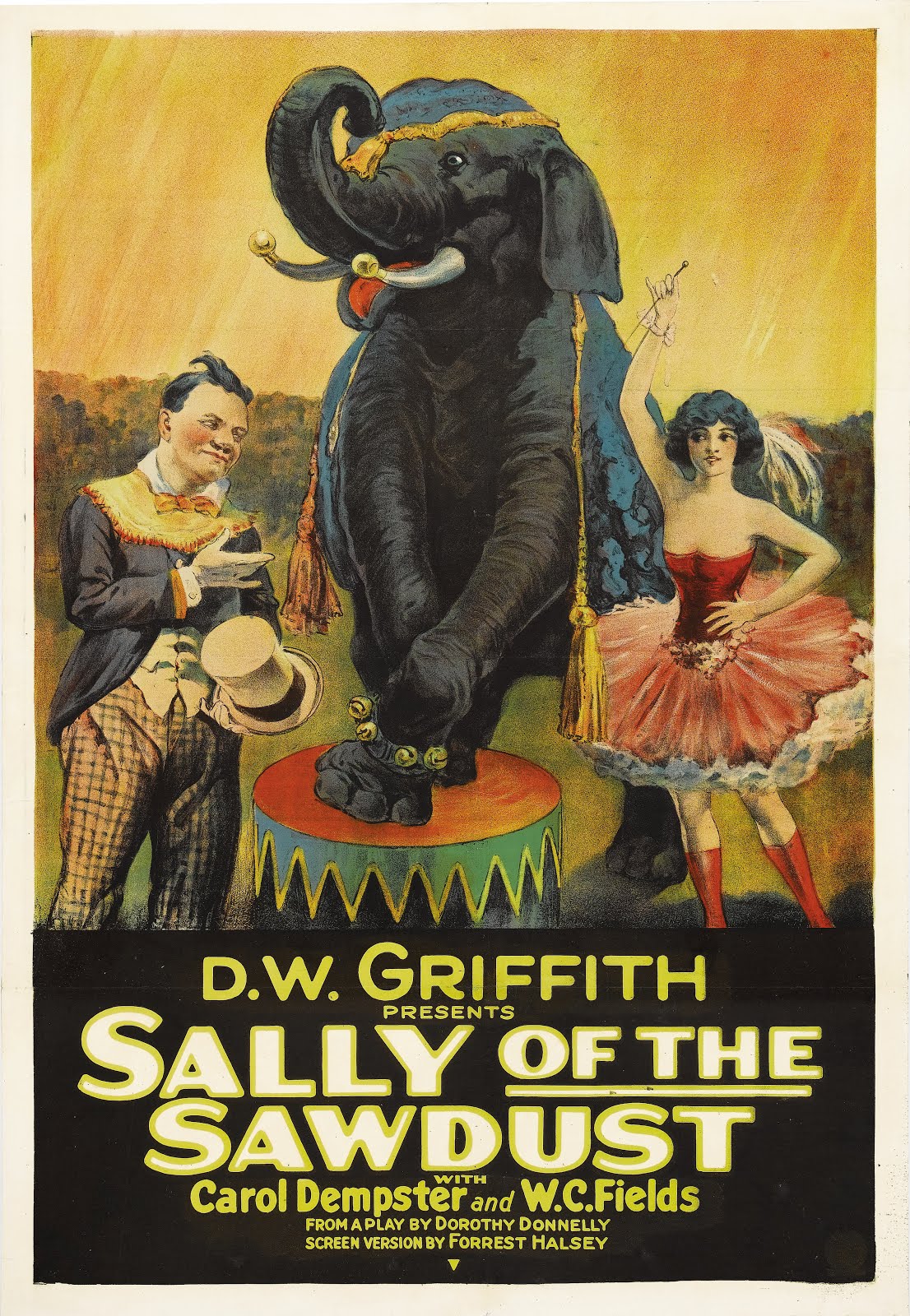
- W.C. Fields remains enough of an iconic figure for today's audiences to respond readily to his silent films. A screening of 'Sally of the Sawdust' (1925) on Thursday, Jan. 10 in Plymouth, N.H. draw a warm response from a crowd of about 50 people. I think D.W. Griffith's ability to structure a story for maximum audience response was a big help, but Fields himself really carried the picture. People really seemed to like Carol Dempster as well. I found the music for this really fell together nicely.

- A screening of 'Battling Butler' (1926) on Tuesday, Jan. 15 showed that even "lesser" Keaton has the power to hold an audience. I hadn't done this one before (it's the last of Keaton's features that I'd yet to tackle) and I was curious what the reaction would be, as it lacks the usual Keaton all-outdoors climax on a grand scale. Our audience of about 40 people at the Manchester (N.H.) City Library enjoyed it thoroughly, although the opening scenes of Buster ineptly hunting did not create nearly the reaction I thought they would. However, the training sequences in the boxing camp (which I've always thought were pretty routine) produced gales of laughter. Go figure. And, surprise again, Keaton's fight-in-close-quarters climax actually works very well in a theater. I liked the music for this, as I was able to invent a "rah rah" sports march that was useful throughout the score.

- Our encore showing of Fritz Lang's forgotten epic 'Woman in the Moon' (1929) on Wednesday, Jan. 16 attracted about 30 people to the screening room of Red River Theatres in Concord, N.H., where a screening on New Year's Eve had been sold out. Musically, I think I had better material on hand this time around, and so it was more satisfying on that score. This film continues to amaze me, and our audience seemed astonished, too. Even after a three-hour movie, we had a lively question-and-answer session.

- On Friday, Jan. 18, I made the trek to one of my favorite events: the annual "Arisia" science fiction and fantasy convention, held at the Westin Hotel in downtown Boston. This four-day event attracts more than 3,000 attendees, many dressed in elaborate costumes, and is diverse enough to include a silent film screening with live music. This year's entry was 'The Lost World' (1925), in the form of a truncated 16mm show-at-home print that still managed to hold the audience of about 50 people in a large conference room that doubled as the convention's film theater. (Four full days of film, much of it in 35mm!) With all the distractions of trying to unload my gear, get it up to the theater, find parking, etc., it was not easy to pull my head together for the score, but I felt it held together well enough. What really made it worthwhile, however, was the crowd reaction: lively from the start, it peaked with applause at the scenes of the dinosaur wreaking havoc on the streets of London. The images are truly iconic, and they've fired my desire to program the fully restored version of this film in future programs.

- Finally, a screening of Paul Leni's 'The Man Who Laughs' (1928) at the Wilton (N.H.) Town Hall Theatre on Sunday, Jan. 20 drew only a lower-than-expected turnout due to football playoffs happening at the same time. I think we had about 40 people (usually we get at least double that) for this picture, which I think has a lot to offer. Alas, I hadn't had much time to prepare for it, and after a week of pushing myself, the score that I came up with was a little random and not very focused, I'm afraid. It was all recycled material, which sometimes happens when I don't have time to ponder a film and let new ideas germinate. I guess given the improvisatory nature of my accompaniment, I need to be careful not to overdo it. Still, people seemed appreciative

One thing I've noticed recently is that if I make time to eat a full and good meal prior to a performance, I seem to do better. I did that for 'Sally' in Plymouth and 'Woman in the Moon' in Concord, and both scores fell together quite well. On the other hand, I was frazzled with a dozen errands and distractions prior to today's screening of 'The Man Who Laughs,' and the music seemed to suffer. So there's definitely a pattern here. Something to keep in mind as I figure out the right balance of too much and not enough to stay in the zone of good silent film scoring.

Alas, on Wednesday, I teach a course in Manchester, N.H. just prior to racing down to Cambridge, Mass for 'Faust,' with just barely enough time to set up before showtime, so I won't have a chance to nourish myself in the big city. Perhaps I'll pack a dinner and eat it in the car on the way down. Ah, the glamour of show biz!

Sunday, January 13, 2013

My Mid-Winter Big City Tour:
A quartet of silent films in Beantown


In my part of the world, the big city is BOSTON. It's about an hour south of here by car, unless you're driving there during the morning rush, in which case you should budget three hours. (No kidding! Just look at the bus schedules.)

As I've tried to build my proficiency at creating live music for silent films, I've become more eager to get gigs down in Boston, otherwise known to us as Beantown or, more grandly, "the HUB of the UNIVERSE."

Whatever you call it, around here it's the big time—New England's world-class city, a center of finance, culture, education, research, medicine, technology, and hopelessly obsessed sports fans. (And starting last year, non-stop flights to Tokyo on the new 787, when the plane isn't catching fire.)

I've had a few gigs in Boston. But for some reason, recently the stars came together to bring me no less than four screenings in four separate venues in the coming month. A quartet of silent film diversity! And though it wasn't planned this way, I'm thinking of it as my "Mid-Winter Big City Tour," with silent films filling up that dead space in the calendar between MLK Day and Valentines Day.

Truth by told, even if this had actually been planned, it would seem pretty random. But still, I was impressed enough by the synchronicity of the bookings (they just happened!) to send out a press release today to the Boston media that reads like this:

* * *

Bessie Love is menaced by a prehistoric creature in 'The Lost World' (1925), a silent film to be screened with live music by Jeff Rapsis on Friday, Jan. 18 at the Westin Boston Waterfront as part of the 2013 Arisia Science Fiction and Fantasy Convention.

SUNDAY, JAN. 13, 2013 / FOR IMMEDIATE RELEASE
Contact Jeff Rapsis • (603) 236-9237 • jeffrapsis@gmail.com

On the big (and silent) screen: Dinosaurs, Satan, Mars, and Romance


In mid-winter Boston area tour, silent film musical accompanist to bring four rarely seen movies to life

BOSTON—When silent film musician Jeff Rapsis sits down to accompany a feature film, there's a reason he brings no sheet music.

That's because Rapsis improvises complete movie scores from scratch, making up the music on the spot as the film runs. As a result, he's never sure how the music will go until the movie is run in real time with an audience.

"It's a high wire act, but I find that improvising music live adds a special kind of energy and immediacy to a silent film," Rapsis said. "It helps bridge the gap between a film that's eight or nine decades old and today's audiences."

In the coming weeks, Rapsis will take his brand of improvisational silent film scoring to four separate Boston area venues for screenings of a quartet of classics from cinema's silent era. The films include Hollywood's first "dinosaur" feature, an adaptation of the 'Faust' legend from director F.W. Murnau, a Russian science fiction film involving a rebellion on Mars, and a rollicking romantic comedy from Harold Lloyd to be screened on Valentine's Day in 35mm.

"They're four very different movies," Rapsis said. "But having them all available for viewing in the next month is a rare chance for Boston-area film fans to experience the breadth and range of early cinema as it was intended: on the big screen, with live music, and with an audience."

The screenings will take place in four locations as diverse as the films themselves:

• On Friday, Jan. 18 at 10 p.m., Rapsis will accompany the original 1925 silent film version of 'The Lost World,' Arthur Conan Doyle's story of a land where prehistoric animals still roam. The screening is a highlight of the film program at this year's Arisia Science Fiction and Fantasy Convention, which runs from Friday, Jan. 18 to Monday, Jan. 21 at the Westin Boston Waterfront.

'The Lost World' will be shown in 16mm in the Weston's Harborside Ballroom 3, which will function as the convention's cinema. The screening is open to registered Arisia attendees; more information can be found at www.arisia.org.

Emil Jannings stars as Mephisto in 'Faust' (1926), a silent feature directed by F.W. Murnau to be shown with live music by Jeff Rapsis on Wednesday, Jan. 23 as part of the 'Dead of Winter: Satan on Screen' series at the Brattle Cinema, 40 Brattle St., Cambridge, Mass.

• On Wednesday, Jan. 23 at 7 p.m., Rapsis will accompany F.W. Murnau's 'Faust' (1926) at the Brattle Cinema, 40 Brattle St., Cambridge, Mass. 'Faust,' an ambitious and visually stunning adaptation of the Faust legend, stars Emil Jannings and was the last film that Murnau directed in Germany before moving to Hollywood in 1927.

'Faust,' part of the Brattle's ongoing "Dead of Winter: Satan on Screen" series, will be paired with a screening of 'Witchcraft Through the Ages,' to be shown at 5:15 p.m. and repeated at 9:30 p.m. 'Faust' will be screened from a remastered digital transfer. Admission for the double feature is $12 general admission. For more information, call the Brattle at (617) 876-6837 or visit www.brattlefilm.org.

• On Sunday, Feb. 10 at 3 p.m., Rapsis will accompany 'Aelita, Queen of Mars' (1924), a Russian science fiction film as part of the 'Cinephile Sunday' series at Wellesley College in Wellesley, Mass. 'Aelita,' directed by Soviet filmmaker Yakov Protazanov, is notable for it constructivist sets; its design influenced pictures ranging from 'Metropolis' (1927) to the Flash Gordon serials.

The program also includes the short French film 'A Trip to the Moon' (1902) by pioneer moviemaker George Méliès. The screenings will take place in Collins Cinema, located in the Davis Museum complex of Wellesley College, 106 Central St., Wellesley, Mass. The program is free and open to the public.


Harold Lloyd takes matters into his onw hands in 'Girl Shy' (1924), a silent romantic comedy to be screened in 35mm with live music by Jeff Rapsis on Valentine's Day, Thursday, Feb. 14 at 7:30 p.m. at the Somerville Theatre, 55 Davis Square, Somerville, Mass.

• On Thursday, Feb. 14 at 7:30 p.m., Rapsis will accompany 'Girl Shy' (1924), Harold Lloyd's effervescent romantic comedy, in the main theater of the Somerville Theatre, 55 Davis Square, Somerville, Mass. 'Girl Shy,' one of Lloyd's most popular features, will be screened with Lloyd's 'Never Weaken' (1921), a short comedy. Both films will be shown in 35mm. General admission is $15 per person. For more info, call the Somerville at (617) 625-5700 or visit www.somervilletheatreonline.com.

In accompanying films, Rapsis tries to subvert the stereotype of silent movie music as "rinky-tink" melodies played on an out-of-tune piano. Instead, he uses a digital synthesizer to recreate the texture of a full orchestra, and aims to create music that sounds like what today's audiences expect to hear when they attend a movie.

"I don't limit myself to authentic music of the silent film era," Rapsis said. "Today, we've all grown up hearing movie music by composers such as Bernard Hermann, John Williams and so many others. In bringing a silent film to life for modern audiences, I try to use the full vocabulary of scoring that's developed over time. I think this helps today's audiences really connect with a silent film, instead of regarding it as a museum piece or a mere curiosity of bygone days."

Rapsis, a resident of Bedford, N.H., performs at about 80 screenings each year, mostly around his home base in Northern New England but also at events such as the Kansas Silent Film Festival (February 2013), the Cinefest Vintage Film Festival in Syracuse, N.Y. (March 2013), and the Carnegie Center for the Performing Arts in Covington, Ky. (May 2013).

A lifelong silent film buff, Rapsis believes that the true value of Hollywood's early films can only be appreciated if they're screened as originally intended: on the big screen, with live music, and with an audience present.

"These factors were baked into the films by the people who conceived and created them," Rapsis said. "They weren't designed to be watched alone or on a home entertainment center. They were intended to be communal experiences. The bigger the audience, the better."

Rapsis said his accompaniment experiences have convinced him of how essential all these elements are to silent film.

"And I've seen it happen again and again—a film that seems only mildly interesting when viewed alone just leaps to life on the big screen, with live music and an audience," he said. "Somehow the comedy seems funnier, the drama seems more dramatic, and the action scenes seem more exciting. It was really all part of the experience, which is quite different from what today's movies offer."

Each of the four films being screened in the Boston area —'The Lost World' (1925), 'Faust' (1926), 'Aelita, Queen of Mars' (1924) and 'Girl Shy' (1924) — are proven crowd-pleasers when they're shown they way they were intended, Rapsis said.

"There's still a lot of excitement and power in these early films, if they're shown under the right conditions," Rapsis said. "And it's worth doing because the films are entertaining and in many cases ripe for rediscovery. Also, they provide a sense of why people first fell in love with the movies. Also, with the passage of time, they've become a window to the recent past of a few generations ago — a way to see how much we've changed, and how much we haven't."

Friday, January 11, 2013

Tuesday, Jan. 15 in Manchester, N.H.:
Buster goes for a knockout in 'Battling Butler' (1926)


In planning our monthly silent film series at the Manchester City Library, I realized that over the years I'd done music for all of Buster Keaton's starring silent features except one: his boxing comedy 'Battling Butler' (1926).

What's more, I realized that I somehow hadn't ever had a chance to see it all from start to finish. For some reason, there was always something else to do.

I'd certainly read about it, and was always fascinated with how Buster went for a dramatic fight at close quarters for his ending. And the idea of two guys physically fighting in front of a shocked woman does kind of appeal to the brute in me. :)

I was also intrigued that 'Battling Butler' was Keaton's highest-grossing picture of the 1920s. It earned something like $750,000 in its initial release, far more than acknowledged masterpieces such as 'Our Hospitality' (1923) and 'The General' (1926). I wondered why — boxing was much more "mainstream" and popular in the 1920s, so maybe that had something to do with it.

So I scheduled 'Battling Butler' for Tuesday, Jan. 15 at 6 p.m., looking forward to the opportunity to get to know this one remaining Keaton that was unfamiliar to me.

And sometime last month, I couldn't sleep, so early one morning I wandered down to my home office, picked 'Battling Butler' off the shelf, and popped it into my DVD player for a look-see.

In doing so, I realized that I was in for something that would prove to be a rare experience: my very first exposure to one of the big Keaton silent features, the last one I'd yet to get to know. It was like Beethoven had written a new symphony!

Buster demonstrates his ring stance.

And yes, the film is full of comic ideas that I think hold up quite well on their own, thank you. The opening "outdoorsman" scenes in particular are often laugh-out-loud funny, and I'm really looking forward to doing them with an audience present.

One thing that also struck me (hey, it's a boxing film) was how adept Keaton had become at using film to help tell his story, and especially how he used camera placement and faces. There's a scene where he has to leave his girl behind, but her face remains framed in the rear window of his car as he drives away. And another time, when he's sparring ineptly, he catches his girl's face in the crook of his trainer's elbow — and shows us, the viewer, what he sees. It's quite remarkable filmmaking for any era, not just the silent years.

Because it's a sports film, I'm coming up with a brand new march that I hope can be used to create atmosphere and also underscore the comedy. (Plus, there's a marching band in a key scene.) Scoring the actual fight scenes will be interesting, too. Hope you can join us on Tuesday, Jan. 15 at 6 p.m. (early start!) to see how 'Battling Butler' holds up. More info is in the press release below...

* * *


WEDNESDAY, DEC. 26, 2012 / FOR IMMEDIATE RELEASE
Contact Jeff Rapsis • (603) 236-9237 • jeffrapsis@gmail.com

Buster Keaton's 'Battling Butler'
at Manchester (N.H.) Library on Tuesday, Jan. 15


Classic silent film comedy, fun for entire family, to be screened with live music at historic downtown venue

MANCHESTER, N.H.—He never smiled on camera, earning him the nickname of "the Great Stone Face." But Buster Keaton's comedies rocked Hollywood's silent era with laughter throughout the 1920s. Acclaimed for their originality and clever visual gags, and admired for their realistic stories and authentic location shots, Keaton's films remain popular crowd-pleasers today.

See for yourself with a screening of 'Battling Butler' (1926), one of Keaton's landmark feature films, on Tuesday, Jan. 15 at 6 p.m. in historic Carpenter Auditorium at Manchester City Library, 405 Pine St. in downtown Manchester, N.H. Admission is free; donations are encouraged to defray expenses. The program will be accompanied by live music performed by New Hampshire composer Jeff Rapsis.

'Battling Butler' tells the story of pampered Alfred Butler (Keaton) who tries to impress the girl of his dreams (Sally O'Neil) by pretending to be a championship boxer with same name. The masquerade leads to knockout comedy both in and outside the ring, giving Keaton ample opportunity to display his gift for physical and visual comedy.

Keaton, along with Charlie Chaplin and Harold Lloyd, stands as one of the silent screen's three great clowns. Many critics regard Keaton as the best of all; Roger Ebert wrote in 2002 that "in an extraordinary period from 1920 to 1929, (Keaton) worked without interruption on a series of films that make him, arguably, the greatest actor-director in the history of the movies." But while making films, Keaton never thought he was an artist, but an entertainer trying to use the then-new art of motion pictures to tell stories and create laughter.

As a performer, Keaton was uniquely suited to silent comedy. Born in 1895, he made his stage debut as a toddler, joining his family's knockabout vaudeville act and learning to take falls and do acrobatic stunts at an early age. He spent his entire childhood and adolescence on stage, attending school for exactly one day.

An entirely intuitive artist, Keaton entered films in 1917 and was quickly fascinated. After apprenticing with popular comedian Roscoe "Fatty" Arbuckle, Keaton went on to set up his own studio in 1920, making short comedies that established him as a one of the era's leading talents. A remarkable pantomime artist, Keaton naturally used his whole body to communicate emotions ranging from sadness to surprise. In an era with no special effects, Keaton's acrobatic talents meant he performed all his own stunts.


All those talents are on display in 'Battling Butler,' which holds the distinction of being the top-grossing title of Keaton's silent features.

Jeff Rapsis, a New Hampshire-based silent film musician, said the Keaton features were not made to be shown on television or viewed on home entertainment centers. In reviving them at the Manchester Public Library, organizers aim to show silent film as they were meant to be seen—in high quality prints, on a large screen, with live music, and with an audience.

"All those elements are important parts of the silent film experience," said Rapsis, who improvises accompaniment as a film is screened. "Recreate those conditions, and films of early Hollywood leap back to life in ways that can still move audiences today. They all featured great stories with compelling characters and universal appeal, so it's no surprise that they hold up and we still respond to them."

Rapsis performs on a digital synthesizer that reproduces the texture of the full orchestra and creates a traditional "movie score" sound.

Upcoming silent films at the Manchester City Library include:

• Tuesday, Feb. 5, 2013, 6 p.m.: 'Love' (1927), starring Greta Garbo, John Gilbert. In a story taken from Tolstoy's novel set in Czarist Russia, Anna Karenina falls in love with the dashing military officer Count Vronsky and abandons her husband and child to become Vronsky's mistress. Tragedy ensues when Vronsky chooses his military career over Anna.

• Tuesday, March 5, 2013, 6 p.m.: 'Conductor 1492' (1924), starring Johnny Hines. In honor of St. Patrick's Day, join obscure comic Johnny Hines in a fast-paced romp about a young lad from the Emerald Isle who comes to "Americky" to make his fortune—but the fun really begins when dear old dad arrives from the Old Sod to help fight his son's battles.

• Tuesday, April 2, 2013, 6 p.m.: 'Tillie's Punctured Romance' (1914), starring Charlie Chaplin, Marie Dressler. See the unusual (and unusually crude) feature-length comedy that helped Charlie Chaplin rocket to stardom in his first year of movie-making.

Buster Keaton's ‘Battling Butler’ will be shown on Tuesday, Jan. 15 at 6 p.m. in Carpenter Memorial Auditorium, Manchester Public Library, 405 Pine St., Manchester, N.H.; (603) 624-6550. Admission is free. For more info on the music, visit www.jeffrapsis.com.

Saturday, January 5, 2013

Coming up Thursday, Jan. 10 in Plymouth, N.H.:
W.C. Fields as you've never seen him

Fields as 'Eustache McGargle' with Carol Dempster in 'Sally of the Sawdust' (1925).

People are often surprised to hear that W.C. Fields was quite successful in silent films. How could his character's charm, so dependent on the distinctive nasal twang of his voice and the inimitable sting of his quips, work without sound?

Well, long before Fields was the lovable ne'er-do-well character we got to know later in his life, he was a vaudeville veteran and headliner specializing in juggling, pantomime, and other forms of visual comedy. He was an all-around actor and performer, and actually quite agile in his younger days.

For Fields, taking roles in silent films of the 1920s was entirely natural, especially if the role called for a middle-aged "frustrated father" figure type. Fields did fine work in several of these pictures.

To get a taste of the "no-talking" Fields, we're running 'Sally of the Sawdust' (1925), a comedy/melodrama in which he's paired with starlet Carol Dempster. The film was directed by D.W. Griffith, of all people. 'Sally of the Sawdust,' to be shown on Thursday, Jan, 10, 2013, will be our first feature of the New Year at The Flying Monkey Moviehouse and Performance Center, 39 South Main St., Plymouth, N.H.

Not sure how I'll score this, but we'll see. It'll be interesting to find a theme that works for Fields, a con man in a circus environment. I'm also curious to see if the Griffith touch, seen so strongly in pictures such as 'Way Down East' (1920) and 'Orphans of the Storm' (1921), remains in evidence.

The only way to know for sure is to screen the picture with an audience, which is what we intend to do. Hope you can join us!

Here's the press release with more info.

* * *


FRIDAY, DEC. 28, 2012 / FOR IMMEDIATE RELEASE
Contact Jeff Rapsis • (603) 236-9237 • jeffrapsis@gmail.com

Flying Monkey to screen rare silent film starring W.C. Fields


'Sally of the Sawdust' (1925), comedy/drama to be screened Thursday, Jan. 10, shows legendary comedian in his earlier prime

PLYMOUTH, N.H.—He was a performer who could be recognized just by the sound of his voice. But prior to reaching iconic fame in talking pictures, comedian W.C. Fields starred successfully in a popular series of silent feature films for Paramount Pictures and other studios in the 1920s.

See the non-talking W.C. Fields for yourself in 'Sally of the Sawdust' (1925), one of Fields' most highly regarded silent pictures, in a screening on Thursday, Jan. 10 at 6:30 p.m. at the Flying Monkey, 39 South Main St., Plymouth, N.H. General admission is $10 per person.

Live music will be provided by silent film accompanist Jeff Rapsis, a resident of Bedford, N.H. and one of the nation's leading silent film musicians.

W.C. Fields remains famous for his comic persona as a misanthropic and hard-drinking egotist who remained a sympathetic character despite his snarling contempt for dogs, children and women. Although Fields achieved lasting fame as a movie star in talking pictures of the 1930s, his long career encompassed decades on the vaudeville stage as well as a series of silent film roles.

"People find it hard to think of W.C. Fields in silent films, but he was actually quite successful in them," Rapsis said. "As a vaudeville performer and juggler, Fields cultivated a form of visual comedy and pantomime that transferred well to the silent screen. Also, as a middle-aged man, he was able to play a family father figure—the kind of role that wasn't open to younger comic stars such as Charlie Chaplin or Buster Keaton.

In all, Fields starred in 10 silent features in the mid-1920s. Several of these films are lost; in those that survive, Fields sports a thick mustache, part of his vaudeville costume as a "vagabond juggler" which he dropped in later years.

In 'Sally of the Sawdust,' Fields plays Professor Eustache McGargle, a good-natured circus juggler and con man who finds himself responsible for Sally (Carol Dempster), an orphaned girl whose mother is dead. Raised by McGargle, Sally grows up to become a popular performer in the rough-and-tumble world of the circus. But when the shows arrives in the town where her mother's family now lives, Sally is forced to choose between the man who raised her and the wealthy family that wants to reclaim her as their own.


'Sally of the Sawdust,' based on the 1923 stage musical 'Poppy,' gives Fields ample opportunity to display his juggling talents, a staple of his vaudeville act. The film was directed by D.W. Griffith, a rare detour into light comedy from a filmmaker known for pioneering epic dramas such as 'The Birth of a Nation' (1915) and 'Orphans of the Storm' (1921).

The Flying Monkey's silent film series aims to recreate the full silent film experience, with restored prints projected on the big screen, live music, and the presence of an audience. All these elements are essential to seeing silent films they way they were intended, Rapsis said.

"If you can put it all together again, these films still contain a tremendous amount of excitement," Rapsis said. "By staging these screenings of features from Hollywood's early days, you can see why people first fell in love with the movies."

Upcoming movies include a love story starring silent screen romantic idol Rudolph Valentino, Cecil B. DeMille's massive original 1923 version of 'The Ten Commandments,' and a spy thriller that was a forunner of all espionage movies to come.

The Flying Monkey originally opened a silent film moviehouse in the 1920s, and showed first-run Hollywood films to generations of area residents until closing several years ago. The theater has since been renovated by Alex Ray, owner of the Common Man restaurants, who created a performance space that hosts a wide variety of music acts.

Movies of all types, however, are still a big part of the Flying Monkey's offerings, and the silent film series is a way for the theater to remain connected to its roots.

Live music is a key element of each silent film screening, Rapsis said. Silent movies were never shown in silence, but were accompanied by live music made right in each theater. Most films were not released with official scores, so it was up to local musicians to provide the soundtrack, which could vary greatly from theater to theater.

"Because there's no set soundtrack for most silent films, musicians are free to create new music as they see fit, even today," Rapsis said. "In bringing a film to life, I try to create original 'movie score' music that sounds like what you might expect in a theater today, which helps bridge the gap between today's audiences and silent films that are in some cases nearly 100 years old."

Other upcoming features in the Flying Monkey's silent film series include:

• Thursday, Feb. 7, 2013, 6:30 p.m.: 'The Eagle' (1925). Just in time for Valentine' Day, see silent screen romantic idol Rudolph Valentino put the moves on Vilma Banky in this racy costume drama set in Imperial Russia. An intense romantic drama that heralded Valentino's comeback one year before his untimely death.

• Thursday, March 28, 2013, 6:30 p.m.: 'The Ten Commandments' (1923). Long before he directed Charlton Heston as Moses, filmmaker Cecil B. DeMille's original silent version wowed audiences the world over. The film that showed Hollywood how to tell stories from scripture on a grand scale, and a great way to celebrate Easter!

• Thursday, April 11, 2013, 6:30 p.m.: 'Dr. Jack' (1922), starring Harold Lloyd. A sparkling comedy starring Harold Lloyd as a country doctor with unorthodox methods that get results! But now comes his toughest case yet: a poor little rich girl (Mildred Davis), bed-ridden with a mysterious condition. Harold's cure is sure to make you smile!

• Thursday, May 9, 2013, 6:30 p.m.: 'Spies' (1928). Director Fritz Lang's tale of espionage was the forerunner of all movie spy sagas, packed with double agents, hi-tech gadgets, beautiful (and dangerous) women, and an evil genius with a plan to take over the world, mwah-ha-ha-ha! A terrificly paced film that set the stage for James Bond and beyond.

• Thursday, June 13, 2013, 6:30 p.m.: 'The Gaucho' (1927) starring Douglas Fairbanks Sr. The leader of a band of outlaws in Argentina must help save a religious shrine from being taken over and closed by a corrupt general. Entertaining action-adventure film widely regarded as Fairbanks' darkest role; made at the height of his 1920s stardom.

The next installment in the Flying Monkey's silent film series will be 'Sally of the Sawdust' (1925), to be screened with live music by Jeff Rapsis on Thursday, Jan. 10 at 6:30 p.m. at the Flying Monkey Moviehouse and Performance Center, 39 South Main St., Plymouth, N.H. Tickets are $10 per person. For more information, call (603) 536-2551 or visit www.flyingmonkeynh.com. For more information about the music, visit www.jeffrapsis.com.


Friday, January 4, 2013

Coming this month: Fields, Keaton
and a repeat of 'Woman in the Moon'

Happy New Year! ...as we all move just a little bit further away from the time when movies came without soundtracks. In fact, so much time has passed since the silent film era that we're now approaching the centennial of some big titles: D.W. Griffith's 'Birth of a Nation' (1915) turns 100 in just a couple of years.

But for now, January 2013 brings with it some worthy screenings. We're doing a less-well-known Griffith title, 'Sally of the Sawdust' (1925) starring W.C. Fields, of all people, on Thursday, Jan. 10 at the Flying Monkey moviehouse in Plymouth, N.H., and then Buster Keaton's underrated (I think) boxing comedy 'Battling Butler' (1926) on Tuesday, Jan. 15 at the Manchester (N.H.) Public Library.

I'll post more info on these films a bit closer to their screenings; for now, details are available on the "Upcoming Screenings" calendar page on your right.

What I'm most excited right now about is the screening of Fritz Lang's epic lunar voyage adventure, 'Woman in the Moon' (1929), that we did on New Year's Eve at Red River Theatres in Concord, N.H. It was a sell-out! People were actually turned away—so we're doing an encore presentation on Wednesday, Jan. 16 at 7 p.m.


I can't tell you how pleased I am by this, because I've been wondering about 'Woman in the Moon' since I first discovered it several years ago. I've had an interest in silent film nearly my whole life, but somehow hadn't heard about this one. A sci-fi adventure to the moon by Fritz Lang? Why wasn't it more well known? What could be wrong with it?

Turns out a lot of things worked against it. 'Woman in the Moon' came at the very end of the silent film era (October, 1929) when all the public wanted were talkies. Like other Murnau epics, it got edited down to versions as short as one hour, making nonsense of the plot. And finally, the Nazis did their best to pull it out of circulation because of all the on-screen rocketry, which had military importance.

So it remained unseen, even as many of its elements filtered down through the wave of sci-fi films starting in the early 1950s with movies such as 'Destination Moon' (1950). Meanwhile, Lang's silent epic 'Metropolis' had achieved cult status, continually shown and embraced by succeeding generations.


And the years rolled by, and we actually went to the moon in 1969, using some of the techniques shown in 'Woman on the Moon' some 40 years later. But the film didn't get much attention even then—perhaps because not enough time had passed for it to become as oddly interesting as I find it today.

But 'Woman in the Moon' wasn't totally forgotten. About 10 years ago, the Murnau Stiftung in Germany undertook a remastering from the best surviving 35mm elements. The result was a pristine-looking restoration available on DVD with an excellent score by silent film accompanist Jon C. Mirsalis.

After reading about the film a few years ago, I was curious about what it was really like, so got myself a copy in the winter of 2010-11. The night I watched it, I couldn't believe what I was seeing. It was really, really impressive filmmaking about a monumental subject by one of the great silent directors. To me, it was like the sudden discovery of another symphony by Beethoven, or another play by Shakespeare!


Since then, I've waited to program the film, mostly for the right opportunity and also so I felt my musicianship was up to it. But all along, I've been really curious about how 'Woman in the Moon' would play with an audience. Would it hold together as a mind-bending space adventure from a bygone era? Or would it just seem ridiculous, silly, and trivial? Or worse, boring?

You never know. Until you actually show a silent film to an audience in a theater with live music, you just never know.

Well, New Year's Eve is the perfect occasion for a film like this: an excursion into the past to explore a future that would never come to be. And I'm pleased to report that at our screening on Monday, Dec. 31, 'Woman in the Moon' was a complete triumph. The audience loved it!

It held people's attention from the start, with the villain 'Walter Turner' (played by Fritz Rasp sporting an Adolph Hitler haircut) getting a particularly strong reaction during the extended exposition prior to the actual moon voyage.

What surprised everyone, I think, was the amount of comedy that's threaded throughout this ultimately serious film. I'm talking intentional comedy, too—not stuff of the "wink wink, we know better now" variety, but stuff Lang clearly intended as comic relief for the more serious doings.

I tried to bring this out with the music, which I think it helped. Not with funny ha ha music, but just lighter in texture and obviously "different" from the serious elements. Otherwise, I think many folks today would not automatically be sure they should laugh at what they see.

A good example is the pop-eyed neighbor who lets Willy Fritsch use his phone, and then faints dead away at the sight of what Fritsch has done to the plant on his desk.

But 'Woman in the Moon' really takes off (har!) during the extended launch sequence, which is just one great scene after another, all building to the actual blast off, which produced gasps of astonishment.

And then it's back to comedy, with a young stowaway being discovered and then the scenes in zero gravity, which are played for laughs. It was all welcome relief after the intense launch scenes and the equally dramatic landing sequence, which builds quickly. The images of the scientist glued to the window, raising his arms in exultation as the lunar surface races by outside, ought to be one of the master scenes from the silent film era, I think.


And the scene of the crash landing itself produced perhaps the biggest reaction of all—another astonished gasp, with one guy crying "Oooow!" And even when things were at their most serious, such as the decision on who will stay on the surface, Lang would insert light touches such as the kid keeping score with a piece of chalk. And it all worked wonderfully.

So in terms of pacing, Lang and screenwriter (and his soon-to-be-ex-wife) Thea von Harbou really knew what they were doing. We discovered 'Woman in the Moon' to be a film that's full of amazing images and faces that have only grown more interesting with time, and constructed as sturdily as the space ship that's fired off to the moon. It was one of the great silent film experiences I've had, and I'm so pleased to be presenting it again on Wednesday, Jan. 16 at 7 p.m. at Red River Theatres in Concord, N.H. For more info, please visit www.redrivertheatres.org. Hope to see you there!

One postscript: Afterwards, we sang "Auld Lang Syne" to ring in the New Year, and only now do I realize how appropriate that title is, given the director of 'Woman in the Moon.' And last year, we showed 'Metropolis,' so there's a pattern here.


Auld "Fritz Lang" Syne; the director (at right) on the set of 'Woman in the Moon.

Wednesday, December 19, 2012

Back to the future: 'Woman in the Moon'
on Monday, Dec. 31 at Red River Theatres

That's 'Woman in the Moon' in English...

The big countdown to 'Woman in the Moon' has begun. In just 12 days, we'll be blasting off for the lunar surface, as imagined by director Fritz Lang and screenwriter Thea von Harbou. The screening is on Monday, Dec. 31 at 6 p.m. at Red River Theatres in Concord, N.H., with live music by yours truly.

It's the first time I'll be scoring this amazing film, and I'm thrilled at the chance to help bring it to life for a contemporary audience. And what better opportunity than New Year's Eve to show a future that never was, as envisioned by a past that is now long gone.

Please join us on New Year's Eve at Red River for a rare screening of this unique (and I think overlooked) achievement from the very last days of silent film. You'll find a lot more info in the press release below.

* * *

Intrepid explorers trek on the lunar surface.

WEDNESDAY, DEC. 19, 2012 / FOR IMMEDIATE RELEASE
Contact Jeff Rapsis • (603) 236-9237 • jeffrapsis@gmail.com

Celebrate New Year's Eve with
silent sci-fi space adventure flick


'Woman in the Moon,' pioneer drama about first moon voyage,
to be screened with live music at Red River Theatres in Concord, N.H.

CONCORD, N.H.—A sci-fi adventure movie hailed as the first feature film to depict realistic space travel will be shown on New Year's Eve at Red River Theatres, 11 South Main St., Concord, N.H.

'Woman in the Moon' (1929), directed by German filmmaker Fritz Lang ('Metropolis,' 1927), will be screened with live music on Monday, Dec. 31 at 6 p.m. Admission is $10 per person.

The rarely seen full-length movie follows an intrepid band of space pioneers as they attempt mankind's first voyage to the lunar surface, where they hope to find large deposits of gold.

The film, made with German rocket experts as technical advisors, is noted for anticipating many of the methods actually used by NASA for the Apollo moon launch program 40 years later—for example, a multi-stage rocket is employed to escape Earth's gravity, and a separate capsule is used to reach the lunar surface.

Willy Fritsch gets ready to pull the launch lever.

The film is also noted for introducing the idea of a dramatic "countdown" prior to launch, which later became standard procedure in space flight. Critics regard the film's extended launch sequence as a masterpiece of editing and dramatic tension.

But 'Woman in the Moon,' with its melodramatic plot and colorful characters, also stands as the forerunner of many sci-fi story elements that quickly became clichés: the brilliant but misunderstood professor; a love triangle involving a beautiful female scientist and her two male crewmates; a young boy who yearns to join the expedition; fistfights and gunfights on the lunar surface.

Added to the mix is a vision of the moon (created entirely on a massive studio set in Berlin, Germany) that features a breathable atmosphere, giant sand dunes, distant mountain peaks, and bubbling mud pits.

"This is simply a bizarre film, one that must be seen to be believed," said Jeff Rapsis, a New Hampshire-based silent film accompanist who will create live music for the screening. "I think it's the perfect movie to ring in the new year. As a past vision of a future that didn't quite come to pass, it really gets you thinking of time and how we perceive it."

Home sweet home on the lunar surface in 'Woman in the Moon'

Rapsis, a resident of Bedford, N.H., will improvise live musical accompaniment during the screening, using a digitial synthesizer to recreate the sound of a full orchestra and other more exotic textures.

"As an early sci-fi flick, 'Woman in the Moon' lends itself to a lot of creative scoring," said Rapsis, one of the nation's leading silent film accompanists and a regular performer at Red River.

'Woman in the Moon,' a full-length feature than runs more than 2½ hours, should not be confused with the much earlier film 'A Trip to Moon,' a primitive "trick" short movie made by French filmmaker George Méliès in 1902 and famous for the image of a space capsule hitting the eye of an imaginary moon man.

"Unlike the Méliès film, there's nothing primitive about 'Woman in the Moon,' " Rapsis said. "It's silent film story-telling at the peak of its eloquence, with lively performances, imaginative camera angles, and superb photography."

Director Fritz Lang, also responsible for the groundbreaking sci-fi epic 'Metropolis' (1927), planned 'Woman in the Moon' as another step in his quest to stretch cinema's visual, story-telling, and imaginative capabilities.

Timing is one reason that 'Woman in the Moon' (titled as 'Frau im Mond' in German) is not as well known today as 'Metropolis,' its legendary predecessor. Lang completed 'Woman in the Moon' just as the silent film era was coming to a close.

As one of the last silent films of the German cinema, 'Woman in the Moon' was unable to compete with new talking pictures then in theaters, making it a box office flop at its premiere in October, 1929.

However, German rocket scientist Hermann Oberth worked as an advisor on the movie, and it developed cult status among the rocket scientists in Wernher von Braun's circle. During World War II, the first successfully launched V-2 rocket at the German rocket facility in Peenemünde had the "Woman in the Moon" logo painted on its base.

During the war, the Nazis tried to recall and destroy all prints of 'Woman in the Moon' due to its depiction of potential valuable rocket propulsion technology; in later years, this served to make the film even more hard to find.

Paging central casting! Needed: 1 crazy professor; 1 slimeball; 1 beatiful woman; 2 men to compete for her; 1 plucky space-infatuated youngster.

But pristine and complete 35mm copies of 'Woman in the Moon' did survive in several European archives. Today, restored prints transferred to digital media are amazingly clear and sharp, Rapsis said.

" 'Woman in the Moon' is technically one of the best-looking silent films I've ever seen," he said. "If you think all silent films are grainy and scratchy-looking, 'Woman in the Moon' will change your mind. It's like an Ansel Adams photograph come to life."

Red River Theatres, an independent cinema, is a non-profit 501(c)(3) organization dedicated to screening a diverse program of first-run independent films, cult favorites, classics, local and regional film projects, and foreign films. The member-supported theater’s mission is to present film and the discussion of film as a way to entertain, broaden horizons and deepen appreciation of life for New Hampshire audiences of all ages.

Red River Theatres includes silent film in its programming to give today's audiences a chance to experience the great films of Hollywood's early years as they were intended: in restored prints, on the big screen, and with live music and an audience.

"If you've never seen a silent film in a theater with live music and an audience, 'Woman in the Moon' is a great way to experience the medium at its mind-bending best," Rapsis said. "When you put all the elements together, silent film still has an ability to stir up emotions in a way that no other medium can."

‘Woman in the Moon’ will be shown on Monday, Dec. 31 at 6 p.m. at Red River Theatres, 11 South Main St., Concord, N.H. Tickets are $10 per person. For more information on the screening or to buy tickets in advance, visit www.redrivertheatres.org or call (603) 224-4600. For more information on the music, visit www.jeffrapsis.com.