Monday, December 12, 2011

It's about time: 'Metropolis' (1927) on NYE

What better way to ring in the new year than with yesterday's view of tomorrow? That's the thinking behind our upcoming screening of 'Metropolis' (1927), the great German silent sci-fi epic from director Fritz Lang, on New Year's Eve at Red River Theatres in Concord, N.H.

As I quoted myself in the press release below (and I love doing that), "'Metropolis' stands as an stunning example of the power of silent film to tell a compelling story without words, and reach across the generations to touch movie-goers from the real future that came to pass, which means us."

The screening, with live music, is on Saturday, Dec. 31 at 7 p.m. at Red River Theatres, 11 South Main St. in Concord, N.H. Admission is $15 per person and seats are limited, so call the theater at (603) 224-4600 or visit www.redrivertheatres.org right away to reserve right now.

The press release is below, but one thing I love about this film is the sheer athleticism of the performers, especially Brigette Helm. If you see this, watch the way she throws herself around the screen, putting her whole body into everything she does! Silent film never came as close to ballet as it did with her performance in 'Metropolis.' It's graceful and seemingly effortless, but not outrageous or over-the-top, and fits the character of the film perfectly, I think. Even her small gestures, such as an eye-blink that assumes much significance, are somehow big.

As for the music, this is a kickass film to score live, with just the right kind of pacing for things to build and develop nicely, and the kind of dramatic scenes that music can add a lot to if it all comes together. I've got several themes I've used in the past ready to go, and I'm developing a couple more to round things out. I might try to push the digital synthesizer a little beyond the traditional orchestral sound I go for, given the film's unusual setting. One of the major challenges is to hold back. The film is just one amazing visual after another, and there's a temptation to go too far too fast. Things do build, however, and you've got to have somewhere to go for the climax.

And finally, though 'Metropolis' is billed as a science fiction flick, the newly restored version we're showing (all 2½ hours of it!) reveals it to be heavy on the Christian spiritual allegory. Don't let that scare you, but any film that includes major scenes in underground churches and on cathedral rooftops has more than technology on its mind.


Still, the movie is jammed with enough proto-televisions and futuristic elevators and 10-hour clocks and massive machinery halls to delight any steampunk geek.

But it's more than that. So come see it!

And if all that's not enough, I'm told that the good folk at Red River have arranged for 'Metropolis' to be followed by a champagne toast to welcome in 2012. (Better brush up on the words to 'Auld Lang Syne,' too.)

* * *

MONDAY, DEC. 12, 2011 / FOR IMMEDIATE RELEASE
For more info, contact: Jeff Rapsis • (603) 236-9237 • jeffrapsis@gmail.com

Red River Theaters to screen restored 'Metropolis' on New Year's Eve


Landmark sci-fi fantasy movie to be shown with live music at Concord, N.H. cinema on Saturday, Dec. 31

CONCORD, N.H.—A silent film hailed as the grandfather of all science fiction fantasy movies will be screened with live music on Saturday, Dec. 31, 2011 at Red River Theatres in Concord, N.H. The show starts at 7 p.m. and tickets are $15 general admission.

'Metropolis' (1927), regarded as German director Fritz Lang's masterpiece, is set in a futuristic city where a privileged elite pursue lives of leisure while the masses toil on vast machines and live deep underground. The film, with its visions of futuristic factories and flying cars, set new standards for visual design and inspired generations of dystopian fantasies from Ridley Scott's 'Blade Runner' to Terry Gilliam's 'Brazil.' The story centers on an upper class young man who falls in love with a woman who works with the poor, and encompasses mad scientists, human-like robots, and industrial espionage, all set in a society divided between haves and have-nots.

The version of 'Metropolis' to be screened at Red River is a newly restored edition that includes nearly a half-hour of missing footage cut following the film's premiere in 1927. The footage, discovered in 2008 in an archive in Argentina, has since been added to the existing 'Metropolis,' allowing plot threads and characters to be developed more fully.

The restored 'Metropolis,' now 2½ hours in length, will be accompanied by a score created live by New Hampshire-based silent film musician and composer Jeff Rapsis.

When 'Metropolis' was first screened in Berlin, Germany on Jan. 10, 1927, the sci-fi epic ran an estimated 153 minutes. After its premiere engagement, the film's distributors (including Paramount in the U.S.) drastically shortened 'Metropolis' to maximize the film's commercial potential. By the time it debuted in the U.S. later that year, the film ran about 90 minutes.

Even in its shortened form, 'Metropolis' went on to become one of the cornerstones of science fiction cinema. Due to its enduring popularity, the film has undergone numerous restorations in the intervening decades in attempts to recover Lang's original vision.

In 1984, the film was reissued with additional footage, color tints, and a pop rock score (but with many of its intertitles removed) by music producer Giorgio Moroder. A more archival restoration was completed in 1987, under the direction of Enno Patalas of the Munich Film Archive, in which missing scenes were represented with title cards and still photographs. More recently, a 2001 restoration combined footage from four archives and ran at a triumphant 124 minutes.

It was widely believed that this would be the most complete version of Lang's film that contemporary audiences could ever hope to see. But, in the summer of 2008, the curator of the Buenos Aires Museo del Cine discovered a 16mm dupe negative of 'Metropolis' that was considerably longer than any existing print. It included not merely a few additional snippets, but 25 minutes of "lost" footage, about a fifth of the film, that had not been seen since its Berlin debut.

The discovery of such a significant amount of material called for yet another restoration, which debuted in 2010 to widespread acclaim. It's this fully restored version that will be screened at Red River Theatres.

"We felt New Year's Eve was a great occasion to screen the restored 'Metropolis,' as it's a film all about the future and things to come," said Jeff Rapsis, who provides live musical accompaniment to silent film screenings throughout New England. "'Metropolis' stands as an stunning example of the power of silent film to tell a compelling story without words, and reach across the generations to touch movie-goers from the real future that came to pass, which means us."


To accompany a silent film, Rapsis uses a digital synthesizer to recreate the texture of the full orchestra. The score is created live in real time as the movie is screened. Rather than focus exclusively on authentic music of the period, Rapsis creates new music for silent films that draws from movie scoring techniques that today's audiences expect from the cinema.

"Silent film is a timeless art form that still has a unique emotional power to move audiences, as the recent success of 'The Artist' has shown," Rapsis said. "With original silent films, which were made in another era, my goal is to help them come to life by using music to bridge the gap between the film and today's audiences. If you can show them as they were originally intended—on the big screen, in a restored print, with live music and an audience—they create the same kind of excitement that made people first fall in love with the movies."

The restored 'Metropolis' will be shown on Saturday, Dec. 31 at 7 p.m. at Red River Theatres, 11 South Main St., Concord, N.H. General admission tickets are $15 per person. For more information, call (603) 224-4600 or visit www.redrivertheatres.org. For more information on the music, visit www.jeffrapsis.com.

CRITIC COMMENTS on ‘METROPOLIS’

“'Metropolis' does what many great films do, creating a time, place and characters so striking that they become part of our arsenal of images for imagining the world.”
—Roger Ebert, 2010, The Chicago Sun-Times

“If it comes anywhere near your town, go see it and thank the movie Gods that it even exists. There’s no star rating high enough.”
—Brian Tallerico, Movieretriever.com

Thursday, December 8, 2011

Ring in the New Year with 'Metropolis,' 'The Circus'

The silent film calendar is now clear until after Christmas, but then things come back to life in a big way with three screenings in four days. Let's take attendance...

• Saturday, Dec. 31, 2011: Doing music for a New Year's Eve screening of 'Metropolis' (1927) at Red River Theatres, an independent cinema at 11 South Main St. in Concord, N.H. Welcome in 2012 with German director Fritz Lang's eye-popping futuristic fantasy, now augmented with a half-hour of additional footage discovered in Argentina in 2008. One of the great cinematic experiences of any era, and featuring an astonishingly athletic performance by actress Brigitte Helm. (That's her above.) Showtime is 7 p.m.; tickets are $15 each and seating is very limited. Call the box office at (603) 224-4600 and reserve your tickets today. Many thanks to Jason Greenleaf at Kino/Lorber for arranging clearance to screen the restored version.

• Sunday, Jan. 1, 2011: We're screening 'The Circus' (1928), Chaplin's gag-filled feature, as part of our monthly silent film series at the Wilton Town Hall Theatre at 60 Main St. in Wilton, N.H. Admission is free; the program starts at 4:30 p.m. This film is packed with great routines and set pieces, including the scene where Chaplin walks the tightrope with some friends (see above) along for the ride. I'm always amazed to think that Chaplin actually learned to tightrope walk for this sequence! Also included will be a Buster Keaton silent comedy short (title to be announced) and, just when we've all had quite enough of the Christmas season, our friends Stan Laurel and Oliver Hardy will be on hand to wreak holiday havoc in 'Big Business,' a classic comedy short from 1929. Please note that the Chaplin film will be screened with Chaplin's own recorded score (per the wishes of the Chaplin estate), but I'll do live music for the comedy shorts. And many thanks to Sarah Finklea of Janus Films for arranging permission for us to screen the Chaplin feature!

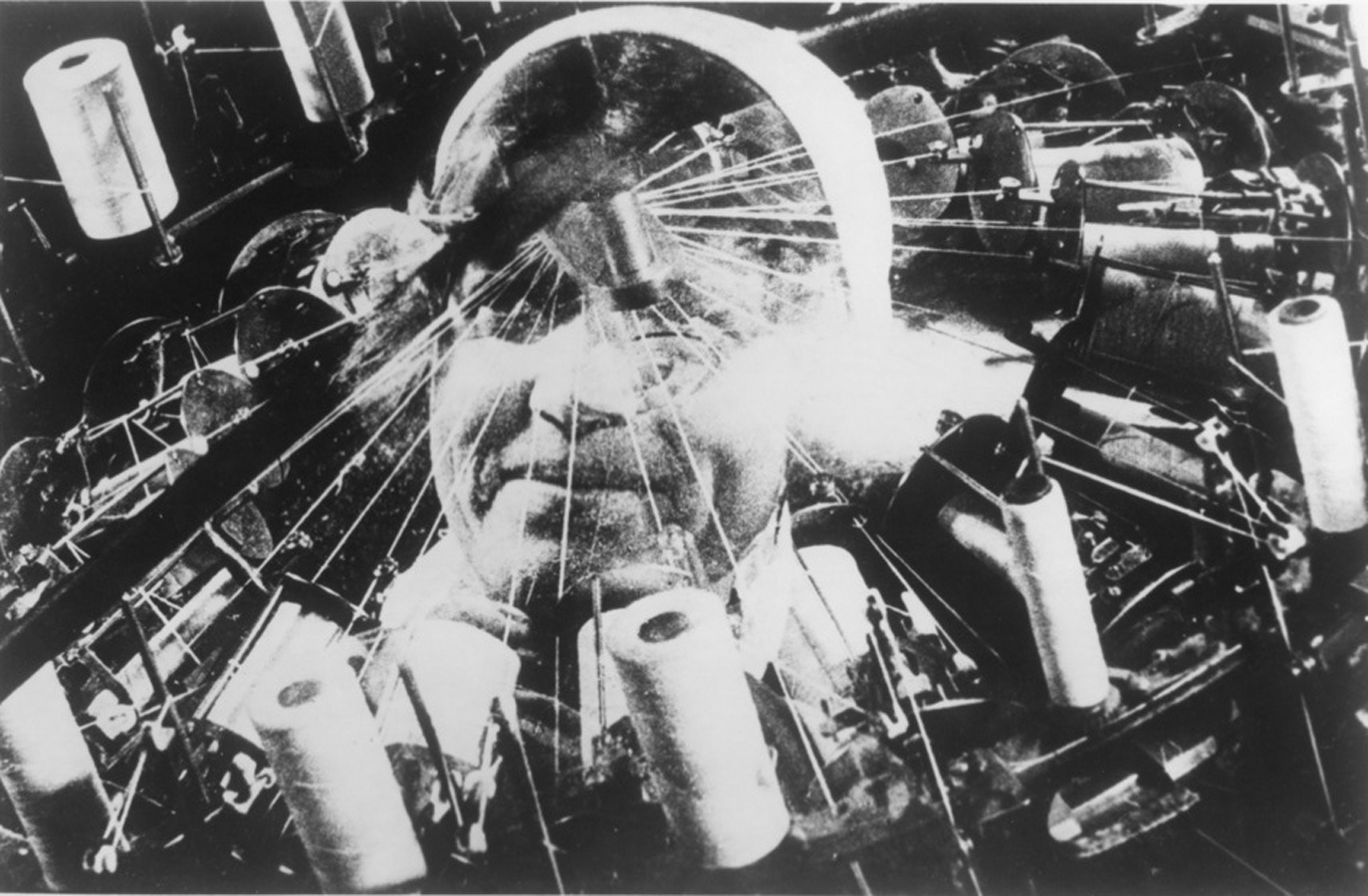
• Tuesday, Jan. 3, 2011: And now for something completely Soviet: 'The Man With A Movie Camera' (1929), an experimental Russian silent film, will be screened at the Manchester (N.H.) Public Library, 405 Pine St., at 6 p.m. Looking forward to doing music for this, a new one for me. It's the latest installment of a monthly silent film series we run in the library's vintage 1913 Carpenter Auditorium; admission is free.

Friday, December 2, 2011

Up next: 'When The Clouds Roll By' (1919)

Things quiet down in December, when the holiday season seems to crowd out silent film from many calendars, including my own. But there is a good one coming up on Thursday, Dec. 8: the Douglas Fairbanks romantic comedy 'When The Clouds Roll By' (1919), which we're screening on Thursday, Dec. 8 at 6:30 p.m. at the Flying Monkey Moviehouse and Performance Center in Plymouth, N.H.

This one has Doug in top leading-man form, romping through a contemporary boy-meets-girl story just prior to embarking on the series of historical adventure roles that would cement his reputation as one of the great stars of the 1920s. (That later Fairbanks, complete with trademark pencil-thin mustache, is one of the models for the male lead character in the new silent film 'The Artist,' which still hasn't reached us here in the sticks yet.)

But 'When the Clouds Roll By' stands on its own as a fun film, one that pokes fun at the then-new profession of psychiatry. As such, it features some unusual scenes of Fairbanks hallucinating. At one point, after eating a dinner that doesn't agree with him, Doug dreams of being chased by his meal (in the form of actors dressed as food) through the countryside. There's another sequence in which he miraculously walks up a wall and then across the ceiling, anticipating Fred Astaire in 'Royal Wedding' by a generation.

It's not all weirdness and stunts, though. 'When The Clouds Roll By' features a strong romantic story, a wonderfully rousing climax, and boasts a great pedigree on the technical side, too—for instance, the cinematographer was none other than Victor Fleming, who would later go on to direct 'Gone With the Wind' and 'The Wizard of Oz.'

I first saw this picture at the Kansas Silent Film Festival in 2005, and at the time it came as a revelation. If film that I'd never heard of could be this good and display such raw creativity, just how much additional gold was buried in so many other silent pictures that were out there? More than many "classics," 'When The Clouds Roll By' whetted my appetite to explore the genre much further and deeper than I had previously.

See if it has the same effect on you! The screening is Thursday, Dec. 8 at 6:30 p.m. at The Flying Monkey Moviehouse and Performance Center, 39 South Main St., Plymouth, N.H. Tickets are $10 per person. For more info on the theater, visit www.flyingmonkeynh.com.

Friday, November 11, 2011

Thanksgiving? Time for 'Peter Pan' again!

Hard to believe, but we'll soon be presenting our 4th annual screening of 'Peter Pan' (1924) on Thanksgiving weekend at the Wilton (N.H.) Town Hall Theatre. It's Sunday, Nov. 27 at 4:30 p.m. -- a perfect way to round out the long holiday weekend of eating and shopping with a vintage movie for kids of all ages. The screening is free, but donations are accepted...

...And once again, all proceeds of this screening will be turned over the Dana-Farber Cancer Institute in Boston, Mass. At the suggestion of Dave and Ali Stevenson, we've done this each year in the spirit of Peter Pan author J.M. Barrie, who wanted all royalties from his play to go to a London children's hospital.

Dana-Farber is the benificiary of the Jimmy Fund, well known in our corner of the world as a leader in the fight against cancer in children and adults. So please join us for a wonderful family afternoon at the movies, and I hope you contribute generously to help those who will not stop working to find a way to beat cancer.

Since we started this tradition in 2008, we've raised well over $1,000 for Dana-Farber, and I do hope we can push that amount much higher with this year's charity screening. Hope to see you and the whole family at 'Peter Pan!' If nothing else, the "audience participation" element of the film works best with a full house, so please do your part and be there!

And, as a bonus, to help everyone get into the holiday spirit, we'll also screen a selection of very odd early Christmas films, some more than a century old.

Monday, November 7, 2011

Up next: 'The Big Parade' (1925) in Plymouth, N.H.

Here comes Veterans Day (Friday, Nov. 11 in the USA) and with it comes my annual attempt to honor those who've served in the armed forces by screening a silent film with live music. Hey, somebody's gotta keep the memory of World War I alive!

This year, it's a screening of 'The Big Parade' (1925) at the Flying Monkey Moviehouse and Performance Center in Plymouth, N.H. on Thursday, Nov. 10 at 6:30 p.m. I've done this picture several times and it's a great film for music.

For me, the big thing about this film is that it divides into two very different segments. The first, when the doughboys go to France, engage in various hijinks, fall in love, and so on, is essentially a romantic comedy. With music, it's very important to hold back throughout this section. Why? The payoff is when the troops are called up to the front, and the film throws its characters (and us along with them) right into the midst of deadly battle.

I think it comes across as terrifically effective if the music can then (and only then) take on a decidedly different character. The effect I'd like to achieve is that of waking from a dream and realizing you're in a situation that is real and something that you can'twake up from.

So please join us on Thursday, Nov. 10 for one of the great war films of all time, 'The Big Parade,' with live accompaniment by me. Here's the press release below...

P.S.: In the latest installment of "brush with greatness," the performer appearing next at the Flying Monkey after me is the great Leon Redbone, who's there on Saturday, Nov. 12. For more info, visit www.flyingmonkeynh.com!

NOV. 3, 2011 / FOR IMMEDIATE RELEASE
Contact Jeff Rapsis at (603) 236-9237 • e-mail jrapsis@gmail.com

Flying Monkey to mark Veterans Day with classic World War I epic film


Silent masterpiece 'The Big Parade' to be screened with live music on Thursday, Nov. 10

PLYMOUTH, N.H. — In honor of Veterans Day, the silent film classic 'The Big Parade' (1925) will be screened one time only on Thursday, Nov. 10 at the Flying Monkey Moviehouse and Performance Center in Plymouth, N.H. General admission is $10 per person.

The show, which starts at 6:30 p.m., will feature live accompaniment by silent film musician Jeff Rapsis. Rapsis provides music for the Flying Monkey's monthly silent film series, which aims to honor the recently renovated venue's historic roots as a local moviehouse.

'The Big Parade,' a landmark war film, was chosen as a way for the Flying Monkey to salute all local servicemen and women on the occasion of Veterans Day on Friday, Nov. 11. The date of Veterans Day descends from the declaration of Armistice that ended World War I in 1918.

'The Big Parade,' a sprawling World War I epic and a box office sensation, made MGM into a powerhouse studio in Hollywood's golden years. The movie, released just a few years after World War I ended, was hailed by critics as the first Hollywood film to depict the harsh reality of combat and its impact of troops in the trenches and foxholes. Its hellish battle scenes were staged on a massive scale and still retain their ability to shock audiences.

The picture, based on the novel "What Price Glory?", follows the story of a young man (John Gilbert) who rebels against a privileged background by enlisting in the army just before the U.S. enters World War I.

He is shipped out to France, where he falls in love with a local French woman before being transferred to the front. There, he and his squadmates come face to face with the German war machine, where they must face the ultimate tests of duty and honor in a battle they come to see as meaningless.

In addition to vivid battle scenes, the film contains a famous dramatic sequence in which the French woman (Renée Adorée) realizes her love for the soldier, and tries to find him to say goodbye as the massive convoy of troops pulls out for the front. Another celebrated sequence depicts the light-hearted first meeting of the soldier and the girl, in which he teaches her how to chew gum.

'The Big Parade' went on to become the top-grossing movie of the entire silent film era, earning $6.4 million domestically and making director King Vidor into the Steven Spielberg of his day. It stood as MGM's biggest single box office hit until the release of 'Gone With the Wind' in 1939.

Music for 'The Big Parade' will be provided by local composer Jeff Rapsis, who is preparing original material for the Flying Monkey screening. In improvising live movie scores, Rapsis tries to bridge the gap between modern audiences and silent film.

"Live music adds an element of energy to a silent film screening that's really something special," Rapsis said. " 'The Big Parade' clocks in at well over two hours, but it's filled with great scenes that lend themselves well to music. It's a real privilege to create a score to help this great picture come back to life," Rapsis said.

All movies in the Flying Monkey's silent film series were popular when first seen by audiences in the 1920s, but are rarely screened today in a way that allows them to be seen at their best. They were not made to be shown on television; to revive them, organizers aim to show the films at the Flying Monkey as they were intended—in top quality restored prints, on a large screen, with live music on a robust sound system, and before a live audience.

‘The Big Parade’ will be shown on Thursday, Nov. 10 at 6:30 p.m. at the Flying Monkey Moviehouse and Performing Arts Center, 39 Main St., Plymouth, N.H. Admission is $10 per person. For more info, call (603) 536-2551 or visit www.flyingmonkeynh.com. For more info on the music, visit www.jeffrapsis.com.

Sunday, November 6, 2011

Notes on scoring 'Faust' (1926)

We screened Murnau's 'Faust' (1926) today at the Wilton (N.H.) Town Hall Theater the score fell together exceptionally well, I thought. So here are a few notes while it's still all fresh in my head.

First, something I didn't use: the Dies Irae, the traditional melody from the Catholic Death Mass. I had prepared an arrangement of it, and used it in a screening of 'Nosferatu' (1922) last month. And I was all set to make it one of the building blocks for Faust -- in fact, it was supposed to open the film. But in the end, I didn't use it, partly because it didn't seem to fit the other material I developed, and also because I didn't want to repeat myself.

Most of what I would have done with the Dies Irae, however, was accomplished with a simple melody in 3/4 time that wound up being very effective, I thought, as accompaniment for scenes in which Mephisto (played by Emil Jannings) makes mischief, and also for the film in general. I don't know what it was about this melody, but it was enough to carry quite a lot of the film.

One fairly basic device was to equate "good" with music in major keys, while evil was accompanied by music in "minor" keys. Nothing too daring about that, I know, but what was neat was that the 3/4 time melody starts in a minor key, then shifts to a major key in the middle, and then back to minor for the finish.

And many times, I found some emotional shift happening in a scene when the major part of the melody kicked in. So it often seemed like I was in synch with the rhythms that director F.W. Murnau baked into the film, which helps it all in terms of audience acceptance and effect.

The film is bracketed by similar scenes at the very beginning and end, so that helps provide a framework for the music. Not only does the film's conclusion merit some dramatic accompaniment, but the return to the opening setting (and shifting back to what we heard at the beginning, but transformed) also gives music a chance to reinforce the journey and the distance we've all come.

Probably the toughest scenes to score are those that make up the semi-comic sequence in which Mephisto interacts with Gretchen's aunt. After more than an hour of building up Mephisto as all-powerful, suddenly the film confronts him with the unwanted attentions of an older woman. What kind of music goes with that? And to make things worse, the film cuts back and forth to Faust and Gretchen, who are seriously in love. I ended up keeping Mephisto's 'devil music' in 3/4 time, but more bumptious, for his scenes with the Aunt, and then keeping the 3/4 beat going for Faust and Gretchen but laying over it some softer chords that sounded a bit more aspirational at first, then grew as the emotional temperature of the scenes rose.

Most of the score ended up being built out of elements taken from the 3/4 time melody. The only other material was a 6/8 march first heard at the beginning of the film during the village celebration, and later morphed into many different shapes for different purposes. I also had a "religious chord sequence" that I first developed for a screening of 'King of Kings' last year, and which came in handy here in many places, especially as material for the big ending.

Audience response was strong. Found out later than the screening was extra credit for an English class from a nearby high school, which explains the group of teenagers all sitting close to one another on one side of the theater.

Monday, October 31, 2011

'Faust' (1926) postponed to Sunday, Nov. 6

The big snowstorm that hit our corner of the world this past weekend left the Wilton (N.H.) Town Hall Theatre without power, and so the planned screening of 'Faust' (1926) on Sunday, Oct. 30 has been postponed to Sunday, Nov. 6 at 4:30 p.m.

I wasn't able to update this blog until now (Monday morning) because it's the first Internet access I've had since the storm hit our area on Saturday. Yes, the storm itself had blown over by Sunday morning. But what it left behind was a landscape of downed trees and power lines, and no landline or cellphone service. Fortunately for us, our house in Bedford, N.H. had power restored fairly early; even now, large parts of our town are without power, and it could take several days to restore everyone, I'm told.

Having no way of knowing if the Wilton screening was still on, I loaded up the gear and off I went. I found the roads into Wilton barricaded due to downed trees, but managed to thread my way through back streets to the downtown area. There, theater manager Dennis Markavarich had posted handwritten "CLOSED NO POWER" signs on the doors, but I knocked and he was there anyway. The town (and the theater) had lost power on Saturday night, and no one knew when it might be restored. Later, I discovered (see the map) that Wilton was right in the heaviest bands of snow.

Well, I apologize to anyone else who may have made the trek out there to see 'Faust.' With no power, we had no show, and we had no way to make a decision about it beforehand and get out the word. However, it's still a film that's really worth seeing, and so I hope folks can make it out to our "replacement" showing on Sunday, Nov. 6 at 4:30 p.m. We're also screening Buster Keaton's comedy short 'The Haunted House,' (1922), in honor of Halloween but also because it contains, improbably, a big reference to 'Faust.'

Back in Wilton, phone service had also been lost completely, prompting the town to put temporary signs along roads telling people to drive to the fire department in case of emergency. But what was really unusual was the lines of cars at gas stations -- in some cases, dozens of vehicles snaking out of station parking lots and down roads, blocking traffic lanes and so on. It reminded me of the gas shortage lines of the 1970s. It was, of course, the combination of many stations closed with people needing fuel for gas-powered generators. Back where I live in Bedford, with 60 percent of the town is still without power, after dark the cold landscape throbbed with the asymetric hum of generators running all night.

What does this have to do with silent film? Other than some of the gas lines having the potential to deteriorate into scenes similar to Laurel & Hardy's comedy short 'Two Tars,' not much. But I at least wanted to try getting the word out about our changing plans.

By the way, we're still showing 'The Hunchback of Notre Dame' (1923) at the Manchester (N.H.) Public Library on Tuesday, Nov. 1 at 6 p.m. -- unless we get another two feet of snow between now and then. After Hurricane Irene in August and now this, anything's possible.

Update: It's now Monday evening (Oct. 31), and I've seen news reports this evening that describe Wilton as one of the hardest-hit communities in the state. There's even a small chance that the power may not be on by this next weekend, so keep your fingers crossed and we'll update things as they happen.

Monday, October 24, 2011

Coming on Sunday, Oct. 30: 'Faust' (1926)

I don't know what's going on, but I'm going through a period where fully formed melodies are coming to me all at once. It's weird—I'll be doing something like driving or riding my bike, my mind occupied by other things, and suddenly I'll find myself with a rich, completely formed melody in my head.

This happened a week ago, when I started humming an expansive tune that will work well as a main theme for 'The Big Parade.' Where it came from, I have no idea. (For details on this melody, see the last post.) And it happened again this past Saturday, when I was out for a brief bike ride on one of the last relatively warm weekend afternoons I expect we'll have in our part of the world before Old Man Winter sits on us for the next six months.

Right after leaving the house, I found myself thinking in 3/4 time, exactly in rhythm with the pedals on the bike. And I found myself thinking of 'Pee Wee's Big Adventure' (1985), perhaps because of the picture of Frances Buxton that I'd used in the last post, and also because I'd just read something about how film composer Danny Elfman (who did the film's distinctive score) suffers from hearing loss, and maybe also because of the prominent role of a bike in that picture.

And as I pedalled out onto County Road, right into my head came a rollicking waltz accompaniment, which was then topped by a sardonic melody that seemed to be tailor-made for Emil Jannings as "Mephisto" in 'Faust' (1926). It was right there, a four-phrase melody that was ripe with expressive possibilities! I tried to "solfeg" it (the musical term for sounding out the notes) while I rode, thinking it was in E minor, but couldn't quite figure out the harmony of the middle portion of it. A minor? Something else?

So upon returing, I went to the piano and found that the melody in my head was in B minor, which was cool because that's the key traditionally associated with the underworld. (So I was off by a major fourth—hey, I'm no Mozart.) And the harmony thing was basic but tricky: B minor, then to C major, then back to B minor. Unusual, but a move that the French composer Camille Saint-Saëns seemed to use quite often. Anyway, it has the flavor of a lot of his stuff, especially the "Danse Macabre," which might have been in my head along with all the bicycles and images from 'Pee Wee's Big Adventure.'

Geez, I ought to rig this so you can hear some of these melodic scraps. I'm working on it. For now, if you'd like to hear the tune I thought up on a bicycle, come see 'Faust' (1926) on Sunday, Oct. 29 at 4:30 p.m. at the Wilton (N.H.) Town Hall Theatre in Wilton, N.H.

And also, a special thanks to film blogger and reviewer Jay Seaver for mentioning me and the music I did at a screening of 'Peter Pan' (1924) earlier this month at the Brattle Cinema in Cambridge, Mass. Thanks, Jay! Didn't realize you were in attendance. Hope to do more screenings in the Boston area as opportunities arise.

Wednesday, October 19, 2011

Preparing for 'Faust,' 'Hunchback,' and 'Parade'

After a busy stretch with multiple screenings in New Hampshire, Vermont, and Massachusetts, a bit of a lull right now, with a couple of weeks to prepare for the next batch of silent film action.

• First up is Murnau's 'Faust' (1926), which we're screening for Halloween at the Wilton (N.H.) Town Hall Theatre on Sunday, Oct. 30 at 4:30 p.m. I've been eager to do this one for some time now, as it's visually quite grand and something about the Murnau films brings out the Richard Strauss in me: long, arching melodies with odd leaps, and often a 3/4 time waltz-type underscoring. I don't have material set for this yet but I look forward to developing it this week. Despite the overall grimness of the material, this one should be fun, as Emil Jannings as Mephisto kind of reminds me of the character of Frances Buxton in 'Pee Wee's Big Adventure.' What do you think?


• Almost immediately following is 'The Hunchback of Notre Dame' (1923), another one I've never done but wanted to. It's Tuesday, Nov. 2 at 6 p.m. at the Manchester (N.H.) Public Library, where we've started to pull some nice crowds since moving our Manchester series there from the Palace Theatre. On this one, I have yet to watch the film all the way through, so the score is still very much in the embryonic stage.

• And then it's 'The Big Parade' (1925), which we'll be uncorking on Thursday, Nov. 10 at 6:30 p.m. at the Flying Monkey Moviehouse and Performance Center in Plymouth, N.H. (It's the day before Veterans Day!) I've done music for this several times before and it's always gone well, but I've never been totally satisfied with the material I've used. So I'm already in the process of coming up with a completely new suite of material that I hope will help the film come to life on many levels for contemporary audiences. We'll see. A plus here is that the Flying Monkey continues to improve its presentation; for our recent showing of 'Nosferatu,' the house sounds (which I plug into) was absolutely incredible. Afterwards, I had people saying they had chills running up and down their spine from the film! So I'm looking forward to creating a suitably dramatic soundtrack for 'The Big Parade.' Weirdly, a wonderful and expansive main theme came to me at random while driving around yesterday. As soon as I got home, I wrote it out lest it fade from consciousness, never to be recovered. It's a good one, but I'm always suspicious when such a fully formed melody seems to write itself. Sure enough, I later realized that it has the exact same chord progression as the 'Going Home' melody in the second movement of Dvorak's 'New World' symphony. But it's still my own tune, and I'm looking forward to developing it for use in 'The Big Parade.'

• And finally, still hoping to do music for a screening of 'Clash of the Wolves' (1925) somewhere as part of the now-in-progress tour for Susan Orleans' new book, 'Rin Tin Tin, the Life and the Legend.' Not looking likely at this point, however, as planned showings in Massaschusetts and Maine have evaporated, and her one appearance in our neck of the woods is now a signing (no film) at the Brookline (Mass.) Booksmith on Friday, Dec. 2. The closest actual 'Clash' screening is the Avon Theatre in Stamford, Conn. on Tuesday, Nov. 8, but they've said they don't have room for live music, so there you go. I might venture down there anyway just to see it in 35mm—something that will be increasingly hard to do with the industry and so many theaters converting to digital. Well, her tour seems to be going well and I hope the book does well. :)

Saturday, October 15, 2011

Saturday, Oct. 15 in Brandon, Vt.: 'Cat and Canary'

We finish up our 2011 season of silent film in Brandon (Vt.) Town Hall on Saturday, Oct. 15 with a 'Chiller Theatre' presentation of 'The Cat and the Canary' (1927), Paul Leni's wonderfully evocative haunted house thriller. It's being dubbed 'chiller theater' because the town hall is currently unheated, and it being October in New England, things can get downright frigid once the sun goes down. So we're taking the precaution of urging attendees to dress warmly, and hoping that once things get going, the magic of silent film will heat things up as well.

I have truly enjoyed presenting silent films in Brandon with live music during the past two years. People there have been enthusiastic, the screenings have raised money for the ongoing renovation of the town hall (which will someday have heat!), and I look forward to another season next year. Send in your requests and we'll see what we can do!

The screening of 'Cat and the Canary' is at 7 p.m. and is free to the public, though donations are accepted to help the renovation. And if it's not too cold, I have a short surprise to follow as a bonus. See you there. Here's the press release with more information...

* * *

SUNDAY, OCT. 2, 2011 / FOR IMMEDIATE RELEASE
Contact Jeff Rapsis • (603) 236-9237 • jeffrapsis@gmail.com

'Cat and Canary' (1927) to play Brandon (Vt.) Town Hall with live music on Saturday, Oct. 15


Creepy haunted house silent film thriller to be shown after sundown in 'Chiller Theater'

BRANDON, Vt.—'The Cat and the Canary' (1927), a haunted house thriller from Hollywood’s silent film era, will be screened with live music as part of 'Chiller Theatre' on Saturday, Oct. 15 at 7 p.m. at the Brandon Town Hall in Brandon, Vt. Admission is free; donations are encouraged, with proceeds to benefit the Town Hall's ongoing restoration.

The Halloween-themed screening is the final show for this season's silent film series at the Brandon Town Hall. Organizers have dubbed it "Chiller Theater" in part because the town hall remains unheated. Attendees are encouraged to dress warmly and bring a blanket to keep warm.

'The Cat and the Canary' stands as the original movie thriller -- the first picture to feature the reading of a will in a haunted mansion complete with clutching hands, a masked killer, disappearing bodies, and secret passageways.

Silent film starlet Laura LaPlante leads the cast as a young heiress who must spend the night in the creepy old mansion, which is filled with relatives who all have motives to frighten her out of her wits. Meanwhile, a dangerous escaped lunatic is loose on the grounds. Can she and the others make it through the night?

Created for Universal Pictures by German filmmaker Paul Leni and based on a hit stage play, 'The Cat and the Canary' proved popular enough to inspire several remakes, including one starring Bob Hope. It was also the forbearer of all the great Universal horror classics of the 1930s and '40s.

The Brandon screening will use a fully restored print that shows the film as audiences would have originally experienced it. 'The Cat and the Canary' will be accompanied by live music by New Hampshire composer Jeff Rapsis, who specializes in silent film scoring. Rapsis will improvise the score on the spot during the screening.

"Silent film is all about the audience experience, and this one is a perfect Halloween crowd-pleaser," Rapsis said. "It has something for everyone—spooky scenes, some good comedy, and it's all fine for the whole family."

Critics praise the original 'Cat and the Canary' for its wild visual design and cutting edge cinematography. Film reviewer Michael Phillips singled out the film for using "a fluidly moving camera and elaborate, expressionist sets and lighting to achieve some of the most memorable shots in silent film, from the amazing tracking shots down the curtain-lined main hallway to the dramatic zooms and pans that accompany the film's shocks."

Leonard Maltin called the original 'Cat and the Canary' a "delightful silent classic, the forerunner of all "old dark house" mysteries."

The program also includes vintage short subjects.

'Cat and the Canary' will be shown on Saturday, Oct. 15 at 7 p.m. at Brandon Town Hall and Community Center, Route 7, in Brandon, Vt. Admission is free; donations are encouraged, with proceeds to support ongoing renovation of the town hall. For more information, visit www.brandontownhall.org. For more info on the music, visit www.jeffrapsis.com.