Saturday, November 13, 2021

Tonight: Keaton's 'College' in Brandon, Vt., plus thoughts on 'Four Horsemen of the Apocalypse'

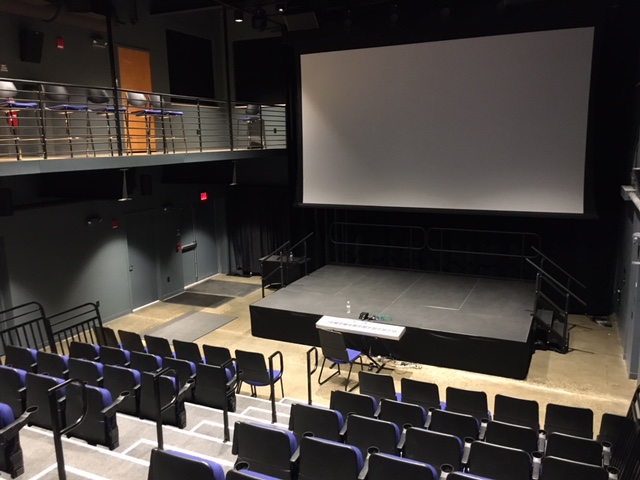
The Colonial Theatre's new 'Showroom" venue in Keene, N.H.

Tonight it's back to comedy, with Buster Keaton's 'College' (1927) at Brandon Town Hall and Community Center in Brandon, Vt. And just in time, as we could all use a laugh. 

More details in the press release below. For now, a few notes about two gargantuan back-to-back screenings I did music for in honor of Veterans Day.

On Wednesday, Nov. 10 at the Flying Monkey Moviehouse in Plymouth, N.H., I accompanied 'The Big Parade' (1925), King Vidor's sweeping drama following John Gilbert's journey through World War I. 

And then on Thursday, Nov. 11 in the new "Showroom" venue of the Colonial Theatre in Keene, N.H., I accompanied Rudolph Valentino tangoing his way through 'The Four Horsemen of the Apocalypse' (1921), another sweeping drama.

That's a lot of sweeping in two days!

But that's the point: both films clock in at about 2½ hours, which gives an accompanist a lot of room to develop material and work with it as the film unfolds. To me, it's the best of all possible worlds: I get to lose myself in these long movies, so much so that the music ends up coming from I-know-not-where.

I've done both films before, and know their basic story arcs, but don't have any special material set aside for either of them. So in both cases, it was "sit down and see what happens."

What happened Wednesday with 'The Big Parade' was effective enough, I thought. 

The comic scenes in the first half of the film failed to produce much real laughter, which was disappointing. But for the big transition scene, where the troops are finally called to the front, I was able to use a "love theme" to whip up quite a bit of drama. 

Specifically, the tune featured a falling fifth, which I found relatively easy to transform to fit other needs: in this case, fear, anxiety, encroaching terror, and ultimately all the overwhelming emotions that cause Melisande to desperately keep holding onto the transport truck taking Johnny to the front. 

But the real high point for me came with 'Four Horsemen.' You have to get quite far into the film before meeting the minor but key character of 'Tchernoff' (played by Nigel De Brulier), a kind of mystic who introduces the idea of the 'Horsemen.'

That's Nigel De Brulier hovering up left in 'Four Horsemen of the Apocalypse.' 

I hadn't thought about how to handle him, but when he first appears, it just came to me: four chords that I felt perfectly captured his role in the movie. It's really a quite simple cycle: e minor / C Major / F# Major / B Major. (And then back to e minor, if you want.) 

Depending on how you lay out the chords on the keyboard, the progression creates a sense of great power: either hidden and held back if played as a chorale, or great power unleashed if used to support energetic rhythms or busy melodic figurations swirling about.

But I found it most effective with more notes in the bass than is usually done: including small intervals in the right hand lent a kind of weight to each chord that really helped what was happening on screen, I thought. 

So that was a keeper! So simple, but I'm liable to completely forget about it after a few more films, so I wrote it down in a notebook as a reminder. (I certainly don't expect to use it tonight with Buster Keaton, or tomorrow for a screening of Harold Lloyd's domestic comedy 'Hot Water,' although perhaps it might work for Harold's mother-in-law.)

The Colonial's new 'Showroom' venue (so named because it housed an auto dealership in the 1920s) was a delight to work in. They've already scheduled some screenings in 2022 and I look forward to returning!

But before any of that happens, it's Buster Keaton tonight in Brandon, Vt. With the foliage mostly gone and the sun now setting well before 5 p.m., what better place to be than a movie screening with a lot of other people in need of a laugh. See you there!

 *    *    *

Buster Keaton on campus in 'College' (1927). 

WEDNESDAY, NOV. 3, 2021 / FOR IMMEDIATE RELEASE
Contact Jeff Rapsis • (603) 236-9237 • jeffrapsis@gmail.com

Buster Keaton comedy 'College' with live music on Saturday, 11/13 at Brandon Town Hall

2021 silent film series concludes with screening of timeless classic send-up of campus life

BRANDON, Vt.—He never smiled on camera, earning him the nickname of "the Great Stone Face." But Buster Keaton's comedies rocked Hollywood's silent era with laughter throughout the 1920s.

Acclaimed for their originality, clever visual gags, and amazing stunts, Keaton's films remain popular crowd-pleasers today.

See for yourself with a screening of 'College' (1927), one of Keaton's landmark feature films, on Saturday, Nov. 13 at 7 p.m. at Brandon Town Hall and Community Center, Conant Square/Route 7 in Brandon, Vt.

The program will feature live music for the movie by silent film accompanist Jeff Rapsis. Admission is free; donations are encouraged, with all proceeds supporting ongoing restoration of the Town Hall.

'College' follows the story of a hapless university bookworm (Keaton) forced to become a star athlete to win the attention of his dream girl. Can Buster complete the transformation in time to woo her from his rival? And along the way, can he also rescue the campus from sports-related shame?

The film was released in 1927, at the crest of a national fascination with college life. In addition to being a great Keaton comedy, 'College' offers vintage glimpses into what higher education was like nearly a century ago.

Buster Keaton and Anne Cornwall in 'College' (1927).

Keaton, along with Charlie Chaplin and Harold Lloyd, stands today as one of the silent screen's three great clowns. Some critics regard Keaton as the best of all; Roger Ebert wrote in 2002 that "in an extraordinary period from 1920 to 1929, (Keaton) worked without interruption on a series of films that make him, arguably, the greatest actor-director in the history of the movies."

As a performer, Keaton was uniquely suited to the demands of silent comedy. Born in 1895, he made his stage debut as a toddler, joining his family's knockabout vaudeville act and learning to take falls and do acrobatic stunts at an early age.

A remarkable pantomime artist, Keaton naturally used his whole body to communicate emotions from sadness to surprise. And in an era with no post-production special effects, Keaton's acrobatic talents enabled him to perform all his own stunts, including some spectacular examples in 'College.'

The screening is sponsored by local residents Lucy and Dick Rouse, Edward Loedding and Dorothy Leysath, Sam and Sharon Glaser, Peter and Louise Kelley, and Bar Harbor Bank and Trust.

In reviving Keaton's 'College,' the Brandon Town Hall to show silent film as it was meant to be seen—in restored prints, on a large screen, with live music, and with an audience.

"All those elements are important parts of the silent film experience," said Rapsis, who will accompany the film. "Recreate those conditions, and classics of early Hollywood such as 'College' leap back to life in ways that audiences still find entertaining."

Rapsis performs on a digital synthesizer that reproduces the texture of the full orchestra, creating a traditional "movie score" sound. He improvises the complete score in real time during the screening.

"Creating a movie score on the fly is kind of a high-wire act, but it can often make for more excitement than if everything is planned out in advance," Rapsis said.

Rapsis encouraged people unfamiliar with silent film to give 'College' a try.

"If you haven't seen a silent film the way it was intended to be shown, then you're missing a unique experience," Rapsis said. "At their best, silent films still do connect with cinema-goers. They retain a tremendous power to cast a spell, engage an audience, tap into elemental emotions, and provoke strong reactions."

Buster Keaton's 'College' (1927) will be screened on Saturday, Nov. 13 at 7 p.m. at Brandon Town Hall and Community Center, Conant Square/Route 7 in Brandon, Vt. The program will feature live music for the movie by silent film accompanist Jeff Rapsis. Admission is free; donations are encouraged, with all proceeds supporting ongoing restoration of the Town Hall.

For more information, visit www.brandontownhall.com.

Thursday, November 11, 2021

This means you! All veterans welcome free to 'Four Horsemen of the Apocalypse' tonight

Rudolph Valentino in 'Four Horsemen of the Apocalypse' (1921). He's the one on the right, by the way.

Tonight I'm doing live music for 'Four Horsemen of the Apocalypse' (1921) at a new venue: the "Showroom," a performance space developed during the pandemic and opened recently by the Colonial Theatre in Keene, N.H.

The Colonial itself has been around since 1924, and among its other distinctions is that it's the theater where a 7-year-old me was traumatized by 'Willy Wonka and the Chocolate Factory' when it played there in 1971. 

If reasons are needed to show 'Four Horsemen,' I can name several: it's the 100th anniversary of the film's release; as a World War I epic, it's fitting for Veterans Day; it launched Rudolph Valentino as a megastar and introduced the tango worldwide; it's a terrific motion picture that shows early Hollywood at its most innovative and ambitious.

And for me, there's one personal reason that makes 'Four Horsemen' worth screening. I think the last line delivered by Nigel De Brulier's character is among the most moving in all cinema. It's not spoiling anything when I share it with you now: "I knew them all!" Watch for it, and you'll see.

So if you're in the area, please consider attending. All veterans welcome free of charge as a way to honor your service. Lots more about the film in the press release below. So march yourself on over to Keene and report for duty tonight at 7 p.m. 

That's an order!

*  *  *

From 'Four Horsemen of the Apocalypse' (1921): How's that for an image that fills the screen?
 

TUESDAY, NOV. 2, 2021 / FOR IMMEDIATE RELEASE
Contact Jeff Rapsis • (603) 236-9237 • jeffrapsis@gmail.com

See the epic movie that launched Rudolph Valentino as a megastar

Veterans admitted free to WWI saga 'Four Horsemen of the Apocalypse,' screening with live music on Thursday, Nov. 11 at Colonial Theatre's new 'Showroom' venue

KEENE, N.H.—A movie that launched the career of silent film heartthrob and megastar Rudolph Valentino will be shown on Veterans Day at the Colonial Theatre's new venue in downtown Keene.

'The Four Horsemen of the Apocalypse' (1921), a multi-generational family saga that climaxes during World War I, will be screened with live music on Thursday, Nov. 11 at 7 p.m. the Showroom, 20 Commercial St., Keene, N.H.

Tickets are $13.50 to $15 per person; all veterans will be admitted free to this special Veterans Day screening.

Proof of vaccination or negative results of a COVID-19 PCR test administered within 72 hours are required for admittance to events at Showroom. Also, masks are required to be worn at all times while at the venue.

Based on a novel by Spanish author Vicente Blasco Ibañez, 'Four Horsemen of the Apocalypse' tells the story of an extended Argentine family with mixed ethnic background: one side is German, while the other is French.

The family gets drawn into World War I in far-off Europe, with members ending up on opposing sides. With brothers pitted against one another on the battlefield, the destruction of war changes lives forever.

'The Four Horsemen of the Apocalypse' had a huge cultural impact, becoming the top-grossing film of 1921, beating out Charlie Chaplin's 'The Kid,' and going on to become the sixth-best-grossing film of the silent era.

Also, the film turned then-little-known actor Rudolph Valentino into a superstar, associating him with the image of the Latin Lover. In addition, the film inspired a tango craze and fashion fads such as gaucho pants.

Directed by Rex Ingram for Metro Pictures (a predecessor of MGM studios), 'Four Horsemen' grew into a mammoth production: over $1 million was spent in making it and more than 12,000 people were involved. The film was hugely successful at the box office, grossing nearly $5 million during its initial run, an enormous sum at the time.

The film was notable as one of the first major Hollywood productions to include World War I (then known as the 'Great War') in its storyline, and also in that it did not glorify the recent conflict or look past the tragedy that it brought. It's also among the first U.S. feature films to make full use of the unlimited visual power of the new motion picture medium.

Although Valentino (at left) dominates the film, other actors of note are featured. Alice Terry, the billed star as well as Ingram's wife, was a popular actress of her day. She would be cast in the next Ingram/Valentino flick rushed out in the same year before Rudy's jump to Paramount, The Conquering Power (1921).

Alan Hale Sr. appears in a supporting role; he was perhaps best known as Errol Flynn's sidekick in numerous films, his role of Little John in several Robin Hood flicks, and as the father of Alan Hale, Jr., who played the Skipper on the television series Gilligan's Island.

In 1995, the silent version of 'The Four Horsemen of the Apocalypse' was selected for preservation in the United States National Film Registry by the Library of Congress as being "culturally, historically, or aesthetically significant."

Regarding the title: the Four Horsemen of the Apocalypse are mentioned in the Bible in chapter six of the Book of Revelation, which predicts that they will ride during the Apocalypse. The four horsemen are traditionally named War, Famine, Pestilence, and Death.

"This is a big sprawling drama, and a great chance to see Rudolph Valentino in the picture that launched his celebrity," said Jeff Rapsis, a New Hampshire-based silent film accompanist who will create live music for the screening.

Rapsis will improvise live musical accompaniment during the show, using a digital synthesizer to recreate the sound of a full orchestra and other more exotic textures.

"Creating the music on the spot is a bit of a high-wire act, but it contributes a level of energy that's crucial to the silent film experience," Rapsis said. 
 
'The Four Horsemen of the Apocalypse' (1921) will be screened with live music on Veterans Day, Thursday, Nov. 11 at 7 p.m. at the Colonial Theatre's new Showroom, 20 Commercial St., Keene, N.H. Tickets are $13.50 to $15 and must be purchased online at www.thecolonial.org; veterans admitted free.
 
Veterans may walk up with ID at the door or reserve by calling the box office at (603) 352-2033. Due to limited seating, only the attending veteran can be accommodated at no charge.
For more information, visit www.thecolonial.org.

Monday, November 8, 2021

In this week's hand, two pairs: dramas and comedies—music for four films in five days

Original poster art for 'The Big Parade' (1925).

I've caught my breath after October's marathon of Halloween screenings, and just in time.

Why? Because this week the calendar comes back to life (sounds like Halloween all over again) with two big dramas for Veterans Day, then a pair of comedy programs on the weekend.

Finally—laughter!

First up is MGM's sprawling WWI drama 'The Big Parade' (1925), which steps off at 6:30 p.m. sharp on Wednesday, Nov. 10 at the Flying Monkey Moviehouse and Performance Center in Plymouth, N.H.

The screening is in honor of Veterans Day, and there's a lot more info in the press release I've added to the bottom of this post. 

On Veterans Day itself (Thursday, Nov. 11), it's another biggie: 'The Four Horsemen of the Apocalypse' (1921), starring Rudolf Valentino. 

The large supporting cast includes Alan Hale Sr., father of Alan Hale, Jr., who would go on to play the Skipper in "Gilligan's Island." (Hey, we all have our cultural reference points.)

Showtime for 'Horsemen' is 7 p.m. at the Showroom, a new venue opened during the pandemic by the Colonial Theater in Keene, N.H. See more info by clicking "Upcoming Silent Film Screenings" at the top right hand corner of this page. 

And then we turn the page to comedy. Saturday, Nov. 13 finds Buster Keaton attending 'College' (1927) in Brandon, Vt., while Sunday, Nov. 14 finds Harold Lloyd in 'Hot Water' (1924) in Wilton, N.H.

More details about those screenings once we get past Veterans Day.

For now, here's the press release about 'The Big Parade' (1925) on Wednesday, Nov. 10 at 6:30 p.m. at the Flying Monkey in Plymouth. Hope to see you there!

*  *  *

Renée Adorée and John Gilbert communicate without words in 'The Big Parade' (1925).

TUESDAY, NOV. 2, 2021 / FOR IMMEDIATE RELEASE
Contact Jeff Rapsis at (603) 236-9237 • e-mail jeffrapsis@gmail.com

Epic WWI drama 'The Big Parade' to be screened on Wednesday, Nov. 10 at Flying Monkey

To be shown with live music in honor of Veterans Day; blockbuster silent film changed the way Hollywood depicted war on the screen

PLYMOUTH, N.H. — It was the 'Saving Private Ryan' of its time — a movie that showed audiences war as experienced by a front line soldier whose life is changed forever by the experience

It was 'The Big Parade' (1925), a sprawling World War I epic and a box office sensation that made MGM into a powerhouse studio. It's the latest installment of the silent film series at the Flying Monkey Moviehouse and Performance Center, 39 Main St., Plymouth, N.H.

'The Big Parade' will be screened one time only on Wednesday, Nov. 10 at 6:30 p.m. General admission is $10.

The show will feature live accompaniment by silent film musician Jeff Rapsis.

'The Big Parade,' released just a few years after World War I ended, was hailed by critics as the first Hollywood film to depict the harsh reality of combat and its impact on troops. Its battle scenes were staged on a massive scale and still retain their ability to shock audiences.

The picture, based on the best-selling novel "What Price Glory?", follows the story of a young man (John Gilbert) who rebels against his privileged background by enlisting in the army just before the U.S. enters World War I.

He is shipped out to France, where he falls in love with a local French woman before being transferred to the front. There, he and his squadmates face the German war machine, where they must endure the ultimate tests of duty and honor in a battle they come to see as meaningless.

A scene from 'The Big Parade' (1925).

In addition to vivid war scenes, the film contains a famous dramatic sequence in which the French woman (Renée Adorée) realizes her love for the soldier, and tries to find him to say goodbye as the massive convoy of troops pulls out for the front. Another celebrated sequence depicts the light-hearted first meeting of the soldier and the girl, in which he teaches her how to chew gum.

'The Big Parade' went on to become the top-grossing movie of the entire silent film era, earning $6.4 million domestically and making director King Vidor into the Steven Spielberg of his day. It stood as MGM's biggest single box office hit until the release of 'Gone With the Wind' in 1939.

"We felt screening 'The Big Parade' was a suitable way to mark Veterans Day," said Flying Monkey manager Brooks Bartlett. "World War I is now part of history, but this picture is from a time when it was foremost in people's minds. What was then called 'The Great War' was the 9/11 of its day, and this film captures that intensity and allows us to experience it today."

Rapsis will improvise a musical score to the film in real time. In creating accompaniment for the 'The Big Parade' and other vintage classics, Rapsis tries to bridge the gap between silent film and modern audiences.

"Live music adds an element of energy to a silent film screening that's really crucial to the experience," Rapsis said. " 'The Big Parade' is filled with great scenes that lend themselves well to music. It's a real privilege to create a score to help this great picture come back to life," Rapsis said.

MGM's silent blockbuster ‘The Big Parade’ will be shown with live music on Wednesday, Nov. 10 at 6:30 p.m. at the Flying Monkey Moviehouse and Performance Center, 39 Main St., Plymouth, N.H.

Admission to the screening is $10, general admission seating. For more info, call (603) 536-2551 or visit www.flyingmonkeynh.com.

Monday, November 1, 2021

On live scoring 'Dracula' at the Somerville, plus a new way to show 'Nosferatu' to keep it scary


One of the scariest things about 'Dracula' (1931) at the Somerville Theatre: standing in the middle of Holland Street to get the requisite marquee shot.

Doing live music for 'Dracula' (1931) last night at the Somerville Theatre proved an interesting adventure in film underscoring.

After all, this wasn't a silent picture. True, there's no music. But it does have dialogue, sound effects, and a certain eerie quality that comes, in part, from the silence. 

I didn't want to get in the way of any of that. So I knew going in that there were times when I couldn't —and shouldn't—play anything. 

But once in the theater, I found it surprisingly difficult to resist the urge to play music. I accompany more than 100 films each year. And it was just really weird to be sitting there, with a film on the screen and a keyboard in front of me and an audience present, and not play.

As the film unspooled, I felt the character to whom I could most relate was Renfield, with his hunger for spiders representing my hunger to press the keys and make sounds. 

But I didn't need to be restrained, and in the end I felt I had a good sense of when to stay out and when to come in, and when to come in strong. 

Lugosi and victim in the unfinished basement of Carfax Abby. 

Although I improvised the score, I did create a full-fledged 'Dracula' theme in advance, which came in handy and helped the whole thing hold together.

Perhaps the most successful sequence was when Dracula tried to hypnotize Professor Van Helsing. 

On screen, played silent, it seems overlong and drawn out, with the quiet broken only by Bela Lugosi's commands to "Come here!"

But with music, I was told afterward that it turned into a scene of considerable dramatic suspense. Hooray!

And in the end, it all seemed to work, as I was glad to receive a thunderous ovation from the 200+ attendees, and with nothing thrown at me—not even the bag of garlic cloves I had given out as a door prize beforehand.

Well, Halloween may be over, but my ongoing silent film music marathon is not.

We go from Lugosi's 'Dracula' to 'Nosferatu' (1922), which I'm accompanying tonight (Monday, Nov. 1) at the Coolidge Corner Theater in Brookline, Mass.

It's ostensibly in honor of the 'Day of the Dead,' but you don't really need an excuse to screen Murnau's classic film. Just as the sign on the railroad tracks tell us that "Any time is train time," theaters should all have signs saying "Any time is Nosferatu time." 

Any that's actually a concern. I've done music for 'Nosferatu' a half-dozen times this year. At some point, overexposure may diminish this film's special power over audiences.

So, to remedy that, when I'm appointed King, I will issue an edict that all theaters can only screen 'Nosferatu' unannounced, and only in the middle of other films that people would have come to see.

That would a way to make it really frightening. You would just never know. It would boost the film's reputation immensely, and help box office receipts, as people who wish to see it would have to keep buying tickets hoping to see Nosferatu. It would be like winning the lottery!

And people buy lottery tickets all the time. Why not apply the same logic to movie theaters with 'Nosferatu' the unexpected jackpot prize?

Well, until that happens, your best bet is to come to the Coolidge Corner tonight. 

And for now, let me leave you with this unexpectedly amusing marquee shot from the Somerville Theatre: what a way to promote 'Dracula,' who can only come out at night!

*  *  *

MONDAY, OCT. 18, 2021 / FOR IMMEDIATE RELEASE
Contact Jeff Rapsis • (603) 236-9237 • jeffrapsis@gmail.com

Creepy classic thriller 'Nosferatu' to screen at Coolidge Corner on Monday, Nov. 1

'Sounds of Silents' series to be revived with pioneer silent horror movie with live musical accompaniment by Jeff Rapsis

BROOKLINE, Mass.— An iconic local theater will bring its silent movie series back to life with a film about the undead.

'Nosferatu' (1922), the first screen adaptation of Bram Stoker's novel 'Dracula,' will be screened with live music on Monday, Nov. 1 at 7 p.m. at the Coolidge Corner Theatre, 290 Harvard St., Brookline, Mass.

The screening will feature live music for the movie by silent film accompanist Jeff Rapsis. General admission is $23 per person.

The show marks the resumption of the Coolidge's acclaimed 'Sounds of Silents' series, which gives audiences the opportunity to experience early cinema as it was intended: on the big screen, with live music, and with an audience.

The series, like all other Coolidge programming, was paused during the recent pandemic. But with the theater now open, the series is returning.

On deck (almost): 'Nosferatu' at the Coolidge Corner Theatre this evening.

'Nosferatu' (1922), directed by German filmmaker F.W. Murnau, remains a landmark work of the cinematic horror genre.

To modern viewers, the passage of time has made this unusual movie seem even more strange and otherworldly.

It's an atmosphere that silent film accompanist Jeff Rapsis will enhance in improvising live music on the spot for the screening.

"The original 'Nosferatu' is a film that seems to get creepier as more time goes by," said Rapsis, a resident of Bedford, N.H. who accompanies silent film screenings at venues across the nation.

In 'Nosferatu,' actor Max Schreck portrays the title character, a mysterious count from Transylvania who travels to the German city of Bremen to take up residence.

In the town, a rise in deaths from the plague is attributed to the count's arrival. Only when a young woman reads "The Book of Vampires" does it become clear how to rid the town of this frightening menace.

Director Murnau told the story with strange camera angles, weird lighting, and special effects that include sequences deliberately speeded up.

Although 'Nosferatu' is suitable for all family members, the overall program may be too intense for very young children to enjoy.
A shadowy character: Mr. Nosferatu comes a calling.

Modern critics say the original 'Nosferatu' still packs a powerful cinematic punch.

“Early film version of Dracula is brilliantly eerie, full of imaginative touches that none of the later films quite recaptured,” Leonard Maltin wrote recently.

Critic Dave Kehr of the Chicago Reader called 'Nosferatu' "...a masterpiece of German silent cinema and easily the most effective version of Dracula on record.”

Despite the status of 'Nosferatu' as a landmark of early cinema, it was almost lost forever.

The film, shot in 1921 and released in 1922, was an unauthorized adaptation of Stoker's novel, with names and other details changed because the studio could not obtain rights to the novel.

Thus "vampire" became "Nosferatu" and "Count Dracula" became "Count Orlok." After the film was released, Stoker's widow filed a copyright infringement lawsuit and won; all known prints and negatives were destroyed under the terms of settlement.

However, intact copies of the film would surface later, allowing 'Nosferatu' to be restored and screened today as audiences originally saw it.

The image of actor Max Schreck as the vampire has become so iconic that it can be seen in a recent 'Sponge Bob Squarepants' episode.

The Sounds of Silents series is made possible by the generous contributions of Dr. Martin and Becki Norman, Dr. Thomas Gutheil, Susan Stoller, and Elizabeth Driehaus.

‘Nosferatu’ will be shown on Monday, Nov. 1 at 7 p.m. at the Coolidge Corner Theatre, 290 Harvard St., Brookline, Mass. as part of the theater's 'Sounds of Silents' series. Admission is $23 per person. For more info and to buy tickets, visit www.coolidge.org or call (617) 734-2500.

Sunday, October 31, 2021

Going the distance with Lon Chaney, 'Dracula' at Somerville Theatre, and one more 'Nosferatu'

'Where East is East' (1929), screening today at 2 p.m. at the Town Hall Theatre, Wilton, N.H.

It's silent film aerobics. Three more! Two more! One more!

That's the feeling you get when accompanying nine separate feature films in six days.

Physically, it's not that demanding. I'm basically sitting and moving my fingers.

But mentally, it can be taxing. You're concentrating sometimes for hours without a break, again and again.

The trick, I think, is to pace yourself—take the films one a time, do the best you can with each, and always keep something in reserve.

It's like a 10-round boxing match. If you're in Round 7, you don't think about Round 10. You need to stay in the moment, or you'll get in trouble.

One odd effect of accumulated screenings is that the "silent film accompaniment" instinct sometimes keeps going even after a film has ended. 

I find myself opening the car door and thinking "okay, F minor chord here." 

It's like the old gag in which a punch-drunk boxer responds to any bell-like sound by instinctively going into a crouch and coming out swinging.

Well, the bout continues—in fact, it's actually heading toward something of a climax, this being the actual day of Halloween itself. 

Today's action include a round with Lon Chaney in 'Where East is East' (1929), the actor's final collaboration with director Tod Browning. The bell rings at 2 p.m. at the Town Hall Theatre in Wilton, N.H.

Then I head down to Somerville, Mass. this evening to create a live score for a 35mm print of 'Dracula' (1931)—another Browning film, but this one a talkie, with Bela Lugosi in the lead role. 

It's my first time back at the Somerville since accompanying a Rin Tin Tin double feature on March 15, 2020, the day before the venue shut down due to the pandemic.

I've never done music for the talking Dracula, but I think I have some good stuff ready. My aim is to bob and weave with the movie, to find opportunities where music can augment the movie without getting its way. We'll see how it all comes together this evening.

And I'll try to avoid getting too punchy in the process. Once the film starts, it's like the bell rings, and you must stay focused and in the moment to go the distance.

But then maybe boxing is the wrong analogy. Silent film accompaniment is more like ballet: the film and the musician dance together in the hopes of creating something exciting, absorbing, and perhaps even beautiful.

Or maybe it's a little of both.

Either way, see you at 2 p.m. in Wilton for Chaney is 'Where East is East' and then this evening in Somerville for 'Dracula' at 7 p.m. 

More details in the press release below:

*   *   *

Bela Lugosi as Dracula menaces Helen Chandler in the 1931 classic.
 
TUESDAY, OCT. 12, 2021 / FOR IMMEDIATE RELEASE
Contact Jeff Rapsis • (603) 236-9237 • jeffrapsis@gmail.com

Halloween special: Lugosi's 'Dracula' on big screen in 35mm with new live score

Horror classic to be shown at the Somerville Theatre on Sunday, Oct. 31 for one screening only

SOMERVILLE, Mass. — Do you dare spend Halloween braving 'Dracula' on the big screen?

That's the question at the Somerville Theatre, where the classic 1931 version of 'Dracula' will run for one showing only on Sunday, Oct. 31.

The movie, starring Bela Lugosi in the title role, will be shown using a 35mm film print from Universal Studios, which released the early horror classic in 1931.

Showtime is 7:30 p.m. General admission tickets are $15, with senior/student discounts. Tickets are available online at somervilletheatre.com or at the box office.

The screening will feature live music by Jeff Rapsis, the Somerville Theatre's silent film accompanist.

Although 'Dracula' is a talking picture, it was released with virtually no musical score, a common practice during the transition period from silent to sound pictures.

Rapsis will perform original music live during the screening using a digital keyboard to recreate the texture of a full orchestra.


Directed by Tod Browning, 'Dracula' was a sensational box office success and has mesmerized movie audiences ever since with its eerie visuals and Lugosi's iconic performance.

The story opens in far-off Transylvania, where mysterious Count Dracula hypnotizes a British soldier, Renfield (Dwight Frye), into becoming his mindless slave.

Dracula then travels to England and takes up residence in an old castle. Soon the Count begins to wreak havoc, sucking the blood of young women and turning them into vampires.

When he sets his sights on Mina (Helen Chandler), the daughter of a prominent doctor, vampire-hunter Van Helsing (Edward Van Sloan) is enlisted to put a stop to Dracula's never-ending bloodlust.

Located in Davis Square, the Somerville Theatre is one of the few first-run venues in the region committed to preserving the ability to screen movies using 35mm film prints.

"We feel it's important to show films on actual film when possible, the way classic movies were intended to be shown," said Ian Judge, creative director of the Somerville Theatre.

The Somerville recently reopened after a 17-month hiatus for the pandemic, during which significant renovations were made to the 1914 theater.

The Halloween screening of 'Dracula' will include live music by Jeff Rapsis, a local composer and performer who specializes in creating accompaniment for silent films.  

'Dracula' was released when Hollywood and movie theatres were still undergoing the transition from the silent era to pictures with synchronized sound and dialogue.

During the silent era, studios did not produce official scores for most films. Instead, accompaniment was left up to local musicians, and could vary greatly from one moviehouse to another.

When studios converted to talking pictures, the tradition of recording a musical score was not well established. In the case of 'Dracula,' Universal omitted music in part to save production costs.

As a result, after the opening credits, the 1931 'Dracula' contains no music except for a brief scene in an opera house.

In recent decades, composers have experimented with creating original music for the movie—most notably Philip Glass, who composed a score in 1998 for the Kronos string quartet.

Rapsis sees 'Dracula' as closely linked to the silent-era tradition of films shown with live music.

"Tod Browning was a prolific director of silent films, including many thrillers that anticipate 'Dracula,' " Rapsis said. "So even though 'Dracula' is a talking picture, Browning's filmmaking style is strongly rooted in the silent era, when it was assumed that local musicians would be important collaborators in a picture's effect on an audience."

Unlike the Glass score, which plays almost continuously during the movie, Rapsis will use music only in certain places where he feels it will either enhance the mood, heighten tension, or signify a change in the emotional line of the story.

Although 'Dracula' is not a silent film, there are definitely places where the silence speaks volumes and remains very effective," Rapsis said. "I hope to leave those intact, but enrich other parts of the film in the way that only music can."

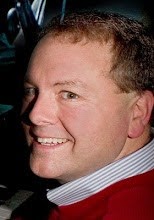
Silent film accompanist Jeff Rapsis. Yes, those are his real teeth!

Rapsis works largely by improvising as a film plays in the theater, in the tradition of theatre organists of the 1920s.

"There's something very special about the in-the-moment energy of a live improvised performance," Rapsis said. "It's never the same, and at its best it really can help a film connect with an audience and make the whole experience come together."

The original 'Dracula' (1931) starring Bela Lugosi will be shown in 35mm and with live music for one screening only on Halloween night, Sunday, Oct. 31 at 7:30 p.m. at the Somerville Theatre, 55 Davis Square, Somerville, Mass.

Tickets are $15 per person, with discounts for students and seniors. For more info, call the theater at (617) 625-5700 or visit www.somervilletheatre.com.


Saturday, October 30, 2021

Three screenings, two states, one day: Chaney in afternoon, then Nosferatu at night

Tonight: Cue the theme from 'The Love Boat.' Not.

The spooky steeplechase continues!

Today's scheduled includes live music for three silent features: at 2 p.m., a double bill of Lon Chaney thrillers in Wilton, N.H., and then this evening it's another 'Nosferatu,' this time in Ogunquit, Maine. 

More on tonight's 'Nosferatu' is in the press release below. 

This afternoon's Chaney features, 'Outside the Law' (1920) and 'The Unholy Three' (1925), are a continuation of a mini-marathon at the Town Hall Theatre that began last night with a screening of 'The Blackbird' (1926), a film I'd never accompanied before.

Lon Chaney as 'The Bishop' in 'The Blackbird' (1926).

Like all the Chaney MGM melodramas directed by Tod Browning, the plot and interaction of the characters build to a level of drama that's almost operatic, even though it's a silent film.

Because of that intensity, 'The Blackbird' does well with music that can rise to the moments when needed. 

At last night's screening, I began with a quiet vamp in a minor key, meant to evoke the seedy music halls of old London in which so much of 'The Blackbird' is set.

As the film progressed, I found the vamp, without any accompanying melody, was able to be transformed in a multitude of ways to support the drama: by turns menacing, sinister, joyous, and/or exhilarating when needed.

Ultimately, with some dissonant notes held above it, the vamp was entirely capable of carrying the great "moment of truth" scenes always found in the Chaney/Browning collaborations.

Let's hope the same magic happens with today's two features, and with 'Where East is East' (1929), which I'm scoring tomorrow (Sunday, Oct. 31) at 2 p.m. at the Town Hall Theatre to finish out the Chaney series on Halloween.

And then I head down to Boston to create live music for the Browning-directed 'Dracula' (1931) at the Somerville Theatre on Sunday night—something I've never done before and about which I'm very excited.

But first things first! See this afternoon for two Chaneys, and then this evening for 'Nosferatu' at the Leavitt Theater in Ogunquit, Maine. More details in the press release below.

*    *    *

MONDAY, OCT. 4, 2021 / FOR IMMEDIATE RELEASE

Contact Jeff Rapsis • (603) 236-9237 • jeffrapsis@gmail.com

Creepy classic thriller 'Nosferatu' to screen at Leavitt Theatre on Saturday, Oct. 30

Celebrate Halloween with pioneer silent horror movie on the big screen with live music—see it if you dare!

OGUNQUIT, Me.— Get into the Halloween spirit with a classic silent horror film.

'Nosferatu' (1922), the first screen adaptation of Bram Stoker's novel 'Dracula,' will be screened with live music on Saturday, Oct. 30 at 7 p.m. at the Leavitt Theatre, 259 Main St., Route 1, Ogunquit, Maine.

The screening will feature live music for the movie by silent film accompanist Jeff Rapsis. General admission is $12 per person. Costumes are encouraged!

'Nosferatu' (1922), directed by German filmmaker F.W. Murnau, remains a landmark work of the cinematic horror genre. It was among the first movies to use visual design to convey unease and terror.

To modern viewers, the passage of time has made this unusual film seem even more strange and otherworldly.

It's an atmosphere that silent film accompanist Jeff Rapsis will enhance in improvising live music on the spot for the screening.

"The original 'Nosferatu' is a film that seems to get creepier as more time goes by," said Rapsis, a resident of Bedford, N.H. who accompanies silent film screenings at the Leavitt and venues across the nation.

"It's a great way to celebrate Halloween and the power of silent film to transport audiences to strange and unusual places," Rapsis said.

In 'Nosferatu,' actor Max Schreck portrays the title character, a mysterious count from Transylvania who travels to the German city of Bremen to take up residence.

In the town, a rise in deaths from the plague is attributed to the count's arrival. Only when a young woman reads "The Book of Vampires" does it become clear how to rid the town of this frightening menace.

Director Murnau told the story with strange camera angles, weird lighting, and special effects that include sequences deliberately speeded up.

Although 'Nosferatu' is suitable for all family members, the overall program may be too intense for very young children to enjoy.

Modern critics say the original 'Nosferatu' still packs a powerful cinematic punch.

“Early film version of Dracula is brilliantly eerie, full of imaginative touches that none of the later films quite recaptured,” Leonard Maltin wrote recently.

Critic Dave Kehr of the Chicago Reader called 'Nosferatu' "...a masterpiece of German silent cinema and easily the most effective version of Dracula on record.”

Despite the status of 'Nosferatu' as a landmark of early cinema, another scary aspect of the film is that it was almost lost forever.

The film, shot in 1921 and released in 1922, was an unauthorized adaptation of Stoker's novel, with names and other details changed because the studio could not obtain rights to the novel.

Thus "vampire" became "Nosferatu" and "Count Dracula" became "Count Orlok." After the film was released, Stoker's widow filed a copyright infringement lawsuit and won; all known prints and negatives were destroyed under the terms of settlement.

However, intact copies of the film would surface later, allowing 'Nosferatu' to be restored and screened today as audiences originally saw it. The image of actor Max Schreck as the vampire has become so well known that it appeared in a recent 'Sponge Bob Squarepants' episode.

The historic Leavitt Theatre opened in 1923 as a summer-only silent movie house. Now approaching 100 years of operation, it continues to show movies, but also functions as a restaurant, bar, and lounge.

In reviving 'Nosferatu,' the Leavitt Theatre aims to show silent film as it was meant to be seen—in restored prints, on a large screen, with live music, and with an audience.

"All those elements are important parts of the silent film experience," said Rapsis, who will accompany the film. "Recreate those conditions, and classics of early cinema such as 'Nosferatu' leap back to life in ways that audiences still find entertaining."

Rapsis performs on a digital synthesizer that reproduces the texture of the full orchestra, creating a traditional "movie score" sound. He improvises the complete score in real time during the screening.

"Creating a movie score on the fly is kind of a high-wire act, but it can often make for more excitement than if everything is planned out in advance," Rapsis said.

The classic early horror thriller ‘Nosferatu’ will be shown on Saturday, Oct. 30 at 7 p.m. at the Leavitt Theatre, 259 Main St., Route 1 in Ogunquit. Admission $12 per person; tickets available at the door.

For more information, call (207) 646-3123 or visit www.leavittheatre.com.
Friday, October 29, 2021

Three-day Lon Chaney marathon to include silent crime drama about...ventriloquism?

Me outside the Rex Theatre last night in downtown Manchester, N.H.

Last night's screening of 'Nosferatu' (1922) drew about 150 people to the Rex Theater in downtown Manchester. Thanks for everyone (including volunteers and staff at the Rex) for all collaborating on what turned out to be a spooky good time!

But if there's no rest for the wicked, then I must have done something really bad.

Tonight marks the start of a three-day mini-marathon of rarely shown silent thrillers starring Lon Chaney, even while I'm doing 'Nosferatu' again on Saturday night in Maine and then 'Dracula' at the Somerville Theatre on Sunday.

The mini-marathon is the culmination of a two-month series of films directed by Tod Browning, most famous for Bela Lugosi's 'Dracula' (1931) and the cult classic 'Freaks' (1932).

But before that, Browning made a number of very strange silent-era movies, many of them starring Chaney. And that's what we'll be seeing this weekend at the Town Hall Theater in glamorous downtown Wilton, N.H.

Tonight (Friday, Oct. 29) it's 'The Blackbird' (1926), in which Chaney plays two roles: a criminal mastermind of London's underworld, and also "The Bishop," his pious but deformed brother.

The show starts at 7:30 p.m.; more details are in the press release below.

And if you think that sounds strange—well, we're just warming up. 

On Saturday at 2 p.m., how about 'The Unholy Three' (1925), which stars Chaney (at left) as a sideshow ventriloquist who teams up with a circus midget, a strong man, and a gorilla to create an elaborate criminal syndicate fronted by a pet shop. 

Yes, ventriloquism in silent film. It's kind of like Edgar Bergen and Charlie McCarthy on the radio.

But I'm really looking forward to it. When you're celebrating Halloween by accompanying nine silent film shows in seven days, reality begins to blur and anything seems possible. 

'The Unholy Three' is paired with 'Outside the Law' (1920), an early Browning crime drama that pairs Chaney with actress Priscilla Dean.

We'll round things out on Sunday at 2 p.m. with 'Where East is East' (1929), a late Browning/Chaney collaboration and one of the last films Chaney appeared in before his untimely death in 1930.

Hope you can make some or all of the screenings in this spooky smorgasbord. As promised, more info in the press release below.

*  *  *

An original poster for 'Where East is East' (1929).

MONDAY, OCT. 18, 2021 / FOR IMMEDIATE RELEASE
Contact Jeff Rapsis • (603) 236-9237 • jeffrapsis@gmail.com

Halloween mini-marathon of Lon Chaney thrillers to run Oct. 29-31 at Town Hall Theatre

Three days of rarely screened silent film classics with live music, all starring the 'Man of a Thousand Faces'

WILTON, N.H.—He's best known for his iconic leading roles in such classics as 'The Phantom of the Opera' (1925) and 'The Hunchback of Notre Dame' (1923).

But versatile actor Lon Chaney, known as 'The Man of a Thousand Faces,' starred in dozens of other ghoulish thrillers at the peak of the silent film era in the 1920s.

Four of these rarely screened pictures will be shown with live music during a three-day Lon Chaney mini-marathon over Halloween weekend at the Town Hall Theatre, 40 Main St., Wilton, N.H.

The screenings are free and open to the public; a donation of $10 per person is suggested to support the Town Hall Theatre's silent film programming.

All screenings will feature live music by silent film accompanist Jeff Rapsis.

• The mini-marathon opens on Friday, Oct. 29 at 7:30 p.m. with 'The Blackbird' (1926), a bizarre melodrama in which Chaney leads a double life as a criminal mastermind of the London slums and also "The Bishop," his pious but deformed brother. Will the entrance of a new woman expose his secret?

• On Saturday, Oct. 30 at 2 p.m., it's a twisted Halloween Weekend Double Feature. 'Outside the Law' (1920) features Chaney as a gangster who frames a former rival and turns his young daughter to a life of crime. In 'The Unholy Three' (1925) Chaney is a criminal ventriloquist who runs a pet store that fronts a daring scheme for fleecing wealthy customers.

• The series concludes on Sunday, Oct. 31 at 2 p.m.with 'Where East is East' (1929) featuring Chaney as "Tiger Haynes," a jaded animal trapper in the jungles of Laos, who cares only for his young daughter, Toyo. The daughter plans to marry a circus owner's son, but the couple's happiness is threatened by the appearance of a mysterious woman.

All four films were directed by Tod Browning, a frequent Chaney collaborator best known for helming the original 'Dracula' (1931) starring Bela Lugosi and the early cult classic 'Freaks' (1932), a horror film featuring handicapped circus performers.

The four Chaney films are part of an ongoing retrospective at the Town Hall Theatre highlighting Browning's early work.

Browning (at left) specialized in twisted melodramas, gritty crime thrillers, and bizarre stories that drew on his own background as a carnival sideshow entertainer—themes that are on display throughout the Chaney mini-marathon.

Unlike Chaney's iconic performance in the lead role of 'Phantom of the Opera,' many of the Browning films feature Chaney without heavy makeup.

The roles, however, are as demanding as any that Chaney tackled, and show the actor's immense range as a performer.

"These early Tod Browning pictures starring Lon Chaney are great for Halloween because of the ghoulish ideas that drive them," Rapsis said. "When shown in a theater with live music and an audience, they really come to life, which is also in spirit of Halloween."

The Town Hall Theatre's three-day Halloween weekend Lon Chaney mini-marathon opens on Friday, Oct. 29 at 7:30 p.m. with 'The Blackbird' (1926); followed on Saturday, Oct. 30 at 2 p.m. with 'Outside the Law' (1920) and 'The Unholy Three' (1925); and concludes on Sunday, Oct. 31 at 2 p.m. with 'Where East is East' (1929).

Live music for all screenings will be provided by silent film accompanist Jeff Rapsis.

Admission is free to all screenings, with a suggested donation of $10 per person. The Town Hall Theatre is located at 40 Main St., Wilton, N.H.; for more information, call (603) 654-3456 or visit www.wiltontownhalltheatre.com.


Thursday, October 28, 2021

Tonight: 'Nosferatu' in Manchester, N.H. Plus, this Halloween, bringing theaters back from the dead

'Nosferatu': traveling by sea is so relaxing!

Halloween approach-eth!

Tonight I'm doing music for 'Nosferatu' (1922) at the Rex Theatre in downtown Manchester, N.H. 

More details are below in the press release pasted into the bottom of this post.

But now, a few words about an appropriate subject for Halloween: bringing back theaters from the dead.

Example: last night's screening of 'Phantom of the Opera' (1925) in the recently opened Park Theatre in Jaffrey, N.H. 

The brand new venue is a recreation of the original Park Theatre, which operated from 1922 to 1976.

Now it's back, in the form of a completely new building with great acoustics. Bravo!


The newly rebuilt Park Theatre in Jaffrey, N.H.

And tonight's 'Nosferatu' is at the Rex, an old theater in downtown Manchester that was recently renovated and transformed into a modern venue for music, film, and comedy.

And then there was last week's screening of 'Phantom' at the Flying Monkey Moviehouse in Plymouth, N.H., which about 10 years ago was rescued from oblivion and turned into a vibrant venue for live music and film.

And just before that, I accompanied 'Dr Jekyll & Mr. Hyde' (1920) at the Center for the Arts in Natick, Mass., which is housed in a beautifully renovated 19th century firehouse. 

Up in Brandon, Vt., my monthly screenings at the venerable Town Hall and Community Center produce income to support the ongoing restoration of this 19th century meeting hall.

And the Somerville Theatre (where I'm doing music for 'Dracula' (1931) on Halloween night) just reopened after restoring its original Crystal Ballroom to active duty as an events space.

And the Leavitt Theatre in Ogunquit, Maine—where I'll accompany 'Nosferatu' on Saturday night—was recently transformed by the addition of a restaurant and bar inside the theater.

So here in my corner of the world, we're particularly blessed with venues that, one way or another, have been rescued from oblivion and turned into community gathering places.

I am grateful for that—but that's a sentiment more appropriate for Thanksgiving, and I'm still in the midst of working on Halloween here.

So come out to the Rex tonight and take in 'Nosferatu' with live music by me. More info in the press release below...

*   *   *

A scene from 'Nosferatu' (1922), screaming er, screening tonight at the Rex Theatre.

MONDAY, OCT. 4, 2021 / FOR IMMEDIATE RELEASE 

Contact Jeff Rapsis • (603) 236-9237 • jeffrapsis@gmail.com

Creepy classic thriller 'Nosferatu' to screen at Rex Theatre on Thursday, Oct. 28

Celebrate Halloween with pioneer silent horror movie on the big screen with live music—see it if you dare!

MANCHESTER, N.H.— Get into the Halloween spirit with a classic silent horror film.

'Nosferatu' (1922), the first screen adaptation of Bram Stoker's novel 'Dracula,' will be screened with live music on Thursday, Oct. 28 at 7:30 p.m. at the Rex Theatre, 23 Amherst St., Manchester, N.H.

The screening will feature live music for the movie by silent film accompanist Jeff Rapsis. General admission is $10 per person.

'Nosferatu' (1922), directed by German filmmaker F.W. Murnau, remains a landmark work of the cinematic horror genre. It was among the first movies to use visual design to convey unease and terror.

To modern viewers, the passage of time has made this unusual film seem even more strange and otherworldly.

It's an atmosphere that silent film accompanist Jeff Rapsis will enhance in improvising live music on the spot for the screening.

"The original 'Nosferatu' is a film that seems to get creepier as more time goes by," said Rapsis, a resident of Bedford, N.H. who accompanies silent film screenings at venues across the nation. "It's a great way to celebrate Halloween and the power of silent film to transport audiences to strange and unusual places."
 

In 'Nosferatu,' actor Max Schreck portrays the title character, a mysterious count from Transylvania who travels to the German city of Bremen to take up residence.

In the town, a rise in deaths from the plague is attributed to the count's arrival. Only when a young woman reads "The Book of Vampires" does it become clear how to rid the town of this frightening menace.

Director Murnau told the story with strange camera angles, weird lighting, and special effects that include sequences deliberately speeded up.

Although 'Nosferatu' is suitable for all family members, the overall program may be too intense for very young children to enjoy.

Modern critics say the original 'Nosferatu' still packs a powerful cinematic punch.

“Early film version of Dracula is brilliantly eerie, full of imaginative touches that none of the later films quite recaptured,” Leonard Maltin wrote recently.

Critic Dave Kehr of the Chicago Reader called 'Nosferatu' "...a masterpiece of German silent cinema and easily the most effective version of Dracula on record.”

Despite the status of 'Nosferatu' as a landmark of early cinema, another scary aspect of the film is that it was almost lost forever.

The film, shot in 1921 and released in 1922, was an unauthorized adaptation of Stoker's novel, with names and other details changed because the studio could not obtain rights to the novel.

Thus "vampire" became "Nosferatu" and "Count Dracula" became "Count Orlok." After the film was released, Stoker's widow filed a copyright infringement lawsuit and won; all known prints and negatives were destroyed under the terms of settlement.

However, intact copies of the film would surface later, allowing 'Nosferatu' to be restored and screened today as audiences originally saw it. The image of actor Max Schreck as the vampire has become so well known that it appeared in a recent 'Sponge Bob Squarepants' episode.

The Rex Theatre's silent film series is intended to give local audiences a chance to experience the best of early Hollywood the way it was meant to be seen—on the big screen, with live music, and with an audience.

"These films weren't intended to be shown on a laptop," Rapsis said. "It's worth putting the whole experience together, because you can still see why audiences first fell in love with the movies," Rapsis said.

Upcoming screenings include:

• Thursday, Feb. 17, 2022, 7:30 p.m.: 'Girl Shy' (1924) starring Harold Lloyd. Celebrate Valentine's Day with the original rom-com, a Harold Lloyd gem starring one of the masters of silent comedy and featuring an unforgettable race-to-the-church finish.

• Thursday, April 21, 2022, 7:30 p.m.: 'Ben Hur' (1925) starring Ramon Novarro and a cast of thousands. In the Holy Land, a Jewish prince is enslaved by the occupying Romans; inspired by encounters with Jesus, he lives to seek justice. One of the great religious epics of Hollywood's silent film era, including a legendary chariot race that's lost none of its power to thrill.

‘Nosferatu’ will be shown on Thursday, Oct. 28 at 7:30 p.m. at the Rex Theatre, 23 Amherst St., Manchester, N.H. Admission is $10 per person. For more info and to buy tickets, visit www.palacetheatre.org or call (603) 668-5588.

Wednesday, October 27, 2021

Next up: music for 'Phantom of the Opera' at the newly opened Park Theatre in Jaffrey, N.H.

Happy Halloween as I preview a frightening schedule of spooky screenings.

As we enter the busiest stretch of the Halloween silent film season, the state of my mind is best represented by the above selfie, taken just prior to doing music for a screening of 'Phantom of the Opera' (1925) on Thursday, Oct. 21 in Plymouth, N.H.

In a word: Aaaaaaaaaahhhhhhhhhhhh!

It's been a wild ride so far, with spooky screenings last week in New Hampshire, Massachusetts, and Vermont, and for good measure a pair of vintages railroad melodramas last Sunday afternoon.

Next up: 'Phantom of the Opera' again, tonight (Wednesday, Oct. 27) in the brand new and recently opened Park Theatre in Jaffrey, N.H. More details are in the press release pasted in below.

Thursday night brings 'Nosferatu' (1922) at the Rex Theater (another new venue) in downtown Manchester, N.H. Friday brings the first installment of a three-day series of Tod Browning/Lon Chaney thrillers at the Town Hall Theatre in Wilton, N.H., while Saturday night finds me in Ogunquit, Maine for another 'Nosferatu.'

Sunday night is a biggie: live music for the screening of a 35mm print of 'Dracula' (1931), a talking film with virtually no background music. 

It's the first time I've tried adding a live score to a "talkie" and I'm really looking to trying to help Bela connect but without getting in the way of director Tod Browning's eerie atmosphere—one in which silence plays an important role.

The show marks my return to the venerable (and recently reopened) Somerville Theatre, of of the Boston area's most highly regarded venues. It was where I accompanied my last screening (a Rin Tin Tin program in March 2020) before the pandemic shut everything down.

And the spooky steeplechase continues on Monday with music for 'Nosferatu,' this time for the relaunch of the 'Sounds of Silents' series at the Coolidge Corner Theatre, another Boston-area landmark.

Before plunging ahead, a few scenes from recent screenings.

- After doing music for 'Dr. Jekyll & Mr. Hyde' (1920) on Sunday, Oct. 17 in Natick, Mass., I was delighted when a woman paid me the ultimate compliment: "I was so absorbed in the movie that I forgot someone was playing the music live."

To accompany the film, I used a harpsichord texture (with percussion mixed in where needed) that I felt was very effective at evoking both the genteel world of the mild-mannered Dr. Jekyll and the depraved manner of his alter ego, Mr. Hyde.

Most importantly, it was one texture that didn't have to change with the various on-screen transformations. Rather, it was the music itself (the notes and chords and so on) that transformed, while still keeping within the same basic sound world.

And I think that's crucial, because anything more would have called attention to the music, which would have taken people out of the film. 

Strange: the 'Dr. Jekyll' story is a tale about transformation. And in scoring it, I managed to make myself invisible! 

- Before setting out on the 2½-hour drive home after accompanying 'The Hunchback of Notre Dame' (1922) in Brandon, Vt., I was warned to look out for moose, as the herd was on the move.

I didn't see any Bullwinkles. But while driving full speed down I-89, a fox darted out from nowhere into my headlines and right in front of my car. 

I actually screamed, and instinctively started to swerve to avoid it—a dangerous think to do at 75 mph. But the fox was foxy enough to quickly scoot back to where it came from as I barreled on through.

Wow! It took it as a good reminder of the experience that people seek when they come to see 'Phantom' and 'Nosferatu,' films I've seen a hundred times. So I'll do my best.

- Sometimes you get unexpected comments. This past Sunday (Oct. 24), after accompanying a screening of the railroad melodrama "West-Bound Limited' (1923) in Warner, N.H., a woman came up to me and posed this question: "What would you do without the diminished chord?" 

Wow! Praise or a slam? I'm still trying to figure out what she meant.

Okay, below is info on tonight's 'Phantom of the Opera' in Jaffrey, N.H. If you're within driving distance, come join us! If you're not, there's still plenty of time to get on plane. 

And remember—in silent film, no one can hear you scream!

*  *  *

A vintage poster for 'The Phantom of the Opera' (1925.)

MONDAY, OCT. 18, 2021 / FOR IMMEDIATE RELEASE
Contact Jeff Rapsis • (603) 236-9237 • jeffrapsis@gmail.com

'Phantom of the Opera' with live music at Jaffrey's Park Theatre on Wednesday, Oct. 27

Just in time for Halloween: Pioneer classic silent horror flick starring Lon Chaney shown on the big screen with live music

JAFFREY, N.H.—Get into the Halloween spirit with a spooky silent horror film!

'The Phantom of the Opera' (1925), the silent big screen adaptation of the classic thriller, will be shown with live music on Wednesday, Oct. 27 at 7 p.m. at the newly reopened Park Theatre, 19 Main St., Jaffrey, N.H.

The screening will feature live accompaniment by Jeff Rapsis, a New Hampshire-based composer who specializes in creating music for silent films.

Admission is $12 per person. Tickets are available online at www.theparktheatre.org or at the door.

The show will allow audiences to experience 'Phantom' at the Park Theatre the way it was intended to be seen: on the big screen, with live music, and with an audience.  

Jaffrey's original Park Theatre opened in 1922, and was a center of community life until closing in the 1970s.

The newly rebuilt Park Theatre opened this past August, the result of a decade-long grassroots effort led by local residents that saw the old theater replaced with a new performing arts center.

'The Phantom of the Opera,' starring legendary actor Lon Chaney in the title role, remains a landmark work of the cinematic horror genre. To modern viewers, the passage of time has made this unusual film seem even more strange and otherworldly.

It's an atmosphere that silent film accompanist Jeff Rapsis will try to enhance in improvising live music on the spot for the screenings.

"The original 'Phantom' is a film that seems to get creepier as more time passes," said Rapsis, who is based in New Hampshire and frequently accompanies films throughout New England. "It's a great way to celebrate Halloween, and also the power of silent film to transport audiences to strange and unusual places."

'The Phantom of the Opera,' adapted from a 19th century novel by French author Gaston Leroux, featured Chaney as the deformed Phantom who haunts the opera house. The Phantom, seen only in the shadows, causes murder and mayhem in an attempt to force the opera's management to make the woman he loves into a star.

The film is most famous for Lon Chaney's intentionally horrific, self-applied make-up, which was kept a studio secret until the film's premiere.

Chaney transformed his face by painting his eye sockets black, creating a cadaverous skull-like visage. He also pulled the tip of his nose up and pinned it in place with wire, enlarged his nostrils with black paint, and put a set of jagged false teeth into his mouth to complete the ghastly deformed look of the Phantom.

Chaney's disfigured face is kept covered in the film until the now-famous unmasking scene, which prompted gasps of terror from the film's original audiences.

"No one had ever seen anything like this before," Rapsis said. "Chaney, with his portrayal of 'The Phantom,' really pushed the boundaries of what movies could do."

This screening not brought to you by the American Dental Association. 

Chaney, known as the "Man of a Thousand Faces" due to his versatility with make-up, also played Quasimodo in the silent 'Hunchback of Notre Dame' (1923) and circus performer 'Alonzo the Armless' in Tod Browning's 'The Unknown' (1927).

The large cast of 'Phantom of the Opera' includes Mary Philbin as Christine Daaé, as the Phantom's love interest; character actor Snitz Edwards; and many other stars of the silent period.

'The Phantom of the Opera' proved so popular in its original release and again in a 1930 reissue that it led Universal Studios to launch a series of horror films, many of which are also regarded as true classics of the genre, including 'Dracula' (1931), 'Frankenstein' (1931), and 'The Mummy' (1932).

The silent film version of 'Phantom' also paved the way for numerous other adaptations of the story, up to and including the wildly successful Andrew Lloyd Webber musical from 1986 that continues to run on Broadway and in productions around the world.

‘The Phantom of the Opera’ (1925) will be shown on Wednesday, Oct. 27 at 7 p.m. at the Park Theatre, 19 Main St., Jaffrey, N.H. Admission is $12 per person. Tickets are available online at www.theparktheatre.org or at the door. For more information, call the box office at (603) 532-8888.

Thursday, October 14, 2021

On your marks: My annual Halloween marathon of spooky silent film screenings starts this Sunday

John Barrymore stars in 'Dr Jekyll & Mr. Hyde' (1920) on Sunday, Oct. 17 at the Center for the Arts in Natick, Mass.

This weekend marks start of the annual "Silent Film Halloween Marathon"—a spooky steeplechase of screenings that will take us through the end of the month and beyond.

On Sunday, Oct. 17, I'll be in Natick, Mass. to do music for the 1920 version of 'Dr. Jekyll & Mr. Hyde' at the Center for the Arts. Showtime is 4 p.m. and lots more info in the press release below.

After that, it's a dozen screenings of classic silents with live music, most intended to scare up some fun in advance of Halloween. (There's a railroad program in there as well!)

It all culminates in two "big time" gigs in the Boston area: live music for 'Dracula' (1931) at the Somerville Theatre on Sunday, Oct. 31, and then 'Nosferatu' (1922) at the Coolidge Corner Theatre.

I'll report on the marathon as it progresses. For now, hope to see you at 'Dr. Jekyll & Mr. Hyde' in Natick this Sunday...

*  *  *

Original artwork promoting the 1920 version of 'Dr. Jekyll & Mr. Hyde.'

THURSDAY, SEPT. 23, 2021 / FOR IMMEDIATE RELEASE
Contact: Jeff Rapsis • (603) 236-9237 • jeffrapsis@gmail.com

Natick Center for the Arts to screen 1920 silent film version of 'Dr. Jekyll & Mr. Hyde'

Early adaptation of Robert Louis Stevenson classic features John Barrymore in title role; shown with live music on Sunday, Oct. 17

NATICK, Mass.— It was first a best-selling novel, then an immensely popular stage play. So it was just a matter of time before the movies tackled 'Dr. Jekyll & Mr. Hyde,' Robert Louis Stevenson's classic tale of a man tortured by two personalities—one thoroughly good and the other completely evil.


Just in time for Halloween, an early (and eerie) silent film version of the 'Dr. Jeykll & Mr. Hyde' released in 1920 will be shown with live music on Sunday, Oct. 17 at 4 p.m. at the Center for the Arts, 14 Summer St., Natick, Mass.


Tickets are $12; Center for the Arts members $10.

Live music will be provided by Jeff Rapsis, a New Hampshire-based silent film accompanist.

Starring iconic actor John Barrymore, the film was a huge early hit for Paramount Pictures. It helped establish the "thriller" genre and showed the potential of the movies to vividly tell disturbing and creepy stories.

Dr. Jekyll, a London physician and philanthropist, becomes fascinated with the dual nature of man after the profligate Sir George Carew exposes him to temptation. When Jekyll invents a potion that separates the good from the evil in a person, he decides to live both roles and names the evil persona Mr. Hyde.

Jekyll is in love with Millicent, the daughter of Sir George; meanwhile, Hyde prowls the poorer districts of London, debases and discards Theresa, a dance hall performer. Jekyll's control over Hyde weakens gradually to the point where his alter ego resorts to murder, forcing Hyde into a showdown to save his loved ones and reign in the evil he himself has spawned.

The film put Barrymore, a noted stage actor, on the cinematic map. Following 'Dr. Jekyll & Mr. Hyde,' Barrymore would go on to be one of the biggest stars of early cinema. His handsome visage, dubbed "the great profile," was instantly recognizable to movie-goers of the time, who flocked to see Barrymore in later films such as 'Sherlock Holmes' (1922), 'Don Juan' (1926), and 'The Beloved Rogue' (1927).


Barrymore's performance in 'Dr. Jekyll & Mr. Hyde' is noteworthy in part because, in an era of limited special effects, his portrayal of the early stages of Jekyll's transformation was done using only facial expressions and gestures. Make-up was only used later in the film following the full transformation of the Hyde character.

Stevenson's story has been refilmed many times, including versions in 1931 and 1941, and was most recently remade in 2008 as a TV movie starring Dougray Scott.

In screening the original 'Dr. Jekyll & Mr. Hyde,' the Natick Center for the Arts aims to recreate all essential elements of silent film experience: high quality prints shown on a large screen, with live music and an audience.

"These films caused people to fall in love with the movies for a very good reason," said Jeff Rapsis, who will improvise a musical score during the screening. "They were unique experiences, and if you can recreate the conditions under which they were shown, they have a great deal of life in them.

"Though they're the ancestors of today's movies, silent film is a very different art form than what you see at the multiplex today, so it's worth checking out as something totally different," Rapsis said.

Rapsis performs on a digital synthesizer that reproduces the texture of the full orchestra and creates a traditional "movie score" sound.

The silent film version of 'Dr. Jeykll & Mr. Hyde' (1920) will be screened with live music on Sunday, Oct. 17 at 4 p.m. at the Center for the Arts, 14 Summer St., Natick, Mass.

Tickets are $12; Center for the Arts members $10. Tickets must be purchased in advance online at www.natickarts.org. For more information, call the Center box office at (508) 647-0097 or visit www.natickarts.org.