Thursday, July 14, 2022

Up next: Garbo and Moore double feature, but first: my annual fried seafood pilgrimage

I can think of two ways I don't mind my federal tax dollars being spent. 

One is film preservation efforts by the Library of Congress. More of that, please.

The other is coastal fishing subsidies, which enable we citizens to enjoy a reliable supply of fried clams and scallops.

(Okay, with maybe some allowances for national defense and a transportation network. But not too much.)

Anyway, with the second priority in mind, yesterday I made my once-a-year pilgrimage to Ceal's Clam Stand in Seabrook, N.H.

The result is seen above; a combo plate of clams and scallops, served on french fries and with coleslaw on the side. Eaten at a peeling red picnic table 100 yards from the Atlantic Ocean, there's nothing like it.

I really can't indulge in a jumbo-sized plate of fried seafood but once a year. More often, and I'd probably end up in the hospital, and also go broke. (This year's combo plate "market" price: $40.28.)  

But if you do it once a season, Ceal's is the place to go. It's a well-worn shack along Route 1A that's been in the same family since 1948. Open only from Memorial Day to Labor Day, they do something with the batter that makes it unlike any other. 

Also, they fry the seafood separately from the potatoes or chicken tenders, and I think that makes a HUGE difference.

The fried seafood feast preceded a screening of Buster Keaton's 'Battling Butler' (1926), which I accompanied that evening up the coast at the Leavitt Theatre in Ogunqit, Maine.

July and August being the two business months of the year for New England's coastal resorts, so the Leavitt was blessed with a solid turnout of 83 people.

And although 'Butler' has a reputation as one of the lesser Keatons, last night's screening produced consistent laughs right from the opening scene, where an effete Buster is told to rough it outdoors and make a man of himself.

People really got the comedy right away, cracking up at the sight of valet Snitz Edwards straightening Buster's hair as he sits passively on a divan. 

It was that way throughout the film. During the final climactic fight in the dressing room, Buster's sudden transformation into a silent film Canelo Álvarez even earned him a spontaneous ovation — something I've never seen happen with this film.

So a good time was had by all, except the boxing champ whom Buster beat senseless. Then again, maybe he enjoyed the change of pace. 

As for the music: well, I found that more than ever, less is more. 'Butler' in particular seems to benefit from a very light touch throughout, which I was able to maintain. 

For contrast, there are a few times where a loud, blaring march came in handy. It's especially effective to play "Here Comes the Bride" as performed by a local town marching band on-screen.

Next up is a double feature in the ongoing 'Women of the Silent Screen' series at the Town Hall Theatre in Wilton, N.H.

It's Greta Garbo vs. Colleen Moore in a two-for-one program that pairs drama with comedy. Showtime is Sunday, July 17 at 2 p.m.; for more details, check out the press release below.

*  *  *

A poster for 'The Single Standard' (1929), a late MGM silent starring Greta Garbo.

MONDAY, JULY 11, 2022 / FOR IMMEDIATE RELEASE
Contact Jeff Rapsis • (603) 236-9237 • jeffrapsis@gmail.com

Greta Garbo, Colleen Moore silent films with live music in Wilton, N.H. on Sunday, July 17

Screenings continues Town Hall Theatre's summer series spotlighting female stars of the silent cinema

WILTON, N.H.—A double feature of two very different films is next up the Town Hall Theatre's summer-long salute to female stars of the silent screen.

'The Single Standard' (1929) starring Greta Garbo and 'Ella Cinders' (1926) starring Colleen Moore will be screened with live music on Sunday, July 17 at 2 p.m. at the Town Hall Theatre, 40 Main St., Wilton, N.H.

Admission is free; a donation of $10 per person is suggested to help defray expenses.

In the late MGM silent drama 'The Single Standard,' screen icon Garbo plays a socialite determined to treat men the way they treat women.

Weary of the "good old boy" mentality which dictates that men can flit from girl to girl while women are expected to remain faithful, San Francisco socialite Arden Stuart (Garbo) decides to adopt the "single standard" and play the field herself.

A poster for 'Ella Cinders' (1926) starring Colleen Moore.

In the comedy 'Ella Cinders,' Colleen Moore reinvents the Cinderella fairy tale with a modern (1920s) comedic twist.

More plays a moviestruck small-town girl who wins a talent contest purportedly sponsored by a film studio.

First prize is a trip to Hollywood and a screen test, but when Ella arrives in Tinseltown, she discovers that the contest was a fraud.

Momentarily disheartened, Ella vows to get into pictures by any means possible.

The double feature continues a Town Hall Theatre summer series featuring female stars of the silent screen, all with live music by accompanist Jeff Rapsis.

Here's the line-up of upcoming screenings:

• Sunday, July 24 at 2 p.m.: Norma Talmadge in 'Within the Law.' Silent screen dramatic star Norma Talmadge plays a shopgirl wrongly imprisoned, and bent on revenge against the man who wronged her in this vintage 1923 release. Filmed on location in New York City.

• Sunday, Aug. 14 at 2 p.m.: Marion Davies in 'Beverly of Graustark.' Gender-bending 1926 comedy in which Davies stars as an American cousin of a European prince—and with whom she must switch places to keep the kingdom from unraveling. Newly released title!

• Sunday, Aug. 28 at 2 p.m.: Double feature with Gloria Swanson, Mae Marsh. Silent screen icon Gloria Swanson stars in 'Fine Manners' (1926), a comedy about a chorus girl trying to keep up with high society beau. In 'Daddies' (1924), Mae Marsh plays an unlikely orphan adopted by the head of the local Bachelor's Club. Hilarity ensues!

All titles in the series have never been shown as part of the Town Hall Theatre's long-running silent film programming.

"We specifically chose films that we haven't run before in Wilton, in part to explore the incredible range and surprising diversity of roles women played in Hollywood's silent era," said Jeff Rapsis, the Town Hall Theatre's silent film accompanist.

‘The Single Standard’ (1929) starring Greta Garbo and 'Ella Cinders' (1926) starring Colleen Moore will be shown with live music on Sunday, July 17 at 2 p.m. at the Town Hall Theatre, 40 Main St., Wilton, N.H.

Admission is free; a donation of $10 per person is suggested to help defray expenses.

For more info, visit www.wiltontownhalltheatre.com or call (603) 654-3456.

Monday, July 11, 2022

Heading Downeast to accompany Buster's 'Butler,' but first some thoughts on 'North by Northwest'

Cary Grant vs. cropduster in 'North by Northwest' (1959).

Yesterday I went down to the Brattle Theatre in Harvard Square to catch a matinee screening of 'North by Northwest' (1959) in 35mm.

Why? Because I plan to someday work on a book that tells a story based on Hitchcock's spy thriller. I'm not quite there yet, but soon.

For now, all I can do is report what I overheard yesterday afternoon in the theater, which was surprisingly crowded.

Young Person Behind Me Before Show Started: "Wait, this film is in color? So did they invent color between the last film we saw and this one?"

This caught my attention. Further discussion revealed that they'd recently seen the Orson Welles' 'Touch of Evil' (1958), made the year before 'North by Northwest,' and the assumption was apparently was that once color was available, everything just switched over to it. Wow.

Well, whatever. We all discover the world around us in our own way And people have to start somewhere. 

And I should be glad that they're willing to spend a sunny Sunday afternoon in a darkened theater with Cary Grant and Eva Marie Saint and Bernard Herrmann, or watch a film such as 'Touch of Evil' in a theater. (Which they apparently had done.)

After the Hitchcock film ended, the comment I caught was: "Was that supposed to be good in a kind of 'so bad it's good' kind of way?" Again, wow.

Well, not sure what they'd make of Buster Keaton in 'Battling Butler' (1926), but that's the film I'm accompanying this Wednesday at the Leavitt Theatre in Ogunquit, Maine.

My Brattle neighbors may not be in attendance, but I hope you will. Below is the press release with all the info...

*   *   *

Buster in a posed shot with his porkpie hat (which he doesn't wear in the film) from 'Battling Butler' (1926).

FRIDAY, JULY 1, 2022 / FOR IMMEDIATE RELEASE
Contact Jeff Rapsis • (603) 236-9237 • jeffrapsis@gmail.com

Buster Keaton's 'Battling Butler' at Leavitt Theatre on Wednesday, July 13

Silent film series continues with knockout boxing comedy focusing on the fight game, accompanied by live music

OGUNQUIT, Maine—He never smiled on camera, earning him the nickname of "the Great Stone Face." But Buster Keaton's comedies rocked Hollywood's silent era with laughter throughout the 1920s.

Acclaimed for their originality, clever visual gags, and amazing stunts, Keaton's films remain popular crowd-pleasers today.

See for yourself with a screening of 'Battling Butler' (1926), one of Keaton's landmark feature films, on Wednesday, July 13 at 7 p.m. at the historic Leavitt Theatre, 259 Main St, Route 1 in Ogunquit, Maine.

Admission is $12 per person. Live music will be provided by accompanist Jeff Rapsis, a New Hampshire-based performer who specializes in creating music for silent film presentations.

'Battling Butler' tells the story of pampered millionaire Alfred Butler (Keaton) who tries to impress the girl of his dreams (Sally O'Neil) by pretending to be a championship boxer with the same name.

The masquerade leads to knockout comedy both in and outside the ring, giving Keaton ample opportunity to display his gifts for physical and visual comedy.

In the 1920s, boxing rivaled baseball as the nation's most popular sport. Neighborhoods, communities, and ethnic groups all rooted for their favorite fighters, and heavyweight champion Jack Dempsey ranked as an international celebrity.

Because of this, boxing stories were popular with early movie audiences as well.

"As an elemental contest between two opponents, boxing inspired early filmmakers to do some great work," Rapsis said. "It's a visual sport that doesn't require a lot of dialogue or commentary to understand, and so was perfect for silent movies."

Keaton, along with Charlie Chaplin and Harold Lloyd, stands as one of the silent screen's three great clowns.

Many critics regard Keaton as the best of all; Roger Ebert wrote in 2002 that "in an extraordinary period from 1920 to 1929, (Keaton) worked without interruption on a series of films that make him, arguably, the greatest actor-director in the history of the movies."

While making films, Keaton never thought he was an artist, but an entertainer trying to use the then-new art of motion pictures to tell stories and create laughter.


All those talents are on display in 'Battling Butler,' which holds the distinction of being the top-grossing title of Keaton's silent features.

The Leavitt Theatre's silent film screenings provide local audiences the opportunity to experience silent film as it was intended to be shown: on the big screen, in restored prints, with live music, and with an audience.

“These films are still exciting experiences if you can watch them as they were designed to be shown,” said Rapsis, accompanist for the screenings.

“There’s a reason people first fell in love with the movies, and we hope to recreate that spirit. At their best, silent films were communal experiences in which the presence of a large audience intensifies everyone’s reactions.”

The Leavitt, a summer-only moviehouse, opened in 1923 at the height of the silent film era, and has been showing movies to summertime visitors for nearly a century.

The silent film series honors the theater's long service as a moviehouse that has entertained generations of Seacoast residents and visitors, in good times and in bad.

Following 'Battling Butler' on Wednesday, July 13 at 7 p.m., other programs in this year's Leavitt silent film series include:

• Wednesday, July 27 at 7 p.m.: Greta Garbo in 'The Temptress' (1926). MGM drama with Garbo destroying the lives of men everywhere. Unusual in that the film was made with two very different endings per order of studio boss Louis B. Mayer; both will be screened.

• Wednesday, Aug. 10 at 7 p.m.: Clara Bow stars in 'Mantrap' (1926). Battle-of-the-sexes comedy; city boy Richard Dix tries to win his girlfriend by taking up the rugged cowboy life, only to find it not so rugged. Rarely screened comedic gem from the height of the silent era.

• Wednesday, Aug. 17 at 7 p.m.: 'Blood and Sand' (1922). Rudolph Valentino in his first starring role, as a sexy bullfighter in this romantic thriller. Will Rudy choose the pure love of Carmen, or the sinister charms of the exotic Doña Sol? And will he survive the choice?

• Wednesday, Sept. 14 at 7 p.m.: Rare race drama: 'The Flying Ace' (1926). All-Black motion picture added to the National Film Registry last year. Rare example of 'race' cinema, produced for audiences in Black-only theaters commonly found in segregated parts of the nation.

• Wednesday, Sept. 28 at 7 p.m.: F.W. Murnau's 'The Last Laugh' (1924). Towering performance by Emil Jannings as aging doorman at posh city hotel whose unexpected change of jobs robs him of self-respect and identity. Directed by Murnau as a purely visual tale, no dialogue intertitles.

• Saturday, Oct. 29 at 7 p.m.: 'Der Golem' (1920). Prepare for Halloween with one very weird flick! In 16th-century Prague, a rabbi creates a giant creature from clay, called the Golem. Using sorcery, he brings the creature to life in order to protect the Jews of Prague from persecution.

Buster Keaton stars in 'Battling Butler,' to be shown on Wednesday, July 13 at 7 p.m. at the historic Leavitt Theatre, 259 Main St, Route 1 in Ogunquit, Maine.

Admission is $12 per person, general seating. For more info, call (207) 646-3123 or visit www.leavittheatre.com.

Friday, July 1, 2022

Next up: Harry Langdon in 'The Strong Man' (1926) on Wednesday, July 6 in Plymouth, N.H.

Harry Langdon stars in 'The Strong Man' (1926), screening on Wednesday, July 6.

Happy 4th of July weekend!

I'm be using the time to recover from last Wednesday's screening of 'Robin Hood' (1922) at the Leavitt Theatre in Ogunquit, Maine. 

It's a fun film to create music for, but also exhausting. Not in a bad way—it's just one of those movies I find really demands the best I can bring to it, which can be draining.

I like to think I bring that attitude to any film I accompany. Once the lights go down, I should be willing to give my all to make a film work. 

It's just that some films, 'Robin Hood' among them, seem to draw more heavily on the battery, so to speak. 

So now I'm in "recharge" mode, which will get me ready to do music for a screening of Harry Langdon's 'The Strong Man' (1926) on Wednesday, July 6 at the Flying Monkey Moviehouse up in Plymouth, N.H.

To help promote the show, I went to look up a post in which I compared Harry in 'The Strong Man' to Jesus, and I was surprised to find it's from more than 10 years ago!

Check it out: Harry Langdon as Jesus.

Or just check out the press release below. Either way, hope to see you up in Plymouth after the long weekend!

*  *  *

Harry finds himself over a barrel in 'The Strong Man' (1926).

TUESDAY, JUNE 14, 2022 / FOR IMMEDIATE RELEASE
Contact Jeff Rapsis • (603) 236-9237 • jeffrapsis@gmail.com

Frank Capra's very first movie highlights Flying Monkey silent film program on Wednesday, July 6

Screening features Harry Langdon's classic comedy 'The Strong Man' shown with live music; fun family activity suitable for all ages

PLYMOUTH, N.H. — Silent film with live music returns to the Flying Monkey Moviehouse and Performance Center in July with a showing of an uproarious comedy starring Harry Langdon.

The screening of 'The Strong Man' on Wednesday, July 6 at 6:30 p.m., gives families a chance to enjoy a fun activity suitable for all ages.

General admission is $10 per person. The Flying Monkey is located at 39 Main St., Plymouth, N.H.

Directing 'The Strong Man' was young first-timer Frank Capra, who would later go on to create such Hollywood classics as 'Mr. Smith Goes to Washington' (1939) and 'It's a Wonderful Life' (1946).

The screening, the latest in the Flying Monkey's silent film series, will feature live accompaniment by Jeff Rapsis, a New Hampshire-based composer who specializes in creating scores for silent films.

'The Strong Man' tells the story of a World War I soldier (Langdon) who, following his discharge, finds work as assistant to a circus strong man. As the act travels the country, Langdon continually searches for a girl he corresponded with while stationed overseas in the military.

The search leads to a town controlled by Prohibition-era gangsters, which forces Harry to test the limits of his own inner strength even as he looks for his dream girl. Can Harry triumph over the bad guys? And is love more powerful than brute strength?

The feature-length film showcases the unique child-like personality of Langdon, who is largely forgotten today. For a brief time in the 1920s, however, he rivaled Charlie Chaplin as Hollywood's top movie clown.

Langdon's popularity, which grew quickly in the last years of the silent era, fizzled as the movie business abruptly switched to talkies starting in 1929.

Harry Langdon in 'The Strong Man' (1926).

'The Strong Man' was selected in 2007 for preservation in the U.S. National Film Registry by the Library of Congress as being "culturally, historically, or aesthetically significant."

In recent years, 'The Strong Man' has been recognized as a major achievement of the silent film era—a satisfying and timeless balance of emotion and comedy.

"A little tragedy and a lot of laughs can be seen in 1926's The Strong Man," wrote critic Richard von Busack in 2007. "Director Frank Capra's energy and sturdy plot sense counterpoint Langdon's wonderful strangeness."

'The Strong Man' will be accompanied by live music by Jeff Rapsis, a New Hampshire-based silent film accompanist who performs at venues across the region and beyond.

"These films were created to be shown on the big screen as a communal experience," Rapsis said. "With an audience and live music, they still come to life in the way their makers intended them to.

"The Flying Monkey's silent film screenings are a great chance for people to experience films that first caused people to first fall in love with the movies," he said.

Frank Capra's 'The Strong Man' will be screened with live music on Wednesday, July 6 at 6:30 p.m. at the Flying Monkey Moviehouse and Performance Center, 39 Main St., Plymouth, N.H.

Admission is $10 per person. For more info, call (603) 536-2551 or visit www.flyingmonkeynh.com.


Thursday, June 23, 2022

'Robin Hood' (1922) 100th anniversary screening Wednesday, June 29 in Ogunquit, Maine

Douglas Fairbanks Sr. in the title role of 'Robin Hood' (1922).

Up next on Wednesday, June 29: a 100th anniversary screening of Douglas Fairbanks Sr. in 'Robin Hood' (1922) at the Leavitt Theatre in Ogunquit, Maine.

Details in the press release below. But first, a report from last night's screening of Harold Lloyd's 'The Kid Brother' (1927) at the Coolidge Corner Theatre in Brookline, Mass.

Shown via DCP provided by the Harold Lloyd Trust, to my eyes the film never looked better. Really! Every subtle background detail was rendered perfectly on the big screen in the Coolidge's main auditorium.

All the exquisitely framed views of life in small town America (in the film, Hickoryville) got me thinking: in what year, exactly, is 'The Kid Brother' set?

Jobyna Ralston and Harold Lloyd share the somewhat ambiguous atmosphere in 'The Kid Brother.'

I don't think I've ever encountered any solid information about this, and the film itself offers few clues. One thing to note: not a single automobile appears on screen. Does that mean it was in the pre-auto 19th century? But then again, would a car-less landscape be that unommon in truly rural small-town America of the 1920s?

Contrast this ambiguity with 'Speedy' (1928), Lloyd's next film, in which the time and place plays a leading role. 'Speedy' was definitely set in New York City of the 1920s—the film's story could not have worked otherwise, not to mention Babe Ruth's cameo appearance.

Although 'The Kid Brother' no hard evidence of a specific year such as calendars or dates on paperwork. Of the two official documents concerning the village dam, one is undated, and the other simply reads "May 6."

Maybe that lack of specificity is what Lloyd was going for? However it came about, Lloyd and his team set the story in an idealized version of small town America in the then-just-recent past: no specific year, just close enough to be familiar and distant enough to evoke a kind of nostalgia. 

The setting of 'The Kid Brother' seems to be designed to evoke simpler times of not-too-long ago: within our experience, but not current. At the time of the film's release (1927), it would have worked for adult viewers of any age, from knowing young folks of the Roaring '20s to people who grew up before the Civil War.

And now, almost a hundred years later, it still works. Whether or not we notice the lack of automobiles or other signs of certain eras, 'The Kid Brother' is not of today, but of a kind of idealized past.

This, I think, helps create just the right environment for the story to unfold, and for us to embrace it each in our own individual way, even as we're sitting there together in a theater enjoying what's ultimately a communal experience.

So it's a little like how F.W. Murnau's 'Sunrise' is set not in a specific time or place, but depicts an abstract vision of country life and city streets. Even the characters don't have names! But their anonymity contributes to the timelessness and universality of the story.

There's something similar about 'The Kid Brother.' Although the characters do have names, there's an ambiguity about time and place that seems deliberate. Time? We don't really know, exactly. Place? Like Springfield in the Simpsons, it's never clear in what state Hickoryville is located.

Nearly 100 years after 'The Kid Brother' was released, it still works. To audiences today, Hickoryville still looks like a place we ourselves might imagine if asked to envision a community from time when things were simpler and more innocent—like what might appear in a storybook from our childhood.

Many thanks to Martin and Becky Normand, and all the supporters of the Coolidge's 'Sounds of Silence,' for the opportunity to create live music for a timeless masterpiece that's among Lloyd's greatest achievements. 

Next up for me at the Coolidge: live music for a midnight screening (!) on Saturday, July 30 of 'The Cabinet of Dr. Caligari' (1920), which I understand is part of an ongoing carnival-themed horror film series. Hope you'll stay up late and join us.

But coming up sooner, it's 'Robin Hood' (1922) on Wednesday, June 29 at the Leavitt in Ogunquit. More info in the press release below:


*   *   *

Original poster promoting 'Robin Hood,' the top-grossing film of 1922.

MONDAY, JUNE 13, 2022 / FOR IMMEDIATE RELEASE
Contact Jeff Rapsis • (603) 236-9237 • jeffrapsis@gmail.com

'Robin Hood' leaps into action at Leavitt Theatre on Wednesday, June 29

It's off to Sherwood Forest for the 100th anniversary of legendary silent blockbuster, screened with live music

OGUNQUIT, Maine—He robbed from the rich, gave to the poor, and was the top box office attraction of 1922.

He was Douglas Fairbanks Sr. starring in 'The Adventures of Robin Hood,' the original movie adaptation of the legendary tale.

See it for yourself on the big screen on Wednesday, June 29 at 7 p.m. at the Leavitt Theatre, 259 Main St., Ogunquit.

Admission is $12 per person. Live music for the silent 'Robin Hood' will be provided by Jeff Rapsis, a New Hampshire-based performer and composer who specializes in scoring and presenting silent films.

Set in medieval England, 'Robin Hood' tells the tale of the Earl of Huntingdon (Fairbanks), a dashing nobleman who joins King Richard the Lion-Hearted (Wallace Beery) on a Crusade to the Holy Land.

Huntingdon later returns to England to find Richard's cruel brother, Prince John (Sam De Grasse), falsely claiming the throne, enriching his aristocratic cronies and tyrannizing the citizenry.

Huntingdon takes to the woods and becomes 'Robin Hood,' soon joined by a band of merry men who undermine Prince John's reign by robbing from the rich and giving to the poor.

Can Robin Hood and his men vanquish their enemy, the High Sheriff of Nottingham (William Lowery)? And can they rescue Lady Marian Fitzwalter (Enid Bennett), Huntingdon's betrothed, from the evil clutches of Prince John?

Along the way, Fairbanks has ample opportunity to demonstrate his skills in archery, fencing, and acrobatics.

Big film, big megaphone: Allan Dwan directs 'Robin Hood,' with an out-of-costume Fairbanks standing by.

Directed by Allan Dwan, 'Robin Hood' amazed audiences with its enormous sets that recreated in full scale the castles and villages of medieval England.

At a time when $200,000 was a hefty movie budget, 'Robin Hood' cost $1 million to produce.

But the film proved an enormous hit, becoming the top box office attraction of 1922 and earning $2.5 million in its initial release through United Artists, the distribution company Fairbanks formed with fellow stars Charlie Chaplin, D.W. Griffith, and his wife, Mary Pickford.

Fairbanks, among the most popular stars of the 1920s, was the inspiration for the character of George Valentin in the Oscar-winning Best Picture 'The Artist' (2011). Fairbanks was known for films that used the then-new medium of motion pictures to transport audiences to historical time periods for grand adventures and athletic stunts.

He's often referred to as "Douglas Fairbanks Sr." to avoid confusion with his son, the actor Douglas Fairbanks Jr.

Lady Marian (Enid Bennett) is romanced by Douglas Fairbanks in 'Robin Hood' (1922).

Also in the cast for 'Robin Hood' is Alan Hale Sr., who made such an impression at Little John that he was cast in the same role in the 1938 remake starring Errol Flynn. (Hale's son, Alan Hale Jr., played the role of the Skipper on the 1960s television series "Gilligan's Island.")

Live music for 'Robin Hood' will be provided by silent film accompanist Jeff Rapsis, who uses a digital synthesizer to create a traditional full orchestra "movie score" sound.

"Seeing a Fairbanks picture in a theater with live music and an audience is a classic movie experience," Rapsis said.

Rapsis emphasized the unique value of seeing early cinema as it was originally presented.

"These films were designed for the big screen, live music, and large audiences. Put it all together again, and you get a sense of why people first fell in love with the movies," Rapsis said.

The Leavitt's silent film series runs through October, concluding with a Halloween screening of 'Der Golem' (1920) on Saturday, Oct. 29.

A total of nine programs will be offered, including Buster Keaton in 'Battling Butler' and 'The Temptress (1926), a Greta Garbo drama with two very different endings.

The Leavitt, a summer-only moviehouse, opened in 1923 at the height of the silent film era, and has been showing movies to summertime visitors for nearly a century.

The silent film series honors the theater's long service as a moviehouse that has entertained generations of Seacoast residents and visitors, in good times and in bad.

Following 'Robin Hood' on Wednesday, June 29 at 7 p.m., other programs in this year's Leavitt silent film series include:

• Wednesday, July 13 at 7 p.m.: Buster Keaton in 'Battling Butler' (1926). Keaton plays Alfred Butler, a pampered rich idler with the same name as a feared boxing champion. When a girl he's pursuing thinks he's the fighter, Keaton has no choice but to start training. Uproarious 1926 comedy!

• Wednesday, July 27 at 7 p.m.: Greta Garbo in 'The Temptress' (1926). MGM drama with Garbo destroying the lives of men everywhere. Unusual in that the film was made with two very different endings per order of studio boss Louis B. Mayer; both will be screened.

• Wednesday, Aug. 10 at 7 p.m.: Clara Bow stars in 'Mantrap' (1926). Battle-of-the-sexes comedy; city boy Richard Dix tries to win his girlfriend by taking up the rugged cowboy life, only to find it not so rugged. Rarely screened comedic gem from the height of the silent era.

• Wednesday, Aug. 17 at 7 p.m.: 'Blood and Sand' (1922). Rudolph Valentino in his first starring role, as a sexy bullfighter in this romantic thriller. Will Rudy choose the pure love of Carmen, or the sinister charms of the exotic Doña Sol? And will he survive the choice?

• Wednesday, Sept. 14 at 7 p.m.: Rare race drama: 'The Flying Ace' (1926). All-Black motion picture added to the National Film Registry last year. Rare example of 'race' cinema, produced for audiences in black-only theaters commonly found in segregated parts of the nation.

• Wednesday, Sept. 28 at 7 p.m.: F.W. Murnau's 'The Last Laugh' (1924). Towering performance by Emil Jannings as aging doorman at posh city hotel whose unexpected change of jobs robs him of self-respect and identity. Directed by Murnau as a purely visual tale, no dialogue intertitles.

• Saturday, Oct. 29 at 7 p.m.: 'Der Golem' (1920). Prepare for Halloween with one very weird flick! In 16th-century Prague, a rabbi creates a giant creature from clay, called the Golem. Using sorcery, he brings the creature to life in order to protect the Jews of Prague from persecution.

'Robin Hood' (1922) starring Douglas Fairbanks Sr., will be screened with live music on Wednesday, June 29 at 7 p.m. at the Leavitt Fine Arts Theatre, 259 Main St. Route 1, Ogunquit, Maine. Tickets $12 per person, general seating.

For more info, call (207) 646-3123 or visit www.leavittheatre.com.

Monday, June 20, 2022

Wednesday, June 22: Live music for Lloyd's 'The Kid Brother' (1927) at Coolidge Corner Theatre

The interior of the Leavitt Theatre in Ogunquit, Maine, which will be 100 years old next year.

Back at the blog after a busy stretch that included screenings of Harold Lloyd's comedy 'For Heaven's Sake' (1926) at the Leavitt Theater in Ogunquit, Maine and Mabel Normand in 'Mickey' (1918) at the Town Hall Theater in Wilton, N.H. 

If you've ever wondered what the interior of the Leavitt Theatre looks like, the above picture tells the story. (My new iPhone camera is pretty good in low light; before this, photos never really turned out well.)

The interior, shown here as the audience for 'For Heaven's Sake' begins filtering in, hasn't changed much since 1923. The wooden floor is raked at a steep angle, and many of the seats are original, with thick wire loops underneath so gentlemen can stow their hats!

One difference: originally, back in the era of 1:1.33 aspect ratio and carbon arc projection, the proscenium would have been filled by a giant, brilliant image! However, nowadays the theater is configured for wide screen ratios, so only the bottom 3/5 of the screen area is used. Pity.

This week it's more Harold Lloyd, as I'll be accompanying 'The Kid Brother' (1927) on Wednesday, June 22 at the Coolidge Corner Theatre in Brookline, Mass.

Showtime is 7 p.m. Lots more info in the press release below:

*  *  *

Harold Lloyd hangs on in 'The Kid Brother' (1927).

MONDAY, JUNE 13, 2022 / FOR IMMEDIATE RELEASE
Contact Jeff Rapsis • (603) 236-9237 • jeffrapsis@gmail.com

Coolidge Corner to screen silent comedy masterpiece 'The Kid Brother' with live music on Wednesday, June 22

Harold Lloyd program latest in theater's popular 'Sounds of Silence' series spotlighting silent films with live accompaniment

BROOKLINE, Mass.—He was the most popular film star of the 1920s, routinely outpacing comic rivals Charlie Chaplin and Buster Keaton at the box office.

He was Harold Lloyd, the boy next door who could wind up hanging from the hands of a clock high atop a skyscraper. Audiences loved Lloyd's mix of visual comedy and thrilling adventures, making him one of the most recognized icons of early Hollywood.

See for yourself when 'The Kid Brother' (1927), a feature-length film regarded as Lloyd's masterpiece, is screened on Wednesday, June 22 at 7 p.m. at the Coolidge Corner Theatre, 290 Harvard St., Brookline, Mass.

The screening will feature live music for the movie by silent film accompanist Jeff Rapsis. General admission is $23 per person.

The show is the latest in the Coolidge Corner's acclaimed 'Sounds of Silents' series, which gives audiences the opportunity to experience early cinema as it was intended: on the big screen, with live music, and with an audience.

In 'The Kid Brother,' meek country boy Harold Hickory (Lloyd) looks up to his tough father, but is overshadowed by two burly older brothers. When a traveling circus and medicine show brings trouble to town and possible disgrace to the Hickory clan, can Harold save the family name?

From that simple situation, Lloyd weaves a roller coaster of a tale that critics and film historians say show him at the height of his powers as a filmmaker and comedian.

"The first silent film I ever saw that made me actually stand up and cheer," wrote critic Steven D. Greydanus of The Decent Films Guide. "As a first introduction to silent film, I would pick 'The Kid Brother' over the best of Chaplin or Keaton every time."

"Unlike Chaplin’s Little Tramp, who was as much defined by his bizarre eccentricities as his bowler and cane, Lloyd’s character, with his trademark spectacles, was an instantly likable, sympathetic boy-next-door type, a figure as winsome and approachable as Jimmy Stewart or Tom Hanks," Greydanus wrote.

Jobyna Ralston and Harold Lloyd in 'The Kid Brother.'

The film co-stars Jobyna Ralston, Walter James, Eddie Boland, and Constantine Romanoff.

Harold Lloyd, along with Chaplin and Keaton, stands as one of the three masters of silent comedy. Though Lloyd's reputation later faded due to unavailability of his movies, the recent re-release of most of his major films on home media has spurred a reawakening of interest in his work and a renewed interest in theatrical screenings.

"Seeing a Harold Lloyd film in a theater with live music and an audience is one of the great experiences of the cinema of any era," said Jeff Rapsis, a New Hampshire-based silent film musician who will accompany the film.

"Films such as 'The Kid Brother' were designed for a specific environment. If you can put those conditions together again, you can get a sense of why people first fell in love with the movies," Rapsis said.

'The Kid Brother' will be screened with live music on Wednesday, June 22 at 7 p.m. at the Coolidge Corner Theatre, 290 Harvard St., Brookline, Mass. as part of the theater's 'Sounds of Silents' series.

The screening will feature live music for the movie by silent film accompanist Jeff Rapsis. General admission is $23 per person.

For more info and to buy tickets, visit www.coolidge.org or call (617) 734-2500.

Monday, June 13, 2022

Next up: Harold Lloyd's 'For Heaven's Sake' on Wednesday, June 15 in Ogunquit, Maine

Harold says his prayers in 'For Heavan's Sake' (1926).

Another sign that summer is fast approaching: this week marks the start of this year's season of silent film with live music at the venerable Leavitt Theater in the seaside resort town of Ogunquit, Maine.

This year, silent films will be shown on Wednesday nights at the Leavitt, a vintage venue that's been in the movie business since 1923. 

First up: comedy! On Wednesday, June 15, it's Harold Lloyd in 'For Heaven's Sake' (1926). Showtime is 7 p.m.

More info, including a complete roster of other titles we're screening at the Leavitt, is in the press release below.

For now, I'm catching my breath after completing a mini-marathon of silent film music: five programs over five days.

Highlights included accompanying Buster Keaton's 'Go West' (1925) to an assembly of middle school students; playing the big Estey pipe organ for Clara Bow in 'It' (1927) at Epsilon Spires in Brattleboro, Vt.; and hearing a lively audience on hand in Brandon, Vt. to respond to Douglas Fairbanks in 'Robin Hood' (1922).

But now, after two days off, it'll be on to Ogunquit for one of Harold Lloyd's perennially popular full-length feature comedies! More info in the blog post below...

*     *     *

Harold and friends take public transportation in 'For Heaven's Sake' (1926).

MONDAY, JUNE 6, 2022 / FOR IMMEDIATE RELEASE
For more info, contact: Jeff Rapsis • (603) 236-9237 • jeffrapsis@gmail.com

Classic comedy 'For Heaven's Sake' with live music on Wednesday, June 15 in Ogunquit

Harold Lloyd film, one of 1926's top box office attractions, to kick off this year's Leavitt Theatre silent film series

OGUNQUIT, Maine—Classics from the silent film era return to the big screen this season at the Leavitt Theatre, 259 Main St. in Ogunquit.

First up is Harold Lloyd in 'For Heaven's Sake' (1926), an uproarious romantic comedy which screens on Wednesday, June 15 at 7 p.m.

Admission is $12 per person. Live music for each silent film program will be provided by Jeff Rapsis, a New Hampshire-based performer and composer who specializes in scoring and presenting silent films.

In 'For Heaven's Sake,' Lloyd plays a wealthy young man smitten with the daughter of an impoverished clergyman who ministers to the urban poor.

On the day Lloyd and the girl plan to marry, Lloyd's wealthy country club friends kidnap him to prevent what they see as an embarrassing mistake.

Can the urban mission's petty criminals and chronic alcoholics rescue Harold and get him to the church on time?

'For Heaven's Sake,' promoted with the tagline 'A Man With A Mansion, A Miss with a Mission,' became the 4th-highest grossing film of 1926, earning $2.6 million.

Critic Leonard Maltin described 'For Heaven's Sake' as "...a screamingly funny silent comedy."

In accompanying films live, Rapsis uses a digital synthesizer to recreate the texture of the full orchestra. He improvises the music in real time, as the movie is shown.

"It's a real treat to return to the Leavitt for another season of great early cinema," Rapsis said.

"If you've never seen one of these movies in a theater, check it out. These films were the pop culture of their day, and retain their ability to hold an audience and deliver a great time at the movies."

The Leavitt's silent film series runs through October, concluding with a Halloween screening of 'Der Golem' (1920) on Saturday, Oct. 29.

A total of nine programs will be offered, including a 100th anniversary screening of 'Robin Hood' (1922) starring Douglas Fairbanks, and 'The Temptress (1926), a Greta Garbo drama with two very different endings.

The Leavitt, a summer-only moviehouse, opened in 1923 at the height of the silent film era, and has been showing movies to summertime visitors for nearly a century.

The silent film series honors the theater's long service as a moviehouse that has entertained generations of Seacoast residents and visitors, in good times and in bad.

Following 'For Heaven's Sake' on Wednesday, June 15 at 7 p.m., other programs in this year's Leavitt silent film series include:

• Wednesday, June 29 at 7 p.m.: 'Robin Hood' 100th anniversary! Celebrate the 100th anniversary of this blockbuster adaptation of the tales of Robin Hood and his merry men. Massive sets, great action, and Doug Fairbanks in the lead made this the top grossing film of 1922!

• Wednesday, July 13 at 7 p.m.: Buster Keaton in 'Battling Butler' (1926). Keaton plays Alfred Butler, a pampered rich idler with the same name as a feared boxing champion. When a girl he's pursuing thinks he's the fighter, Keaton has no choice but to start training. Uproarious 1926 comedy!

• Wednesday, July 27 at 7 p.m.: Greta Garbo in 'The Temptress' (1926). MGM drama with Garbo destroying the lives of men everywhere. Unusual in that the film was made with two very different endings per order of studio boss Louis B. Mayer; both will be screened.

• Wednesday, Aug. 10 at 7 p.m.: Clara Bow stars in 'Mantrap' (1926). Battle-of-the-sexes comedy; city boy Richard Dix tries to win his girlfriend by taking up the rugged cowboy life, only to find it not so rugged. Rarely screened comedic gem from the height of the silent era.

• Wednesday, Aug. 17 at 7 p.m.: 'Blood and Sand' (1922). Rudolph Valentino in his first starring role, as a sexy bullfighter in this romantic thriller. Will Rudy choose the pure love of Carmen, or the sinister charms of the exotic Doña Sol? And will he survive the choice?

• Wednesday, Sept. 14 at 7 p.m.: Rare race drama: 'The Flying Ace' (1926). All-Black motion picture added to the National Film Registry last year. Rare example of 'race' cinema, produced for audiences in black-only theaters commonly found in segregated parts of the nation.

• Wednesday, Sept. 28 at 7 p.m.: F.W. Murnau's 'The Last Laugh' (1924). Towering performance by Emil Jannings as aging doorman at posh city hotel whose unexpected change of jobs robs him of self-respect and identity. Directed by Murnau as a purely visual tale, no dialogue intertitles.

• Saturday, Oct. 29 at 7 p.m.: 'Der Golem' (1920). Prepare for Halloween with one very weird flick! In 16th-century Prague, a rabbi creates a giant creature from clay, called the Golem. Using sorcery, he brings the creature to life in order to protect the Jews of Prague from persecution.

Harold Lloyd's 'For Heaven's Sake' (1926) will lead off this season's silent film series on Wednesday, June 15 at 7 p.m. at the Leavitt Fine Arts Theatre, 259 Main St. Route 1, Ogunquit, Maine. Tickets $12 per person, general seating.

For more info, call (207) 646-3123 or visit www.leavittheatre.com.

Sunday, June 12, 2022

Sunday, 6/12: Mary Pickford stars in 'Rosita' (1923), kicking off Town Hall Theatre series

Yes, 'Rosita' was directed by that Ernst Lubitsch, who was making his U.S. debut.

And we now switch from medieval England (last night's screening of 'Robin Hood') to medieval Spain, the setting for Mary Pickford's costume drama 'Rosita' (1923), which I'm accompanying today at 2 p.m.

The 'Rosita' screening launches a summer series of programs spotlighting women of the silent era. 

Some, such as Pickford and Gloria Swanson, are still well known even today.  Others are now forgotten—any members of the Mae Marsh Fan Club out there?

Well, they'll all return to the big screen this summer at the Town Hall Theatre in Wilton, N.H., where six programs and eight features are slated through August.

To review the complete line-up, download the calendar.

The one thing to mention about 'Rosita' is that it's based on an obscure 19th century opera, 'Don César de Bazanset,' and set in Seville, Spain — just like a certain other opera featuring a barber in the title.

Another opera set in Seville is Bizet's 'Carmen,' so it's interesting to learn that in 'Rosita,' the title character's mother is named...Carmen! 

This Carmen, however, has little in comment with the other opera's sexy gypsy girl. 

 In 'Rosita,' Carmen is a middle-aged housewife built like a fire plug and plagued by three noisy brats and a lazy husband who spends most of the film either in a hammock or in bed. 

Could 'Rosita' be an alternative history version of 'Carmen?' What if, instead of dying at the end of the opera, she went on to live a full life? And this is how it turned out?

Makes ya think.

Well, I hope you'll think about swinging over to the Town Hall Theatre this afternoon, to take in Mary Pickford playing a guitar-wielding street singer in 'Rosita.'

More details about today's screening are in the press release:

*    *    *

Mary Pickford co-stars with her guitar in 'Rosita' (1923).

TUESDAY, MAY 31, 2022 / FOR IMMEDIATE RELEASE
Contact Jeff Rapsis • (603) 236-9237 • jeffrapsis@gmail.com

Mary Pickford's 'Rosita' at Town Hall Theatre with live music on Sunday, June 12

Screening kicks off summer series spotlighting female stars in eight silent feature films shown over three months

WILTON, N.H.—Mary Pickford's 1923 costume drama 'Rosita' will launch the Town Hall Theatre's summer-long salute to female stars of the silent screen.

'Rosita' will be screened with live music on Sunday, June 12 at 2 p.m. at the Town Hall Theatre, 40 Main St., Wilton, N.H.

Admission is free; a donation of $10 per person is suggested to help defray expenses.

'Rosita,' a big budget picture based on the opera 'Don César de Bazan,' finds Pickford playing the title character, a Spanish street singer during the reign of King Charles II.

Pickford's mockery of King Charles gets her into hot water—until the lecherous King finds himself attracted to the decidedly un-royal singer.

'Rosita' marked a departure for Pickford, who had built her career playing ingenue roles. 'Rosita' was the first time she'd played a full-fledged adult character.

'Rosita' launches a series of six programs this summer in which eight full-length features will be screened, all with live music by accompanist Jeff Rapsis.

Here's the line-up:

• Sunday, June 19 at 2 p.m.: 'Mickey' featuring Mabel Normand. Comic legend Mabel Normand stars in a rare 1918 comedy/drama playing an unsophisticated miner's daughter sent East to live with an aunt, causing no end of chaos—and leading to a lot of romance, too.

• Sunday, July 17 at 2 p.m.: Double feature with Greta Garbo, Colleen Moore. In 'The Single Standard' (1929), screen icon Garbo is a socialite determined to treat men the way they treat women; in 'Ella Cinders' (1926), Moore reinvents the fairy tale with a modern (1920s) comedic twist.

 • Sunday, July 24 at 2 p.m.: Norma Talmadge in 'Within the Law.' Silent screen dramatic star Norma Talmadge plays a shopgirl wrongly imprisoned, and bent on revenge against the man who wronged her in this vintage 1923 release. Filmed on location in New York City.

• Sunday, Aug. 14 at 2 p.m.: Marion Davies in 'Beverly of Graustark.' Gender-bending 1926 comedy in which Davies stars as an American cousin of a European prince—and with whom she must switch places to keep the kingdom from unraveling. Newly released title!

• Sunday, Aug. 28 at 2 p.m.: Double feature with Gloria Swanson, Mae Marsh. Silent screen icon Gloria Swanson stars in 'Fine Manners' (1926), a comedy about a chorus girl trying to keep up with high society beau. In 'Daddies' (1924), Mae Marsh plays an unlikely orphan adopted by the head of the local Bachelor's Club. Hilarity ensues!

All titles in the series have never been shown as part of the Town Hall Theatre's long-running silent film programming.

"We specifically chose films that we haven't run before in Wilton, in part to explore the incredible range and surprising diversity of roles women played in Hollywood's silent era," said Jeff Rapsis, the Town Hall Theatre's silent film accompanist.

‘Rosita’ (1923) starring Mary Pickford, the first program in a three-month series featuring women of the silent screen, will be shown with live music on Sunday, June 12 at 2 p.m. at the Town Hall Theatre, 40 Main St., Wilton, N.H.

Admission is free; a donation of $10 per person is suggested to help defray expenses.

For more info, visit www.wiltontownhalltheatre.com or call (603) 654-3456.

Saturday, June 11, 2022

Tonight! It's off to Sherwood Forest—or Brandon, Vt.—for 100th anniversary of 'Robin Hood' (1922)

It's a hit! Douglas Fairbanks Sr. takes aim in 'The Adventures of Robin Hood' (1922).

Tonight! It's up to Brandon, Vt. to do live music for a 100th anniversary screening of 'The Adventures of Robin Hood' (1922) starring Douglas Fairbanks Sr.

If you're anywhere near the area, come on out tonight for what promises to be a grand time at the movies. After all, it was only the #1 top box office attraction that year!

For more information, let's get right to the press release:

*    *    *

On the set of 'Robin Hood': A big film merits a big megaphone!
 
MONDAY, MAY 31, 2022 / FOR IMMEDIATE RELEASE
Contact Jeff Rapsis • (603) 236-9237 • jeffrapsis@gmail.com

'Robin Hood' leaps into action at Town Hall Theatre on Saturday, June 11

It's off to Sherwood Forest for the 100th anniversary of legendary silent blockbuster, screened with live music

BRANDON, Vt.—He robbed from the rich, gave to the poor, and was the top box office attraction of 1922.

He was Douglas Fairbanks Sr. starring in 'The Adventures of Robin Hood,' the original movie adaptation of the legendary tale.

See it for yourself on the big screen on Saturday, June 11 at 7 p.m. at the Brandon Town Hall and Community Center, on Route 7 in Brandon, Vt.

Admission is free; donations are welcome to help support ongoing Town Hall renovation efforts.

Live music for the silent 'Robin Hood' will be provided by Jeff Rapsis, a New Hampshire-based performer and composer who specializes in scoring and presenting silent films.

Set in medieval England, 'Robin Hood' tells the tale of the Earl of Huntingdon (Fairbanks), a dashing nobleman who joins King Richard the Lion-Hearted (Wallace Beery) on a Crusade to the Holy Land.

Huntingdon later returns to England to find Richard's cruel brother, Prince John (Sam De Grasse), falsely claiming the throne, enriching his aristocratic cronies and tyrannizing the citizenry.

Huntingdon takes to the woods and becomes 'Robin Hood,' soon joined by a band of merry men who undermine Prince John's reign by robbing from the rich and giving to the poor.


Can Robin Hood and his men vanquish their enemy, the High Sheriff of Nottingham (William Lowery)? And can they rescue Lady Marian Fitzwalter (Enid Bennett), Huntingdon's betrothed, from the evil clutches of Prince John?

Along the way, Fairbanks has ample opportunity to demonstrate his skills in archery, fencing, and acrobatics.

Directed by Allan Dwan, 'Robin Hood' amazed audiences with its enormous sets that recreated in full scale the castles and villages of medieval England.

At a time when $200,000 was a hefty movie budget, 'Robin Hood' cost $1 million to produce.

But the film proved an enormous hit, becoming the top box office attraction of 1922 and earning $2.5 million in its initial release through United Artists, the distribution company Fairbanks formed with fellow stars Charlie Chaplin, D.W. Griffith, and his wife, Mary Pickford.

Fairbanks, among the most popular stars of the 1920s, was the inspiration for the character of George Valentin in the Oscar-winning Best Picture 'The Artist' (2011). Fairbanks was known for films that used the then-new medium of motion pictures to transport audiences to historical time periods for grand adventures and athletic stunts.

He's often referred to as "Douglas Fairbanks Sr." to avoid confusion with his son, the actor Douglas Fairbanks Jr.

Also in the cast for 'Robin Hood' is Alan Hale Sr., who made such an impression at Little John that he was cast in the same role in the 1938 remake starring Errol Flynn. (Hale's son, Alan Hale Jr., played the role of the Skipper on the 1960s television series "Gilligan's Island.")

Live music for 'Robin Hood' will be provided by silent film accompanist Jeff Rapsis, who uses a digital synthesizer to create a traditional full orchestra "movie score" sound.

"Seeing a Fairbanks picture in a theater with live music and an audience is a classic movie experience," Rapsis said.

An original lobby card of 'The Adventures of Robin Hood' (1922).

Rapsis emphasized the unique value of seeing early cinema as it was originally presented.

"These films were designed for the big screen, live music, and large audiences. Put it all together again, and you get a sense of why people first fell in love with the movies," Rapsis said.

It's the 11th year of Brandon's popular silent film series, which gives residents and visitors a chance to see great movies from the pioneering days of cinema as they were meant to be shown—on the big screen, with an audience, and accompanied by live music.

Screenings are held once a month on Saturday nights from May through November. Admission is free; donations are encouraged, with proceeds to benefit the Town Hall's ongoing restoration.

Over the years, silent film donations have helped support projects including handicapped access to the 19th century building; renovating the bathrooms; and restoring the structure's original slate roof.

The screening of 'Robin Hood' is sponsored by Bruce Ness and Nancy Spalding-Ness.

Other films in this year's Brandon Town Hall silent film series include:

• Saturday, July 23, 7 p.m.: 'Sherlock Jr.' (1924) and 'Battling Butler' (1926). A Buster Keaton double feature showing the stone-faced comedian at the peak of his physical comedy powers. Sponsored by Kathy and Bill Mathis in memory of Maxine Thurston.

• Saturday, Aug. 13, 7 p.m.: 'Blood and Sand' (1922) starring Rudolph Valentino in his first starring role, as a sexy bullfighter in this romantic thriller. Celebrating its 100th anniversary! Sponsored by Edward Loedding and Dorothy Leysath, the Hanson Family in memory of Pat Hanson, and Sally Wood.

• Saturday, Sept. 10, 7 p.m.: 'The Flying Ace' (1926), rare example of movies produced for black-only theaters in segregated parts of the nation; added to the National Film Registry in 2021. Sponsored by Nancy and Gary Meffe.

• Saturday, Oct. 22, 7 p.m.: 'Nosferatu' (1922) Just in time for Halloween! Celebrate the 100th anniversary of F.W. Murnau's original adaptation of Bram Stoker's 'Dracula' story. Sponsored by Bar Harbor Bank and Trust.

• Saturday, Nov. 19, 7 p.m.: 'Her Sister from Paris' (1925) starring Constance Talmadge, Ronald Colman. The scene: Europe. The cast: Rich people. Effervescent battle-of-the-sexes comedy. Sponsored by Harold & Jean Somerset.

'Robin Hood' (1922) starring Douglas Fairbanks Sr., will be screened with live music on Saturday, June 11 at 7 p.m. at the Brandon Town Hall and Community Center, Route 7, in Brandon, Vt. All are welcome to this family-friendly event. Admission is free, with free will donations accepted in support of ongoing Town Hall renovations.

Thursday, June 9, 2022

By Jove! I think we've got 'It' (1927) on Friday, June 10 at Epsilon Spires in Brattleboro, Vt.

A poster promoting Clara Bow in 'It' (1927).

It's one of the shortest titles ever! (Except perhaps for Fritz Lang's 'M.') 

Up next, it's Clara Bow in 'It' (1927) on Friday, June 10 at Epsilon Spires in Brattleboro, Vt., accompanied by me on the venue's Estey pipe organ.

Showtime is 8 p.m. and hope to see you there! Plenty more info is in the press release below.

First, a few thoughts on my annual pilgrimage to Antrim (N.H.) Town Hall, where each June I do an end-of-the-school-year silent film program for kids at Great Brook School, which enrolls Grades 5-8.

This year it was yesterday, and here's what it looks like:

It's all organized by teacher Maryanne Cullinan (seen above), who uses the occasion to call each graduating 8th grader up and offer personal recollections and remembrances in front of their peers.

Wow! This is very different from my own experience attending Spring Street Jr. High in Nashua, N.H. At the end of the school year, the closest thing we got to this was when the bullies in "smoker's row" would pull my friends and me aside for one final beating before classes let out for the summer. 

We've been doing this for more than 10 years now, and over time the kids have made it clear that their preferred silent film star is Buster Keaton. 

So yesterday's program included the classic Keaton short comedy 'One Week' (a perennial favorite) followed by the full-length 'Go West' (1925), which we'd never showed before. 

 Prior to the film, I tried to pique their curiosity by saying it included one of the strangest love stories of the silent era. (That being the relationship between Buster and Brown Eyes the cow.)

I could tell they were growing a little restless during the feature. But interest perked up starting with the gunfight over the cattle-carrying train, and then the stampede through the streets of Los Angeles. 

The film's ending produced an avalanche of adolescent applause, with one kid yelling out "That was the best movie I ever saw, even though I slept through the first two-thirds of it!" which earned him a scolding for being rude.  

But I really enjoy this annual cannonball into the middle school swimming pool. Thanks to Ms. Cullinan and everyone at Great Brook School for inviting me once again and keeping this fine tradition going.

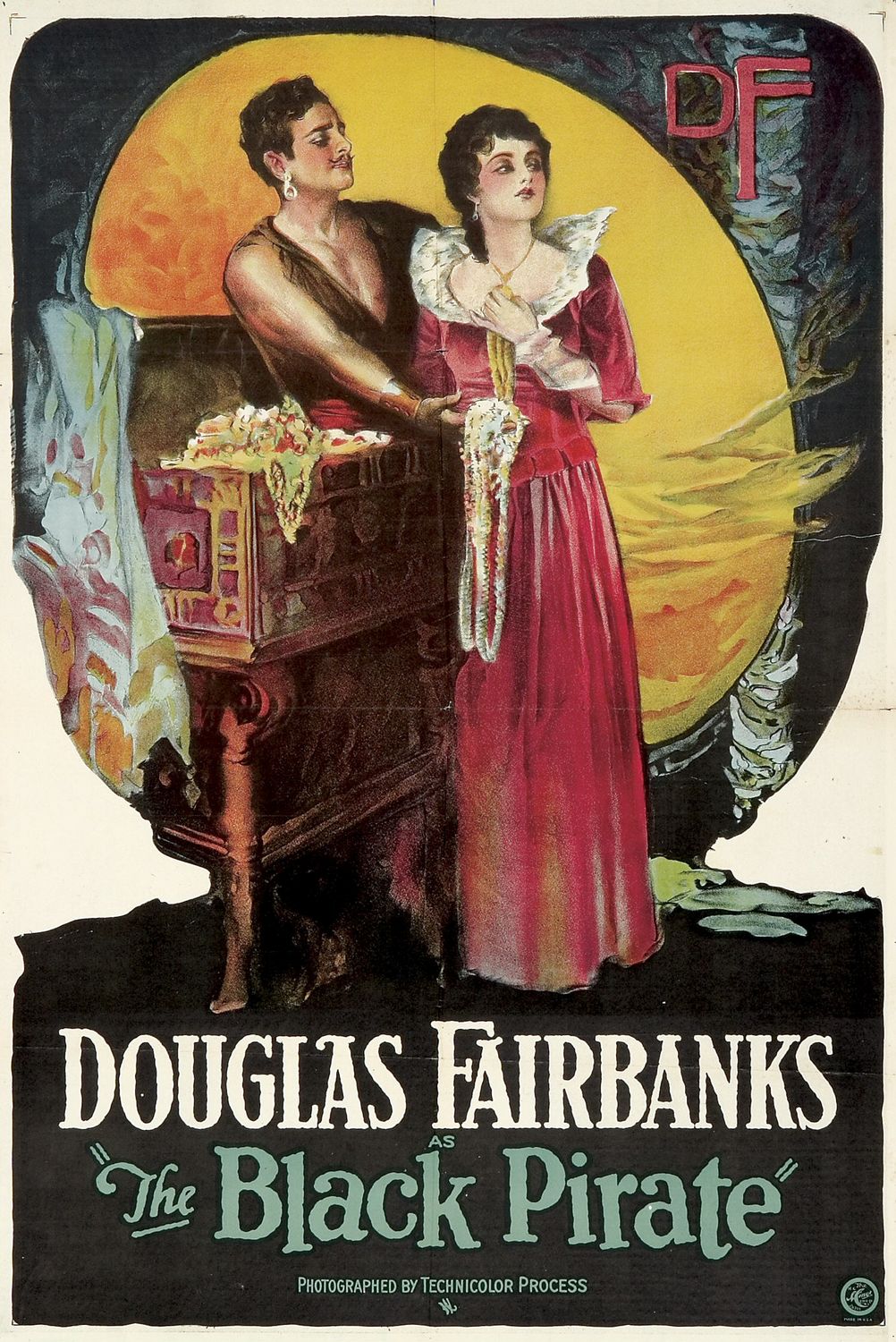
Later that day, I headed up to Plymouth, N.H. to do music for Douglas Fairbanks Sr. in 'The Black Pirate" (1926) at the Flying Monkey Moviehouse and Performance Center.

(The picture at left was taken just as I looked the receipt for a tank of gas.)

About 40 people turned out for this granddaddy of all pirate films, which we programmed as part of our series of 1926 films that just recently entered the public domain. 

A good time was has by all, except those in the movie terrorized by pirates. And for once, no one brought up the fact that sundials (featured prominently in the movie) don't work on a boat at sea.

And now, let's get on with 'It!' Please join me on Friday, June 10 at 8 p.m. for this iconic Jazz Age comedy. The press release is below!

*    *    *


Clara Bow and would-be beau Antonio Moreno in 'It' (1927).

TUESDAY, MAY 31, 2022 / FOR IMMEDIATE RELEASE
Contact Jeff Rapsis • (603) 236-9237 • jeffrapsis@gmail.com

Come and get 'It' with Clara Bow at Epsilon Spires on Friday, June 10

Performance venue to screen Jazz Age silent romantic comedy with live organ accompaniment

BRATTLEBORO, Vt.—A film that helped define an era returns to the big screen in June at Epsilon Spires.

'It' (1927), a romantic comedy that came to epitomize the Jazz Age of the 1920s, will be screened with live music on Friday, June 10 at 8 p.m. at Epsilon Spires, 190 Main St., Brattleboro, Vt.

Admission is $15 per person. Tickets may be purchased in advance at www.epsilonspires.org or at the door.

The screening will feature live accompaniment on the venue's Estey pipe organ by Jeff Rapsis, a New Hampshire-based silent film musician.

'It' tells the story of a shop girl who sets her sights on the handsome and wealthy boss of the department store where she works. The two are from completely different parts of society, but will attraction be strong enough to bridge the gap in their backgrounds?

The film made actress Clara Bow a major star, earning her the nickname of the 'It' girl. Released at the height of the Jazz Age, the movie was a hit with audiences all over the U.S., breaking box office records.

'It' is based on a novella written by Elinor Glyn and originally serialized in Cosmopolitan magazine. Glyn, whose writings popularized the concept of 'It' as a quality of attractiveness, has a cameo role as herself in the film.

'It' is also an early example of product placement, as Cosmopolitan magazine is featured prominently in a scene where a character reads Glyn's story and introduces it to the audience.

The picture was considered lost for many years, but a copy was found in Prague in the 1960s. In 2001, 'It' was selected for preservation in the U.S. National Film Registry by the Library of Congress as being "culturally, historically, or aesthetically significant."

To accompany 'It,' Rapsis will improvise a score created live in real time as the movie is screened, in the tradition of theatre organists during the silent era.

Rather than focus on authentic music of the period, Rapsis creates new music for silent films that draws from movie scoring techniques that today's audiences expect from the cinema.

The non-profit Epsilon Spires, housed in Brattleboro's former Baptist church, builds connections between art and science by offering provocative performances and events, interactive art installations, and opportunities to engage in civil discourse by addressing current topics through the integration of diverse forms of expression.

'It' (1927) will be screened with live music on Friday, June 10 at 8 p.m. at Epsilon Spires, 190 Main St., Brattleboro, Vt. Admission is $15 per person. Tickets may be purchased in advance at www.epsilonspires.org or at the door.

Monday, June 6, 2022

Set sail with Douglas Fairbanks Sr. in 'The Black Pirate' on Wednesday, June 8 in Plymouth, N.H.


I'm back at the keyboard after a twice-postponed visit to London, with a side trip to my old stomping grounds of Glasgow, Scotland.

Next up: music for 'The Black Pirate' (1926) starring Douglas Fairbanks, which is screening on Wednesday, June 8 at 6:30 p.m. at the Flying Monkey Moviehouse and Performance Center in Plymouth, N.H. 

More info and details are in the press release below. First, a few notes from "across the pond," where last week we scored a rare "triple," meaning three West End shows in one day. 

The line-up looked like this: 

- At 2 p.m., a new production of 'My Fair Lady' at the Coliseum on Charing Cross Road.

 - At 5:30 p.m., a cabaret-style revue called 'Six' that features the wives of Henry VIII, and which is playing at the Vaudeville Theatre at the Strand.

 - At 7:30 p.m., the new musical version of 'Back to the Future' that's playing at the Adelphi next door.

We didn't plan on this — it just happened. Tickets were available for all three;  the theaters were close enough for this to work, and there was that unusual 5:30 p.m. matinee of 'Six.'

We even got something to eat between 'Six' (which is just over one hour long) and 'Back to the Future.' 

The last time this happened was way back in the 1990s, when we caught a weird one-man play called 'Anorak of Fire' at an odd time, with a matinee before it and an evening show afterwards. So it's a rare bird indeed.

About 'Back to the Future': what was interesting to me was that even though it was full of new songs, much of the material was drawn from the score that Alan Silvestri composed for the 1985 film. 

There are a couple of really enduring licks in the 'Back to the Future' score, and Silvestri (who also worked on the musical) made the most of them in this stage reinterpretation.

The result was something you don't see very often: a stage musical that heavily relied on strong background music in the same way a movie action sequence might do. (Or, yes, a silent film score!)

This was especially true in the musical's Act 2, when Marty McFly must get the time-traveling DeLorean up to 88 mph just as lightning strikes the town's clock tower.

With no songs, just action and Silvestri's music galloping along, I totally, totally bought into it. And it was the music that did it, I think. 

The time-traveling car may have been powered by plutonium. But the real energy that held everything together and pushed it forward in an edge-of-your-seat frenzy was the score. 

So even though we were watching a stage production in 2022, it reminded me how much the right kind of music can add to a scene or sequence in a movie made in 1922. The challenge (for me, anyway) is to find those moments and make the most of them, and not overdo it at other times.

I'll next get a chance to find the balance this Wednesday, as we set sail with Douglas Fairbanks in 'The Black Pirate' (1926) at the Flying Monkey Moviehouse and Performance Center. 

Press release is below. See you on deck!

 *  *  *

Douglas Fairbanks Sr. buckles some swash in 'The Black Pirate.'
 
TUESDAY, MAY 31, 2022 / FOR IMMEDIATE RELEASE
Contact Jeff Rapsis • (603) 236-9237 • jeffrapsis@gmail.com

Silent film ‘The Black Pirate’ (1926) at Flying Monkey on Wednesday, June 8

Swashbuckling adventure flick stars Douglas Fairbanks, Hollywood’s original action hero; shown with live musical accompaniment

PLYMOUTH, N.H.—He was the Indiana Jones of his day, thrilling early film-goers with amazing stunts and feats of heroic derring-do.

He was Douglas Fairbanks Sr., one of Hollywood’s first megastars, and his timeless charisma can be seen again on Wednesday, June 8 at the Flying Monkey Moviehouse and Performance Center in Plymouth, N.H.

Featured attraction in June for the theater's monthly silent film series is ‘The Black Pirate’ (1926), an epic swashbuckling tale of the high seas that proved one of Fairbanks’ most popular blockbusters. The forerunner of all pirate movies, it was also one of the first Hollywood films to be released in color.

Showtime for 'The Black Pirate' is Wednesday, June 8 at 6:30 p.m. at the Flying Monkey Moviehouse and Performance Center, 39 Main St., Plymouth, N.H. General admission is $10 per person.

The screening, the latest in the Flying Monkey's silent film series, will feature live accompaniment by Jeff Rapsis, a New Hampshire-based composer who specializes in creating scores for silent films.

'The Black Pirate' tells the story of a ship's passenger (Douglas Fairbanks) who survives a pirate raid. Sworn to avenge his dead father, he takes command of the pirates responsible, and secretly strives to free the princess whom they have kidnapped.

Fairbanks, originally a stage actor, broke into films in the industry's early years. By 1920, starring roles in a romantic comedies established Fairbanks as a popular leading man. He then turned to historic adventure films, including ‘The Mark of Zorro’ (1920) and ‘The Three Musketeers’ (1921), which cemented his reputation for on-screen athleticism, heroism, and romance.

In 1920, Fairbanks’ marriage to fellow megastar Mary Pickford was one of the era’s biggest media events and resulted in Hollywood’s first celebrity power couple. They combined their last names to call their estate “Pickfair,” and massive crowds turned out everywhere during the couple’s European honeymoon.

At the peak of his popularity, pictures starring Fairbanks set the standard for Hollywood action adventure films, including such titles as ‘Robin Hood’ (1922), ‘The Thief of Bagdad’ (1924), and ‘The Black Pirate’ (1926), all of which were major box office successes.

When the silent film era ended in 1929, an aging Fairbanks found he was less enthusiastic about the effort required to make movies and retired from the screen. He died in 1939 at age 56 after suffering a heart attack; his now-famous last words were, “I’ve never felt better.”

The Fairbanks feature is the latest in a series of monthly silent film screenings at the Flying Monkey. The series aims to recreate the lost magic of early cinema by assembling the elements needed for silent film to be seen at its best: superior films in best available prints; projection on the big screen; live musical accompaniment; and a live audience.

“These films are still exciting experiences if you show them as they were designed to be screened,” said Rapsis, accompanist for the screenings. “There’s a reason people first fell in love with the movies, and we hope to recreate that spirit.”

For each film, Rapsis improvises a music score using original themes created beforehand. None of the music is written down; instead, the score evolves in real time based on audience reaction and the overall mood as the movie is screened.

‘The Black Pirate’ (1926) starring Douglas Fairbanks Sr. will be shown with live music on Wednesday, June 8 at 6:30 p.m. at the Flying Monkey Moviehouse and Performance Center, 39 Main St., Plymouth, N.H.

Admission is $10 per person. For more info, call (603) 536-2551 or visit www.flyingmonkeynh.com. For more info on the music, visit www.jeffrapsis.com.