Saturday, June 11, 2022

Tonight! It's off to Sherwood Forest—or Brandon, Vt.—for 100th anniversary of 'Robin Hood' (1922)

It's a hit! Douglas Fairbanks Sr. takes aim in 'The Adventures of Robin Hood' (1922).

Tonight! It's up to Brandon, Vt. to do live music for a 100th anniversary screening of 'The Adventures of Robin Hood' (1922) starring Douglas Fairbanks Sr.

If you're anywhere near the area, come on out tonight for what promises to be a grand time at the movies. After all, it was only the #1 top box office attraction that year!

For more information, let's get right to the press release:

*    *    *

On the set of 'Robin Hood': A big film merits a big megaphone!
 
MONDAY, MAY 31, 2022 / FOR IMMEDIATE RELEASE
Contact Jeff Rapsis • (603) 236-9237 • jeffrapsis@gmail.com

'Robin Hood' leaps into action at Town Hall Theatre on Saturday, June 11

It's off to Sherwood Forest for the 100th anniversary of legendary silent blockbuster, screened with live music

BRANDON, Vt.—He robbed from the rich, gave to the poor, and was the top box office attraction of 1922.

He was Douglas Fairbanks Sr. starring in 'The Adventures of Robin Hood,' the original movie adaptation of the legendary tale.

See it for yourself on the big screen on Saturday, June 11 at 7 p.m. at the Brandon Town Hall and Community Center, on Route 7 in Brandon, Vt.

Admission is free; donations are welcome to help support ongoing Town Hall renovation efforts.

Live music for the silent 'Robin Hood' will be provided by Jeff Rapsis, a New Hampshire-based performer and composer who specializes in scoring and presenting silent films.

Set in medieval England, 'Robin Hood' tells the tale of the Earl of Huntingdon (Fairbanks), a dashing nobleman who joins King Richard the Lion-Hearted (Wallace Beery) on a Crusade to the Holy Land.

Huntingdon later returns to England to find Richard's cruel brother, Prince John (Sam De Grasse), falsely claiming the throne, enriching his aristocratic cronies and tyrannizing the citizenry.

Huntingdon takes to the woods and becomes 'Robin Hood,' soon joined by a band of merry men who undermine Prince John's reign by robbing from the rich and giving to the poor.


Can Robin Hood and his men vanquish their enemy, the High Sheriff of Nottingham (William Lowery)? And can they rescue Lady Marian Fitzwalter (Enid Bennett), Huntingdon's betrothed, from the evil clutches of Prince John?

Along the way, Fairbanks has ample opportunity to demonstrate his skills in archery, fencing, and acrobatics.

Directed by Allan Dwan, 'Robin Hood' amazed audiences with its enormous sets that recreated in full scale the castles and villages of medieval England.

At a time when $200,000 was a hefty movie budget, 'Robin Hood' cost $1 million to produce.

But the film proved an enormous hit, becoming the top box office attraction of 1922 and earning $2.5 million in its initial release through United Artists, the distribution company Fairbanks formed with fellow stars Charlie Chaplin, D.W. Griffith, and his wife, Mary Pickford.

Fairbanks, among the most popular stars of the 1920s, was the inspiration for the character of George Valentin in the Oscar-winning Best Picture 'The Artist' (2011). Fairbanks was known for films that used the then-new medium of motion pictures to transport audiences to historical time periods for grand adventures and athletic stunts.

He's often referred to as "Douglas Fairbanks Sr." to avoid confusion with his son, the actor Douglas Fairbanks Jr.

Also in the cast for 'Robin Hood' is Alan Hale Sr., who made such an impression at Little John that he was cast in the same role in the 1938 remake starring Errol Flynn. (Hale's son, Alan Hale Jr., played the role of the Skipper on the 1960s television series "Gilligan's Island.")

Live music for 'Robin Hood' will be provided by silent film accompanist Jeff Rapsis, who uses a digital synthesizer to create a traditional full orchestra "movie score" sound.

"Seeing a Fairbanks picture in a theater with live music and an audience is a classic movie experience," Rapsis said.

An original lobby card of 'The Adventures of Robin Hood' (1922).

Rapsis emphasized the unique value of seeing early cinema as it was originally presented.

"These films were designed for the big screen, live music, and large audiences. Put it all together again, and you get a sense of why people first fell in love with the movies," Rapsis said.

It's the 11th year of Brandon's popular silent film series, which gives residents and visitors a chance to see great movies from the pioneering days of cinema as they were meant to be shown—on the big screen, with an audience, and accompanied by live music.

Screenings are held once a month on Saturday nights from May through November. Admission is free; donations are encouraged, with proceeds to benefit the Town Hall's ongoing restoration.

Over the years, silent film donations have helped support projects including handicapped access to the 19th century building; renovating the bathrooms; and restoring the structure's original slate roof.

The screening of 'Robin Hood' is sponsored by Bruce Ness and Nancy Spalding-Ness.

Other films in this year's Brandon Town Hall silent film series include:

• Saturday, July 23, 7 p.m.: 'Sherlock Jr.' (1924) and 'Battling Butler' (1926). A Buster Keaton double feature showing the stone-faced comedian at the peak of his physical comedy powers. Sponsored by Kathy and Bill Mathis in memory of Maxine Thurston.

• Saturday, Aug. 13, 7 p.m.: 'Blood and Sand' (1922) starring Rudolph Valentino in his first starring role, as a sexy bullfighter in this romantic thriller. Celebrating its 100th anniversary! Sponsored by Edward Loedding and Dorothy Leysath, the Hanson Family in memory of Pat Hanson, and Sally Wood.

• Saturday, Sept. 10, 7 p.m.: 'The Flying Ace' (1926), rare example of movies produced for black-only theaters in segregated parts of the nation; added to the National Film Registry in 2021. Sponsored by Nancy and Gary Meffe.

• Saturday, Oct. 22, 7 p.m.: 'Nosferatu' (1922) Just in time for Halloween! Celebrate the 100th anniversary of F.W. Murnau's original adaptation of Bram Stoker's 'Dracula' story. Sponsored by Bar Harbor Bank and Trust.

• Saturday, Nov. 19, 7 p.m.: 'Her Sister from Paris' (1925) starring Constance Talmadge, Ronald Colman. The scene: Europe. The cast: Rich people. Effervescent battle-of-the-sexes comedy. Sponsored by Harold & Jean Somerset.

'Robin Hood' (1922) starring Douglas Fairbanks Sr., will be screened with live music on Saturday, June 11 at 7 p.m. at the Brandon Town Hall and Community Center, Route 7, in Brandon, Vt. All are welcome to this family-friendly event. Admission is free, with free will donations accepted in support of ongoing Town Hall renovations.

Thursday, June 9, 2022

By Jove! I think we've got 'It' (1927) on Friday, June 10 at Epsilon Spires in Brattleboro, Vt.

A poster promoting Clara Bow in 'It' (1927).

It's one of the shortest titles ever! (Except perhaps for Fritz Lang's 'M.') 

Up next, it's Clara Bow in 'It' (1927) on Friday, June 10 at Epsilon Spires in Brattleboro, Vt., accompanied by me on the venue's Estey pipe organ.

Showtime is 8 p.m. and hope to see you there! Plenty more info is in the press release below.

First, a few thoughts on my annual pilgrimage to Antrim (N.H.) Town Hall, where each June I do an end-of-the-school-year silent film program for kids at Great Brook School, which enrolls Grades 5-8.

This year it was yesterday, and here's what it looks like:

It's all organized by teacher Maryanne Cullinan (seen above), who uses the occasion to call each graduating 8th grader up and offer personal recollections and remembrances in front of their peers.

Wow! This is very different from my own experience attending Spring Street Jr. High in Nashua, N.H. At the end of the school year, the closest thing we got to this was when the bullies in "smoker's row" would pull my friends and me aside for one final beating before classes let out for the summer. 

We've been doing this for more than 10 years now, and over time the kids have made it clear that their preferred silent film star is Buster Keaton. 

So yesterday's program included the classic Keaton short comedy 'One Week' (a perennial favorite) followed by the full-length 'Go West' (1925), which we'd never showed before. 

 Prior to the film, I tried to pique their curiosity by saying it included one of the strangest love stories of the silent era. (That being the relationship between Buster and Brown Eyes the cow.)

I could tell they were growing a little restless during the feature. But interest perked up starting with the gunfight over the cattle-carrying train, and then the stampede through the streets of Los Angeles. 

The film's ending produced an avalanche of adolescent applause, with one kid yelling out "That was the best movie I ever saw, even though I slept through the first two-thirds of it!" which earned him a scolding for being rude.  

But I really enjoy this annual cannonball into the middle school swimming pool. Thanks to Ms. Cullinan and everyone at Great Brook School for inviting me once again and keeping this fine tradition going.

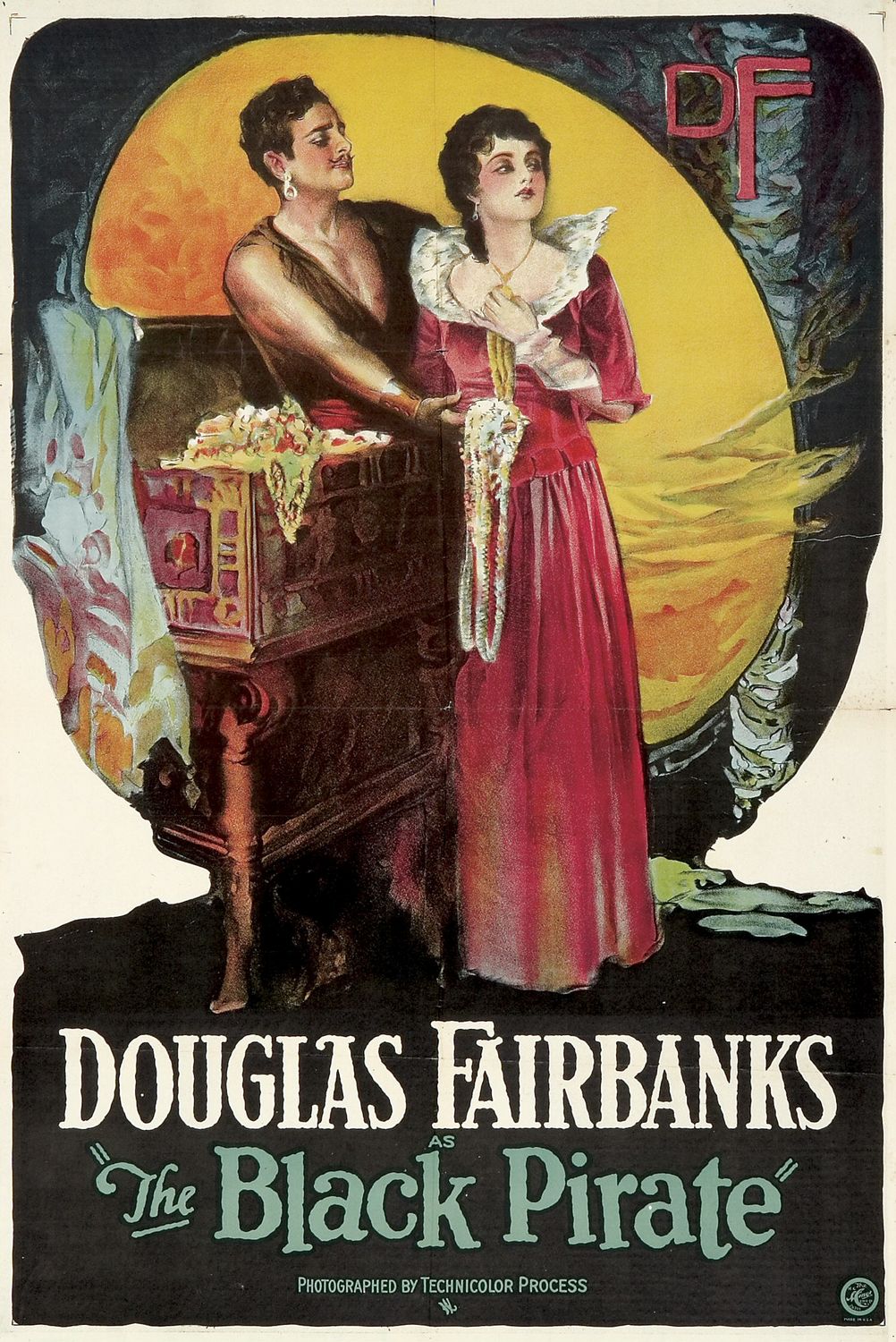
Later that day, I headed up to Plymouth, N.H. to do music for Douglas Fairbanks Sr. in 'The Black Pirate" (1926) at the Flying Monkey Moviehouse and Performance Center.

(The picture at left was taken just as I looked the receipt for a tank of gas.)

About 40 people turned out for this granddaddy of all pirate films, which we programmed as part of our series of 1926 films that just recently entered the public domain. 

A good time was has by all, except those in the movie terrorized by pirates. And for once, no one brought up the fact that sundials (featured prominently in the movie) don't work on a boat at sea.

And now, let's get on with 'It!' Please join me on Friday, June 10 at 8 p.m. for this iconic Jazz Age comedy. The press release is below!

*    *    *


Clara Bow and would-be beau Antonio Moreno in 'It' (1927).

TUESDAY, MAY 31, 2022 / FOR IMMEDIATE RELEASE
Contact Jeff Rapsis • (603) 236-9237 • jeffrapsis@gmail.com

Come and get 'It' with Clara Bow at Epsilon Spires on Friday, June 10

Performance venue to screen Jazz Age silent romantic comedy with live organ accompaniment

BRATTLEBORO, Vt.—A film that helped define an era returns to the big screen in June at Epsilon Spires.

'It' (1927), a romantic comedy that came to epitomize the Jazz Age of the 1920s, will be screened with live music on Friday, June 10 at 8 p.m. at Epsilon Spires, 190 Main St., Brattleboro, Vt.

Admission is $15 per person. Tickets may be purchased in advance at www.epsilonspires.org or at the door.

The screening will feature live accompaniment on the venue's Estey pipe organ by Jeff Rapsis, a New Hampshire-based silent film musician.

'It' tells the story of a shop girl who sets her sights on the handsome and wealthy boss of the department store where she works. The two are from completely different parts of society, but will attraction be strong enough to bridge the gap in their backgrounds?

The film made actress Clara Bow a major star, earning her the nickname of the 'It' girl. Released at the height of the Jazz Age, the movie was a hit with audiences all over the U.S., breaking box office records.

'It' is based on a novella written by Elinor Glyn and originally serialized in Cosmopolitan magazine. Glyn, whose writings popularized the concept of 'It' as a quality of attractiveness, has a cameo role as herself in the film.

'It' is also an early example of product placement, as Cosmopolitan magazine is featured prominently in a scene where a character reads Glyn's story and introduces it to the audience.

The picture was considered lost for many years, but a copy was found in Prague in the 1960s. In 2001, 'It' was selected for preservation in the U.S. National Film Registry by the Library of Congress as being "culturally, historically, or aesthetically significant."

To accompany 'It,' Rapsis will improvise a score created live in real time as the movie is screened, in the tradition of theatre organists during the silent era.

Rather than focus on authentic music of the period, Rapsis creates new music for silent films that draws from movie scoring techniques that today's audiences expect from the cinema.

The non-profit Epsilon Spires, housed in Brattleboro's former Baptist church, builds connections between art and science by offering provocative performances and events, interactive art installations, and opportunities to engage in civil discourse by addressing current topics through the integration of diverse forms of expression.

'It' (1927) will be screened with live music on Friday, June 10 at 8 p.m. at Epsilon Spires, 190 Main St., Brattleboro, Vt. Admission is $15 per person. Tickets may be purchased in advance at www.epsilonspires.org or at the door.

Monday, June 6, 2022

Set sail with Douglas Fairbanks Sr. in 'The Black Pirate' on Wednesday, June 8 in Plymouth, N.H.


I'm back at the keyboard after a twice-postponed visit to London, with a side trip to my old stomping grounds of Glasgow, Scotland.

Next up: music for 'The Black Pirate' (1926) starring Douglas Fairbanks, which is screening on Wednesday, June 8 at 6:30 p.m. at the Flying Monkey Moviehouse and Performance Center in Plymouth, N.H. 

More info and details are in the press release below. First, a few notes from "across the pond," where last week we scored a rare "triple," meaning three West End shows in one day. 

The line-up looked like this: 

- At 2 p.m., a new production of 'My Fair Lady' at the Coliseum on Charing Cross Road.

 - At 5:30 p.m., a cabaret-style revue called 'Six' that features the wives of Henry VIII, and which is playing at the Vaudeville Theatre at the Strand.

 - At 7:30 p.m., the new musical version of 'Back to the Future' that's playing at the Adelphi next door.

We didn't plan on this — it just happened. Tickets were available for all three;  the theaters were close enough for this to work, and there was that unusual 5:30 p.m. matinee of 'Six.'

We even got something to eat between 'Six' (which is just over one hour long) and 'Back to the Future.' 

The last time this happened was way back in the 1990s, when we caught a weird one-man play called 'Anorak of Fire' at an odd time, with a matinee before it and an evening show afterwards. So it's a rare bird indeed.

About 'Back to the Future': what was interesting to me was that even though it was full of new songs, much of the material was drawn from the score that Alan Silvestri composed for the 1985 film. 

There are a couple of really enduring licks in the 'Back to the Future' score, and Silvestri (who also worked on the musical) made the most of them in this stage reinterpretation.

The result was something you don't see very often: a stage musical that heavily relied on strong background music in the same way a movie action sequence might do. (Or, yes, a silent film score!)

This was especially true in the musical's Act 2, when Marty McFly must get the time-traveling DeLorean up to 88 mph just as lightning strikes the town's clock tower.

With no songs, just action and Silvestri's music galloping along, I totally, totally bought into it. And it was the music that did it, I think. 

The time-traveling car may have been powered by plutonium. But the real energy that held everything together and pushed it forward in an edge-of-your-seat frenzy was the score. 

So even though we were watching a stage production in 2022, it reminded me how much the right kind of music can add to a scene or sequence in a movie made in 1922. The challenge (for me, anyway) is to find those moments and make the most of them, and not overdo it at other times.

I'll next get a chance to find the balance this Wednesday, as we set sail with Douglas Fairbanks in 'The Black Pirate' (1926) at the Flying Monkey Moviehouse and Performance Center. 

Press release is below. See you on deck!

 *  *  *

Douglas Fairbanks Sr. buckles some swash in 'The Black Pirate.'
 
TUESDAY, MAY 31, 2022 / FOR IMMEDIATE RELEASE
Contact Jeff Rapsis • (603) 236-9237 • jeffrapsis@gmail.com

Silent film ‘The Black Pirate’ (1926) at Flying Monkey on Wednesday, June 8

Swashbuckling adventure flick stars Douglas Fairbanks, Hollywood’s original action hero; shown with live musical accompaniment

PLYMOUTH, N.H.—He was the Indiana Jones of his day, thrilling early film-goers with amazing stunts and feats of heroic derring-do.

He was Douglas Fairbanks Sr., one of Hollywood’s first megastars, and his timeless charisma can be seen again on Wednesday, June 8 at the Flying Monkey Moviehouse and Performance Center in Plymouth, N.H.

Featured attraction in June for the theater's monthly silent film series is ‘The Black Pirate’ (1926), an epic swashbuckling tale of the high seas that proved one of Fairbanks’ most popular blockbusters. The forerunner of all pirate movies, it was also one of the first Hollywood films to be released in color.

Showtime for 'The Black Pirate' is Wednesday, June 8 at 6:30 p.m. at the Flying Monkey Moviehouse and Performance Center, 39 Main St., Plymouth, N.H. General admission is $10 per person.

The screening, the latest in the Flying Monkey's silent film series, will feature live accompaniment by Jeff Rapsis, a New Hampshire-based composer who specializes in creating scores for silent films.

'The Black Pirate' tells the story of a ship's passenger (Douglas Fairbanks) who survives a pirate raid. Sworn to avenge his dead father, he takes command of the pirates responsible, and secretly strives to free the princess whom they have kidnapped.

Fairbanks, originally a stage actor, broke into films in the industry's early years. By 1920, starring roles in a romantic comedies established Fairbanks as a popular leading man. He then turned to historic adventure films, including ‘The Mark of Zorro’ (1920) and ‘The Three Musketeers’ (1921), which cemented his reputation for on-screen athleticism, heroism, and romance.

In 1920, Fairbanks’ marriage to fellow megastar Mary Pickford was one of the era’s biggest media events and resulted in Hollywood’s first celebrity power couple. They combined their last names to call their estate “Pickfair,” and massive crowds turned out everywhere during the couple’s European honeymoon.

At the peak of his popularity, pictures starring Fairbanks set the standard for Hollywood action adventure films, including such titles as ‘Robin Hood’ (1922), ‘The Thief of Bagdad’ (1924), and ‘The Black Pirate’ (1926), all of which were major box office successes.

When the silent film era ended in 1929, an aging Fairbanks found he was less enthusiastic about the effort required to make movies and retired from the screen. He died in 1939 at age 56 after suffering a heart attack; his now-famous last words were, “I’ve never felt better.”

The Fairbanks feature is the latest in a series of monthly silent film screenings at the Flying Monkey. The series aims to recreate the lost magic of early cinema by assembling the elements needed for silent film to be seen at its best: superior films in best available prints; projection on the big screen; live musical accompaniment; and a live audience.

“These films are still exciting experiences if you show them as they were designed to be screened,” said Rapsis, accompanist for the screenings. “There’s a reason people first fell in love with the movies, and we hope to recreate that spirit.”

For each film, Rapsis improvises a music score using original themes created beforehand. None of the music is written down; instead, the score evolves in real time based on audience reaction and the overall mood as the movie is screened.

‘The Black Pirate’ (1926) starring Douglas Fairbanks Sr. will be shown with live music on Wednesday, June 8 at 6:30 p.m. at the Flying Monkey Moviehouse and Performance Center, 39 Main St., Plymouth, N.H.

Admission is $10 per person. For more info, call (603) 536-2551 or visit www.flyingmonkeynh.com. For more info on the music, visit www.jeffrapsis.com.

Friday, May 20, 2022

Sunday, May 22: 'The First Auto' in Wilton, N.H., plus notes on three earlier screenings featuring John Gilbert, Harold Lloyd, and Buster Keaton

An original poster for 'The First Auto' (1927).

This weekend, in honor of the upcoming Indianapolis 500, we're screening 'The First Auto' (1927), a Warner Bros. drama set at the turn of the previous century, at the dawn of the auto era.

Showtime is Sunday, May 22 at 2 p.m. at the Town Hall Theatre in Wilton, N.H. A lot more info is in the press release below, including the ironic death of actor Charles Emmett Mack in a car accident prior to the film's completion.

Now, a look back at some recent shows. It's been a busy month and I'm behind on keeping up this diary, so here goes.

• A screening of the John Gilbert swashbuckler 'Bardelys the Magnificent' (1926) drew cheers, surprisingly, from the audience on Wednesday, May 11 at the Flying Monkey Moviehouse in Plymouth, N.H.

I say "surprisingly" because the cheers came during the film's climax towards the end of a screening that otherwise elicited practically no audible response from those attending.

Well, you never know. I think part of it is that the climax to 'Bardelys' is truly top-notch: Gilbert's title character, condemned to death and actually on the gallows, suddenly makes a break for it.

What follows is a remarkable sequence of choreographed action in which Gilbert eludes his pursuers, matching swashbuckling legend Douglas Fairbanks in creative and athletic stunting.

To me, the cheers and applause was music to my ears, as it meant people were following the story and cared about this character's fate after all. 

Also, it was very nice to have a regular attendee of the Flying Monkey silent series come up afterwards to say the music I came up with for the famous "boating romance" scene in 'Bardelys' really fit the scene and gave it extra depth. 

I assume she was talking about the music, and not the pond that John Gilbert and Eleanor Boardman are seen gliding over.

• Harold Lloyd's 'For Heaven's Sake' (1926) opened this year's silent film series in Brandon, Vt., preceded by a Weiss Bros. short 'Danger Ahead' (1926) just to show two contrasting types of silent comedy. 

I've accompanied 'For Heaven's Sake' several times recently (in celebration of its new 'public domain' status) and I've noticed something strange about the film that I've not read anything about.

The picture clocks in at 58 minutes, or just under an hour—rather short for a Lloyd feature in between 'The Freshman' (1925, 76 minutes) and 'The Kid Brother' (1927, 84 minutes).

I know Lloyd had trouble with it in production, and even finding a suitable title was difficult. The material just didn't gell, which I guess will happen when you make films in the semi-improv way the silent clowns employed.

And critics have sometimes pointed out that the climactic "race to the altar" lacks drama or suspense because there's no real reason in the story for Harold to hurry, other than he doesn't want to be late. 

I mean, he's already phoned his bride before commencing on a wild ride across the unnamed city. Along the way, the antics of Harold's five sozzled roughneck friends are amusing, but are no match for other high-stakes situations such as the iconic building climb of 'Safety Last' (1923).

Contrast the climax of 'For Heaven's Sake' that with 'Girl Shy' (1924), where Lloyd absolutely MUST get to the church as fast as possible, as his girl is already at the altar, exchanging vows with a bigamist. I've accompanied screenings of this film where people are literally shouting "Hurry up!" at the screen.

Alas, this doesn't happen in 'For Heaven's Sake,' as the stakes aren't nearly so high. 

And I wonder if something didn't quite go right in the oven, and if something larger and more sinister was originally planned for the film, but somehow got cut. 

For starters, there's the film's stunted length. 

And then there's also the credits: getting top billing is James Mason—the silent one, not the James Mason who later starred in '20,000 Leagues Under the Sea.' Mason is billed as 'The Gangster,' presented as one of the lead roles.

But Mason barely appears in the film, and always on the sidelines.

Much more prominent is reliable celluloid bully Noah Young, who interacts regularly with Lloyd throughout the film and plays what turns out to be the film's key heavy. But unlike Mason, he doesn't merit any mention or credit in the opening titles.

To me, it seems likely that Lloyd and his team intended to develop the "gangster" theme more thoroughly to create a situation to bring real danger to our protagonist J. Harold Manners, the richest man in town.

Lloyd's "meet-cute" with Jobyna Ralston in 'For Heaven's Sake' (1926). 

And the potential is there. If there was a reason for a gangster to stop Lloyd's wedding to Jobyna Ralston's mission worker (maybe a romantic rivalry?), then maybe Lloyd could have been kidnapped by the bad guys (not his rich friends), creating suspense on the level of 'Girl Shy' or 'Safety Last.'

Maybe that's the role Mason was intended to play. After all, he played a similar baddie (with designs on Ralston) in Lloyd's comedy 'Why Worry?' (1923). 

Even better, Mason could have kidnapped Ralston, not Lloyd, forcing our Hero to race to her rescue, maybe with his drunken friends in tow along the way. Great suspense could be generated, with Lloyd striving to rescue Jobyna while keeping five inebriated friends from danger.

But there are signs that whatever role Mason was supposed to play, most of it wound up on the cutting room floor.

Instead, in 'For Heaven's Sake,' Lloyd gets kidnapped by his fellow rich twits, which doesn't lead to any significant peril for our hero, and little edge-of-the-seat suspense for an audience. 

There are accounts that the "gangster" angle planned for 'For Heaven's Sake' wound up being reworked for 'Speedy' (1928), But it's really too that a way wasn't found to use it to amp up the tension in 'For Heaven's Sake.' 

I mean, for heaven's sake.

• Sunday, May 15 brought Buster Keaton's 'Our Hospitality' (1923), which I accompanied at the Center for the Arts in Natick, Mass. 

Great screening, audience with the picture all the way. Lots of questions during a very extended Q & A following the film. 

An original lobby card promoting 'Our Hospitality' (1923). 

One attendee observed that Keaton was very hard on the South and its people. This prompted an interesting discussion, with me saying that Keaton wasn't trying to "say" anything, but just using a family feud and what would have been seen as antiquated customs even in the 1920s to drive a story.  

Keaton wasn't a political artist in the same way that his rival, Mr. Charles Chaplin, was, especially later in life. With Keaton, I said it would be a misstep to read anything like a contemporary political agenda into his work, which was produced a century ago. (And in the case of 'Our Hospitality,' was set 100 years before that.)

And that led into a discussion of 'The General' (1926), and how Keaton's Civil War epic portrayed the South as heroes and the North as villains—again, just for story-telling purposes, not to promote any kind of agenda, hidden or otherwise.

Speaking about 'The General' later in life, Keaton observed that "you can always make a villain out of the North, but you can never make a villain out of the South." 

It's my theory that he was talking about box office: in the 1920s, with the Civil War still within living memory, any film in which the South was portrayed as the bad guys and the North as triumphant wouldn't do business in a big part of the nation.

And now, it's on to 'The First Auto' (1927), which I'll accompany on Sunday, May 23 at 2 p.m. at the Town Hall Theater in Wilton, N.H. 

Let me know if you need a ride!

*  *  *

An original lobby card for 'The First Auto' (1927).

WEDNESDAY, MAY 11, 2022 / FOR IMMEDIATE RELEASE
Contact Jeff Rapsis • (603) 236-9237 • jeffrapsis@gmail.com

'The First Auto,' silent car racing drama with live music, on Sunday, May 22 in Wilton, N.H.

Movie's leading man ironically killed in car crash during filming, but Warner Bros. still completed and released the picture

WILTON, N.H.—It was intended to be a nostalgic drama about the transition from horses to automobiles in the early 1900s.

But during filming, 'The First Auto' (1927) took a tragic behind-the-scenes turn when leading man Charles Emmett Mack was killed in a car accident.

Mack, a popular 1920s star, died in a crash while driving to a racetrack to shoot sequences for the nearly completed movie.

Despite Mack's death at age 26, Warner Bros. finished the picture, altering the ending so that his character didn't need to appear on-screen.

'The First Auto' will be screened on Sunday, May 22 at 2 p.m. at the Town Hall Theatre, 40 Main St., Wilton, N.H.

Admission is free; a donation of $10 per person is suggested to help defray expenses.

The screening will feature live accompaniment by Jeff Rapsis, a New Hampshire-based composer who specializes in creating music for silent films.

'The First Auto' is being shown in honor of the upcoming Indianapolis 500, the classic road race that takes place each Memorial Day weekend.

Opening in 1895, 'The First Auto' follows the story of a prosperous stable owner (Russell Simpson) whose son (Charles Emmett Mack) becomes fascinated with the then-new "horseless carriages," or automobiles.

After the two clash repeatedly, the son moves to Detroit to work in the auto business. By 1905, he's become a successful race car driver.

Things come to a head when the son secretly enters a race back in his old hometown—a race that the father intends to sabotage.

Leading man Charles Emmett Mack (at left) broke into the movies as a young prop man for director D.W. Griffith.

Griffith began using Mack in small on-screen parts, which led to a career in front of the camera as a popular 1920s star.

He co-starred in several films with fellow young actor Neil Hamilton, who would much later go on to play Commissioner Gordon in the 1960s 'Batman' TV series.

Among the large cast in 'The First Auto' is actor William Demarest, who would go on to play Uncle Charlie in the long-running sitcom 'My Three Sons.'

The movie also features a cameo appearance by legendary race car driver Barney Oldfield, who first broke the 60 mph speed mark in 1903.

Oldfield served as technical advisor for the race sequences to ensure period authenticity.

The film was directed by Roy Del Ruth; writers included a young Darryl F. Zanuck, who would go on to create 20th Century Fox, a studio he ran for many decades.

'The First Auto' is part of the Town Hall Theatre's silent film series, which aims to show early movies as they were meant to be seen—in high quality prints, on a large screen, with live music, and with an audience.

"All those elements are important parts of the silent film experience," said Rapsis, who will improvise a musical score for 'The First Auto.'

"Recreate those conditions, and the classics of early Hollywood leap back to life," he said.

‘The First Auto’ will be shown with live music on Sunday, May 22 at 2 p.m. at the Town Hall Theatre, 40 Main St., Wilton, N.H.

Admission is free; a donation of $10 per person is suggested to help defray expenses.

For more info, visit www.wiltontownhalltheatre.com or call (603) 654-3456.

Tuesday, May 10, 2022

Once-lost swashbuckler 'Bardelys' this week in Plymouth; report on 'The Kid' in Newport, R.I.

Portrait of the artist taking a photo of the poster for 'The Kid.' I'm visible as a reflection at left. 

This week it's off to Plymouth, N.H., where I'll accompany a screening of the lost-but-rediscovered MGM swashbuckler 'Bardelys the Magnificent' (1926) on Wednesday, May 11.

Show time is 6:30 p.m. I'd forgotten how much fun this film was, as I hadn't seen it since it was re-issued about 10 years ago after a nearly complete print was discovered in France. 

Lots more info in the press release below. For now, a few thoughts about a screening of 'The Kid' (1921) in Newport, R.I. and the excitement of performing for an audience where silent films aren't a regular part of the programming.

In Newport, the screening of Chaplin's 'The Kid' at the historic Jane Pickens Theatre (a single screen downtown moviehouse 100 years old this year!) was a direct outgrowth of a screening of 'The General' last February.

The venue ran Keaton's Civil War epic in partnership with a local bookstore, which had brought in author Dana Stevens to speak about her new book 'Camera Man.' I came down to do live music, and so made my first-ever visit to Newport, despite being a life-long New Englander. (I'm more of a "North of the Mass. Pike" kind of guy, but that's another story.)

Although the "JPT" (as it's called) runs all kinds of film (first-run, classics, foreign, independent), it seems silents with live music haven't been on the menu, despite the console of the venue's original theater organ still in place. (The pipes are still there as well, mummified in the walls.)

But 'The General' was so well-received, manager Alex Whitney was open to the idea of running other silent-era titles. He readily programmed a screening of 'Nosferatu' next October, right before Halloween, which I can't wait to accompany and which I'm sure will fill the house. 

So we talked about perhaps other silents in between, with me making the case that such programming was in keeping with the theater's roots as a silent movie house, but also an experience that can't be duplicated at home or via streaming. I also advocated for some kind of regular series as a way to build an audience over time.

My fellow silent film accompanist Ben Model often speaks of "audience preservation," a big part of keeping the silent film experience going. In the case of Newport, it's "audience development"—trying to create and sustain enough interest in the form so that it's worth it for a theater to program.

The marquee showing eclectic programming typical of the Jane Pickens Theatre in Newport, R.I.

Alex wasn't ready to commit to a regular slate of silents, but he was intrigued enough to program 'The Kid,' with everyone crossing their fingers that an audience would materialize, even without the added attraction of a book-signing. 

And I'm pleased to report that it did: about 60 paid admissions. The result was an audience that responded strongly throughout Chaplin's comedy/drama, and was full of questions before and after the show. Most had never experienced a silent film with live music. 

And the questions were really basic, ground-level inquiries (Where do you get these films? Are you playing the original score?) that reminded me that many attendees were right at the beginning of a wonderful journey of discovery, if they chose to pursue it.

Comedies such as 'The Kid' were the "gateway drug," I said, to a world of cinema that is of course not new anymore, but is new to us. It's a different kind of cinema that at its best is a very different movie-going experience that what you're used to—with stories told visually (by necessity) that tend to be more abstract and universal and more about the big emotions such as Love (with a capital L) or Fear or Joy or Jealously, and with no dialogue to get in the way, and with music helping stir your own reactions to the story as it unfolds on-screen, and with not just comedies, but dramas, thrillers, adventures, and more, and all with the added bonus today of showing us (in many films) what life was life for ordinary people just living their day-to-day life, but in narratives underpinned by stories driven by universal elements of the human experience that speak to us even today, because we're still human beings. And so on.

Wow! Didn't mean to go all William Faulkner there, but that's what happens when I get excited. And how exciting to think that the Newport film-going community was on the threshold of experiencing a world of movies—silent ones—but which can still speak to us today.

And it helped that the Jane Pickens has excellent acoustics for what I do and how I do it. The sound from my two ancient Roland speakers bounces right off the wooden stage floor and really fills the house. Nice!

You could tell by the questions that people were into it. The back-and-forth continued in the theater long after the public Q & A finished. One gentleman (another Jeff) came up with greetings from film accompanist Donald Sosin, an old school chum of his with whom he keeps in touch, and who was on the other coast at the San Francisco Silent Film Festival. I considered that a good omen for Newport.

So what's next? Other than 'Nosferatu' in October, nothing specific right now. But we've managed to build regular silent film series in locations as disparate as Brandon, Vt. (our 11th season starts this weekend!) Ogunquit, Maine (another seaside community with a vintage theater) and Plymouth, N.H., where I'm accompanying 'Bardelys the Magnificent' tomorrow night.

So I'm hoping Newport can be a good home for silent cinema, too. Time will tell.

And now it's time for info about 'Bardelys the Magnificent'—the press release is below, and hope to see you at the Flying Monkey in Plymouth, N.H.

*     *     *


John Gilbert, Eleanor Boardman, and executioner in 'Bardelys the Magnificent' (1926).

MONDAY, MAY 2, 2022 / FOR IMMEDIATE RELEASE
Contact Jeff Rapsis • (603) 236-9237 • jeffrapsis@gmail.com

Rediscovered silent film swashbuckler to 're-premier' in Plymouth, N.H. on Wednesday, May 11

'Bardelys the Magnificent' (1926), long thought lost until a copy was found in Europe, to be screened with live music

PLYMOUTH, N.H.—A major Hollywood feature—considered lost for decades until a copy surfaced in France in 2006—will soon return to the big screen.

'Bardelys the Magnificent' (1926), a big-budget MGM release starring John Gilbert and Eleanor Boardman, will be screened on Wednesday, May 11 at 6:30 p.m. at the Flying Monkey Moviehouse and Performance Center, 39 South Main St., Plymouth, N.H.

Live music for the movie will be provided by silent film accompanist Jeff Rapsis. Admission to the screening is $10 per person.

Based on a novel by prolific Italian/English author Rafael Sabatini, 'Bardelys the Magnificent' is a tale of romance, honor, and derring-do set during the reign of King Louis XIII of France.

The story follows the adventures of French nobleman Bardelys, who assumes the identity of a dead man to be close to the woman he loves.

The ruse backfires, however, when it turns out the dead man is wanted for treason against the King. This propels Bardelys into a series of swashbuckling adventures as he must avoid being caught and executed, all the while pursuing his beloved.

The title role is played by legendary leading man John Gilbert, then at the height of his 1920s stardom and popular for his good looks, magnetic personality, and athletic stunts.

Actress Eleanor Boardman plays Roxalanne, his love interest; the huge cast includes many silent film-era stars and supporting players.

'Bardelys the Magnificent' was directed by King Vidor, who was responsible for several well-known silent-era classics, including 'The Big Parade' (1925), 'The Crowd' (1928), and 'Show People' (1928).

The picture was a solid hit in its original release, making money and enhancing the reputations of everyone involved.

Later, MGM's rights to the Sabatini novel expired in 1936, and the studio destroyed all copies per the licensing agreement. It was only later that archivists realized that no other copies of the film were known to have survived anywhere.
 
For seven decades, the only footage of 'Bardelys the Magnificent' known to exist was in the form of a brief clip included in a movie theater scene in 'Show People,' another Vidor picture. 'Bardelys' was regarded as a major lost feature film from the silent era.

Then, in 2006, researchers in France discovered an almost complete copy of 'Bardelys the Magnificent' in a private collection. The print was missing about 10 minutes of footage, but was otherwise intact and in excellent condition. 

The missing footage is replaced with still photos taken on the set, written descriptions, and by footage recovered from a 'Coming attractions' trailer for the film.

Restoration was completed in 2008; the film was subsequently released on DVD, and has since been screened at several festivals around the country.

Silent films were produced until 1929, when talkies arrived. About 80 percent of all movies made during the silent era are now lost due to decomposition, carelessness, fire, or neglect.

But copies of "missing" films still occasionally turn up in archives and collections around the world, so researchers and archivists continue to make discoveries.

Jailhouse love scene from 'Bardelys the Magnificent' (1926).

For 'Bardelys the Magnificent,' Rapsis will improvise a score using original musical material that he creates beforehand. For a movie score to support 'Bardelys,' Rapsis will use a digital synthesizer to recreate the sound and texture of a full orchestra.

"What I try to do," Rapsis said, "is create music that bridges the gap between a film that might be 90 or 100 years old, and the musical expectations of today's audiences."

The screening of 'Bardelys the Magnificent' is the latest in the Flying Monkey's series celebrating films that recently entered the public domain.

Copyright protection for all U.S. films released in 1926 expired on Jan. 1, 2022.

To mark the occasion, the Flying Monkey is showcasing vintage 1926 comedies, dramas, and adventure films, all with live music, and all now in the public domain.

Upcoming screenings in the Flying Monkey's "Public Domain Extravaganza" series include:

• Wednesday, June 8, 2022, 6:30 p.m.: "The Black Pirate" (1926) starring Douglas Fairbanks, Sr. The original pirate swashbuckler, with Fairbanks sword-fighting his way through a period adventure tale set during the age of sailing ships.

"By 1926, the movies had matured enough to offer a wide range of great entertainment that still holds up today," Rapsis said. "Come see for yourself as we screen some of the year's best flicks, all of which recently entered the public domain and now belong to us all."

'Bardelys the Magnificent' will be shown on Wednesday, May 11 at 6:30 p.m. at the Flying Monkey Moviehouse and Performance Center, 39 South Main St., Plymouth, N.H.

Admission is $10 per person. For more info, call (603) 536-2551 or visit www.flyingmonkeynh.com.

Saturday, April 30, 2022

On Sunday, May 1 in Wilton, N.H.: 'Man With A Movie Camera,' innovative silent documentary filmed in Ukraine

A Russian-language poster for the documentary 'Man With A Movie Camera' (1929), shot largely in Ukraine. 

This Sunday, it's a double-header!

First, at 2 p.m., a screening of the silent documentary 'Man With A Movie Camera' (1929) at the Town Hall Theatre of Wilton, N.H. Lots more about that in the press release below.

After that, I scoot over Temple Mountain to the Park Theatre of Jaffrey, N.H., where I'll accompany Harold Lloyd's 'Grandma's Boy' (1922) for the venue's 100th birthday celebration, which starts at 5 p.m. 

More info about the Park's big celebration (it's a fund-raising, with tickets $50 each) is online here.

But first, kudos to the audience for last night's screening of 'Old Ironsides' (1926) at the Custom Home Maritime Museum in Newburyport, Mass.

Packed into an upstairs exhibit room that became an impromptu movie theater, the Friday night crowd was with the picture right from the start, with big reactions throughout. 

Everyone seemed to really get into the tale of the early days of the U.S.S. Constitution, which remains afloat a short distance down the coast in Boston Harbor. People cheered the action, gasped at the love story, and roared at the comedy.

George Bancroft and Esther Ralston at the wheel in 'Old Ironsides' (1926).

Why? Well, sometimes it just clicks. In this case, I think it was a combination of the right space (small, but nearly standing room only for the 40 attendees, which creates energy and excitement) and a really good match of subject matter and audience interest.

In this case, 'Old Ironsides' formed a celebration of sailing ships from long ago, which you'd have to expect would go over well at a maritime museum.

During one of the picture's extended battle scenes, one very nice lady contributed to the sonic mayhem by having her cell phone go off repeatedly. I didn't mind this, once I realized her ring-tone was not coming from my synthesizer. 

But still. Note to self: don't neglect to tell people to turn off their devices. Pacemakers excepted.

About Sunday's screening of 'Man With A Movie Camera'—most of this ground-breaking documentary (it's more like an early music video, actually) was shot in and around Kiev and Odessa, then part of the Ukrainian Soviet Socialist Republic, and now part of the independent nation of Ukraine.

A lot of the sickening destruction going on in Ukraine involves these cities and the people living in them. Because 'Man With A Movie Camera' celebrates these people and their lives, I felt it was only appropriate to get the film on the screen right now.

Seeing it will remind us, I hope, of the huge human tragedy that's unfolding there right now. These are real people in a real place with a long and proud history.

At the risk of sounding flippant, here's what I didn't put in the press release. 

I felt it was only appropriate to show the film on May Day, which back in the days of the Soviet Union (which Vladimir Putin would like to return to) was often an occasion for parades of military hardware through Red Square. 

Instead, let's use the day to celebrate images of ordinary daily life in Ukraine, even if they're from long ago, as a way to thumb our collective noses at the inhumane bastard in the Kremlin.

*  *  *


A scene from Dziga Vertov's eye-opening film 'Man With A Movie Camera' (1929).

MONDAY, APRIL 18, 2022 / FOR IMMEDIATE RELEASE
Contact Jeff Rapsis • (603) 236-9237 • jeffrapsis@gmail.com

Filmed in Ukraine: 'Man With A Movie Camera' with live music on Sunday, May 1 in Wilton, N.H.

Feature-length silent documentary made in Kiev, Odessa regarded as world's first extended music video; May Day screening is "gesture of defiance"

WILTON, N.H.—It has no story, but it tells everyone's story. It's a silent film, but it's the world's first music video. It has no actors because the star is you, the audience.

It's 'Man With A Movie Camera' (1929), director Dziga Vertov's celebration of city life in Ukraine via a dizzying collage of images and kinetic cinematography that's left audiences breathless for nearly a century.

The film was shot largely in Kiev and Odessa, cities that were then in the Soviet Union but which are today part of an independent Ukraine.

'Man With A Movie Camera' will be shown on Sunday, May 1 at 2 p.m. at the Town Hall Theatre, 40 Main St., Wilton, N.H.

Admission is free; a donation of $10 per person is suggested to help defray expenses.

The screening will feature live accompaniment by Jeff Rapsis, a New Hampshire-based composer who specializes in creating scores for silent films.

Dziga's experimental documentary caused a sensation when it was released at the end of the 1920s, when motion pictures were still a new artistic medium.

Even with no story and no actors, 'Man With A Movie Camera' was filled with eye-popping visuals that anticipated later music/image films such as 'Koyaanisqatsi.'

Today, the scenes of ordinary life in Kiev and Odessa possess a special poignance due to recent and ongoing Russian military attacks.

"In the Soviet Union, May Day (May 1) was a holiday used to promote solidarity, with military parades a common feature," Rapsis said.

"We chose to program 'Man With a Movie Camera' on this day as a symbolic gesture of defiance against Vladimir Putin's aim to reestablish a Soviet-style empire of client states, including Ukraine," he said.

The screening will include a display of authentic Soviet-era propaganda posters and banners that Rapsis collected during visits to the region in 1991 and 1992, when the Soviet Union was collapsing.

Although no official score was composed for the silent feature, director Vertov specified the type of music that he wanted played wherever the film was screened. Rapsis will create music that follows those guidelines.

"Vertov wanted a kind of kinetic, energetic music to be played with the film, rather than background music," Rapsis said. "The goal is to create music that acts as an equal partner in conveying a kind of exhilaration that I think Vertov was going for."

Filmed mostly in the bustling Ukrainian cities of Kiev and Odessa in the late 1920s, the film features a wide range of slice-of-life scenes showing everything from streetcars to sports contests. Vertov took his camera everywhere, from a birth hospital to a divorce court.

Most spectacularly, Vertov experimented with filming ordinary scenes (such as a crowded public square) at a very slow frame rate. When run at a normal speed, the result was a speeded-up view of reality that few had ever seen or studied before.

He also experimented in the other direction: scenes of athletic events are shown in extreme slow motion, so the human form can be observed in ways never before possible.

Yelizaveta Svilova seen in the film editing the film we're seeing. Figure that one out!

Vertov's wife, Yelizaveta Svilova, was an equal partner in creating 'Man With A Movie Camera,' editing the film. She also appears in the film, editing it as we're watching it.

"It's a film filled with self-referential puzzles and meta moments," Rapsis said. "It also plays like a piece of visual music, with fast sequences followed by slow ones and moods that often change."

"Although 'Man With A Movie Camera' has some dark scenes, ultimately it's a celebration—of life in what was then the fast-changing Soviet Union, but also in a way that speaks to life regardless of time or place," Rapsis said.

"That's what I'll try to capture in the musical score, which will be performed live and will be largely improvised," Rapsis said.

‘Man With A Movie Camera’ will be shown with live music on Sunday, May 1 at 2 p.m. at the Town Hall Theatre, 40 Main St., Wilton, N.H.

Admission is free; a donation of $10 per person is suggested to help defray expenses.

For more info, visit www.wiltontownhalltheatre.com or call (603) 654-3456.

Tuesday, April 26, 2022

To Cleveland and back: 3 days, 5 films, 1,650 miles—and Keaton's 'Butler' on Wednesday, 4/27

Buster shows off an old-time boxing stance in 'Battling Butler.' Get those gloves up, Keaton!

Ding!

Next up is Buster Keaton's boxing comedy 'Battling Butler' (1926), which I'm accompanying on Wednesday, April 27 at the Flying Monkey Moviehouse and Performance Center in Plymouth, N.H.

Hope you'll join us for this screening, part of a series of films released in 1926 that became public domain as of Jan. 1, 2022. 

You the public now own 'Battling Butler.' Aren't you interested in seeing it?

The complete press release with more info is at the bottom of this post. 

For now, a few thoughts about my recent three-day visit to Cleveland, Ohio. (I'd call it a "flying visit" but I actually drove out there and back—about 10 hours each way.)

The reason was the 47th annual sci-fi marathon at Case Western Reserve University, where I accompanied the early German film 'Der Golem' (1920). The festival usually takes place in January, but was postponed this year due to the Coronavirus spike at that time.

It got rescheduled to last weekend, and it worked out that I could get out there as planned. 

I then reached out to the folks at the Cleveland Cinematheque, where I've been privileged to accompany silents, with news that I'd be in town, and so they asked me to do 'Nanook of the North' (1922).

Thus I drove to Cleveland—out on Friday for shows that night at the Cinemathèque, then the next day at the sci-fi festival, then back east to arrive in time to accompany a 2 p.m. screening of the silent 'La Bohème' (1926) at the Somerville Theatre.

Why drive? Because I used my big-ass digital synthesizer at each of the venues, and it's really not practical to put that on a plane. 

Plus, even with gas more expensive and the absurdly high tolls on the New York State Thruway, it's cheaper to drive. That includes wear and tear on my Subaru Forester, which recently passed the 240,000 mile mark.

Plus, if I flew, I could not stop in Erie, Pennsylvania at the one Krispy Kreme donut franchise along the way. 

So it's silent film accompaniment, with a little bit of long haul trucking thrown in. Ah, the glamour of show biz!

The Cinematheque drew a respectable audience for 'Nanook,' for which I used a light texture (mostly harp) for the first 20 minutes but then switched to full orchestral sound for the sea lion hunt and then for the rest of the picture.

'Nanook' was preceded by a Buster Keaton short, 'The Frozen North,' thus creating a theme for the program. I wondered aloud if we should turn up the air conditioning.

As always, John Ewing and Genevieve Schwartz and everyone else at the Cinematheque were terrific hosts. As usual, I took the opportunity (as an outsider) to remind everyone how fortunate Cleveland was to have a theater committed to running such diverse programming all year round.

I had told John about 'Straight is the Way' (1921), the obscure Cosmopolitan Pictures comedy/drama set in my home state of New Hampshire and recently pried loose from the Library of Congress vaults via a Kickstarter project by Ed Lorusso.

So John decided to run it as an unofficial bonus feature following 'Nanook.' Only a few people stayed, but together we witnessed the "Midwest Re-Premiere" of a film that hasn't been seen anywhere for more than a century. 

An unknown film with no one famous in it does not make for great expectations. But once again, 'Straight is the Way' proved moderately entertaining, much to everyone's surprise. So I plan to keep programming it, and say thanks again to Ed L. for making the title available.

As for the sci-fi marathon: what a blast from the past! People getting together for a 36-hour shared experience—a real throwback to the era not just prior to the pandemic, but also before streaming and everything available at any time.

An attendee arrives at the sci-fi marathon with her Mystery Science Theatre 3000 companion. 

While I appreciate the convenience of digital-streaming-everything-on-demand-in-the-comfort-of-your-home-when-you-want-it, I remain a complete slave to cinema as a shared experience.

I think it's the best and most satisfying way to experience cinema, and especially films from the silent era. For me, it's certainly the most rewarding way to accompany them. And personally, I just like it better.  

So it did my heart good to see people fussing over film prints in a projection booth, setting up camp among the seats of Case Western's Strosacker Auditorium, and just generally being enthused at the idea of seeing favorite and not-so-favorite flicks on the big screen.

A peek inside the booth, with impromptu conference in progress.

Getting to be a rare sight: actual cans of actual film!

'Der Golem' was set for Saturday at 4:30 p.m., about halfway through the marathon. I arrived about halfway through the previous film. It was billed as a "surprise" and turned out to be an original 35mm release print of Star Wars (1977), now retitled "Episode 4: A New Hope."

So after readying all my stuff backstage for quick deployment, I went around and took a seat in back to catch the last 30 minutes of this film, which I hadn't seen in decades. Although the print was badly faded, people were into it. People were shouting comments and wisecracks, as often happens in this kind of setting, and which is all part of the fun. 

I then set up for 'Der Golem' and was once again thrilled to hear how good my beat-up Roland speakers sound when placed on the Strosacker's wooden stage. The music just leaps to life. After running through a few chord progressions, I heard someone behind me say, "Awesome!" 

After running through a Koko the Clown cartoon as a warm-up, we went straight into 'Der Golem' and I have to say, everything just fell into place. There was something about the silent image and the live music and that audience that gave everything a majesty and portentousness that otherwise would not have happened. 

Things got especially powerful during the amazing sequence when the Rabbi conjures up evil spirits to find the secret word to bring life to the inanimate. I used a steady 3/4 beat throughout, starting very simply, over which I wove increasingly frenetic figures until finally reaching something like the spirit of Ravel's "La Valse," described somewhere as a dance on the edge of a volcano. 

You could tell there was genuine audience engagement, especially when the creature begins to turn on its creators. Wow! You just can't experience tension, anticipation, and energy like that at home. And 'Der Golem' is a very satisfying film in that respect, as it all gets released in the film's climactic sequence. 

I was gratified to receive a hearty ovation, but gestured to the screen behind me, as that's what it's all about. 

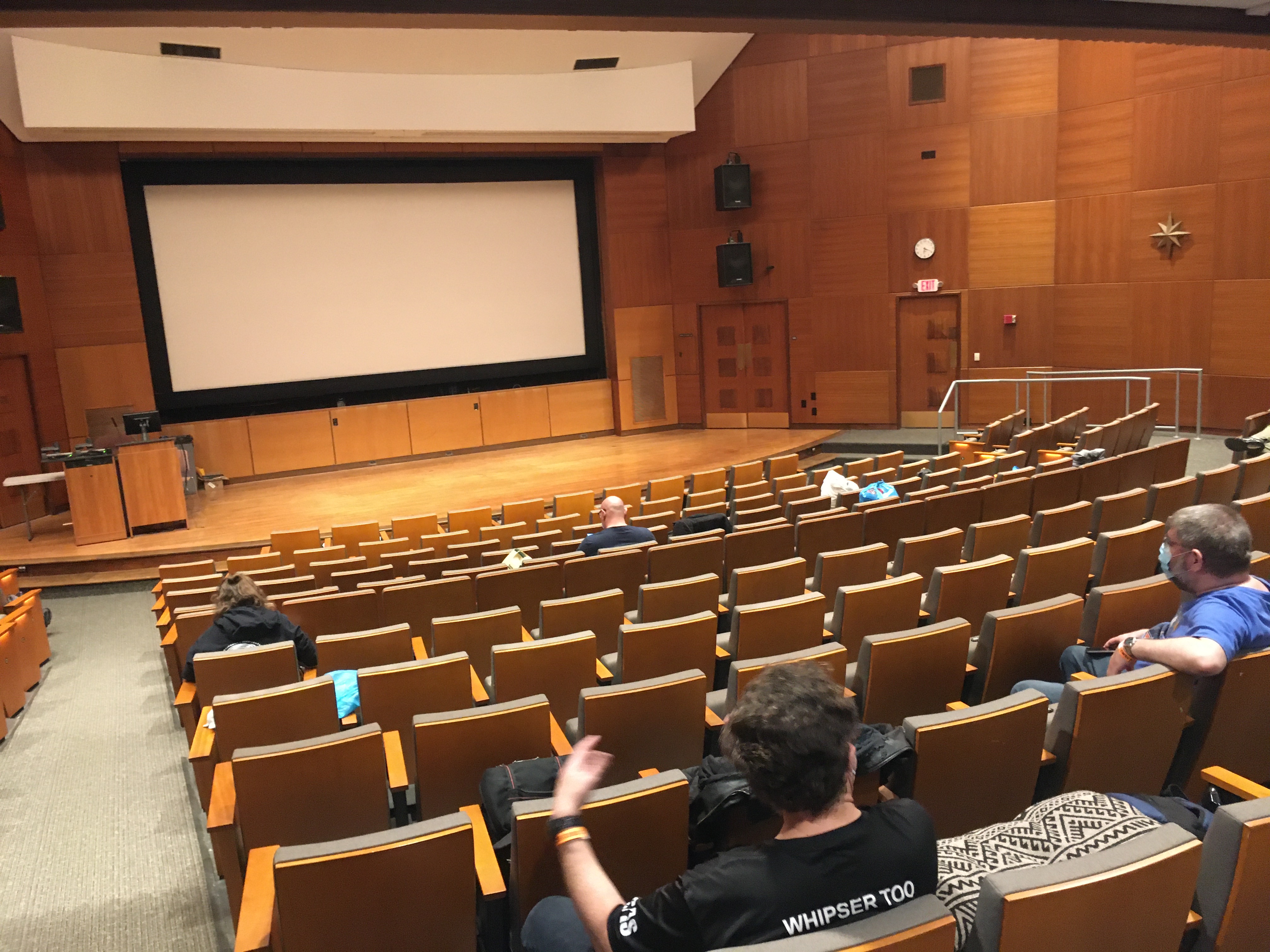
A view of the auditorium Friday afternoon, before most attendees arrived.

Alas, attendance at the sci-fi festival was clearly down from my last appearance here, in January 2020, just before the pandemic took hold. Then, for a screening of 'Aelita, Queen of Mars' (1924), we had to move people (and their sleeping bags) around to make room for my keyboard. This time, there were acres of open space. 

Yes, the pandemic has had an effect. And yes, times are changing. 

A stuffed cat in the Strosacker Auditorium.

But I hope the spirit that's part of the DNA of this festival and similar ones—the sense of wonder and love of cinema that prompted people to create such communal events in the era before VCRs and DVDs and everything-on-demand—will persist as we all march forward. 

Afterwards, I pointed the Subaru Forester east towards Boston, arriving in time (with an overnight stay in Syracuse, N.Y.) for the matinee of 'La Bohème' at the Somerville Theatre.

Silent film on the Somerville's big marquee! 

The screening marked the return of the venue's 'Silents, Please!' series after a long pandemic-induced hiatus. In welcoming back the audience, I recalled how the last silent at the Somerville was on Sunday, March 15, 2020, when the theater screened Rin Tin Tin in 'Clash of the Wolves' (1925) to a smaller-than-usual crowd. 

"I remember at the time talking with Ian Judge, the Somerville's manager, and thinking that this pandemic thing might cause theaters to have to close for as much as two weeks, or maybe even a month," I said, to knowing laughter. 

I also got laughs with an off-the-cuff remark about the music.

"If you're expecting to hear Puccini's immortal music, I'm afraid you're going to be disappointed," I said. "What I do will be mostly improvised, and I'm not Italian, so it wouldn't sound like Puccini even if I tried. I'm Polish and Lithuanian, so I might be able to go for Witold Lutosławski."

Of course it's a real question: for a silent film version of a famous opera such as  'La Bohème,' what role should music play? My answer: same as always. The accompaniment should support the story, the characters, the action, the emotions, the changes of mood, and everything else happening on the screen.

At its best, the music helps a silent film cast a spell on an audience—and that's true for 'La Bohème' as much as any other story. In fact, I think if I did try to channel Puccini, that would only take people out of the on-screen narrative, which would be a distraction.

So I didn't channel Puccini, nor LutosÅ‚awski, nor anyone else. I just reached into my own reservoir of strong feelings and emotions and tried to conjure music that helped the film connect. 

As usual, it was a mix of deliberate calculation and in-the-moment reaction. 

Prior to the screening, I had decided an all strings texture was right for this kind of film, which gives audiences a chance to soak in a prolonged emotional bath. 

But for those big moments with Lillian Gish and John Gilbert filling up the screen—where the soaring melody over lush chords came from, I really couldn't tell you.

It certainly wasn't the hotel in Syracuse.

Okay, enough about the road trip. Here's all you need to know about 'Battling Butler' on Wednesday, April 27 at the Flying Monkey. Hope to see you there!

*   *   *

Buster gets physical in 'Battling Butler' (1926).

TUESDAY, APRIL 12, 2022 / FOR IMMEDIATE RELEASE
Contact Jeff Rapsis • (603) 236-9237 • jeffrapsis@gmail.com

Buster Keaton's 'Battling Butler' at Flying Monkey Moviehouse on Wednesday, April 27

Silent film series continues with knockout boxing comedy focusing on the fight game, accompanied by live music

PLYMOUTH, N.H.—He never smiled on camera, earning him the nickname of "the Great Stone Face." But Buster Keaton's comedies rocked Hollywood's silent era with laughter throughout the 1920s.

Acclaimed for their originality, clever visual gags, and amazing stunts, Keaton's films remain popular crowd-pleasers today.

See for yourself with a screening of 'Battling Butler' (1926), one of Keaton's landmark feature films, on Wednesday, April 27 at 6:30 p.m. at the Flying Monkey Moviehouse and Performance Center, 39 Main St., Plymouth, N.H.

Admission is $10 per person. Live music will be provided by accompanist Jeff Rapsis, a New Hampshire-based performer who specializes in creating music for silent film presentations.

'Battling Butler' tells the story of pampered millionaire Alfred Butler (Keaton) who tries to impress the girl of his dreams (Sally O'Neil) by pretending to be a championship boxer with the same name.

The masquerade leads to knockout comedy both in and outside the ring, giving Keaton ample opportunity to display his gifts for physical and visual comedy.

The screening is the latest installment of the Flying Monkey's series showcasing the best films of 1926, all of which entered the public domain on Jan. 1, 2022.

In the 1920s, boxing rivaled baseball as the nation's most popular sport. Neighborhoods, communities, and ethnic groups all rooted for their favorite fighters, and heavyweight champion Jack Dempsey ranked as an international celebrity.

Because of this, boxing stories were popular with early movie audiences as well.

"As an elemental contest between two opponents, boxing inspired early filmmakers to do some great work," Rapsis said. "It's a visual sport that doesn't require a lot of dialogue or commentary to understand, and so was perfect for silent movies."

Keaton, along with Charlie Chaplin and Harold Lloyd, stands as one of the silent screen's three great clowns.

Many critics regard Keaton as the best of all; Roger Ebert wrote in 2002 that "in an extraordinary period from 1920 to 1929, (Keaton) worked without interruption on a series of films that make him, arguably, the greatest actor-director in the history of the movies." But while making films, Keaton never thought he was an artist, but an entertainer trying to use the then-new art of motion pictures to tell stories and create laughter.

All those talents are on display in 'Battling Butler,' which holds the distinction of being the top-grossing title of Keaton's silent features.

Buster on the ropes—literally—in 'Battling Butler' (1926).

The Flying Monkey's silent film screenings provide local audiences the opportunity to experience silent film as it was intended to be shown: on the big screen, in restored prints, with live music, and with an audience.

“These films are still exciting experiences if you can watch them as they were designed to be shown,” said Rapsis, accompanist for the screenings.

“There’s a reason people first fell in love with the movies, and we hope to recreate that spirit. At their best, silent films were communal experiences in which the presence of a large audience intensifies everyone’s reactions.”

The screening of 'Battling Butler' is the latest in the Flying Monkey's series celebrating films that recently entered the public domain.

Copyright protection for all U.S. films released in 1926 expired on Jan. 1, 2022.

To mark the occasion, the Flying Monkey is showcasing vintage 1926 comedies, dramas, and adventure films, all with live music, and all now in the public domain.

Upcoming screenings in the Flying Monkey's "Public Domain Extravaganza" series include:

• Wednesday, May 11, 2022, 6:30 p.m.: "Bardelys the Magnificent" (1926) starring John Gilbert. Gilbert tries his hand at swashbuckling in this big-budget MGM historical extravaganza about exploits of an unjustly disgraced French nobleman. A major film long thought lost until a single print was recently discovered in France.

• Wednesday, June 8, 2022, 6:30 p.m.: "The Black Pirate" (1926) starring Douglas Fairbanks, Sr. The original pirate swashbuckler, with Fairbanks sword-fighting his way through a period adventure tale set during the age of sailing ships.

"By 1926, the movies had matured enough to offer a wide range of great entertainment that still holds up today," Rapsis said. "Come see for yourself as we screen some of the year's best flicks, all of which recently entered the public domain and now belong to us all."

Buster Keaton stars in 'Battling Butler,' to be shown on Wednesday, April 27 at 6:30 p.m. at the Flying Monkey Moviehouse and Performance Center, 39 South Main St., Plymouth, N.H.

Admission is $10 per person. For more info, call (603) 536-2551 or visit www.flyingmonkeynh.com.